Foggy Road to Agra

IMG_0373

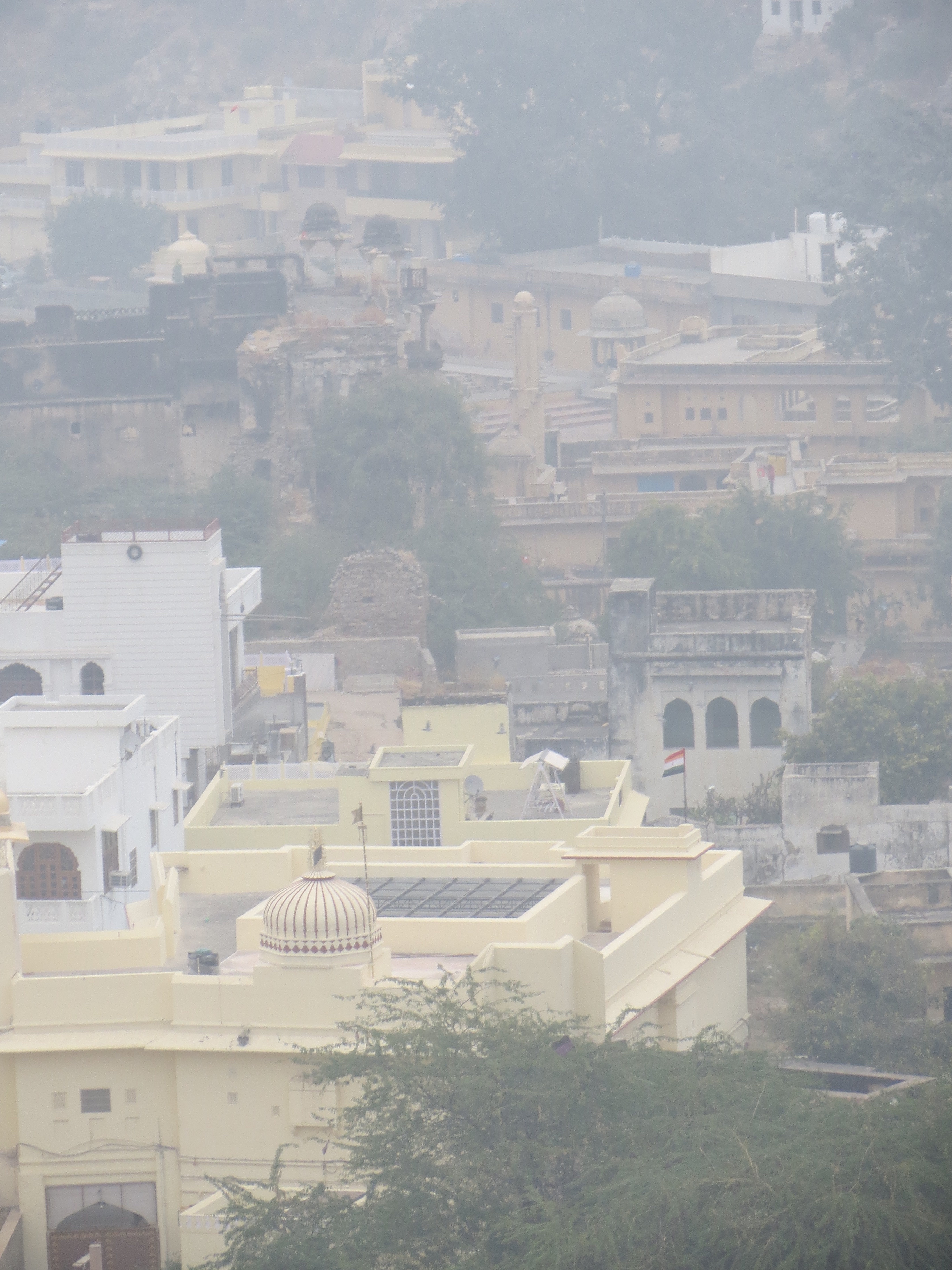
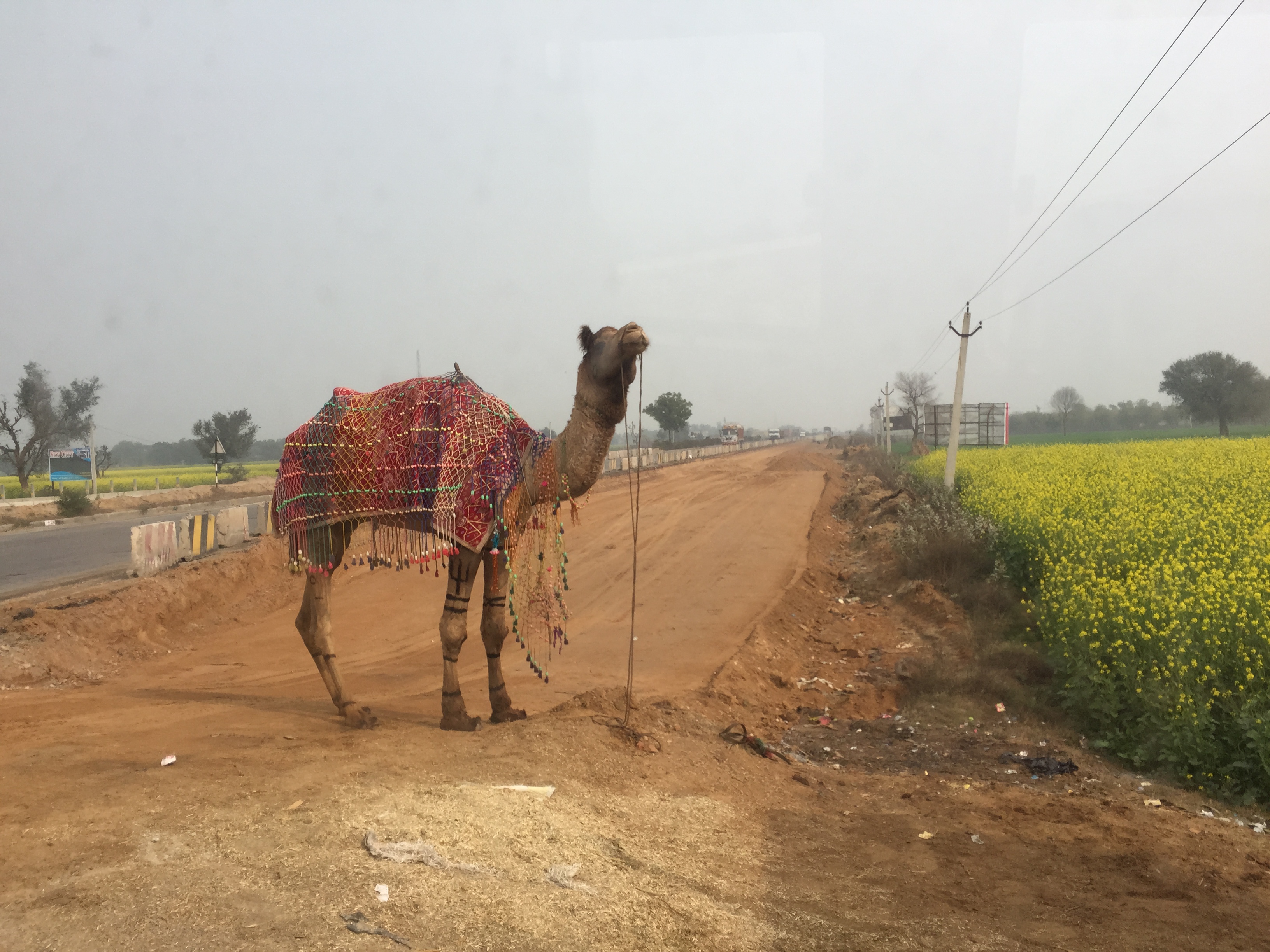
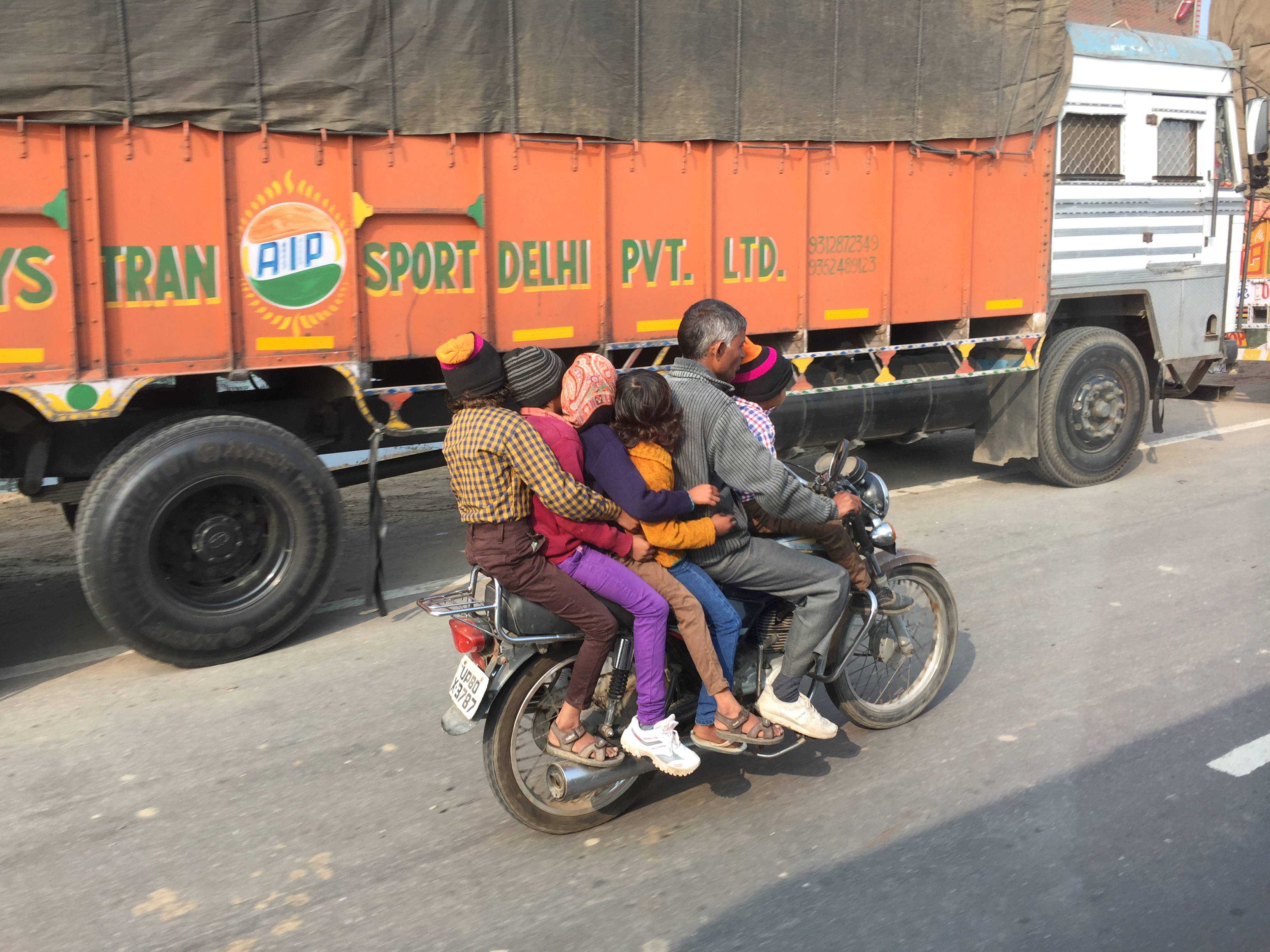
We set out on a cold and foggy morning, leaving the bustle of Jaipur for the open road to Agra, on which we saw–and often very narrowly missed colliding with–cars, buses, tourist vans, horse-drawn carts, donkey-drawn carts, camel-drawn carts, tractors, bicycles, motorcycles, goods carriers (commercial trucks) of various sizes, all brightly painted, 3-wheel taxis (motorized), 3-wheel taxis (cycles).  Bicycling men coming toward us in white turbans, grey blankets, and cloth-wrapped faces against the cold.  A blast of artificial sunshine as a woman in a saffron-gold sari disappeared down a cross road into the fog.  Long-haul trucks with open trailers, one painted with a lake scene and stylized flowers, all with artificial flowers stuck in the outside mirrors and long green tassels swinging from side windows, painted of course with instructions to BLOW HORN or HORN PLEASE.  (The honking is incessant, as apparently every driver must honk when passing, almost passing, or having just passed another vehicle of any kind.)  Trotting dogs, ears alert, and sleeping dogs curled up, playful dogs wrestling.  Two-toned crows with thick beaks.  Dangling strings of colorful packets of beetlenuts from every khoka (small commercial stand).  Red resin chairs in tight circles around small fires where men in turbans and blankets huddle in conversation.  Standing women in saris of every color, also in tight circles.  Sweepers, mostly women, bent over at work in saris of every bright color.  A young man in trunks, nothing else, washing his hair at a large caldron of water.  Small conical Hindu temples.  Silhouetted trees in the bright fog.

As we drove our van was filled with soft, slowly rhythmic chants to tabla and droning harmoniums. One of our group, having had very little sleep, dozed in the back, while others read.  On we went in the fog.

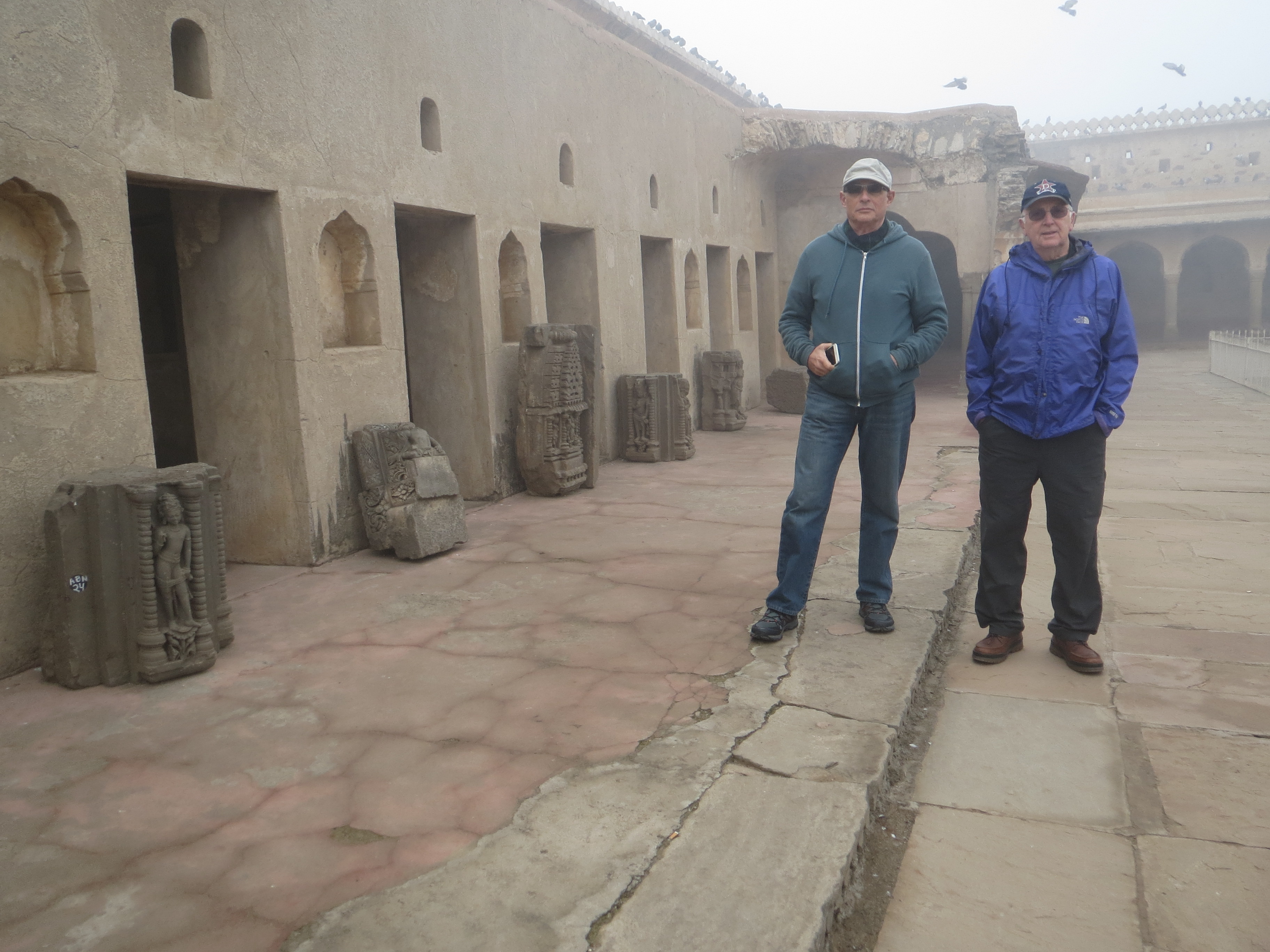
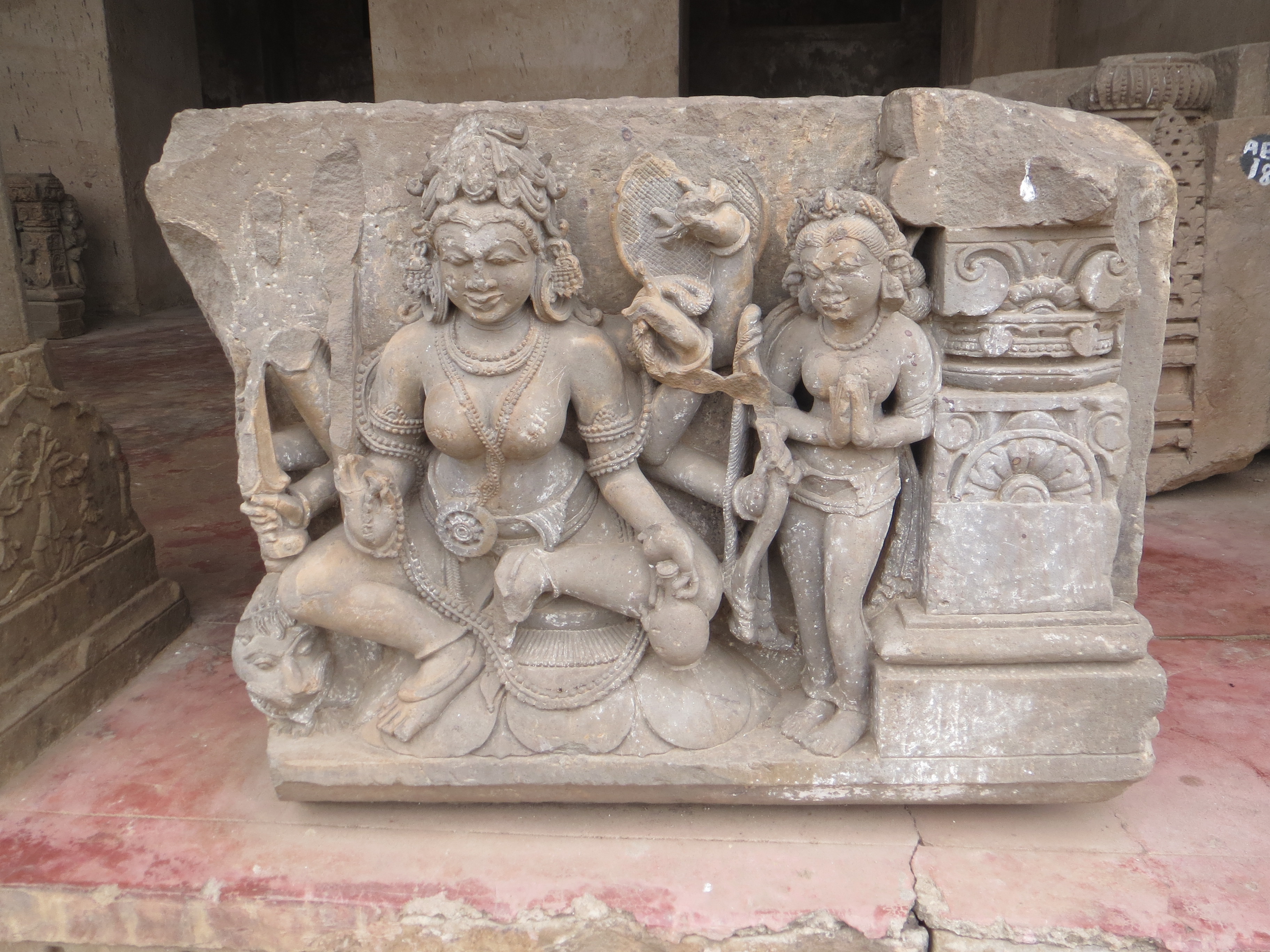
After a couple of hours we turned off the highway and headed  a few miles down the side road, coming to what appeared to be a tiny village, though our guide told us several thousand live there.  Our van stopped and there right on the road was an informational sign for Chand Baori, Abaneri, one of the oldest step wells in Rajasthan and built in the 8th or 9th century.  Inside the low entry and down a few steps is a living Hindu temple to Hanuman, the monkey god; the entire temple is perhaps 10 feet long, though clearly in use.  And the step well–how to describe it?  Twenty meters deep (about 6 stories) surrounded by an elaborate series of steps on all sides, and a colonnade on 3 sides where pieces of carved parapets have been numbered and lined up for restoration.

IMG_0993 IMG_0991 IMG_0997 IMG_0995 IMG_0278 IMG_0267 IMG_0279 IMG_0994

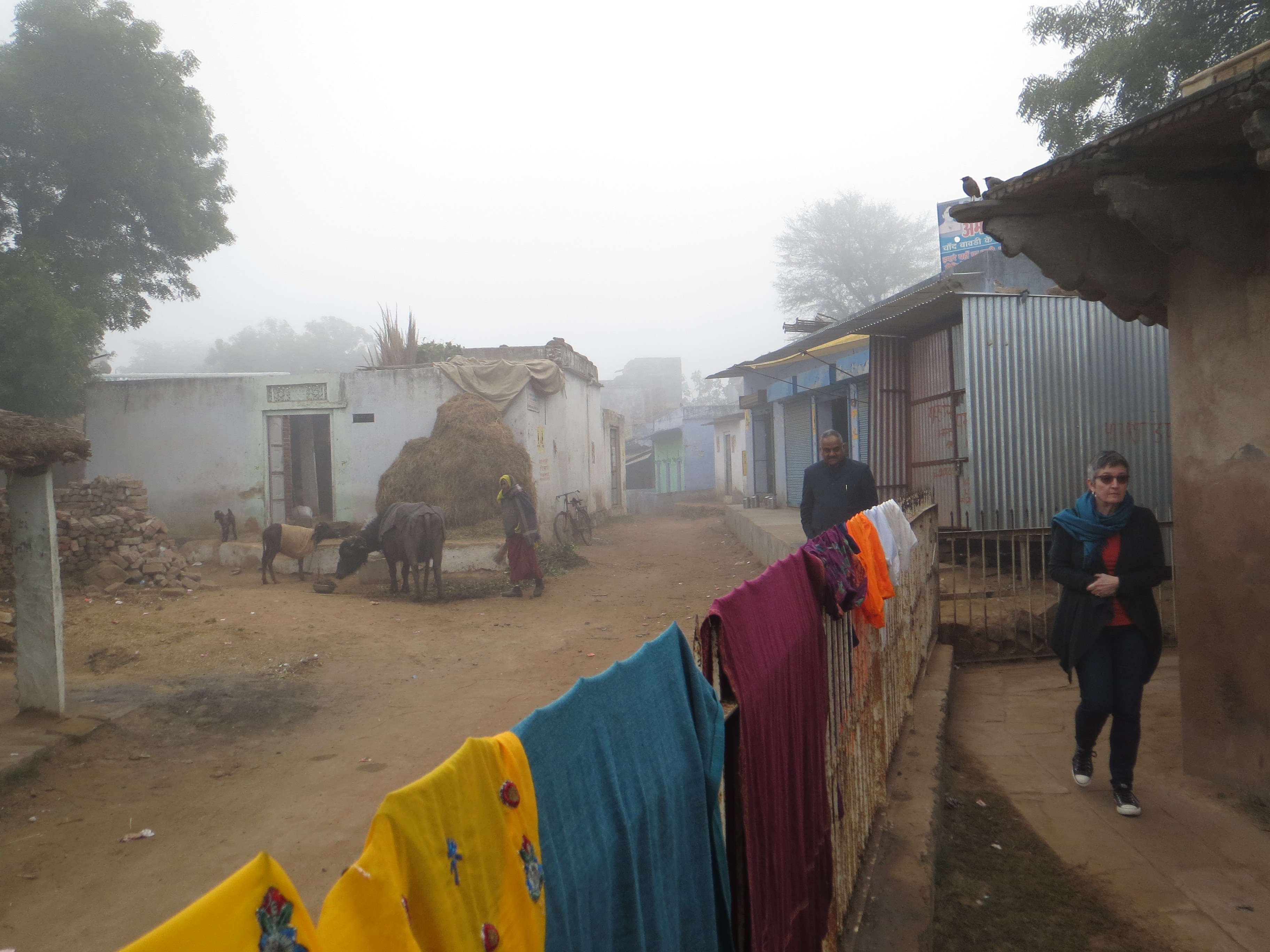
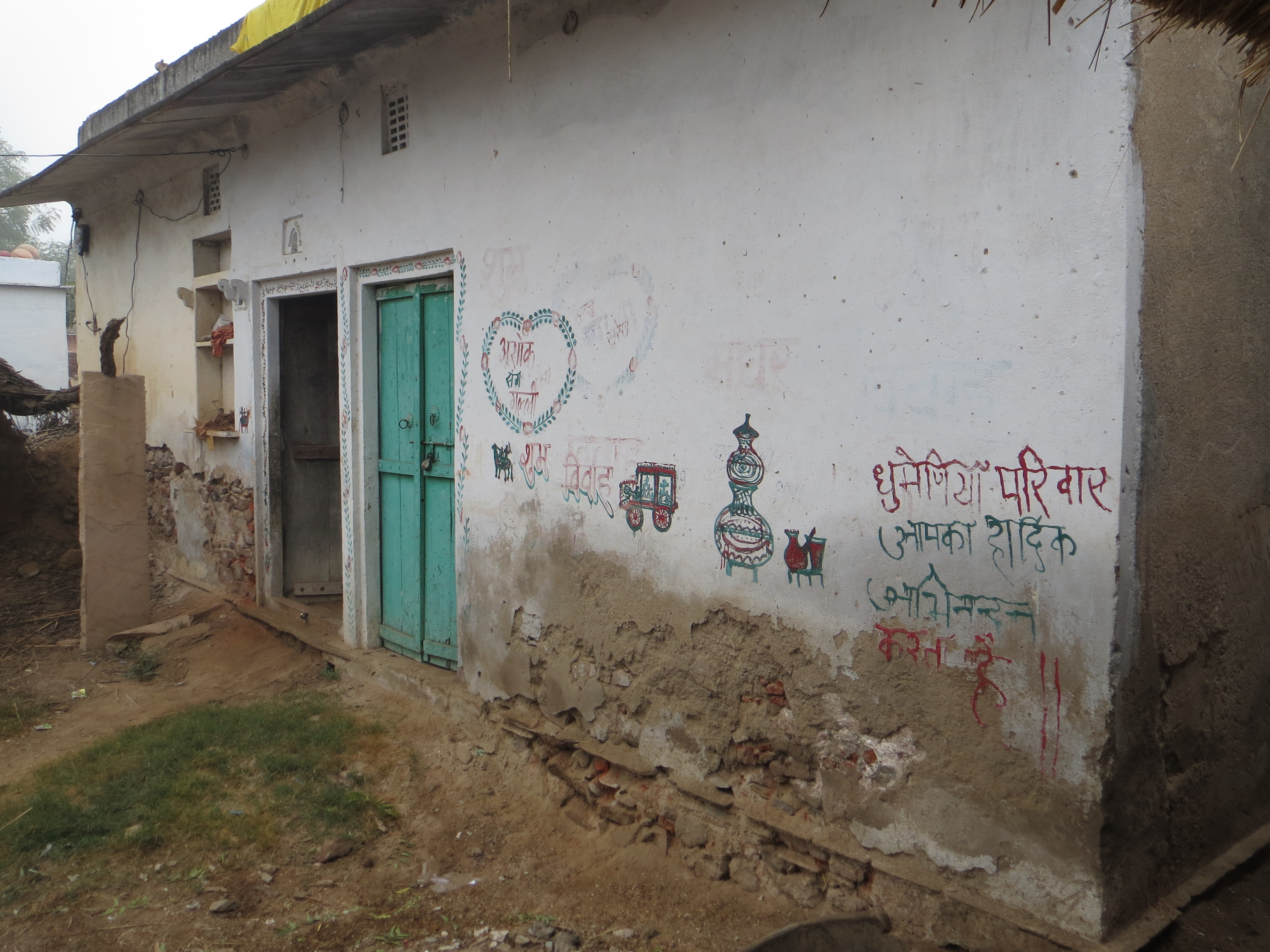
The contrast between this enormous and ancient public work and the tiny village structures which surround it was jarring.  With the help of our guide we were welcomed into one home, tiny, hazy with smoke, where two woman spoke to us, translated by our guide, about the bread they were making, two small boys looking up at us, wearing winter caps and feet bare.  David and I were startled at the close similarity to our experience in Chiapas, Mexico, where we were given lunch by a woman in her smoky, tiny home–and in both cases families living in a single room, adults and children sleeping together, cooking around an open fire in the center, and both with a small tv and a mobile phone.
IMG_1001 IMG_1002

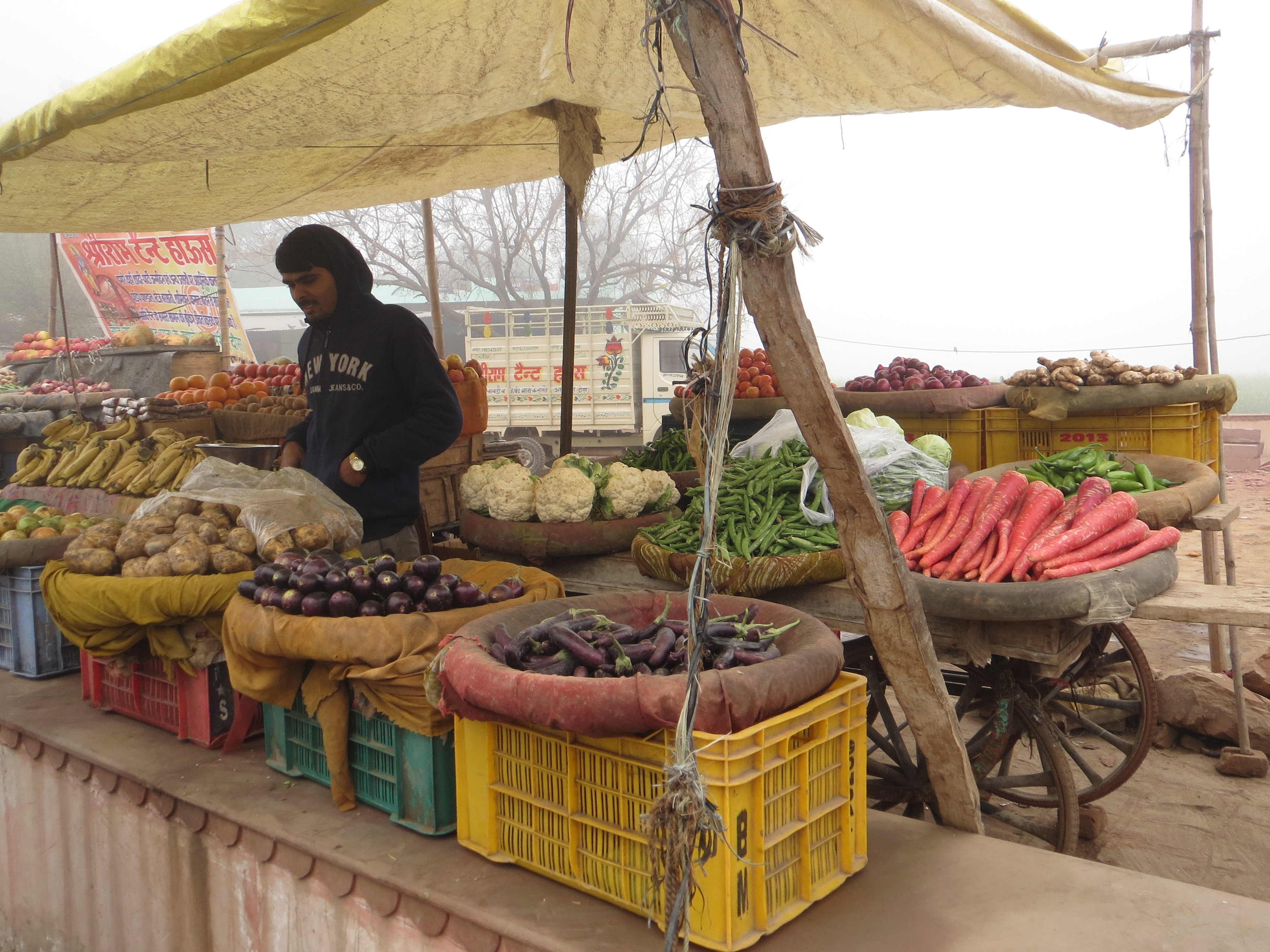
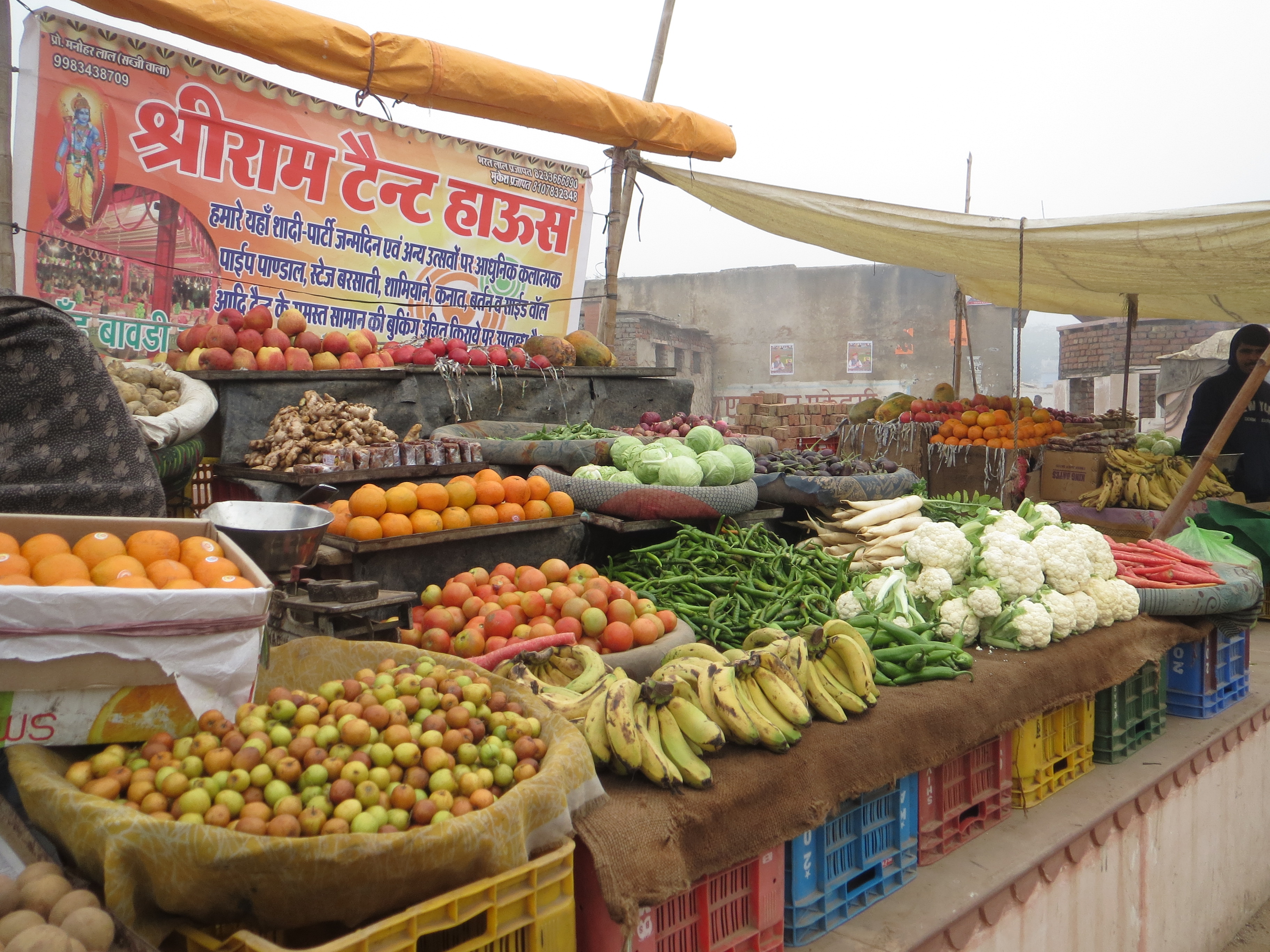
The contrast between the very poor, tiny homes and the beautiful vegetable stands directly across the narrow road was equally jarring.  The friendly proprietors welcomed me to take pictures and pointed out and named each item, all the produce beautiful, clean, and appetizing–especially the red, red carrots.
IMG_1005 IMG_1004

Our final stop before lunch and Agra was the abandoned Mughal city of Fatehpur Sikri.  We were happy to walk up the road in the cool afternoon past small herds of goats, the fog having dissipated, to tour this extraordinarily large abandoned city.  It took 12 years to construct and after 2 years of occupancy was abandoned, probably due to lack of sufficient water.  David and I were again struck by the similarity to our experiences at Mayan ruins in Mexico–the scale and expanse, the decoration, the engineering, seems impossible.

IMG_0313 IMG_0325 IMG_0332 IMG_0352 IMG_0341The carving–and, to me, the remarkable geometric precision and variety–is astounding.

IMG_0347 IMG_0346 IMG_0344

In Agra we had our first South Indian Thali lunch–scrumptious.  I have to learn how to make dosas! (As well, I have to learn to make lentils cooked in milk which we had the day before.  Seriously scrumptious.)

This evening we went to live Bollywood, a local show which purports to tell, with considerable poetic license, a version of the story of the Taj Mahal.  The sparklers, balloons, and marching out of the Indian flag at the end capped a hilarious production.  Now, to bed.
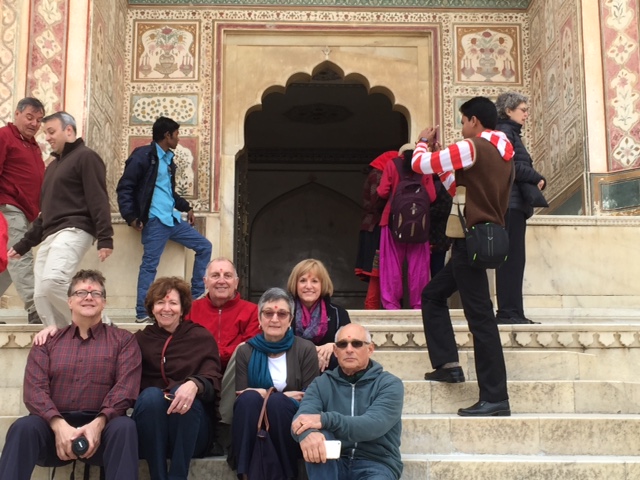
Jaipur Magic–with Elephants

IMG_1232-1

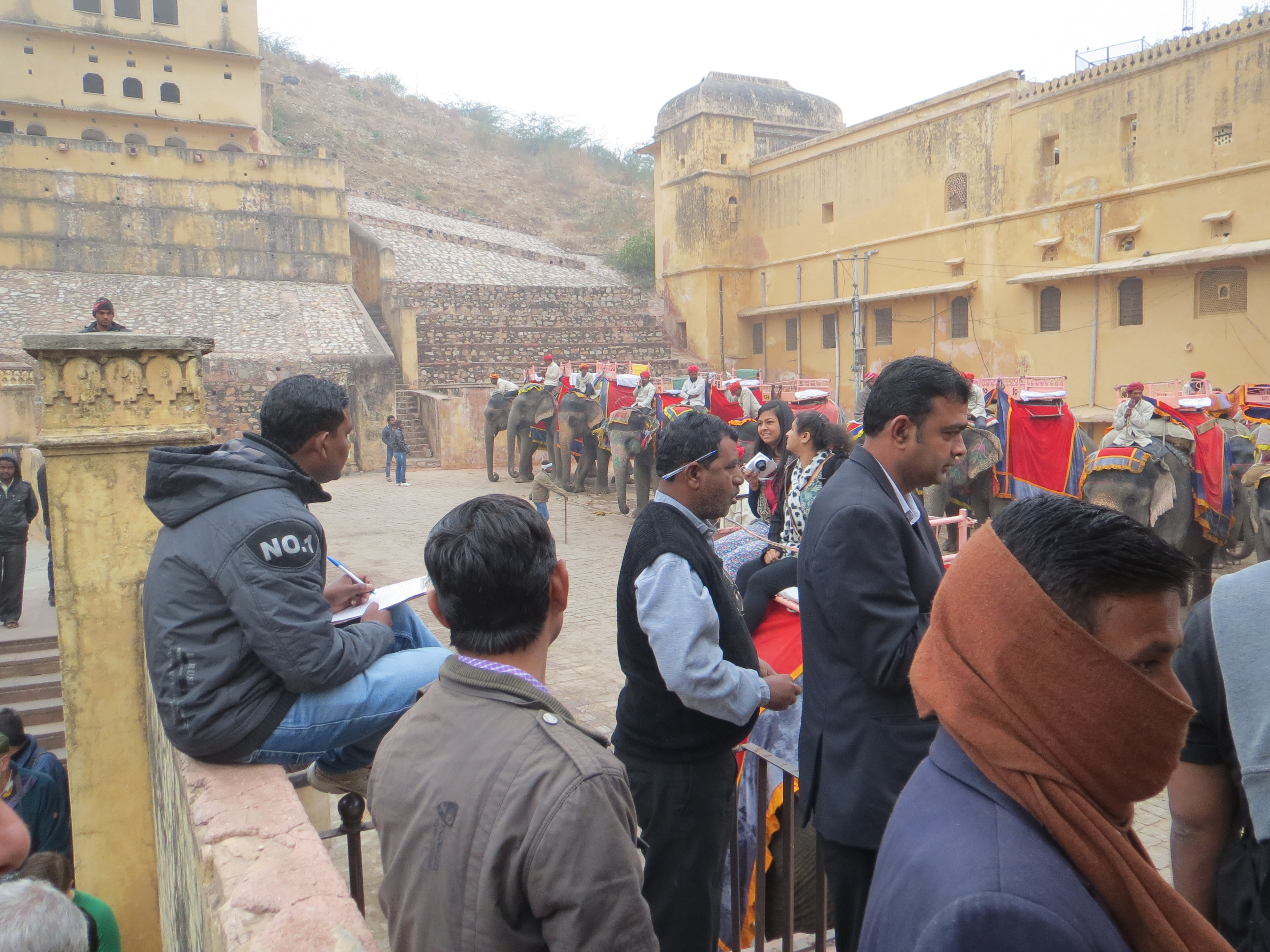
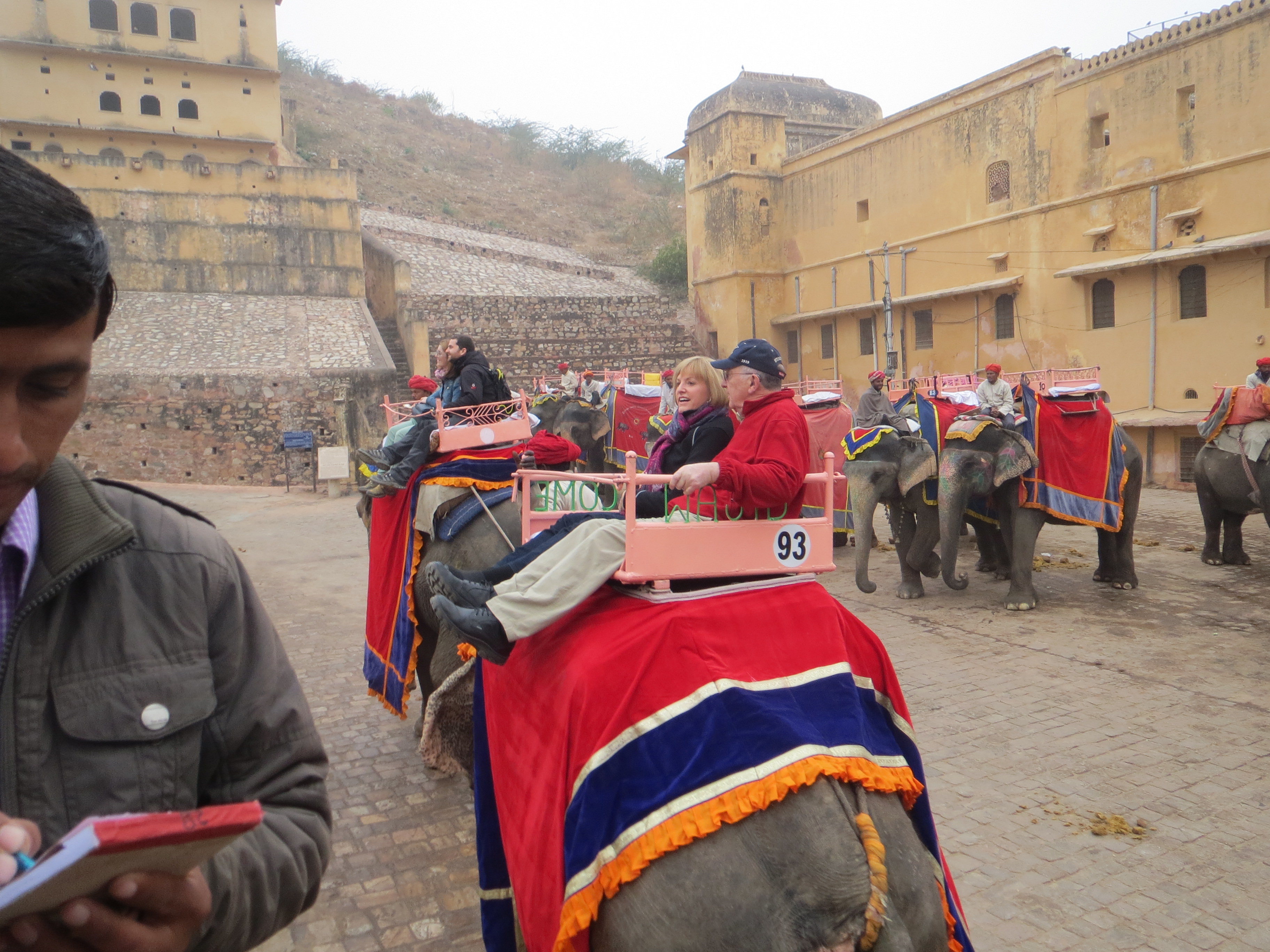
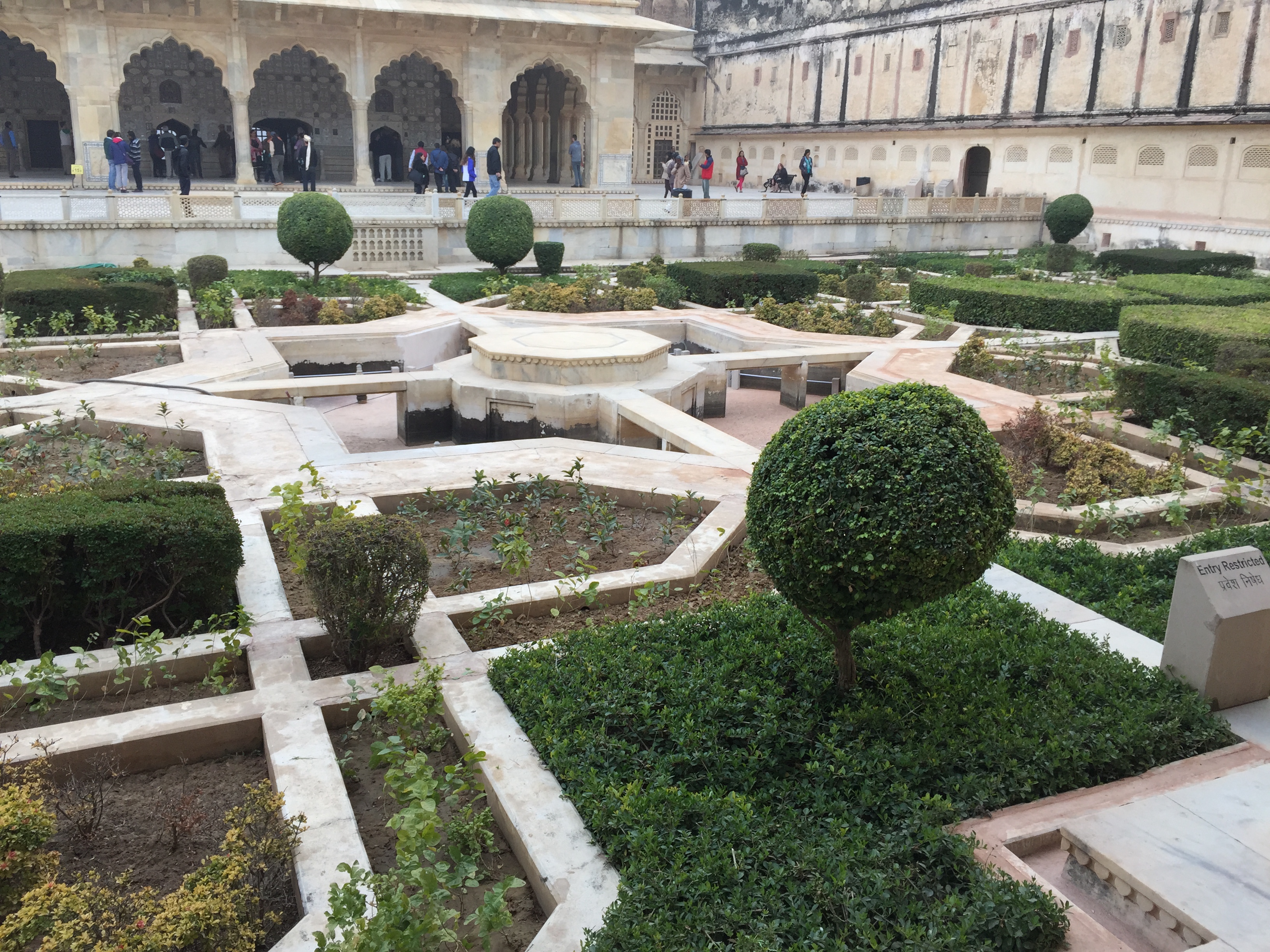
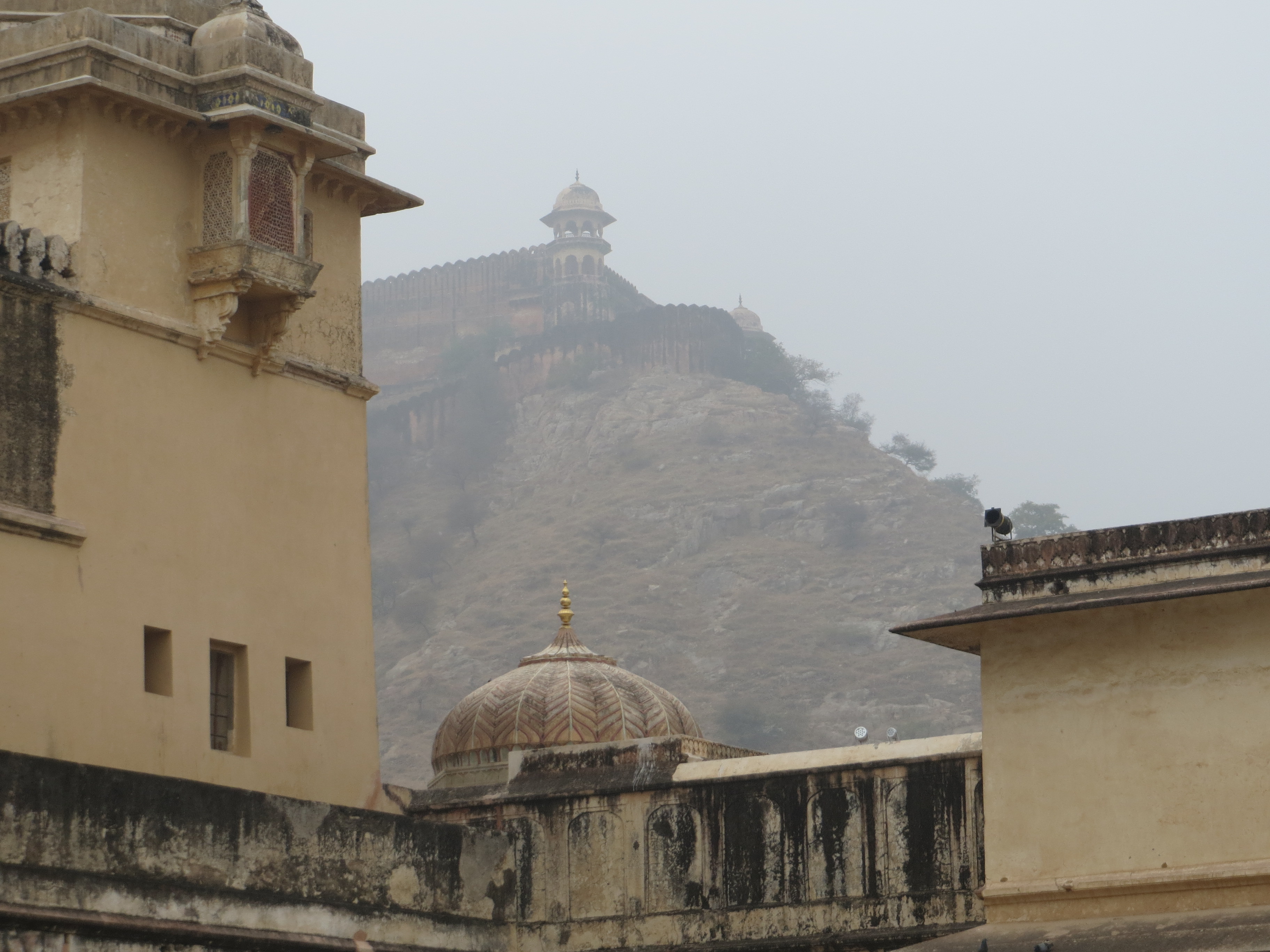
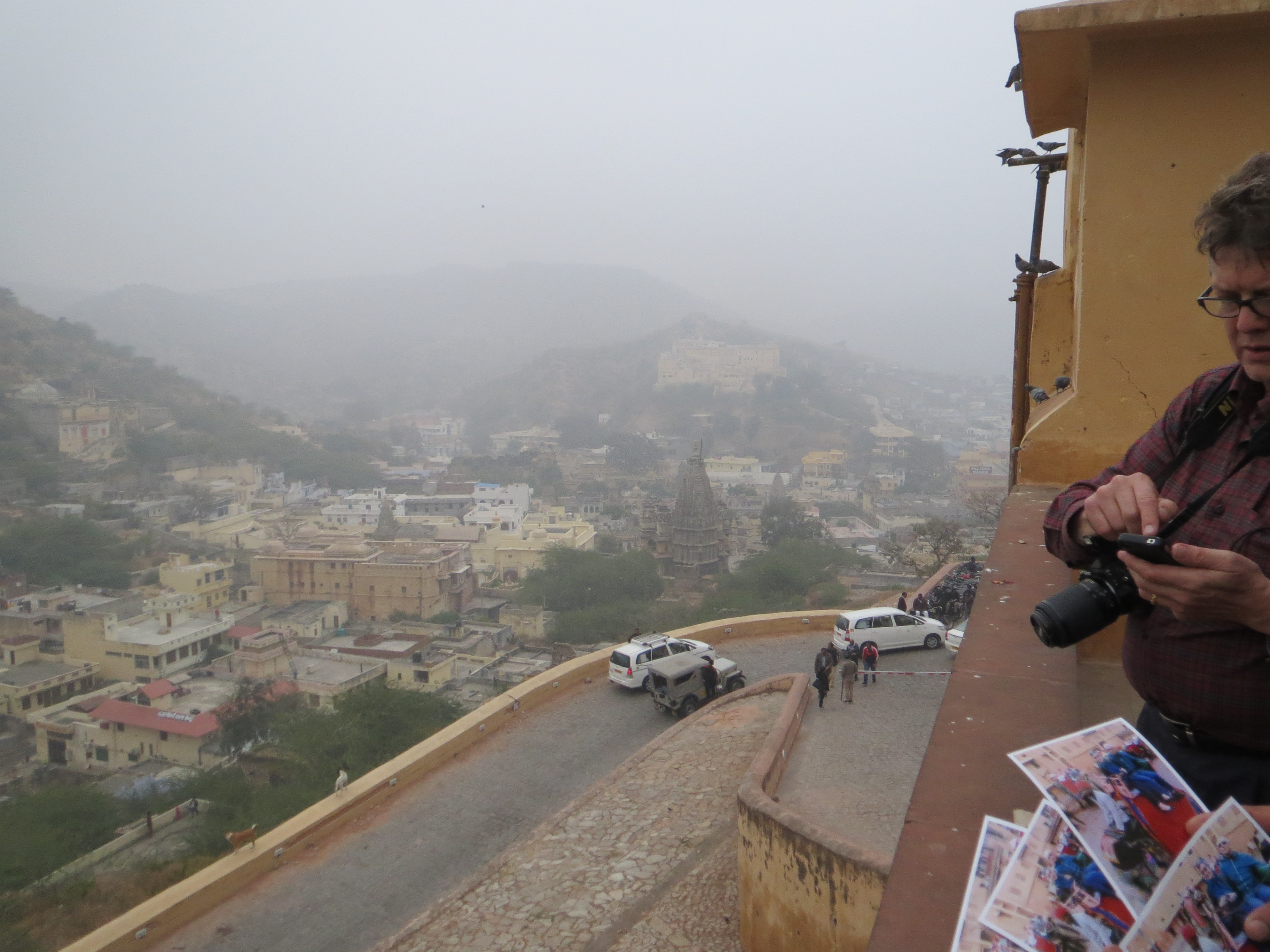
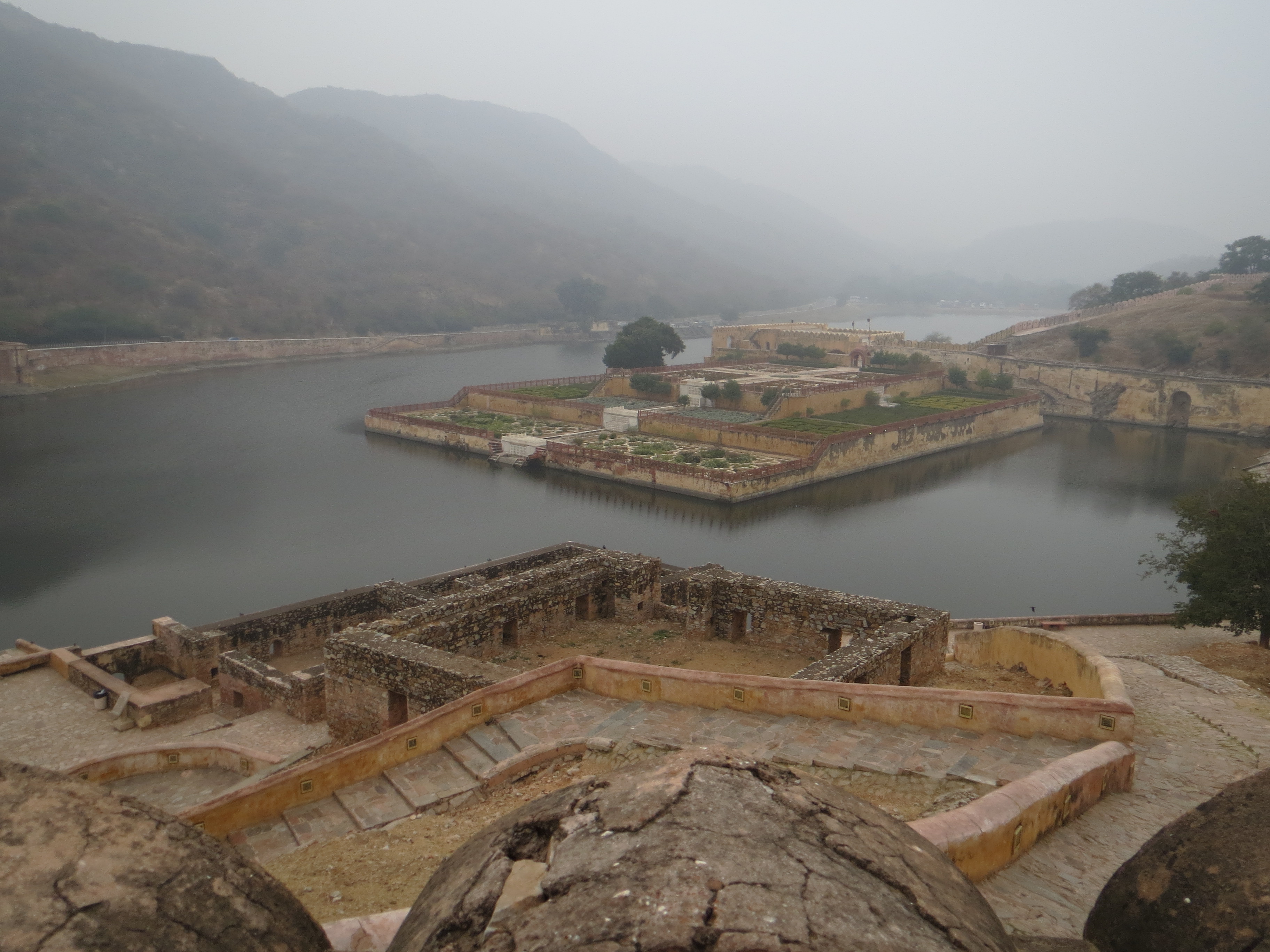
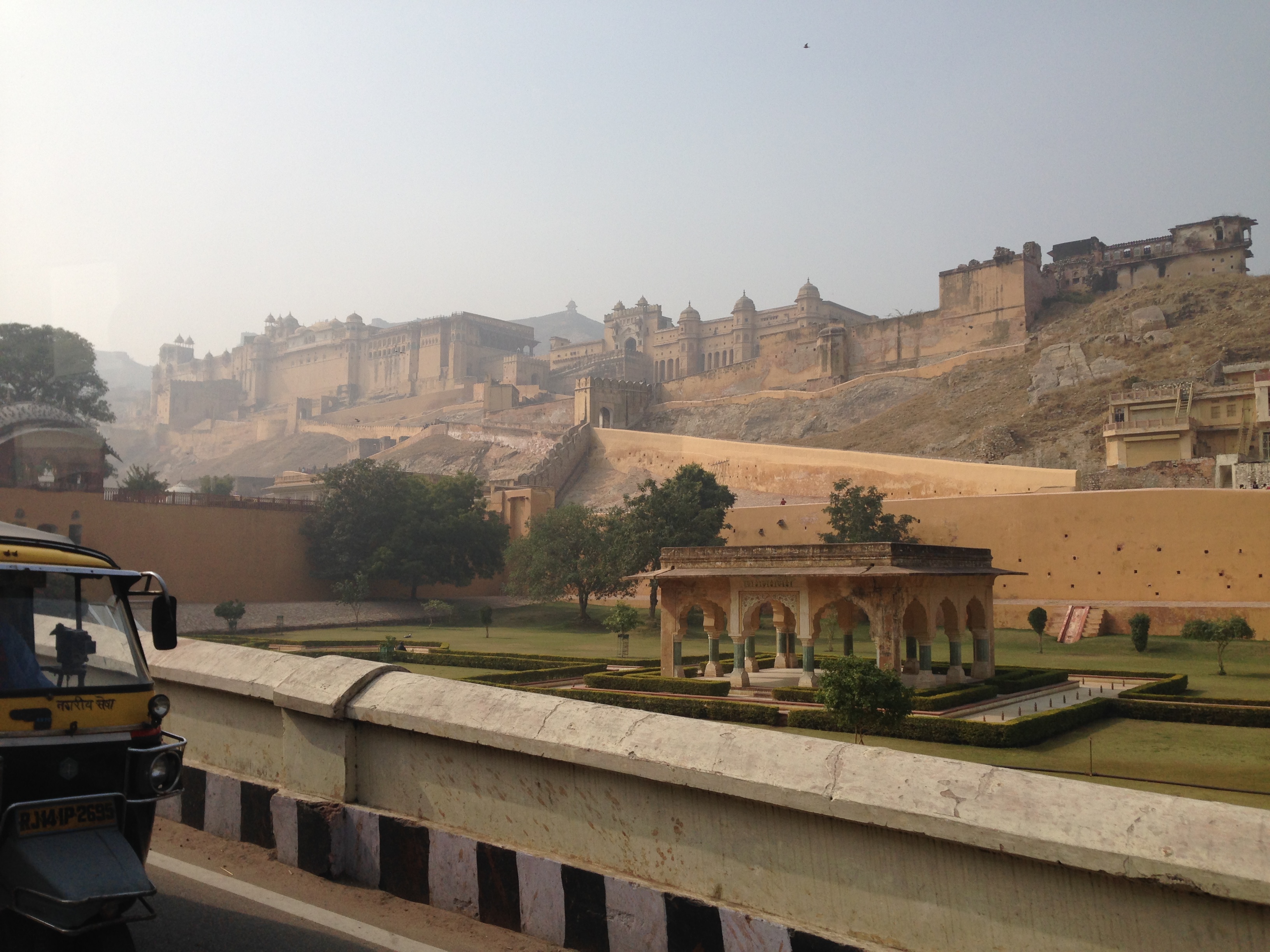
In the cool foggy morning we waited in a short queue for our elephant ride up to the Amber Fort, batting hawkers away.  And there we were, two to an elephant, riding up a steep stone walkway swaying a bit precariously and looking out at the small manmade lake, the geometric garden island in its midst, a high distant ridge toped by a winding stone wall, and, when we turned forward, at the rolling, lumbering head of our elephant and the red turban of his “driver.”  (I know there is a term for this man other than driver, but I’m too tired and lazy to look it up.)

IMG_0947 IMG_0949 IMG_0951 IMG_0952

Every few minutes an elephant came down, empty of guests, and every few minutes young men singly and in groups shouted at us to look their way as they waved cameras around–taking pictures which we would be hawked at the top, on the way down, and, amazingly, many hours later in central Jaipur.

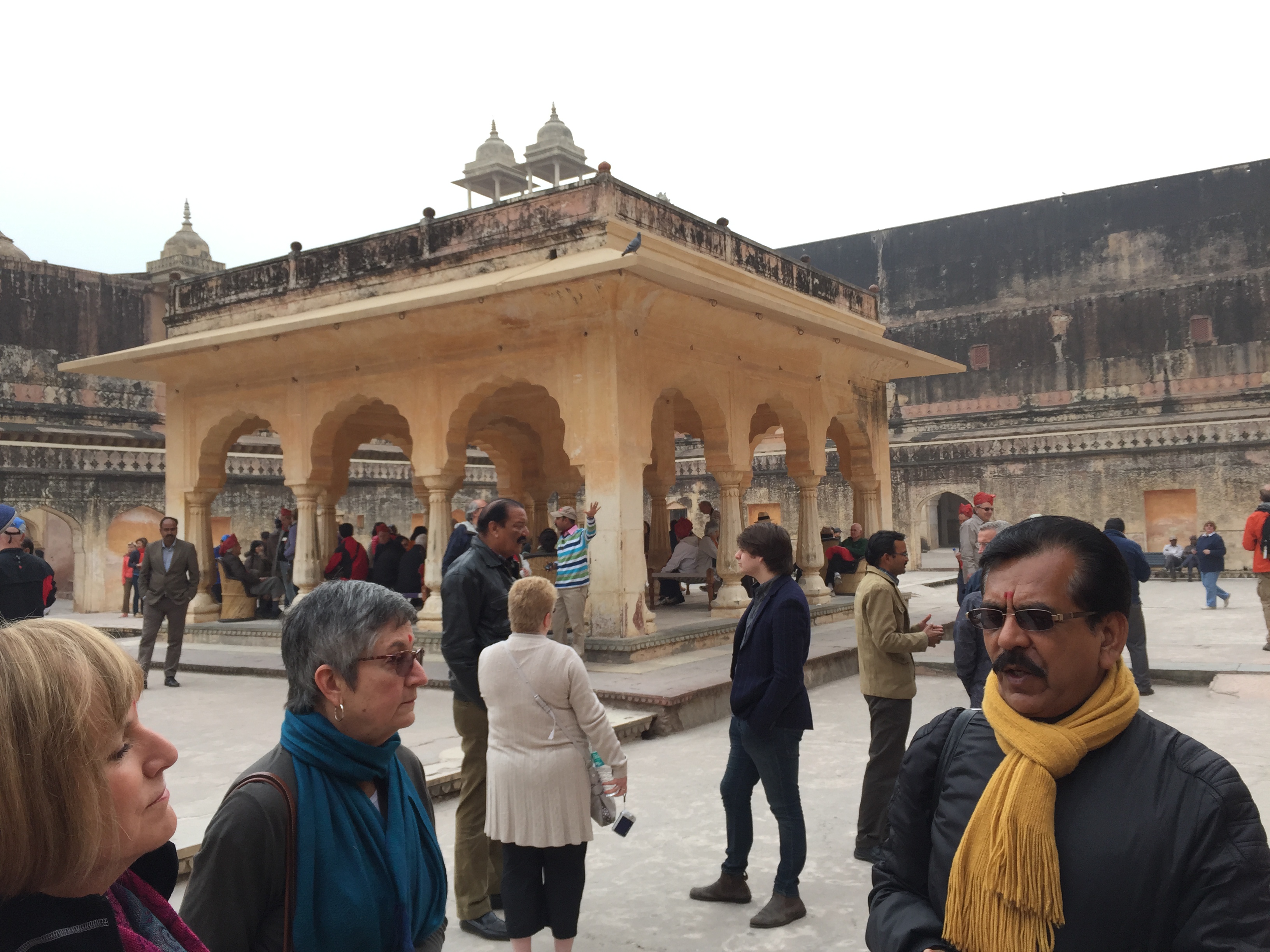
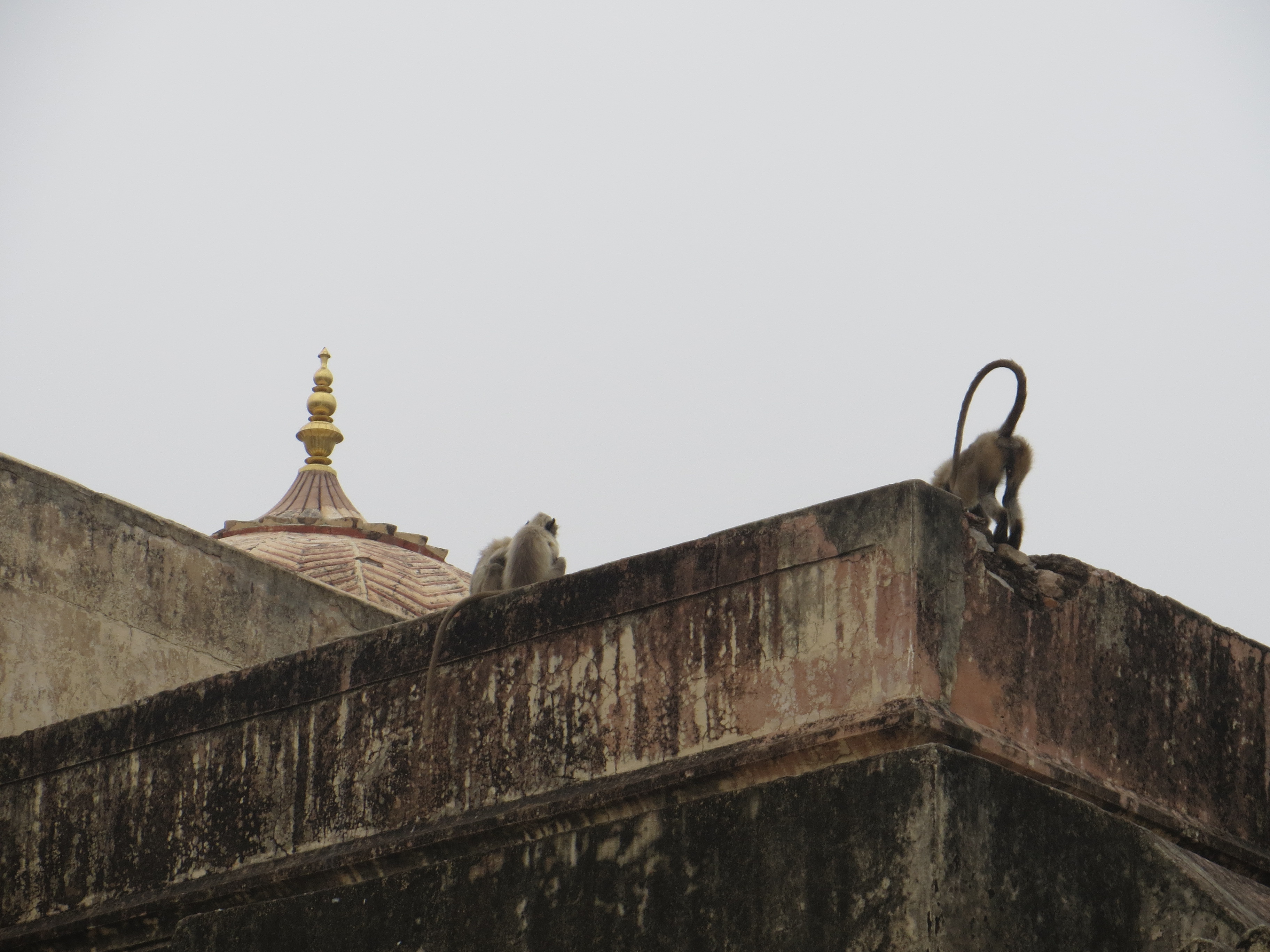
At the top is the Amber Fort, a huge complex of plazas, palace rooms, meeting areas, baths, concubine quarters, a tiny and exquisite Hindu temple, monkeys, birds, and, visible on lower levels, goats.

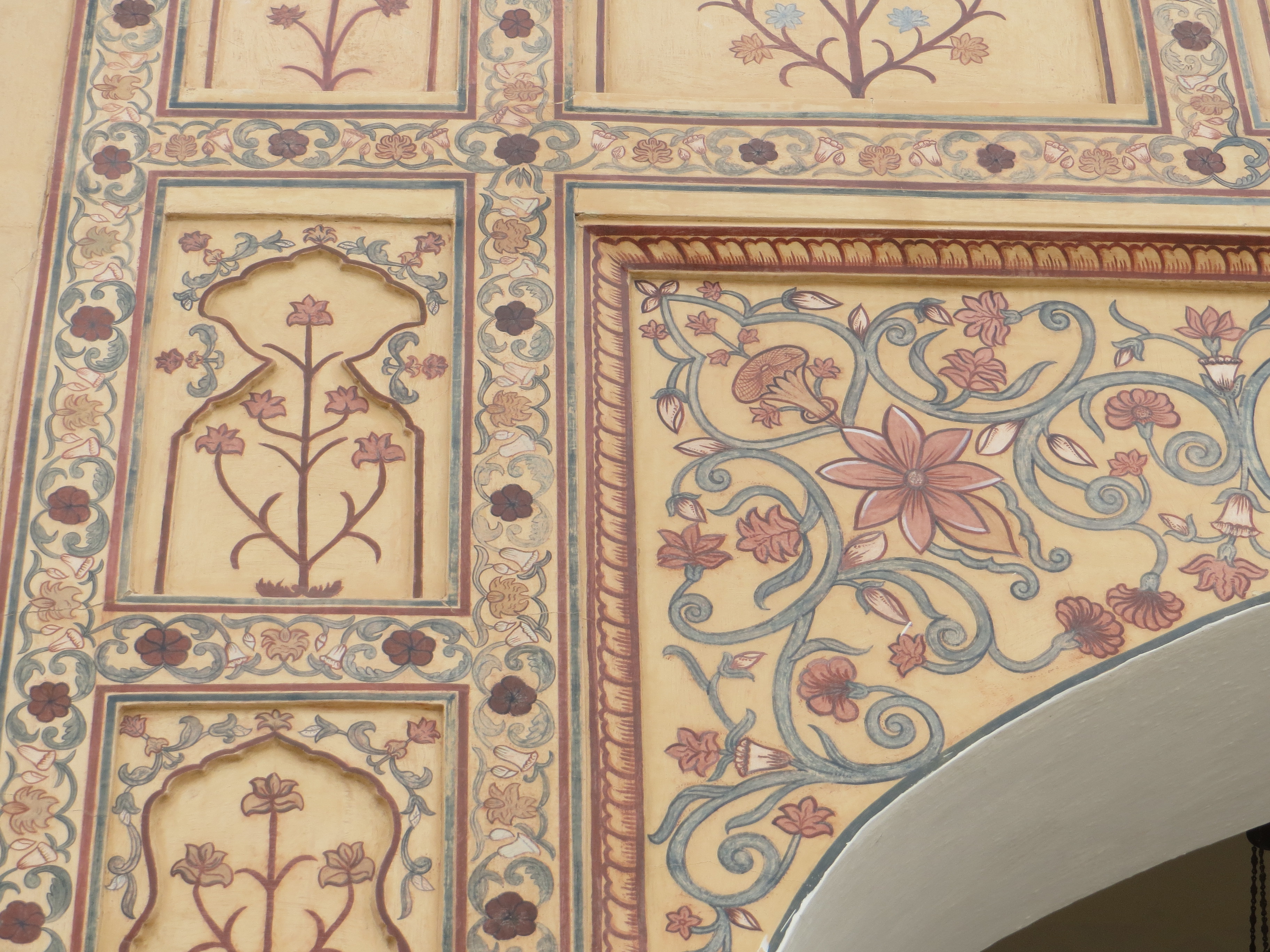
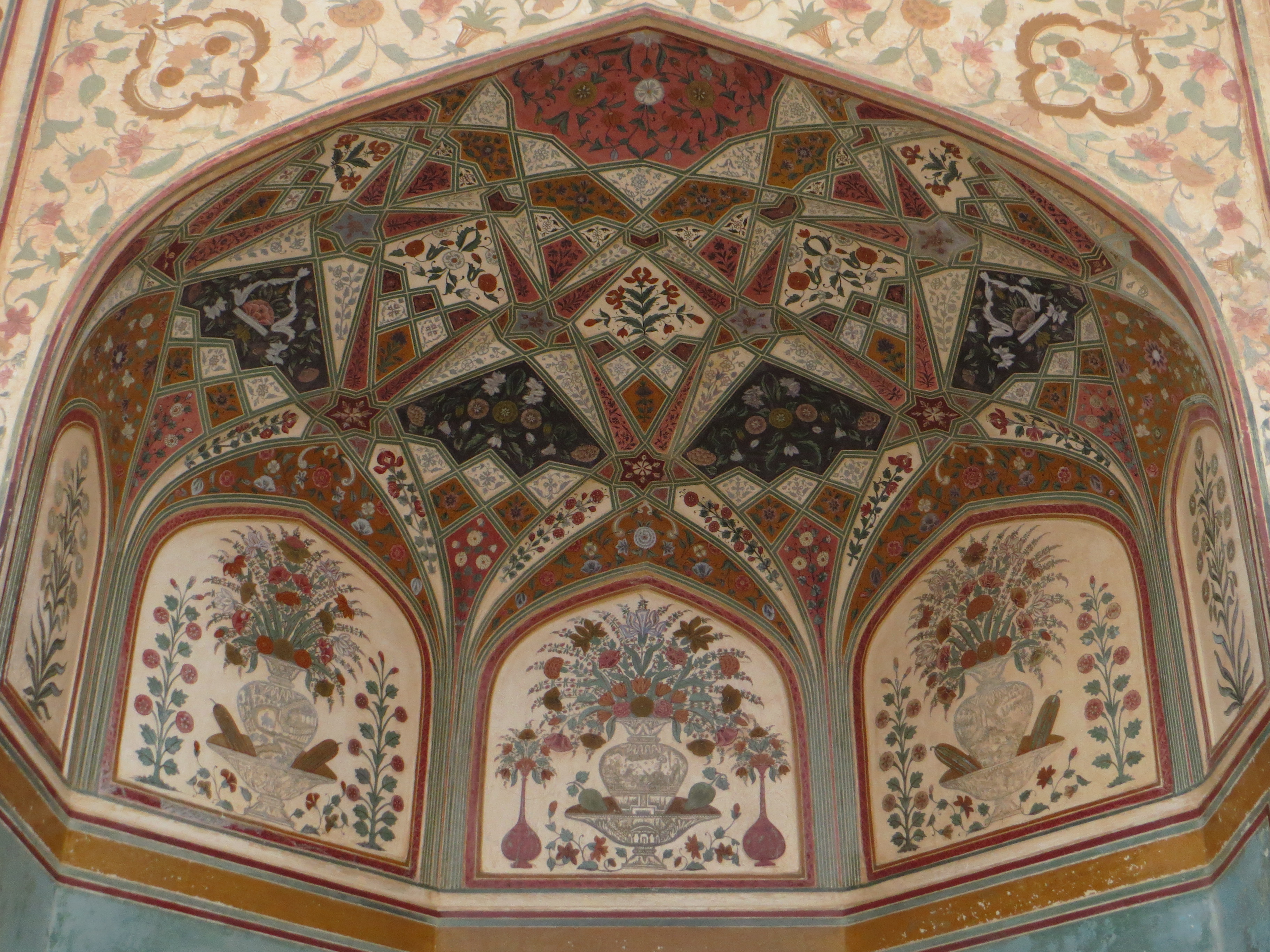
IMG_0189 IMG_0194 IMG_0196  IMG_0208IMG_0189IMG_0194IMG_0964IMG_0970IMG_0982 The palace quarters are a labyrinth, with smooth, shiny hallway walls (shiny to reflect candle and lamp light), botanical frescos, balconies and turrets.

We wandered for several hours with our guide who patiently explained the complex history of the families, rivals, marriages, and ambitions.  He also told us that until the last few years the area around the fort had been essentially abandoned, buildings many hundreds of years old allowed to crumble.  And the rubble was visible from the top, as were foraging pigs and goats, dogs, and, still, children flying kites.

IMG_0961 IMG_0958 IMG_0956

About the elephants–they work from 8am until 11am, when, by law, they are given the rest of the day off.  And we did see several walking along the road back toward Jaipur, heading home.

Today was a shopping day in large part–and after the fort we went to a large jewelry store where they make much of their high end wares (and of course we had a tour and demonstration), and where gifts were purchased; had a lovely lunch in a former palace; visited a school for miniature painters (where more money was spent by all); and, not intending to buy anything, a small bazaar which included wholesalers and manufacturers where the women all managed to find things we had to have.  I fell in love with a piece of fabric the size of a small blanket, 50-100 years old and from Afghanistan, an item I did not even remotely need.  Somewhat frayed, in muted colors, hand woven and hand stitched together of three pieces–holding it I felt a connection that I could not resist.  And so I did not.

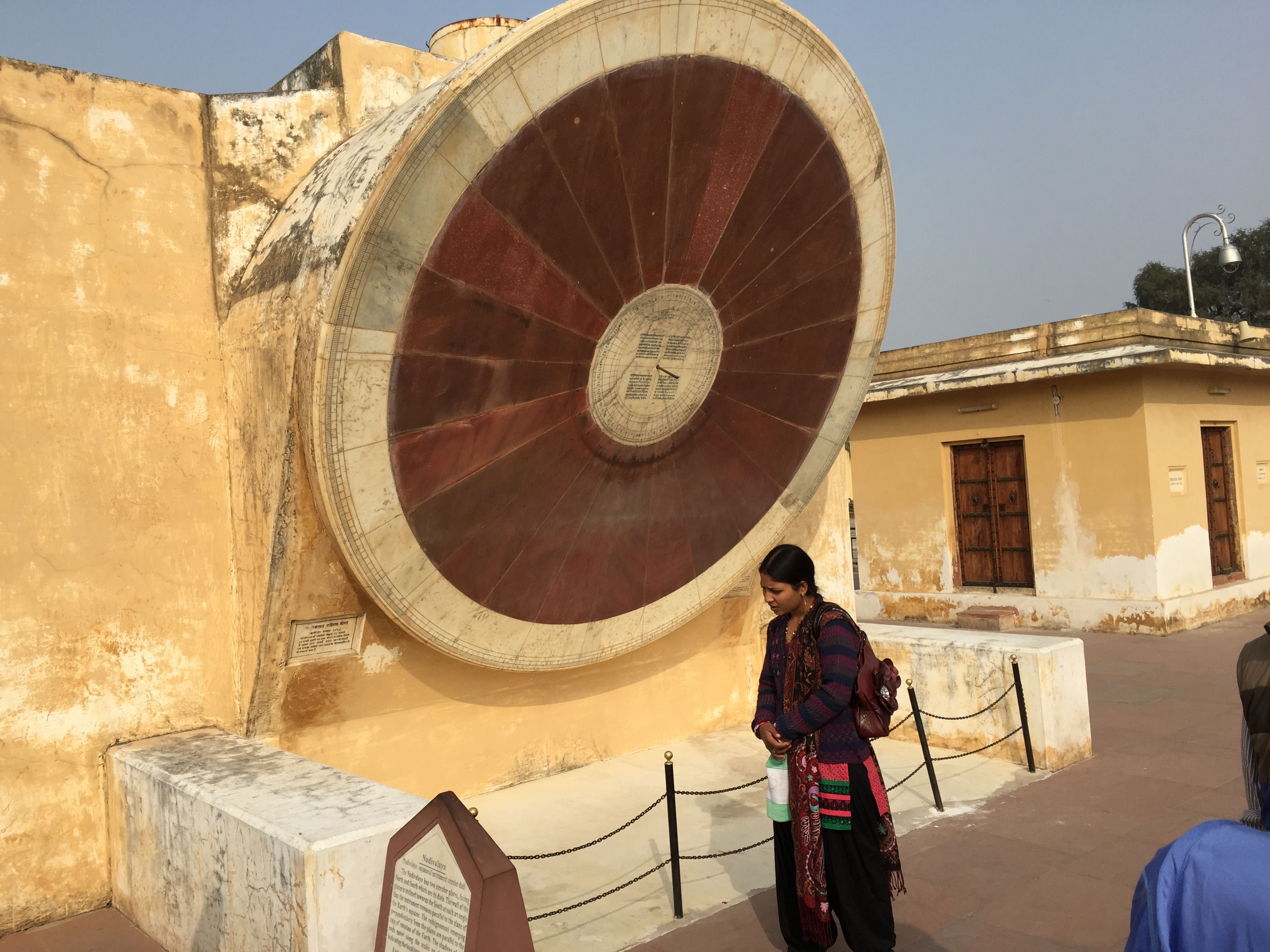
Oh, yes–the Palace, with the Observatory, a large outdoor plaza filled with astrological and astronomical devices (see one half of the sundial below) and, both coming and going to the Amber fort, views of the abandoned floating palace.

IMG_0236 IMG_0256

Dinner at the hotel where we waited for our miniatures to be delivered, because while the paintings were not inexpensive, they sweeten the deal by framing them on the spot for $30.  Irresistible.

A Small Gallery of Pretty Pictures

Below are several close-ups of frescos from the Amber Fort in Jaipur and the Red Fort in Delhi, and one marble inlay at the City Palace in Jaipur.  No people, no scenery.  Just pretty pictures.

From the Red Fort, Delhi:

IMG_0919 IMG_0912 IMG_0911 IMG_0910

From Amber Fort, Jaipur:

IMG_0198 IMG_0179

IMG_0967 IMG_0968 IMG_0971 IMG_0980

.IMG_0986This one is from the City Palace in Jaipur.  Inlay, not fresco.
Journey to Jaipur

Employing our excellent travel karma we woke to dreary weather—the day we would spend 5-6 hours driving from Delhi to Jaipur.  We checked out of the hotel and were on the road at 8am in a cold rain.

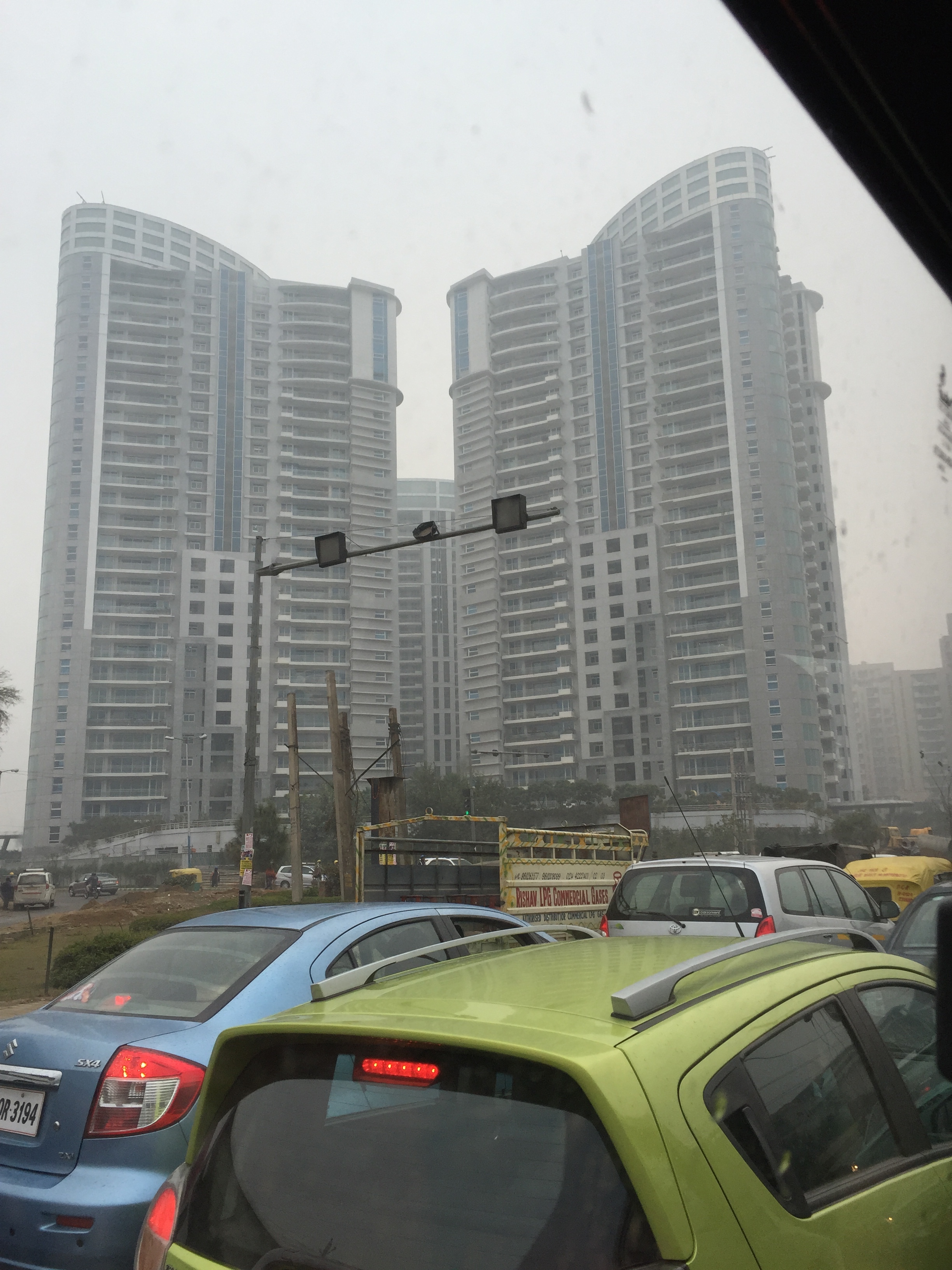
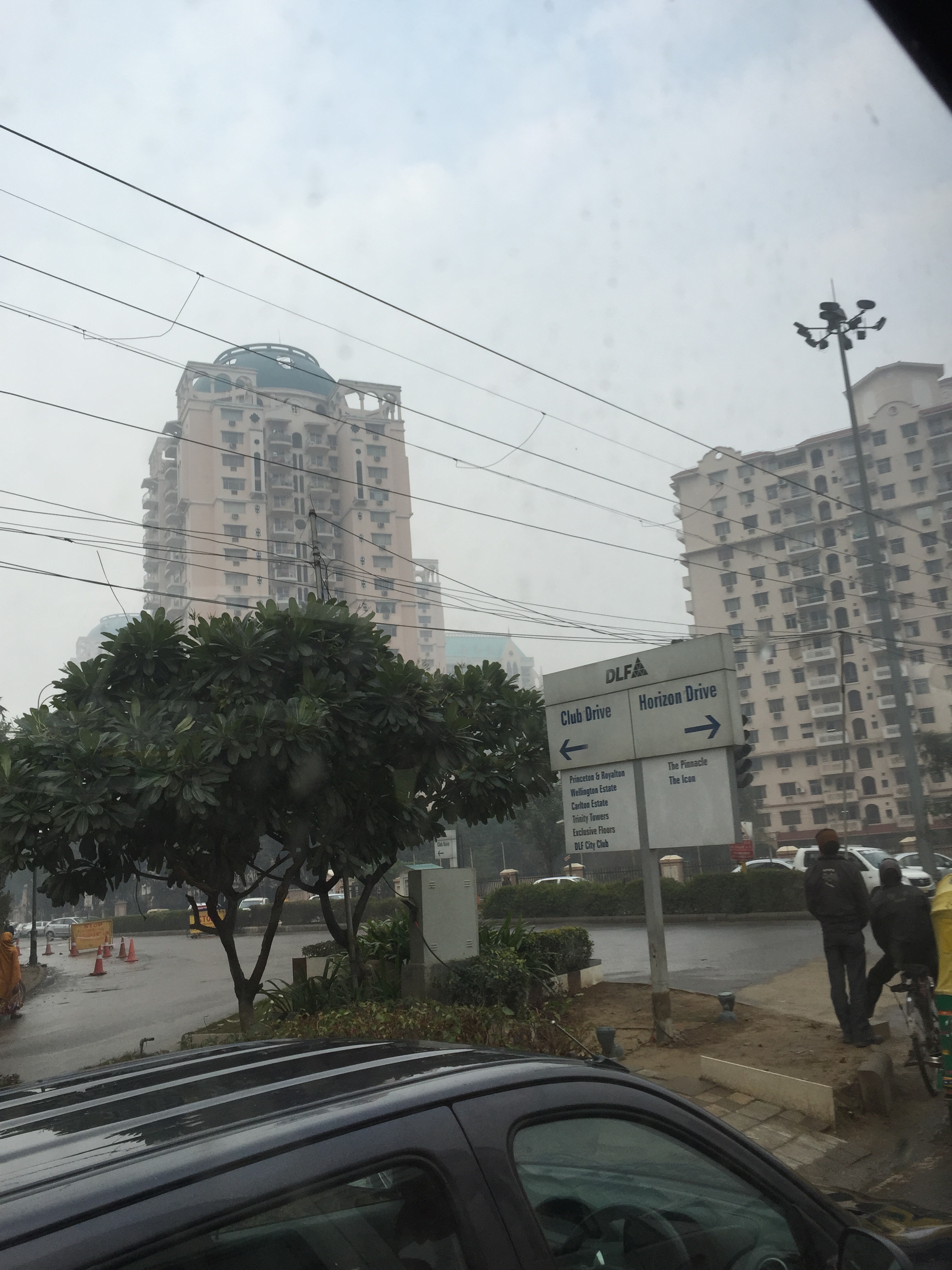
For several hours the drive was interesting but hardly picturesque, passing enormous high rises, Dell, Google, construction underway, construction partially finished and seemingly stopped, unfinished roads, hodge-podge intersections, too many cars and buses all driving with the same abandon as in Delhi. A disorganized boomtown—with million dollar apartments mixed with plenty of rubble and confusion. It is hard to imagine paying this kind of money for what must be a huge hassle just to navigate out of a parking lot and onto some kind of thoroughfare. The highway, Indian equivalent to an interstate, was utterly full of vehicles, mostly trucks of various sizes and most painted with flowers, Hindi, gods, and always with instructions to ‘honk horn’ painted above the rear bumper.

IMG_0149 IMG_0150

Gradually the construction gave way to countryside and we began to see livestock—cows, many herds of goats, water buffalo, a few pigs, a few chickens, a camel or two, the ubiquitous dogs, lots of monkeys along one stretch, sitting on top of stone fences eating, and vast fields of mustard. Every few miles a semblance of a village—rows of decrepit but bustling commercial enterprises of every type. Eating establishments with plastic chairs arranged out front, flower stalls, vegetable carts.

IMG_0153

Traffic moved very fast, with amply horn honking and darting in and out by cars among the trucks which weave back and forth with no obvious recognition that there are lane markings. We saw one sign which said “lane driving is safe driving” but we wondered how they could possibly know this is true—lanes were no more observed on the highway than they had been in Delhi. The highway is divided, but periodically we encountered cars and trucks coming down the wrong way, apparently because it was obviously more convenient than driving on the correct side and turning into a side road. One short stretch, maybe ¼ mile, was a series of car and truck repair shops with various specialties, and so of course there were trucks parked along both sides, facing in all directions, for repairs, leaving one crooked “lane” for traffic to pass through.

At last we came to a fork in the road—to the right, Amber, straight ahead, Jaipur, the Pink City. We bore to the right and immediately were in a jumble of commercial activity, cows in the streets, an elephant, picturesque buildings, food stands, and temples, and, to the right, a huge long mountain with stone walls snaking up and an enormous fortification complex at the top.

IMG_1280

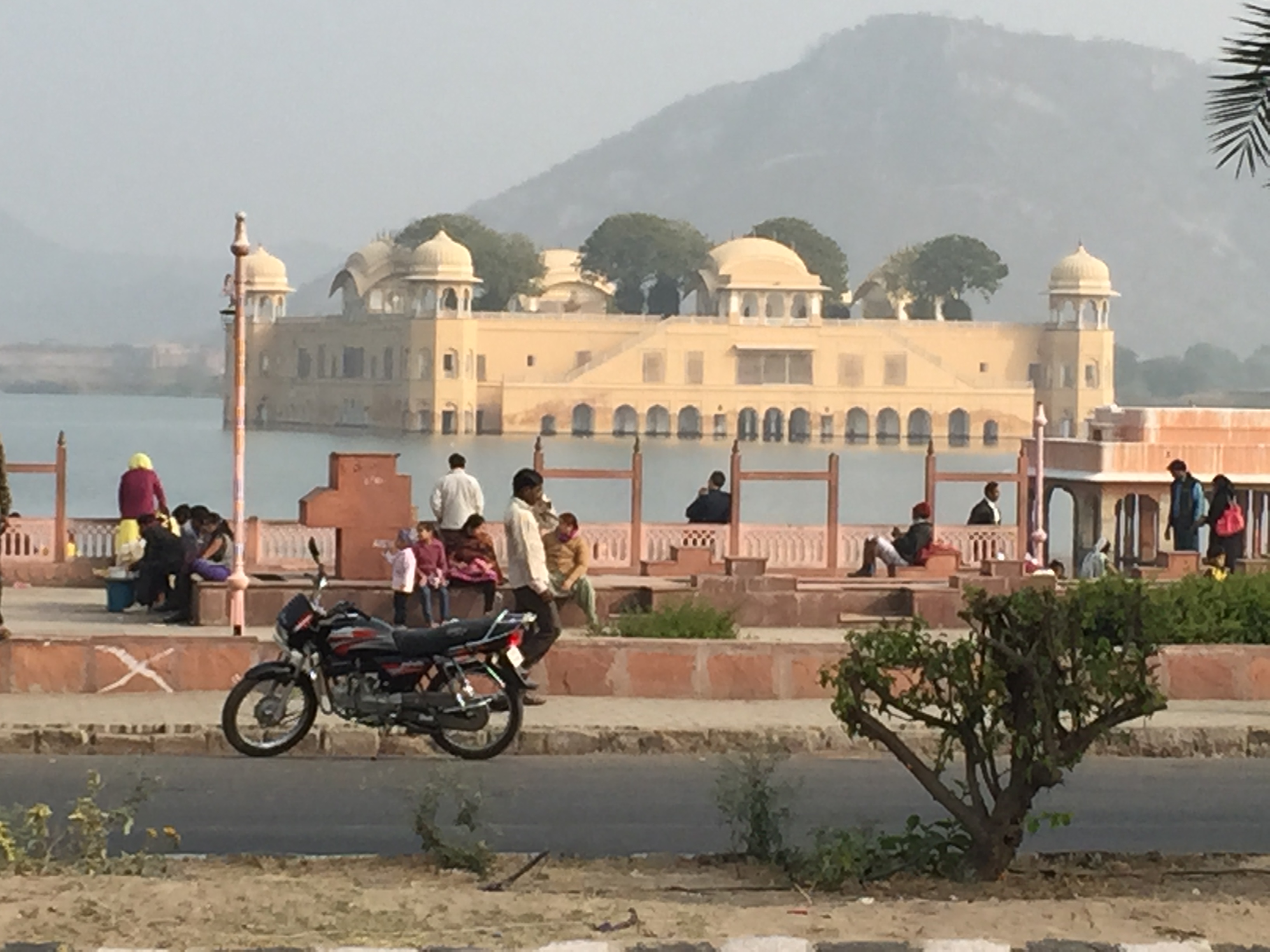
The road became narrow and winding, lined with bougainvillea. Rather suddenly the view in all directions was both bustling with families and commercial establishments and extraordinarily picturesque. A large lake with an abandoned palace in the center. Strips of parks with both people and monkeys. And then we were in Jaipur proper, a large, open city with a specific architectural style, salmon buildings with white ornamental trim which stretch for many blocks, giving the city a particular personality very different from Delhi.

IMG_0924 IMG_0923 IMG_0941 IMG_0946 IMG_0937

Our first stop was at a textile and rug complex, and as we got out we noticed many kites in the air. In the villages near Jaipur we had seen scatterings of people on their rooftops flying kites, and it was the day of the Kite Festival so we had expected to see whatever turned out to be a kite festival—we really had no idea what that meant. Trees around the parking area had kites stuck in the branches. A few hours before the rain had stopped and it was almost sunny and pleasantly warm. After a block printing and rug making demonstration we went inside to do some business. How clever the sales technique of offering Kingfisher beer, paneer tikka and chick pea pakoras to all of us as we sat down to the rug presentation—rug after rug brought out for our inspection as the men drank beer and we looked and looked…and bought. A large rug for the dining room, a runner for the kitchen, and our fellow travelers succumbed as well. Finally a few textile purchases.

Menfolk were getting tired.  IMG_1285

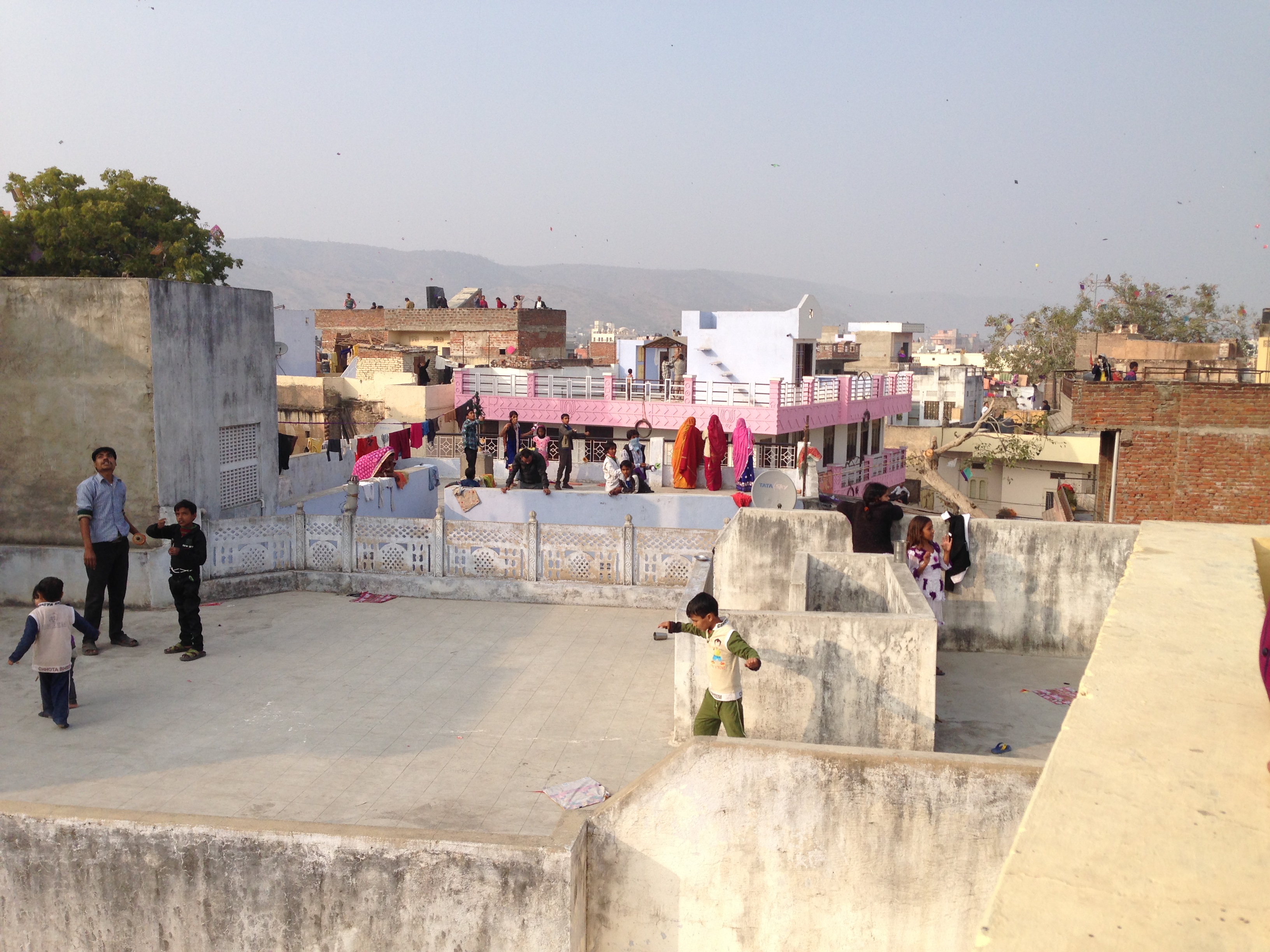
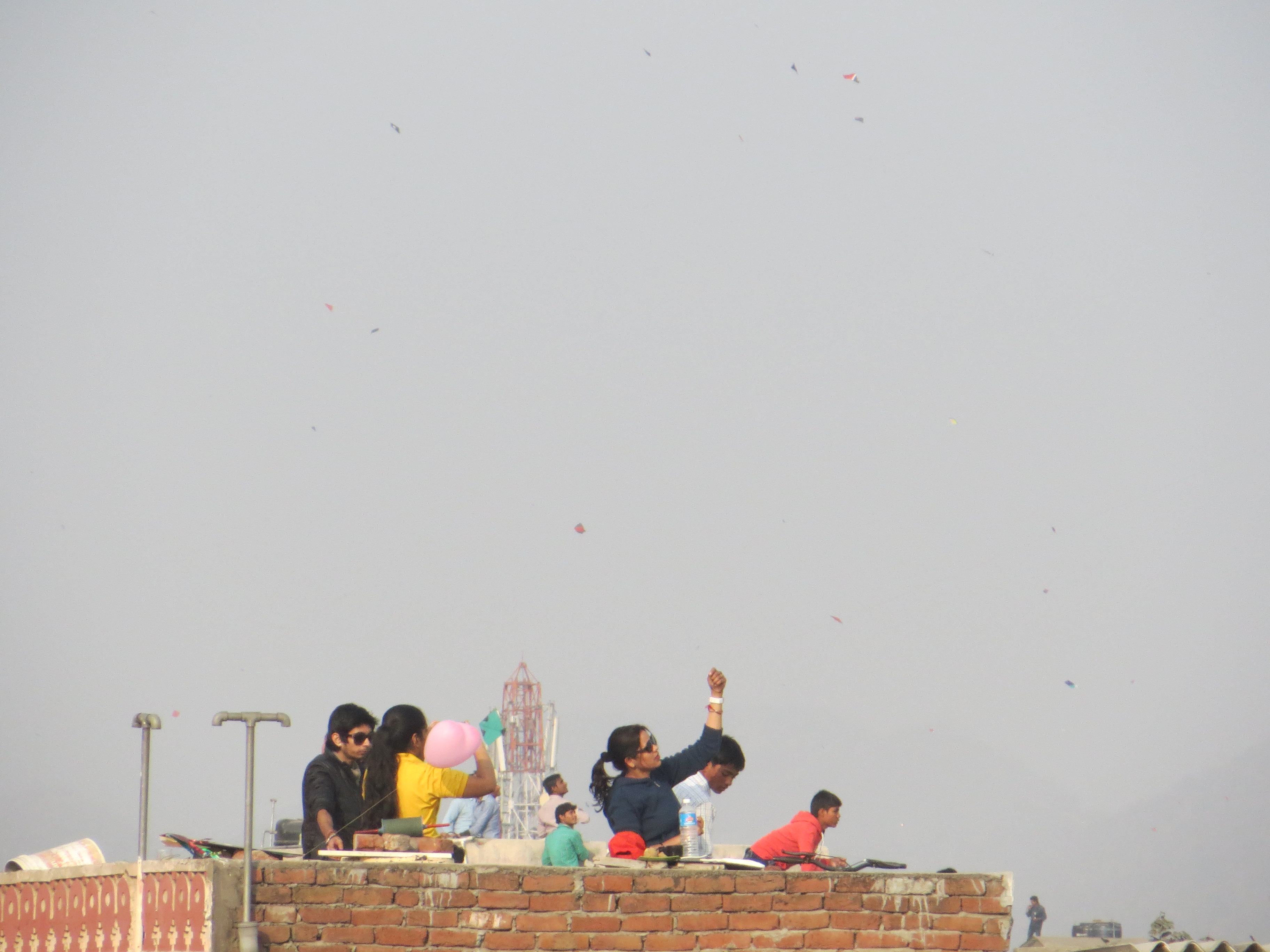
And then as we concluded the buying part of the day we were invited up to the roof. And NOTHING had prepared us for the site. On every roof in every direction, families were flying kites—the sky was full! And noisy–music, shouting, laughing; hooting when a kite went down—a citywide kite party. Monkeys in the trees, fallen kites in the trees, women in colorful saris, children dancing and hollering, picture taking, kite flying attempts (by us), actual kite flying (by our hosts)—it was glorious, exciting, colorful, thrilling, and after maybe 30-45 minutes we finally went back down to the van and off to our hotel.

IMG_1291 IMG_1289 IMG_1288 IMG_0936

Tomorrow we ride elephants.  Really?

A mosque, a fort, a memorial, a temple

IMG_0881 IMG_0884

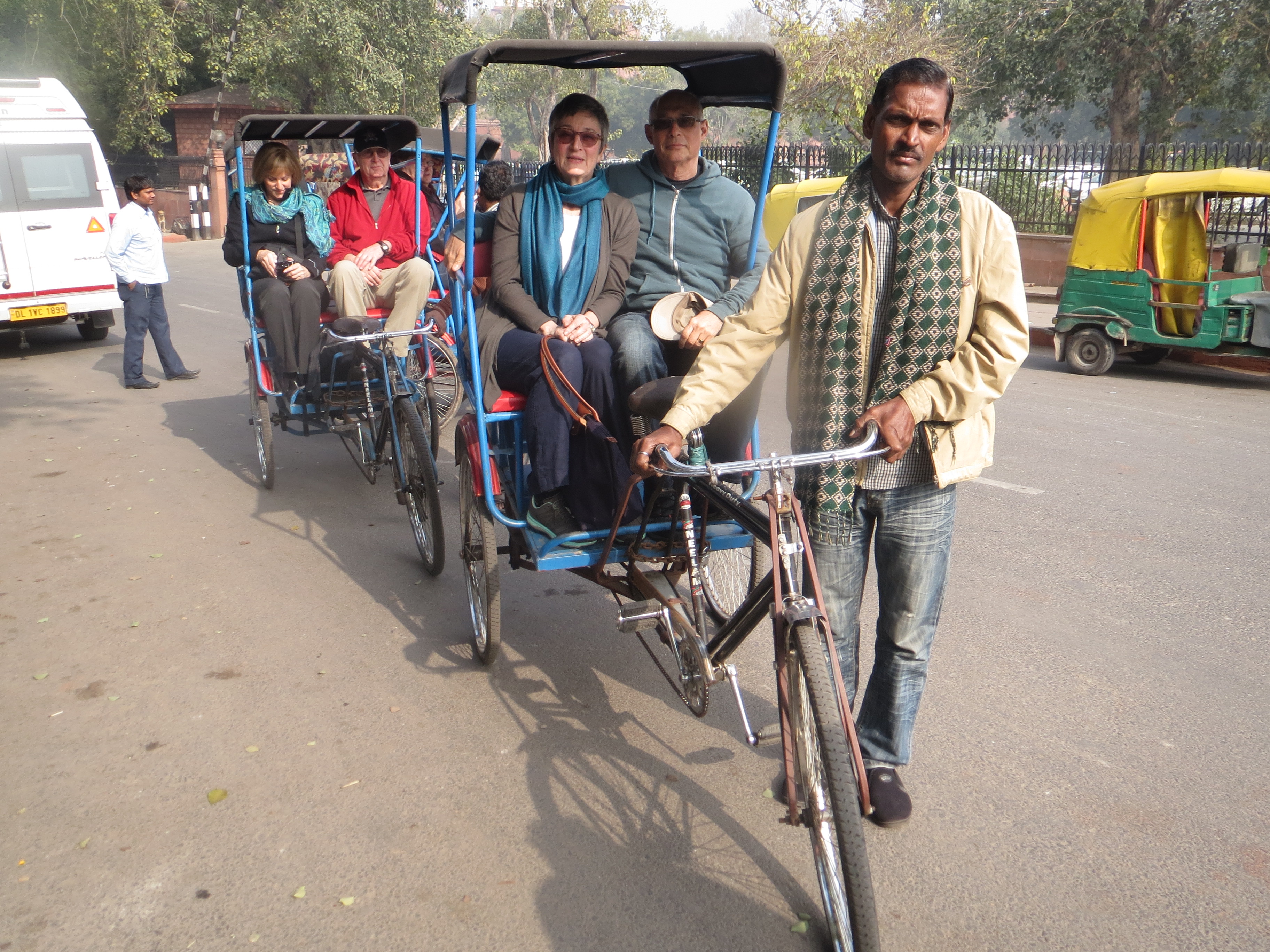
To journey up the hill to the largest mosque in India, of course you take a bicycle-powered rickshaw. And then try to keep breathing.  Right into the impossible traffic you go, surrounded by honking horns, busses, three-wheeled cabs, everything and everyone going as fast as they can, while sidewalk merchants sell dental services (“Over there–they make teeth” our driver explains as we pass one, two, maybe ten different men sitting on blankets next to propped up handdrawn pictures of dentures), clothing, vegetables, handbags, tea, like every street market but louder.

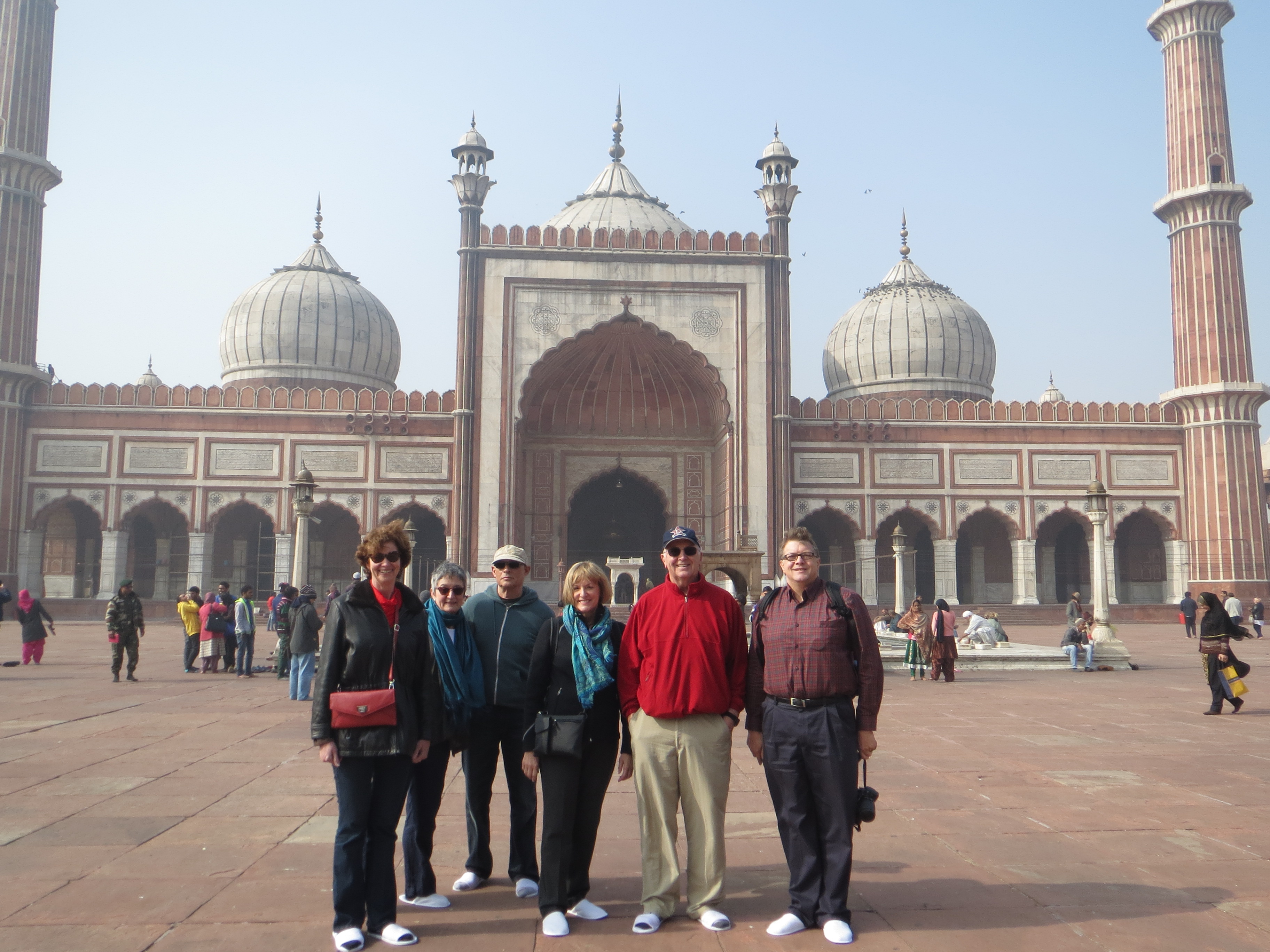
The Mosque itself is an enormous plaza with minarets and domes, the interior a surprisingly small colonnade, rather lovely in proportions but fairly plain.

IMG_0901 IMG_0898

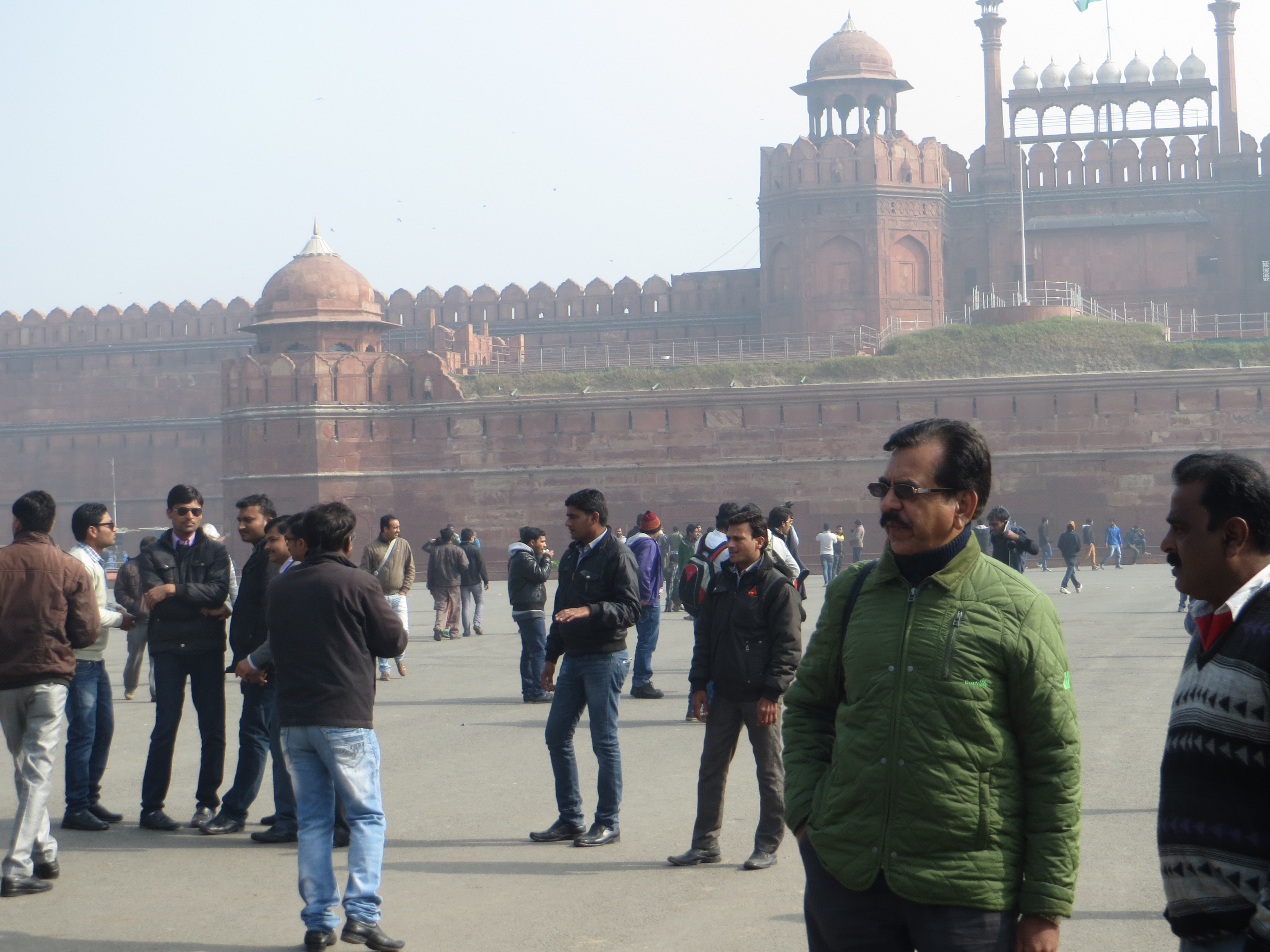
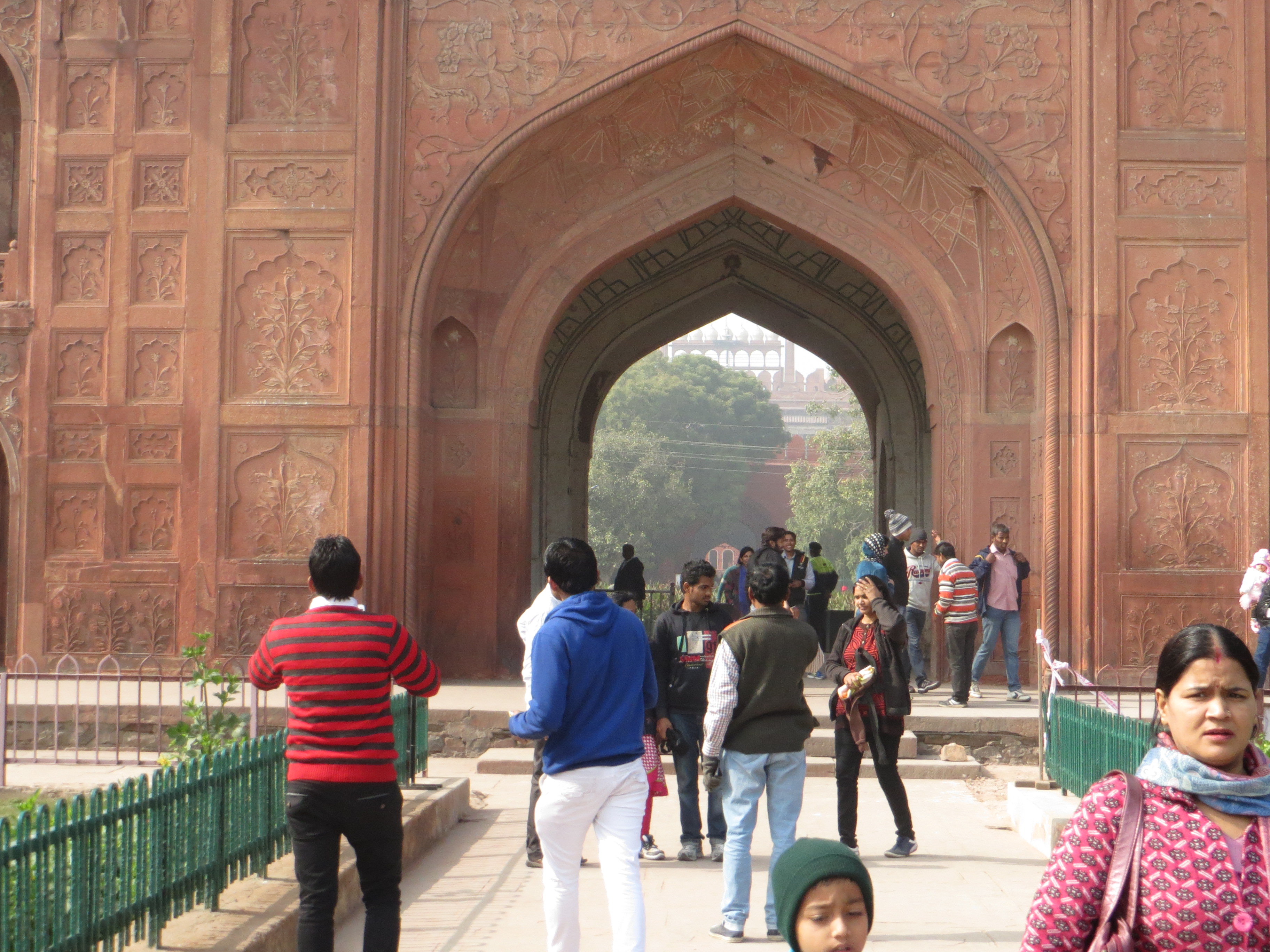
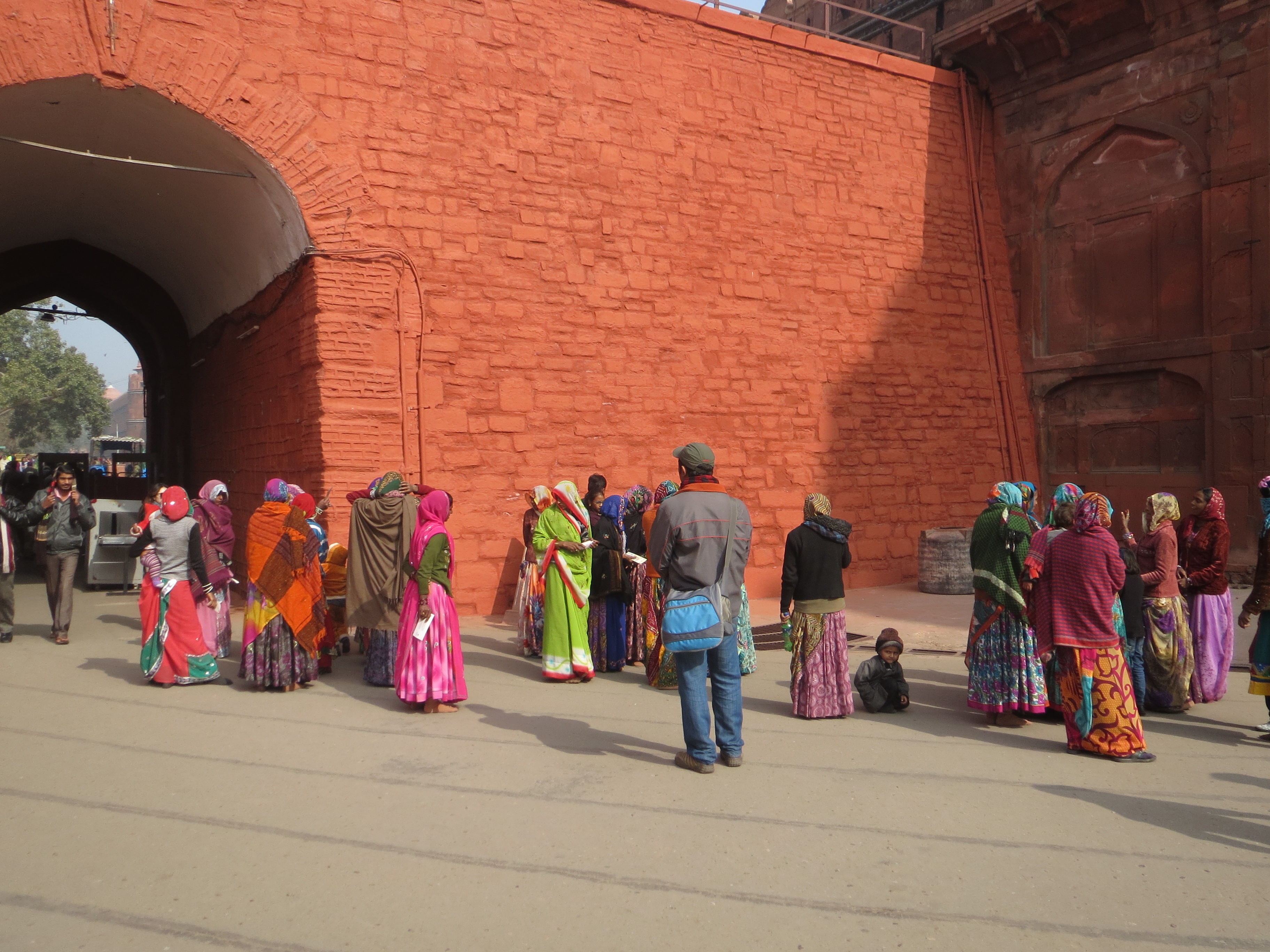
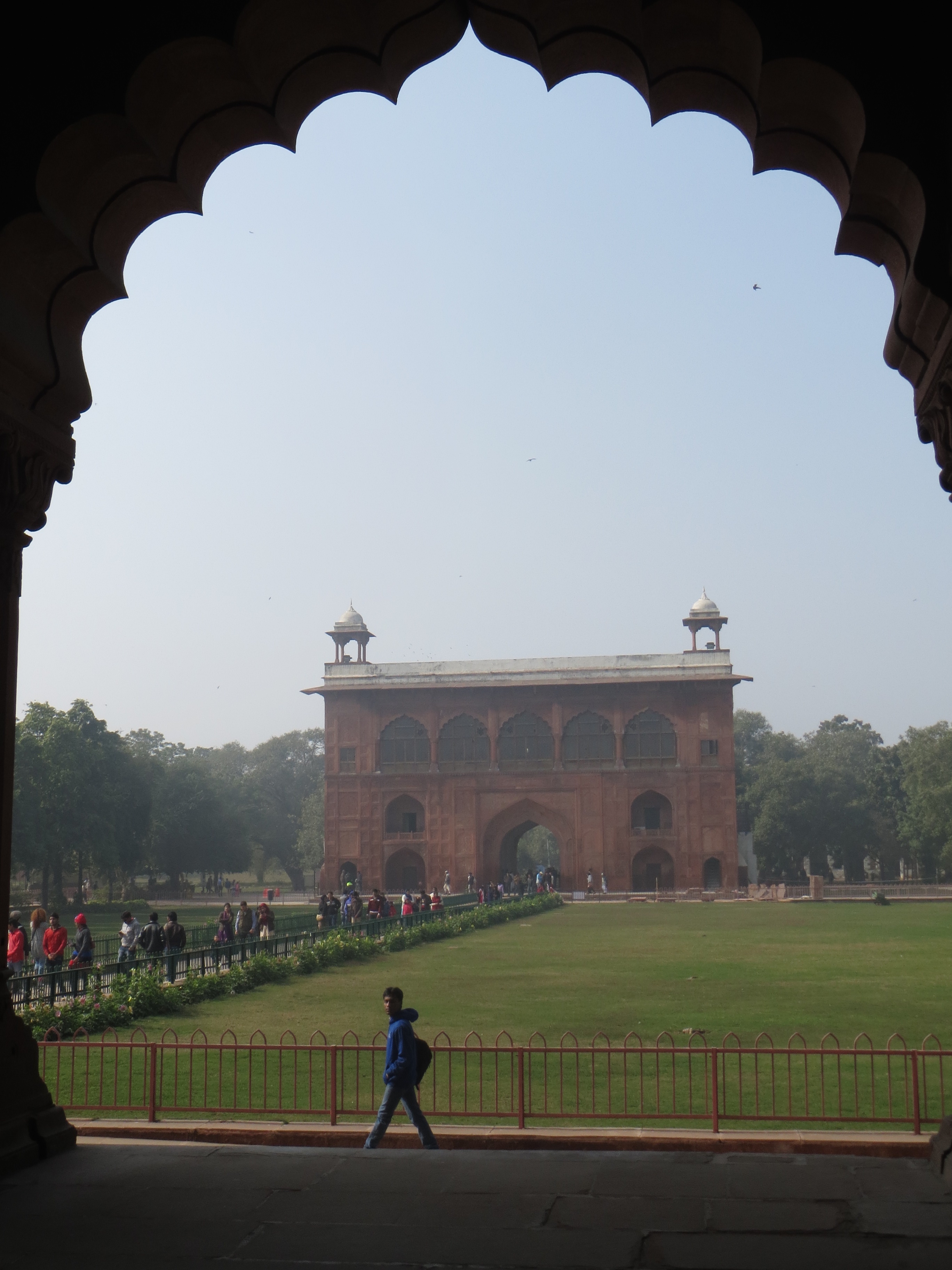
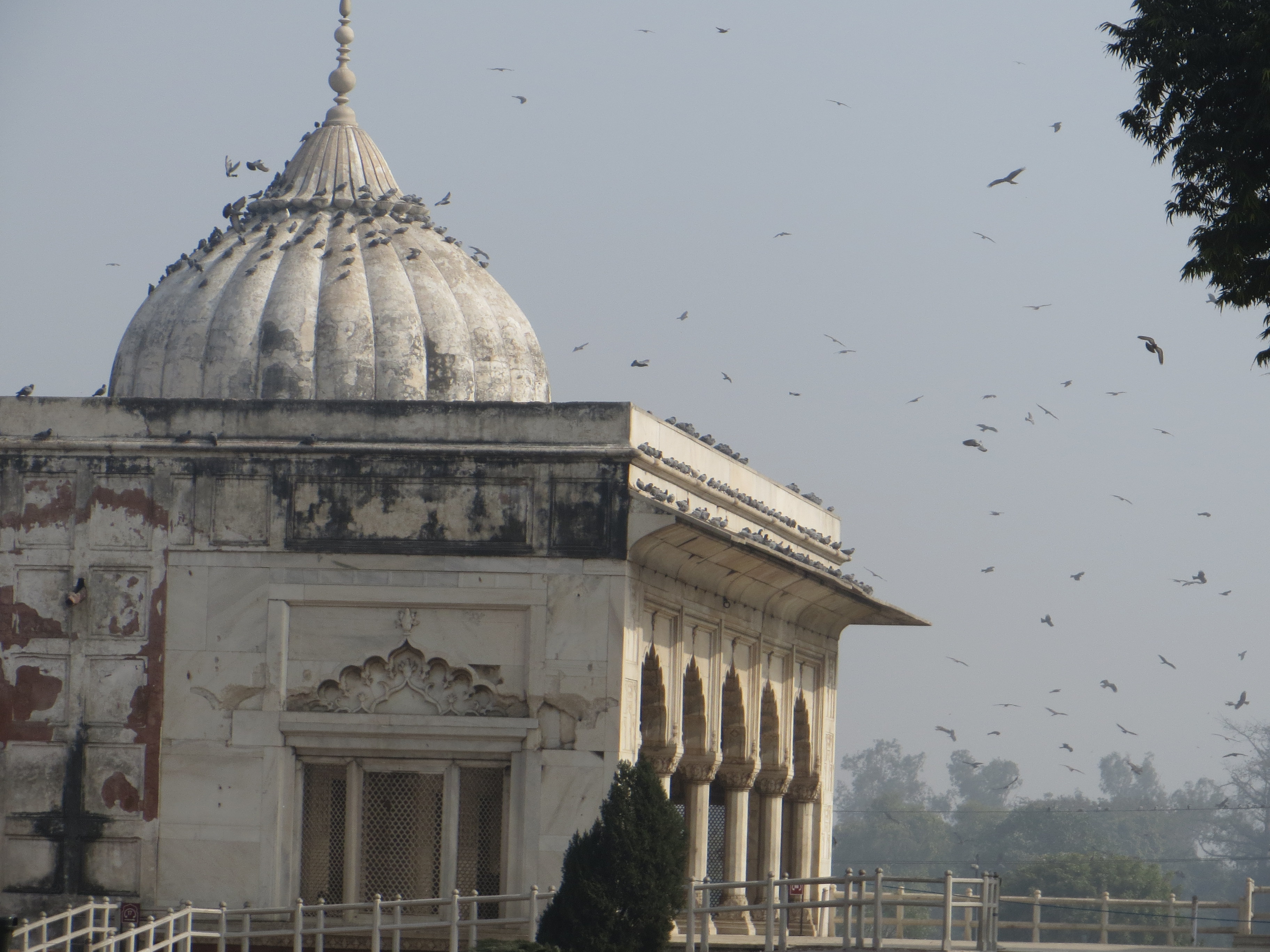
Down we came in our bicycle rickshaws to be dropped at the Red Fort.The Red Fort looks like a huge fortification, but inside it is a broadly dispersed set of buildings and expanses of lawn. Architecturally various with both marble and sandstone buildings, long open terraces, and, sadly now, remnants of an elaborate water system which had flowed from building to building to provide bathing facilities and fountains. Almost as interesting as the complex of buildings were the Indian tourists, beautifully clothed women in extraordinarily bright saris, men in colored turbans open in the center like cloth crowns and white draped pantaloons. We strolled from building to building as our wonderful guide Anil explained the history of each.

IMG_0908 IMG_0915 IMG_0909 IMG_0917 IMG_0918

I finally was able to capture a photo of another great flock of kites swirling above.

Tucked here and there on several of the buildings were delicate inlays of flowers and floral arrangements.

IMG_0910 IMG_0919 IMG_0912 IMG_0911

On our way to lunch we made a short stop at Mahatma Ghandi’s memorial, the site of his cremation. A path leads around the simple stone platform, decorated with rosettes of fresh marigolds, and the eternal flame. The park in which it sits is also the site of the cremations and memorials of many key figures since independence, prime ministers and others, and the park itself is many acres, peaceful and quiet.

IMG_0142

Another delicious lunch, where we again had paneer tikka, a food that is becoming the symbol of our love affair with Indian cuisine.  Pindi. Go there if you are in Delhi.

Last stop of the day was to the Akshardham Hindu temple, built miraculously in 5 years (“it was supposed to take 40”) and to my inexperienced eyes the very essence of over the top Hindu kitsch. We have no photographs as visitors are not allowed to take anything into the complex (no phones, no cameras) and we each were carefully and thoroughly searched on entry. From our itinerary: “Built without steel, it consists of 234 ornately carved pillars (ornately is an understatement), 9 ornate domes, 20 quadrangle shikhars…and 20,000 statues of India’s greatest sadhus, devotees, acharyas, and divine personalities.” Not to mention a frieze around the entire base of the main building comprising every kind of elephant, elephant family, elephant story, elephants being worshipped by rabbits, elephants fighting crocodiles, elephant parables, each elephant carving weighing many times that of an actual elephant. And a food court, gift shop, lotus garden…it is Hindu Disneyland.

After a grueling drive back to our hotel we fell into bed.

Delhi, part 2

Ravenous (at least I was) we went to Lazeez Affaire for a late lunch, our first meal as a group. Happily, everyone was ready for an Indian feast and so we ordered chicken tikka, pieces of the tenderest grilled chicken, and paneer tikka, slabs of grilled paneer stuffed with green cilantro paste, butter chicken, various kinds of naan, rice, paneer in a tomato sauce, paneer with spinach, all wonderful.  Our guide suggested we visit a small step well and a temple to conclude the day.

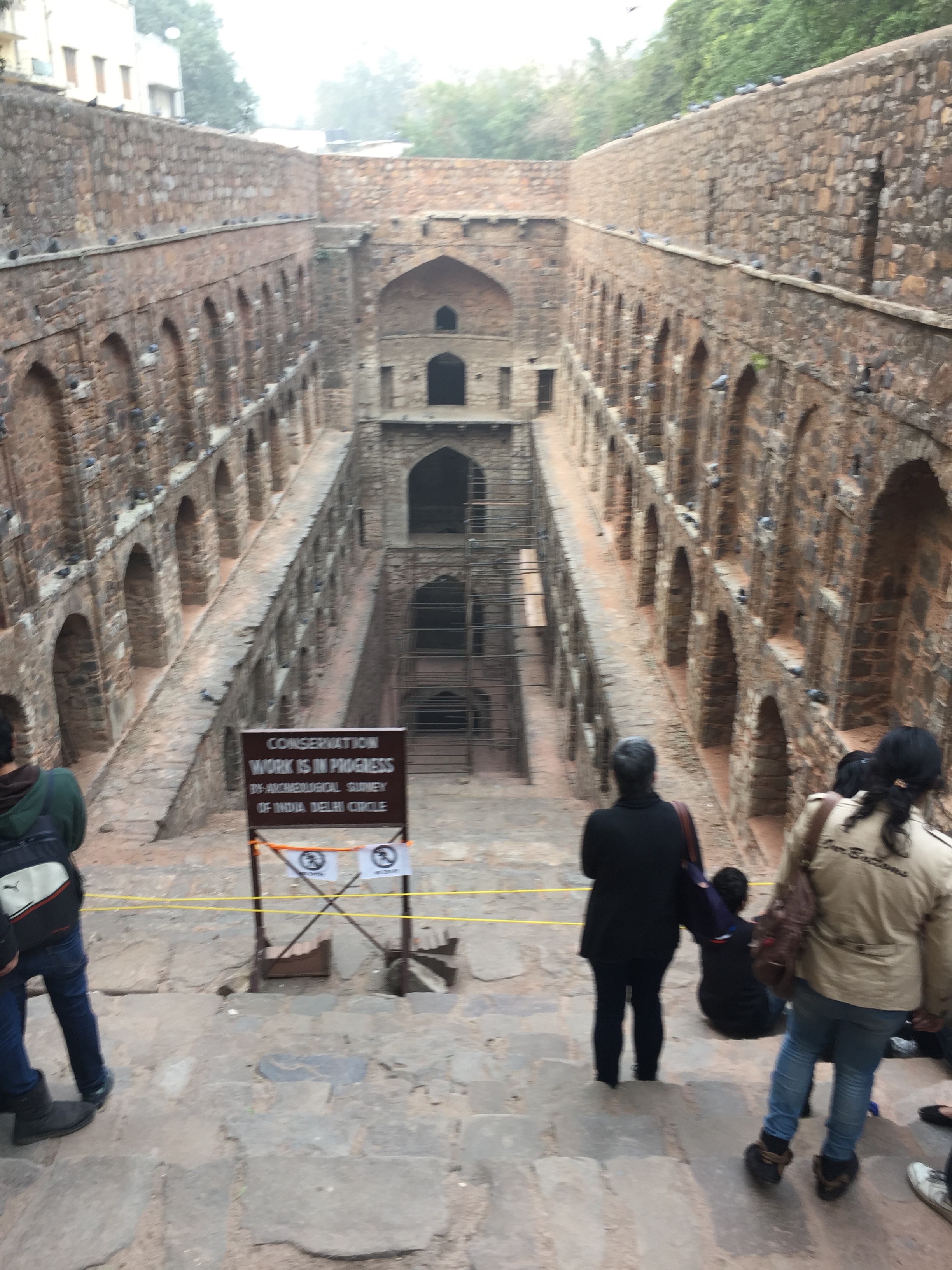
A step well is a in fact a water well, but instead of a shaft with a mechanism to raise the water, like a pail on a rope, there are stone steps leading down to the surface of the water.  Sounds unremarkable if a little odd.

IMG_0107

This is the Ugrasen ki Baoli (baoli is Hindi for step well).  After driving down a narrow city alley-ish street which was bordered on both sides with linens drying on racks made of criss-crossed bamboo, and walking through an unremarkable, small stone doorway, we were standing above an very deep chamber dug into the ground like an inside out, upside down building, ever narrower as it gets deeper.  Groups of teenagers sat on the steps above as if this were a perfectly obvious place to hang out and gossip. It was beautiful and somewhat shocking to see this mysteriously engineered step well juxtaposed with the skyscrapers of modern Delhi just beyond the ancient walls that line the well itself.

Our final adventure of the day was the most moving, as we visited the very large, bustling Gurdwara Sikh temple.  First stop, the tourist room where we removed shoes and socks and head scarves were provided to those in our group who didn’t have them.  Outside to wash hands and walk through a shallow trough of water, and then up the marble steps and across the plaza to the temple, where three men chanted to a tabla and two harmoniums and worshippers strolled, or bowed, or sat cross legged on the floor where large monitors displayed in Hindi and English the words of the chants.  A man inside the altar area had a large video camera, feeding a continuous live broadcast.  (http://www.dsgmc.in/ )  The chanting, the overwhelming spirituality in the temple, the smells and opulence of the setting were attractive and hypnotic.  It was very difficult to leave.

IMG_0111 IMG_0112 IMG_0116

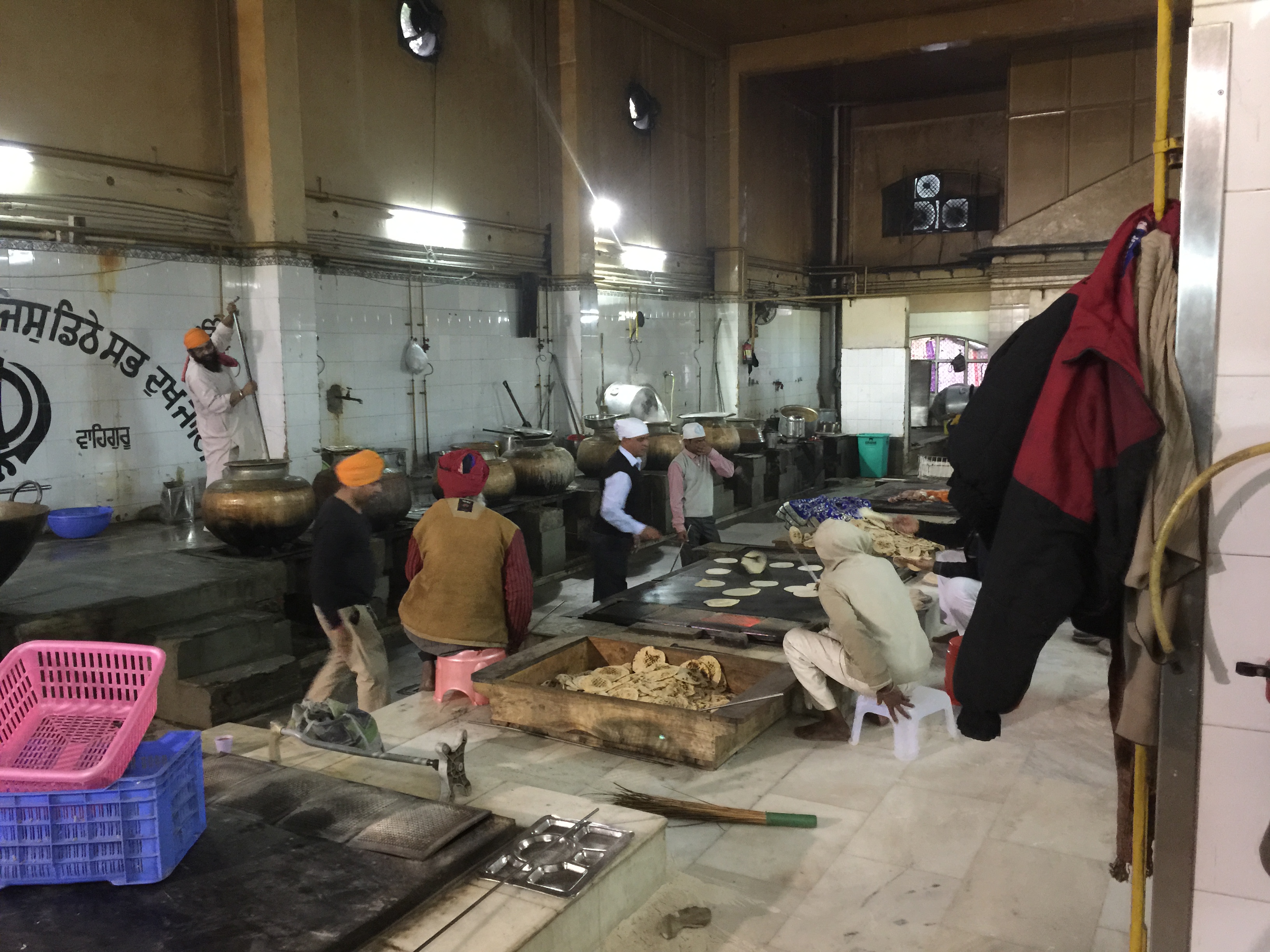
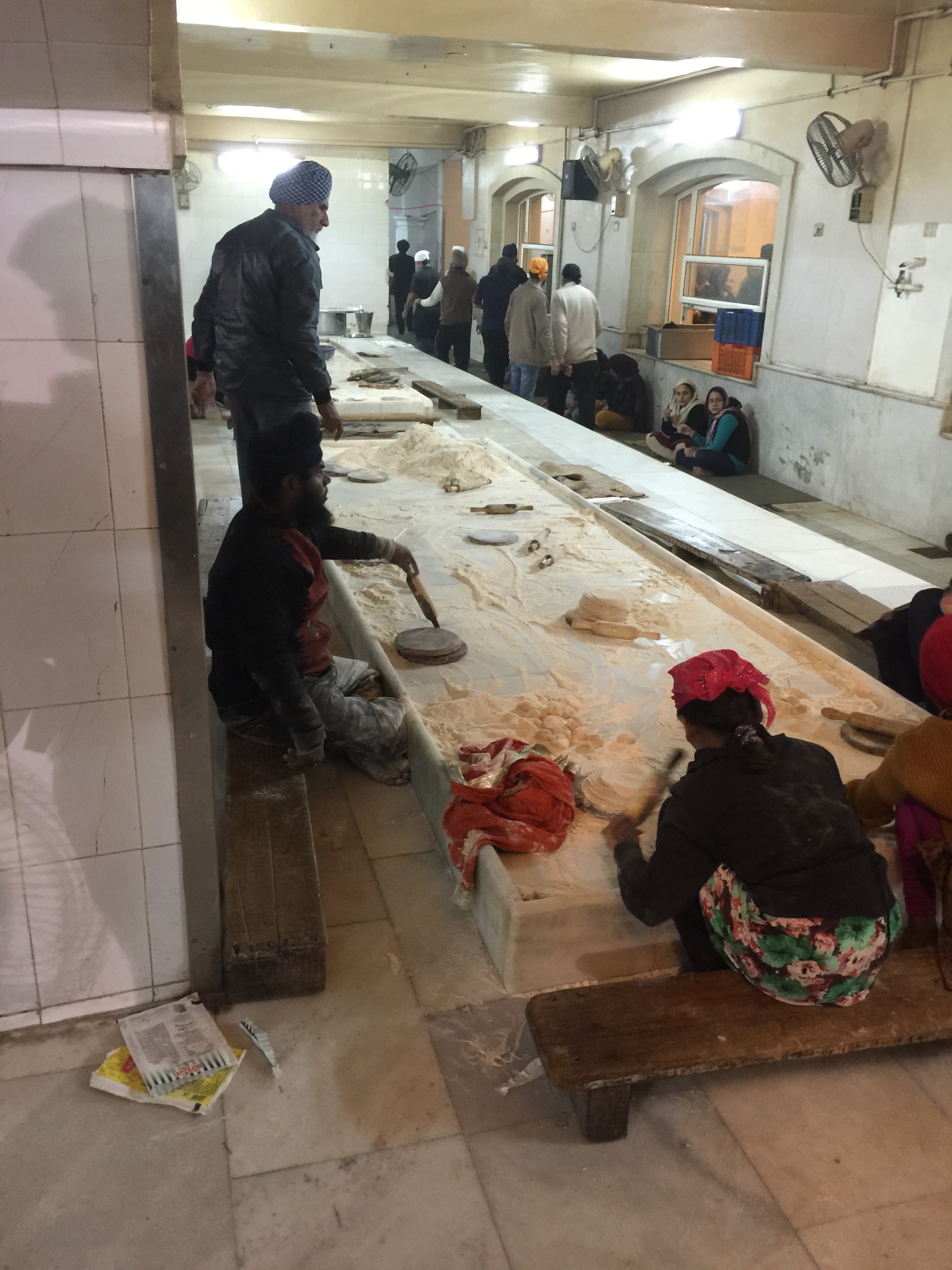
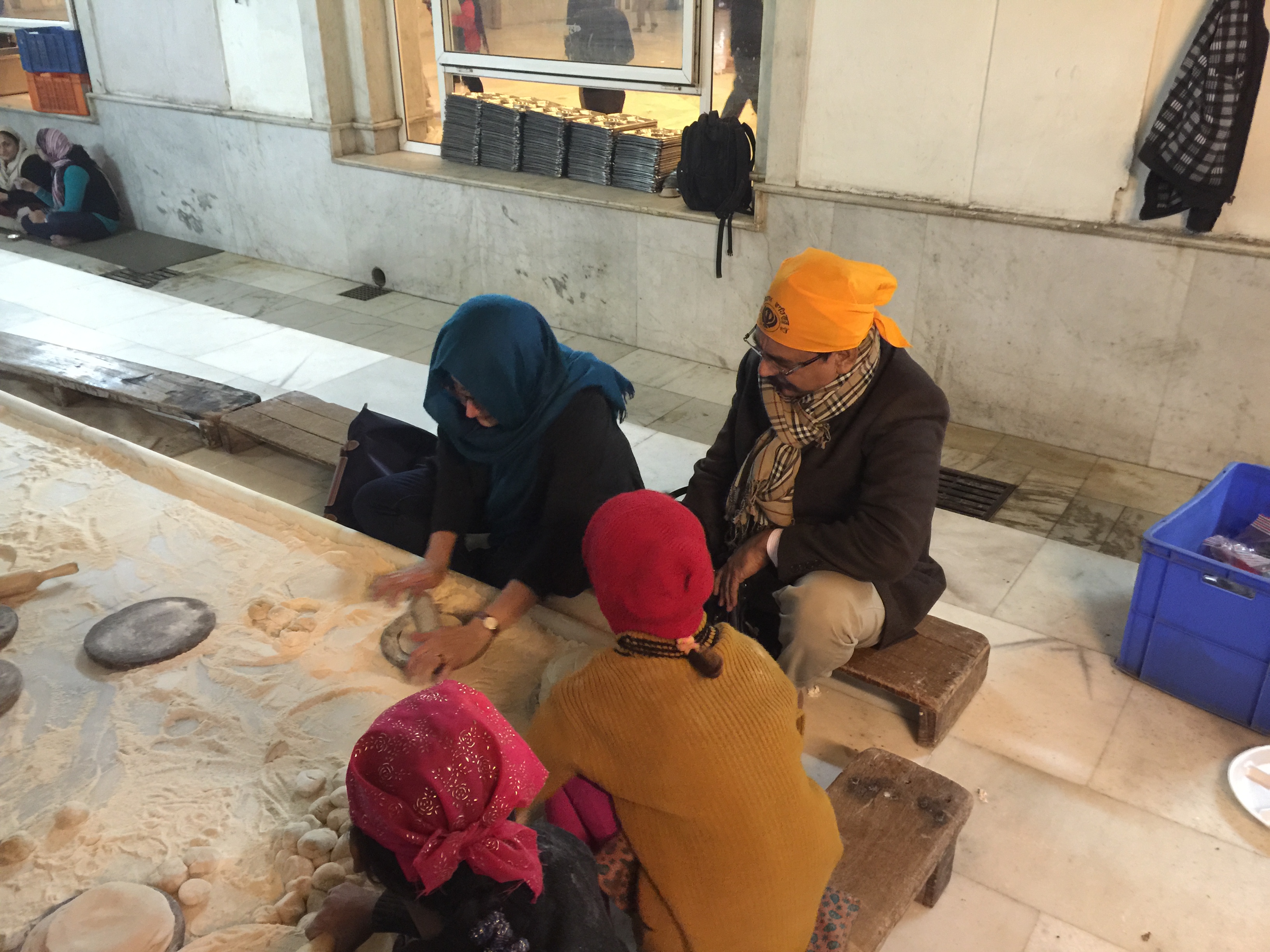
We toured the dining area, where every day, morning to evening, everyone who sits down in the dining room (cross-legged, in small family groups or large lines) is fed, and then into the kitchen where immense caldrons of a potato curry stew were bubbling and a shifting group of children, men, and women sat in front of long trays of flour, rolling out balls of dough into thin disks which they stacked on wooden platters.  Periodically a young man swooped away the ready chapatis and replaced them with an empty platter–and groups of mostly men were tossing the disks on a huge flat griddle.  As soon as they were sufficiently charred a man with a long pole flipped them onto a more open charcoal grill where they immediately puffed up, and then were slid into baskets to be served in the adjacent dining area.IMG_0114Of course I (wearing the blue scarf) had to join the rolling group for a few minutes.

First day in New Delhi, part 1

New Delhi, so named by the British to separate it from the “old” Delhi they disliked for its confusing streets and unrelenting Indian-ness. New Delhi, with enormous 20th century palaces and government complexes, English gardens in the middle of the largest roundabout in the world–a series of interlocking traffic circles that spin buses, cars, scooters, bicycles, 3-wheeled motorized rickshas with their guardian gods pasted to the dashboards as if a centrifugal force were flinging objects in and out of orbits.

IMG_0853 IMG_0861 IMG_0859

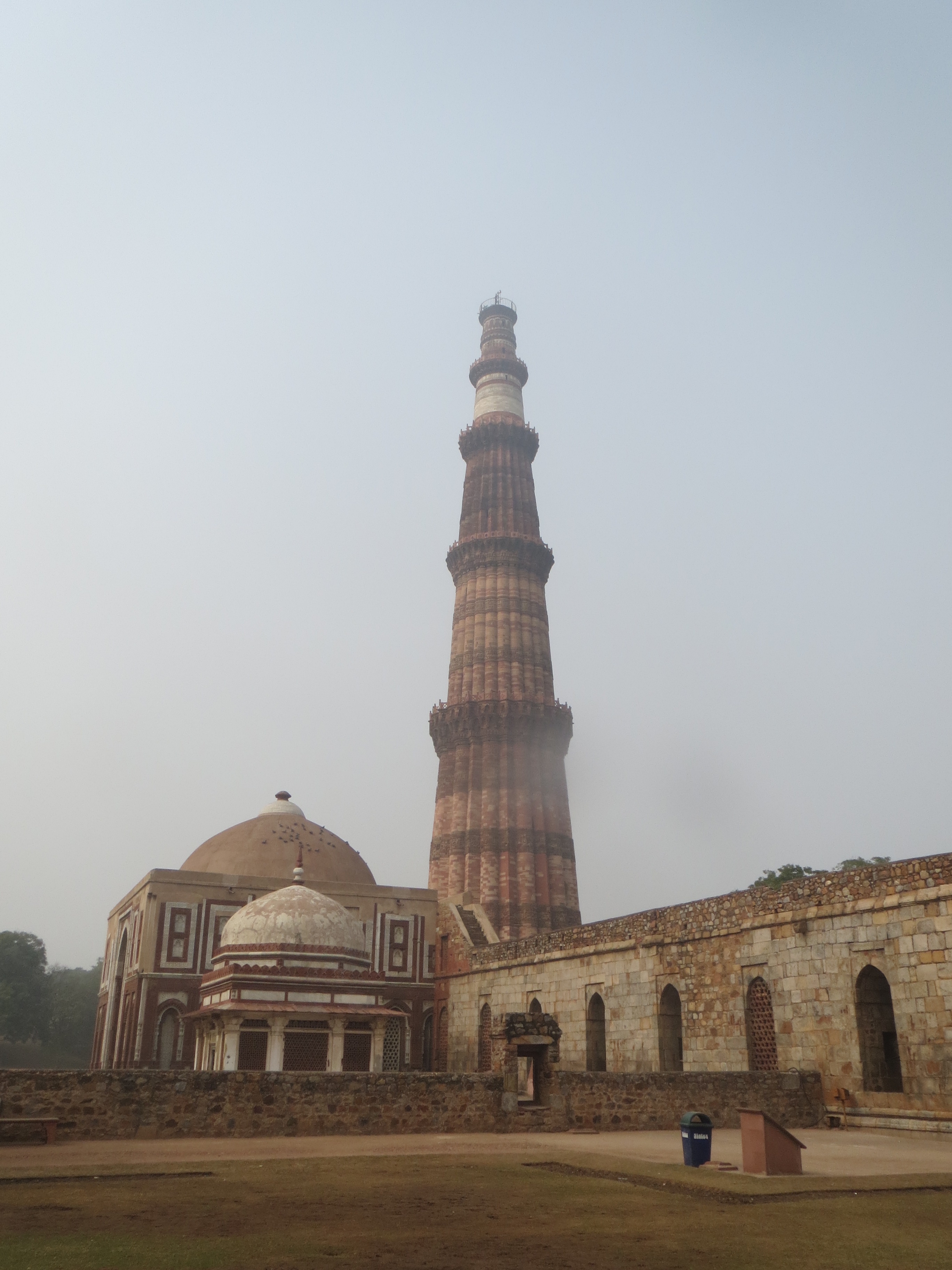
The amazingly preserved sandstone and marble of Qutb Minar and the surrounding Mehrauli Archaeological Park are beautiful but the first thing we noticed were the parakeets, bright green, red-beaked and chattering, screaming, occasionally racing in small groups from the top of a wall to a tree to the nooks between the unmortared stones of the temples, towers, wells, tombs, celebration halls, and mosque ruins. Who built what? Could this be Mugdal if there are carvings of chains and bells, which only the Hindus included in their holy buildings? Endless puzzles of attribution and meaning.

IMG_0865 IMG_0242 IMG_0869

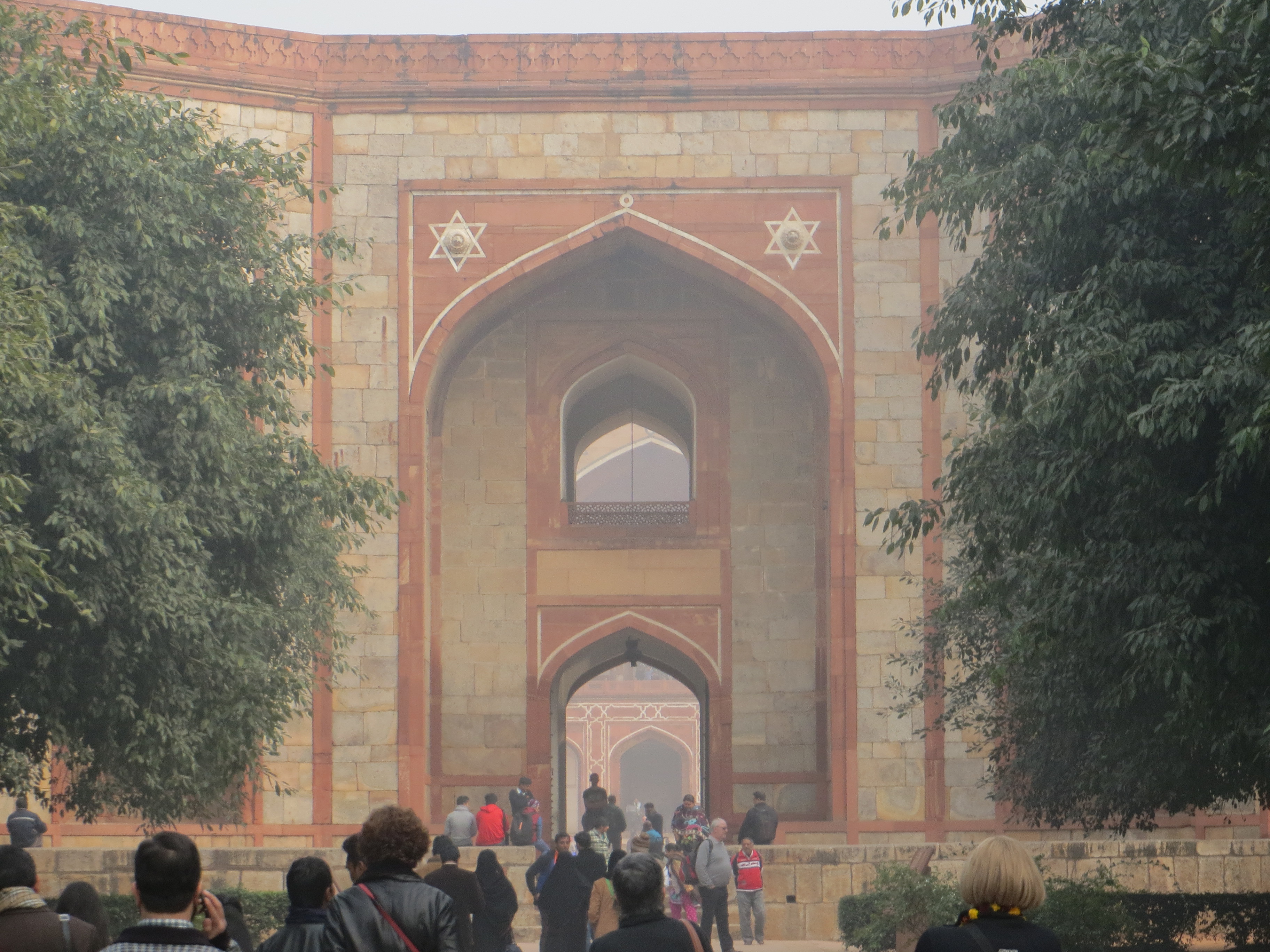
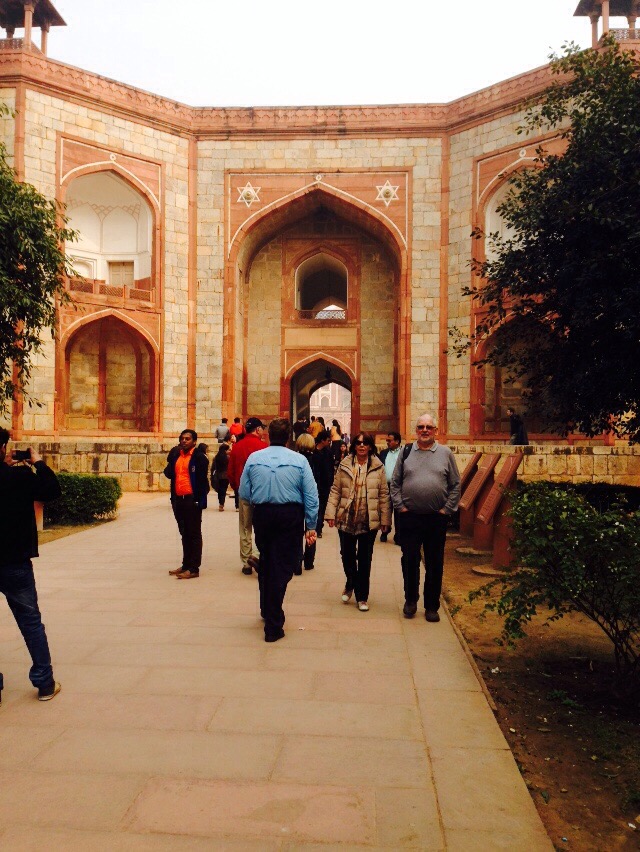
We went on to Humayun’s tomb, which President Obama came to visit in 2009, having turned down the Taj Mahal because of the disruption of closing it down for several days to accommodate security concerns.  Humayun’s Tomb is considered a precursor to the Taj, with the oldest surviving bulbous hollow arch construction. Before Obama’s visit this exquisite and massive, building, with its elegant gates and gardens, had few Indian visitors, but after news reports of the Obama tour it has become very popular and additional restoration has continued. It’s so elegant, with such a pleasing proportion, it seems impossible it could ever have been overlooked.  Hundreds of kites, raptors similar to falcons, were riding the thermals at such altitudes that the highest of them almost disappeared.

Next:  A step well and the Sikh Temple

Dubai airport

Two scenes:
Striding through the almost empty, enormous baggage claim area at 7:30pm Sunday local time, a woman in full chador, only her eyes revealed, talking on her cell phone and followed by 3 small children and two of the largest baggage trolleys I have ever seen–bags were stacked five layers high.
Medallions on the passport control desks celebrating the “20th Annual Dubai Shopping Festival.”

2015/01/img_0229-2.jpg

Leisure traveler

When I am traveling for business I find vacationers around me a bit annoying, a bit in the way, a bit clueless. They aren’t working, contributing, serious–not like me.
When I am traveling on vacation, listening to business conversations around me I think “gee, they sound so self-important, absorbed in their oh-so spectacularly irrelevant deals, busy impressing themselves and each other about things that don’t really matter.”
I am such a hypocrite.

Outta here

As so often the case, right before leaving on a much-anticipated vacation I find myself wondering if I really need to get away, especially NOW.  Now, here at home, which feels so safe and beloved.  Why am I trading it for there, away, which feels so unknown?  Why am I leaving my bed, my desk, my doggies, my new kitchen?

BECAUSE!  Yup.  I’m outta here.