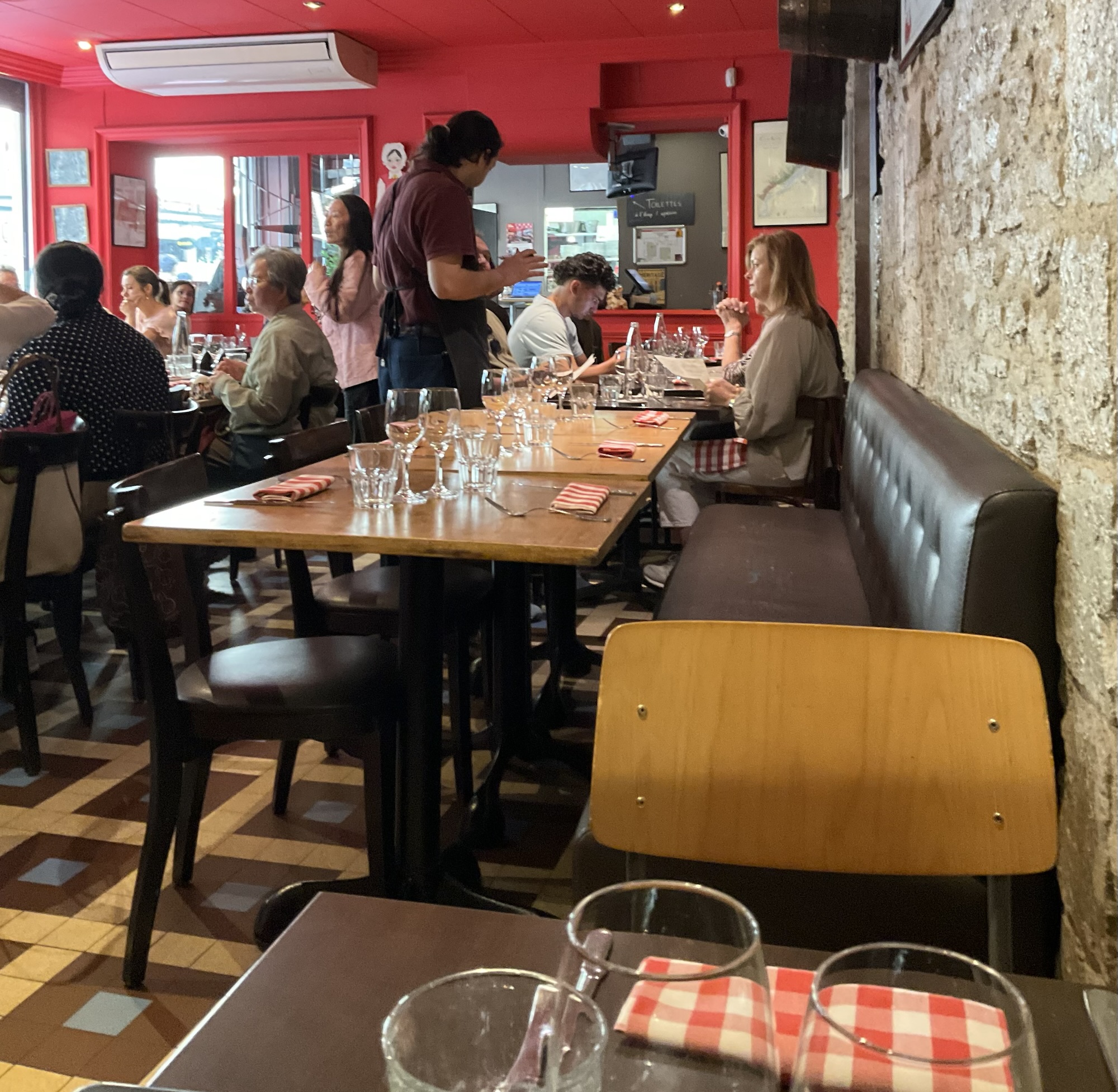
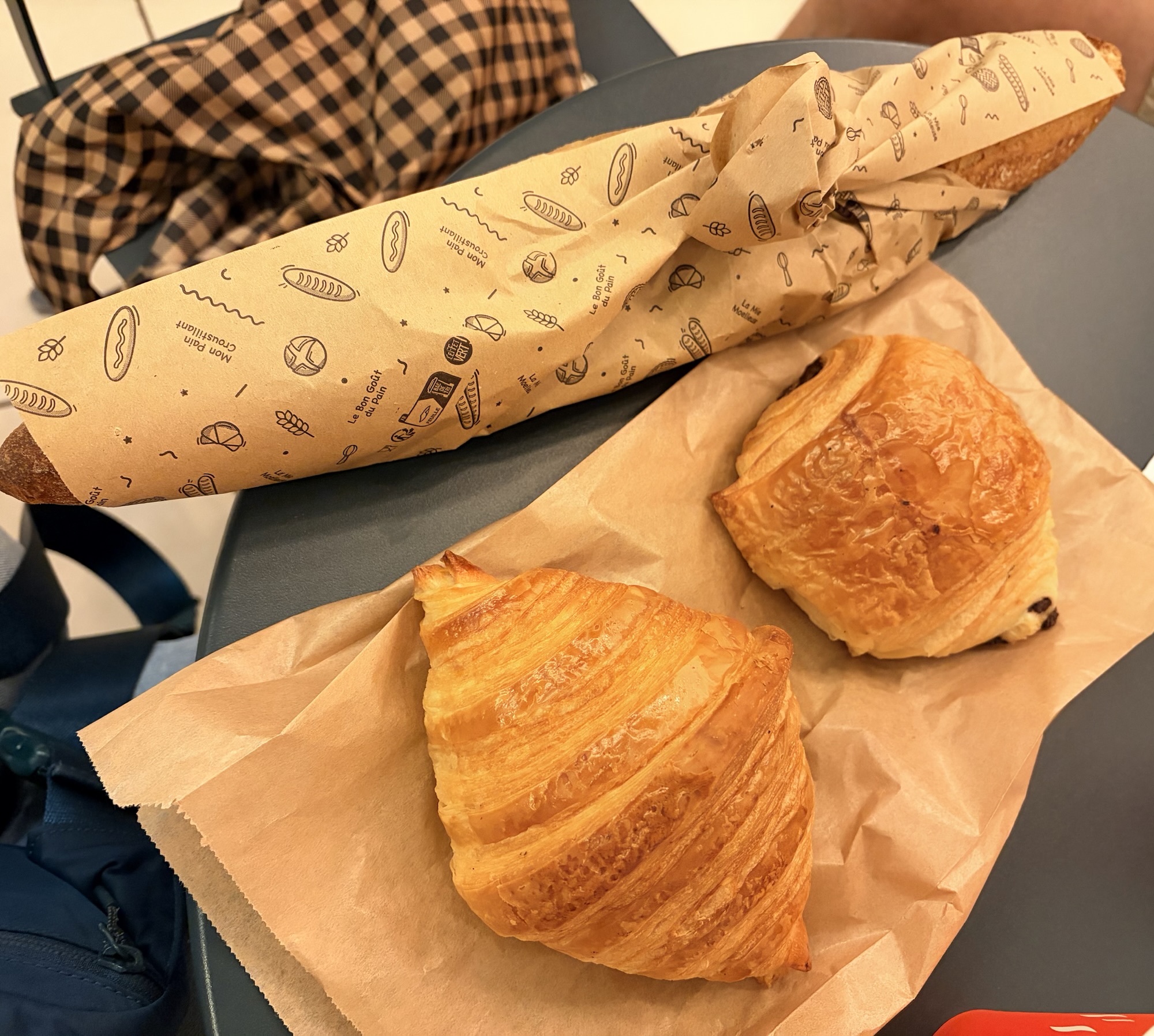
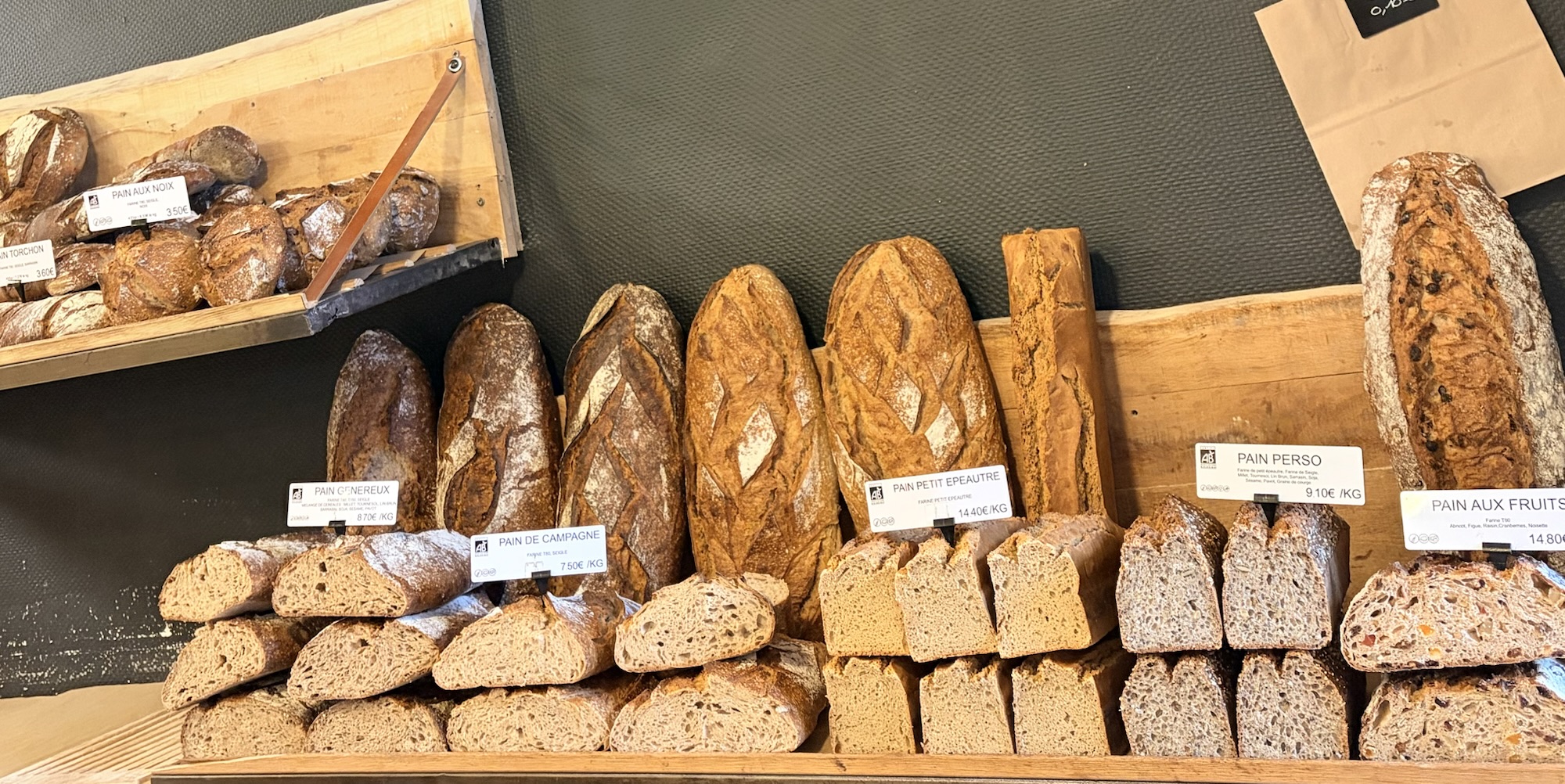
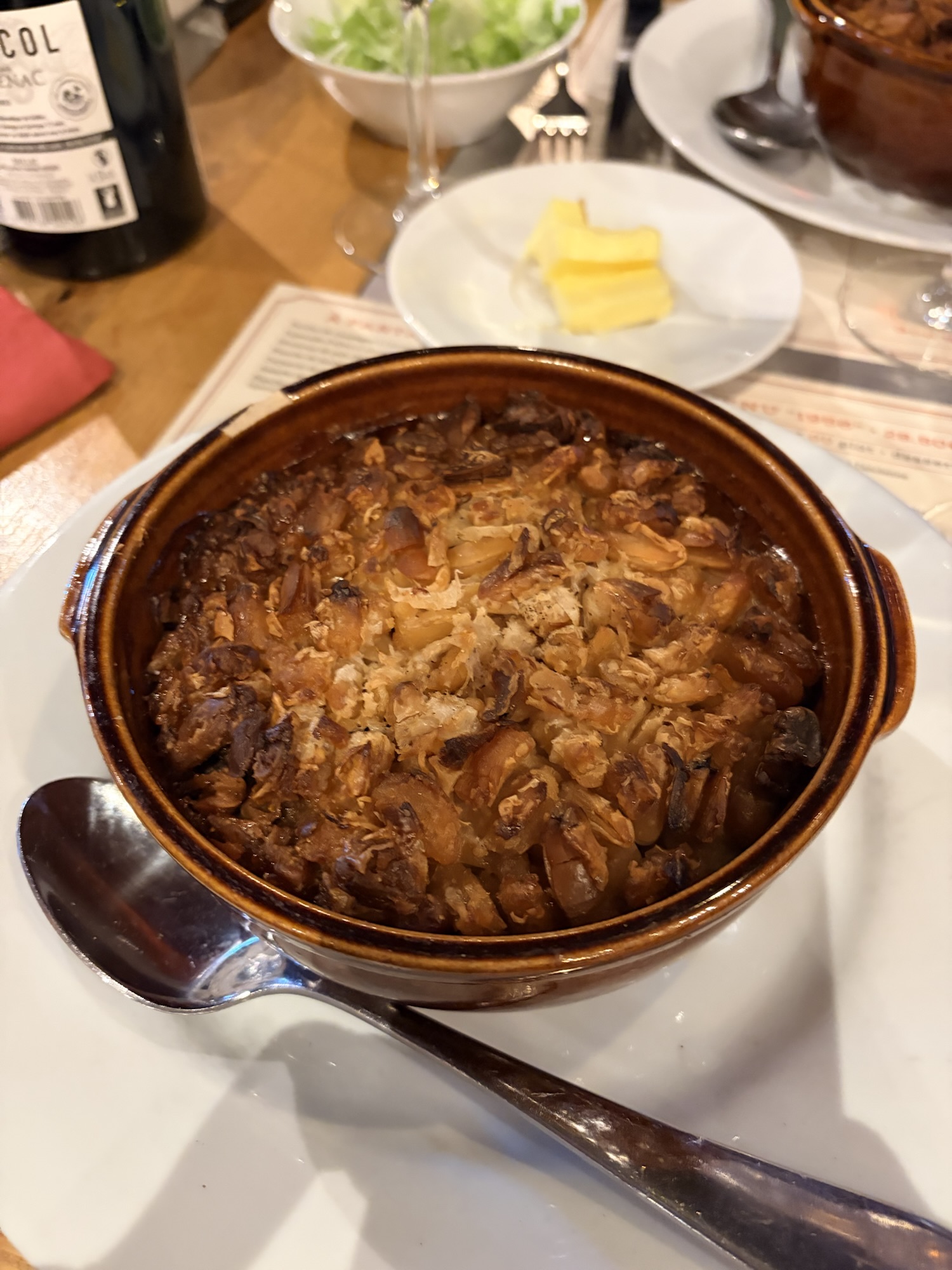
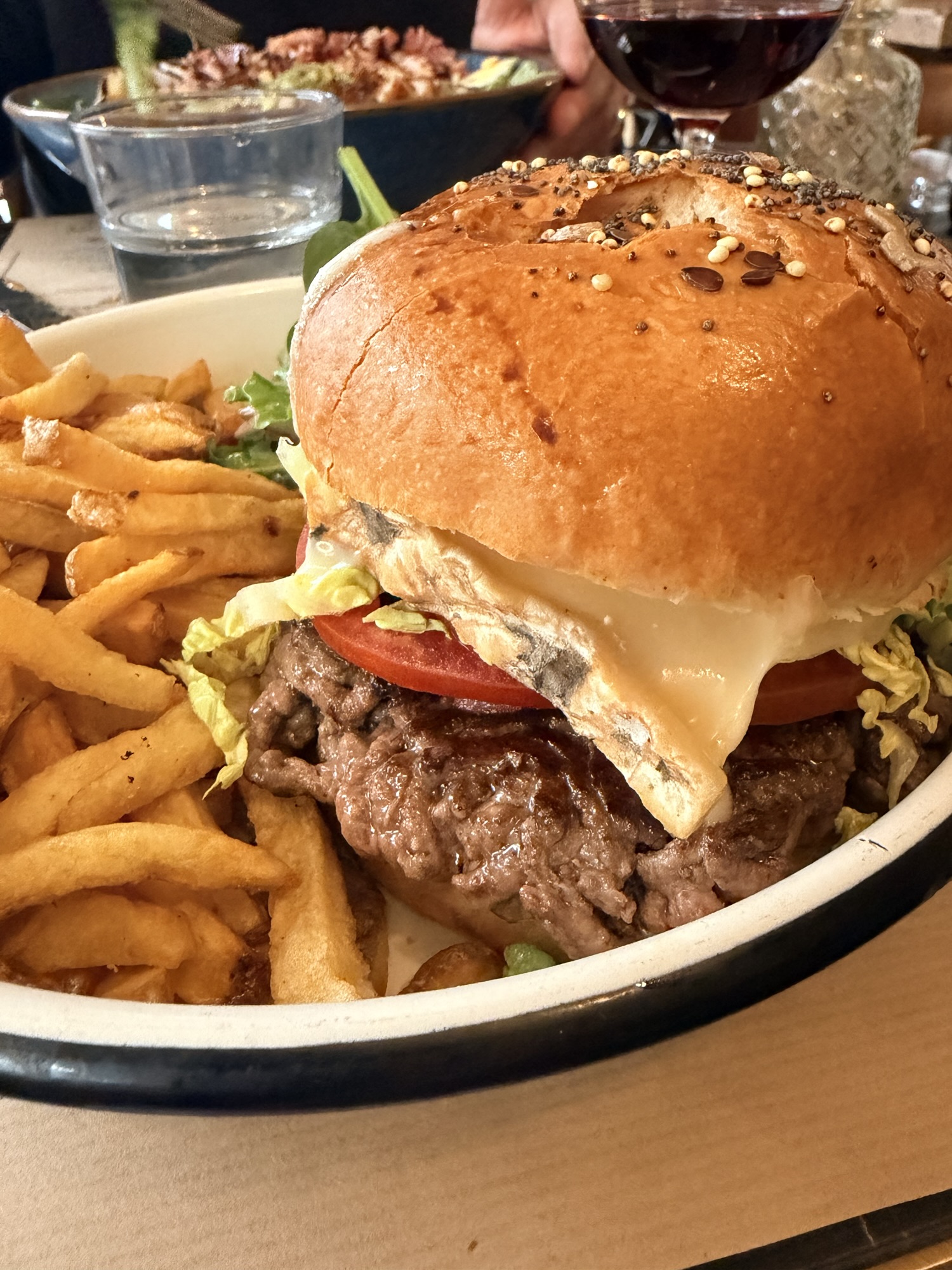
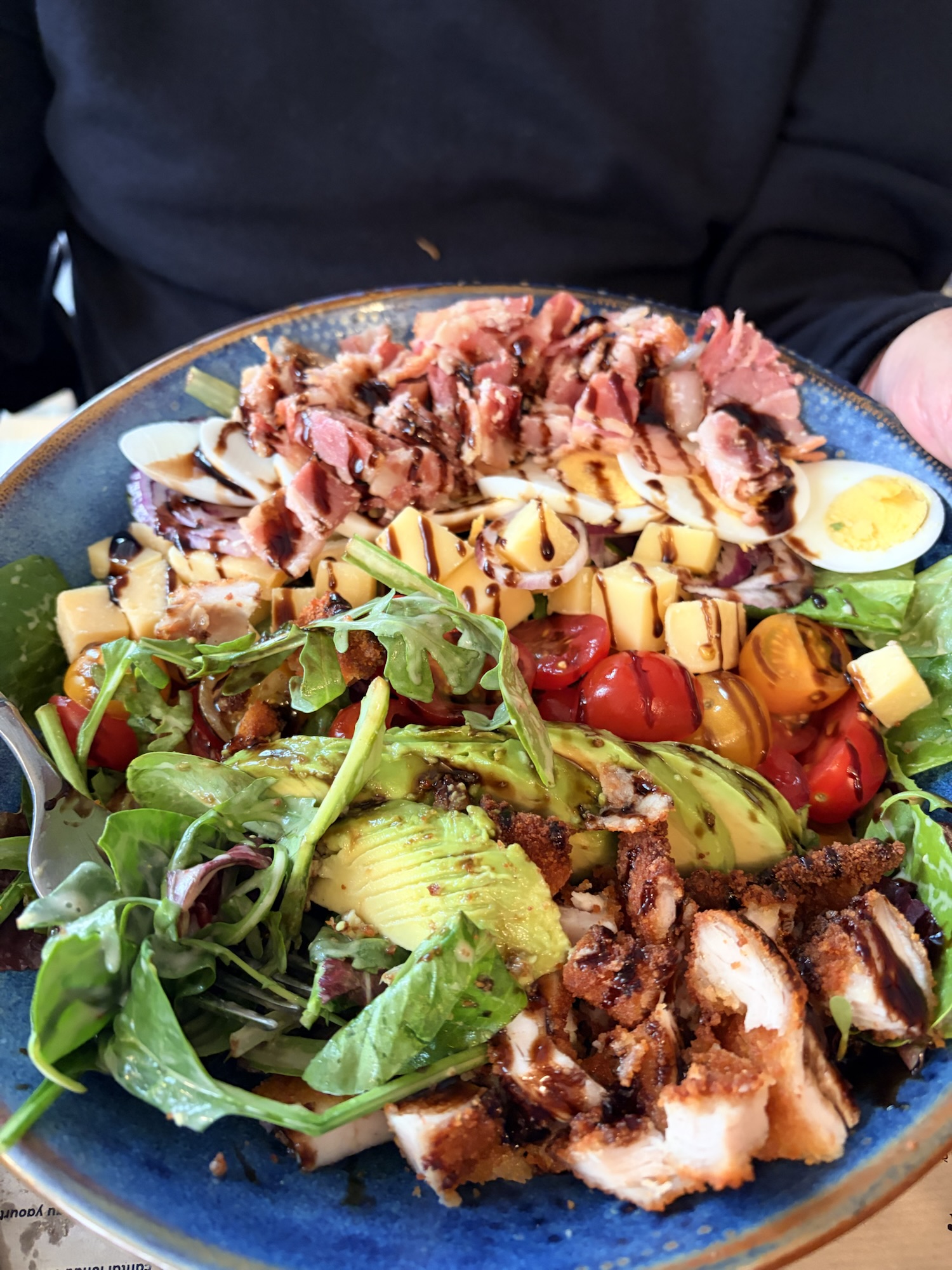
Lyon is a large city with museums, shopping, and a massive reputation for being the gastronomic destination in France. Frankly we had enjoyed so many wonderful meals in Paris, Toulouse, Albi, the best baguette and croissants possible in tiny Castres, surprising food in Le Puy-en-Velay, that we were probably food-fatigued by the time we got to Lyon.
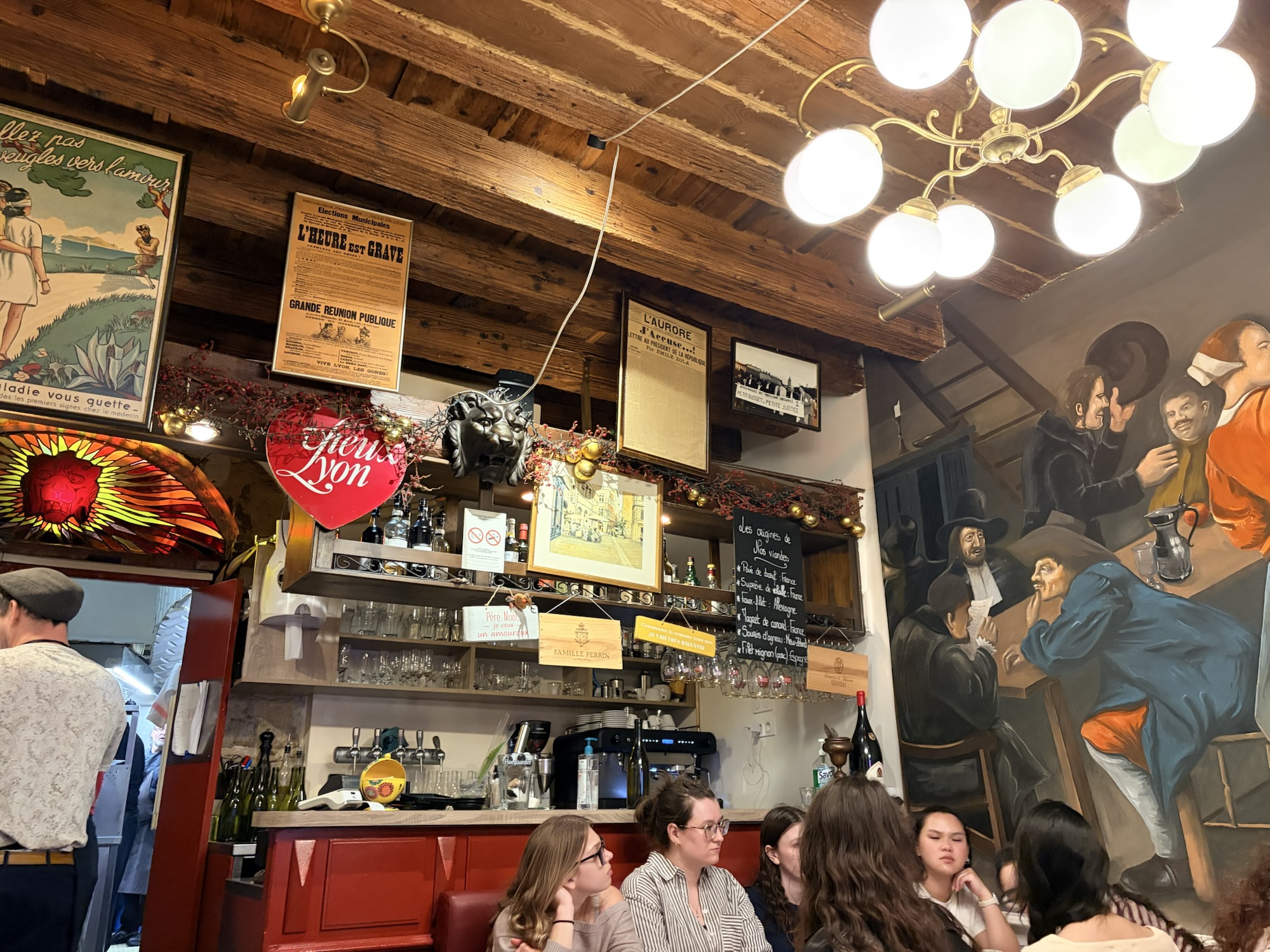
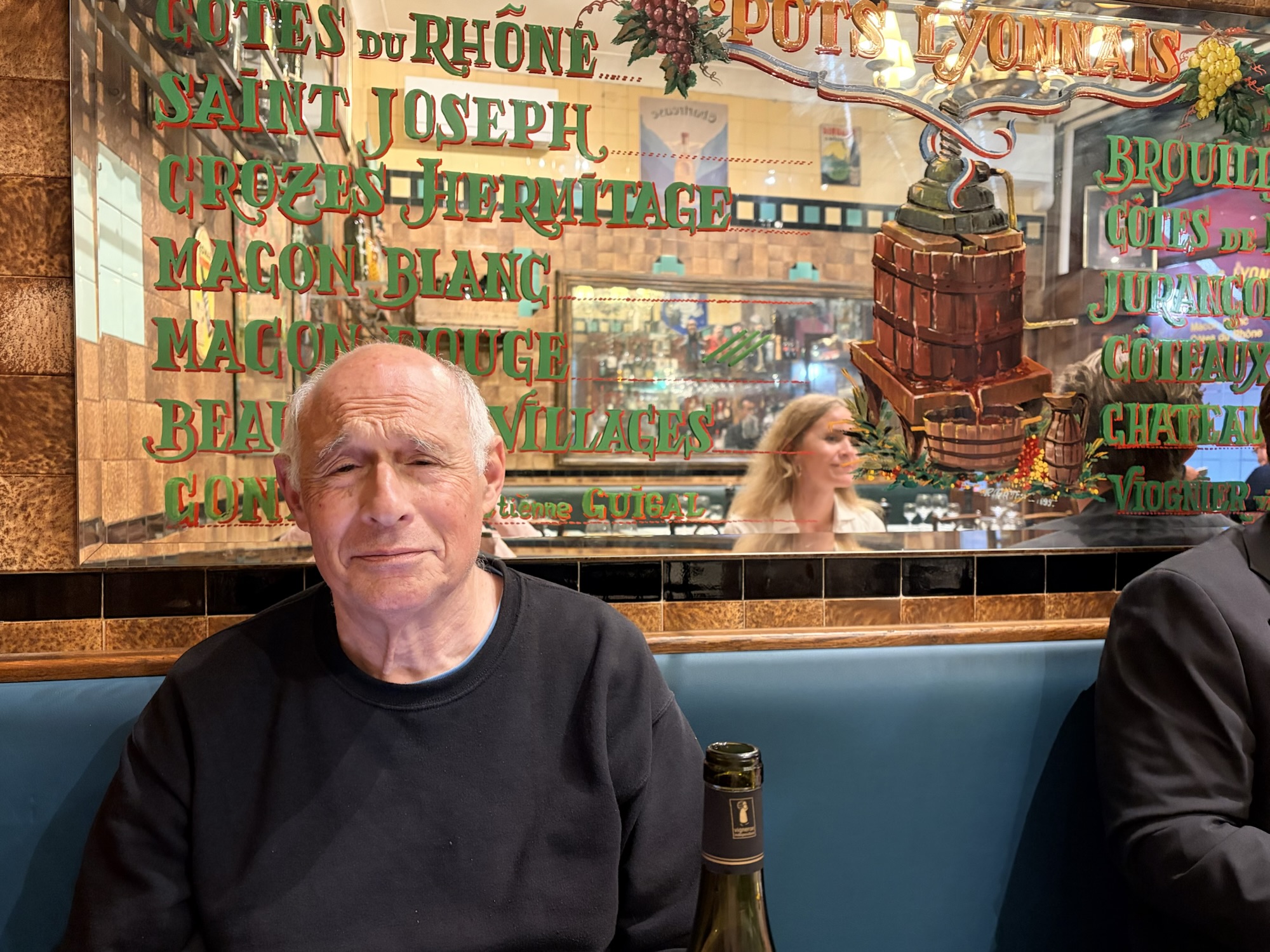
Nonetheless, after completing our shopping quest for our daughter (a visit to Sezanne) I opened my phone and found a bouchon, Le Bouchon des Cordeliers, a few blocks away. Bouchons are traditional restaurants that evolved from mom-run home-style food served to working class people. They are now certified by the city and display this status on plaques posted outside.
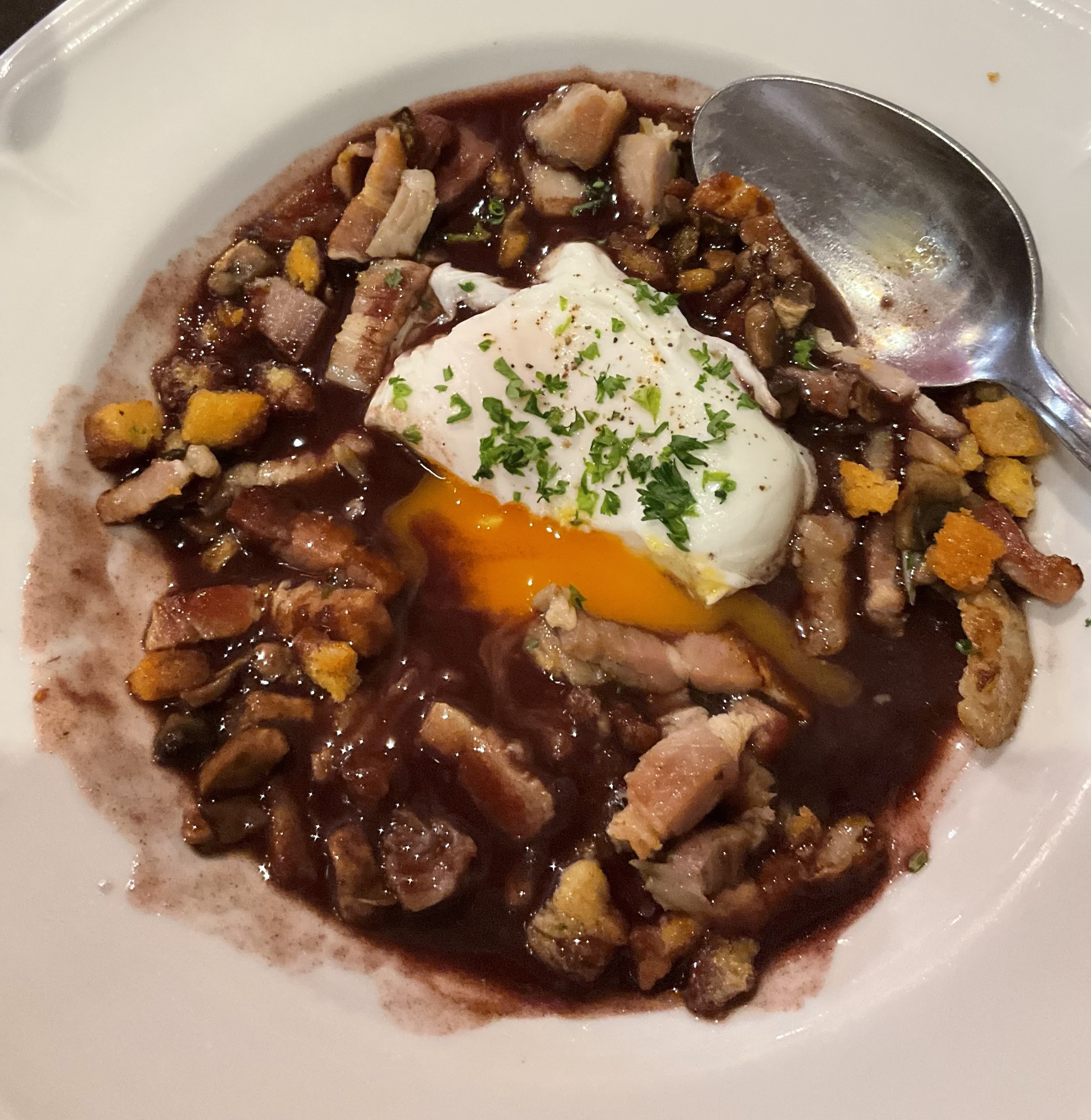
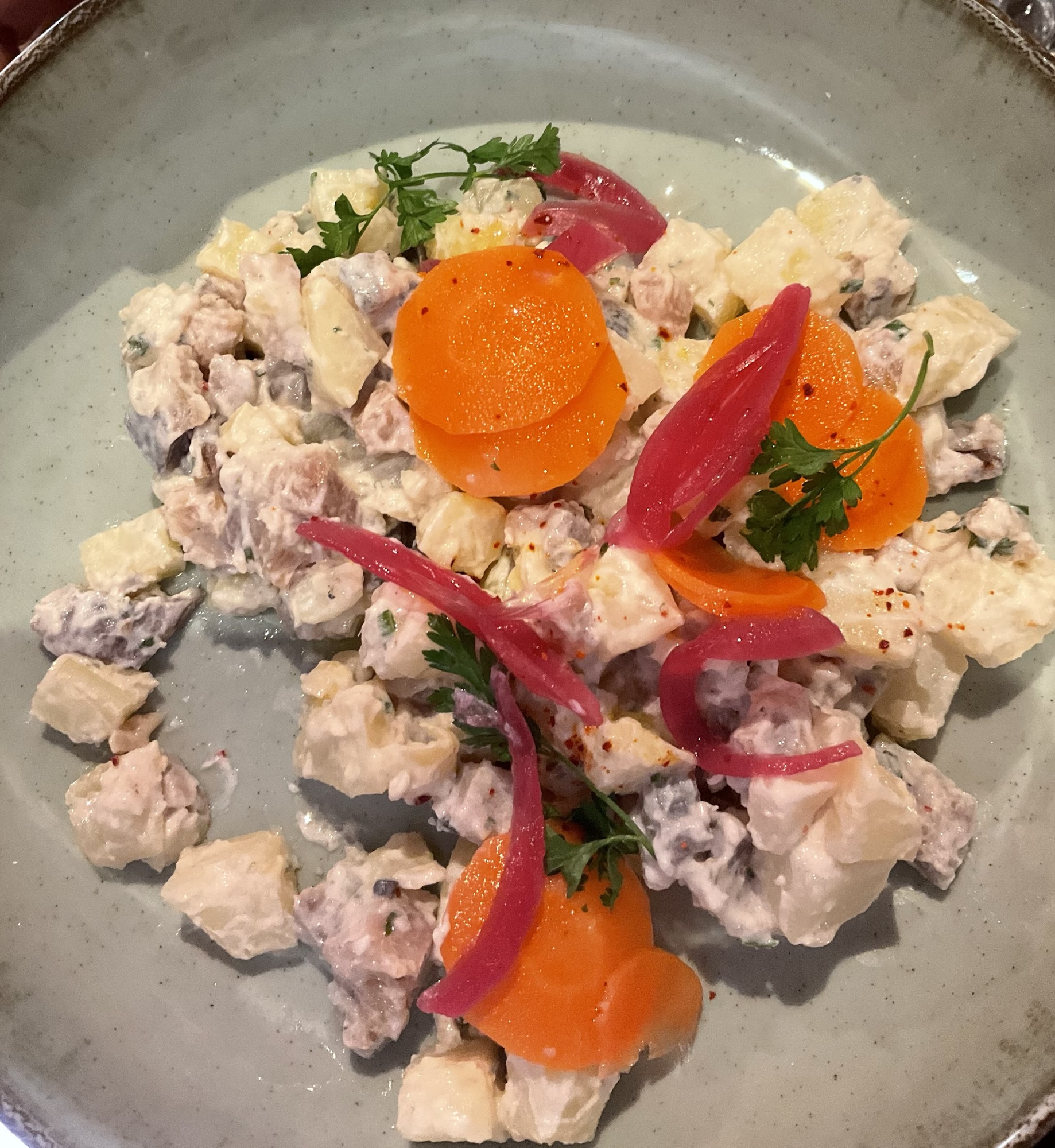
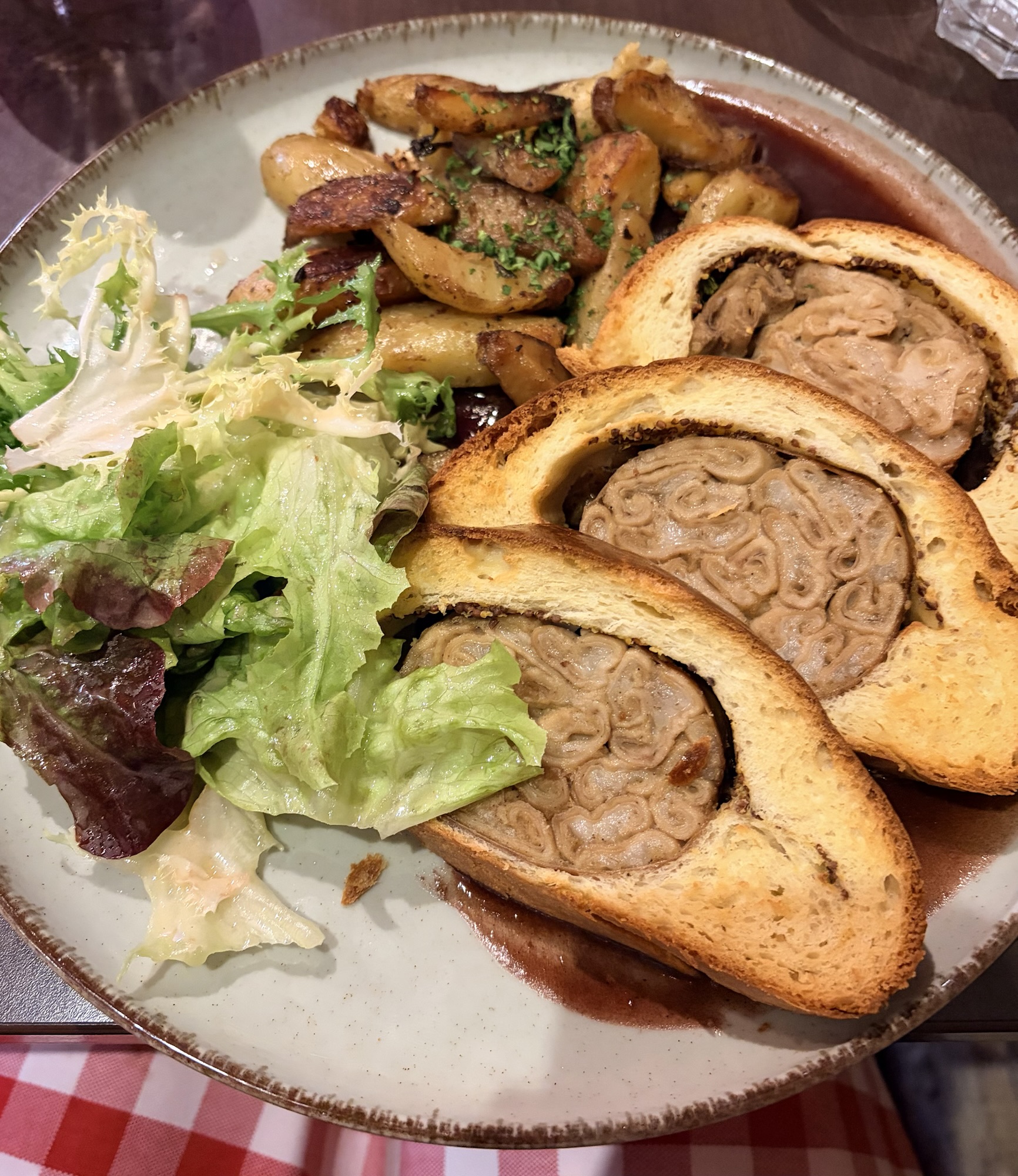
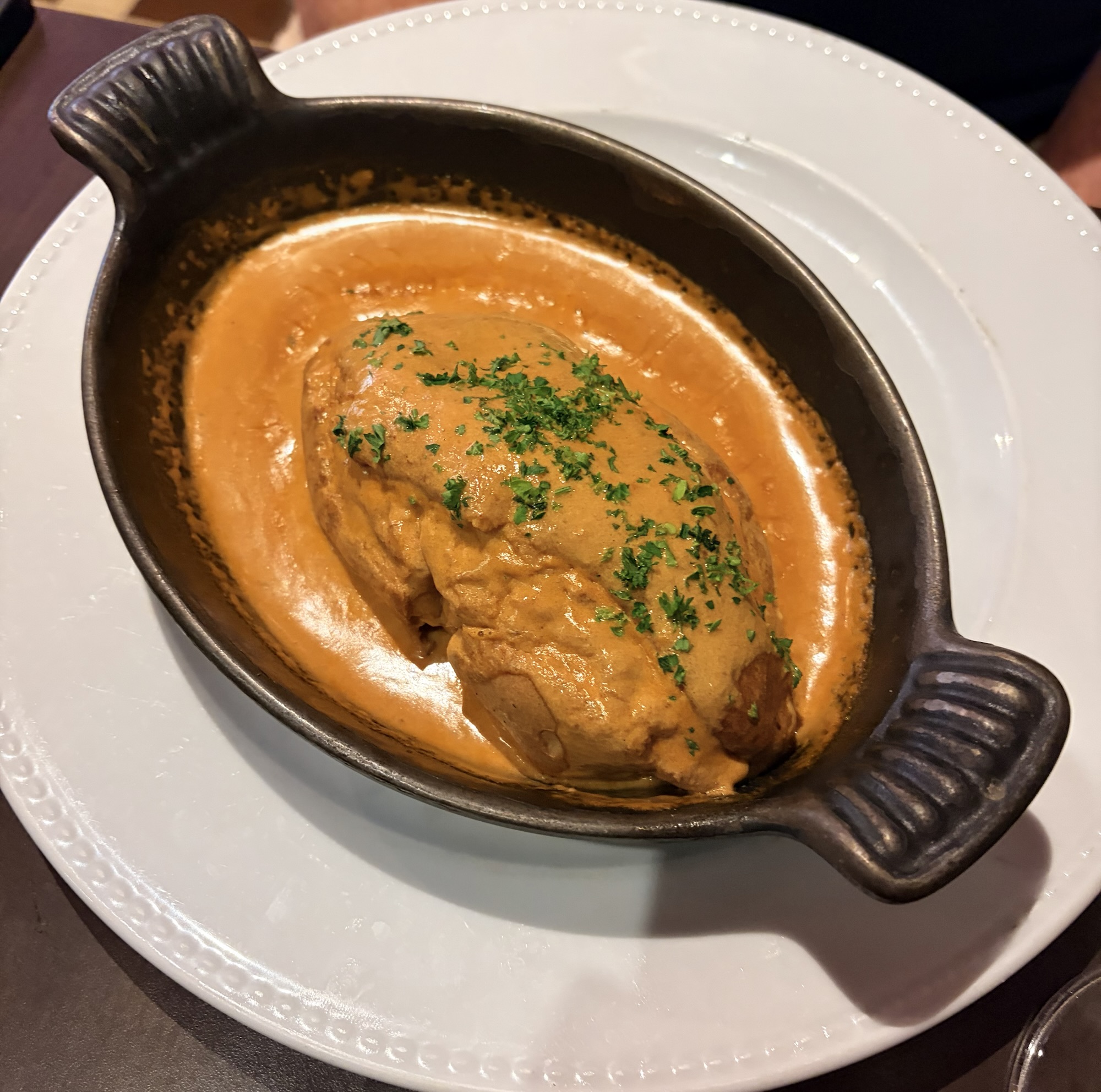
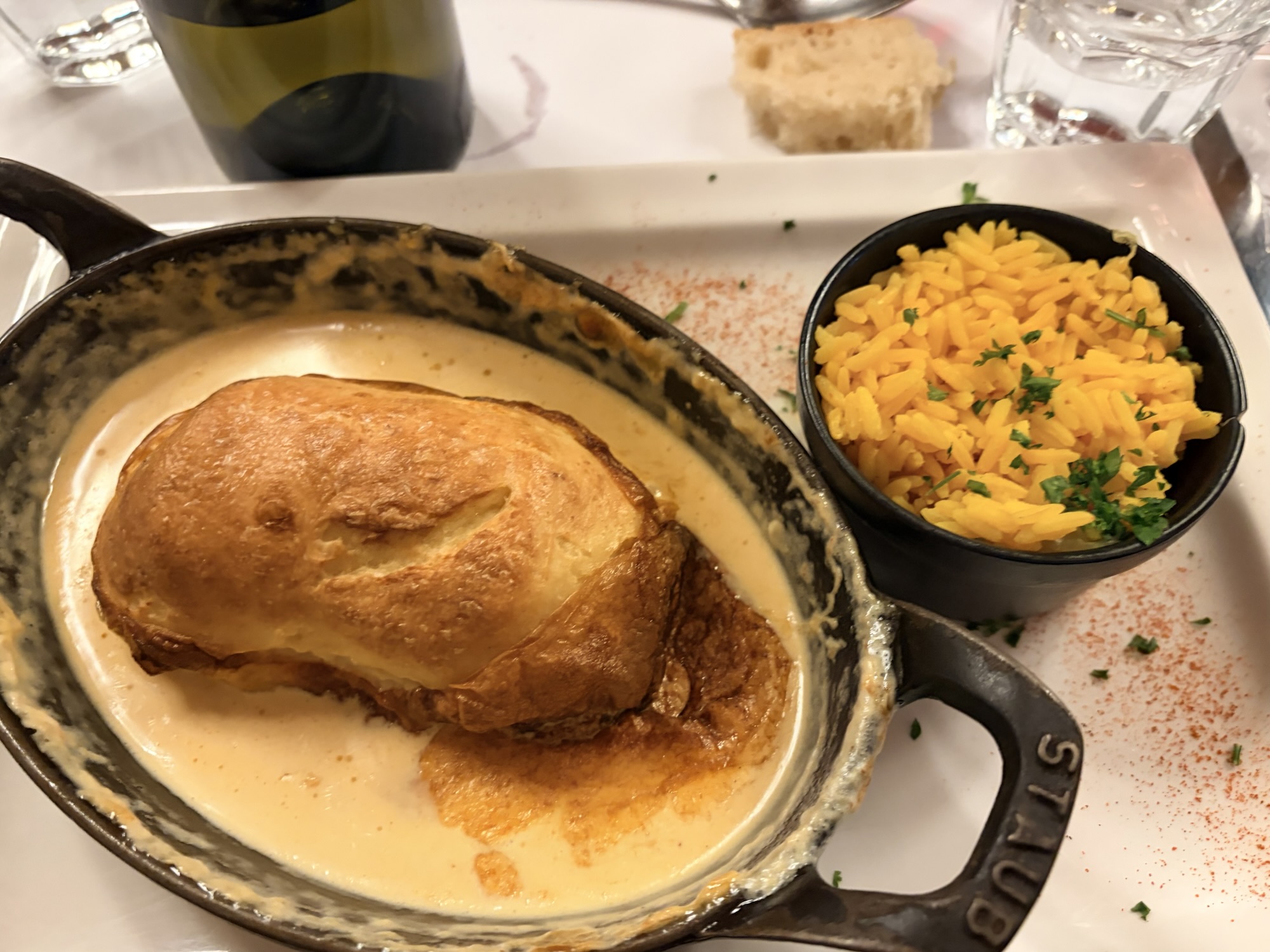
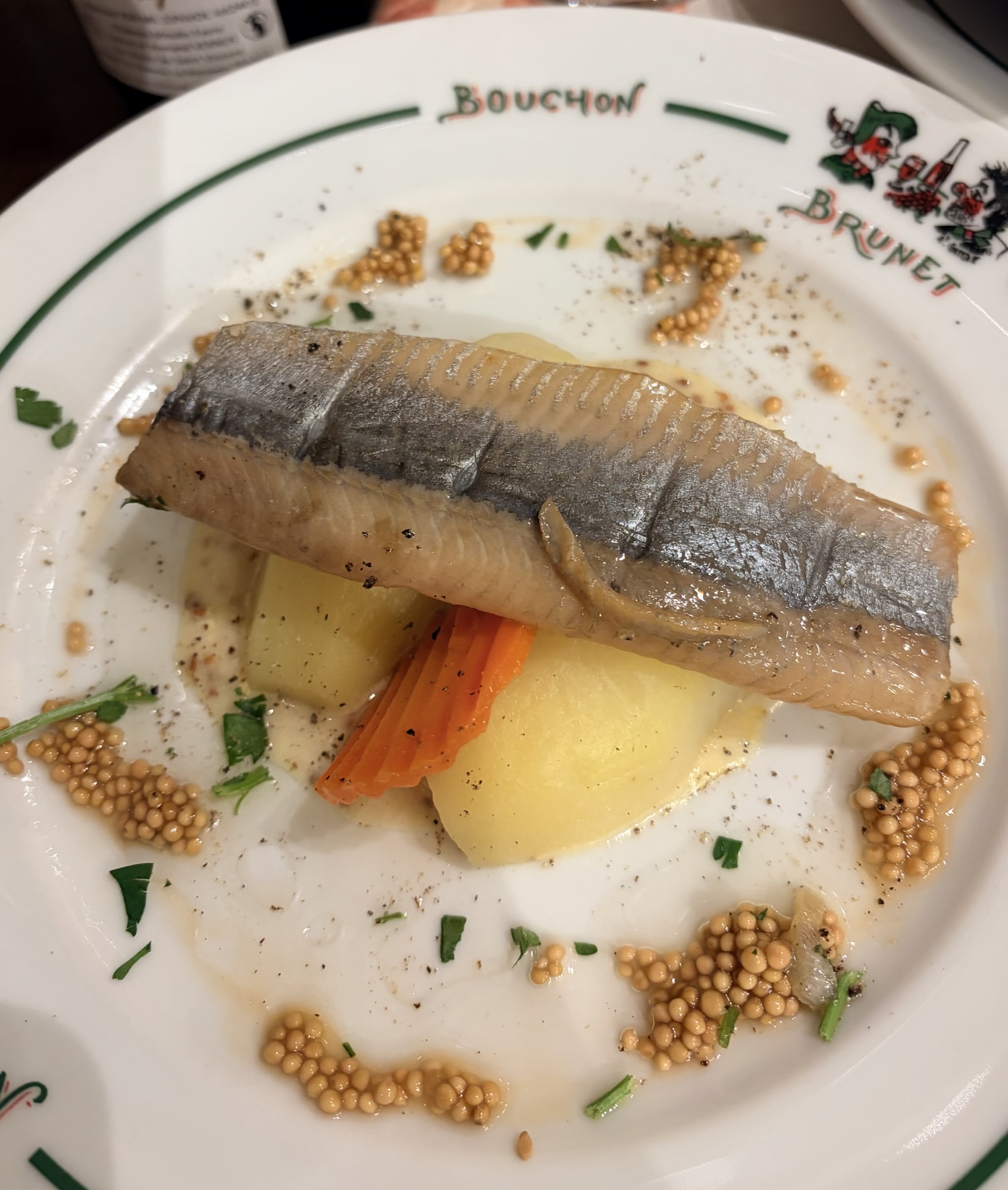
Arrive early if you don’t have a reservation…was full within 30 minutesOeuf murette. They really know how to poach eggs. Smoked herring and potato saladAndouilletteQuenelle
The most traditional dishes are offered at every bouchon—quenelles (a delicate fish dumpling served in a crawfish sauce), smoked herring-potato salads, salade Lyonnaise, oeufs murette, Andoullette (tripe sausage), pumpkin soup, tarte aux pralines (a red pie made of local pralines)—we tried them all. Note that the salade Lyonnaise served as a first course (entree) is huge. That and a bowl of soup would have been sufficient!
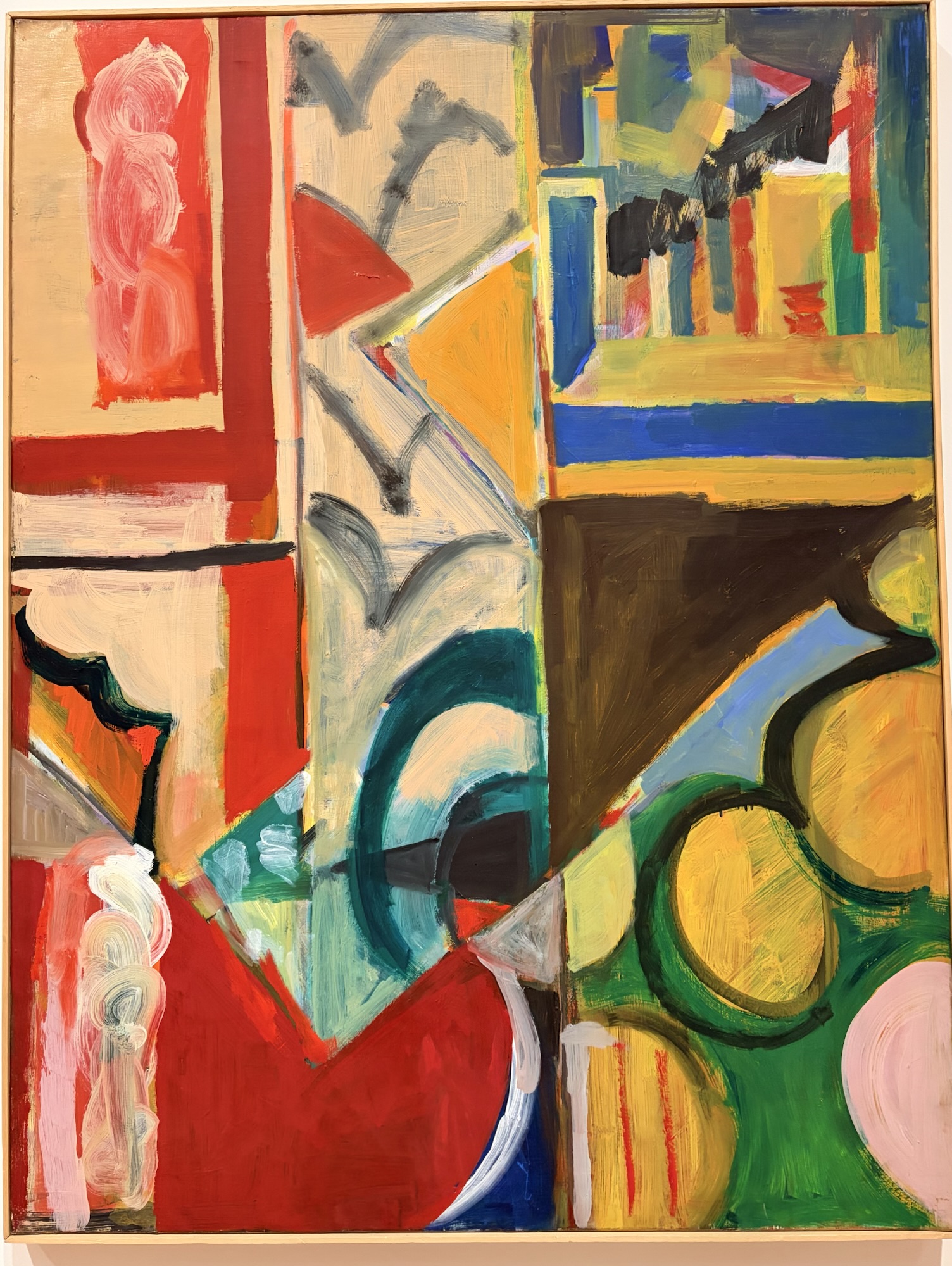
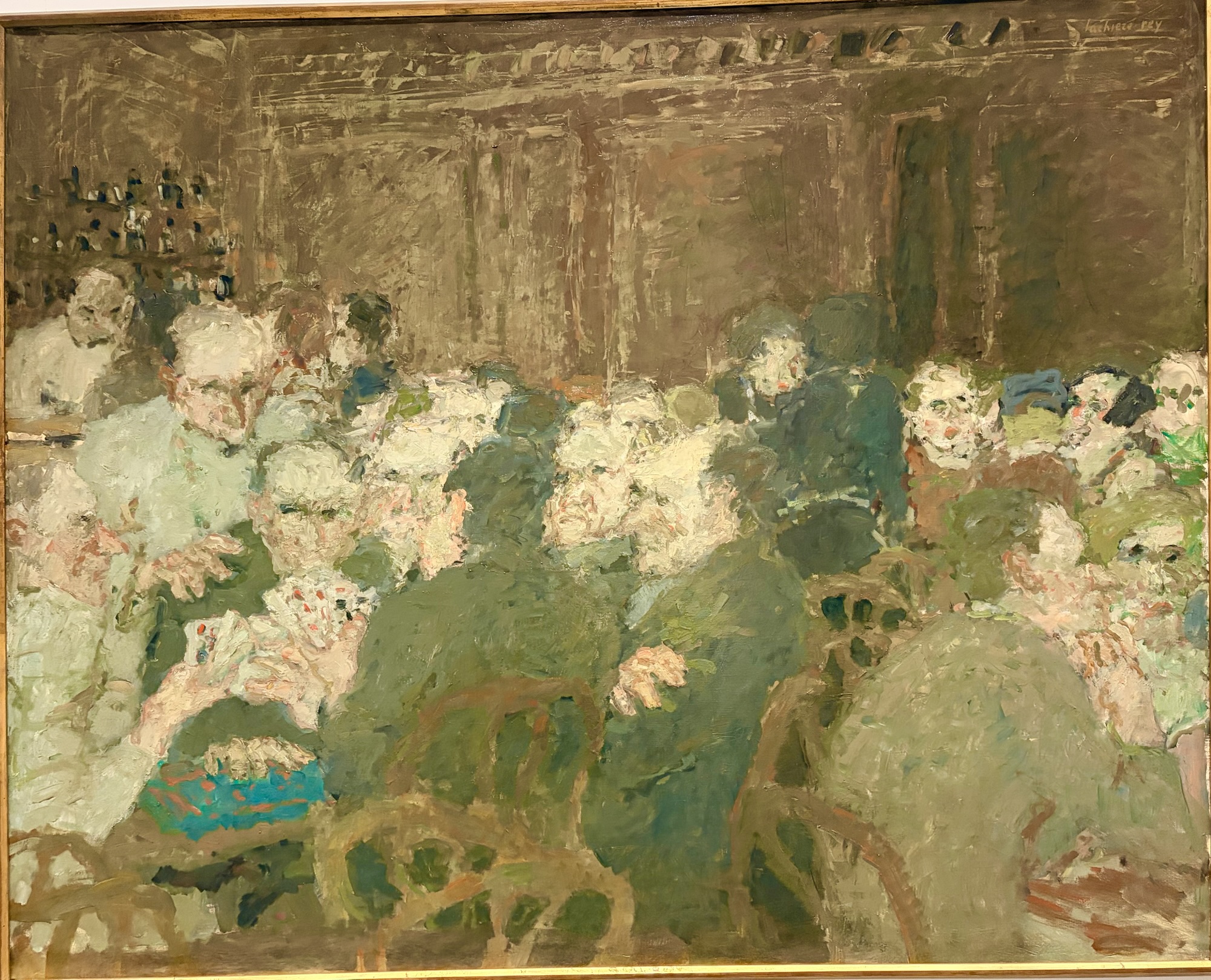
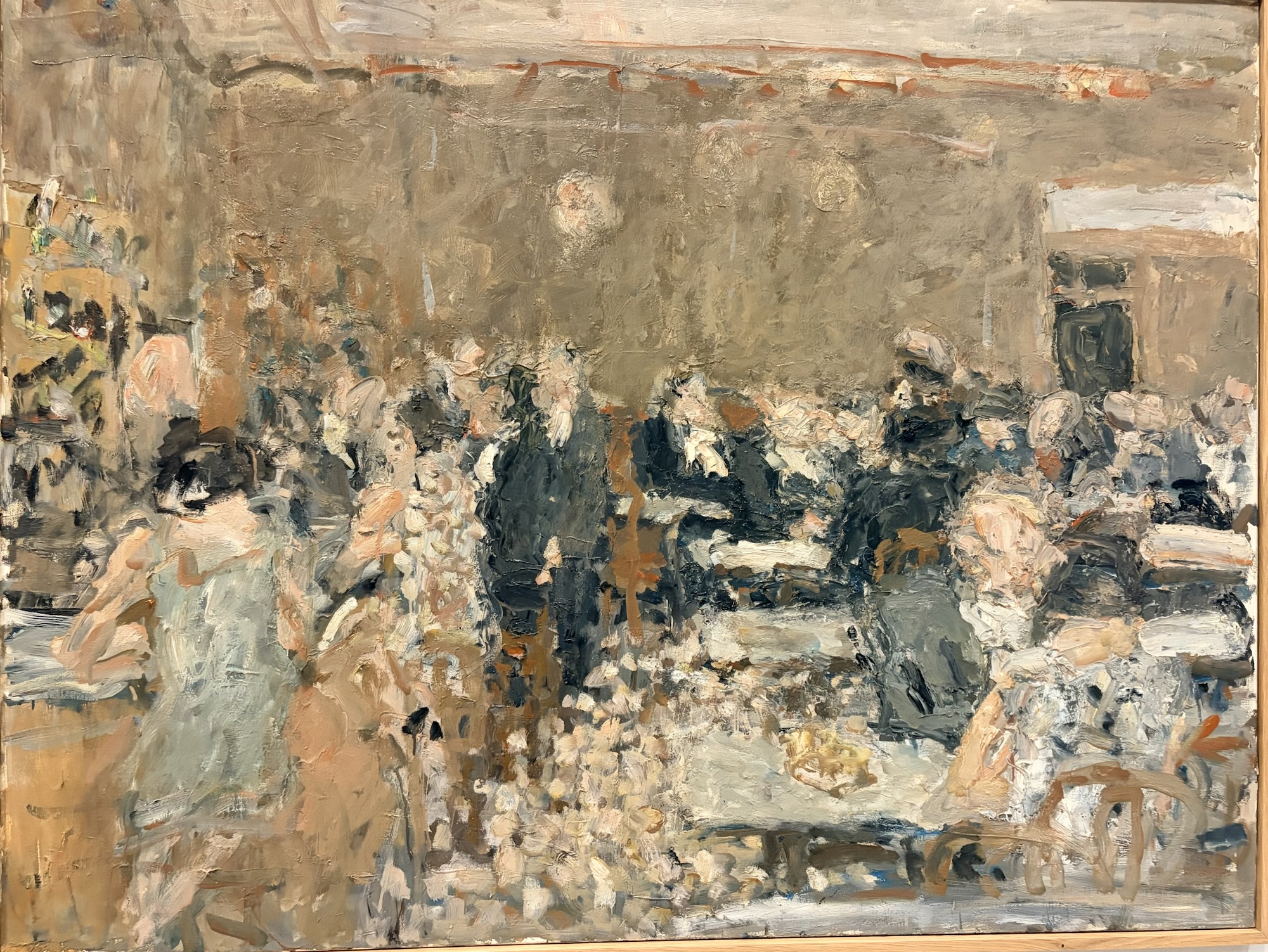
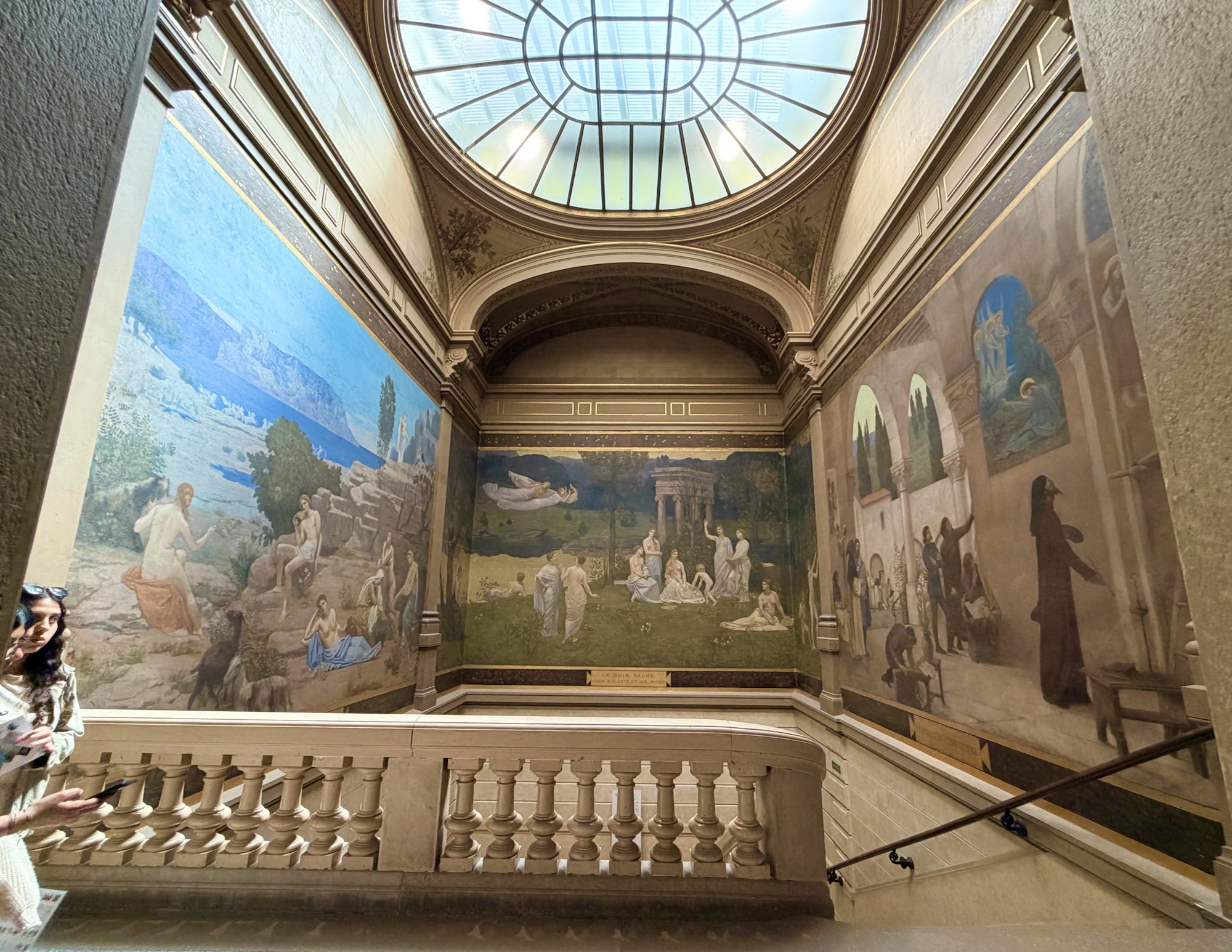
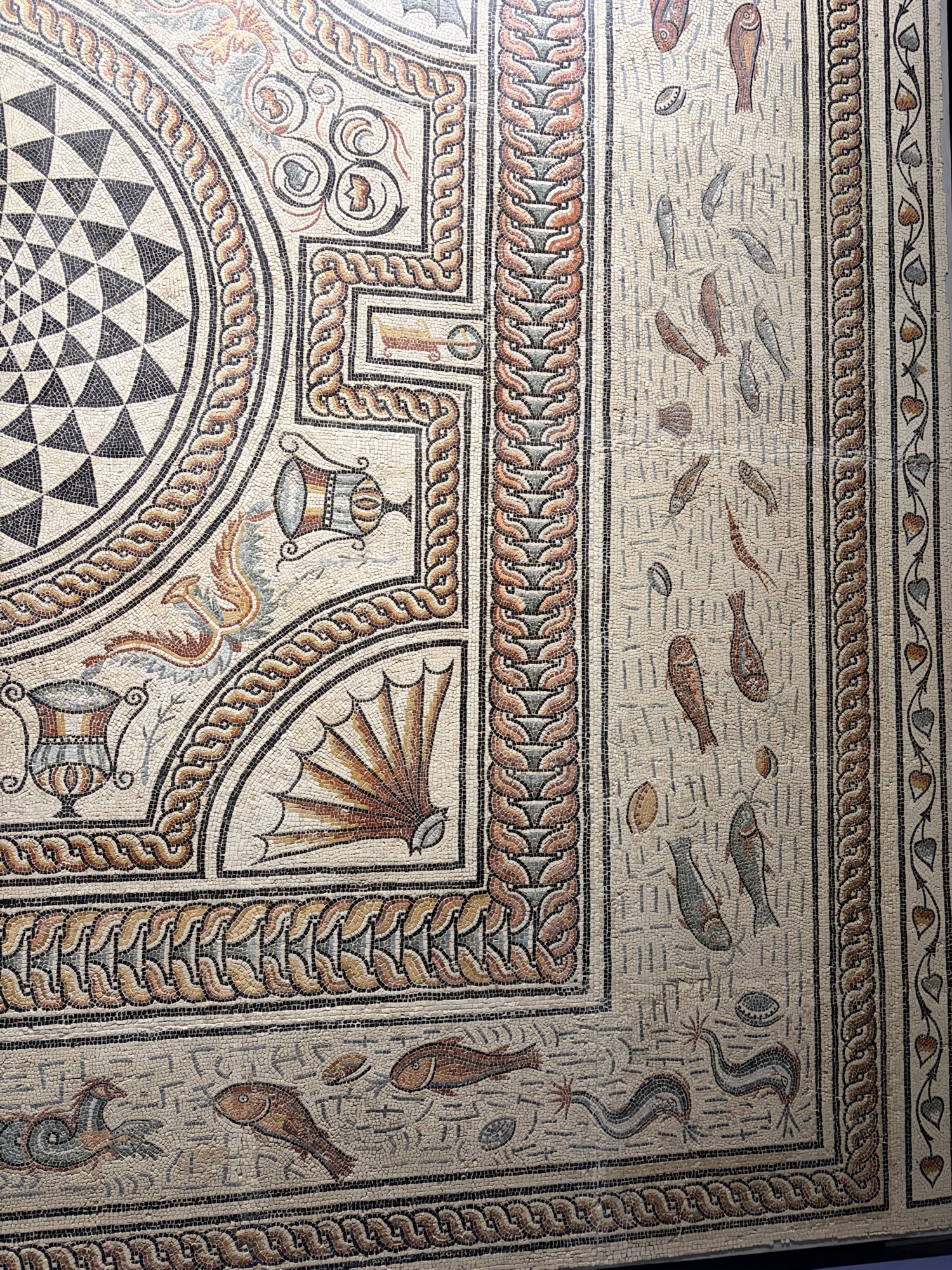
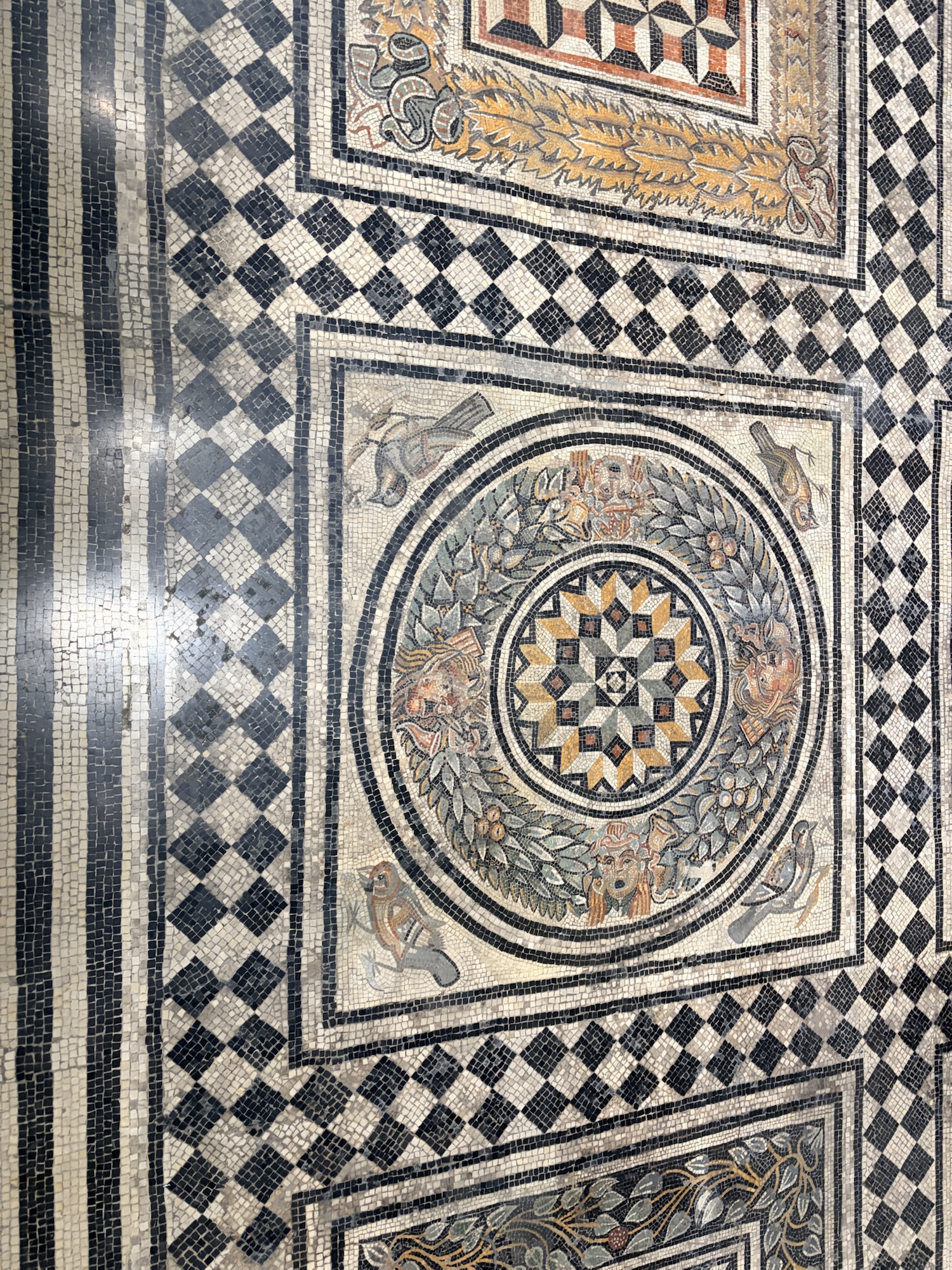
We had a yummy and fun lunch, celebrating that we had achieved success at Sezanne for our daughter, and wandered back through the neighborhood to the Musee des Beaux Arts…no timed tickets like Paris, so we walked right in. Beautiful. We took the elevator to the top floor and zigzagged down to the ground floor. Not overwhelming like Musee d’Orsay in Paris and with a most entertaining collection. I discovered a new-to-me artist (Henri Lachieze-Rey). and now must track down a book of his work.
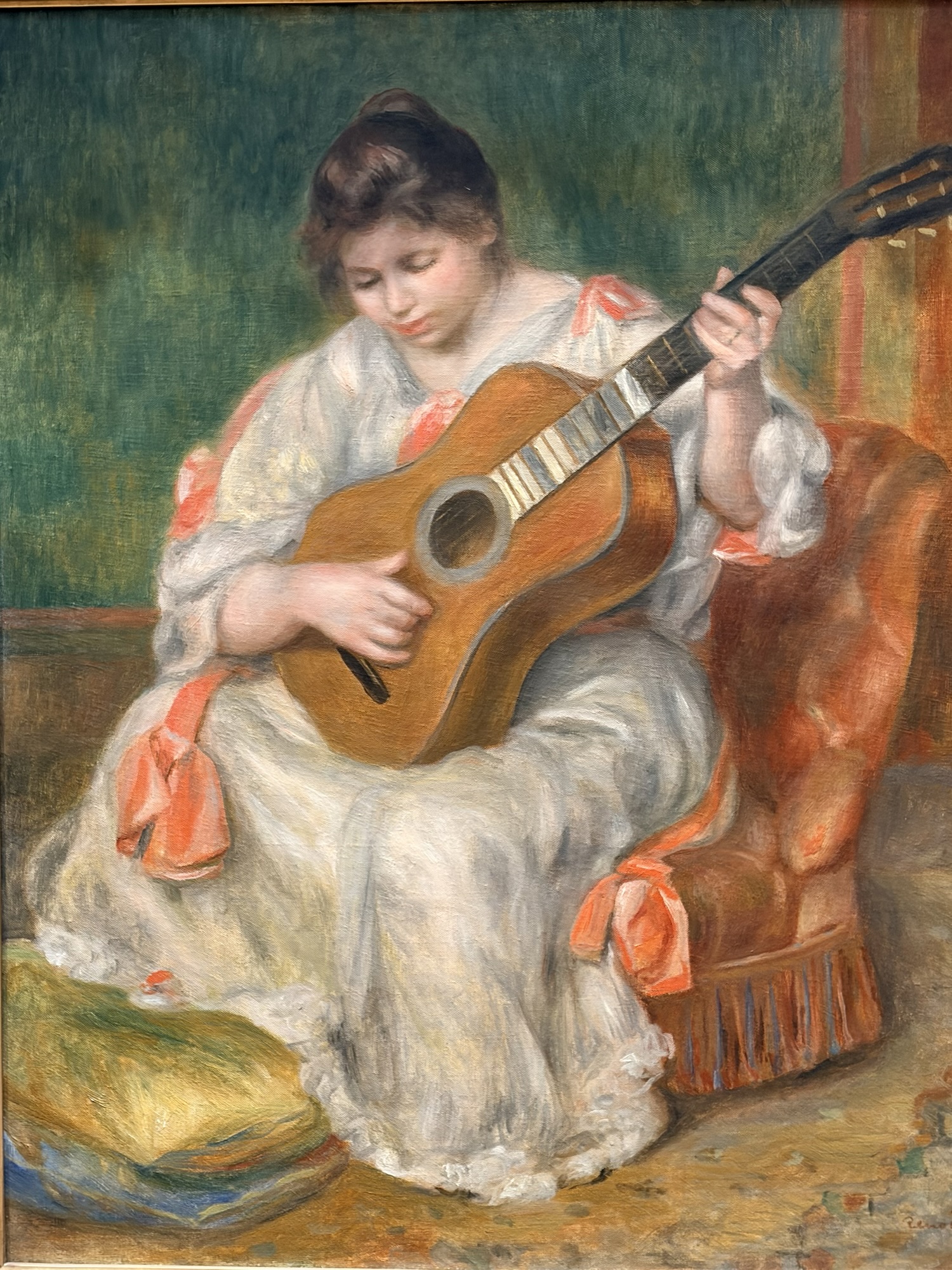
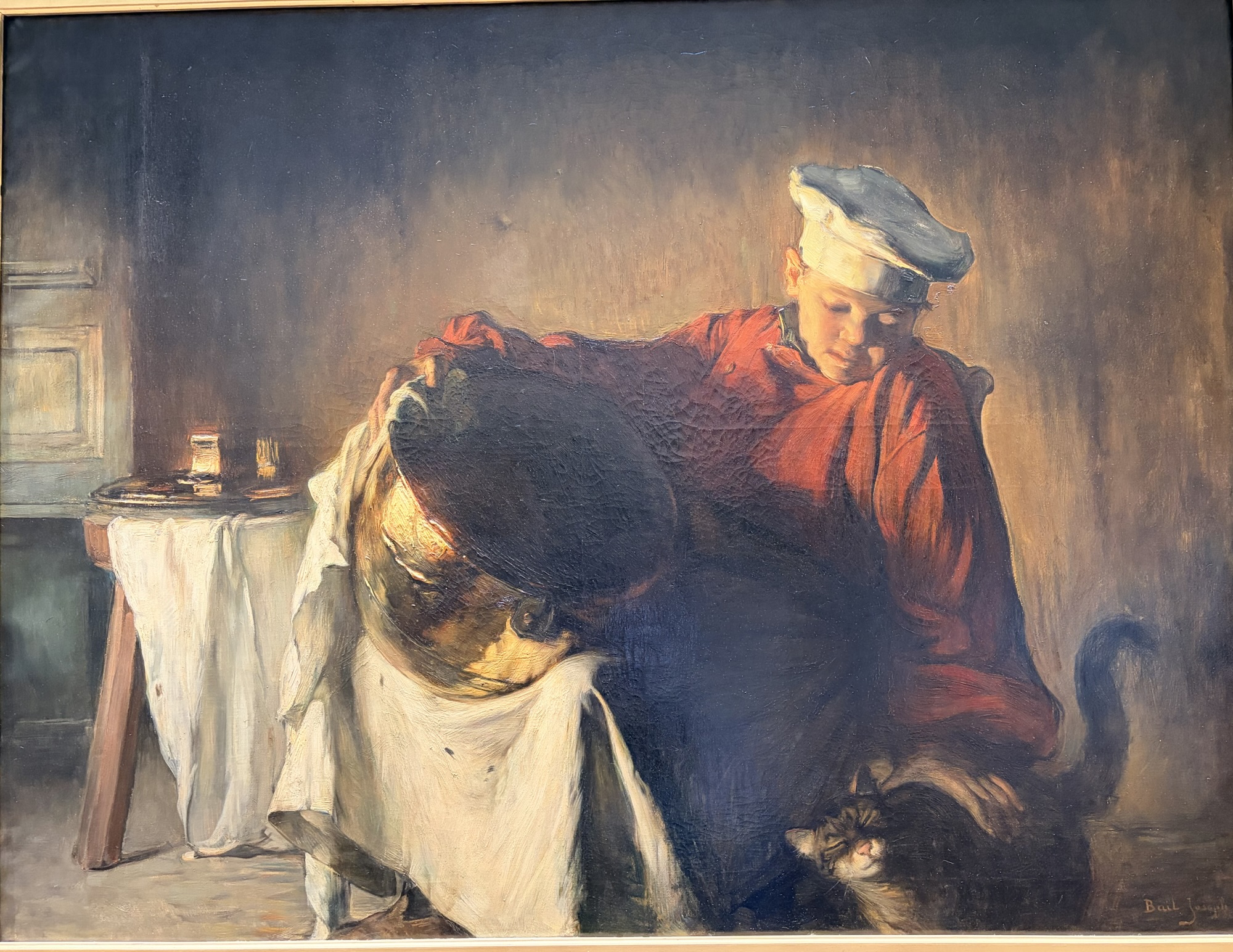
A moment after I said “Weird, no Matisse” I saw this Shirley Jaffe, “Sans titre (Little Matisse)”Henri Lachieze-Rey, the card playersHenri again. i love his thick paint. A grand buildingRenoir, one I had never seen, “The Guitar Player”Should be called “Happy Cat” but is titled Reflet de soleil by Joseph Bail
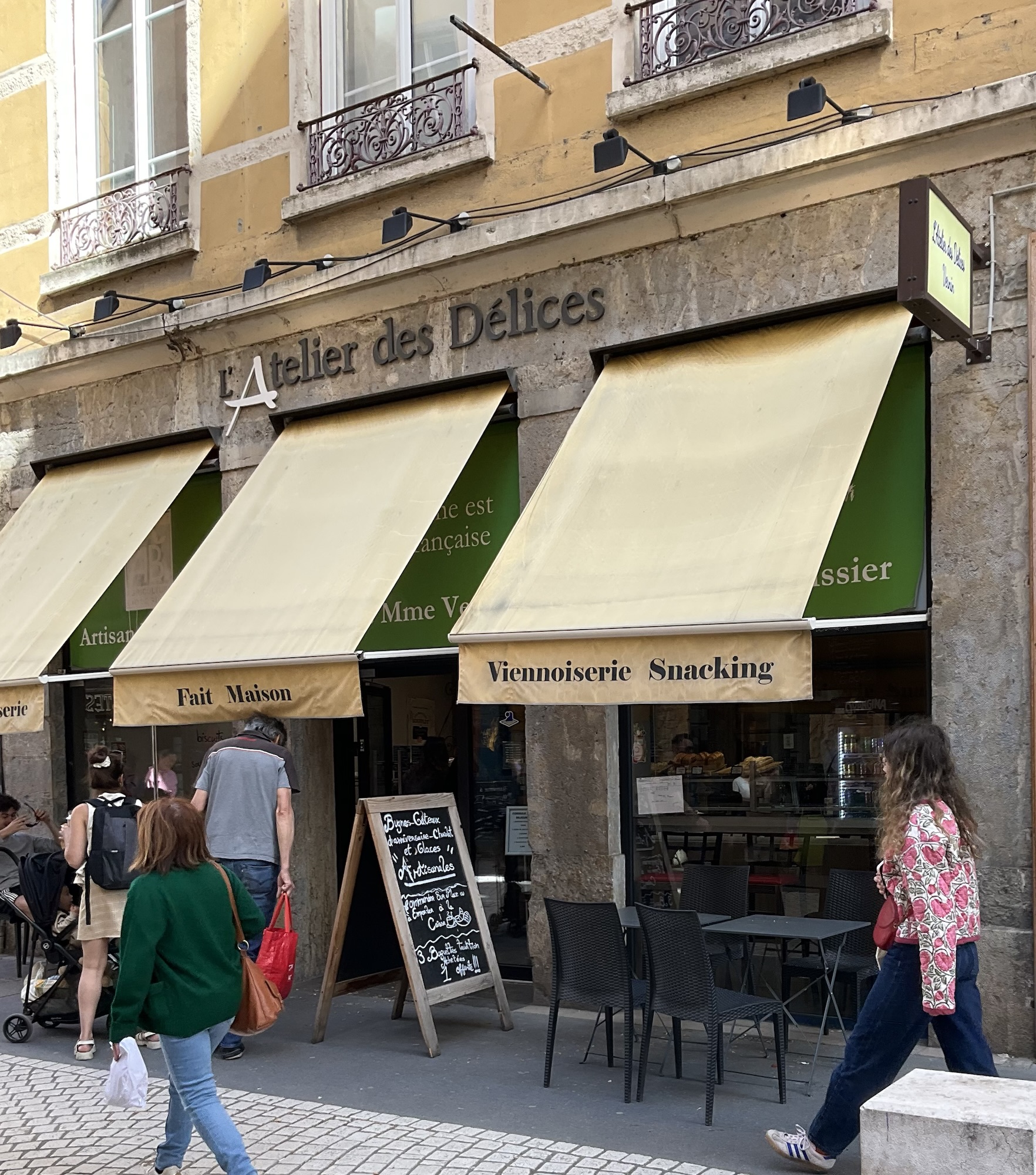
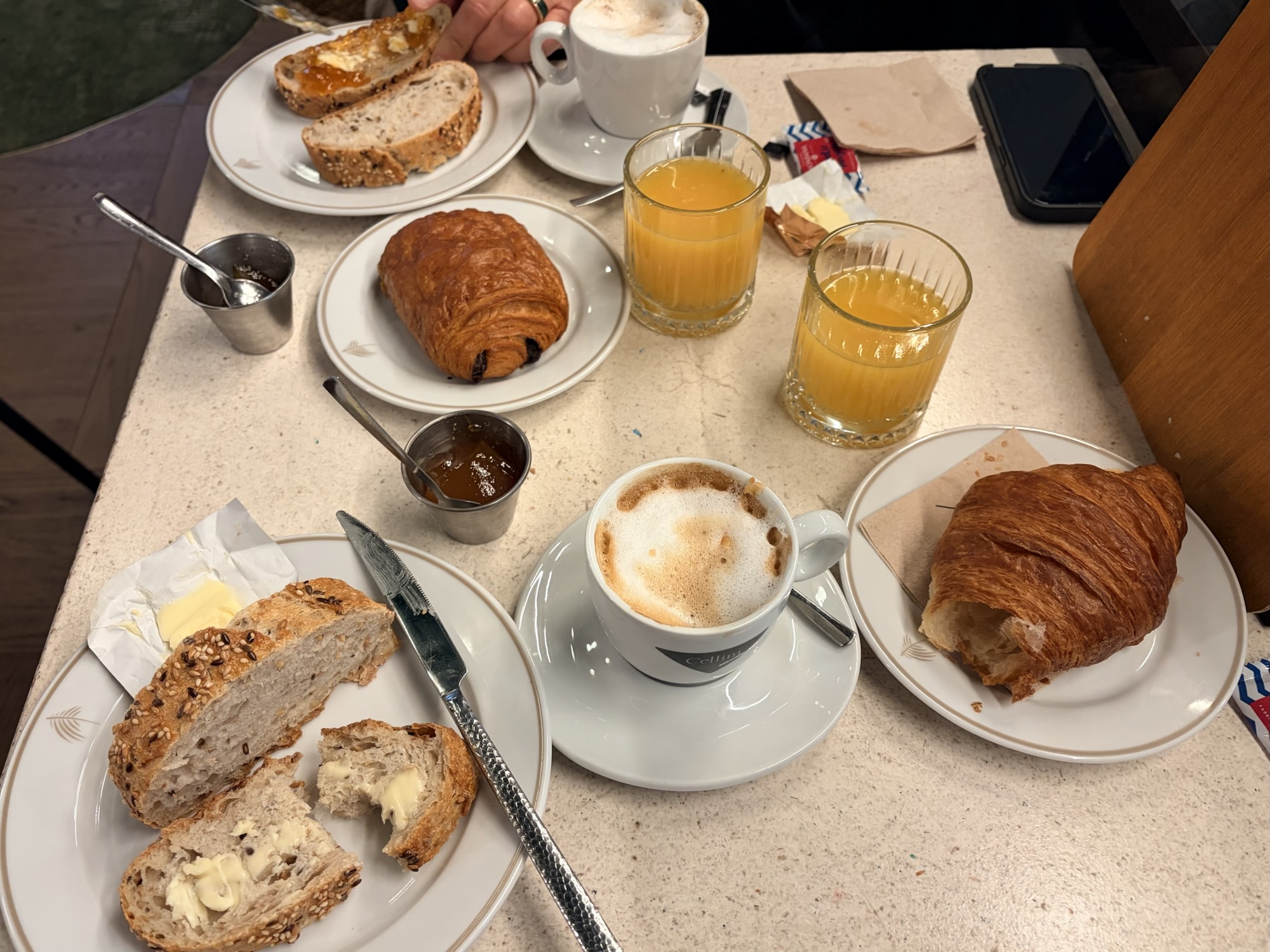
Our first morning we had been a little frustrated trying to find a boulangerie with coffee and seats, finally stopping in a tiny artisan bakery with fantastic baked goods and, as we discovered, typically horrid coffee. The next morning I found a large restaurant that opened at 7:30, and the Petit Dejeuner Formule was great except for the mediocre coffee. Shortly after leaving it started to rain and I missed a small step and fell onto my ankle bone in a (fortunately?) covered arcade. GRRRR! Naturally I kept walking/hobbling on it Sunday, Monday, Tuesday, and through the Charles deGaulle airport Wednesday morning. (It is now Friday, am back home, still limping and taking ibuprofen.).
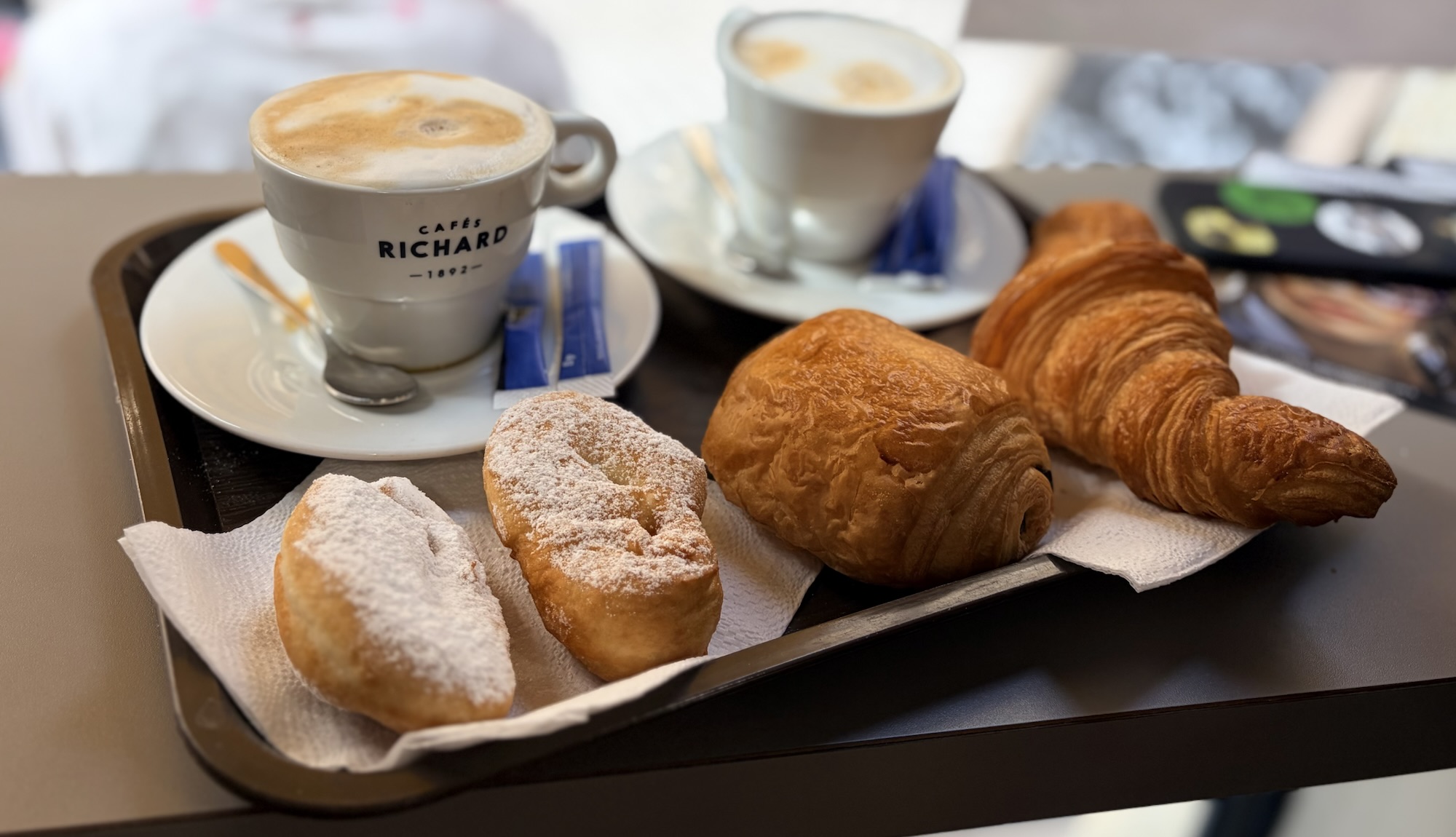
Teeny boulangerie but with seats insideCroissants and bugnols!€13 for all this at Maison Gloria sunday morning
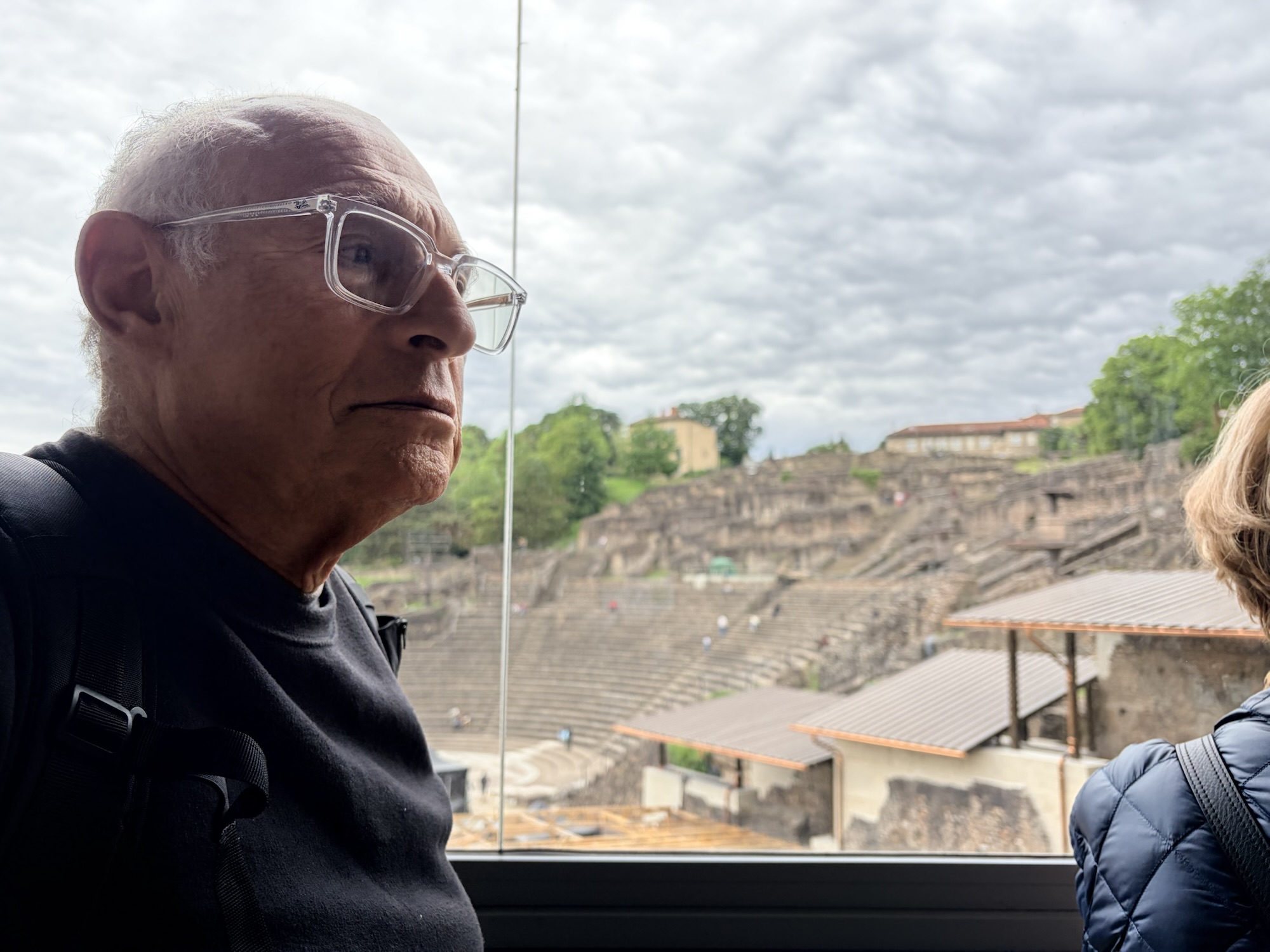
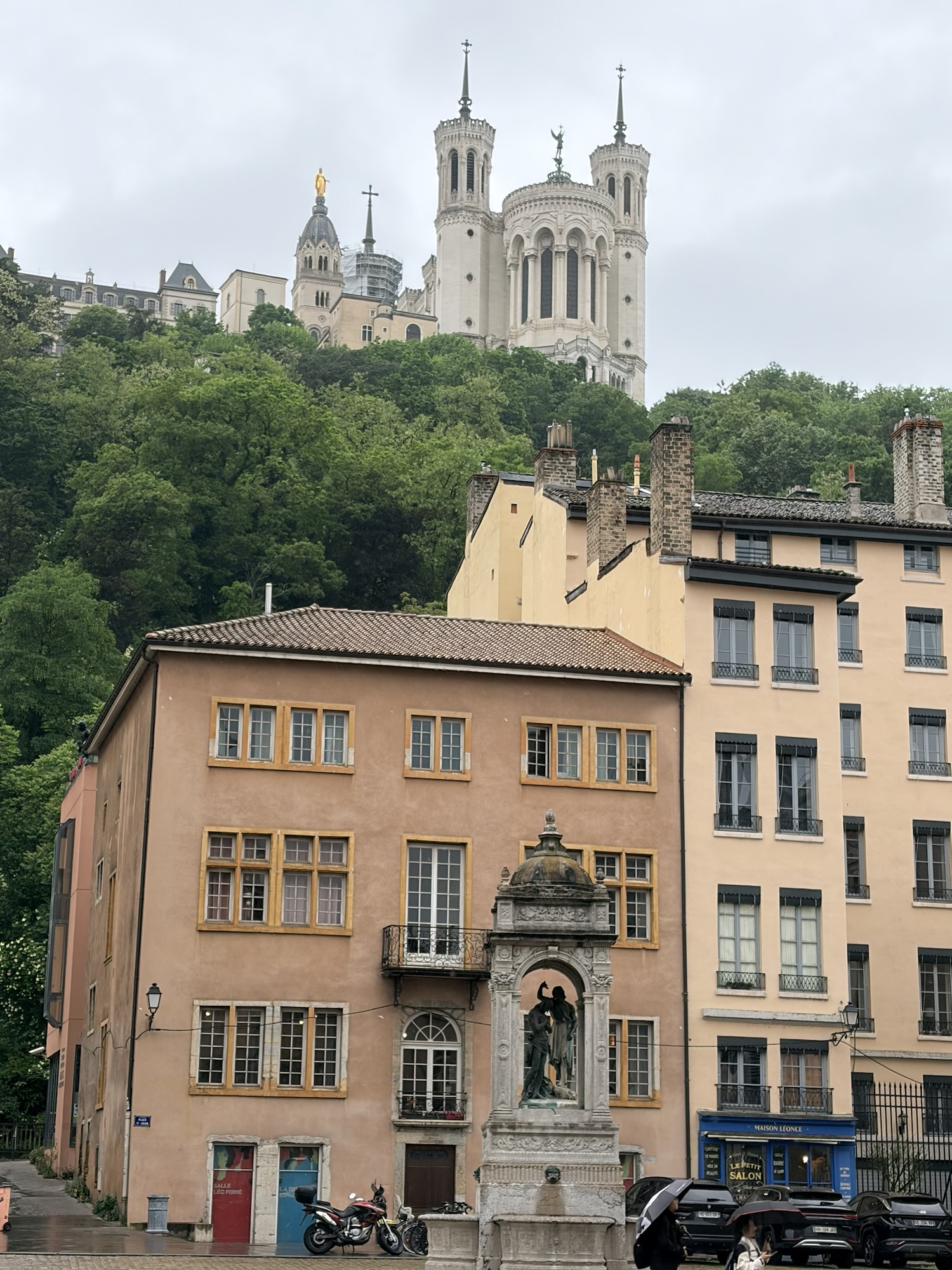
Our only chance to see the Gallo-Roman museum was this day, Sunday, so after a painful bus ride back to the hotel to put my foot up with an ice bag we headed back to old, old Lyon for our last hit of Roman history. The route is up the funicular, included in our 72 hour public transportation pass (HIGHLY recommended—it is a bargain and covers all buses, trams, metro and the funicular) and a short walk to the museum which, in my injured state, seemed to take forever. Great museum! And it is built right next to the amphitheater, which we passed on due to my #@$& ankle. At one point I was looking at something and realized there were so many languages being spoken around me I had to move on to concentrate on what I was seeing.
We had a reservation at Bouchon Vieux Lyon, another racous food experience. It was so tiny we were only an inch separated from the next table, occupied by a lovely young man who is, of all things, a college Spanish teacher from Istanbul. We had a delightful Spanish-English conversation and traded contact information. After several hours of eating and drinking we made it back to the hotel and collapsed.
This part of Lyon is extremely hillyQuenelle, again! So good.
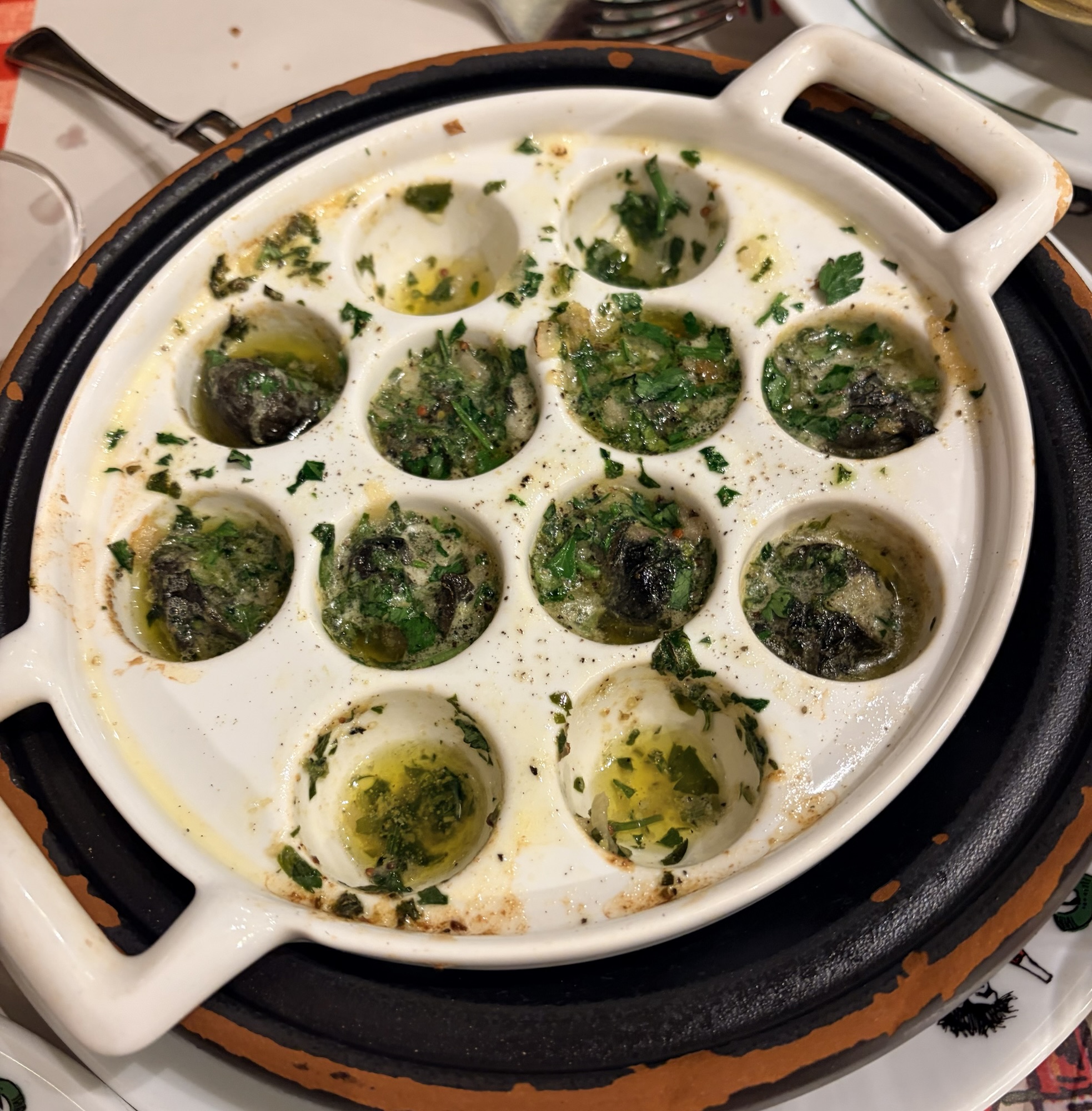
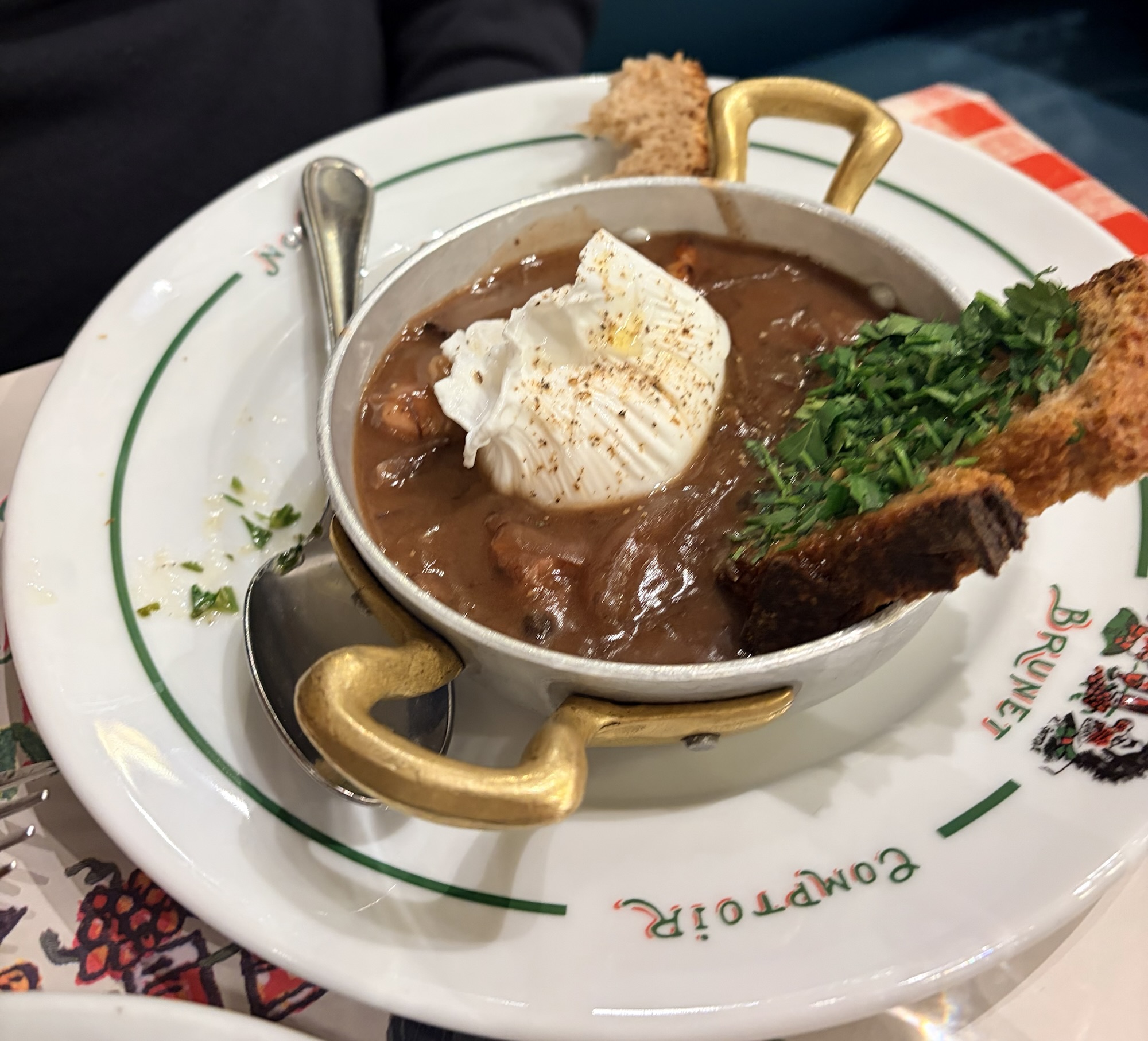
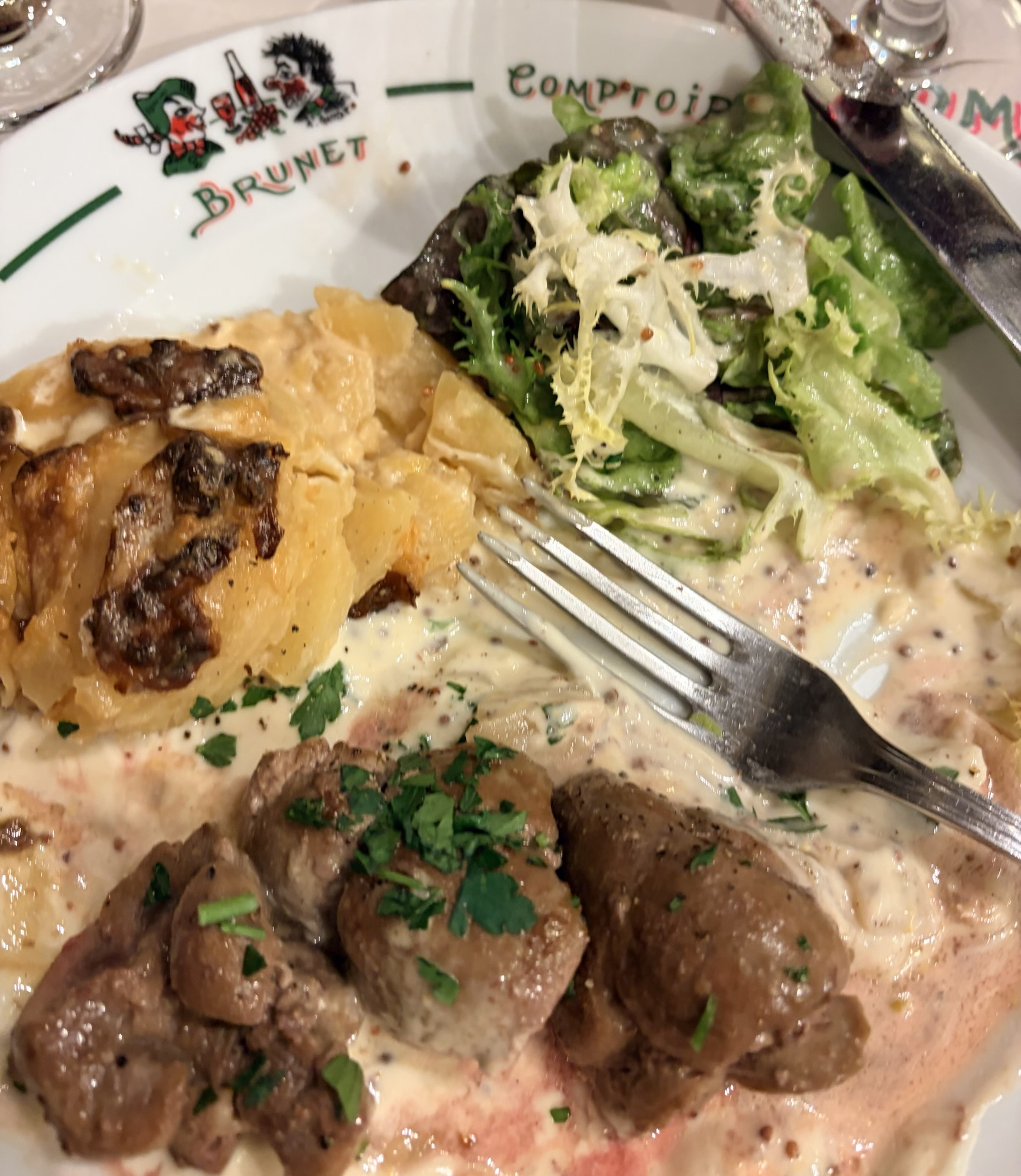
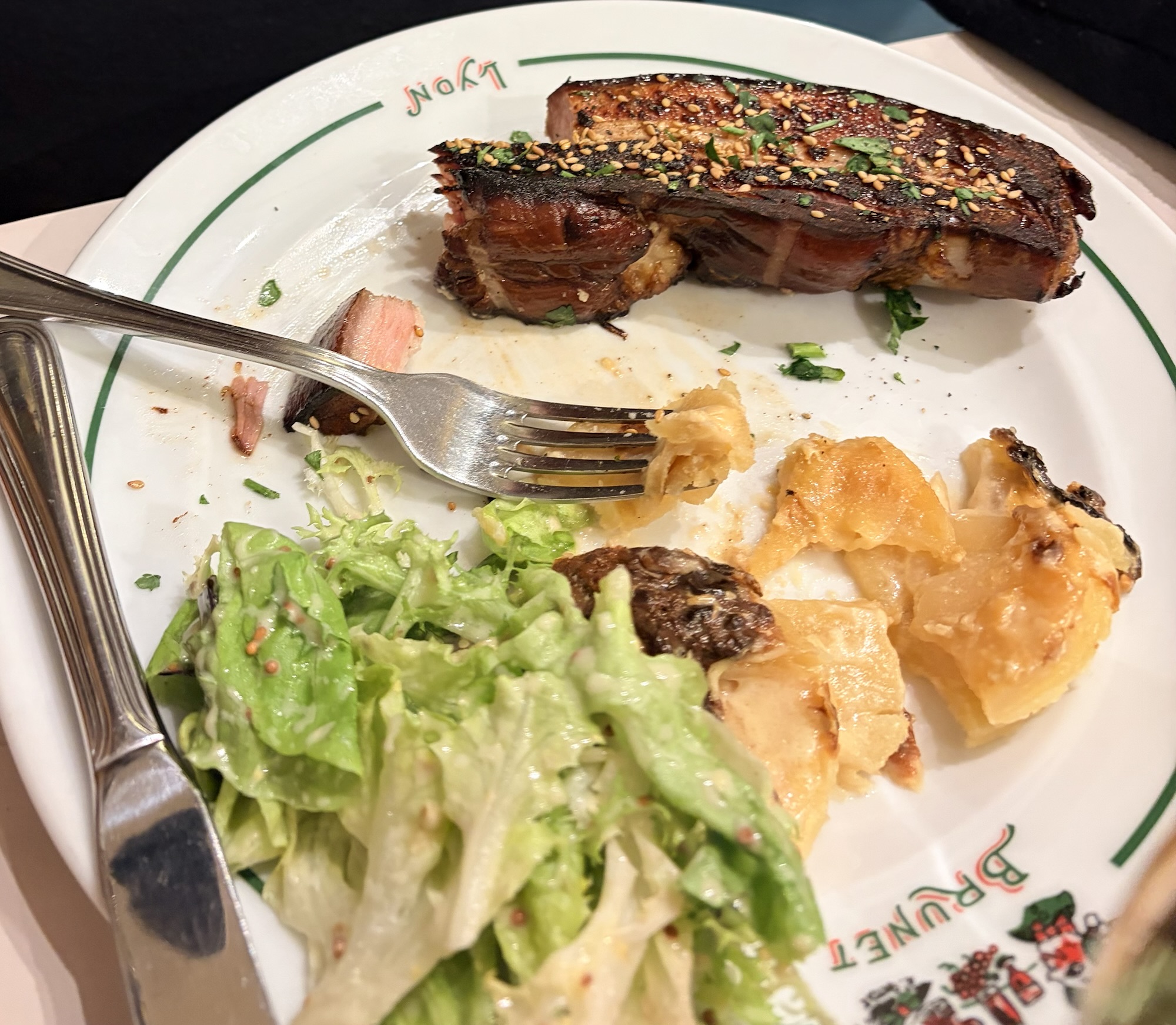
Monday we had a plan which was a bit constrained due to my ankle. Our first stop was at a pharmacie, where the exceedingly kind pharmacist fitted me for an ankle bandage that helped a lot. Our boulangerie destination was across the street, and it was delicious with good coffee! After we finished I went inside to tell them how good it was and I was writing a “revoir” with cinq etoiles! We had yet to explore old, old Lyon and it was raining pretty hard. We decided to try the private Musee Cinema et Miniature. It was fun! Even with lots of school groups, we enjoyed the rebuilt movie sets, movie props, matte paintings and miniatures. And it was small, 7 tiny floors in an ancient building, so not a lot of walking. When we got put it was pouring! We returned to the hotel for another round of ice-on-the-ankle and I looked for our last bouchon, which might have been our favorite, Bouchon Comptoir Brunet. I requested a reservation for 7, when it opened, and we hopped back on the bus. Yes, reservation accepted and we entered this cozy, hospitable spot for a bottle of beaujelais, oeufs murette, snails, herring salade…for my main I had veal kidneys (with, of course, scalloped potatoes) and David had a pork belly thing.
The next morning we got on the train back to Paris. Checked into the Holiday Inn Express, took the train back into Paris for a final meal at Au Pied du Cochon, and the next morning we were staggering through CDG airport and onto a really excellent United Polaris flight back home. Landed an hour early, had our first Global Entry passport control experience, and zoom we Lyfted home to ecstatic dogs and a nap!
We chose a stopover here mostly because it was a handy distance for a stop between Castres and Lyon. What a fortunate choice. We loved this place and had several exceptional food experiences. If you are seeking a not-very-touristy place away from the big cities check out Le Puy.
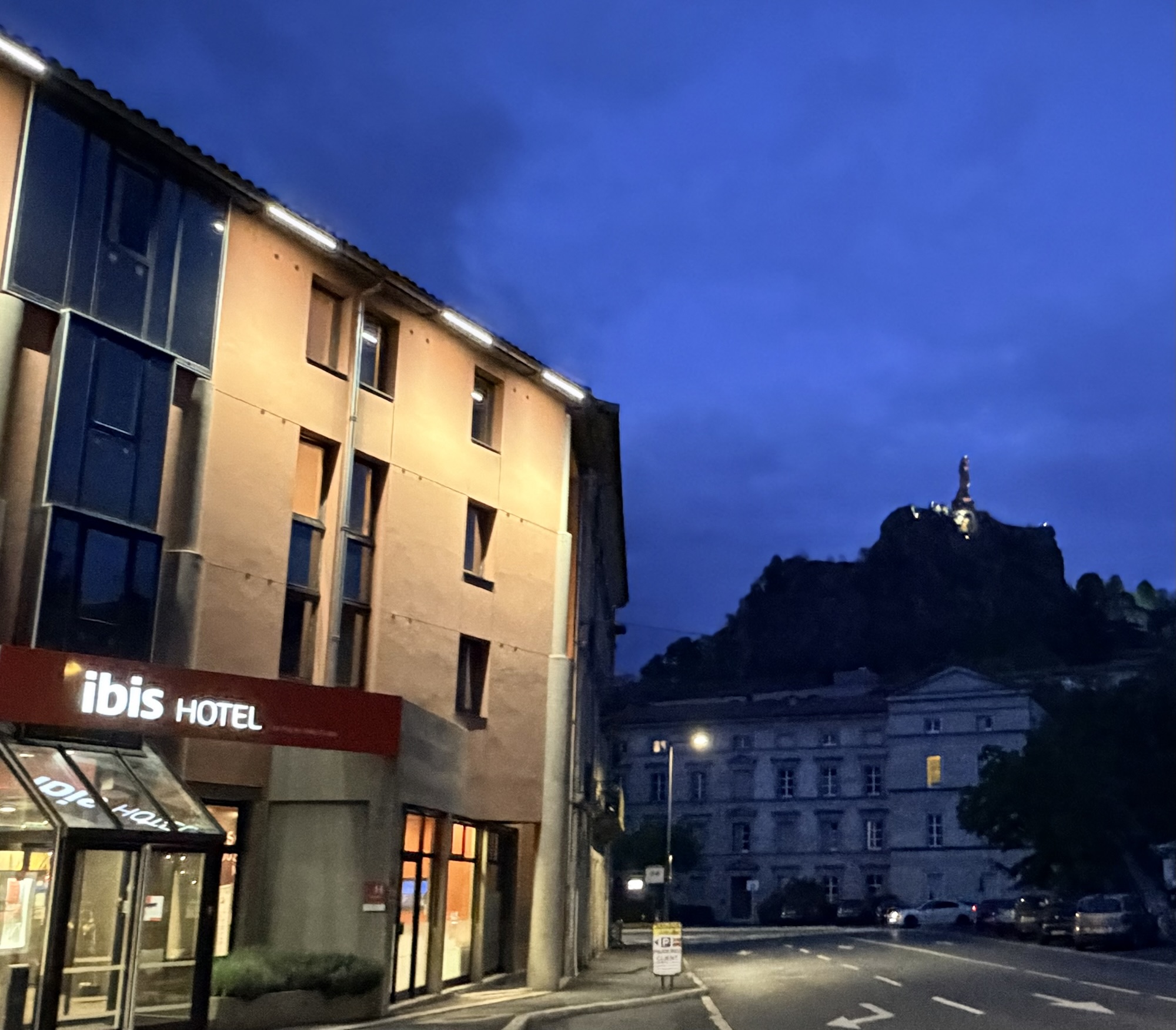
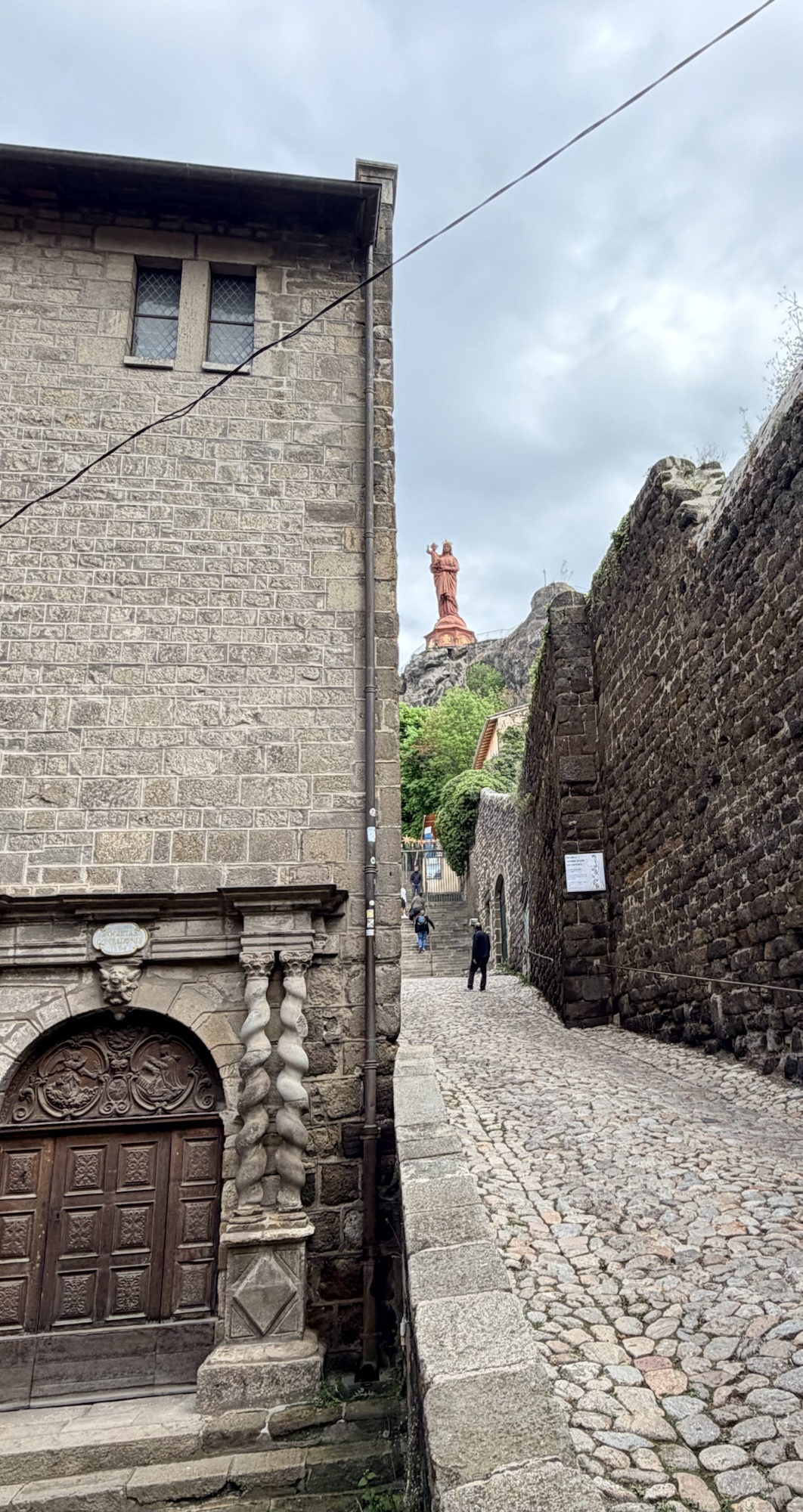
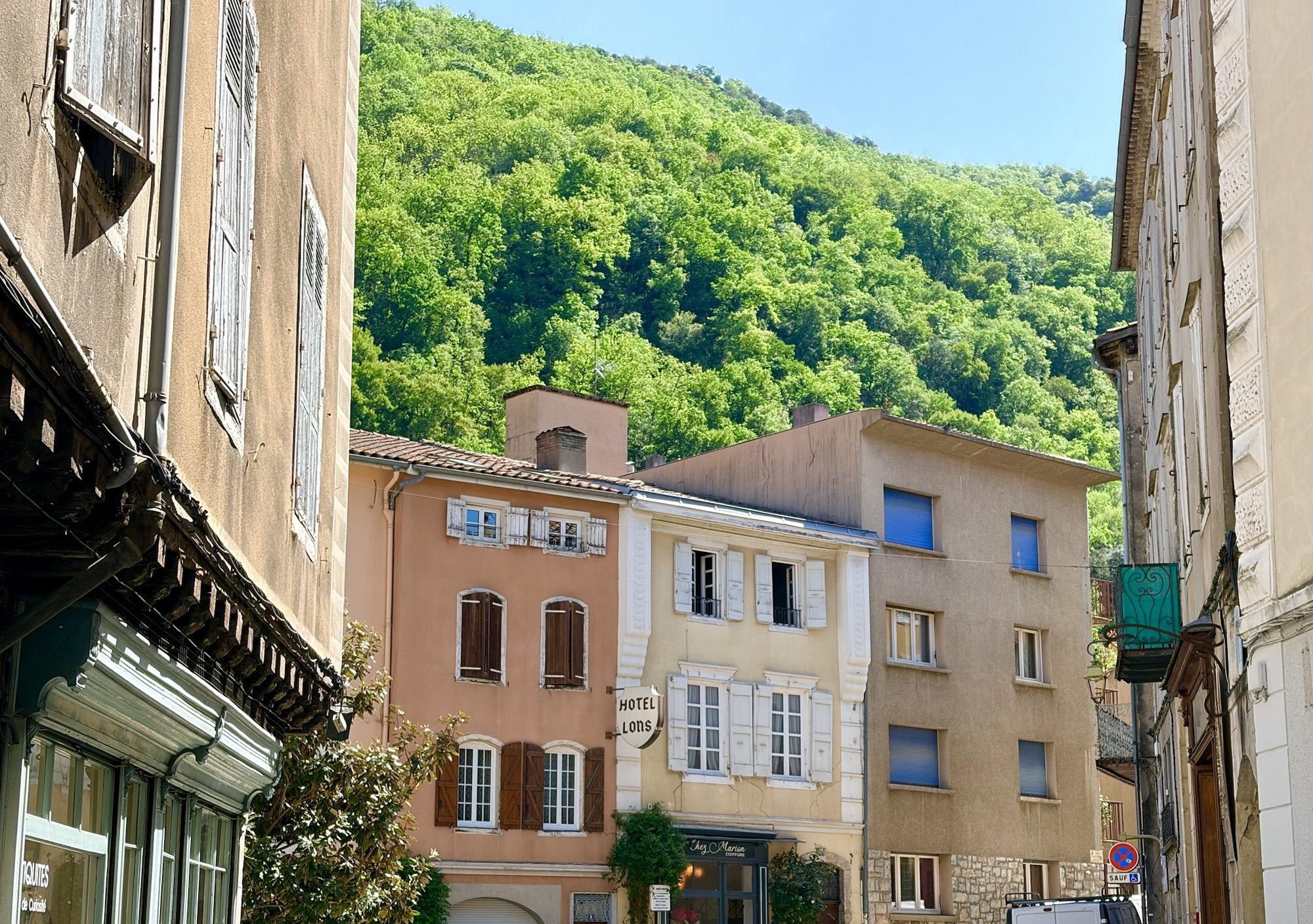
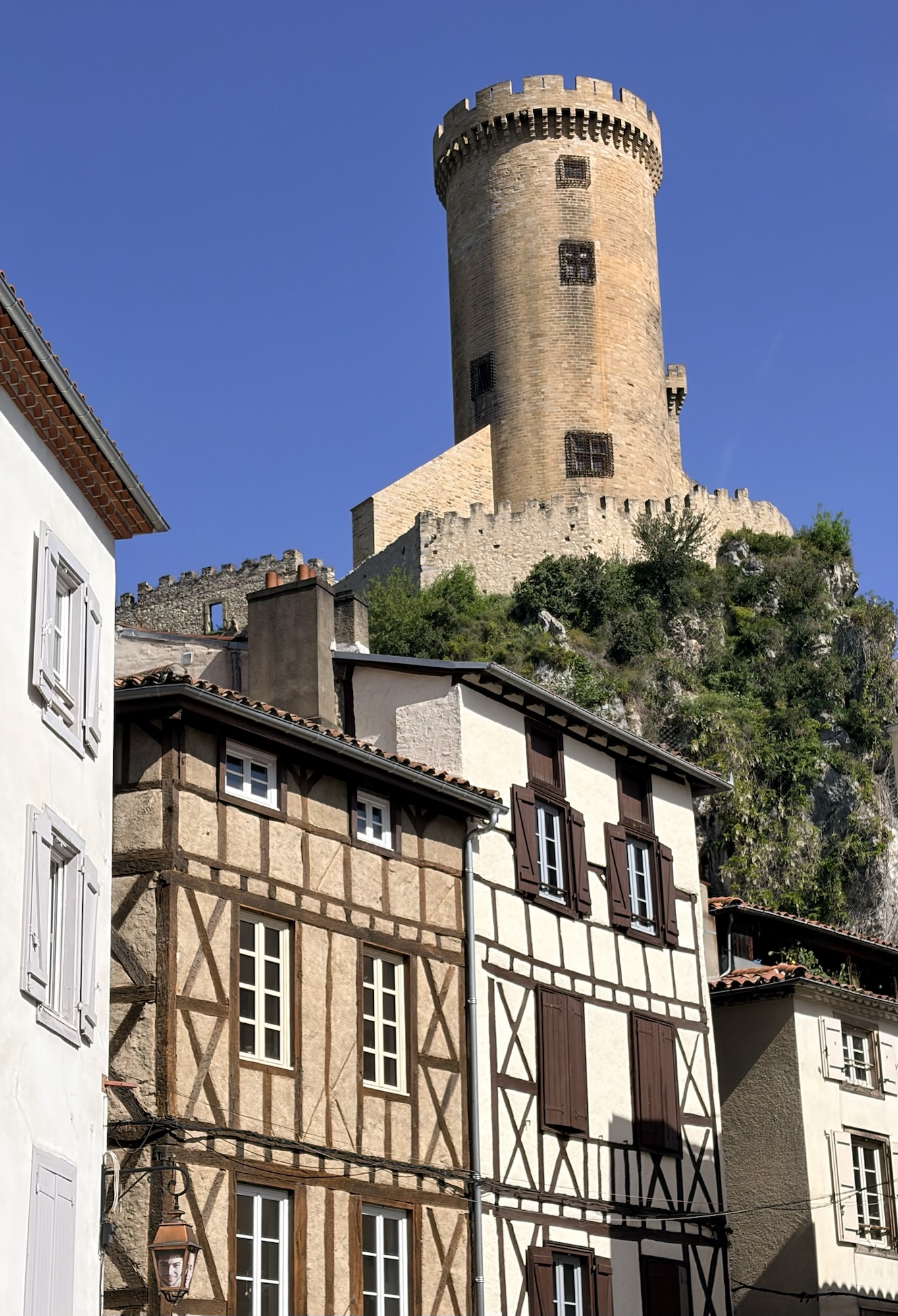
Okay, Le Puy-en-Velay is very, very nice. It is quite green, with nice gardens and welcoming parks, a river, and the dramatic steep needle-like hills topped with monuments and in one case a church. Why people insist on building in these virtually inaccessible spots…but the results are scenic in the extreme. We had booked an inexpensive hotel on the edge of the old, historic parts of the city which was great because we parked in the hotel lot for two days and walked everywhere. (Ibis Le Puy-en-Velay Centre—welcoming, inexpensive, perfectly situated).
As I wrote earlier, the drive drom Castres was mentally a bit harrowing due to seemingly endless, extremely rural countryside. I’ll add right here that the drive from Le Puy to Lyon was highway the entire way, which was actually a bit too easy. It is also less and less scenic the closer you get to Lyon so the entry to such a well known and loved city was meh, like driving into Chicago.
In April the city was uncrowded. There are always hikers passing through and some are there on a pilgrimage, but this is not such a destination that we were lost in groups of visitors. Everyone was cheerful and warm, and we even saw a side of the town that is, well, a bit bohemian and raucous when the wine is flowing. More on that below.
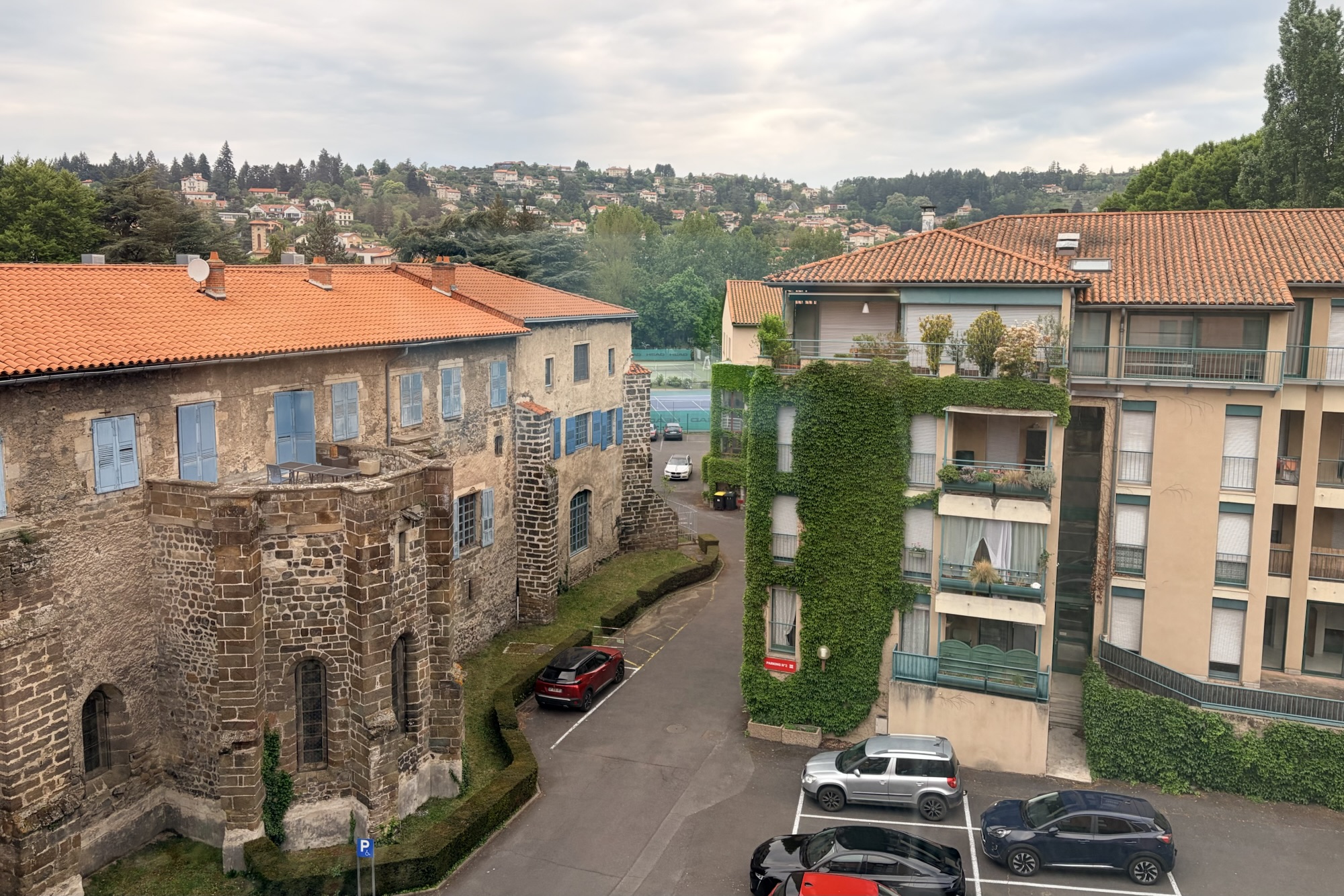
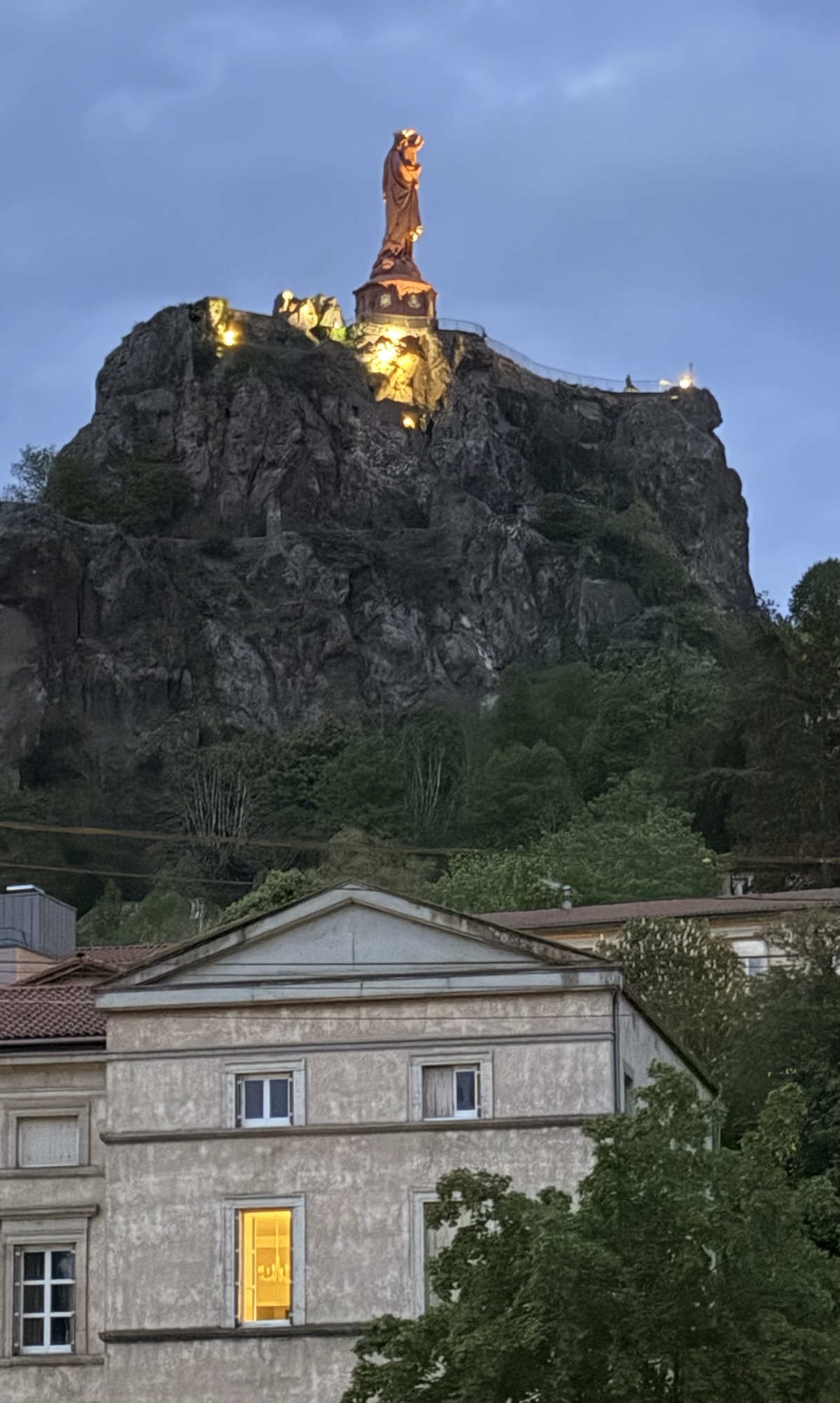
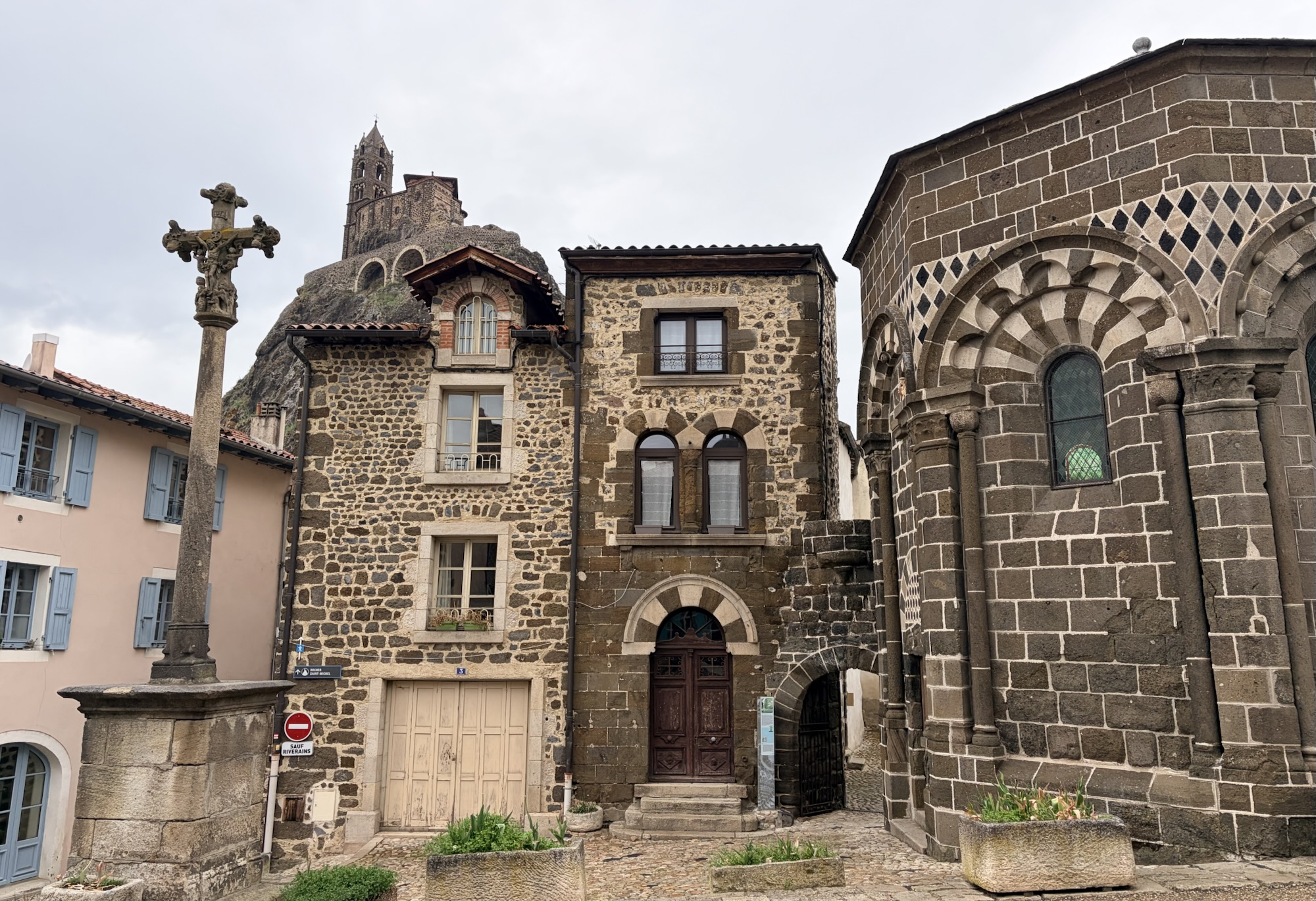
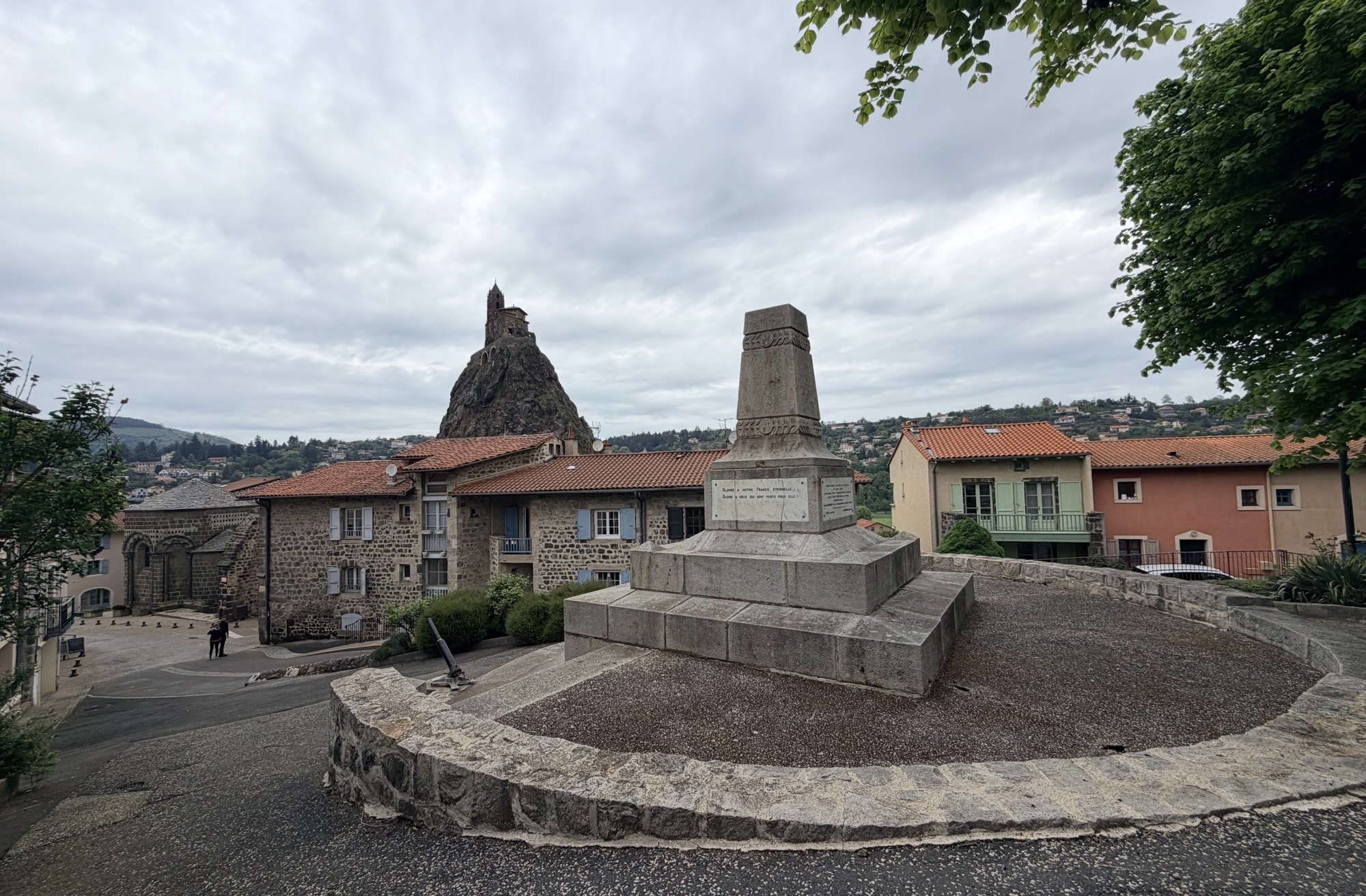
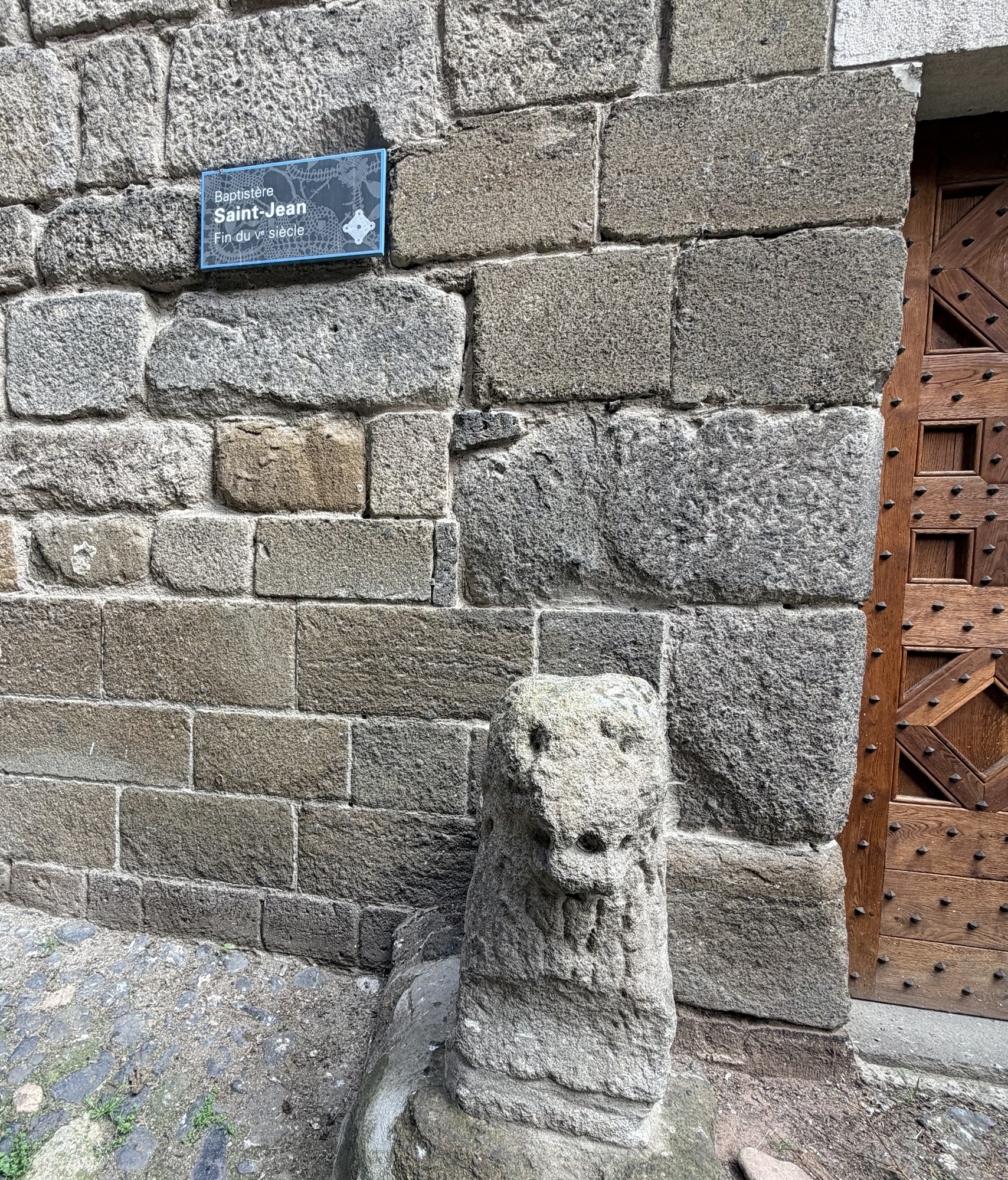
View from our budget hotel window. Quiet and picturesque WWI memorial and view of the town. Above the cathedral the protector of the city, Virgin Mary. This is as close as we got. Built at the end of the 5th century…part of the cathedral complex
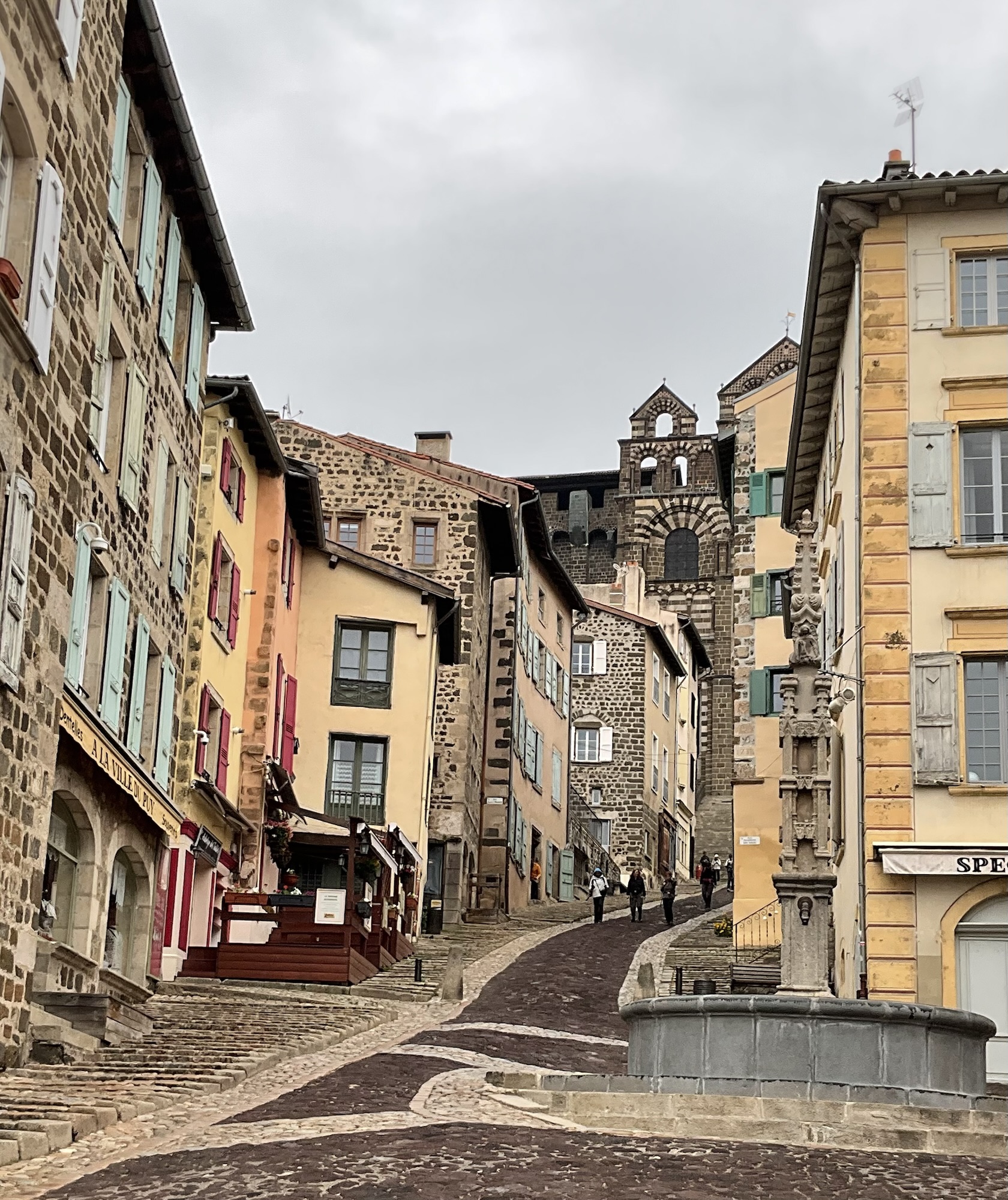
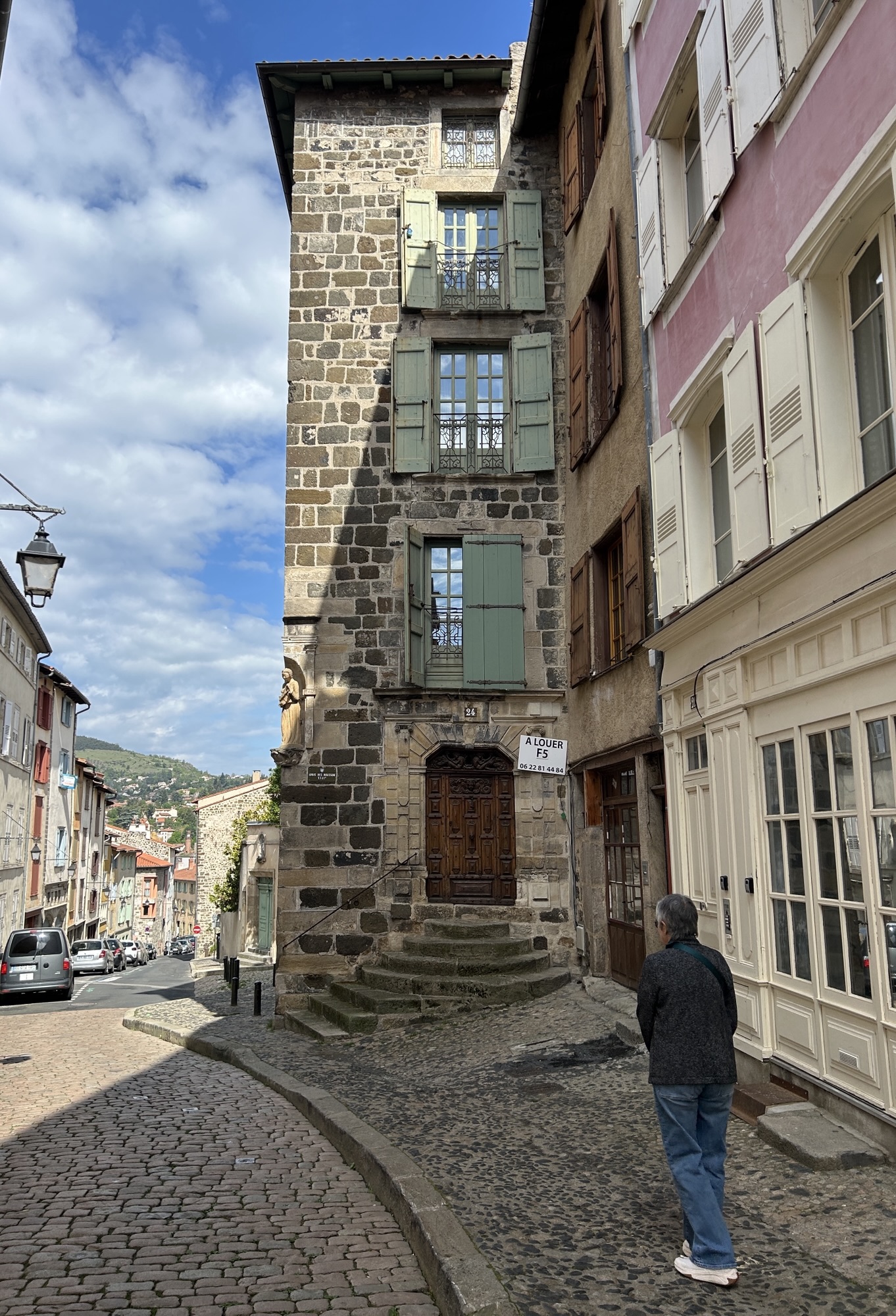
Wandering the historic areas is a darned delightful way to pass a few hours. You cannot really get lost…it is not that big…and the architecture, the hills, the churches tucked here and there are begging to be photographed. We tried to restrain ourselves, sort of.
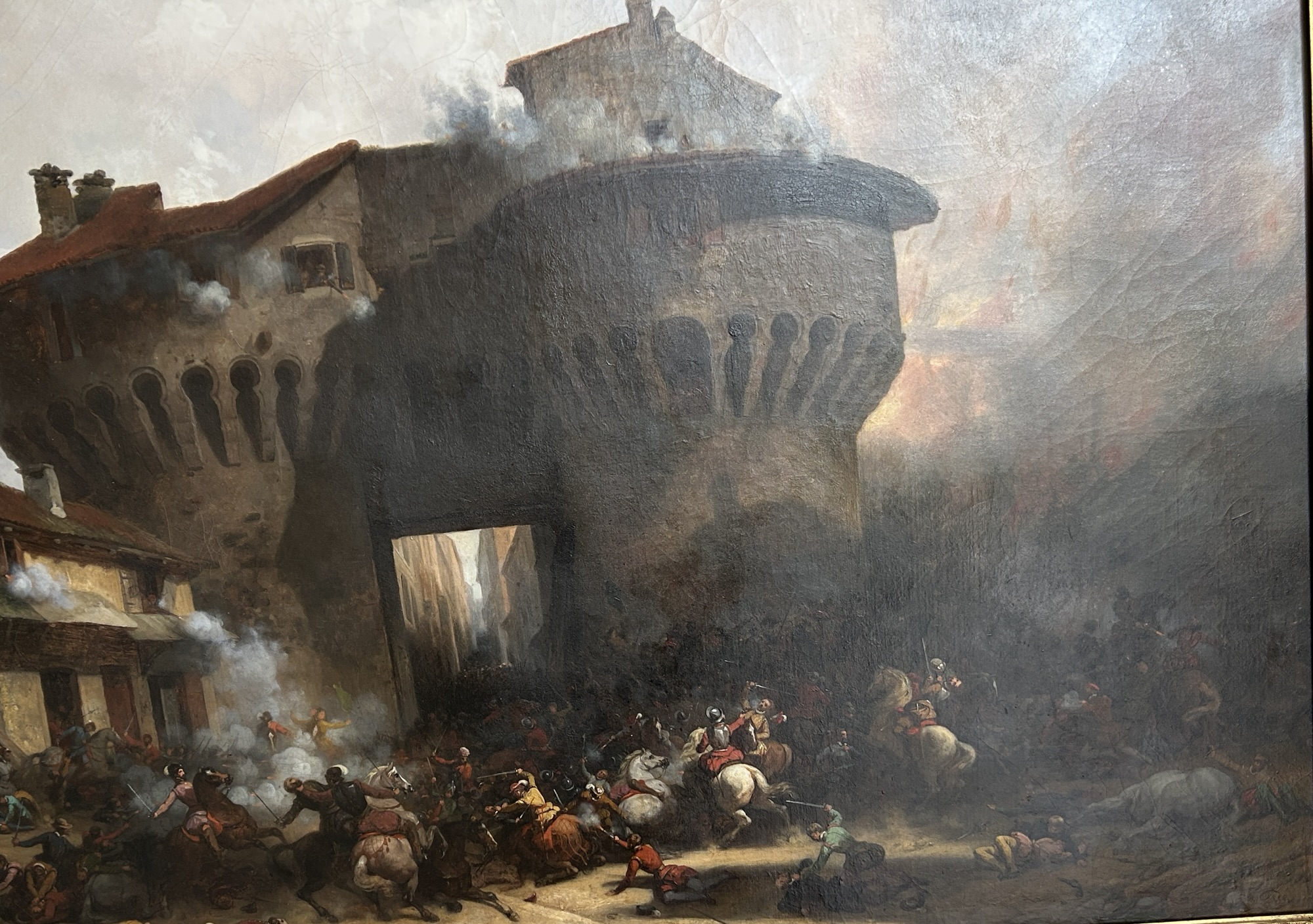
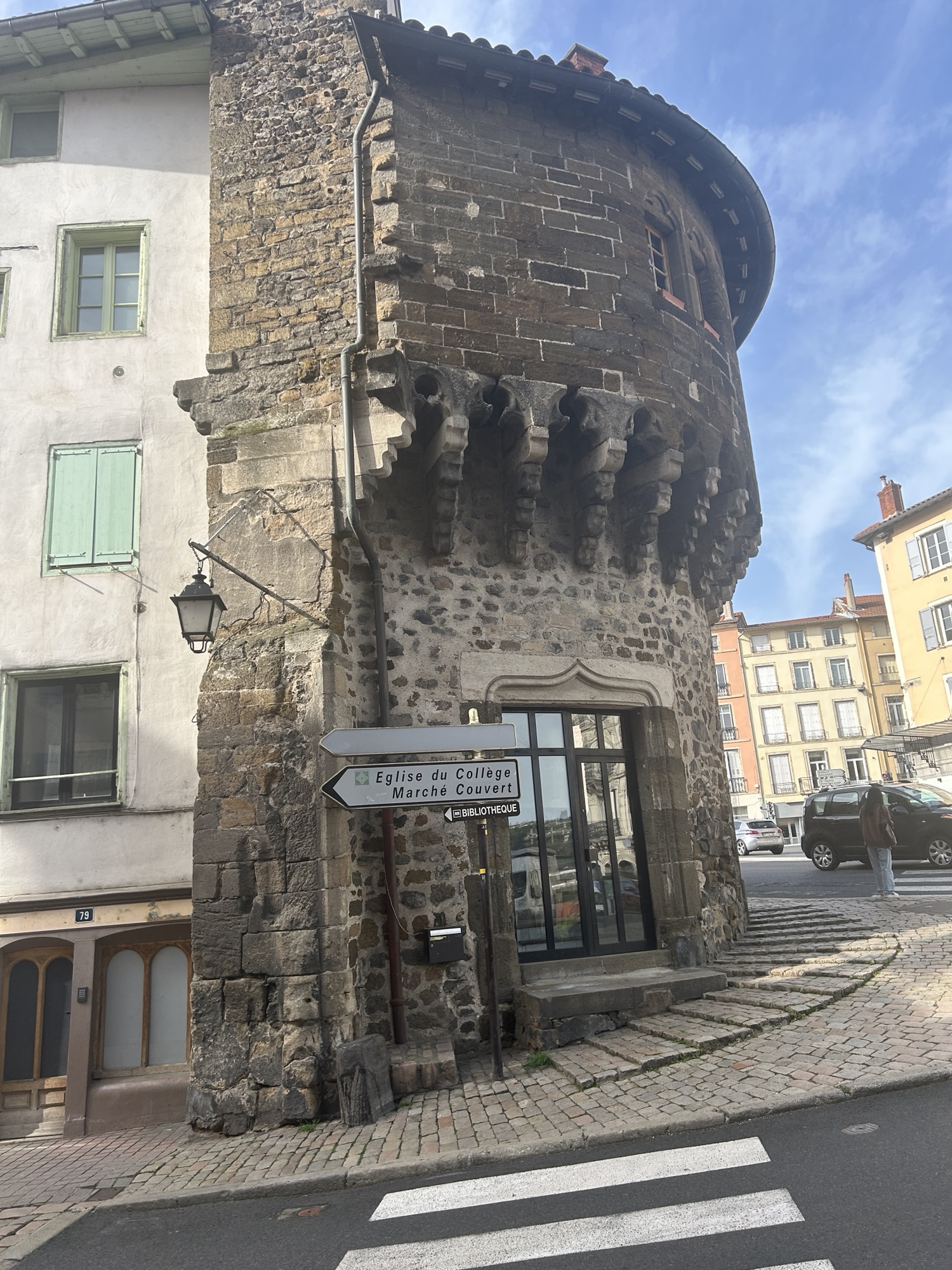
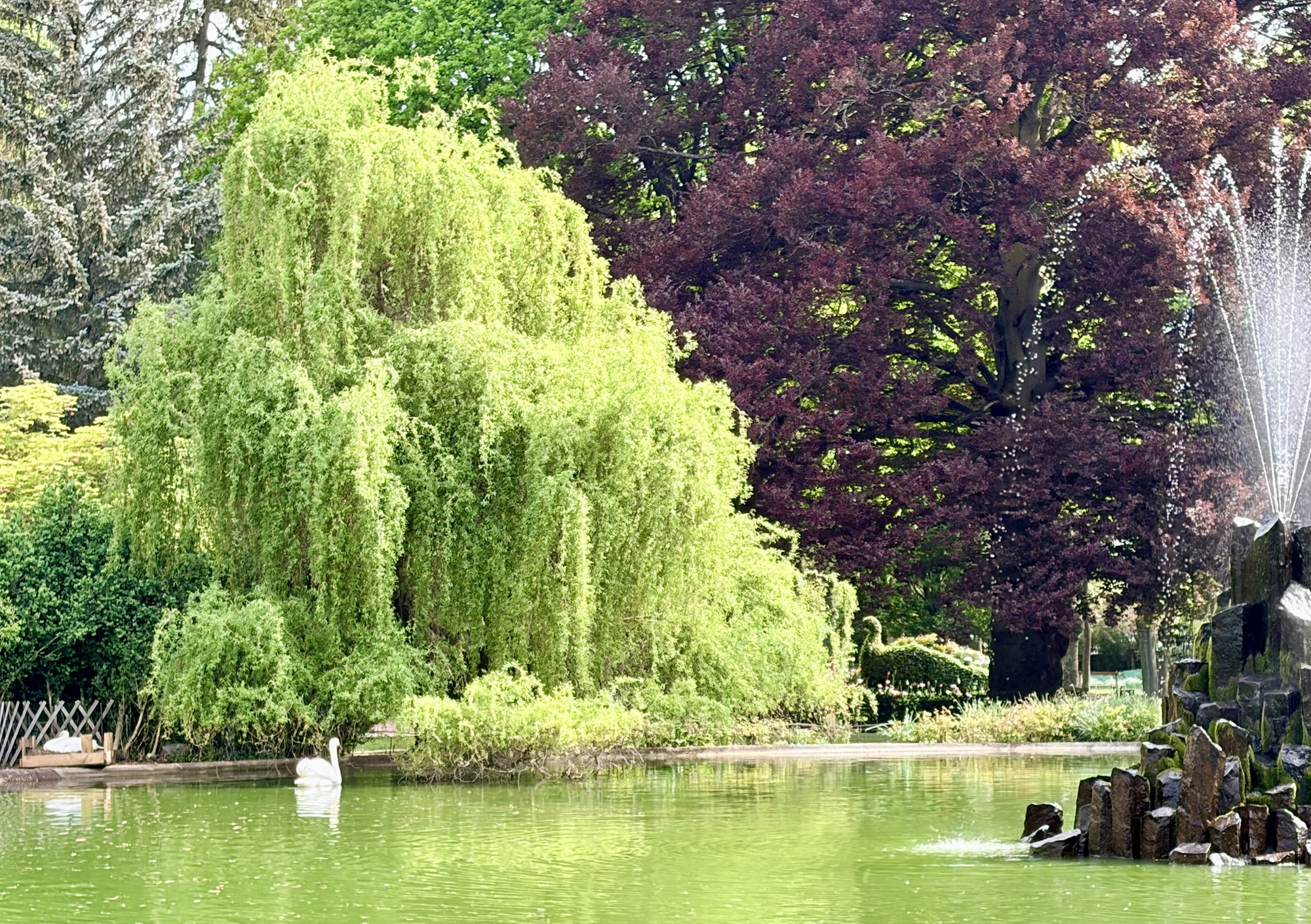
We saw this painting at the Crozatier…hey, that’s the street where we had dinner!The remains of the gate pictured to the leftThr walk to the museum was theough this delightful park
We spent several hours in the Musee Crozatier which, like the Toulouse-Lautrec museum in Albi, closed from 12:30-2:00. An hour plus in the morning, a walk to a highly-rated restaurant for lunch, then back for a few hours more. One cool thing we had not experienced before…an animated film about the history of the museum. Who was Crozatier? Why this collection? How has the building changed over time? We realized we didn’t know boo about most of the gazillion museums we have visited in the US and elsewhere. The collection is mostly art with some local history and a natural history floor which had, like the Toulouse museum, two great animations running continuously about the volcanic evolution of the area over millions of years. We have not seen animations like this in US museums and why not? They are fascinating.
A special exhibit at the Crozatier was the history of lace-making for which the city was known for a long time. Cool! Made me sad that lace coasters and curtains are so out of style.
We were lucky to happen upon a mass in progress at the cathedral, where the choir and members were singing—the acoustics of the room made my chest vibrate. It was beautiful.
Food adventures
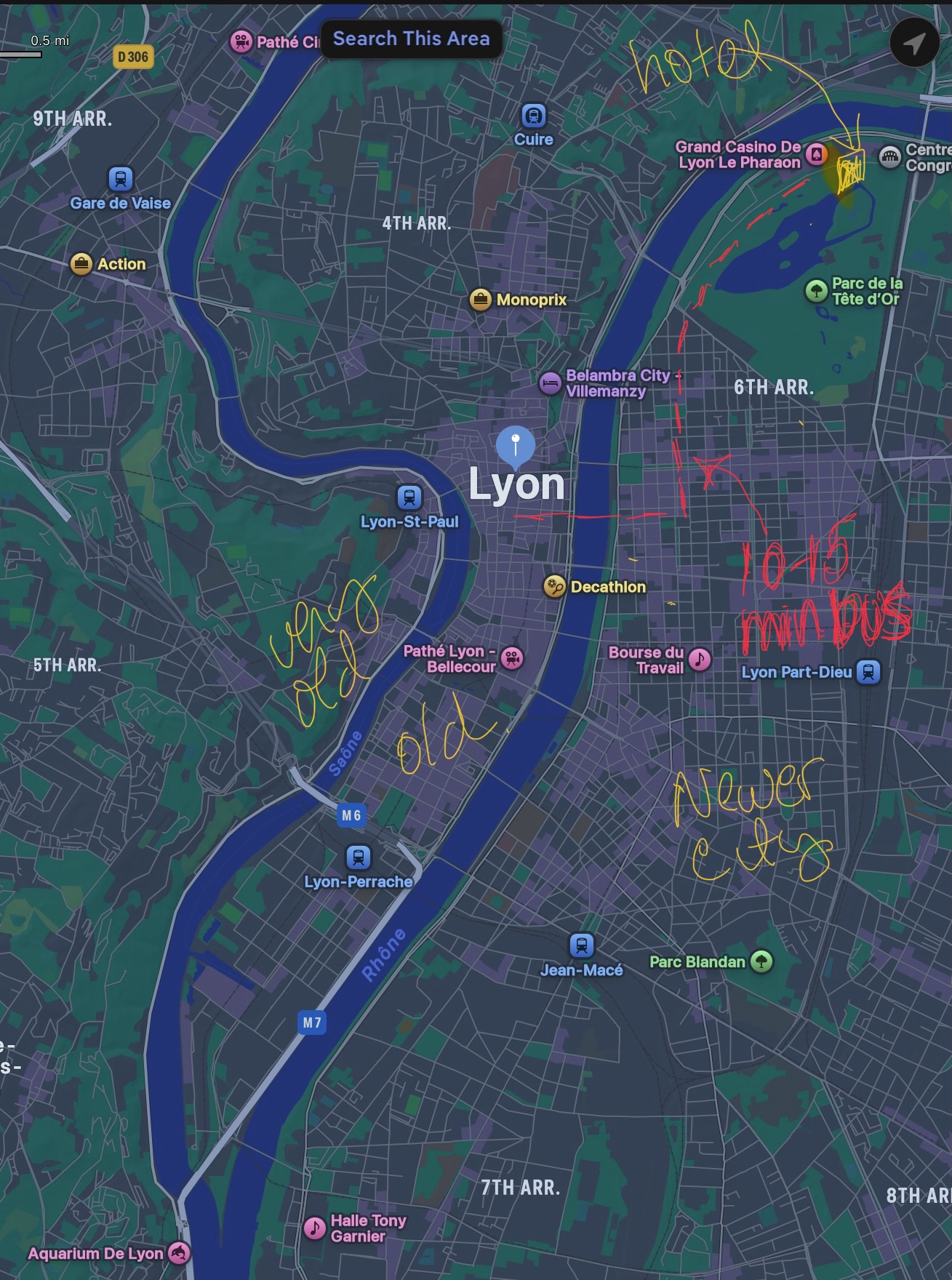
We had done no research on Le Puy before arriving so I did followed my usual fast search for restaurants on google maps. In general the reviews there are reliable, though occasionally there is an obvious fake, like one in Lyon where a newish restaurant out in the Cite Internationale (giant but attractive offices, the Crown Plaza where we were staying, Interpol headquarters—well out of the city proper though fortunately very quickly accessible by bus) the review started “As I was wandering the streets of Lyon…”. No way. Anyway, back to using google maps to ID good places to eat—this worked very well in Le Puy and we had two memorable experiences.
Being in this city almost by accident, in early spring, we had no idea what the food scene could be, but we were a few blocks from the historic, and fairly lively, narrow streets, one of which turned out to be our destination for coffee and croissants each morning and our memorable dinners. And the best lunch I could have imagined—at a place that had the weird name Le Grand Bowl d’air which seems a play on the phrase “grand air” for fresh air, and indeed the tastes and ingredients were as fresh as could be.
In our experience it is always preferable to show up at lunch time when you are concerned you won’t get a table for dinner. And this particular place did not have online reservations. I am fairly confident of my French in person, but phone calls are a different story. When the Crozatier museum closed for lunch we decided to make the 15 minute walk back to “our street” and take a chance we could get a table. Success was ours, and what a super place. Small of course, perhaps 9 tables, with a very small patio that was closed on this cool day. The server/manager moved balletically among the tables, all full, keeping everyone happy. When at the end of the meal I told him it was an “experience tres genial” he pointed to the woman in the tiny open kitchen, the only other person working, and asked me to tell her what I just said. “It’s all her.” She smiled, I repeated, and I felt so great!
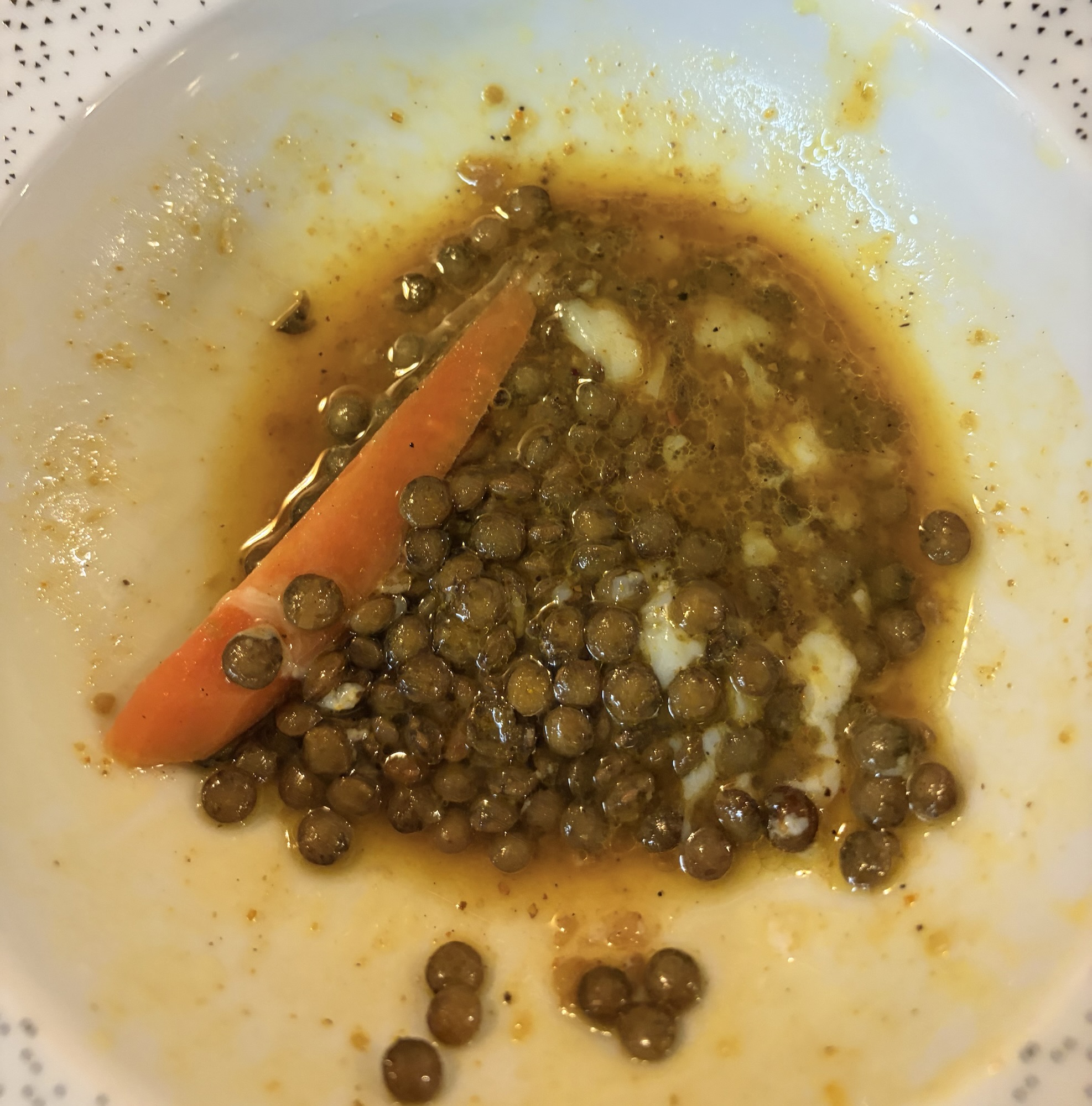
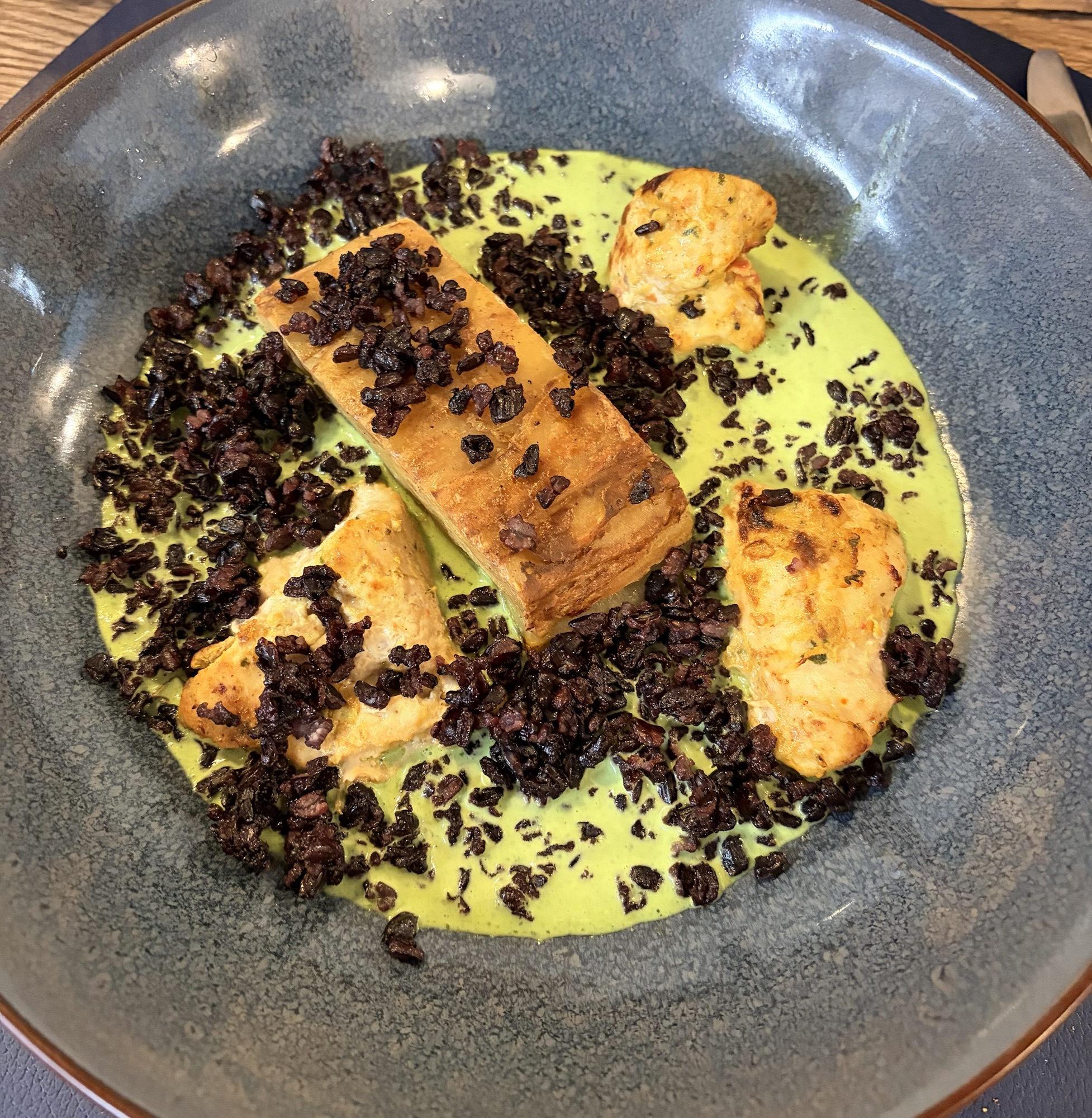
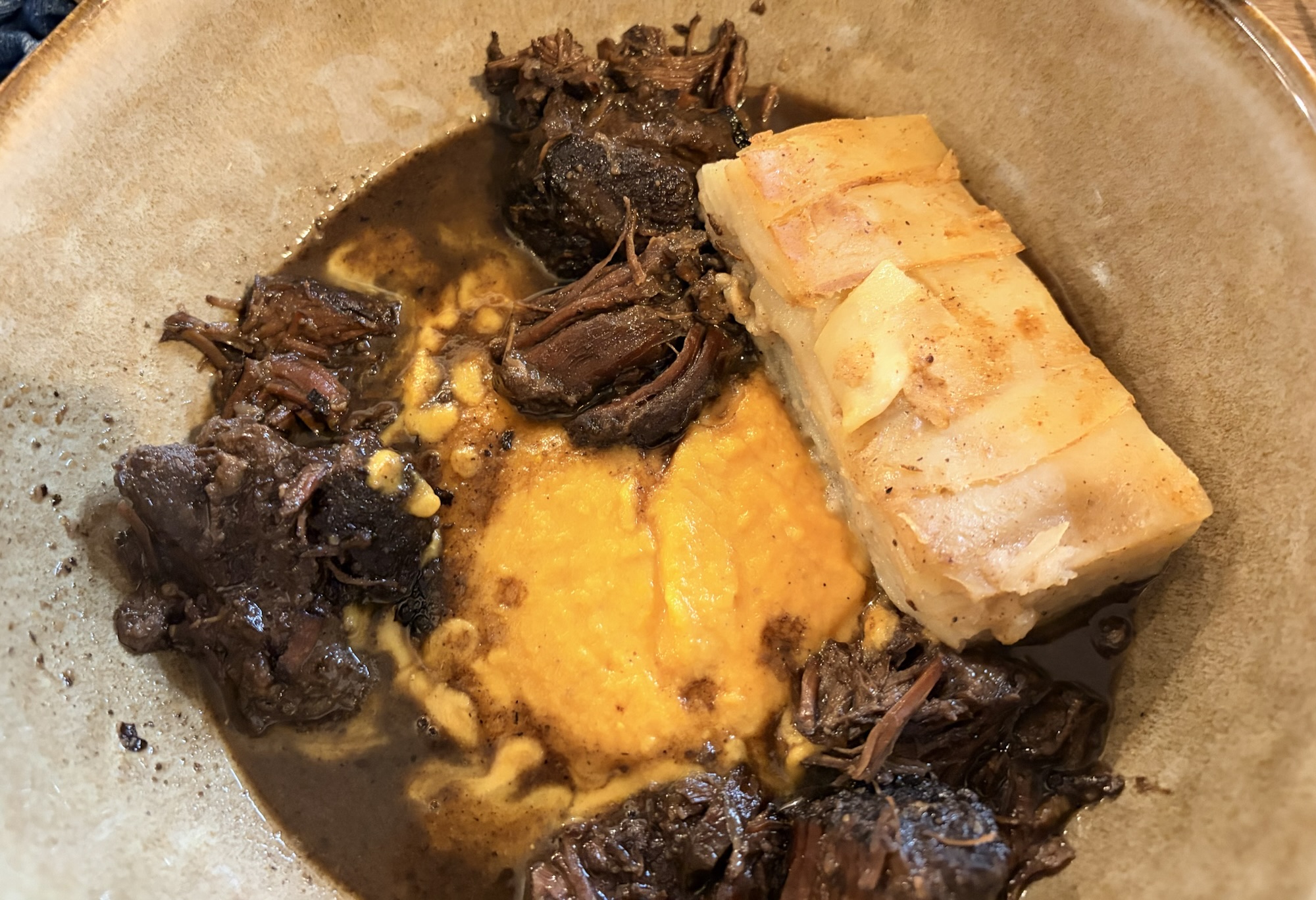
This was oeuf parfait over the local lentils. I ate it too quickly! Oeuf parfait, perfect egg, is a soft boiled egg. Tender marinated chicken, a slab of potatoes, scattered black rice, and the freshest, most delectable sauce.A modern take on boeuf bourguignon, again with scalloped potatoes and a rich stir in sauce.
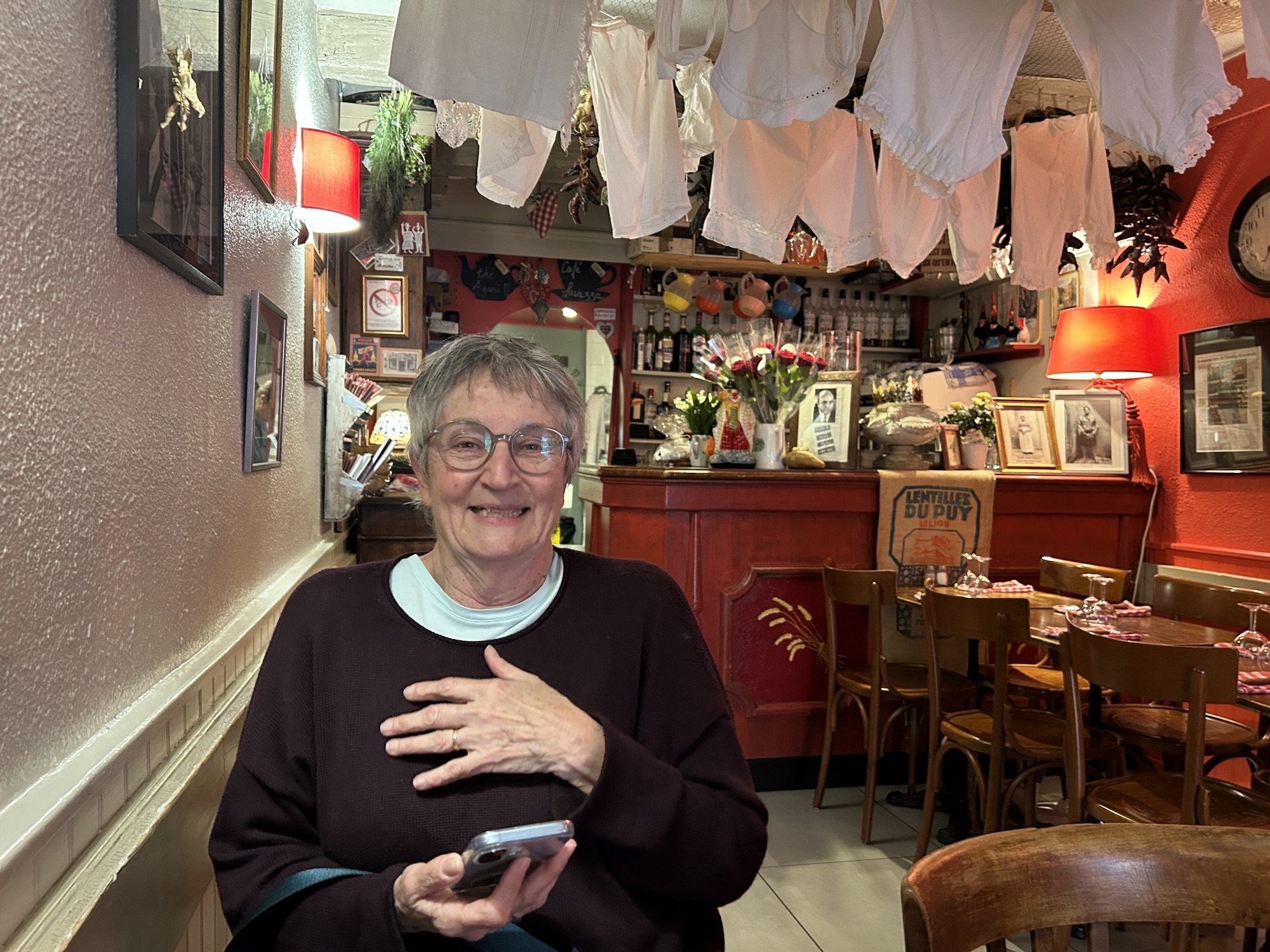
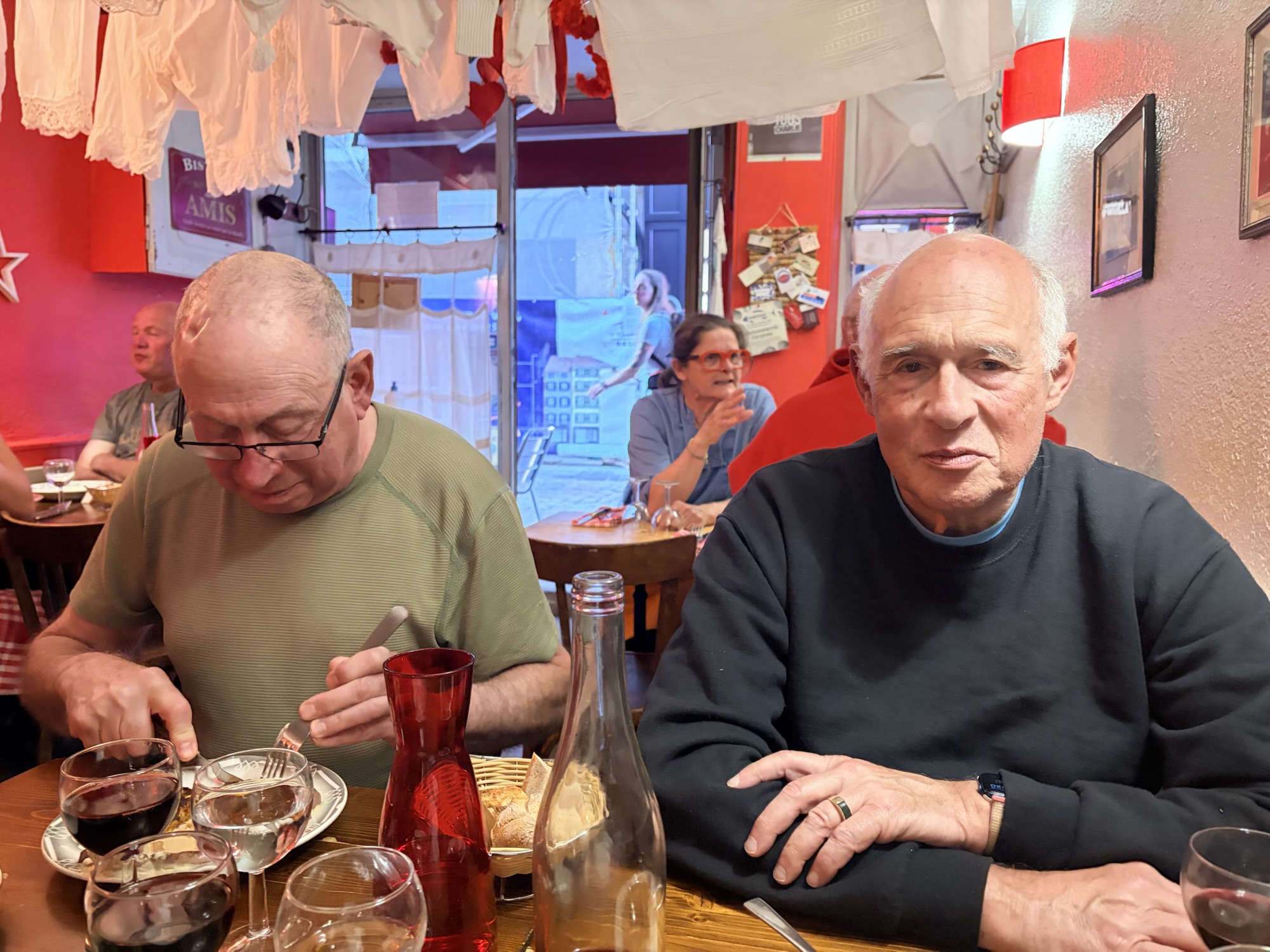
We skipped the wine at lunch because, frankly, we had really overdone it the night before. We had shown up without a reservation about fifteen minutes before 7, opening time, and the door was open and the lights were on so I walked in to ask if we could possibly eat right at 7 without a reservation. This place, named Entrez les Artistes!!!, was well reviewed, very small, a red room hung with lines of white underclothes, linens, and such as if we were under the clotheslines in a tiny house. The cook/owner came out of the kitchen in the back, said sure we could eat and when I said we would be back at 7 she nodded and shrugged, suit yourself. We left and returned at 7 to the empty room, overflowing within a half hour.
The food was homey and delicious and the place was so full we were now crowded against the other patrons. We had drunk two “pots” of red wine and conversation was loud and a little crazy. We were now sharing a table with an American couple, a retired finance guy, the type who plays at being condescending and a little rude to his wife, a special ed teacher on sabbatical. The room got a bit louder, and now I had turned to talk to the artsy looking fellow behind me whom I had heard speaking Spanish—but he was very, very French and wanted to talk about Trump which I was happy to do in French. The cook/owner (who had literally snorted a super-French Trump when we said we were from California) came out of the kitchen every few minutes, pulled up a chair and talked with her customers, went out the front door to have a smoke with other friends passing by, came through to see who needed what, then back into the kitchen. When we left the not-Spanish guy was outside and he showed us the doorway to his apartment—just a block or so away on a side street—so we could see the year it was built, 1643. “My American friend was delighted that my building is older than her country!”
We sat down having no idea what we were about to experience at Entrez Les Artists!!!, the name of this tiny place. One pot of wine in and we had table mates.
This was a restaurant experience I cannot imagine having in the US. Great all the way around. So great David insisted we go back for our last meal before leaving Friday, May 1, to drive to Lyon. We walked in at 7, sat down, and this night something or other was going on—friends kept wandering in, crowding the sort of bar in front of the kitchen, popping champagne and getting louder and more raucous by the minute. When David asked me what the plat du jour was, I asked the cook, who led me into the kitchen to see it simmering on the stove. What a place. We had another great meal (I maintained my record of having boeuf tartare in every city if possible), wandered out, and never did figure out just what was going on!
May 1, Introduction to Lyon
We had checked the night before, and “our” boulangerie would be open on May 1 so, after confirming that gas stations would be open that day as well (self-service only), went to have coffee and a croissant. As we sat having our petit dejeuner, the queue grew until it was out the door, all hikers, most with backpacks, who were passing through on cross country hikes or the pilgrimage, probably for the 3 day weekend.
They take Labor Day very seriously in France. If you want your restaurant or store to be open you must pay employees double time. Hence things like hotels are open, and some restaurants, small ones with we assume family member workers. We decided to walk around town, explore more of the historic streets and up near the cathedral and other high spots, dawdling until noon since the drive to Lyon would be only about two hours. As we drifted back to the hotel we saw five or six restaurants opening, so we figured we would find a place to stop and eat en route to Lyon.
Well, nope, that was not to be. We just kept going. The drive was pretty boring, the outskirts of Lyon uninspiring. We had decided on the Crown Plaza, even though it appeared to be out of the way, because 1) it was free with our points and 2) it backed up on a big park.
Multiple buses stop right across the patio, so getting around the city was simple. The hotel itself is corporate. The staff is very friendly. Our room was huge. If we were to stay there again, unlikely, we would insist on a high floor on the street side. On the patio side the noise and lights made it mandatory we keep the window closed…and France is strict about not allowing air conditioning until late spring. If only we had asked for a fan! (We recently discovered hotels have fans! And they bring them right to your room! We even got one at the Holiday Inn Express at the airport. Travel tip of the year!!! If you want to sleep cool, Ask For A Fan!!)
So we arrived at the hotel around 2 to drop off our luggage. The young guy at the desk was brusque and pessimistic we could return our car given the holiday, but we were confident and set out for the downtown Sixt location. Closed. I was in a lane with (fortunately very light) traffic, and David had gotten out to see what the deal was. Cars came up behind me, I had to drive away, and realized I was in a part of the city where almost all the streets are one way…and in two minutes I am many blocks away. I work my way back…David is calling Sixt for help, I am now desperate to return this car and be done with urban parking lots and am fearful I will have to drive back to the hotel. And we have not eaten since a coffee and croissant five hours earlier.
David got a rapid fire AI-generated auto attendant at Sixt, talking so fast it was unintelligible. Argh! MY turn to give it a try and managed to get past the auto attendant (yes, it was the fastest and most detailed directions for returning the car) but when I said I need those in writing miraculously I was connected to a live, helpful person. He agrees to send me instructions in an email to David’s address and tells me to program the address of the drop off parking lot into my phone. He PROMISES I will get the email. And, I do. And, we both see that these same very detailed instructions were sent to David the day before. Of course we aren’t on top of our email while traveling, so David didn’t see it. All this insanity could have been avoided…but now we cannot find the entrance to the underground parking lot. David got out, wandered around this block-sized plaza while I flagged down a passerby (“I just moved here yesterday, I didn’t even know there was a parking lot here”) and at last we find it, drop the keys, video the car, and I check Claude re metro and buses. “Bad news, they do not run on May 1.”
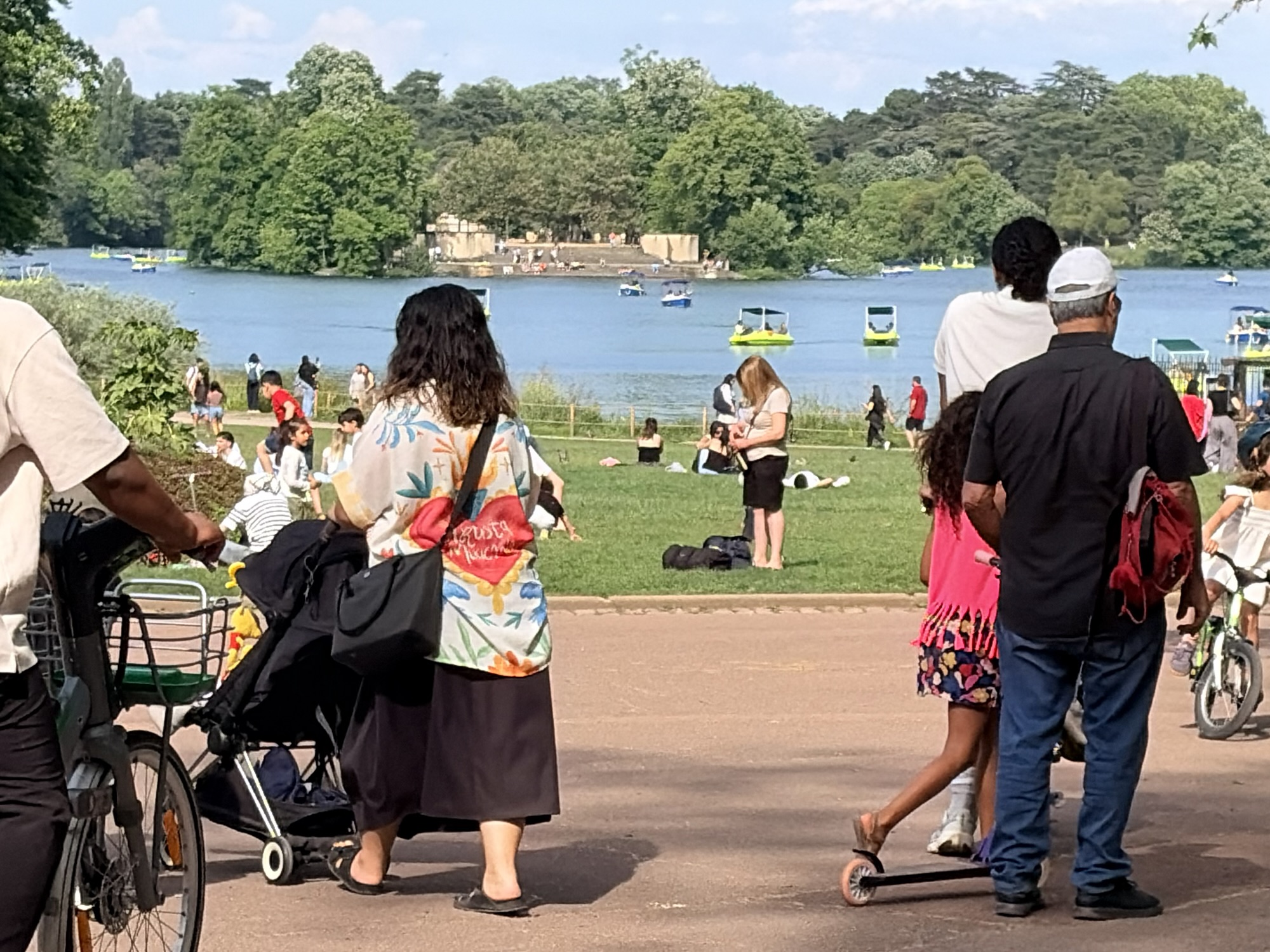
Happy mob scene. This is the park that backs up to our hotel.
Hungry but finally car-free we do the only thing we can and walk back to the hotel. It wasn’t bad! The day was gorgeous, the park adjacent to the hotel was full of families, and though we were super hungry we were confident we could eat at the hotel, which we did. Well, that is after checking in to find out the poor desk guy had been dealing with no working customer elevators since 9 that morning. Friday, May 1…when there are no workers making service calls. Seven floors. Only working elevator was the freight elevator…the sweet and exhausted desk guy walks us through the kitchen, around corners…and we are settled in the room. We go down, have an edible meal, and go to bed. Next day everything was working and we began to explore Lyon.
Of course the ironclad rules regarding “bonjour” and “merci” apply everywhere. But here are a few more things we learned.
Surprise terrain
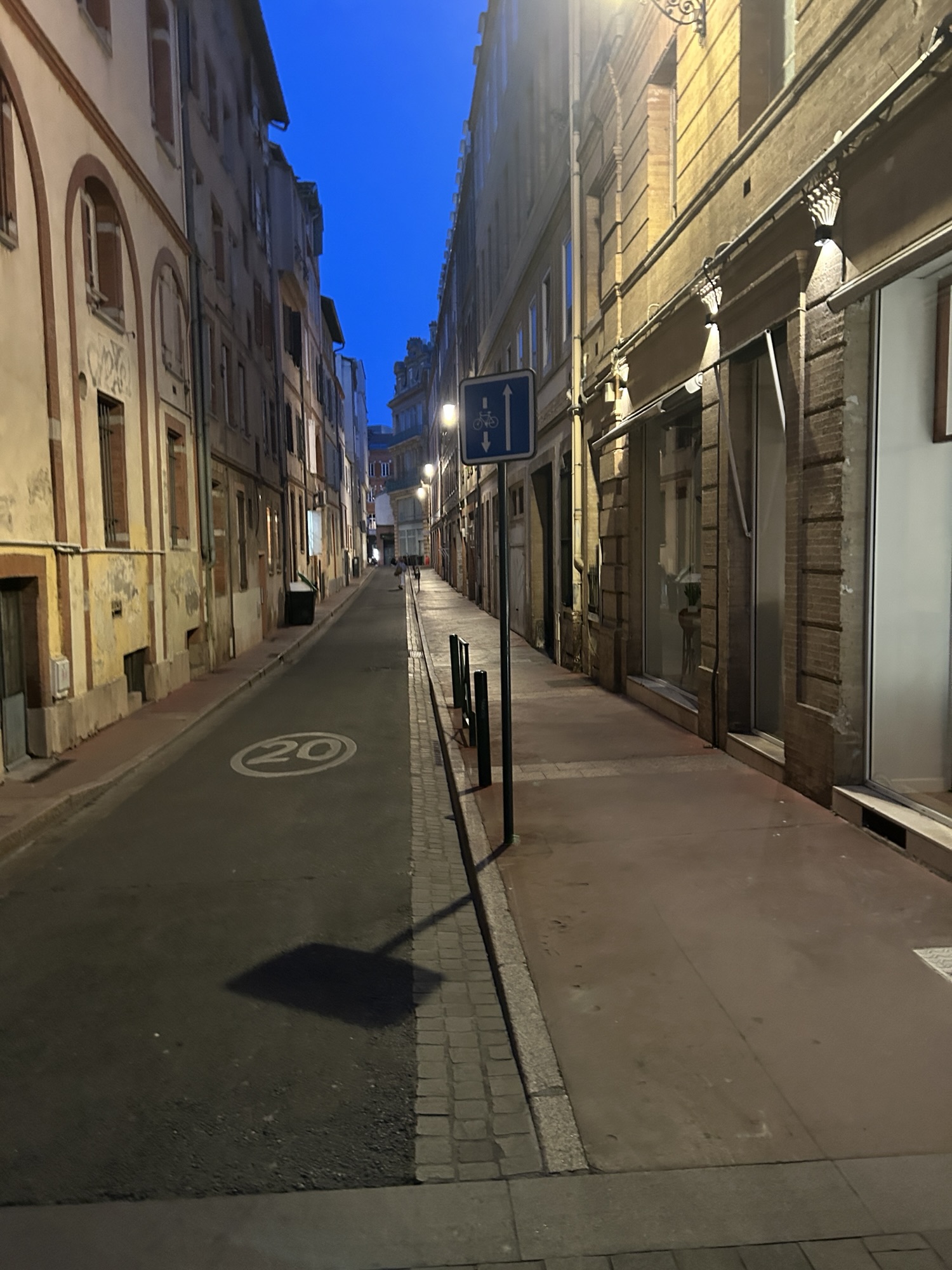
Lyon is flat except where it is absurdly hilly. Our first journey into the neighborhood Croix Rousse was a simple bus ride…and then a climb of at least 200 stair steps. We deduced that taking the bus into this neighborhood could be risky. Nothing in the google directions had a word about stairs or elevation climb (some do, some don’t) and it was not entirely pleasant. Every time we thought the climbing was about over we turned a corner and there were more stairs. The metro is much safer in this regard. There will almost always be an escalator up.
Lunch and dinner reservations
Do not hesitate to walk into a bouchon or other lunch or dinner restaurant without a reservation. We were welcomed every time…it is safest to arrive close to opening which works well for Americans who eat earlier than Europeans. We have found using online reservations (often in the google maps entry) very easy and reliable, and no scary phone conversations required!
Breakfast
In busy times finding a place for morning coffee and a croissant can be challenging and frustrating. If you ID a restaurant that is open early they likely have a petit dejeuner formule…a hot drink, a croissant, fresh juice and a tartine (slice of bread or baguette with butter and jam) for a low price, e.g, €13.50. This is a fine alternative if you have been checking boulangeries and viennoiseries that have no coffee and/or no sitting area, critical information which one must glean by searching the listing photos. The quality of coffee also varies…try cafe creme if you have been disappointed in the cappuccinos, which were delicious in Paris and crummy in Lyon.
When is this store open?
Google maps shows if a place is open at the moment but rarely shows hours and days. Look across the entry for “website” and even if you are not facile in French you will be able to find hours and days open (“horaire” is often the label on the website for this info). Write down the days of the week in French on your phone so you can decipher the horaires; Monday through Saturday may be displayed as l- s, for example, and where in the US it would say “closed Mondays” here it will more often say the days open, mardi – dimanche, Tuesday through Sunday. The days a store or museum is open vary a lot, as do the ways the days open are expressed.
Bus directions
Google maps is good to excellent for finding your way, but making sure you are at a stop going in the right direction is not always clear. Go to the bus stop and read the list of stops. If your stop is there you are on the right side of the street to catch your bus.
Dialing phone numbers
We felt pretty happy we bought the Verizon international plan which allows calls within France and to US numbers. However, the instructions from Verizon are incomplete and we figured it out ourselves after trial and error. Yes, you must start in-country calls with +33. However, when phone numbers are displayed here (e.g. when you select “call” from a google maps entry) they almost always start with zero. 04 36 78 78…etc. You must dial +33 4367878…no leading zero. (For the +, hold down the zero for 1-2 seconds.). Note this requires writing down the displayed number somewhere so you can dial it correctly from the phone dial pad after you add the +33 and drop the leading zero.
Intercity trains
Watch ahead for your stop and prepare for a fast exit! Unless your destination is the end of the line, you will have barely enough time to gather your baggage and get off. Do not wait for the train to stop…get your stuff and get to the door.
Last walk through AlbiLast breakfast in AlbiThe variety…and heard one elderly man ask for a baguette “bien cuit” (dark crust)This was originally a hotel built in the 1200’s.
After putting off the planning that would get us from Albi to Lyon we finally worked out a possible route. We had added a third night to Albi and perusing the tourist information about the area of the Tarn river we decided to spend a night in Castres where there is a museum entirely devoted to Spanish art. We booked an inexpensive hotel and made the short drive south.
Before we left Albi we picked up some cheese and a baguette, which we ate upon arriving in the nice park outside the museum. Musee Goya was just big enough and the collection, the foundation of which was a family’s donation of their paintings and a few sculptures and church carvings, was somewhat idiosyncratic. We spent a peaceful hour, checked into the hotel, and finished putting the driving plan into a google map with stops predetermined since it was to be a long drive. We are lousy at last minute decisions when driving in unknown territory for five hours.
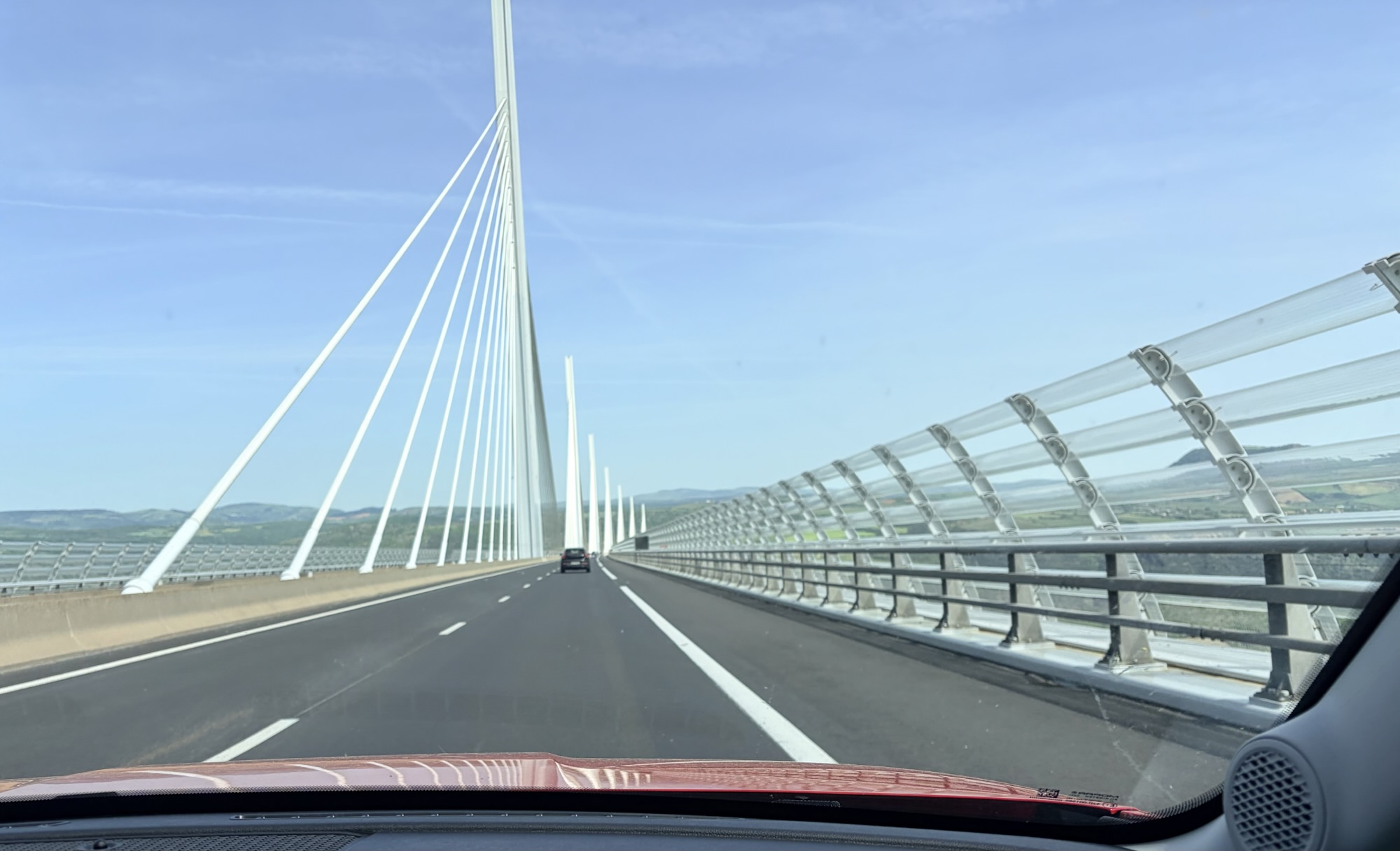
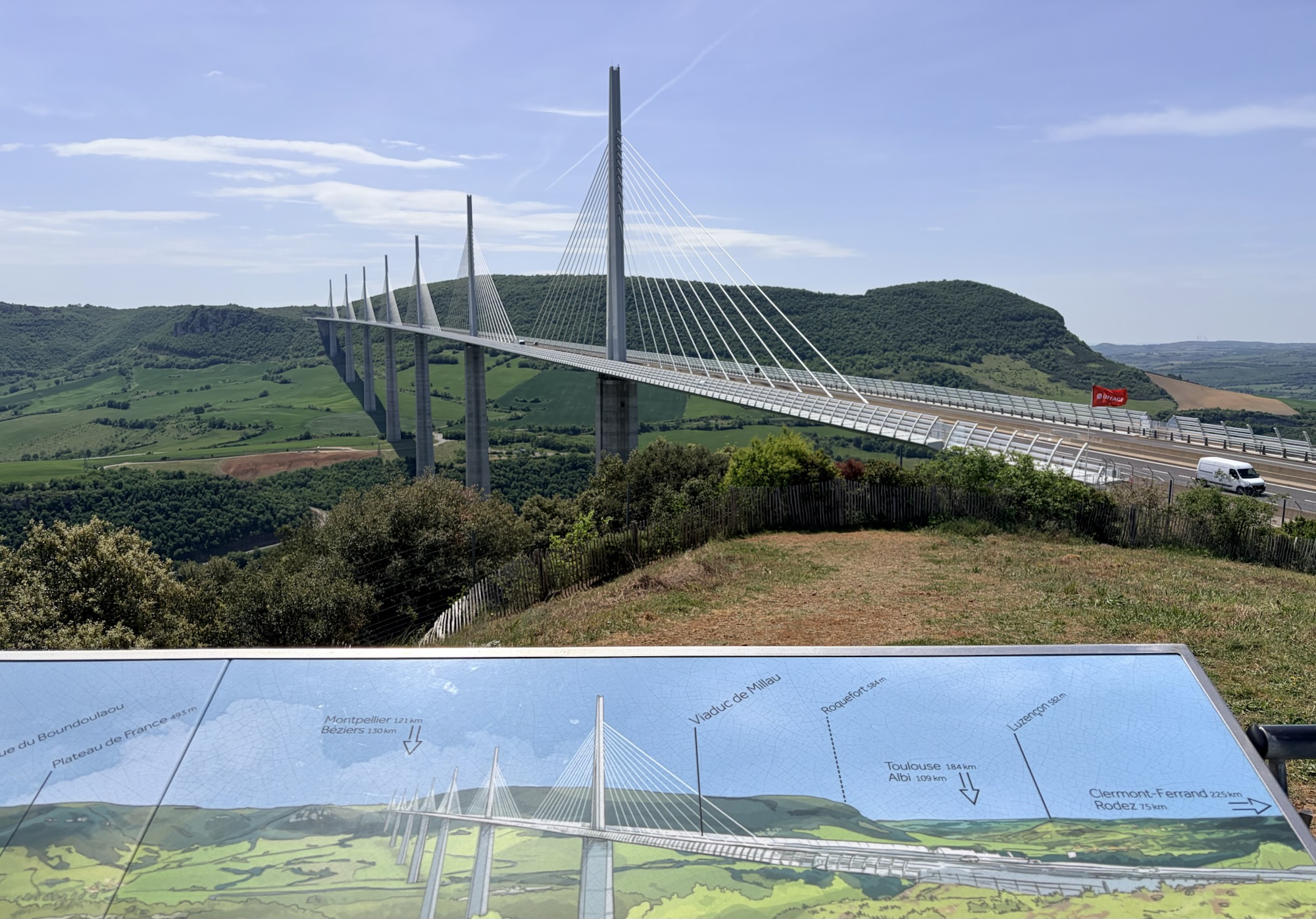
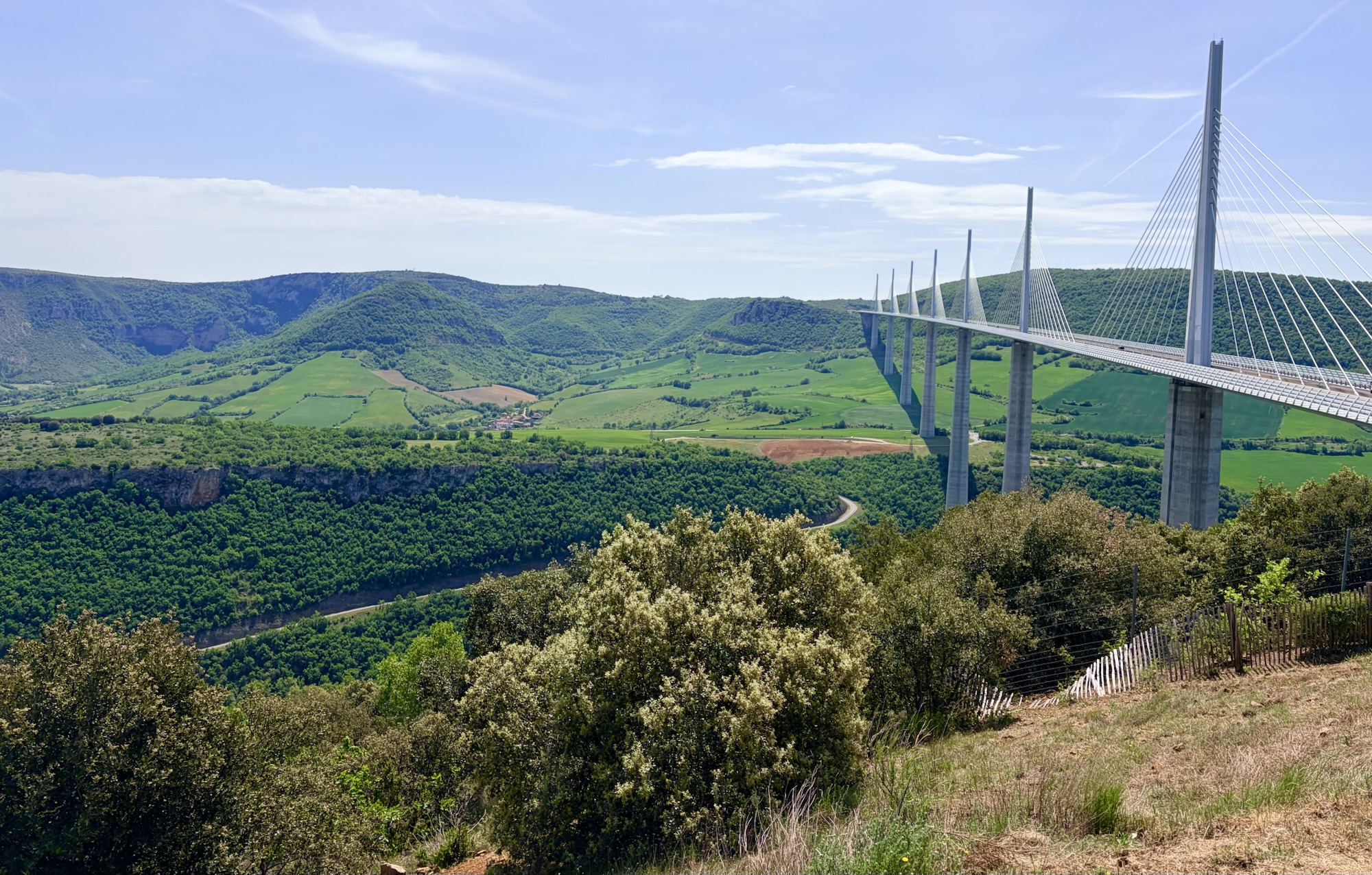
I had one place in mind that I did not want to miss…driving over the highest bridge in the world, Viaduc de Millau. The map indicated there was a visitor center and it looked like a good place to pause, pee, and eat the baguette and cheese.
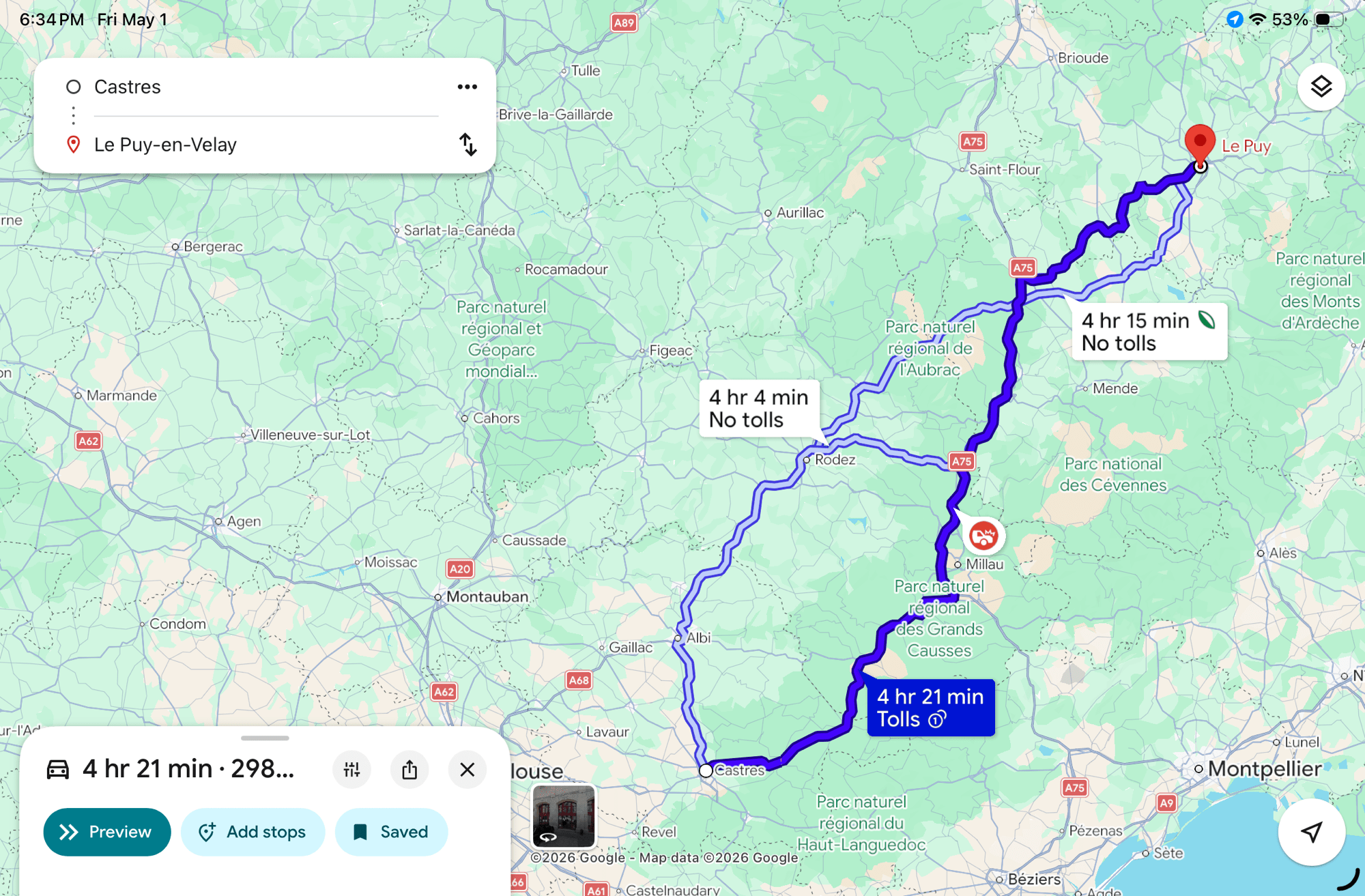
I have to stop here and complain about google maps. This drive was a mix of small roads (little did we know how small!) and a long section on the toll road A75 which goes over the viaduct. Every time we made a small adjustment, like adding or removing a stop, google rerouted the entire route away from A75, regardless of deselecting Avoid Tolls, regardless of the google defaults in settings. Grrrr. We were so paranoid about losing the route that we saved it, texted it to each other, and double checked the route we wanted was the one that was saved. Took over an hour all told.
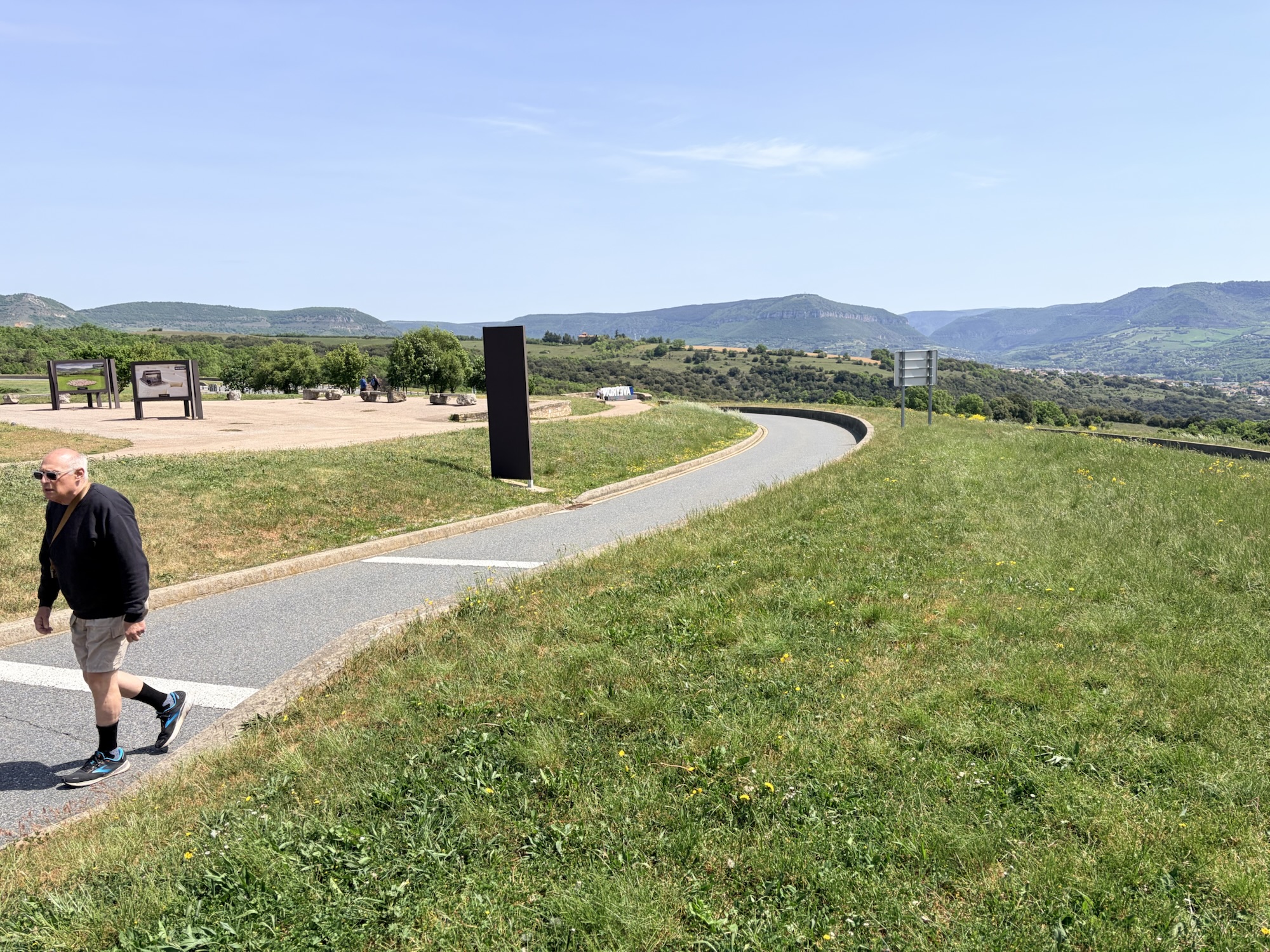
Looks like a more or less easy drive, oui? The first section seemed like it would be the most tedious, roughly 65 miles, 1 hour 45 minutes, from Castres to the A75. Then maybe half an hour to the viaduct, stop at visitors center, tollway, then surface roads to Le Puy En Velay. The first section was pretty easy, through a few towns on two lane blacktop roads, little traffic, much like the drive from Toulouse to Albi. As we approached A75 suddenly the directions confused me…get on D999 to the ramp, but there were multiple “deviations” or detours and we are no longer heading to A75. Pulled over, rechecked map, went back, 5 minutes and we were on the tollway. As we approached the viaduct we got excited and, wow, it’s pretty darned high with views in all directions. I kept asking David if he saw the visitors center on the map, and he kept saying yes, and then we’re clearly past the area of the bridge and heading north. Got off, rerouted back to the visitors center, missed the exit, went back over the bridge, paid another toll, and at last found the correct exit. The visitors center is great, lots and lots of information about the design and construction (took only 3 years…we couldn’t build something like this in the US in 10). It opened in 2004 and is reputed to have changed Europe by providing a clear and fast north-south route.
After a picnic lunch and a hike up to the view point we confidently got back in the car to continue our NNE journey to Le Puy. Google again insisted we avoid the toll road and before we knew it we were heading south, back over the bridge. We remembered the avoid tolls route from the night before and surmised this was where we were headed. We got off, drove to the now familiar roundabout, got back on A75 and we were thankfully on our way.
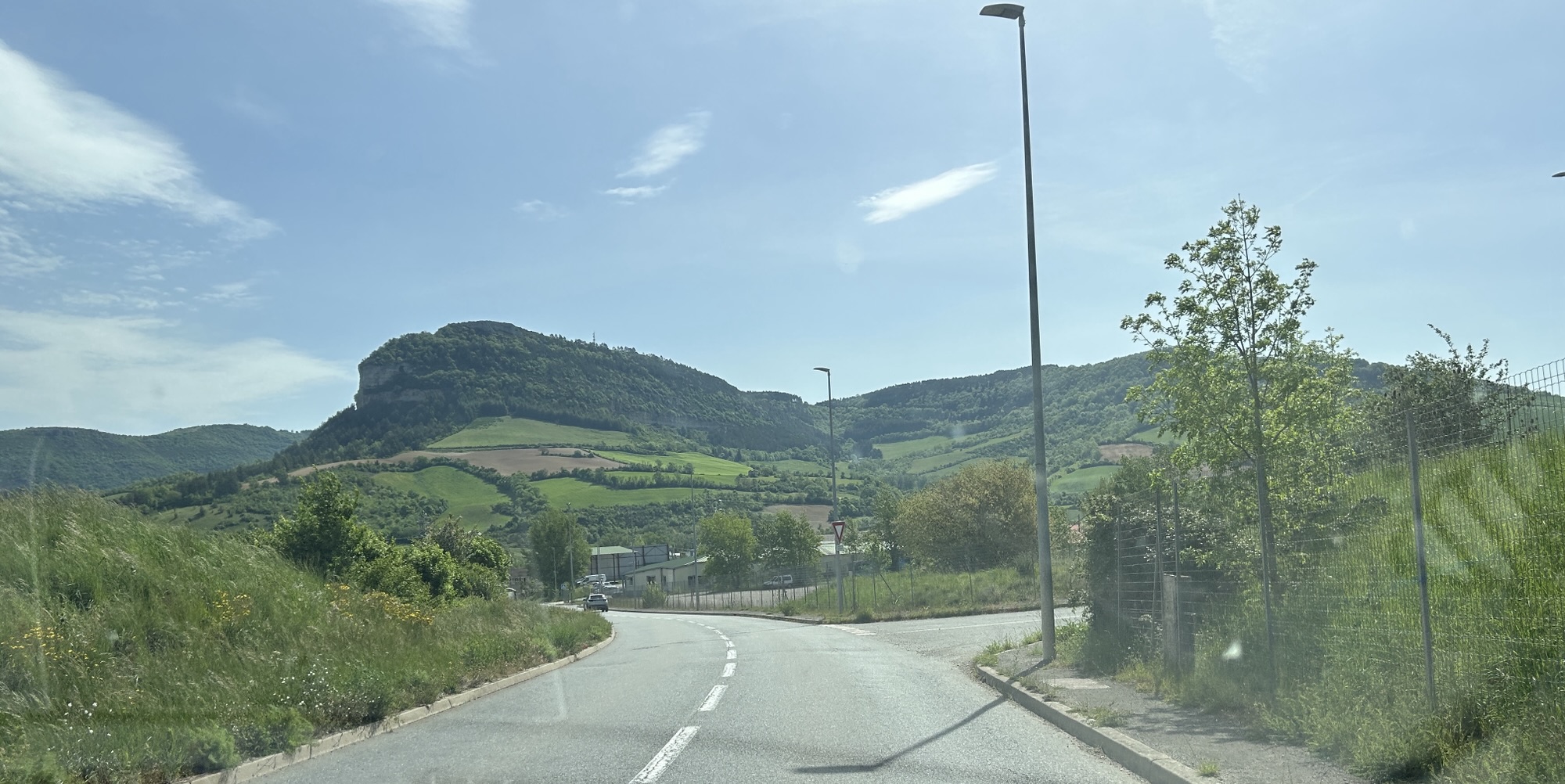
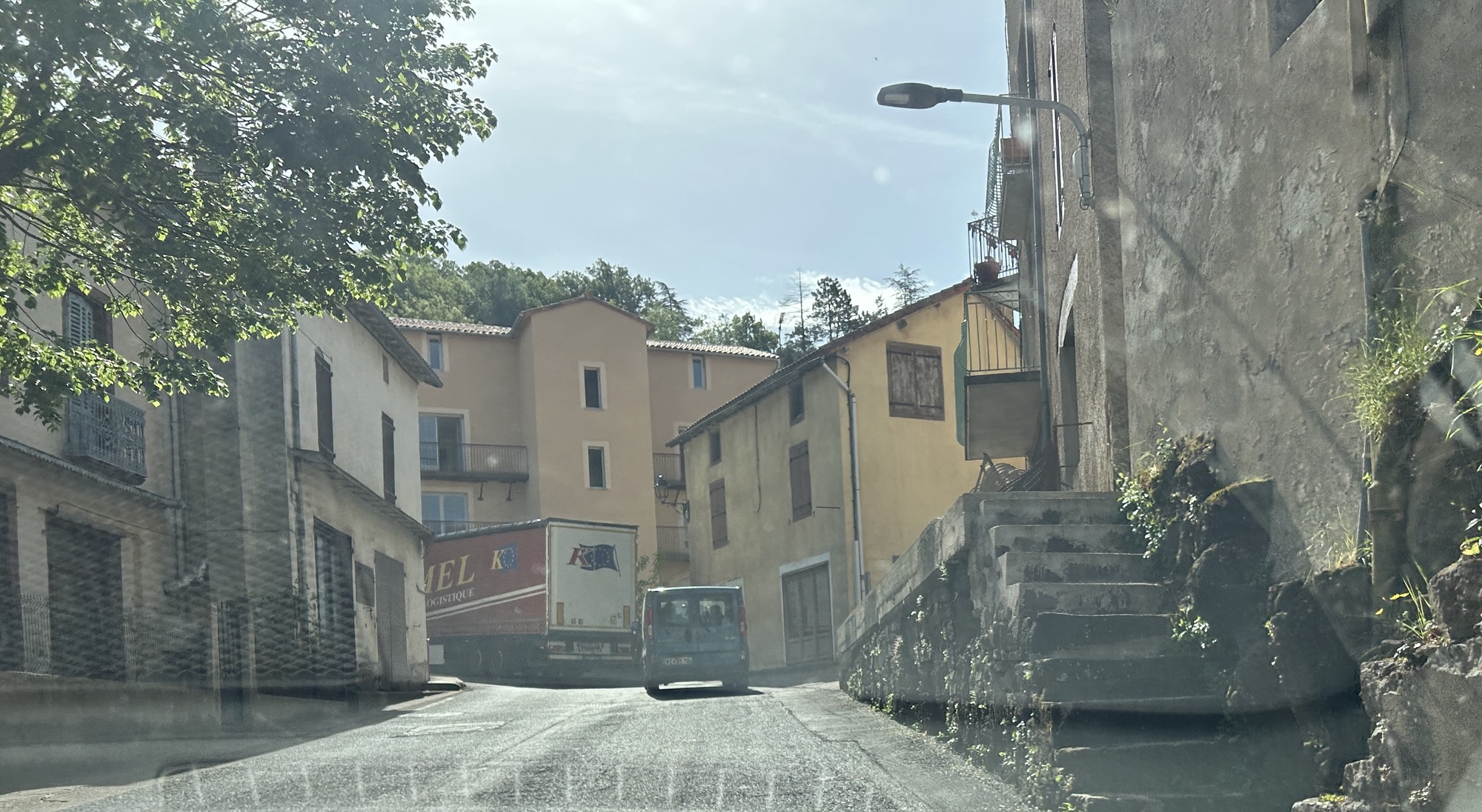
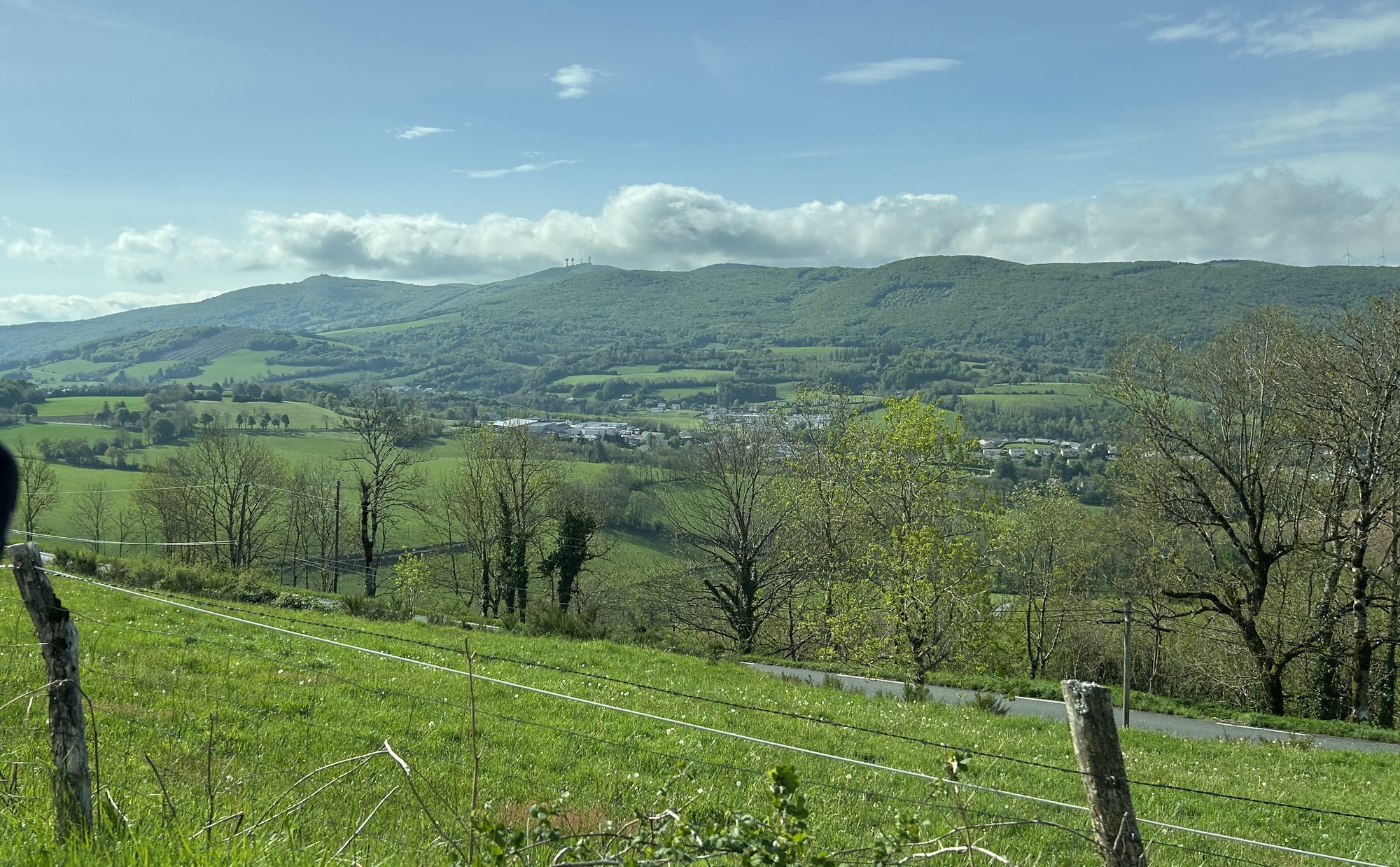
We felt pretty good that the confusion was well behind us. The tollway is great and we have the process down. (If only modern cars would stop nagging when you have to pull close to the ticket machine.). It seemed like only moments and we were exiting the tollway and onto the surface roads. Gorgeous little towns, green hills in every direction, we rolled along making good time. We enjoyed sights such as a very, very small town (10 houses?) that was signed on either side of the narrow road with the “ville haute” and the “ville basse.” Perhaps there had been a feud? The towns got smaller and fewer. The road curved up, up up and then down, down down. Amazing views, interrupted by forests and rivers. At least five times we drove down, down into a miniscule hamlet, crossed the tiny rushing river, then back up into the hills.
The drive went on and on. More cows than towns or people, interrupted by the occasional bicyclist and “Attention! Randonneurs” warning sign. Have you ever taken an unfamiliar country road and suddenly wondered where you were? Well, after hours of driving I began to despair, even though I kept checking the compass on the dash to make sure we were indeed heading in a general NNE direction. The countryside opened up as we were clearly on a high plateau with no civilization in sight. I asked David to double check we were indeed on the route to Le Puy, a place we had never been to or contemplated. I couldn’t picture how this completely open, unpopulated countryside was indeed only 20 minutes from Le Puy, which I was pretty sure was an actual city.
Suddenly there it was, a large, gorgeous basin of a city with crazy isolated peaks topped with statues and churches. Relieved, tired, ready to stop moving, in a few minutes after entering the city we were pulling into the hotel parking lot. Wow. I sure was happy to lock the car, stagger to our room, and think about an indulgent, wine-soaked dinner. And that is just what we did.
And now we leave the exquisite city of Albi and begin making our way to Castres, Le Puy, Lyon…and home.
We enjoyed Toulouse so much that I was a little sad when we arrived n Albi Saturday afternoon. It was really hard to part with daughter, son-in-law, and granddaughter after a simply terrific week. Our granddaughter was a delight—of course—and always entertaining, son-in-law a master at navigation in addition to being a great guy, having alone time with my daughter as we wandered window-shopping,…now we had to learn again to enjoy a new city, just the two of us.
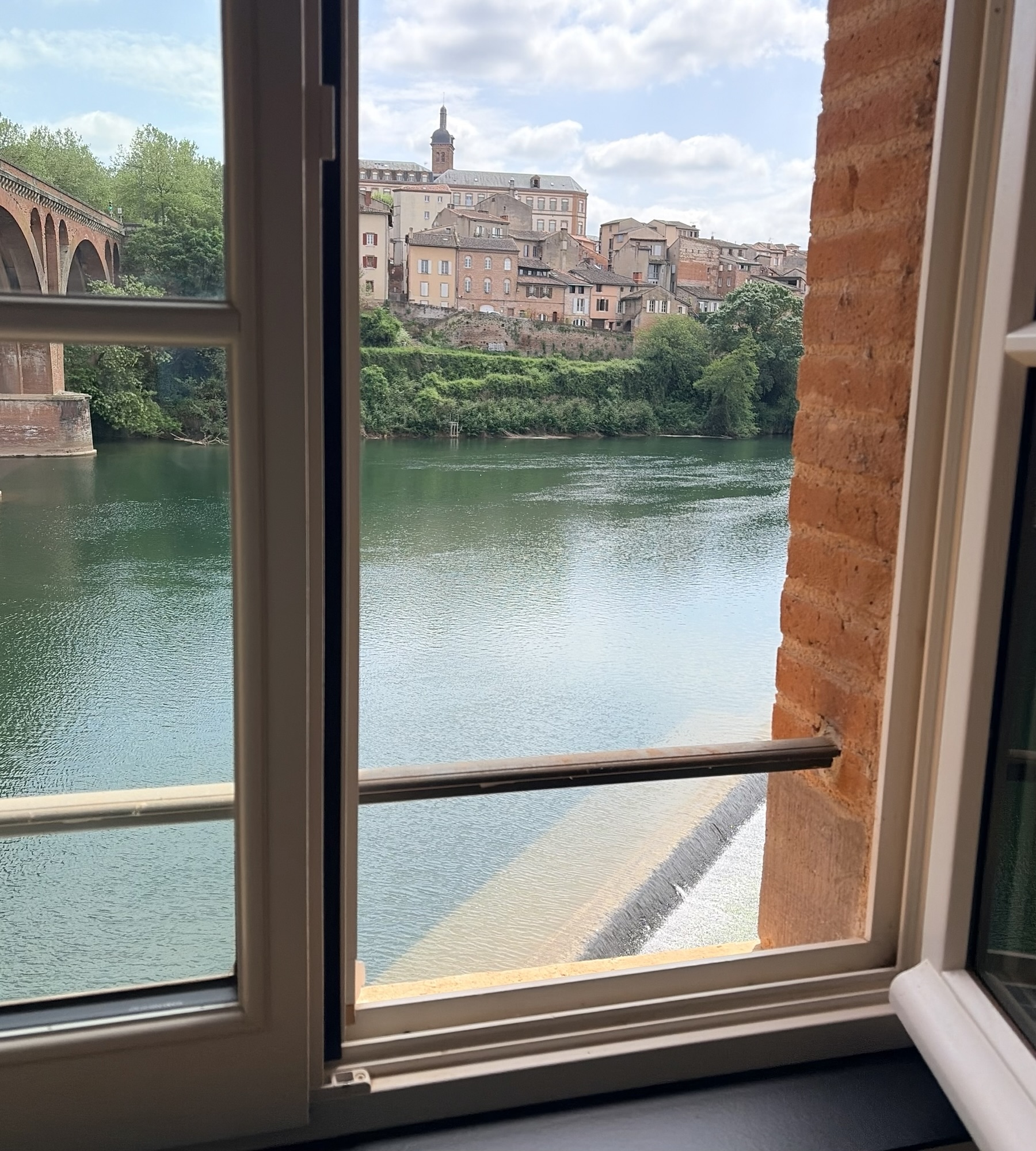
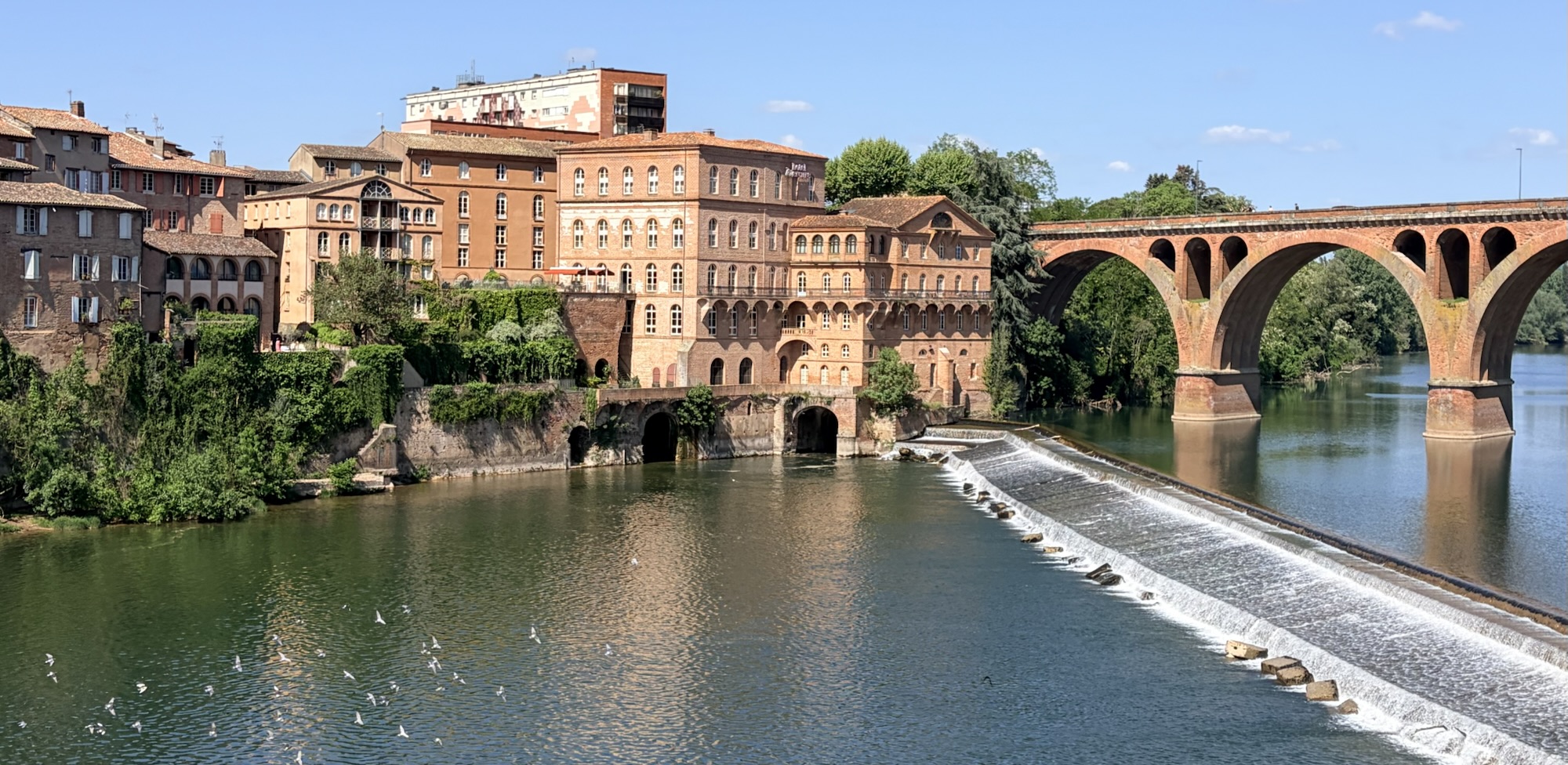
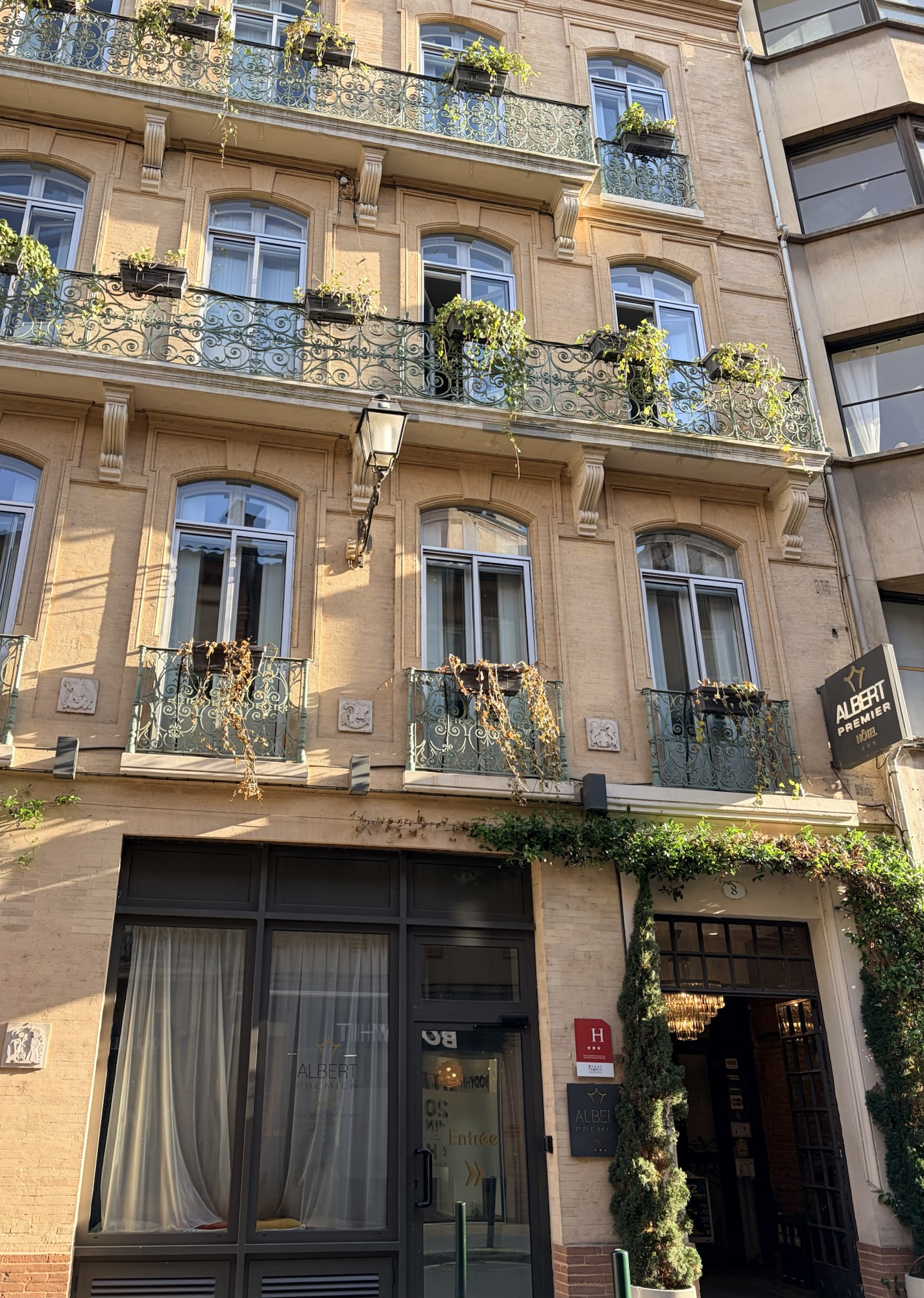
We checked into the Mercure Albi Rives du Tarn, a lovely big room, a view of the river, and a somewhat corporate upscale place. None of the warm, informal vibes of the Hotel Joke in Paris or the Hotel Albert 1er in Toulouse. (These are unfair comparisons especially since the Hotel Albert may be my favorite hotel of all time.)
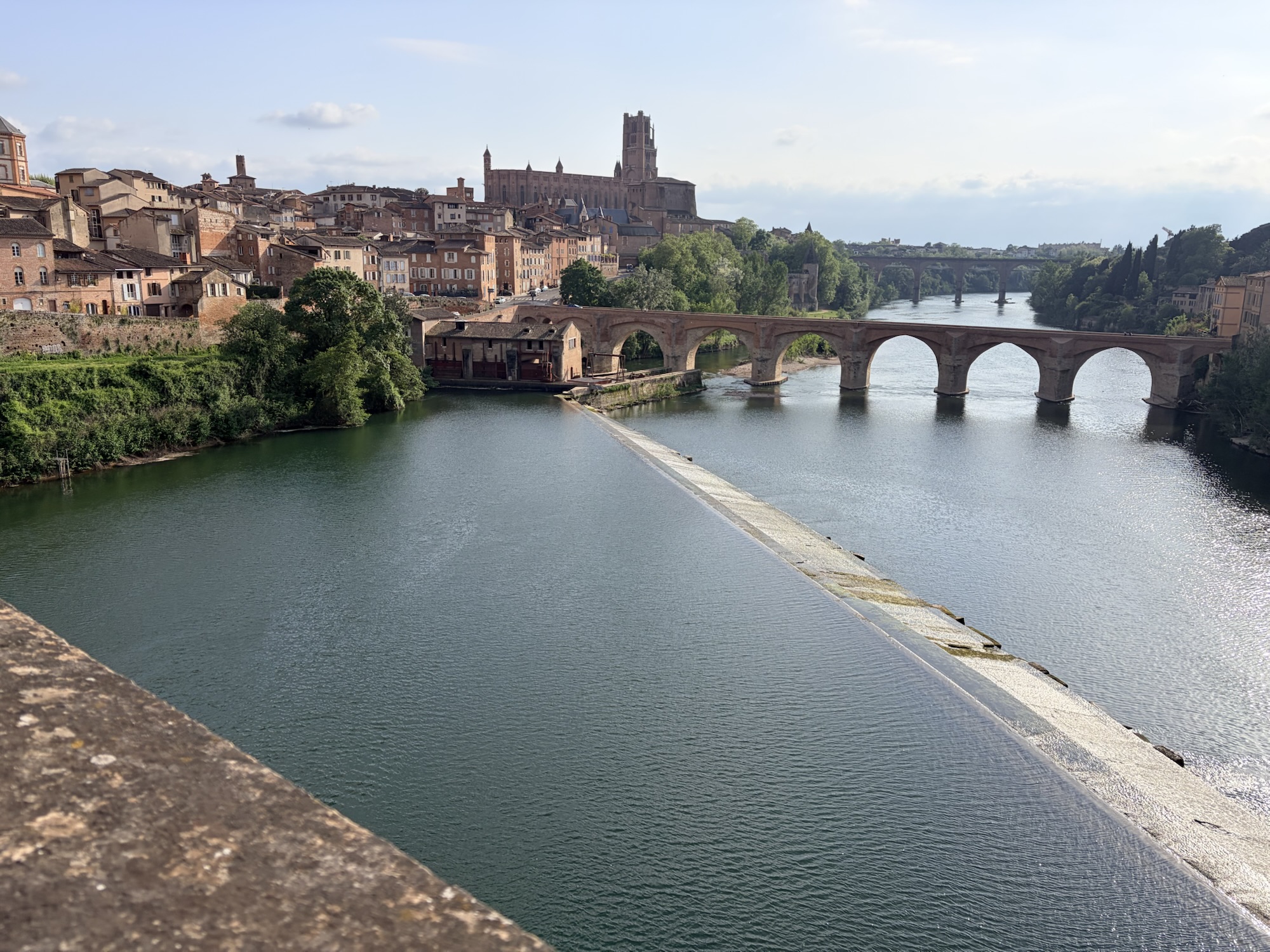
Our hotel is across the river nearest to the bridge
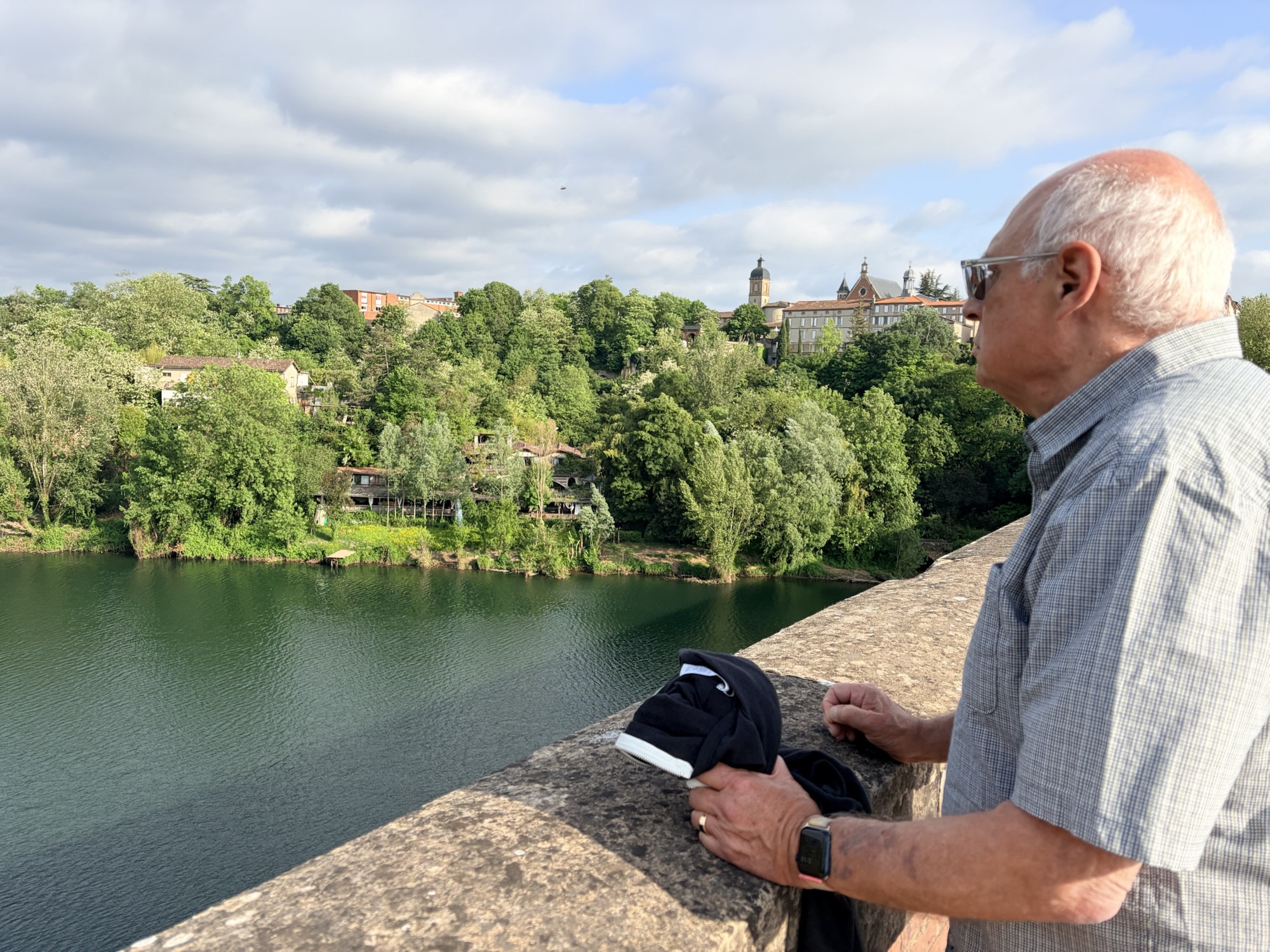
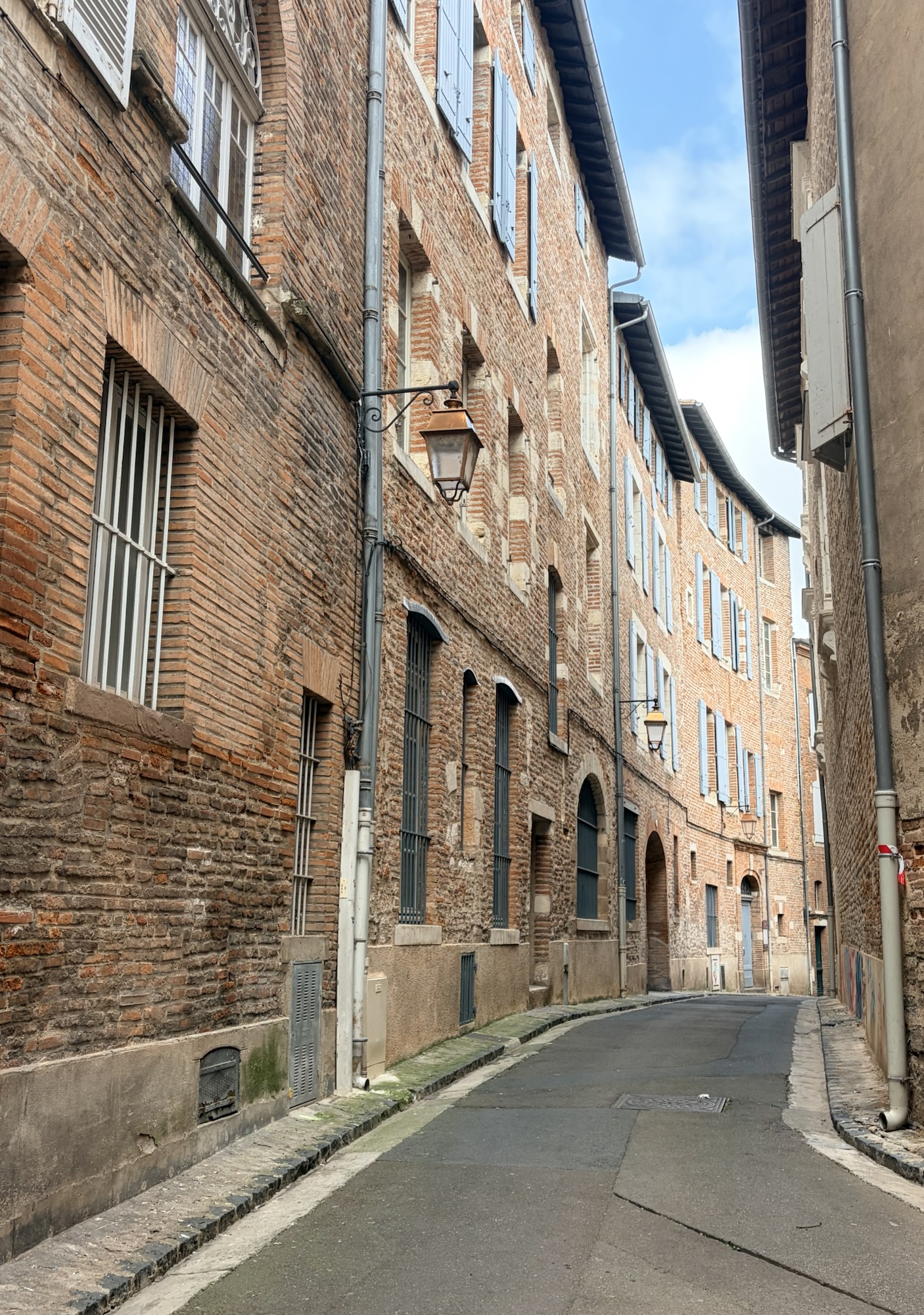
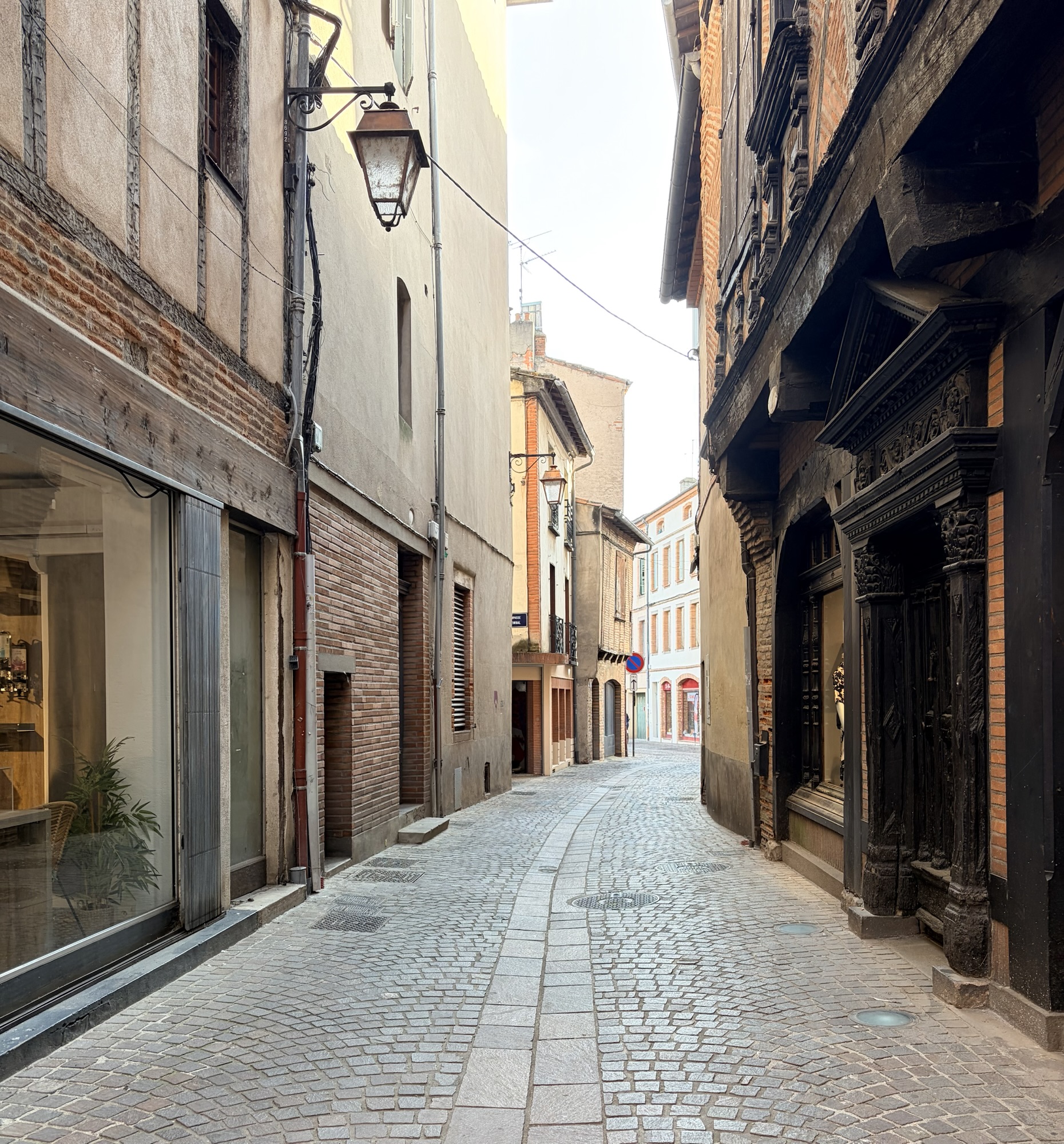
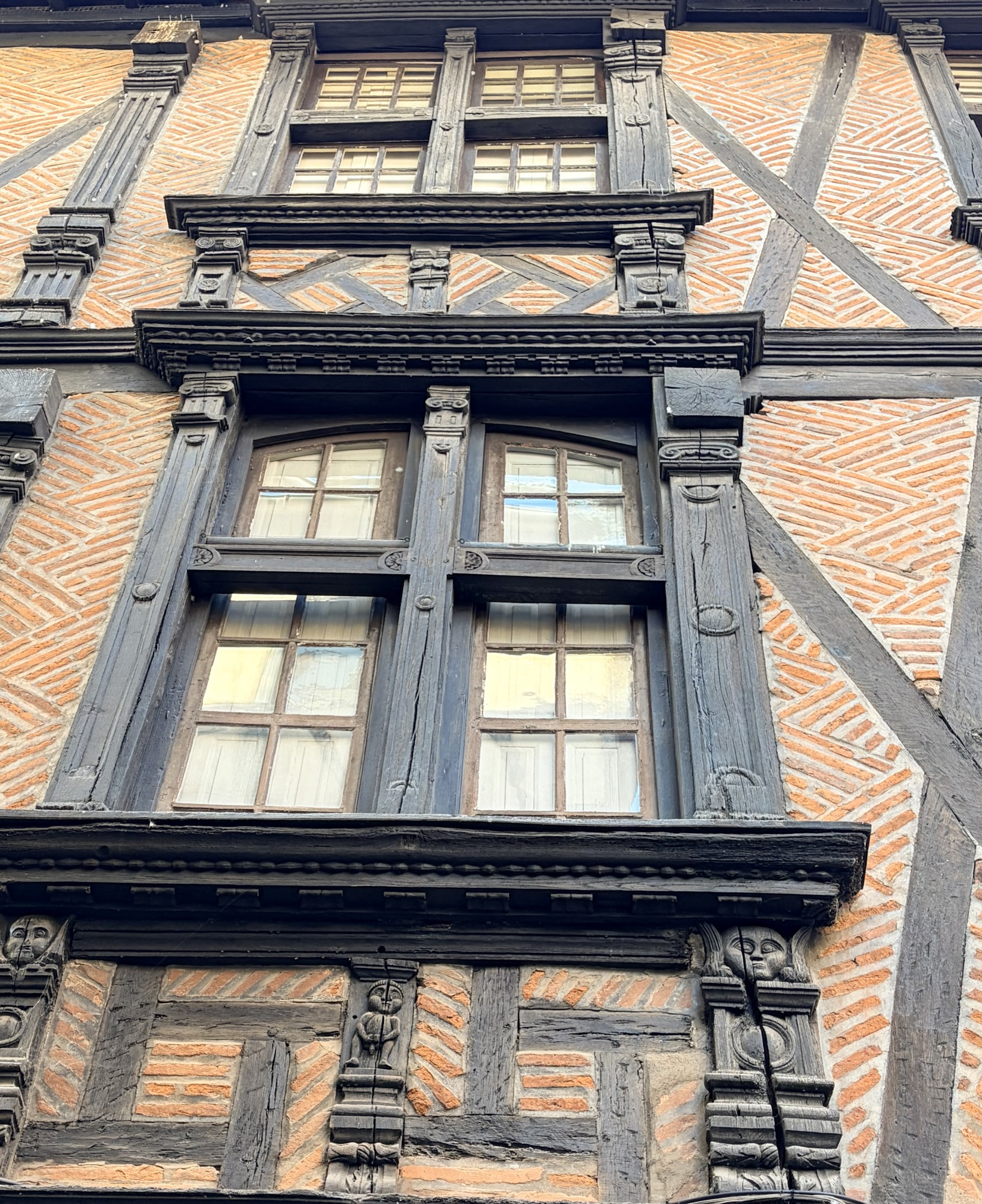
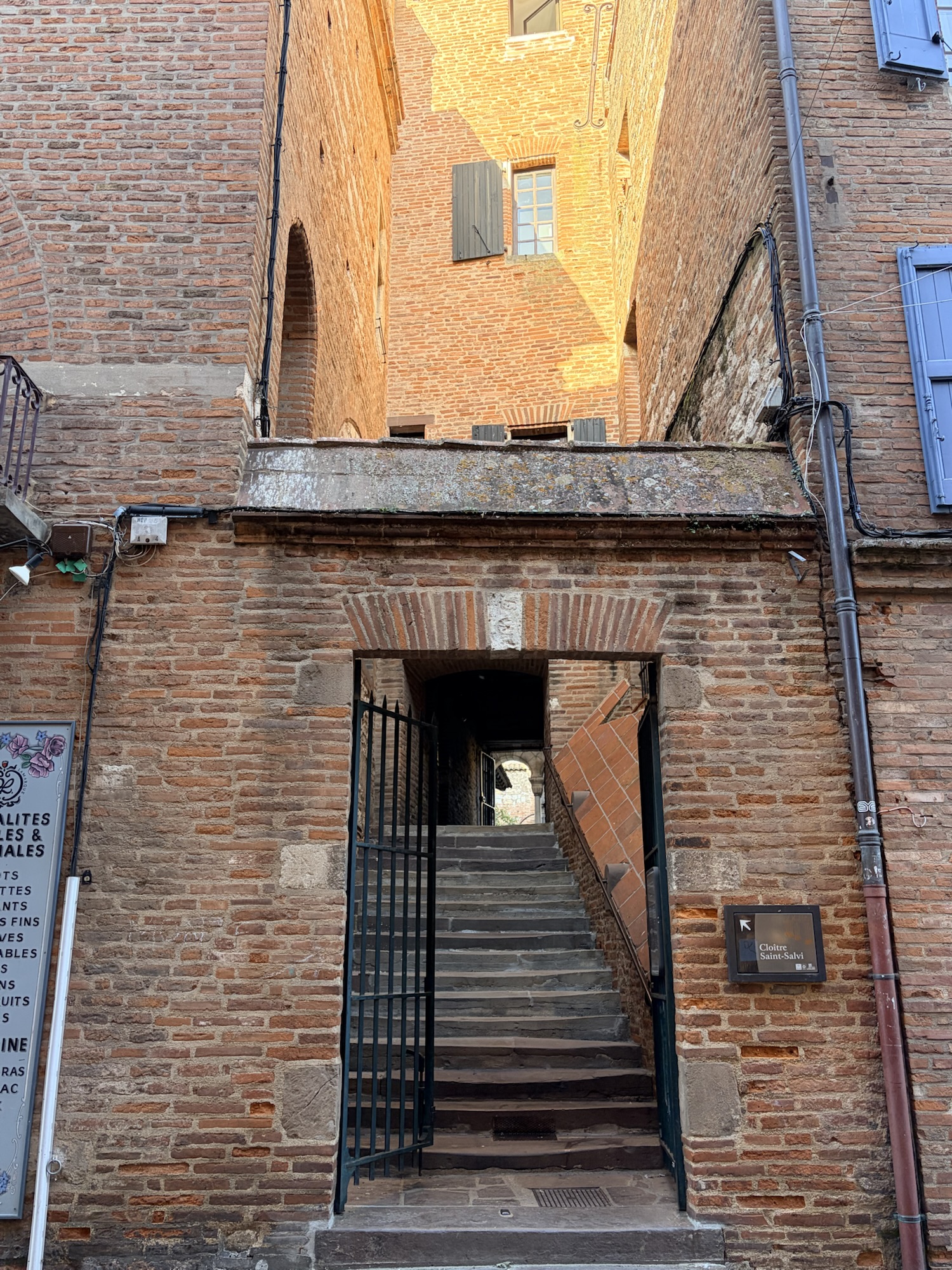
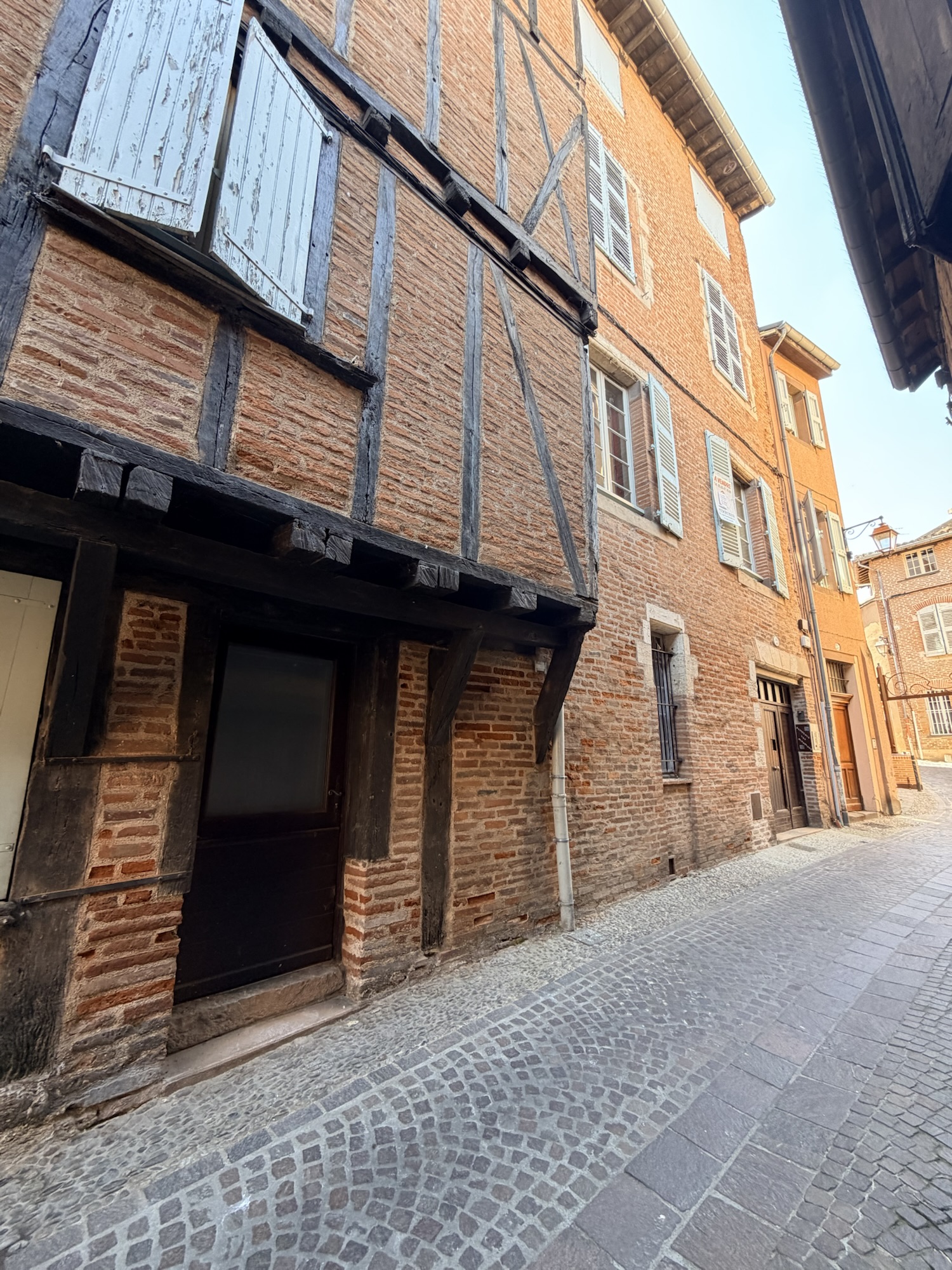
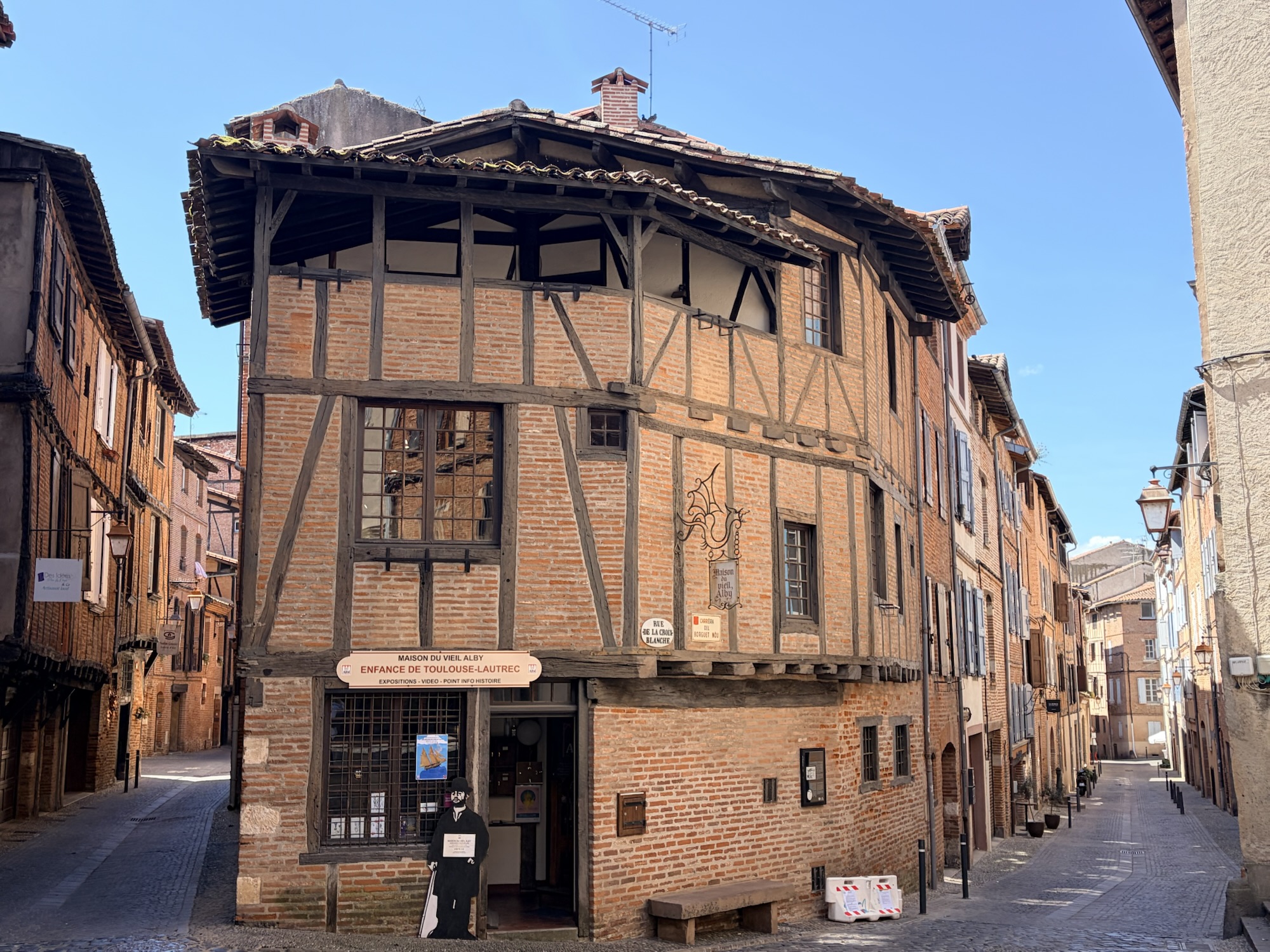
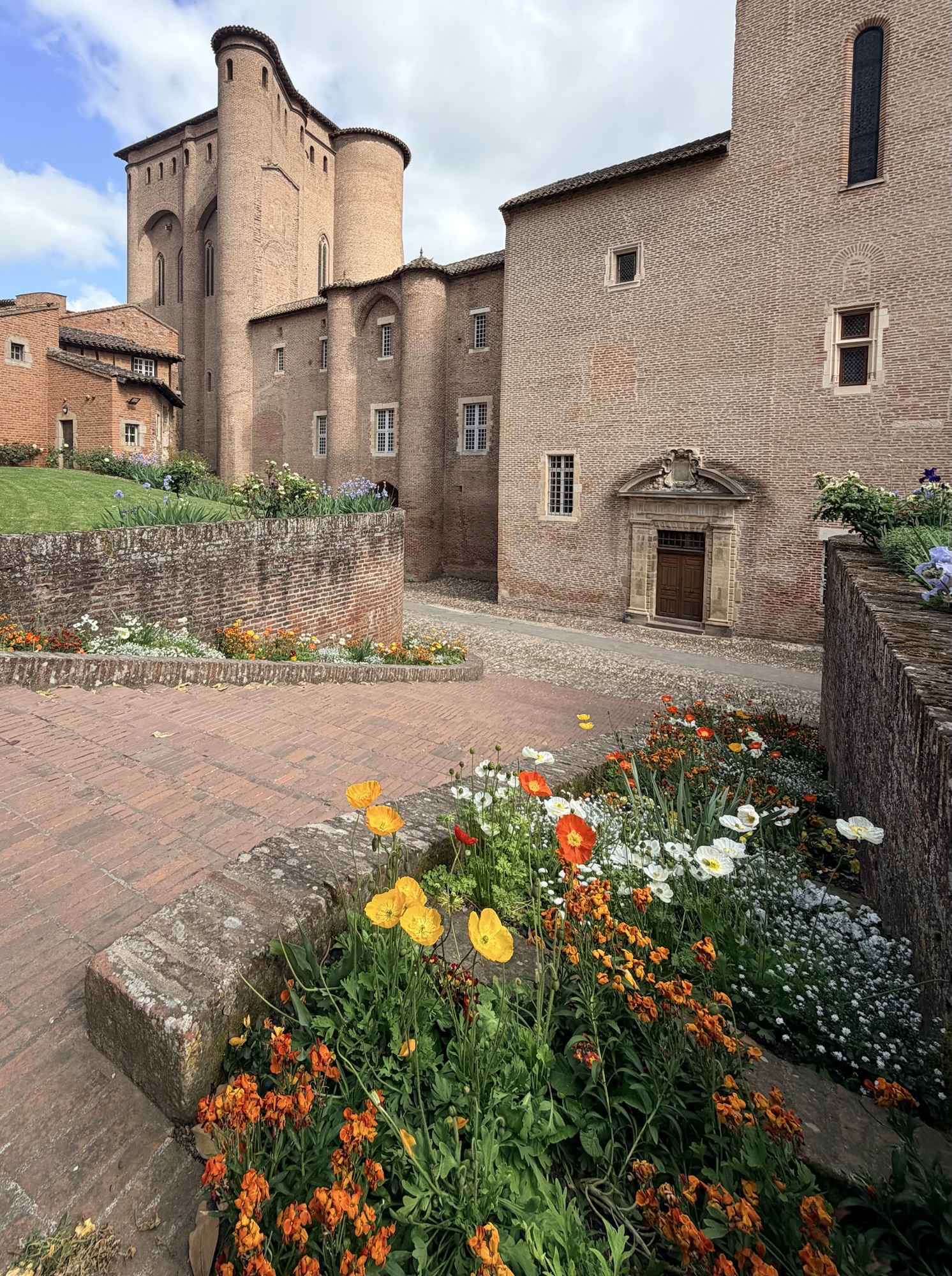
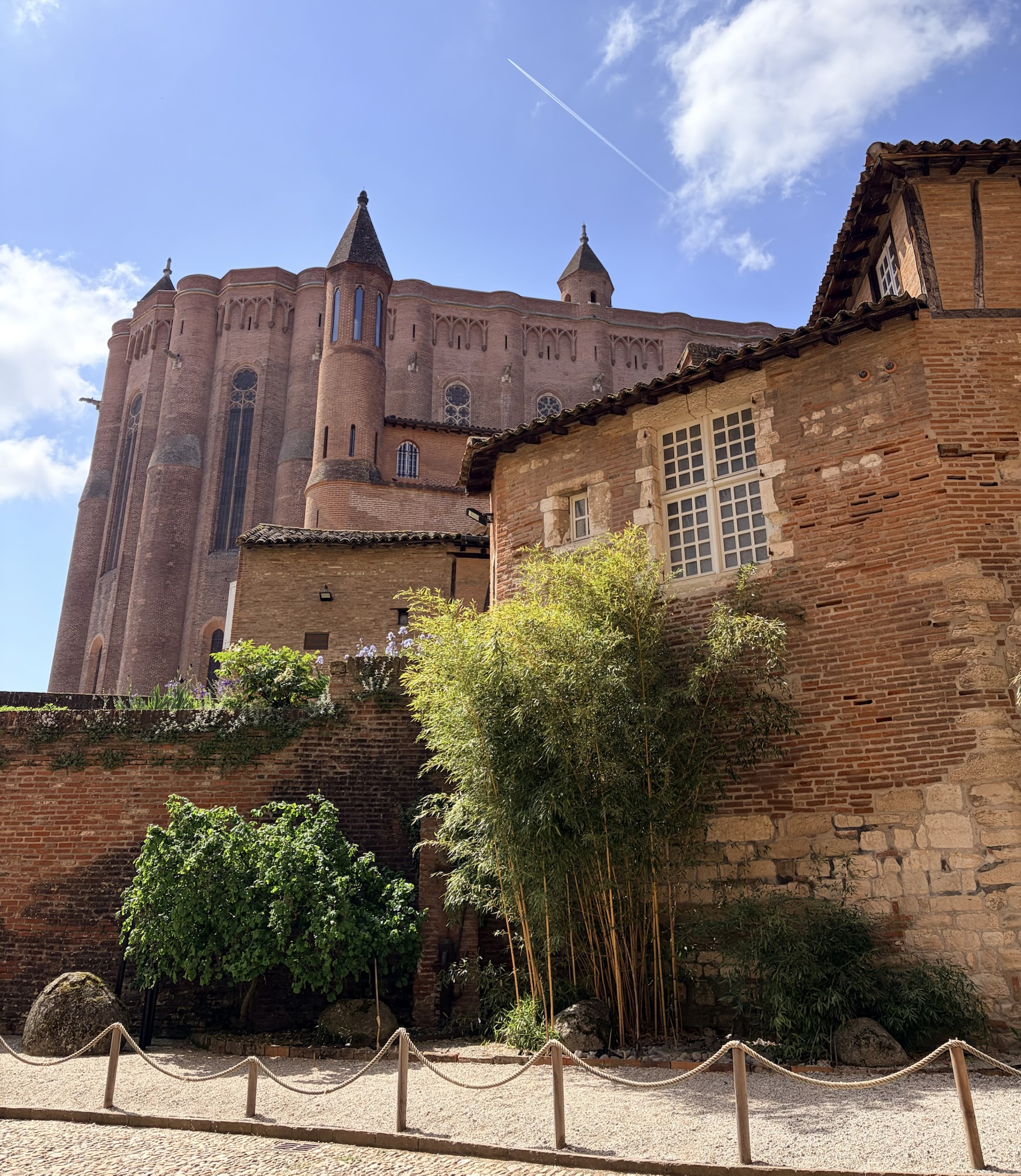
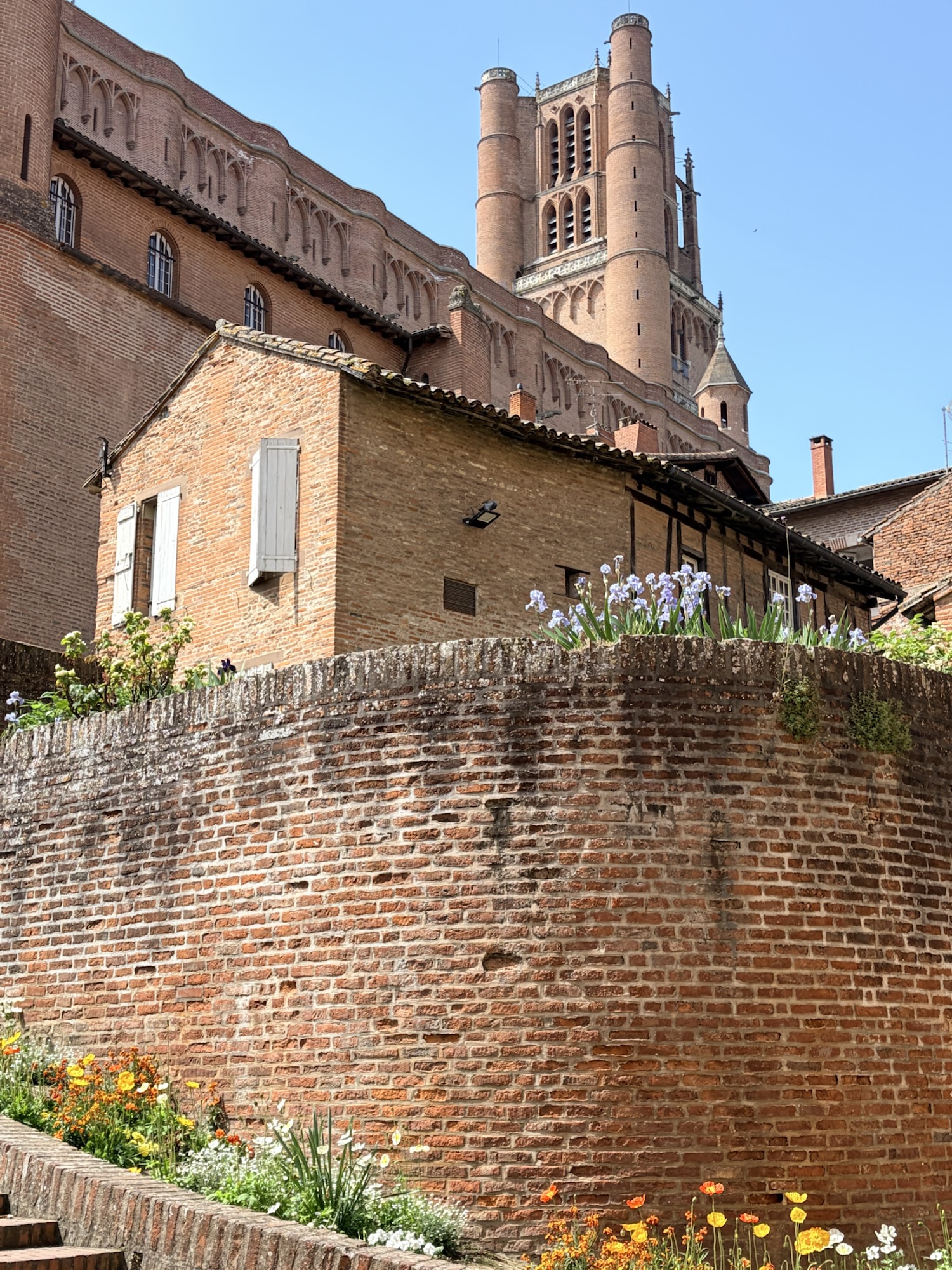
So we were a little down until we walked across the river and into the old city…oh so old city..of Albi. It is as lovely as advertised, almost everything built of red brick, ancient houses from the 1400’s, twisty streets and alleys. And again, a plethora of great cafes, restaurants, boulangeries. We were back in a good mood by the end of the afternoon.
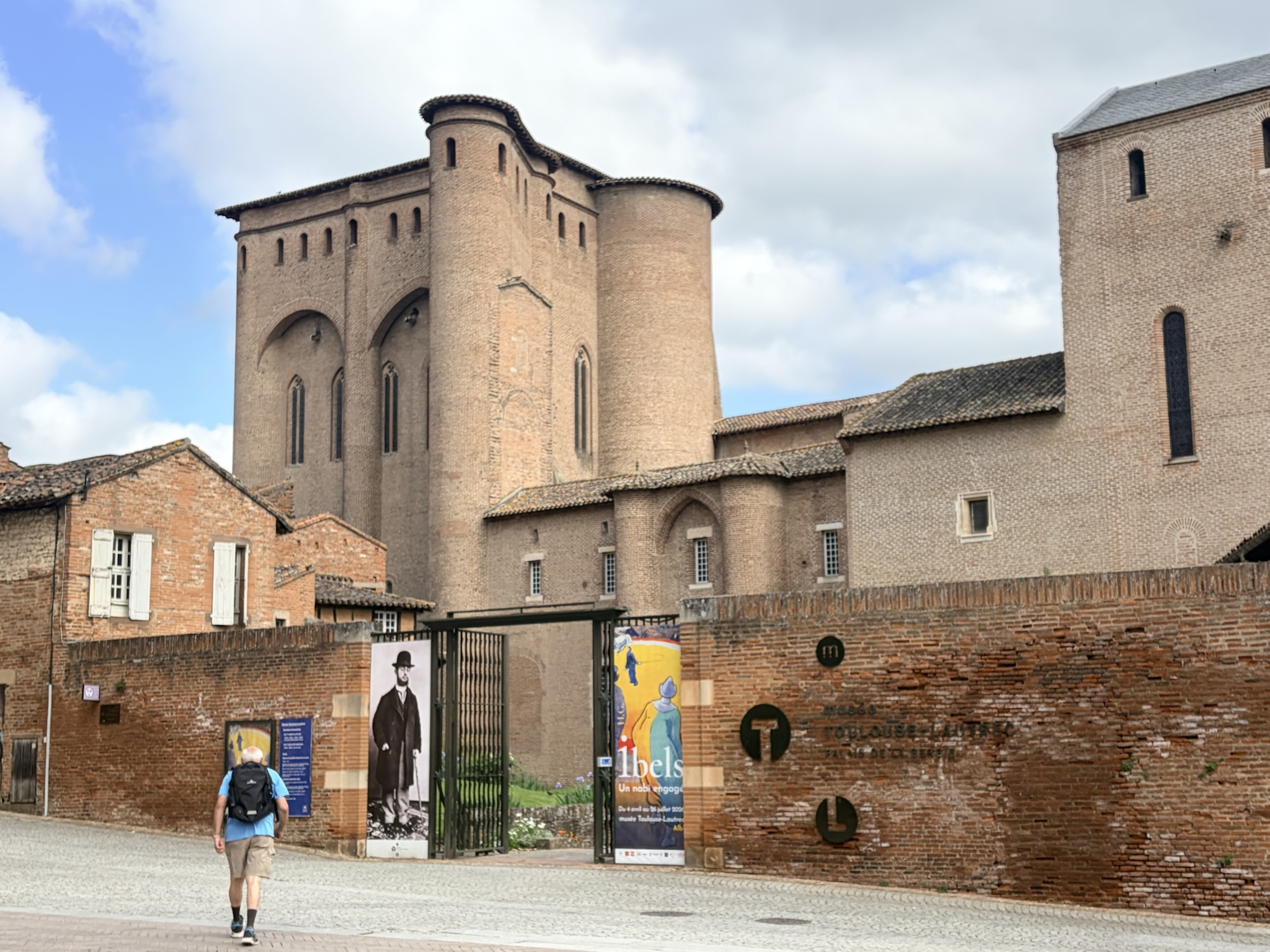
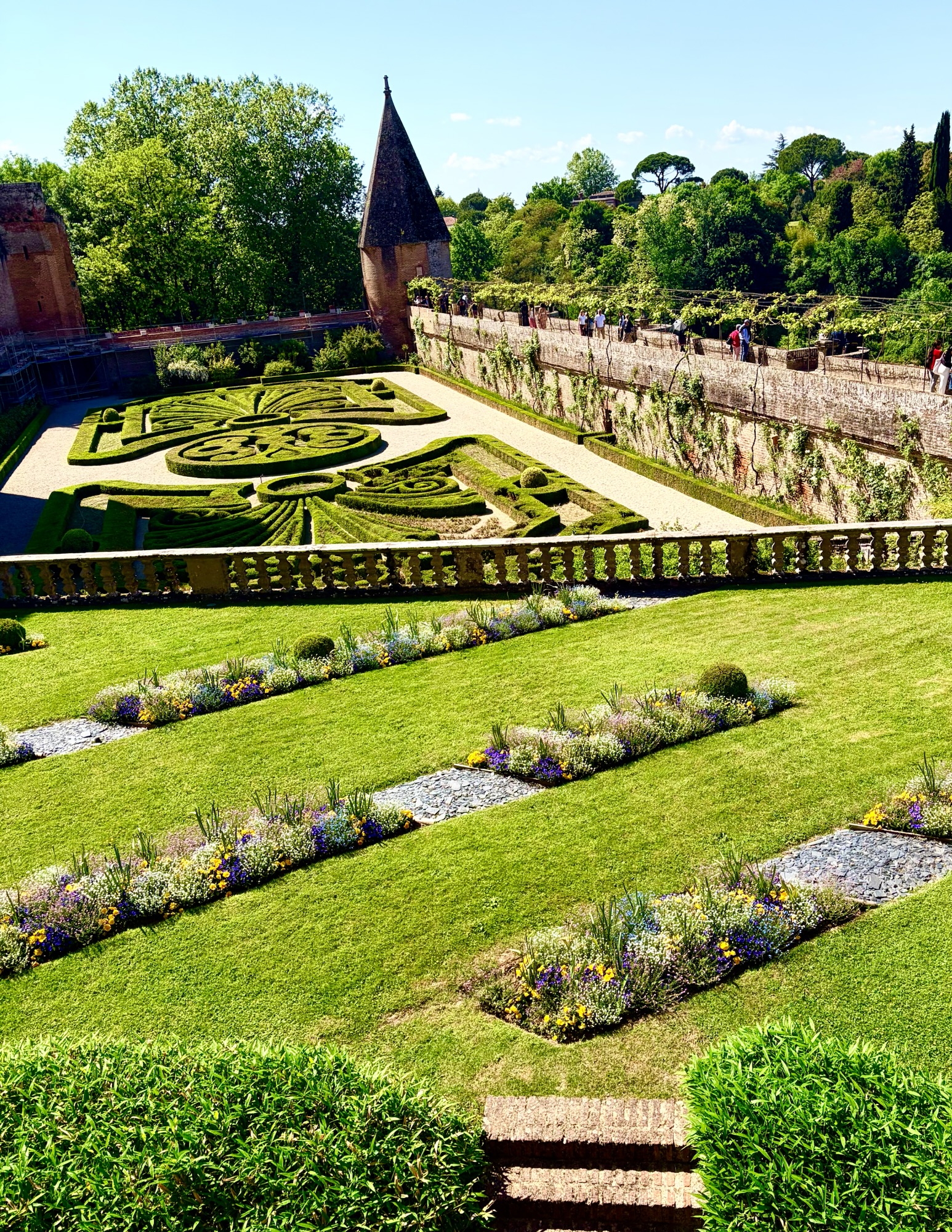
Albi really is indescribably beautiful. The Toulouse-Lautrec museum is great! We spent 3-4 hours there and were grateful they close for lunch so we could sit a while and refresh ourselves, then dive back in.
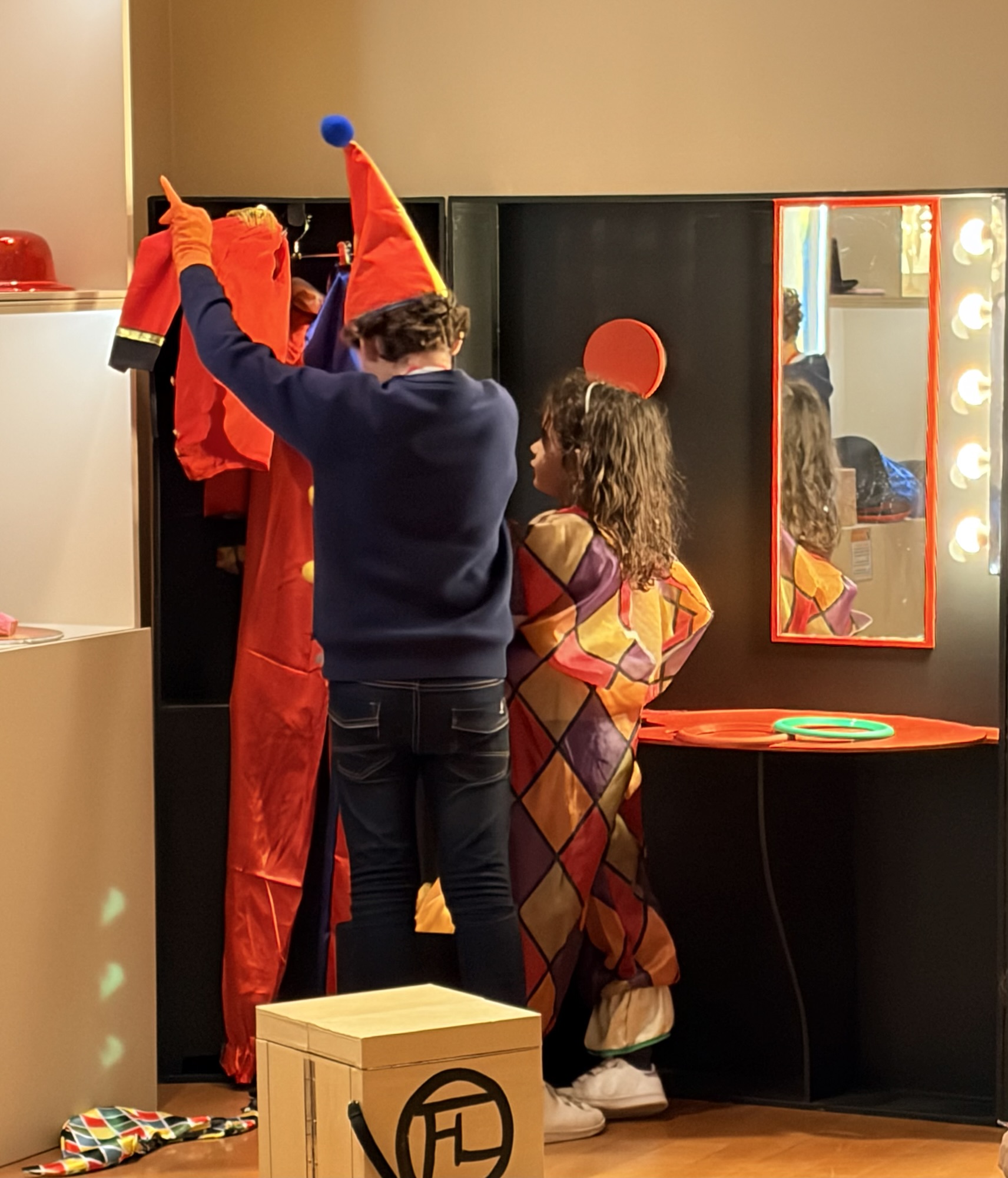
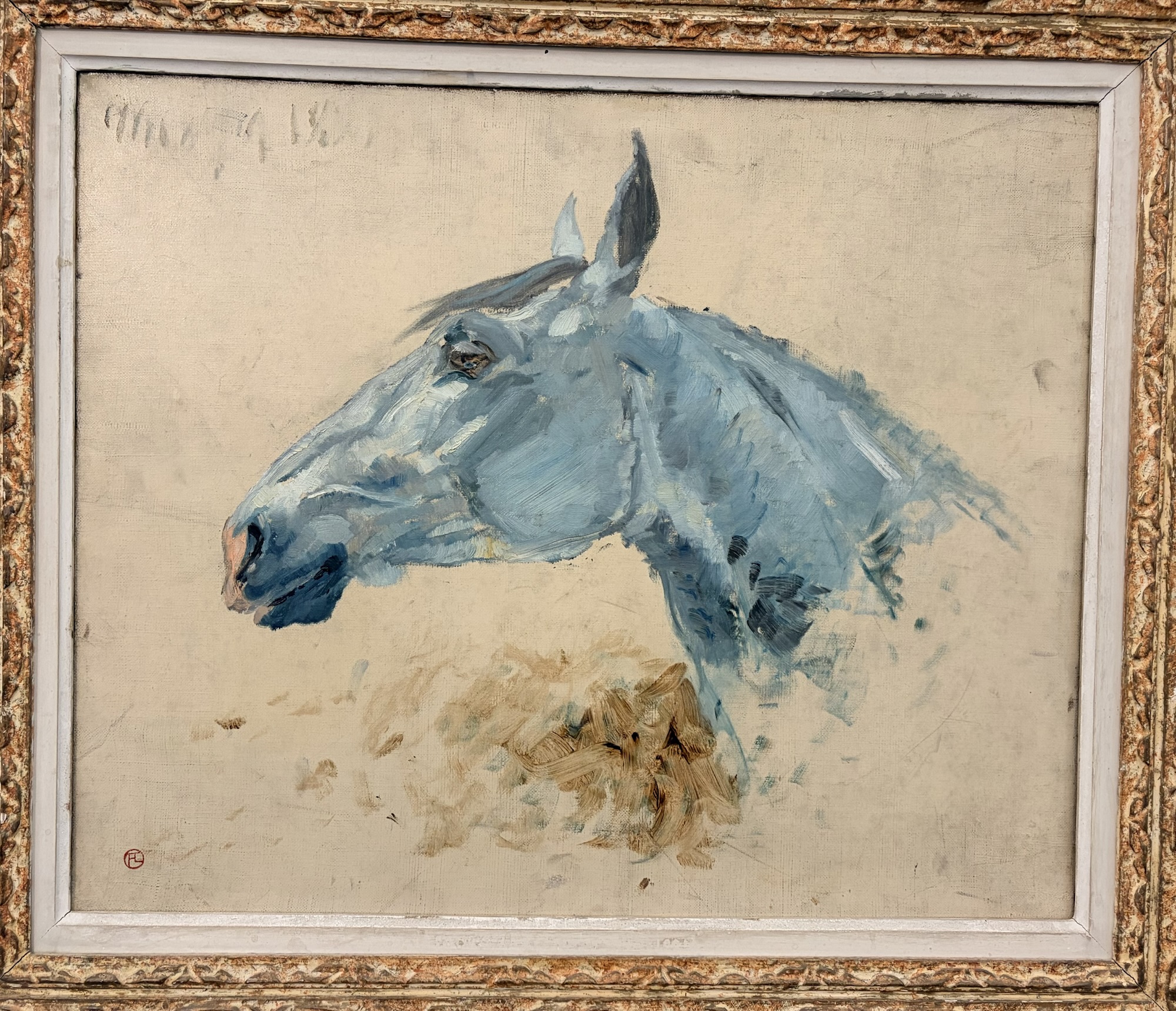
Entrance to museumDress-up for kids because of circus posters in temp exhibitLautrec painted this at age 17Inside and out so beautiful
I did get a feeling that the vibe is not as warm as Paris or Toulouse, but maybe not having our family with us was the cause of that. Still, “Bonjour” and “Merci” worked the same magic. I will miss speaking French!
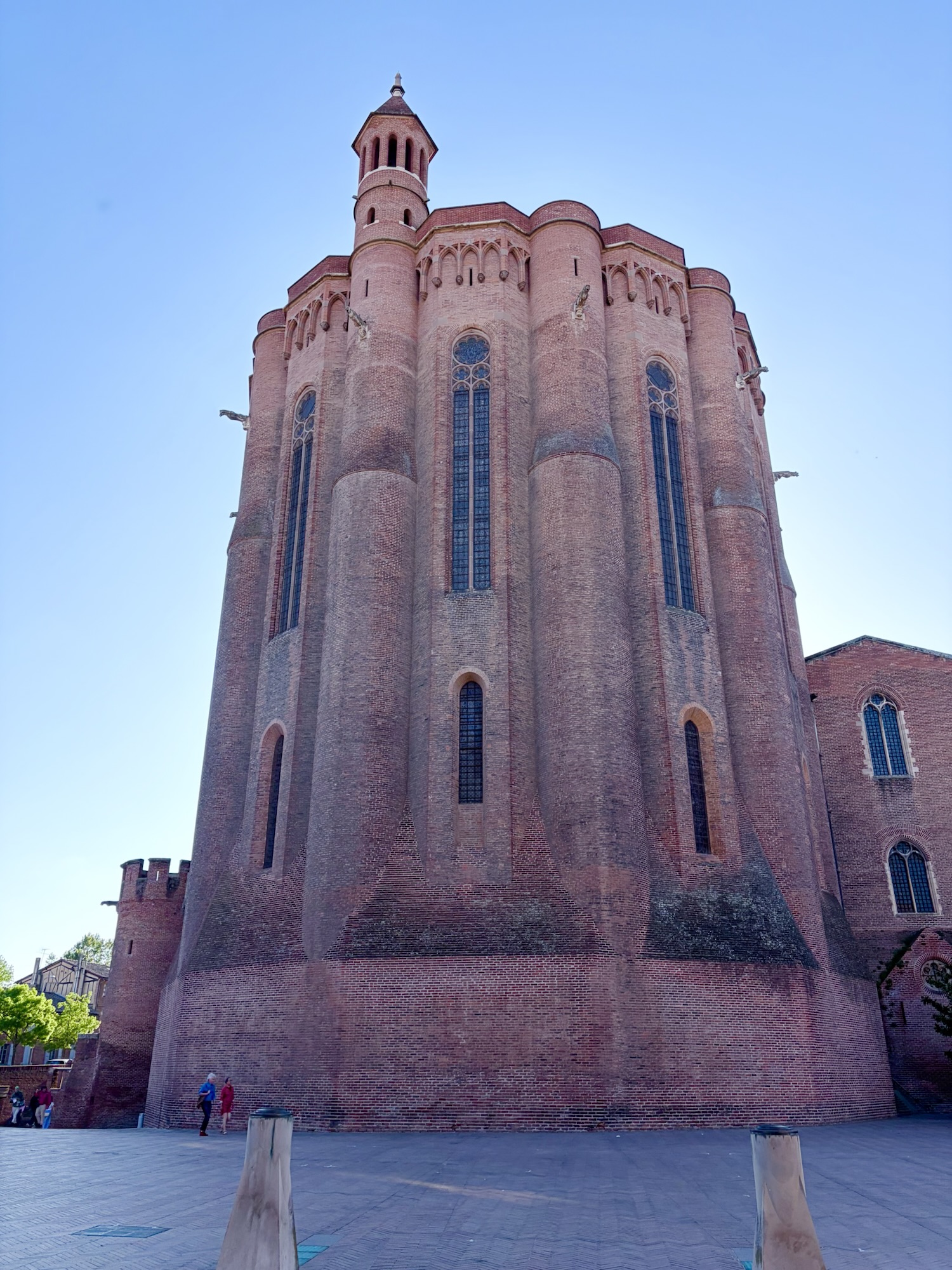
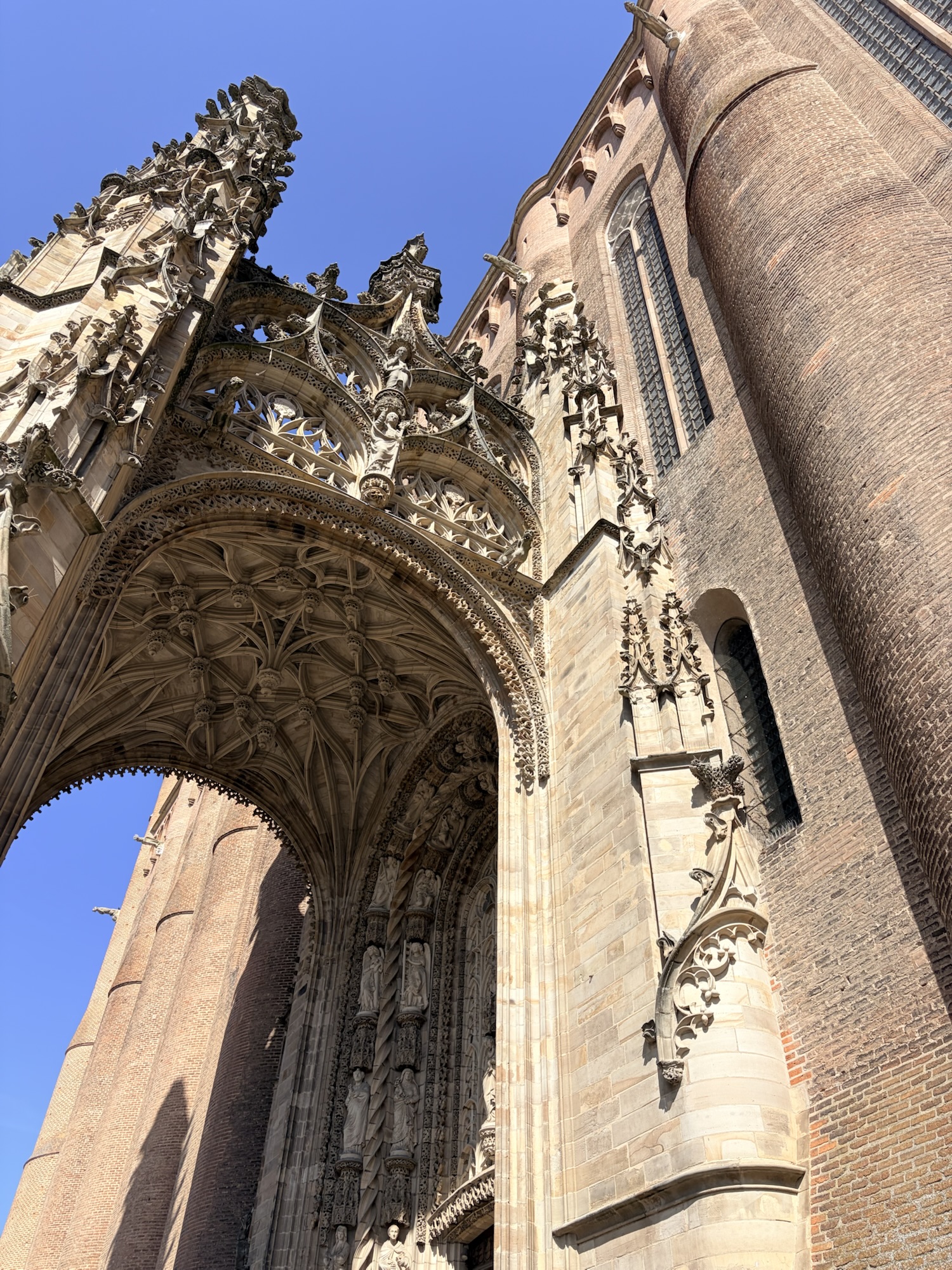
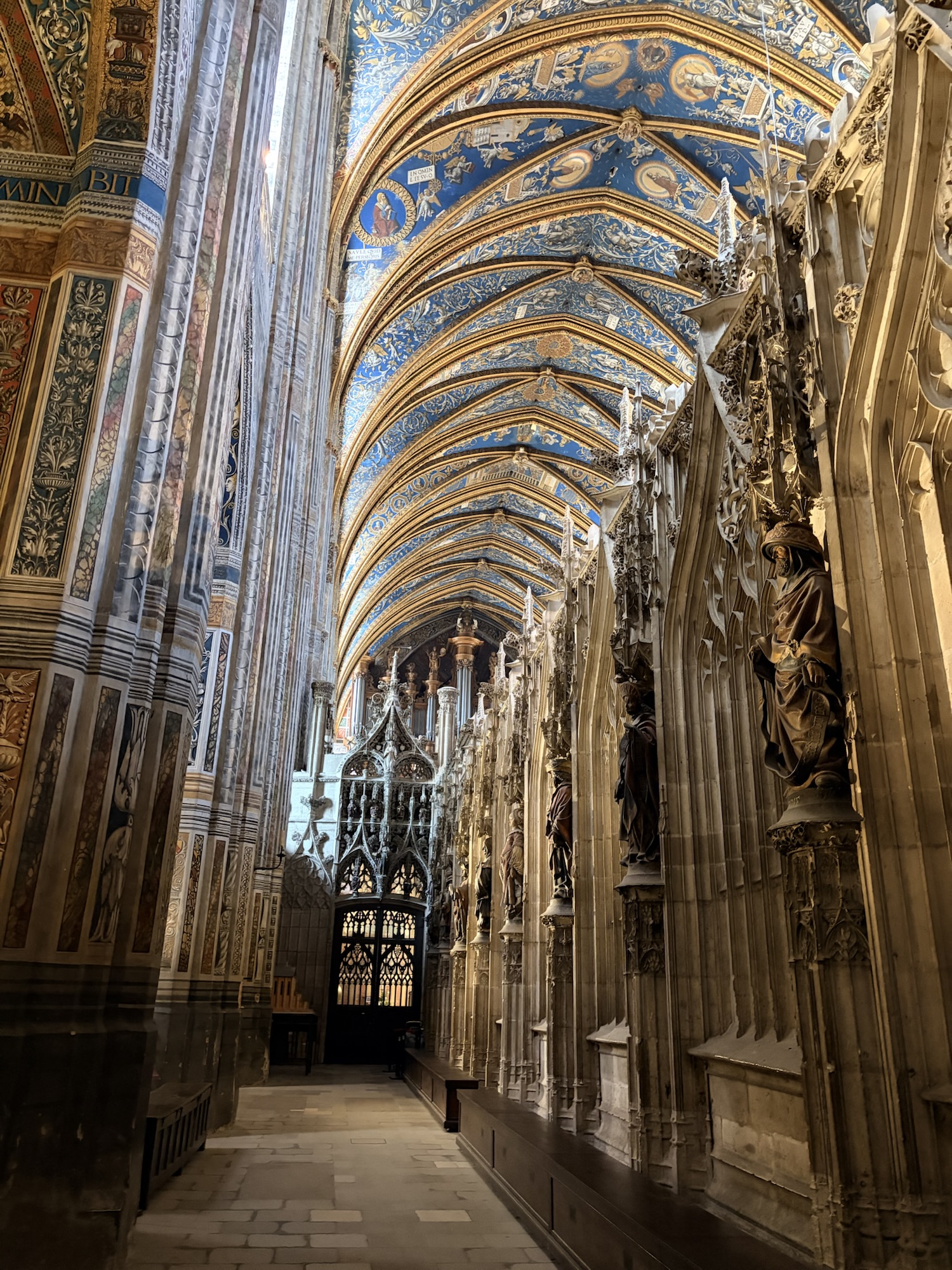
Lousy for iPhone photos…it is simply too tall.
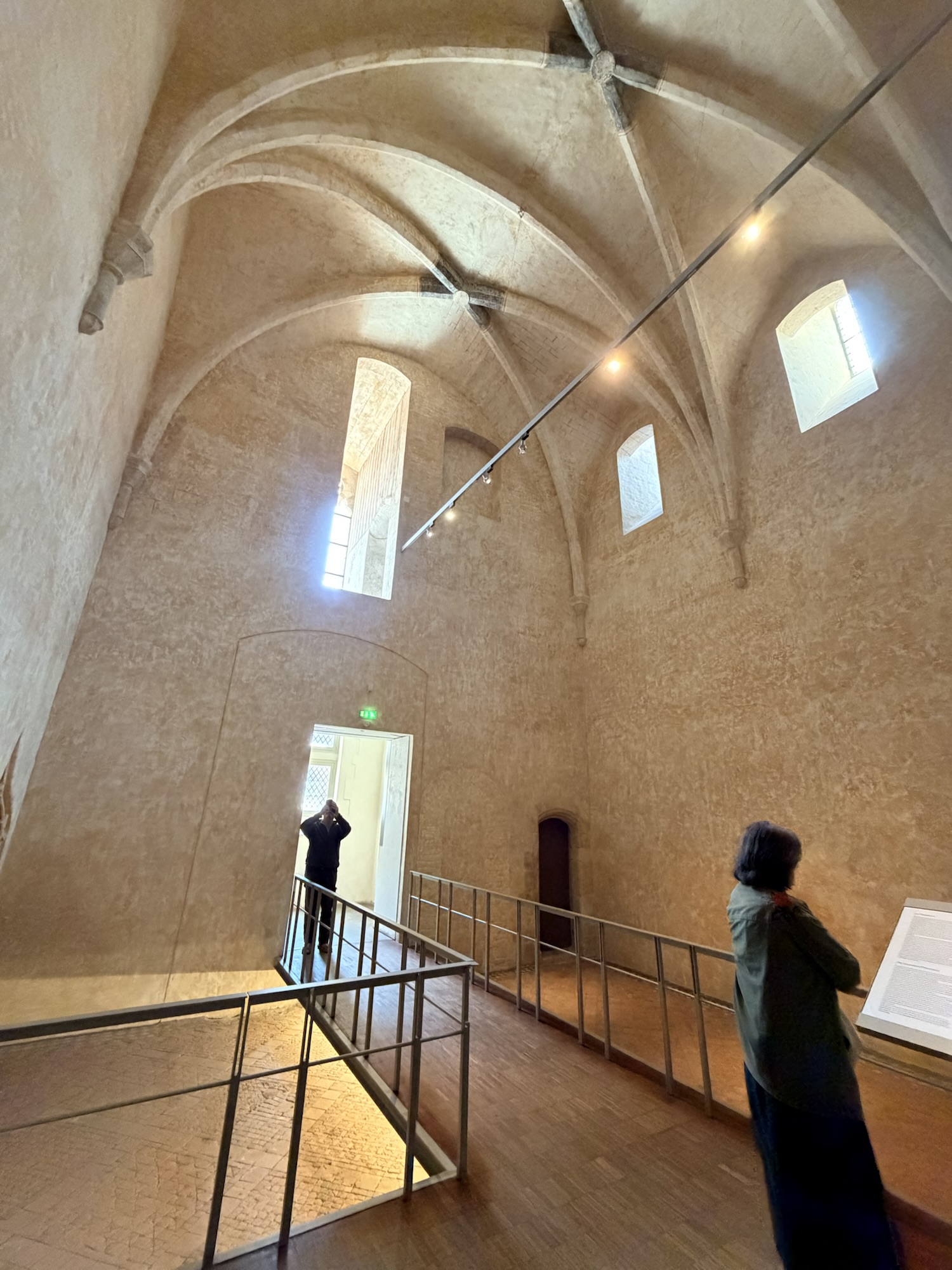
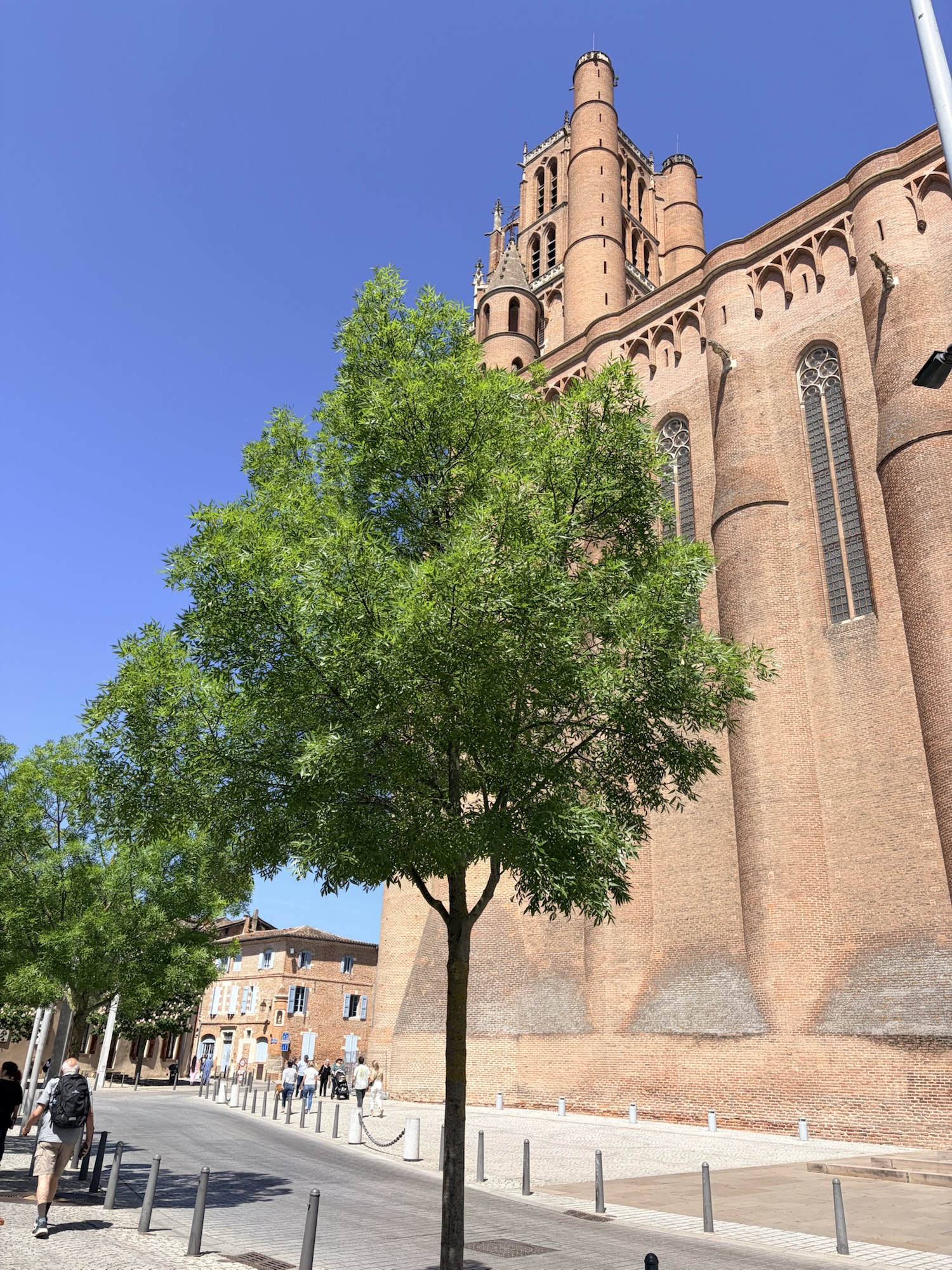
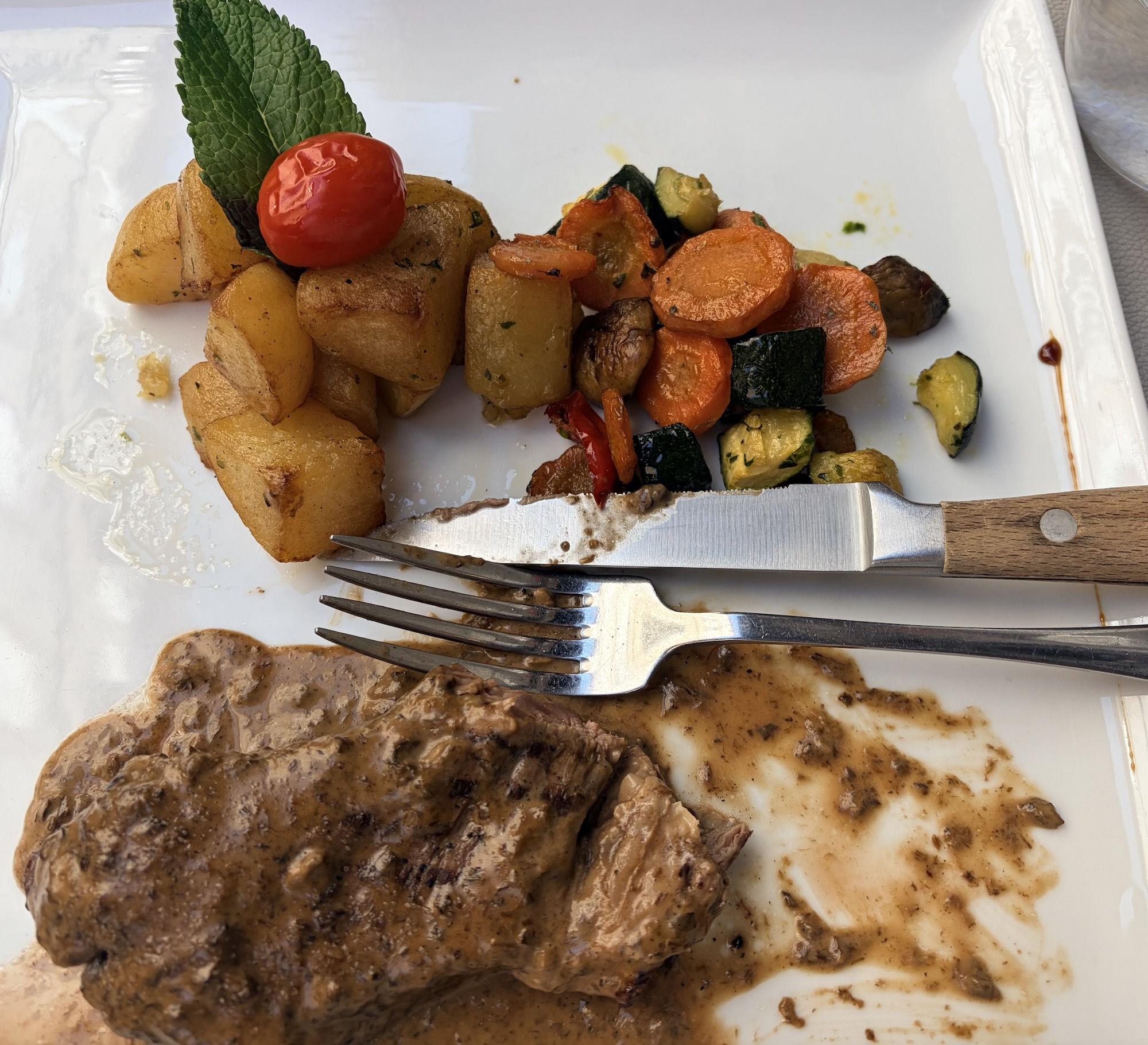
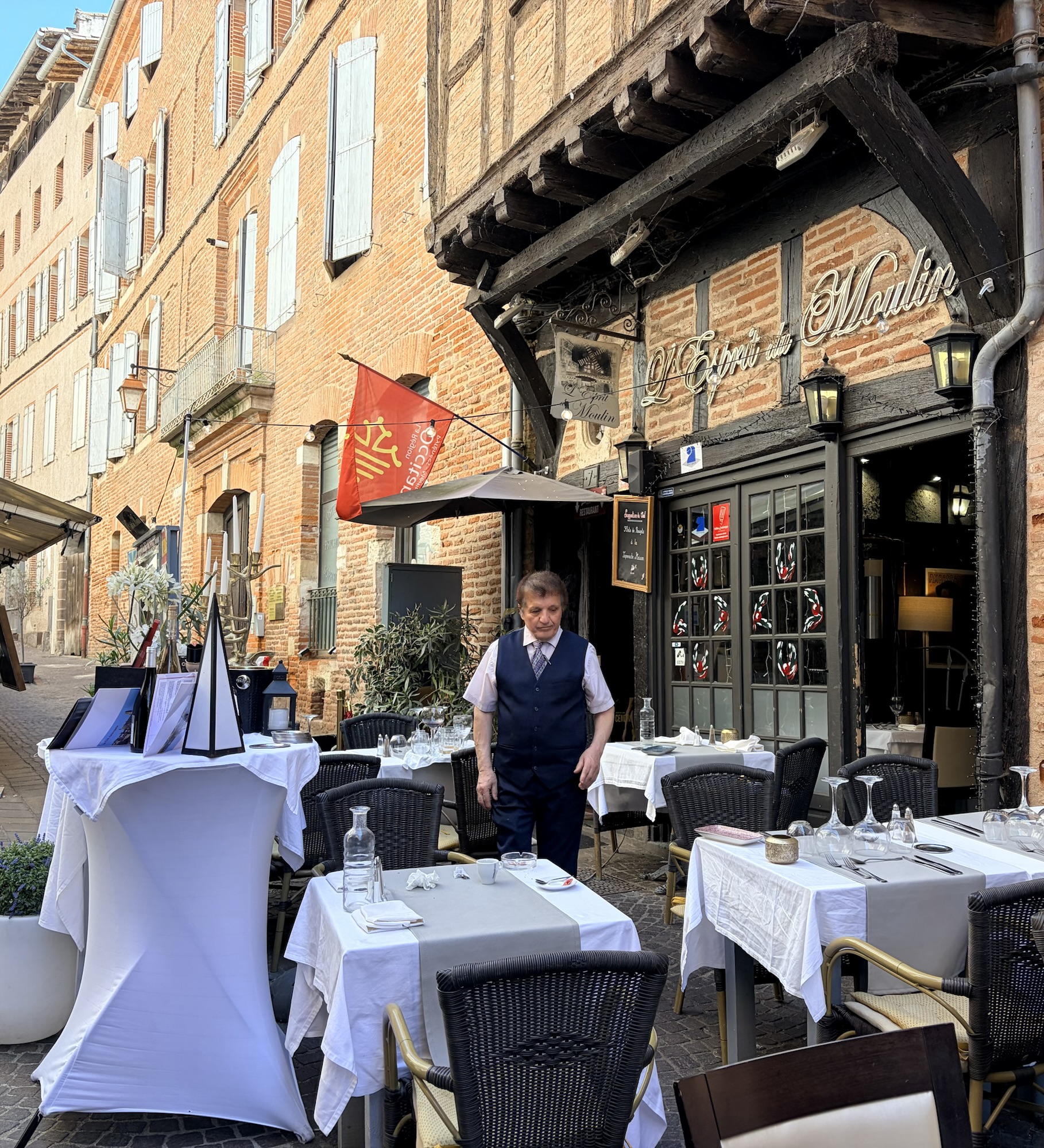
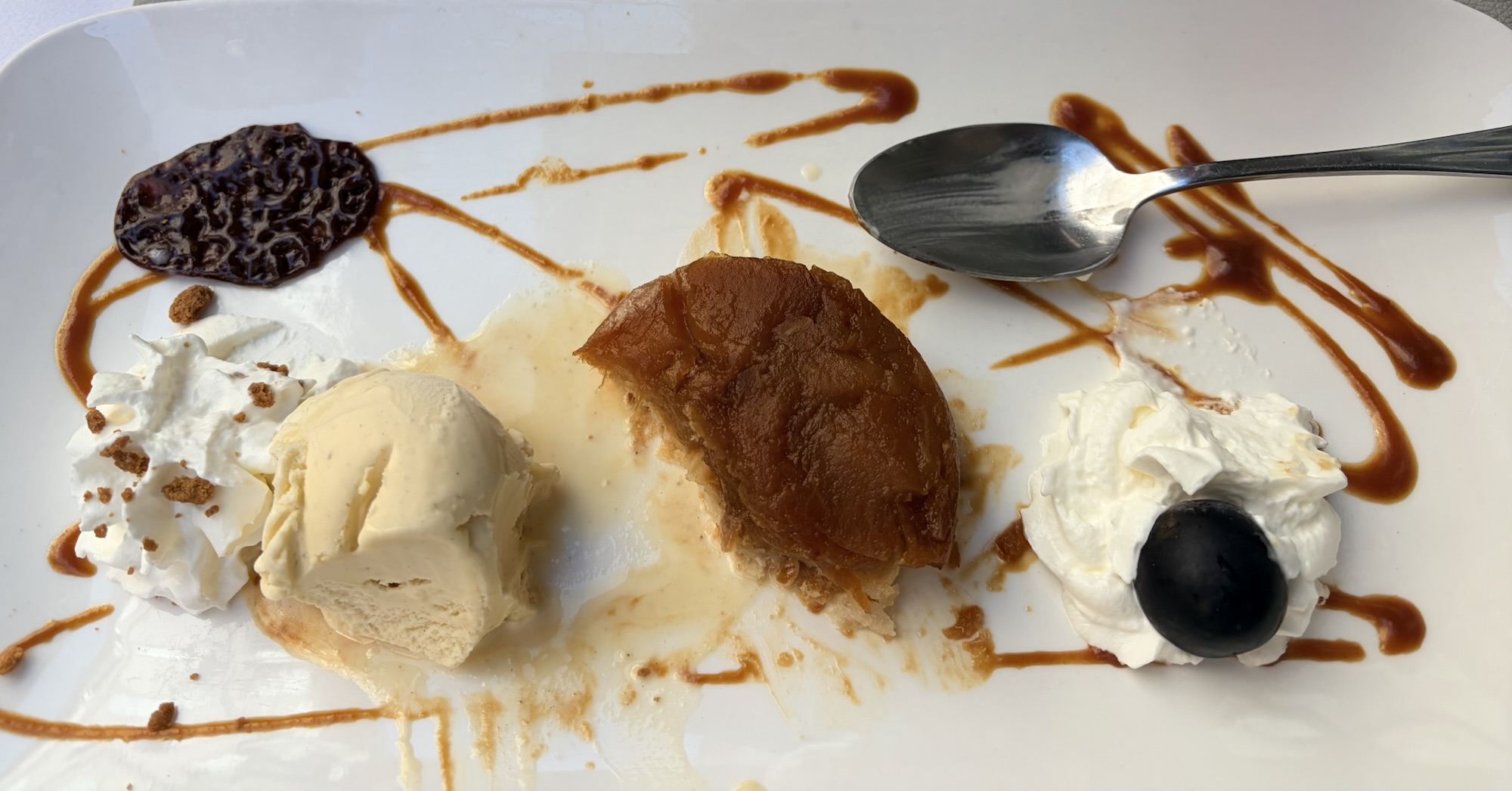
On our last full day after touring the Cathedral de Sainte Cecille, the largest brick structure in the world (!) we sat down at what we expected to be a routine (albeit very French) lunch at L’esprit Du Moulin. It was right out of a movie. I had a “menu” (fixed price for 3 courses) for €24.50 that had five or six choices for entree (appetizer), plat (main dish) and dessert. It was hard to choose! We decided on no wine. I had soupe de poisson (fish soup), heavenly, and a onglet de veau avec sauce de cepes (veal something, akin to hanger steak, with mushroom sauce). Tarte tatin, usually a miniature apple pie (sort of) seemed doable but was two types of chantilly (whipped creme), a scoop of vanilla ice cream, and the tarte. And a praline cookie. By the time I got to dessert I could barely eat a bite…and the no wine decision was undermined when, after a foursome departed from the next table the waiter, without a word, brought over a huge wine glass and filled it halfway…the remainder of the wine the foursome had left. Delicious and so fun and so French. David had an enormous (truly) beautiful salad with sliced duck gizzards scattered through and some other duck (breast?) pieces, with a small slice of bread topped with foie gras about 1/2 an inch thick, cassoulet, and a similarly overwhelming dessert. We were happy to sit for an hour and a half or so, soaking in the atmosphere and trying to consume this enormous meal.
Our morning of departure to Castres we went back to the wonderful Maison Janin Artisan Boulanger for coffee and croissants. I asked her if they used commercial yeast..of course not, they maintain their own starter. Stupid question!
We drove to Castres, enjoyed the Goya Museum (Spanish artists only, and three Goyas), now looking for supper. Off tomorrow to Le Puy, a long drive through unknown territory!
We left Paris by train, high speed to Bordeaux and then a bit of a crawl to Toulouse. Almost five hours all told, but the five of us were physically and mentally tired and thus it was nice to just sit, each in our own heads. Granddaughter watched her ipad with headphones, Mark read, I wrote about Paris and then veg’d out…the trip went quickly. Toulouse was thankfully the end of the line so we had plenty of time to gather up luggage. We had been worried about the walk to the hotel, fearing Toulouse late afternoon would be hot, but walking on the shady side for 20 minutes was pleasant and eased us into this wonderful, lovely, friendly city. The hotel was on a short street off one of the main streets of the historic center, and we were greeted by the always friendly and helpful staff.
We ate so much each night. Boullion Capitole our first night was so much fun with bustling charming servers and great food that we knew we were going to like this city. Stayed four nights, hated to leave. And to top it off, probably my favorite hotel ever. Comfy rooms, good air conditioning, fabulous breakfast. Hotel Albert 1er, we love you.
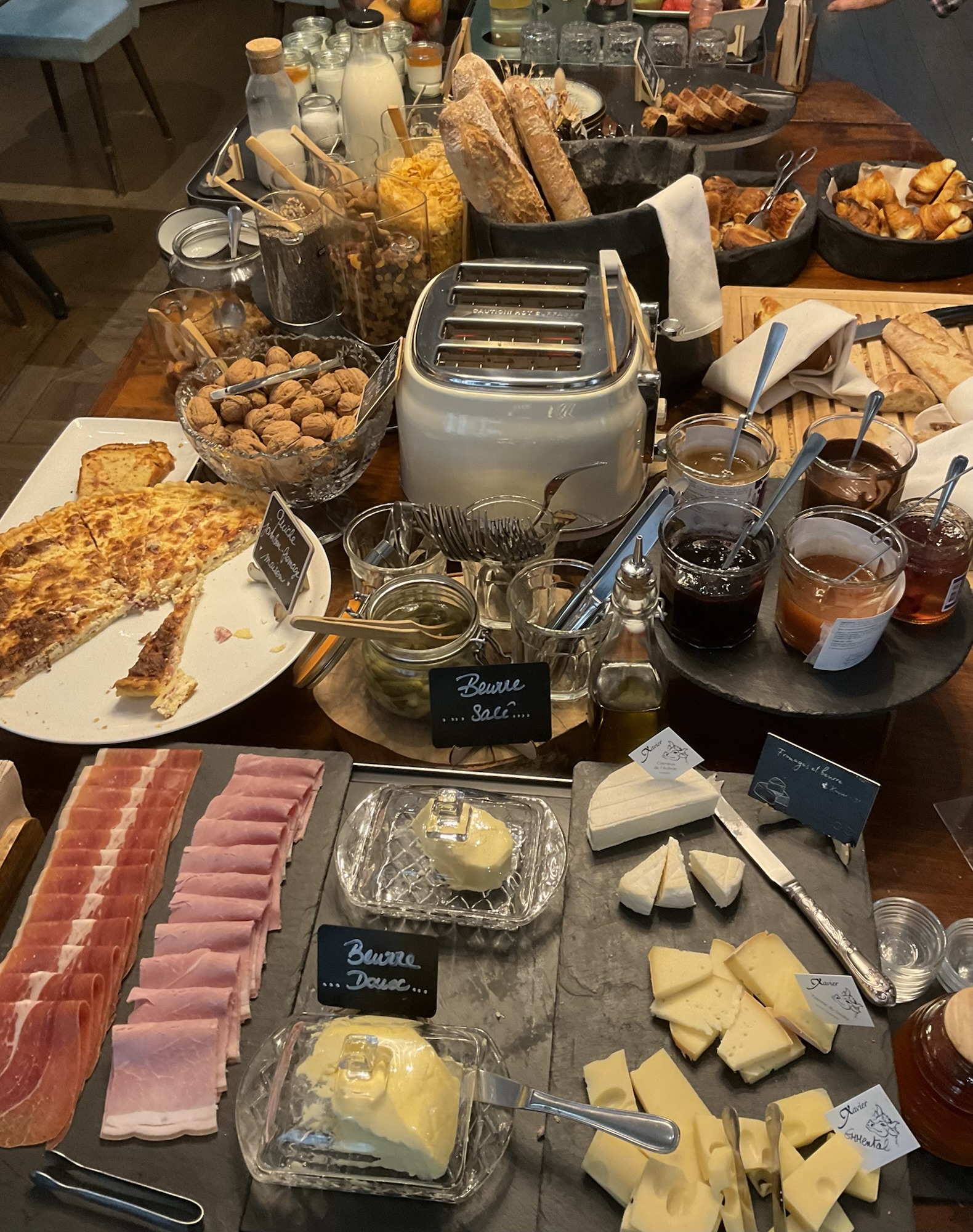
Wonderful hotel. That is a part of the breakfast buffet…included fresh squeezed OJ at a do-it-yourself machine and very good coffee.
What’s “All True?” That Toulouse is the easier, less expensive alternative to Paris, as often advertised. The prices were about 20-30% cheaper than Paris. The city is sooo pretty: red brick buildings dominate, streets are clean, walking everywhere was a pleasure, every clerk, wait person…to the woman security guard at the city hall…was smiling, friendly, helpful. Lots of playgrounds made granddaughter extremely happy. One in a plaza otherwise filled with outdoor seating for the surrounding restaurants, one next to the tourist office, one in a large park where the Japanese garden is, one we didn’t have time to find next to the Toulouse Musee. This childtren’s natural history museum enchanted granddaughter—her mother said she had never been so engrossed by minerals, butterflies, taxidermied animals, even the animation of the earth’s landmasses forming and reforming which she watched twice, then as we were getting ready to leave she asked to go back and watch it again, this time wiping a tear and hugging her mom—“the music makes me sad.” Gosh I love them so much.
We were to leave on Saturday. For our last full day we got out of the city by renting a car and driving an hour or so south into the foothills of the Pyrenees to a small town that had a Friday market. David and I had so enjoyed these last time we were in France so I really wanted my daughter to experience one. The only bad part was getting the rental car out of the horrid parking lot in Toulouse!
This town, Foix, is magical and the market was a blast. We arrived around 10, and stayed several hours after the market ended just hanging out enjoying our lunch purchases (the bread! The cheese! The olives!!) and letting granddaughter enjoy the playground smack in the center of town. The scenery is all greenery, flowers, the river, Pyrenees in the distance. A great day.
We returned to Toulouse and ate a magnificent dinner at the Maison du Cassoulet. Yup, we all had cassoulet and a wine suggested by the server which will live in my memory forever.
Only down moment was saying goodbye to daughter, son-in-law and granddaughter. Next morning they left for Spain and we drove to Albi.
It was delightful to be back in Paris, especially because we met our daughter, son-in-law, and almost five year old granddaughter to share the city with. Short version—we ate, we rode the metro, we went sightseeing, we walked, and we ate some more.
I highly recommend our hotel, one of the local chain Astotels. This time we stayed at Hotel Joke, a little higher up in Montmartre than our last visit at Hotel Joyce. Comfortable, welcoming, convenient, snacks out in the afternoon into the evening, big bowls of apples, all part of their services. Our room was huge and had cross ventilation which was great in the pre-air-conditioning month of April.
We were close to several metro stops and we took full advantage of them. Our granddaughter LOVED the metro—the speed thrilled her. On our second day we inadvertently got separated—the doors closed before I could get on, and David was in a different car from the kids—but of course the next train came in a minute, perhaps two minutes, and our cell phones worked fine so we were back together in no time.
This sudden separation made a huge impression on granddaughter, who thereafter was our shepherd, making sure we all got on and off together without incident. She would run back and forth to her grandpapa to tell him how many more stops until we got off, and took his hand to lead him off and on the train. So sweet and so mature of her…and she loved this new responsibility.
Uniquely for us we visited no museums, just wandered and took it all in. I had made dinner reservations for 3 of the nights so we would not have to make decisions and this was a hit. Highly recommended: Au Bord Des Copains in Montmartre, Caboulot in Montmartre, and our last night we said goodbye to Paris with a leisurely and wonderful dinner at Vins Des Pyrenees. Granddaughter ate everything and then some (chewed on the bones from her father’s confit de canard) and was goofily well behaved and polite. Her sweet, soft “bonjour” and “merci” delighted every adult we met.
Now we are en route to Toulouse, way south, on a high speed train. In a few days we will part with our family as they go to the Spanish coast and Barcelona, while David and I spend a quiet weekend in Albi and then meander to Lyon, a night at the airport in Paris, and, alas, home to San Francisco.
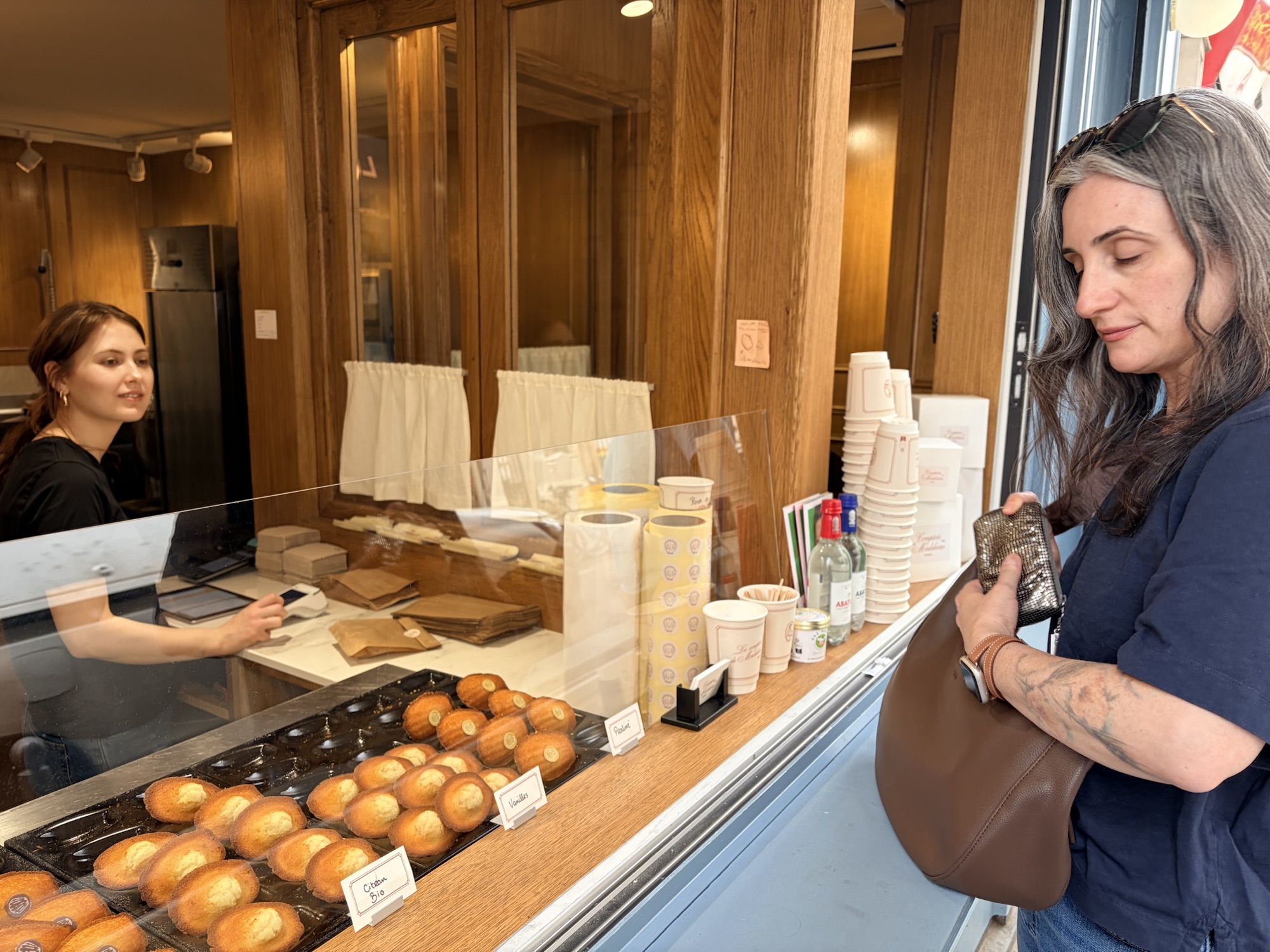
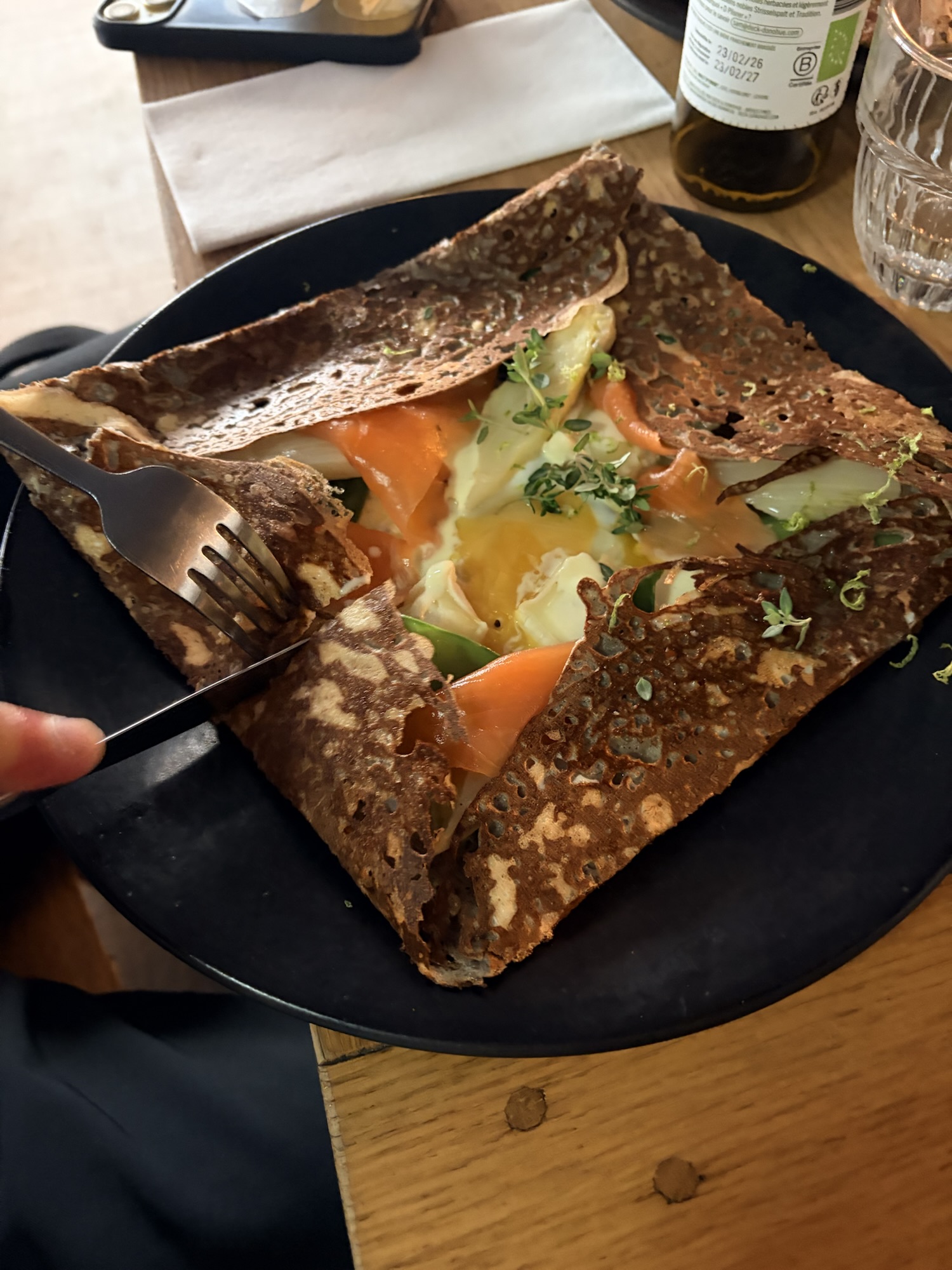
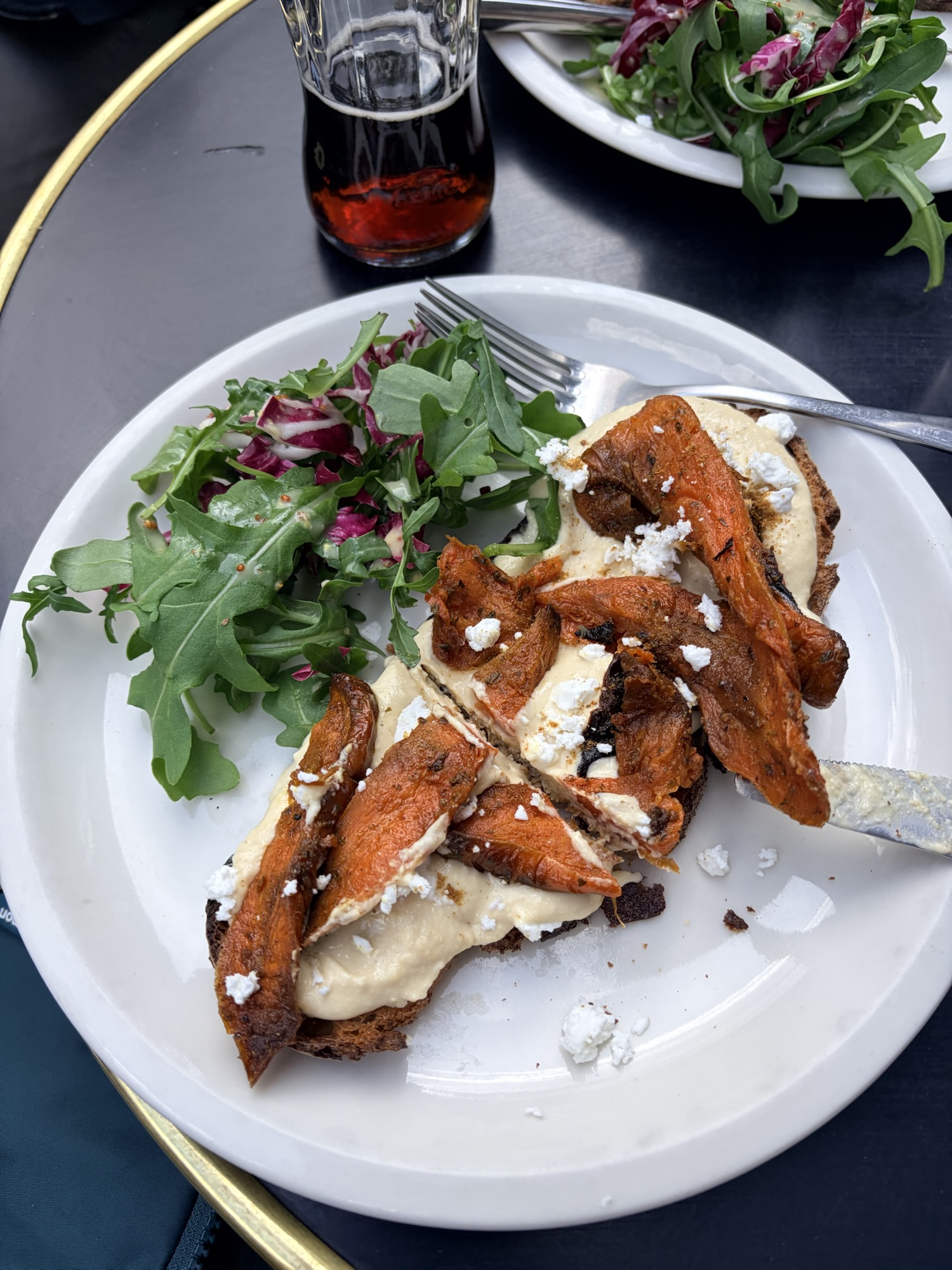
Burgers, salads, galettes, madeleines…food in Paris is delightful.A beautiful few days of perfect weather for enjoying the essence of Paris.
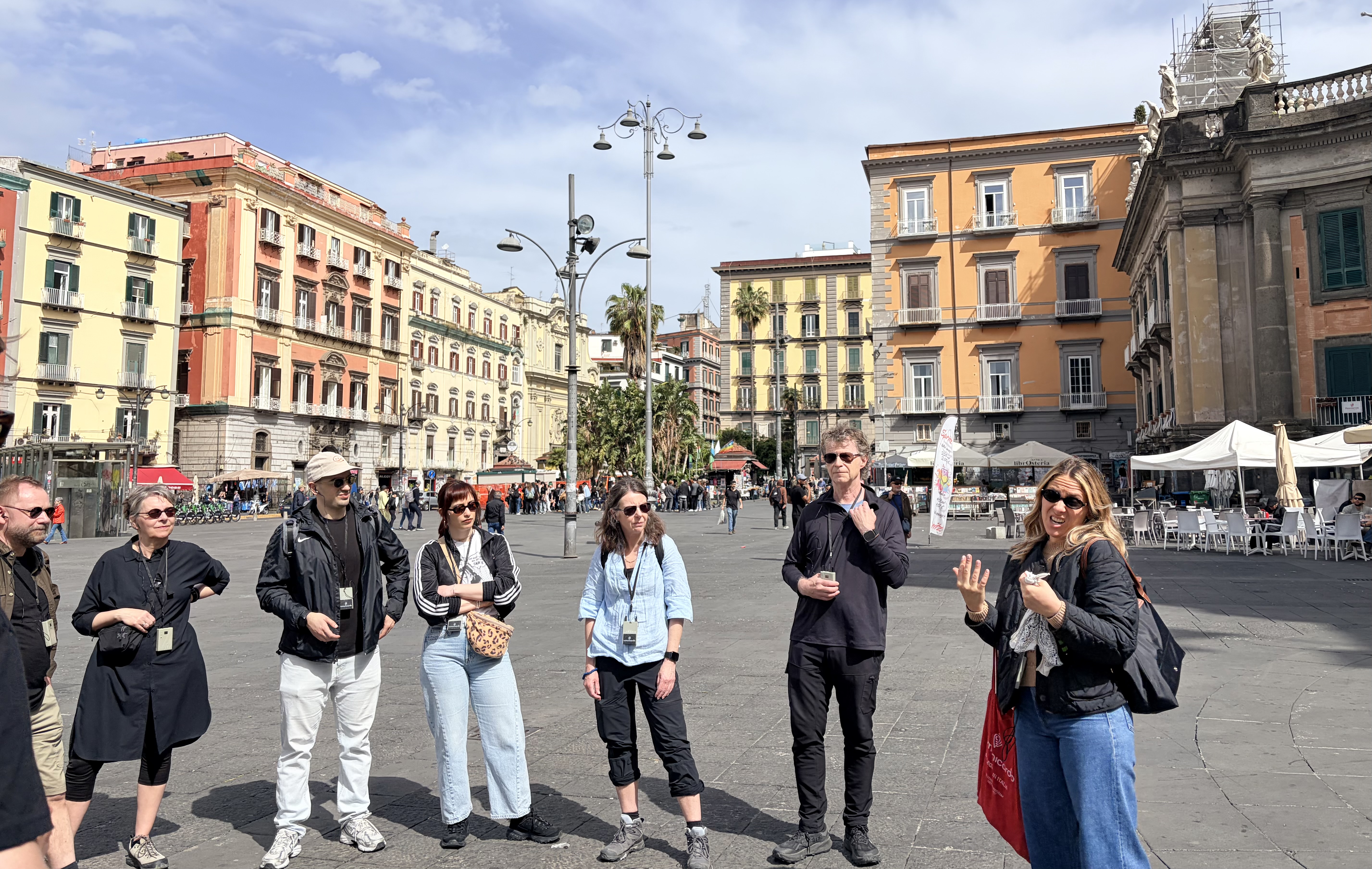
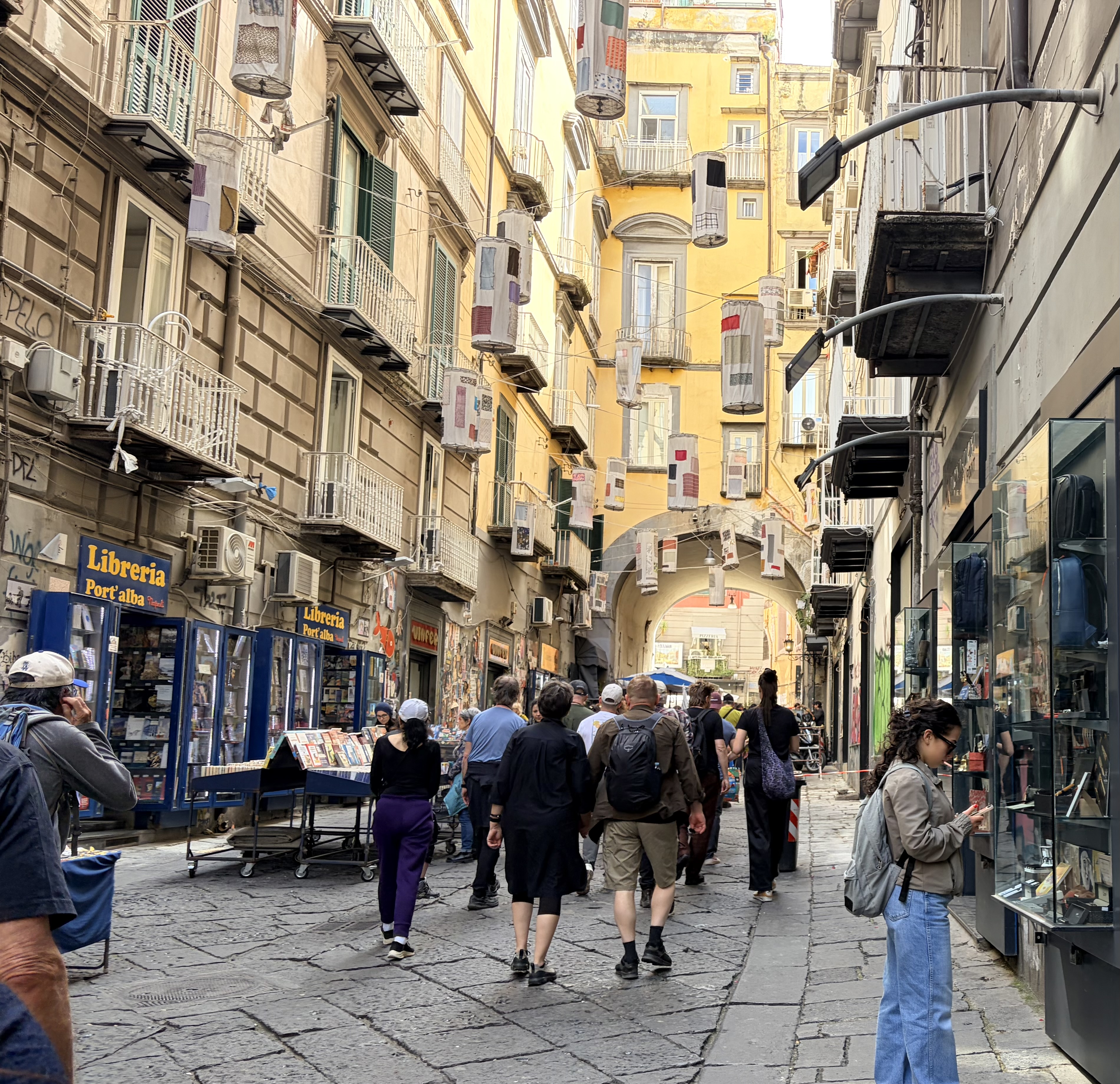
When we booked that great and cheap train from Roma to Napoli it came with an option to register for a free walking tour of centro storico (free walking tours entail only a requested tip, usually €10, and our experience with them is very good). It started at 10 on our last day and we weren’t so enthusiastic but it was really worthwhile. We learned about a lot of stuff we could have done in the city if we were there longer than 3 1/2 days. Our guide, born and raised and in love with the city, opened our eyes to more of its charms and of course of its history.
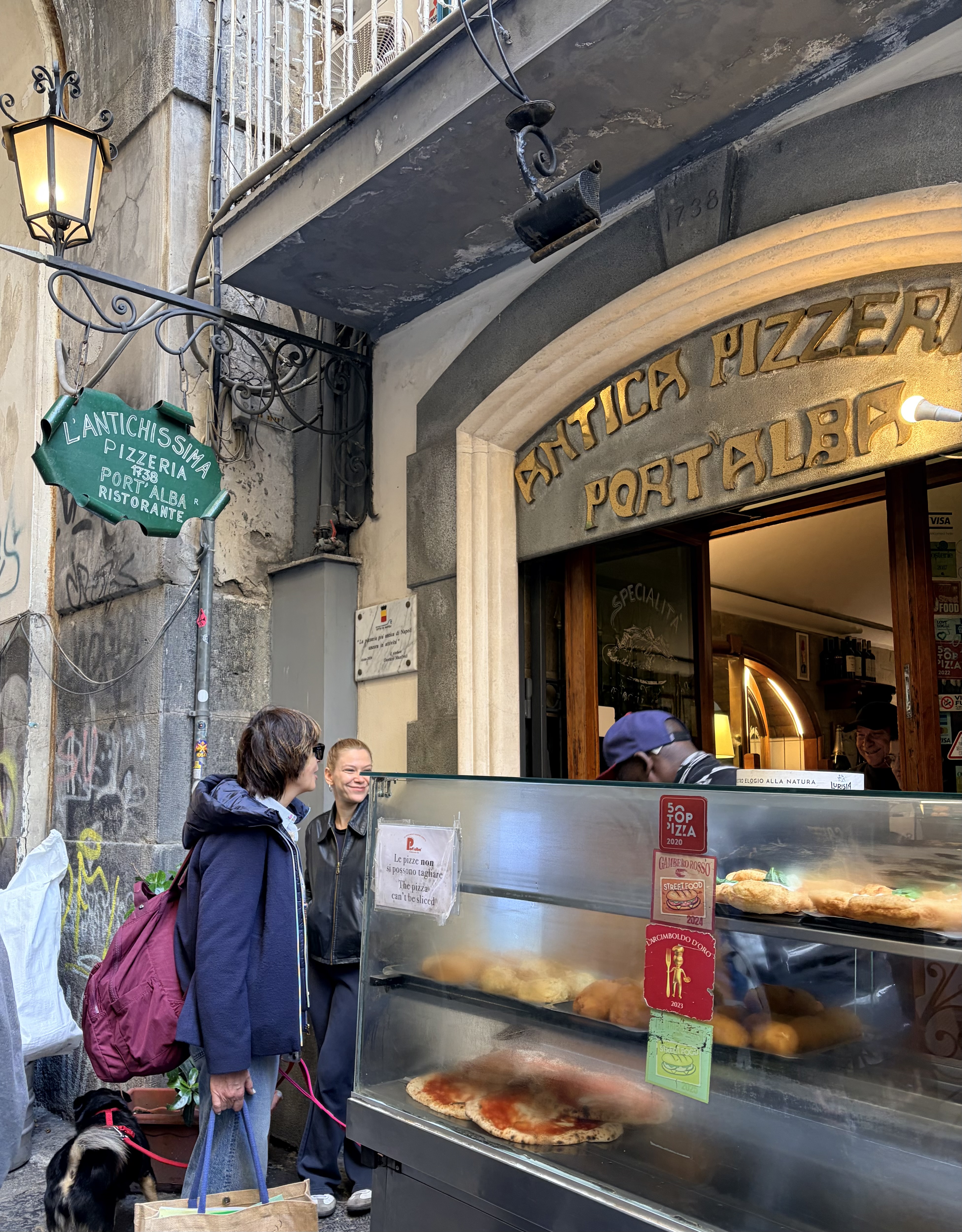
The ancient gate to the city.THE first pizzerria, still operating.
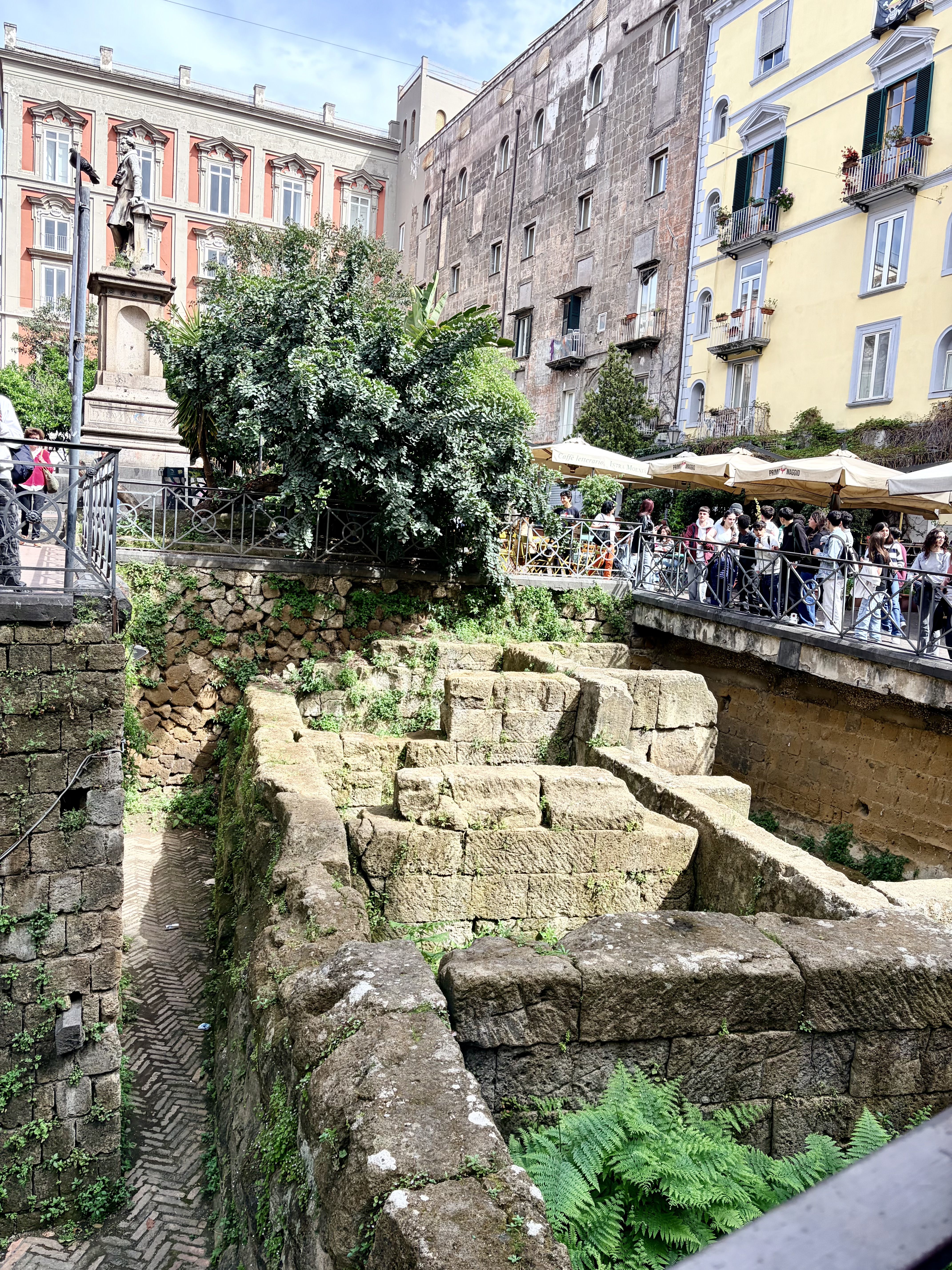
I tried to take photos whenever I especially enjoyed her explanations but there was so much more. For example, she explained that housing in Napoli was dominated by working class “basso” apartments; ground floor one room accommodations that entire families shared. When they wanted more space the only direction available was down, a project often stymied by encountering ancient structures. She showed a photo of a narrow street interrupted by a small amphitheater revealed when the occupants tried to add a basement.
Random excavation in the middle of a piazza.
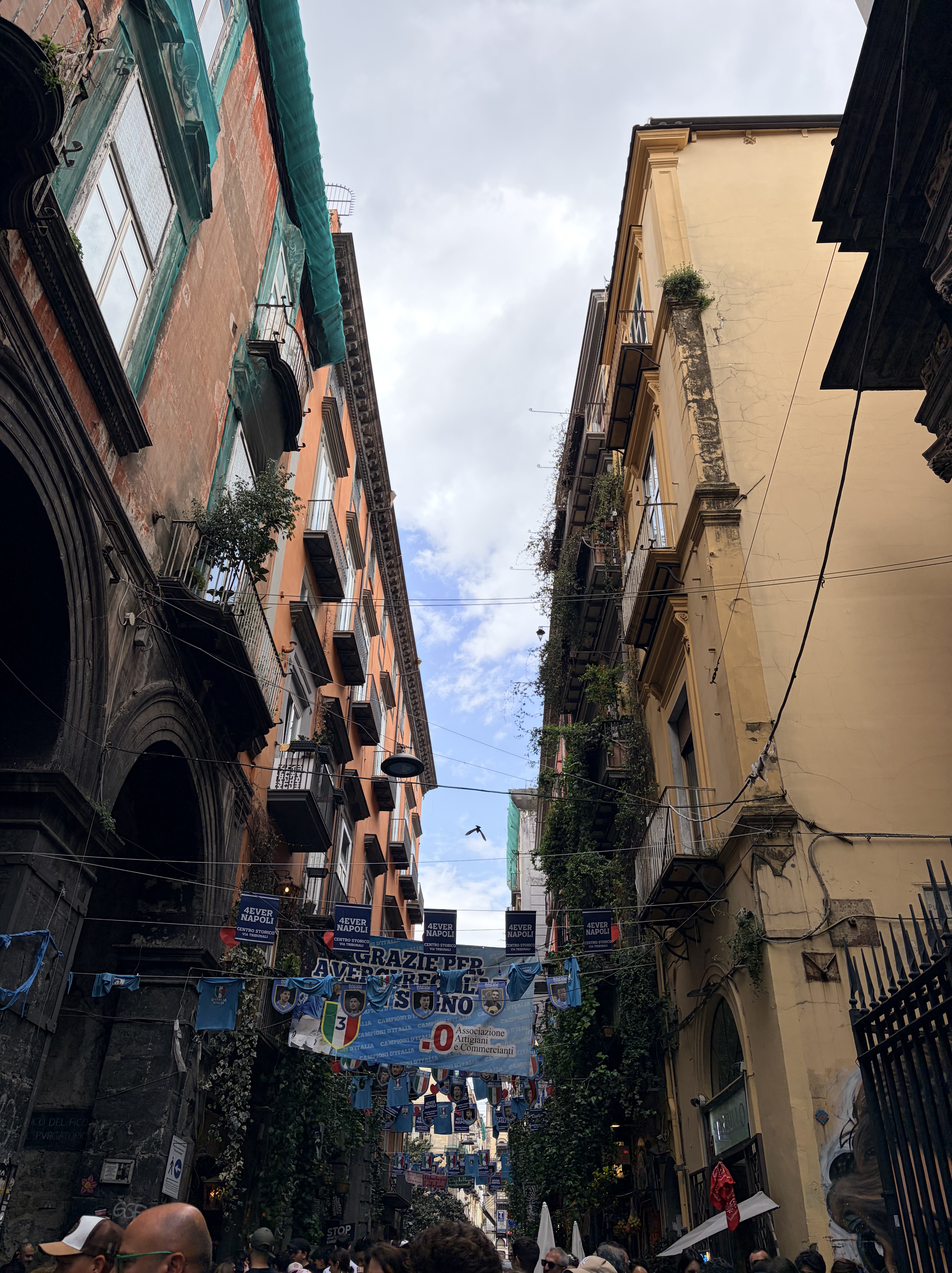
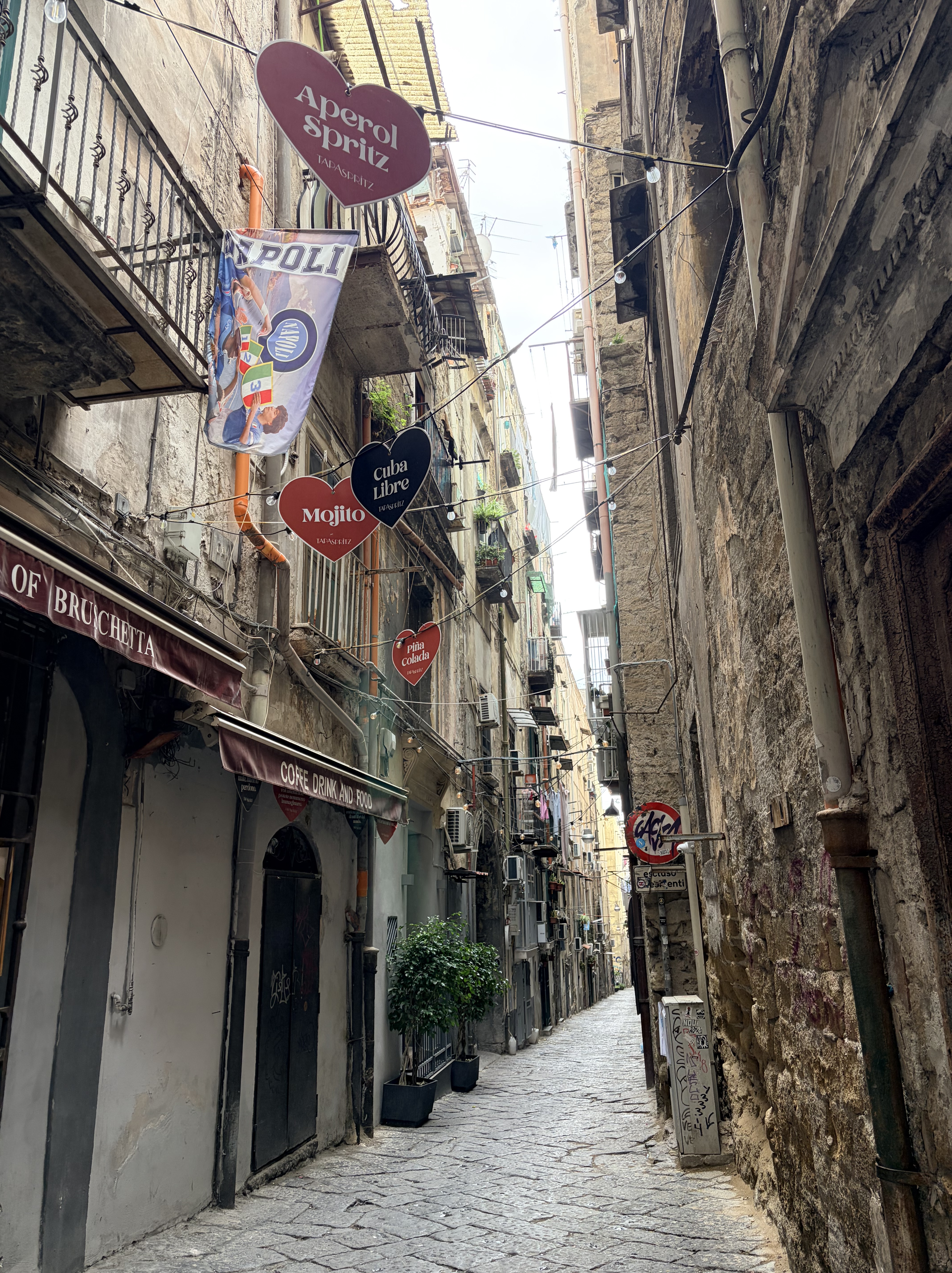
As we walked deeper into the areas filled with tourists the noise level climbed from loud to very loud, interrupted by clusters of students (college?) yelling and chanting encouragement as a guy paid to have a foaming lemon soda (must be alcoholic) into his open mouth. Ugh. Our guide said she hoped someday it would be outlawed and we agree. In spite of the chaotic situation we pressed on, down tiny narrow commercial streets I could never find again, many selling locally made nativity components. She said the Christmas time holiday used to be December 7 when families brought out their nativity scenes. When you move out of your parent’s home you begin to collect your nativity items, growing and personalizing them year by year. Napolitanos like our guide rue the change to Christmas trees and December 25 celebrations.
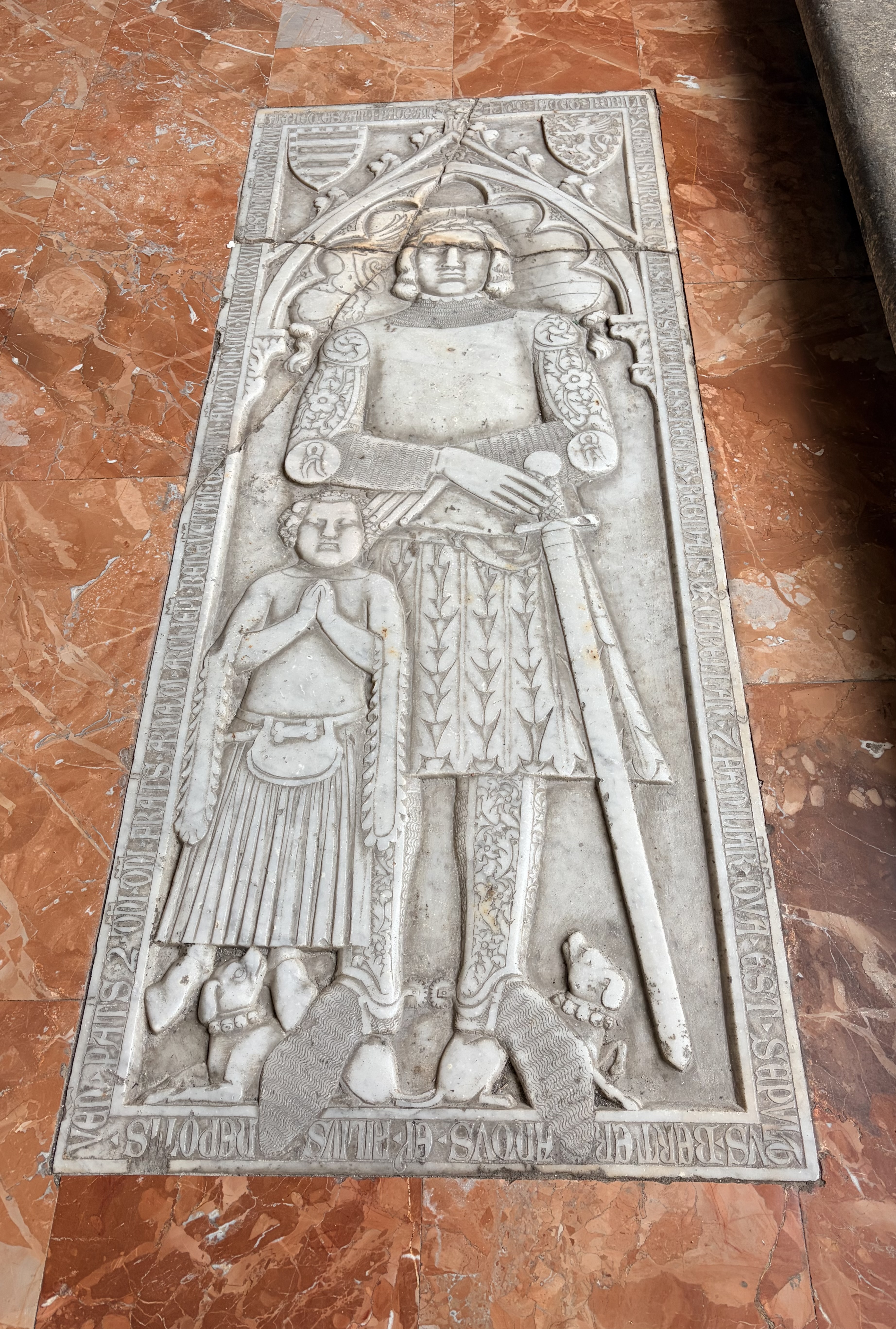
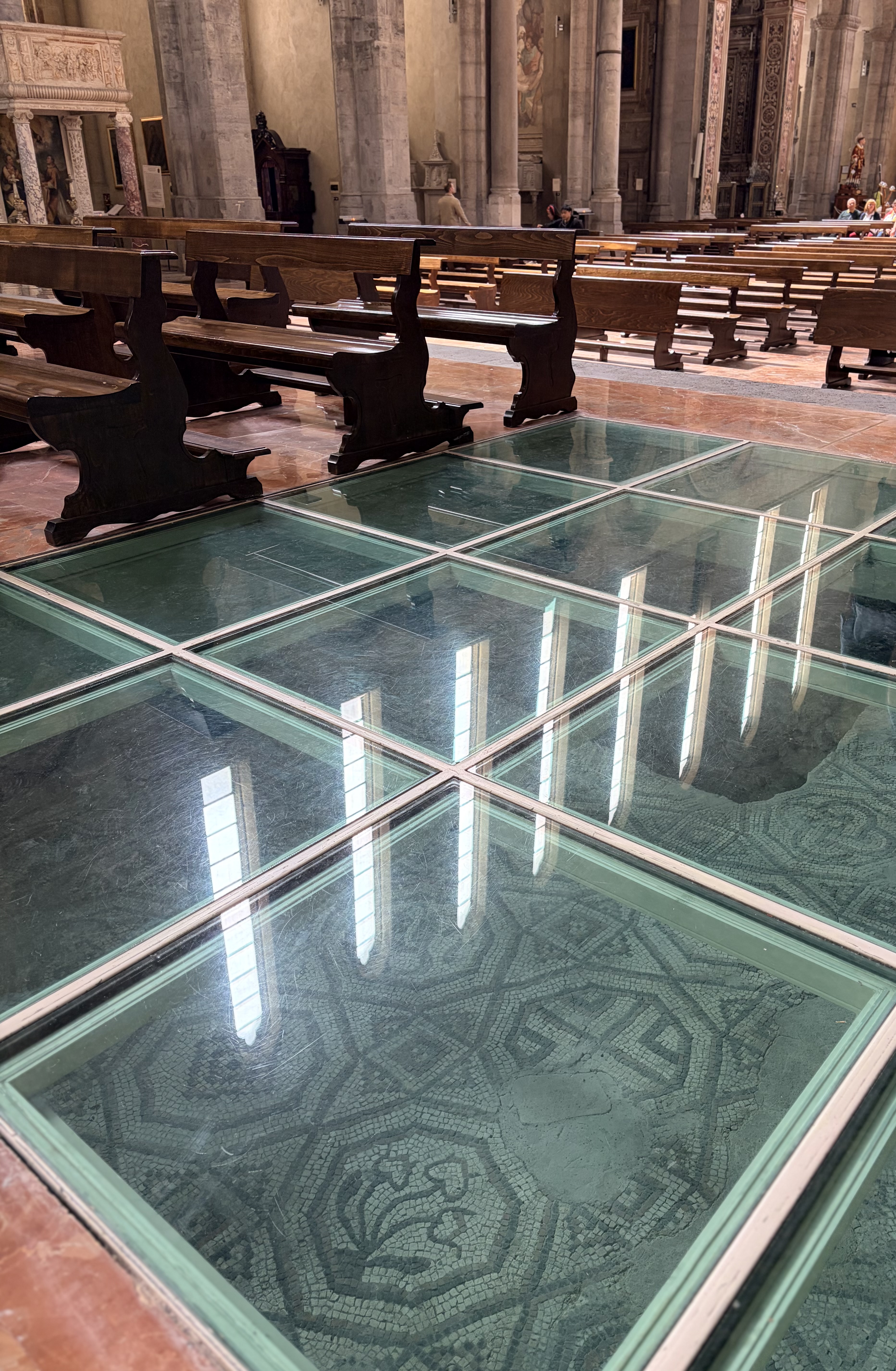
Such old things…this in the floor of a church./This church has glass over an old Roman building—mosaics!
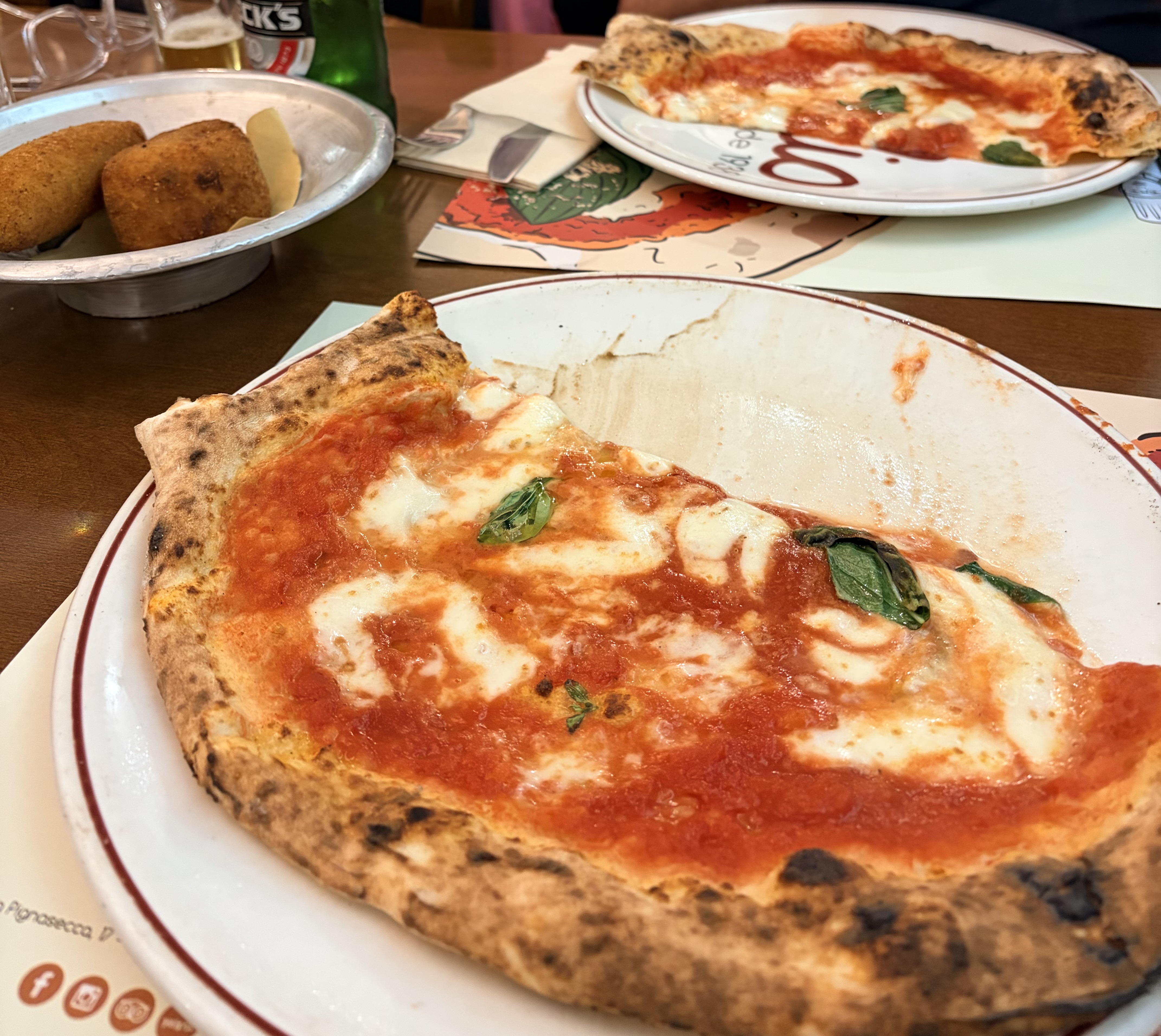
After 2+ hours we had finished, and we asked her for a pizza recommendation. She suggested we walk straight up the street to the market area and find Pizzaria Alitto. We did, we loved it, and returned for our last dinner—twice in one day!
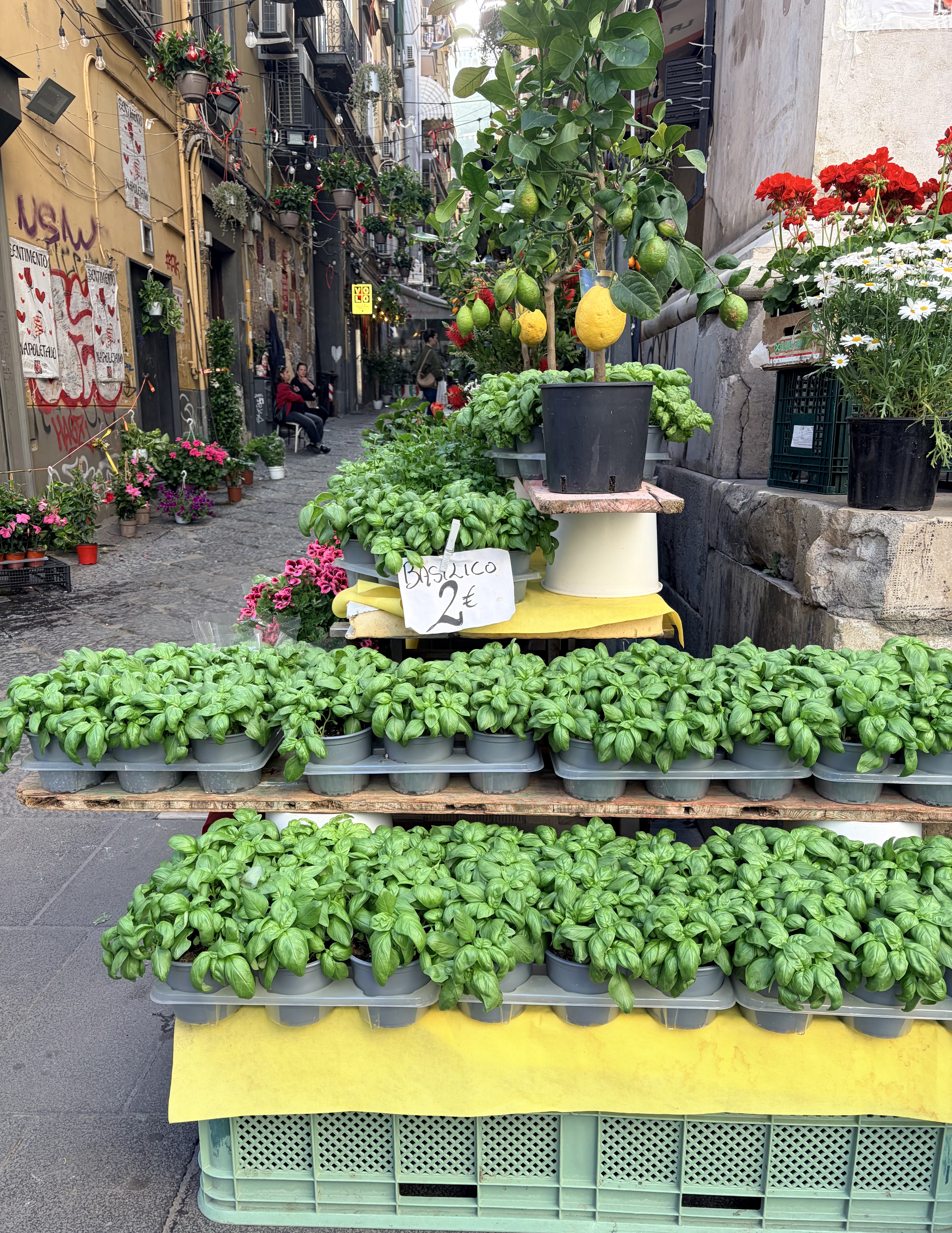
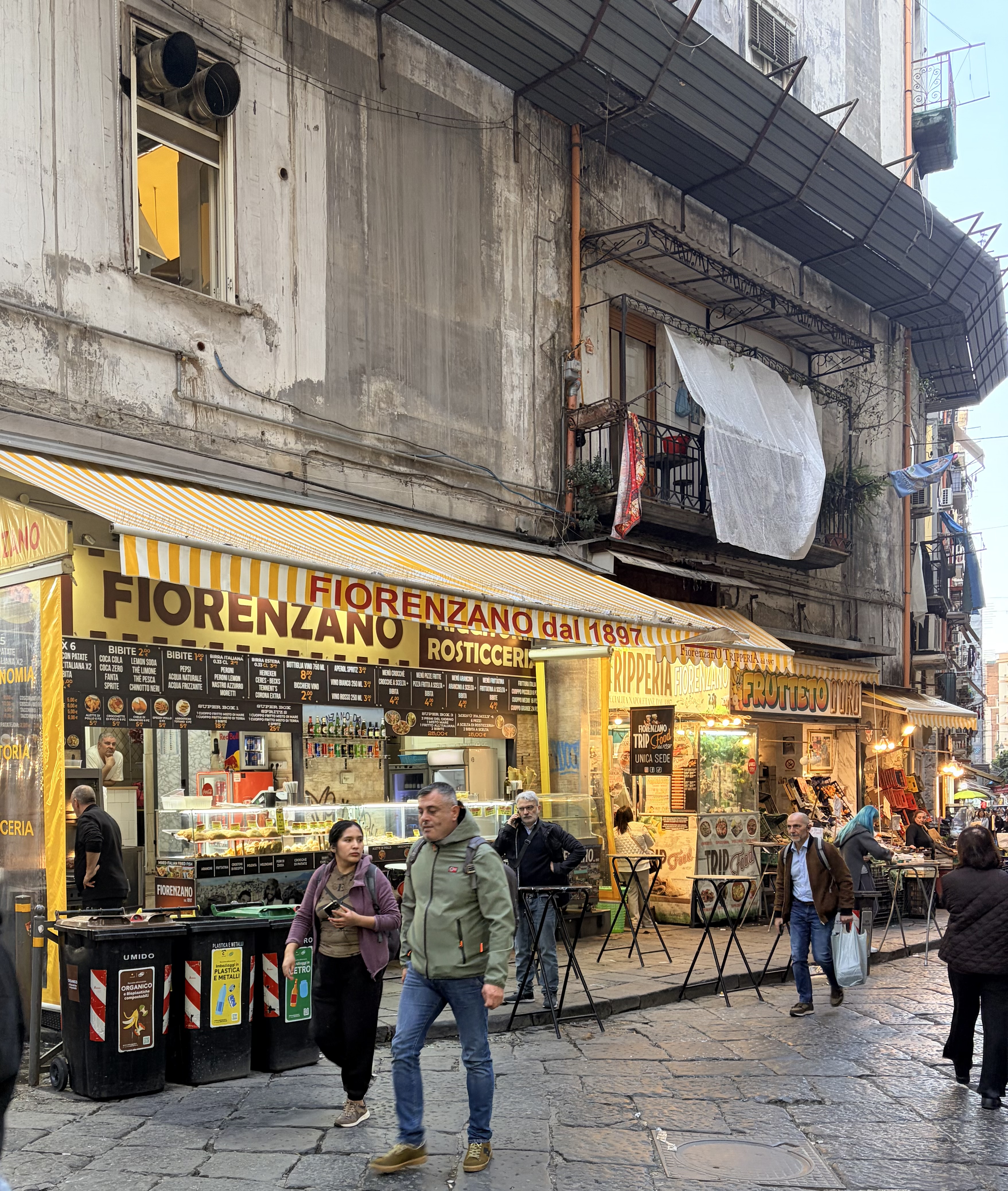
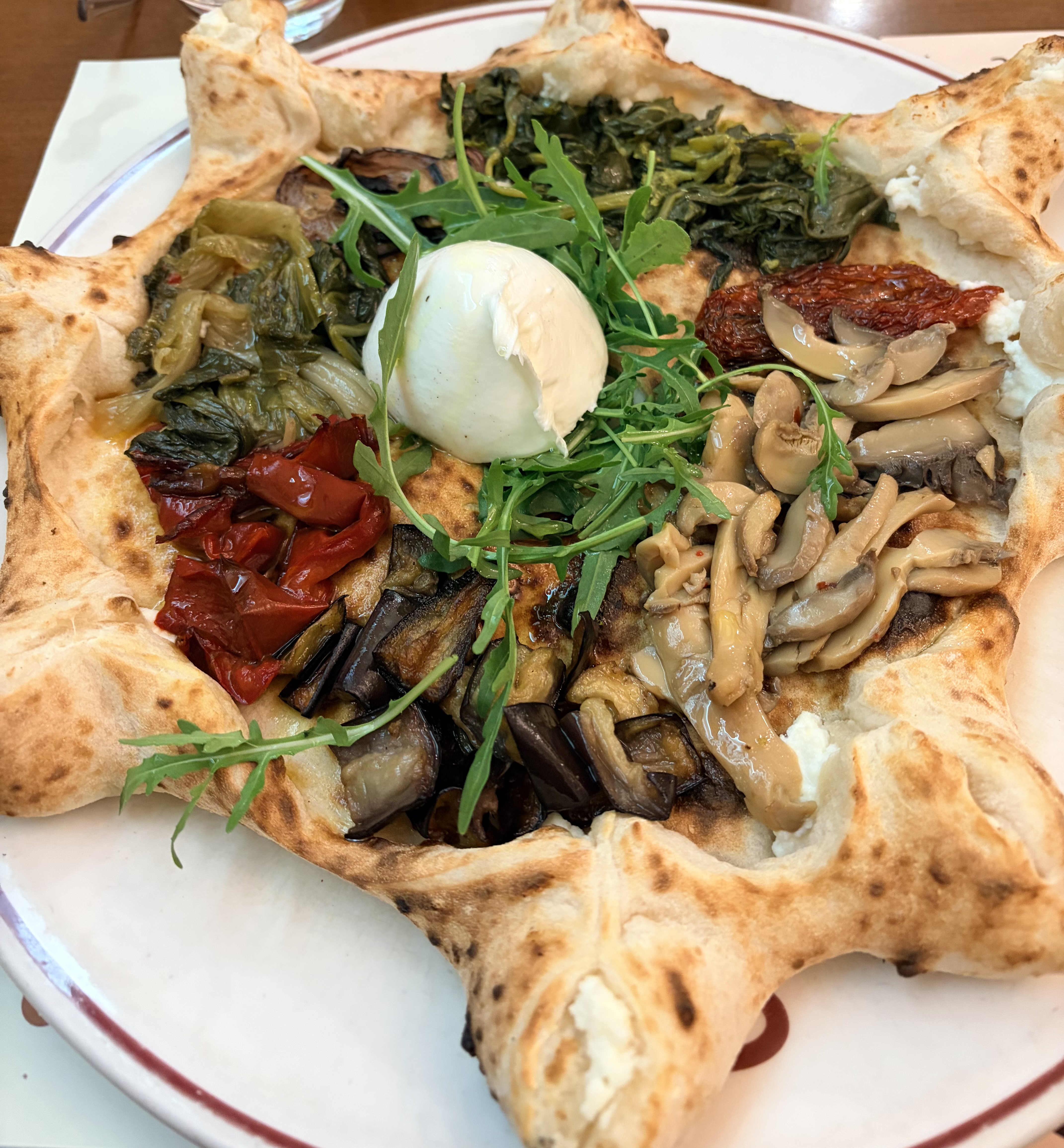
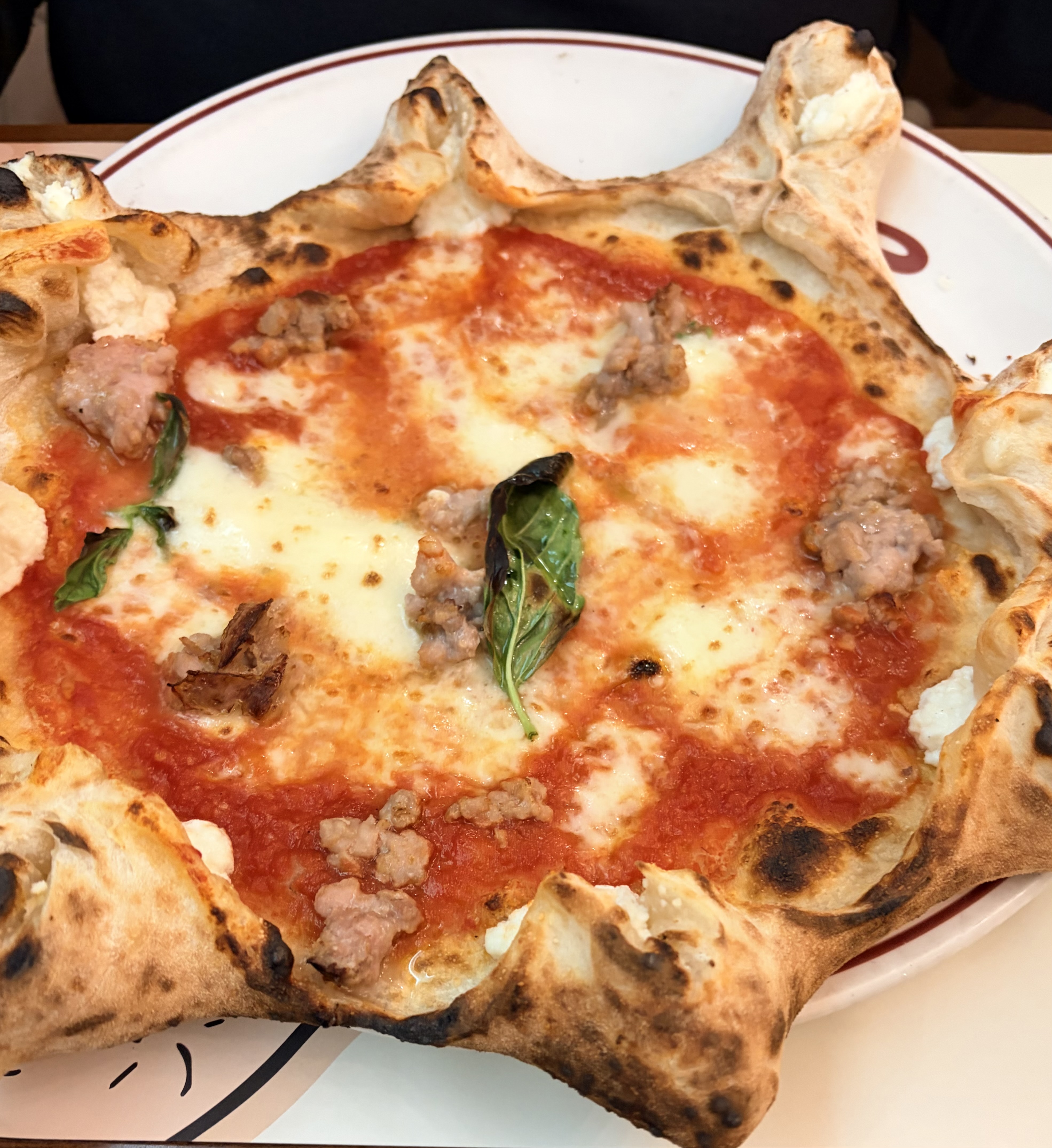
Our lunch pizza was the standardNeed basil?Long standing fast food standEvening pizzas were star pies…the points are filled with ricotta
This morning we left, some anxiety about flights and a new airport and security on our minds.
We booked Easyjet. What a lovely airline! And the Naples airport is modern, all in one terminal, organized and plenty of good coffee alternatives. We left on time, there was ample luggage space on board. Officially my favorite airport in the world.
After four hours at the archeological museum we felt a bit over-prepared for our visit to Pompeii. Assuming we’d be well acclimated to Italy, over any jet lag, and sleeping well we had booked a 9am start for a 3 hour tour with a professional archeologist as our guide. This meant getting up quite early, hopping the Metro to Garibaldi Piazza and station, finding the local Circumvesuviana train to Pompeii, and amazingly everything went perfectly. We even made a friend on the train, an American now living in Portugal, in Naples for a conference and winding up her stay with a trip to Pompeii. She now helps people relocate to Europe. I have her card in case, well, you know.
The first two hours of the tour were in a group of about 12; the last hour, to the Villa dei Misteri, a relatively recent excavation outside the walls of Pompeii, was just us and a very nice couple, young men from Mexico who were so totally engaged I asked if they were archeology students. No, just fanatics like us.
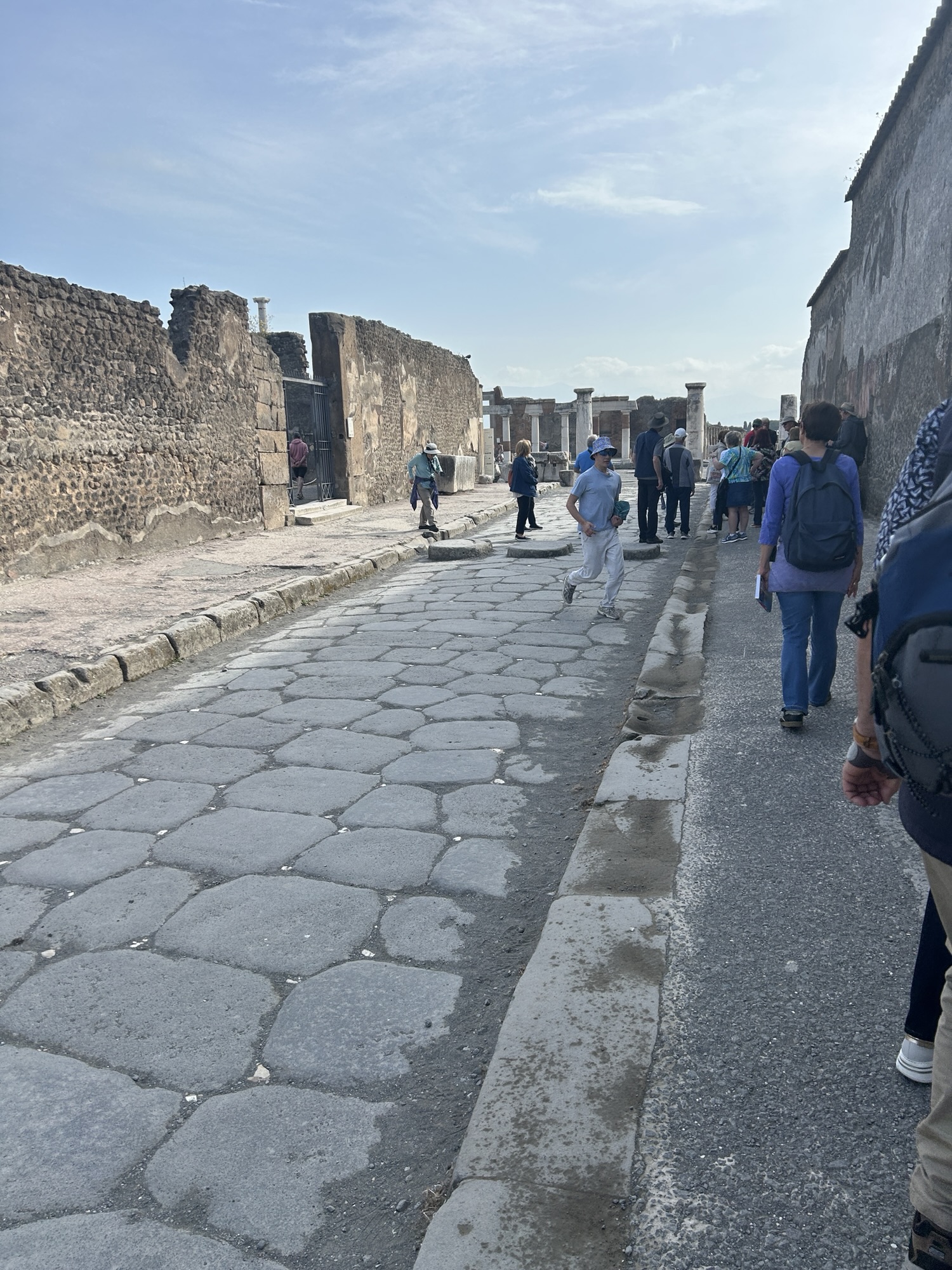
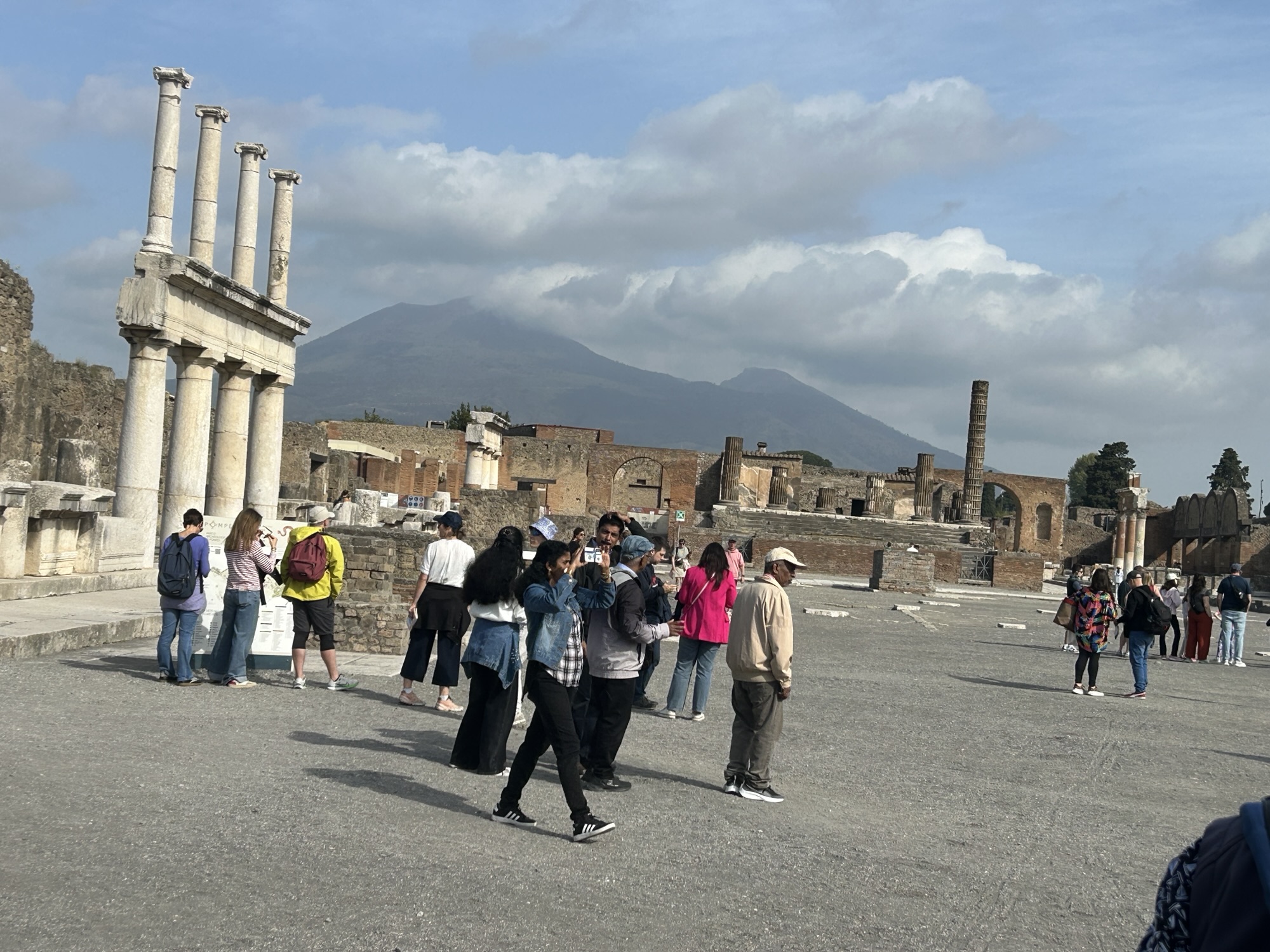
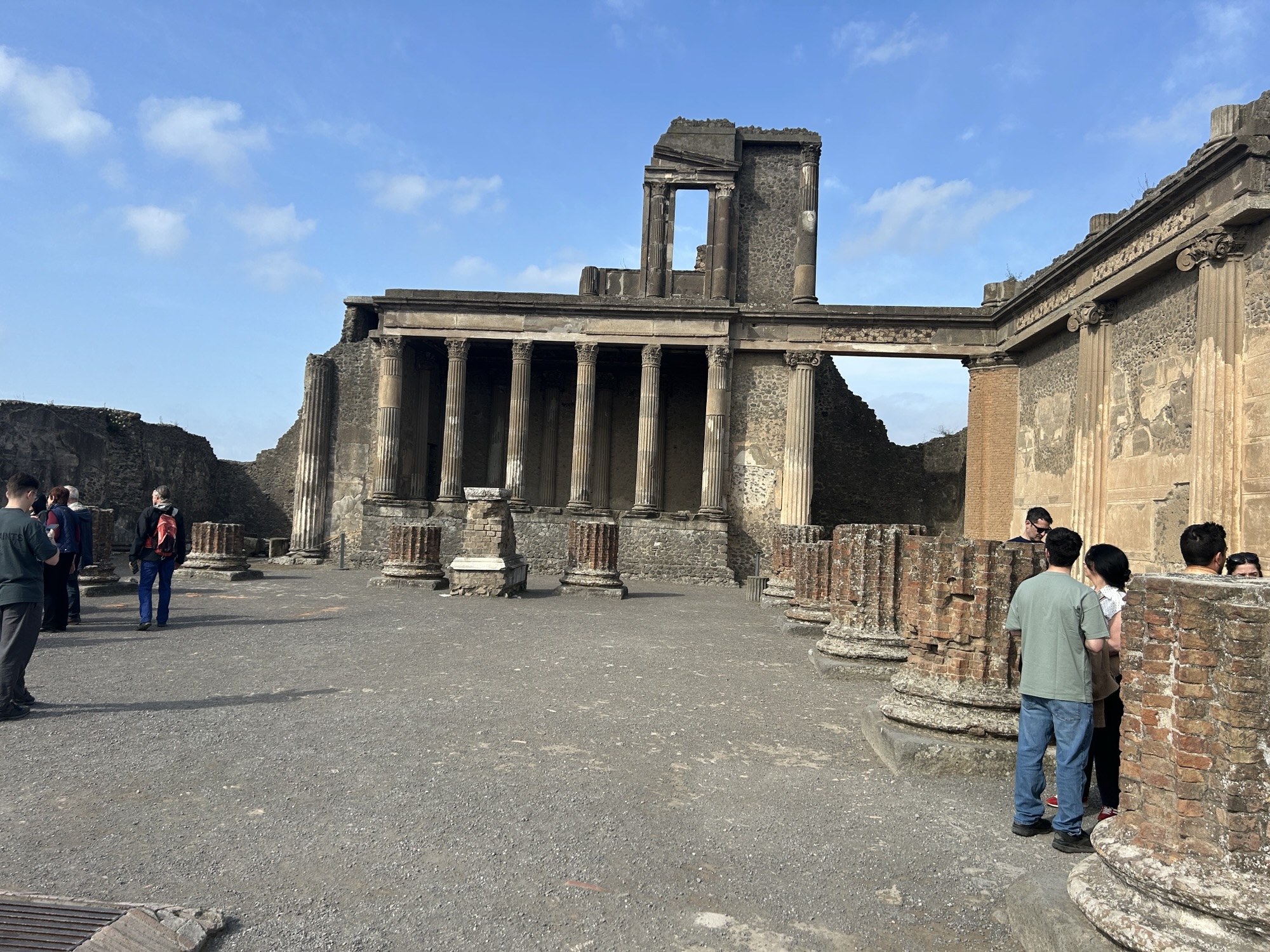
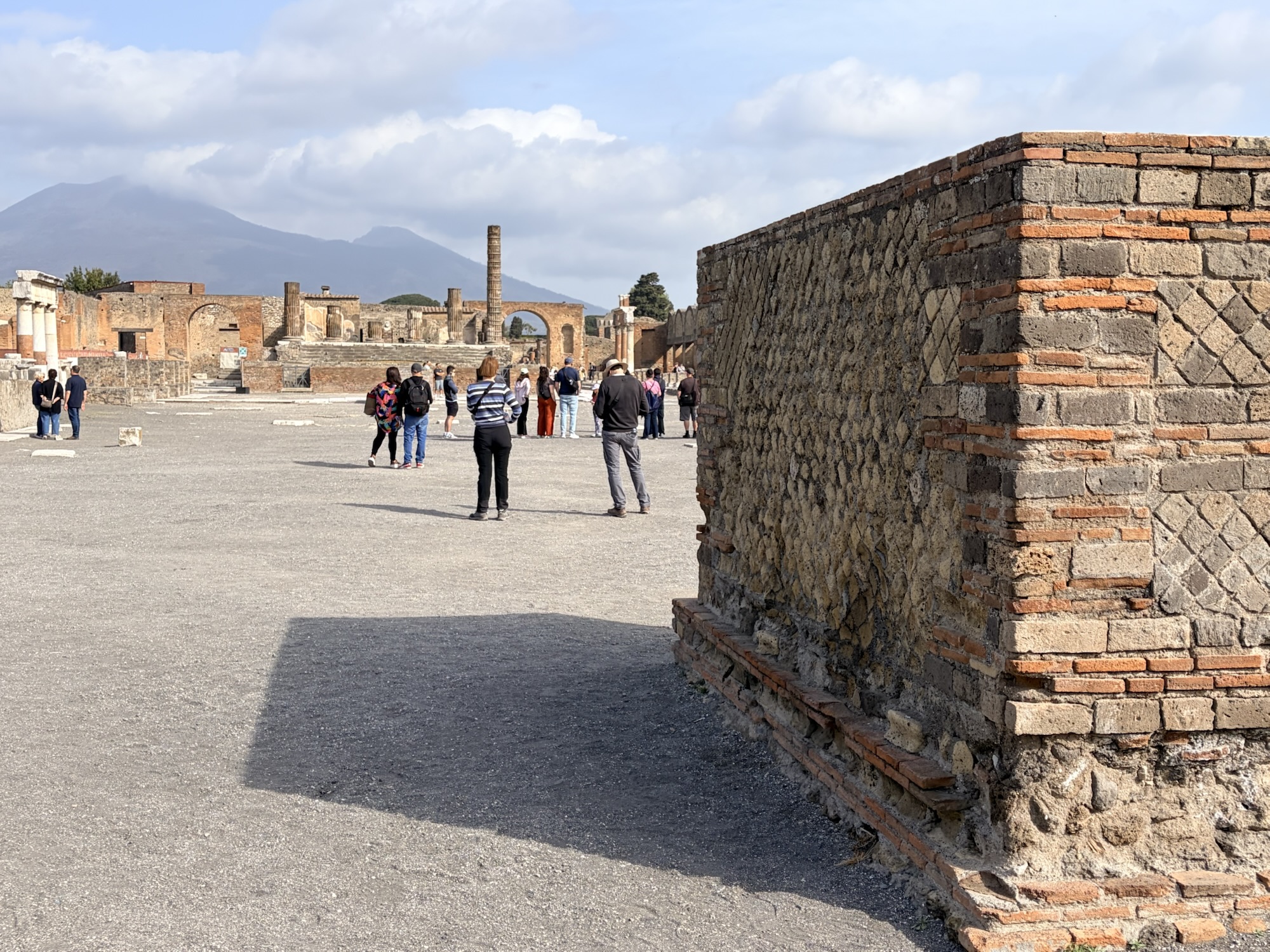
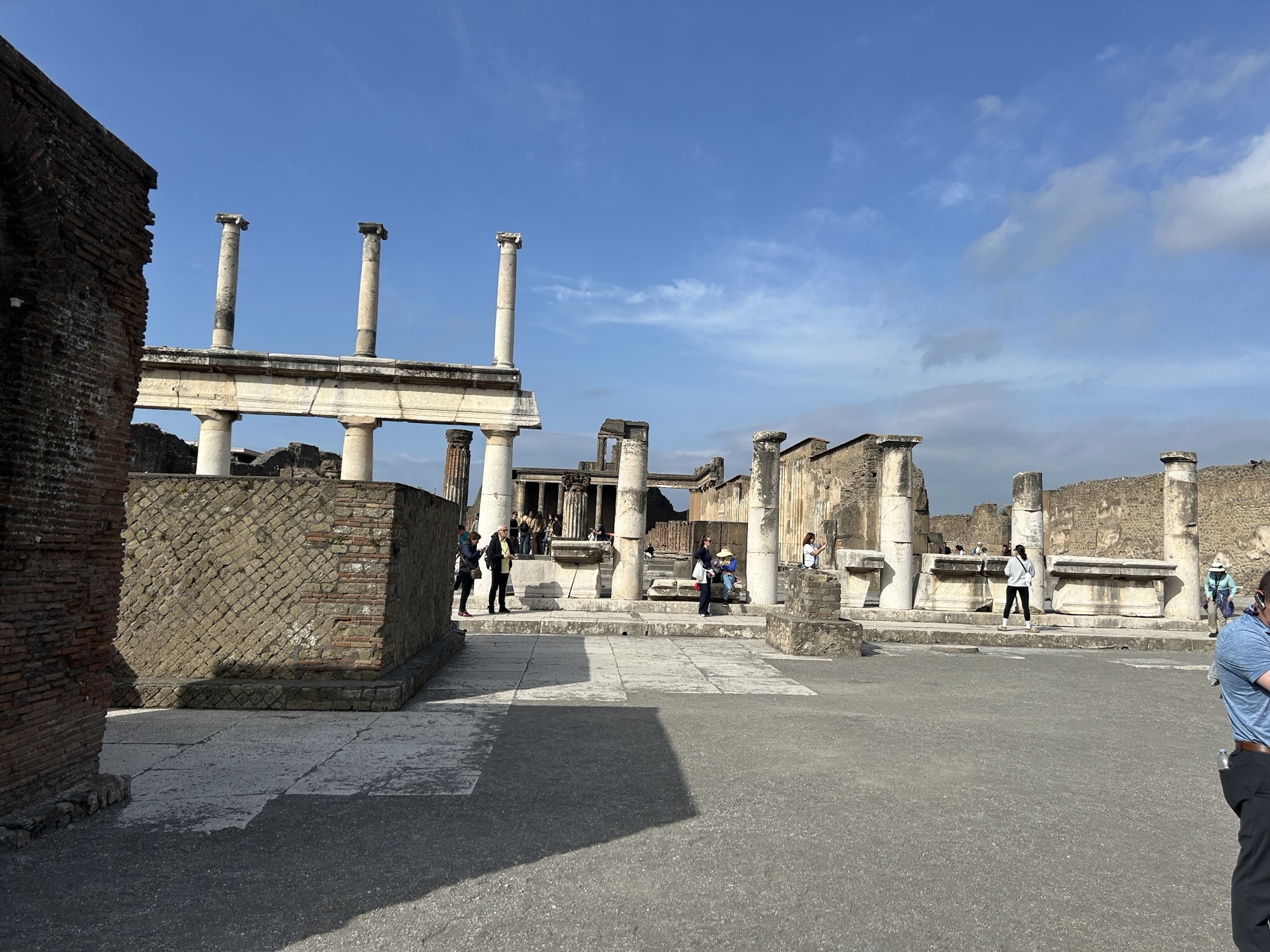
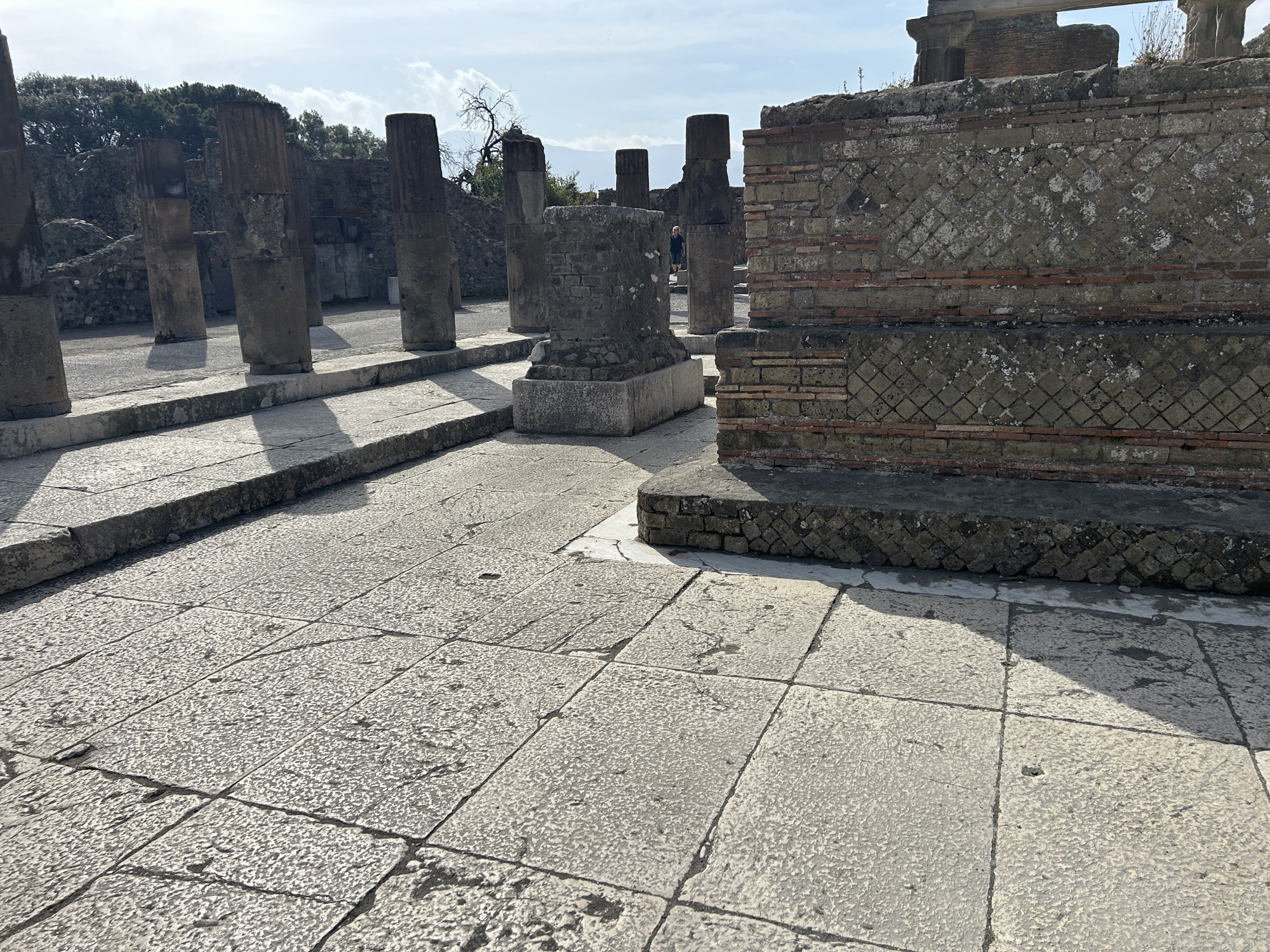
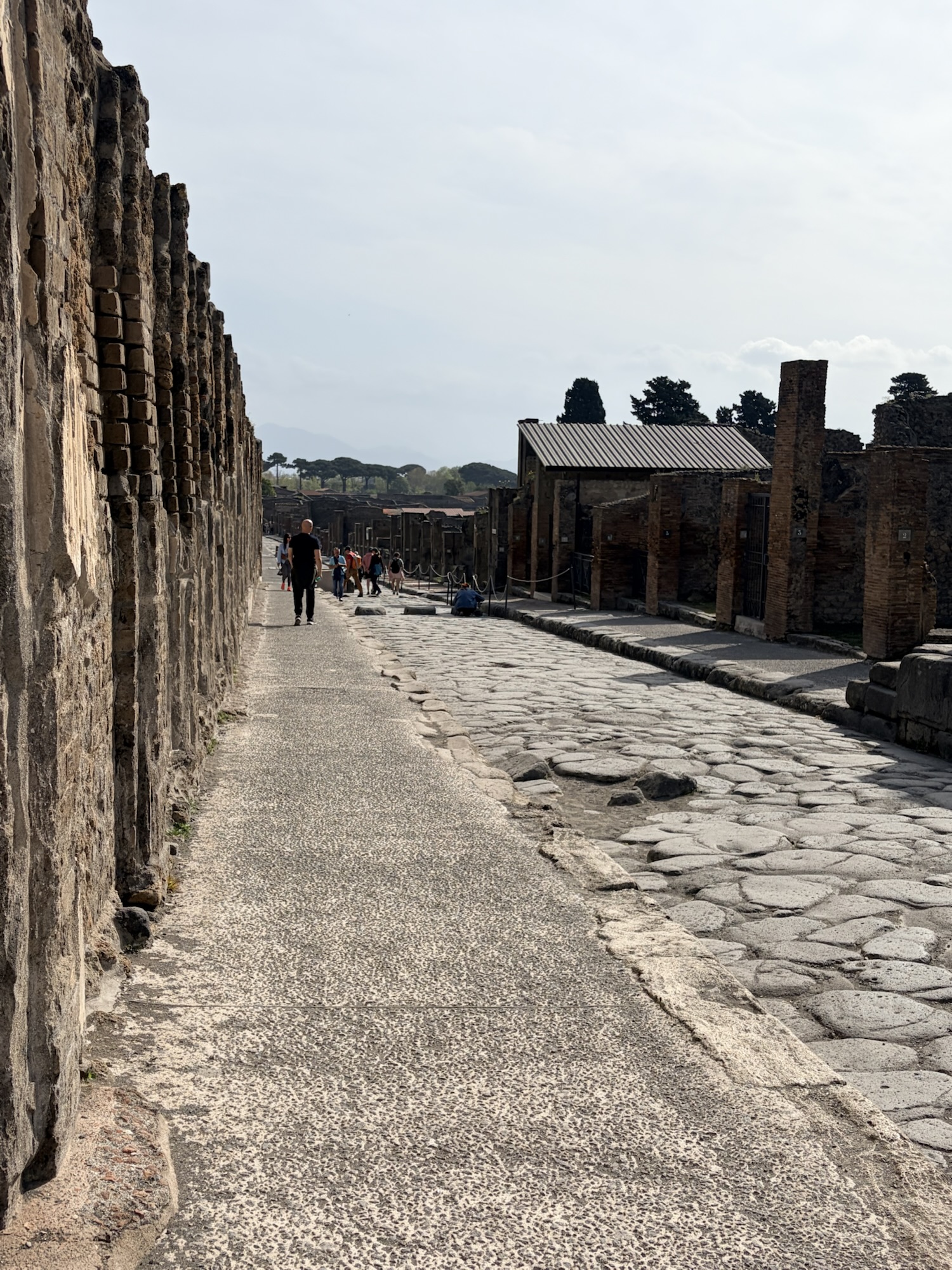
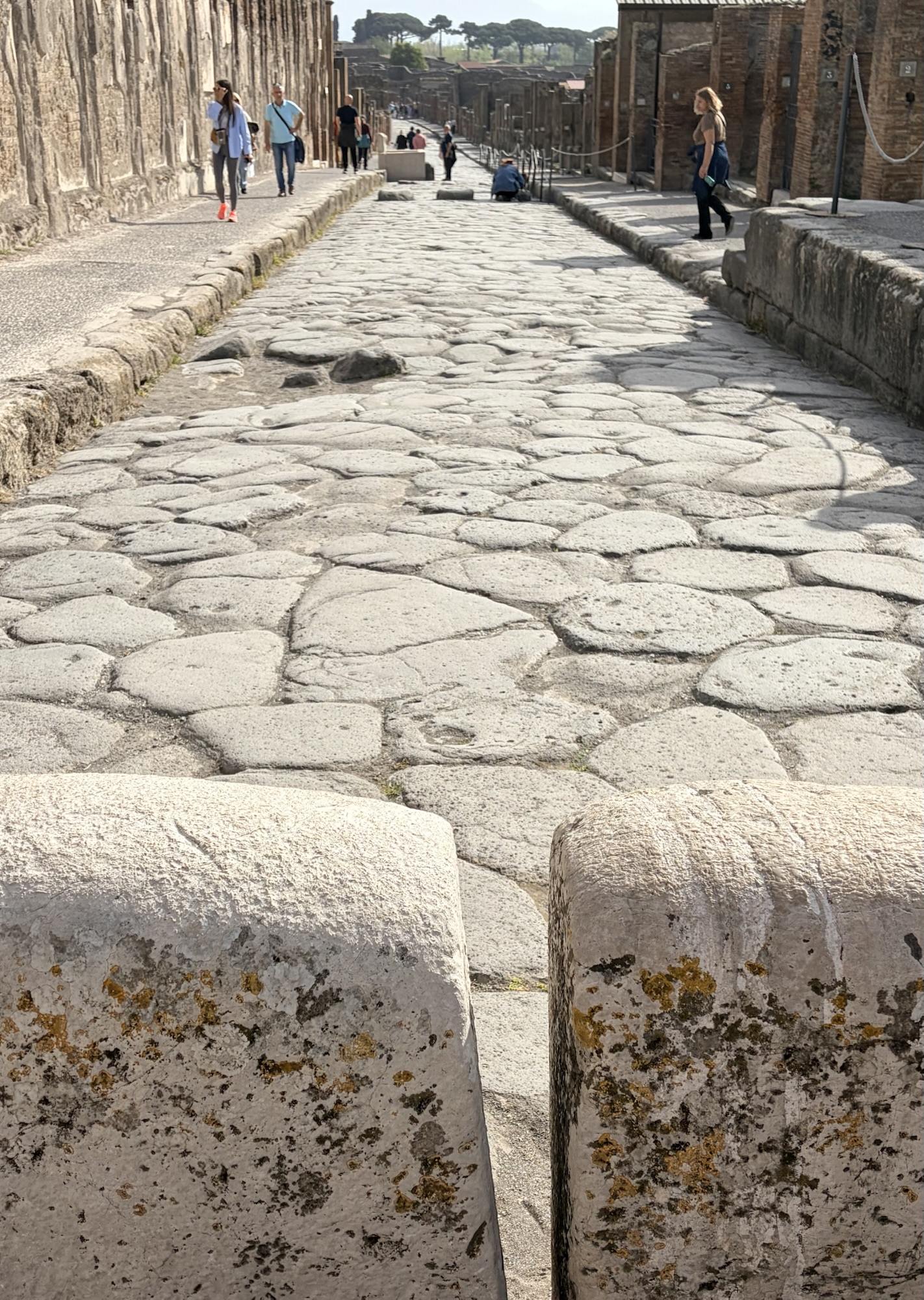
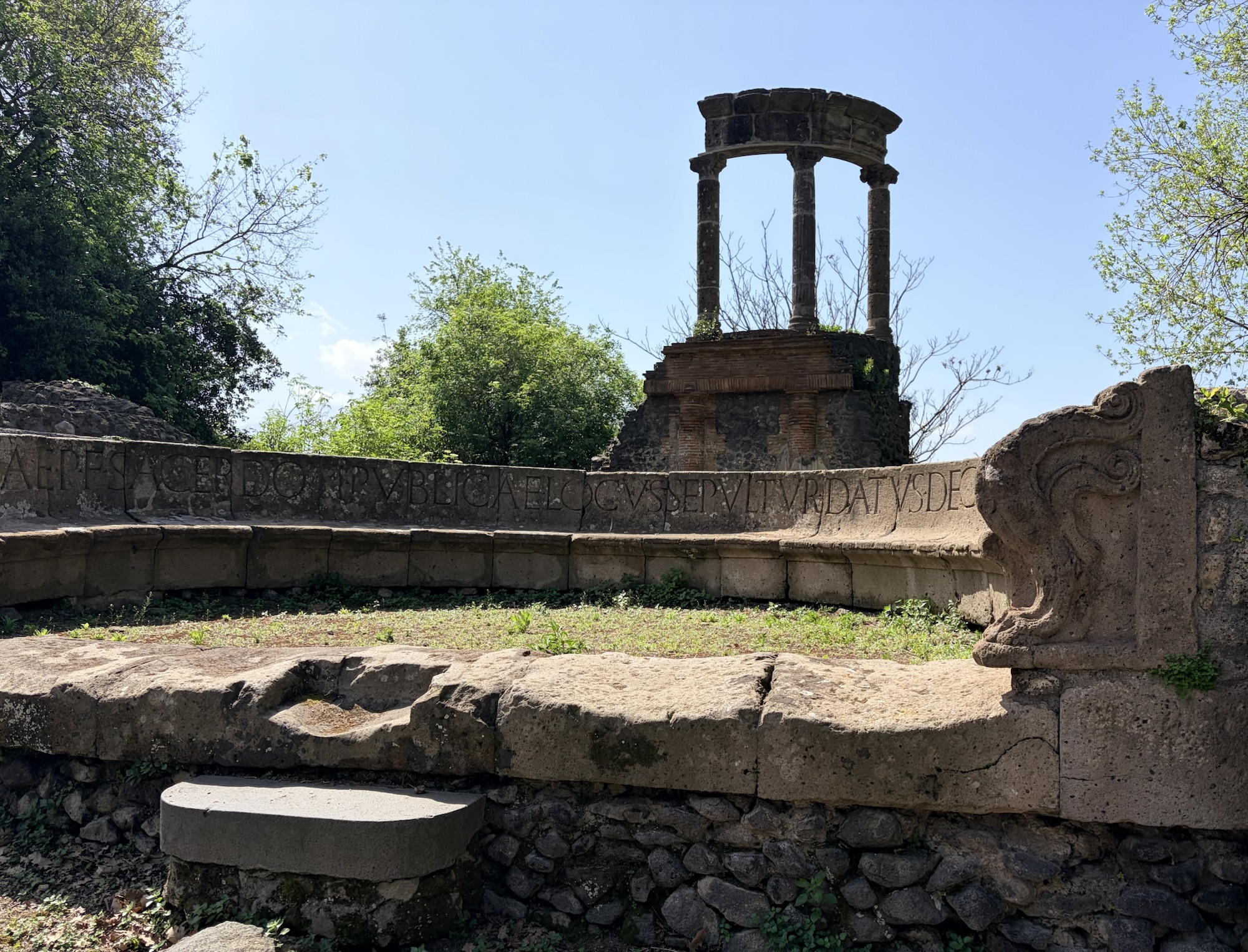
Note the little white stones between the paving rocks, which are dark gray. They are pieces of marble which reflected moonlight to help visitors find their wayThe large forum near the main gate; Vesuvius in the background (“Don’t worry, she is sleeping.”)Near the forum, another public space
We have seen a few documentaries about Pompeii and Roman history in general, so I wondered how much we would still have to learn and enjoy. Answer: A LOT! As I looked over the photos when we returned to Napoli I was again overwhelmed and incredibly happy we went there. It is transformative to walk on the same volcanic rock streets that the Romans walked, gaze at the same frescoes, examine the same mosaics, wander through houses that we now know so much about thanks to the archeologists…Just a wow experience in every way.
The excavation of Pompeii began in the 1740’s on the order of the regional king but excavation by an archeologist wasn’t begun until 1910; our guide rued what had been haphazard and destructive up to then. Our guide showed us where she had most recently been working—the cemetery outside the city walls. The specific spot she showed us was unremarkable, just grass and wildflowers, a reminder that every bit of this part of Italy especially still hides multiple eras underground. Unimaginable.
Many layers of construction—stones covered by bricksA temple with two stories of columns still standingThe criss-cross on the wall means it was built by Romans, not prior occupants
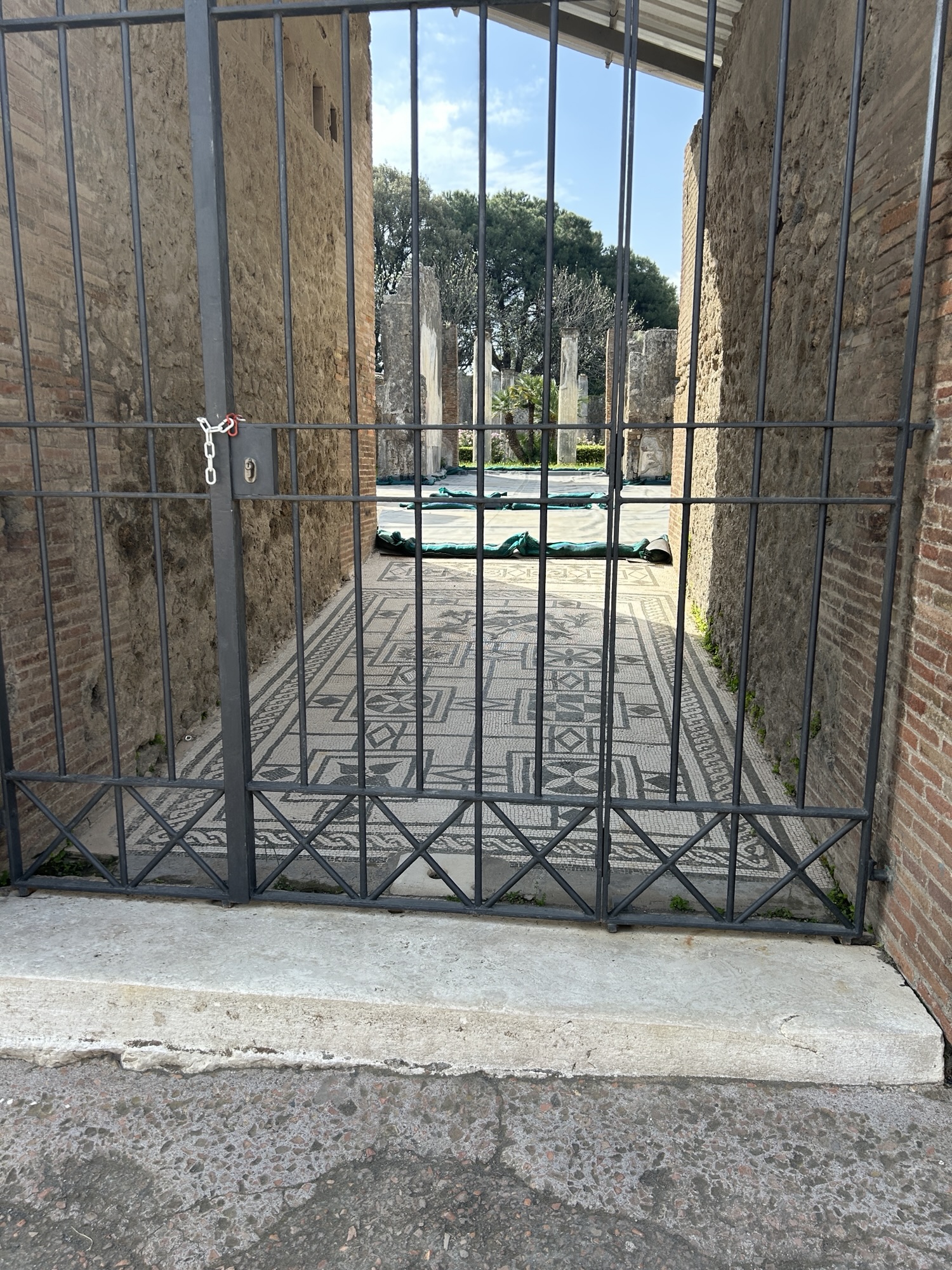
What was most remarkable to me is how much archeologists know about the life in Pompeii. An example is the identification of political life and even which houses politicians/officials lived in. If there’s a bench outside next to the entrance, it was there for clients of the official to sit waiting for an appointment. The purchase of votes was legal, so officials and aspiring officials provided favors or services in return for the client’s support. A particular house we were able to walk through (usually closed to the public but open occasionally to protect the interior frescoes) has what looks like a bench in front (a large rectangular stone) but archeologists know it was part of a street repair that had been moved out of the way. Speaking of which, the eruption was in 79AD, following a severe earthquake in 62AD. Repairs from the significant earthquake damage were still underway when Vesuvius erupted. Think of the wrangling over repairs and expenses, then boom.
We even saw a replanted garden in the center atrium of a house that our guide said was exactly the original garden…they analyzed the remains of the roots and were able to identify the shrubs.
Tried to take it all in! It was so lovely and strange and somewhat sadThe barriers at the end of the street (like we use now) to keep carts and animals out of the forum which was a marketplace so animals not welcomeEntry to a large house. Every house had the same plan, smaller or bigger depending on the wealth of the family
It is believed the city had 20,000 people, but remains of only 9,000 are evident because the wealthy had a little time to get out. The terrifying last day/hours are difficult to imagine; death was by suffocation which took about 15 minutes. Some of the wealthy likely fled to Herculaneum, which was also destroyed but a day or two later. Also, the “bodies” you’ve probably seen are plaster casts; when a cavity was found that was suspected to have been left by human remains, plaster was poured in to reveal the outlines of the remains.
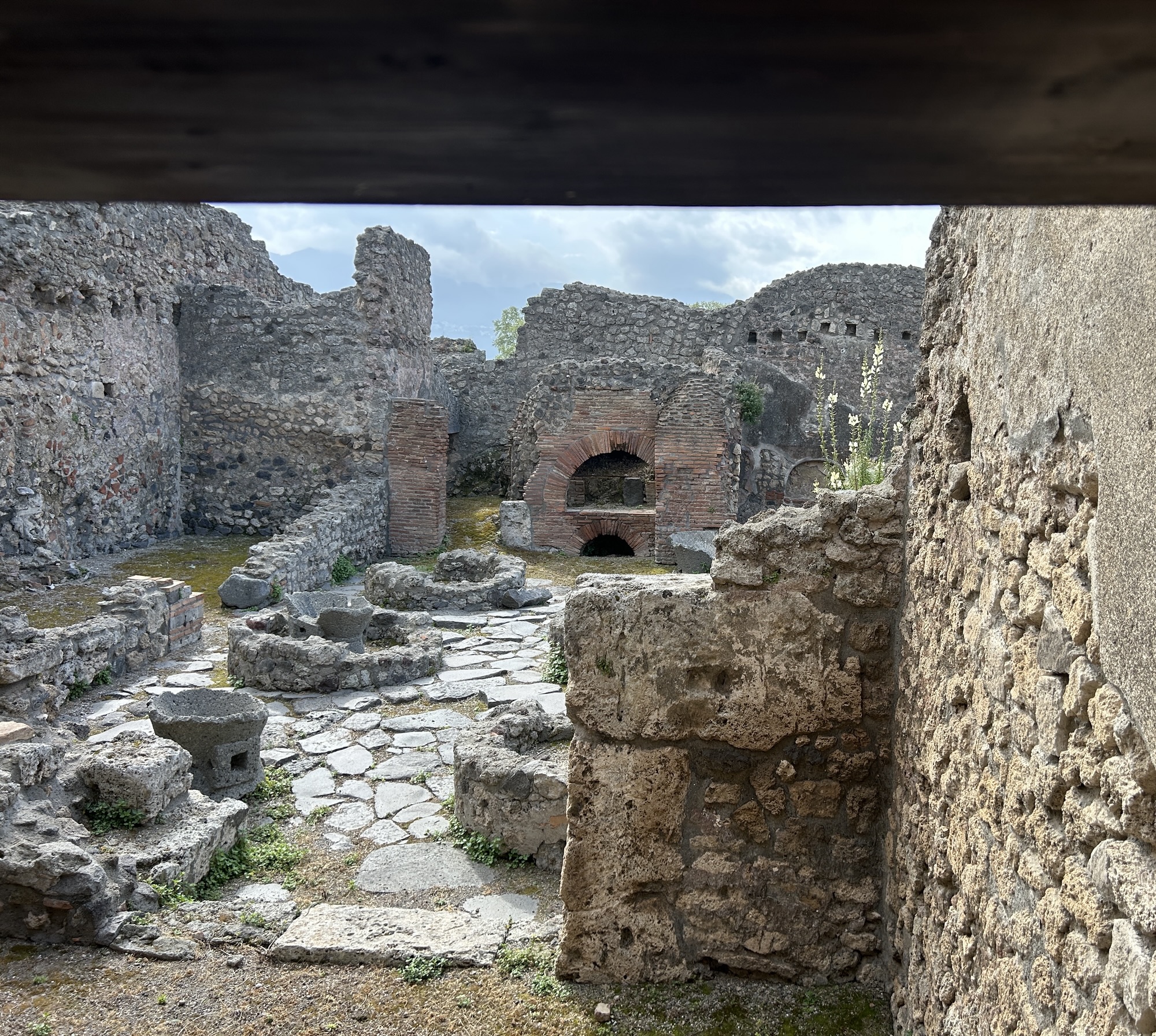
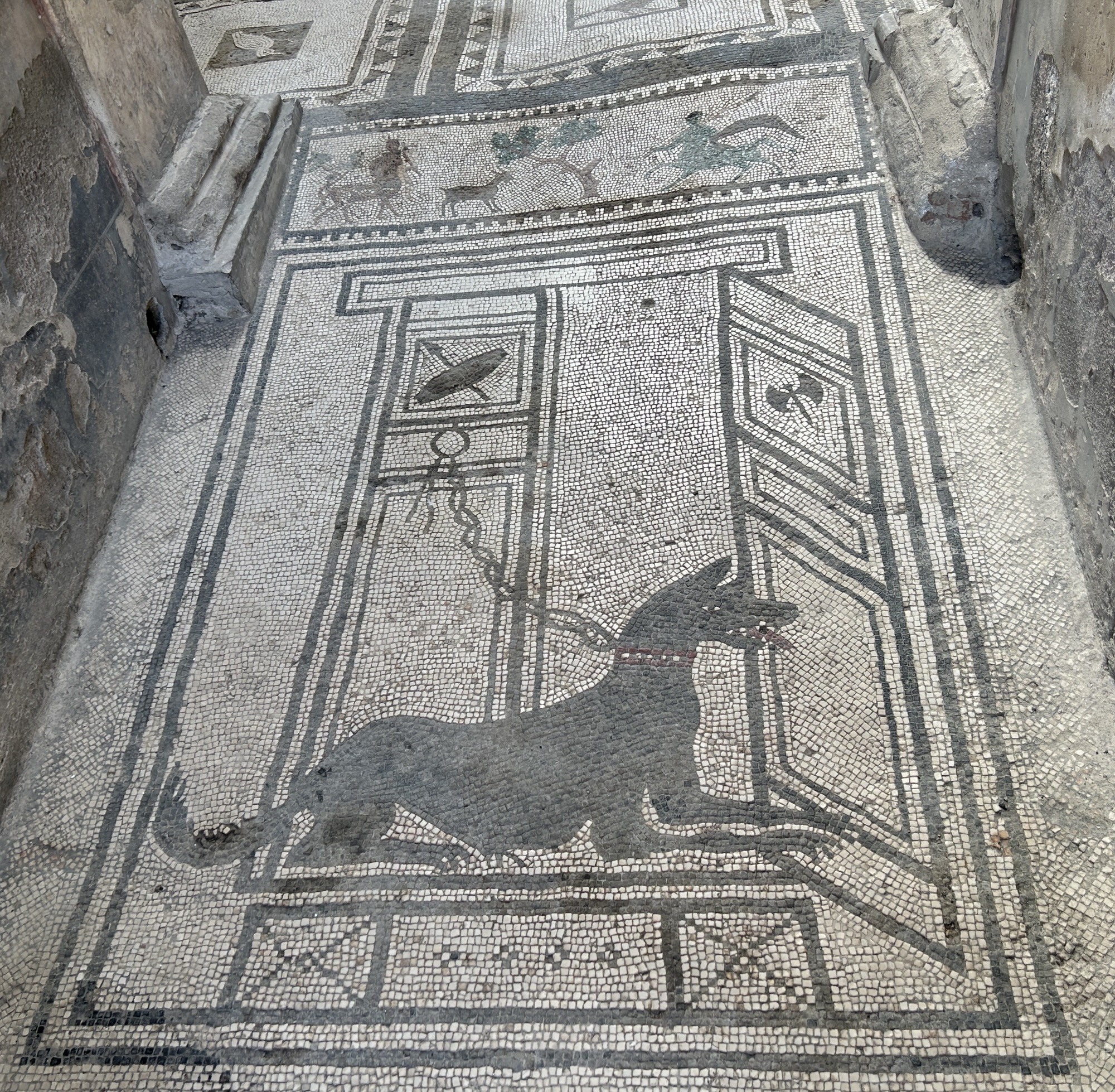
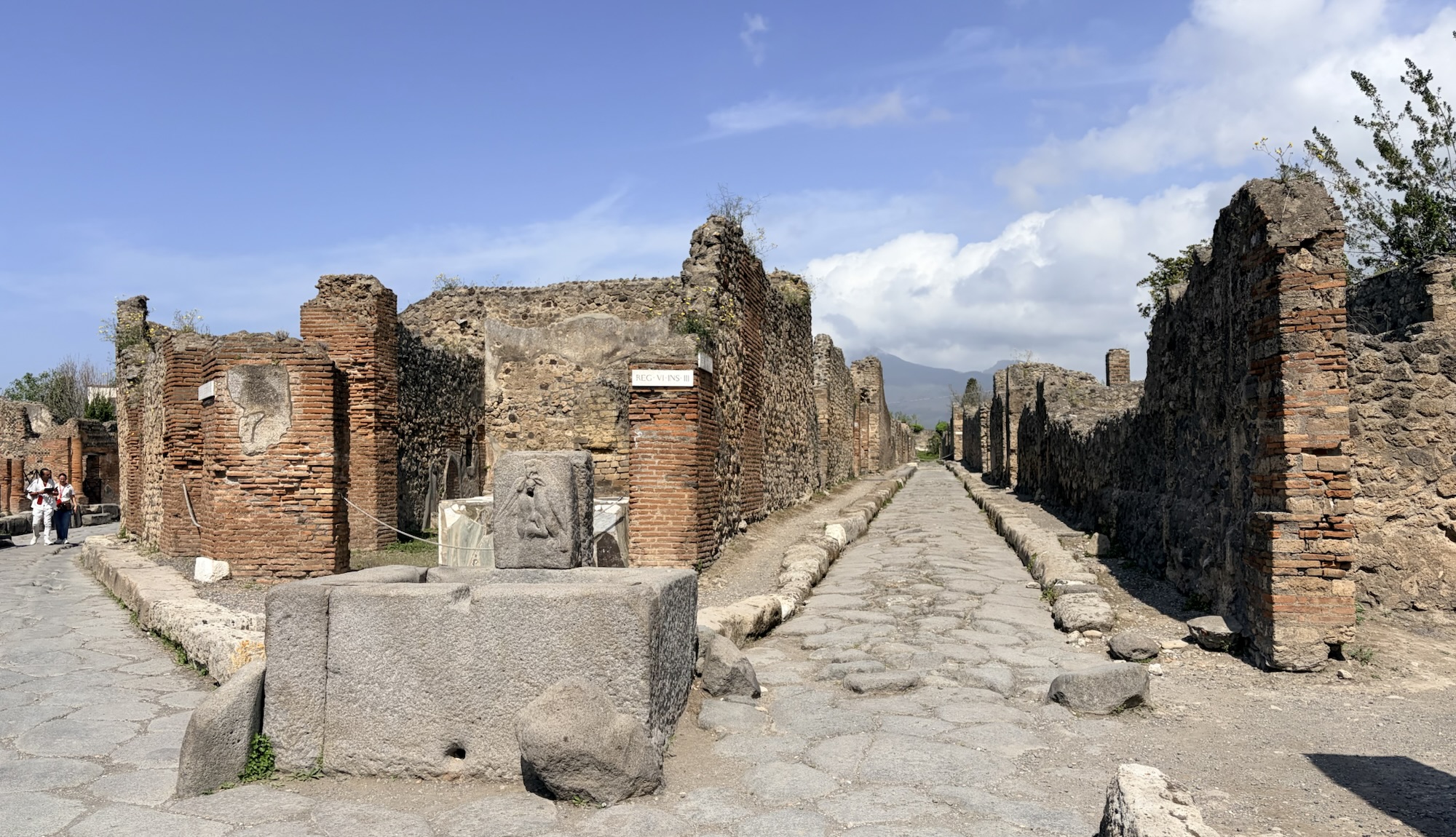
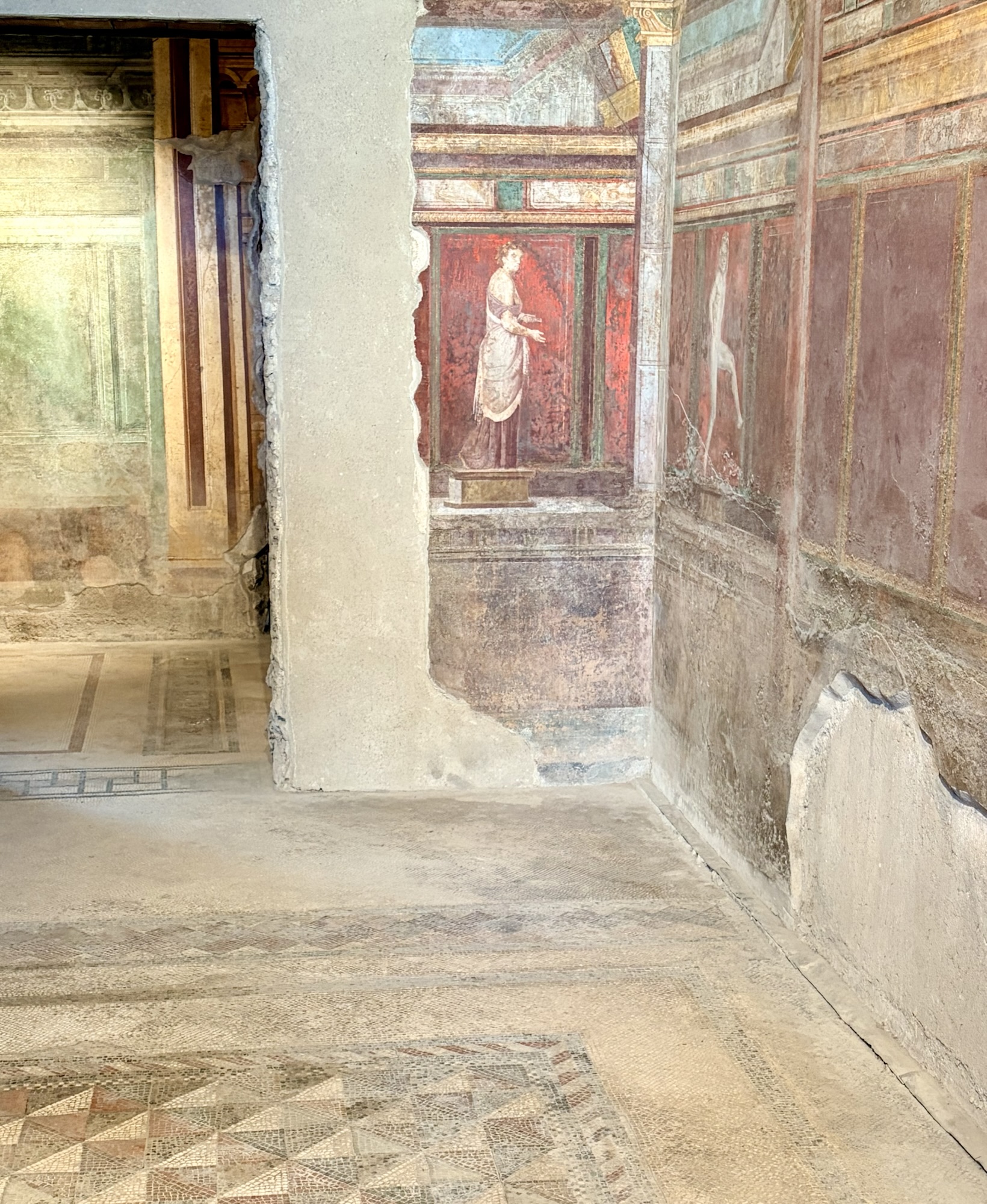
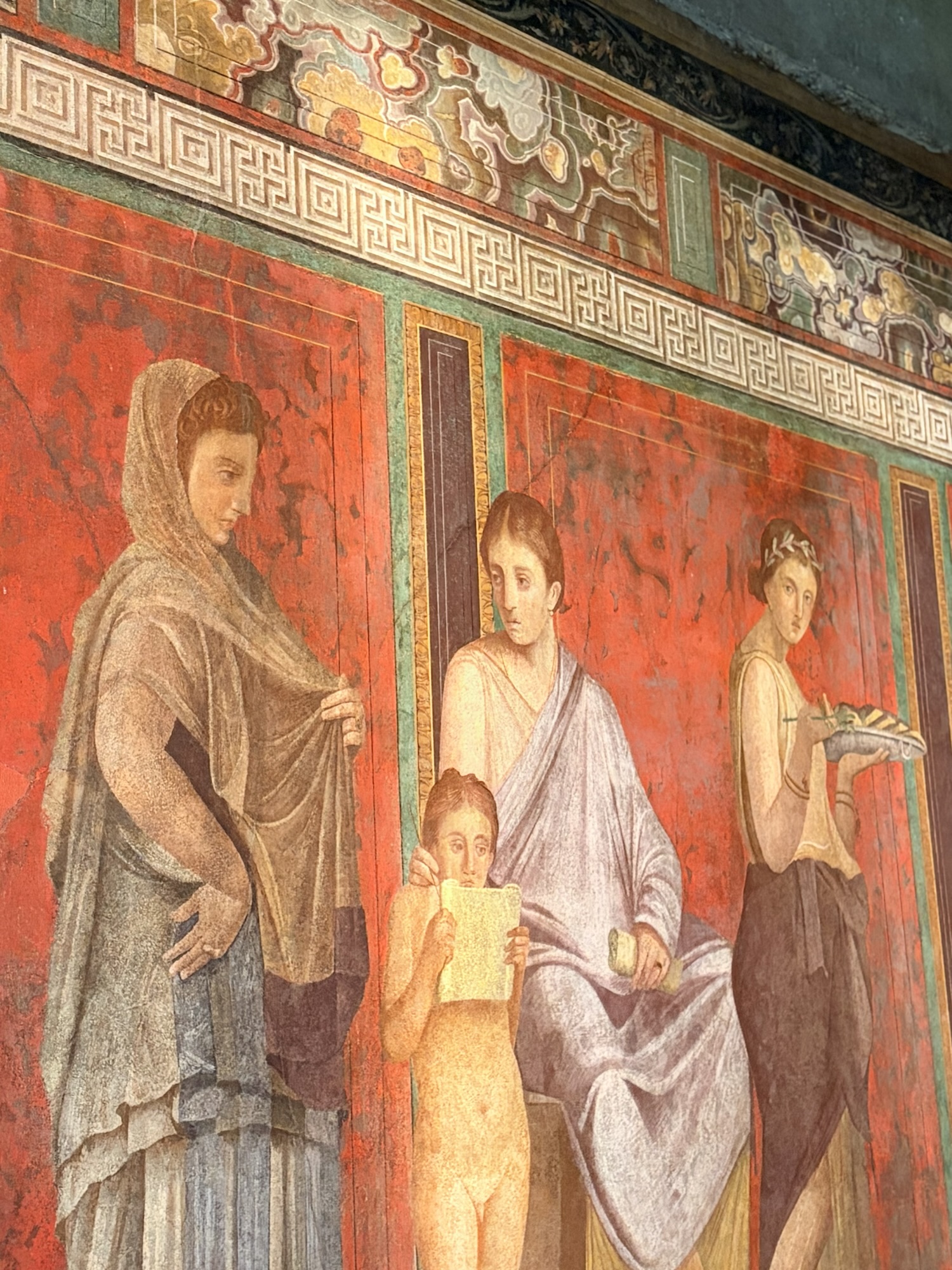
A bakery—oven in the rear, flour grinding stones along the leftBeware of dog mosaic at the entrance to a large homeJust a beautiful street.A huge cemetery plot for a celebrated woman paid for by the city.Frescoes still extant in the Villa dei MisteriA small section of a fresco that surrounds the room illustrating the woman of the house as a bride; vivid and gorgeous
Everything we saw was the result of excavation and some shoring up of dangerous walls except the large amphitheater. It has been rebuilt because events are held there, such as Madonna’s recent birthday concert. Excavation continues, probably forever as our guide said, “we archeologists are very slow.” Thankful for that.
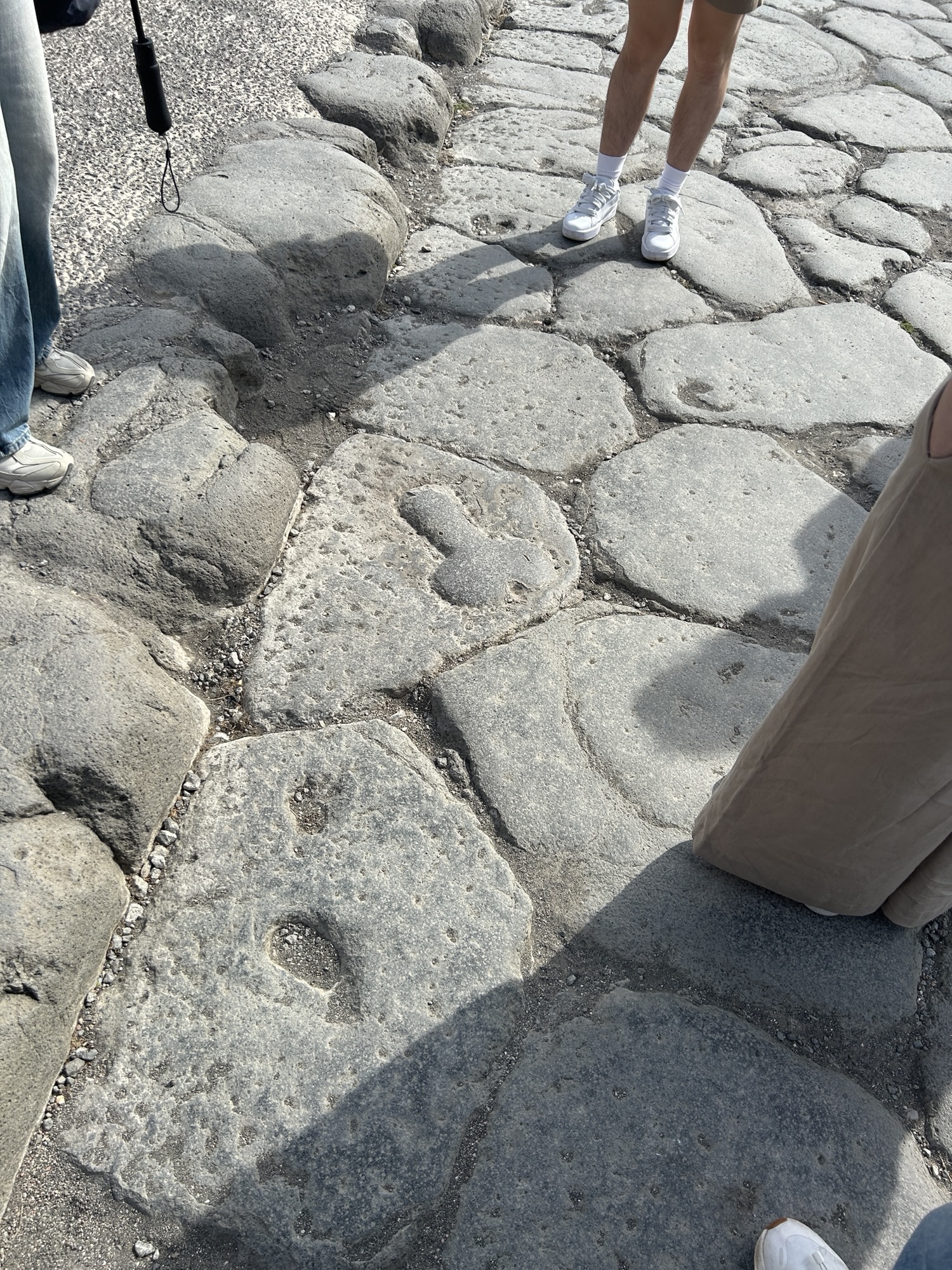
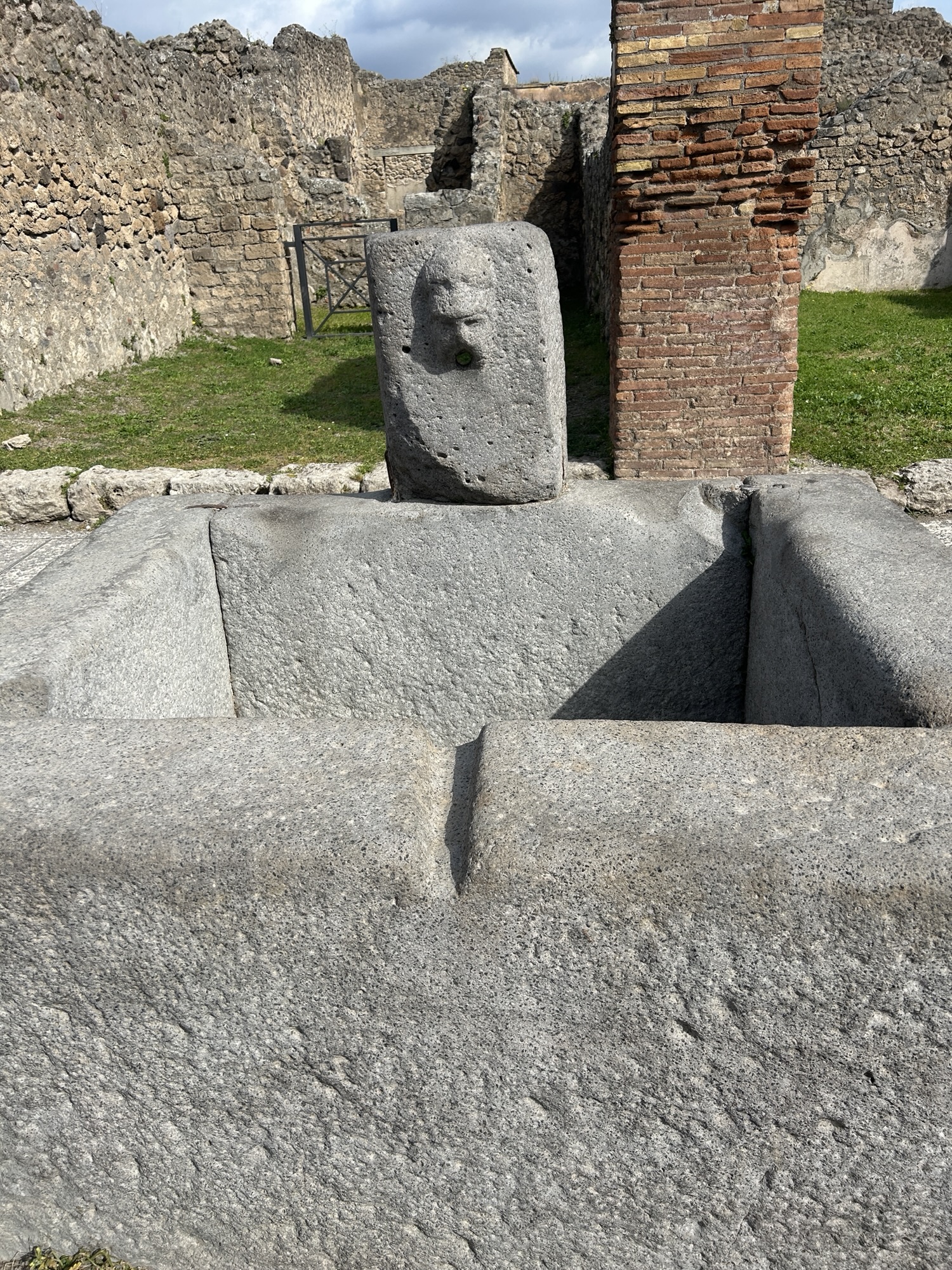
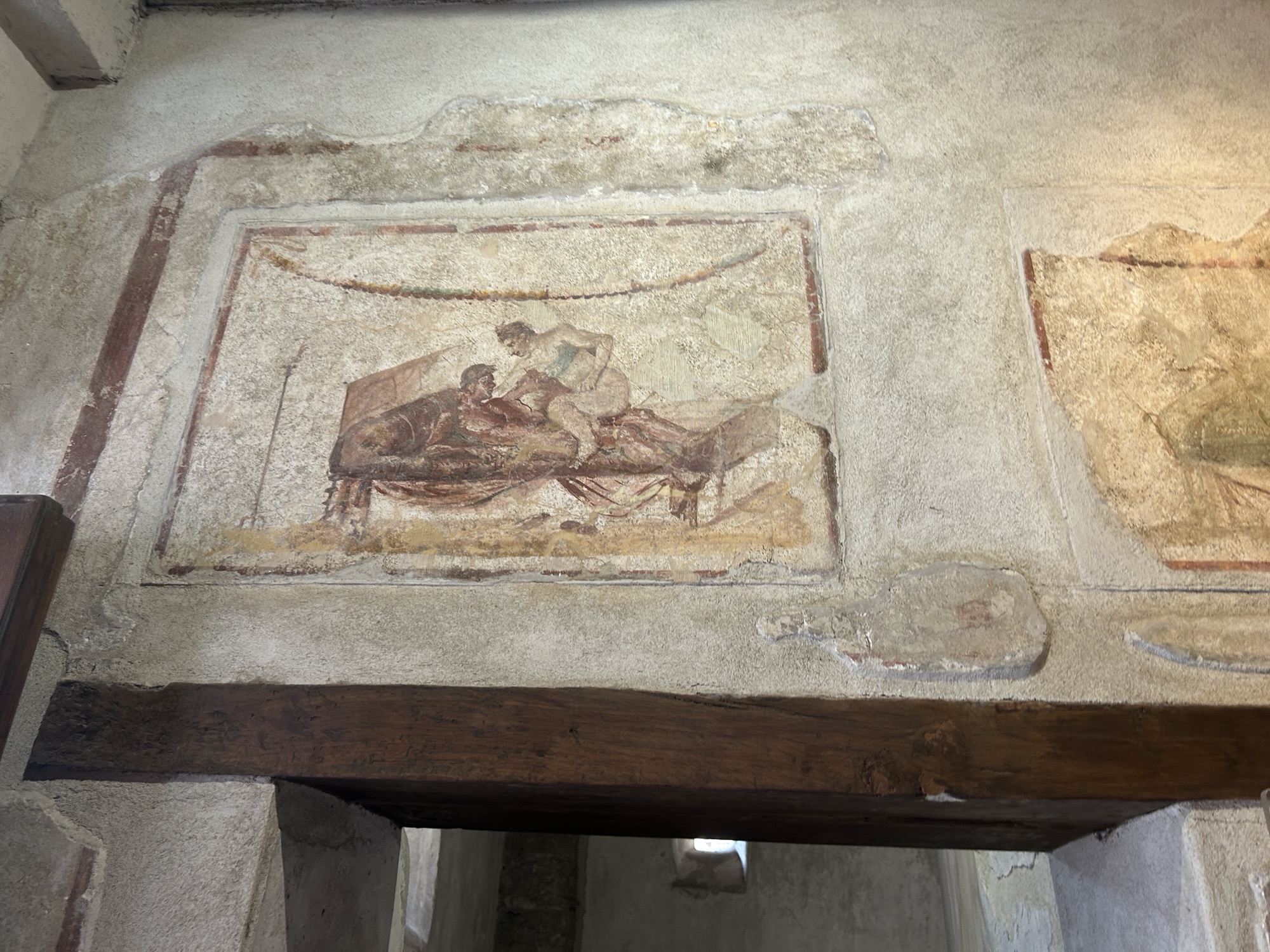
The symbol on the stone in the center points to a brothel. Many visitors (sailors and traders) didn’t speak LatinFountains place around the city—some sponsored by wealthy (noted on the fountain!)Fresco over the doorway of a prostitute’s room advertising what she offers.
After the long and frankly tiring tour, physically and mentally, we walked back into the town of Pompei for a perfect lunch (antipasto della casa) and a walk back to the train station.
The train back to Garibaldi was late and packed, but the windows were open and the air was breezy. Everyone around was friendly, lots of impromptu conversations. Then the train began to slow, many stops skipped, then we stopped. This is a very old train more like an ancient metro than a train—no announcements, no displays of stops upcoming (you had to read the station sign…if possible… to see where you were). We were now stopped 4 stations from Garibaldi. Finally the doors opened. No information was forthcoming. A few people stepped off in search of updates—the train was broken, would take a few hours to fix. No buses, no alternate routes on google; everyone had a phone out looking for solutions. We got off the train and walked up to street level.
In spite of David’s chronic aversion to paying “extra” for a taxi I opened the Freenow app (Lyft in Europe) and watched the repeated “Looking for a driver; high demand” flash by over and over. We began to despair. A woman with whom I had strategized on the train came over to ask what app I was using—she had Bolt and it was not working. Chantelle is from Malta, on vacation before starting a new job; we shared the ride that finally came and Chantelle and I talked and exchanged information all the way back to Garibaldi. She even had a restaurant suggestion for Toulouse!
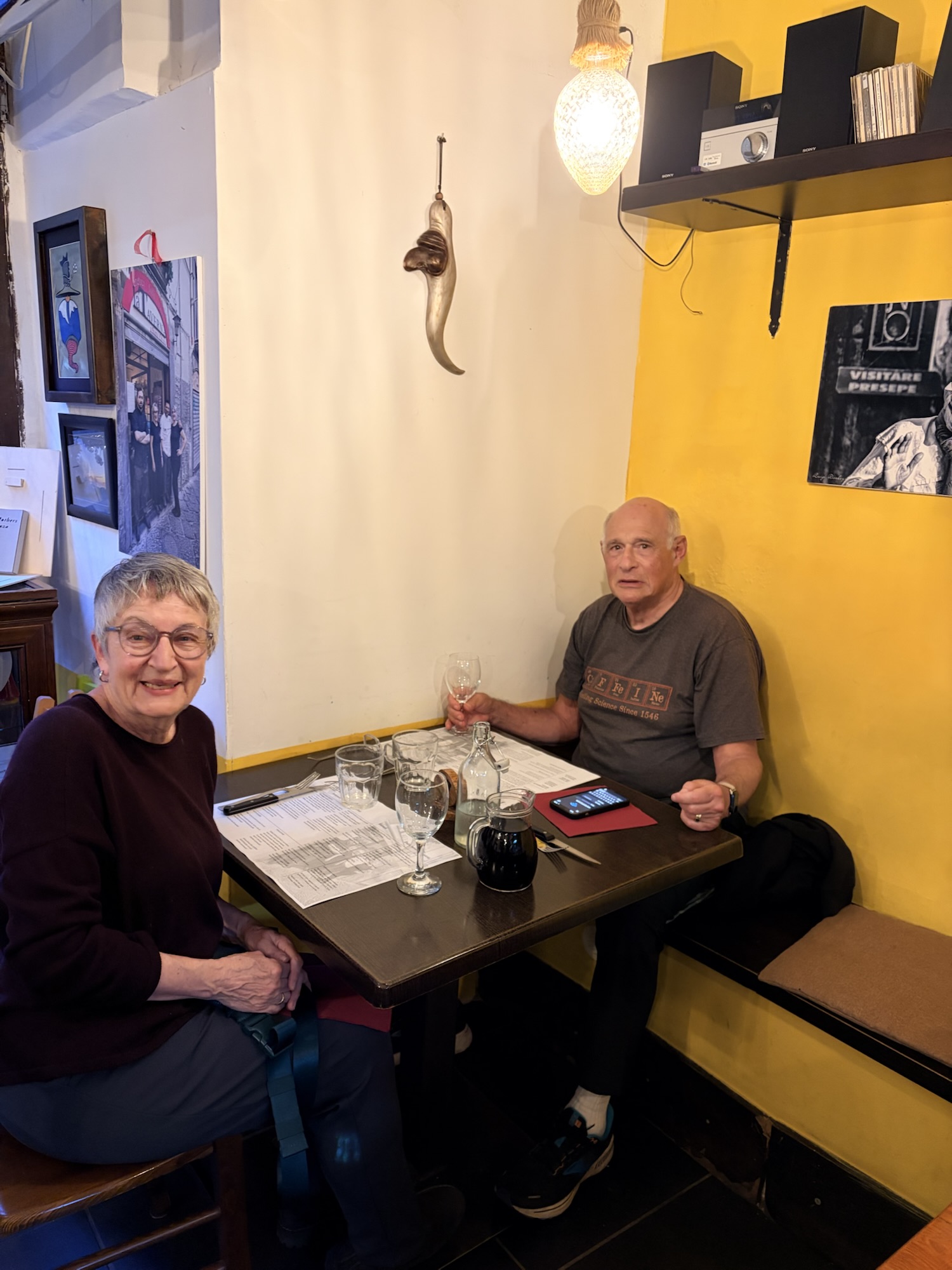
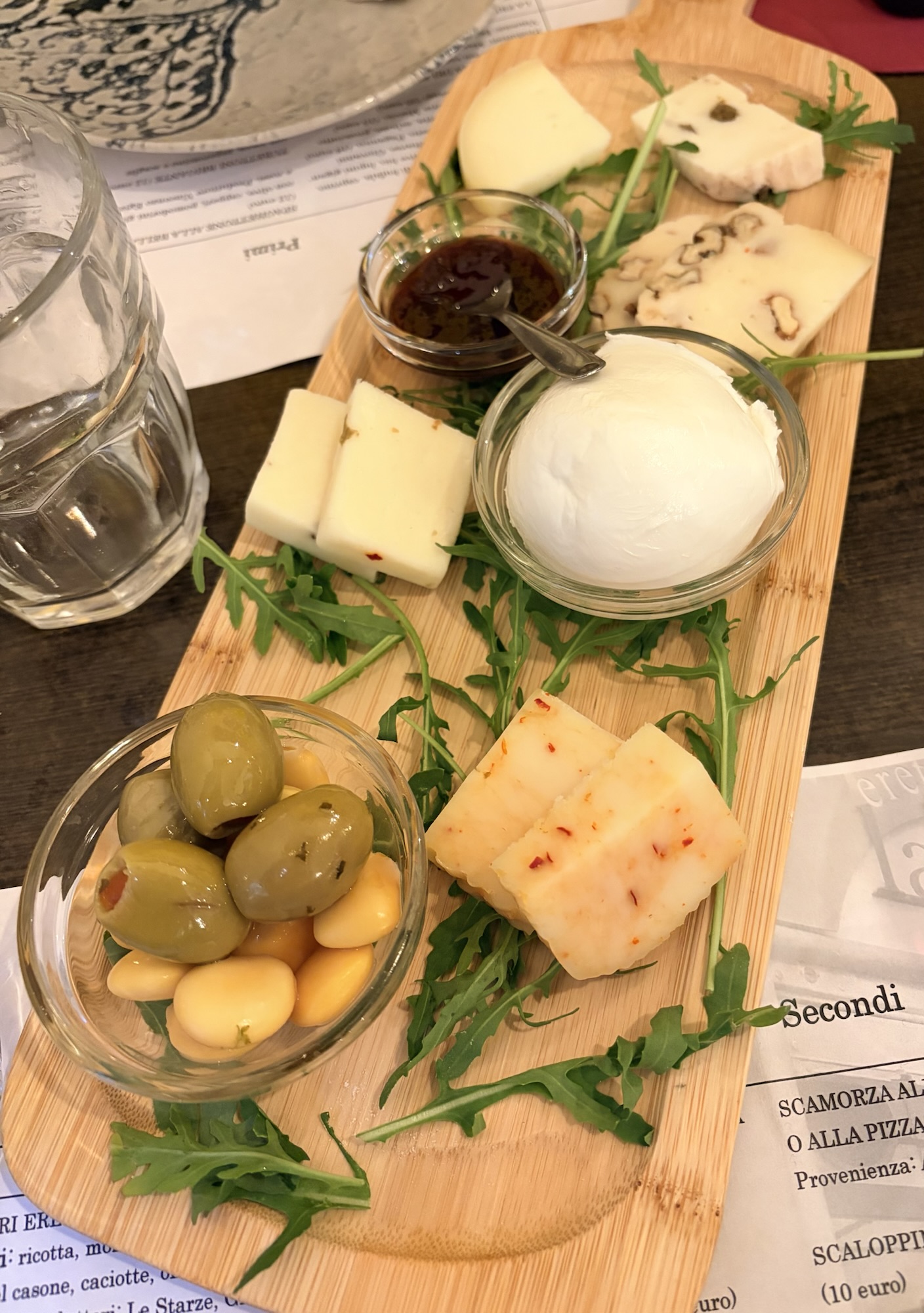
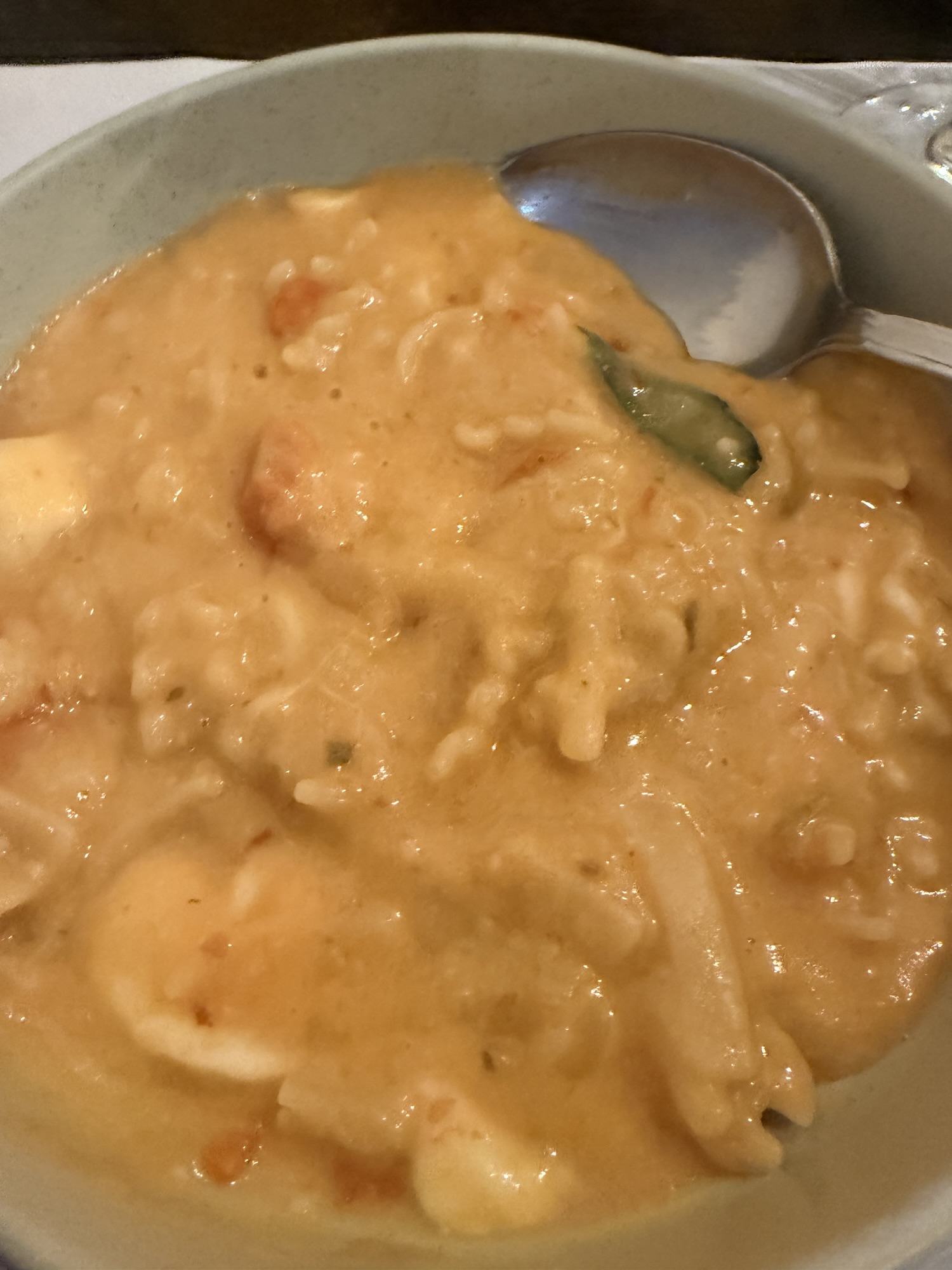
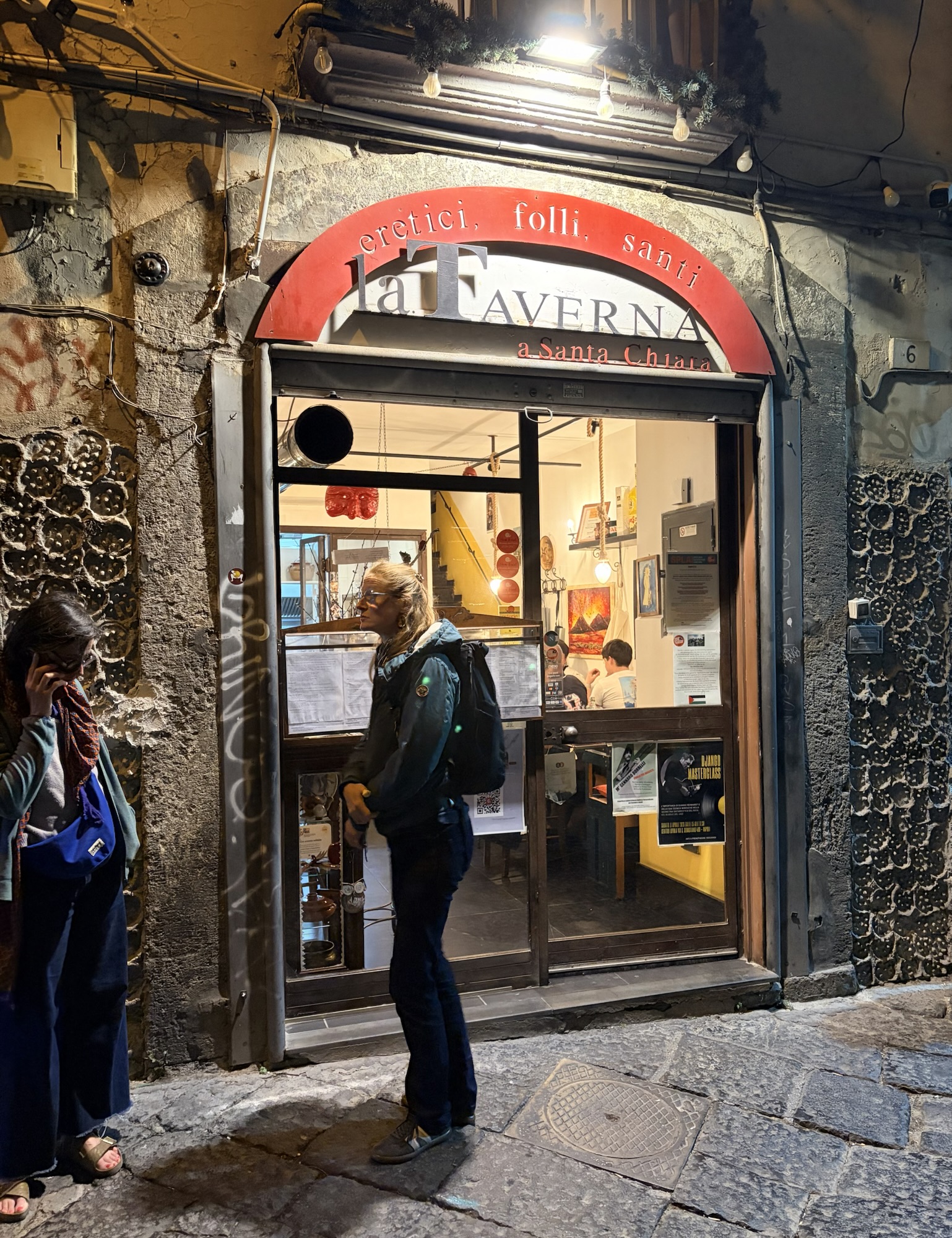
We still had time to lie down for a bit before our dinner reservation at la Taverna a Santa Chiara, which was so good. A tiny place where we watched the owners turn away walk-ins with “Maybe after 9?” We ate cheese and bread and shared an order of the local pasta and potatoes (see picture) which I must make at home it was so yummy. We walked back to Gioia Toledo and collapsed. What a day.
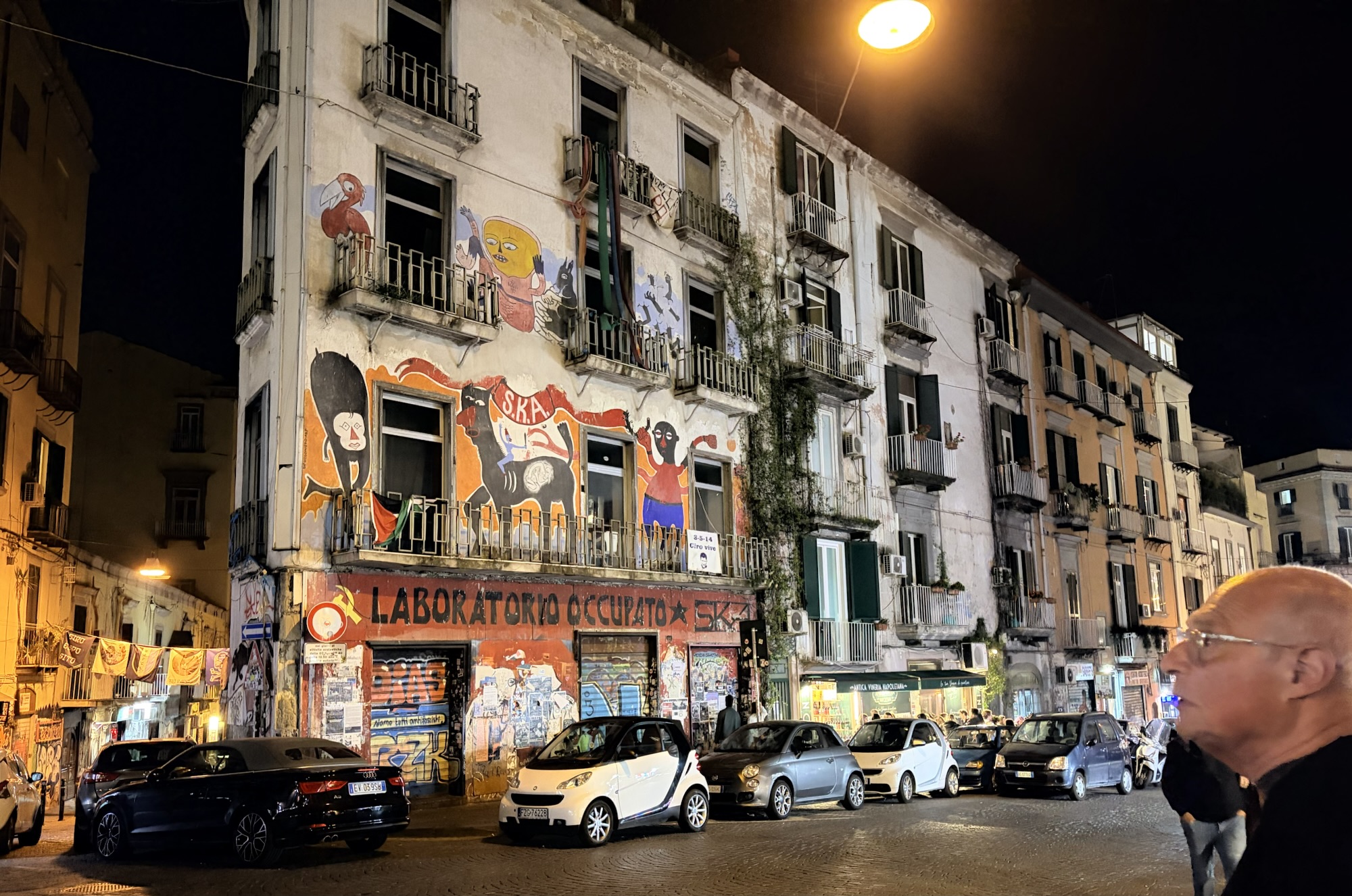
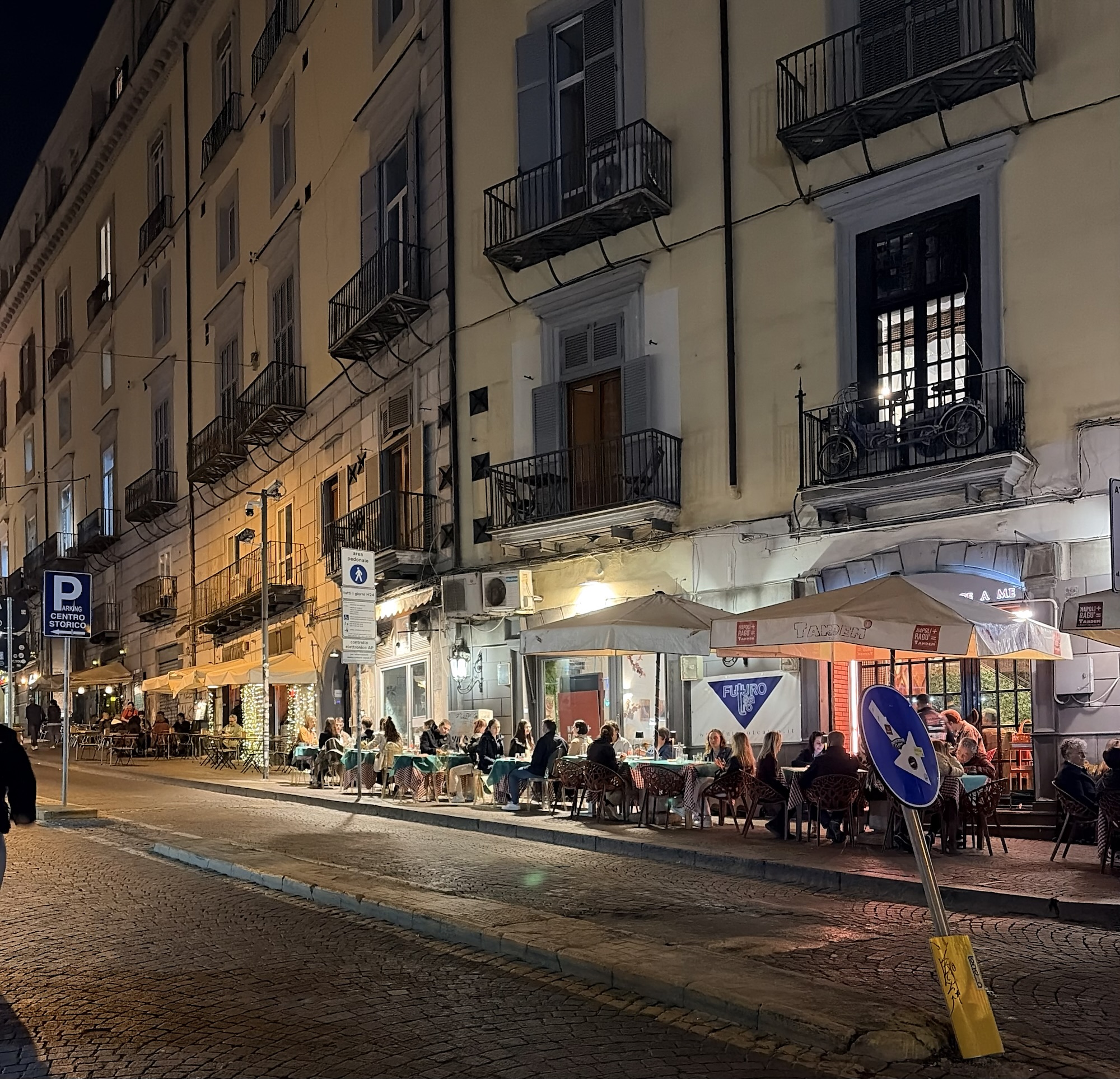
Wish we had had a map of the cheeses; they were all deliciousOh, this pasta was incredibly deliciousEn route back to our roomLots of people out as usual in Italy (and France and Spain…)
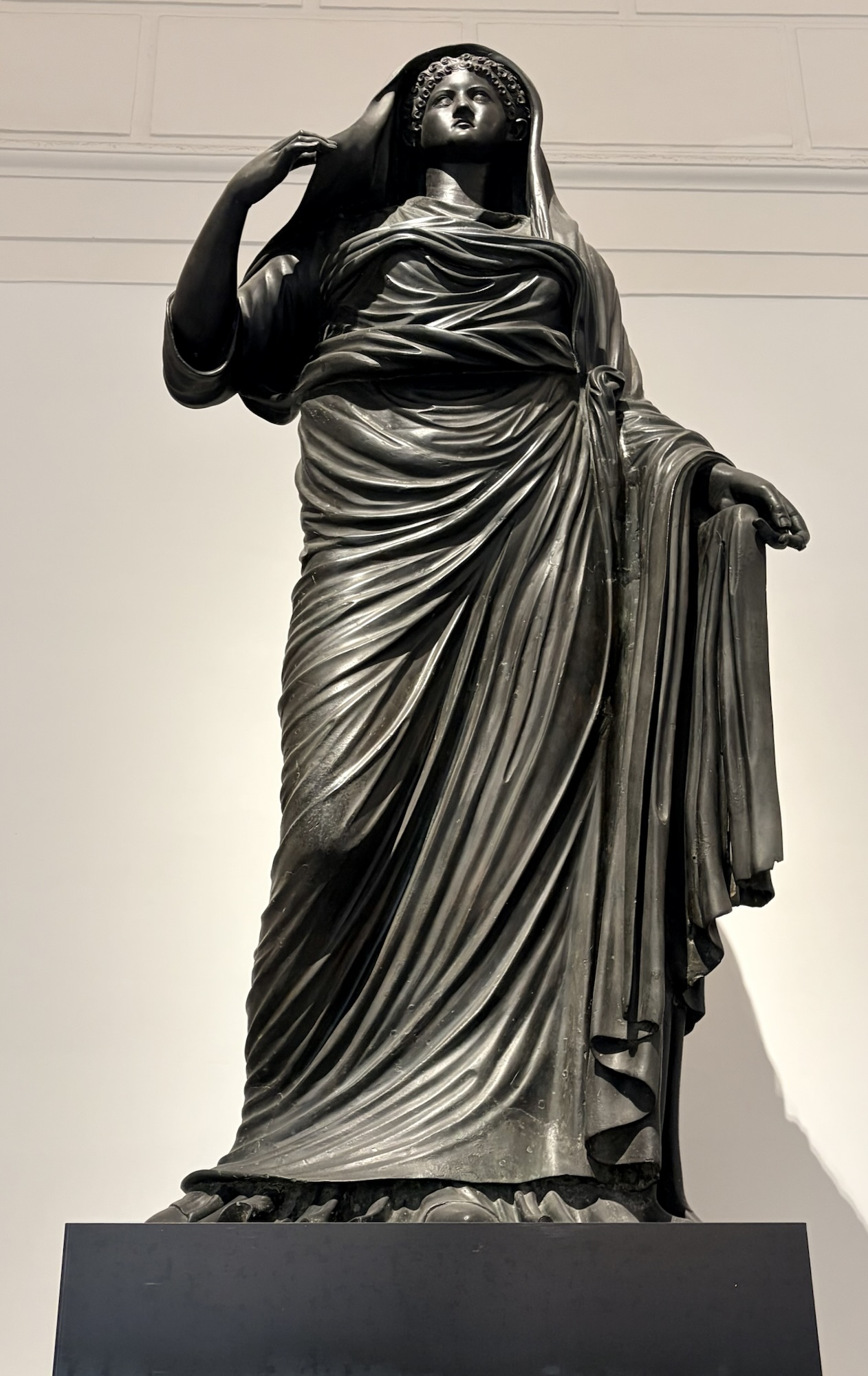
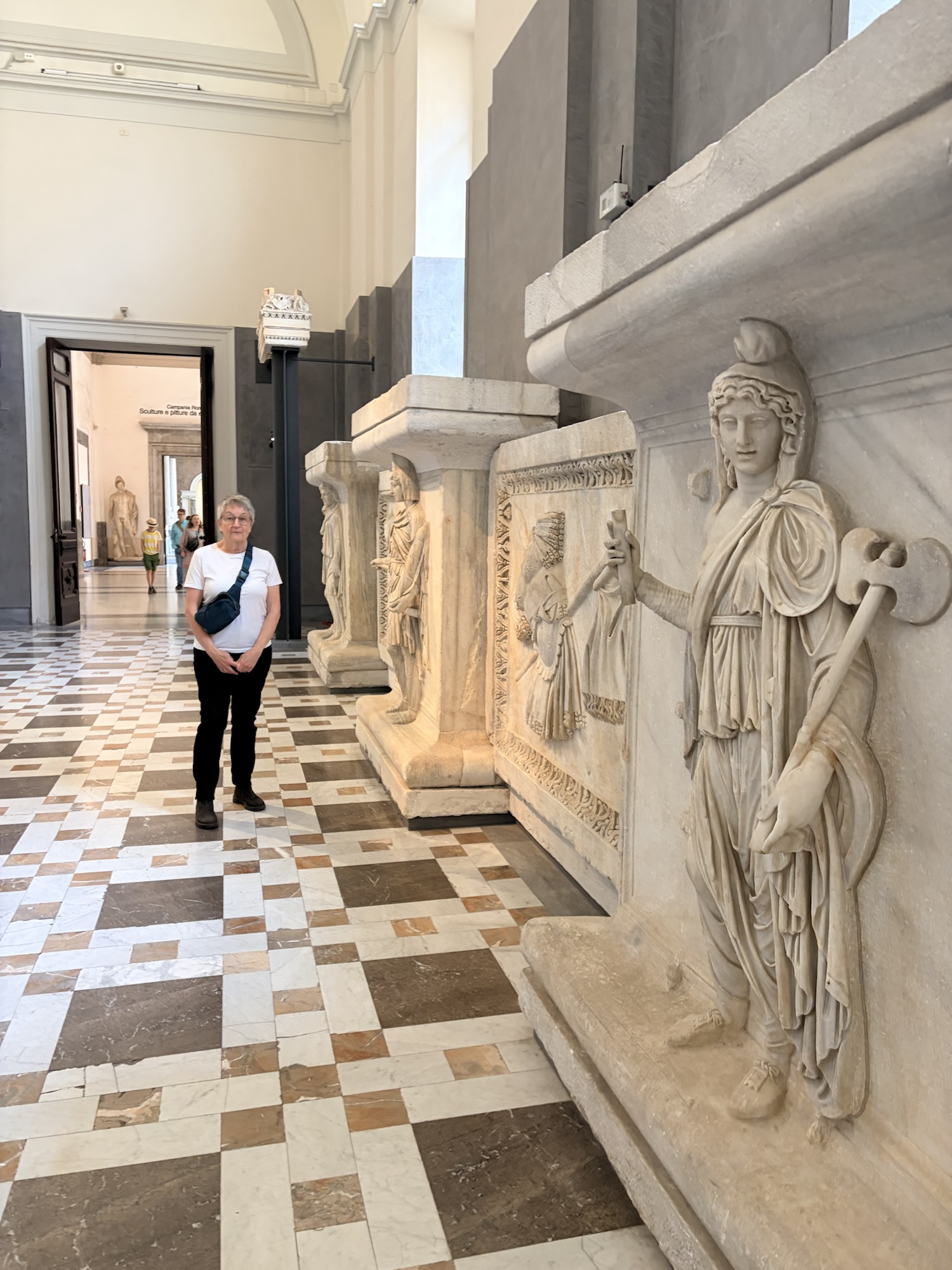
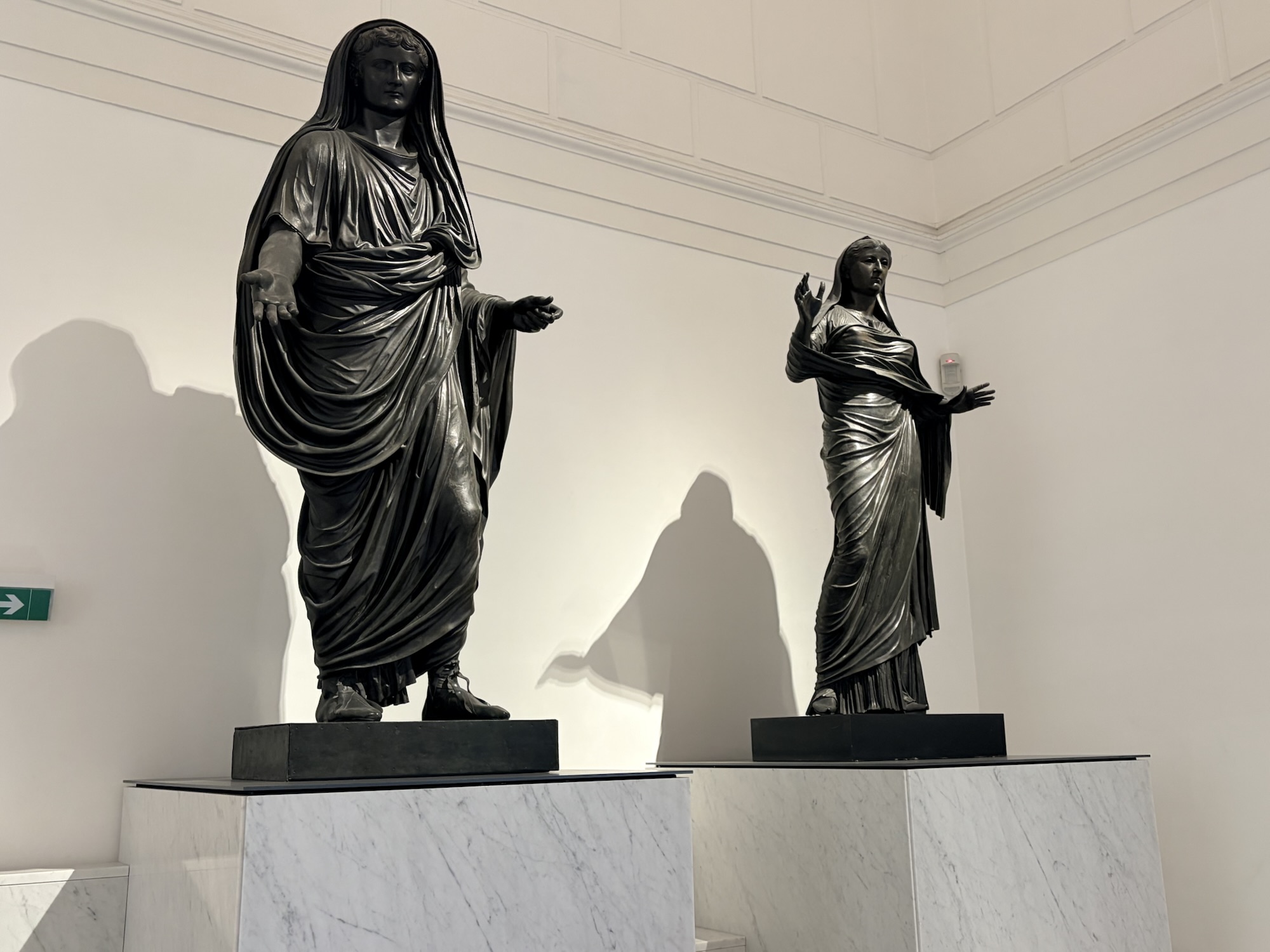
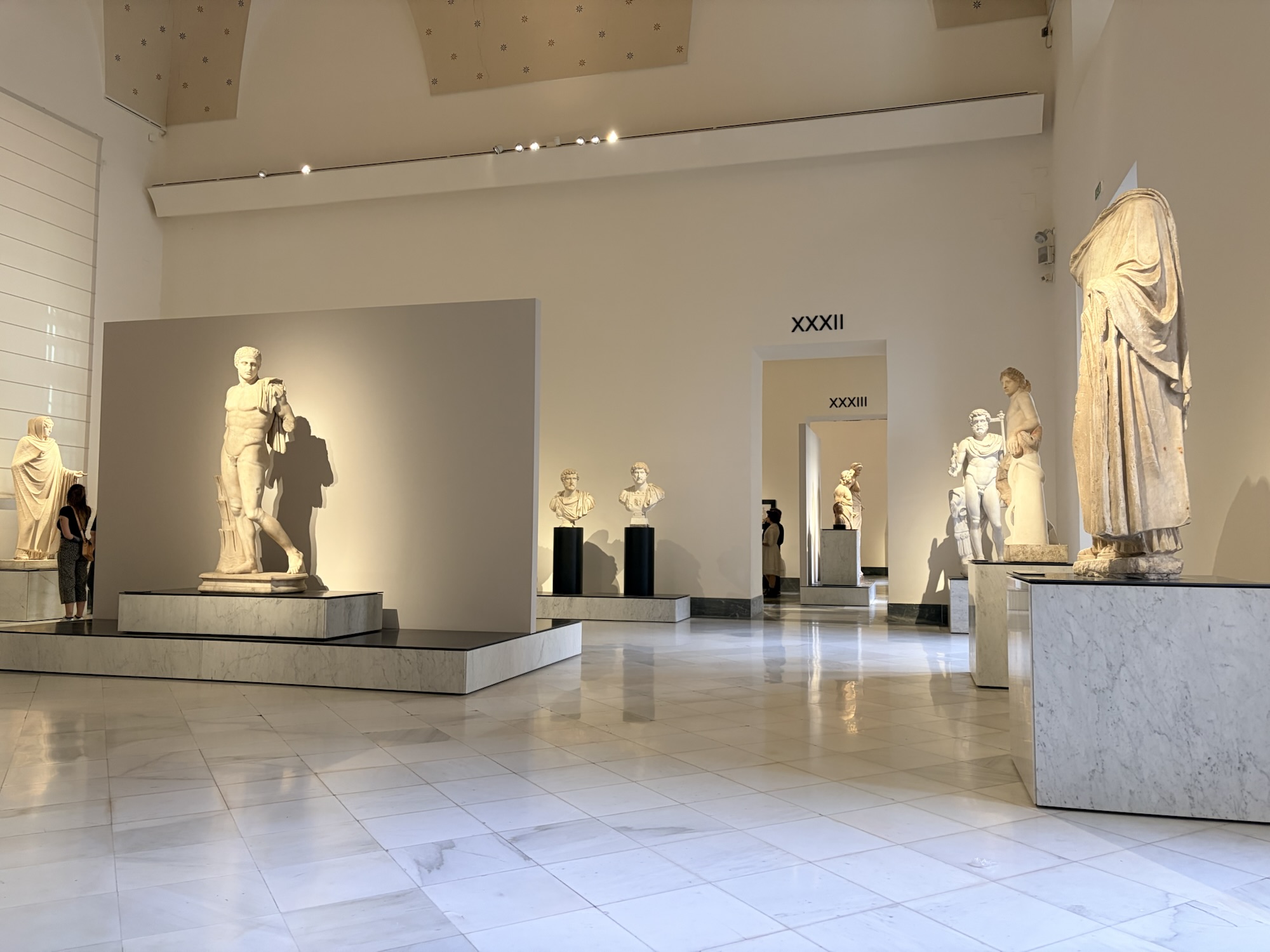
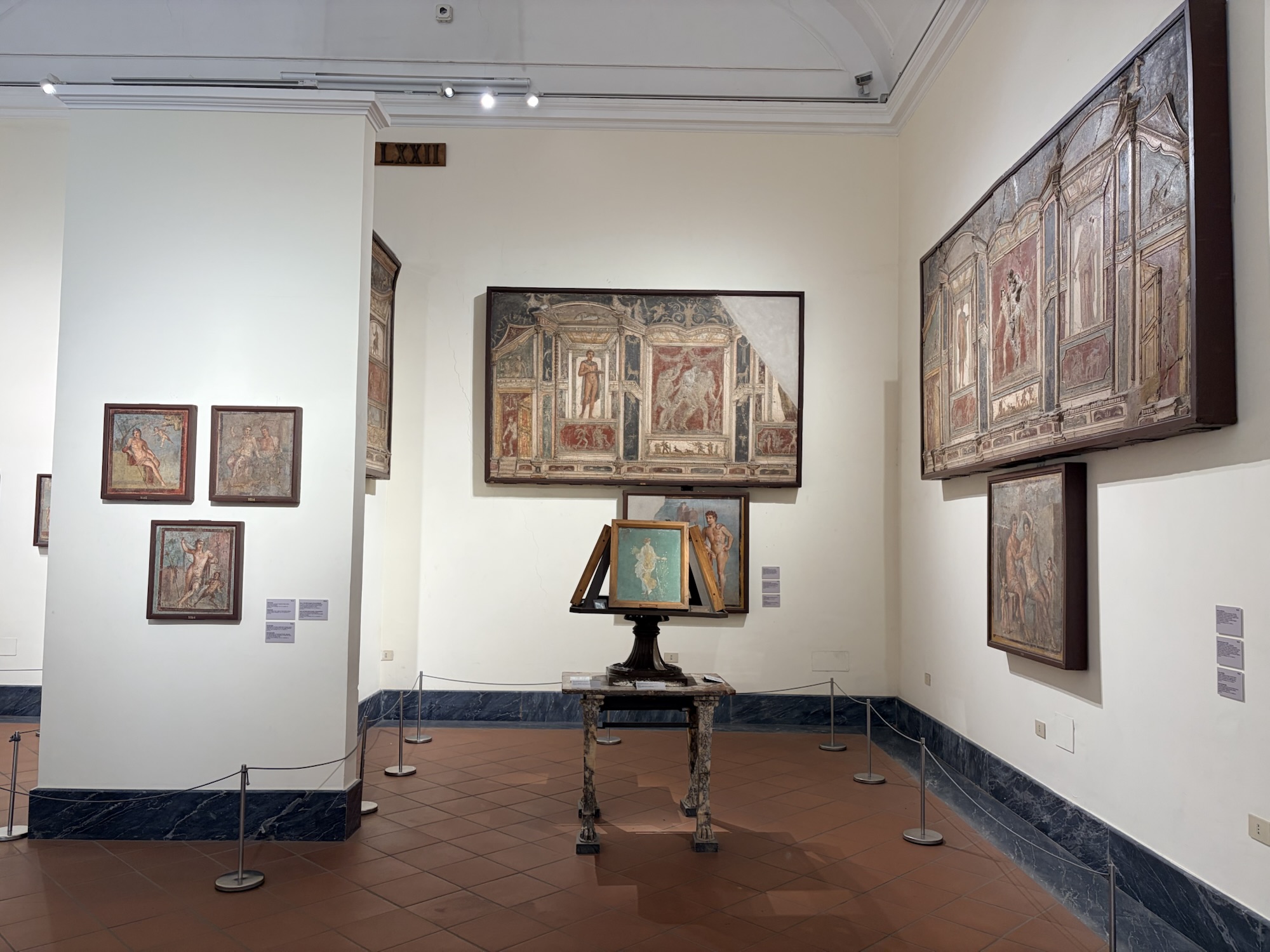
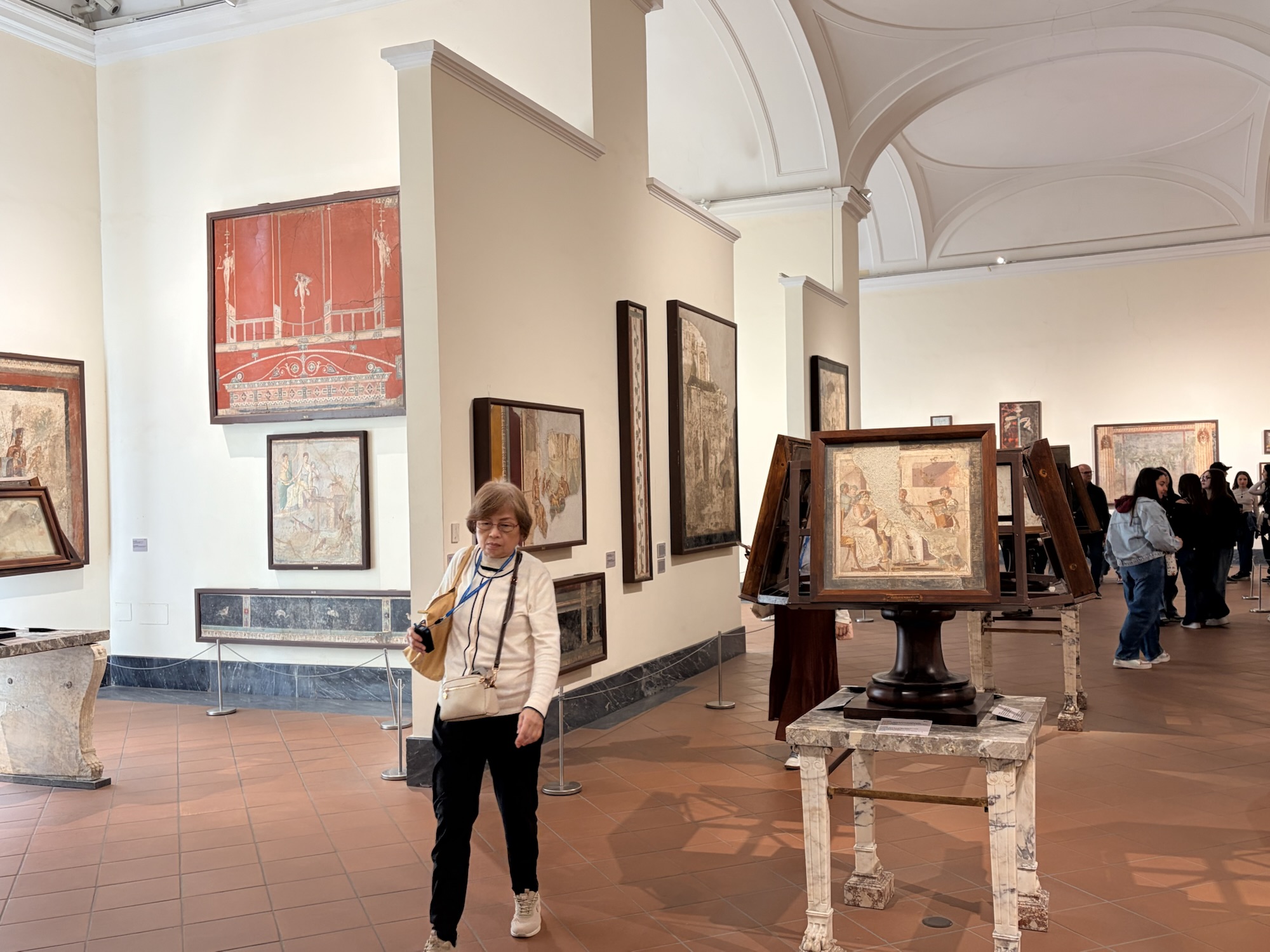
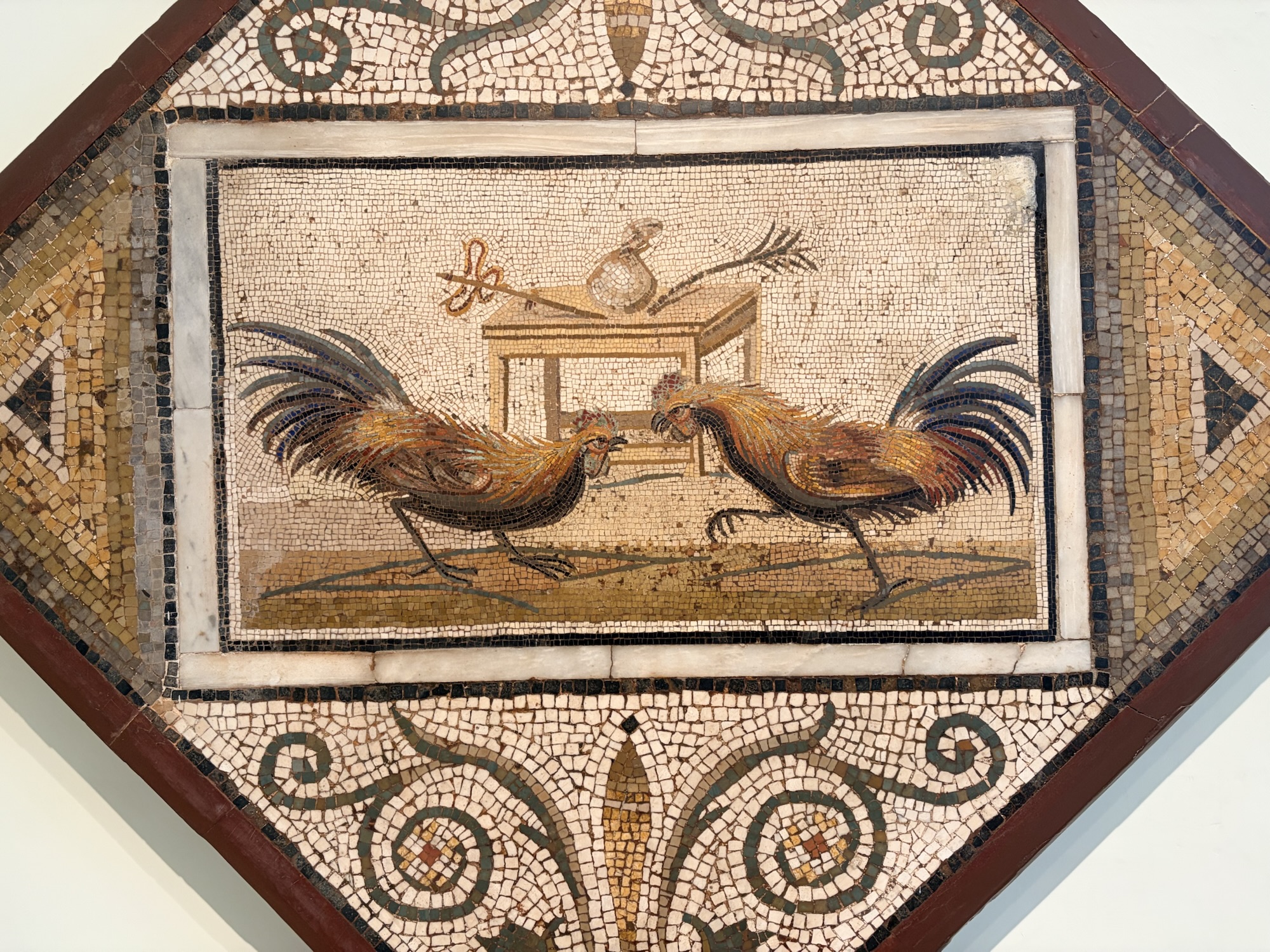
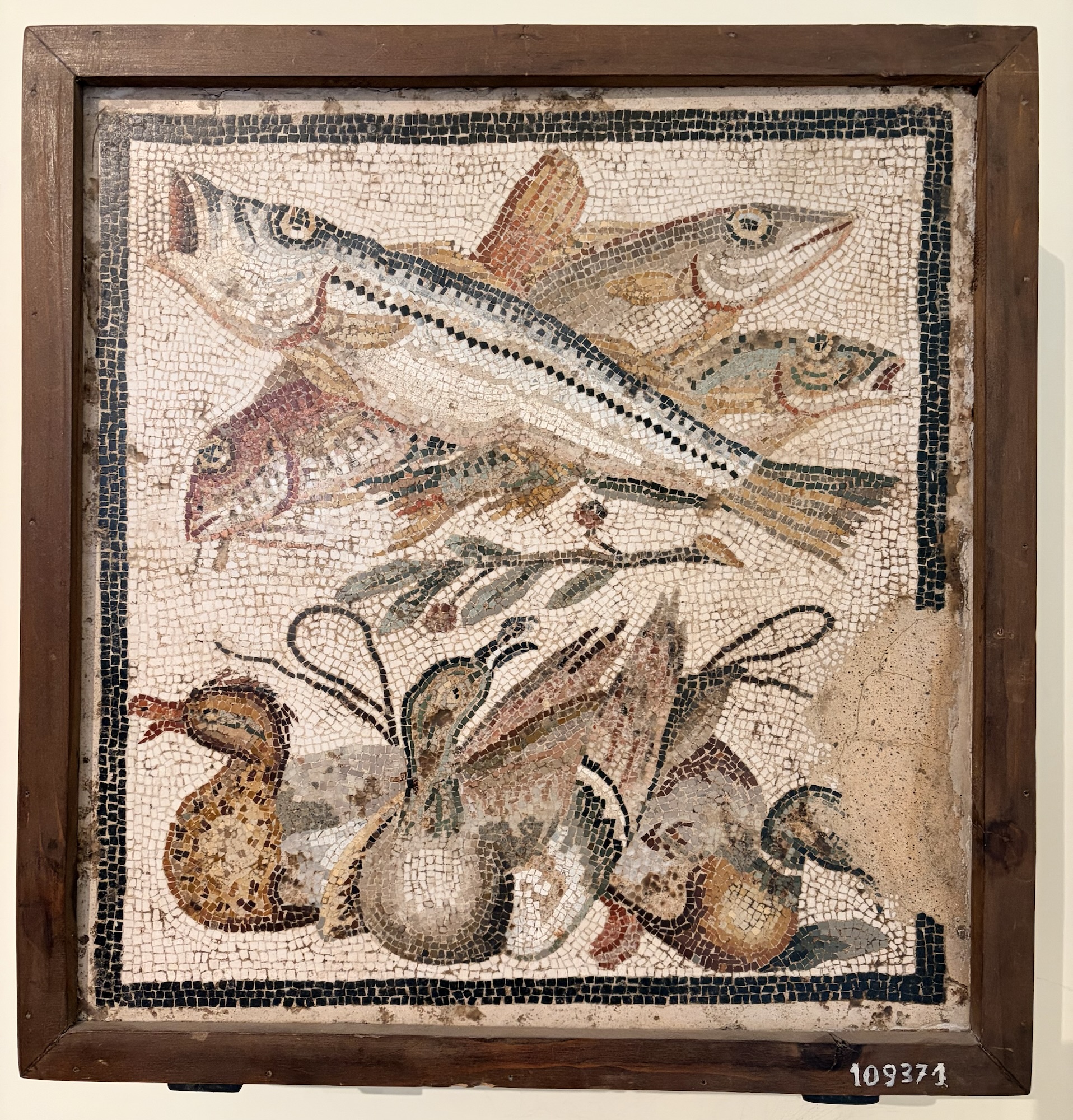
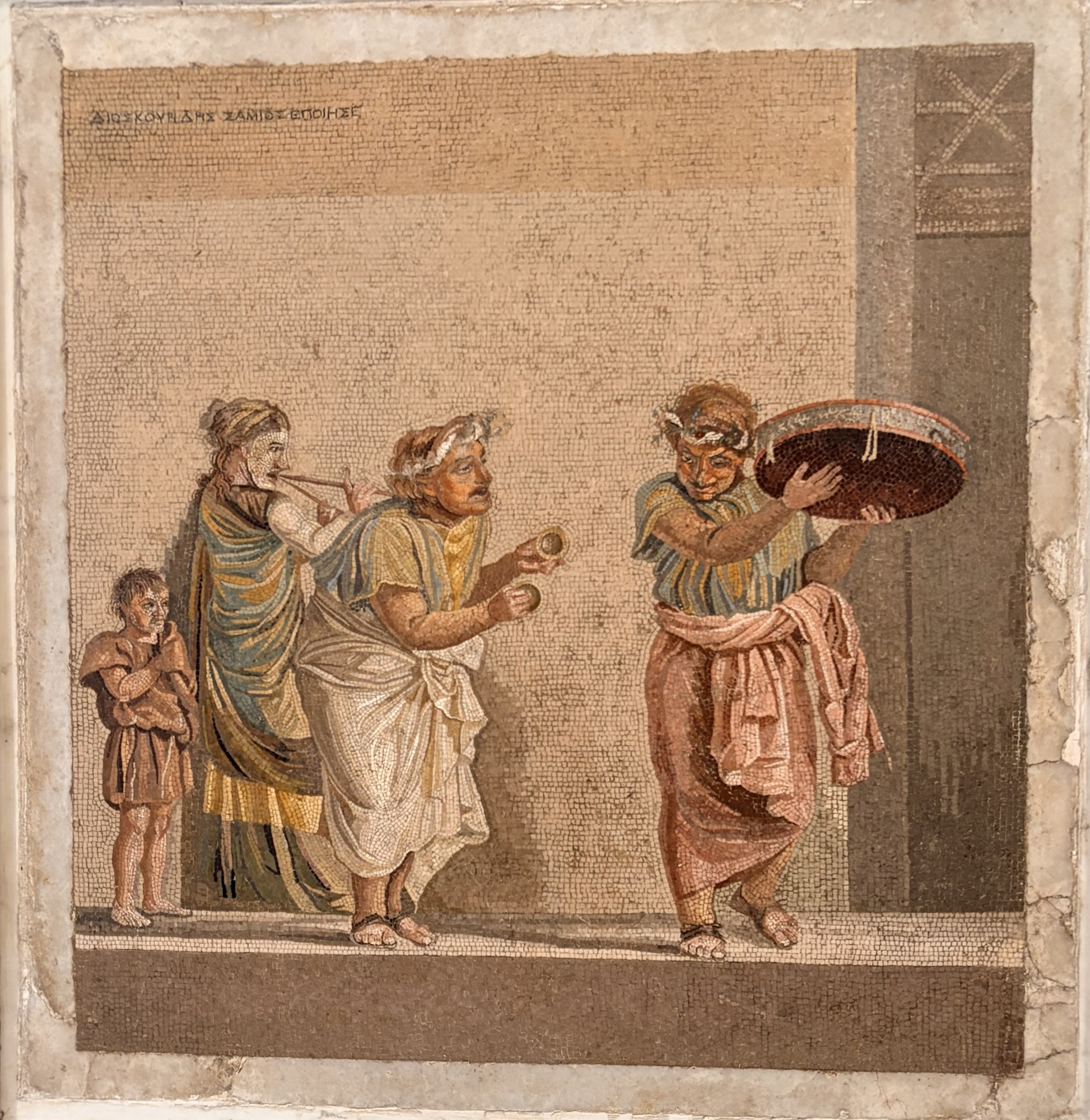
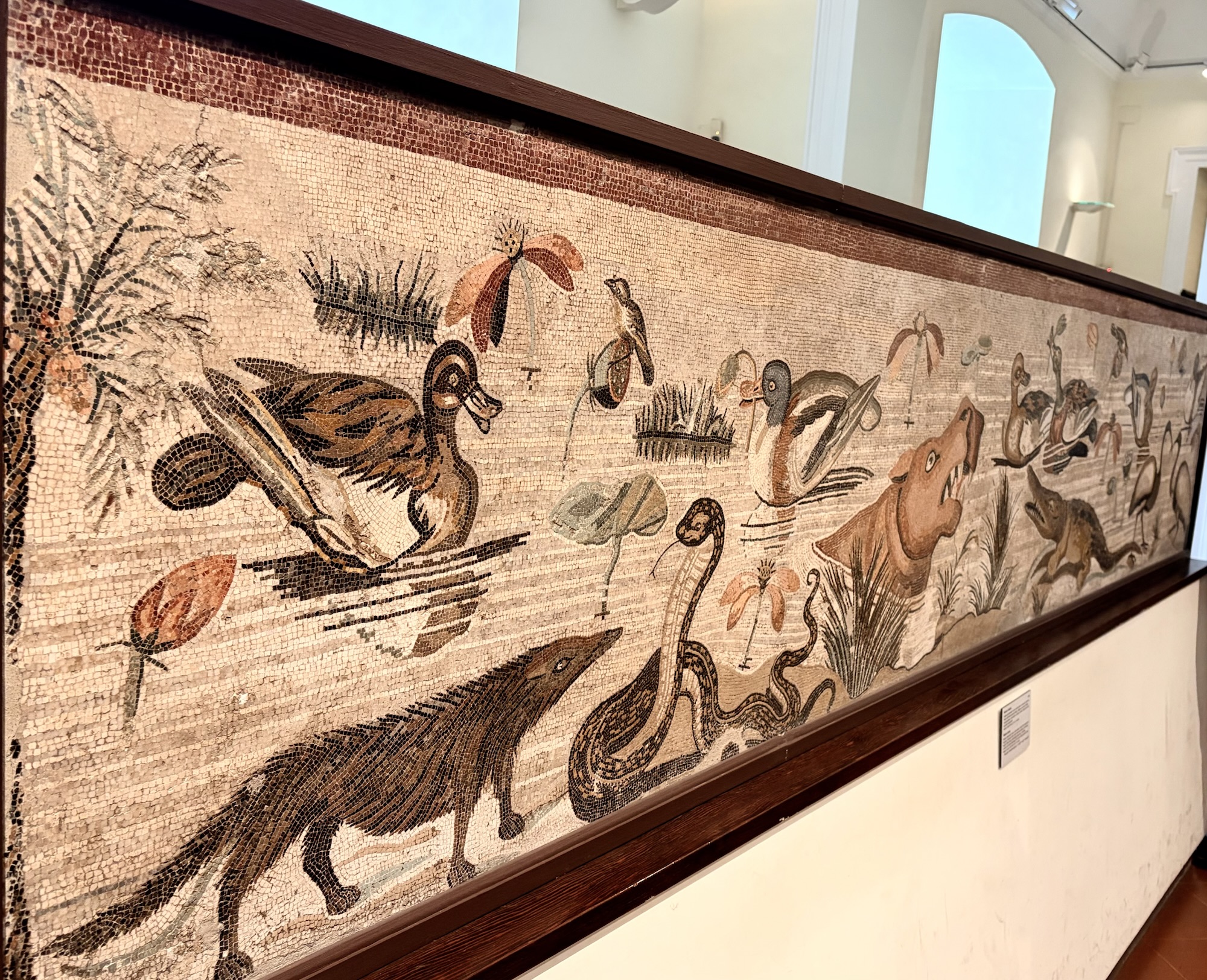
We had online tickets for 10 when it opens…and we staggered out 4 hours later having seen most everything except the Egyptian section. Wow, what a place. Rooms and rooms of massive marble and bronze statues, rooms and rooms of frescos and household items from Pompeii, and a small but fabulous mosaic collection. I have come to love mosaics most of all. We almost missed that particular section because it is on a half-level we only saw as we walked up the multi-level marble stairs.
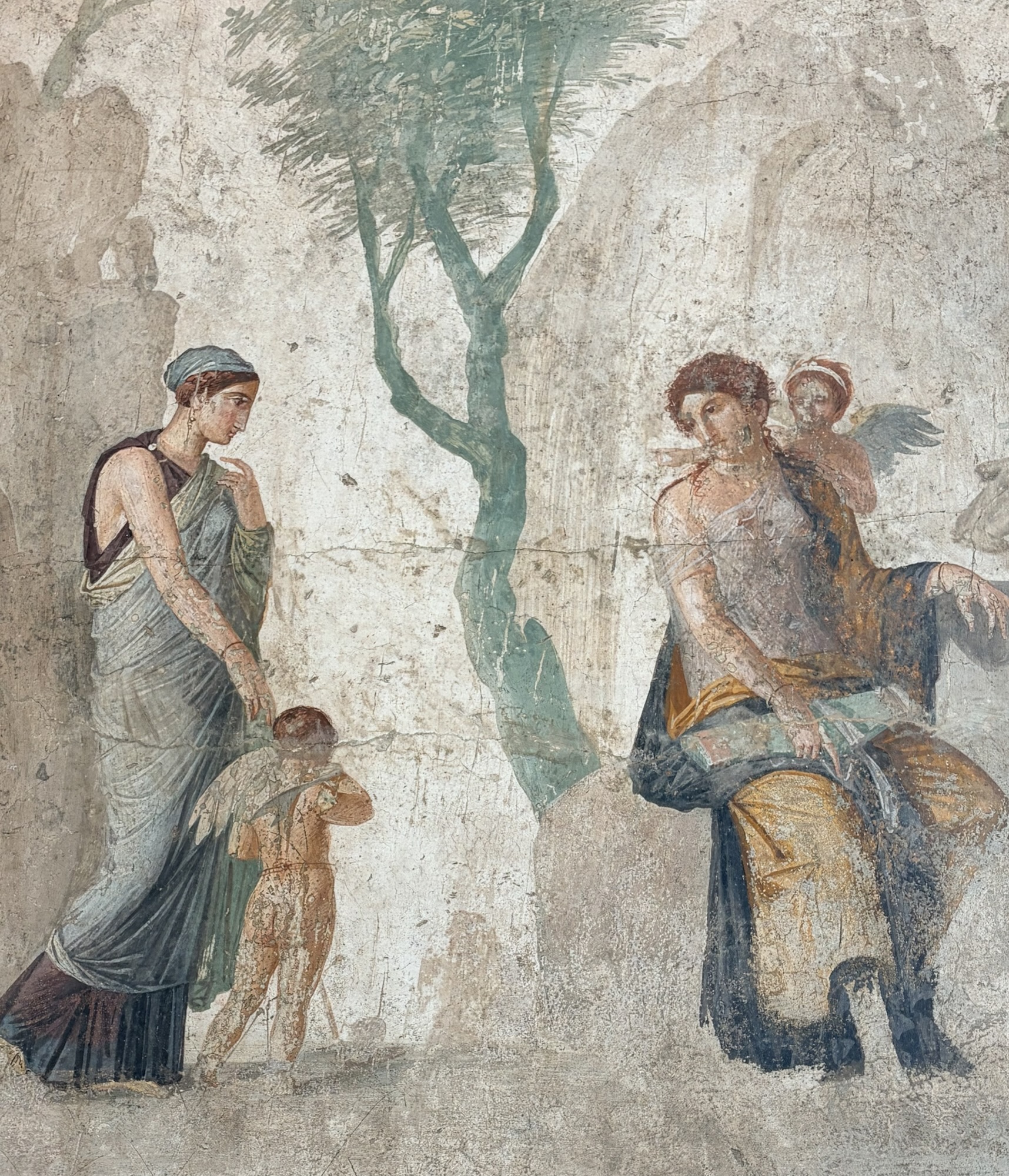
Words will fail me, so I defer to a few of our photos.
Artifacts from Pompeii were stunning.
The mosaics, ah.
I love the use of tiny stones for the cocks and larger for the border May I have this as a jigsaw puzzle, please?The fresco of this same scene was hung just above this amazing piece, and was not nearly so vivid and aliveThis was fifteen feet (?) long…impossible for an iPhone camera to convey. Struck us as very modern in design.