36 Hours’ Worth of Kanazawa

A Less Than Encouraging Start

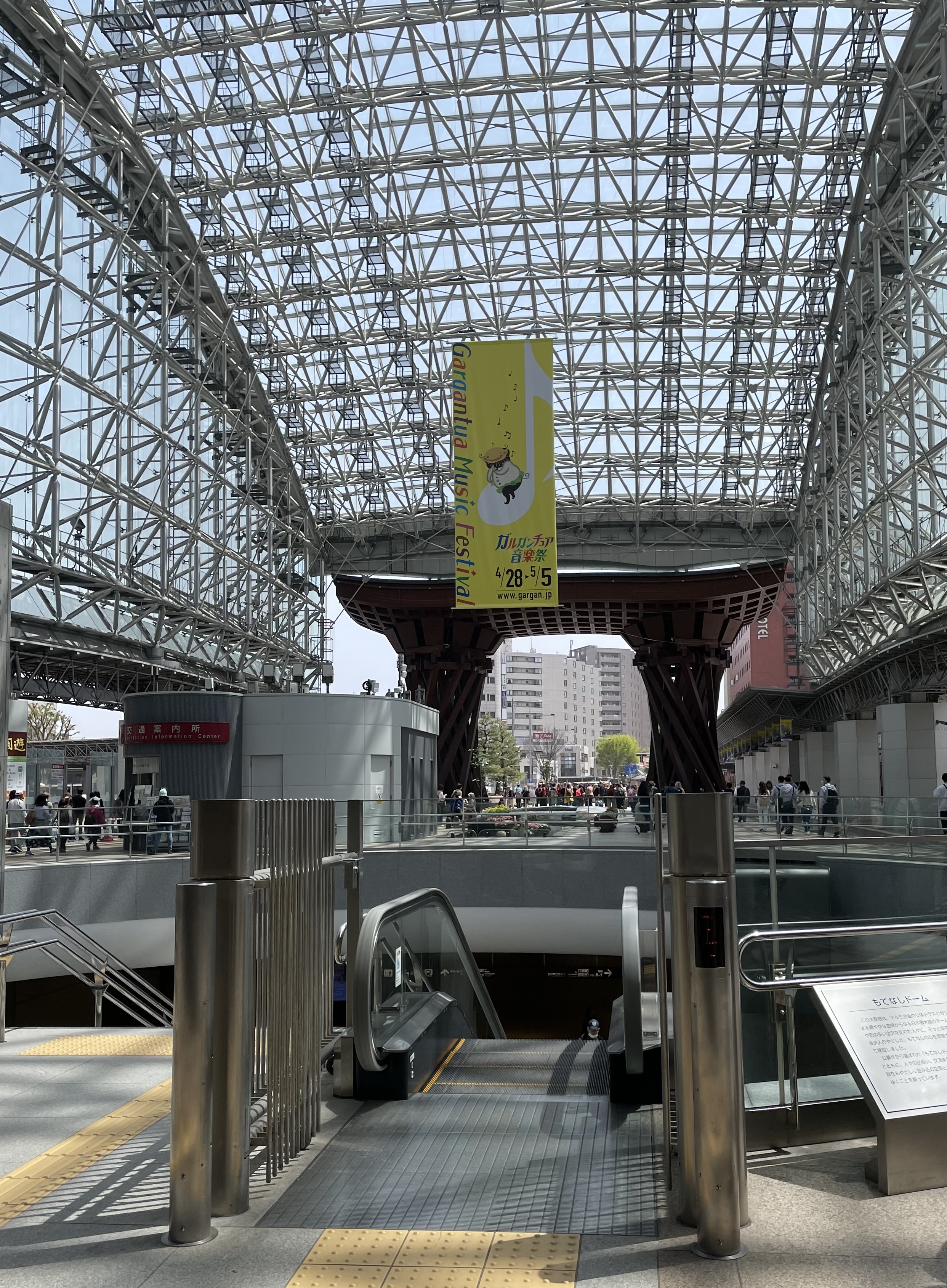
We checked into the Dormy Inn—our fourth—a short block from beautiful Kanazawa Station. The enormous entry, with huge sculptures representing traditional drums, is spectacular, the gardens and sitting areas peaceful. This Dormy Inn was probably the nicest with our larger room and an outdoor pool in the 14th floor onsen. Kanazawa, our last stop before returning to Tokyo, was a bit off the tourist track and we weren’t sure what we would do there. I did know if my ceramics shopping was still enticing me after Tamba and Kyoto i could finish it there, but had no clear plan where to go other than the two stores I had found weeks ago. I wanted to get one checked off and picked the one furthest out. We got on a bus after lunch (more about lunch later) using our mostly-accurate google maps app.

Oh, the buses of Kanazawa. As one helpful man told us, Kanazawa has only begun to attract tourists in the last few years, and the mishmash of streets combined with the most confusing bus system we have ever encountered made “hopping a bus” nothing like our week of tourist-friendly Kyoto. The signage on the stops is messy and seemingly contradictory (a loop bus that starts and ends at Kanazawa Station had, on one loop bus stop sign, a small notice in the middle of the text that “this bus does not go to Kanazawa Station”, just an example among many). Some blocks have, within 15 yards, two or three bus stops, each for a different set of buses. The buses have a lighted grid sign at the front next to the driver, each numbered block with a different price which we never did figure out. Unlike Kyoto, only the next upcoming stop is shown in English, forcing us to pay attention to each and every stop. And, the helpful man told us apologetically, “In the morning and evening the buses are reliable, but during the day…” He shrugged. Lastly, Google maps repeatedly lost us, or told us, when we were at a numbered stop, that we were not at that stop and had to walk 3 minutes to another street (helpful man said he had no idea but to stay put because if we caught that same numbered bus in a different spot it would not take us where we wanted to go.). It was frustrating and made us feel unwelcome. Oh and they do NOT accept Suica cards, the cards we have used in every city for transportation, konbinis, pretty much anything.

Bus footnote to the day—when returning to the hotel late in the afternoon we were delighted to see a JR bus coming. We have a JR Arch (a regional) pass, which we used our last days in Kyoto on several JR buses and of course was our method to get the Shinkansen to Kanazawa and back to Tokyo. Several times on that JR Kanazawa bus the PA announced if you had a JR pass to show it on exiting. So when we got to our stop we confidently walked up and flashed our pass. Gruff driver says “no good” no matter what we pointed to on the pass. “No, no,” he insists. We knew now we had to dig out cash, so I asked “How much?” The driver shoved my arm in disgust and waved us off the bus. Yeah, love the Kanazawa bus system.

We did find the outlying ceramics shop. It was in an old, semi-rundown neighborhood. About half the items in the very small showroom were out of stock so would have to be mailed at a future date and the prices were out of our range. We trudged to the stop/bus station where we found the helpful man, and after he and the agent had at least four conversations over the next twenty minutes about what we should do and how to get there, “there” being one of the largest and most revered tourist sites, suddenly a bus appeared and helpful man ran over to tell us “This one!” and we gratefully climbed aboard. Google maps on David’s phone told us to get off at one stop; on my phone it said a different stop. But it turned out fine, and we entered THE MOST BEAUTIFUL GARDEN in Japan.

Kenroku-en Garden

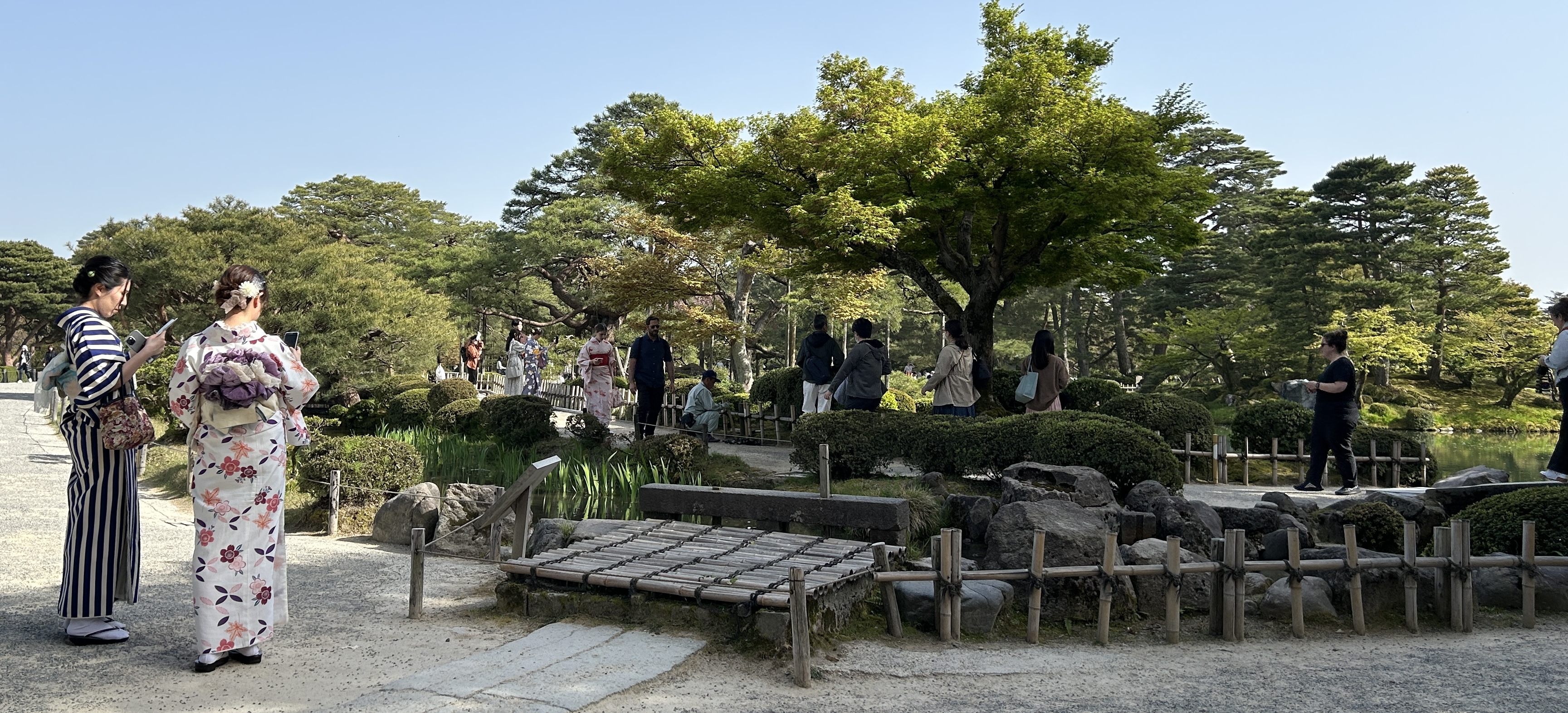
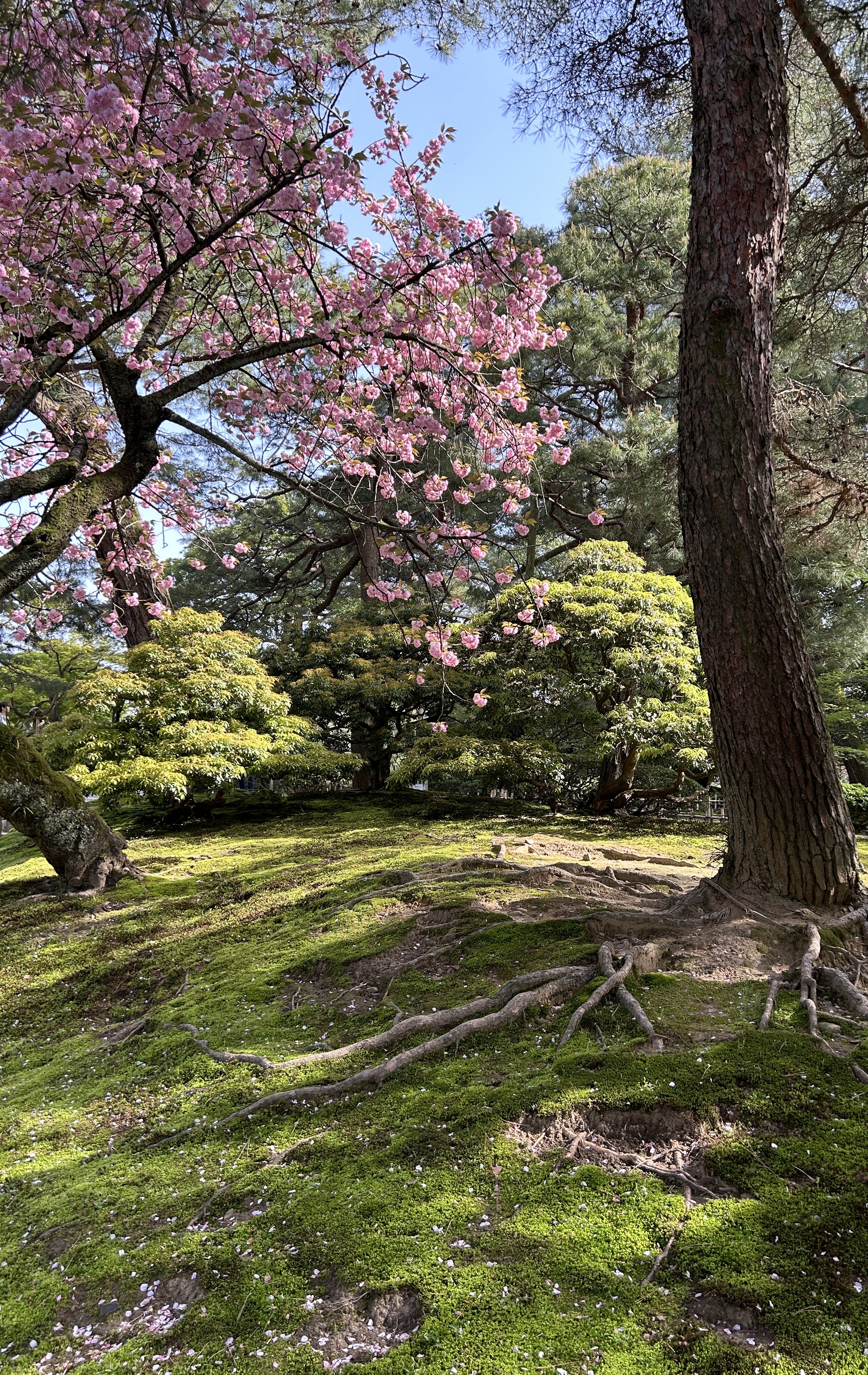
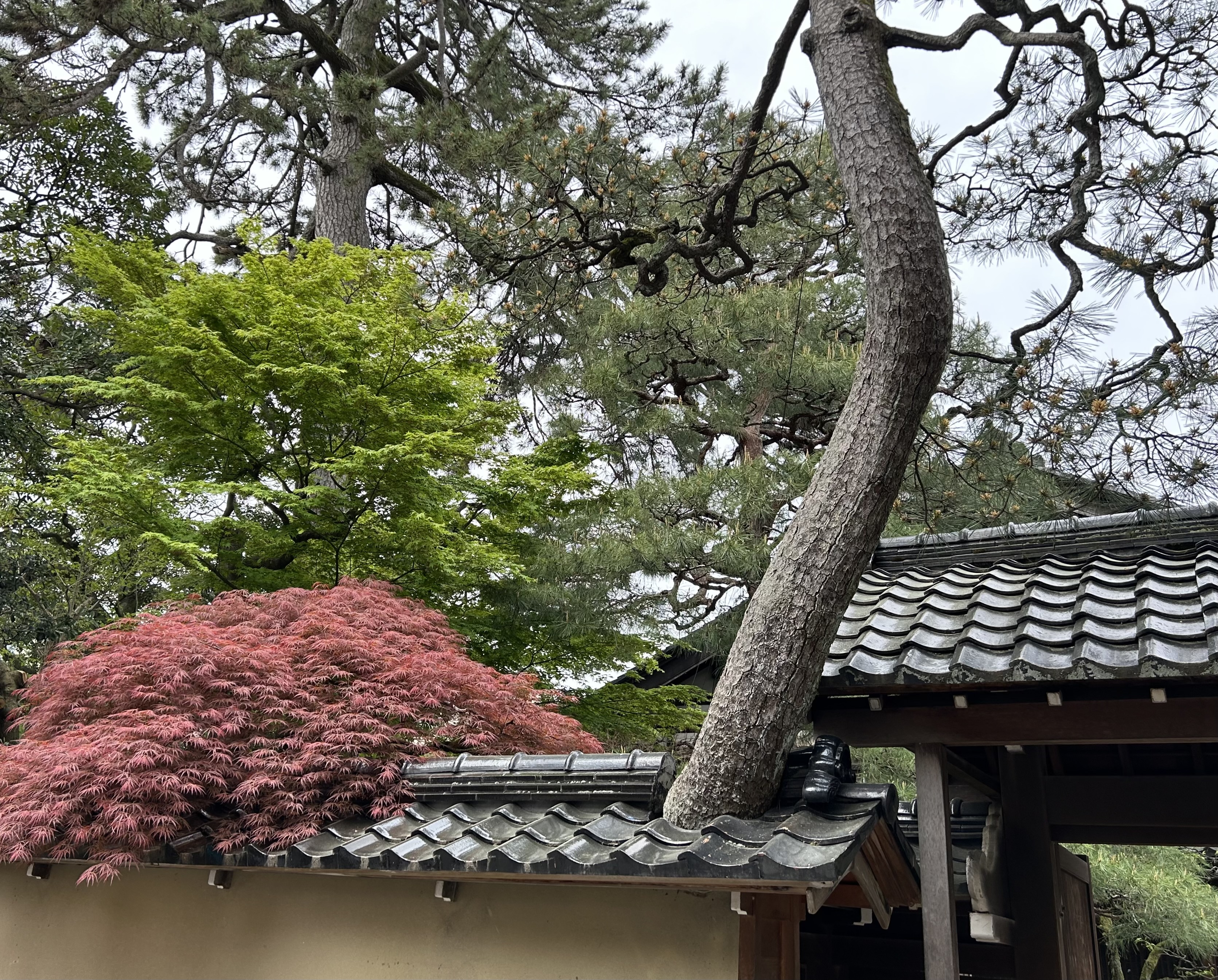
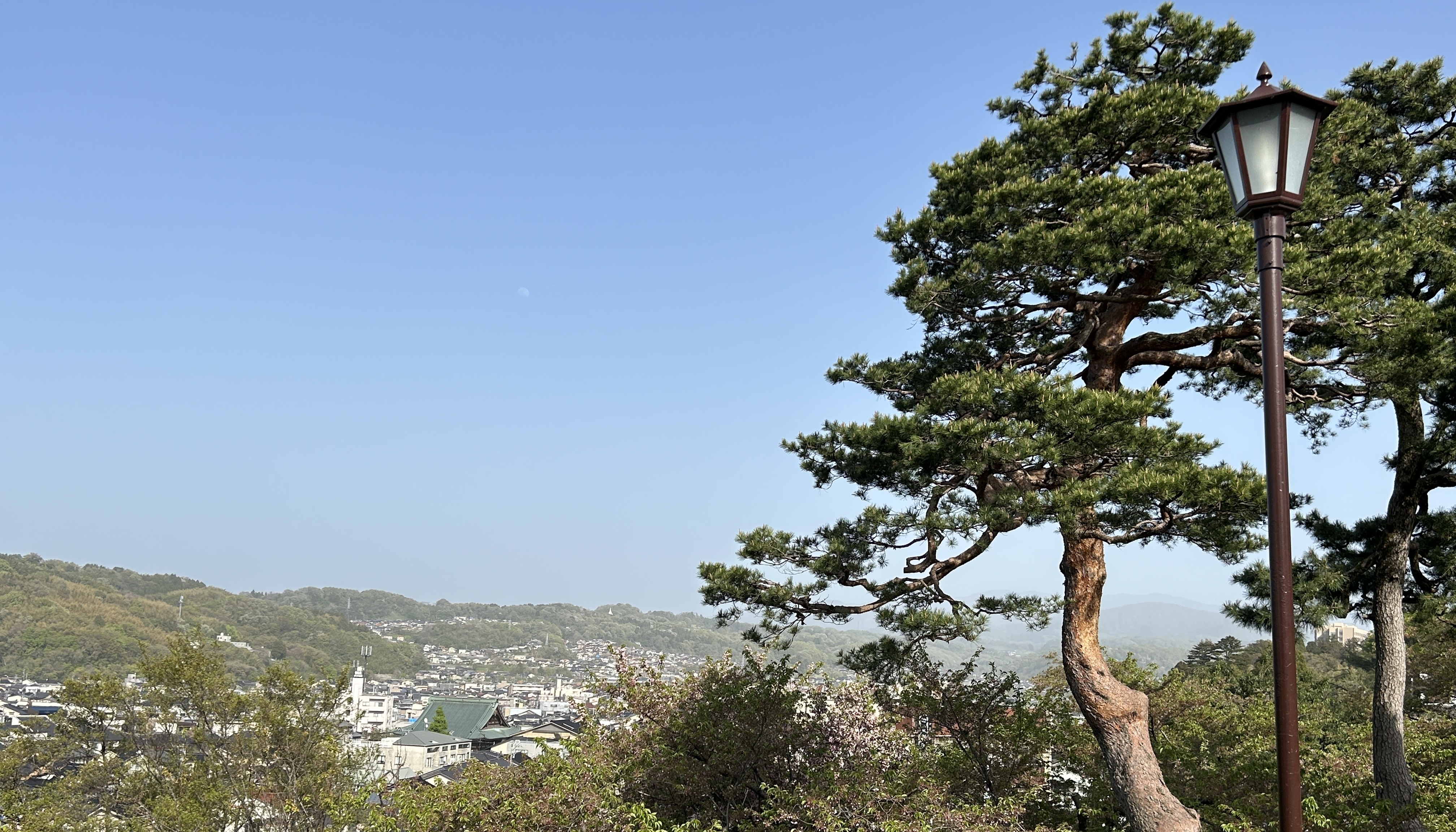
Wow. Wow. This garden was initially laid out in the 1620’s, but its current configuration was finished in 1822. It sits on a high point, almost a bluff, next to the castle ruins and it is spectacular. The sun was out, it was cool and a little breezy, and we began to like this city after all. We have been to many many gardens in many countries, and this wins hands down. While it has the feel of a typical small-scale Japanese garden, it is enormous, filled with enormous, meticulously pruned trees. Many are supported by one, ten, twenty crossed timbers, having been encouraged into bonsai-shapes of almost horizontal branches. We watched several gardeners removing, literally, needle by needle. We wandered and strolled, took pictures and enjoyed the other tourists, rested on benches, took a tour of a “villa” built in the 1800’s filled with cases of miniature household (a wealthy one) items that represented what a girl of the family would be bringing as a dowry. After a few hours we collapsed and after typical confusion about where the bus stop was we got on that ill-fated JR bus with the grumpy driver.

The Samurai House District

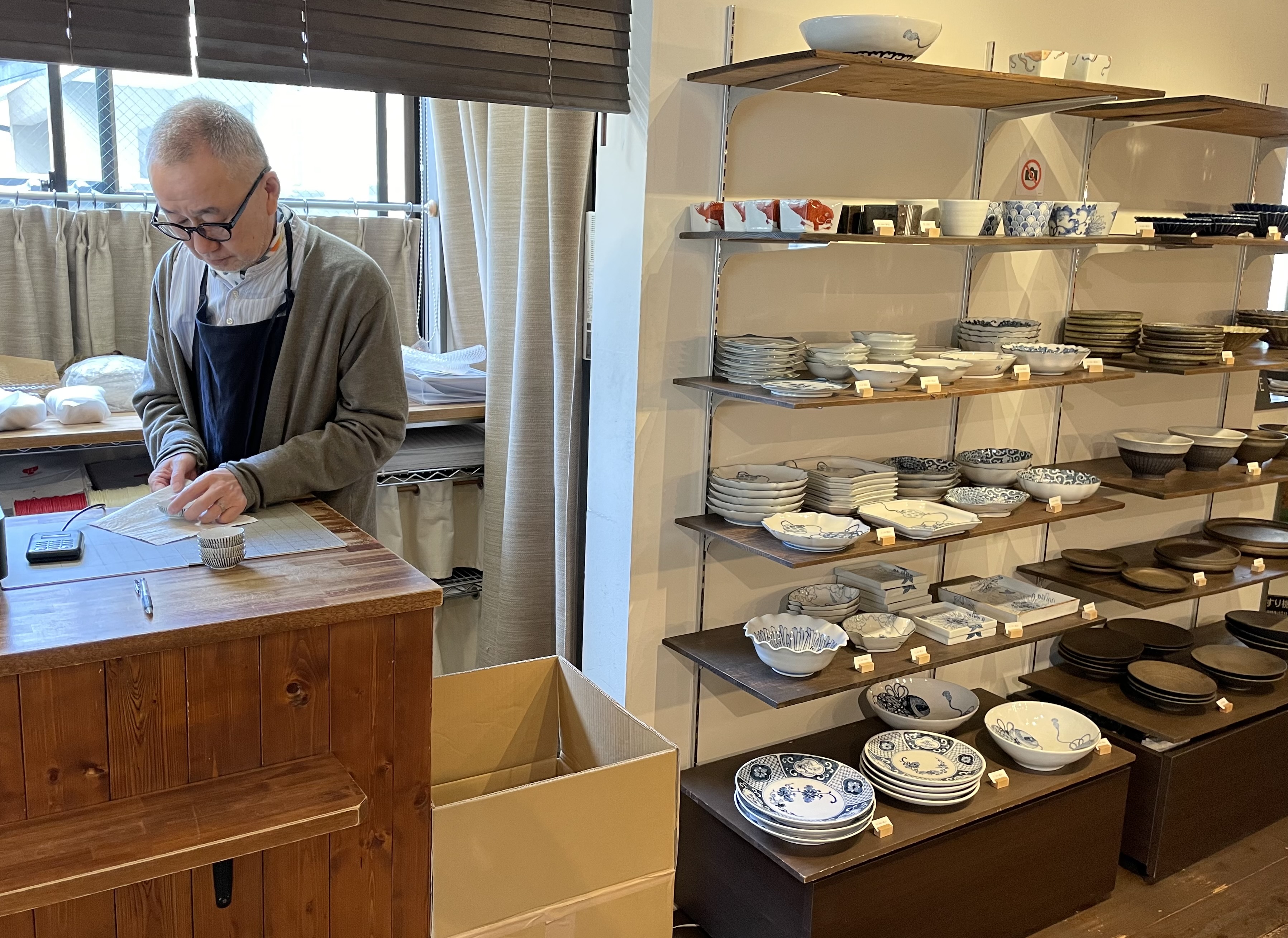
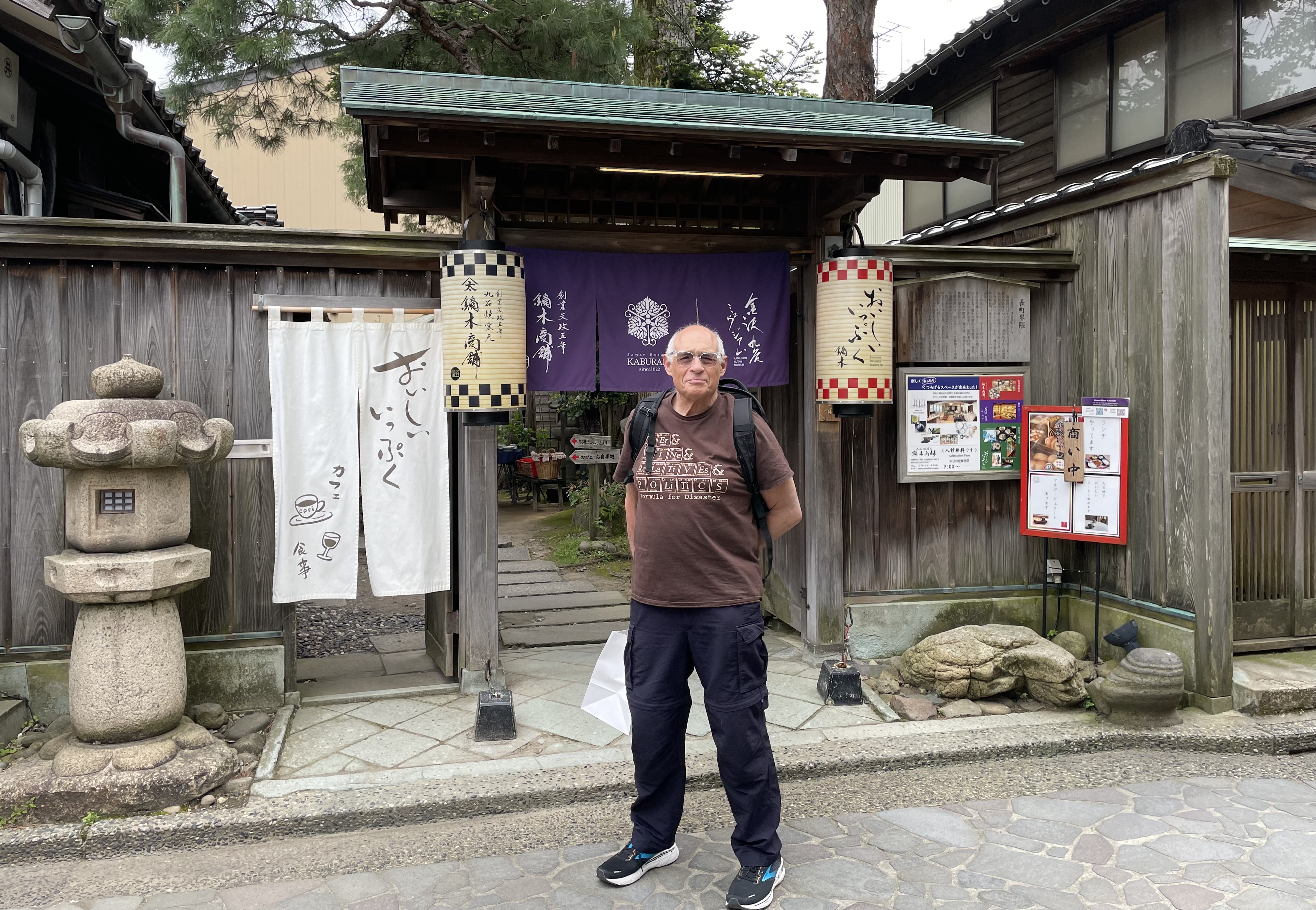
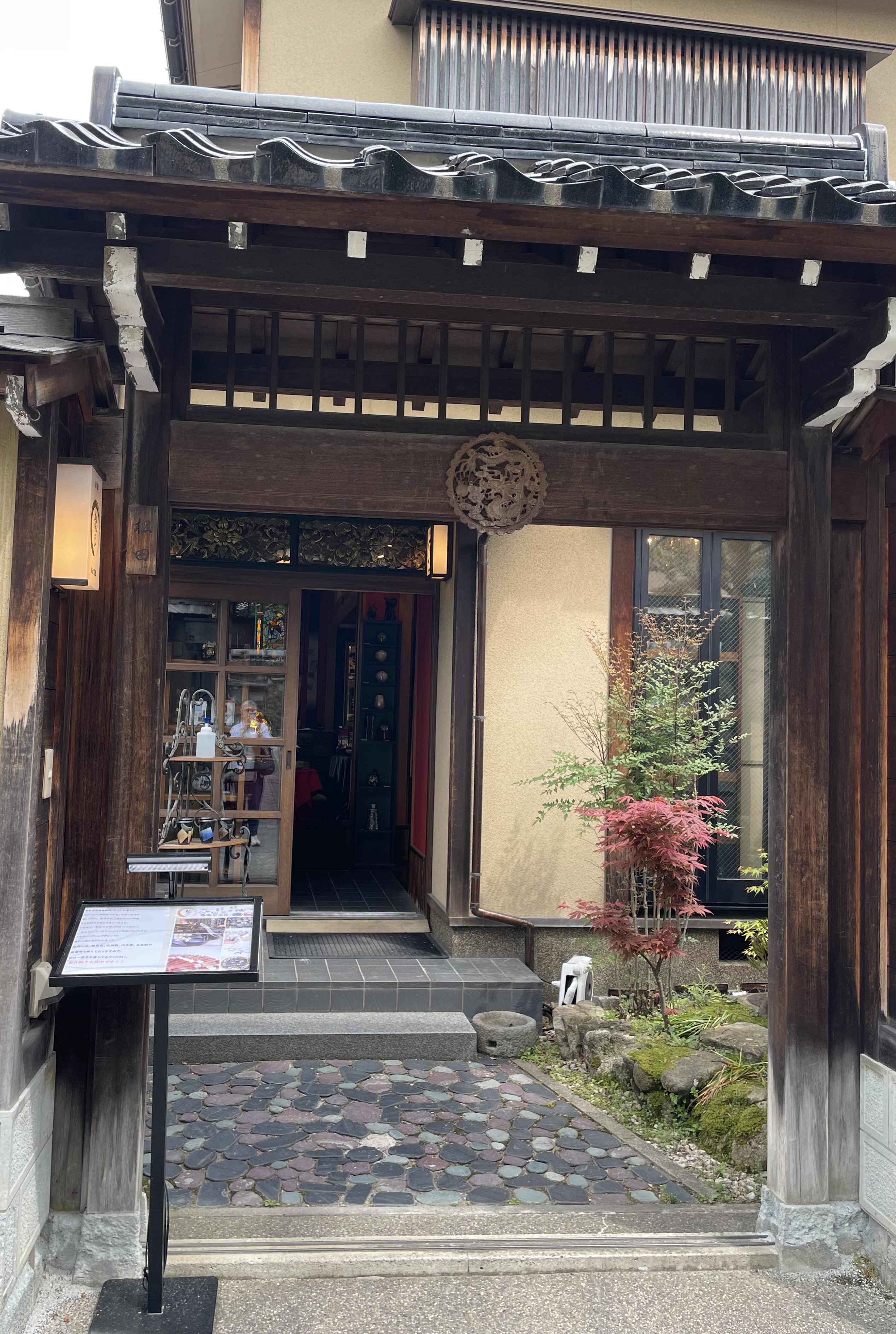
I stayed up late searching for ceramics stores and found four clustered in what is now known as the Samurai House District. After breakfast we took the bus down and started a-strolling. Peaceful, lovely, with historic houses, historic gardens, and amazing ceramics shopping. I thought I had been finished in Kyoto, but, alas, I needed one more fix and what a fantastic place to get it. After repeatedly vowing to buy only gifts, I caved at the last store and bought a few little things for myself. Everything is packed within an inch of its life, bubble wrap and boxes and paper and all. Thank goodness we pack light because Zipair is rigid about sizes and weights. I think we’ll be fine. I think.

Lunching at Ochimo Market Twice in Two Days

When we first arrived after a train ride of two hours we were hungry and Ochimo market was maybe a 20 minute walk up a main street. Kanazawa is known for seafood. Let’s go!

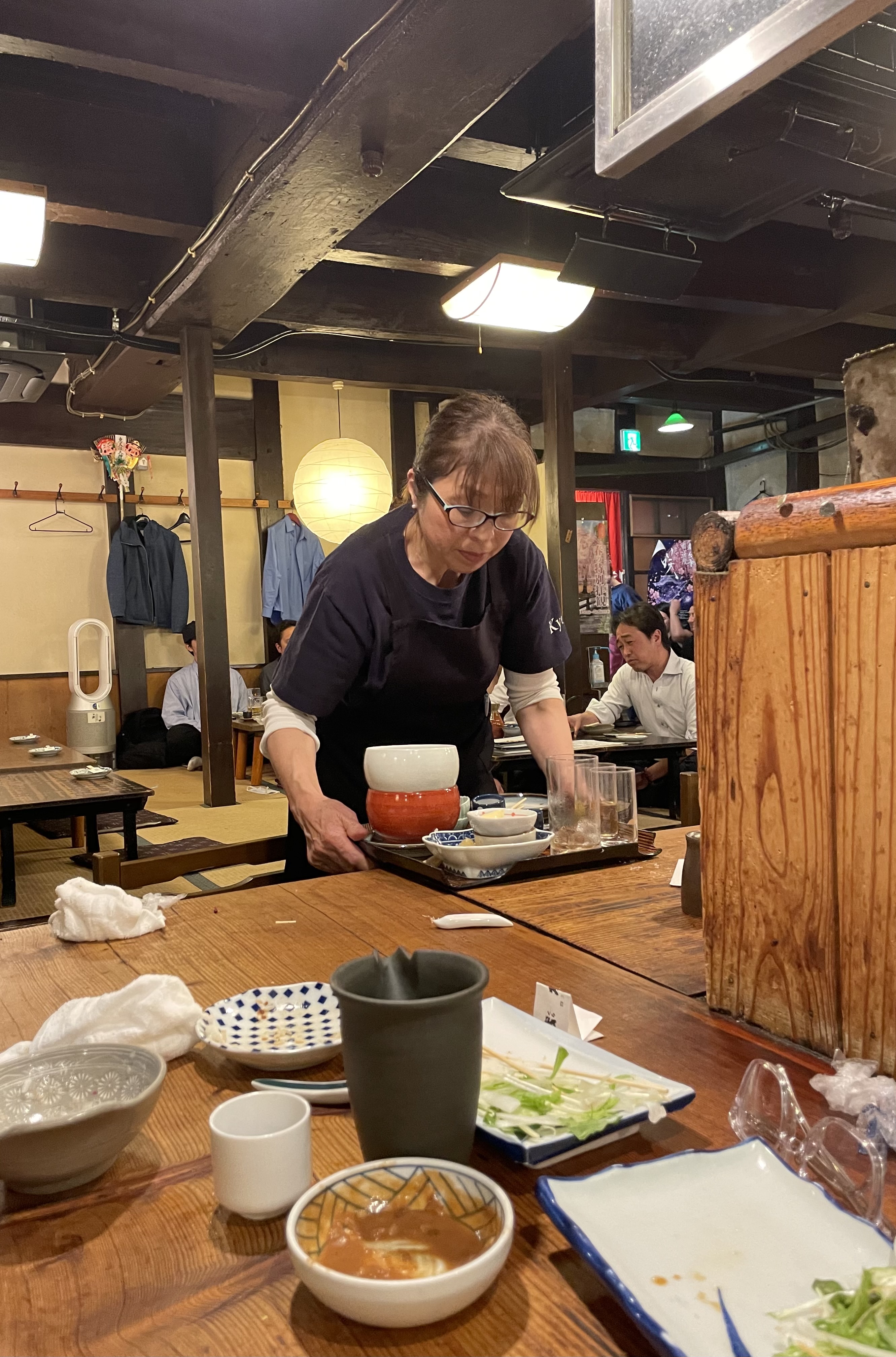
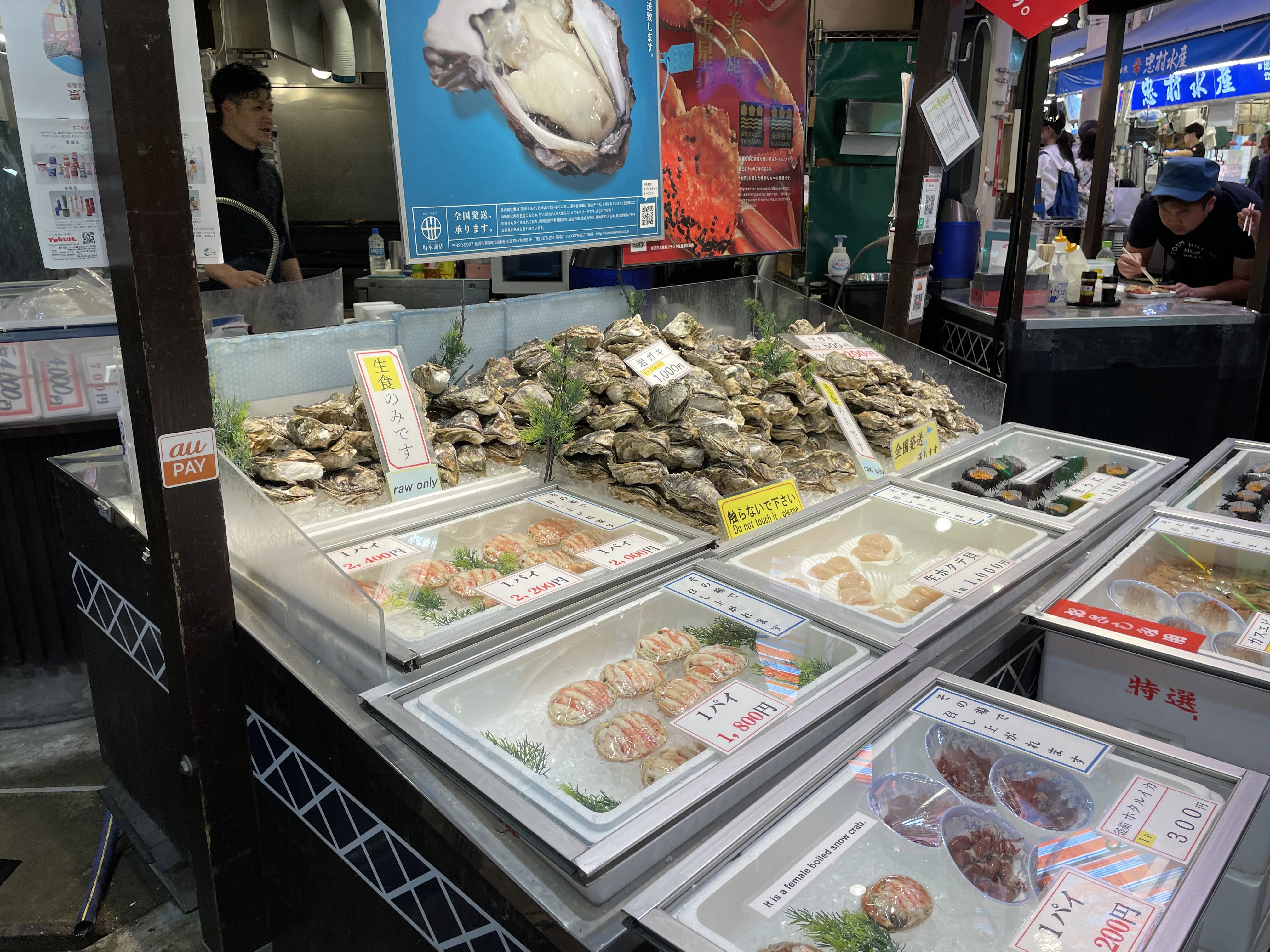
Unlike most similar markets, this one is designed for people to stand and eat at the fresh seafood stalls. Counters with condiments and small tables abound (no chairs). The seafood is peak fresh and delicious, the atmosphere happy and helpful. The first day we went into one of the myriad tiny sit down restaurants, all of which seem to serve the same things for the same prices. I had a mixed seafood over rice bowl, David had the minced tuna over rice bowl. David held his phone up to the specials blackboard and Google helpfully translated. Fried oysters? Yes please, oysters are a specialty of the city. Have I ever had better? Nope. I don’t believe it is possible for better to exist. Had fried oysters the second night at an izakaya around the corner from our hotel, and though a bit smaller they were just as good.

Of course we went back on Saturday. This time we wandered the stalls watching people eat. Raw Oysters. Raw fish. Sea urchin. After we ate our sushi and crab we stopped to watch a young couple from Australia eating wagyu beef cooked on a little ceramic stove on the counter in front of them. We asked how it worked, watching the preparation and thinking maybe we weren’t so full after all. You select a piece from the counter; they slice it, fire up your little burner, lay out the salt and garlic chips, and you eat. Yes, worth every penny and every melting bite eaten with flaky salt and garlic chips.

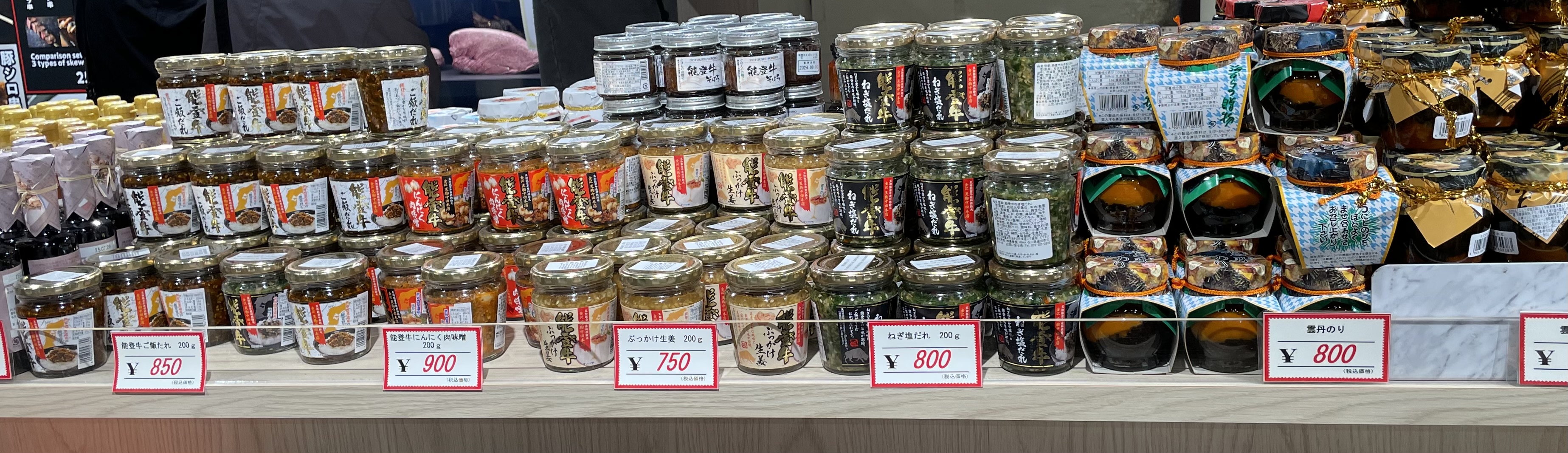
Every kind of jarred condiments…from a green onion sauce to some with uni (sea urchin), something I cannot imagine in a jar.

21st Century Museum of Art

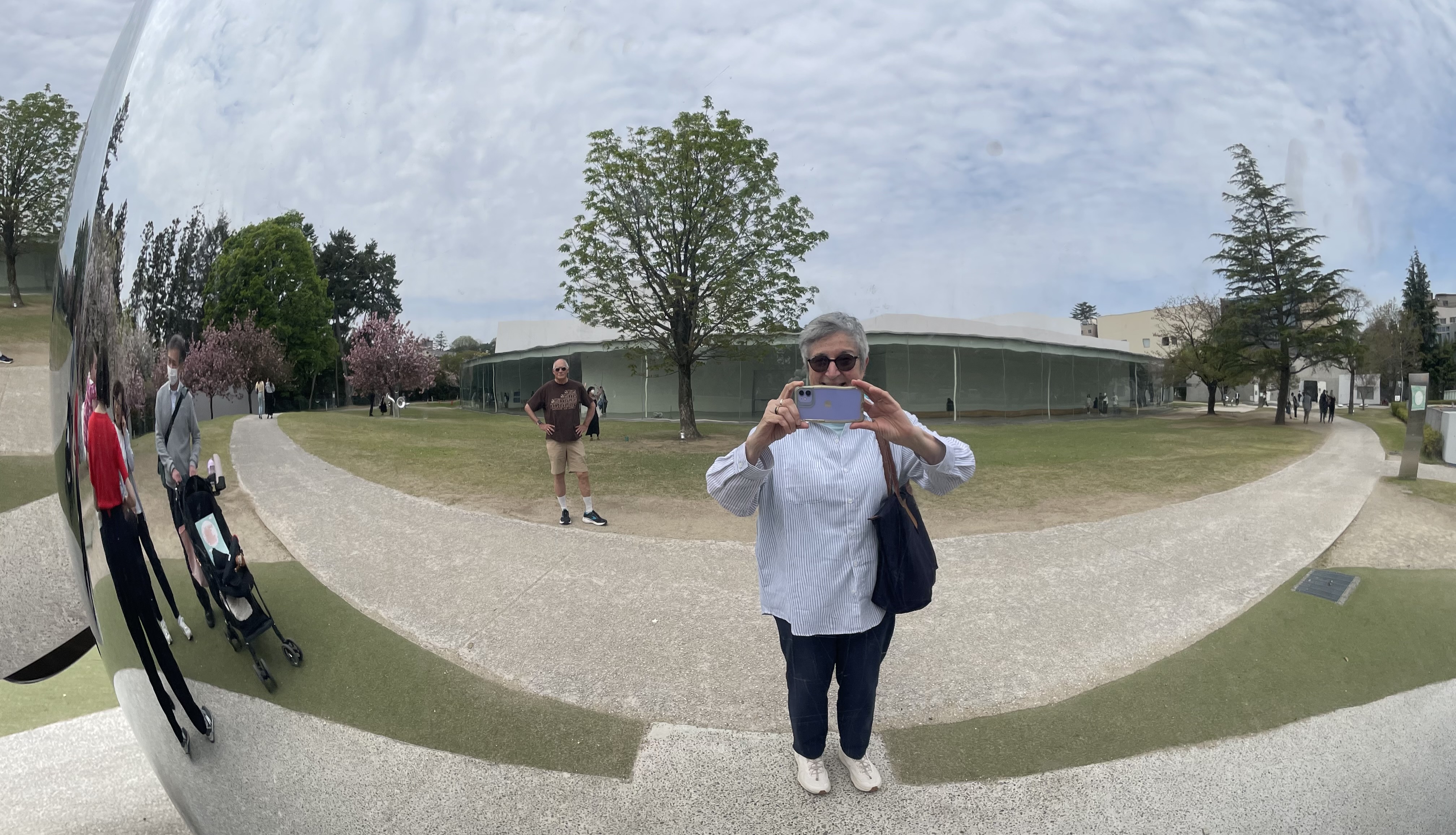
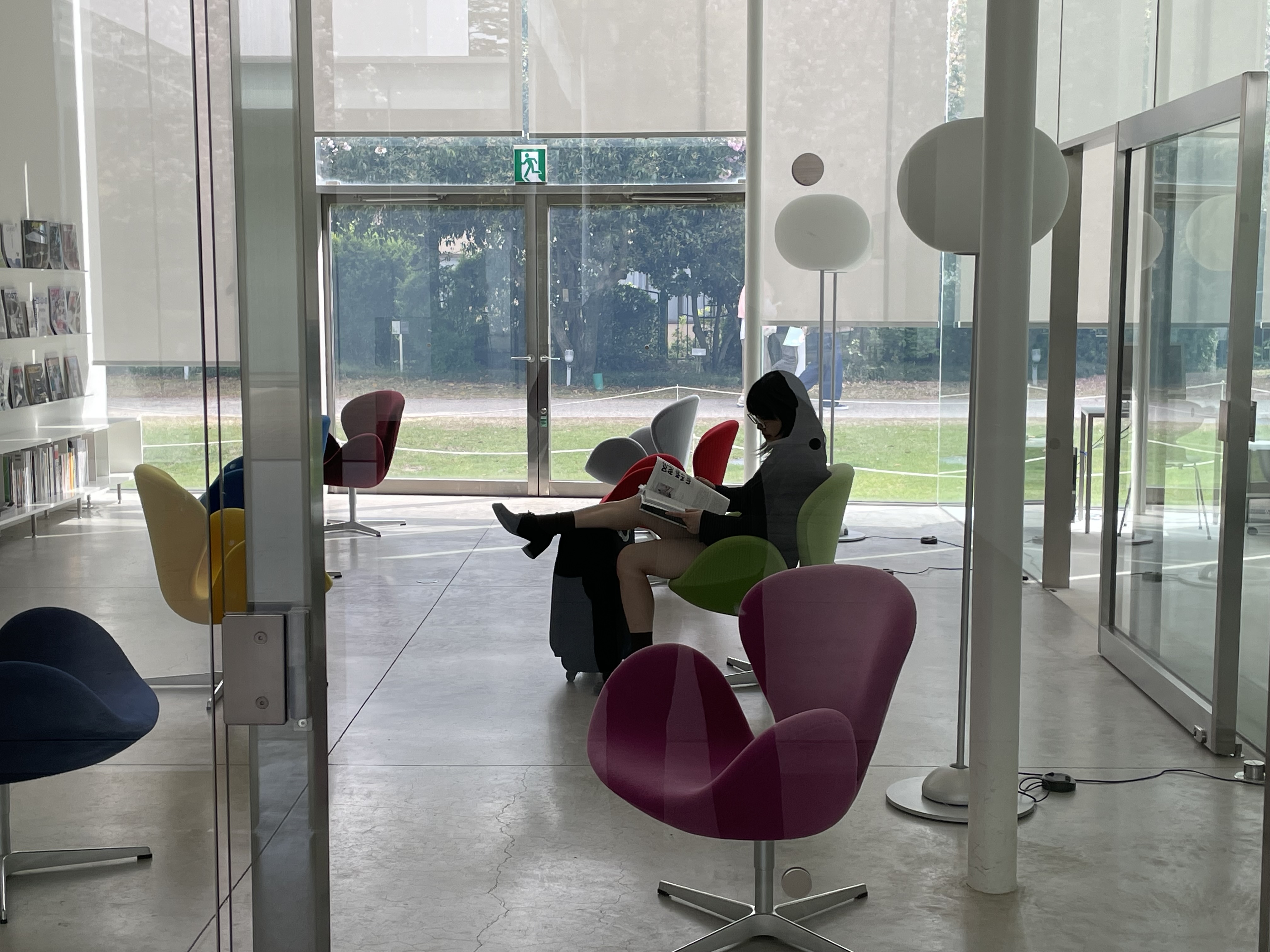
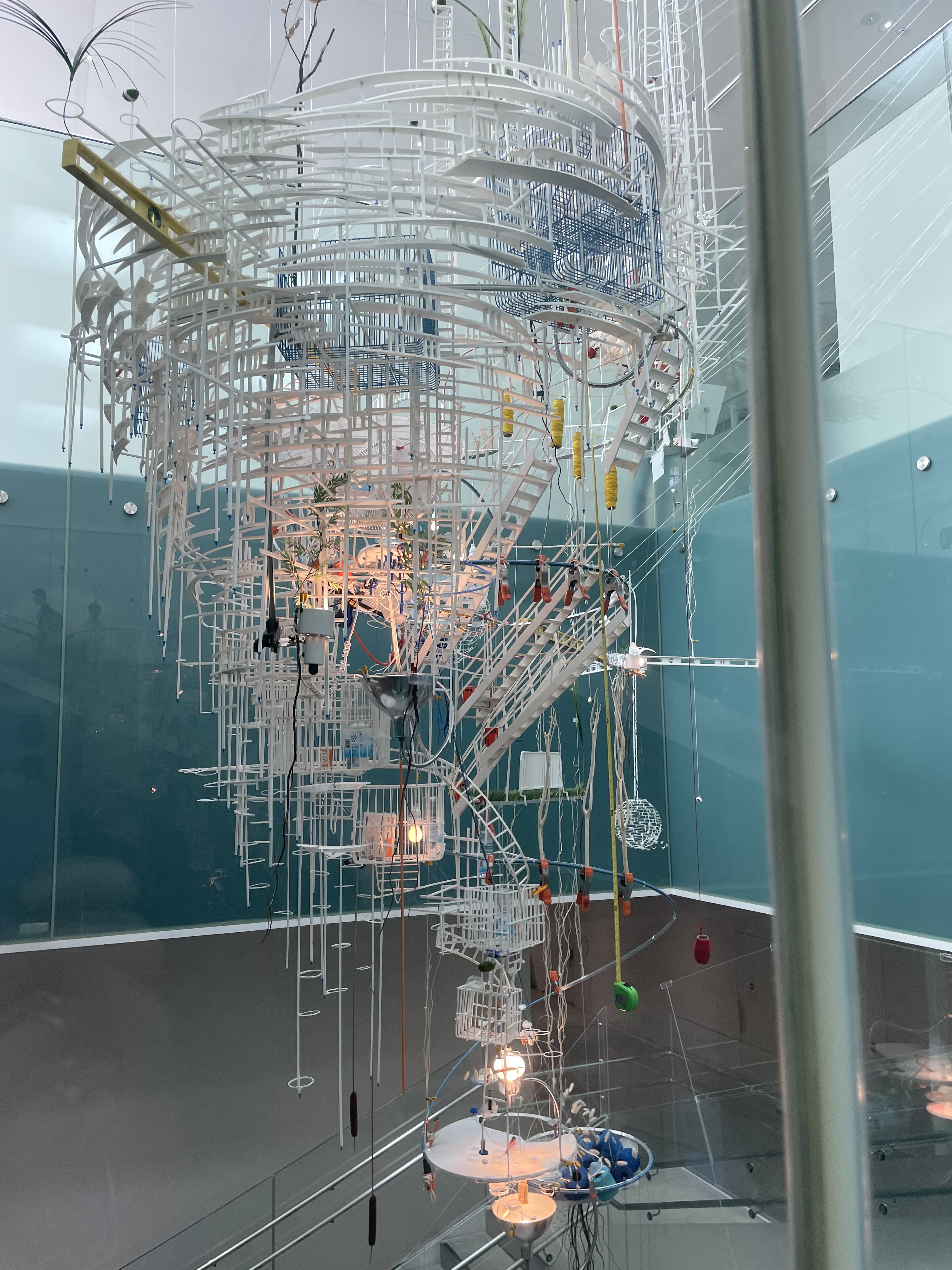
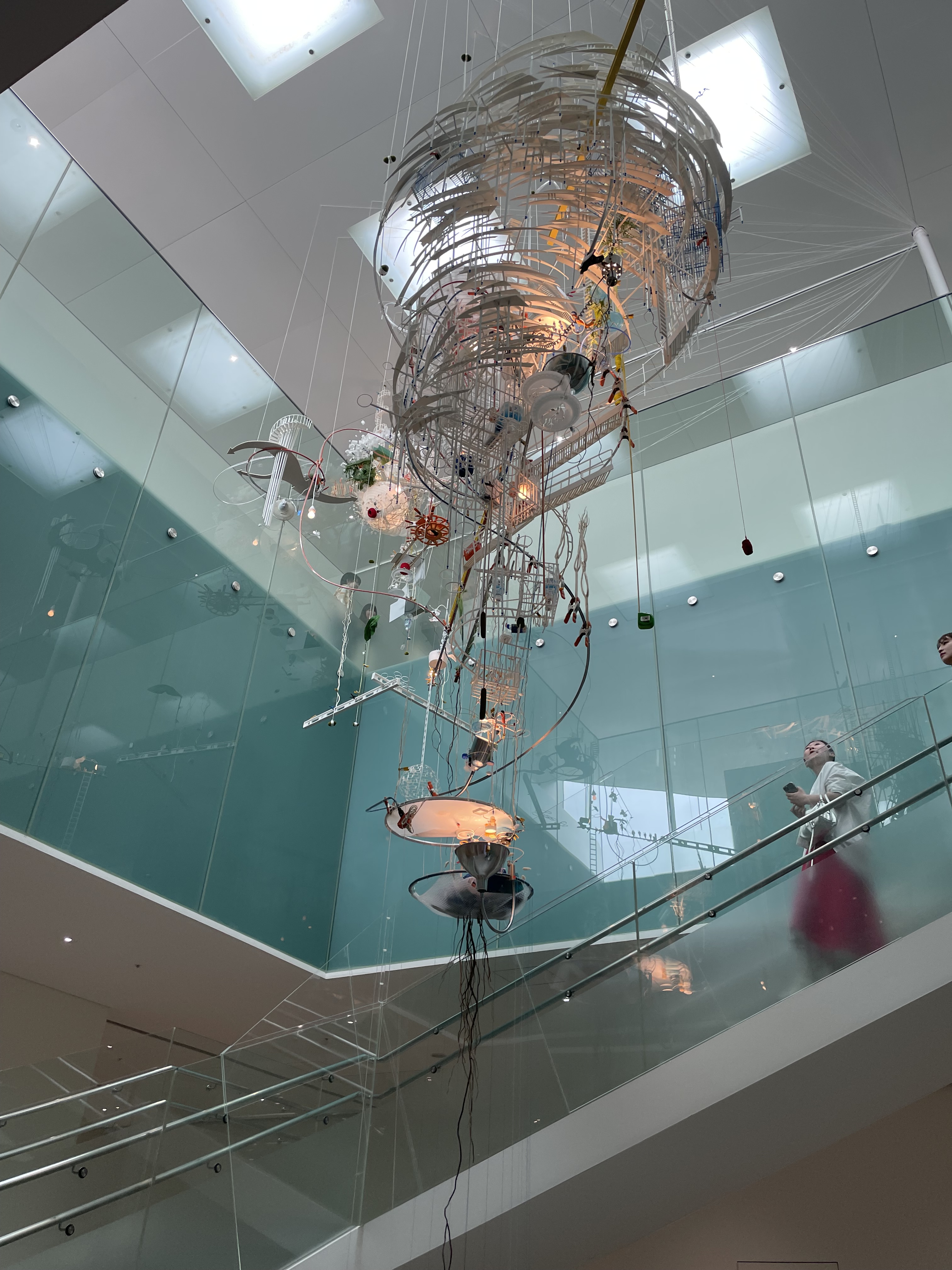
This amazing celebration of modern art was damaged in the December 2023 earthquake and the interior has yet to reopen fully. It sits in a large park filled with families on the Saturday we visited. Whispering tubes, climbing structures, cool-o places to sit, a large multi-colored glass box, reflective sculptures and wide lawns surround the circular glass building. Because only the exterior ring inside the building is open there is no admission fee—there is only one “gallery” with a single kinetic mobile is open. It was oddly entertaining—though all windows, the soundproofing is total and from the perimeter inside families carousing and couples strolling outside seemed like an immersive, silent movie.

There are plenty of museums around the park and castle ruins area, but we had neither time nor energy. We finished the day drinking and conversing and sharing pictures of our dogs via translation apps on our respective phones, with a young couple at the neighboring table in an izakaya around the corner from the hotel. They were from Tokyo and delighted we had been and were returning to their city. We returned to the Dormy Inn, had a last bath in the outside onsen where the moon shone and the wind blew, and fell into bed. On to Tokyo, last stop before home.

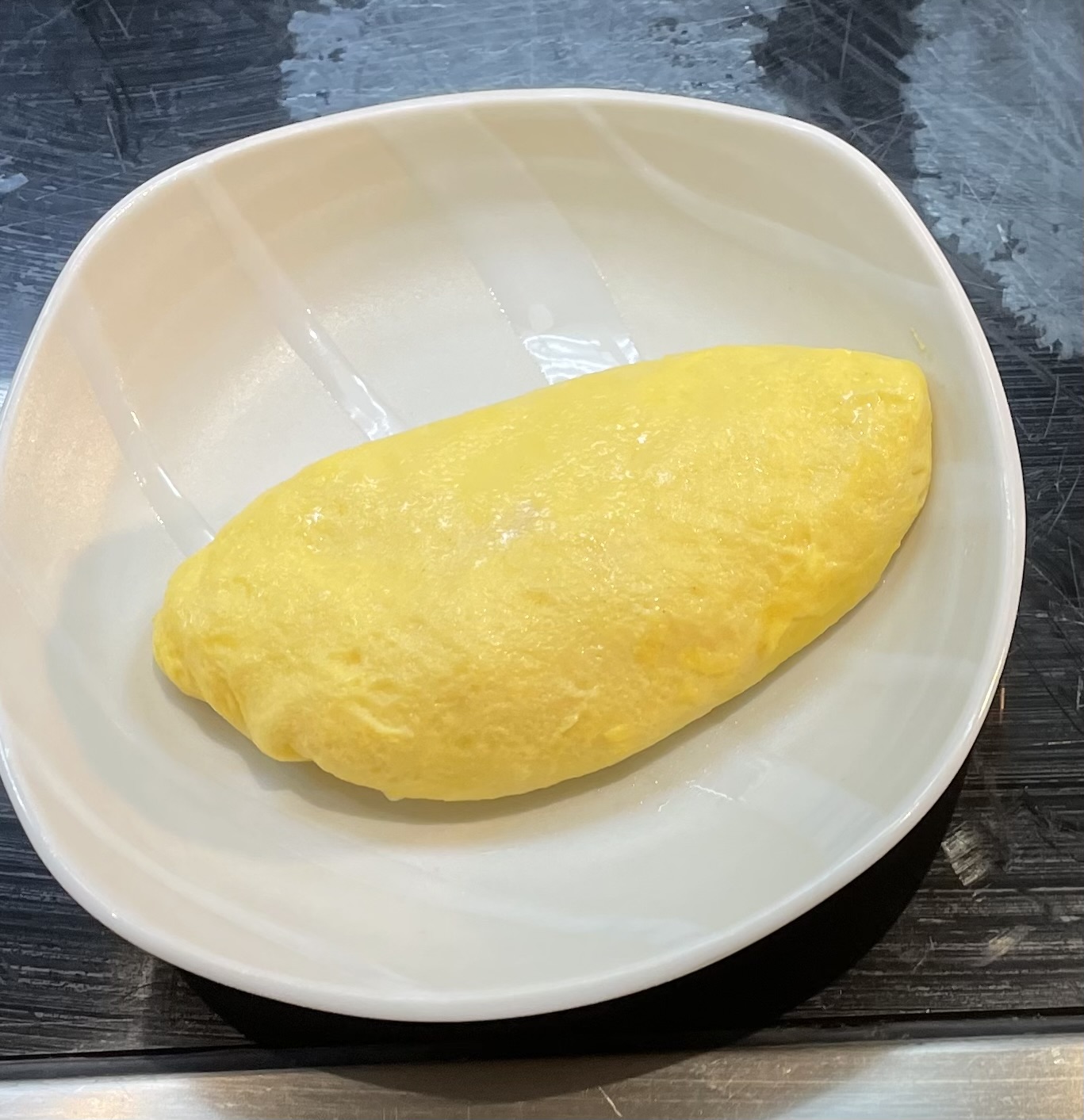
A Few Snaps of Breakfast at the Kanazawa Dormy

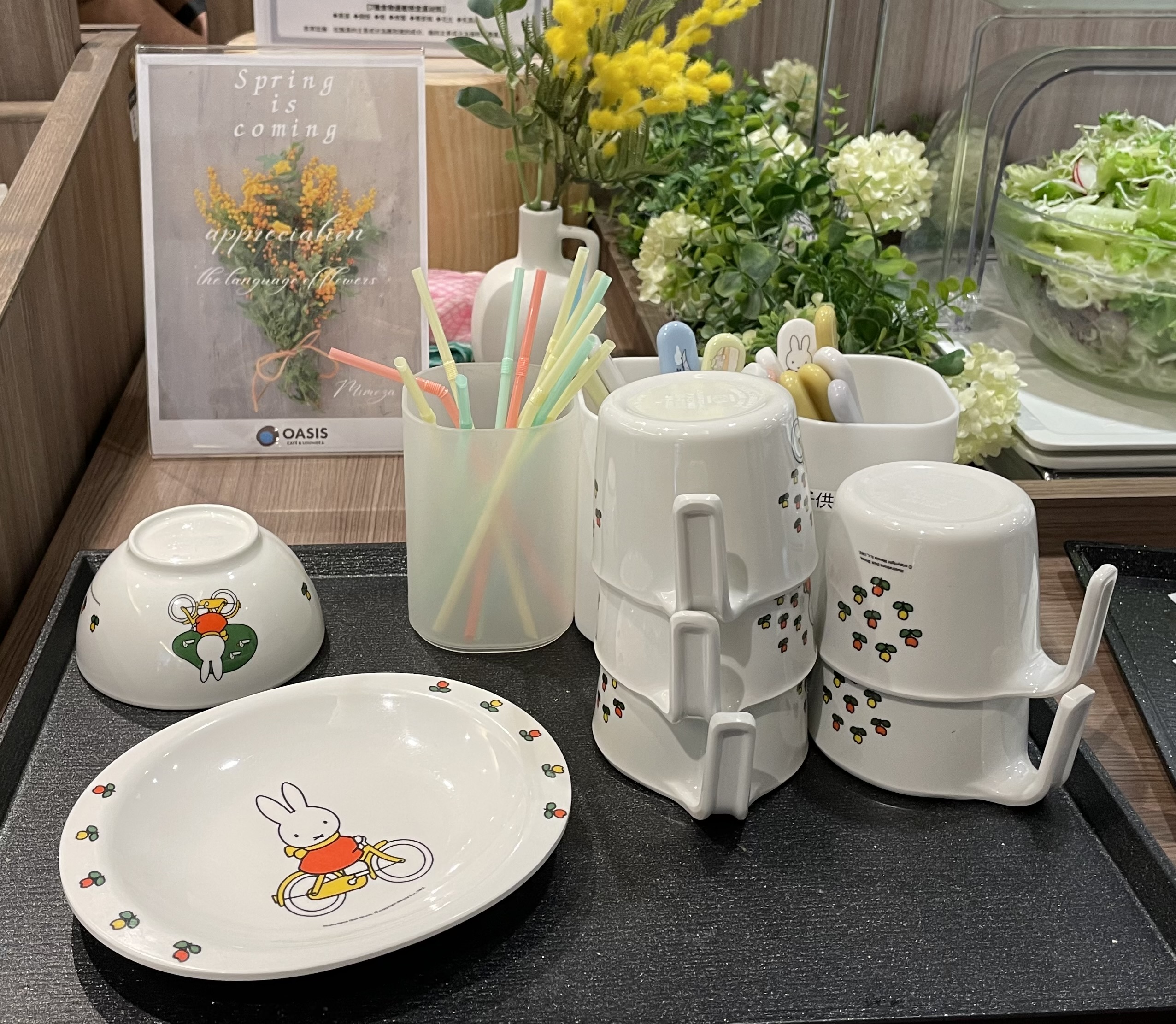
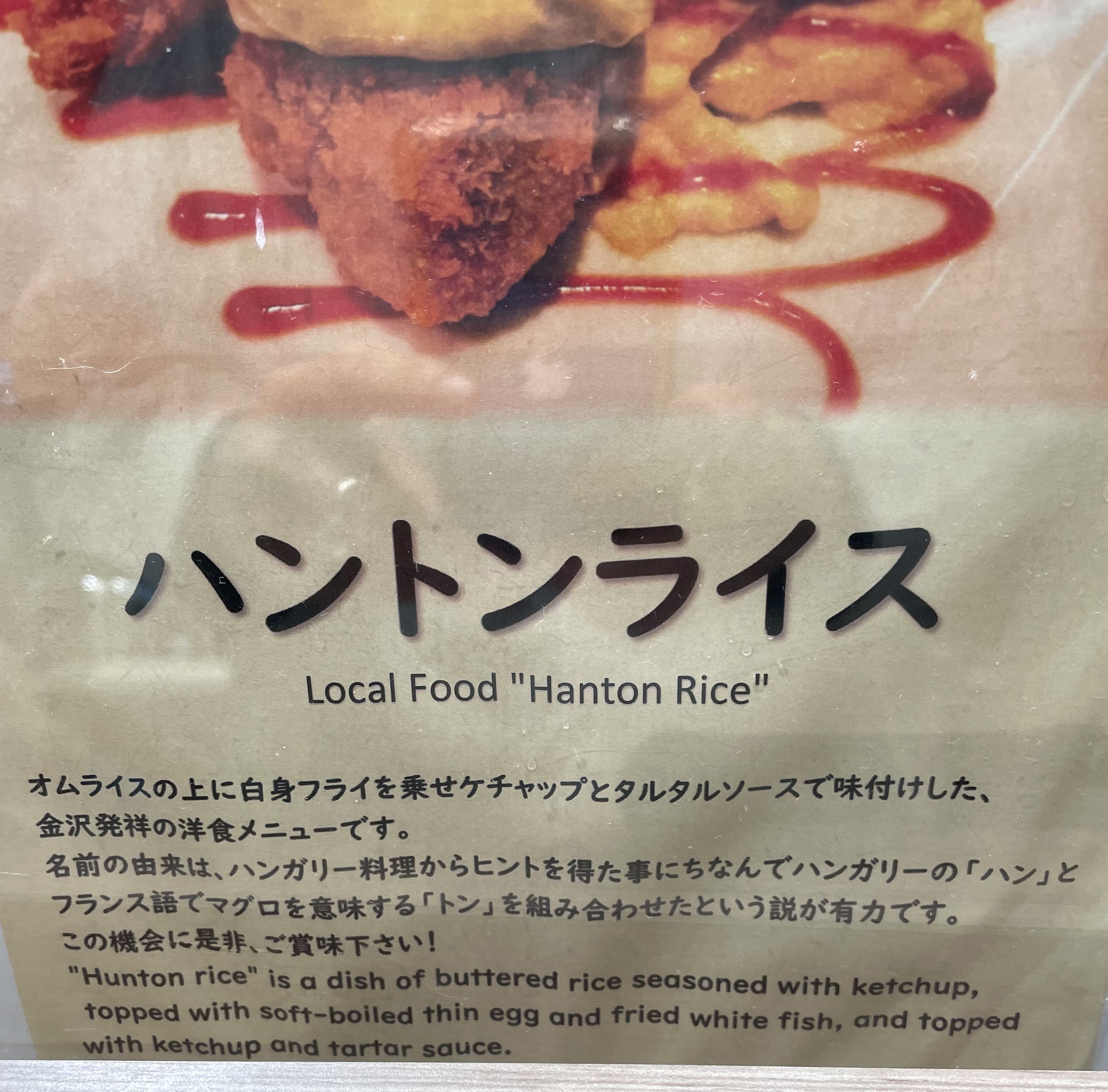
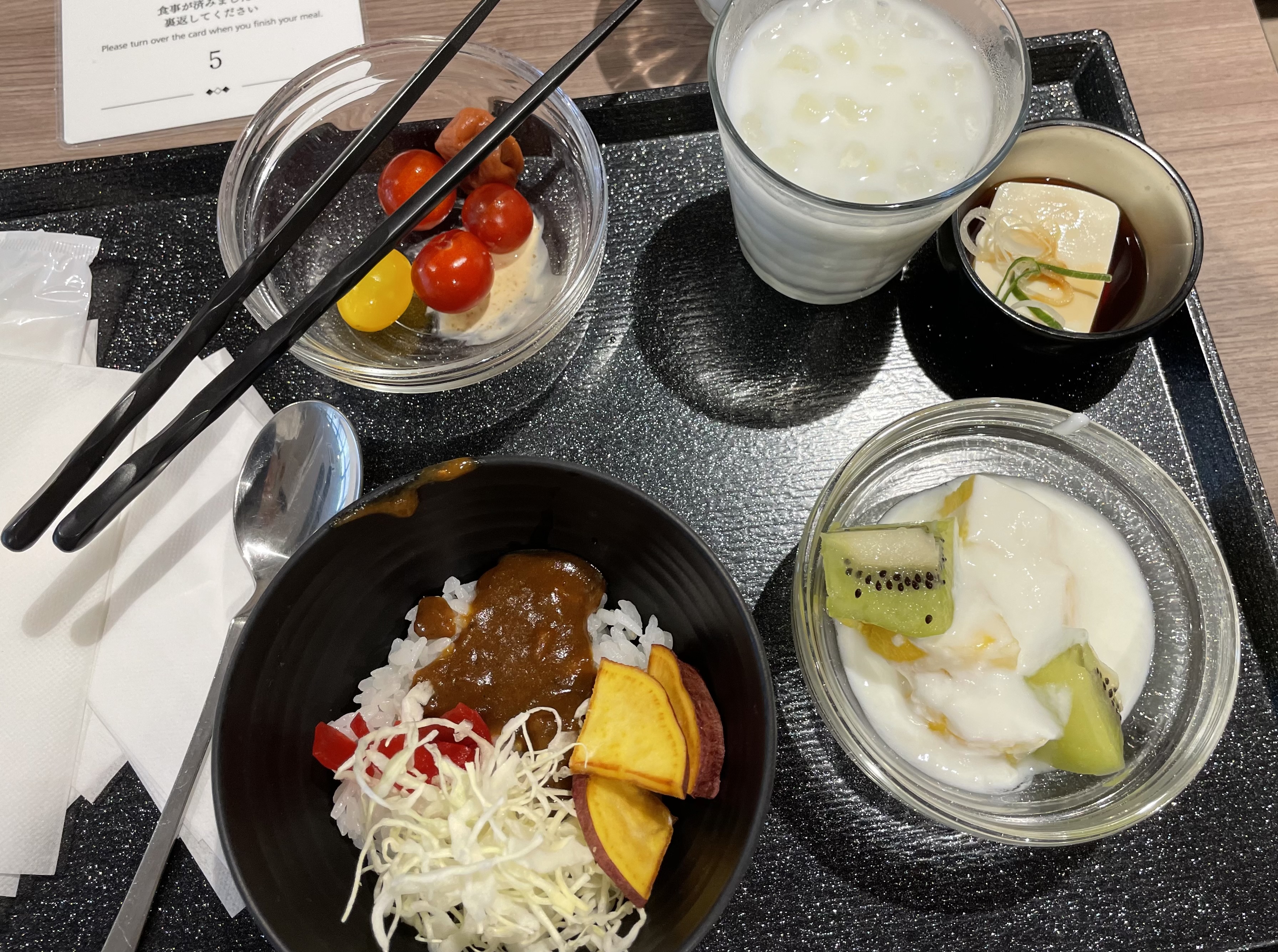
Kid friendly dishes, a strange local food combo, and my bowl of Kanazawa curry, appropriately garnished with pickles, roasted sweet potato, and shredded cabbage (surprisingly good).

Noodles

Soba, udon, ramen…yup, love them all and have had them all in Kyoto. The experiences were so different consider this post a compare and contrast.

Cold Somen on a Hot Day

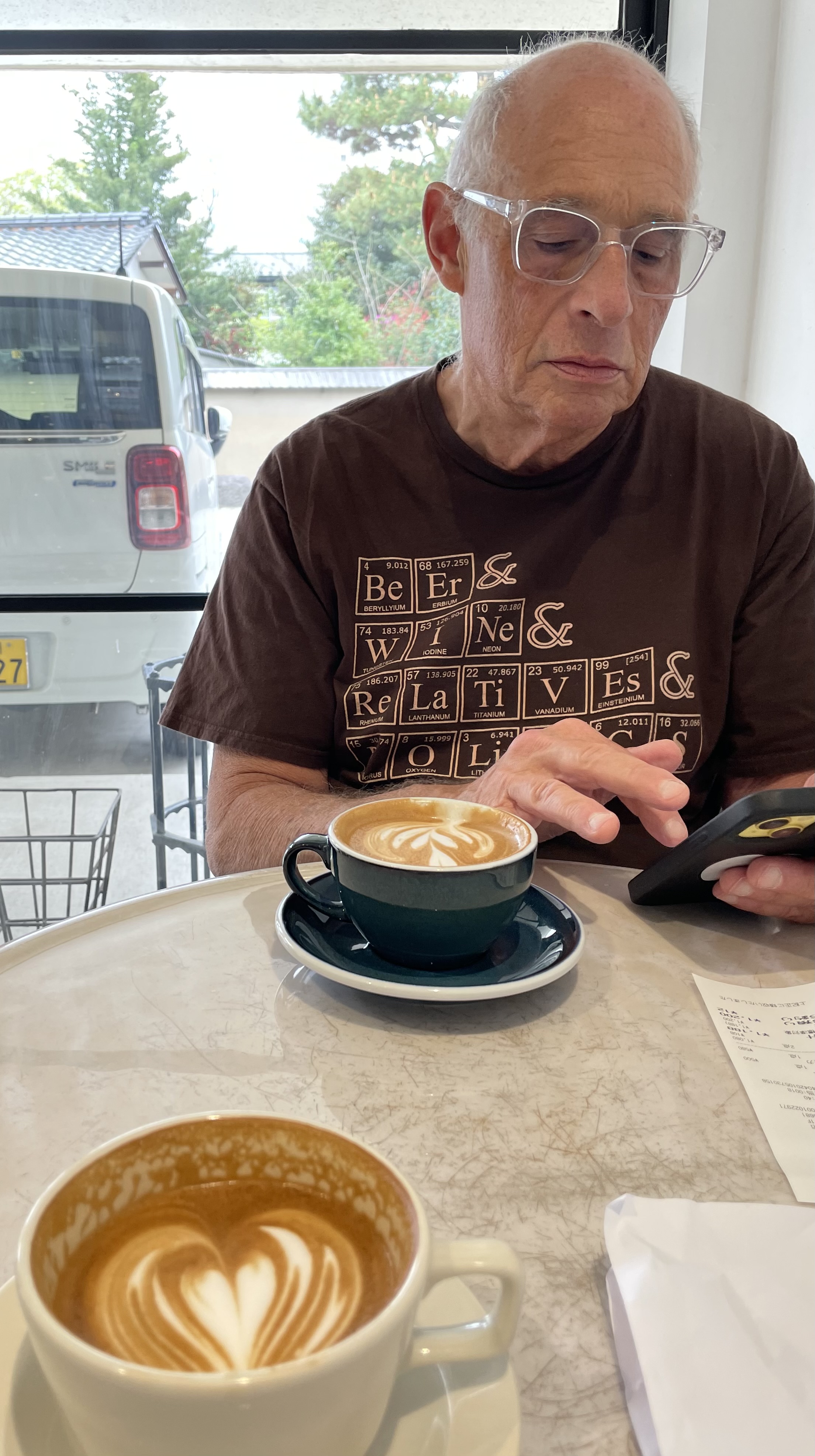
One afternoon wandering from one tiny, wrong ceramics place to another we (I) misjudged the length of the final walk and also misjudged the weather. It was hot. Not hot hot hot, and not at all humid, but the final segment was along a busy street and when we finished not finding anything we wanted to buy I was hungry. I was craving cold somen and David agreed and quickly found a place within a few blocks.

It was Sunday, mid afternoon, but there was a queue. Fortunately we could sit on a bench inside and while it looked like quite a wait from the number of parties waiting, it was the end of the lunch rush and all of a sudden everyone was sent up the stairs where the majority of the tables were and we were seated.

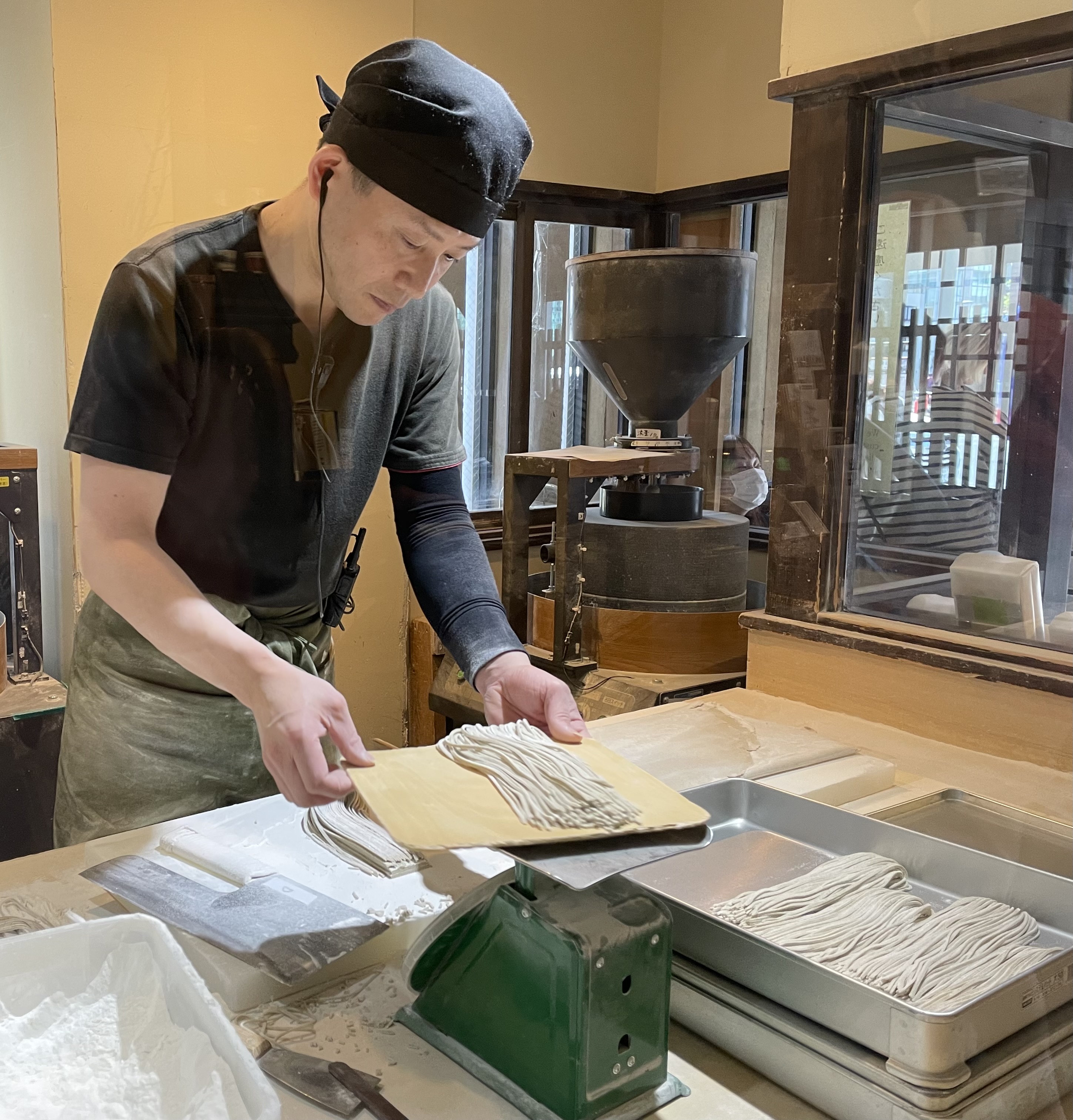
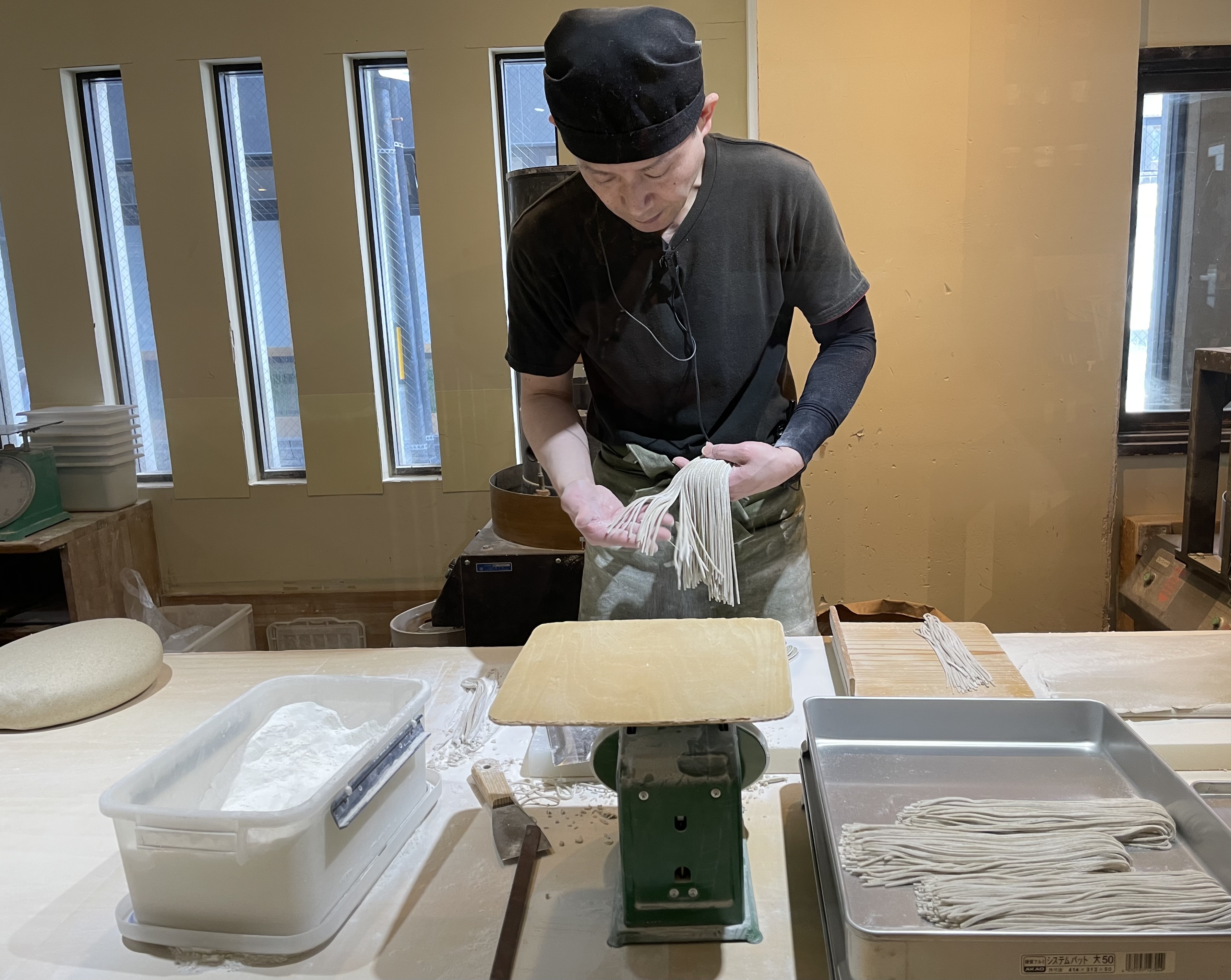
This nondescript-from-the-busy-street place made their own noodles (see pictures). David and I ordered different lunch sets and the food came within five minutes. Pickles, rice (mine with a few tempura and a drizzle of sauce underneath), noodles (my set had two kinds, one with grated daikon, one with just green onions and wasabi). A little pot with noodle dipping sauce. And near the end of the meal a large pot of noodle water appeared for us to add to any remaining sauce to make a finishing soup. Need I add it was delicious?

Arashiyama Udon

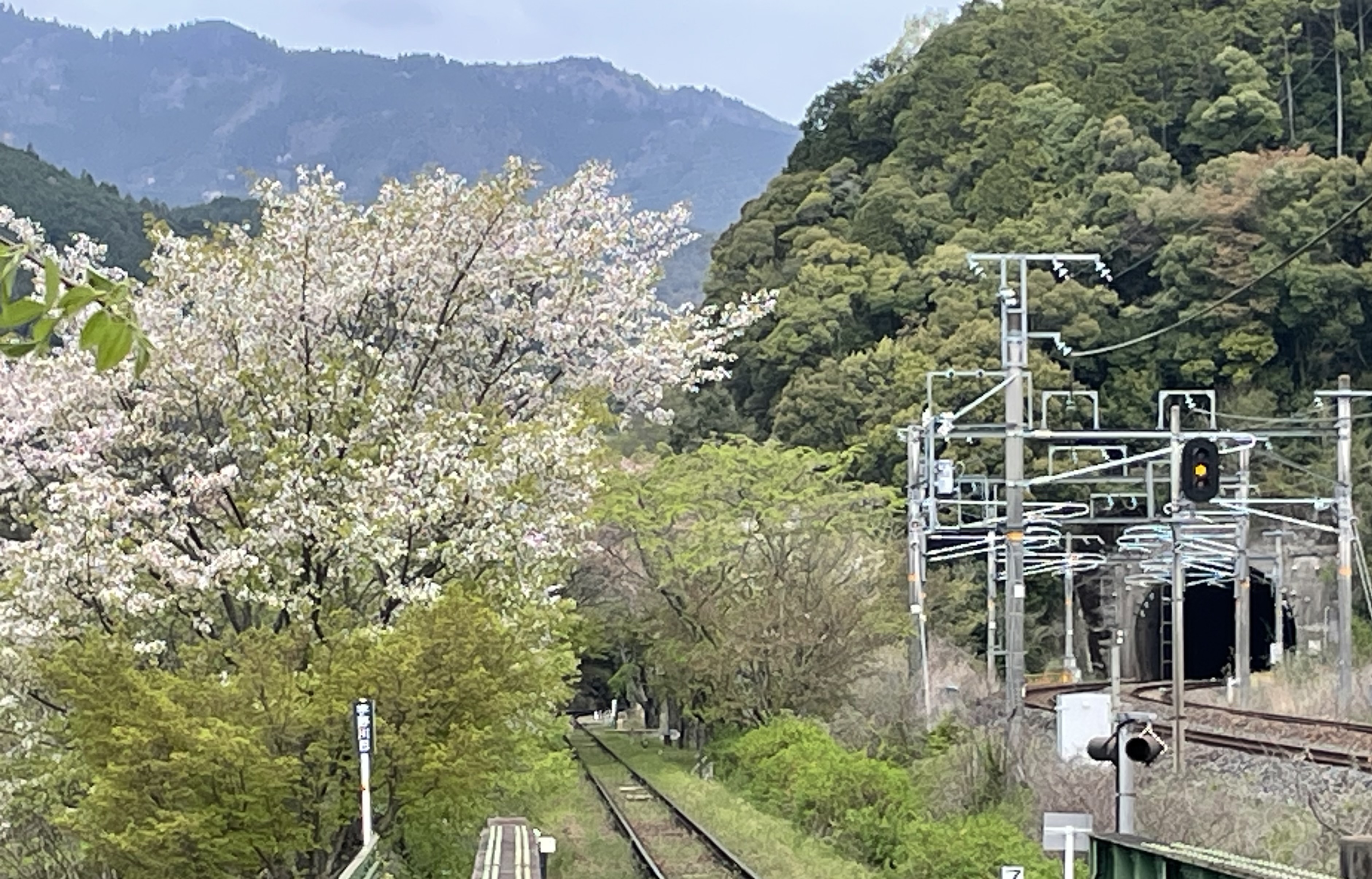
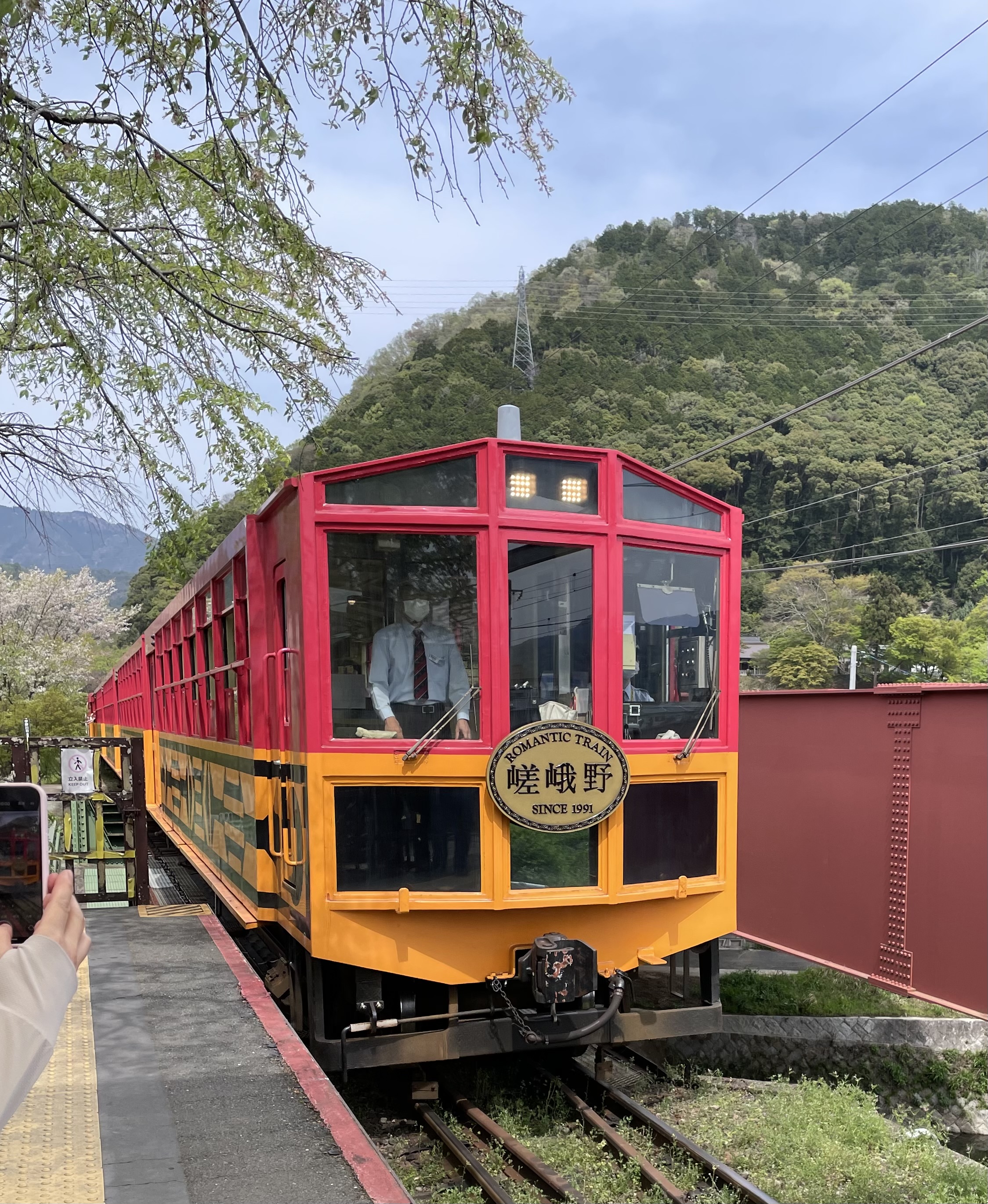
We had visited this lovely part of Kyoto twice in the past so this time we purchased tickets on the 7 km, 25 minute Romantic Train. You take a regular JR train past Arashiyama, walk 10 minutes through countryside from the JR station to the Romantic Train station, and board for the trip back into Arashiyama. The train trip was fun and funny. The conductor talked, solely in Japanese, the entire way, and a large percentage of riders had no idea what he was saying judging from the Chinese, German, English, etc. passengers. We all enjoyed it when he broke into a Don Ho song in a truly lovely voice. The trip itself followed the river unlike the JR train that sped along a much straighter path. We had chosen seats in the open car (no windows) so felt the 15 degree of so drop in temperature as we entered each of the many tunnels.

After such a grueling journey I was hungry again, so we walked through the bamboo forest and into the tourist area. We weren’t sure what to eat (decisions, decisions) but on google saw an udon place more or less directly in front of where we were standing with comments about the long lines. No line! Ten tables, pretty much all Japanese with a few entertaining families (we miss Poppy!) and excellent food.
Again, large lunch sets. I ordered the udon with duck. Both sets came with a scoop of tofu in a bit of dashi and grated ginger on top, enormous bowls of udon, a bowl of what seemed to be fried rice—it was rice mixed with enoki (?) mushrooms and other things. Yummy. We plowed through the servings and left more than satisfied.

Communal Ramen

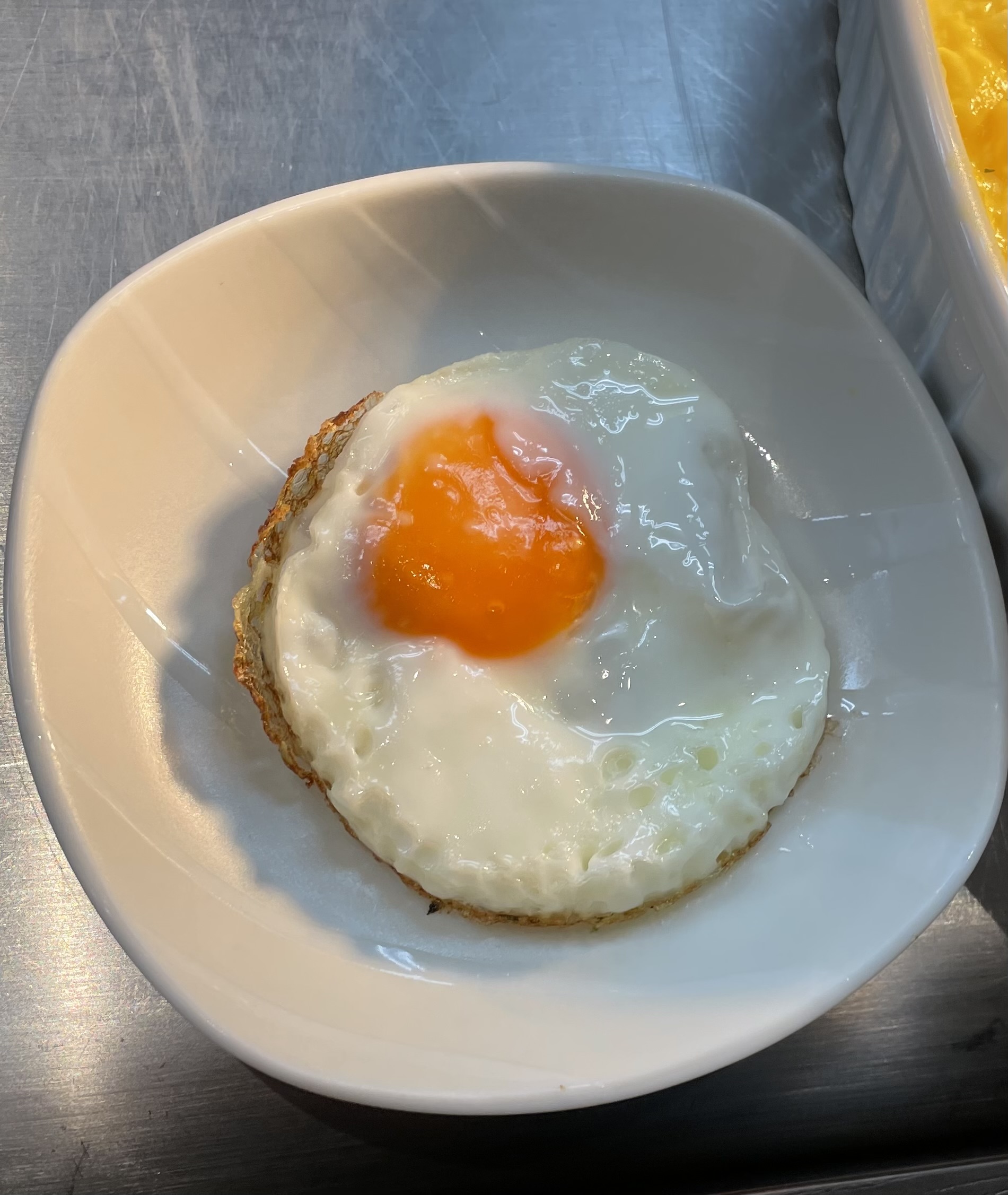
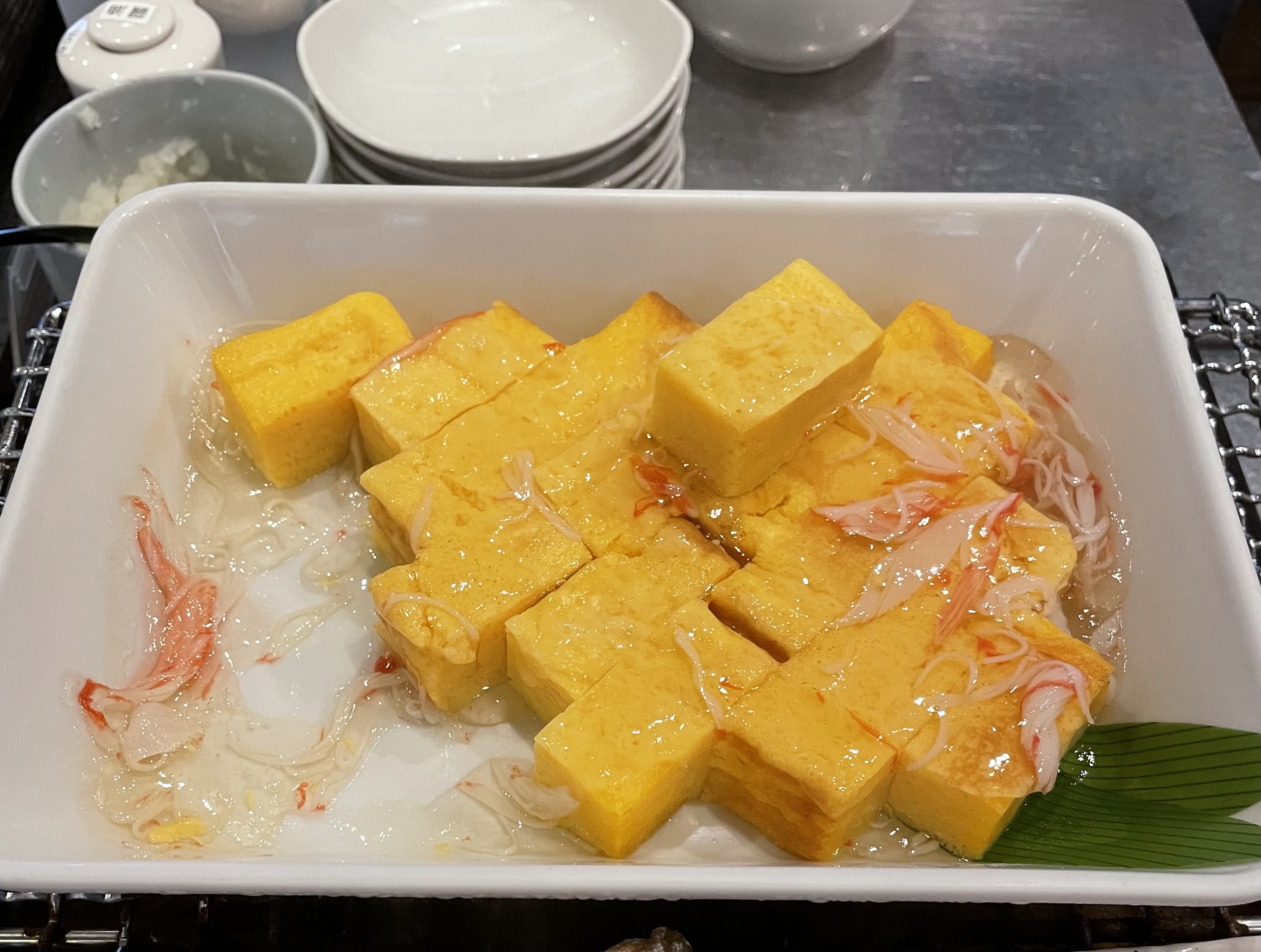
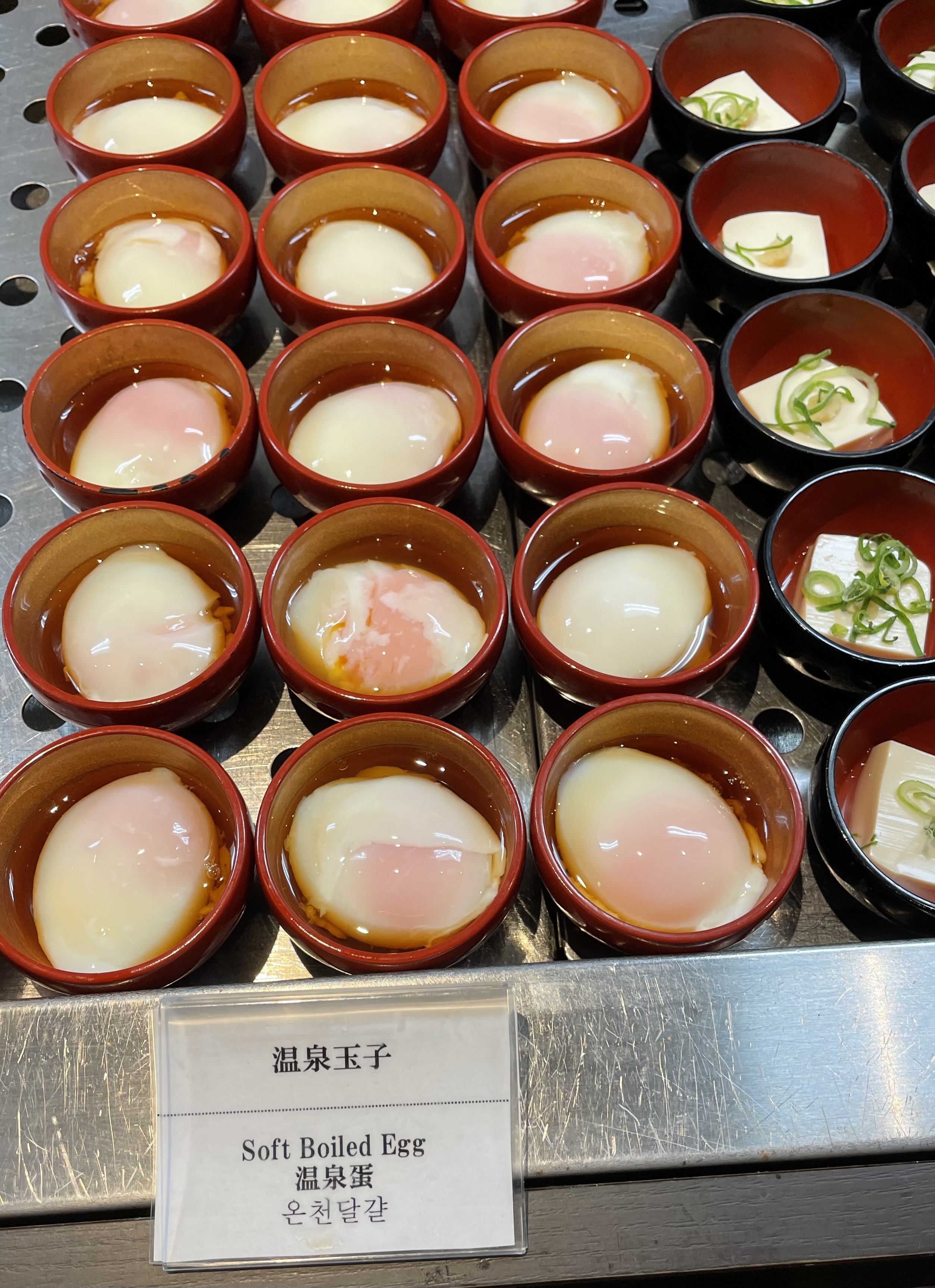
Except for our stay in the Tamba ryokan we have booked into Dormy Inns. They all have onsens, so lovely after a day of touring, huge buffet breakfasts (eggs seven ways!) and ramen from 9:30 to 11:00 each night. The ramen was a life saver the night we got to Tokyo, and last night after the late okonomyaki lunch in Nara it was all we needed for sustenance. The hotels supply top and pants sets to wear to the onsen, and, as posted, are appropriate to wear anywhere in the hotel. It is so casual and comfy to see many of us wearing the same beige PJs in the lobby, the breakfast room, the elevators, and for nighttime ramen. We loved it.

Not Noodles: Okonomiyaki Stop in Nara

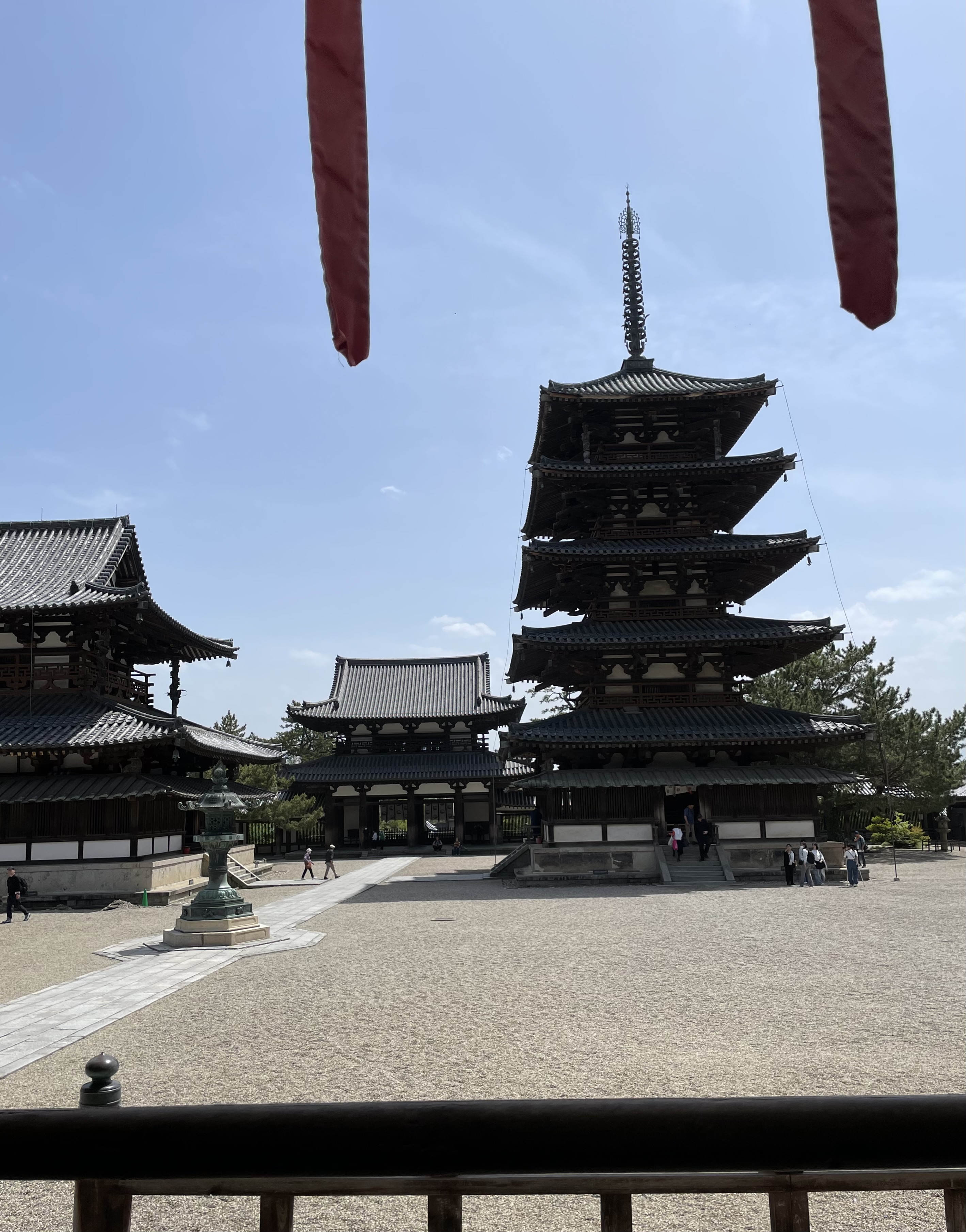
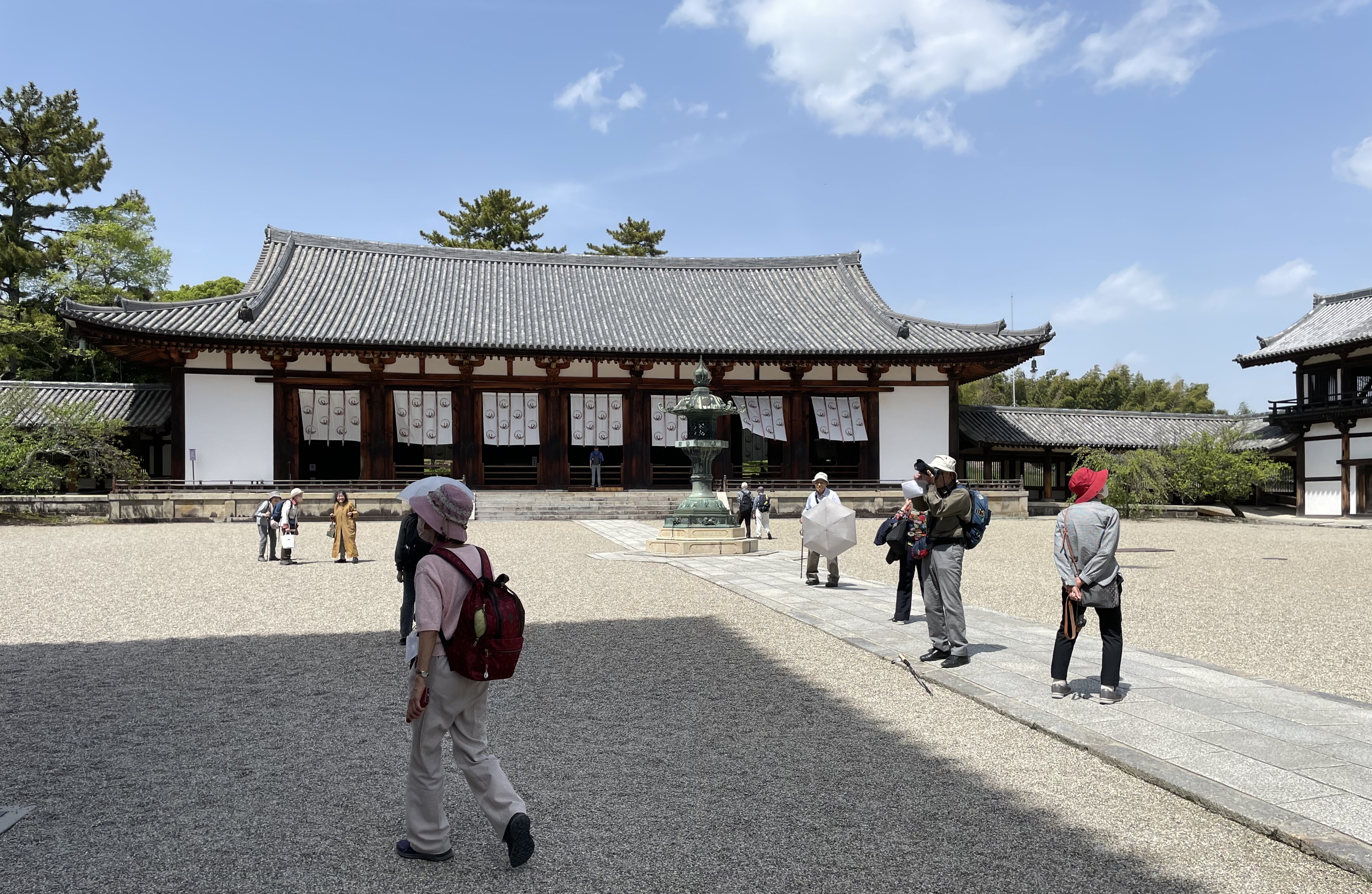
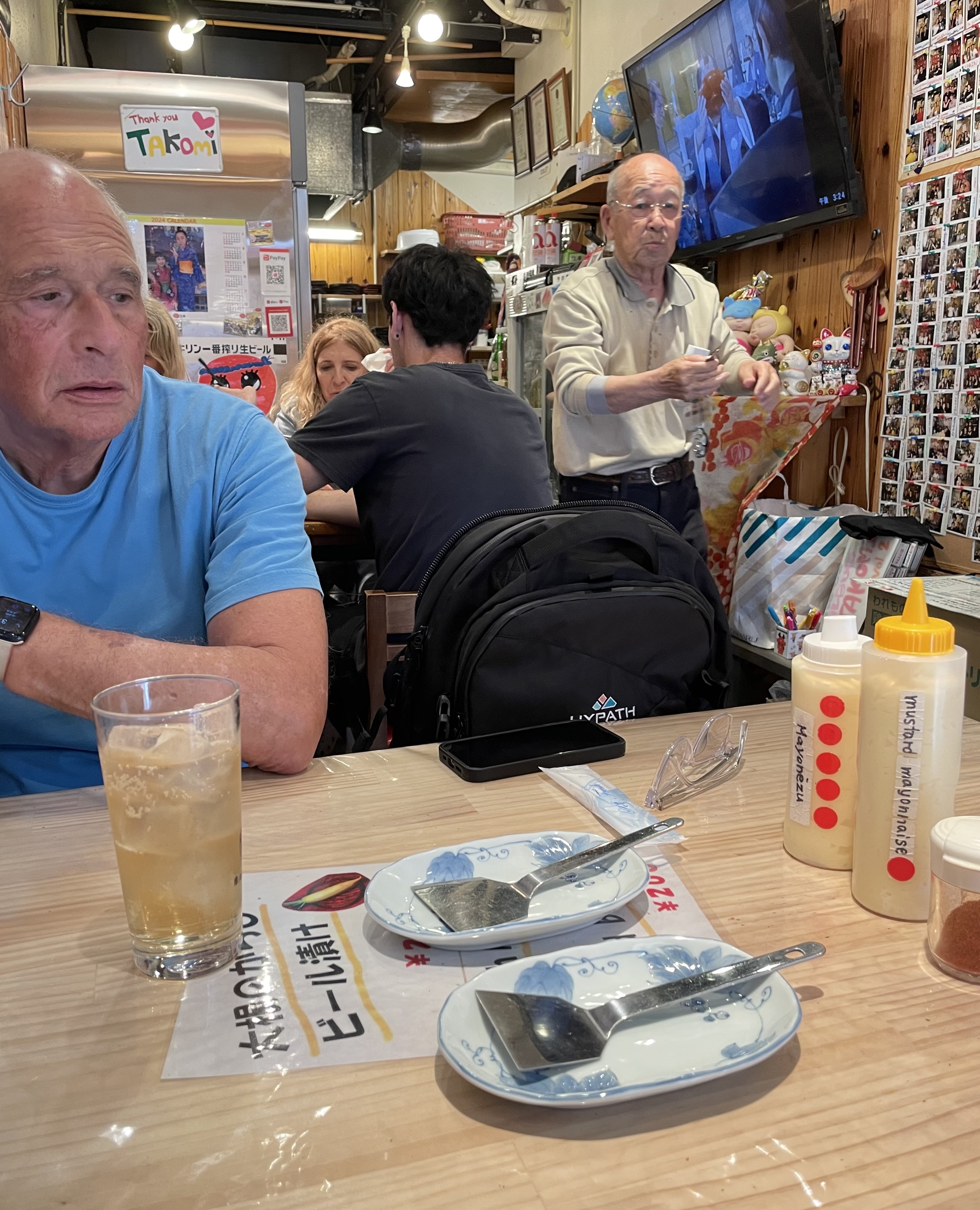
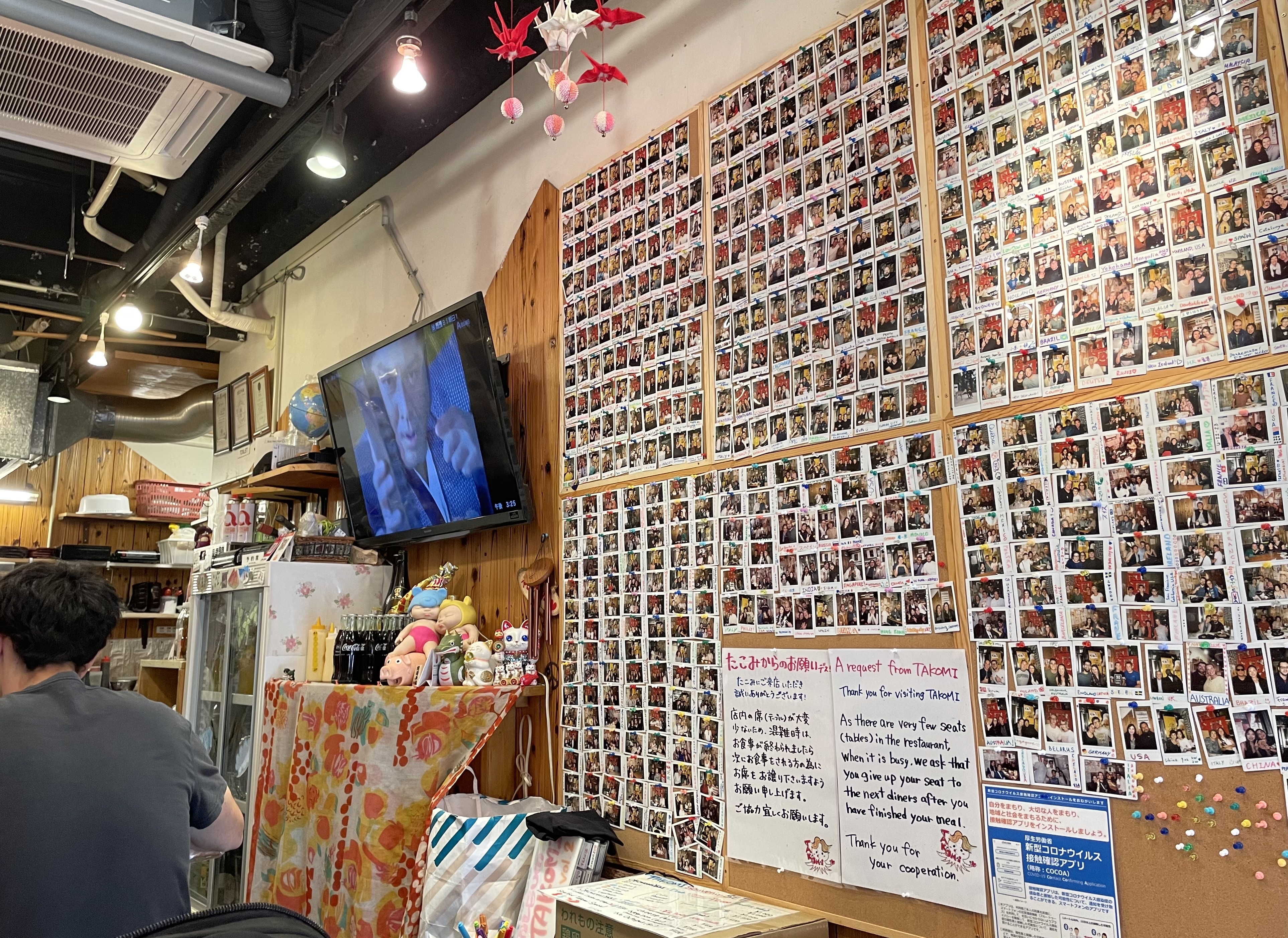
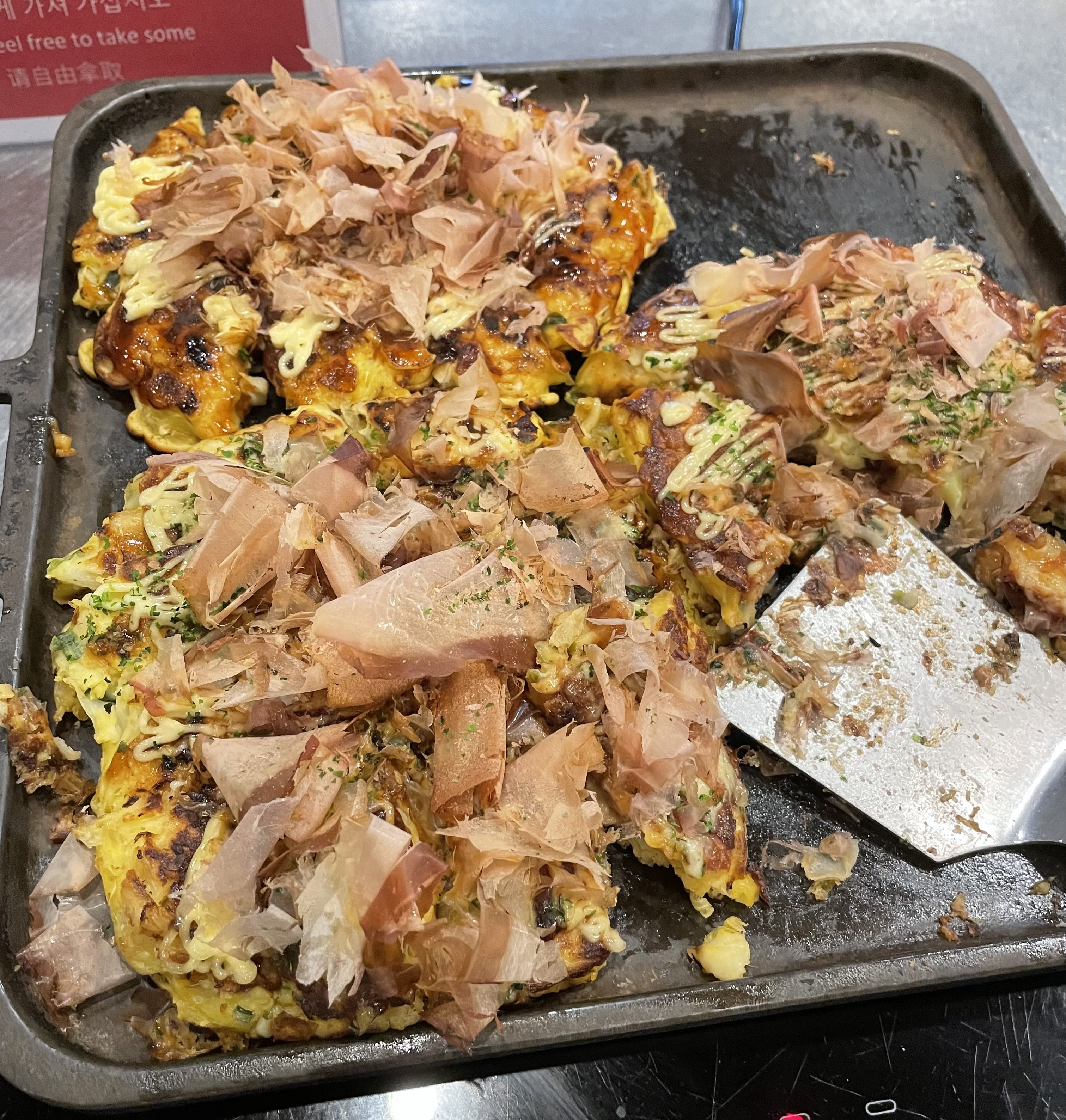
We were truly tired after a long trek around the Horyu-ji Temple complex—a quick train ride from Nara and where the world’s oldest wooden structure stands—and our plan had been to stop for okonomiyaki in Nara. We picked the one closest to the train station and found ourselves in this little gem named Takomi. Two tables inside and one on the sidewalk. We watched the server, all hustle and smiles, reshuffle patrons several times to make sure every seat was filled and no one was waiting. The food came literally sizzling on metal platters, so hot I had to move each bite to the side dish just to be able to eat it. Our table mates were a New Zealander guy and Thai gal, both now living in Thailand and having a
long weekend in Japan. I tried my best to finish my food and almost did.

Our delicious Dormy Inn ramen—no extra charge.
Maya Finds The Perfect Kashikatsu

Osaka is known for kashikatsu, one of the many kinds of “food on a stick” in Japan, and our young cousin Maya was tasked by mom Harumi to find a place. Now, Maya is a student and gravitates toward bargains, while her mother was determined to find someplace really great, and Harumi was quick to veto the first suggestion where each skewer is about 100 yen—way too cheap!


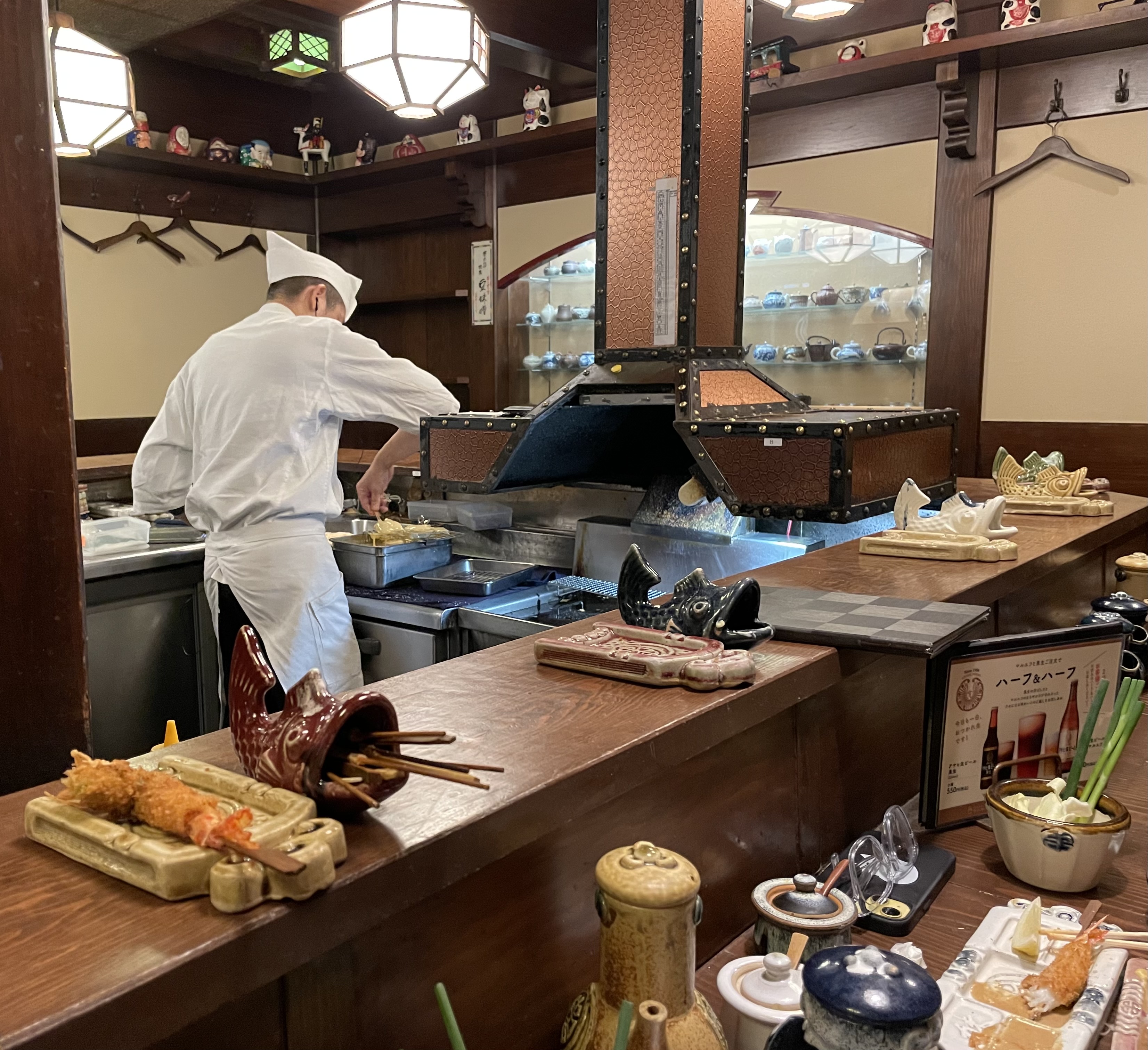
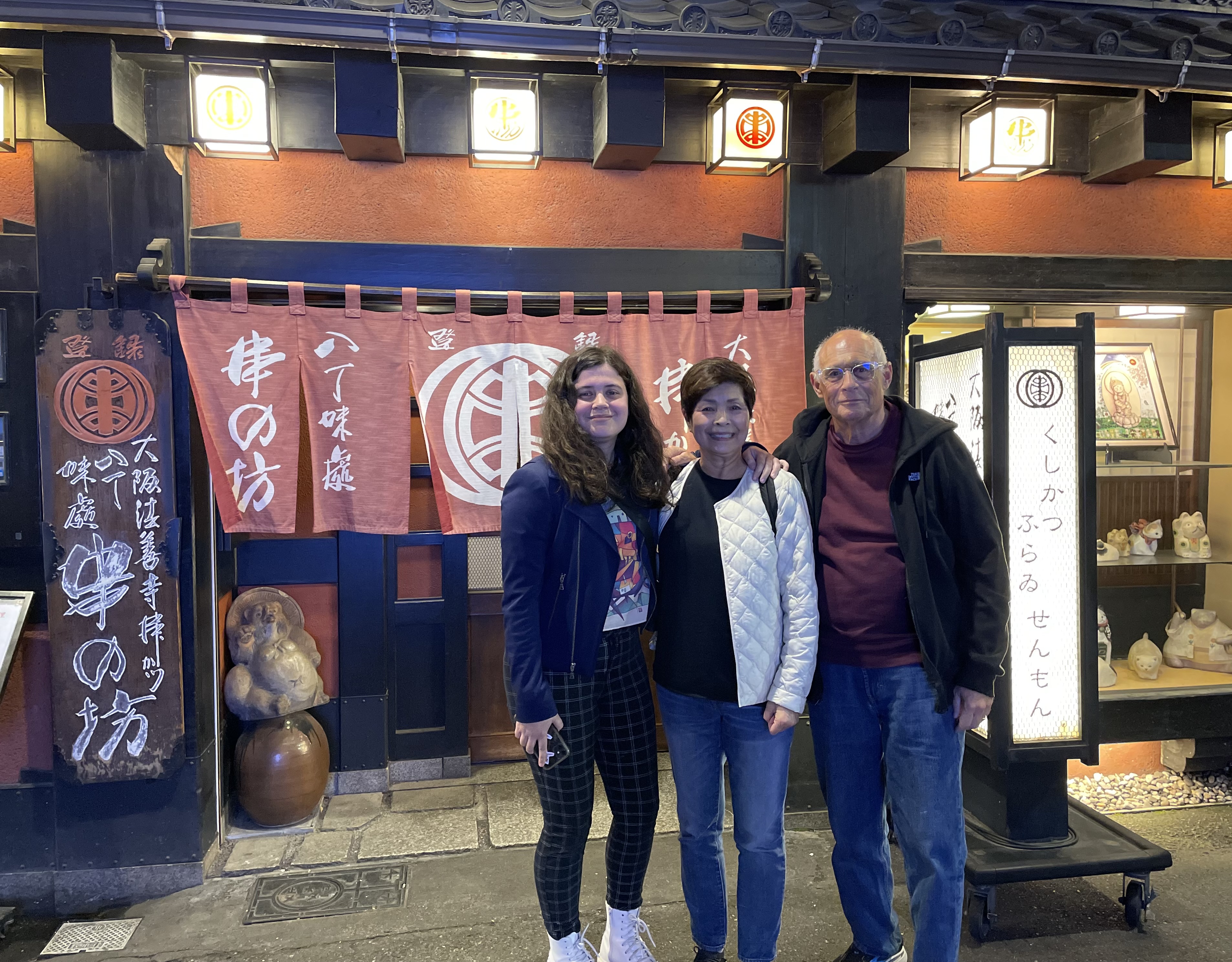
Maya did her mom proud by finding Kushinobo Osaka Hozenji 串の坊 大阪法善寺本店, a 15 minute walk from our hotel in Dotonbori but off the madhouse main street. Oh, what a find. The restaurant is clearly old and reminded me (really) of an old time German restaurant in Chicago or Milwaukee. Dark wood paneling, two rooms only in which all the counter seats surround the cooking space. We ordered the special omikase sets, which they were able to tailor to Maya’s pescatarian diet. The three of us, on the other hand, will eat just about anything put in front of us.


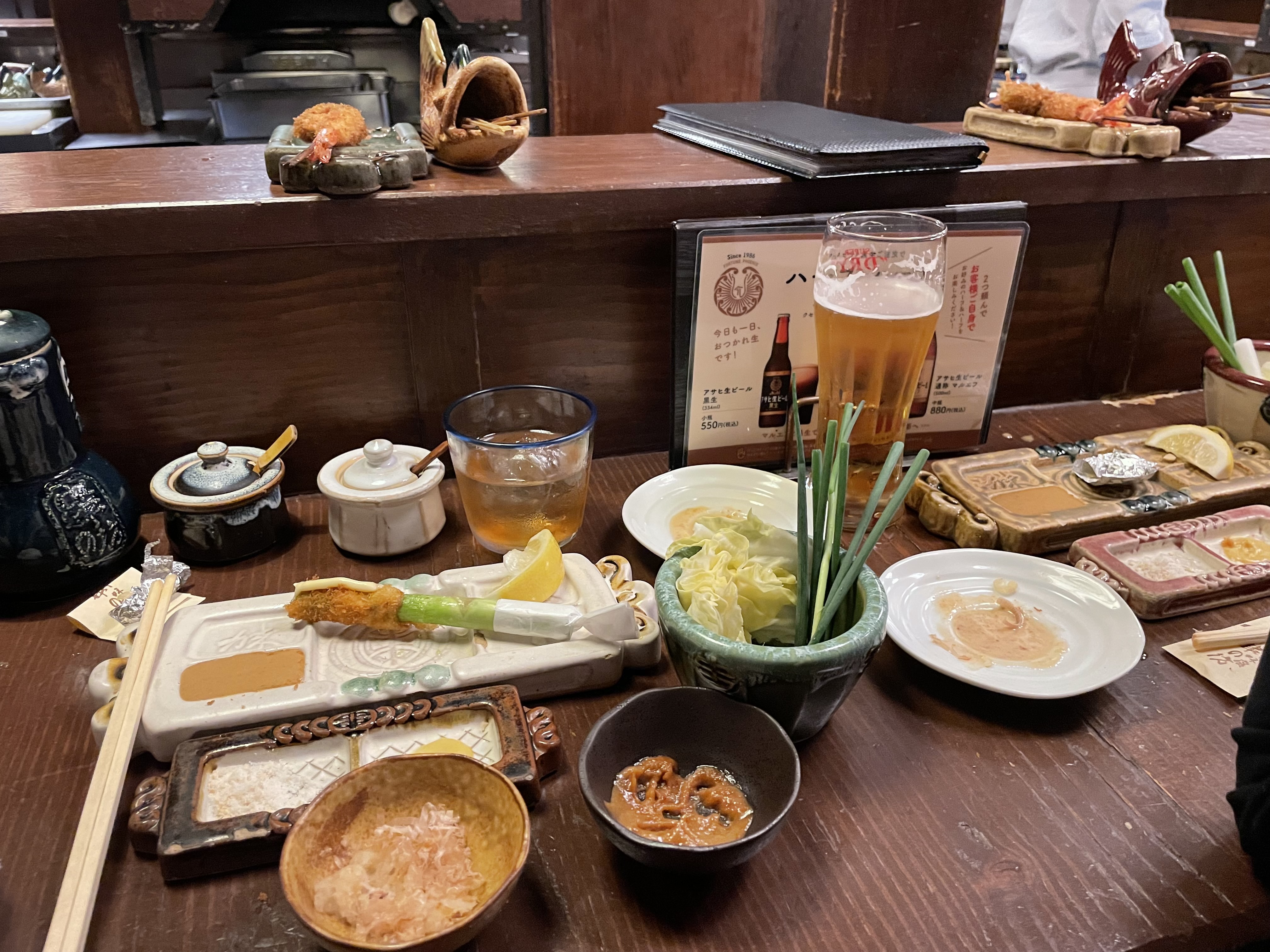
Each item is cooked to order, and watching the chef dip the item in batter, draining each on a heavy mesh screen, then each coated in bread crumbs, deep fried, and placed with care in front of you. A variety of sauces were available at each place setting, as well as salt and a wedge of lemon. You eat the item as it is served and put the empty wooden skewer in a ceramic fish. Most things look quite similar (except for items like asparagus, obviously recognizable) yet everything is distinct and distinctive.

Just as we were all agreeing that we had no more room, dessert appeared—a square of grapefruit jello. Light, tart, perfect.

Marvelous.

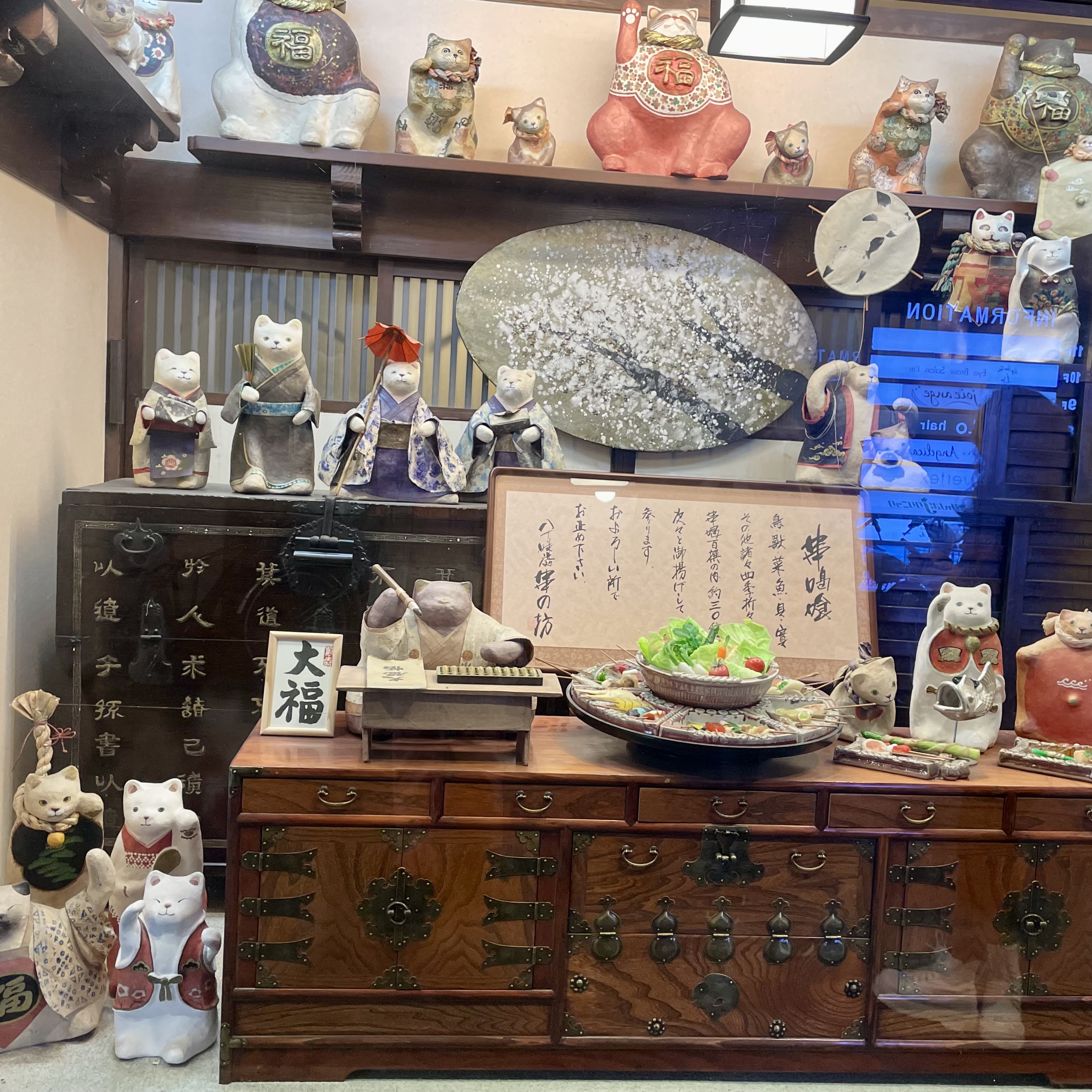
Fortunately we paused outside in time to notice the delightful window—not the typical plastic food but this:

If “Things” Happen, Maybe We Move to Himeji

With our cousin Harumi we had decided to take a day trip from Osaka to Himeji, primarily to see Himeji Castle. Renowned for being the most intact of the major castles in Japan, we chose it to represent our castle experience here…we learned years ago that visiting every castle we come upon gets boring. We pinned our castle hopes on Himeji.

A short train ride via Shinkansen from Shin-Osaka station, this beautiful, open, modern city, much smaller than Osaka, Kobe, etc., welcomes visitors with a spectacular view of the castle directly across, maybe 10 blocks away, from the station. It’s a wow moment, and also produces instant concern that it is awfully high and how in heaven’s name does one get up there?

We set off to find out, walking this wide, boulevard with perhaps the most beautiful manhole covers we had ever seen, bits of statuary, and inviting shops. As we approached the castle grounds there was a small set of permanent food stalls with covered picnic tables behind—especially convenient and friendly. We stopped to inspect one of the offerings and laughed that it was okonomiyaki on a stick! We continued on.

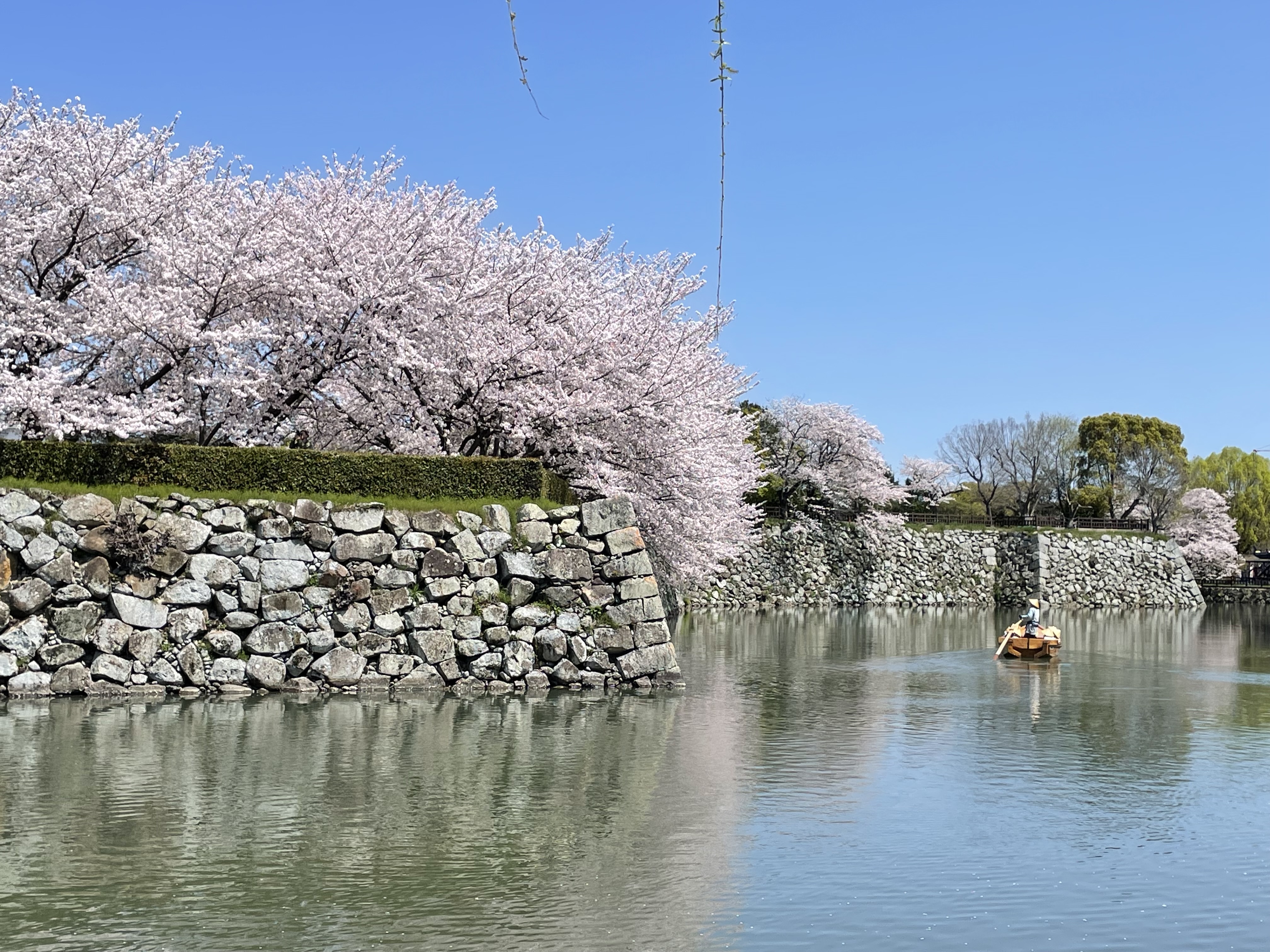
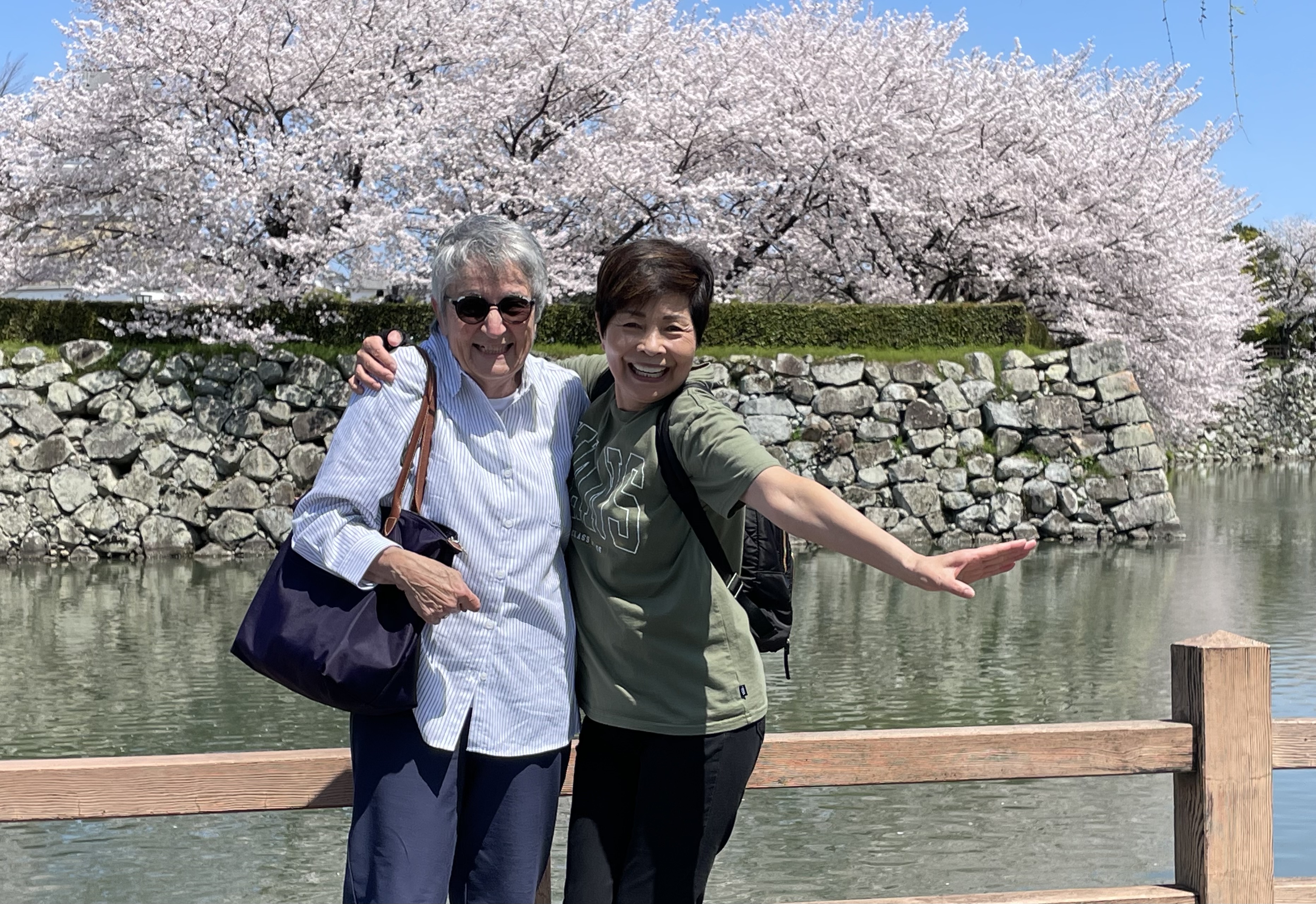
You enter the castle gate by crossing the moat on a lovely wooden bridge. Sakura—cherry blossoms—everywhere. I mean, everywhere. And they were in full bloom everywhere. We have been extraordinarily lucky to see this beauty. I hadn’t considered just what it means to be here in cherry blossom time. Well, it’s pretty great.

We wound our way up the castle grounds amidst the many tourists of all nationalities, lots of little kids running around, and enjoying the endless blue sky and vistas of mountains. Up and up we went, a slowly moving parade of visitors. A very Asian appearing young man struck up a conversation with us. He was from Texas, and traveling alone because his buddy bailed on him for some girl. After a considerable climb we entered the castle building proper and we all laughed to read the sign—we had made it to the castle basement! A few more rooms and we were in a staging area with a guide repeating “please remove your shoes on the brown mats” and we did as we were told. Plastic bags—recycled—were offered and everyone is now carrying an extra bag. We rejoined the parade in our socks (never travel in Japan without wearing clean socks), navigating slippery, centuries old wooden floors and stairways that were virtually ladders. Everyone follows the signs and barriers and slowly we all continue, up and up and up. It was, frankly, grueling, and also exciting and scary.

The trek tops out at the top—the sixth floor—where a small family shrine sits in the middle of the room. Many Japanese visitors, including Harumi, bowed, clapped, as is the custom of respect. Then we embarked on the descent, again, in SOCKS down, down those ladder-staircases. At least on the down direction they have put narrow treads so it wasn’t as treacherous as we had feared. Nonetheless it’s tricky because each step is so narrow one must turn sideways to fit one’s foot. I don’t think I have ever been so glad to get down from a climb. We continued on to the castle grounds, surrounded by sakura and filled, now it was midday, with kindergarten aged kids in their uniforms running around, families on blankets, older people (like us) sitting on rocks in the shade.

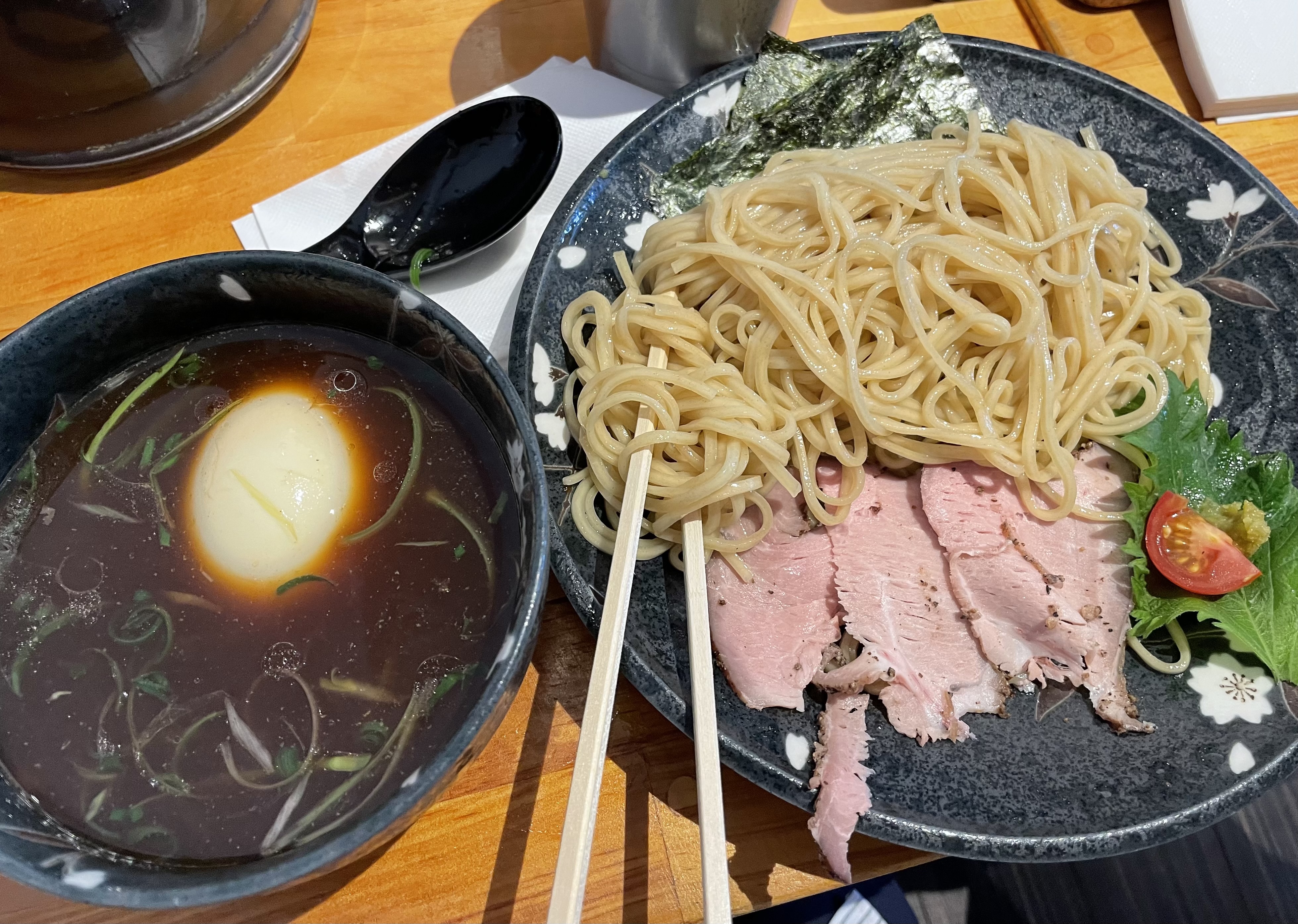
Lunch! We earned it. There was a lovely arcade street back toward the station (note: do NOT go into antique stores in Japan—everything is authentic, many very old bowls and cups come with the original wooden box…so tempting) and came to a noodle/ramen shop where a young woman stood beckoning us in. Harumi and David had soup ramen, I had the dipping ramen. Dipping broth was way too rich for soup but delish to drag the noodles through. Yum! It is refreshing to find hundreds, thousands of independent enterprises which in our experience are always good.

Satisfied, we decided to find out how to get to the gondola that would take us to a large forested area of shrines and halls. You can imagine how tired we were after the castle climb, and this sounded relatively easy. I mean, don’t gondolas take you to the tops of things?

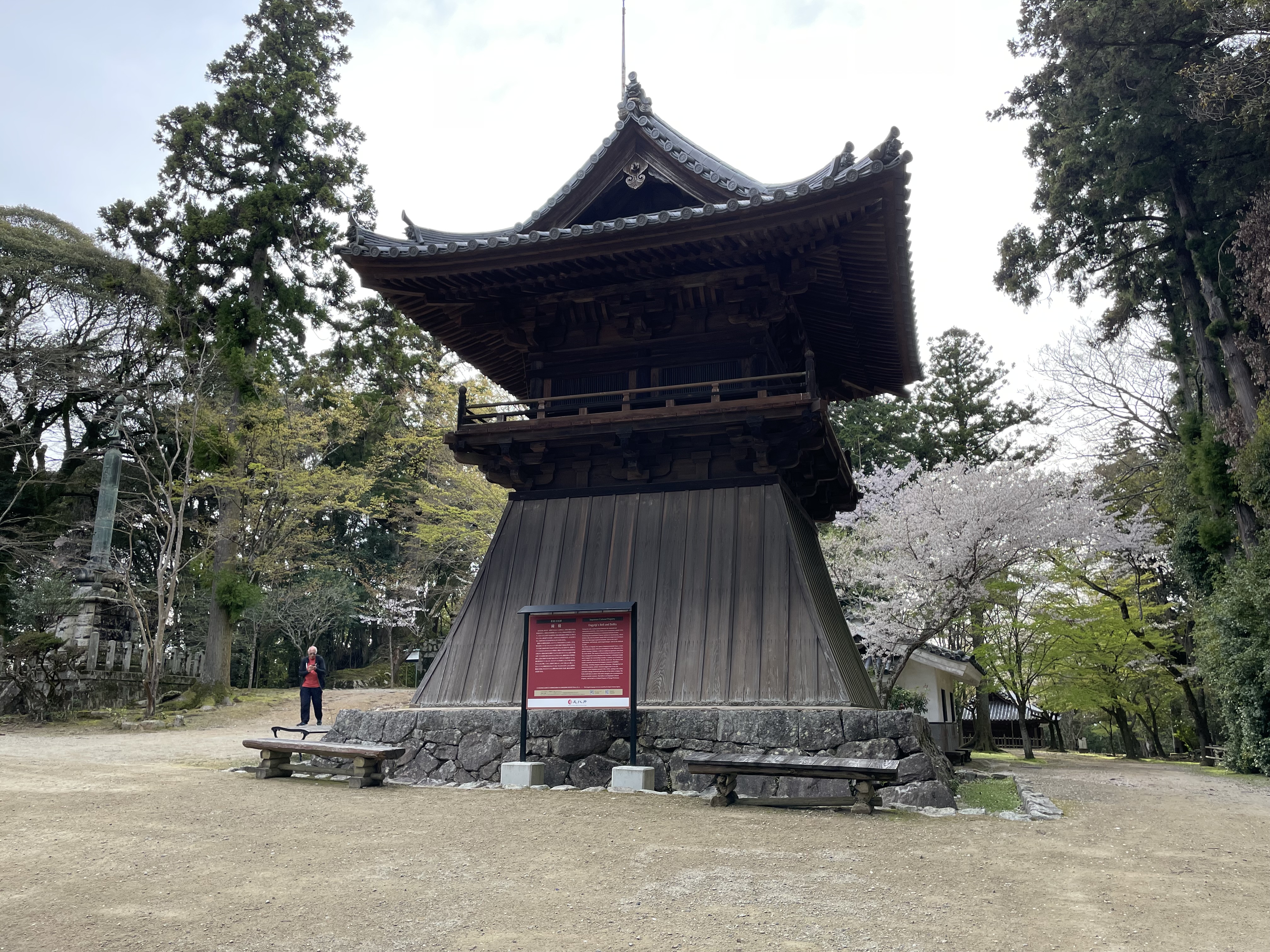
Not always. We had 2 1/2 hours before the last gondola down (tourist office lady: DO NOT MISS the last ropeway down) and from the map it looked very doable. 30 minute bus ride to the gondola/ropeway, 5 minutes up to the site, then a wander through the woods to as many shrines and halls as we could manage, back in plenty of time. Well, Shoshazan Engyoji is an enormous space, with many pathways and much of it a steep climb. When we got off the ropeway they asked “Bus?” Of course not! Off we set, naively, to climb, and climb, and climb…a path through the forest with Buddhist deities every 5-10 yards, wonderful and, as we got further away from our starting point a bit worrisome. Finally we realized we were never going to see everything, and found, luckily, a shortcut back to the ropeway. We headed back down at 5:30 a bit wiser. Wouldn’t have missed it, though.

A quick train ride back to Osaka, aching and exhausted. After an adventure of several hours, repeatedly getting turned around (Google maps for walking in crowded, narrow streets are less than reliable) trying to find a particular restaurant, we landed in a crowded but of course quite good little place where we three raised the average age by several decades, ate, and wandered back to the hotel in a daze.

Korea is easier with a few tips

In general, Korea is an extremely easy country to navigate, but there were a few times when we were awfully lucky to have kids living there to help.  In particular, when you are using airbnb there is no concierge or English-adept staff to clarify those details which can make life miserable when you are not in the know.

Getting in and out of your apartment

We had paid for 2 weeks of an efficiency apartment, meaning we were completely on our own.  In advance, the host was to send us the lock code which theoretically is all one needs to enter.  Ha.  We would have been stranded because the system of house locks is completely different from the US but consistent everywhere we went in the country.

Getting into your apartment:  A small box about the size of a cigarette pack is mounted on the door.  To use your key code first slide up the cover, enter the code on the numeric pad, slide the cover down, wait for the musical tone, and then open the door.

Getting out of your apartment:  In order to leave your apartment, which will lock automatically again when the door is closed, you push the button on the inside of the lock mechanism, watch the little dial turn, and then the door can be opened.  If for some reason the dial doesn’t turn you can turn it manually.  But for both ingress and egress, take your time and wait for the lock to do its thing.  Trying to open the door from the inside before it’s ready screws things up and you must take a breath, wait for tones and automatic things to happen, and start over if necessary.  DO NOT PANIC!

Without our kids showing us, we would have been locked out, and then locked in!  It’s a great system once you know how it works and though there are different versions in different apartments (and the exterior door of our guest house in Jeonju worked the same way) they all look and work the same.

Communicating With Your Airbnb Host 

I had booked our Seoul apartment on my desktop.  Emailing back and forth via the host’s airbnb address worked great in the US.  In Korea, when I tried to email from my phone airbnb responded that I had to authenticate myself via the airbnb app because I was using an unknown device.  I downloaded the app, entered all the info, but it never linked up to my original account.  USE THE APP while in the US.  Our kids came to our rescue, as they had gotten his phone number when I sent them the airbnb booking, but I was never able to get in touch with him on my own.  It didn’t occur to me that the way I had communicated from the US would not work when all I had was a smartphone in Korea.

Use the “Egg” 

Wifi is all over the place in Korea, and with few exceptions we were able to use various free services all over the city.  Sometimes when it appeared no service was on where we happened to be, walking a half block usually revealed another we could use.  However, most Koreans carry an “egg” which is the small personal hotspot and super handy.  While the egg does lose connection depending on where you are, it almost always comes back.  However, our phones always appeared from the wifi icons to be connected even when they were not, so you might not realize you aren’t connected until you try and do something other than GPS.

Many of the accommodations I looked at said “free egg” but ours didn’t so I didn’t know there was such a thing pretty much universally. Hence I hadn’t gotten the password, but again kids came to the rescue, called the host and got the “egg” password.

GPS-enabled Maps Are a LifeSaver

I am a fan of Maplets, even more so now.  This little app downloads digitized maps (tourist maps, subway maps, trail maps, etc.) worldwide and more and more of them are GPS enabled.  When no wifi was available we were able to figure out where we were by using these–and they worked even when Google and Apple maps seemed baffled (e.g., the blue spot would appear, but no map behind it).   Get Maplets and download subway and other maps (you can search by location)–they are also great because you can zoom in to details.

In general, Apple and Google maps were useless for routes and distances.  We could never get a walking route, for example, even when the map seemed accurate and visible.

Electronic Kiosks at Restaurants

If you walk up to a restaurant and see an iPad-sized thing mounted in front, this is how you register that you’re there and want a table.  While you won’t have a Korean phone number, you can enter your name, in which case do find a human and tell them what you have done.  Otherwise you will never get a table.

Spoken English is Rare

It seems strange that with every street sign, subway stop and most informational signs having an English translation so few Koreans speak English.  They are extremely friendly, will try to help, and of course as in many countries people will strike a conversation when they hear you talking and they want to practice English.  Hand gestures, pointing, and all the other things one does in a foreign country work just fine–but do not assume because the menu is translated that anyone in the place can read or explain it.

Use a Native or Foreign-Enabled Texting and Calling App

We use KakaoTalk to communicate with our kids living in Korea.  It is highly functional–probably similar to WhatsApp which we also use.  These work with wifi and enable crystal clear phone calls as well as texting.  While they only work with other people who have the same app, we had told friends and family to download and use KakaoTalk and that was our primary communication mode.

We did not get a SIM card, and we turned off data services for our phones (which seems to annoy Verizon no end as we were bombarded with offers and warnings when we sent data via KakaoTalk or WhatsApp) by making sure airplane mode was always on.  We used texting and KakaoTalk phone calls on wifi and it was entirely free.

If in Seoul and Hungry for Home Food, Head to Itaewon

Itaewon is for foreigners, and so there is a wonderfully mixed population and an incredible array of restaurants.  American style food, halal restaurants, Mexican restaurants (a current fad so it might be something different in a few years) abound, mixed with every kind of Korean food you can imagine.  There is also a reasonable choice of American food in the grocery stores–we bought a box of cornflakes so we could eat breakfast before setting out, both to save money and to have something familiar.  Itaewon also has several of the best bakeries I’ve been to anywhere.

However, with a few exceptions the coffee places open later in the morning than we would have liked–we finally found one that opened at 8am (Bread Show–excellent!) but many do not open until 10.  If you must have a caffeine fix before heading out there is ample instant (comes in little paper tubes that have both sugar and creamer, ugh) and the convenience stores (7-11, CU, etc.) all sell about 20 kinds of cold canned and cartoned coffee.

Centro Historico de Ciudad de Mexico

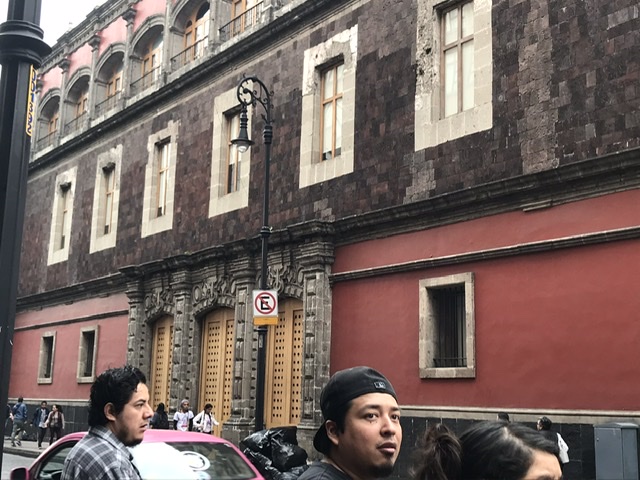
We spent two separate days in the intense downtown and enjoyed both immensely. There is so much happening, seemingly at all times, it can be overwhelming…but the historical sights, the fascinating architecture, the markets all add up to a vibrant scene.

From Roma Norte it was about 20 minutes to downtown via Uber, though on Saturday the driver noted the many closed off streets made getting us to our museum of the day somewhat complicated.

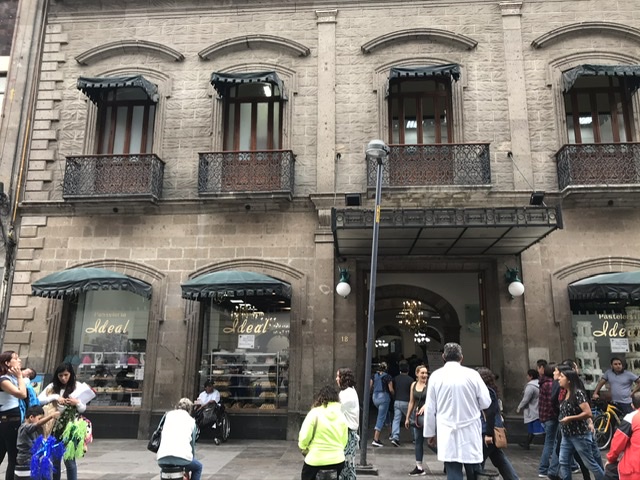
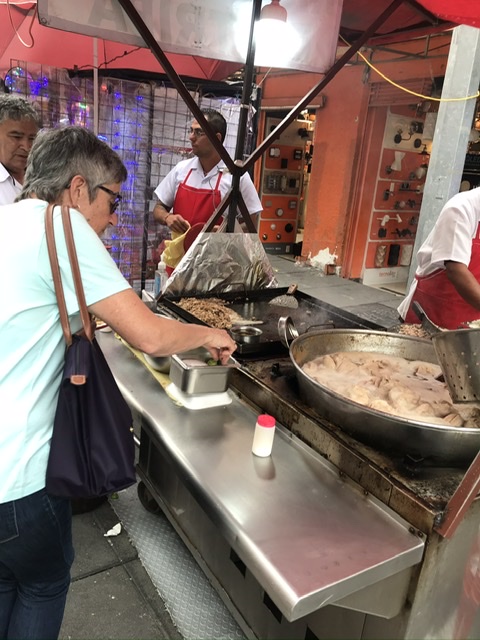
The zocalo is immense. On one side is the cathedral, two sides are government buildings, and the fourth is shops at street level (mostly jewelry) and restaurants on the second level, meaning there are hawkers every few feet encouraging you to come and eat something. Once off the zocalo there is a mix of every kind of retail, many many restaurants at street level, and every few blocks or so a string of food stalls on the sidewalks. Is it my fault I spend all my time in Mexico hungry? The smells of corn tortillas and grilling meat and vegetables are so enticing. Mostly we recognized the food but every now and then I had to ask “what is that?” And I would have tried them all—if my stomach could have fit everything.

Templo Mayor

This was on our list but when we asked a driver “what is the one thing we should not miss while here” the answer was Templo Mayor. Yes!

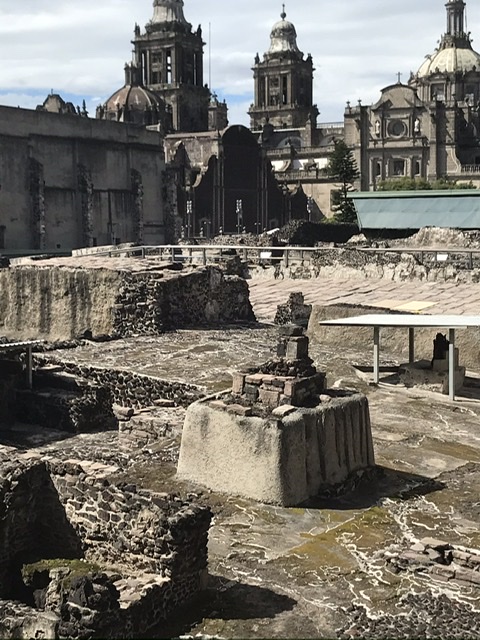
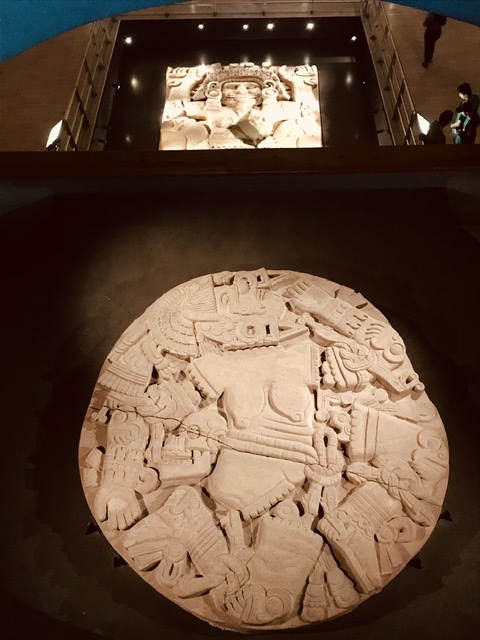
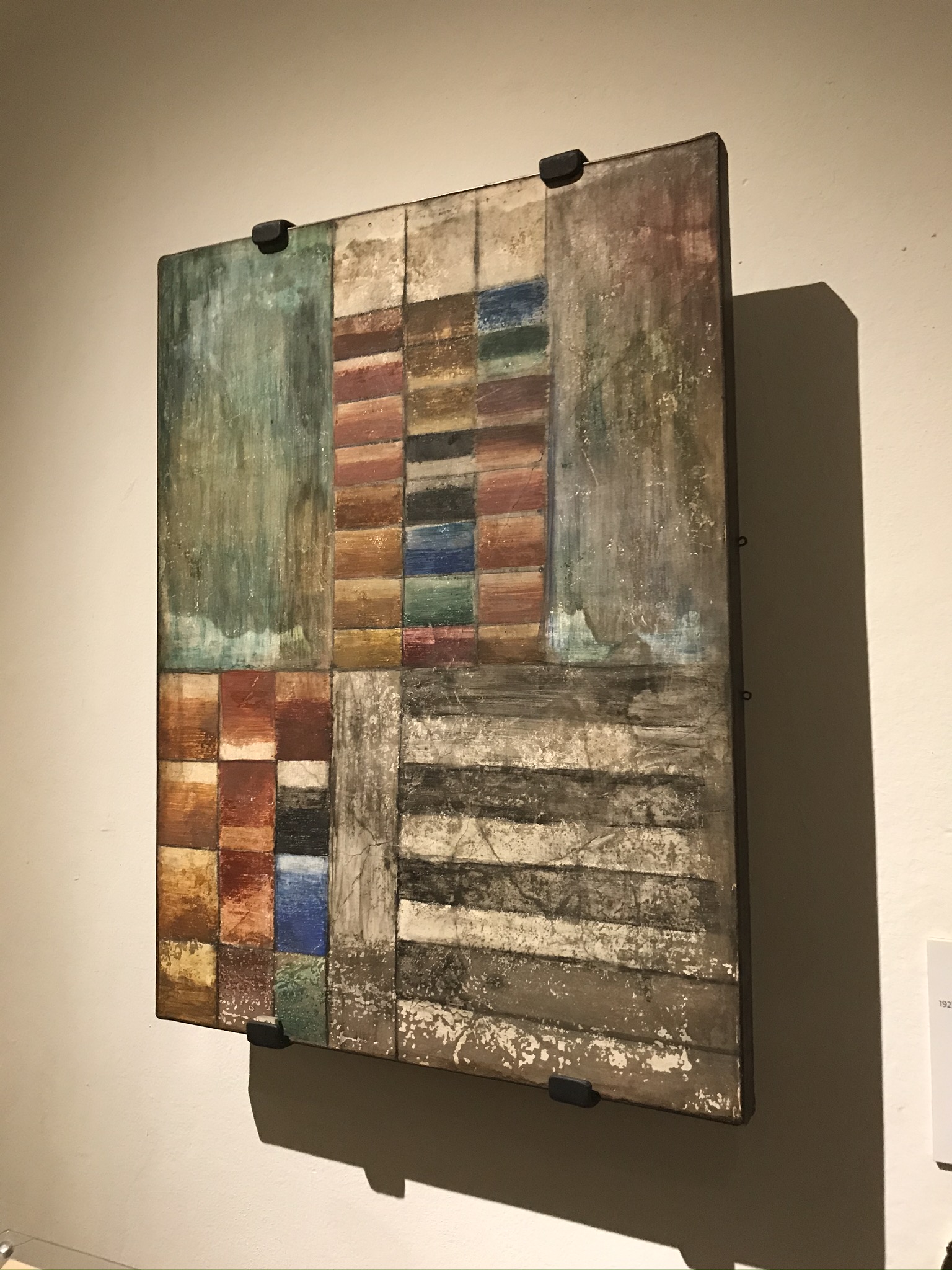
The history of how this site was rediscovered is fascinating. I won’t go into it here, see the link, but let’s just say some developers were probably mighty pissed that their plans were foiled by a major discovery in 1978 (the round “tablet” below–it was a world-renowned find). And it is such a large excavation, right smack in the middle of the downtown, that it must have cost the city and country a lot of money in foregone taxes, not to mention the expense of the dig itself.

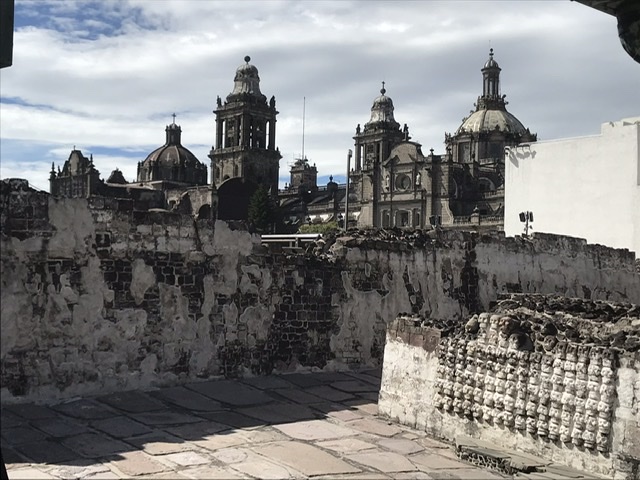
There is the site itself and the attached museum, both worth the time. We spent several hours and were fascinated and dazzled. The juxtaposition of the site and the adjacent cathedral is also pretty cool, as you view ancient and contemporary religions right up against each other.

Tacos de canasta

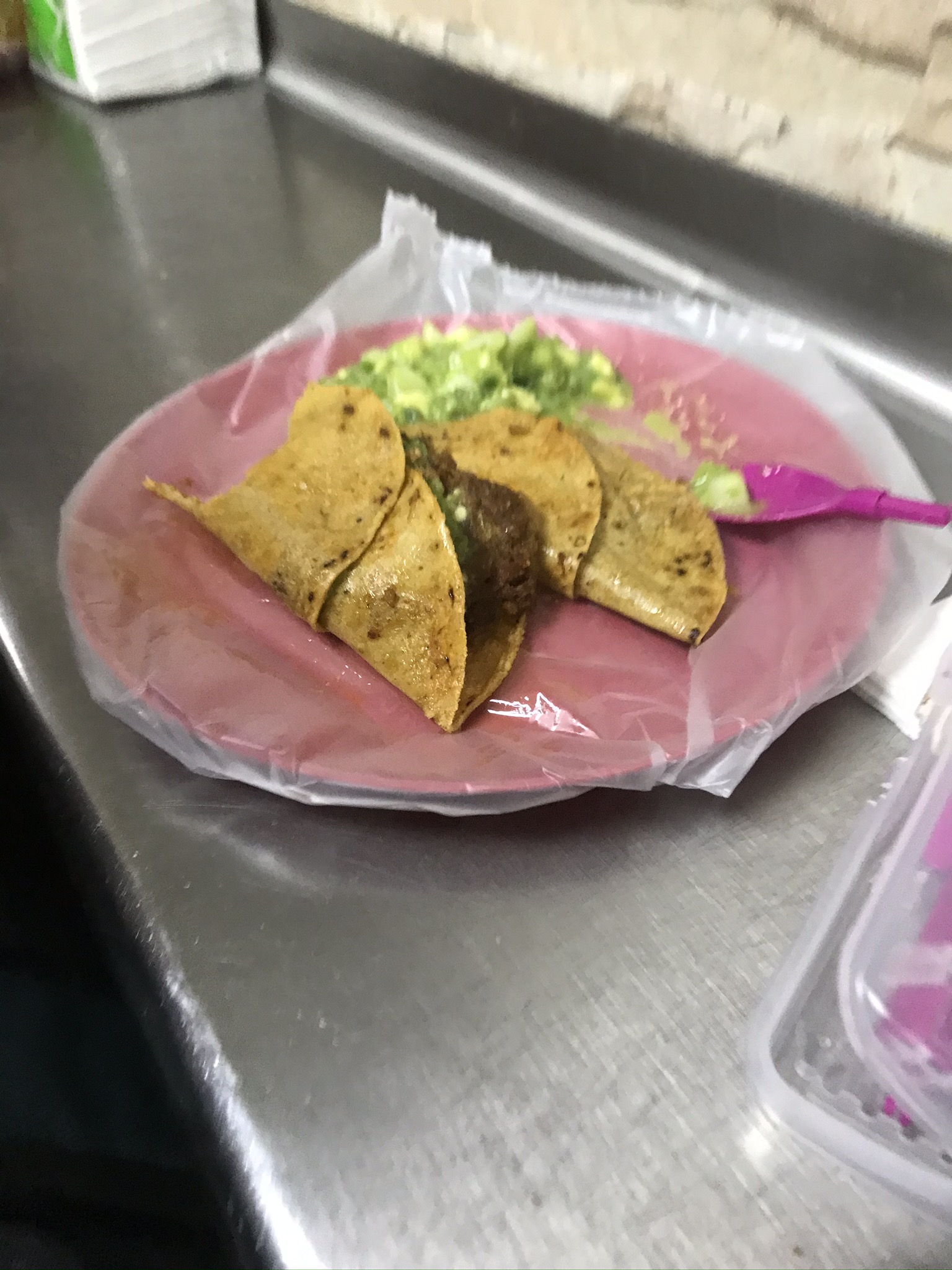
I must share our lunch experience. I very quickly glanced at yelp and saw a highly rated taco place and without reading anything we headed over-it is just a half block off the zocalo. The name is Tacos de Canasta los Especiales, and there was a large queue which David joined while I slid past the line to the inside to try and figure out the deal. In the back was a large multi-part room, lined with narrow stainless steel counters and every 5 feet or so enormous bins of chopped lettuce, pickled jalapeños and carrots, and seemingly gallons of a guacamole salsa. Every few feet the counters had stacks of napkins–this is an ‘eat with your hands’ place. I went back to David, shrugged my shoulders and in a minute we were at the first “station”. I asked “que es el sistema?” and he replied we paid for how many tacos we wanted, he then handed us a token with the number of tacos, we handed the token to the next guy who gave us two paper plates each with two tacos that he had scooped out of the basket in front of him, and we headed back to a counter to eat. We don’t remember what it cost but according to Yelp it’s 40 pesos for 5 tacos plus a drink. Suffice to say it was embarrassingly cheap, and they were delicious and the entire scene great fun. HINT: Carry some silverware with you–I have some snap together knife/fork/spoon “kits” in a little box that I bought at Cole Hardware in downtown SF. They sure came in handy here, as I didn’t want to leave a bit of the crunchy lettuce and jalapeños.

Palacio de Bellas Artes

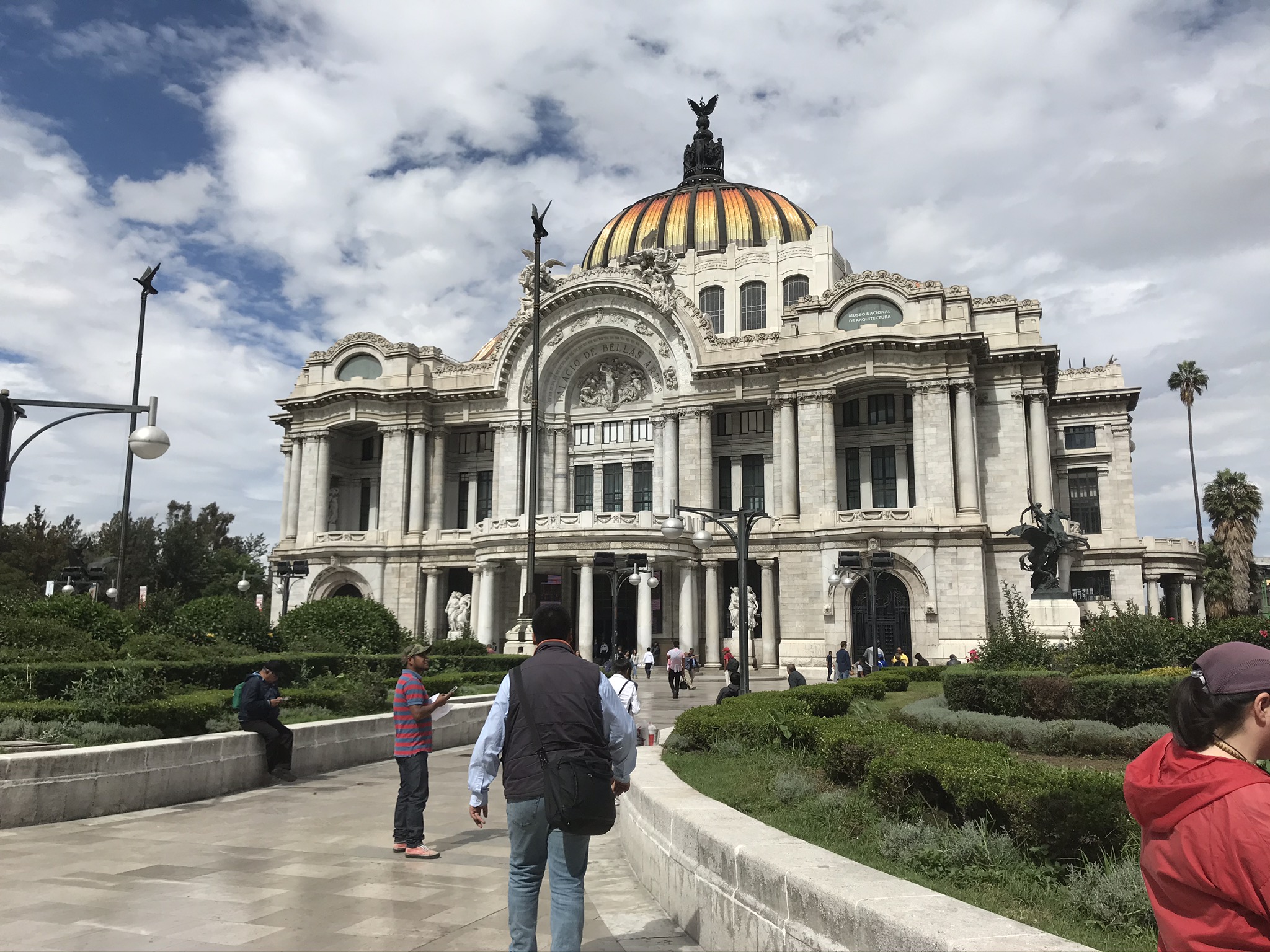
We decided to wander and ended up walking over to the Palacio de Bellas Artes where we enjoyed the beautiful architecture, murals, and a very fun temporary exhibit titled “Redes de Vanguardia” (networks of the vanguard) about Amauta, a Peruvian arts and politics journal from the 1926-1930 that for the first time brought indigenes art and culture to the fore. Seems so obvious now, but recognizing indigenes contributions was a breakthrough at the time.

Museo de la Ciudad de Mexico

This is one of those places that is terribly under-represented in the guide books. We went there our last full day in the city, and it was a wow. The building, just a few blocks off the zocalo, is lovely, the displays about the challenges of large urban centers is a multi-media wonder, and the information about the city itself—its history from pre-Hispanic to modern times is rich and entertaining. However, some Spanish is recommended as much of the information is not translated (though much is). There is an entire room devoted to explaining the many different jobs that keep the city running, from teachers to street food vendors to dog walkers to construction workers. Each wall is covered with photos and descriptions, and there are also five or six videos that profile work and workers…it was incredibly illuminating and it brings the people of the city alive.

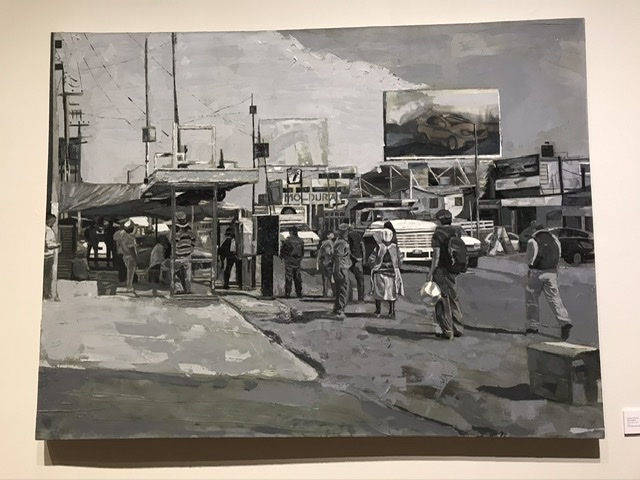
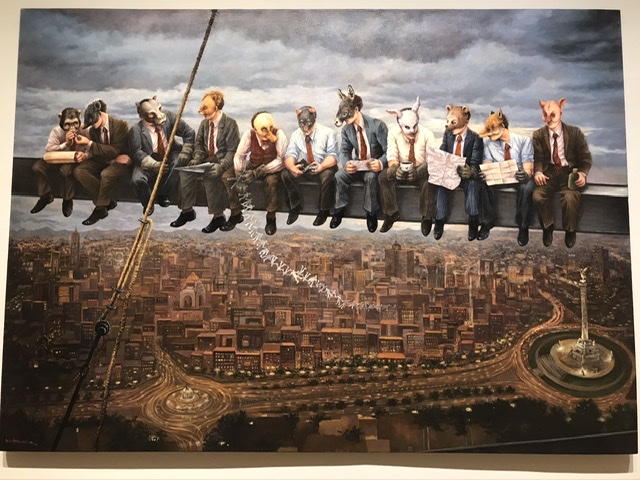
On the second floor are a series of art exhibits, including one that had just opened—we were so lucky!—that comprised four large rooms filled with mostly very large contemporary paintings of Ciudad de Mexico. We loved it.

Downtown on a holiday weekend

That last day, a Saturday, the zocalo was filled with tents. We asked our Uber driver what was going on and he said it was just “normal.” As we walked around we figured out it was a celebration/observation of life with a physical disability. For example, there was a footrace with paired runners, tied together at the wrist with one runner blindfolded. There were wheelchair races and apparently a race on crutches, as there were many pairs of crutches lined up against the fence. A short zipline was managed by members of the military helping kids go back and forth. We didn’t enter but it looked like a lot of fun, like a different kind of carnival. “Normal.”

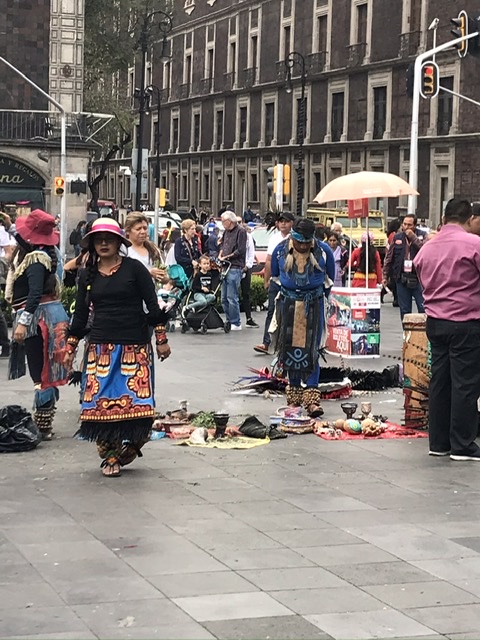
Naturally for Mexico, around the fair were artisan street vendors selling anything and everything. Something we had not seen before were maybe five or six spots where indigenes shamans (?) offering purification. Individuals stood with their arms out, eyes closed, as they were fanned with burning bundles of dried something that might have been sage, serenaded by conch wails, and otherwise rid of bad spirits. Intriguing, but I wasn’t brave enough to do it. Small children ran everywhere, and I had to photograph a group of 4-6 year olds sitting on the pavement trading Barbie and other doll clothes so intensely they were oblivious to anything happening around them.

From here we walked to La Ciudadela, an artisanal market. The market was really great and well worth a stop even though we had been shopping at markets for two weeks. The walk could have been a 15 minute affair but the crowded streets and vendors were too interesting to rush by and we spent about 40 minutes dawdling. I was hungry (surprising?) so kept stopping to ask street vendors “what is this?” I am still regretting not trying a “pata” taco–the customer who told me this mysterious ingredient’s name put her fingers to her lips, Italian style, gave a kiss and said “Muy rica!” A few blocks later, though, we came upon “Tacos de Tripa.” The cook pulled pieces of tripe out of a boiling caldron, chopped them into tiny pieces, tossed them on the steel grill where they became crispy, separated them into little piles each of which he covered with a tortilla, deftly flipped each over, crisping up the tortilla as well. I love tripe and was delighted to stop and order one, yes please to onions and cilantro, while a couple eating next to me asked “What is the word for ‘tripa’ in English?” (In Spanish of course.) And then they wanted to know the English word for caliente, hot, which I explained was the same as the word for picante (spicy). We agreed that ‘tripa’ (tree-pa) is a much prettier word than ‘tripe.’ Oh yes, the taco was delicious.

Wandering Mexico City

As everywhere we have been in Mexico, this is a friendly, comfortable city where a little Spanish will get you far, most everyone is happy to explain or help, moving around is straightforward, Uber is ridiculously cheap, and the food is plentiful and delicious.

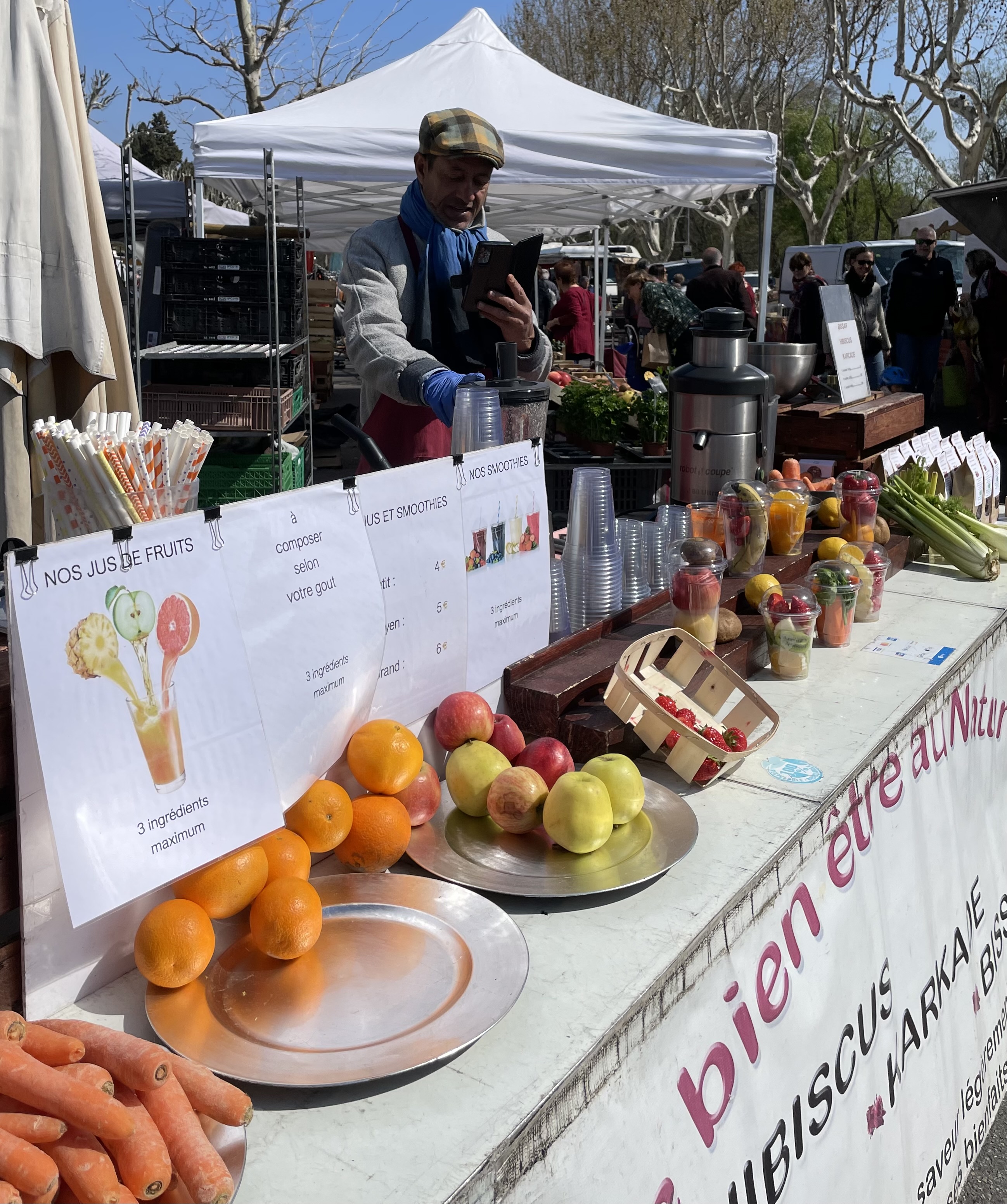
We have started each day with coffee and a pastry (if you are in Roma Norte we highly recommend Buna for croissants—cuernitos—of the highest quality and especially well made espresso drinks), stopping at a fruit/juice street vendor for what may be a quart of freshly squeezed orange juice for 40 pesos or so, then after a refresh at the hotel calling Uber to head to a museum. From there we wander to a taco stand or market or hole-in-the-wall place for lunch, and either walk and wander or call Uber to take us back to the hotel to spend the rest of the day in and around the Roma neighborhood.

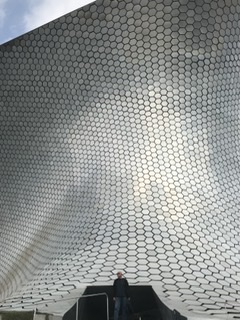
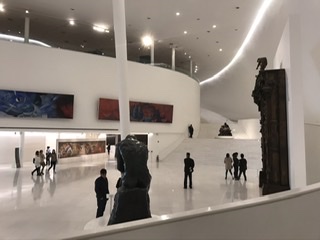
Yesterday, for example, we visited the Museo Soumaya in the Polanco neighborhood, known as the Beverly Hills of Mexico City and reputed to be the most desirable real estate in Latin America. The museum contains Carlos Slim’s personal collection. The guidebooks call it “eclectic” and I would rename it “Stuff I Bought.” It is the most bizarre, oddly organized, hodgepodge of an art museum imaginable, housing everything from an enormous (too much so) collection of Rodin to postcards and watches. The building was designed by his son-in-law and is, shall we say, striking. The interior has an open stairway and ramp which wind from level to level and room to room, and I was freezing the entire time because there is a wind tunnel effect adding to the oddness of the experience. Sr. Slim has no apparent discipline or taste, and while the collection includes many paintings from recognizable artists I learned something I’m not sure I wanted to know—even the biggest names (Renoir, for example) did some truly mediocre work. But it was free, we toured with energy, and were out in perhaps 90 minutes.

Having no interest in walking around a cliche rich peoples’ neighborhood to ogle houses or Chanel shops, we hopped an Uber and went to the Friday market in Condesa to find something to eat. Now, that was more like it.
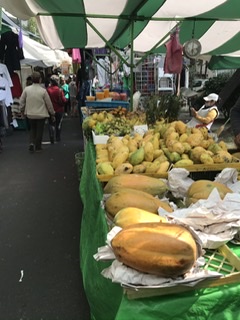
Below note the beautiful blue corn gorditas and quesadillas. A very nice man in front of the cooks is there to explain what is on offer and take orders. Gorditas were “chicharron” but in truth that meant cheese, nopales, and a few other vegetables stuffed into fat tortillas that were split like pita and grilled. The mushroom quesadilla was alas eaten too quickly to make it into the photo. I was happy to see a juice vendor so I could get a picture showing the enormous number of small, green and yellow orange rinds piled into the two big bags as he grabbed halves, pulled down on the juicer, and tossed them aside in a single motion. Poetry.

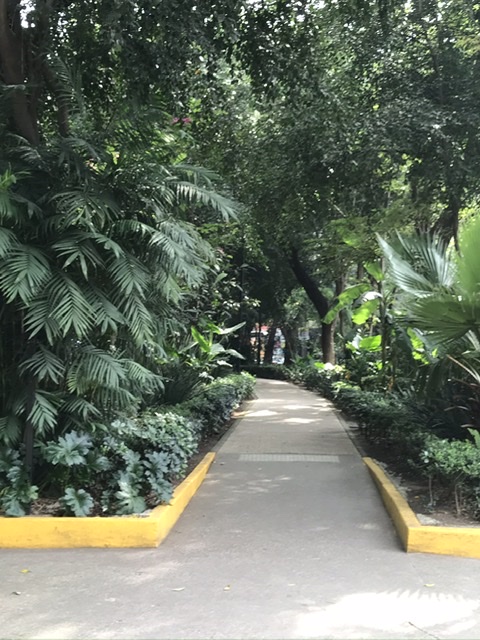
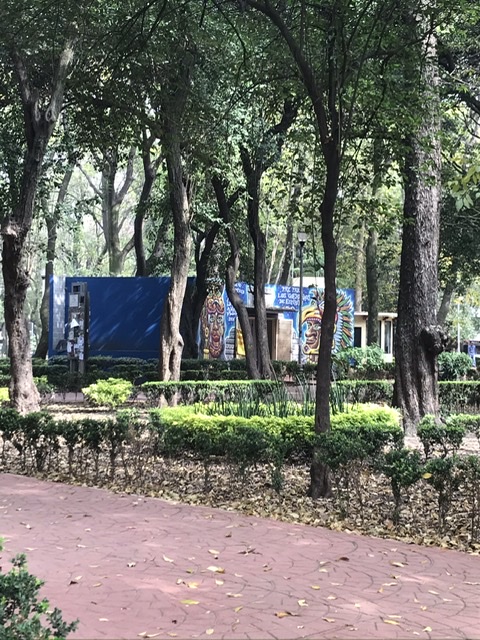
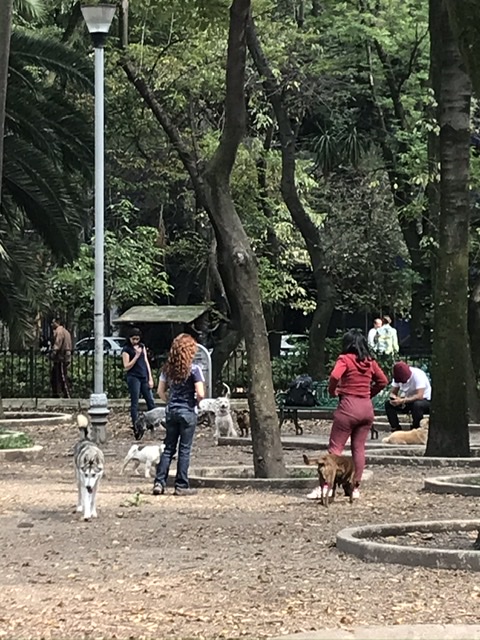
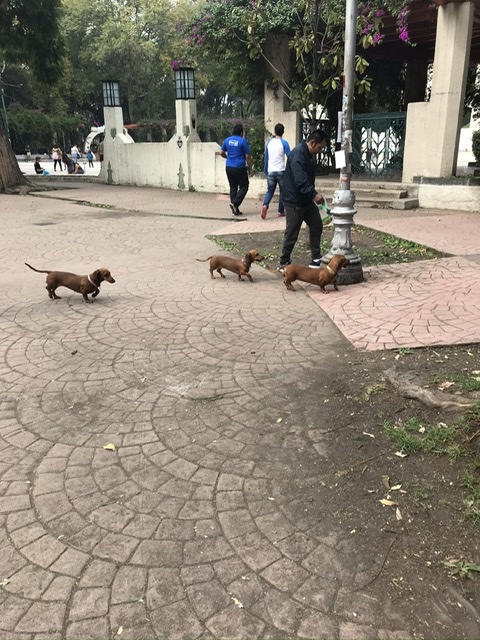
It was about a mile’s walk back to our neighborhood in Roma, so we decided that would make a perfect end to the afternoon. We were correct—discovering the beautiful, dog-filled Parque Mexico and the enchanting architecture of Condesa, and before we knew it we were back “home.”

Trotsky and Casa Azul

Our friend Christina had encouraged us to check out the Coyoacan neighborhood and that meshed nicely with our plan to see Trotsky’s house and small museum as well as Casa Azul, the home of Diego Rivera and Frida Kahlo, two worthwhile sites only a few blocks apart.

We had both been ignorant of the Trotsky story, and both had the same revelation about how the heck Trotsky ended up living, and being assassinated, in Mexico City. Turns out Rivera, also a socialist, had prevailed on the government to give Trotsky asylum, and even had him as a houseguest for a few months (during which there was apparently a strong flirtation between Frida and Leon).

Trotsky comes across as a lovely guy, doting on his chickens and rabbits while he wrote obsessively, often using a dictation machine. It was while he was working at his desk that the assassin came up behind him and hit him in the head with an axe. It is a very small, traditional, modest casa and he and his wife were admired for adopting a completely Mexican life.

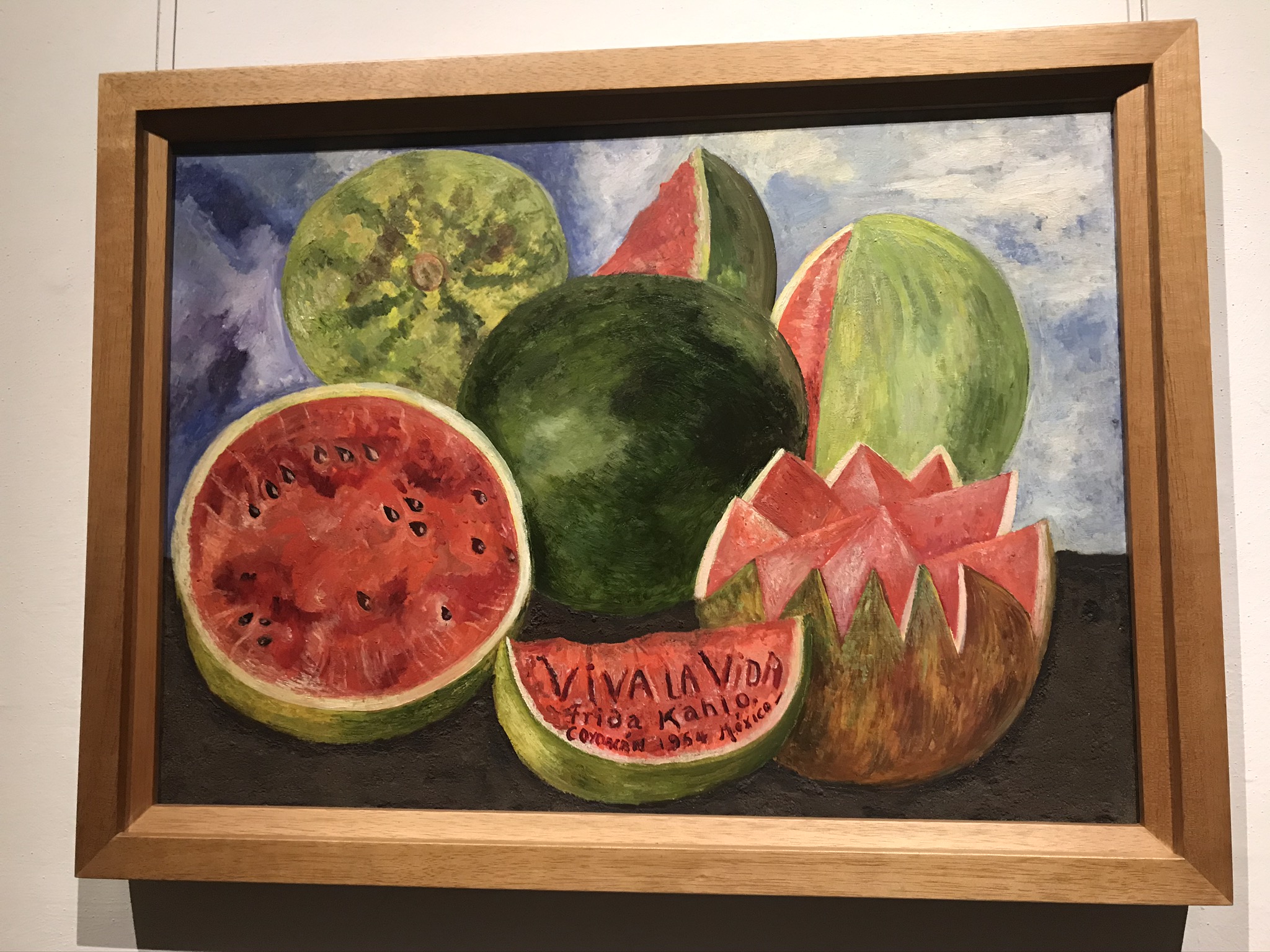
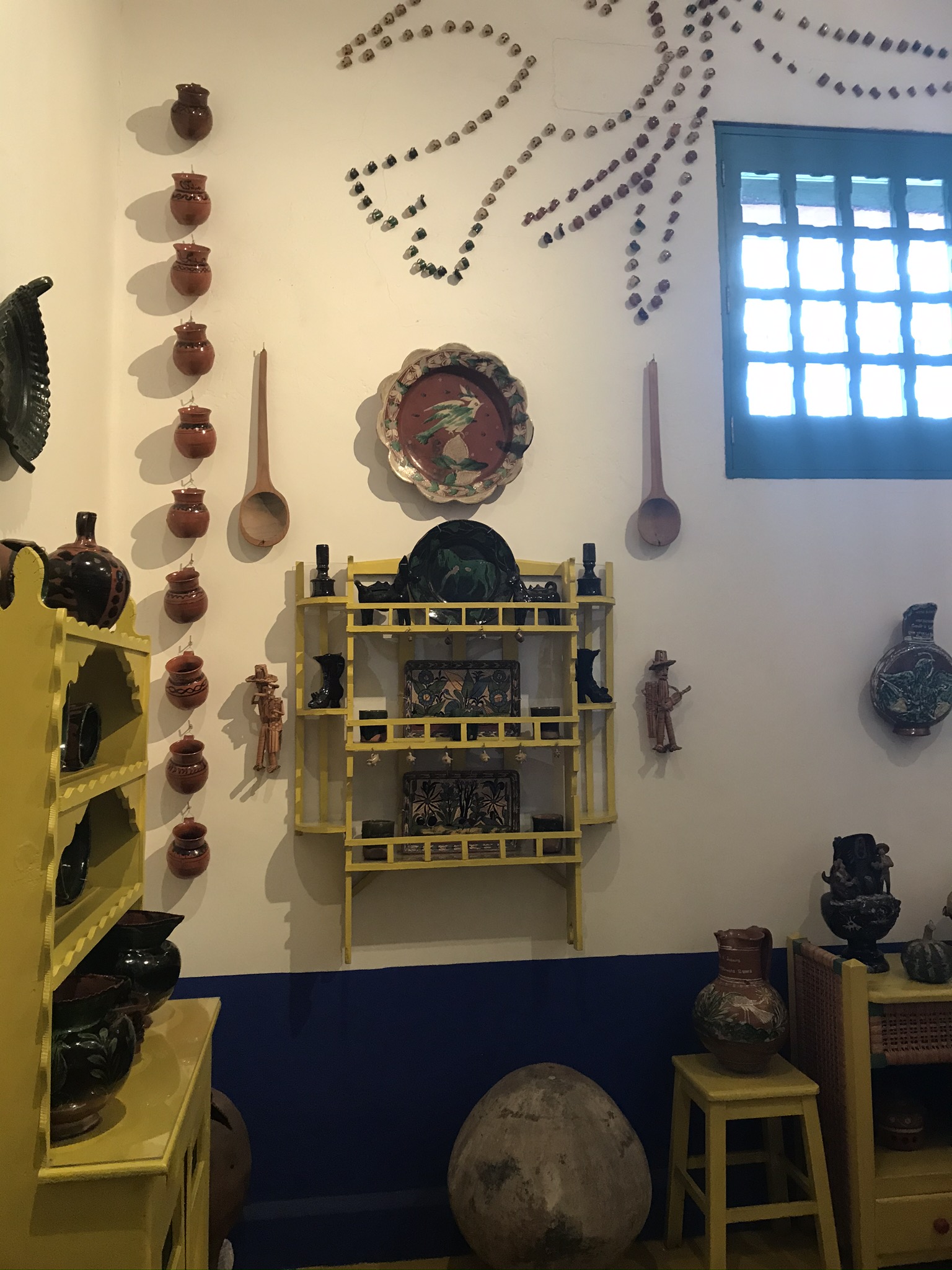
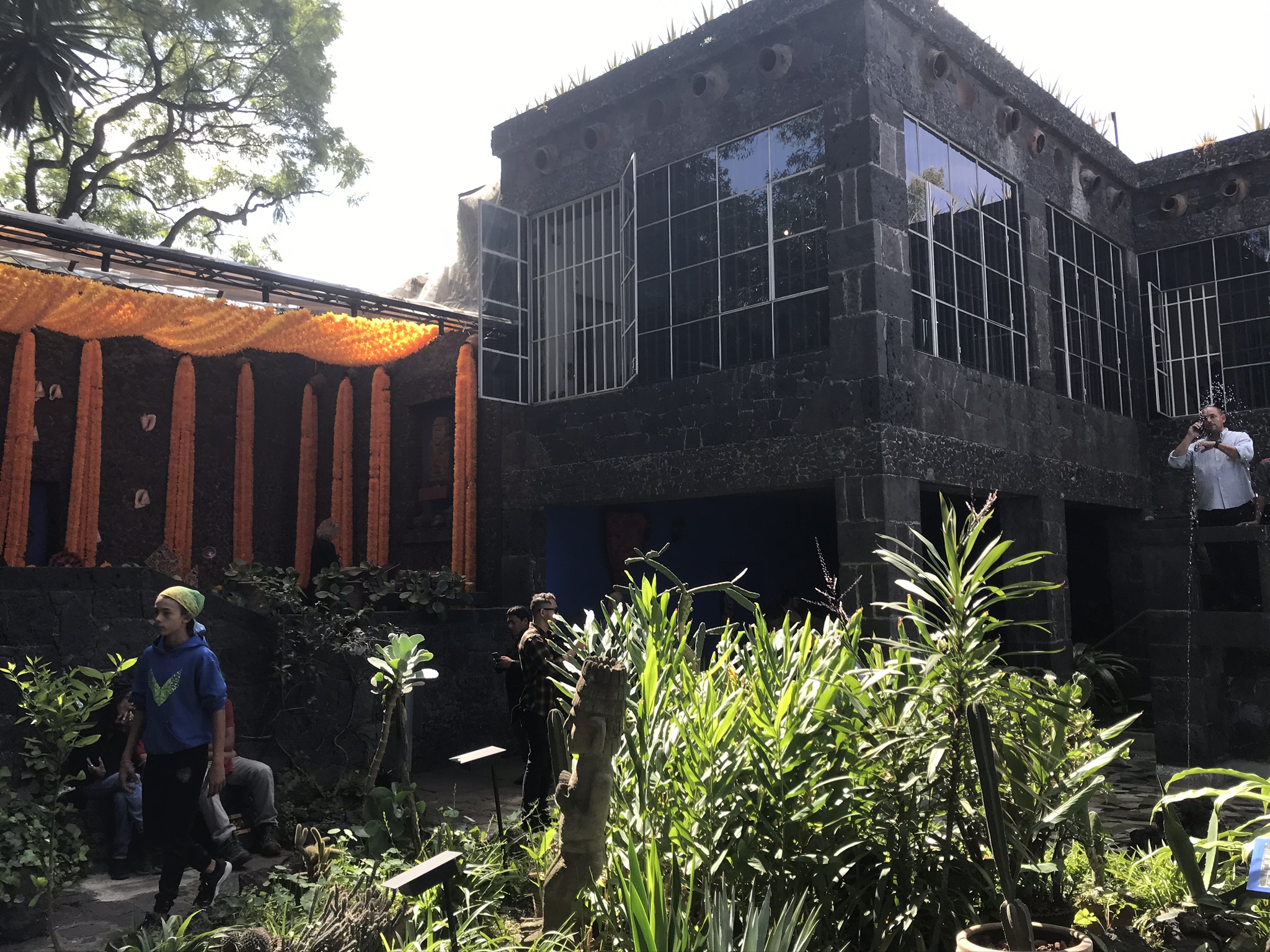
Now, Casa Azul is something else again—filled with art, curios, gardens, studios, traditional kitchen (no electricity or modern accoutrements of any kind), and the very sad remnants of Frida’s pain-filled life. In spite of her physical misery, however, she had many lovers and intense relationships while at the same time suffering greatly from Diego’s affairs. We rented the audio-video tour and highly recommend it.

We walked on a few blocks to the small mercado looking for lunch, and ended up in a lovely conversation with a couple from Montreal, ate an enormous lunch at a little counter in the middle of the market, walked for a while in the lovely, quite, cobblestoned neighborhood of Coyoacan, then took Uber home to Roma Norte.

The symbol of Coyoacan is the coyote, and they’re everywhere.

Taxco!

Eat, Drink, Party, Shop!

Hotel Los Arcos

I’m not sure how I selected this place but it turned out to be perfect. While there is no quiet spot in Taxco on a weekend, the location, just around the corner and down the hill a bit from the zocalo, was ideal. The room was large and comfortable and the central patio peaceful and picturesque. On the roof is a large terrace with gorgeous views of the town, which stretches way up the mountain and down into a valley. Walking this town requires stamina (it’s at around 6,000’), good shoes, and strong thighs and knees. We loved it.

Food highlights

Well, the food in general in Taxco is as delicious and inexpensive as elsewhere in Mexico but a few meals and restaurants stand out.

We had two fantastic, and typically enormous, breakfasts of chilequiles with eggs. The restaurant that serves in the hotel patio is terrific and highly recommended for convenience, service, delicious food. One of the “jams” they serve is a sweet chipotle that was memorable…not spicy, just a smoky, just sweet enough condiment. For the view—though the servings were overwhelmingly large so eating was almost discouraging, we went to Del Angel, a hotel behind Templo de Santa Prisca, the huge central church on the zocalo. The restaurant has several outdoor terraces, all with sweeping vistas of the town. Don’t get me wrong, the food was great—but entirely too much for a normal human being to consume in the morning.

Two of our three nights in town we went to La Bendita, a small cantina-like place for drinks and small plates such as tacos, tostadas, quesadillas. The ceviche tostadas were what called us back for a second time, and I highly recommend the chicharron pescado (fried fish) tacos as well. My mojito(s) were delicious, and both nights David had the liter of beer. Sitting at a tiny table on a tiny balcony overlooking the zocalo madness was entertaining. The second evening the moon rose over the bell towers to give us a magical picture.

Finally, on the Taxco food front, we went to the famous Tia Calla, a basement level pozoleria. David isn’t a big fan of pozole but I am—and he had the chalupas, four little tortillas with chicken and chipotle. By the end of his snack he said his mouth was tingling but they were not the killer heat we know from chipotles in the US. The pozole was the best I’ve had.

Plata

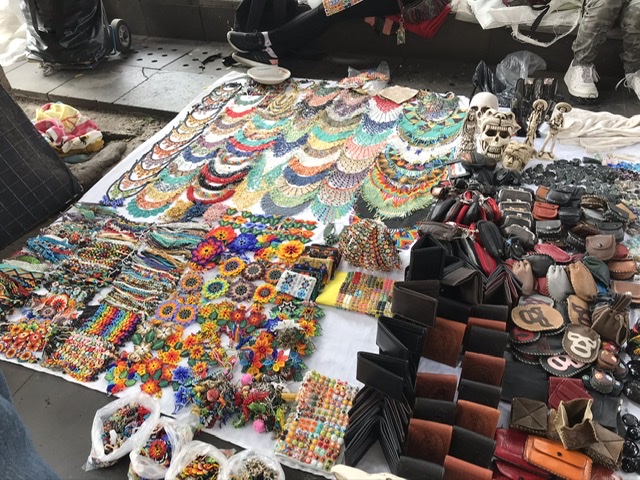
I really wanted to be in town for the Saturday market, a truly insane explosion of silver puestos (little stands) that seemingly filled every bit of space in the town—buildings that were closed on Friday opened to be consumed by hundreds of vendors each with approximately a card table’s worth of display. While many vendors sell the same things, as you walk each aisle you see that from one to the next they have a particular type of jewelry or a distinct style. My plan was to leave with enough pairs of earrings to last me for years, and I did. We also bought a few little gifts which will not be shown here as we want to surprise the recipients. The prices are absurdly low and the experience always “muy linda.” I had tried to describe Saturdays to David—there are always hundreds of vendors in stores and on the streets in Taxco—but he was shocked at the sheer level of commercial enterprise.

Simply too picturesque

We wandered the town every day, and at every turn enjoyed the beauty of this amazing town, one of Mexico’s Pueblos Magicos.

Puebla For The Food

Where we try to taste everything!

Cemitas

Cemitas are the Puebla version of an oversized, overstuffed sandwich.  They are everywhere…from tiny puestos, holes in the wall with rickety card tables and often waves of heat coming from gas fired flat grills of beaten steel, with shallow depressions that are filled with cooking oil for frying potatoes and nopales, stand alone puestos on the street where buy your food and eat out of hand on the sidewalk, to full restaurants that serve cemitas from a menu.  

Our last afternoon in Puebla we knew cemitas were on our menu for lunch, and as we left the Casa Alfenique we asked the group of students at the entry where we should go for cemitas—they recommended the neighborhood El Carmen, which was very close to where we had stopped for chanclas the day before.  It was about a 20 minute walk, and we were en route when we passed one of the tiny holes in the wall, the grill in the doorway, 3 women cooking like mad, and a sample cemita displayed on the edge of the grill as an advertisement.  The sample cemita was enormous—and the smells of the frying potatoes and nopales was enticing.  Also, only one of the 4 card tables was empty.  David said “let’s just go here” and as it was 2 blocks from the hotel and we were hungry from all the work of visiting museums, in we went.

As we sat down at the empty table we were able of course to watch all the cooking—it was literally right in front of us.  One woman was making tortillas from a pile of masa harina that must have been a foot tall and a foot wide.  As she removed the tortilla from the press she passed it back and forth from hand to hand—exactly the same technique I had watched recently in a video about making naan.  Each tortilla puffed up as she moved them around the grill.  A second woman was chopping onions with an enormous knife.  The third was cooking cemitas—she took 3 paper thin pieces of meat, probably pork, and slapped them on the grill.  While the meat grilled she prepared the rest of the filling. The bottom of the roll was covered with avocado, strings of Oaxacan cheese (the only cheese we saw in Puebla), slices of onion, an herb papalo which is kind of similar to cilantro though unrelated, a good flavor and quite strong, and a handful of French fries.  As you can see from the picture, it is enormous. I was unable to finish my half and I was so very hungry when I started!  Anyway, this little place turned out amazing food and was always full—there was a “nicer” cemitas place next door which was empty as we walked by.  What a treat.  And our 100% good luck eating street food held—no after effects at all.  

Chanclas

These were described to us as a kind of sandwich, but though there is bread involved these are nothing like a sandwich.

Small white rolls, which are somehow hollow, are cut in half.  The place we went—recommended by our Uber driver, letting us off there instead of taking us back to the hotel as he told the owner “I have some tourists here who want chanclas”— was of course tiny so I could watch the assembly which included shredded chicken, slices of avocado, the top of the roll and then the entire plate is filled with a thin red sauce similar to the red sauce we know from red enchiladas in the states.  One order is four chanclas—I ALMOST finished mine, though David had no trouble with his four.

Moles (that’s mo-lays, not the rodent)

Every region seems to have its own specialities when it comes to moles and we had several different such in Puebla.

The dark mole, almost always served over chicken or a chicken wrapped in a corn tortilla, is sprinkled with sesame seeds and is intensely flavored with a very definite chocolate undertone.  A little too sweet for me, but David loved it.  We also had a mole “house specialty” at the sister hotel Meson Sacristia de la Compania which was not at all sweet, even a bit sour/tangy. I loved that one.  The other common mole in Puebla is pipian, ground squash seeds which I liked as well, lots of cumin and a hint of tahini-like flavor.   We had this trio at Fonda de la Santa Clara over beef—we were a little tired of chicken on our last night.

Tacos al pastor and tacos arabe, and the grilled mix alambre

Tacos al pastor and tacos arabe are both specialties of Puebla and so good.  Arabe means the meat comes wrapped in a flour tortilla, well, halfway between pita bread and a tortilla.  The default meat in a taco arabe they call “carne blanco” which means it’s not reddish brown with spices as al pastor is.  Simple and delicious, especially with the bright green tomatillo salsa usually on the table.

Al pastor is what we see in the US if you are lucky enough to live near good taquerias: stacked meat, heavily spiced, turning in front of a roaring vertical grill, sliced off in thin pieces and served on corn tortillas with pineapple, onion, and cilantro.  OMG so good, almost refreshing with the fresh pineapple on top.  I could have eaten those every day if there hadn’t been so many other things to try!

(At the central bus station, which is like an airport with all the companies in one place and a large waiting area surrounded by food stands, the “Rincon Poblano” (Puebla Corner) had tacos arabe and cemitas—but we were on an morning bus and passed, reluctantly.)

Our first night we went to Las Ranas where we ordered the .5kilo of meat with a stack of tortillas.  It turned out to be a mix of meats—not sure what all—with peppers and onions and a cover of melted cheese.  So delicious and we could not finish, as hungry as we were after a long day of travel.

In conclusion—

Every single place we went was so friendly, so helpful, and so welcoming it was easy to jump into foreign foods with happy confidence.  For a food festival, go to Puebla!