Amateur Sociologist

I have been to two Asian countries, 3 weeks in each–Japan in 2013, and our just completed visit to India.  Two crowded countries of mega-cities, each with population issues, commute issues, vast investments in infrastructure.

With my n=2, I will now make some only very lightly-informed pronouncements and over-generalizations on societal coping strategies in crowded urban settings.

japan 13  (122)

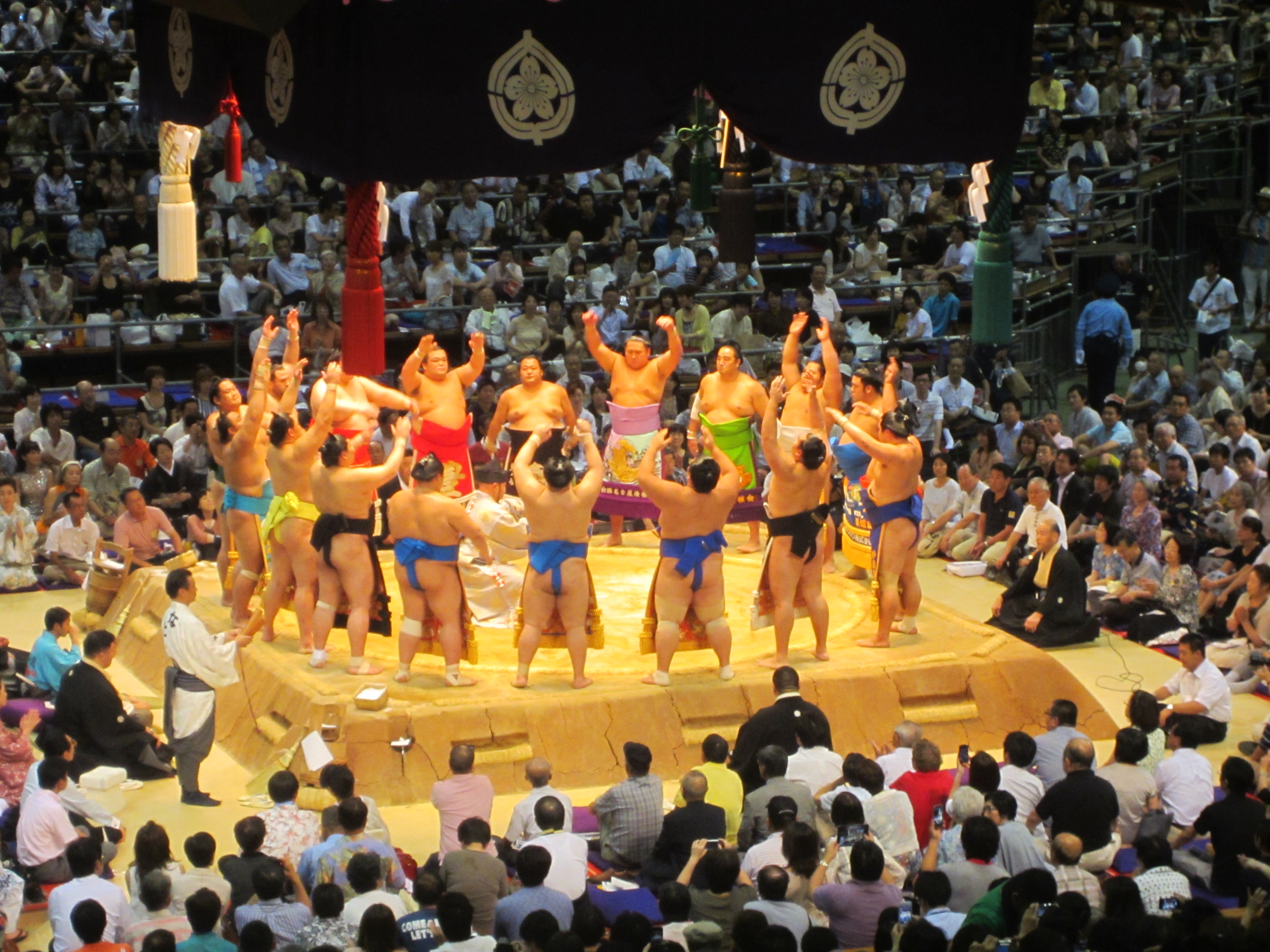
National Sumo semi-finals

In Japan you can almost physically feel the stress, especially in the subways and, oddly, in elevators.  Japanese are very polite, very contained, very regimented.  They rush through train stations without eye contact.  They are impeccably dressed.  Everything in the commercial world we encountered was hyper-organized: lines of bowing clerks at opening time in department stores, perfectly timed trains, over-engineered public bathrooms (including the option of having music or sound effects play so no one is disturbed by the sound of your peeing).  Yes, of course there are messy edges, but in general it seems to the traveler that everything works.  99% of the restaurants have plastic food displays, so you know EXACTLY what you are getting–an example of a regimented, organized, planned-in-advance way of doing things.  Stray animals?  Other than the wild deer, none.  Dogs running along the street?  Never.  Though in Tokyo you can see a lot of the quirky teenage fashionistas and costumers out and about, for the most part the homogeneity is striking.  The obsession with cleanliness is delightful as a traveler–I could walk all day, and did, in Tokyo in hot steamy weather in sandals, and come back to the hotel with clean feet.  Private life–it’s invisible.

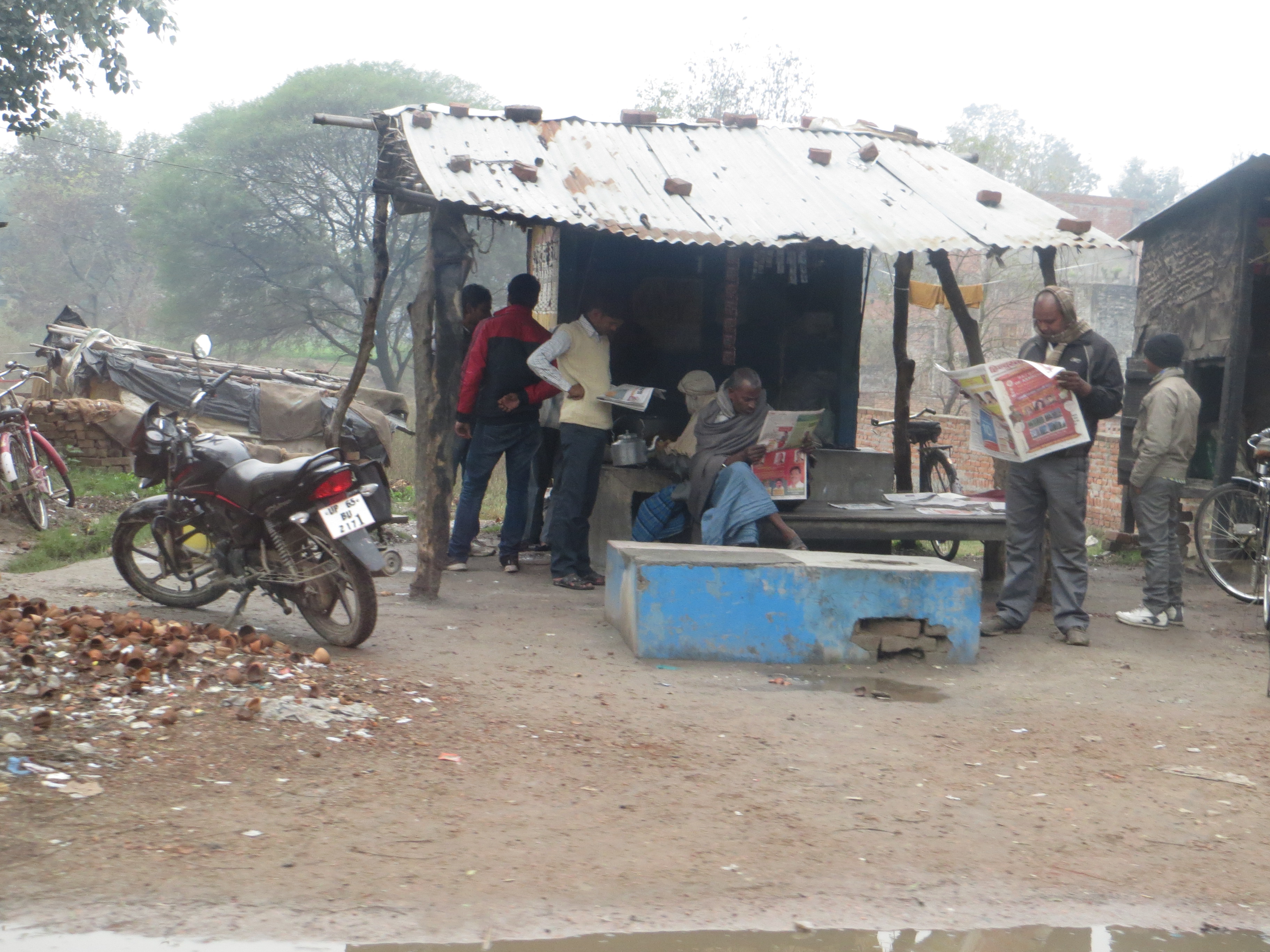
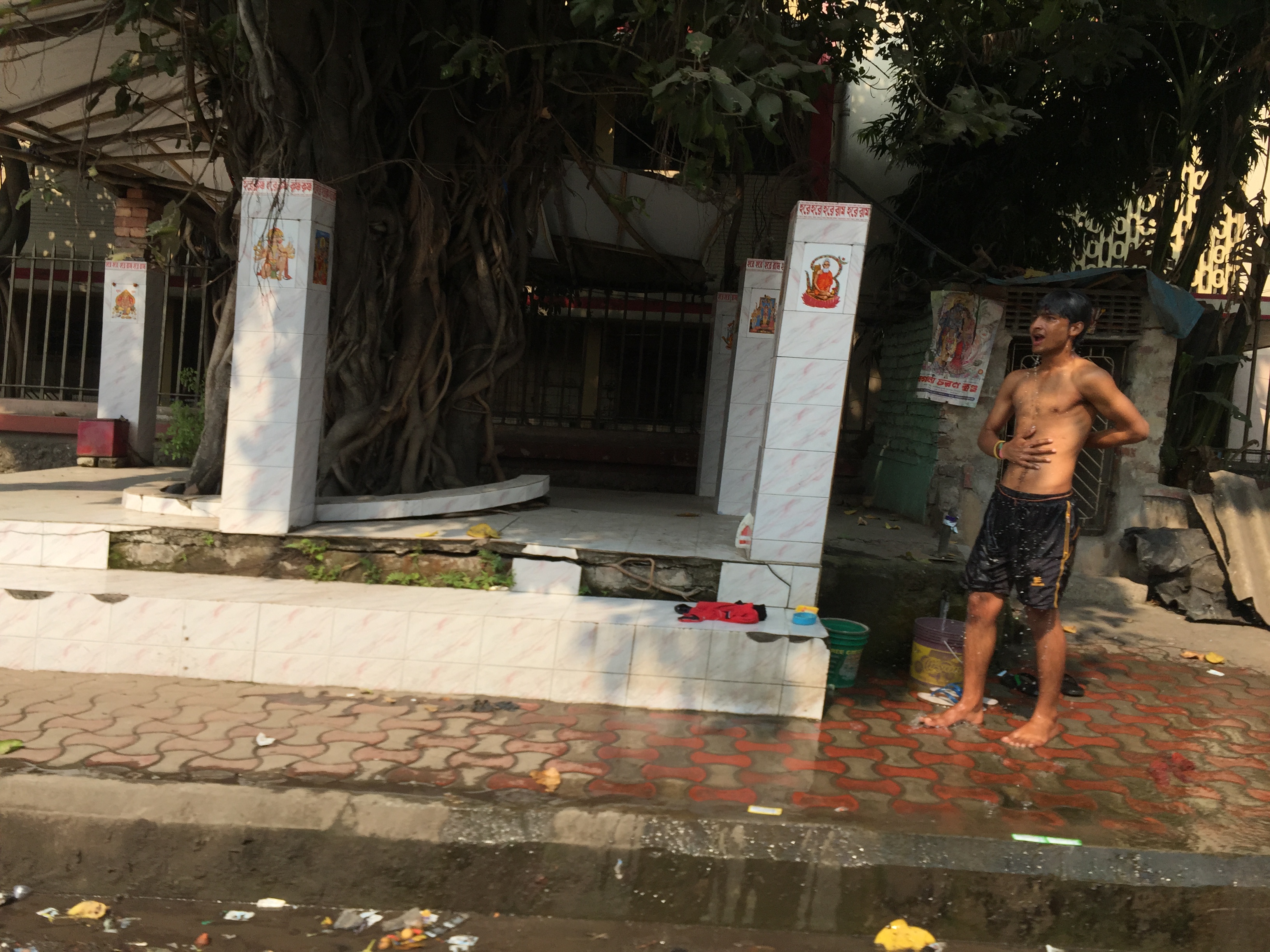
In India, everyone is just as, probably more, crowded, but everyone lives life in the open.  Bathing.  Changing clothes.  Men getting shaved, or shoes getting repaired, or clothes being ironed–it’s all on the street.  Homogeneous?  Not even close.  Every variety of sub-continent apparel and manner is available.  Colorful is an insufficient adjective.   Animals everywhere.  Broken sidewalks, people and dogs and beggars and cows and goats, wandering in and out of traffic, on and off the pavement, groups of people standing around everywhere eating, talking, hollering–your impression is that nothing is hidden, life is an open, communal, shared experience.  People clothe stray dogs.  People feed the cows by tossing fresh greens on the sidewalks in the afternoon.  People throw bananas to the wild monkeys.  And messy around the edges?  India is profoundly messy in so many ways.

When we returned from 3 weeks in Japan, we walked into our house and decided it needed some upgrading–and began planning a major remodeling project.  We laughed–compared to the cleanliness of Japan, our life looked a bit shabby.

When we returned from India it felt as if we were entering a surrealistically quiet, peaceful, clean, organized, and maybe a bit dull, world.

Reentry

When we travel internationally we try to book 3 weeks, given the typically long flights  involved.  By the time I get to the middle of that last week I am usually beginning to feel homesick for my dogs, bed, food, cool breezes at night coming through open windows–all that good stuff of normal life.  Sometimes I’m even beginning to miss work!

Reentry is usually a fog of jet lag and general fatigue for a few days, and then I’m back, with all kinds of resolutions to organize my photos (rarely done), a big box of souvenirs and gifts to be distributed in the corner of the bedroom, and a return to digestive and sleep normality.

Coming back from India had a few aspects that surprised me a little.

To be clear, we don’t live out in the country, but rather in a medium sized city that sits in the middle of a pretty large metropolitan area.  Traffic, trains, and the rest of the urbanized commotion are the background of our lives.

  • I never realized before just how quiet it is here.  Coming back from the airport was like gliding along in a dream, seemingly silently though I know there were real noises–they just couldn’t penetrate my armored consciousness.  Cars changed lanes, melding into the flow of traffic without scary near misses or horn announcements “I’m about to move;” “I moved;” “I am now past you.”  Eery.  When you honk your horn in the US it’s because someone is backing out into your car, not because you’re, well, driving.  And after five days, we are still noticing the peaceful state of the streets and freeways.
  • I was struck by how intrusive it is to understand what people around me are saying.  Walking through the farmers’ market the day after we arrived, snatches of conversations interrupted my thoughts, my interior monologue, and my conversation with my husband.  English words kept barging in on us.  Parents talking to their kids, questions to vendors, adult conversations around us seemed almost rude!  Jee, keep it to yourself, would you?  Our last few trips abroad have been to Spanish-speaking countries where I do catch a fair bit of the talking around me, but in India the only words I understood were greetings, yes, and no.  The rest was atmospheric, not communicative.  I miss that privacy–not following what everyone is saying around you means you concentrate thoroughly on your own experience.
  • We surely missed home-cooked and just plain homey food, and one of the first things I had thought I craved was a tunafish salad sandwich.  But it didn’t really taste that good–mild and salty at the same time.  Last night I made pad Thai for the first time because I wanted something “different.”  I am going to go for roast chicken tonight, our most typical dinner.  Maybe that will snap me out of it and get my palate back to normal!

All that aside, it sure is nice to be greeted by wagging tails and licks every time we enter a room and, it appears, our dogs are happy all over again to see we’re home.

Old Delhi, goodbye

Outskirts of Old Delhi--a vendor selling corn to feed to birds, with a large pan of milk for stray cats and a street dog curled up on front.

Outskirts of Old Delhi–a vendor selling corn to feed to birds, with a large pan of milk for stray cats and a street dog curled up on front.

We had feared that by the time we reached our last day in India, a 20 hour stint in Delhi, we would be so tired, tired of India, and homesick that it would be a slog to get through it. The plan we formed a week or so ago was to go to Old Delhi, walk around, buy some spices, and punt the rest of the day. When we landed in Delhi our travel manager met us at the airport and we talked over the plan. He suggested that walking in Old Delhi alone was unwise, and he would arrange a driver to accompany us for the day. This sounded reasonable. It turned out the driver would be the same fellow who took us to the hotel that evening, so we finalized a pickup time for the next morning–he suggested 9 am, as any earlier there wouldn’t be much open anyway. The day dawned misty and chilly. We had gotten a very good night’s sleep and we awoke enthusiastic about the day, against all our expectations. Our visit to Old Delhi the second day in India had been brief–just a bicycle rickshaw tear through, up the hill to the big mosque, a walk around the mosque and then a tear down to be dropped at the Red Fort which is more or less across the street. This time we parked the car, one of the first ten cars or so in the dusty, unpacked lot, and set out walking to the disappointment of the ten or twenty rickshaw drivers who hollered for our business, “take ride to spice market! walk no good!” IMG_1172 IMG_1175 IMG_1176

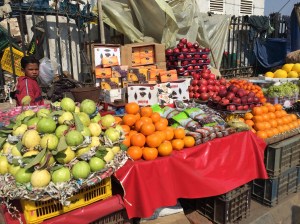
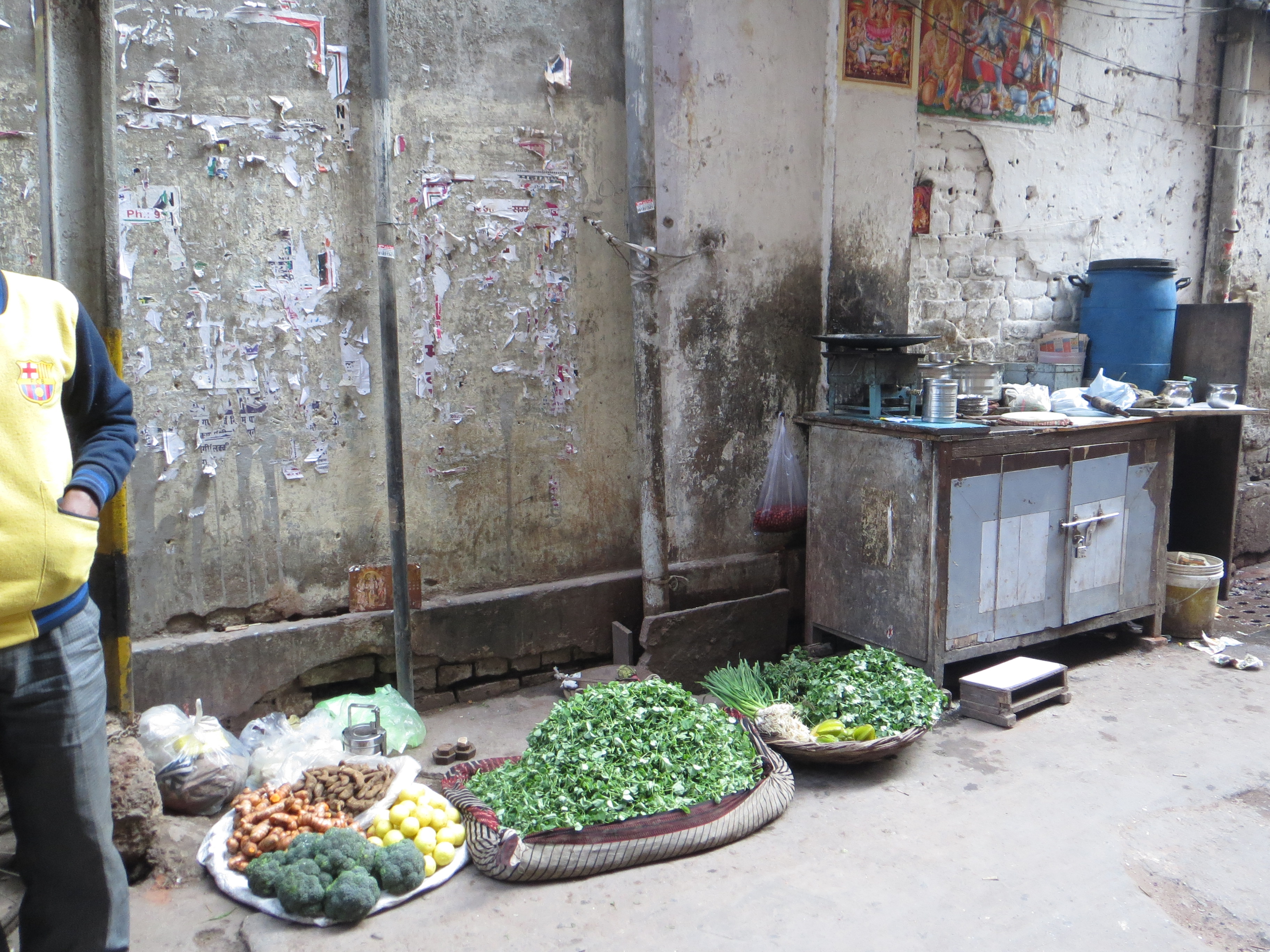
Even on our last day, the beautiful and abundant produce was beautiful.

Even on our last day, the beautiful and abundant produce still impressed us.

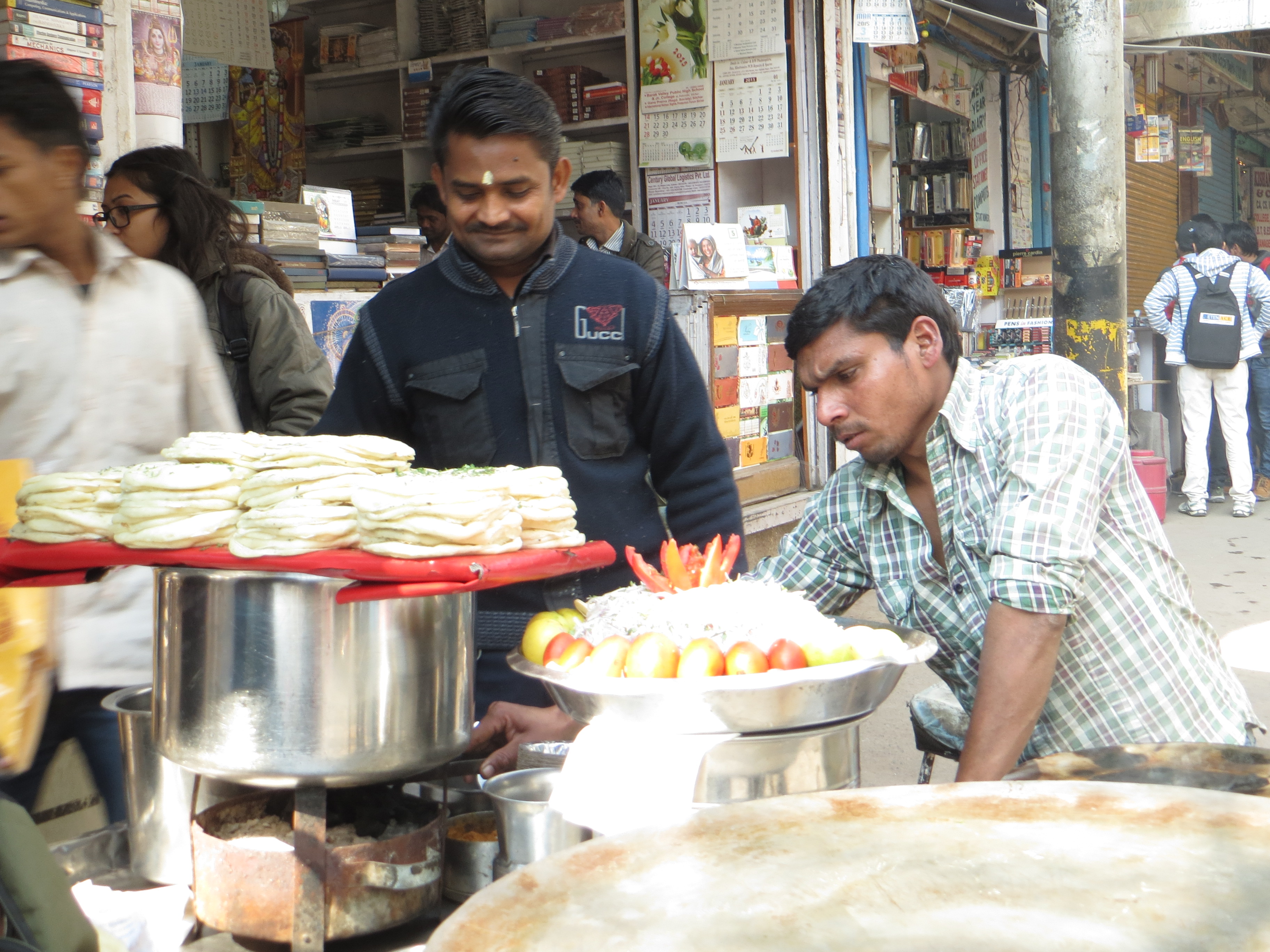
The sun was coming out, warming the street just enough and we felt more and more excited about the day. Our driver and guide, Santosh, pointed out all kinds of things and guided us along the already somewhat crowded streets, holding us back as motorcycles and rickshaws and handcarts came from every direction. The fruit and vegetable carts and stands and sidewalk displays were out and lots of commerce and bustle kept us entertained. We turned up a main thoroughfare, perhaps a full lane, or, for bicycle rickshaws ample two lanes, wide. Many storefronts were still closed, metal gates down, but many were open including breakfast poori and dal stands, and of course tea shops/stands with battered aluminum pots of milky tea at full boil over charcoal fires. We made our first commercial stop at a large–for Old Delhi–incense, oil and perfume shop.
Incense store.

Incense store.

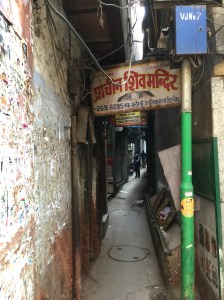
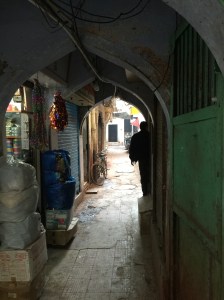
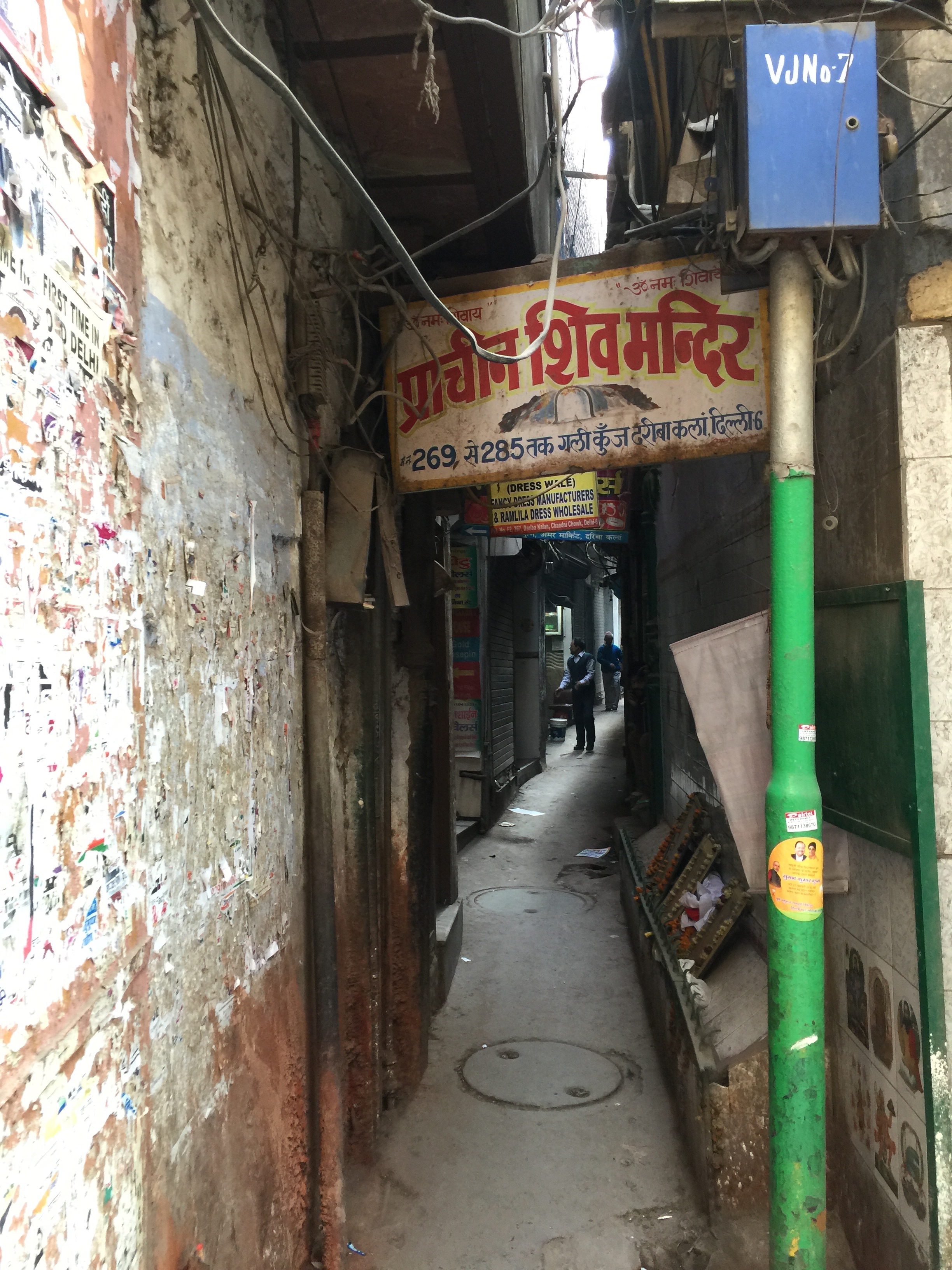
We bought a few packages of cone incense, each with a little ceramic dish for burning them in, and got into a chat with the proprietor. Where are you from? Where have you visited? Very nice. We kept walking, watching the city come fully alive alleyway by alleyway. Santosh suggested leaving the main thoroughfare so we turned into one of the very, very narrow alleys.

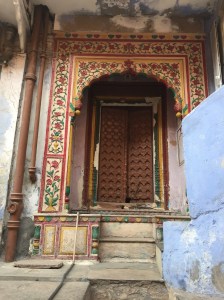
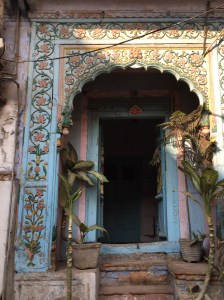
Temple decorations.

Temple decorations.

Window symbol looks so Jewish!
Window symbol looks so Jewish!

IMG_1188

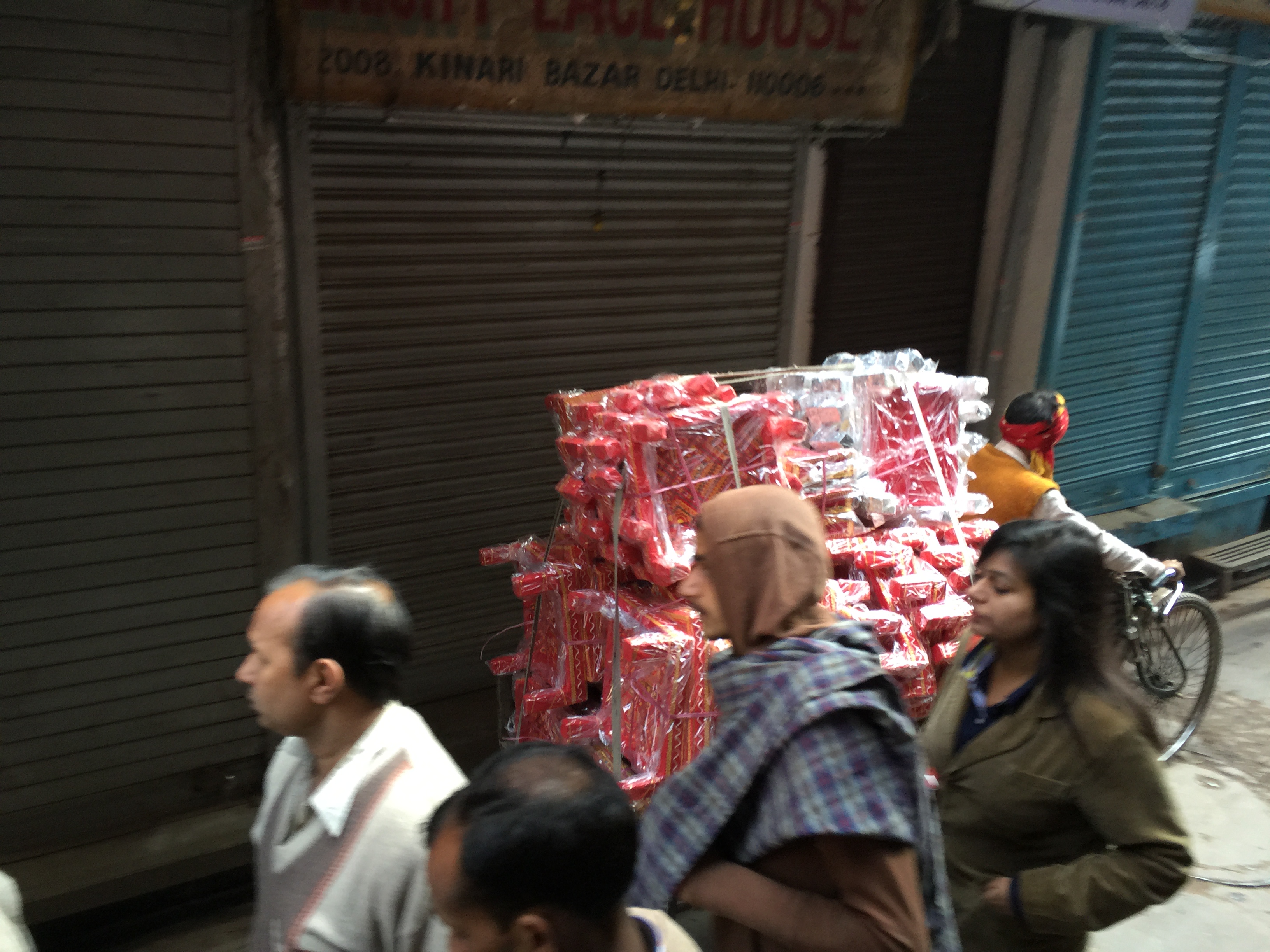
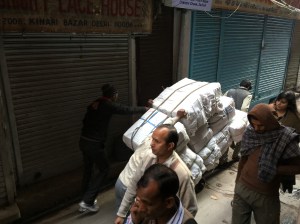
The volume of goods moving by bicycle--this is a cart of painted tables.

The volume of goods moving by bicycle amazes–this is a cart of painted tables.

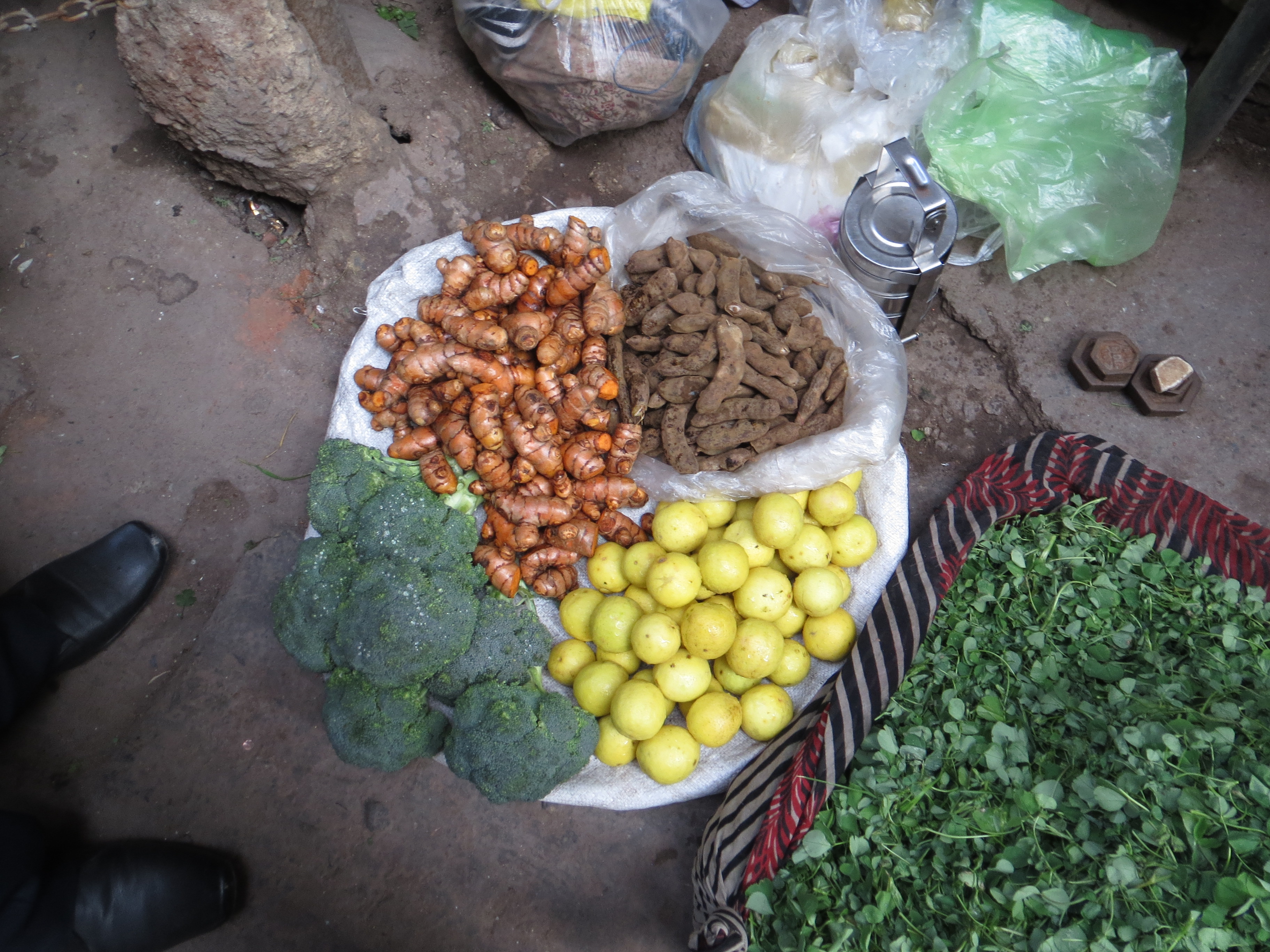
What a delight! Many sari and bead stores were opening, as we were in the sari district, and vegetables were for sale from canvas spreads on the pavement. I stopped to look at what I thought were ginger bulbs, but the ends were orange.

Produce for sale all over the place.
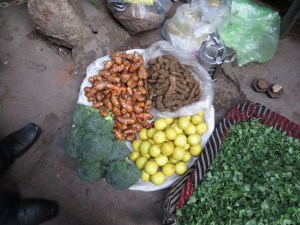
Produce for sale all over the place.

Upper left--looks like ginger but is fresh turmeric.

Upper left–looks like ginger but is fresh turmeric.

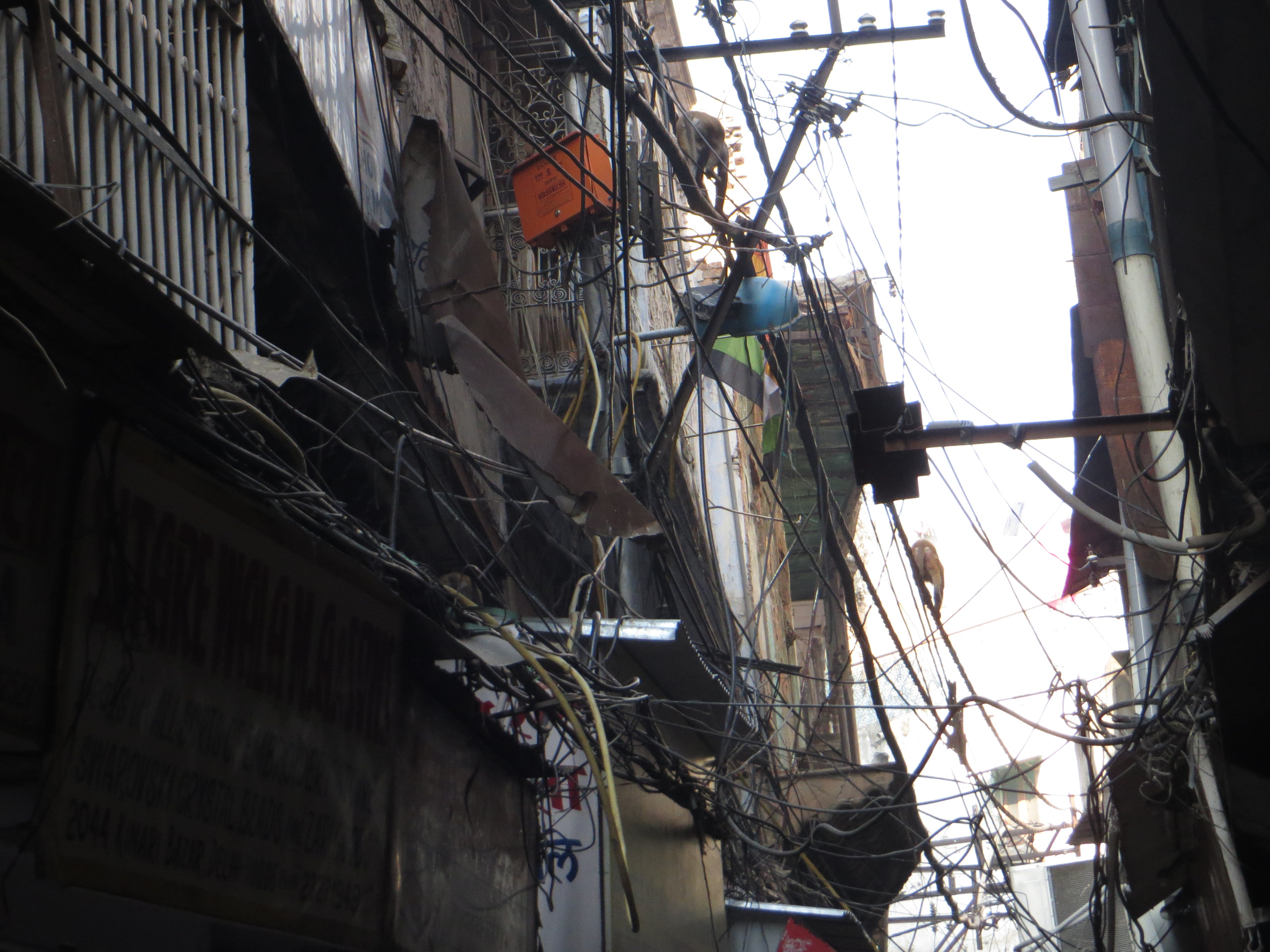
They were fresh turmeric! I bought a few (15 rupees) and hope I can bring them into California. We shall see. Cauliflower, peppers, tomatoes, purple and spring onions, bananas, apples, star fruit, and a few things we couldn’t name. A few monkeys ran ahead of us on overhangs and, frighteningly, the sagging tangle of electric wires.

I hope you can see the monkeys running along the wires.

I hope you can see the monkeys running along the wires.

IMG_1388

Vendors tossed bananas up to the monkeys which run along the overhangs and electrical wires.

Vendors tossed bananas up to the monkeys which run along the overhangs and electrical wires.

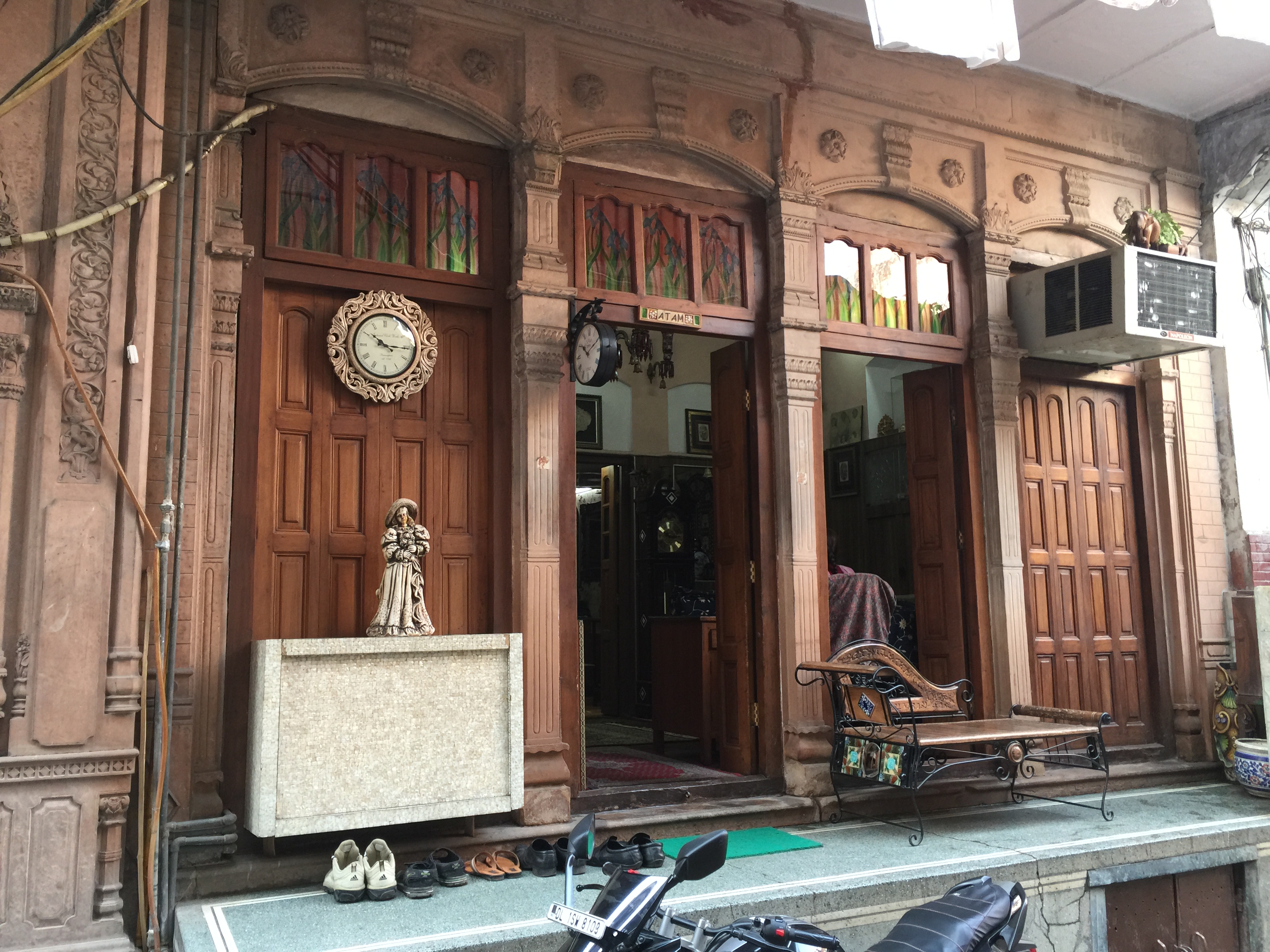
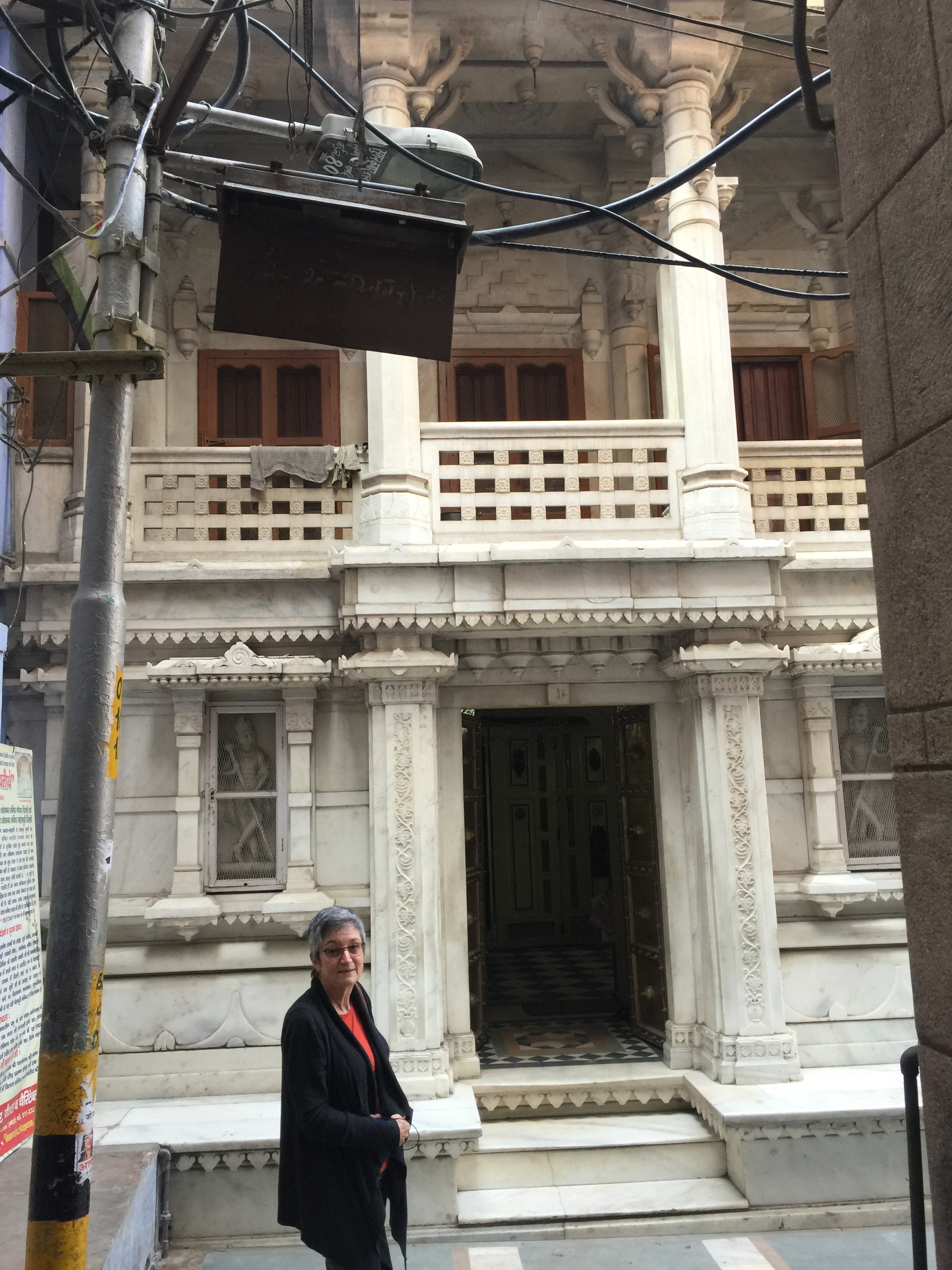
At one alley corner a fruit monger was tossing bananas up to them, and it appeared to be a morning ritual as the monkeys each waited for his or her banana and one dropped down to the pavement to eat it. IMG_1180 IMG_1179 Off to the side of one alley was a wide, quiet, beautiful and ancient-seeming row of houses, a commercial office of what looked like an antique or arts dealer having a chat on a speaker phone, and at the end of the block a white marble building which must have been a temple of some kind. We took many pictures…it reminded me of the row of painted ladies in San Francisco in that it was impossibly picturesque.
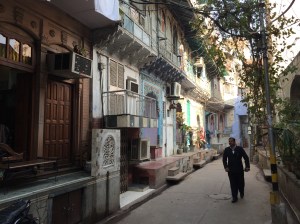
Quiet side alley of beautiful buildings.

Quiet side alley of beautiful buildings.

Another building in the quiet alley.
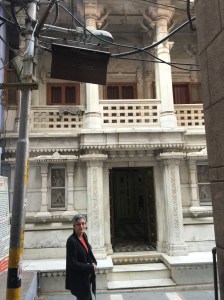
Another building in the quiet alley.

White marble, which we assumed was a temple, in the quiet alley.
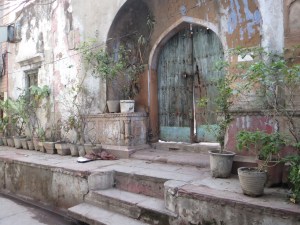
White marble, which we assumed was a temple, in the quiet alley.

In the quiet alley.

In the quiet alley.

We wandered from one commercial district to the next–housewares, books, paper goods/stationery, saris, sari lace and beadwork, brass work, jewelry…and it got busier and busier as pretty soon every shop was open. It seems impossible that all this stuff gets sold, or that an establishment produces a sufficient income. But this is largely a wholesale district and it apparently all works. We insisted on getting to a spice market but Santosh didn’t know of it. We begged him to ask and he did, and we made a u-turn. The we were in the shoe district, the clothing district, the watch district–and I remembered that my watch and was fraying and so we ducked into a store, like most about 5 feet wide with glass cases up one side and a counter on the other. Yes, they had them! About five minutes later and 150 rupees lighter (a few dollars) I had a new watch band installed. Yeah!

New watch band.

New watch band.

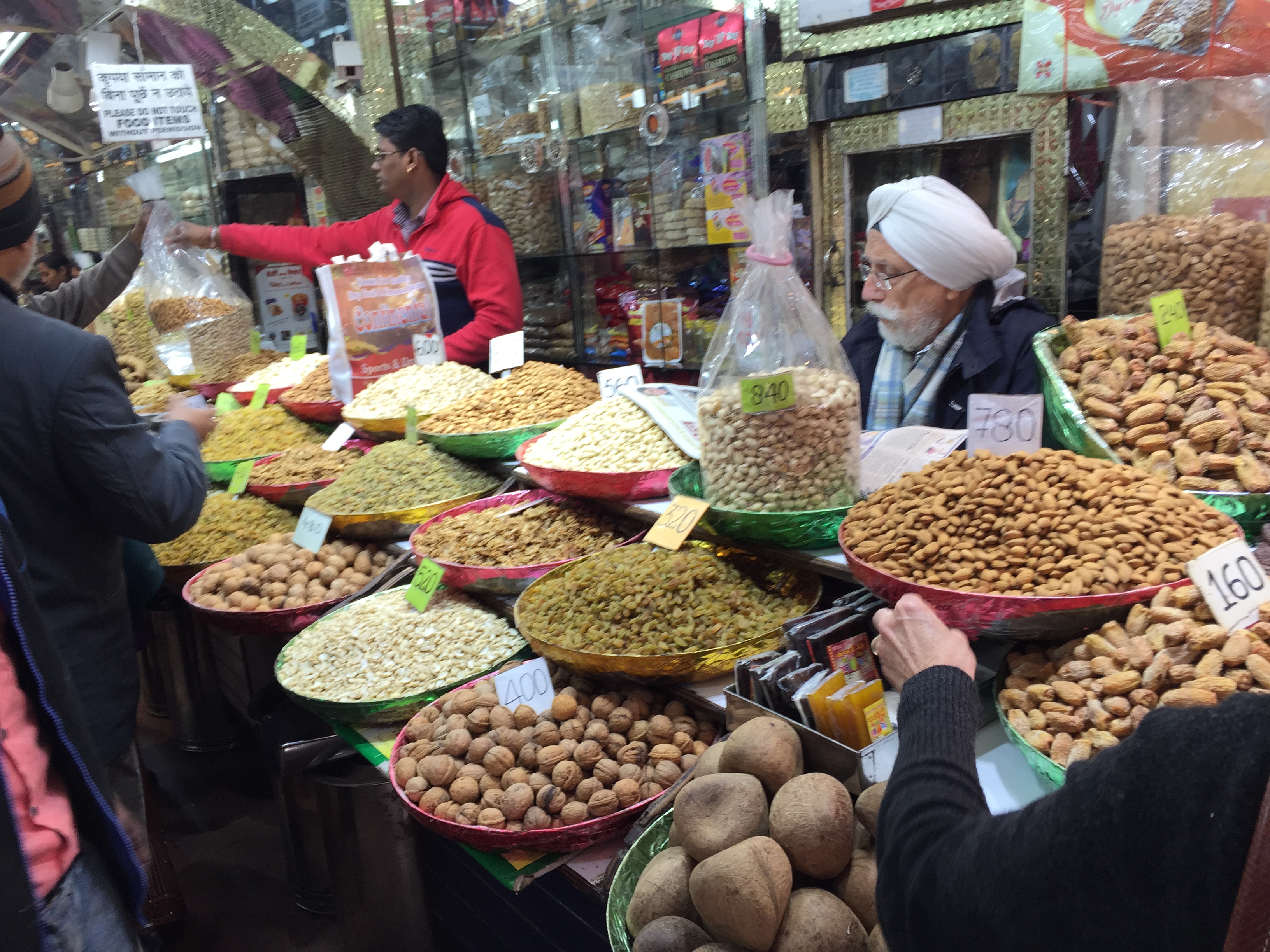
Imported almonds-from California!

Imported almonds-from California!

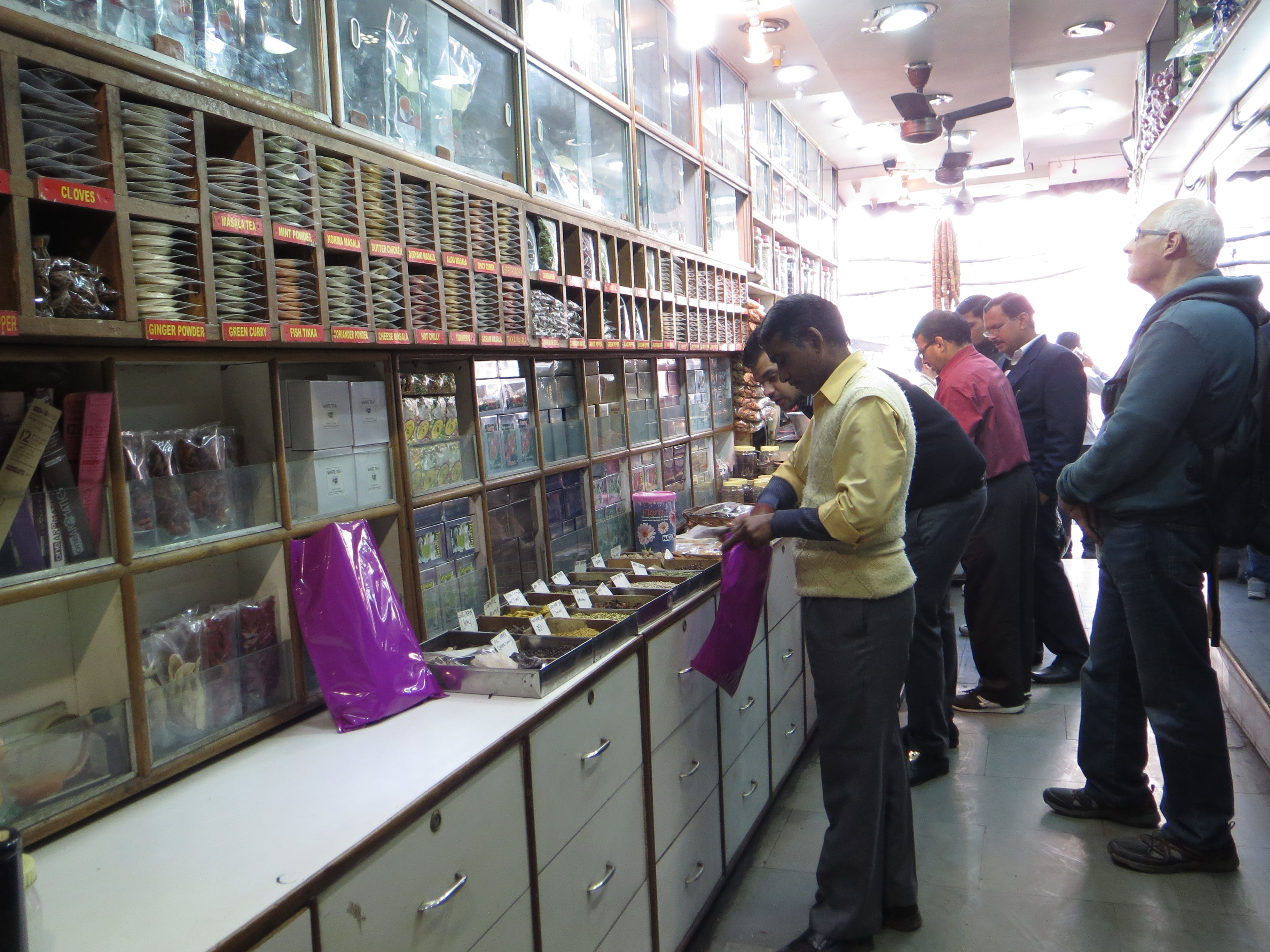
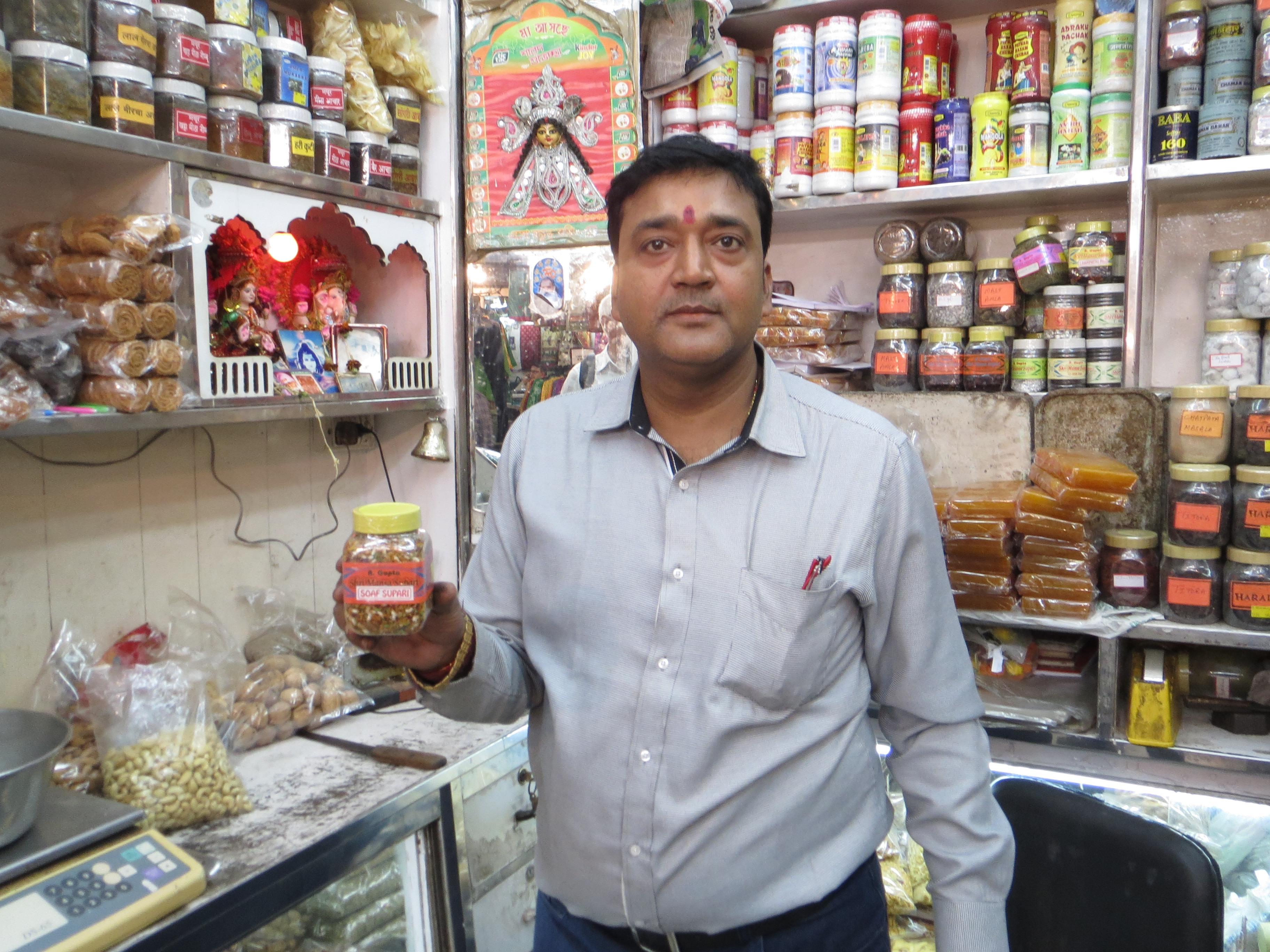
We came around a bend and store after store was selling nuts and dried fruits, including almonds from California, but mostly local. Santosh had us duck into one, and they sold a wide array of spices and masalas (spice mixes). A salesman started taking us through everything that they had. There was a open tray of compartments and he had us smell or taste each one–all, except Szechuan pepper, of Indian origin. “Taste this salt–it tastes like hard boiled eggs” as he picked up two large rocks of purple crystal, rubbed the, together to drop a few flakes in our open palms. Yup! It did, because, as I confirmed, it has sulfur in it. This is the black Himalayan salt–some of which I have at home but believe me it tastes nothing like this delicious stuff and I said right away I wanted some.

In the spice store.
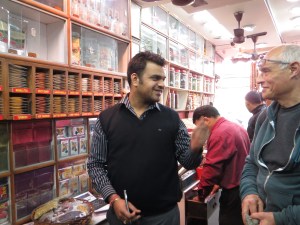
In the spice store.

Fellow on the left had us sample all the spices--great sales experience.

Fellow on the left had us sample all the spices–great sales experience.

Tellicherry black peppercorns. Dried mace flowers. Dried whole turmeric. Vanilla bean. Cinnamon bark. White peppercorns. Coriander seeds that are light yellow and oval, unlike the ones in the states. The we went on to the masalas. Fish masala, chicken tandoori, and about five others. And chai tea mix. We ended up spending $140 or so…what fun!
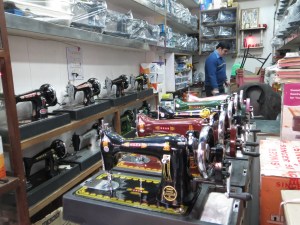
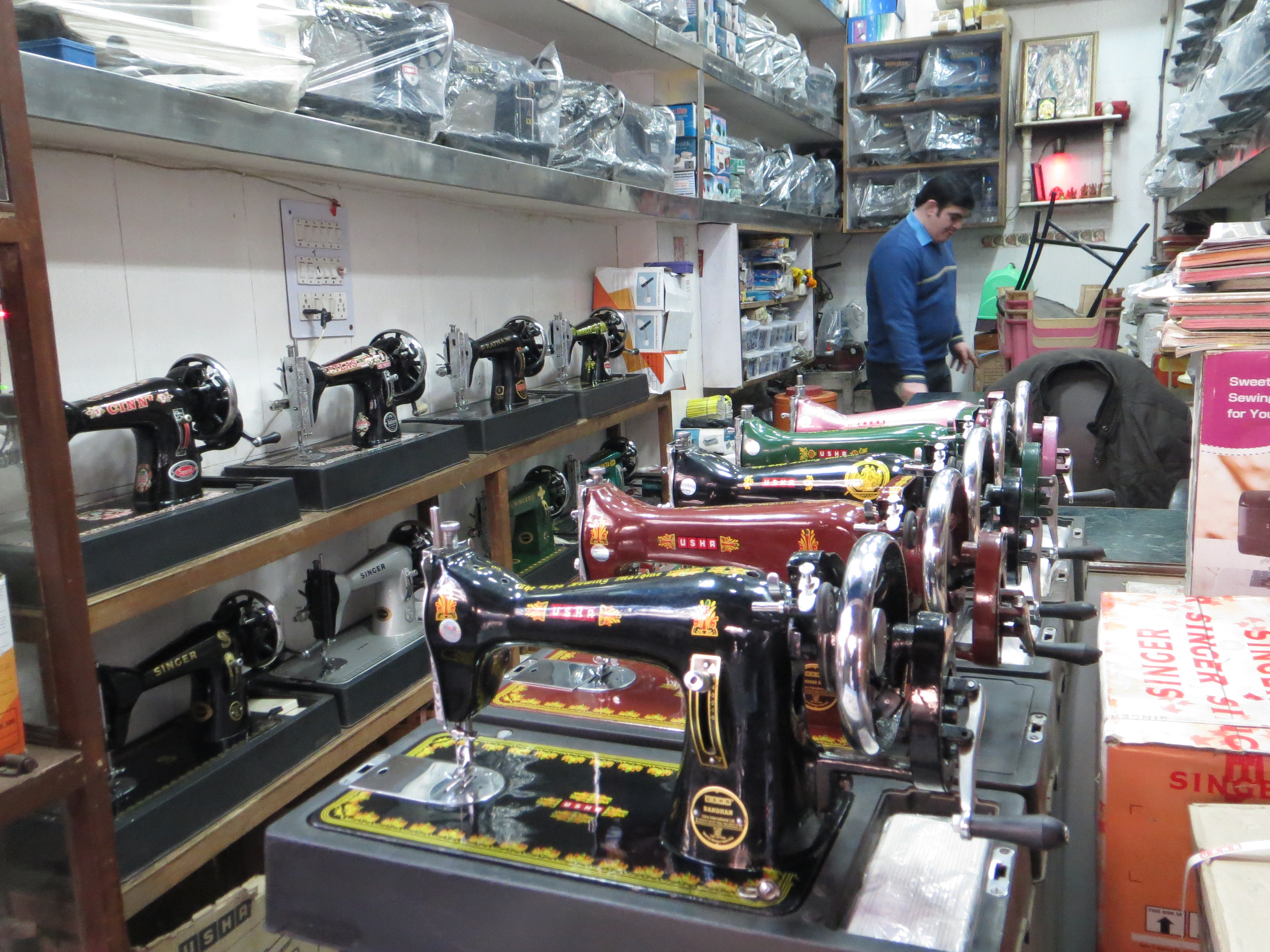
Shiny new manual sewing machines--the ones we saw at street tailors and in, for example, the place in Jaipur where I bought the Afghan antique fabric.

Shiny new manual sewing machines–the ones we saw at street tailors and in, for example, the place in Jaipur where I bought the Afghan antique fabric.

IMG_1391

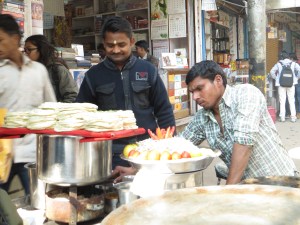
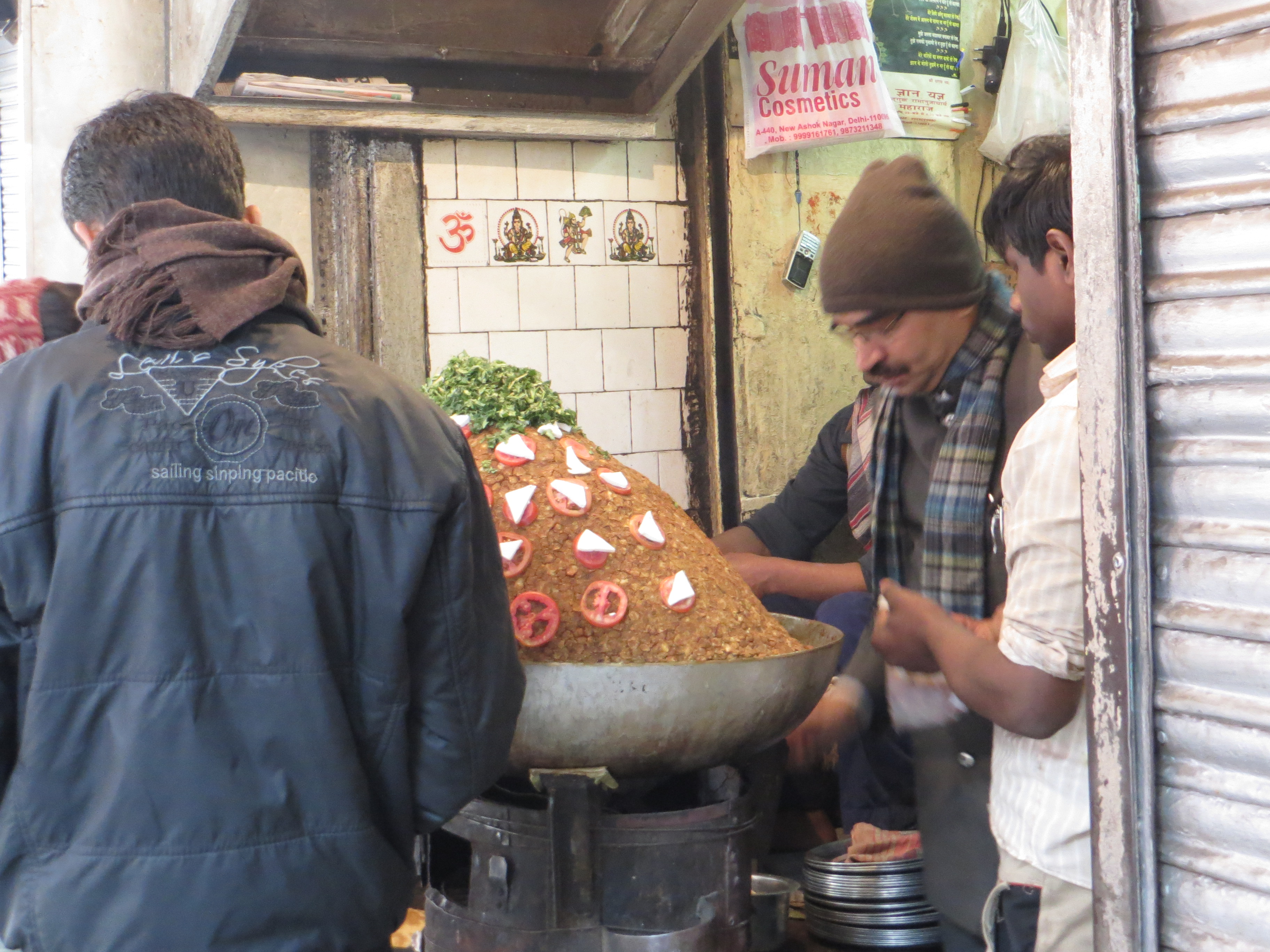
A mound of a chickpea mix, decorated with slices of paneer and tomato, at a breakfast stand.
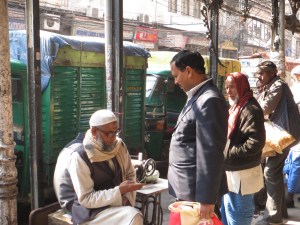
IMG_1406

Santosh ran into an old friend on the street; note the sewing machine–a street tailor.

IMG_1405

Street barber.

Snacks--so tempting.

Snacks–so tempting.

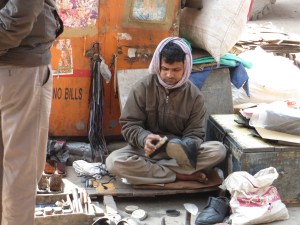
Shoe repairman on the sidewalk (common).

Shoe repairman on the sidewalk (common).

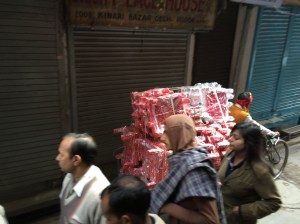
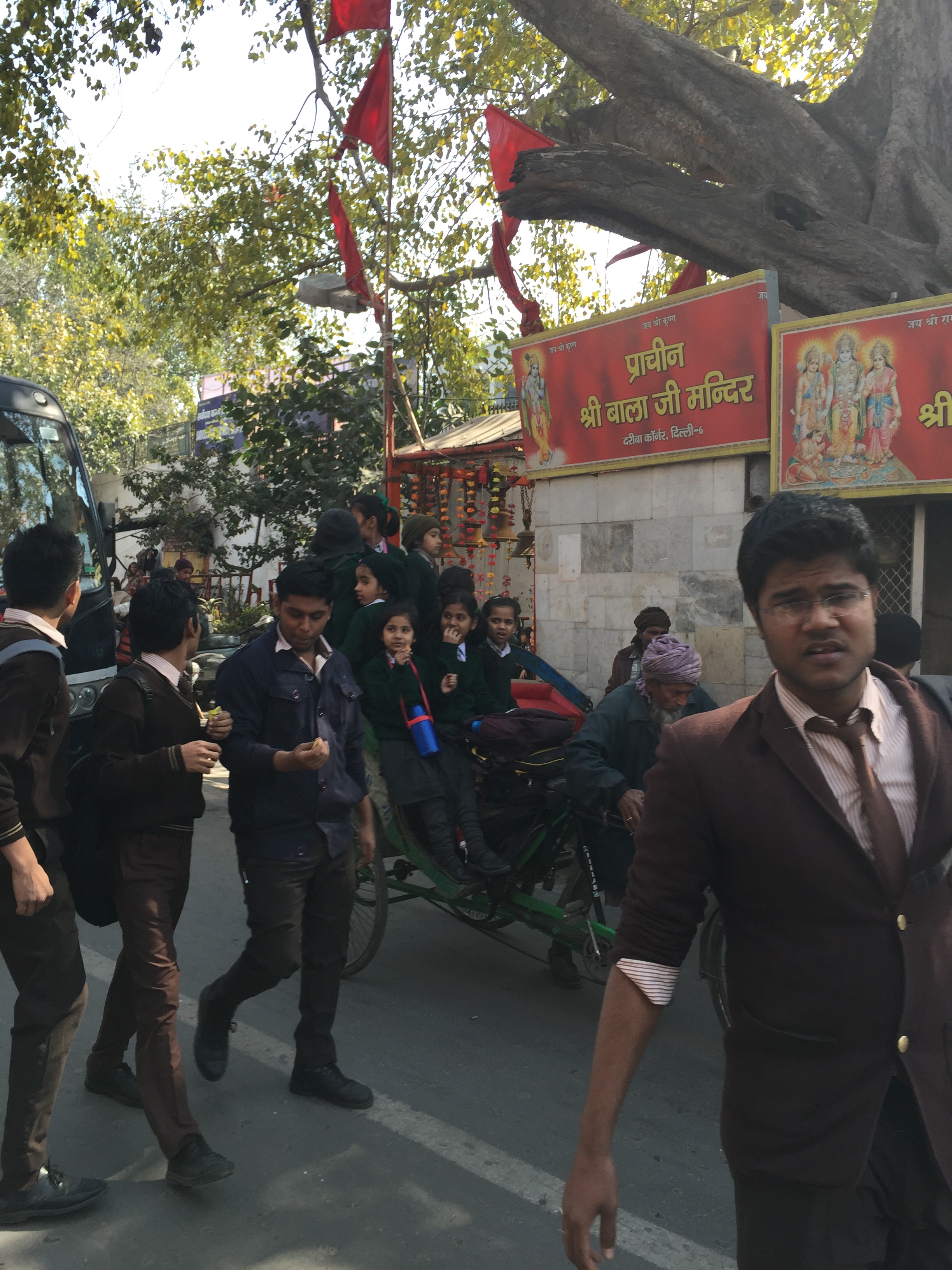
We wandered back through the side alleys, gawking and taking pictures. The sun was shining and it was like the whole of India was crammed into this amazing place. Schoolgirls in uniform buying little dishes of noodles, all crowded around and pouring orange and green sauces on top. School kids jammed 6 or more into bicycle rickshaws to head to school. Muslim men, and some women, milling around the mosques. An oxcart racing, incredibly, up the street. A man hurrying down an alley with a washing machine balanced on his head. Poori stands (a puffed fried bread).
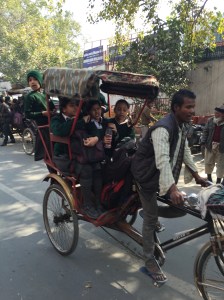
Girls going to school via bicycle rickshaw.
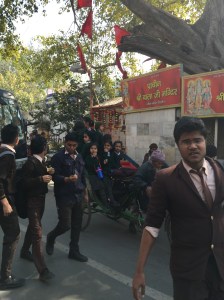
Girls going to school via bicycle rickshaw.

IMG_1216

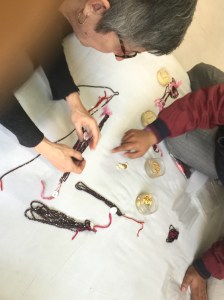
Looking at garnets in a small wholesale jeweler.
Looking at garnets in a small wholesale jeweler.

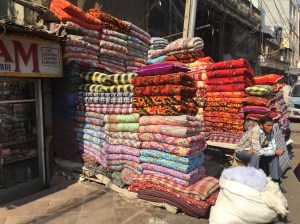
Typical bedding store.
Typical bedding store.

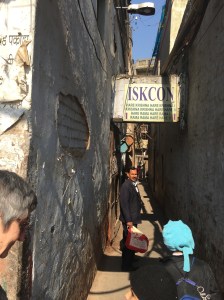
Off the tourist path in Old Delhi.

Off the tourist path in Old Delhi.

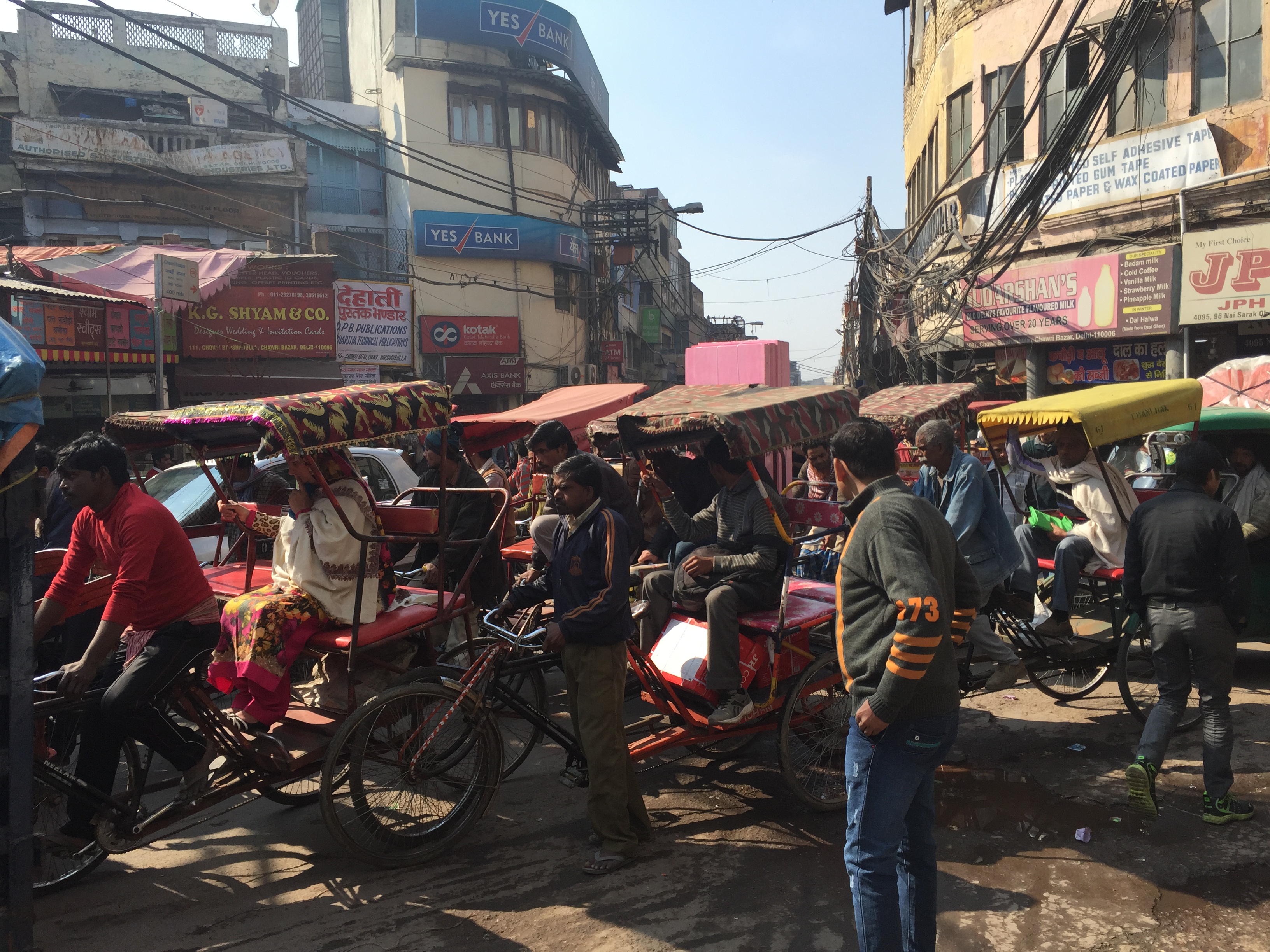
Late morning crowd in the paper district.

Late morning crowd in the paper district.

Seems impossible for anyone to get anywhere, but they do.

Seems impossible for anyone to get anywhere, but they do.

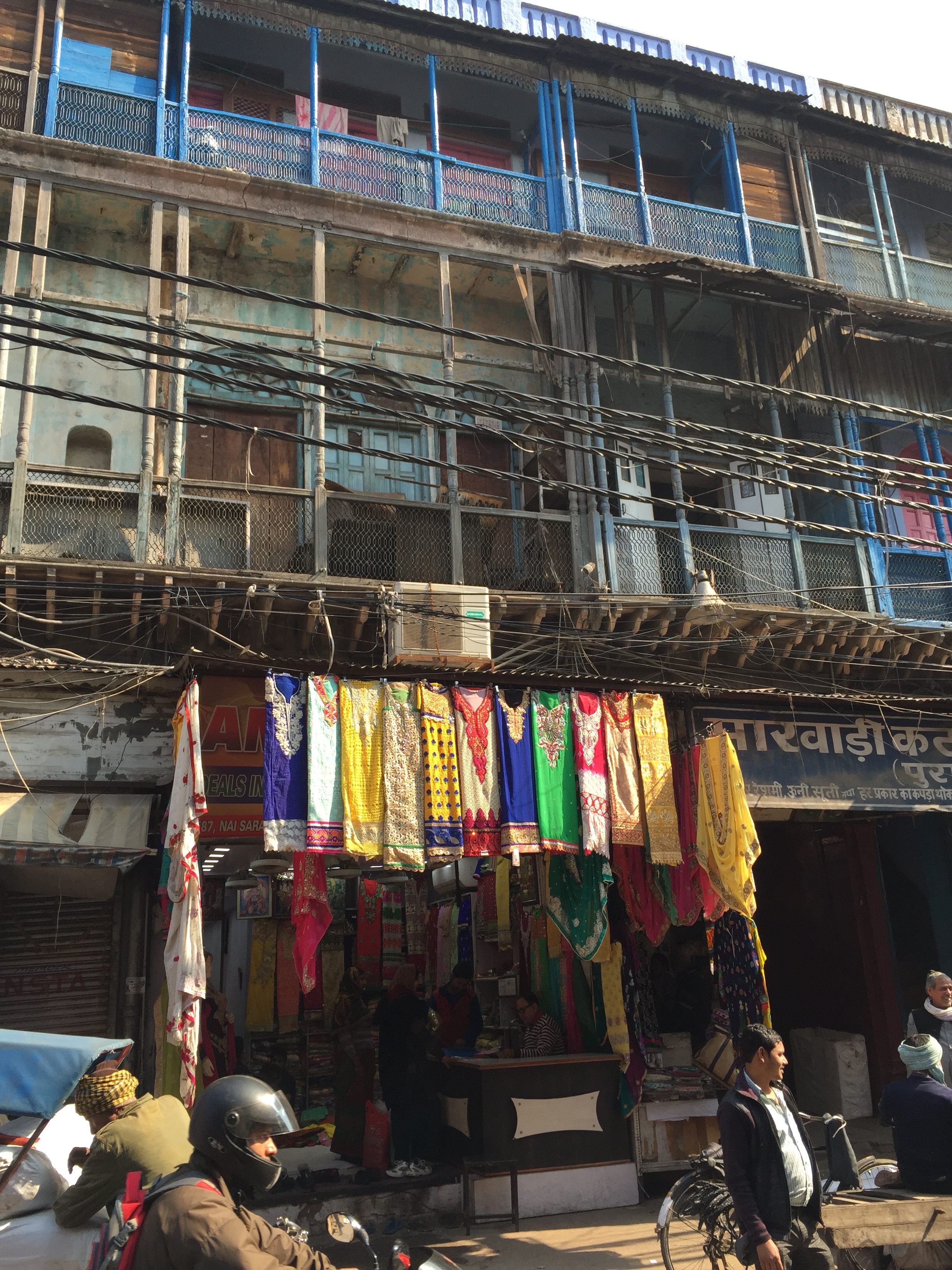
Our guide told us the exteriors are deceiving--there are very nice apartments above the stores, even in the very old buildings

Our guide told us the exteriors are deceiving–there are very nice apartments above the stores, even in the very old buildings

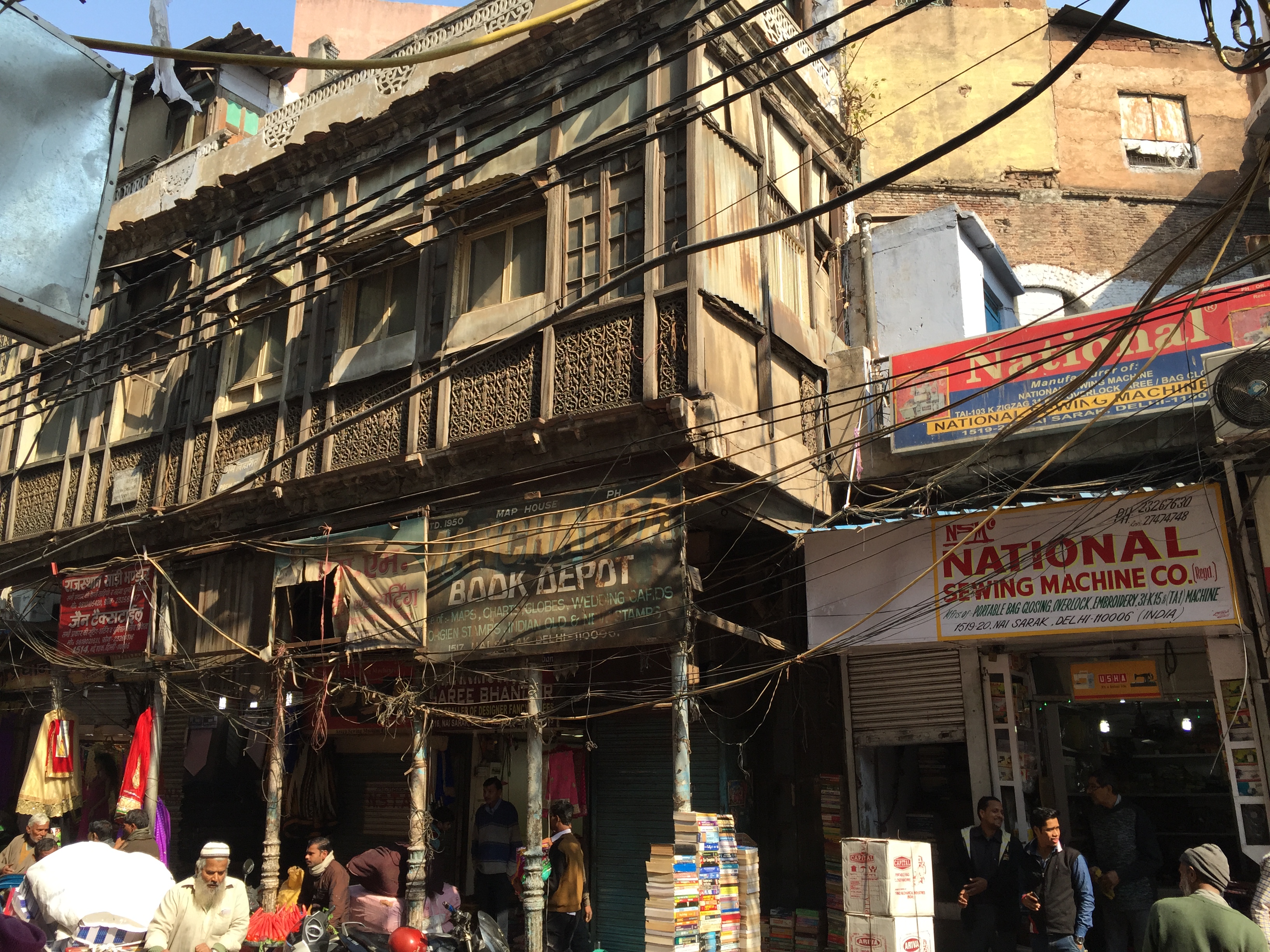
Beautiful old building.  Sewing machine companies sell manual machines used everywhere.  We saw only men sewing.

Beautiful old building. Sewing machine companies sell manual machines used everywhere. We saw only men sewing.

When we returned to the parking lot it was a mass of cars, so crowded and busy with cars coming in I couldn’t see how we would ever get out. But it took only a few minutes and we were on the road, which was midday full. We stopped at Pindi, which had been our favorite restaurant in Delhi, for our last, and most delicious lunch of paneer tikka, mutton saagwala (lamb in a spinach sauce), rice and paratha. Heavenly.

Need fireworks?

Need fireworks?

IMG_1392

Goodbye

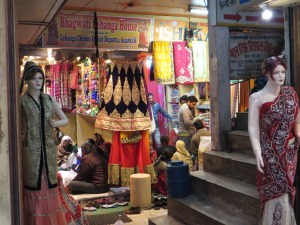
Major street repairs in front of old apartments.
Major street repairs in front of old apartments.

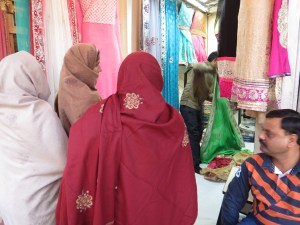
Families buying saris.
Families buying saris.

You can see family groups selecting wedding saris.

You can see family groups selecting wedding saris.

Delhi. Goodbye India. Thank you for treating us so well and for showing us your beauty, squalor, messiness; for saving your history, your palaces, forts, temples; for your generosity, openness, curiosity; your spices, food, salt lassis; your Hindus, Sikhs, Muslims; your friendly children, beautiful and inspiring women, pushy businessmen; your cows and water buffalo, your dogs and cats and monkeys; soaring kites, both avian and paper, screaming parakeets.

We won’t miss the dusty roads, uncollected garbage, constant honking horns, beeping motorscooters, ringing bicycles. We won’t miss the unending construction, piles of bricks and sand and lumber, or having to buy bottled water or having every single meal at least a little bit spicy. We never expected to love it as much as we now do, and hope we will come back someday.
Observations about traveling in India

As first time travelers in this wondrous and complicated country, we probably were more attuned to the “messy bits” than we will be next time, so here are a few things that might help other first timers.

Traffic and travel times
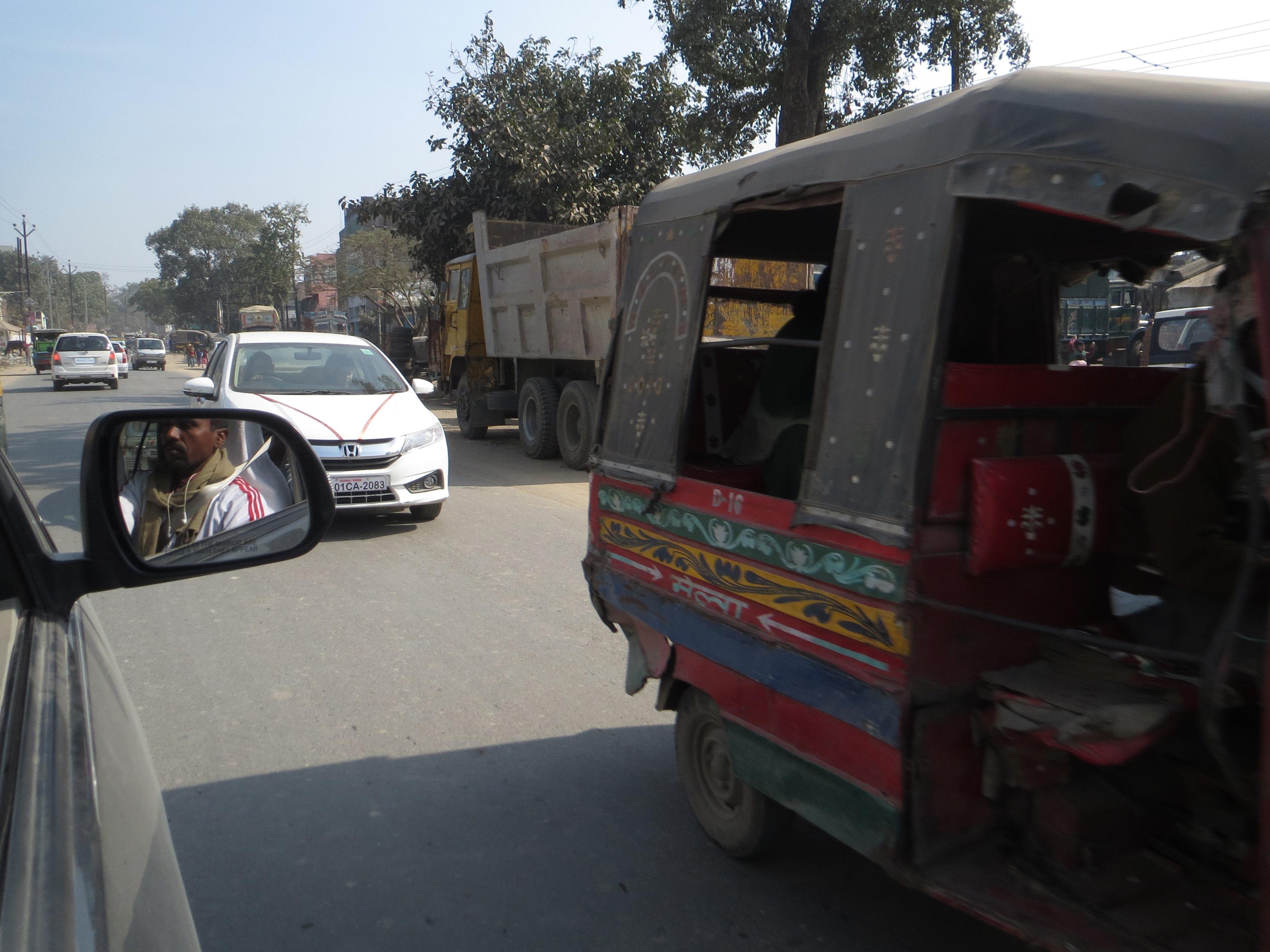
Looking at India from afar we found ourselves dreading the traffic in Delhi and other large cities. In fact, the traffic everywhere (except open highway, sometimes, and Khajuraho) is horrible. Many roads are in pretty awful shape or, worse, are in the midst of major repair. Because there are vehicles of various sizes all competing for space, every gap is quickly filled with whatever will fit. Three marked lanes will always have at least four, usually five, vehicles abreast.

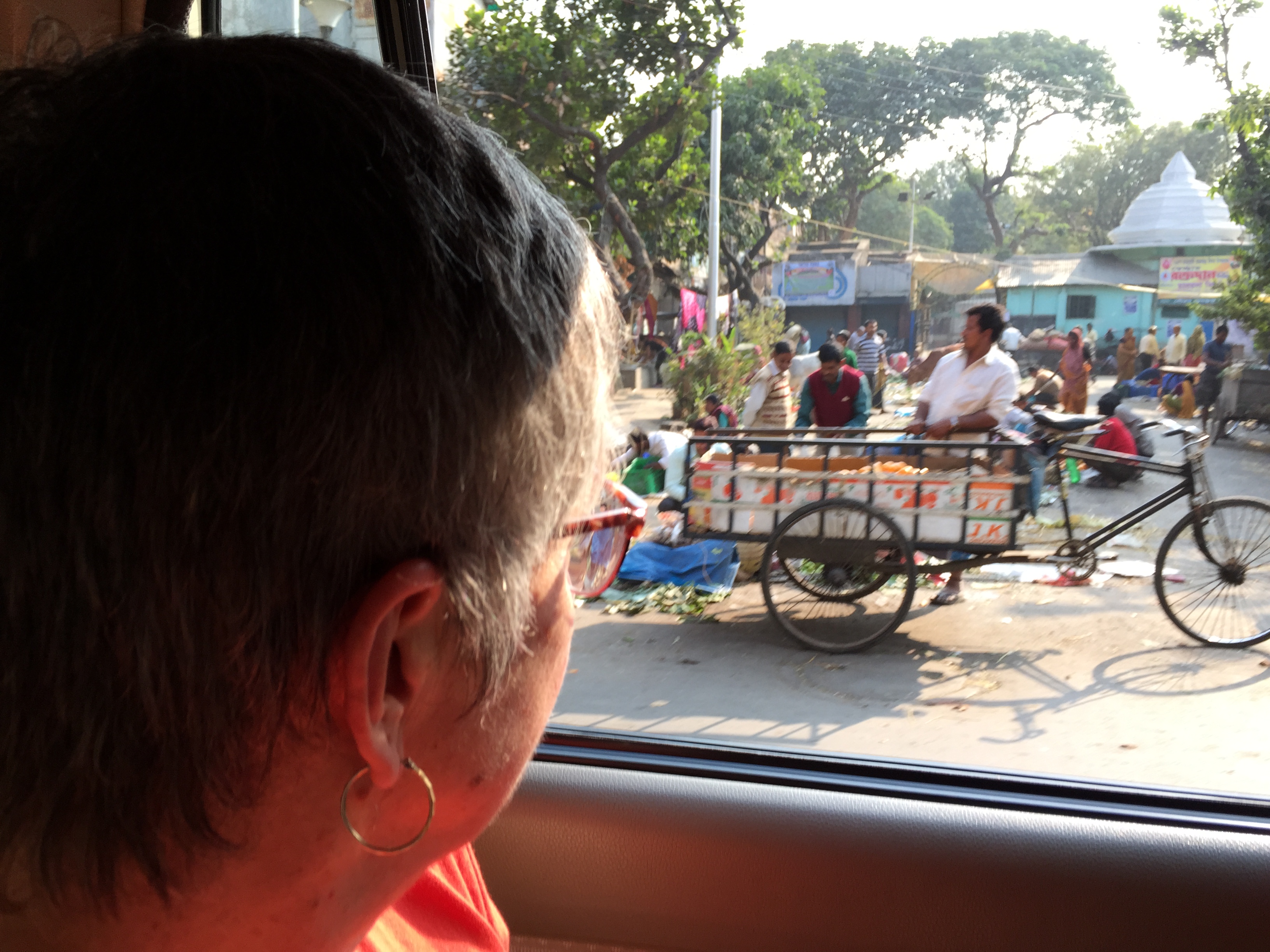
There is nothing, nothing, you can do about it. Fortunately estimated travel times from our guides always took traffic into account. Even more fortunately, the people watching, animal watching, and general stuff to see is so absorbing that the time it takes to get from one place to another was, for us, rarely tedious and even then it passed pretty quickly.

So sit back and chill. Look around and be glad you have the swirl of Indian life to entertain you.

Drivers
Some drivers are extremely aggressive. Some are chill. We didn’t notice much difference in how long it took to get somewhere, but it could be rather scary to focus on all the many (many!) seemingly near misses. While in the US it seems everyone overestimates how big his or her car is, pulling out of parking places at a snail’s pace and leaving half a car length between unmarked parking spaces instead of a foot or so, Indian drivers appear to have a precise, to the inch understanding of where their cars start and end. They can pull around other cars with what to us looks like a mere centimeter, and no more, to spare. We saw exactly one traffic accident and it was on an open highway.

Try not to focus on how close everything seems to be passing your vehicle. Just don’t look, or look and marvel.

Hotel room electrical management
We stayed at upscale hotels–not the highest of the high end, but, for example, the nicest hotel in Khajuraho, a large Sheraton in Delhi, and the like. Every hotel used the room key to turn the power on in the room–you drop your key in a slot by the door and the lights come on. So far, so good. But every room had a confusing, sometimes illogical set of switches to turn things on, and a few had timers on bathroom lights and/or auto-on motion detectors for hall or bathroom. It was incredible to us how difficult it was to figure out how to manage a simple thing like turning off the bathroom light..

Make sure you ask! And pay attention to the instructions. Remember that you cannot leave something to charge all day while you are out and about…because when you leave, the power to your room is off.

Food
We never got sick, but we never had street food though we did have chai tea from a street vendor. It was delicious, btw.

We also ate and drank a lot of yogurt and took probiotic capsules every day. I ate papaya and yogurt every morning for breakfast–yummy and a digestive aid. All in all we were probably simply lucky.

The non-Indian choices in the hotels were so-so. As much as we enjoyed the food we did get weary of it a few times. Do a little research if you are not familiar with Indian food, and do note that almost everything is very spicy for most American palates. The breads, and the yogurt, which were always available, were very helpful in offsetting the intense flavors. Do try the lassis!!!

Public elimination
There was a lot of press about the lack of public toilets, and rightly so. Men pee on the sides of the roads everywhere. Everywhere. The only public urinal we saw was in Old Delhi (we saw only one and it was in steady use).

We also saw women and men defacating in open fields. This is not only very dangerous to everyone’s health but demeaning to the population. Indians and visitors can pray that the government gets this remedied as soon as possible for so many reasons.

It’s best, and easiest on the emotions, to ignore this behavior.  Do use hotel and restaurant facilities whenever they avail themselves. Not everywhere has western style toilets, so bring strong thighs.  Very few women’s bathrooms had both toilet paper and paper towels or hand dryers. I was super glad I had purchased a travelers roll of TP in a little plastic case and used it often. Get used to drying your hands in the air or on your jeans.

Animals
There must be millions of stray dogs. It is extraordinarily sad to see, and of course for India an enormous problem by adding to the mess and at times general commotion, though barking dogs were quite rare. As a dog owner and lover I found it painful. The countervailing aspect is that most Indians love animals and many take time and money to feed them, and in some cases put t-shirts or sweaters on them when it is cold. (We also saw goats in clothing!)  I assumed if you saw a dog in clothing it meant it had an owner but I was told by several folks that no, people just did this when it got cold.

In general the dogs seem independent and/or resigned. Though some are very thin, most are on the thin side but not alarmingly so. We saw them sleeping in front of vendors, undisturbed, and we never saw kids or anyone deliberately harassing, injuring or chasing them. So it is awful, but bearable. As I mentioned in another entry we saw monkeys being fed, there were street vendors selling dried corn to feed to birds, and people put out greens in the afternoon for cows and goats. Try to console yourself with these things and not stress about how the public animals don’t have the cosy life of most American pets.

Village Sojourn–Khajuraho

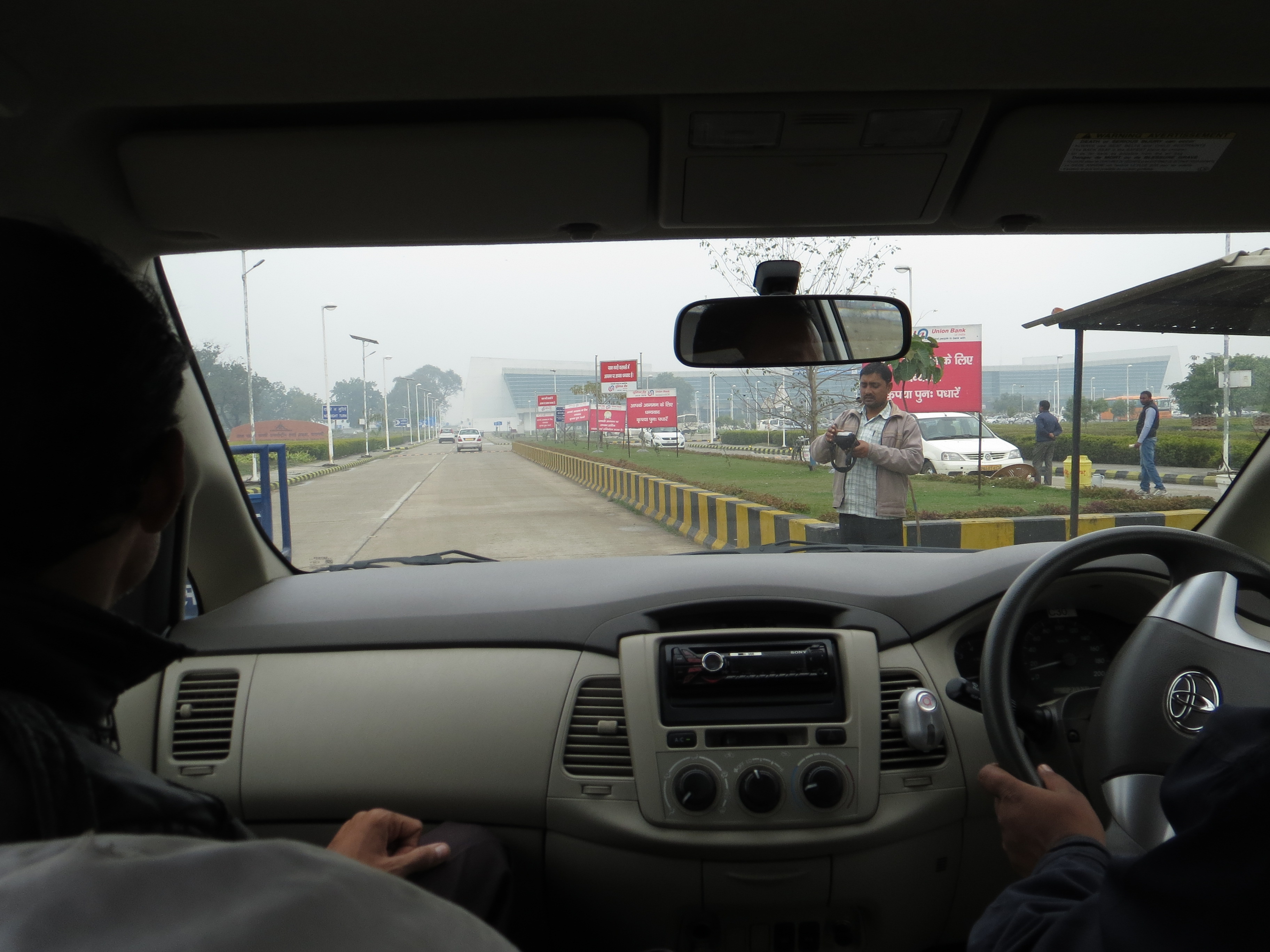
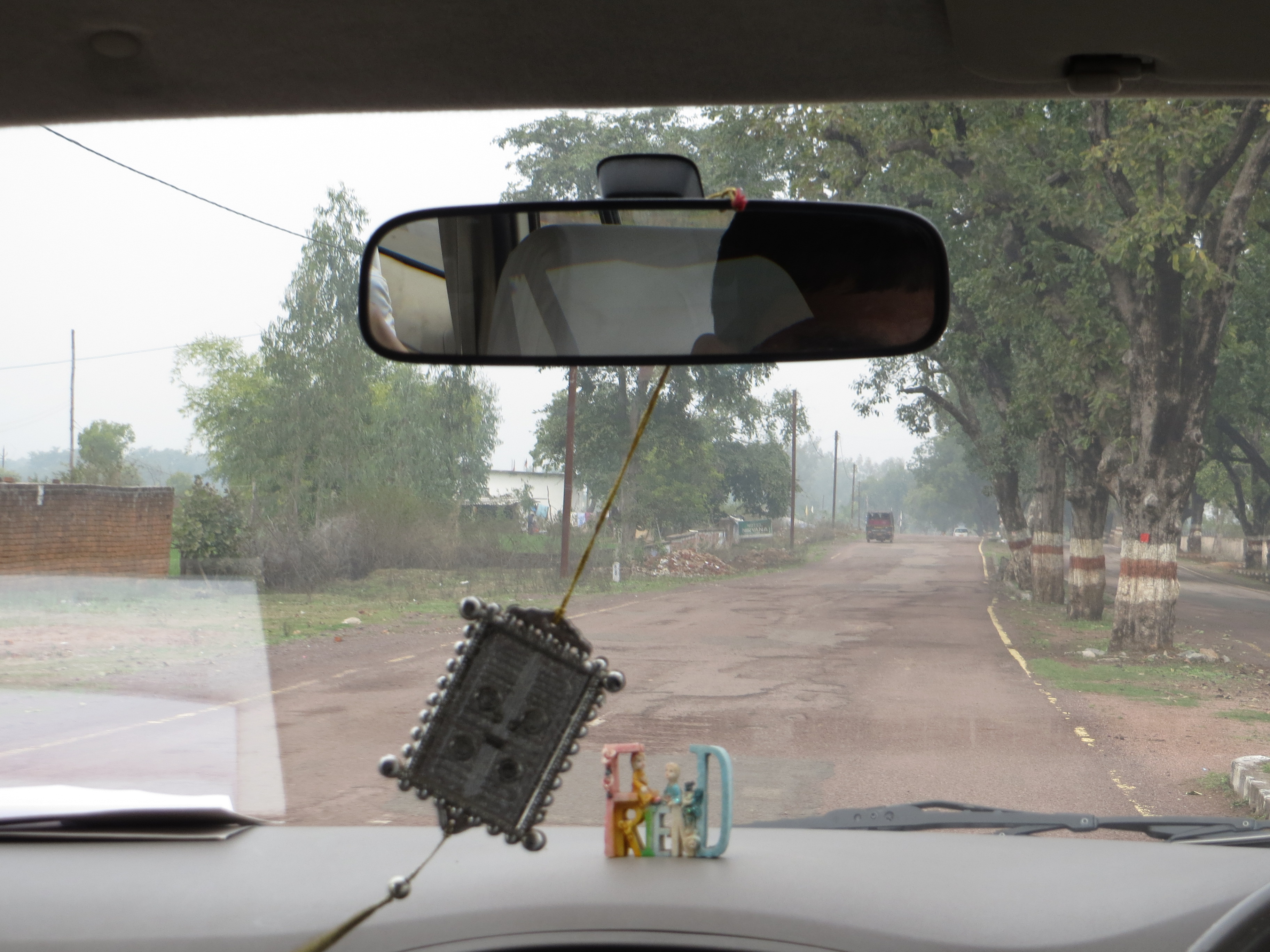
The next morning we headed to the airport.  We took a few goodbye pictures of the ‘highway.’

Enroute to the Varanasi airport.

Enroute to the Varanasi airport.

We saw many basket shops, but didn't stop to buy.

We saw many basket shops, but didn’t stop to buy.

Morning tea.

Morning tea.

IMG_1297

A view of the 'highway.'

A view of the ‘highway.’

Open road!

Open road!

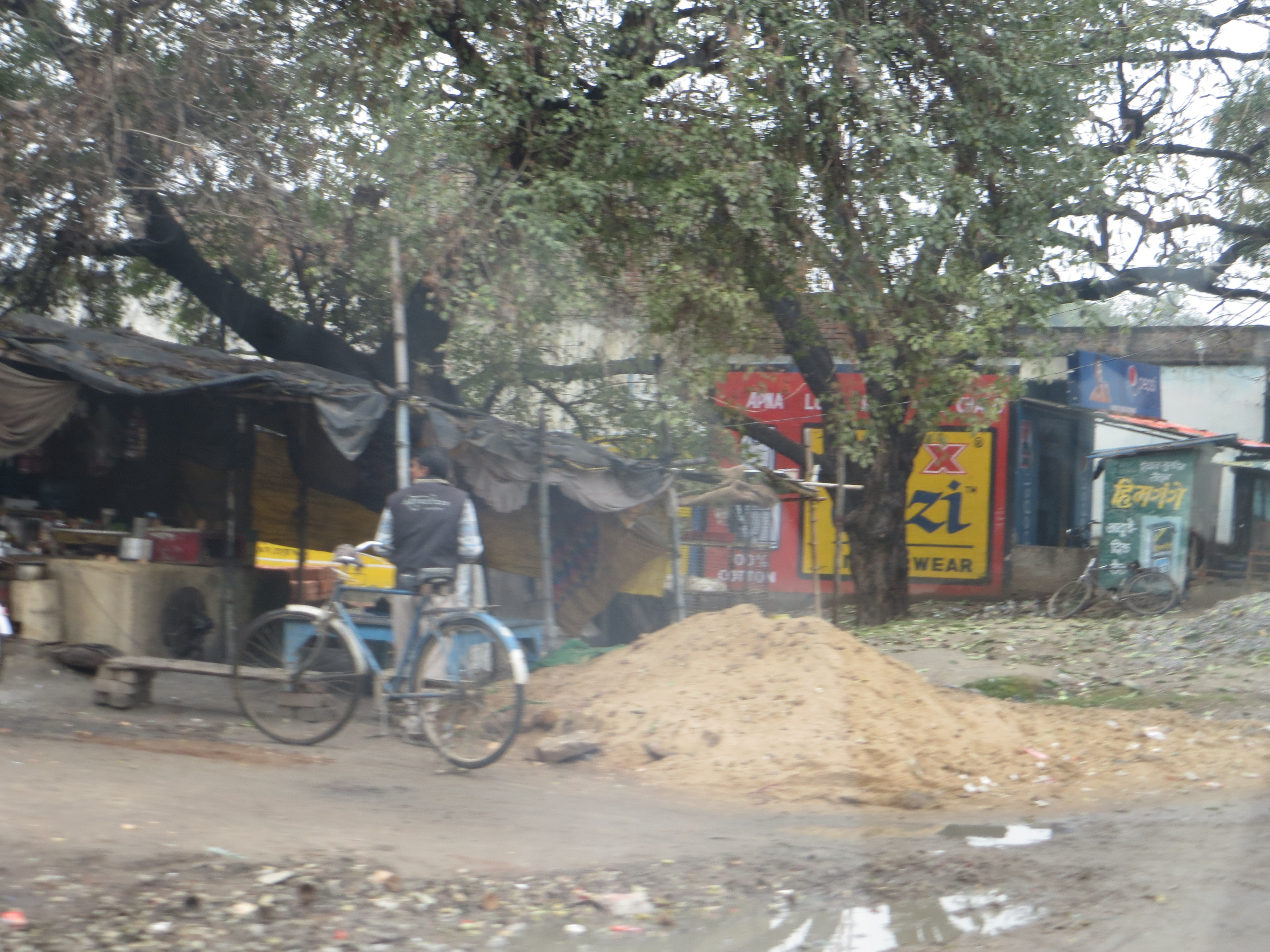
A lot of road construction means a lot of piles of construction materials.

A lot of road construction means a lot of piles of construction materials.

We were pleased to find the 45 minute flight to tiny Khajuraho was in a nearly empty 737. Our stay was just about exactly 24 hours, there being one flight in, arriving midday, that turns around and heads back to Varanasi as the one flight out.

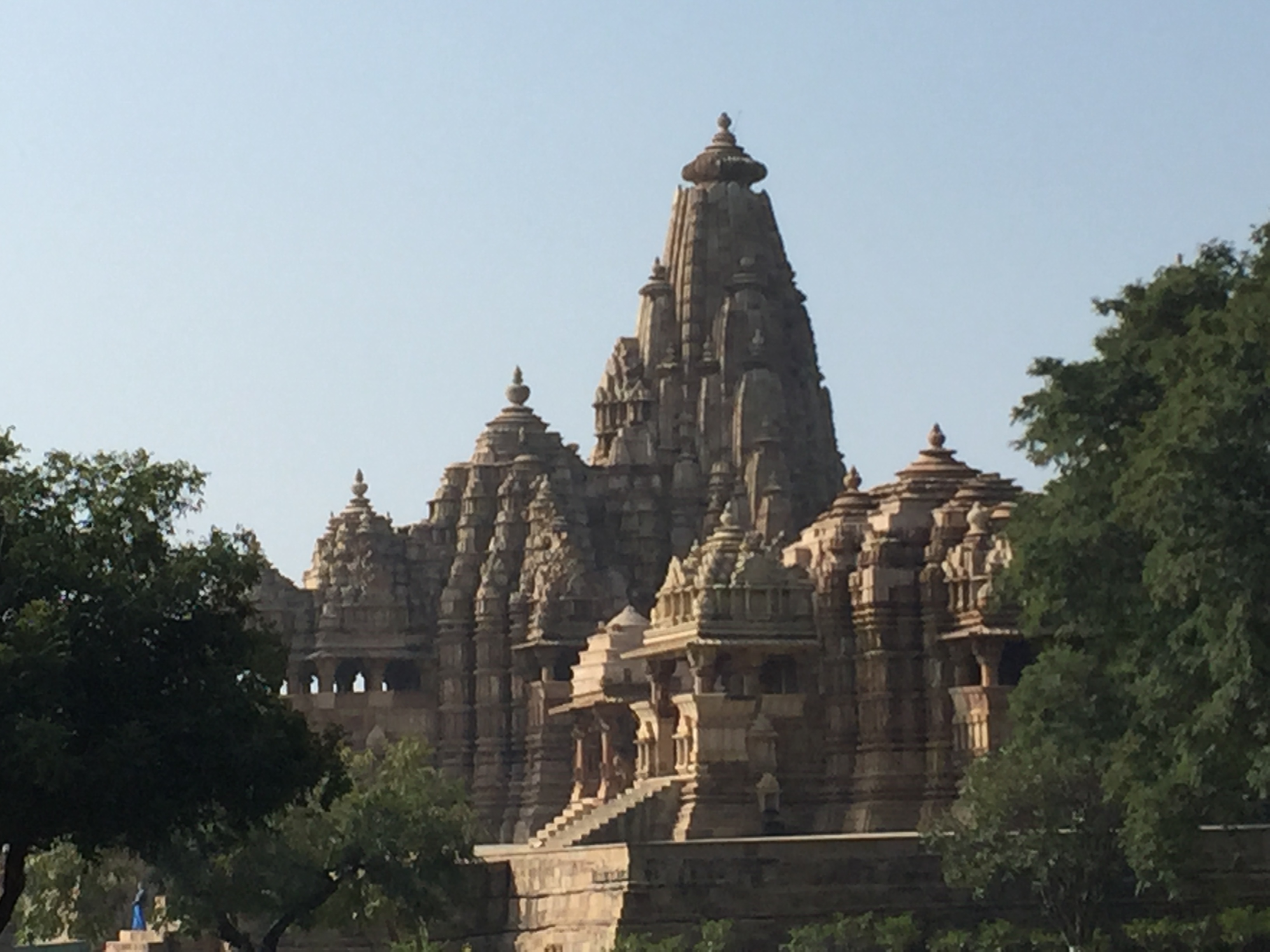
We knew it was a small town, with the only thing to do there being to visit the famous 25 Hindu temples and the hundreds of temple carvings which decorate them. This is, for India, a hamlet of 20,000 people. The hotel is 5 minutes from the airport. The temples are a 15 minute walk from the hotel–in the center of the commercial area. We heard birds singing. We had the window open in our room and it was silent all night. A heavenly respite from the commotion of every other place we have visited.

IMG_1303

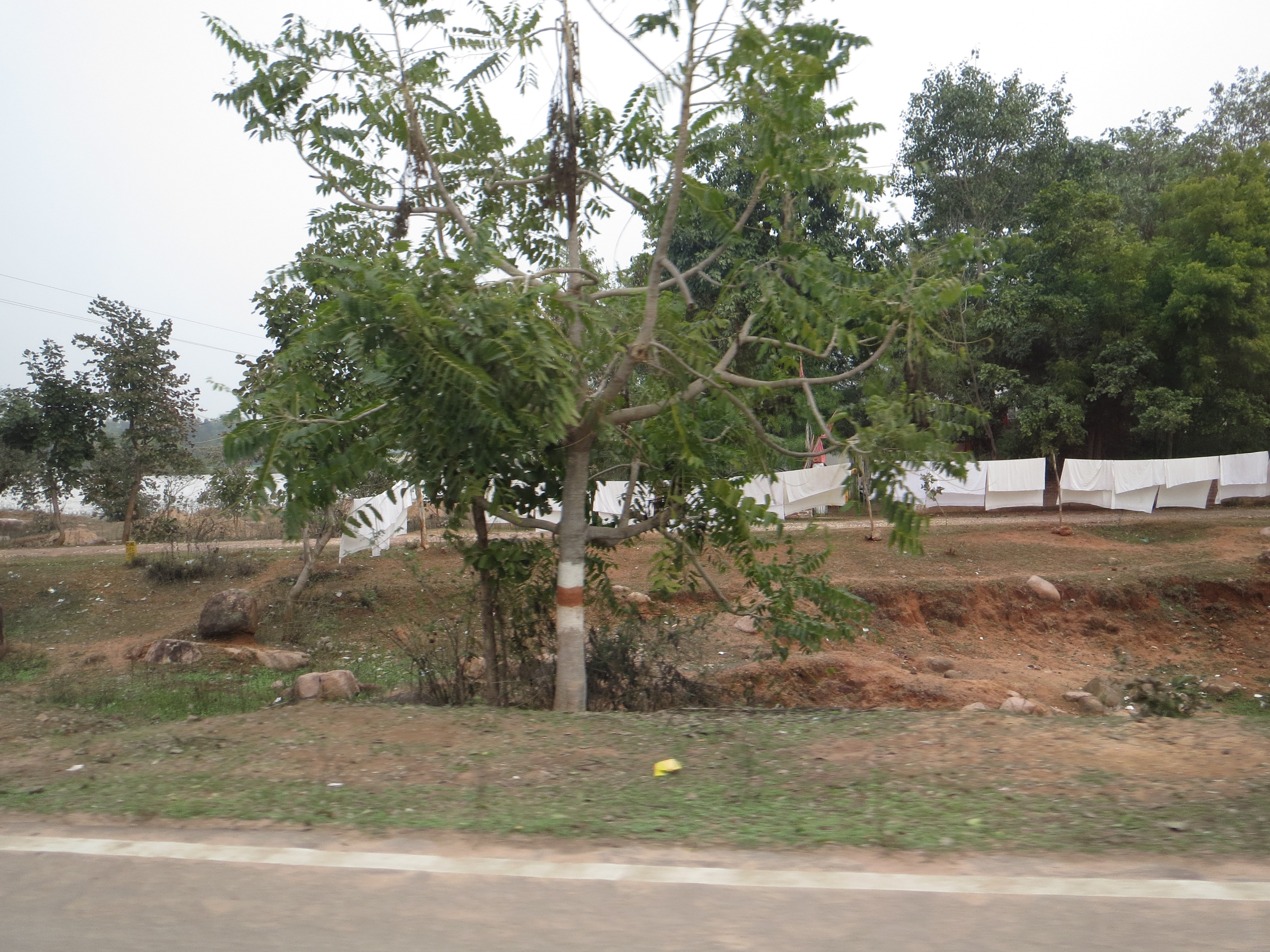
Laundry by the side of the road.

Laundry by the side of the road.

Directly across from the hotel, a woman with her goats.

Directly across from the hotel, a woman with her goats.

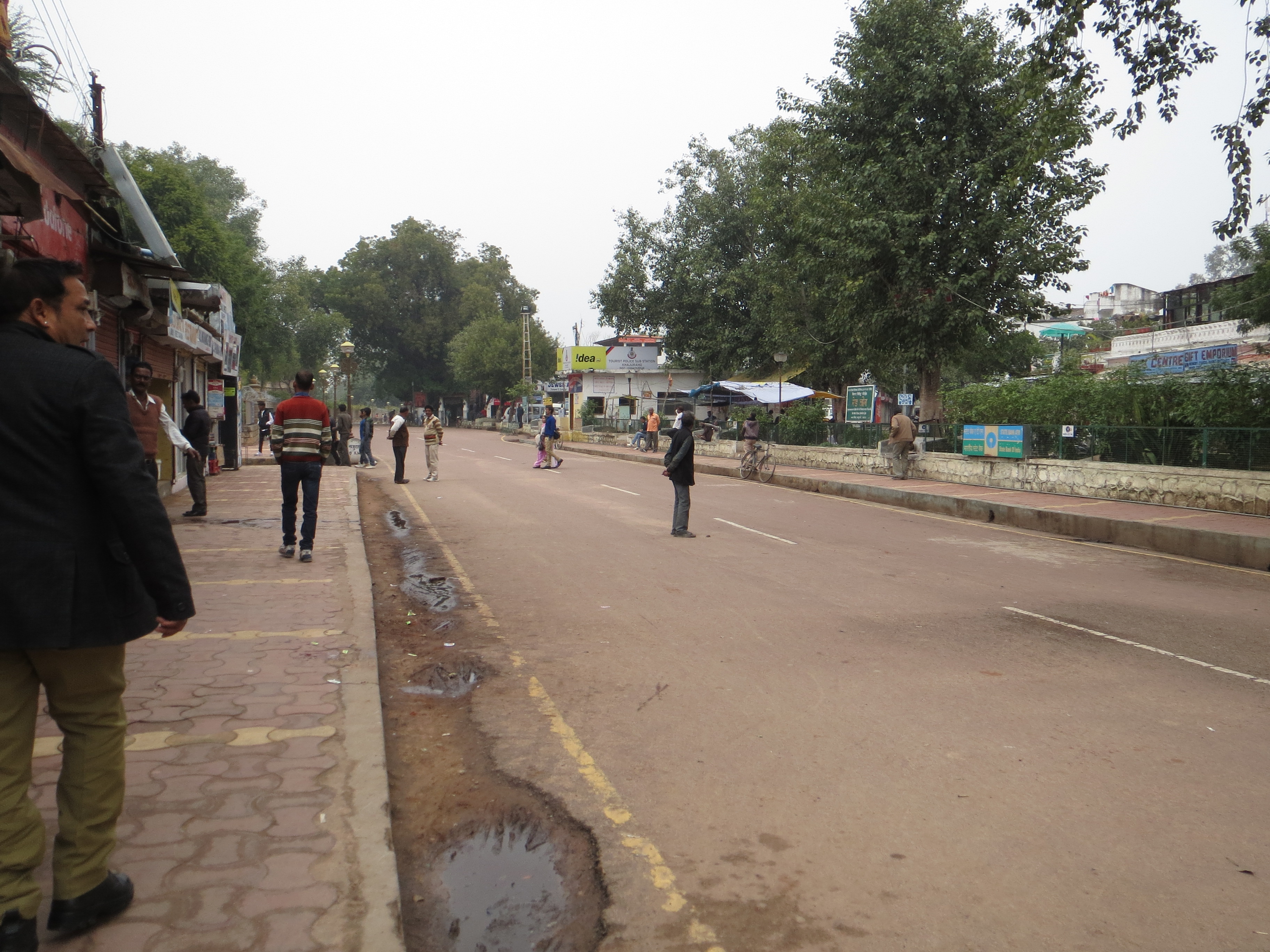
Bustling metropolis of Khajuraho.

Bustling metropolis of Khajuraho.

The weather was cool and foggy when we arrived. After a fast lunch in the hotel we met our guide and went into town. The driver went about 5 mph in order to give the guide enough time to give us the necessary background for our visit to the two clusters of temples, one on either side of the central square about 5 minutes drive apart. It would be two minutes if there were a semblance of a street grid and a bit of paving.

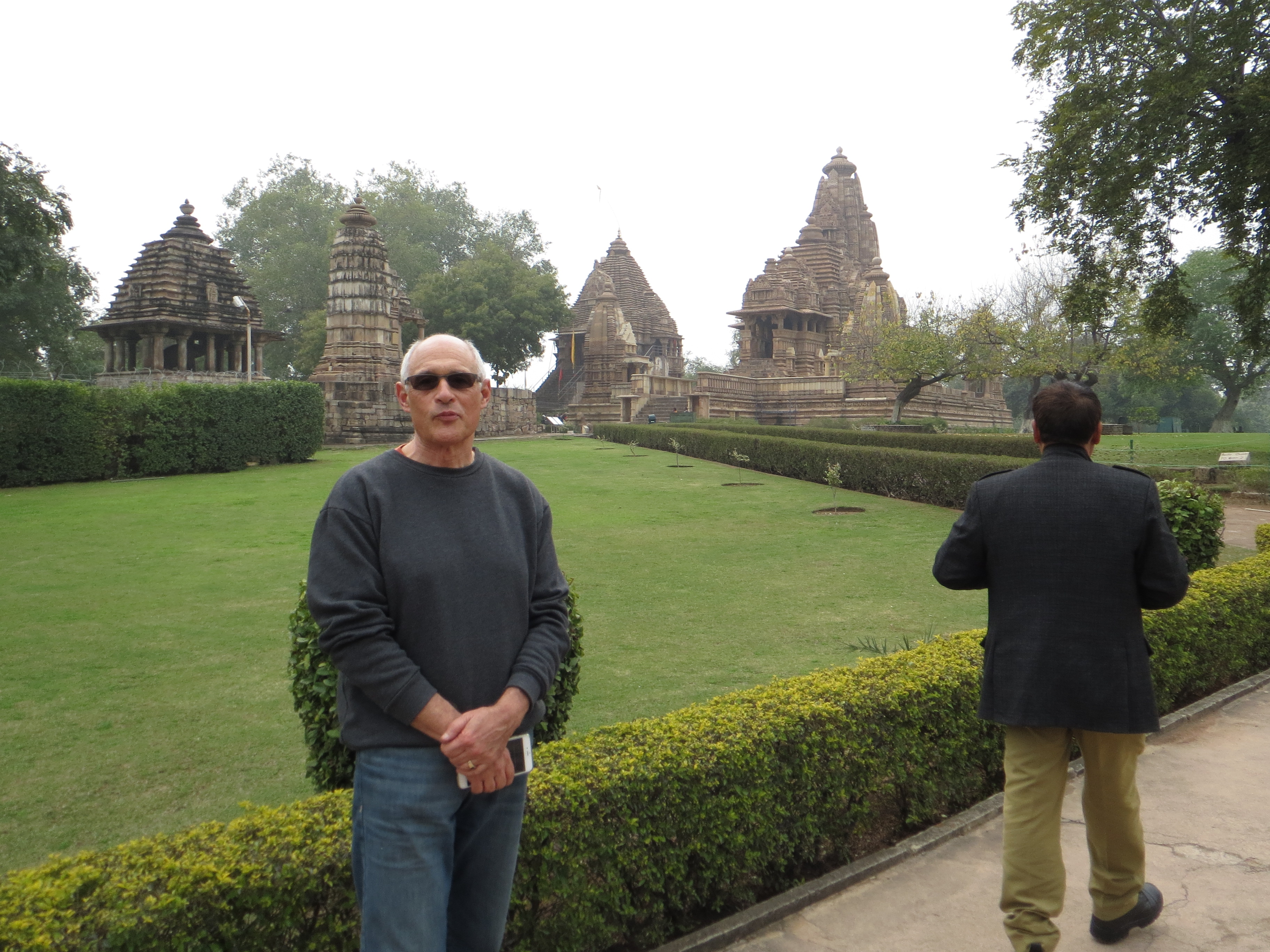
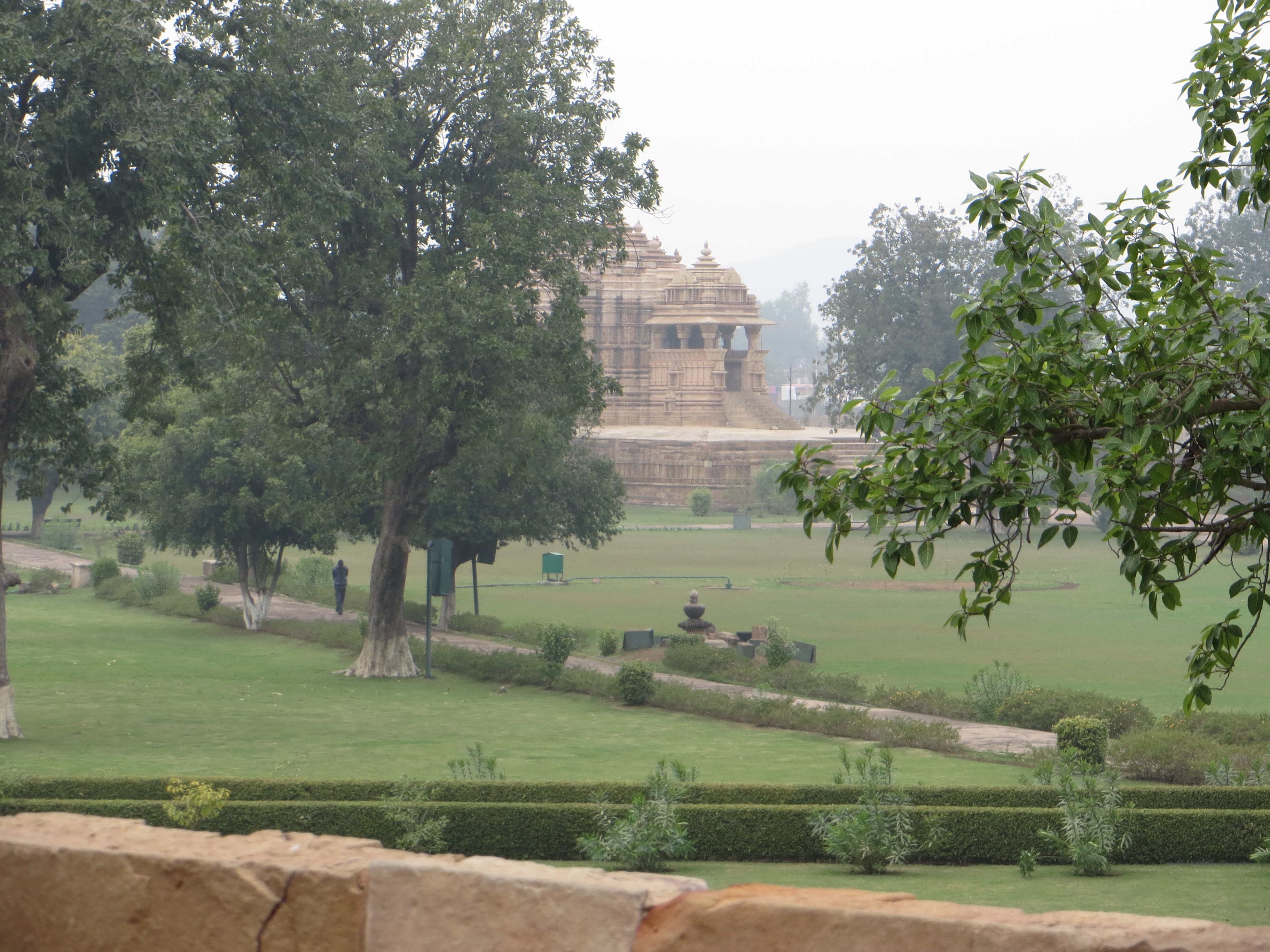
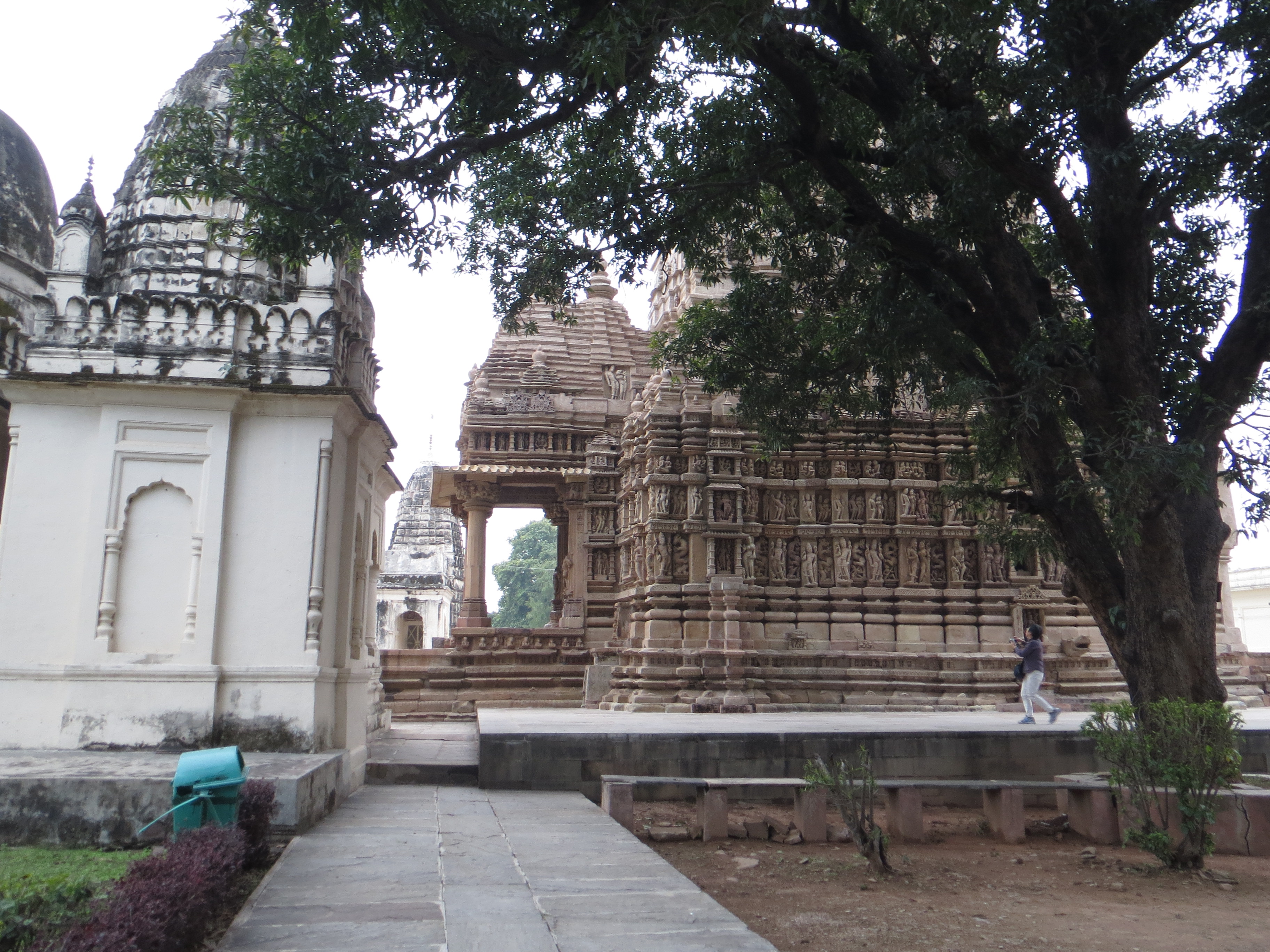
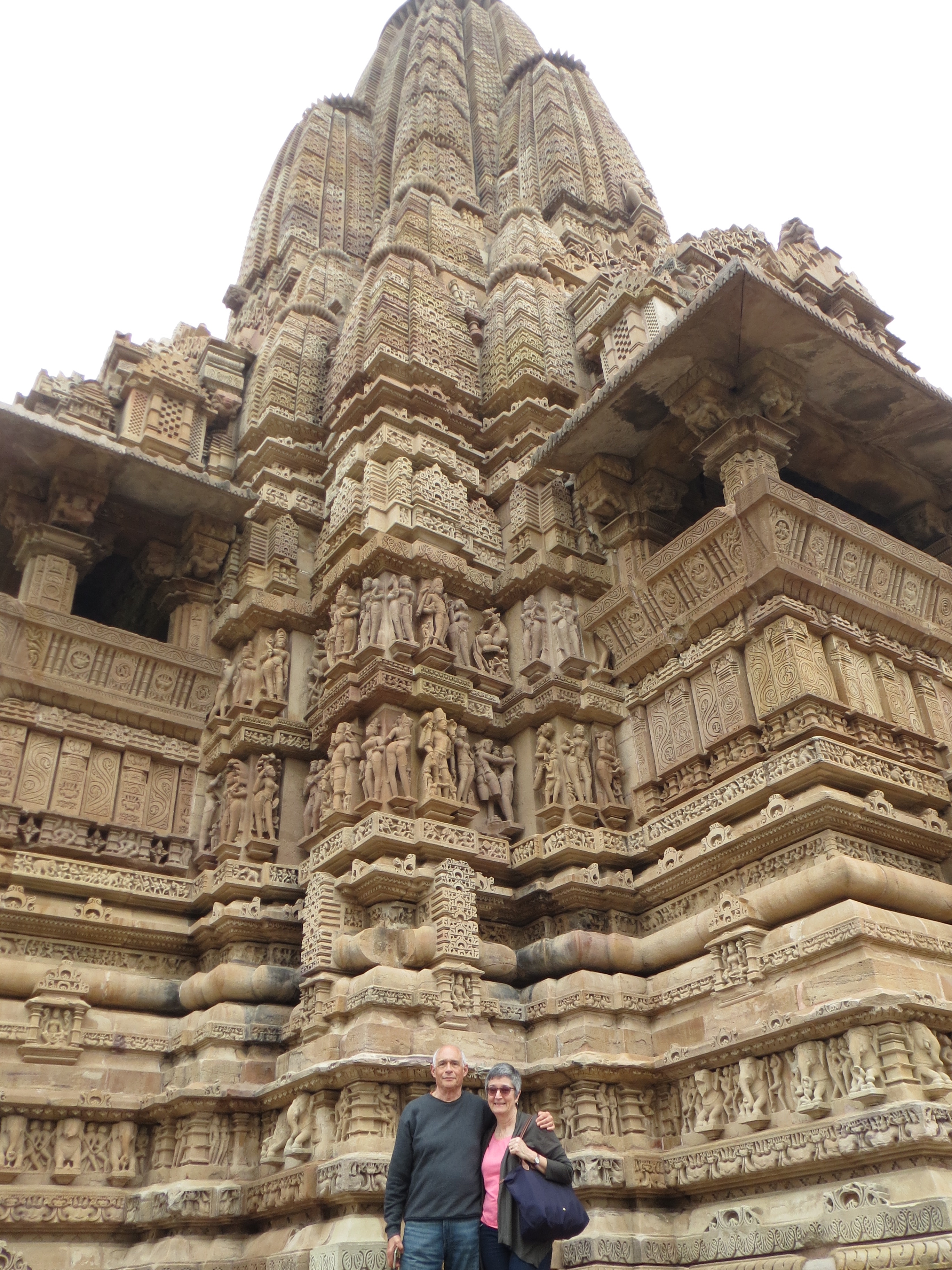
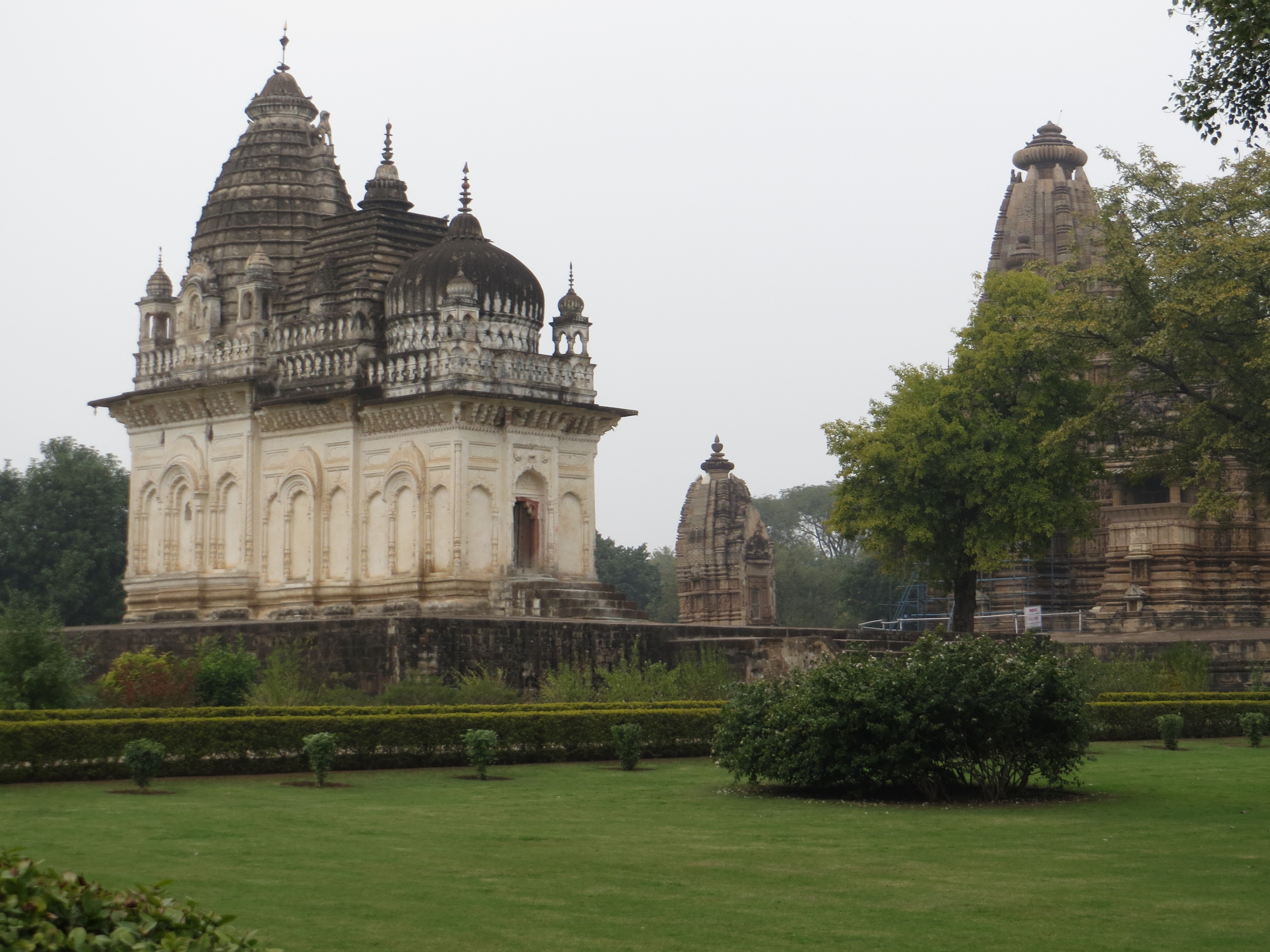
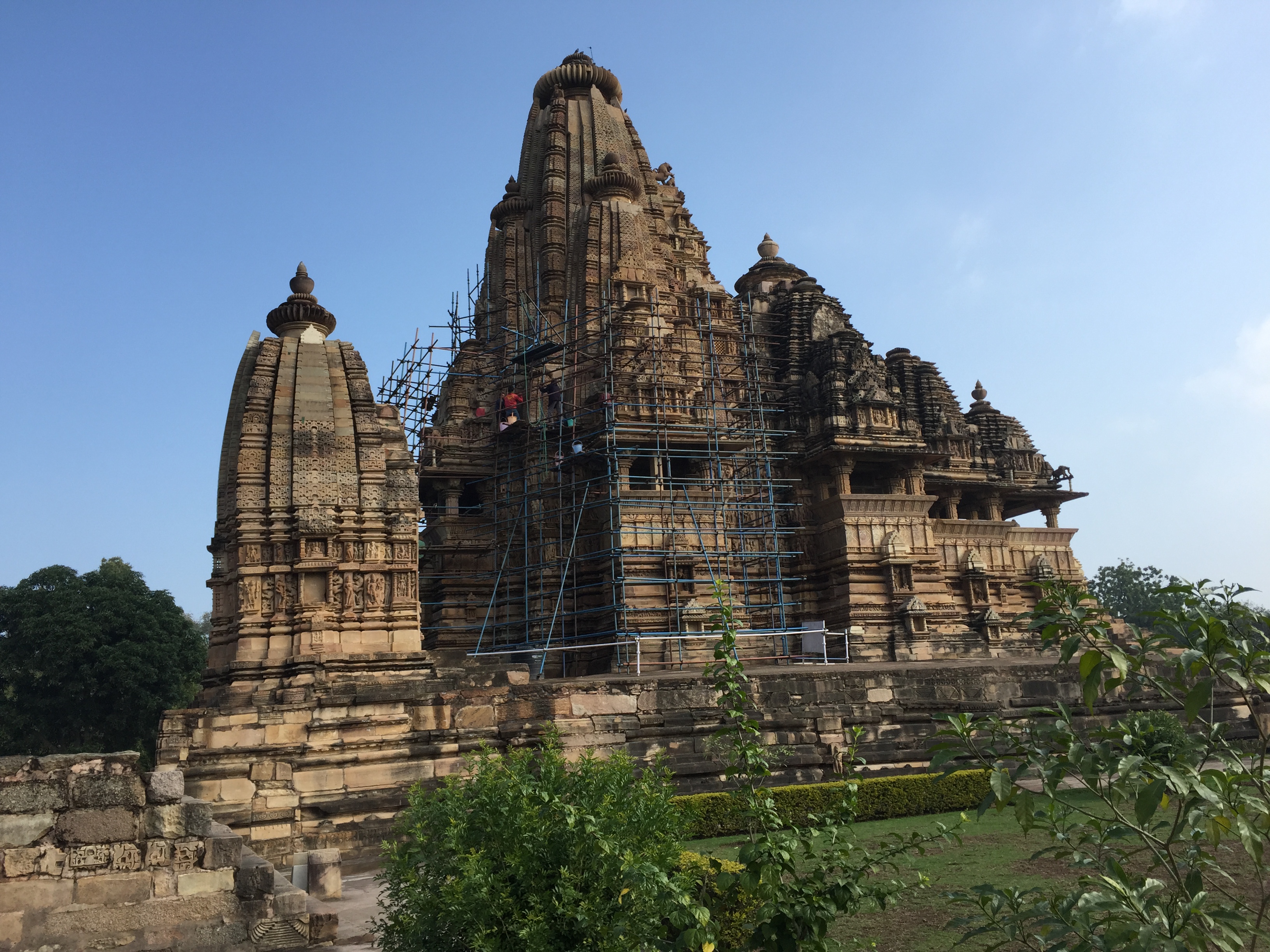
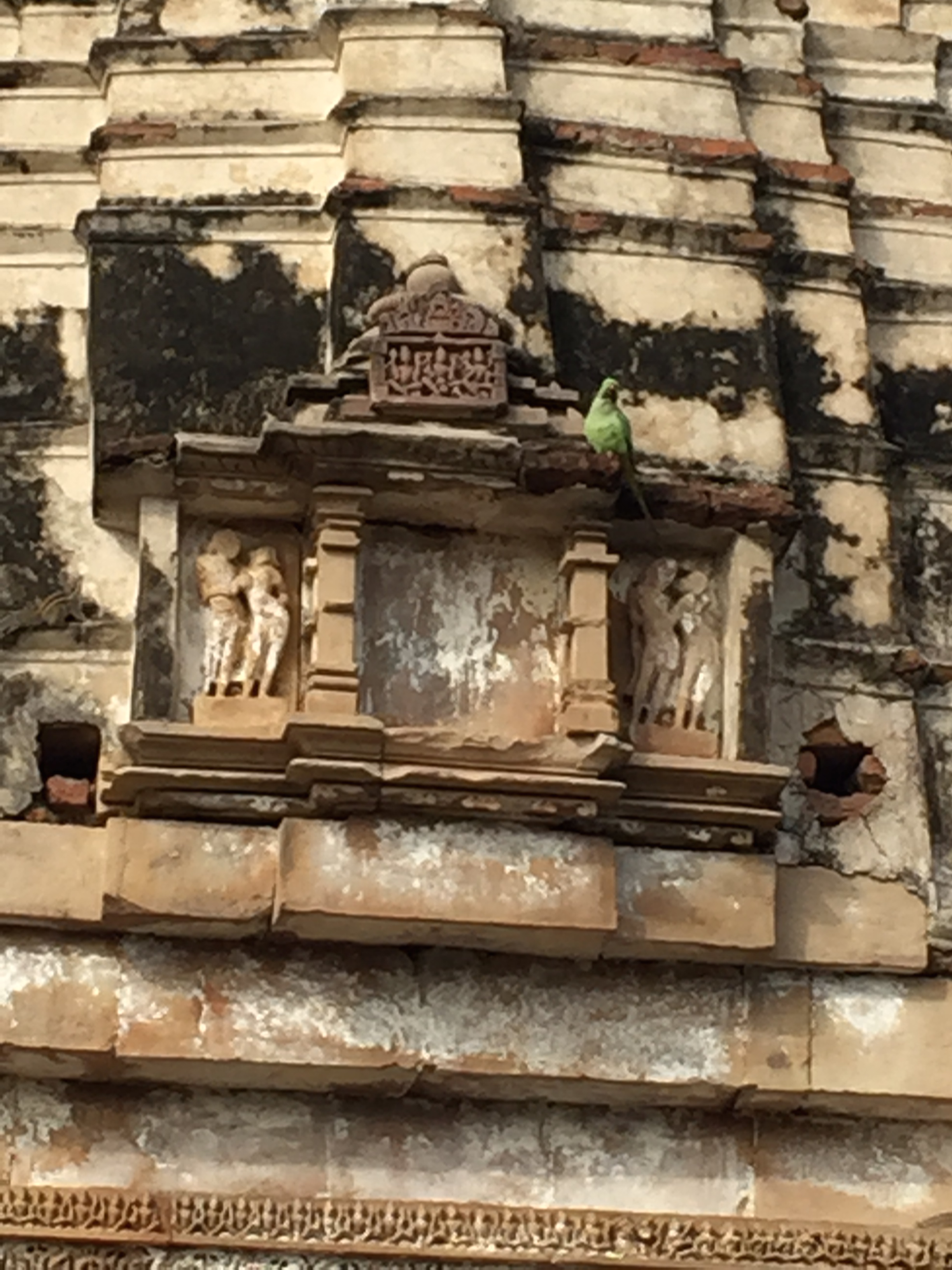
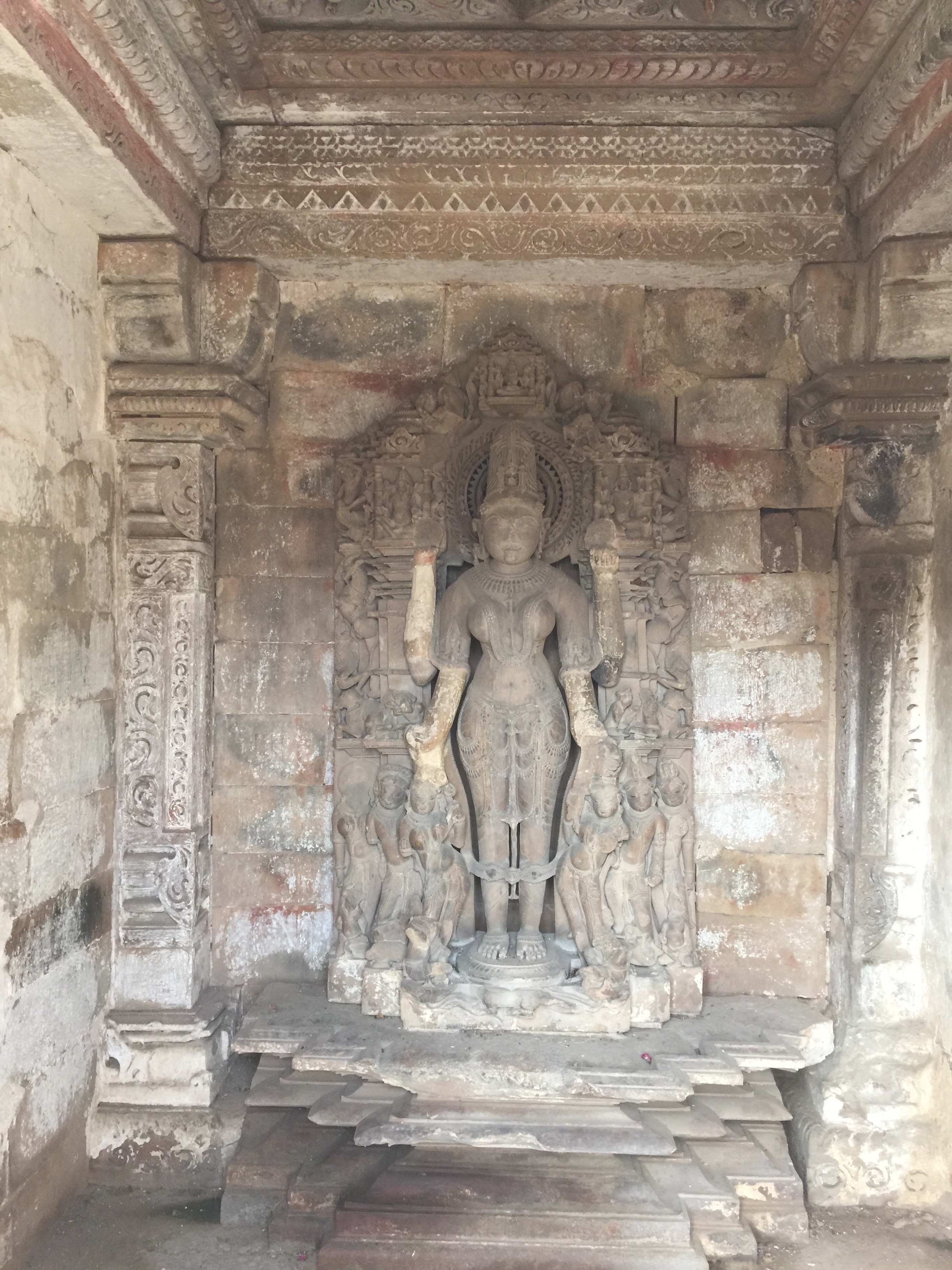
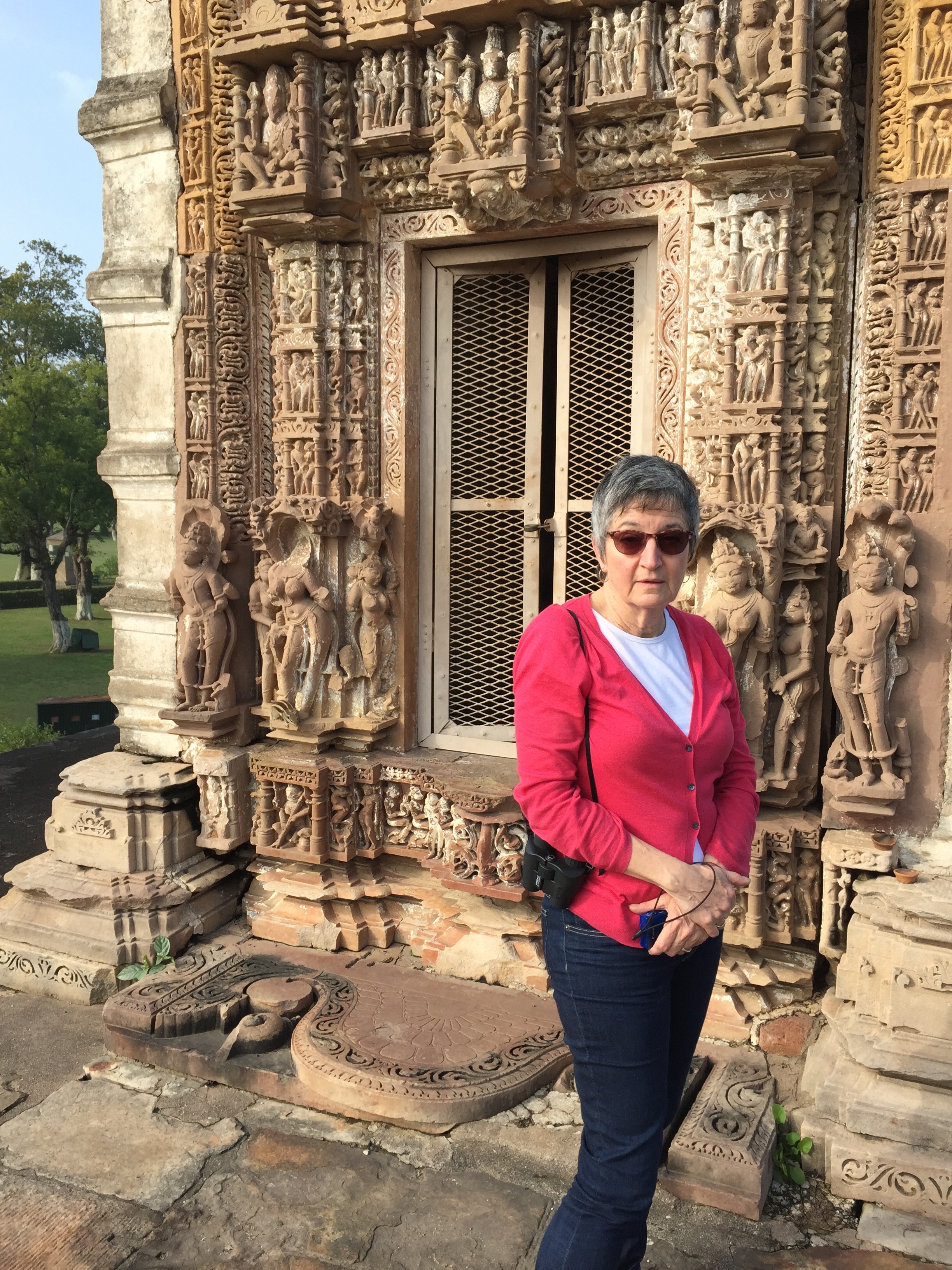
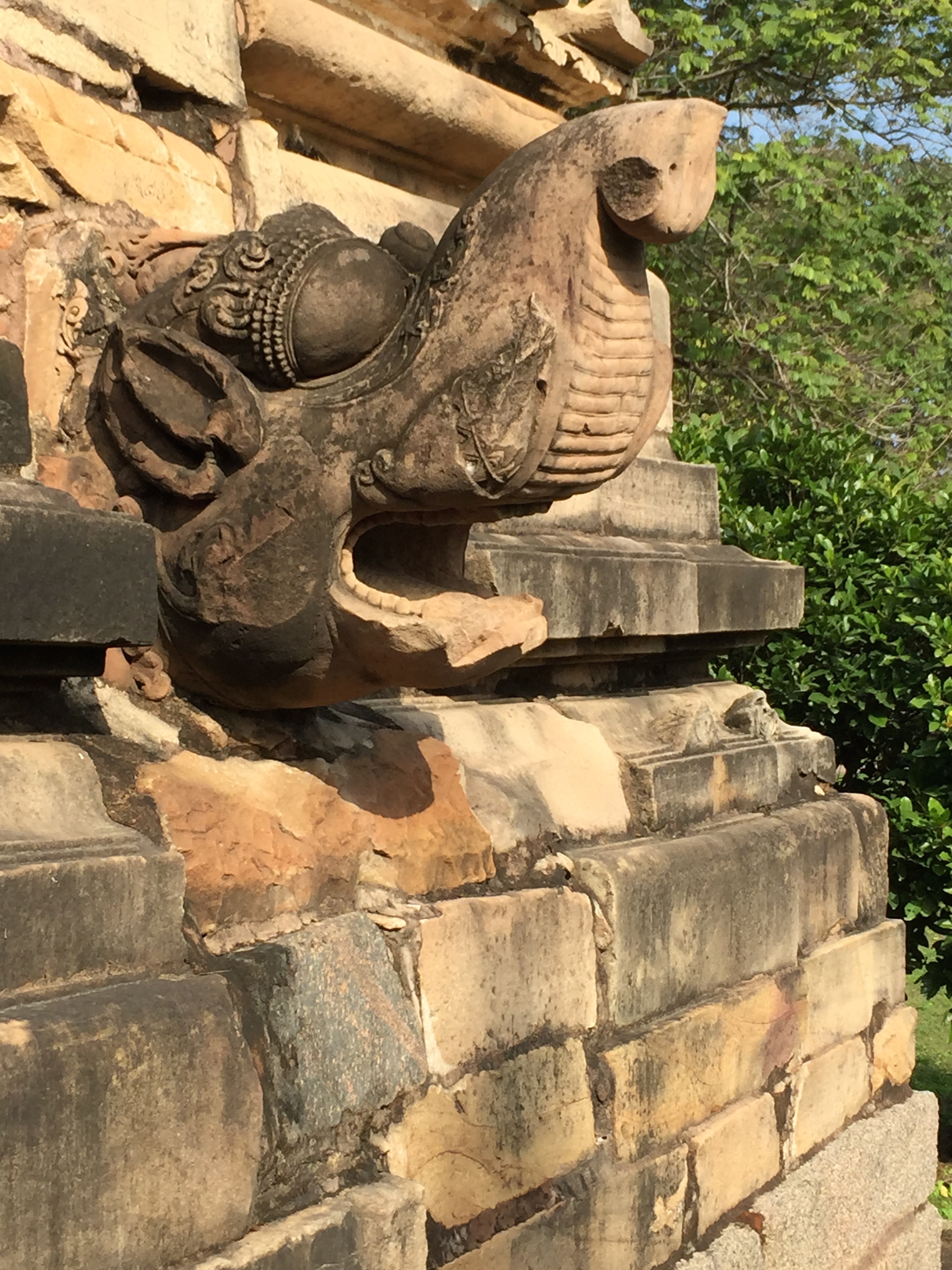
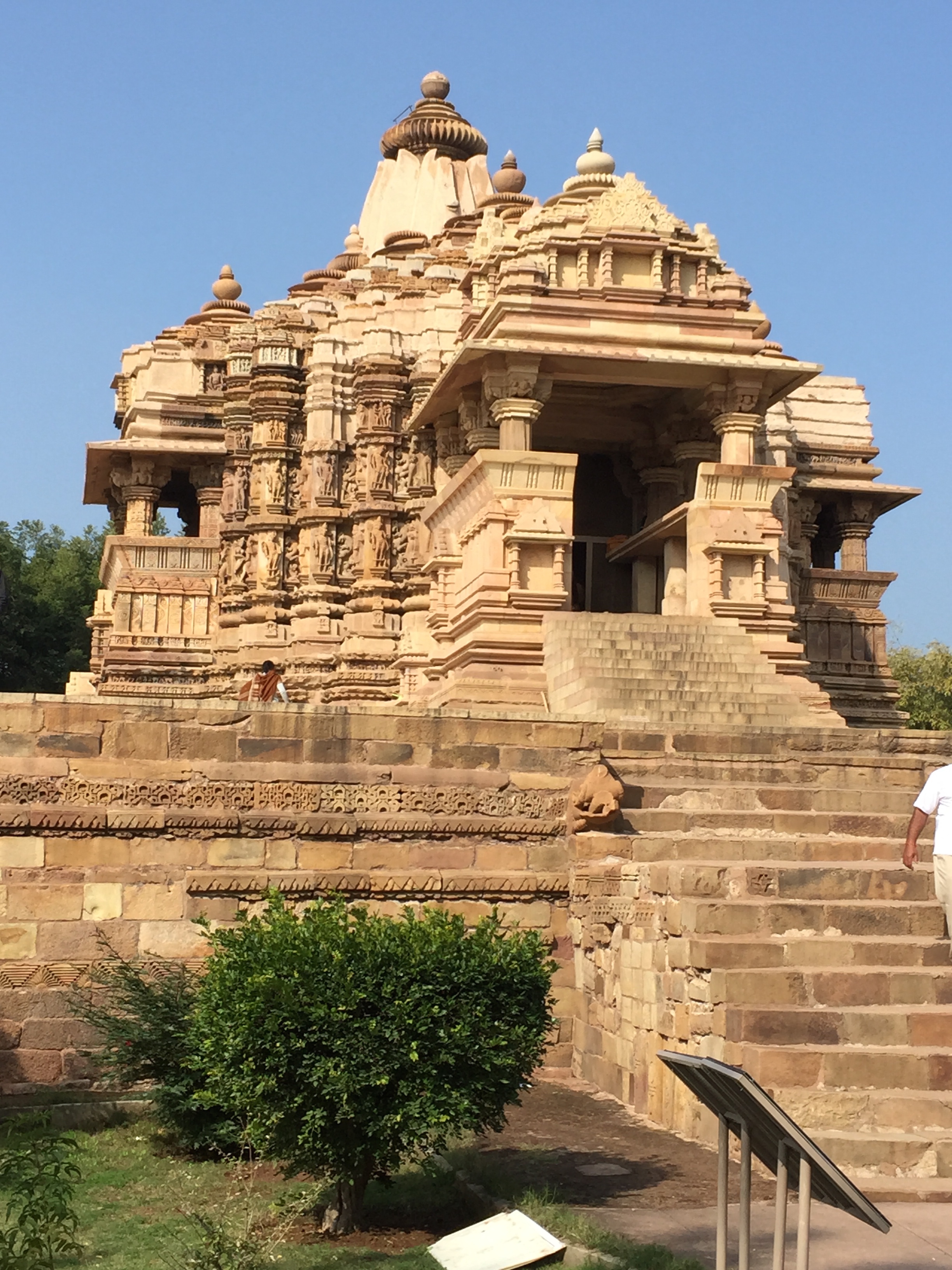
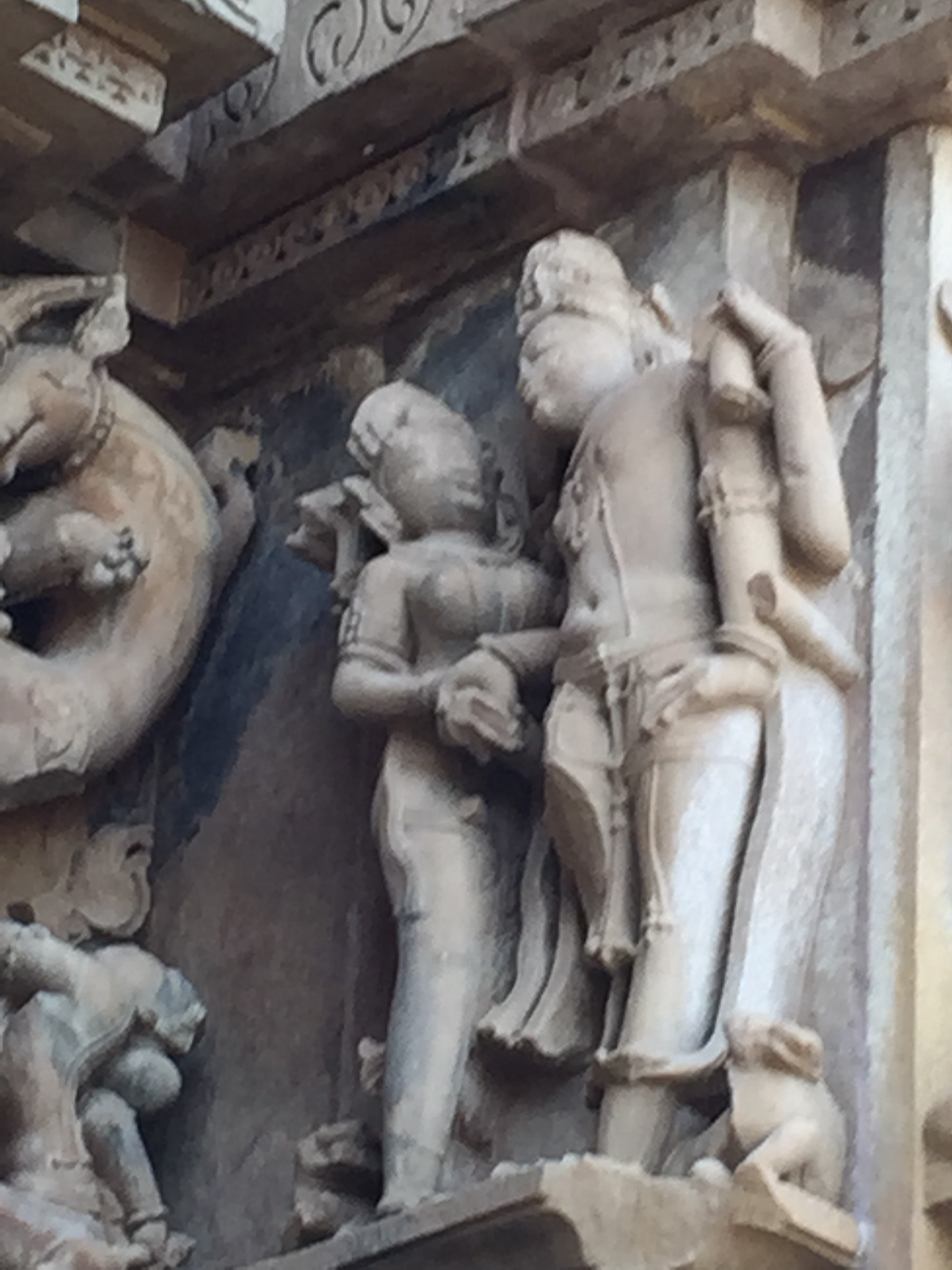
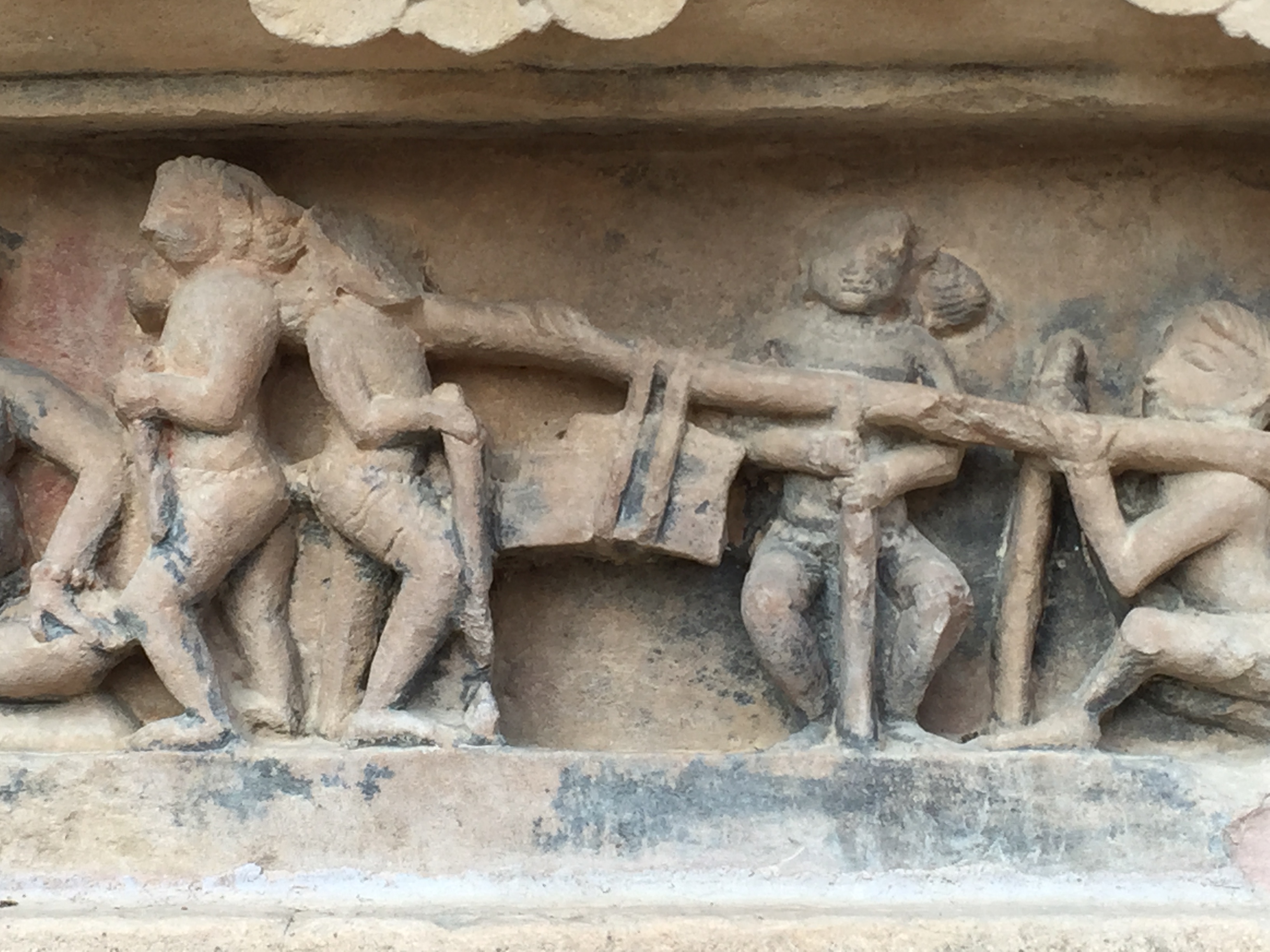
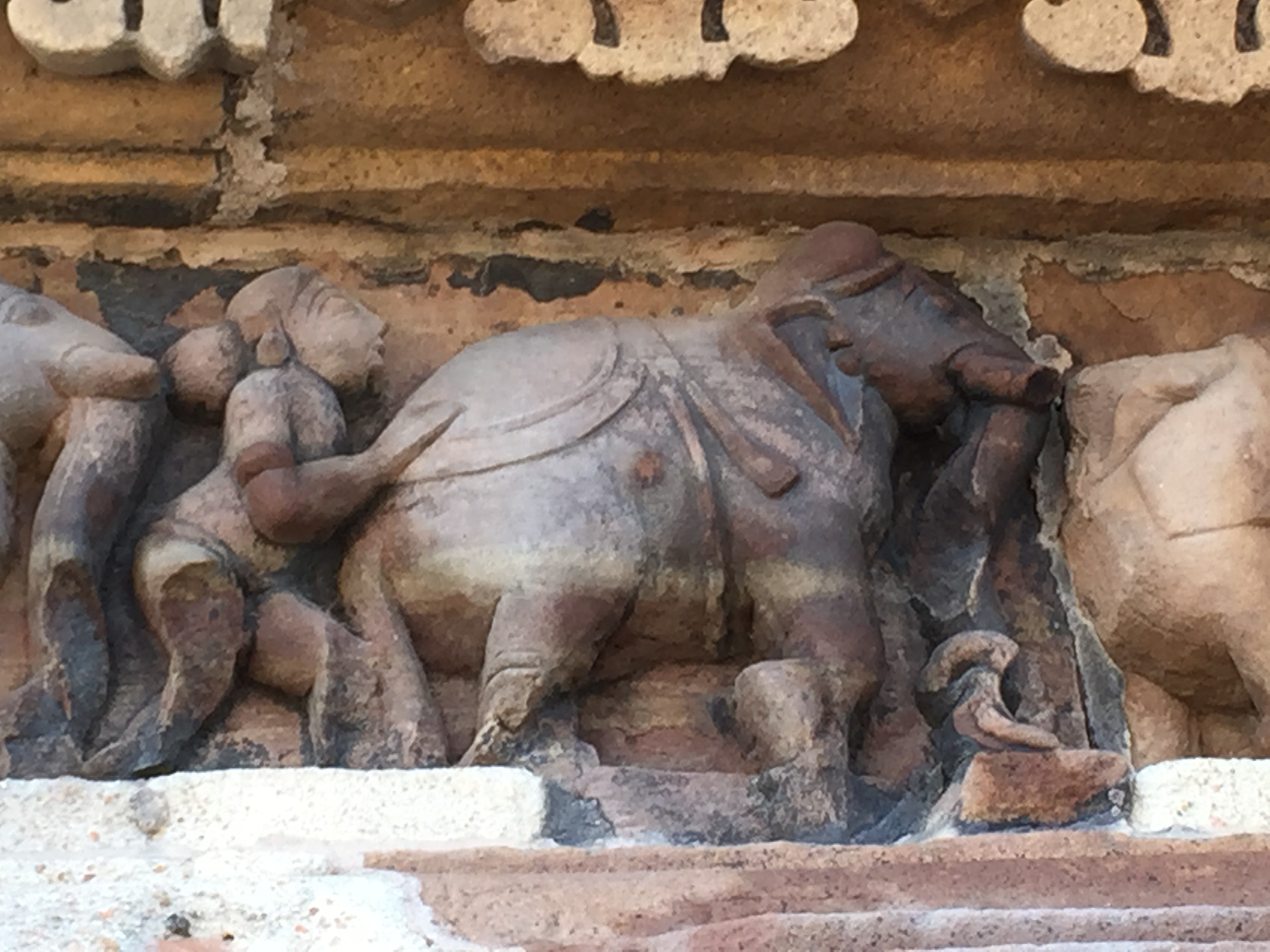
You pay a very small fee and walk into a vast, green, quiet, clean park dotted with ornately carved temples, dating from the early tenth century and some decades thereafter, with one built in the early 1900s. Our guide was so talkative that he drove David a bit nuts, and we tried to absorb the torrent of dates, descriptions, and names. In truth all the talking, though enlightening, was a distraction from the amazing site. Khajuraho is famous for the many erotic carvings on almost every temple. These are a small percentage, however, of the many, many representations of daily life of which sex is just one aspect, and that was the idea.

Entering the temple park--clean and serene.

Entering the temple park–clean and serene.

Temples separated by lovely lawns and walkways.

Temples separated by lovely lawns and walkways.

IMG_1326 IMG_1324

Most visitors are Indian.

Most visitors are Indian.

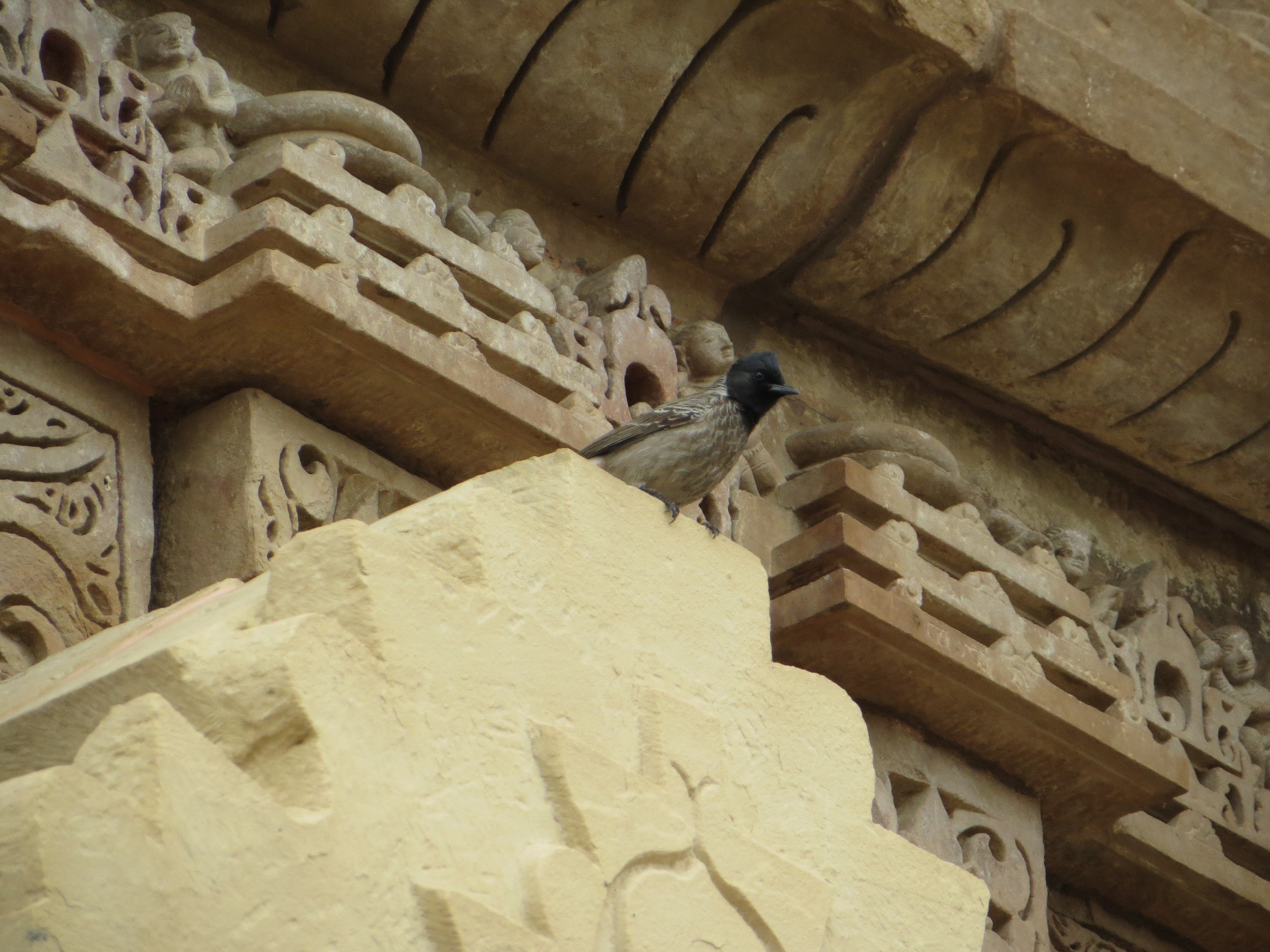
We not only loved the buildings, but were treated to the sight of three spotted owls sitting on a temple in the eastern group, as well as what we were told is a blue jay but nothing like our version, being bright blue and golden brown– beautiful.

We saw 6 owls in total!  This one threw up for us--but I wasn't quick enough with the camera!

We saw 6 owls in total! This one threw up for us–but I wasn’t quick enough with the camera!

I can see why the temples appeal to owls.

I can see why the temples appeal to owls.

IMG_1333

This is an Indian blue jay, they told me.  Gorgeous, large, in flight the wings are stunning.

This is an Indian blue jay, they told me. Gorgeous, large, in flight the wings are stunning.

IMG_1337

This is in the eastern group--much smaller and without a surrounding park.

This is in the eastern group–much smaller and without a surrounding park.

t.IMG_1308 IMG_1310 IMG_1311 IMG_1315 IMG_1317 IMG_1319 IMG_1320 IMG_1321 IMG_1322 IMG_1323 IMG_1326

With our free morning the next day we walked into town to wander the temples on our own. What a great idea this was–the sun came out, we wandered for several hours, taking a gazillion pictures.

The side of a huge boar is totally carved.

The side of a huge boar is totally carved.

Life scenes, thousands of them it seemed.

Life scenes, thousands of them it seemed.

IMG_1081

This peaceful park is adjacent to the bustling town.

IMG_1062 IMG_1064 IMG_1065 IMG_1066 IMG_1067 IMG_1068 IMG_1069 IMG_1070 IMG_1072 IMG_1073 IMG_1074 IMG_1075 IMG_1077 IMG_1080 IMG_1082 IMG_1086 IMG_1090 IMG_1092 IMG_1094  IMG_1097 IMG_1098 IMG_1099 IMG_1100 IMG_1095 IMG_1097 IMG_1101 IMG_1100 IMG_1104 IMG_1109 IMG_1111 IMG_1121 IMG_1152 IMG_1128 IMG_1150 IMG_1116 IMG_1122

Dodging the touts (hawkers), we walked over to the oldest ruin that is outside the park.

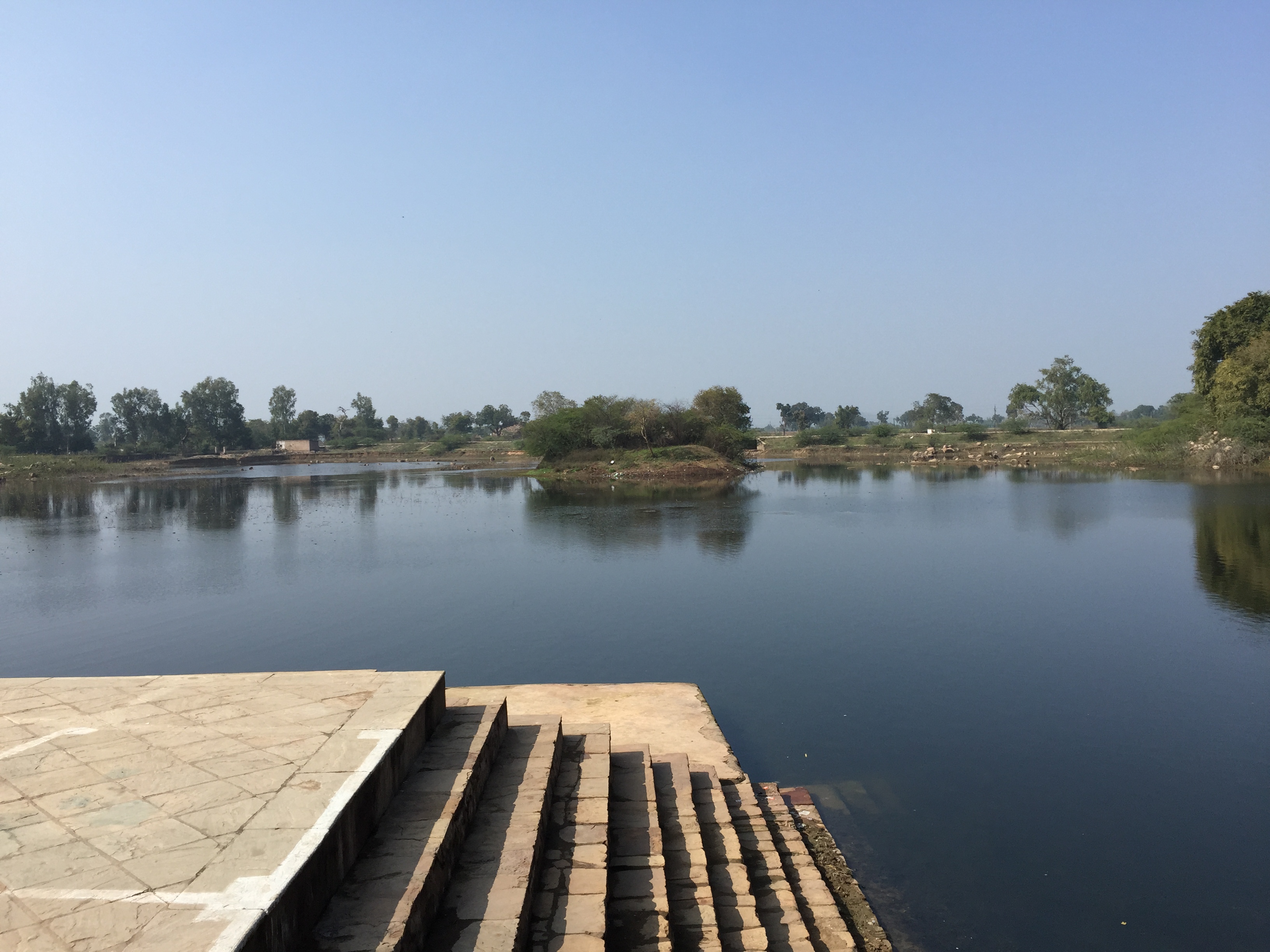
There are several remaining lakes in the town.

There are several remaining lakes in the town.

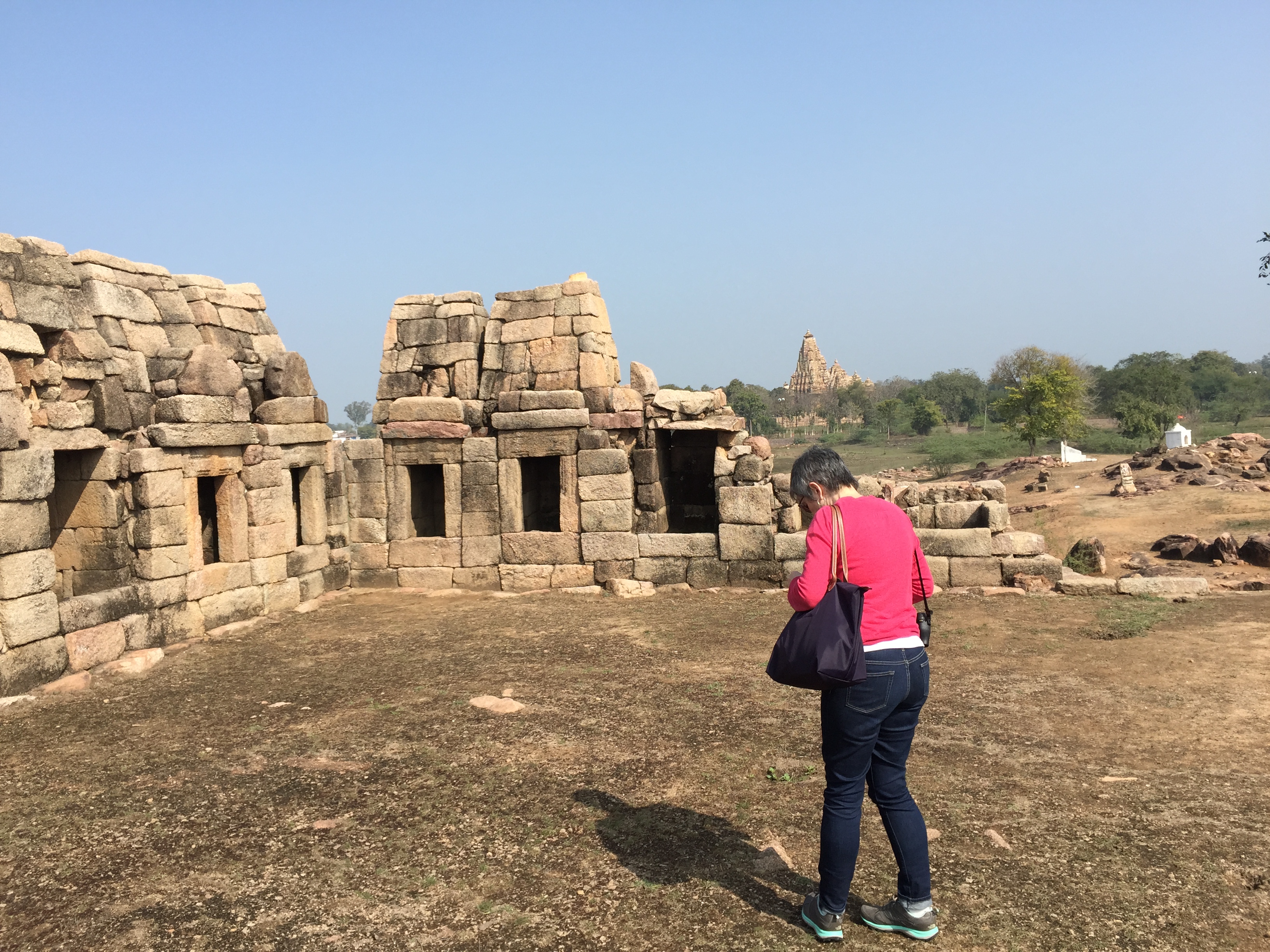
This temple ruin is outside the park, about a 15 minute walk.  It is the oldest.

This temple ruin is outside the park, about a 15 minute walk. It is the oldest.

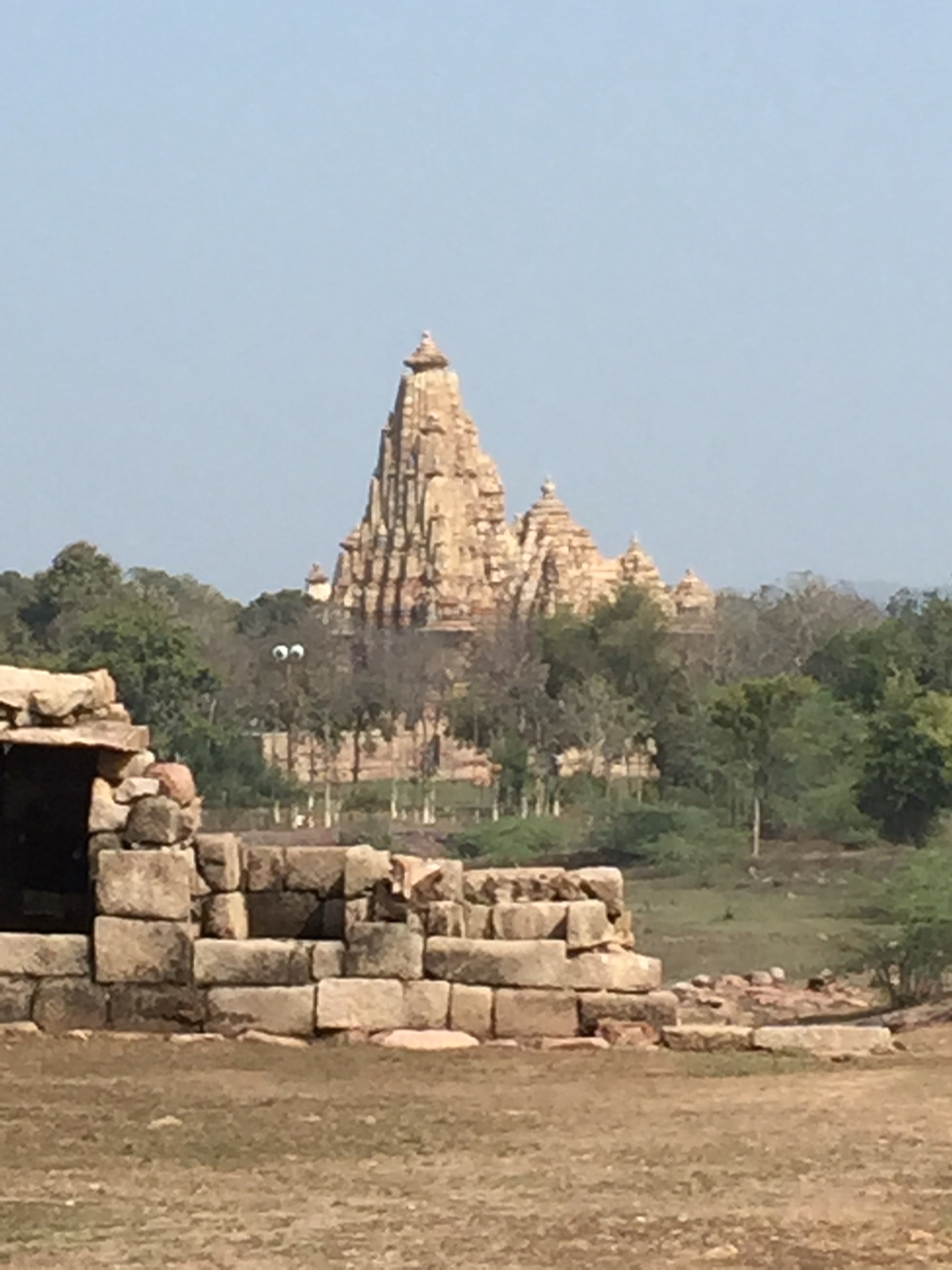
From these oldest ruins the main temple park is visible.

From these oldest ruins the main temple park is visible.

IMG_1168

Then we walked the 15 minutes back to the hotel to pee and check out.

As we zipped up our bags in the room and made to leave, David suddenly realized he had lost his glasses. Lost IN THE ROOM as he had been wearing them all morning and had removed them just to change into a short sleeved t-shirt.  We turned the room upside down. Removed everything from every bag. Looked under the bed. Repacked and then unpacked again. They were gone gone gone. Since we had to leave for the airport we went to the desk, concluding they had to be somewhere in the luggage since they were clearly not in the room. At the desk the manager asked about our stay, and David said, it was great except I have lost my glasses…about to add “if you find them…” The manager opened a drawer behind the desk and handed them to David. A guest had found them. Outside. Near the pool. Where we had NOT gone.

We have no idea how this happened but glad it all turned out just fine.

On to Delhi for one last taste, and then home.

Kashi (not the cereal–Varanasi) and The Buddha

We slept in, sort of, with our plan to meet the guide at 6:45 am to head back to the Ganges for a boat ride and walk through the old city. It was foggy and chilly, but such a relief after the hot hotel room. Compared to the night before the streets were empty, tea shops open, a bit of activity, but almost tranquil.  It was fully light, but the river was misty as we glided away from the shore. The many cremations from the night before had dwindled to one, and large piles of ashes sat on the bank. After a cremation workers, not the family, take the ashes out into the river.

Remains of a Saraswathi statue, a bit forlorn floating alone.

Remains of a Saraswathi statue, a bit forlorn floating alone.

The tipping temple in the back is slowly sliding into the river.

The tipping temple in the back is slowly sliding into the river.

IMG_1264 IMG_1265 IMG_1267

The sun peeked out for a minute.

The sun peeked out for a minute.

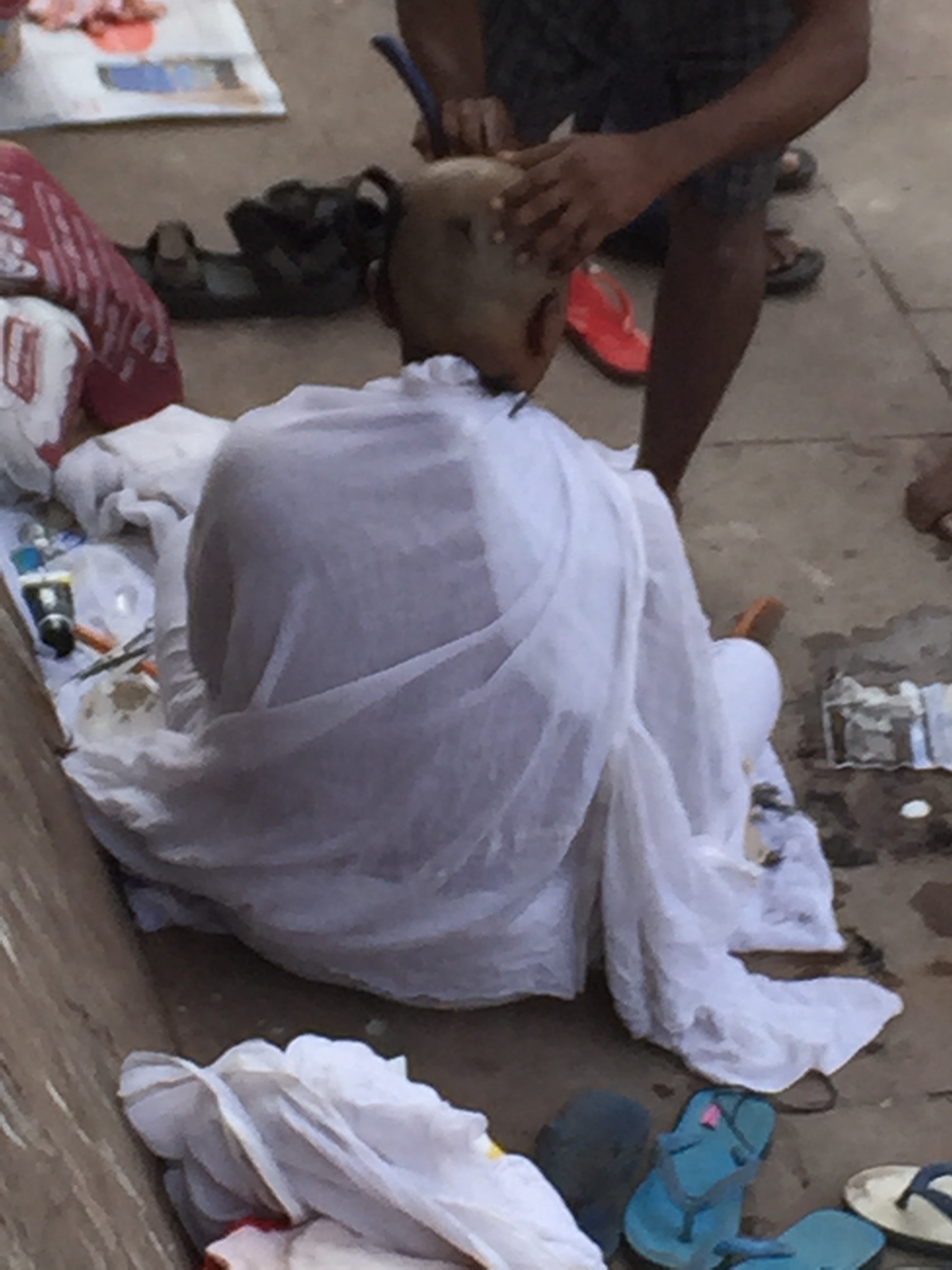
Man gets his head shaved before entering the river.

Man gets his head shaved before entering the river.

We passed some folks bathing, monkeys running along rooftops, dogs barking or wandering, and clothes washers, all young men, standing thigh deep in the cold water, facing the shore and slapping articles of clothing hard on flat rocks, sounding like shots echoing off the ghat.

Boats full of pilgrims or tourists run a bit low in the water.

Boats full of pilgrims or tourists run a bit low in the water.

IMG_1263

We saw men tying a small, white-shrouded body onto a board with several bands of rough brown rope-we did not, of course, take a photo. (Children under the age of 8 are not cremated, but rather sunk in the middle of the river weighted by stones.)

IMG_1278 IMG_1279 IMG_1280

This is a bicylcle-powered school bus, of sorts. Note the girls are in their uniforms.

This is a bicylcle-powered school bus, of sorts. Note the girls are in their uniforms.

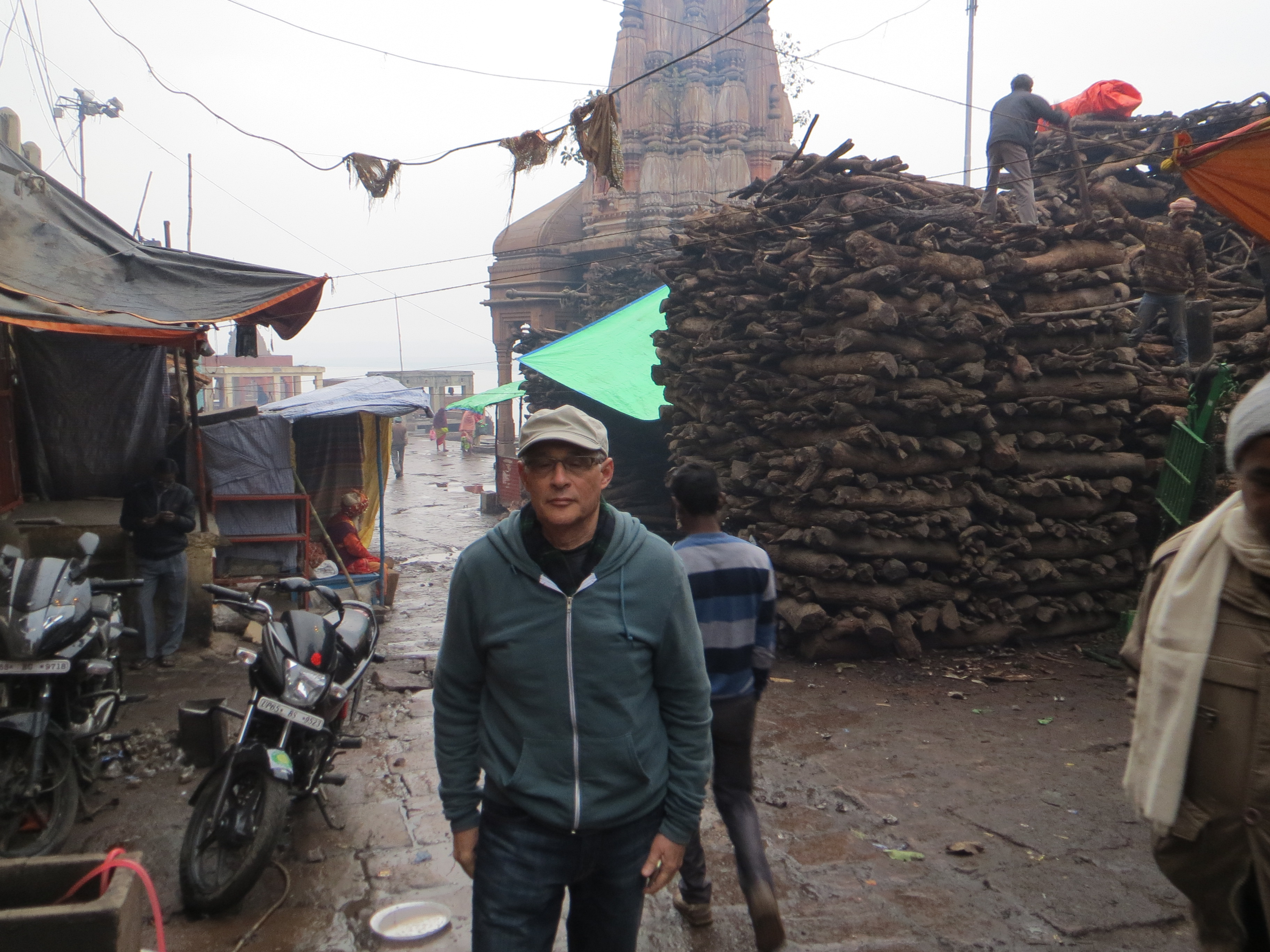
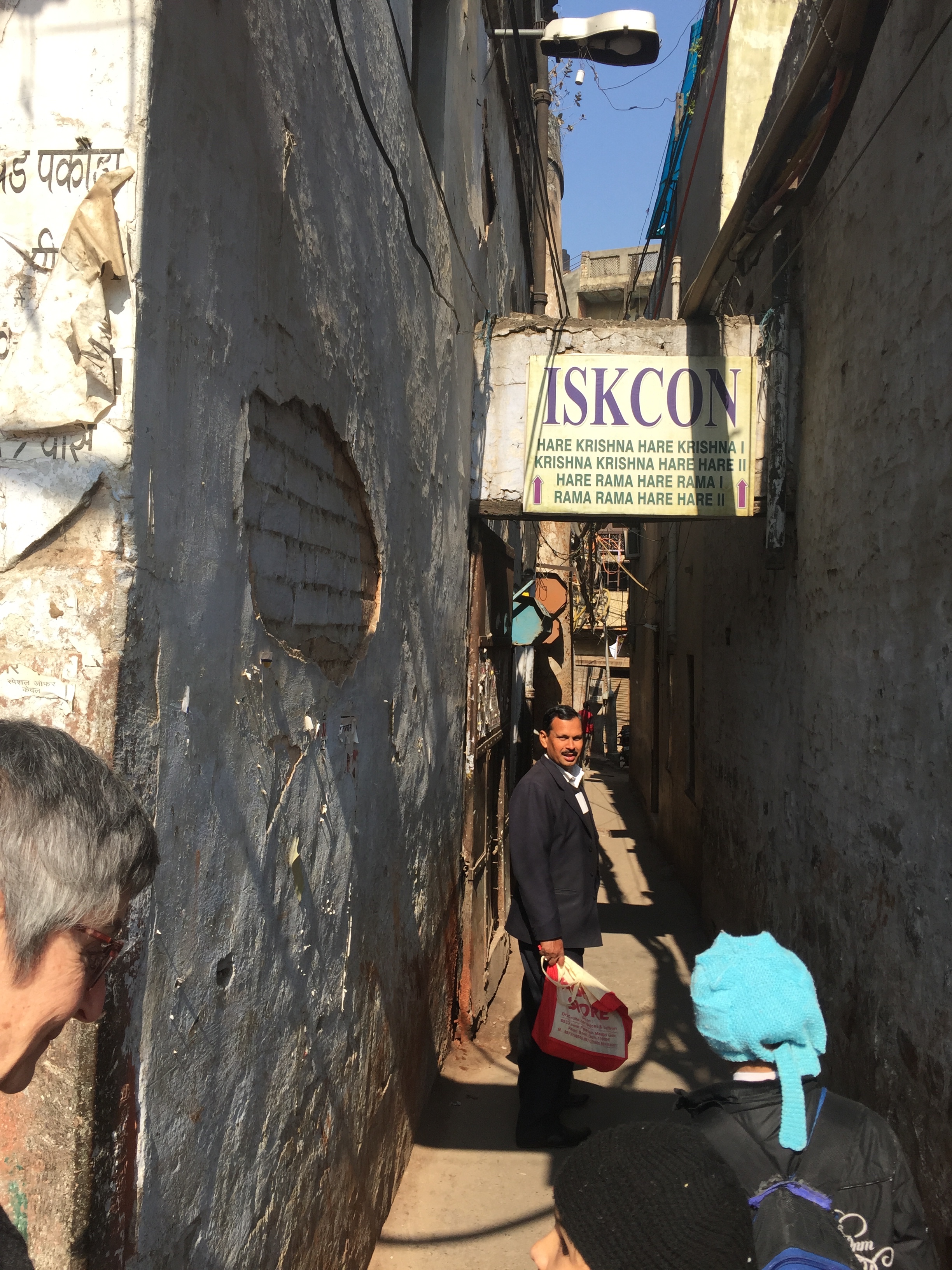
We put ashore at the larger cremation site, and walked up through enormous stacks of logs, with more being added in preparation for that day. Our guide led us up the steps and into a dark, wet, claustrophobic alleyway perhaps 5 or 6 feet wide. On either side buildings of several stories, a mishmash of houses, huts, many shrines–some just cubbyholes–gates, and every ten yards or so an open fire where one or two people were huddled, or, in one case a fire in a stone box maybe a foot square, around which four puppies slept on their sides, bellies toward the warmth. We were surprised to see a very large, dark brown horned bull come ambling toward us as our guide told us to quickly stand aside. There was just enough room for him to pass without brushing against us. He stopped, snorted, and put his head down to look for something edible in a small, muddy pile of trash and leaves.

Our guide stopped at one tiny store where various wooden figures and other trinkets were for sale, and we bought a small box of six Ganeshes, each doing something different–playing an instrument, dancing, etc. We came upon a spice and tea shop, where our guide had us enter and sit down. The shop had glass cabinets up the walls full of spices and oils, and all kinds of tea. The entire enterprise was about ten feet deep and maybe four feet wide. He ordered chai for us which we welcomed as the morning was still quite chilly. We were served the most delicious, hot, rich, milky sweet chai in little clay cups–it went down so easily that we asked for a second. While we drank one of the shop fellows pitched aromatic oils for various uses, and we bought an assortment including a cure for sleeplessness (lotus flower). From this shop another guide took us to see the outside of the Golden Temple, down an even narrower walkway with very highs security–since only Hindus are allowed in we could only peek, trying to stay out of the way of a stream of Hindus all barefooted in the cold, wet morning, heading to prayers.  We returned to the shop, met up with our guide again, and went back through the town to find our driver.
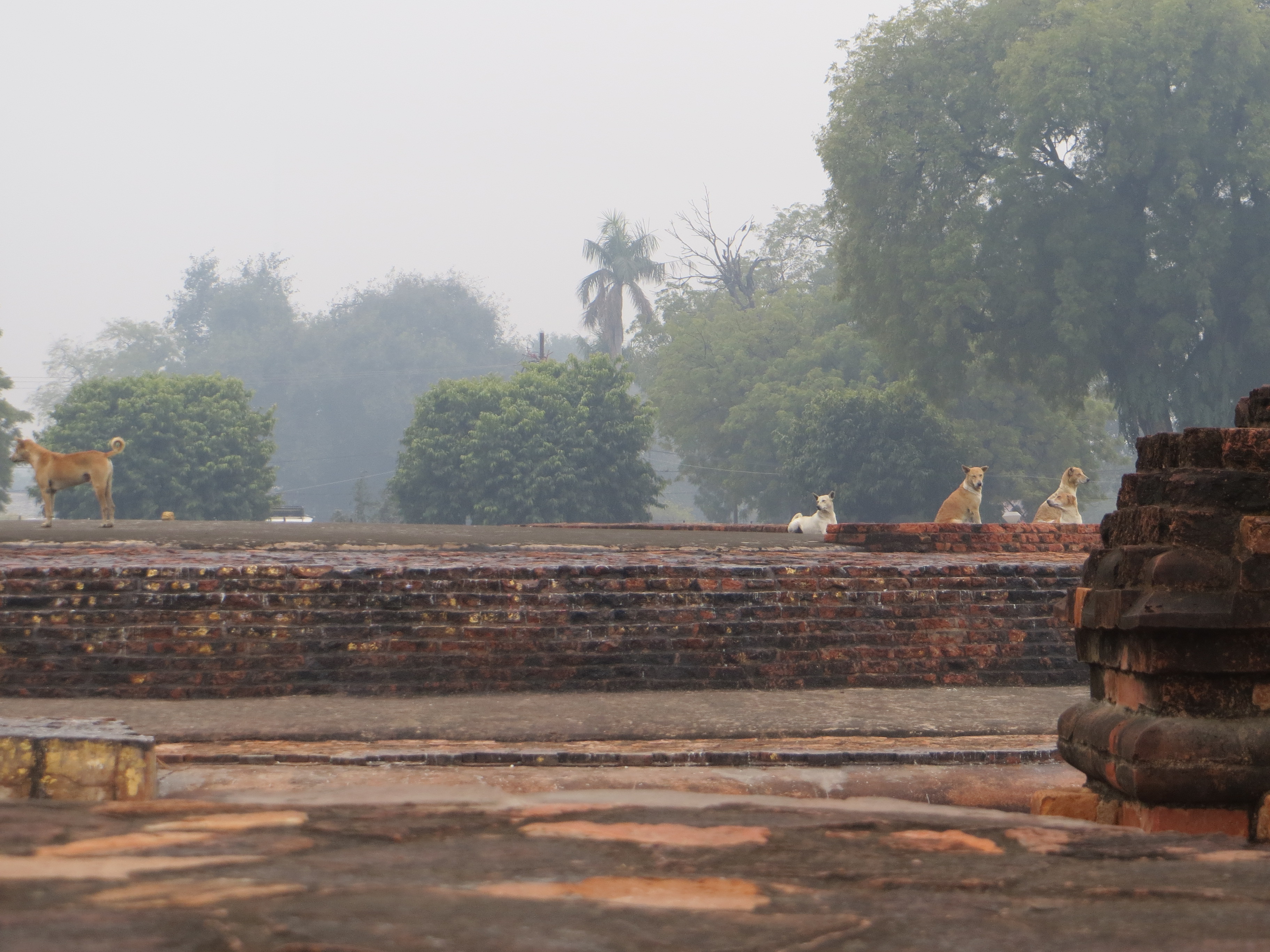
We went back to the hotel for breakfast and then got in the car to visit Sarnath. The trip there was short but harrowing…rush hour in full swing, and streets in abominable condition, and still very muddy from several days of rain. After 30 minutes or so we were there. First stop was the museum, small and largely dedicated to the Buddha, but also containing the original carving which is the symbol of India. During our visit the electricity went out for a few minutes, leaving the museum in total darkness, but no one seemed at all bothered, nor is this unusual for Sarnath.  Then we walked across the street, dodging hawkers, and entered the lovely and very peaceful ruins. There were many tourists from Thailand, Sri Lanka, China. We passed monks chanting and enjoyed what appeared to be a very tight knit family of dogs, all the same size and colors, led by mom (our guess) and who were playing tag among the ruins, staring off in the distance all in the same direction–they were like a little army in charge of the place.

IMG_1290

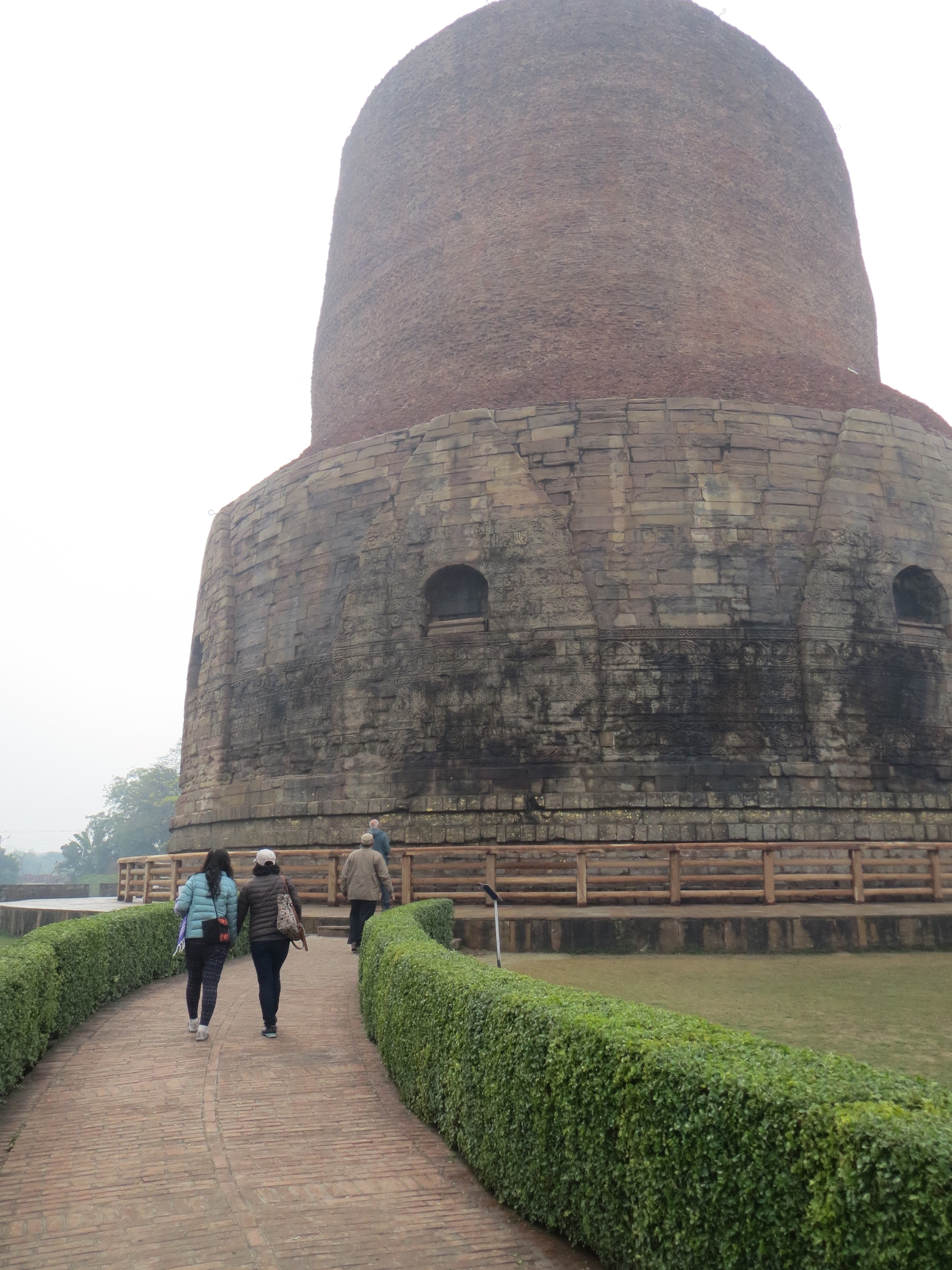
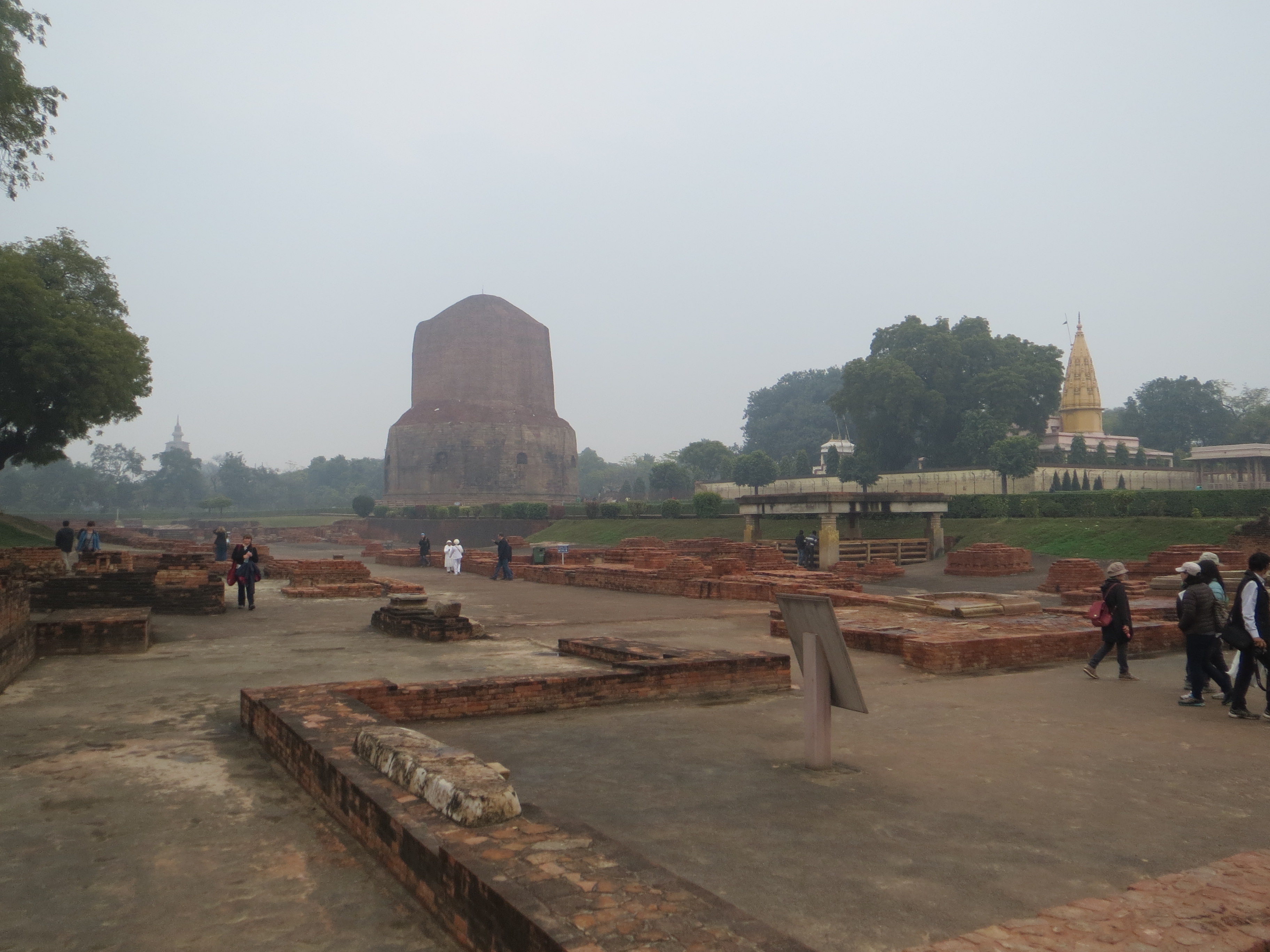
This enormous stupa marks the site where Buddha first shared his teaching.

IMG_1291

Looking up at the stupa, there are still carved stones in place.

IMG_1289

Monks and another pilgrim chant as a dog sleeps on the lawn between them.

IMG_1285

This dog family seems to own the place.

IMG_1292

A pilgrim monk adds a candle to a row, hidden in the corner behind the stupa.

IMG_1284 IMG_1286
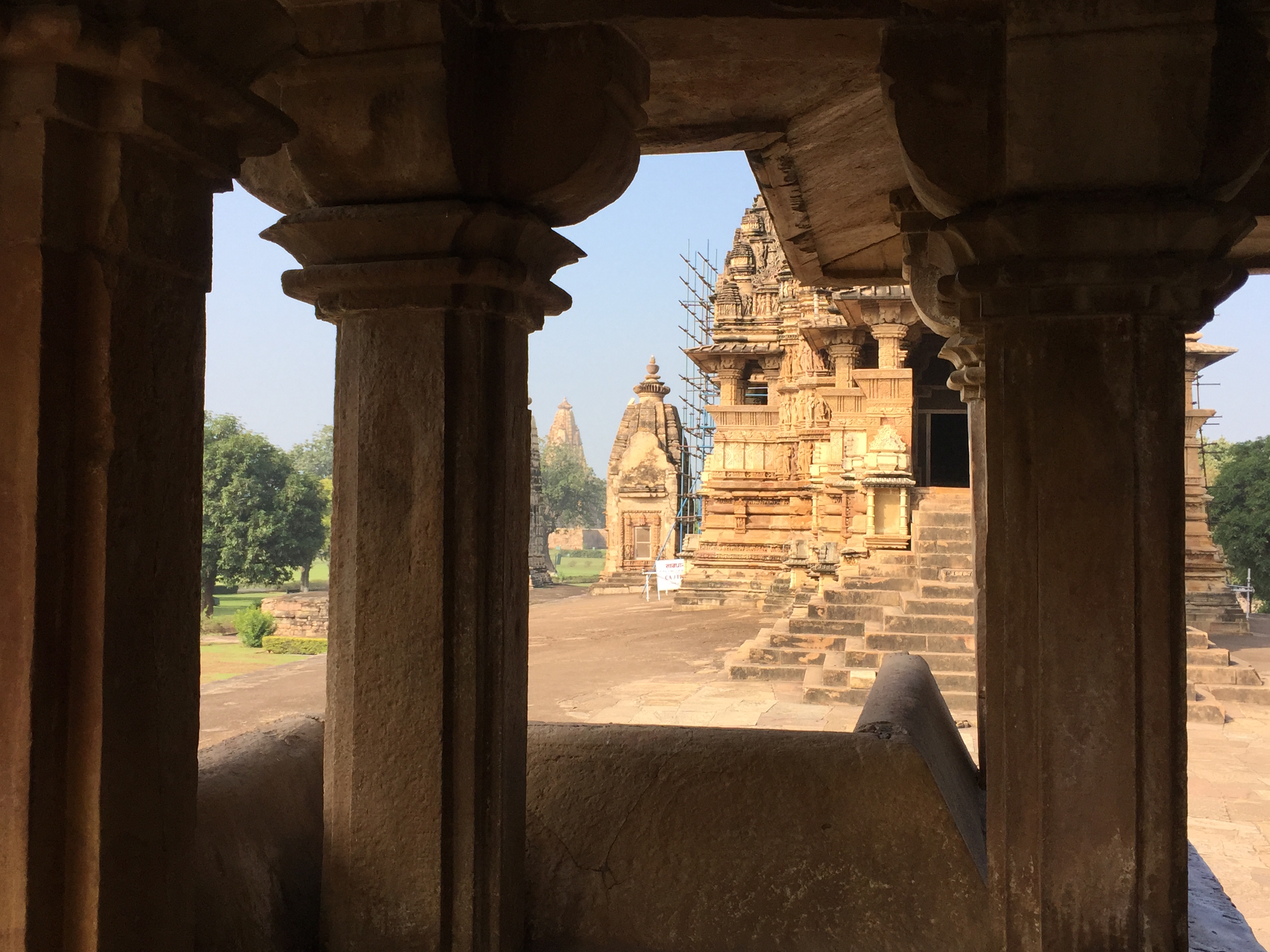
This is the place where the Buddha gave his first sermon, the spot marked by a huge stupa, a solid brick elongated mound sort of thimble shaped. In a nearby spot it is believed relics (maybe a small bone or two) were found in a jade box by a local king who threw them into the Ganges. He did not know whose they were, but this would have been the natural thing to do with cremains.

The park is both peaceful and clean and we enjoyed our wander. Next door is a Buddhist temple decorated with murals done by a Japanese artist showing the life of the Buddha. Many tourists/pilgrims were here from other Asian countries. Adjoining the temple is the grandson of the tree under which the Buddha first achieved enlightenment. On both sides of the shrine are a line of prayer wheels, Tibetan style, and there were several groups of pilgrims, some of whom asked our guide what were those things, while others walked along spinning each wheel in turn. Such are the varied ways in which Buddhism is observed.

Back at the hotel we collapsed in our room. Next day, Khajuraho!

Oh, Varanasi

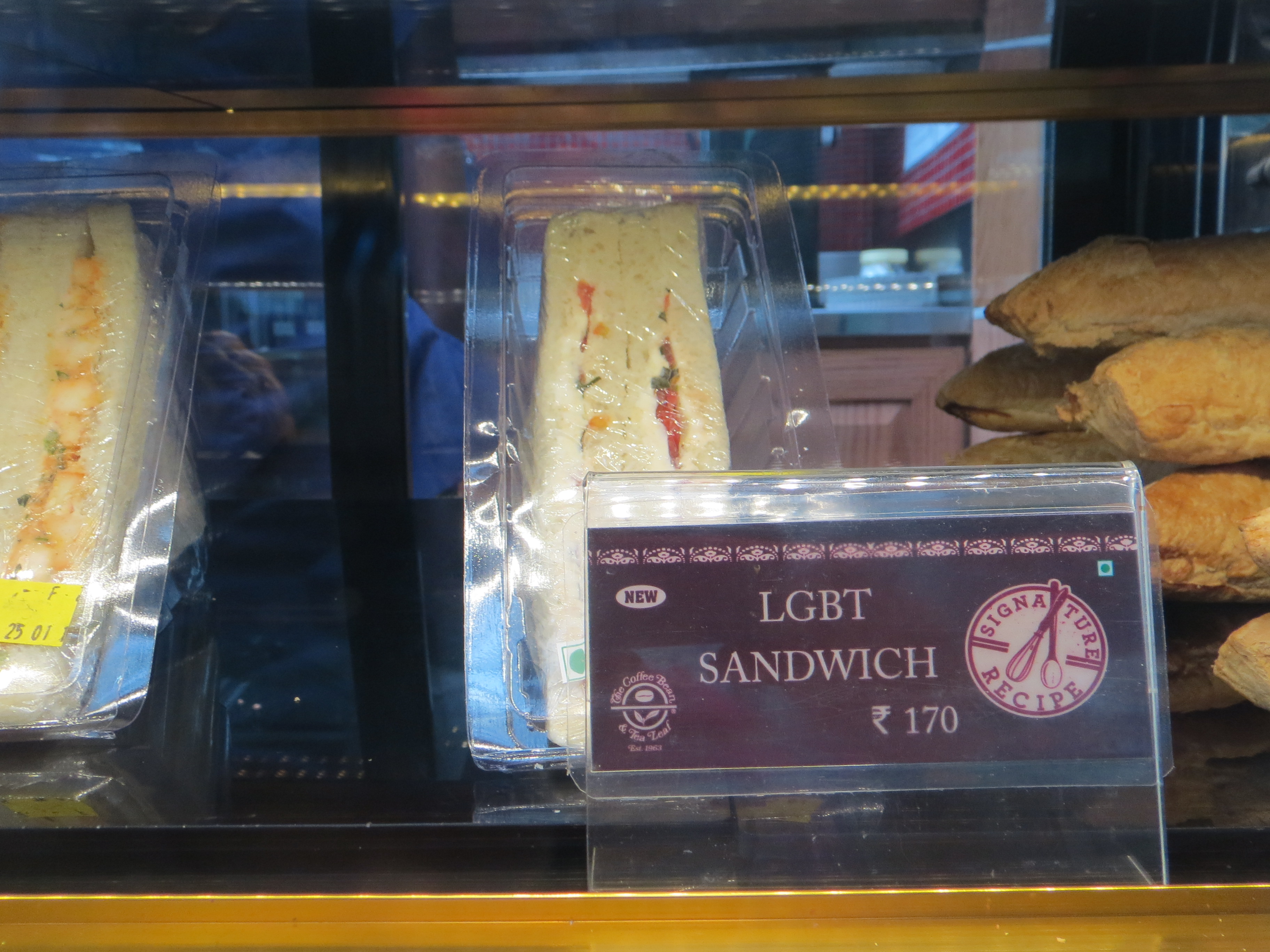
No, I have no idea what an LBGT sandwich is but I thought my sister especially would enjoy this!  From the Coffee Bean shop at the Kolkata airport.

No, I have no idea what an LBGT sandwich is but I thought my sister especially would enjoy this! From the Coffee Bean shop at the Kolkata airport as we prepared to go to Varansi.

For the last few days I had had a nervous feeling in my gut about going to Varanasi.  David kept at me to read more in the guide book but it just made me more anxious.  There are many warnings–“not for the faint of heart;” “be prepared to see body parts floating in the rivier;” “cremations may be shocking to western eyes.”

Then we arrived.  They say Varansi will either be your favorite or the scariest part of India.  We think it might be right up there with our favorites.

There was quite a bit of rain when we landed, and during lunch, waiting to be picked up by our guide, it was pouring.  But when Dharmendra arrived at 4:30 it was just a bit drizzly.  The agenda was to see the Ganges action, including the evening Hindu ceremonies, and he offered to have us go into a building to watch from above, or take a chance on a boat ride–since the boats are uncovered, a lot of rain would have been a bummer.

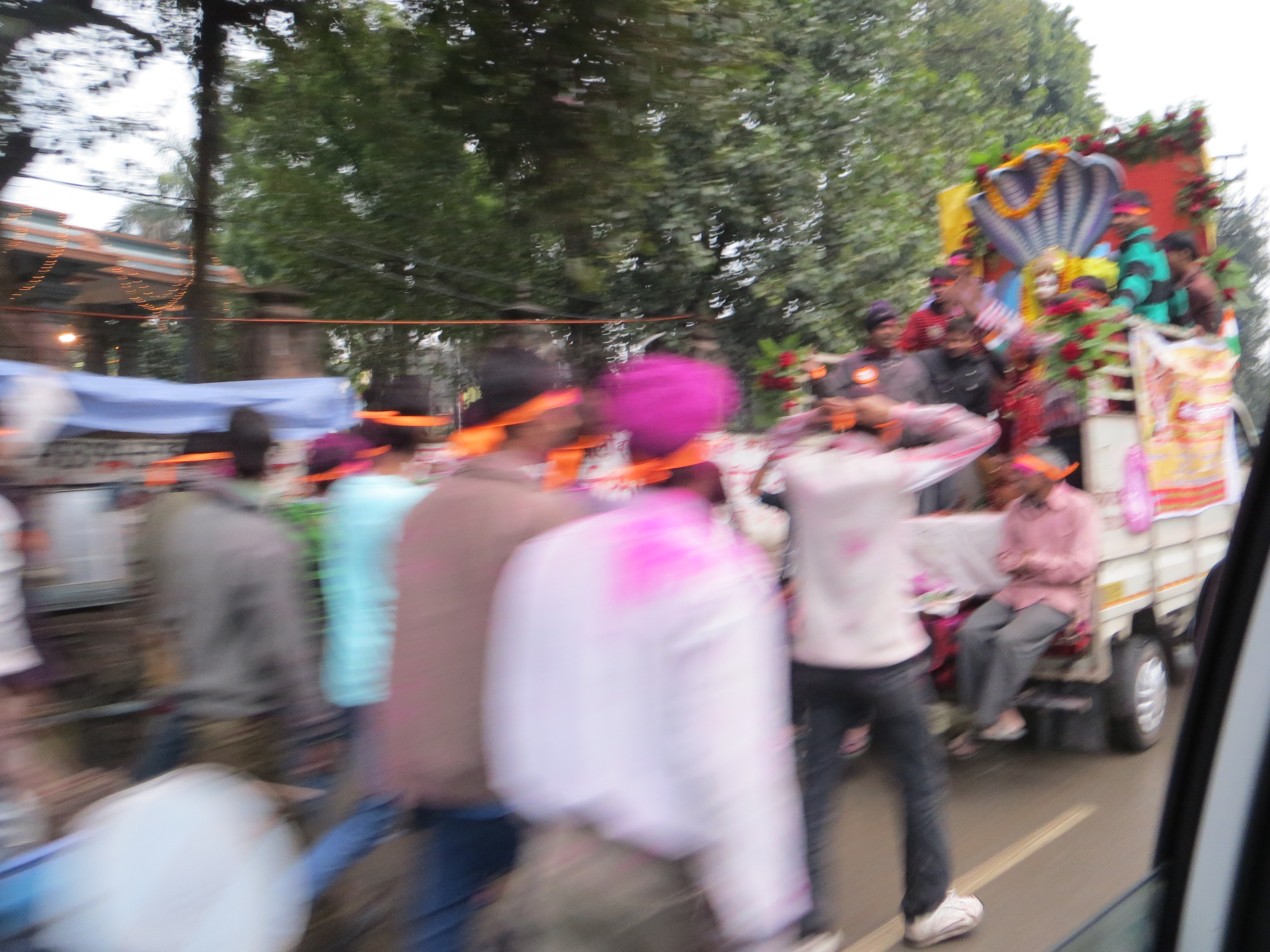
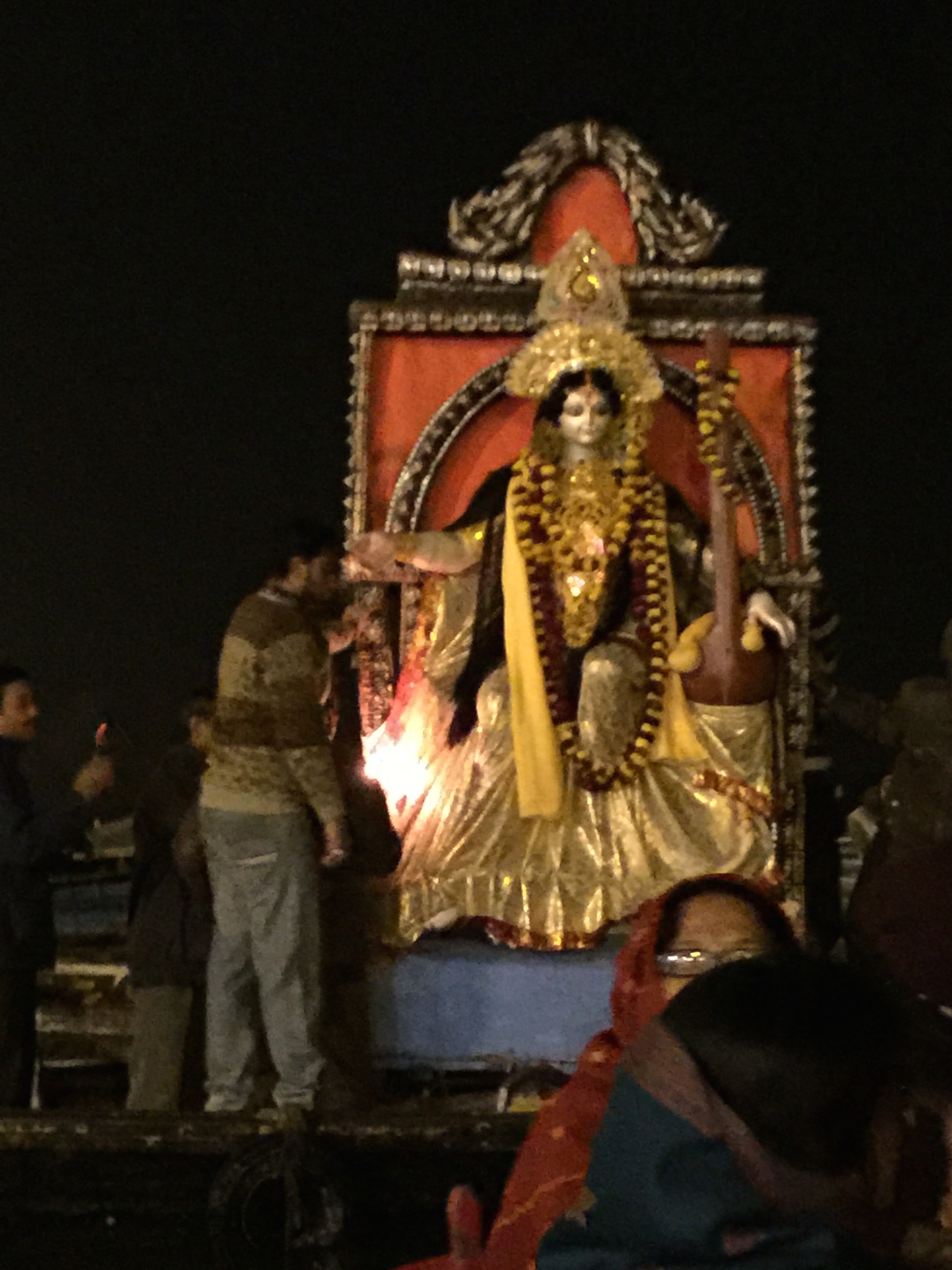
We got out of the car to walk the several blocks to the river.  I remind you that we were quite enthralled with the Saraswathi action in Kolkata.  That was nothing.  The streets in Varanasi were filled, and I mean filled, with parading neighborhood groups, all young men, marching behind pickup trucks in which their statue stood, facing back at the following crowd, with a lot of cheering, drums banging, and general carousing–though there is no drinking thank goodness.  I cannot imagine these guys any crazier!  Many of them were also covered in powdered paint, seemingly different colors depending on the group (all green faces, then all blue faces).  They were clearly having a ball.  The streets were very muddy and of course cows, dogs, and goats were in the mix.  Boy, some of those cows are enormous.

IMG_1232

Varanasi is jammed with motorcycles.

Varanasi is jammed with motorcycles.

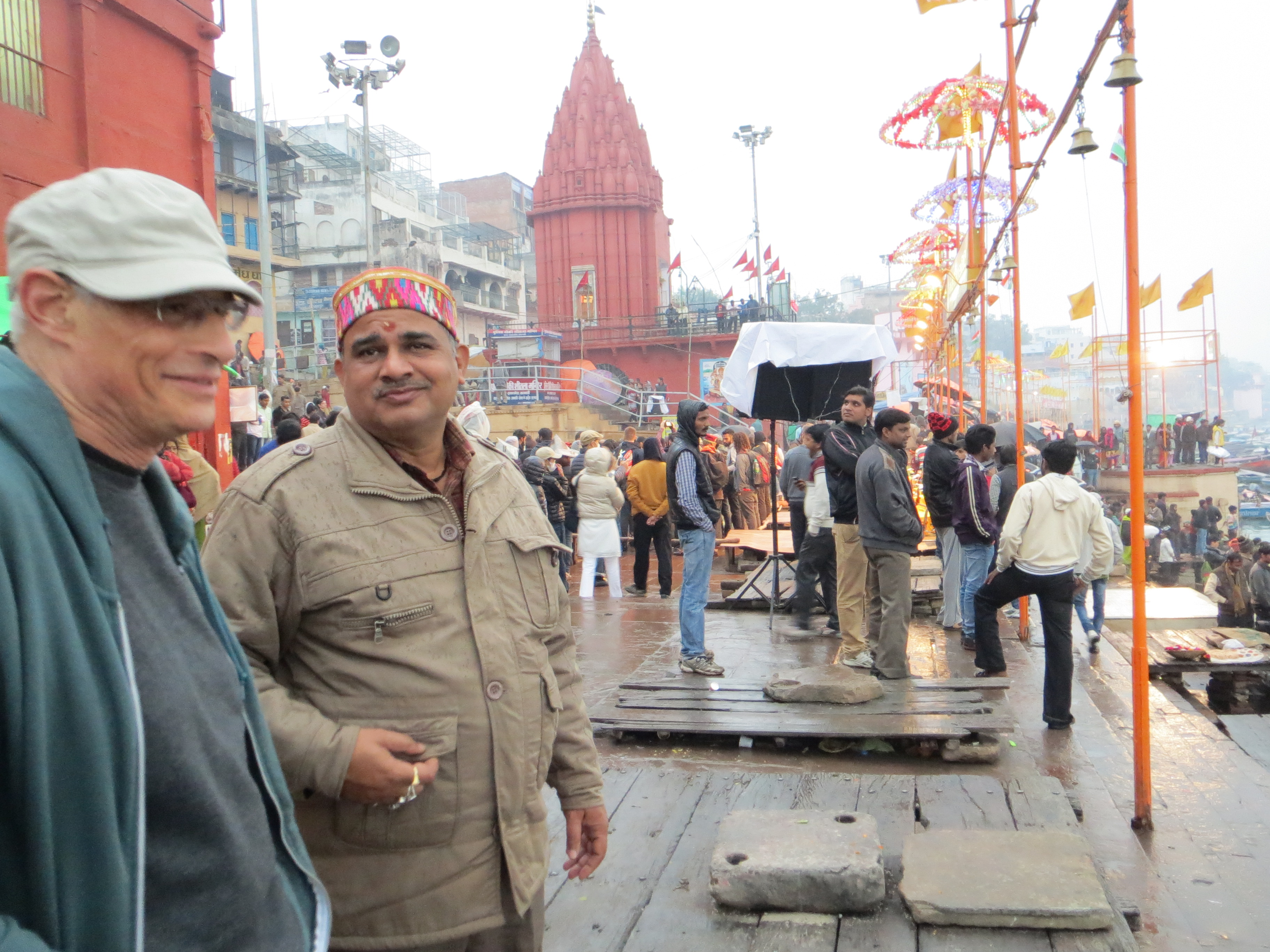
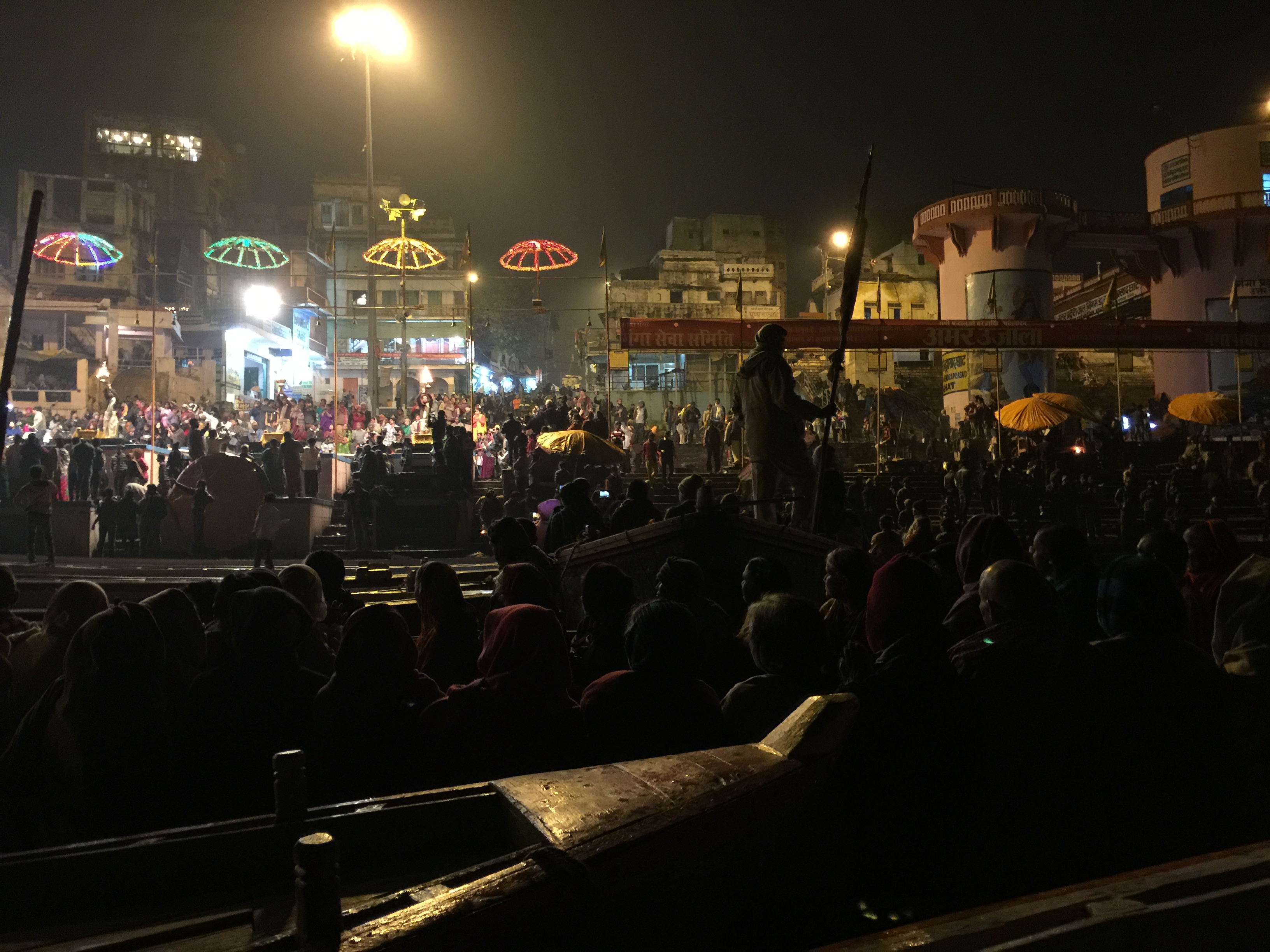
We made our way down to the ghats and the scene seemed a bit calmer–most of the dumping of statues hadn’t begun yet as the first groups were just getting to the river.  Talk about people watching–you name it, it was there.  The crowds were big and getting bigger, very few westerners, but lots of celebrants from around the area as well as beggars, vendors, kids selling postcards, and so forth.

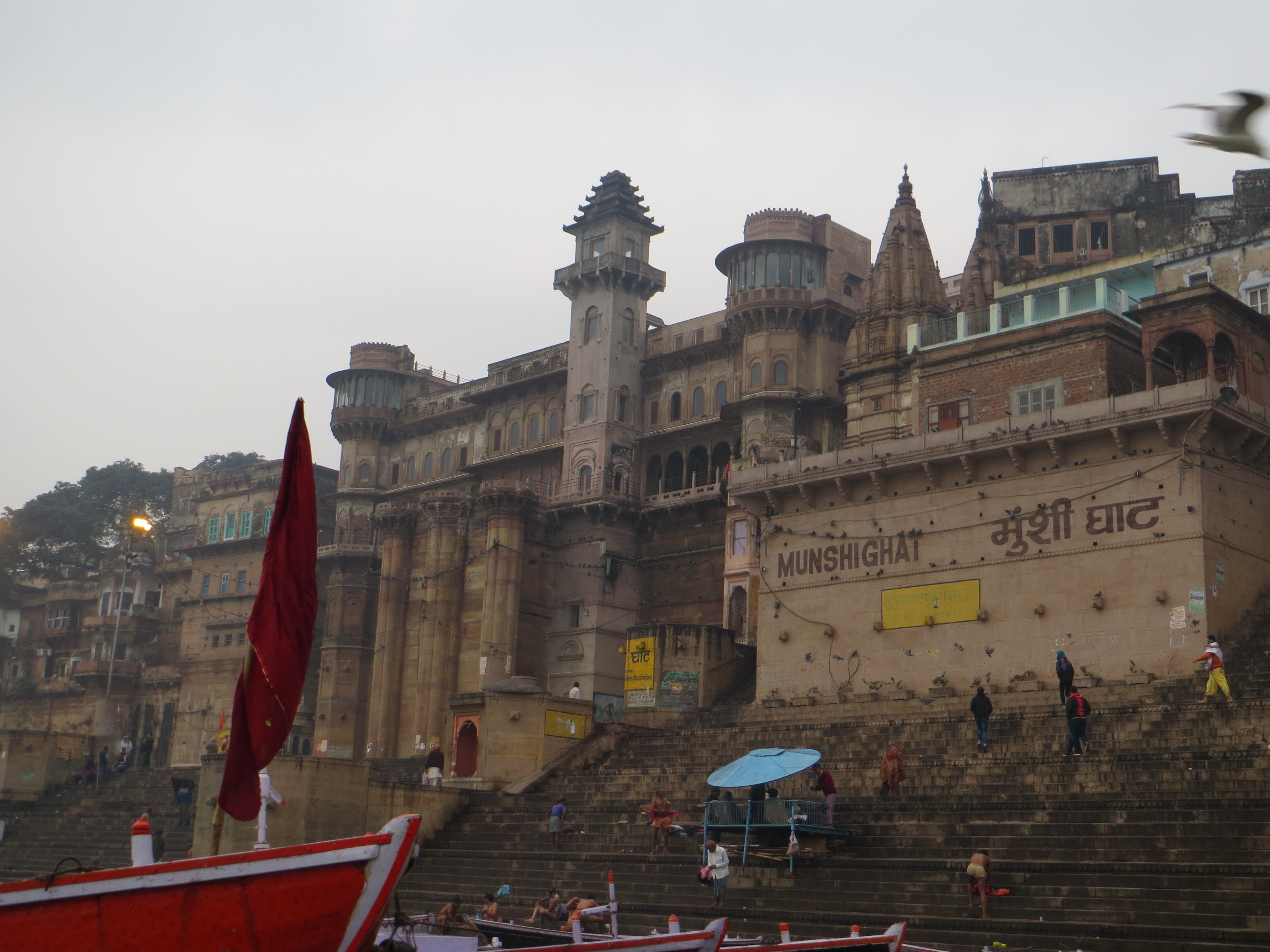
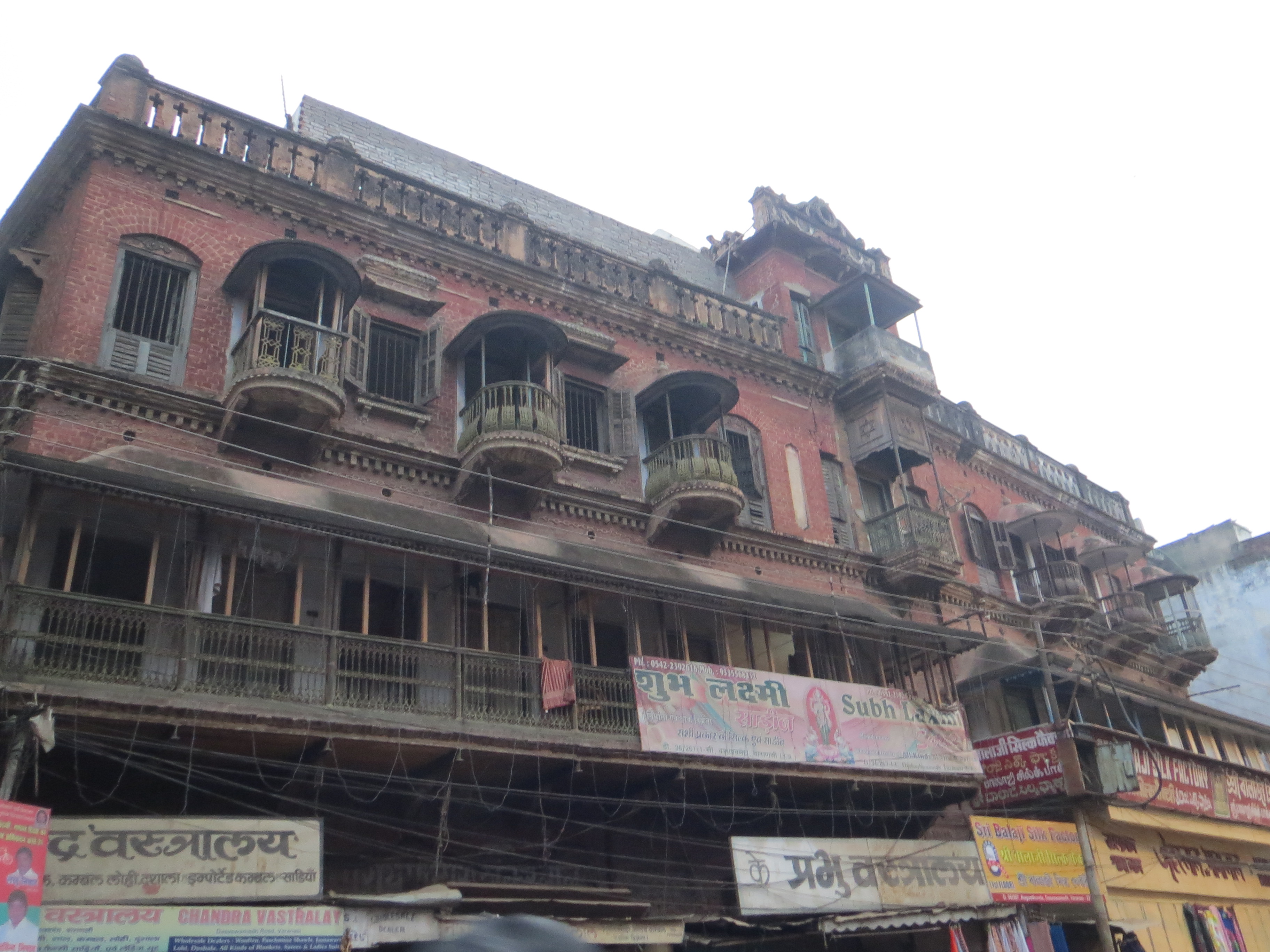
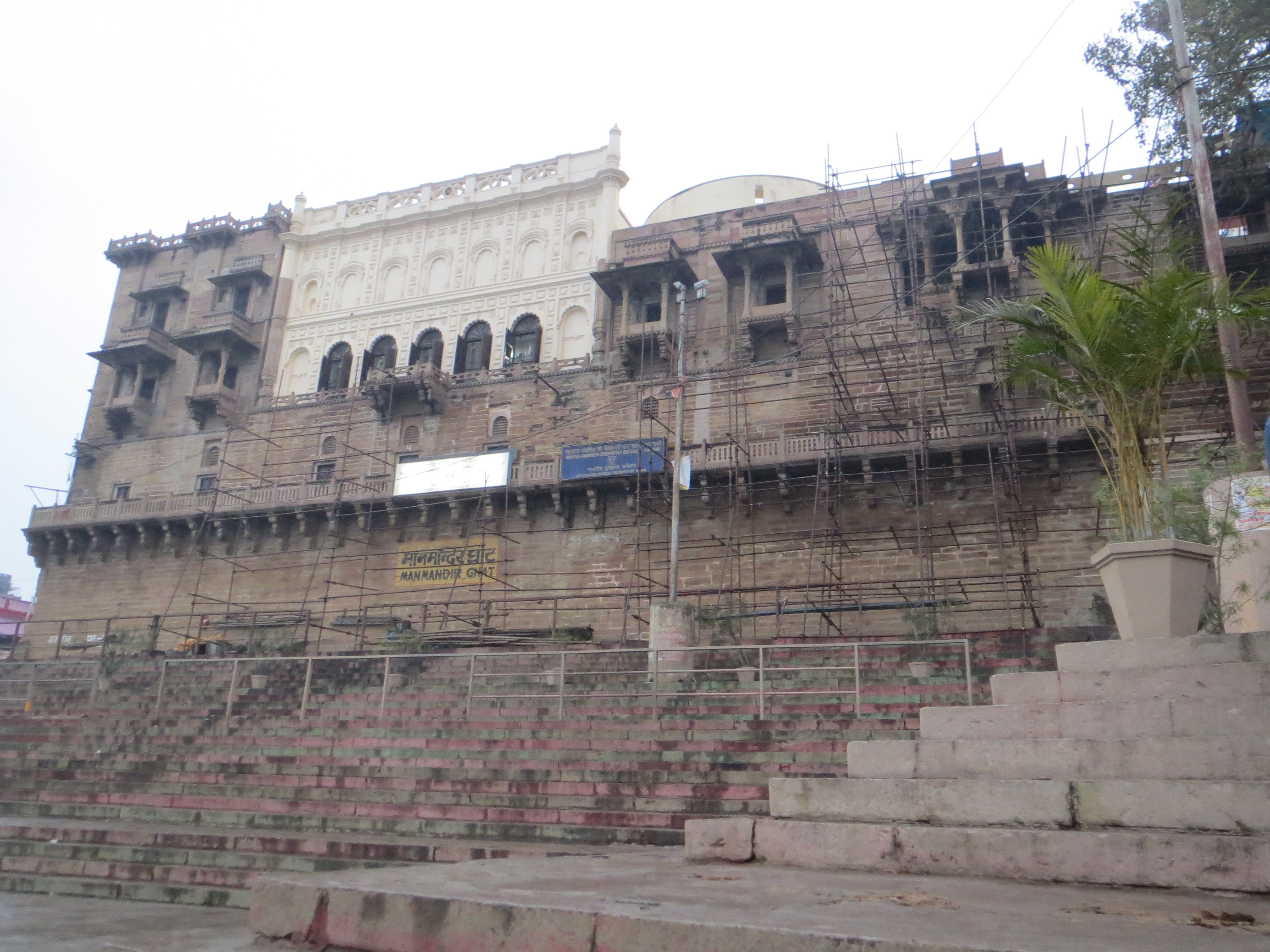
Ornate old buildings in Varanasi--a few hundred years old only, because the Mughals destroyed pretty much everything.

Ornate old buildings in Varanasi–a few hundred years old only, because the Mughals destroyed pretty much everything.

IMG_1251

Our first view of the Ganges in Varanasi/Benares.

Our first view of the Ganges in Varanasi/Benares.

David was having a blast.

David was having a blast.

10? 20? Many Hindu temples along the shore.

10? 20? Many Hindu temples along the shore.

These are huge sewage treatment tanks--nicely decorated, natch.

These are huge sewage treatment tanks–nicely decorated, natch.

A group of costumed women and one man painted blue--not sure what they were doing.

A group of costumed women and one man painted blue–not sure what they were doing.

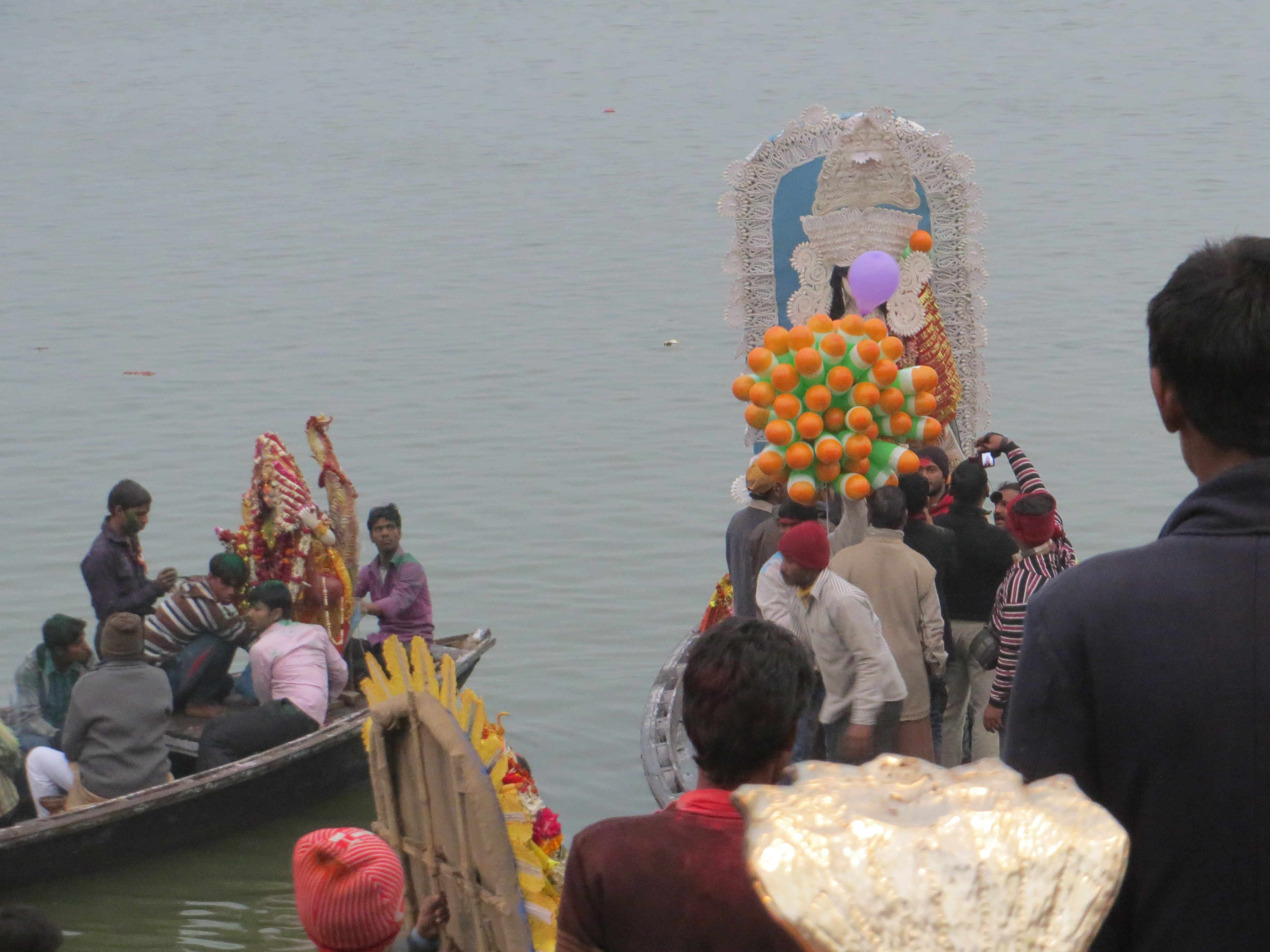
Unlike Rajghat in Kolkata, here the clay statues are taken out by boat, to much cheering and banging, and then dumped overboard.

Unlike Rajghat in Kolkata, here the clay statues are taken out by boat, to much cheering and banging, and then dumped overboard.

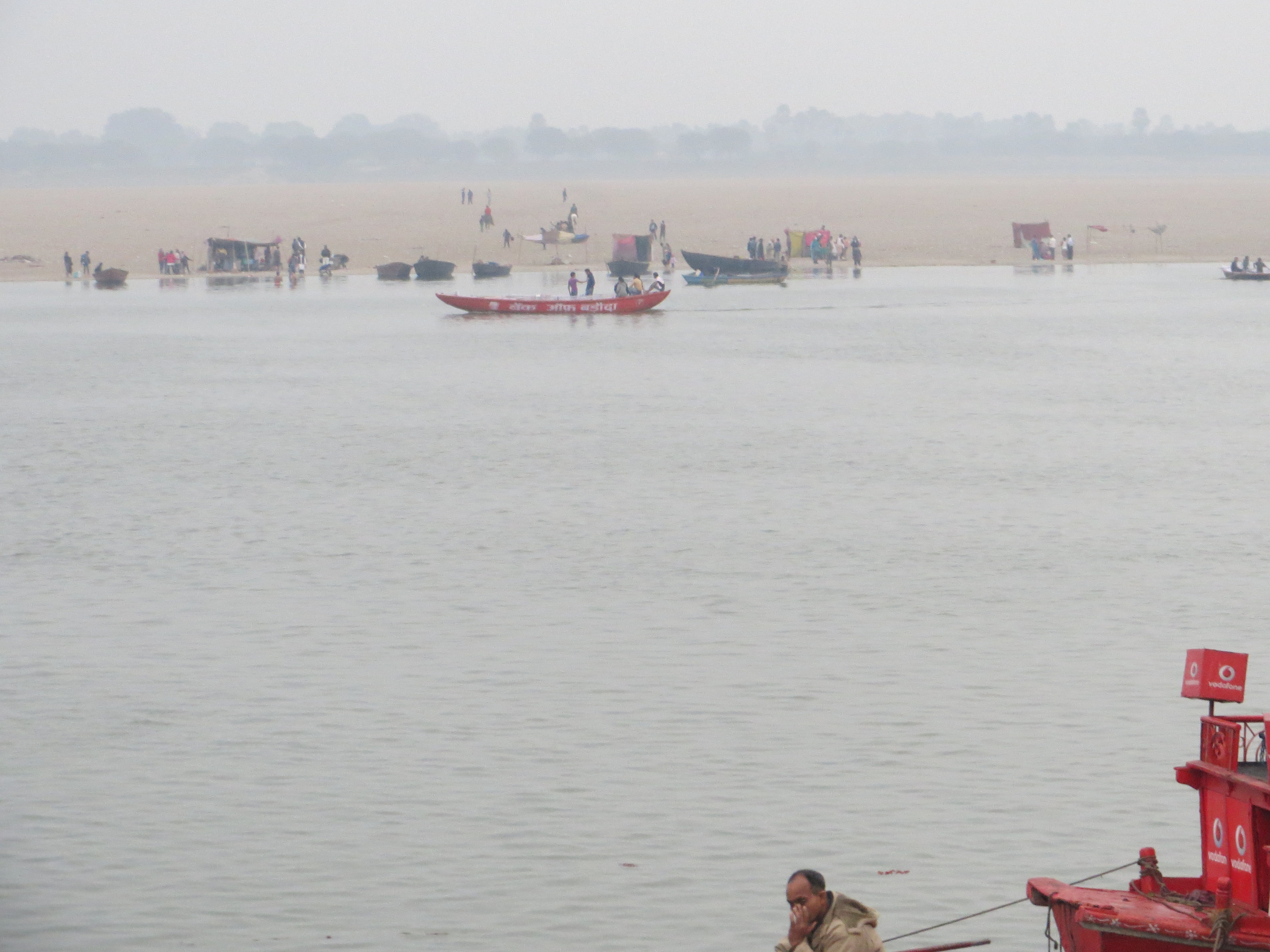
A view from Varanasi across the Ganges.  There is a sandy edge of a km or more on that side--undeveloped because it doesn't take much of a flood to cover it.

A view from Varanasi across the Ganges. There is a sandy edge of a km or more on that side–undeveloped because it doesn’t take much of a flood to cover it.

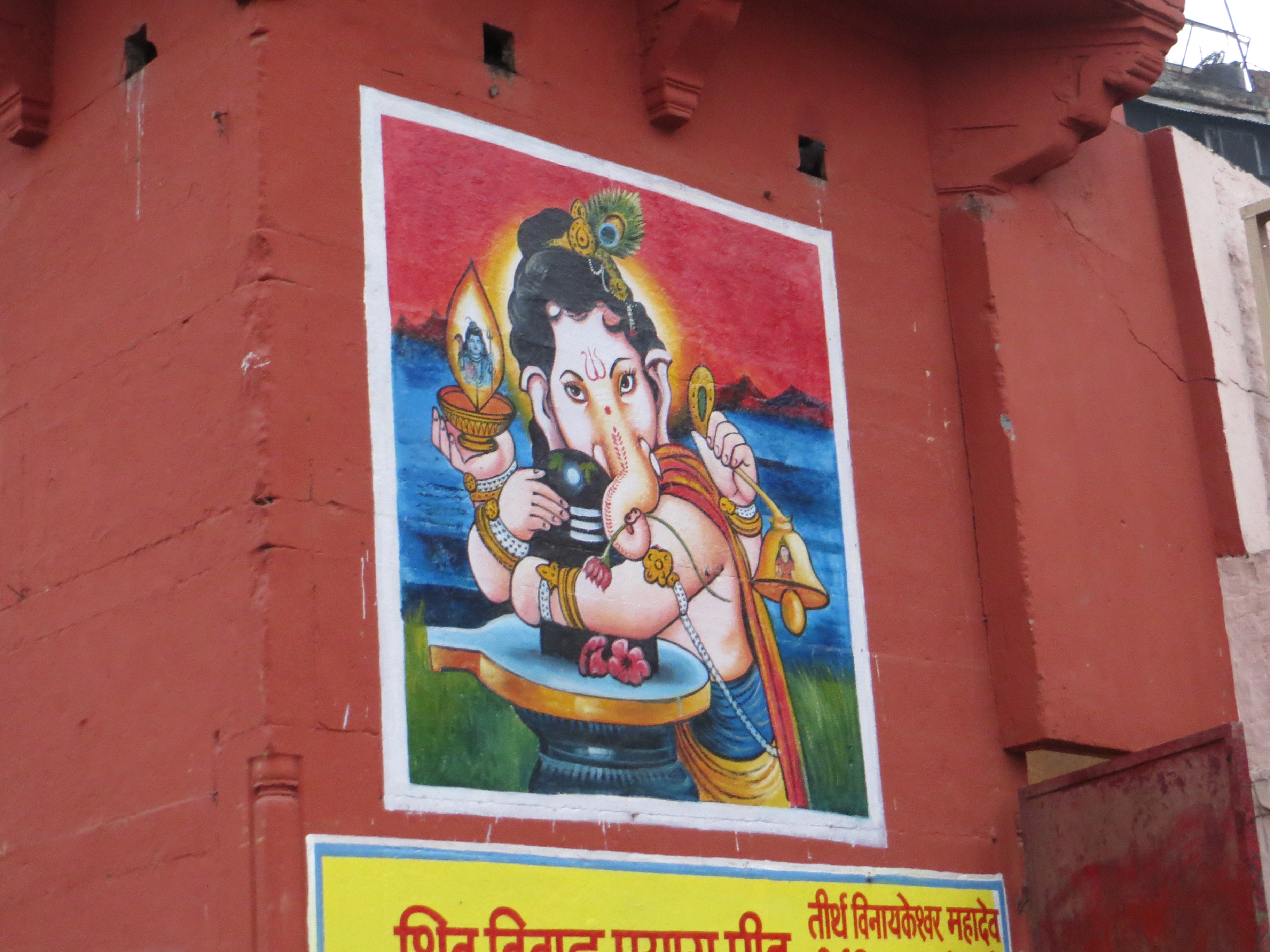
This is an enormous wall painting of Ganesh, looming over the ghat (steps to the river).

This is an enormous wall painting of Ganesh, looming over the ghat (steps to the river).

IMG_1249 IMG_1250

We opted to take the boat, and were so, so glad we did.

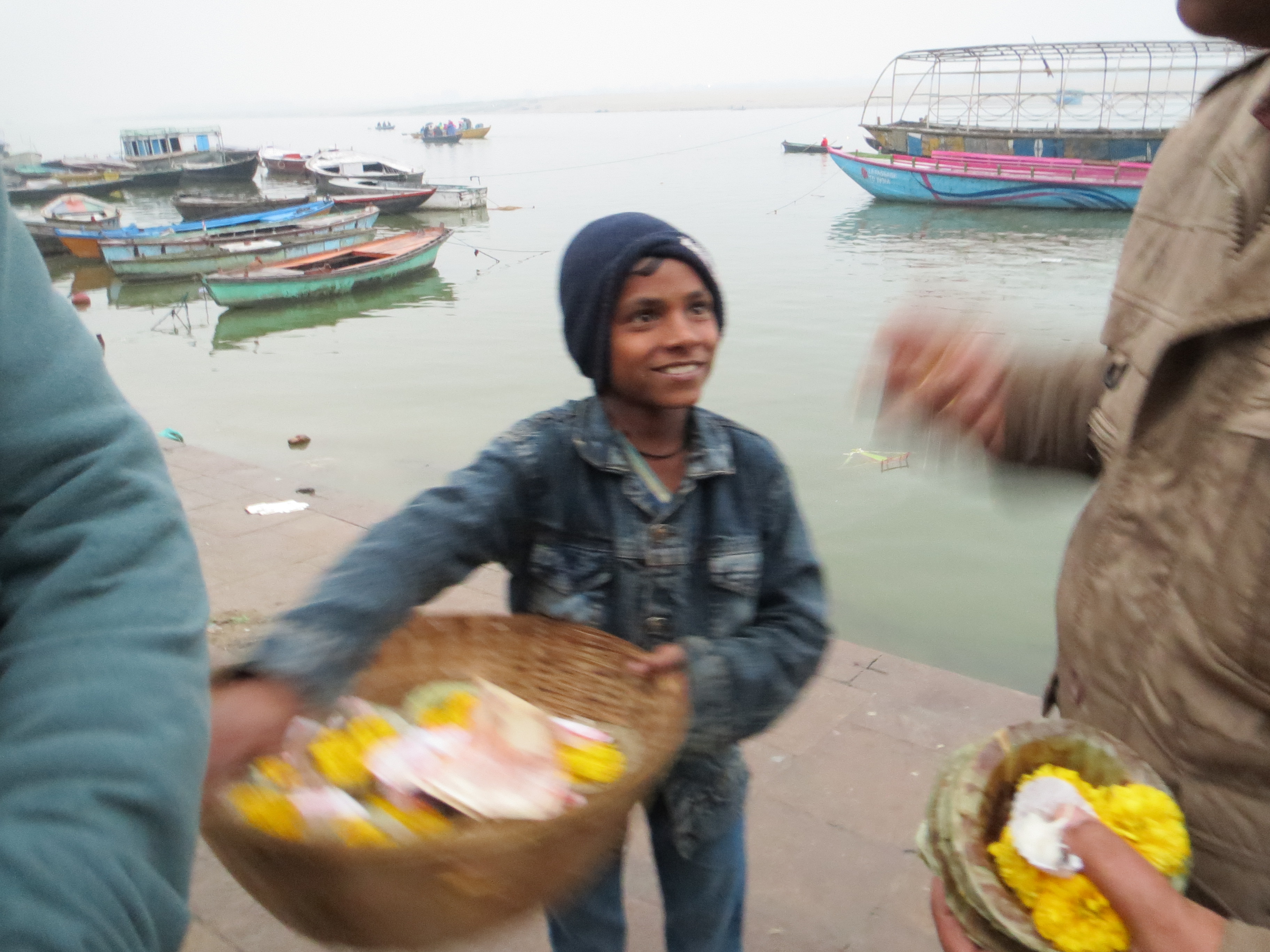
Our guide told a young boy selling the little floating candles that he would buy from him if the boy took an offering up the steps to one of Dharmendra’s favorite holy men.  He ran as fast as he could, gently handling the bills to the holy man sitting about halfway up the ghat stairway.  We bought three candles, arranged for the boat, and we were off.

So much has been written about this holy Hindu city, I am sure I cannot add a single new observation or description.  Our experience was absorbing, fascinating, and had its spiritual moments.  Dharmendra had asked us earlier if we minded telling him our religion–and seemed pleased to hear we are Jews.  As darkness fell he explained that as a born Brahmin he was able to sing the prayers for us.  And added, “I’m your Cohen.”  Seriously.  I said I wanted to place a candle on the water for my dad, who would be thrilled to know we were in India and that we would do such a thing for him–he had always been interested in my traveling life so how perfect would this be?  I was feeling really happy about doing it and happy thinking about my dad.  I stood up to take the lighted candle from Dharmendra and he started to chant a Hindu prayer.  The sound of his chant in a beautiful deep voice, the minor keyed droning that sounds so much like a Jewish prayer, and tears came to me in a rush.  I cried as I put the candle in the water, and though the surface of the river seems very still it rushed away on the current and was a speck of light in just a moment.

I got ready to put my dad's candle into the water.

I got ready to put my dad’s candle into the water.

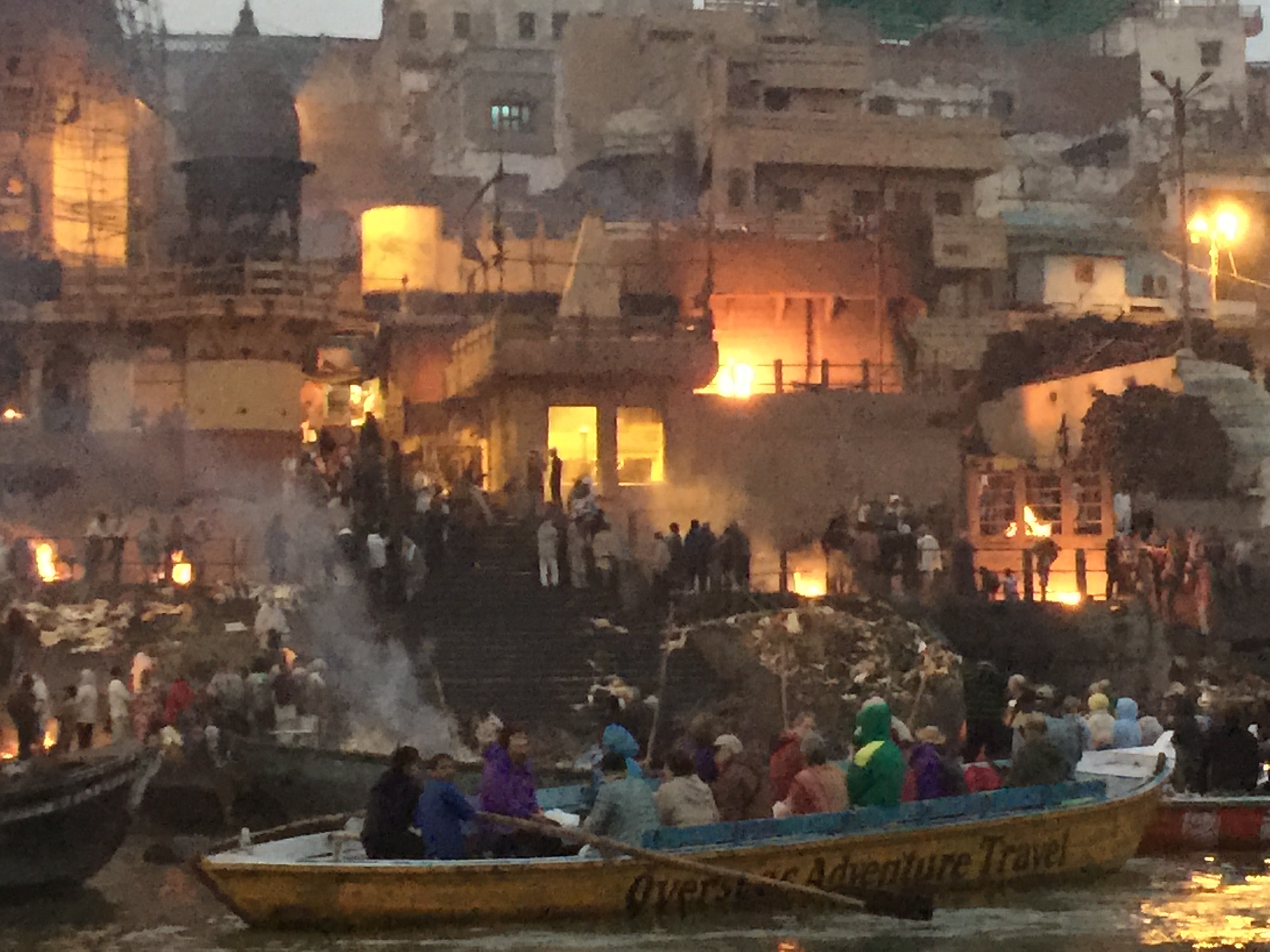
Now it was dark.  We reached the area where there are many cremations underway; there are 200/day here, day in day out; most take place at night due to the need to make arrangements quickly and the relative ease of doing all of this during the day.  You are permitted to take pictures from a respectful distance.  Dharmendra assured us of his confidence that observing these is not a problem for the mourners–they understand, he said, that people have come many, many miles to see these religious practices and “you can see better buildings at home.”  There were many boats drifting up against each other with tourist/observers, but those on the shore ignored us all.  The site is impressive, relatively quiet as it is some distance from the central ghat area, big and small fires as close as the edge of the water as well as up the stairs on outside plazas.  Each mourning group has one person wrapped in white–the chief mourner, often the oldest son.  Only men attend.  (When a child dies at less than 8 years of age, the body is instead wrapped in a white shroud, tied to a board, and taken out into the river where it is weighted by stones to sink to the bottom–and we did see a child’s body being so tied the next morning.)

The fires are cremations.

The fires are cremations.

Lots of cremations at night--we saw only a few the next morning.

Lots of cremations at night–we saw only a few the next morning

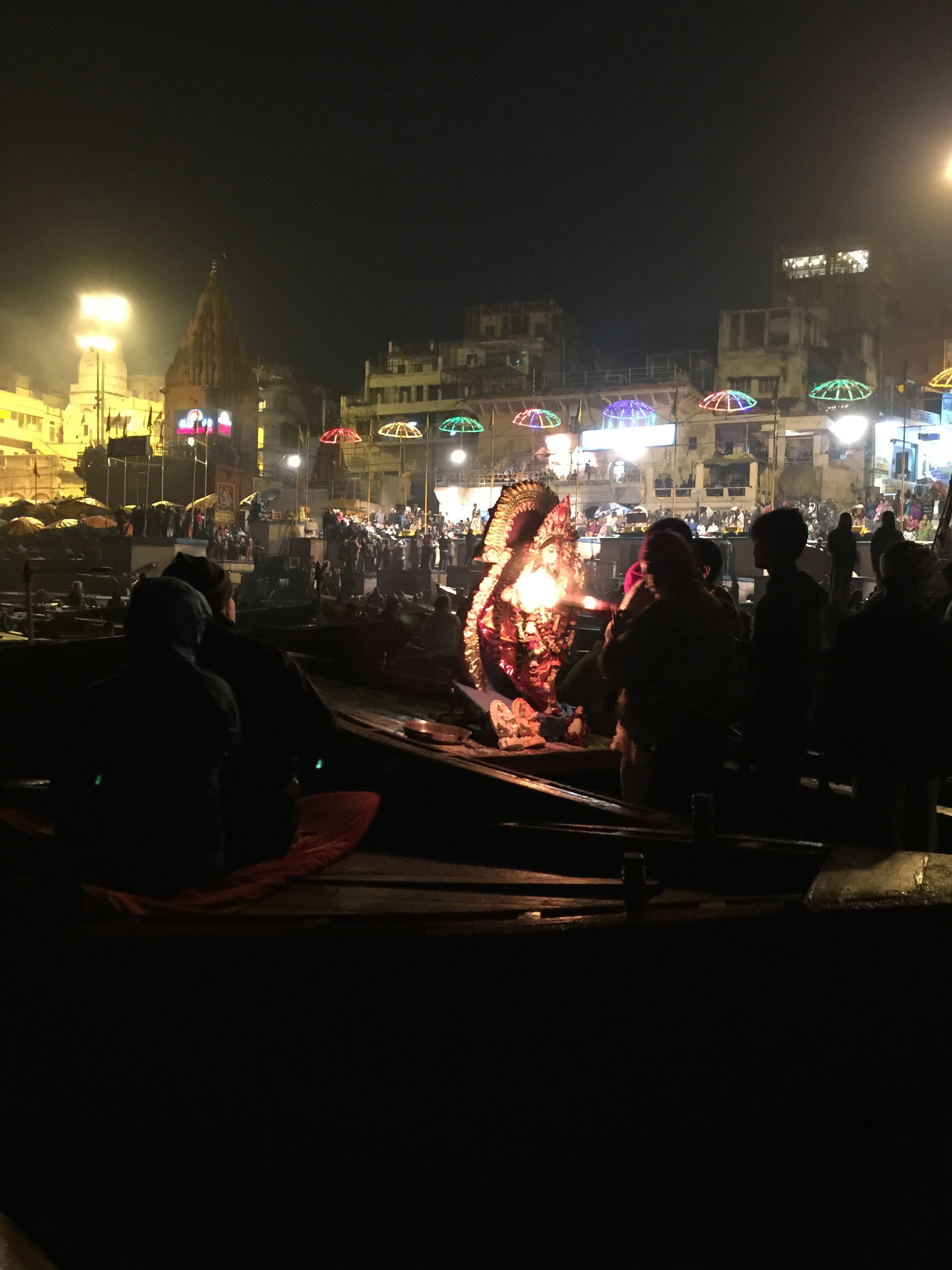
We were rowed back to the central ghat where the evening Hindu ceremony was gearing up.  Many, many boats, most with 10 or 20 people in them, were bunching up in front of the action.  On each of two ghats 7 priests stood, ringing bells, swinging various forms of fire (large oil lamps on metal arms that reminded me of the shape of hacksaws, towers of lights that looked like Christmas trees, maybe a foot and a half high), chanting and perfectly synchronized movements.  The bells were very loud and the chanting louder–and many of the observers followed closely, clapping along with the faster chants.  No one, however, around us was actual singing the prayers except our guide, who sang along with everything.  Amazing?  Fantastic?  Moving?  All of this and more–plus, every few minutes another group of young men came marching down the steps with a clay statue, seeming bigger and bigger, loading it into an open boat, cheering and hollering in unison, and then, after a few more blessings, tipped it into the river.

Saraswathi after Saraswathi is carried down and loaded into a boat.

Saraswathi after Saraswathi is carried down and loaded into a boat.

About the largest we saw.

About the largest we saw.

IMG_0807

The ceremony lasted about 40 minutes–then we quickly went ashore to beat the rush and walked back up to street level–where the parade continued.

(I am posting this now but will add video when we have a faster internet connection.  The combination of sight and sound is required to get even a tiny bit of the feel of the experience!)

As we made our way back to the car the parade of statues continued.

As we made our way back to the car the parade of statues continued.

The evening Hindu ganga aarti ceremony begins.

The evening Hindu ganga aarti ceremony begins.

Vasant Panchami in Kolkata

And more!

And more!

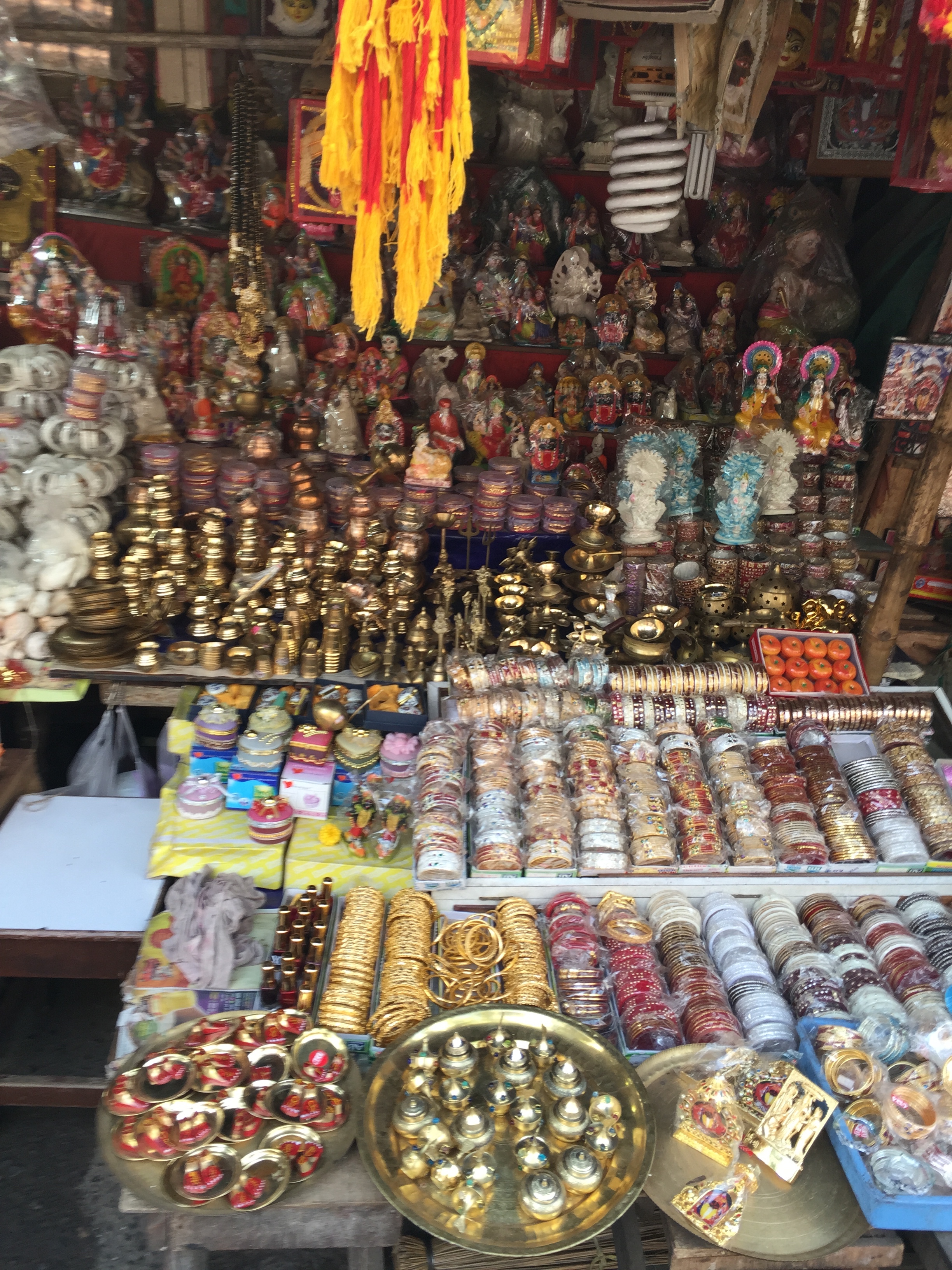
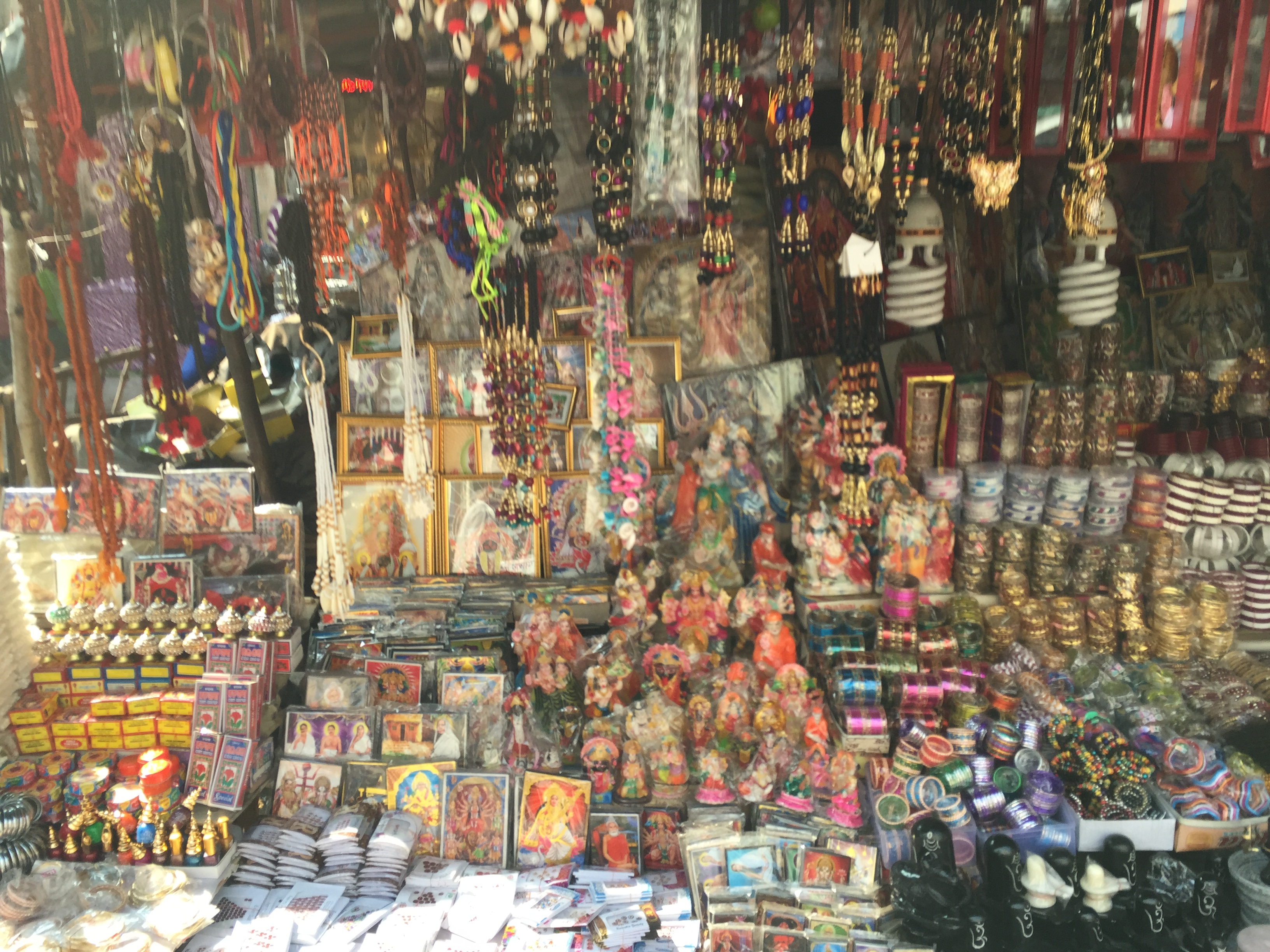
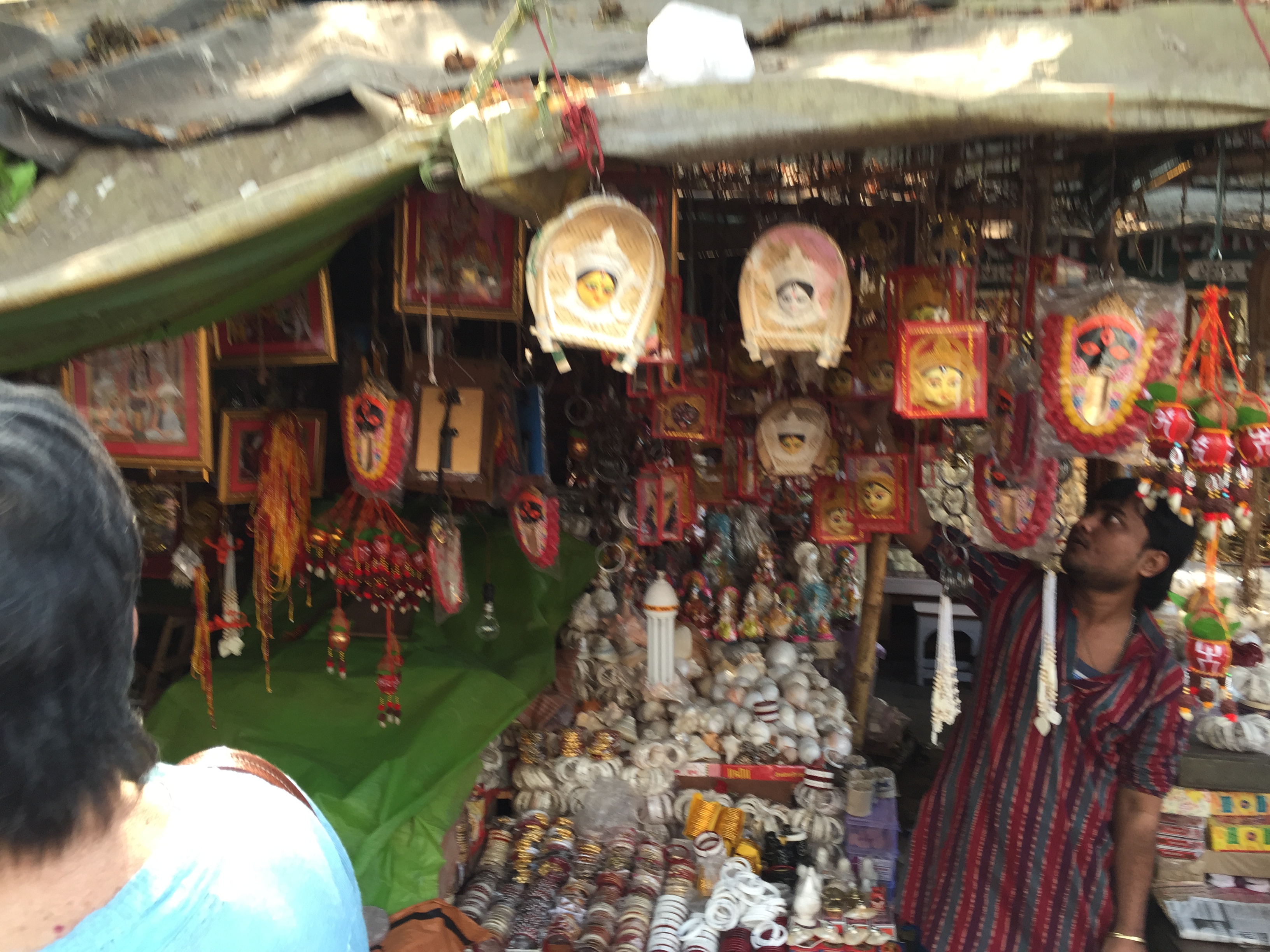
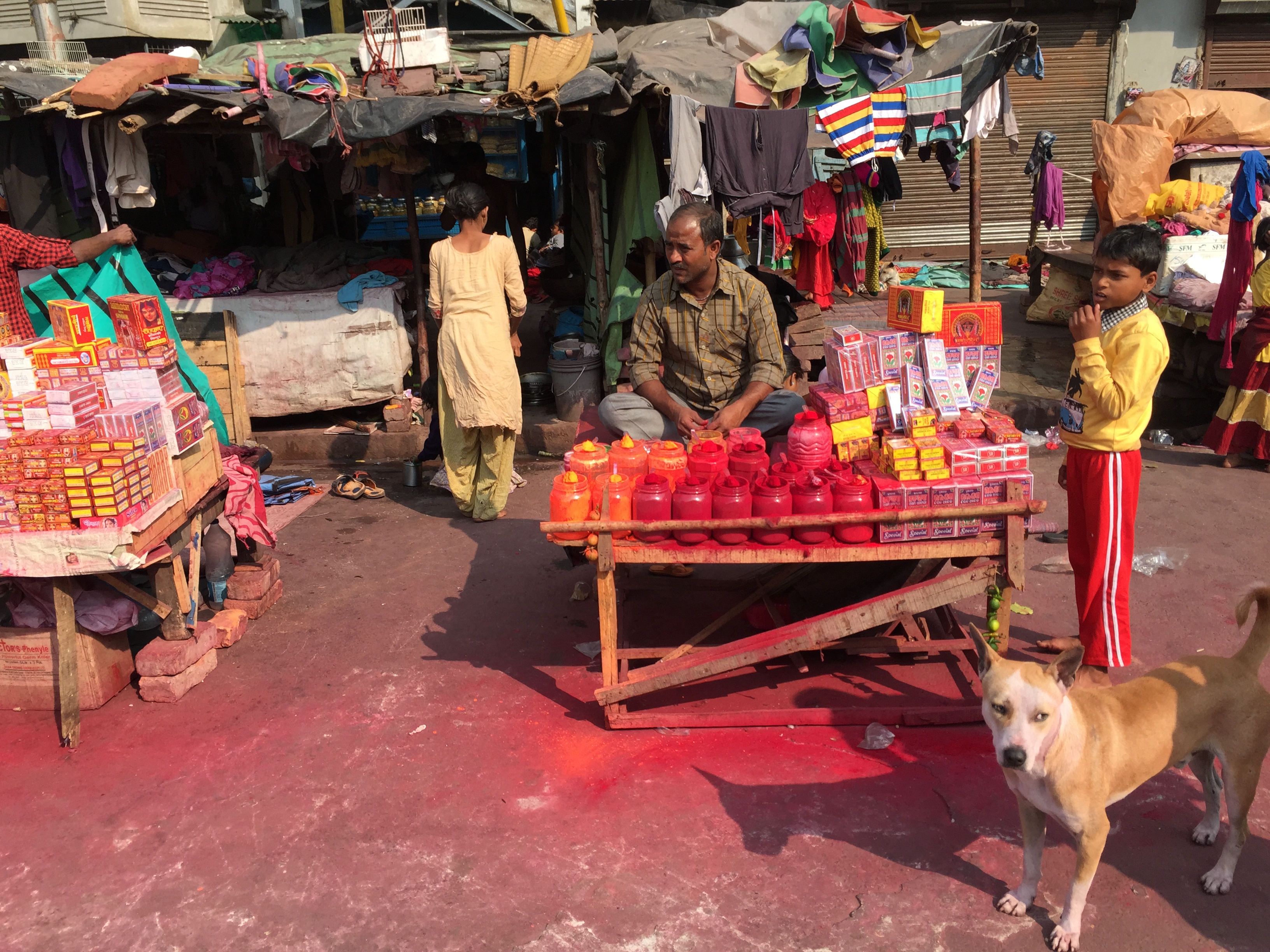
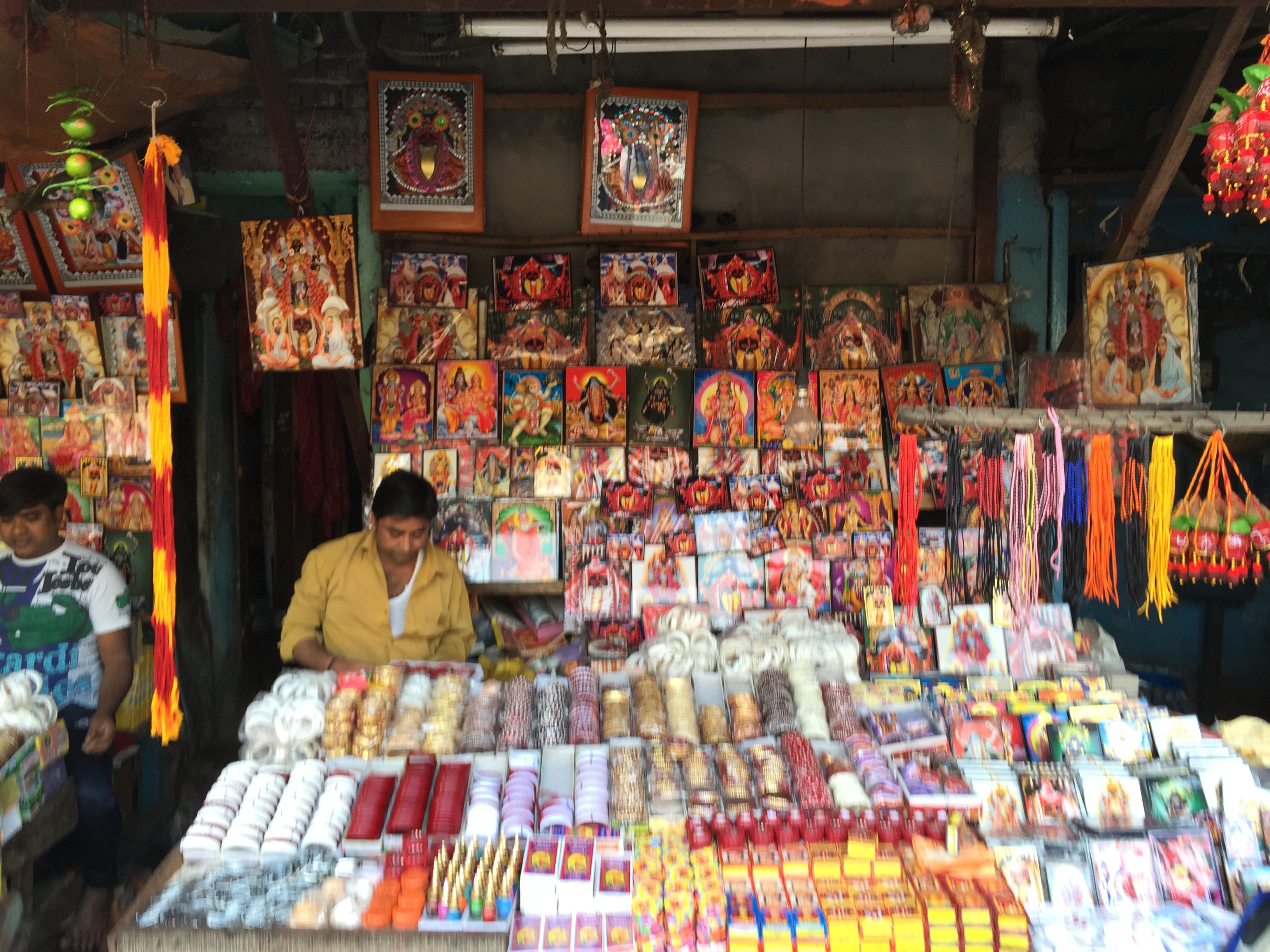
Lots of items for sale related to Kali.  We bought a few for good luck.

Lots of items for sale related to Kali. We bought a few for good luck.

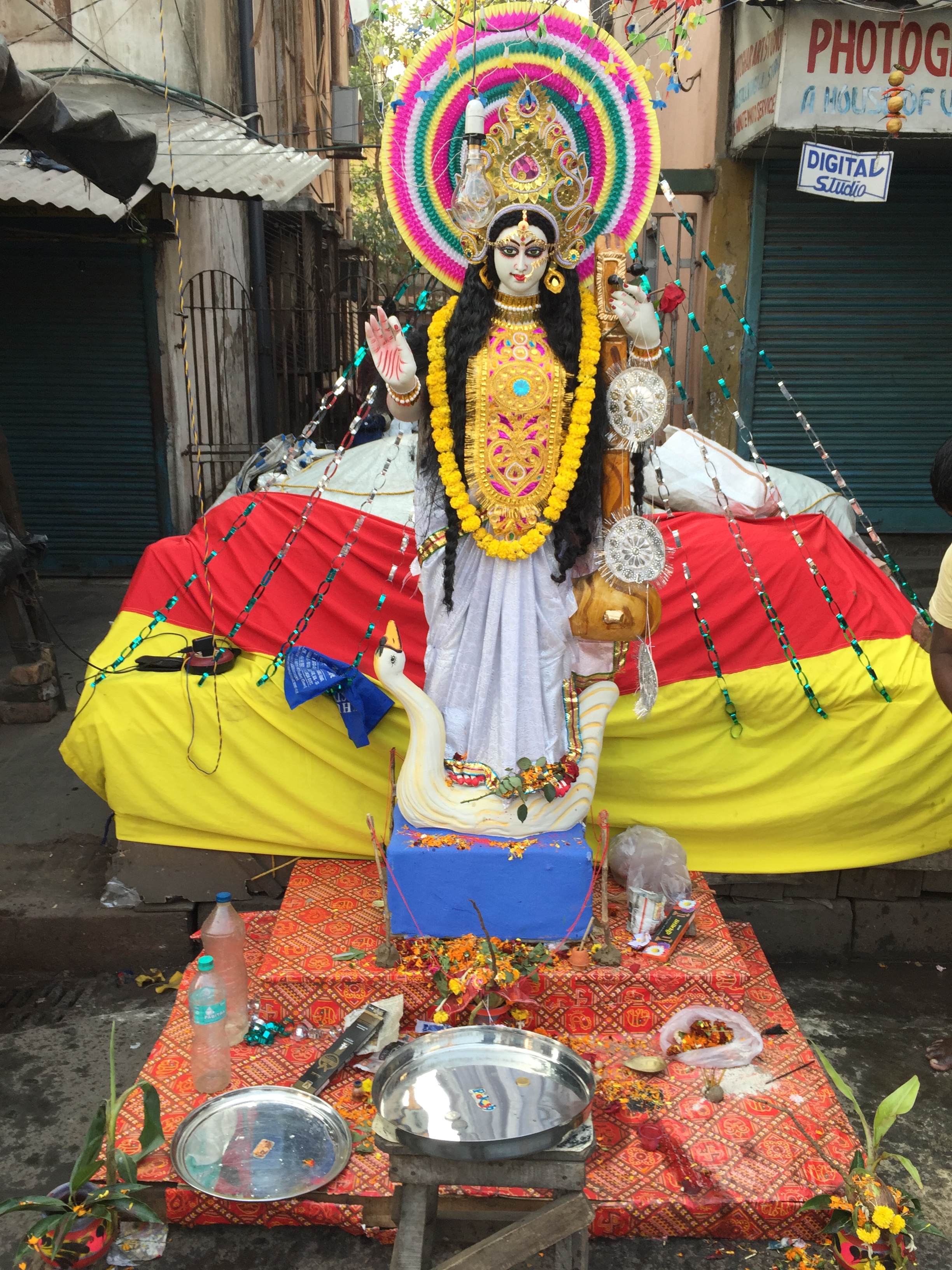
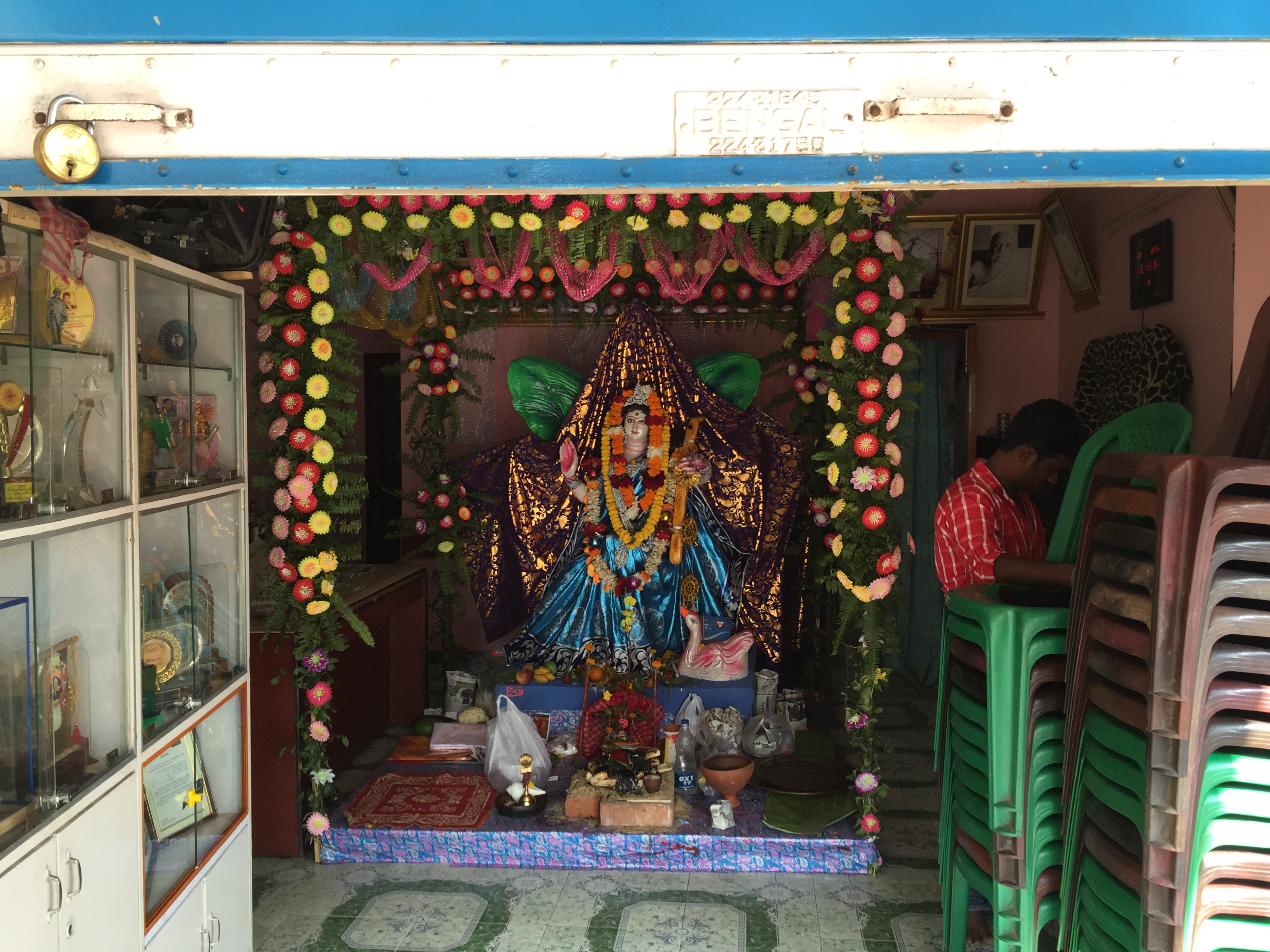
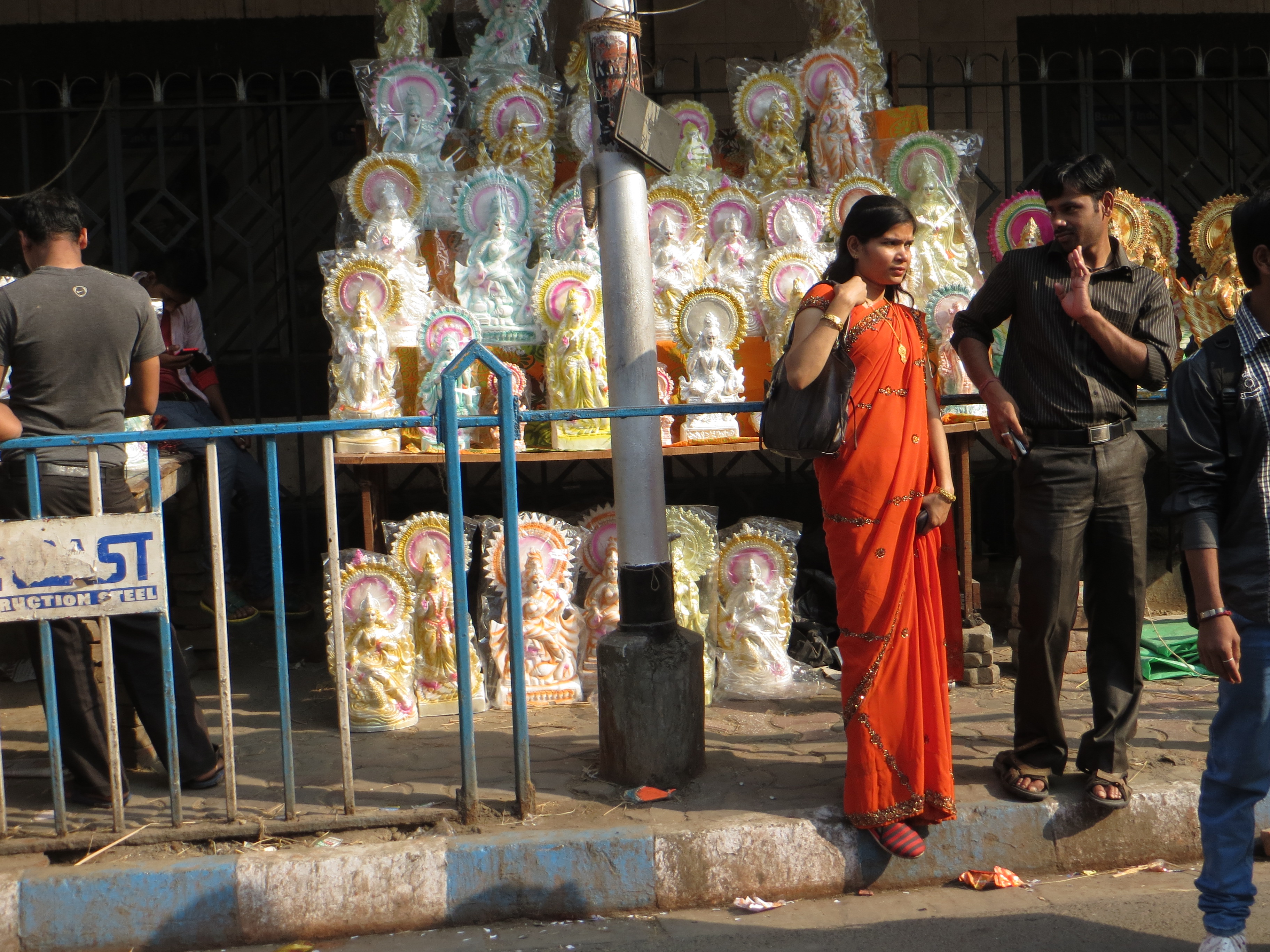
Goddess of wisdom, riding her swan and carrying her musical instrument.

Goddess of wisdom, riding her swan and carrying her musical instrument.

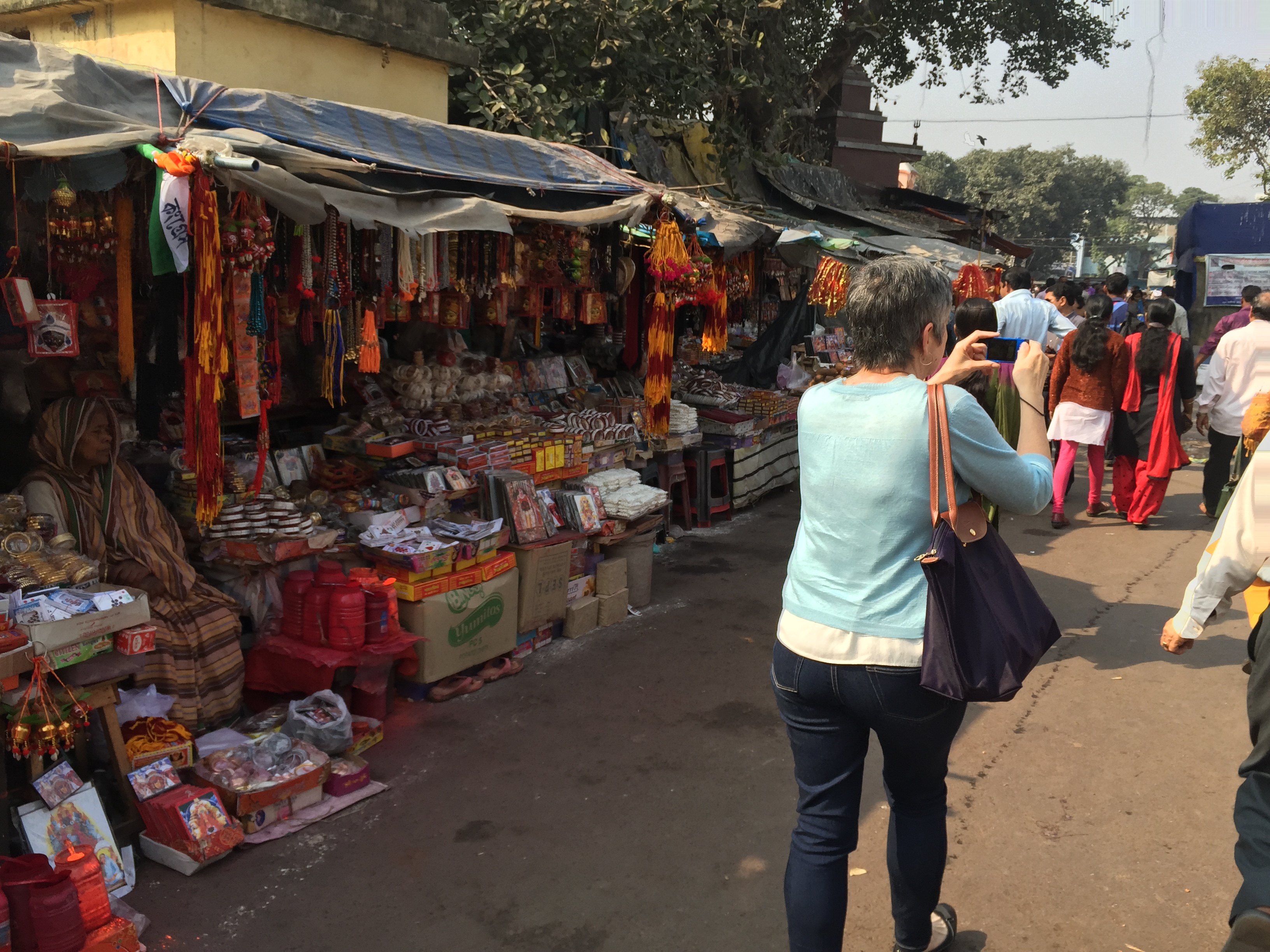
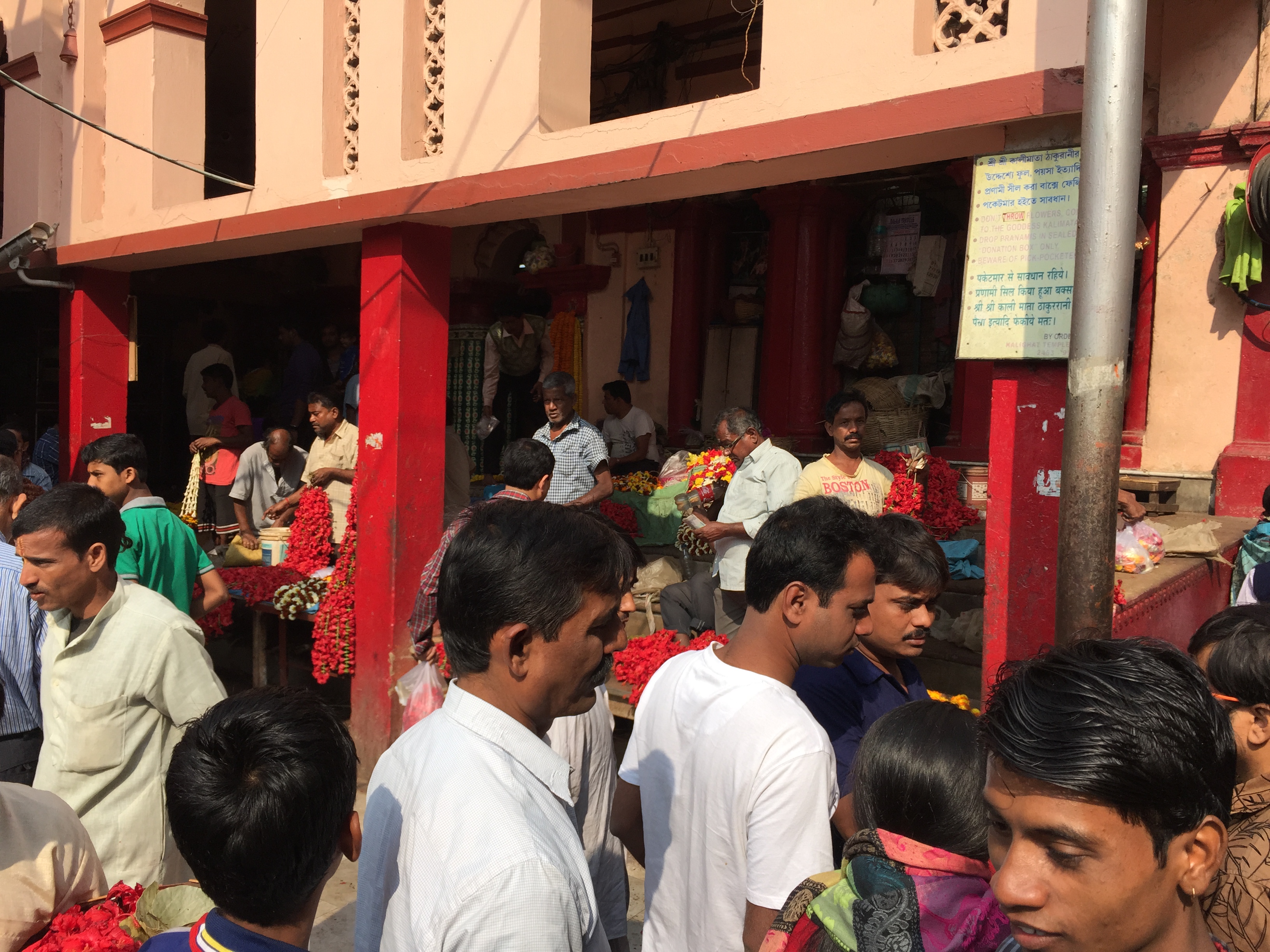
Vendors around the Kalikat temple.

Vendors around the Kalikat temple.

IMG_0713IMG_0722 IMG_0725 IMG_0727 IMG_0728

IMG_0731 IMG_0732

Sawarshati shrines still everywhere.

Sawarshati shrines still everywhere.

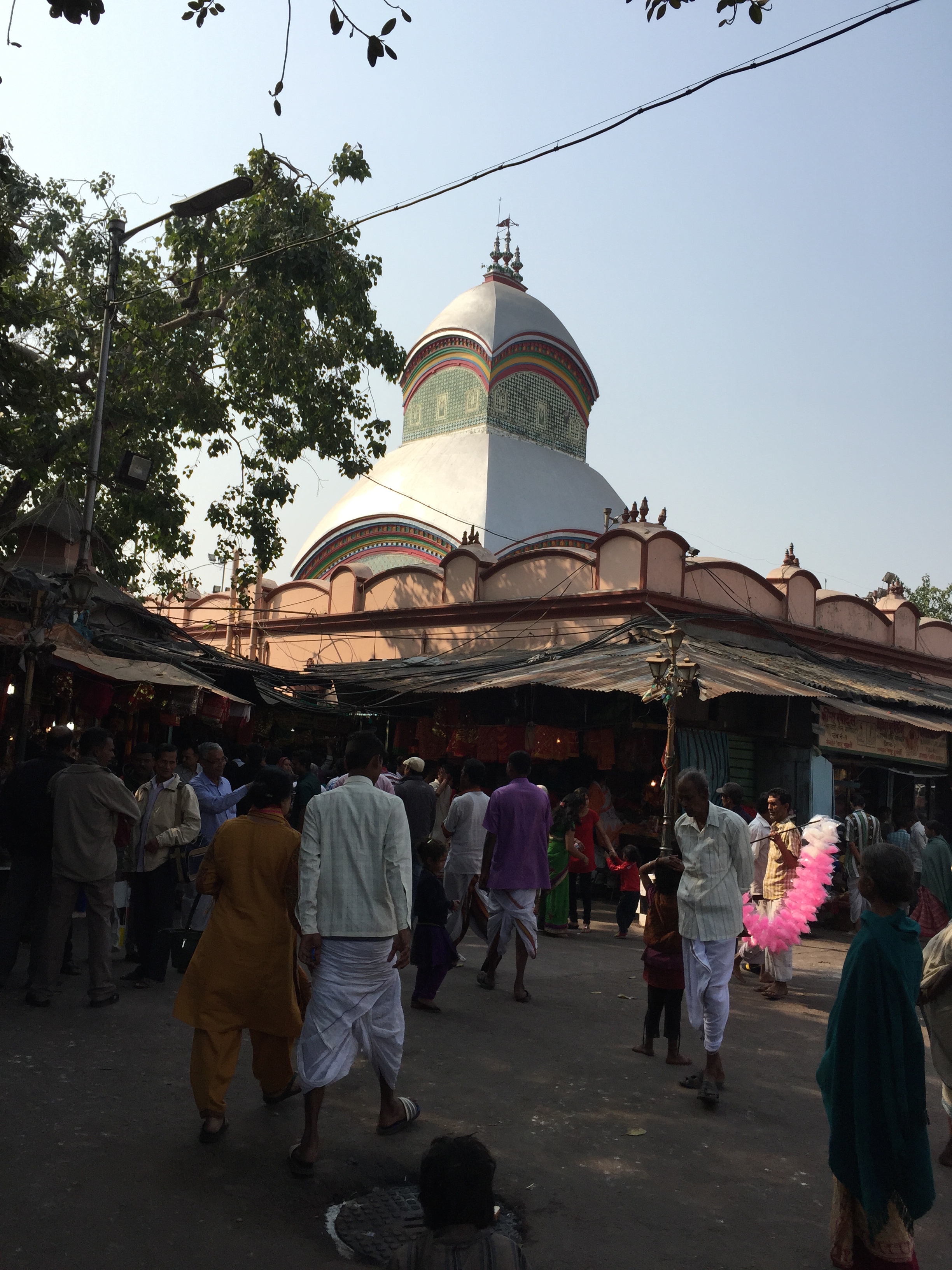
The Kalikat temple from outside...we hadn't see the queue yet!

The Kalikat temple from outside…we hadn’t see the queue yet!

Sunday morning was our first hint of Kolkata heat…it was hazy in the morning as usual but by mid-morning the sun was out and we felt better in the shade.  By afternoon it was hot and we were sticking to the canopies over the sidewalk vendors.

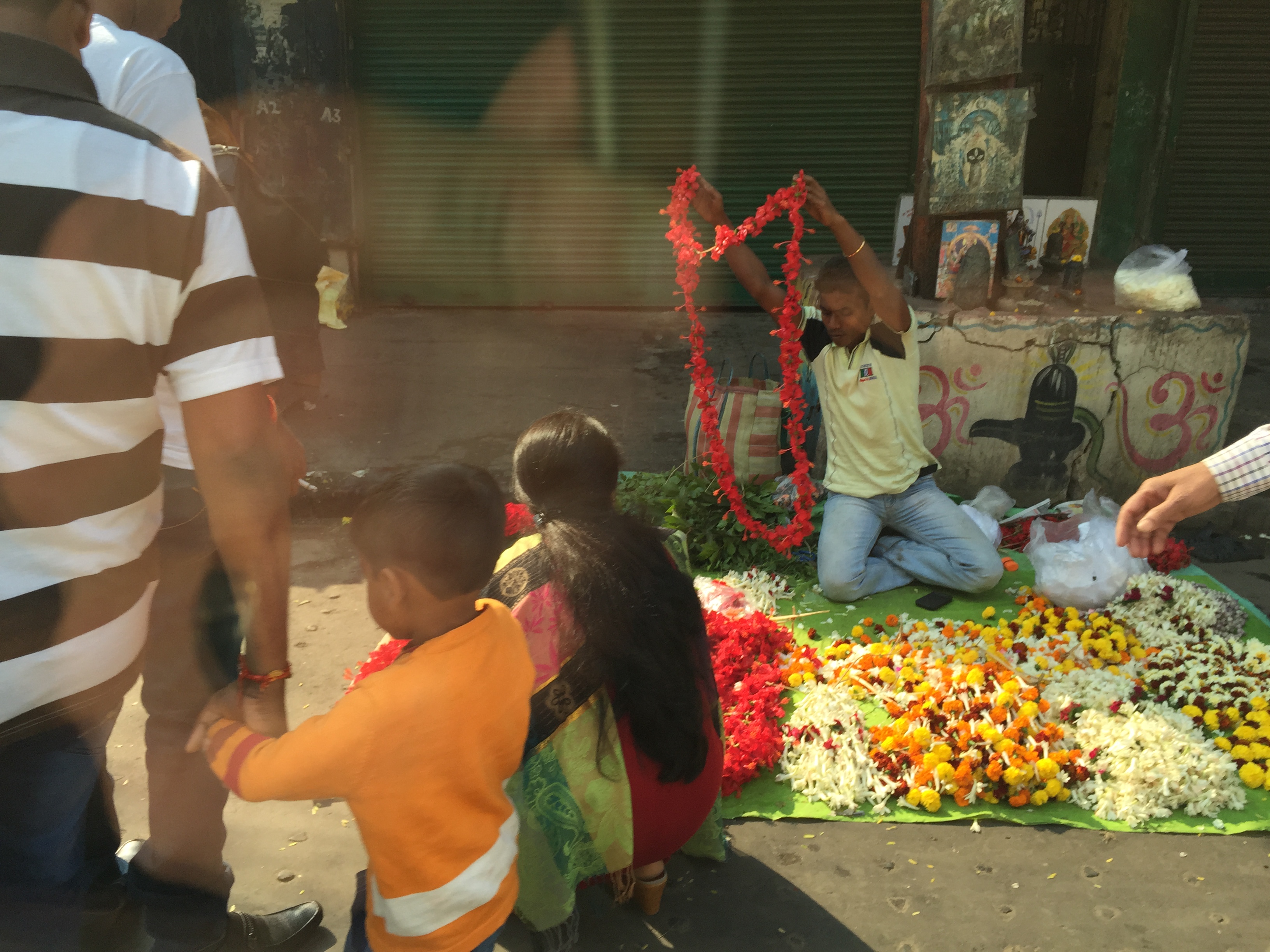
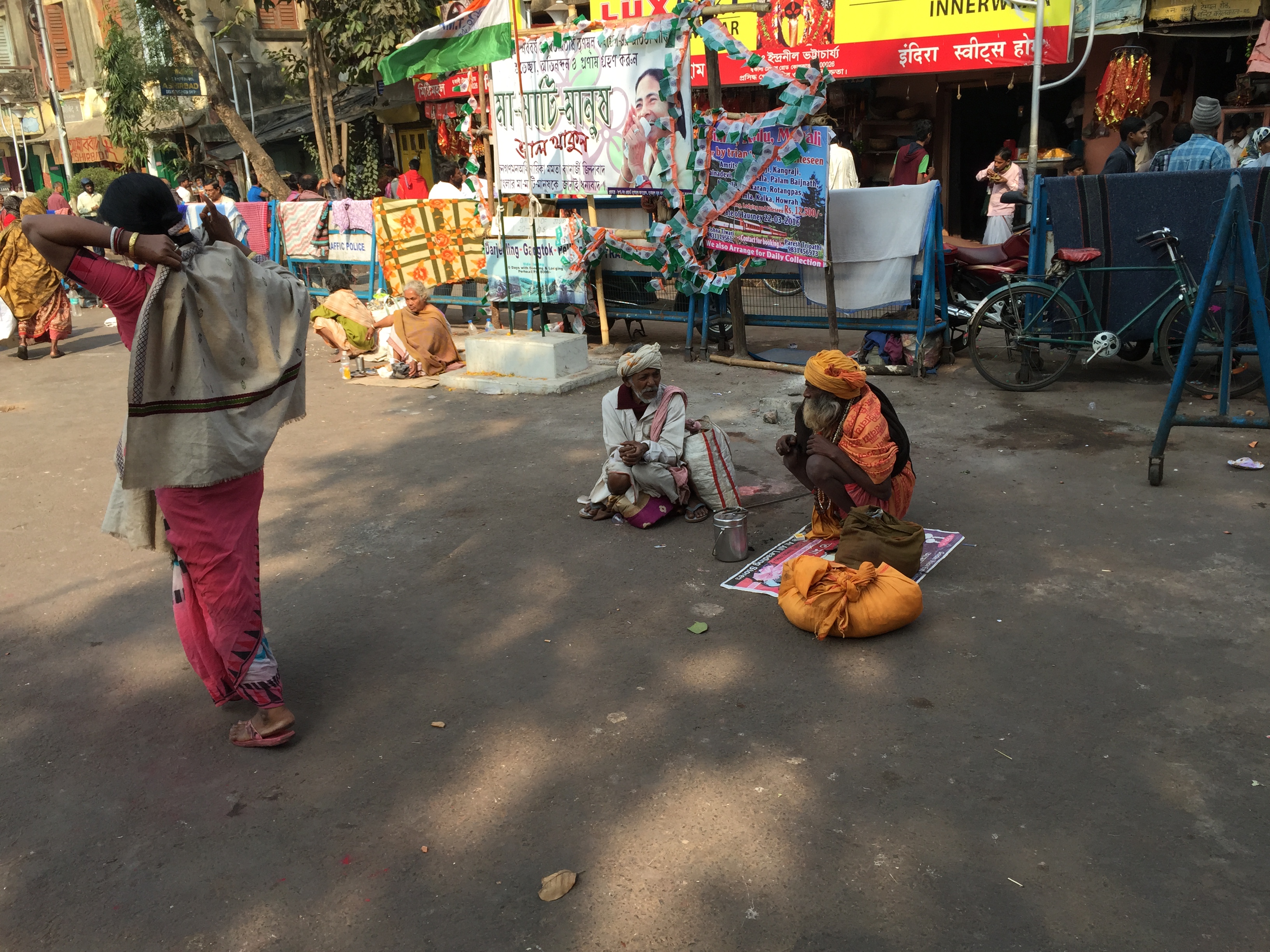
We had a guide for half a day, and she took us first to the Kalikat Temple.  It being Sunday the place was a madhouse–all kinds of activity in the streets and continued activity for Vasant Panchami, the Saraswathi Puja festival.  Sidewalk shrines, marigold garland sellers, young women especially dressed up, though not quite to the extent we saw Saturday.  The queue to get into the temple was impossibly long, and in some places priests were blessing those in line in case they didn’t get in.  It appeared many people had come a long way to attend.  Since getting in was not possible our guide took us all around the outside instead, including the gate where they were taking goats in to be sacrificed.  We hurried past.  The meat is eaten by the family, having been blessed, etc., etc., but this was still rather uncomfortable to confront.  The variety of people in the street was amazing, from rather modern looking families, dark brown men sitting on the sidewalk in turbans and pantaloons, disabled beggars–a crazy scene.

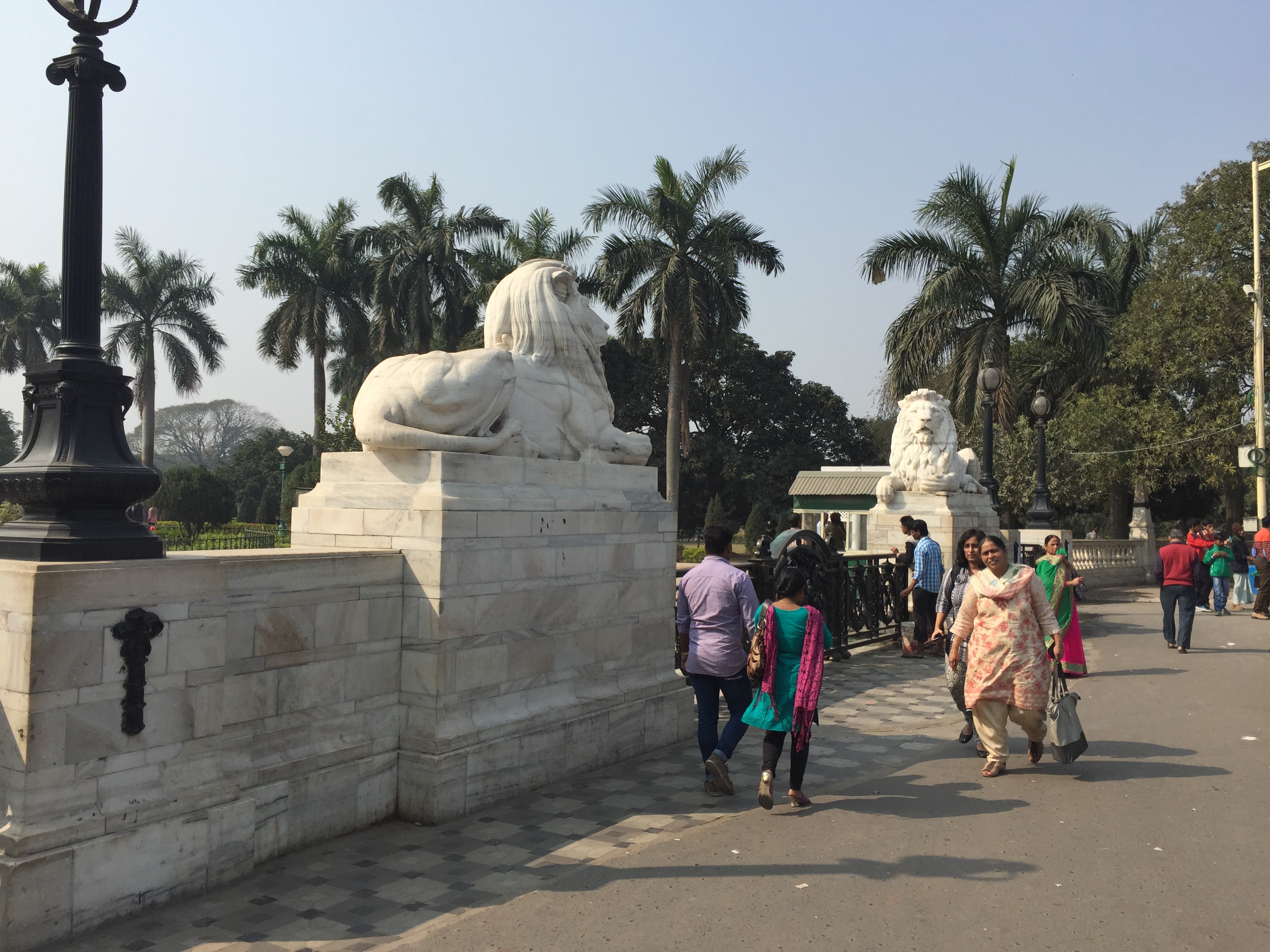
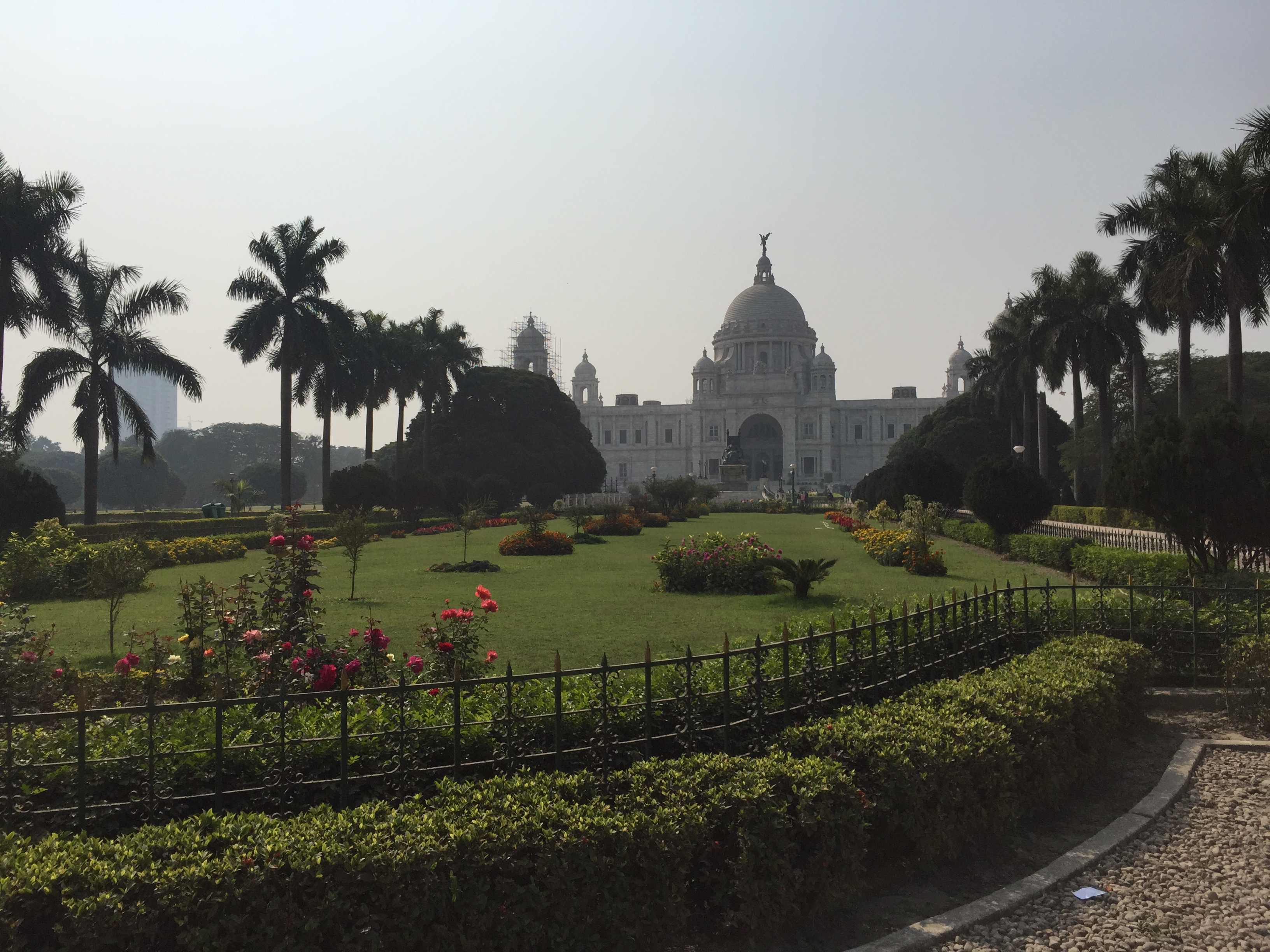
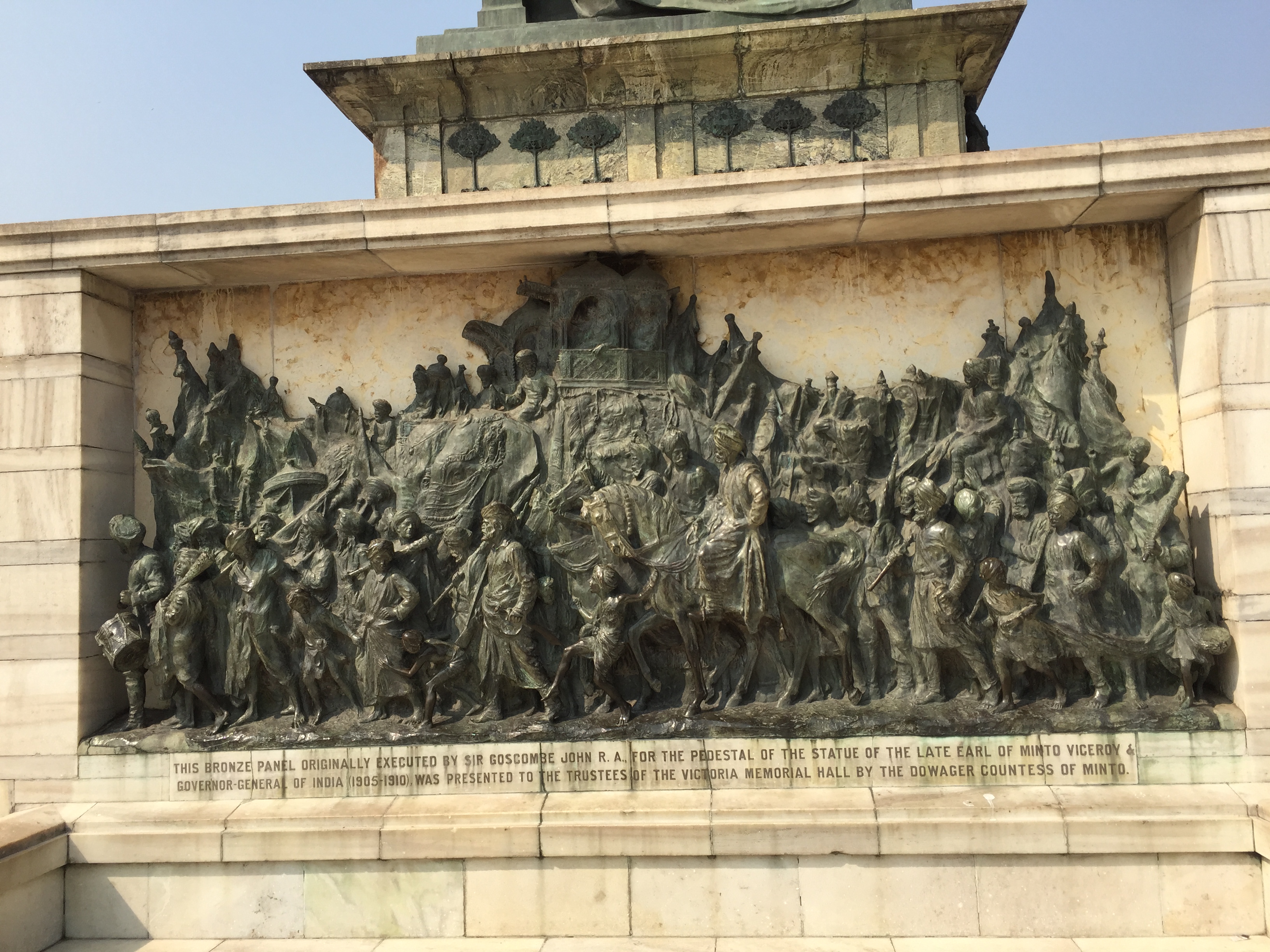
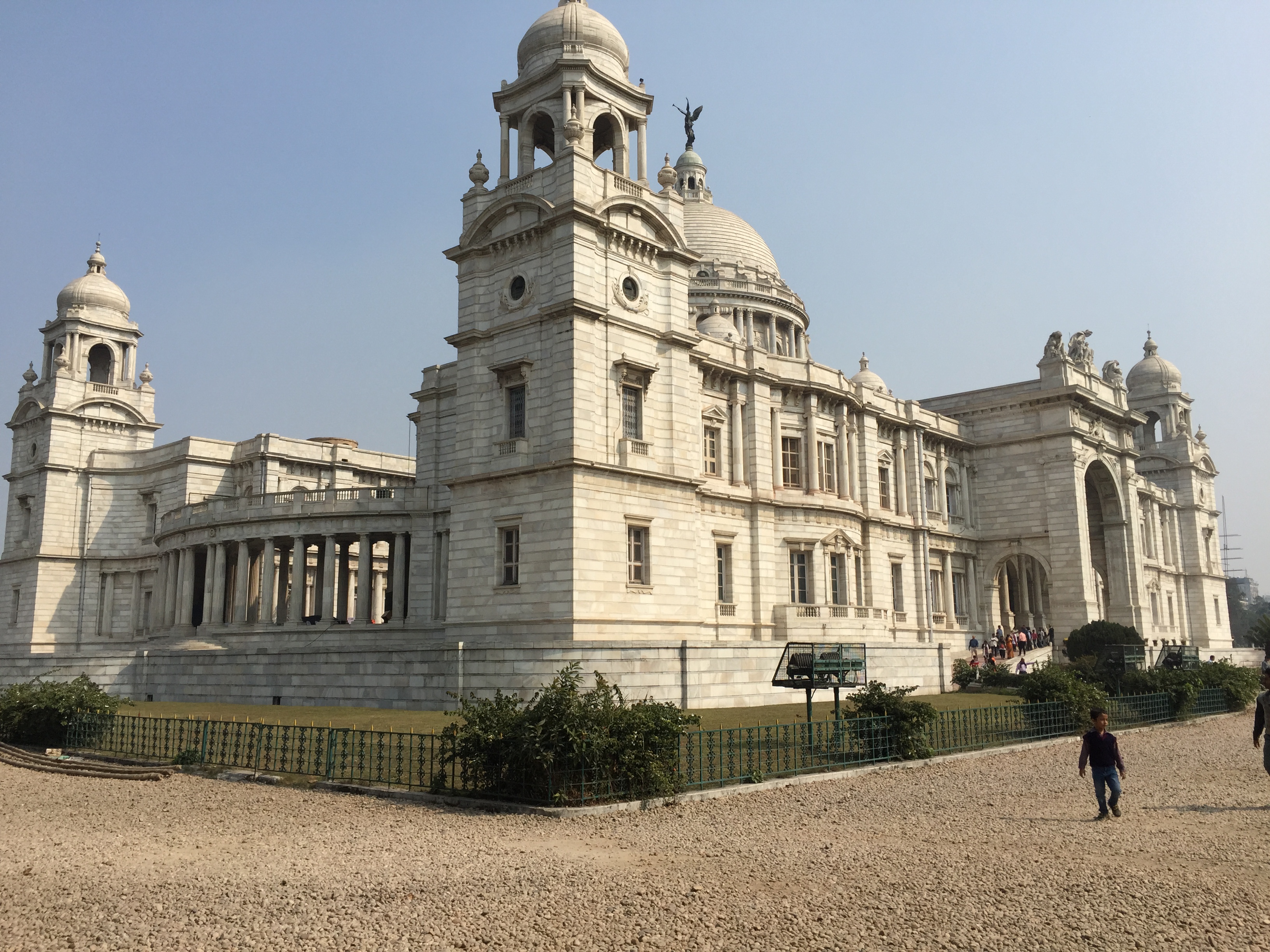
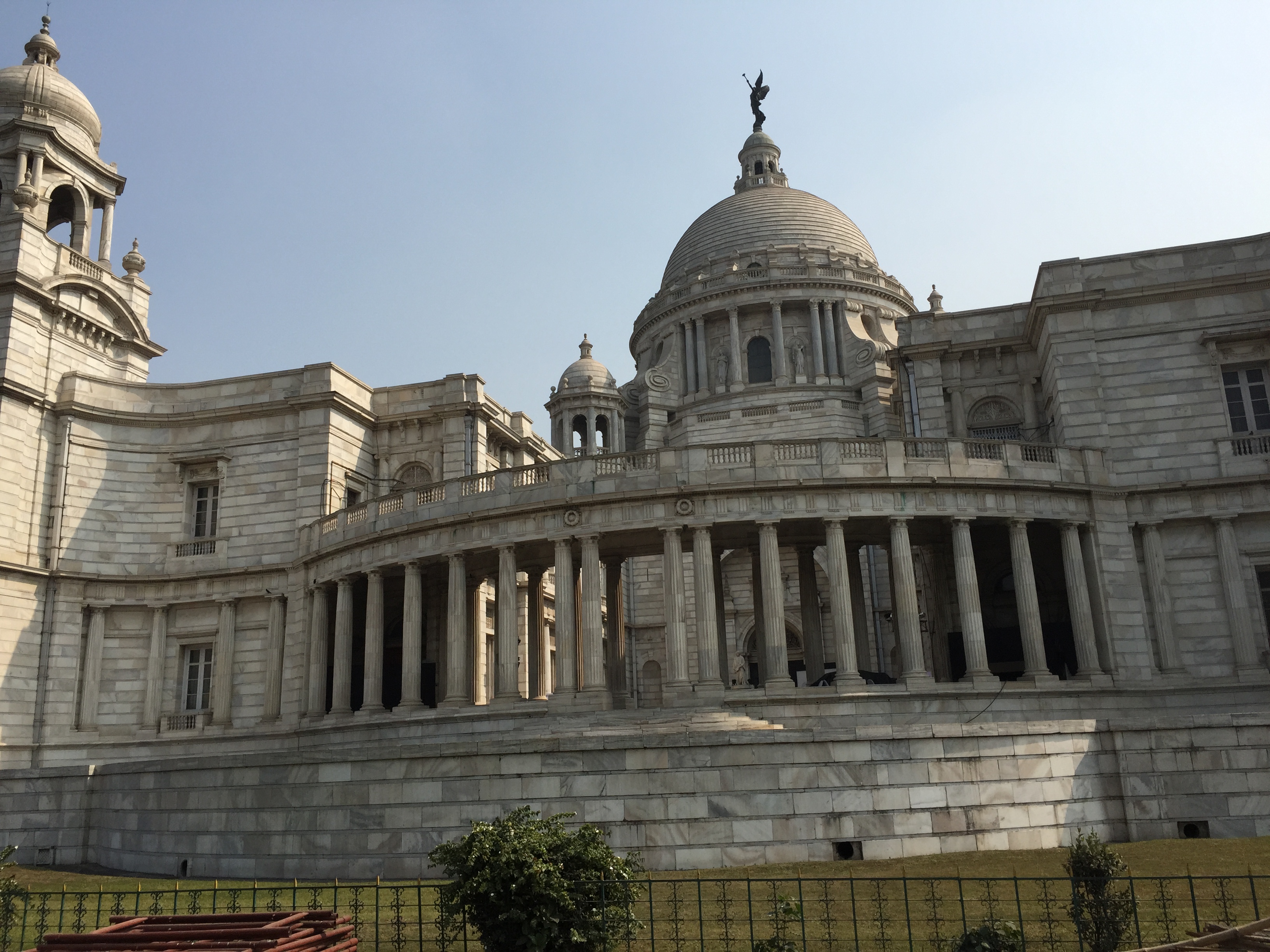
We made a stop at the Victoria Memorial, an enormous building that was intended to be a bit reminiscent of the Taj Mahal (it’s not, really), and full of dusty exhibits and old pictures.  The surrounding English gardens are beautiful–not a speck of trash!

IMG_0736 IMG_0738

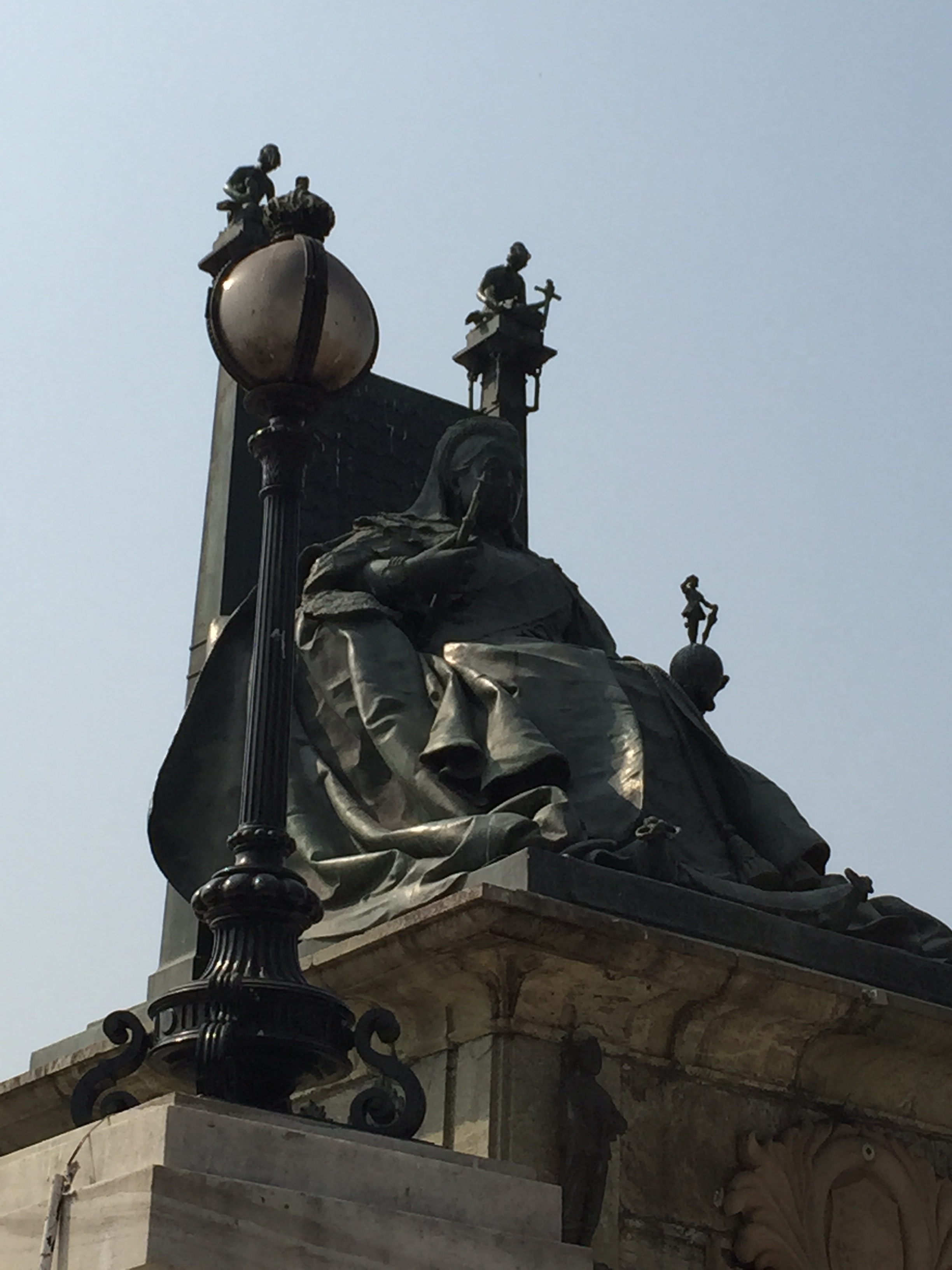
Victoria!

Victoria!

IMG_0742 IMG_0744 IMG_0746(I am going to post now but have a few short videos to add later to capture some of the sounds as well as sights of the festival.)

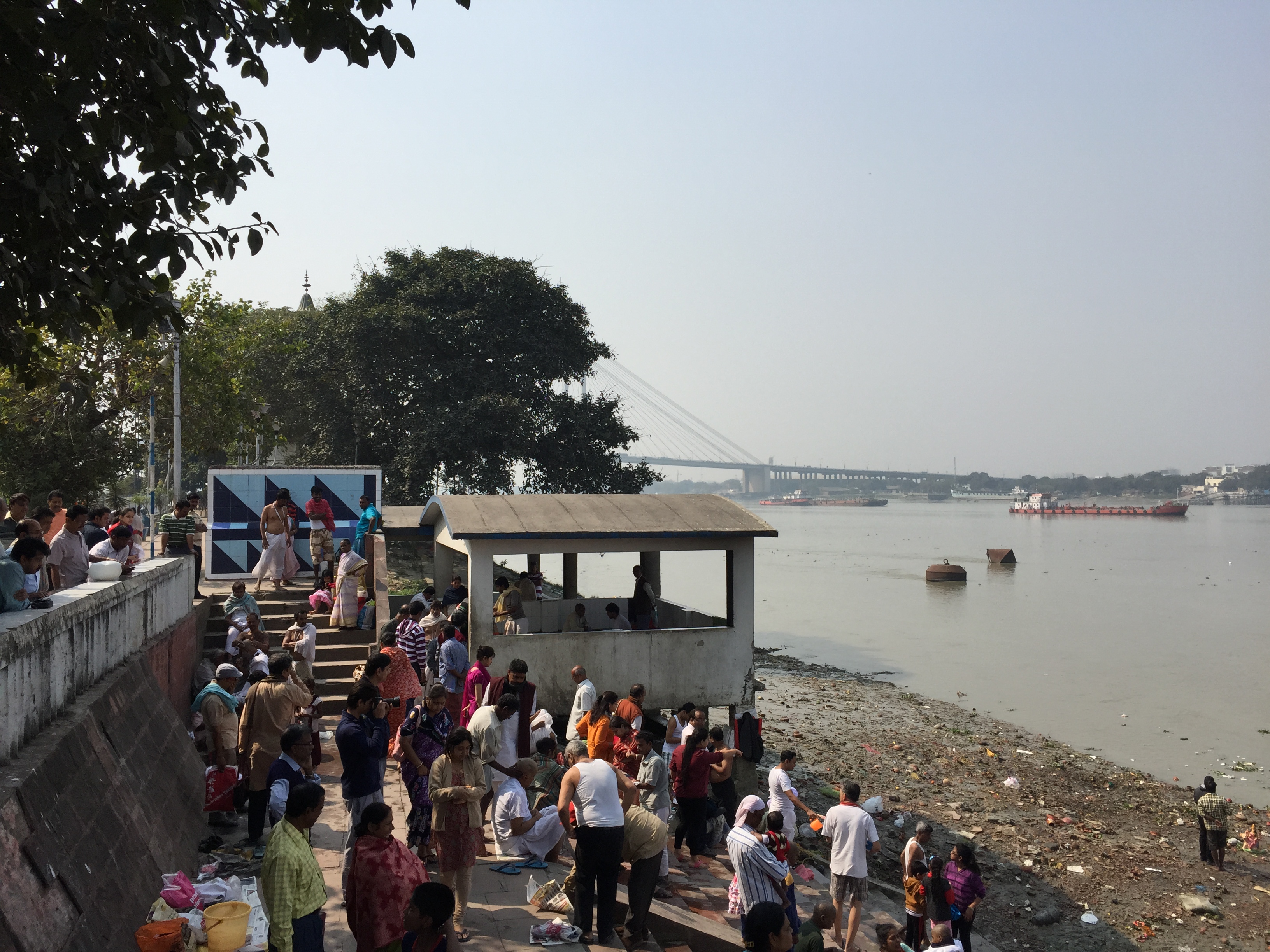
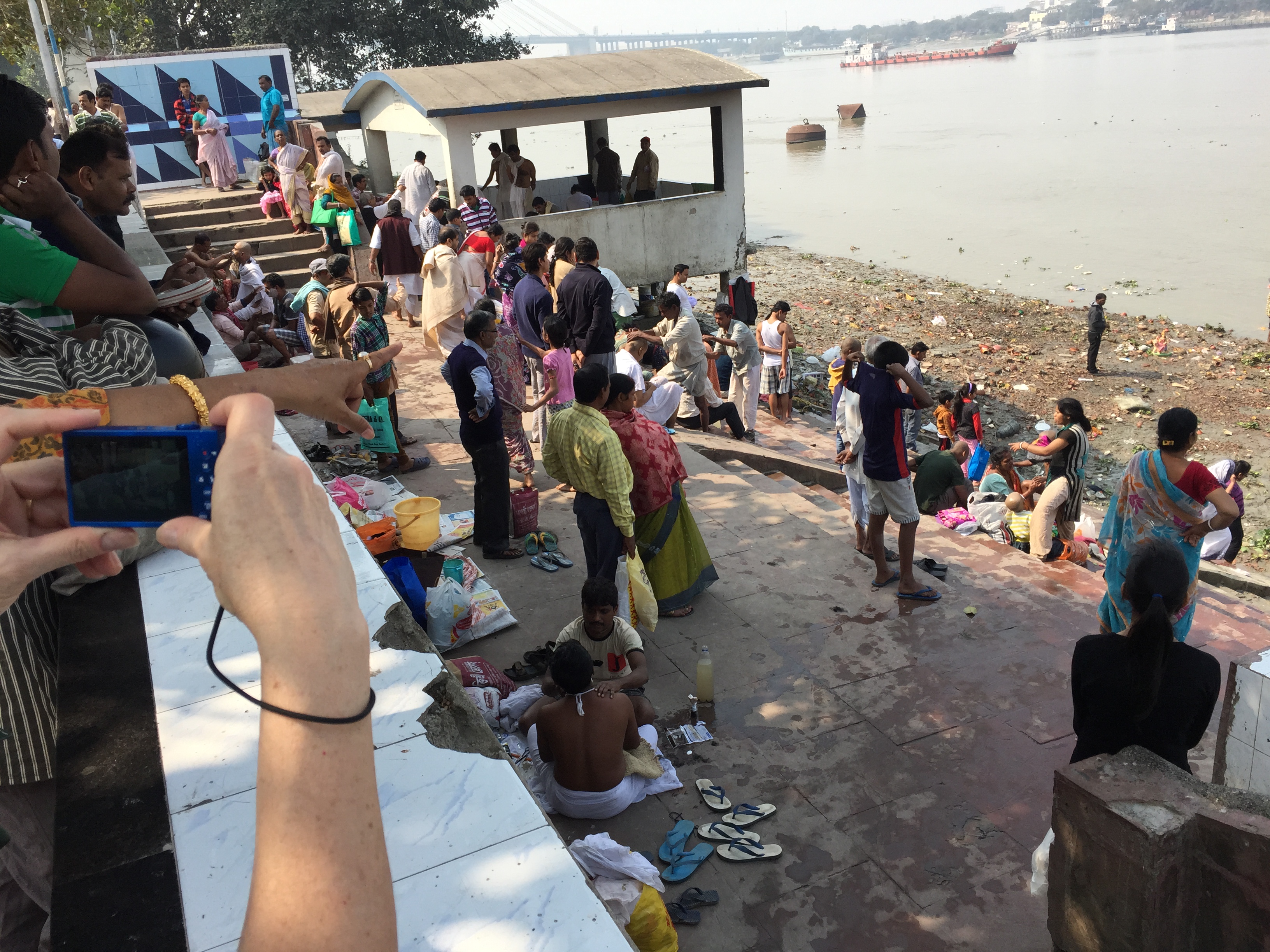
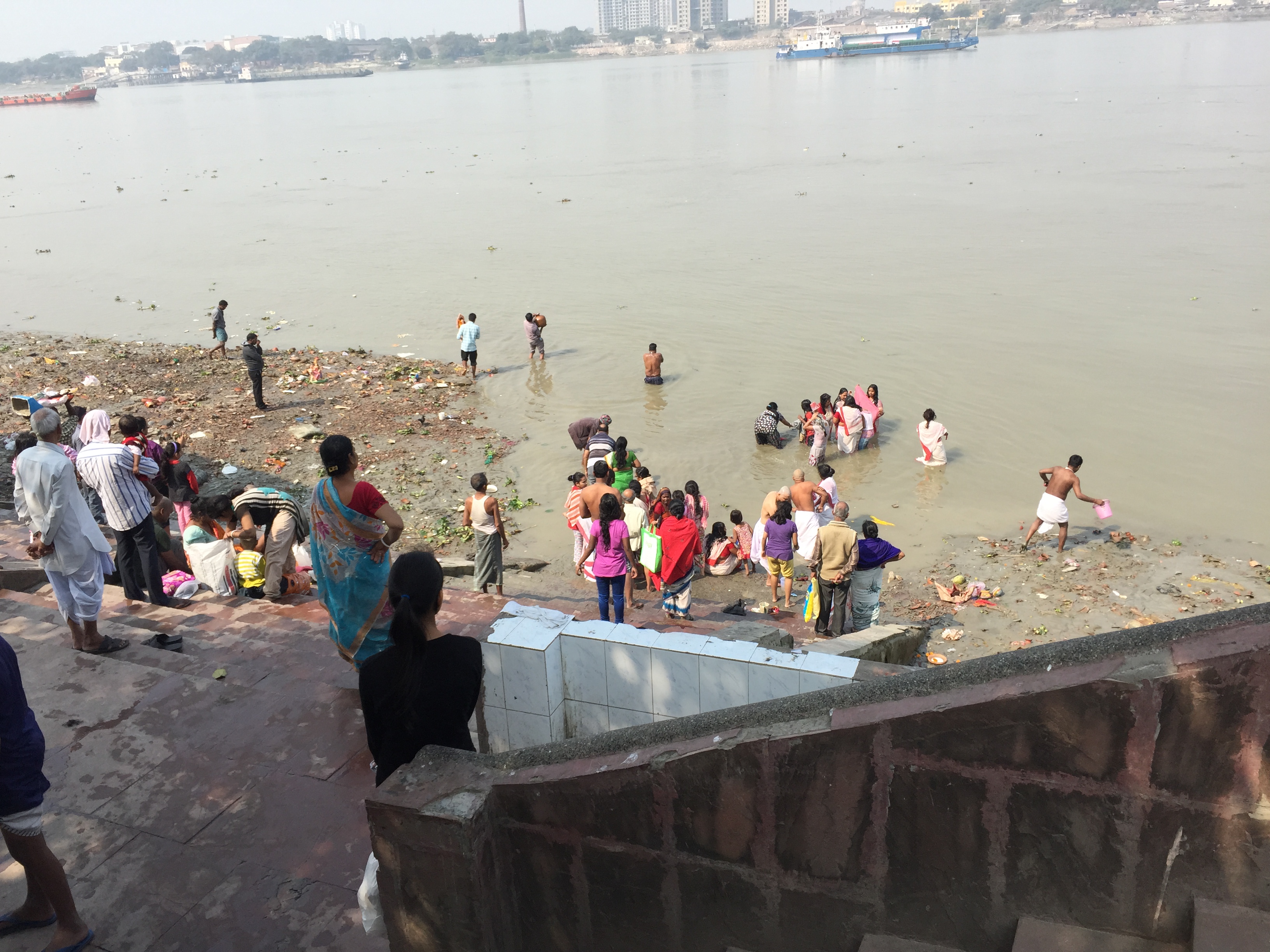
We drove down to the Ganges, our guide talking so fast it was hard to follow what it was we were going to see.  Well.  This is a spot where grieving families come at the end of the 13 days of mourning.  A small concrete open room is occupied by a priest who blesses those who come.  Men and boys who have lost a parent have their heads shaved right there on the banks and then walk into the water to bathe, and likewise women dressed in special white saris with red trim walk in as well, immersing themselves. Afterwards they change into clean clothes and they are ready to resume normal life.  It seemed like a mix of solemnity and, as men and women came out of the water, some measure of happiness, or perhaps relief.

IMG_0759

Men have their heads shaved before a ceremonial bath in the Ganges.

IMG_0757

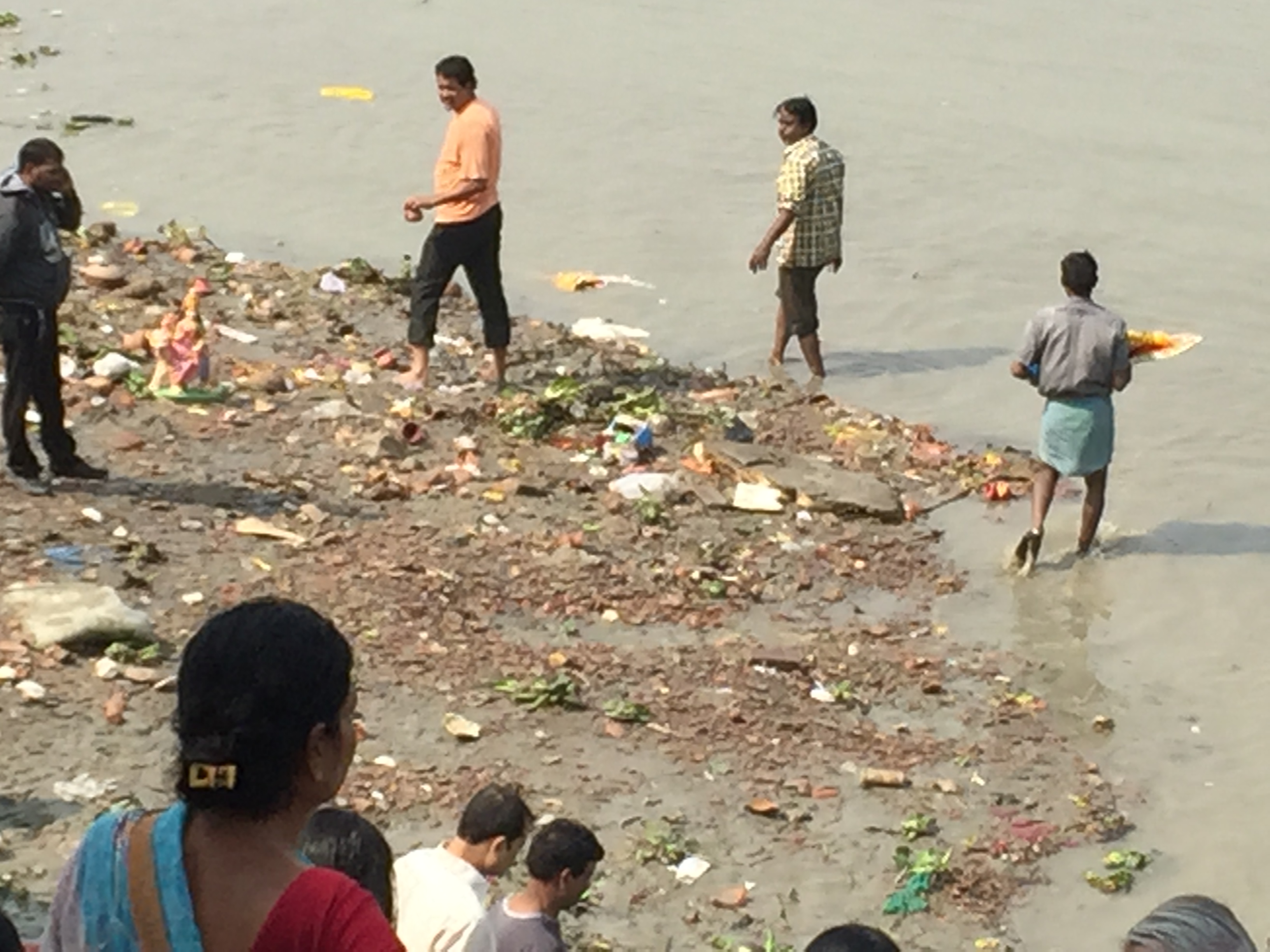
The boy at the right is carrying a family Saraswathi into the water–returning her to the Ganges.

The open building in the back is where a priest blesses mourners

The open building in the back is where a priest blesses mourners

IMG_0748

Ceremonial bathing and placing Saraswathi clay figures into the Ganges

Ceremonial bathing and placing Saraswathi clay figures into the Ganges. Women go into the water in their special saris.

At the same time, there was a steady stream of men bringing the statues of Saraswathi to be offered to Mother Ganga–in other words, to be dumped into the Ganges to float away.  Solo men brought small statues which had been in home shrines.  Groups of men, singing, banging drums, and carousing in general brought large, and sometimes VERY large, statues requiring many hands to unload from pickup trucks, carry to the top of the steps, rotate 7 times, and then down the steps with much effort and into the river.  It was a wild scene.
Our guide dropped us at the Indian Museum, an odd hodgepodge of exhibits in a very old building, recently renovated we were told but not quite finished (many new signs pointing to non-existing places and exhibits, for example).  We were the only non-Indians there.  We were so strange, apparently, that in the bird exhibit a man came up to us to ask if his wife could have her picture taken with me.  Uh, sure!  Four, five, six pictures with various combinations of the women in the group were taken with much giggling and hugging.  We had not paid the fee for having a camera–otherwise David would have snapped a picture of me getting my picture taken with a bunch of strangers.  About that bird exhibit–there is a large case labeled “Birds of North America, South America and Europe.”  A big map, with stuffed birds on little shelves to show where they live.  For North America they had…a quail and a scarlet tanager, the tanager so old and dusty it was brown and grey.  Maybe if those are all you can get your hands on it’s better to skip that continent, yes?

We wandered back to the hotel, packed, and prepared to say goodbye to Kolkata.  Next morning we flew to Varanasi.

On Our Own in Kolkata

I have a feeling for Americans who have never been to India, Kolkata/Calcutta seems a dark, poor, slum-ridden, unpleasant place.  Black Hole of Calcutta, right?  (That phrase refers to a single incident of captured British soldiers in the 1700’s, not the city, btw.)

We might have felt that way too, if we’d stopped to think much about it at all.

Kolkata is certainly Indian: messy, noisy, complicated.  And it is fun, very safe, vibrant, exciting.  It is a walking city, a never-sleeps city, a shopping city, a colorful city.  Saturday was our first day more or less on our own, and we had a great time of it.

Our first event was arranged through our travel agent, SITA, a cooking class in a middle class home.  Our hosts live in a ‘housing estate’ which is a block of apartments, individually owned, about 5 stories high.  Very middle class, albeit with men walking around selling cooking pots and pans from large baskets on their heads, rickshaws and within a block or two a few cows lying on the sidewalks.

The Mrs. asked David to sit because he was "too tall."

The Mrs. asked David to sit because he was “too tall.”

IMG_1173

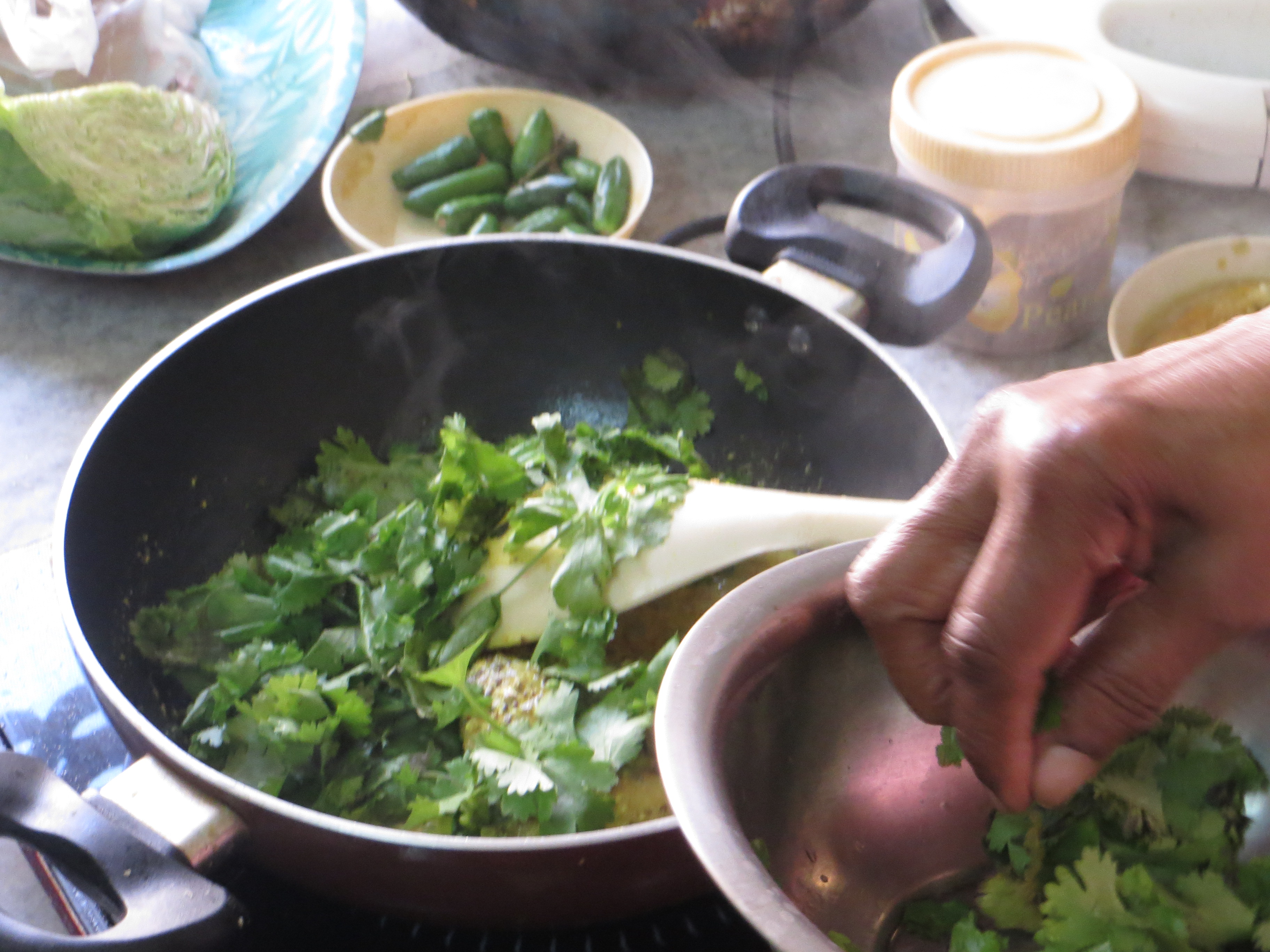
Our hosts are both educated and work as guides themselves.  When we arrived, Mr. Napan (I have to check this–we weren’t taking notes!) asked where we were from, and when I said California he immediately asked “Habla espanol?”  Turns out this is his primary “guide” language, in addition to of course Hindi, English and Bangla.  We had a lovely visit, served fresh orange juice to start, and then went into the kitchen to watch lunch being prepared.  It was delicious, and, of course, way too much food.  A chicken and potato dish, made with a paste of ginger, onion, and garlic; cauliflower prepared with salt, sugar (to help it brown), and cumin seed, as well as carmelized onion, garlic, and ginger; a simple yellow lentil dal, fish cooked in mustard with cilantro, and rice.  And of course homemade paneer sweets (sweetened with the juice of something we asked several times to repeat but never got it).  Stuffed.  She cooks in a tiny kitchen, moving between an electric hot plate for frying and browning, a 3 burner gas “stove” that sits on the counter, and a microwave.

IMG_1168 IMG_1171

After lunch we visited for an hour, talking India and Indian history, family, travel.  They want to come to the US (having traveled in Europe only) to see Miami Beach, Niagara Falls, and the Grand Canyon.

The drive to and from their home was as interesting as the visit.  It was a festival day and every few blocks there was a temporary shrine set up on the street, large and small, elaborate and simple.  One was decorated with colorful rosettes, which when we got close turned out to be made of concentric paper plates and cups, with plastic utensils arranged around in a corona.  Very creative.  Others were draped with sparkling garlands, marigolds (of course) and banners, some even with candles.  Many young women strolled in their festival saris.

IMG_1177

One of maybe 20 pop up shrines we saw on the way back from the cooking class/home visit. Some bigger, some smaller.

IMG_1176

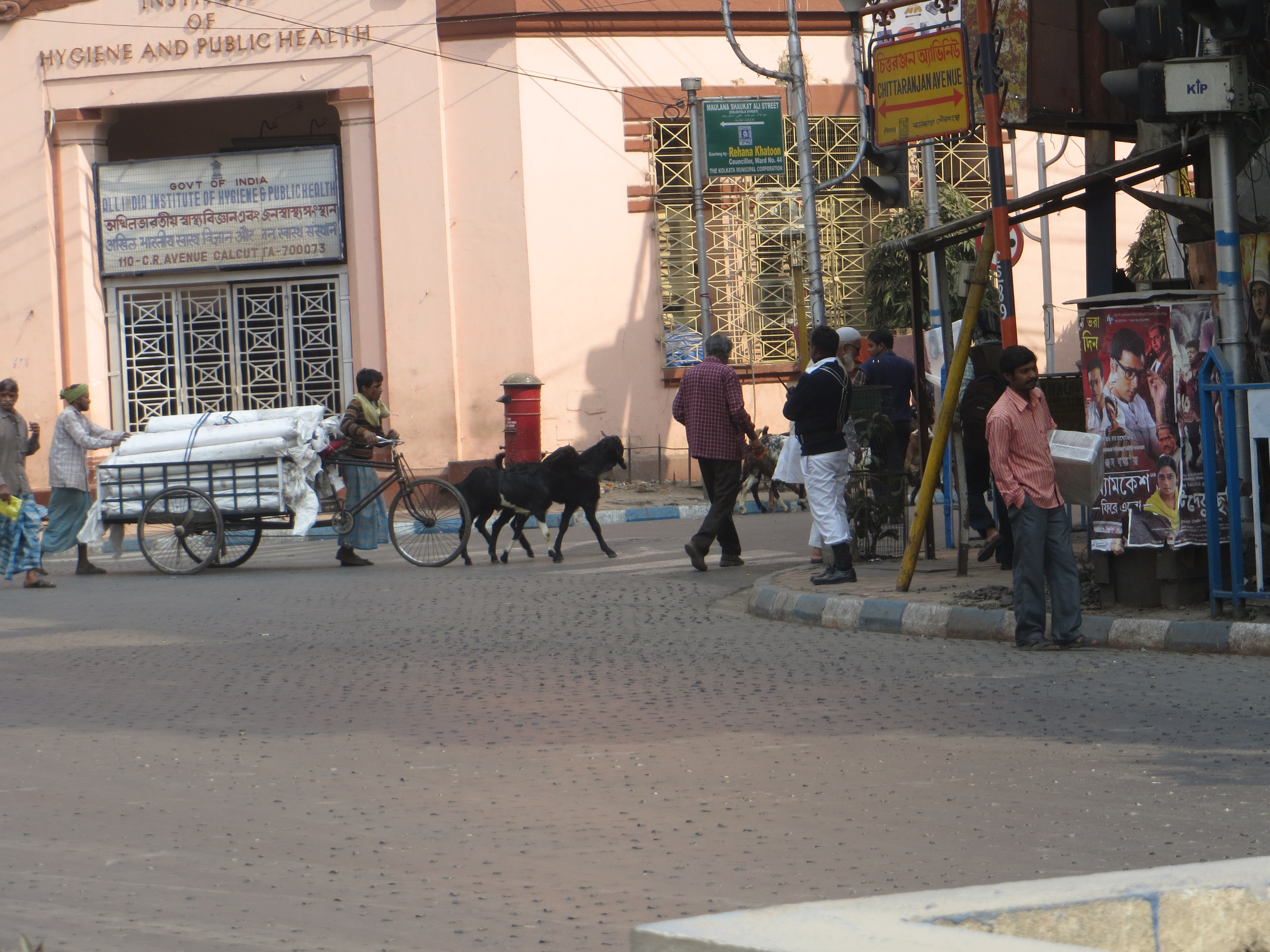
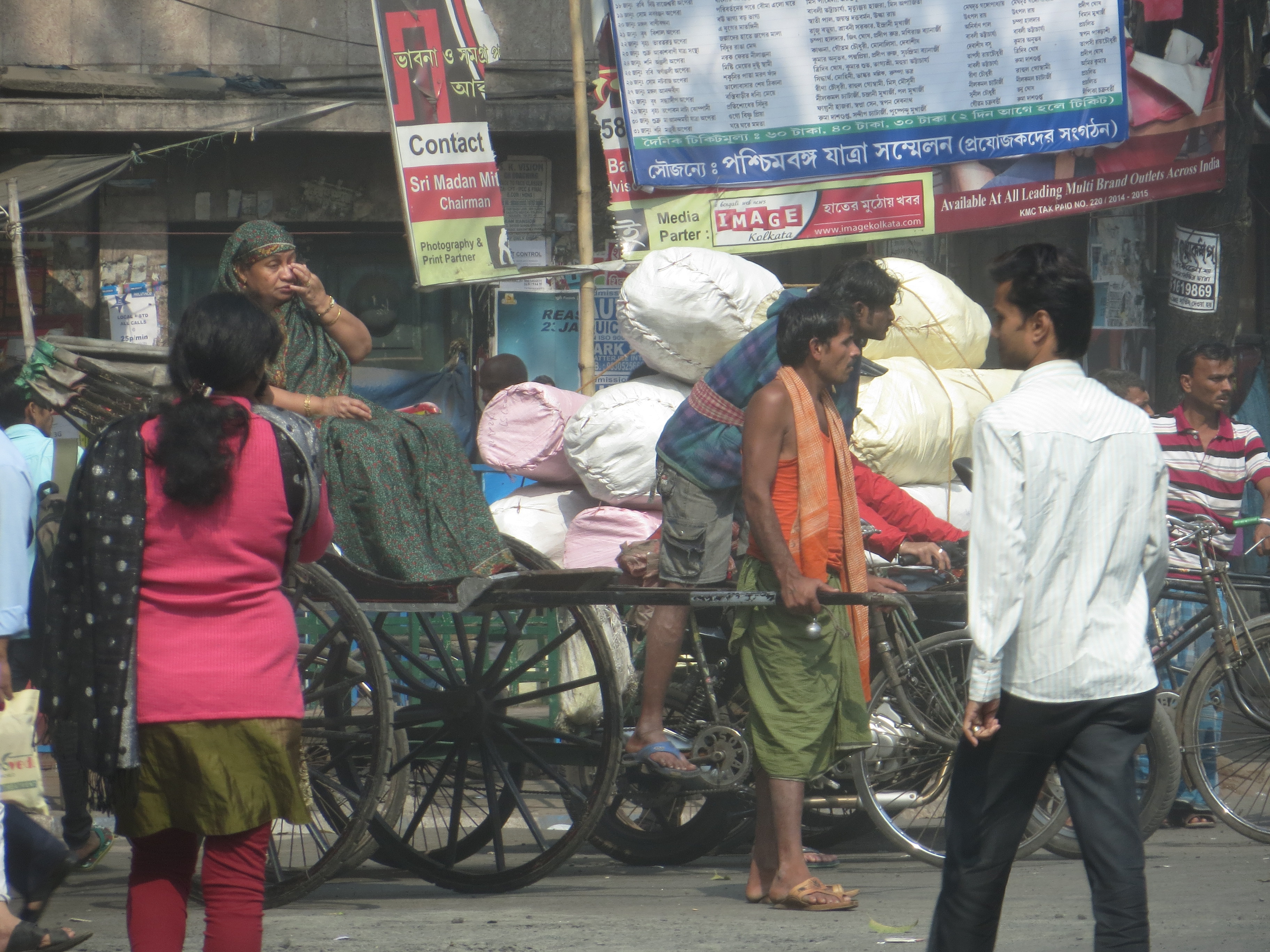
Kolkata is the only large (14 million people) where there remain many walking/running rickshaws in addition to the ubiquitous bicycle versions.  Of course it is hard to imagine making a living this way, and I was surprised to see both young and older men doing this work.

IMG_1162

I love the sign on the back: India is Great.

IMG_1154 IMG_1152

IMG_1159

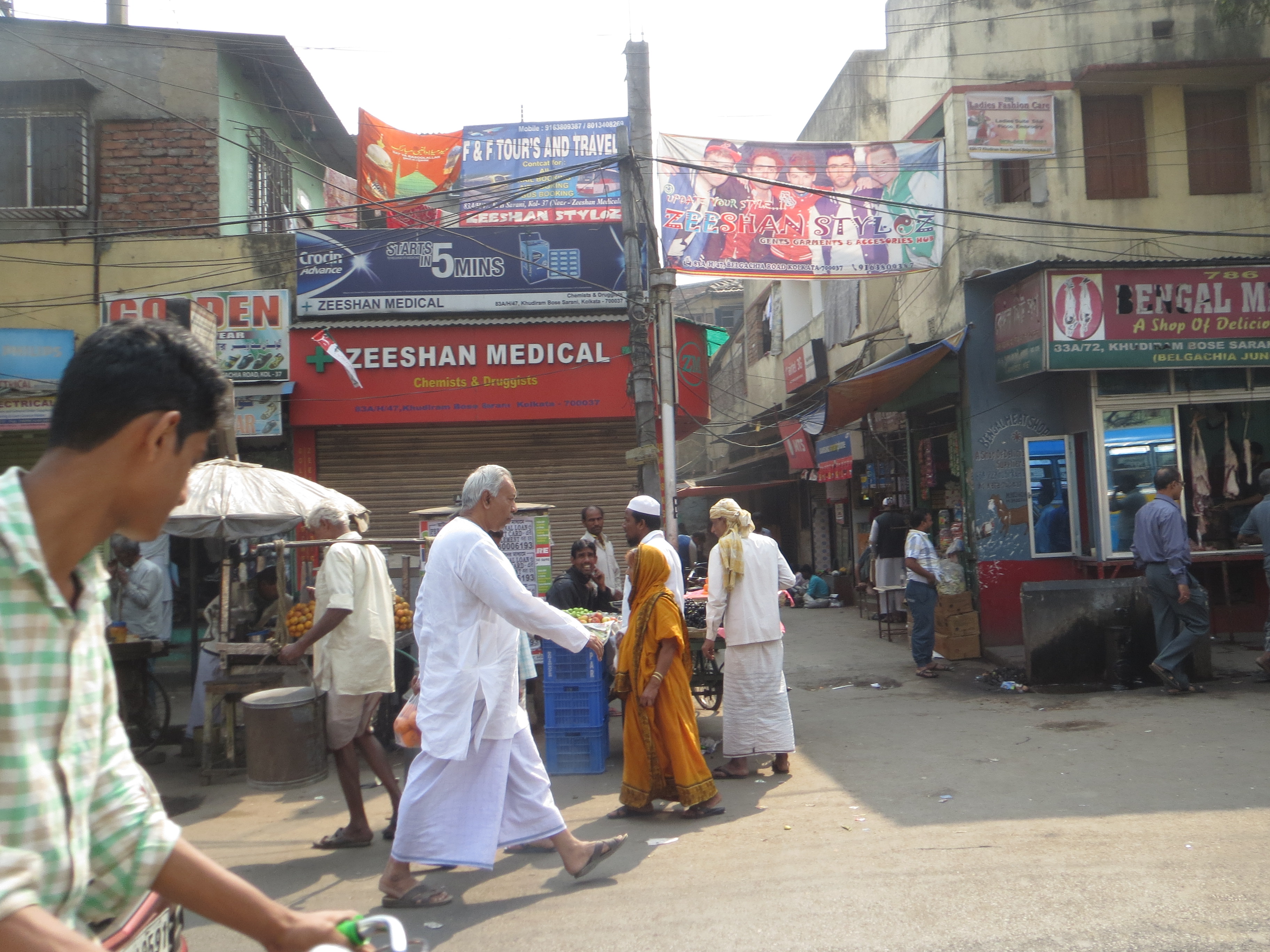
Every city we have visited has a large Muslim population.

IMG_1158

There are so many carts drawn by men on foot--the largest with a few in the front pulling and a few in the back pushing.

There are so many carts drawn by men on foot–the largest with a few in the front pulling and a few in the back pushing.

IMG_1163IMG_0689

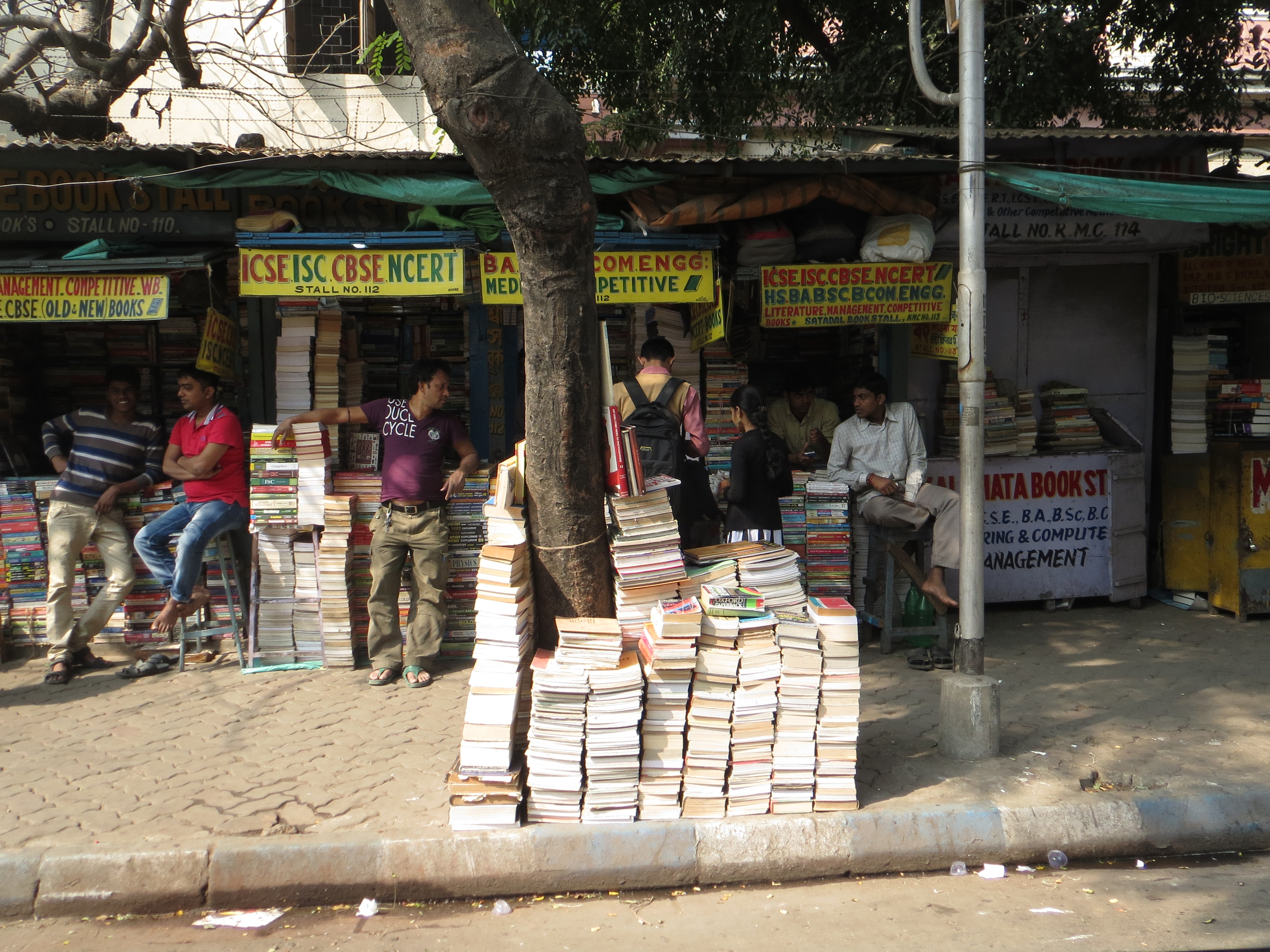
One tiny sample of the bookshops--there are blocks of them.

One tiny sample of the bookshops–there are blocks of them.

IMG_0684

Bathing on the street is quite common.

IMG_0691

These figures are for home shrines, made of clay that supposedly dissolves when they are taken to the Ganges to float away at the conclusion of the festival.

IMG_0701IMG_0706IMG_0709IMG_0708

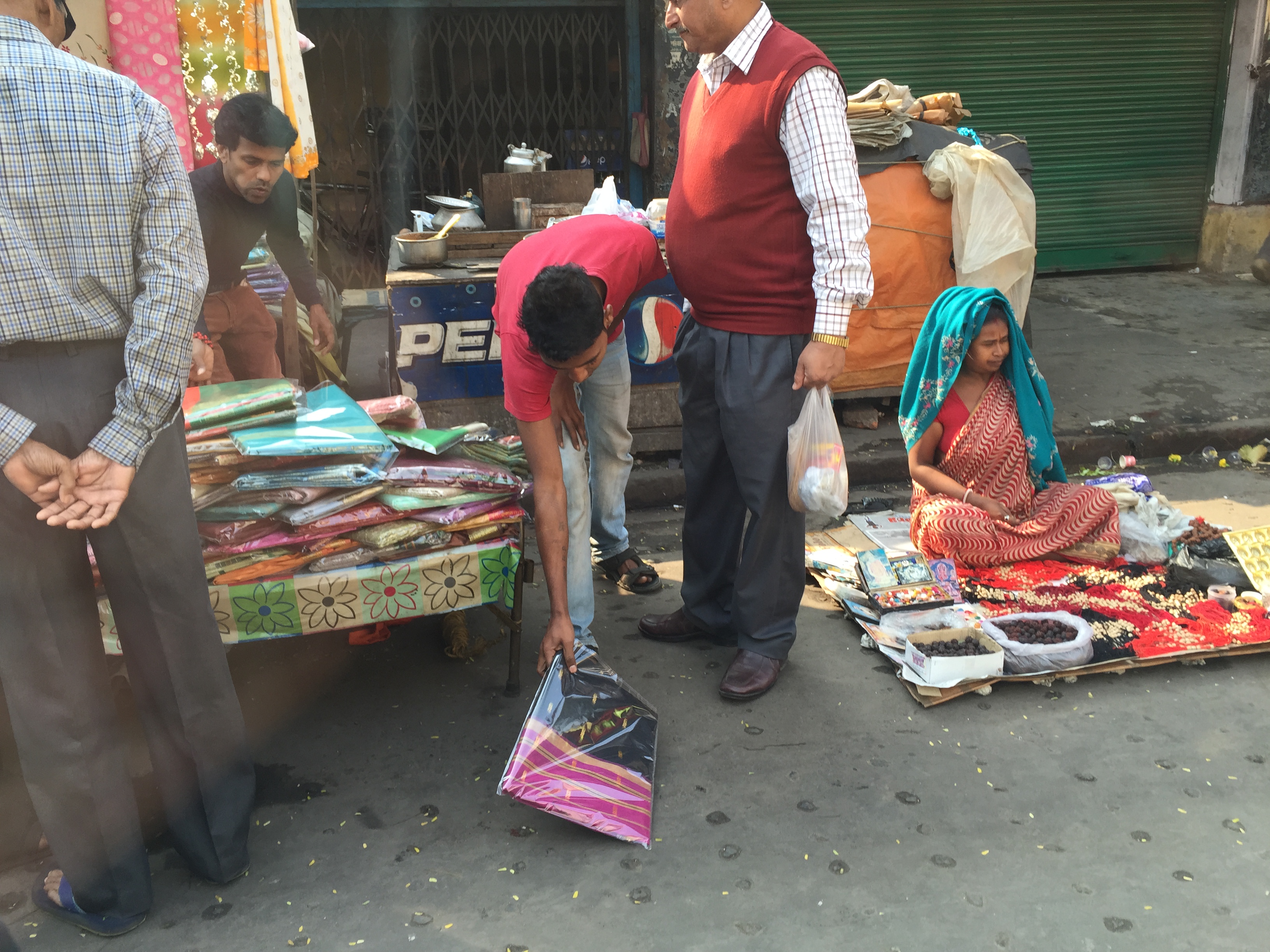
The shopping scene is amazing.  We drove through the bookseller neighborhood, with blocks and blocks of book kiosks as well as book stores.  We drove through what seemed to be the plywood district, where almost every store sold “Ply.”  The area around the hospital is filled with stores announcing “Scientific” as well as chemists and medical supplies.  On the way home we asked to be let out at the New Market, which was built in the 1800’s and is, like a typical inside market in Latin America, a maze of stores selling food, housewares, clothing, trinkets, candy, jewelry, spices, crafts, and filled with men who try to lure you to their stores.  We went along with a few of them, and in one case were happily surprised that in addition to clothing–men’s shirts and women’s tunics–this tiny shop had a small corner shelf of spices in big jars.  They smelled incredibly fresh, and we bought garam masala and chicken masala, very cheap, in glassine envelopes which they sealed by running the folded edge slowly through a candle flame.

We also spotted, as soon as we entered, a store selling packaged snacks (chips and things) as well as various spices, where we picked up some saffron. But what attracted me to the store were several shelves of various types of the little breath-freshener anise seed mixtures you see in a dish at the register of an Indian restaurant both here and in the US.  I had hoped to find something similar to the delicious mix we had at Pindi in Delhi, and I did.

IMG_1179

Our purchase of “breath freshener” mix.

(I am publishing this but will add a few videos in the next day or two–need a very good internet connection to upload them.)

We wandered back to the hotel, buying a little thing or two on the street, and ended up sticky and tired.  For dinner we were pretty sure we needed a non-Indian food and discovered a very well reviewed Italian restaurant was only a few blocks from our hotel, so we headed over.  A bottle of Malbec later, as well as a pizza (more like naan with pizza toppings, but delicious), salad, antipasti, and we went wandering in the neighborhood again.

Saturday night is a hopping time, and the streets were full of shoppers, people eating street snacks, children, teenagers, construction, road repairs–the hub-bub we’ve come to expect in Kolkata. We stopped at a music store, where the four young men working there seemed a bit standoffish and bored.  That is, until we started a conversation about what we should buy as good Indian pop, and could we listen to a few things.  All of a sudden the conversation was animated, friendly, and a lot of fun as one CD after another was opened, explained, sampled (and purchased–very inexpensively).  “This guy was #2 on Indian Idol but now he is a star and no one remembers #1!”  “This Pakistani fellow is wonderful–listen to this!”  Singing along, explaining the lyrics–we had a lovely time.

Walking back we again passed the ironing stand, where for 5 rupees he will iron your shirt with, of course, an old-fashioned non-electric iron.  I wasn’t comfortable taking his picture…but the smell of clean ironed cotton was so nice.

Learning in the Patna Slums

We returned to Patna proper for our last meeting of the day–with a group of women in the Patna slums.  Dodging vehicles and livestock, turning right and left and right again, through exceedlingly dusty streets, we arrived to a chalk-decorated pavement, a reception table with marigolds, the blessing ritual, and a welcome song of many lovely verses.

In the Patna slum we were greeted by a grouping of the very small--5 women--savings and education groups.

In the Patna slum we were greeted by a grouping of the very small–5 women–savings and education groups.

The nutrition lesson included a fascinating exercise.  Each 5-woman group was given a picture of “Meena and her family” a commonly used ‘typical’ Indian family:  Mother, 5-month old nursing baby, young son, adolescent girl, father.  The decision they were asked to make is how does the mother divide 8 pieces of chicken among the family.  Of course you know the correct answer, don’t you?

After the "chicken lesson" the women stood to sing the promise.

After the “chicken lesson” the women stood to sing the promise.

The correct answer is–

3 pieces for the nursing mother, 1 piece for father, and 2 each for the boy and girl.  While most groups gave the right answer, the follow up was the tough one (this was not the first time they had done this exercise)–is this what YOU do in your family?  Happily many women raised their hands, and one woman stood up to explain that her husband trusted her to do the right thing, and he was fine with it.  Now that’s progress.  For the women, and as importantly, for the next generation for whom they are responsible.

FFH lessons are used by Nidan to teach nutrition--again, employing the symbolism of the 3 colors of the Indian flag.

FFH lessons are used by Nidan to teach nutrition–again, employing the symbolism of the 3 colors of the Indian flag.

The program leader from Nidan is a woman--still unusual--teaching nutrition according to the Indian flag metaphor.

The program leader from Nidan is a woman–still unusual–teaching nutrition according to the Indian flag metaphor.

We were given the opportunity to ask them what difference the group had meant in their lives.  The answers were freely and quickly offered–

  • We like managing our savings in a group where we have mutual support
  • We have the opportunity to learn things that are relevant to our lives
  • Now that we are involved in the financial dealings of the family we can make other decisions without being dependent on our husbands
  • Before we didn’t know anything about banks or what they do, but now we understand what a bank is
  • We used to pay interest to money lenders, but now we pay interest to ourselves

When the meeting was over we went up to stand with the women for pictures, and for the first time turned around toward the street, where we saw a large group of mostly young men, who all had their cell phones out taking pictures!  Maybe some of those lessons were sinking into them, too.

We had to leave to meet the other group for lunch, so we were back into the mini vans and off to navigate the dusty crowded streets of Patna to the revolving restaurant, where we ate too much and then headed to the airport for our return to Kolkata.

IMG_1138

This is one of the fancier roadside haircut/shaving kiosks.

This is one of the fancier roadside haircut/shaving kiosks.

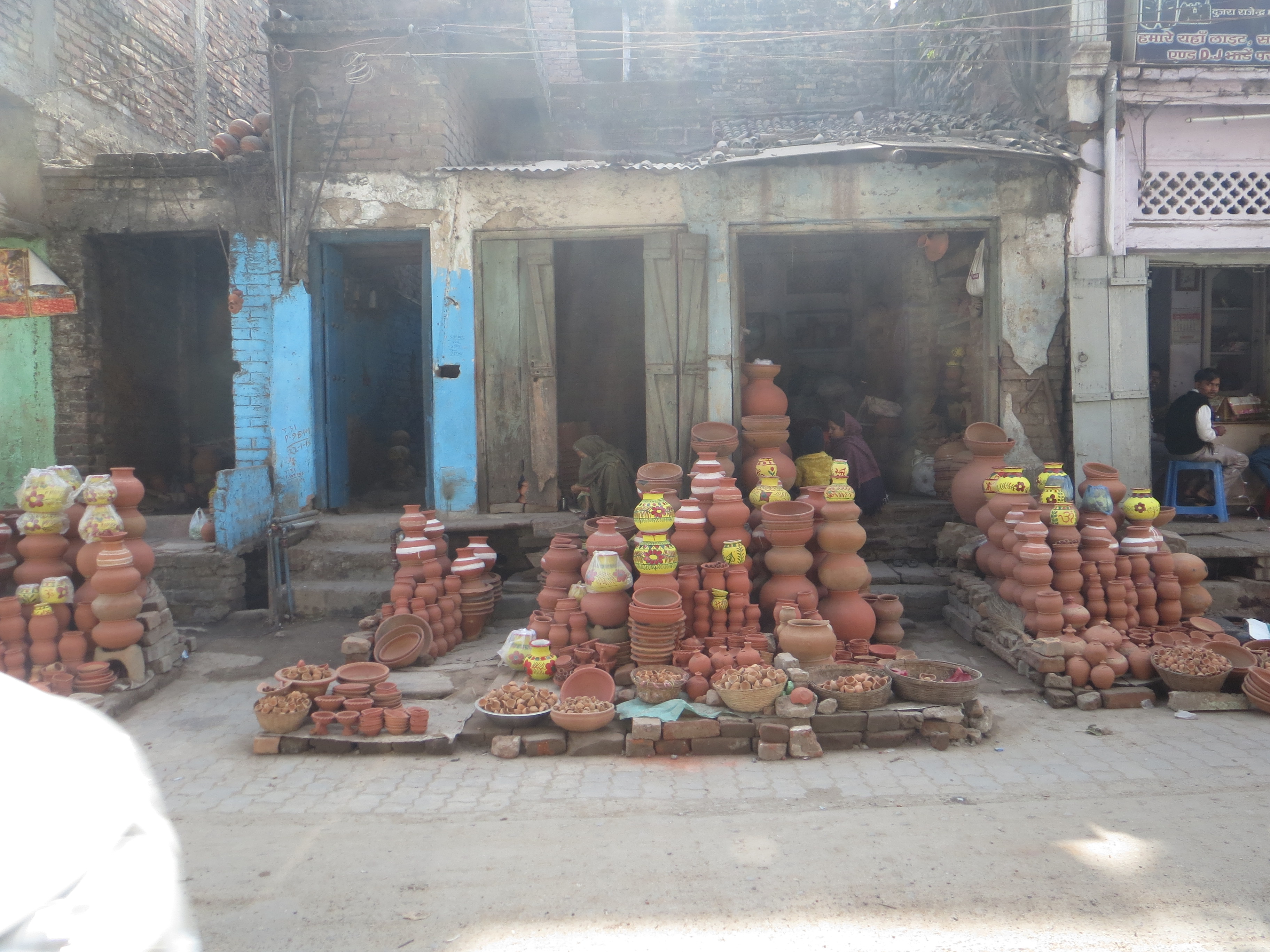
We saw many roadside vendors of clay vessels.

We saw many roadside vendors of clay vessels.

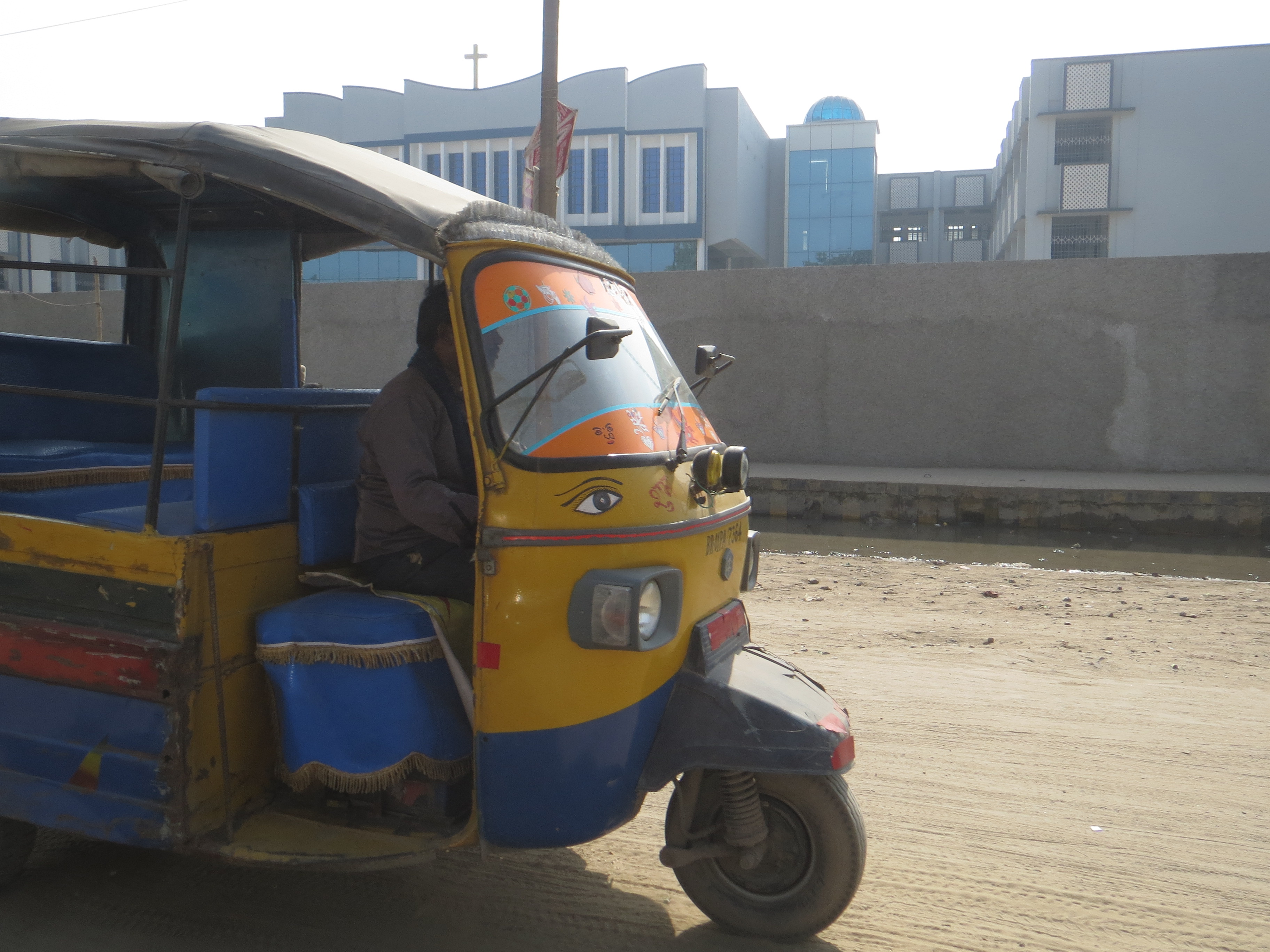
All of the taxis are painted, and most hung inside with the favorite or guardian god of the driver.

All of the taxis are painted, and most hung inside with the favorite or guardian god of the driver.

We didn't see any riots, but the district has had some unrest lately which was in the papers.

We didn’t see any riots, but the district has had some unrest lately which was in the papers.

IMG_1127 IMG_1126

One last note–as we stood outside the restaurant waiting to dash across the street to our van, two young teenage girls came walking past holding hands.  One was dressed traditionally Indian, the other was in colorful clothing but a full head scarf with only her eyes showing.  She was staring at me, so I smiled and she smiled back (her eyes were unmistakable) and gave me a little wave.  As she walked on she turned back to give me one more look.  I hope our encounter made her as happy as it made me.