36 Hours’ Worth of Kanazawa

A Less Than Encouraging Start

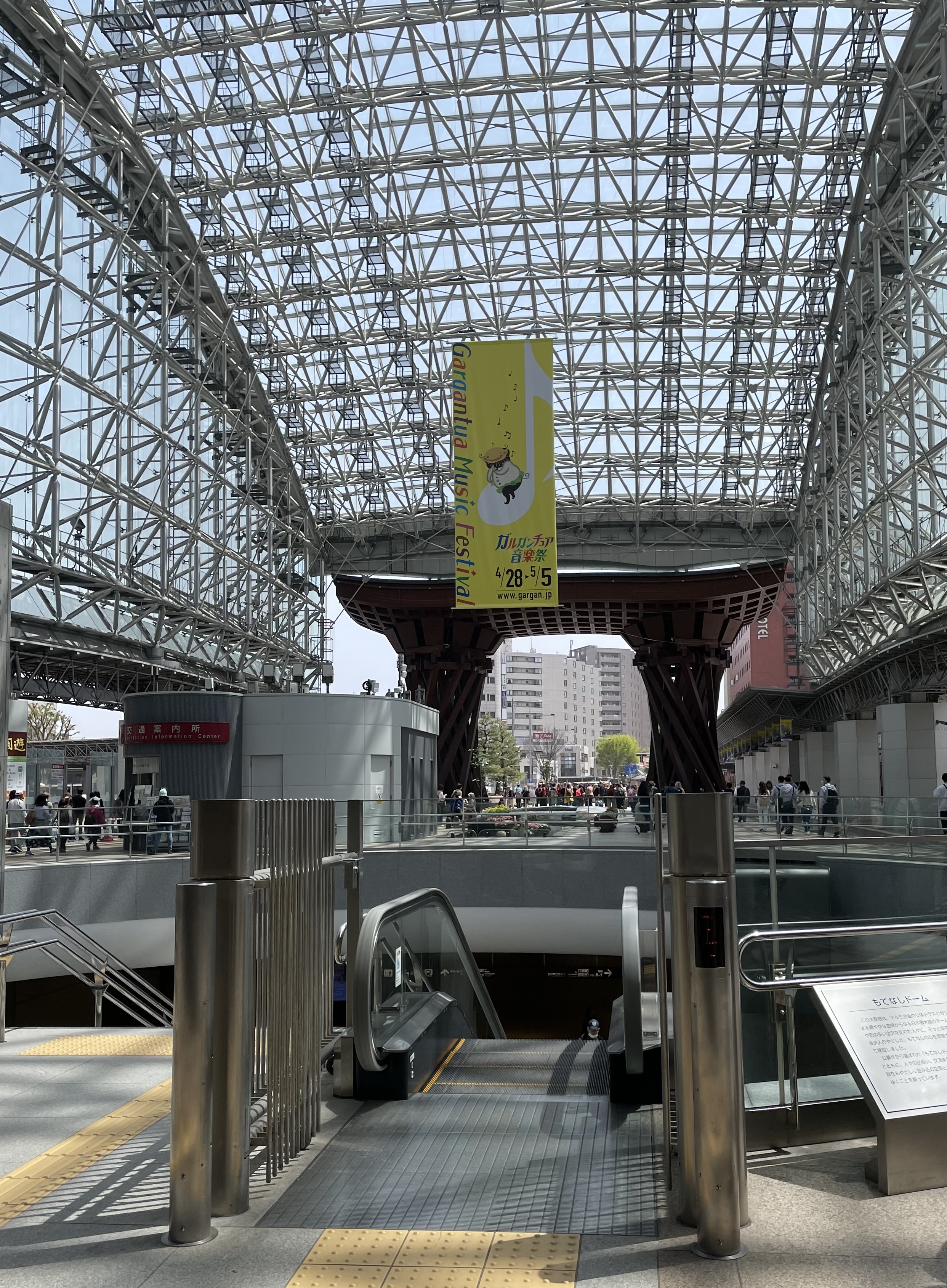
We checked into the Dormy Inn—our fourth—a short block from beautiful Kanazawa Station. The enormous entry, with huge sculptures representing traditional drums, is spectacular, the gardens and sitting areas peaceful. This Dormy Inn was probably the nicest with our larger room and an outdoor pool in the 14th floor onsen. Kanazawa, our last stop before returning to Tokyo, was a bit off the tourist track and we weren’t sure what we would do there. I did know if my ceramics shopping was still enticing me after Tamba and Kyoto i could finish it there, but had no clear plan where to go other than the two stores I had found weeks ago. I wanted to get one checked off and picked the one furthest out. We got on a bus after lunch (more about lunch later) using our mostly-accurate google maps app.

Oh, the buses of Kanazawa. As one helpful man told us, Kanazawa has only begun to attract tourists in the last few years, and the mishmash of streets combined with the most confusing bus system we have ever encountered made “hopping a bus” nothing like our week of tourist-friendly Kyoto. The signage on the stops is messy and seemingly contradictory (a loop bus that starts and ends at Kanazawa Station had, on one loop bus stop sign, a small notice in the middle of the text that “this bus does not go to Kanazawa Station”, just an example among many). Some blocks have, within 15 yards, two or three bus stops, each for a different set of buses. The buses have a lighted grid sign at the front next to the driver, each numbered block with a different price which we never did figure out. Unlike Kyoto, only the next upcoming stop is shown in English, forcing us to pay attention to each and every stop. And, the helpful man told us apologetically, “In the morning and evening the buses are reliable, but during the day…” He shrugged. Lastly, Google maps repeatedly lost us, or told us, when we were at a numbered stop, that we were not at that stop and had to walk 3 minutes to another street (helpful man said he had no idea but to stay put because if we caught that same numbered bus in a different spot it would not take us where we wanted to go.). It was frustrating and made us feel unwelcome. Oh and they do NOT accept Suica cards, the cards we have used in every city for transportation, konbinis, pretty much anything.

Bus footnote to the day—when returning to the hotel late in the afternoon we were delighted to see a JR bus coming. We have a JR Arch (a regional) pass, which we used our last days in Kyoto on several JR buses and of course was our method to get the Shinkansen to Kanazawa and back to Tokyo. Several times on that JR Kanazawa bus the PA announced if you had a JR pass to show it on exiting. So when we got to our stop we confidently walked up and flashed our pass. Gruff driver says “no good” no matter what we pointed to on the pass. “No, no,” he insists. We knew now we had to dig out cash, so I asked “How much?” The driver shoved my arm in disgust and waved us off the bus. Yeah, love the Kanazawa bus system.

We did find the outlying ceramics shop. It was in an old, semi-rundown neighborhood. About half the items in the very small showroom were out of stock so would have to be mailed at a future date and the prices were out of our range. We trudged to the stop/bus station where we found the helpful man, and after he and the agent had at least four conversations over the next twenty minutes about what we should do and how to get there, “there” being one of the largest and most revered tourist sites, suddenly a bus appeared and helpful man ran over to tell us “This one!” and we gratefully climbed aboard. Google maps on David’s phone told us to get off at one stop; on my phone it said a different stop. But it turned out fine, and we entered THE MOST BEAUTIFUL GARDEN in Japan.

Kenroku-en Garden

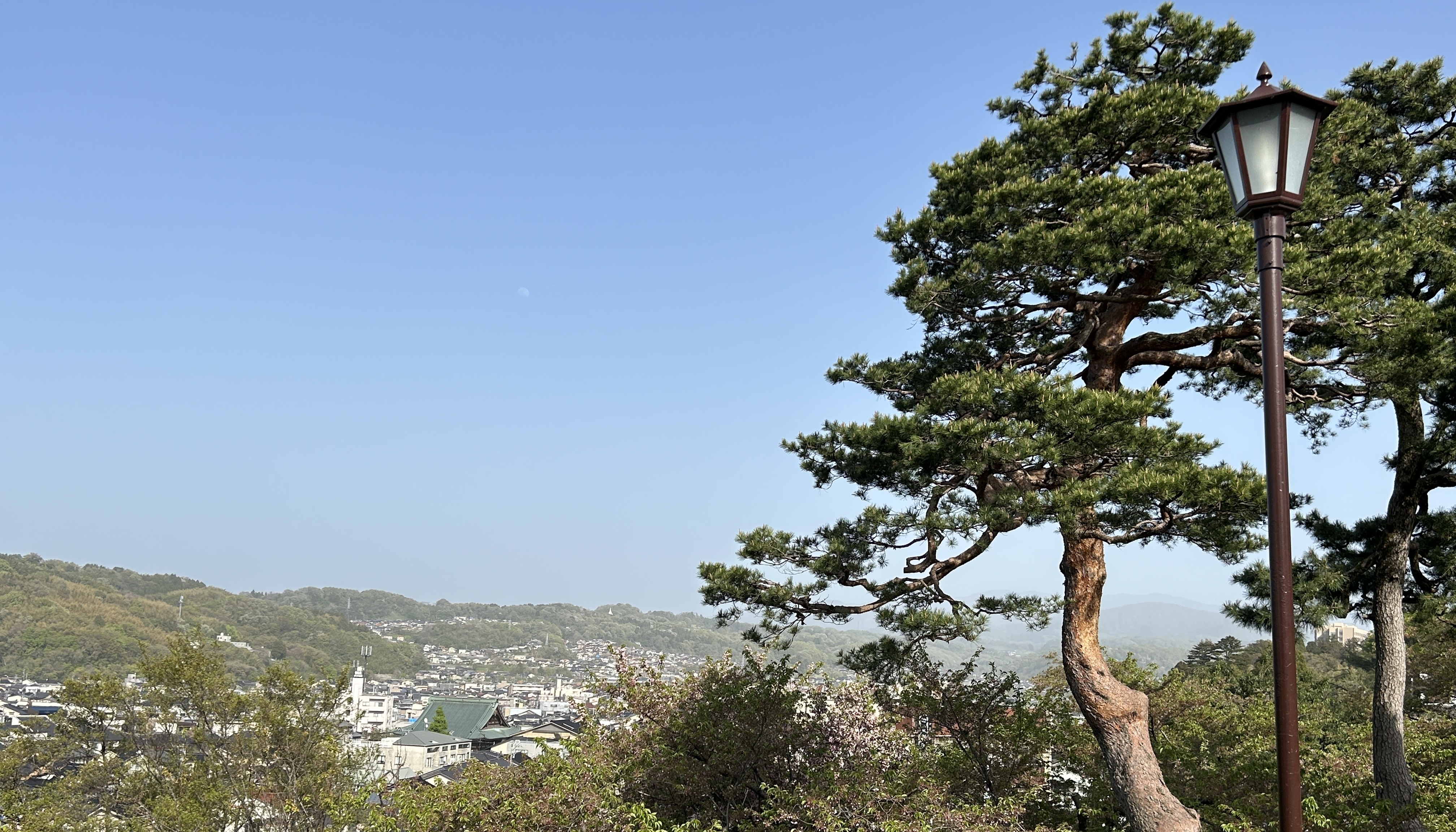
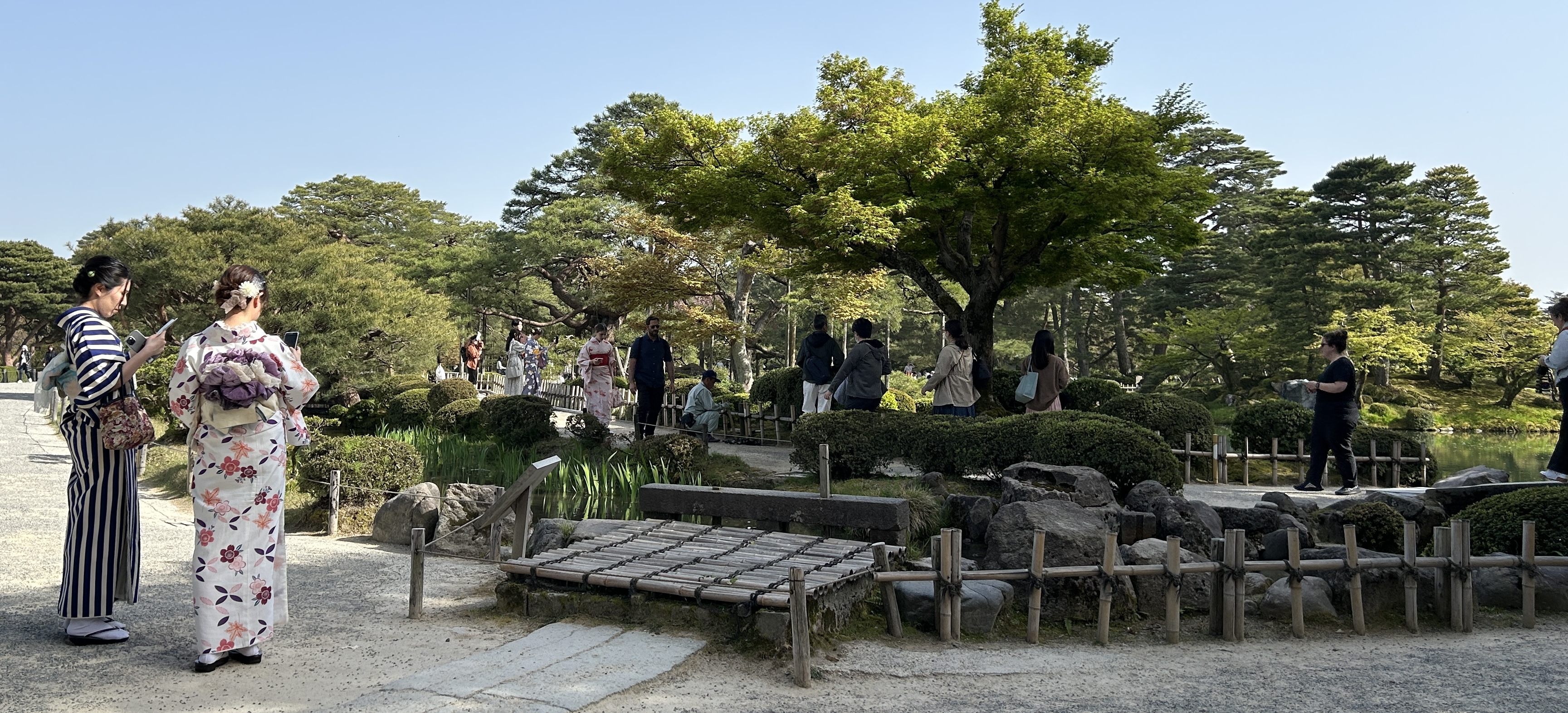
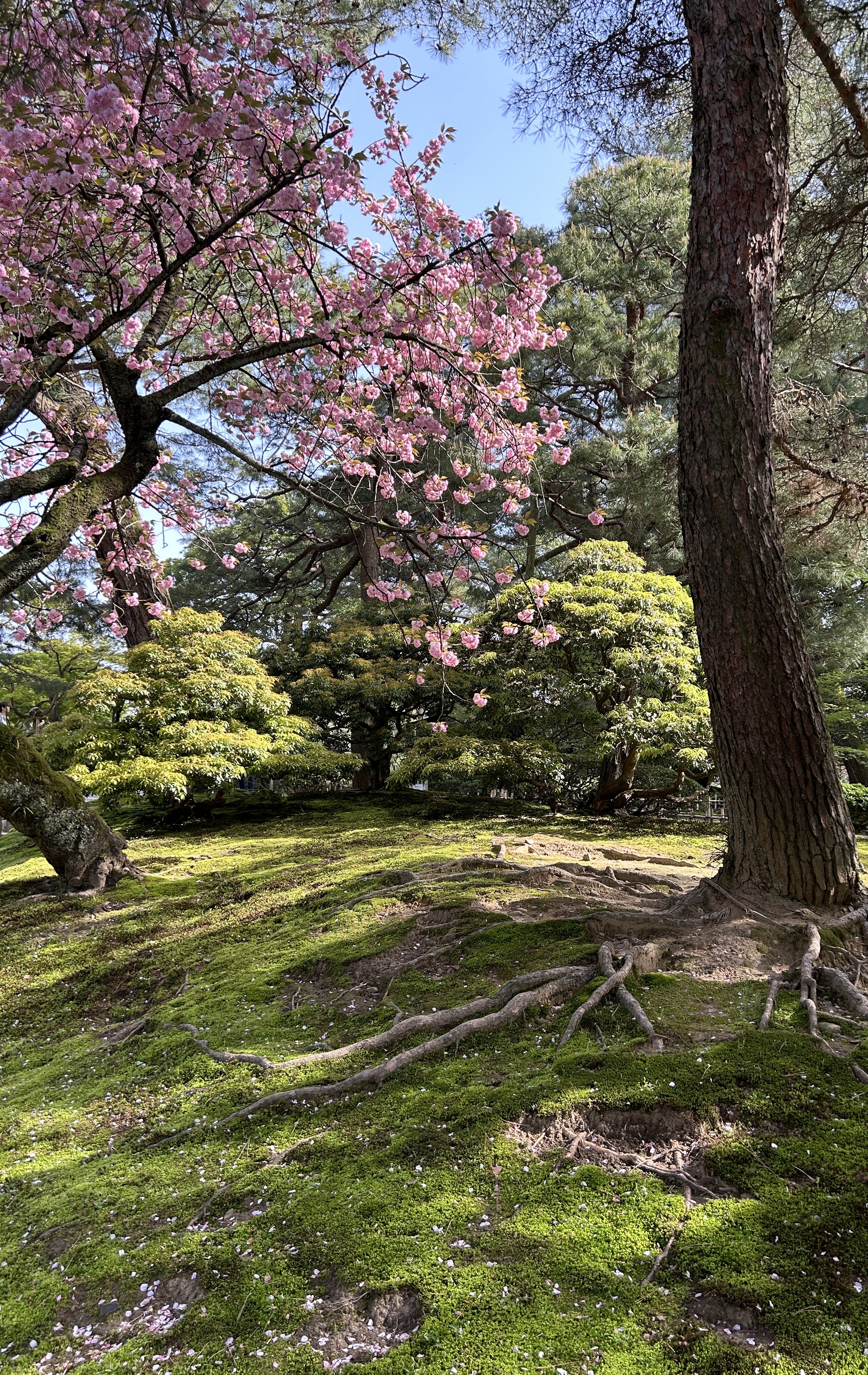
Wow. Wow. This garden was initially laid out in the 1620’s, but its current configuration was finished in 1822. It sits on a high point, almost a bluff, next to the castle ruins and it is spectacular. The sun was out, it was cool and a little breezy, and we began to like this city after all. We have been to many many gardens in many countries, and this wins hands down. While it has the feel of a typical small-scale Japanese garden, it is enormous, filled with enormous, meticulously pruned trees. Many are supported by one, ten, twenty crossed timbers, having been encouraged into bonsai-shapes of almost horizontal branches. We watched several gardeners removing, literally, needle by needle. We wandered and strolled, took pictures and enjoyed the other tourists, rested on benches, took a tour of a “villa” built in the 1800’s filled with cases of miniature household (a wealthy one) items that represented what a girl of the family would be bringing as a dowry. After a few hours we collapsed and after typical confusion about where the bus stop was we got on that ill-fated JR bus with the grumpy driver.

The Samurai House District

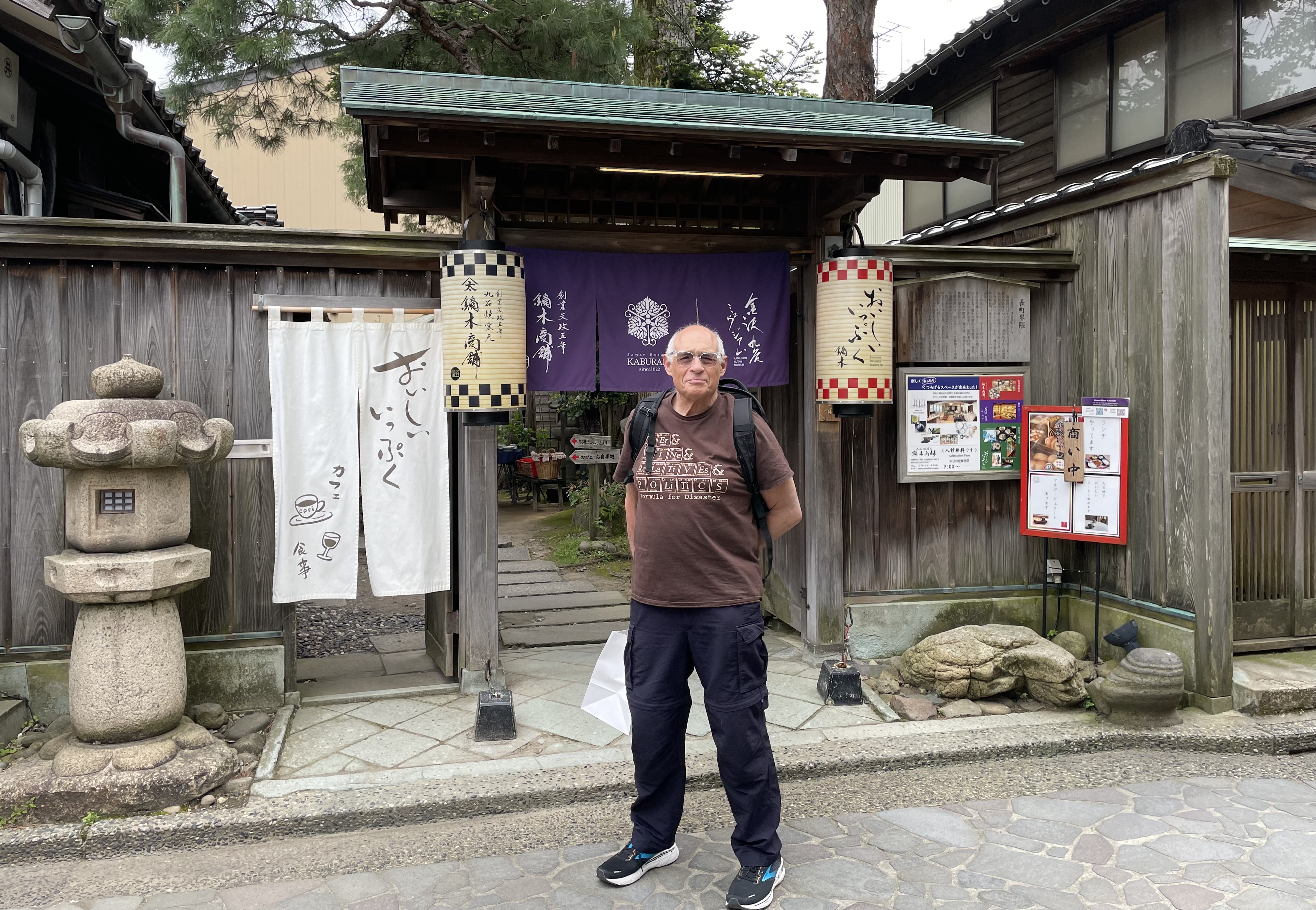
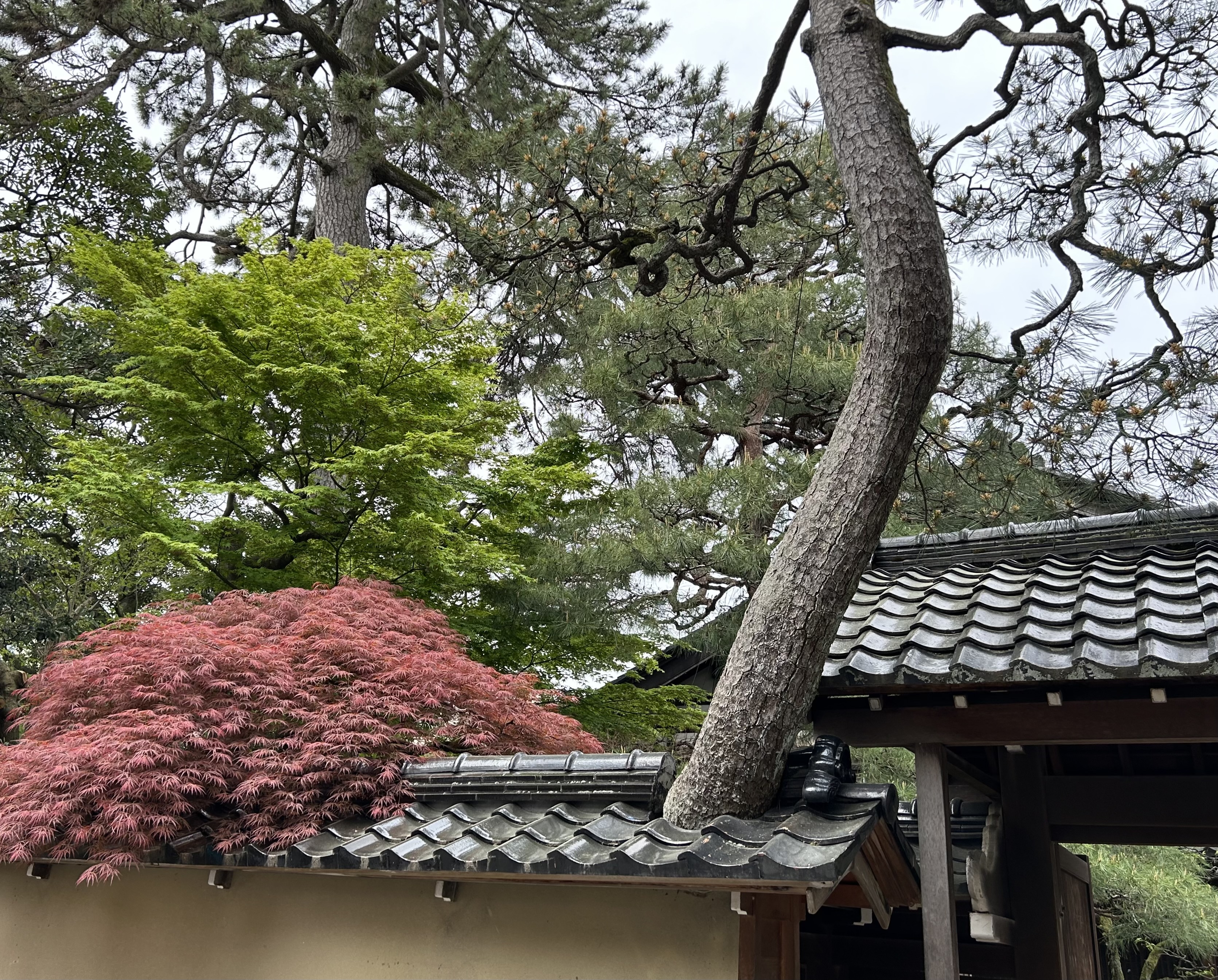
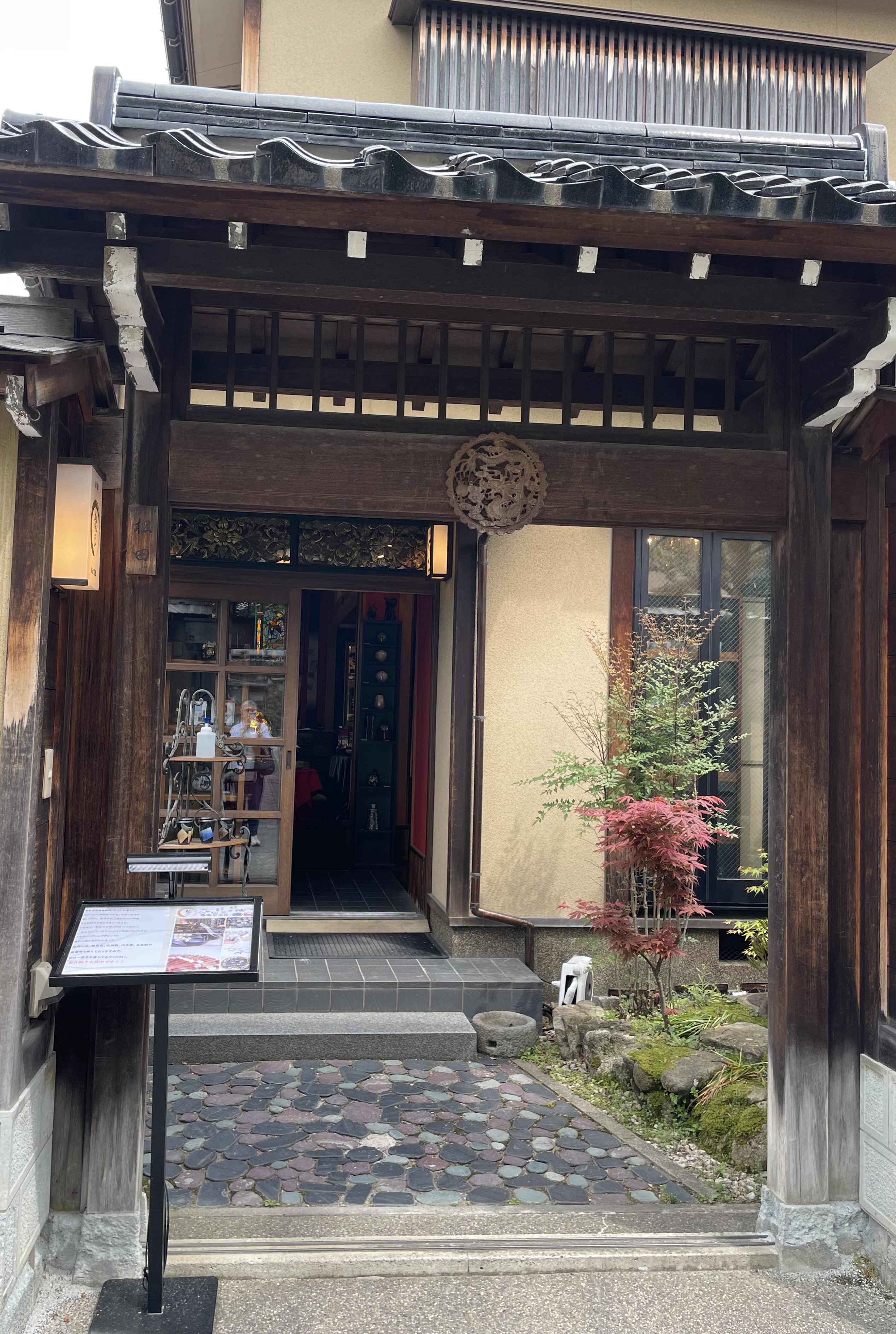
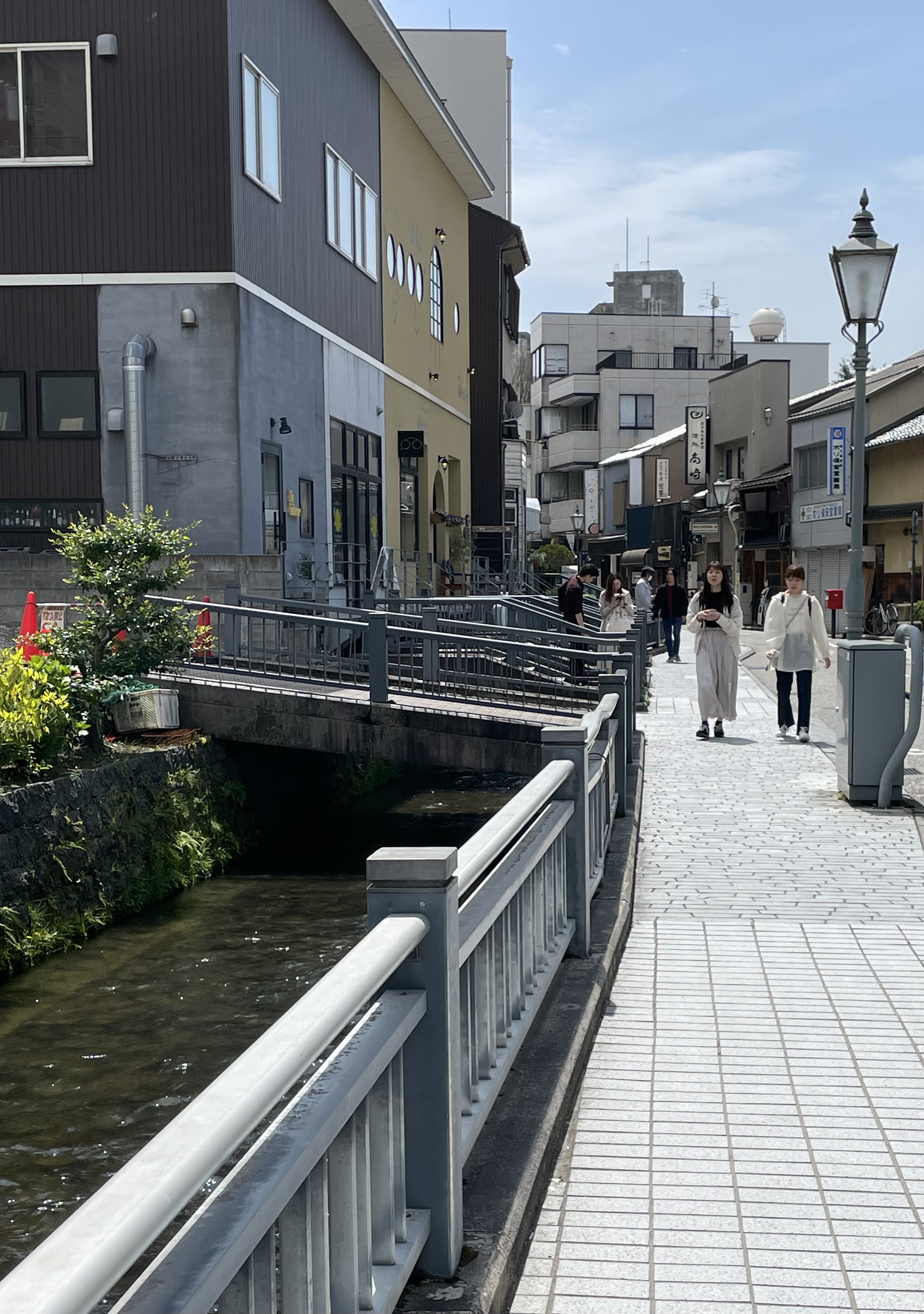
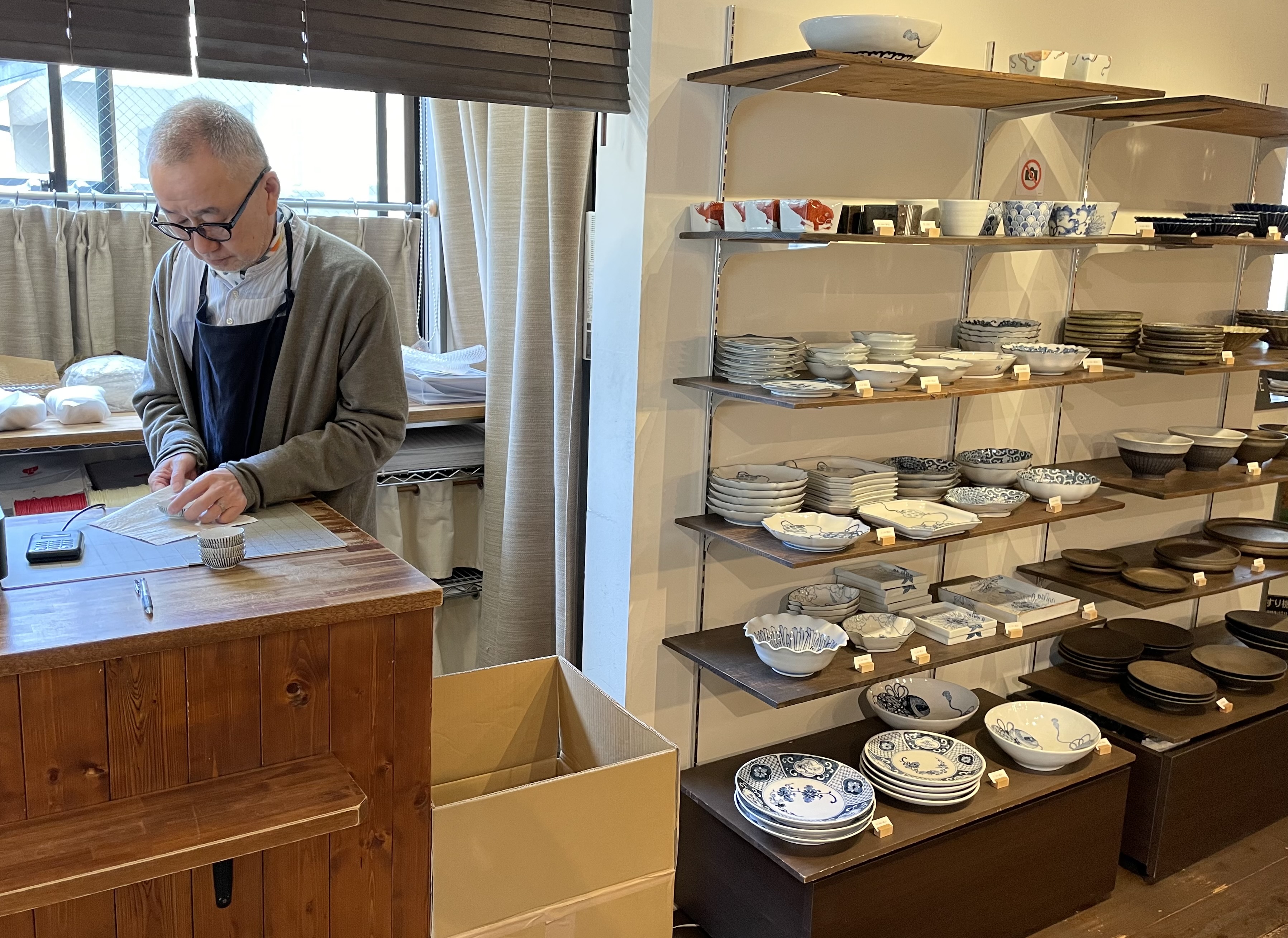
I stayed up late searching for ceramics stores and found four clustered in what is now known as the Samurai House District. After breakfast we took the bus down and started a-strolling. Peaceful, lovely, with historic houses, historic gardens, and amazing ceramics shopping. I thought I had been finished in Kyoto, but, alas, I needed one more fix and what a fantastic place to get it. After repeatedly vowing to buy only gifts, I caved at the last store and bought a few little things for myself. Everything is packed within an inch of its life, bubble wrap and boxes and paper and all. Thank goodness we pack light because Zipair is rigid about sizes and weights. I think we’ll be fine. I think.

Lunching at Ochimo Market Twice in Two Days

When we first arrived after a train ride of two hours we were hungry and Ochimo market was maybe a 20 minute walk up a main street. Kanazawa is known for seafood. Let’s go!

Unlike most similar markets, this one is designed for people to stand and eat at the fresh seafood stalls. Counters with condiments and small tables abound (no chairs). The seafood is peak fresh and delicious, the atmosphere happy and helpful. The first day we went into one of the myriad tiny sit down restaurants, all of which seem to serve the same things for the same prices. I had a mixed seafood over rice bowl, David had the minced tuna over rice bowl. David held his phone up to the specials blackboard and Google helpfully translated. Fried oysters? Yes please, oysters are a specialty of the city. Have I ever had better? Nope. I don’t believe it is possible for better to exist. Had fried oysters the second night at an izakaya around the corner from our hotel, and though a bit smaller they were just as good.

Of course we went back on Saturday. This time we wandered the stalls watching people eat. Raw Oysters. Raw fish. Sea urchin. After we ate our sushi and crab we stopped to watch a young couple from Australia eating wagyu beef cooked on a little ceramic stove on the counter in front of them. We asked how it worked, watching the preparation and thinking maybe we weren’t so full after all. You select a piece from the counter; they slice it, fire up your little burner, lay out the salt and garlic chips, and you eat. Yes, worth every penny and every melting bite eaten with flaky salt and garlic chips.
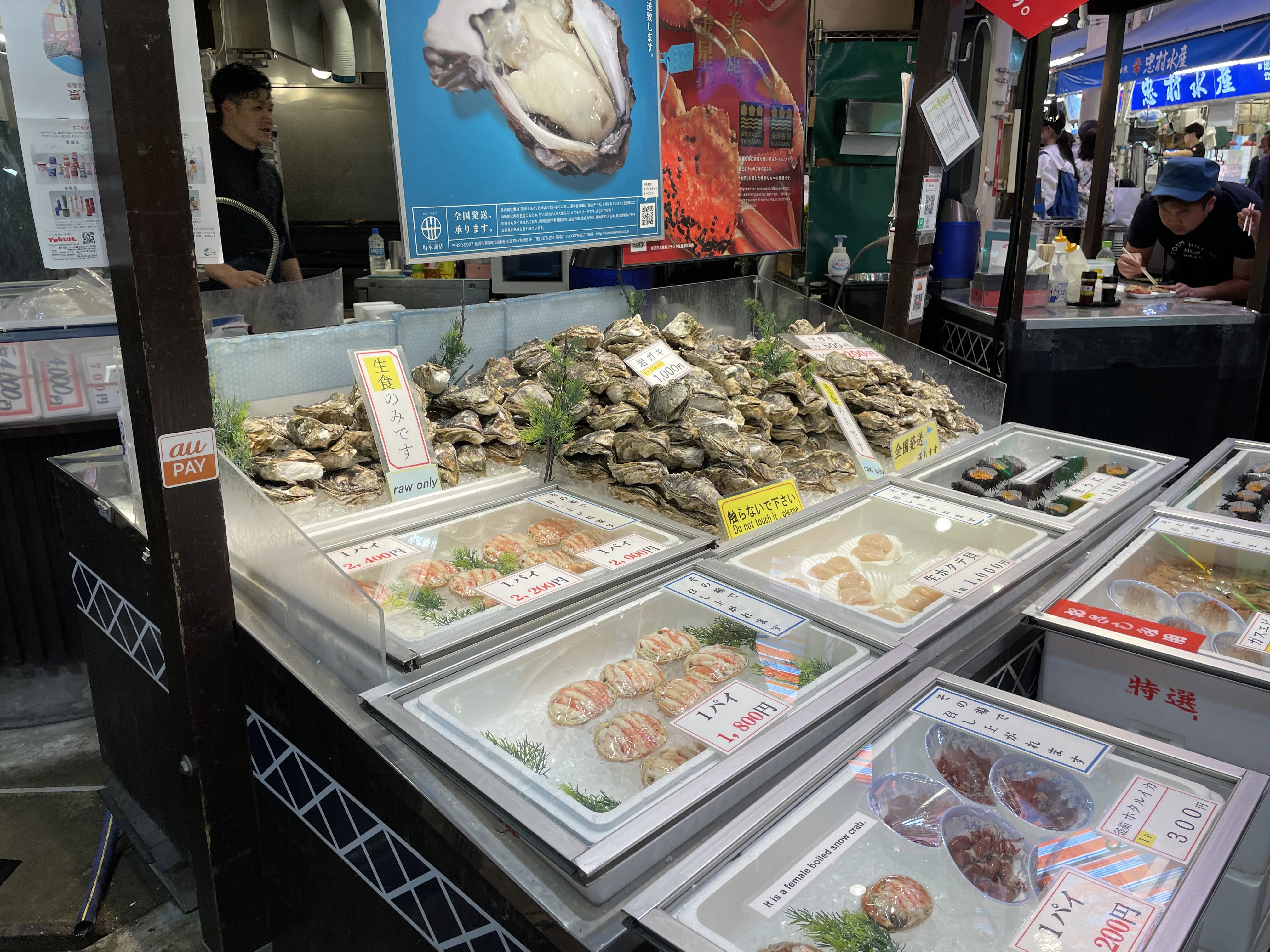
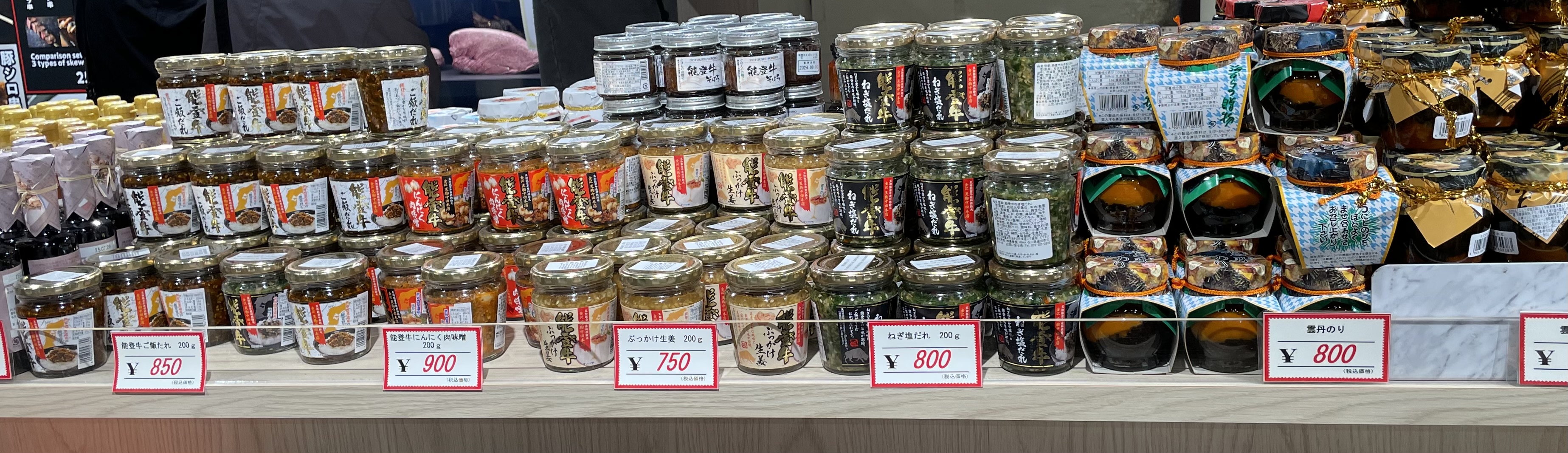
Every kind of jarred condiments…from a green onion sauce to some with uni (sea urchin), something I cannot imagine in a jar.

21st Century Museum of Art

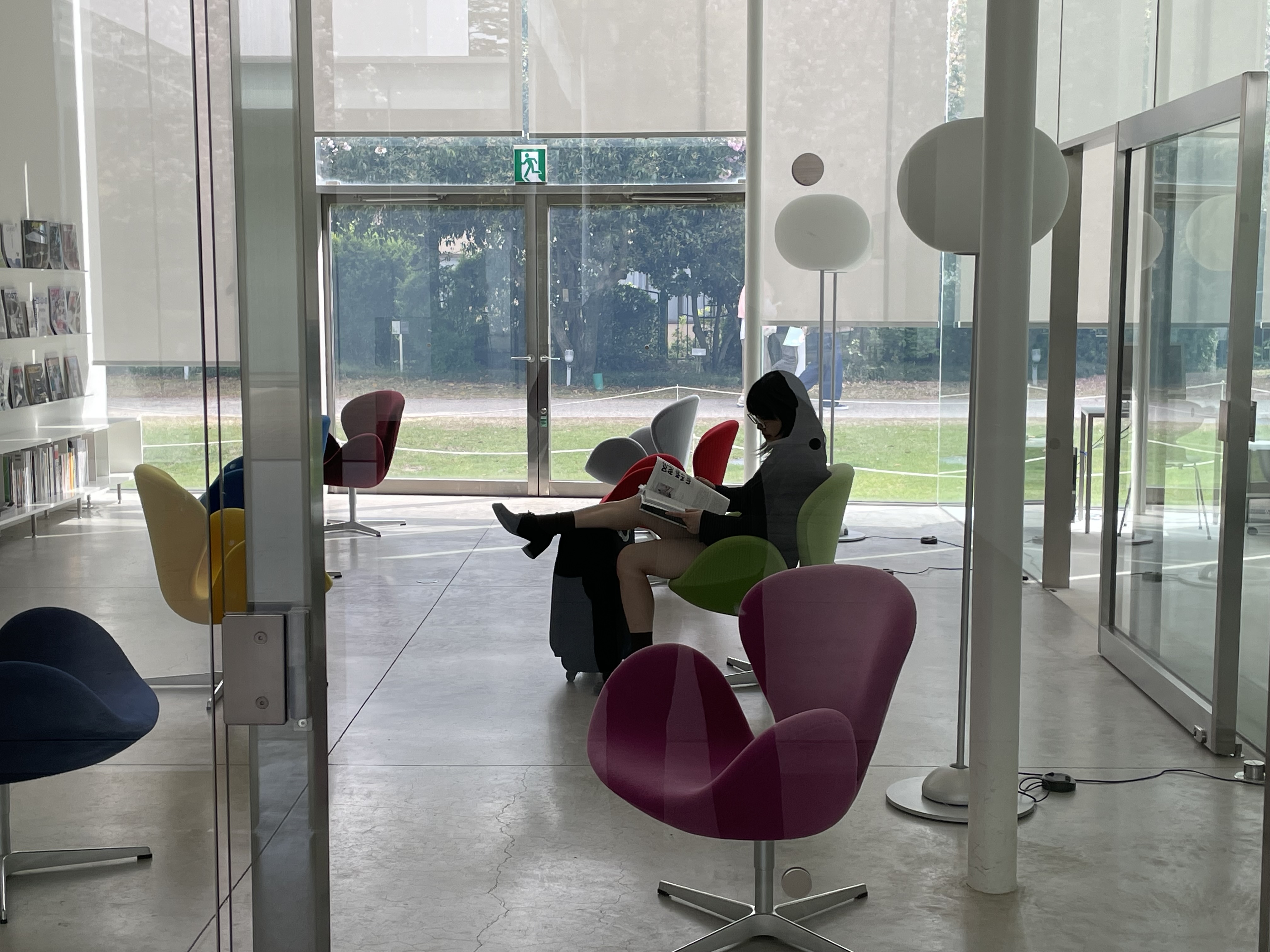
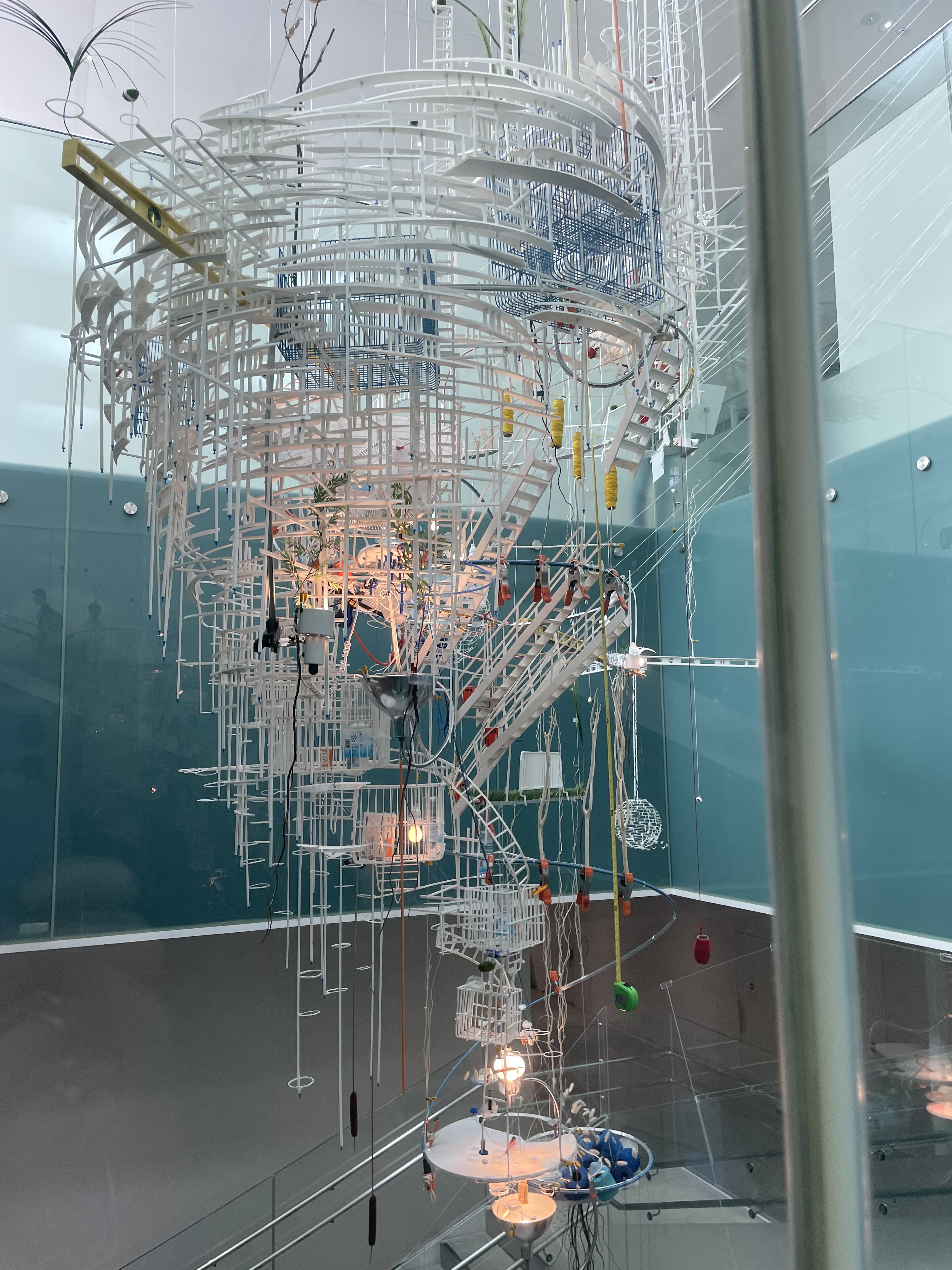
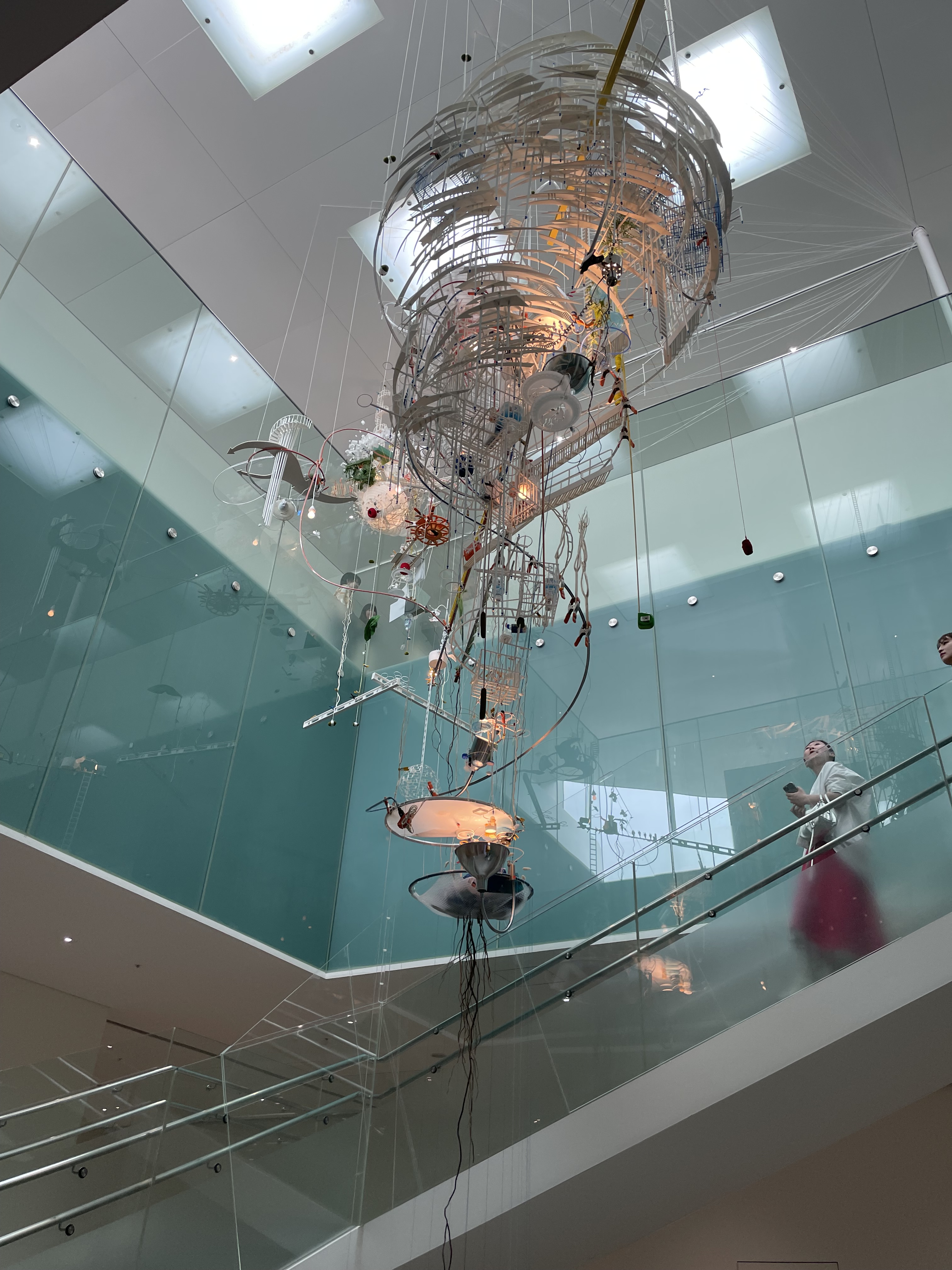
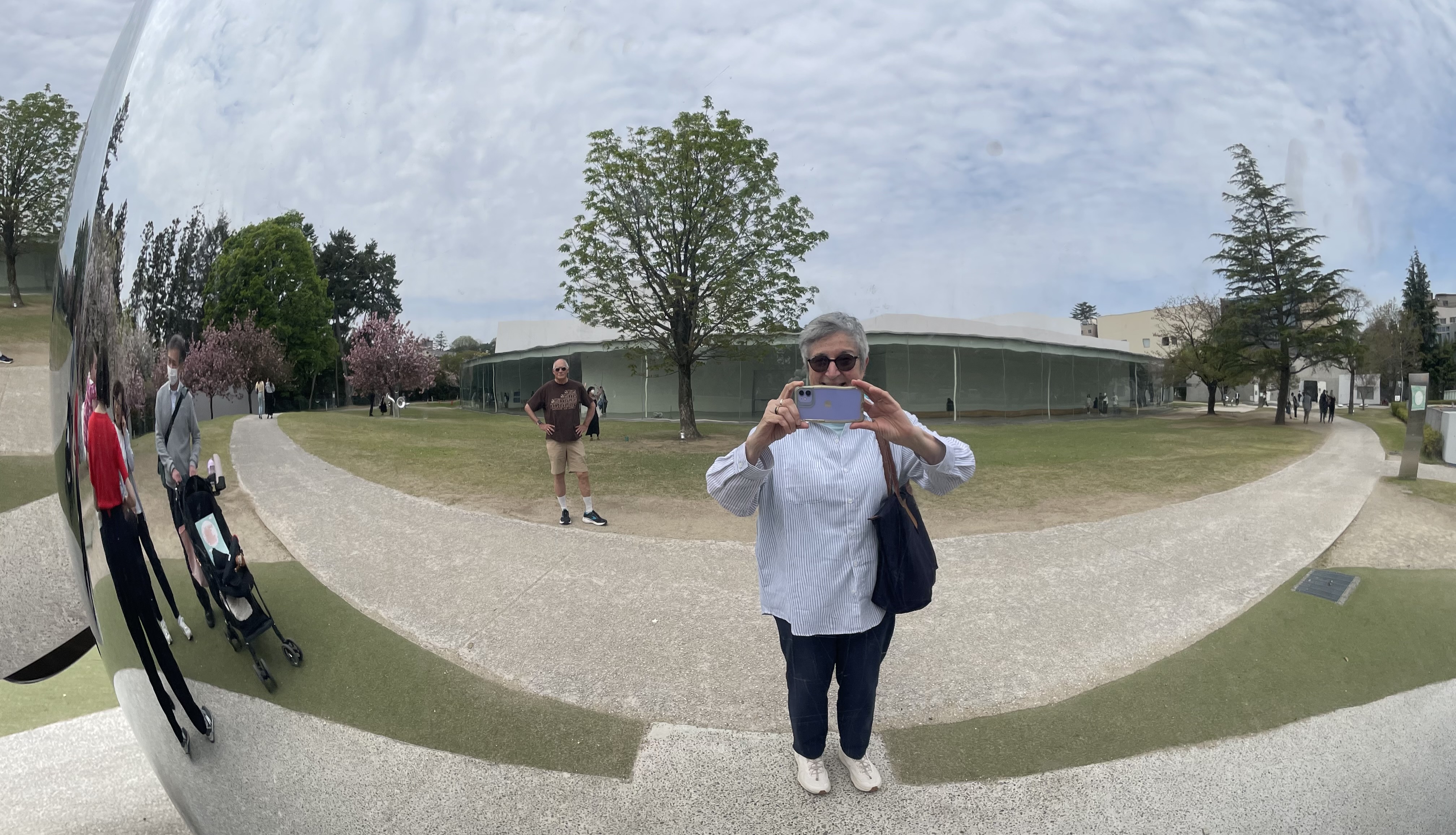
This amazing celebration of modern art was damaged in the December 2023 earthquake and the interior has yet to reopen fully. It sits in a large park filled with families on the Saturday we visited. Whispering tubes, climbing structures, cool-o places to sit, a large multi-colored glass box, reflective sculptures and wide lawns surround the circular glass building. Because only the exterior ring inside the building is open there is no admission fee—there is only one “gallery” with a single kinetic mobile is open. It was oddly entertaining—though all windows, the soundproofing is total and from the perimeter inside families carousing and couples strolling outside seemed like an immersive, silent movie.

There are plenty of museums around the park and castle ruins area, but we had neither time nor energy. We finished the day drinking and conversing and sharing pictures of our dogs via translation apps on our respective phones, with a young couple at the neighboring table in an izakaya around the corner from the hotel. They were from Tokyo and delighted we had been and were returning to their city. We returned to the Dormy Inn, had a last bath in the outside onsen where the moon shone and the wind blew, and fell into bed. On to Tokyo, last stop before home.

A Few Snaps of Breakfast at the Kanazawa Dormy

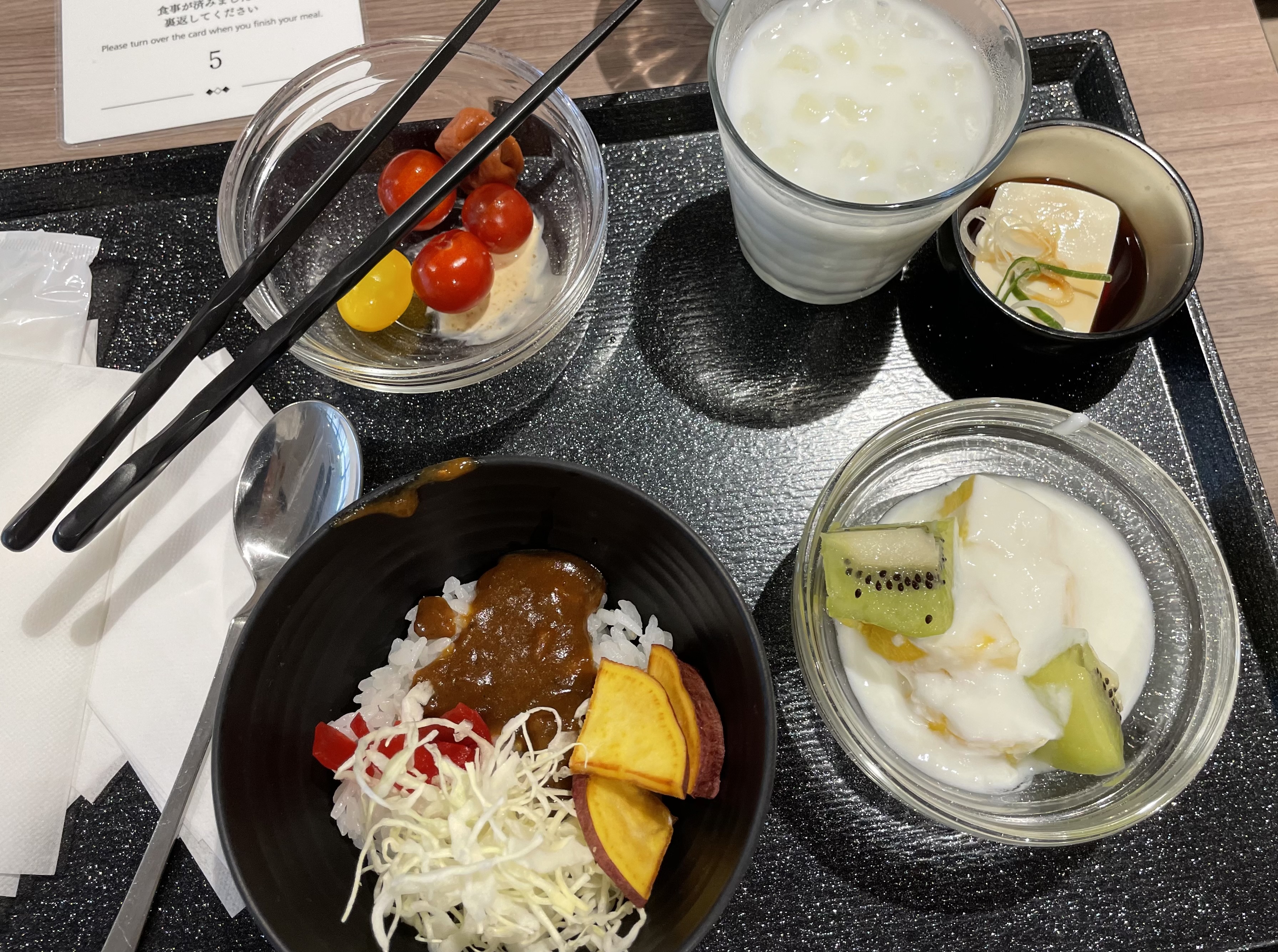
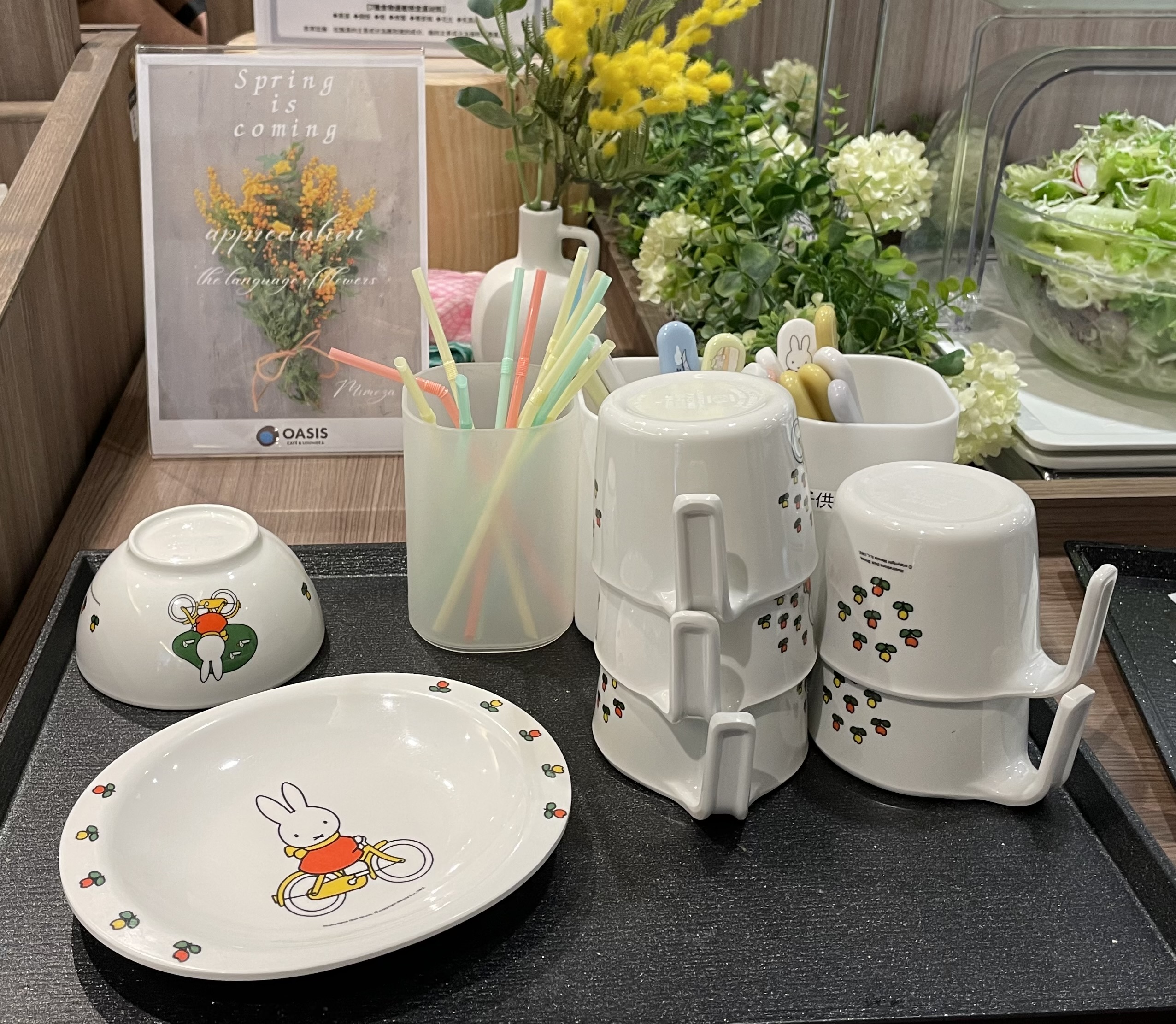
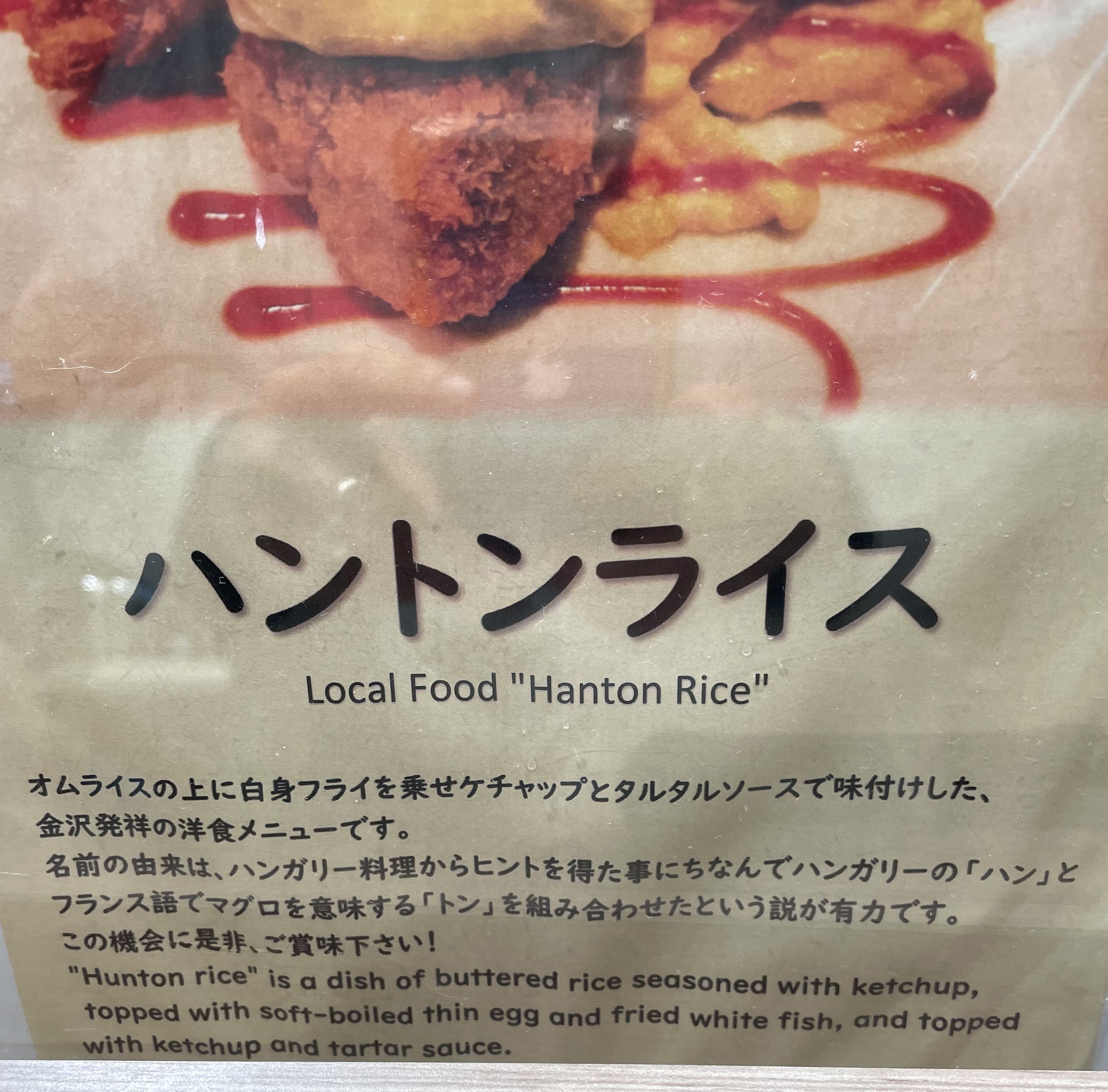
Kid friendly dishes, a strange local food combo, and my bowl of Kanazawa curry, appropriately garnished with pickles, roasted sweet potato, and shredded cabbage (surprisingly good).
That indescribable feeling

We love museums. So far we have been to three here in Osaka, one per day. This, combined with the sometimes interminable walking required to use the fantastic public transportation, is why no matter how much I eat, I lose a few pounds on a traveling vacation. And I do eat with abandon, believe me.

For more information on all of these see https://museums.ocm.osaka/museums-info/museums-info-en/

Day One, we wander the Edo period, and eat

First full day we went to the Osaka Museum of Housing and Living. The intricate displays are models of life in the Edo period. One floor is life sized recreation of two streets in Osaka in the 1830s. You look down on the life sized streets from the floor above, then walk down and through it. Warm, helpful docents, authentic houses and shops. There is even a ‘kimono experience, where a kimono expert dresses you, both girls and women, with all the care and intricacy required. The many small scaled displays show Osaka life in the twentieth century. Bonus—adjacent to the building is an arcade shopping street where I satisfied my craving for cold soba and one big veggie tempura. David had a bowl of noodles and other things we couldn’t identify. As is most common here, it was a little narrow “joint” where every order is fresh. Then I bought a big baggy shirt to blend in a bit.

Day Two, we go back to the beginning and through a flurry

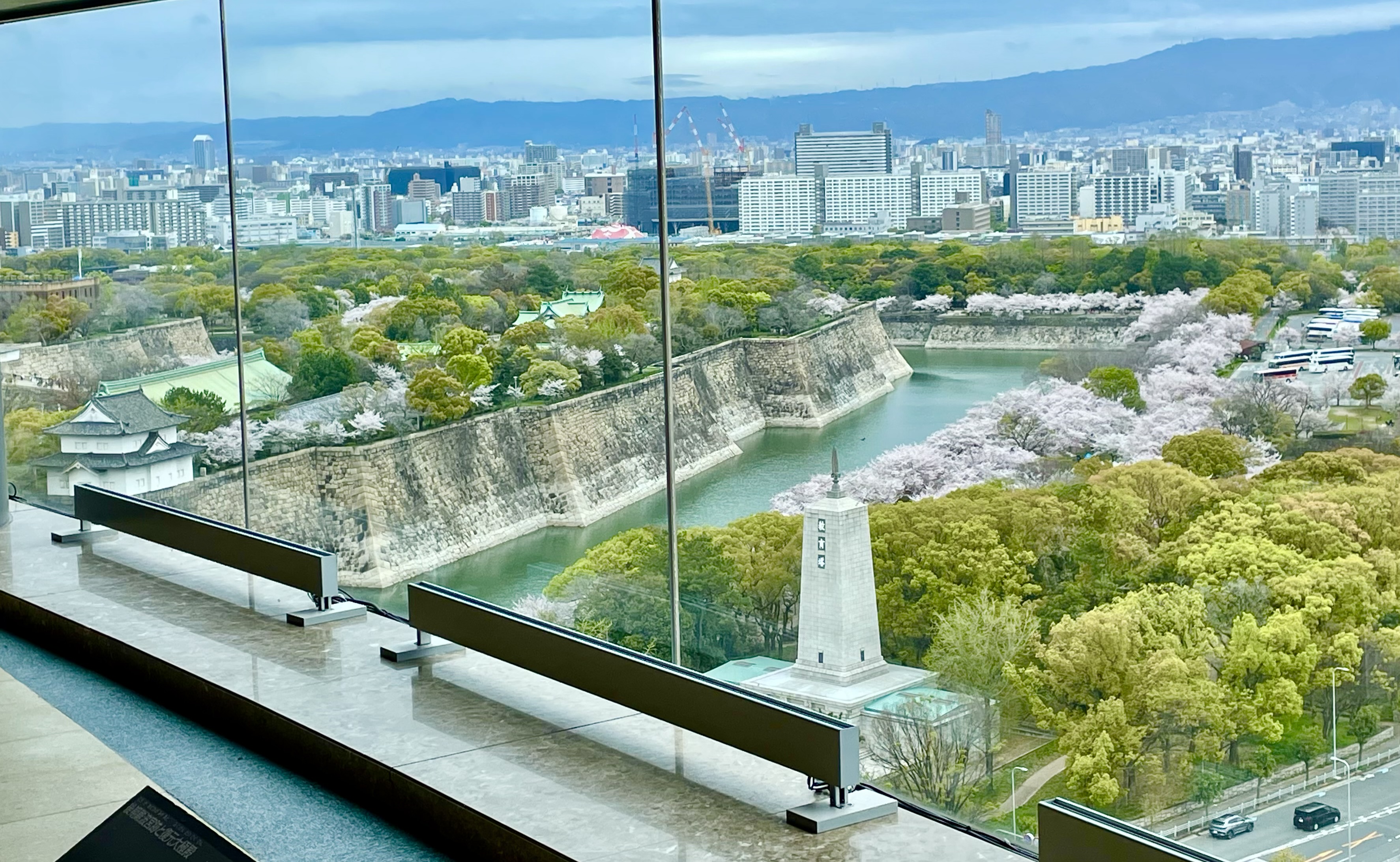
The next day it was the Osaka Museum of History. It takes you from the earliest settlements, and all about the archeological digs ongoing to plot where the first people lived, to modern times. Many exhibits are a mix of life sized displays you walk through and multimedia explanations. May I say thank goodness for google translate, which enabled us in every museum to translate the text explanations. Fun, overwhelming, jammed with information—and a bonus—the incredible views of Osaka Castle and surrounding grounds.

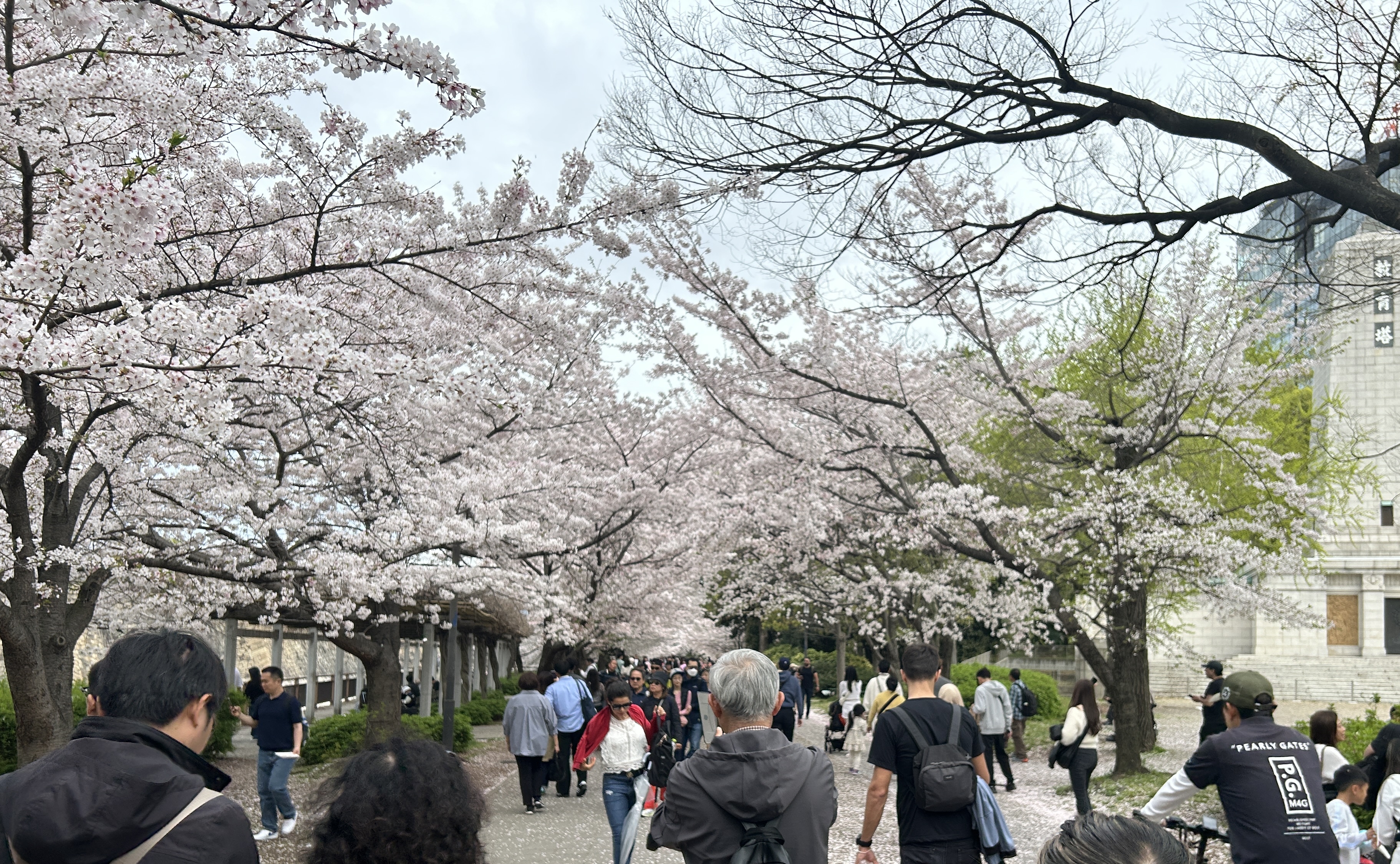
Having absorbed our fill of Osaka history we crossed the street to the castle grounds, where a small jammed Lawson’s satisfied our hunger. We made a picnic of our $6 investment and then wandered through bowers of cherry blossoms, petals blowing like a snow flurry. Wow.

Day Three, that feeling

Nakanoshima Museum of Art was a bit of a trek given our predictable issues with Google maps walking directions, but oh so worthwhile . They have no permanent collection—just special shows. We started with the Monet, an enormous retrospective showing how he evolved into painting series. It was stunning, as were the visitors. Lots and lots of hushed conversations about the paintings. It felt different, people more involved with the art than is common in the US.

Down a floor, short rest to get a bit of energy back, and we dove into the other exhibit, Fukuda Heihachiro: A Retrospective. Never heard of the guy. Walked in, and at the third painting i got that feeling, instantaneous love and emotional connection. It is a simple painting, Ducks by the Pond, painted in 1916. That feeling, like the first time I walked into the room of Matisse cutouts at the National Gallery. It is a rush of excitement, then a deep resonance in my chest like a gong. And I want to cry, and do for a few seconds. I couldn’t tear myself away. Walked on to see a huge painting on eight large screens…just sheep. No background , no setting, just intimacy with the animals. This amazing painter evolved and evolved, always paintings and sketches from nature. Later he moved toward abstraction as he distilled water rippling to dashes of blue, closeups of bamboo, a painting titled Rain that is roof tiles in a million shades of blue-grey.

Yeah, idiotic I know but I bought the exhibit catalog that we now have to schlep all over Japan. Photographing his works in the gallery was limited to maybe four, none of which excited me.

So we said goodby to this gorgeous museum with a wave to space cat.

Centro Historico de Ciudad de Mexico

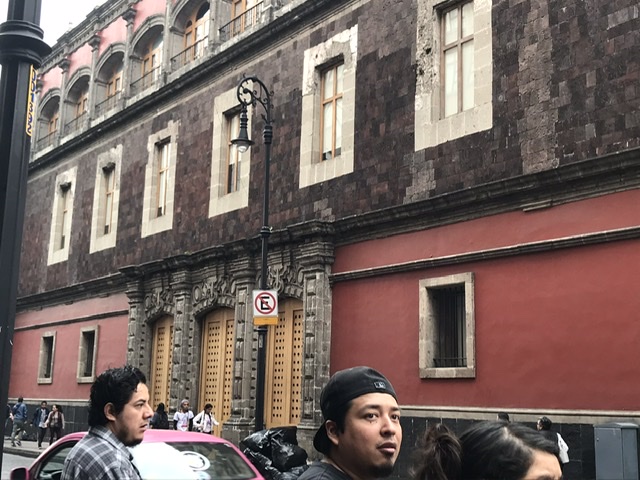
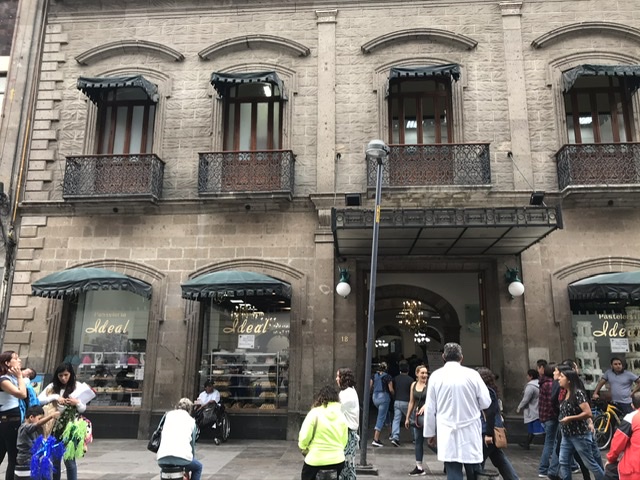
We spent two separate days in the intense downtown and enjoyed both immensely. There is so much happening, seemingly at all times, it can be overwhelming…but the historical sights, the fascinating architecture, the markets all add up to a vibrant scene.

From Roma Norte it was about 20 minutes to downtown via Uber, though on Saturday the driver noted the many closed off streets made getting us to our museum of the day somewhat complicated.

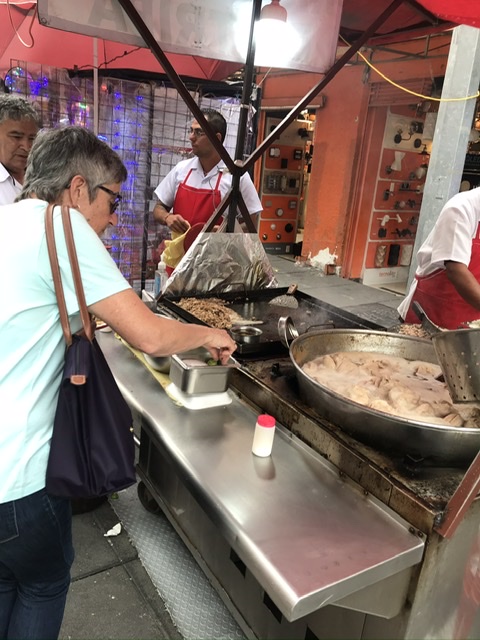
The zocalo is immense. On one side is the cathedral, two sides are government buildings, and the fourth is shops at street level (mostly jewelry) and restaurants on the second level, meaning there are hawkers every few feet encouraging you to come and eat something. Once off the zocalo there is a mix of every kind of retail, many many restaurants at street level, and every few blocks or so a string of food stalls on the sidewalks. Is it my fault I spend all my time in Mexico hungry? The smells of corn tortillas and grilling meat and vegetables are so enticing. Mostly we recognized the food but every now and then I had to ask “what is that?” And I would have tried them all—if my stomach could have fit everything.

Templo Mayor

This was on our list but when we asked a driver “what is the one thing we should not miss while here” the answer was Templo Mayor. Yes!

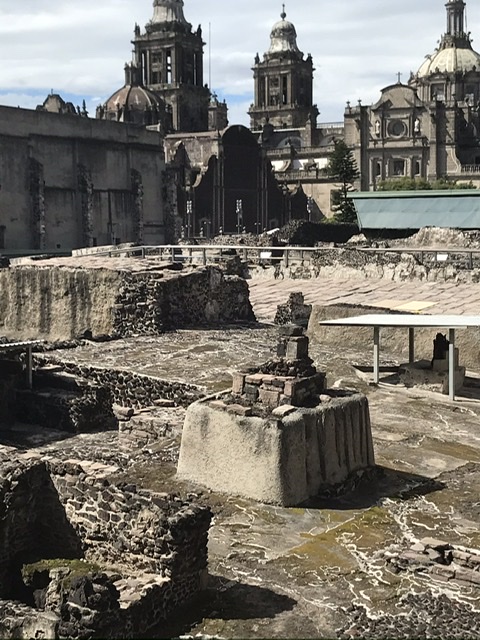
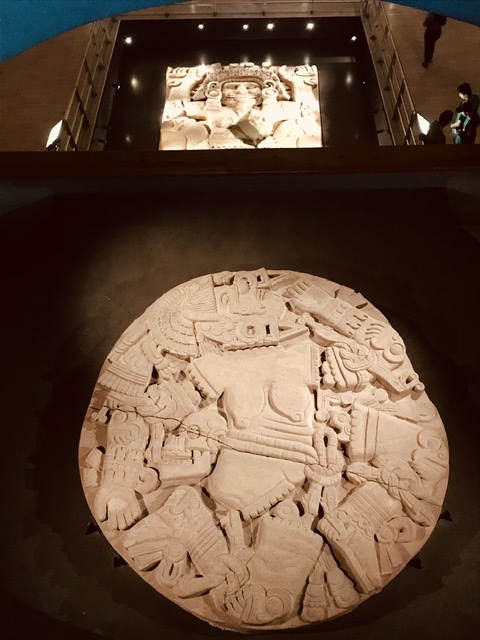
The history of how this site was rediscovered is fascinating. I won’t go into it here, see the link, but let’s just say some developers were probably mighty pissed that their plans were foiled by a major discovery in 1978 (the round “tablet” below–it was a world-renowned find). And it is such a large excavation, right smack in the middle of the downtown, that it must have cost the city and country a lot of money in foregone taxes, not to mention the expense of the dig itself.

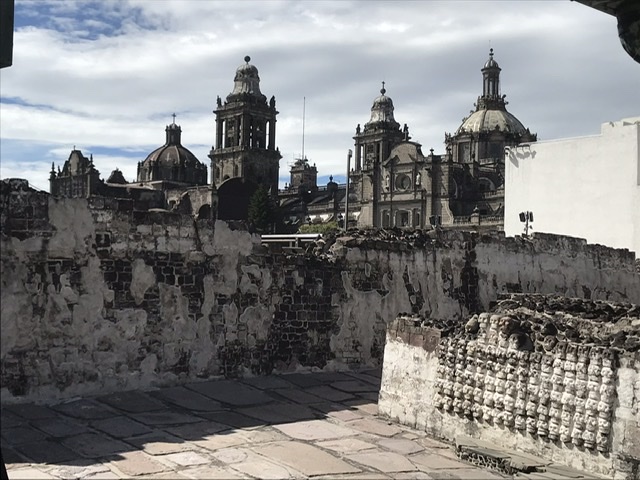
There is the site itself and the attached museum, both worth the time. We spent several hours and were fascinated and dazzled. The juxtaposition of the site and the adjacent cathedral is also pretty cool, as you view ancient and contemporary religions right up against each other.

Tacos de canasta

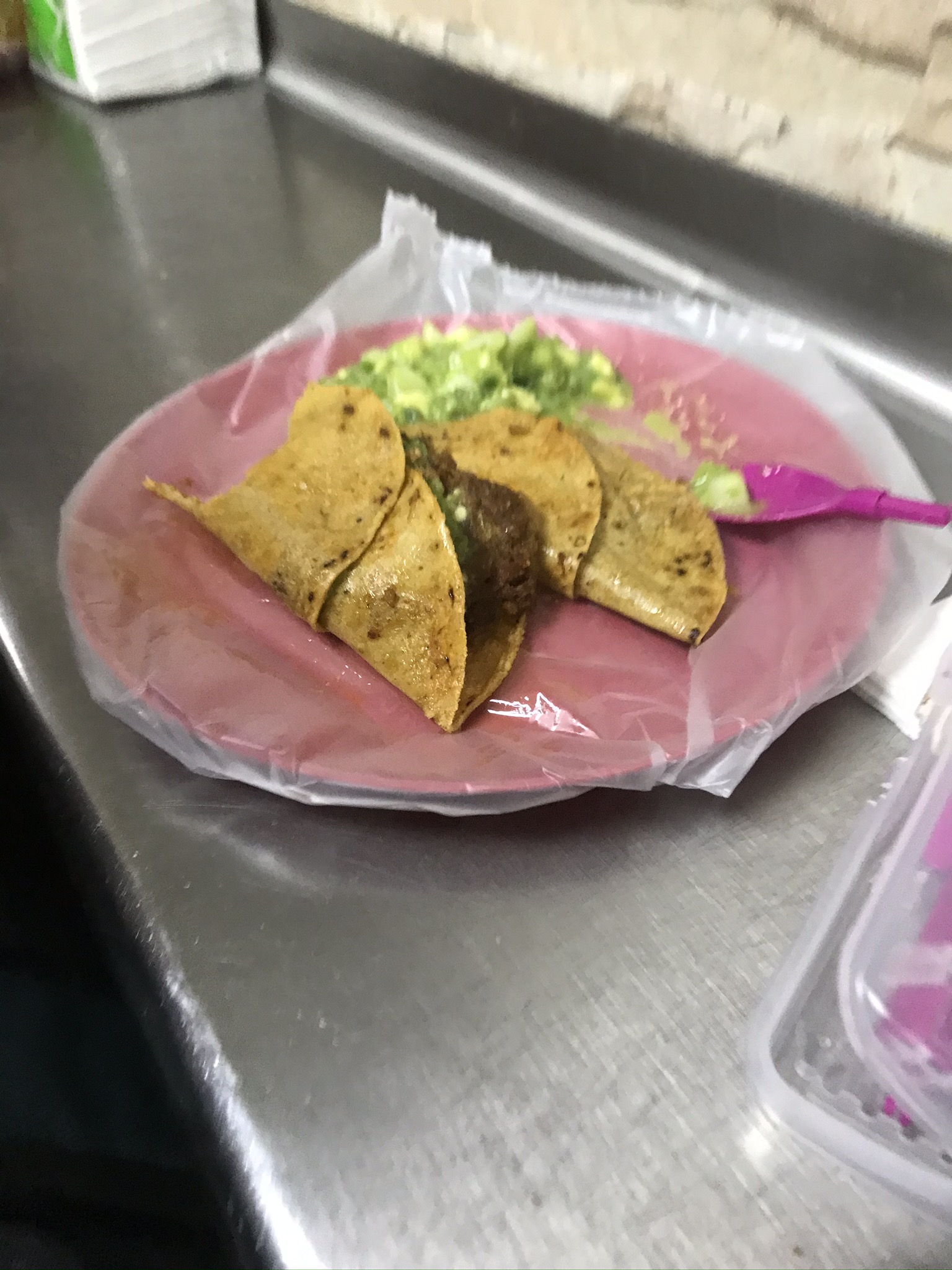
I must share our lunch experience. I very quickly glanced at yelp and saw a highly rated taco place and without reading anything we headed over-it is just a half block off the zocalo. The name is Tacos de Canasta los Especiales, and there was a large queue which David joined while I slid past the line to the inside to try and figure out the deal. In the back was a large multi-part room, lined with narrow stainless steel counters and every 5 feet or so enormous bins of chopped lettuce, pickled jalapeños and carrots, and seemingly gallons of a guacamole salsa. Every few feet the counters had stacks of napkins–this is an ‘eat with your hands’ place. I went back to David, shrugged my shoulders and in a minute we were at the first “station”. I asked “que es el sistema?” and he replied we paid for how many tacos we wanted, he then handed us a token with the number of tacos, we handed the token to the next guy who gave us two paper plates each with two tacos that he had scooped out of the basket in front of him, and we headed back to a counter to eat. We don’t remember what it cost but according to Yelp it’s 40 pesos for 5 tacos plus a drink. Suffice to say it was embarrassingly cheap, and they were delicious and the entire scene great fun. HINT: Carry some silverware with you–I have some snap together knife/fork/spoon “kits” in a little box that I bought at Cole Hardware in downtown SF. They sure came in handy here, as I didn’t want to leave a bit of the crunchy lettuce and jalapeños.

Palacio de Bellas Artes

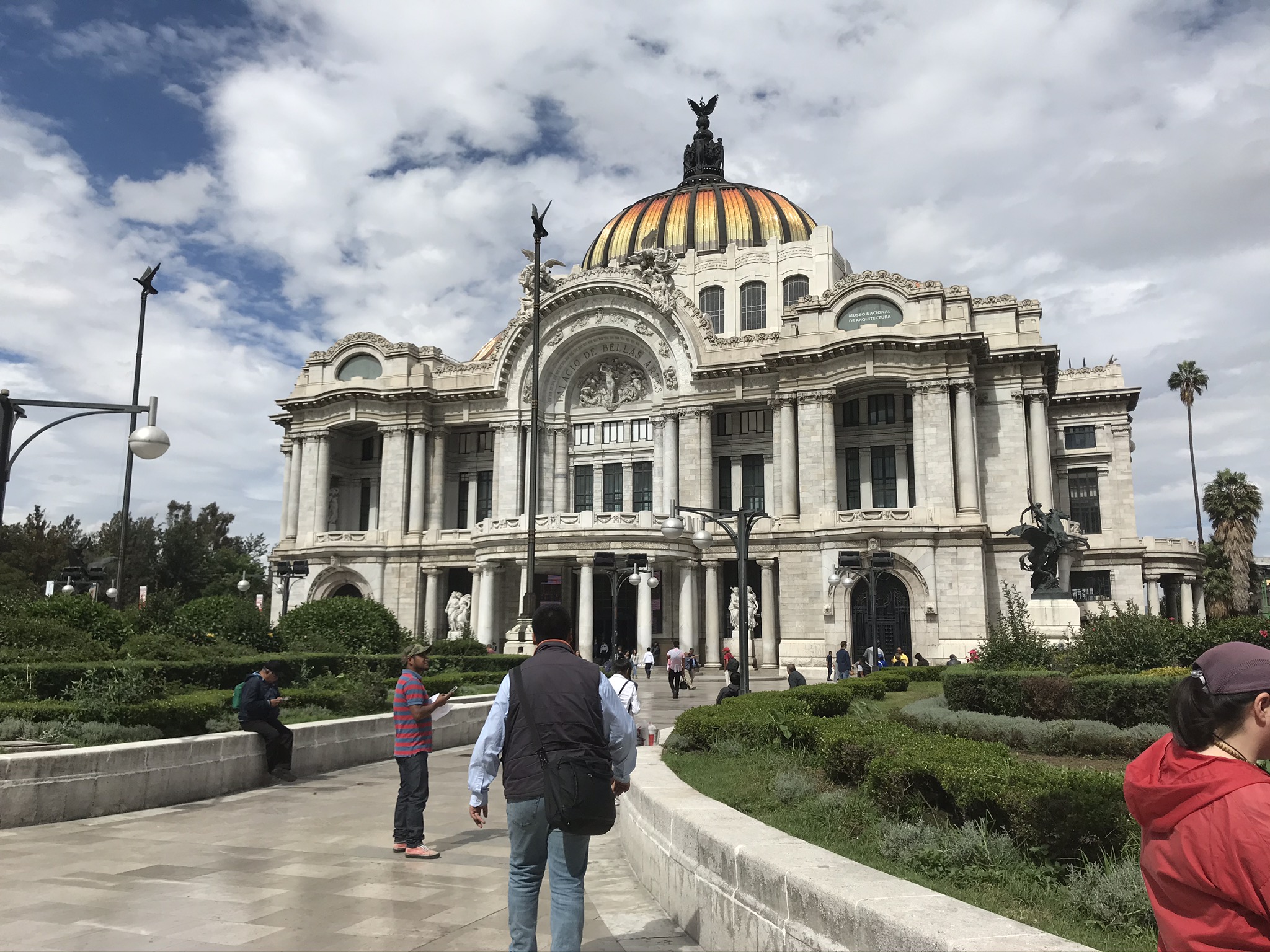
We decided to wander and ended up walking over to the Palacio de Bellas Artes where we enjoyed the beautiful architecture, murals, and a very fun temporary exhibit titled “Redes de Vanguardia” (networks of the vanguard) about Amauta, a Peruvian arts and politics journal from the 1926-1930 that for the first time brought indigenes art and culture to the fore. Seems so obvious now, but recognizing indigenes contributions was a breakthrough at the time.

Museo de la Ciudad de Mexico

This is one of those places that is terribly under-represented in the guide books. We went there our last full day in the city, and it was a wow. The building, just a few blocks off the zocalo, is lovely, the displays about the challenges of large urban centers is a multi-media wonder, and the information about the city itself—its history from pre-Hispanic to modern times is rich and entertaining. However, some Spanish is recommended as much of the information is not translated (though much is). There is an entire room devoted to explaining the many different jobs that keep the city running, from teachers to street food vendors to dog walkers to construction workers. Each wall is covered with photos and descriptions, and there are also five or six videos that profile work and workers…it was incredibly illuminating and it brings the people of the city alive.
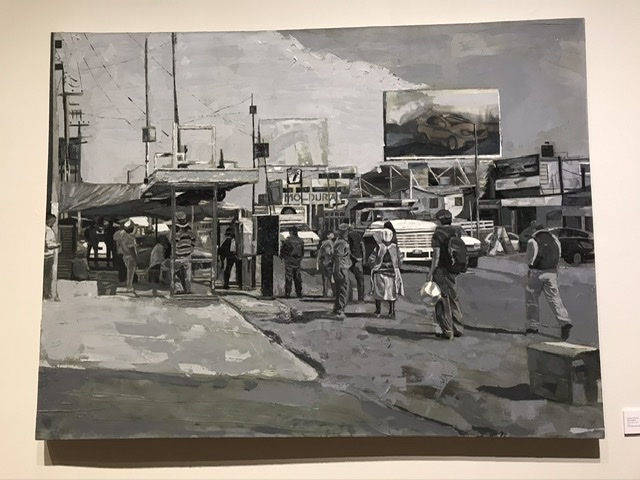
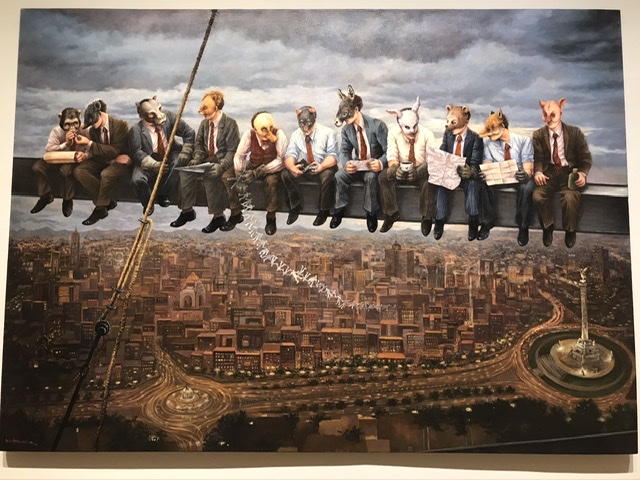
On the second floor are a series of art exhibits, including one that had just opened—we were so lucky!—that comprised four large rooms filled with mostly very large contemporary paintings of Ciudad de Mexico. We loved it.

Downtown on a holiday weekend

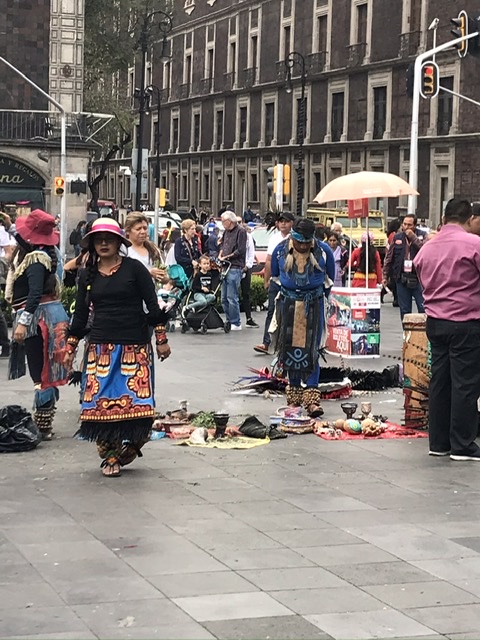
That last day, a Saturday, the zocalo was filled with tents. We asked our Uber driver what was going on and he said it was just “normal.” As we walked around we figured out it was a celebration/observation of life with a physical disability. For example, there was a footrace with paired runners, tied together at the wrist with one runner blindfolded. There were wheelchair races and apparently a race on crutches, as there were many pairs of crutches lined up against the fence. A short zipline was managed by members of the military helping kids go back and forth. We didn’t enter but it looked like a lot of fun, like a different kind of carnival. “Normal.”

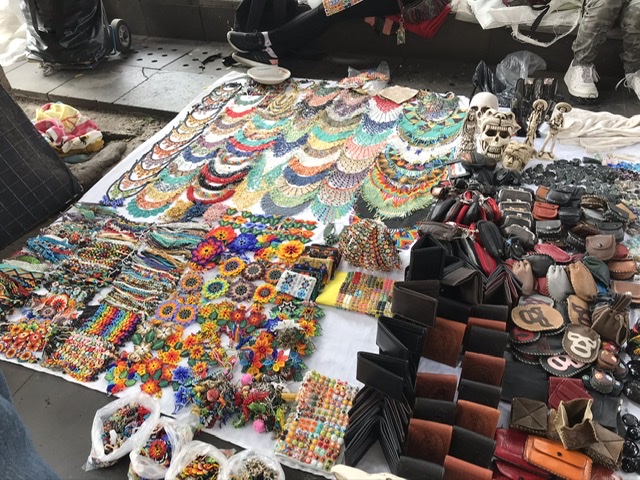
Naturally for Mexico, around the fair were artisan street vendors selling anything and everything. Something we had not seen before were maybe five or six spots where indigenes shamans (?) offering purification. Individuals stood with their arms out, eyes closed, as they were fanned with burning bundles of dried something that might have been sage, serenaded by conch wails, and otherwise rid of bad spirits. Intriguing, but I wasn’t brave enough to do it. Small children ran everywhere, and I had to photograph a group of 4-6 year olds sitting on the pavement trading Barbie and other doll clothes so intensely they were oblivious to anything happening around them.

From here we walked to La Ciudadela, an artisanal market. The market was really great and well worth a stop even though we had been shopping at markets for two weeks. The walk could have been a 15 minute affair but the crowded streets and vendors were too interesting to rush by and we spent about 40 minutes dawdling. I was hungry (surprising?) so kept stopping to ask street vendors “what is this?” I am still regretting not trying a “pata” taco–the customer who told me this mysterious ingredient’s name put her fingers to her lips, Italian style, gave a kiss and said “Muy rica!” A few blocks later, though, we came upon “Tacos de Tripa.” The cook pulled pieces of tripe out of a boiling caldron, chopped them into tiny pieces, tossed them on the steel grill where they became crispy, separated them into little piles each of which he covered with a tortilla, deftly flipped each over, crisping up the tortilla as well. I love tripe and was delighted to stop and order one, yes please to onions and cilantro, while a couple eating next to me asked “What is the word for ‘tripa’ in English?” (In Spanish of course.) And then they wanted to know the English word for caliente, hot, which I explained was the same as the word for picante (spicy). We agreed that ‘tripa’ (tree-pa) is a much prettier word than ‘tripe.’ Oh yes, the taco was delicious.

Wandering Mexico City

As everywhere we have been in Mexico, this is a friendly, comfortable city where a little Spanish will get you far, most everyone is happy to explain or help, moving around is straightforward, Uber is ridiculously cheap, and the food is plentiful and delicious.

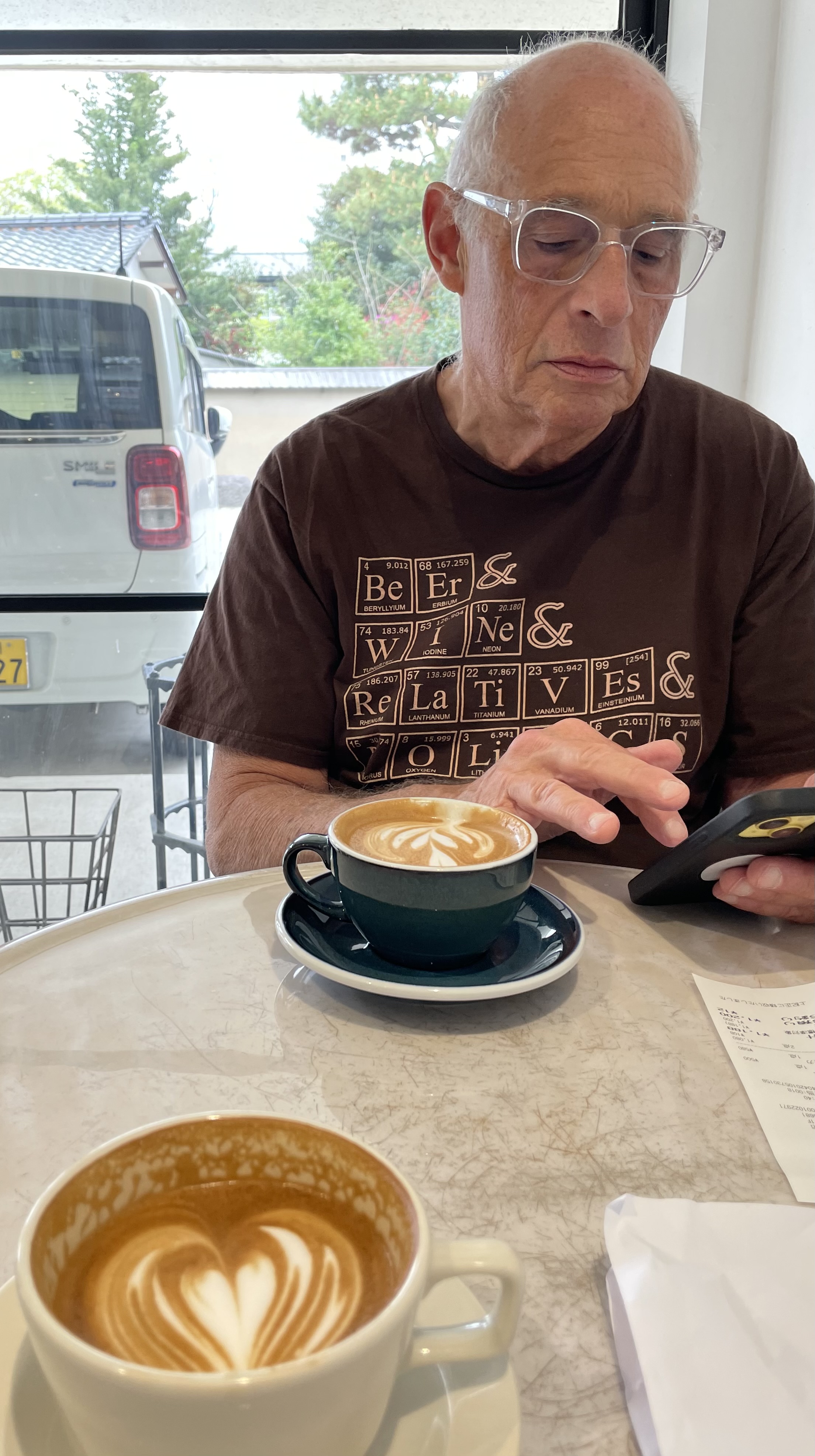
We have started each day with coffee and a pastry (if you are in Roma Norte we highly recommend Buna for croissants—cuernitos—of the highest quality and especially well made espresso drinks), stopping at a fruit/juice street vendor for what may be a quart of freshly squeezed orange juice for 40 pesos or so, then after a refresh at the hotel calling Uber to head to a museum. From there we wander to a taco stand or market or hole-in-the-wall place for lunch, and either walk and wander or call Uber to take us back to the hotel to spend the rest of the day in and around the Roma neighborhood.

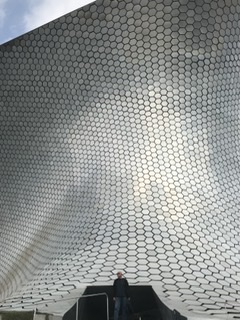
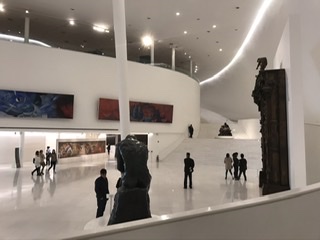
Yesterday, for example, we visited the Museo Soumaya in the Polanco neighborhood, known as the Beverly Hills of Mexico City and reputed to be the most desirable real estate in Latin America. The museum contains Carlos Slim’s personal collection. The guidebooks call it “eclectic” and I would rename it “Stuff I Bought.” It is the most bizarre, oddly organized, hodgepodge of an art museum imaginable, housing everything from an enormous (too much so) collection of Rodin to postcards and watches. The building was designed by his son-in-law and is, shall we say, striking. The interior has an open stairway and ramp which wind from level to level and room to room, and I was freezing the entire time because there is a wind tunnel effect adding to the oddness of the experience. Sr. Slim has no apparent discipline or taste, and while the collection includes many paintings from recognizable artists I learned something I’m not sure I wanted to know—even the biggest names (Renoir, for example) did some truly mediocre work. But it was free, we toured with energy, and were out in perhaps 90 minutes.

Having no interest in walking around a cliche rich peoples’ neighborhood to ogle houses or Chanel shops, we hopped an Uber and went to the Friday market in Condesa to find something to eat. Now, that was more like it.
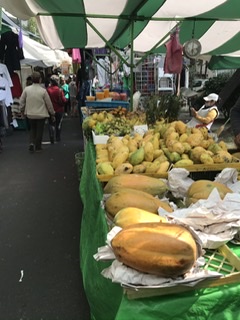
Below note the beautiful blue corn gorditas and quesadillas. A very nice man in front of the cooks is there to explain what is on offer and take orders. Gorditas were “chicharron” but in truth that meant cheese, nopales, and a few other vegetables stuffed into fat tortillas that were split like pita and grilled. The mushroom quesadilla was alas eaten too quickly to make it into the photo. I was happy to see a juice vendor so I could get a picture showing the enormous number of small, green and yellow orange rinds piled into the two big bags as he grabbed halves, pulled down on the juicer, and tossed them aside in a single motion. Poetry.

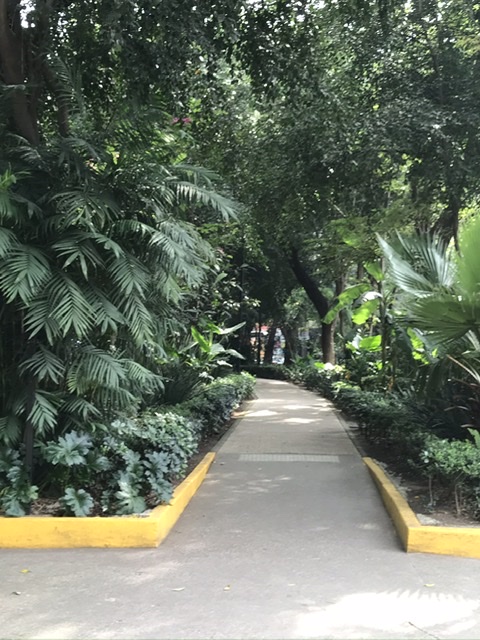
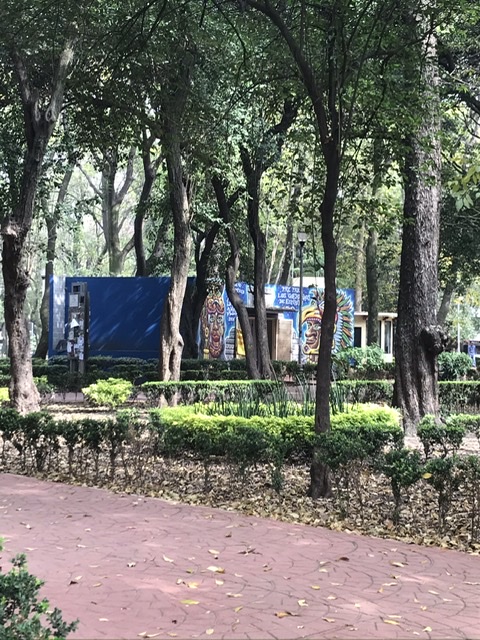
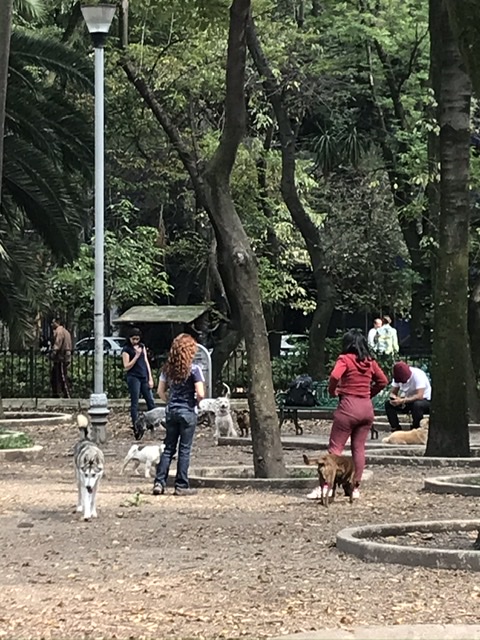
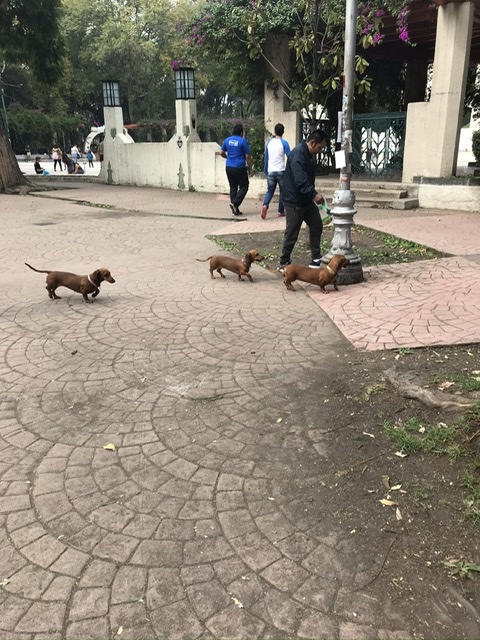
It was about a mile’s walk back to our neighborhood in Roma, so we decided that would make a perfect end to the afternoon. We were correct—discovering the beautiful, dog-filled Parque Mexico and the enchanting architecture of Condesa, and before we knew it we were back “home.”

Trotsky and Casa Azul

Our friend Christina had encouraged us to check out the Coyoacan neighborhood and that meshed nicely with our plan to see Trotsky’s house and small museum as well as Casa Azul, the home of Diego Rivera and Frida Kahlo, two worthwhile sites only a few blocks apart.

We had both been ignorant of the Trotsky story, and both had the same revelation about how the heck Trotsky ended up living, and being assassinated, in Mexico City. Turns out Rivera, also a socialist, had prevailed on the government to give Trotsky asylum, and even had him as a houseguest for a few months (during which there was apparently a strong flirtation between Frida and Leon).

Trotsky comes across as a lovely guy, doting on his chickens and rabbits while he wrote obsessively, often using a dictation machine. It was while he was working at his desk that the assassin came up behind him and hit him in the head with an axe. It is a very small, traditional, modest casa and he and his wife were admired for adopting a completely Mexican life.

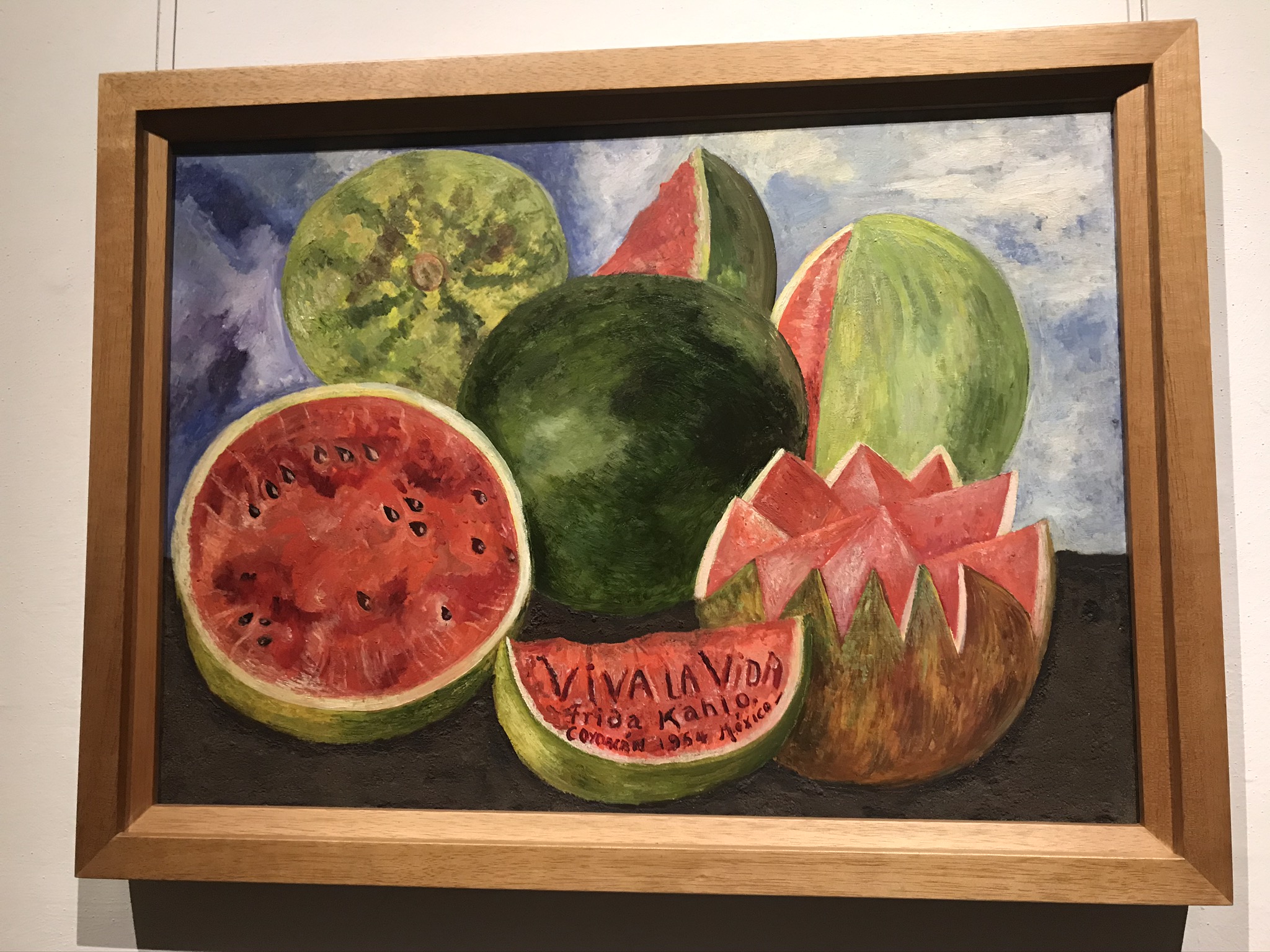
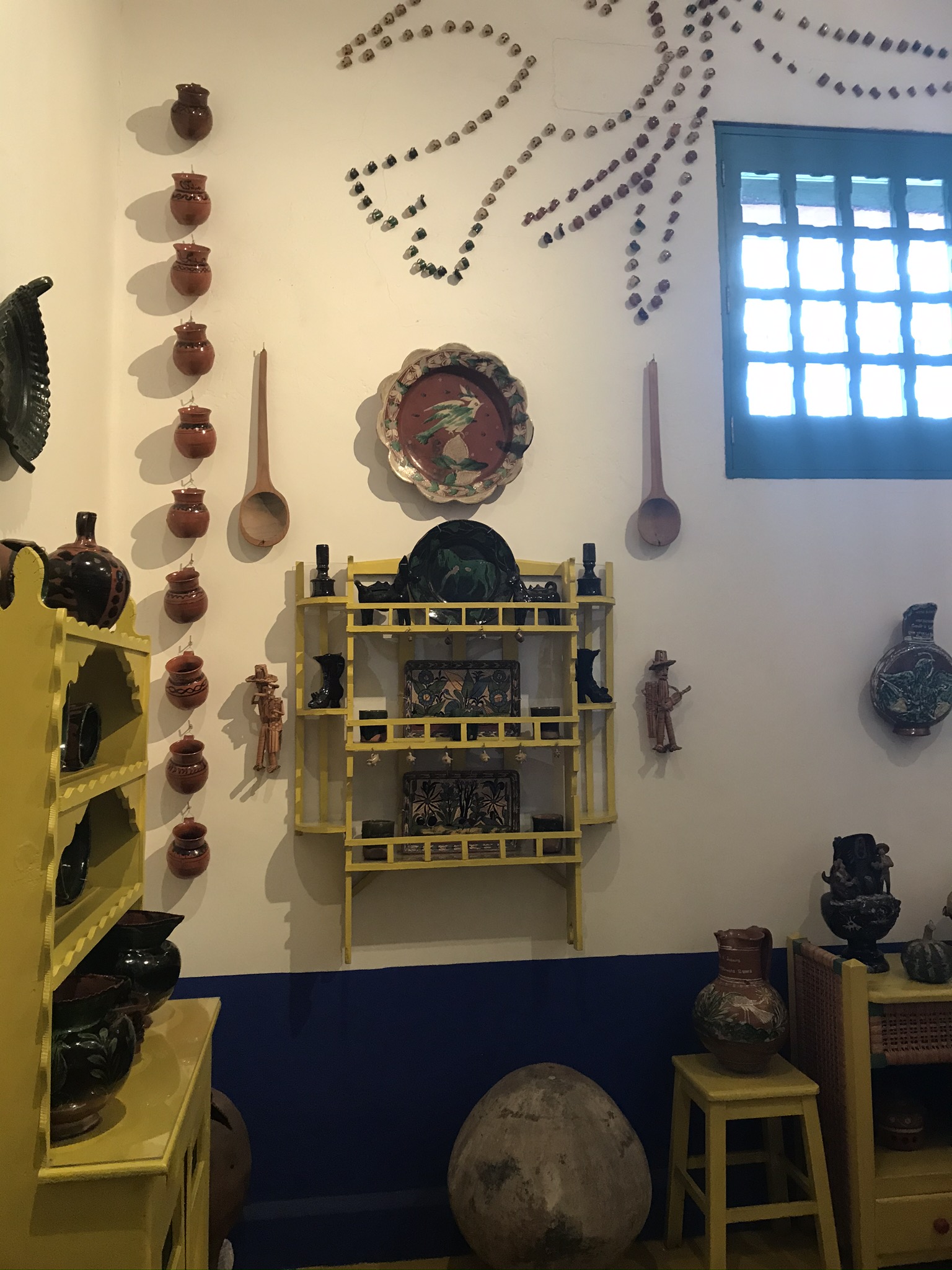
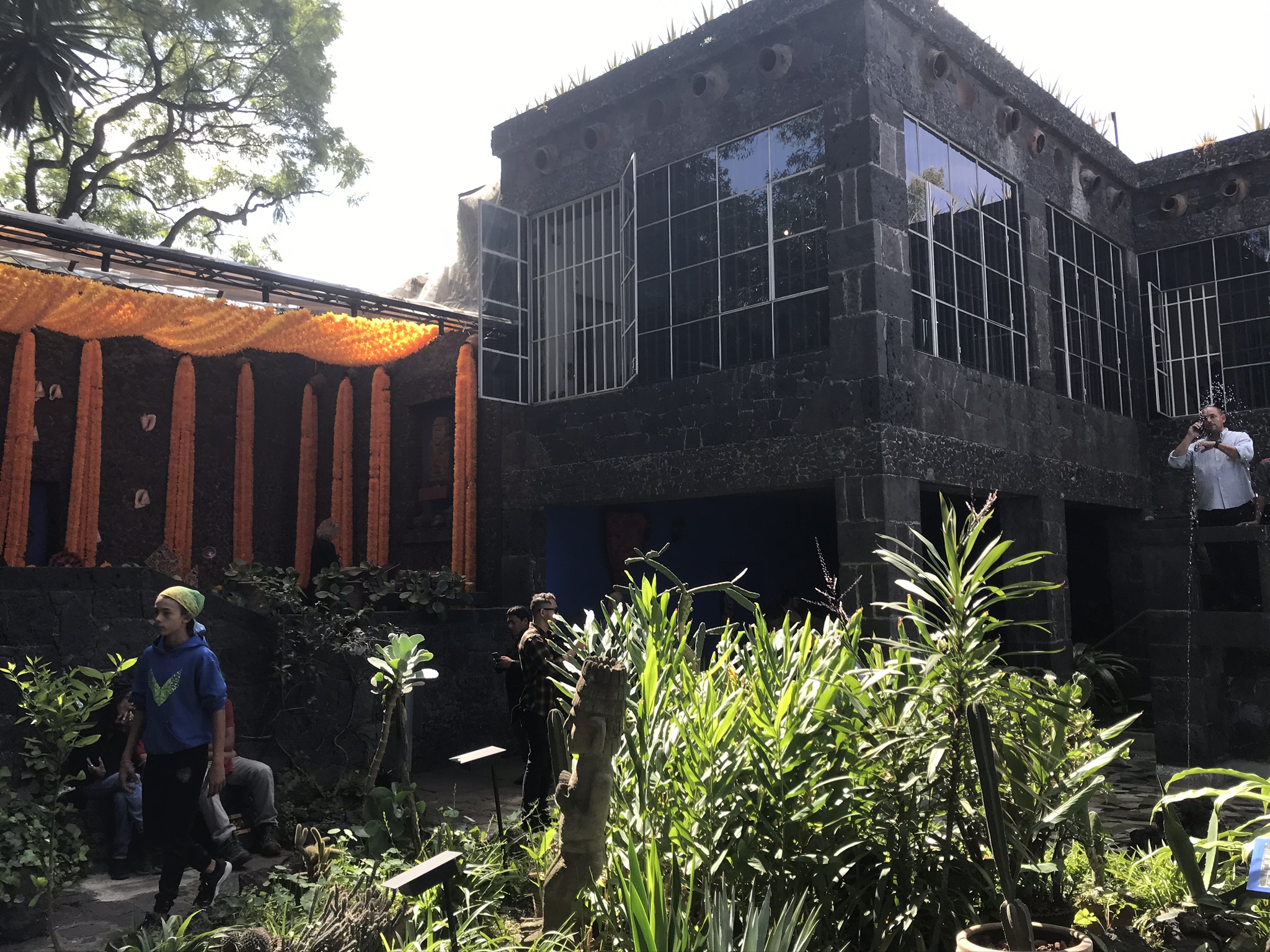
Now, Casa Azul is something else again—filled with art, curios, gardens, studios, traditional kitchen (no electricity or modern accoutrements of any kind), and the very sad remnants of Frida’s pain-filled life. In spite of her physical misery, however, she had many lovers and intense relationships while at the same time suffering greatly from Diego’s affairs. We rented the audio-video tour and highly recommend it.

We walked on a few blocks to the small mercado looking for lunch, and ended up in a lovely conversation with a couple from Montreal, ate an enormous lunch at a little counter in the middle of the market, walked for a while in the lovely, quite, cobblestoned neighborhood of Coyoacan, then took Uber home to Roma Norte.

The symbol of Coyoacan is the coyote, and they’re everywhere.

Museo Nacional de Antropologia

Everything as advertised

As we were leaving the National Museum of Anthropology I flashed on the Prado in Madrid. Like our experience there last year, this museum totally lived up to the hype and we had used every bit of energy to finish seeing everything in the one day we had dedicated.

This enormous architectural wonder is an epic history of the many peoples who comprise Mexico, starting from the latest understanding of where they came from (across the Bering Straight) and how the many cultures arose, migrated, combined, changed, and occupied the many distinct regions of this enormous country.

One thing has struck us over and over—how old and complex pre-Hispanic Mexican history is. These peoples built enormous cities (Teotichuacan had 75,000 people at its peak), conquered and reconquered each other, left millions of artifacts of artistic and historical value. Thank goodness they believed as the Egyptians did that when a person of note is buried, examples of the items that support daily life were buried with her. This custom has made recreating long extinguished cultures possible…and every year the archeologists uncover more.

The collection is organized historically in rooms 1-6, and then geographically—Oaxaca, Gulf Coast, Maya, West Mexico, and Northern Mexico. Some displays are intimate, some, such as the enormous room 6 dedicated to the Mexica people (formerly Aztec) where the famous stone “calendar” hangs in the center, are huge. This room also has a large diorama of a Mexica (pronounced me-zhi-ca) market—which looks very much like the markets in Mexico today. One of the more interesting items is a codex, unfolded from its accordion form, that details the migration of the Mexica over many years from place to place. A video explains each page and what the symbols and drawings mean.

The charming figures at the top of this post are from the preclassic era, 2500 BC to CE 100. A figure sits with a dog on her lap, giving a kiss. How lovely is that?

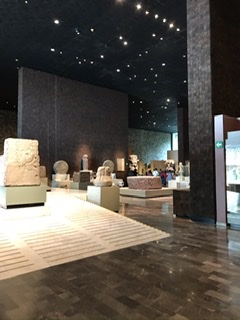
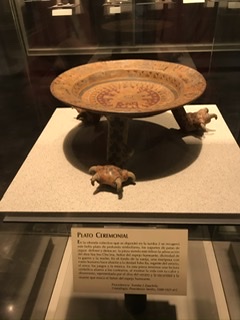
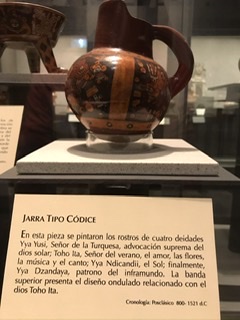
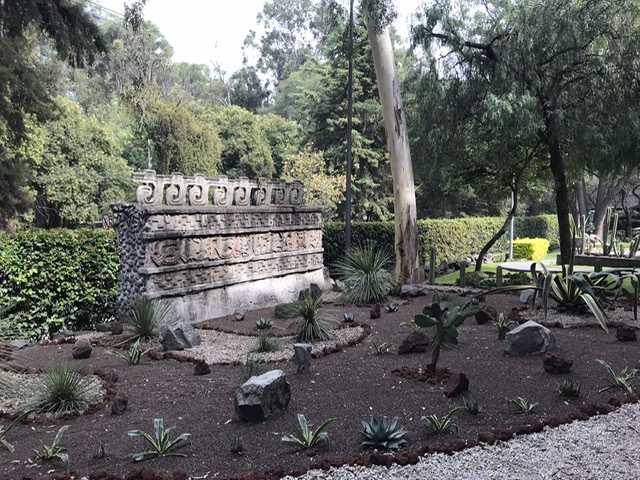
I did my best to control the impulse to photograph everything, so here are a few representative pictures which I hope convey something of the grandeur and beauty of this treasure.

The last photo is one view of a series of gardens which line the outside of the historical wing—each further displaying items representative of the era, enabling you to walk outside from any gallery, very lovely and peaceful.

Midday we were suddenly hungry and found the cafe, a fixed price cafeteria with a variety of Mexican and Euro-American foods. As with most everything in this friendly country we had no opportunity to try and figure it out ourselves. We were immediately approached by a woman who explained the system, showed us to a table, took our drink orders and welcomed us to be comfortable. Refreshed, we headed to the last few rooms on the ground floor and then upstairs where the distinct cultures and regions of the country are shown as they live, work, make art, and worship today.

Una experiencia muy linda. Exhausted and happy, we called an Uber and returned to Roma Norte and our hotel to face our next big decision: Where to have dinner!

The biggest pyramid in the world is in Cholula

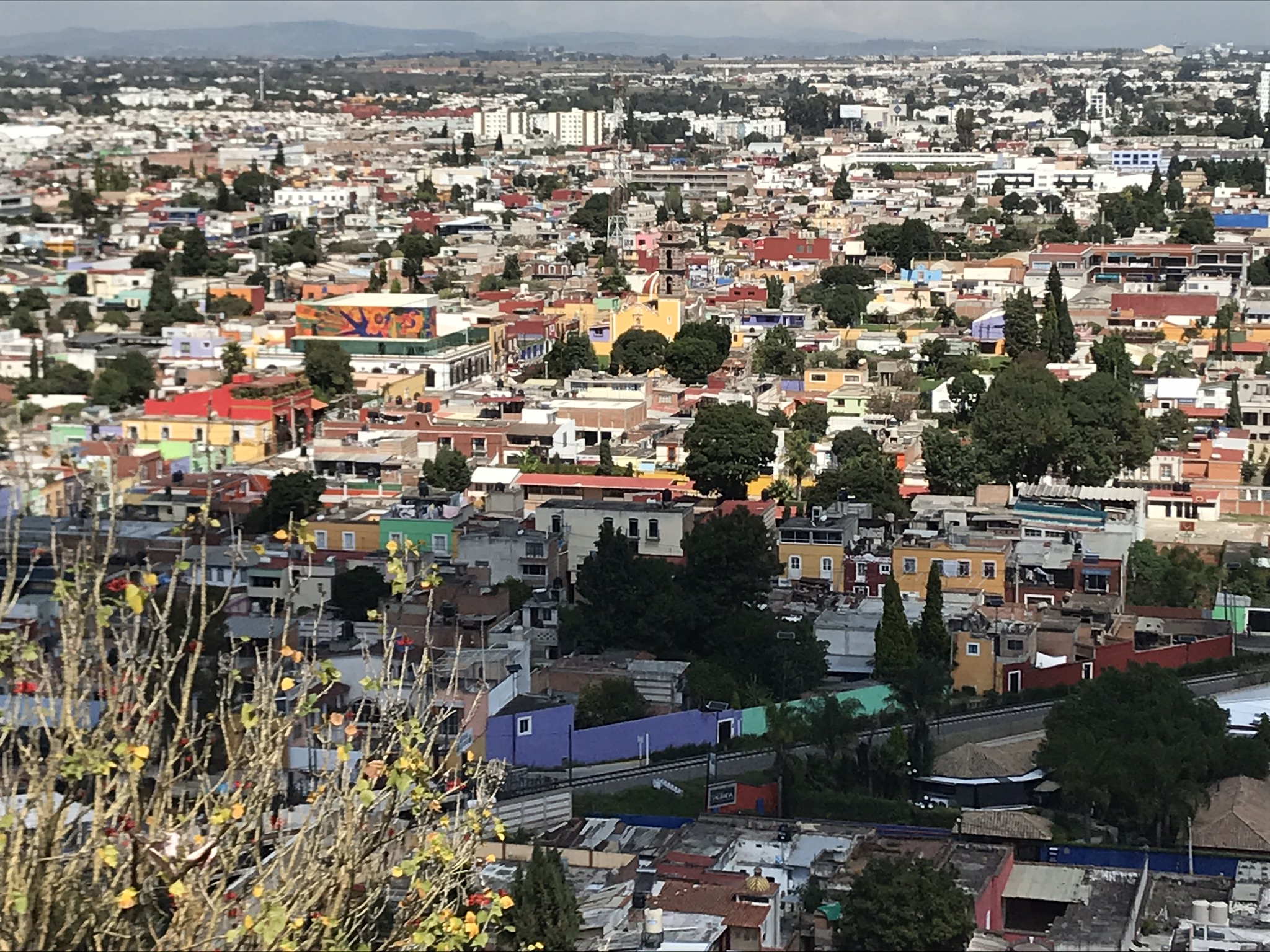
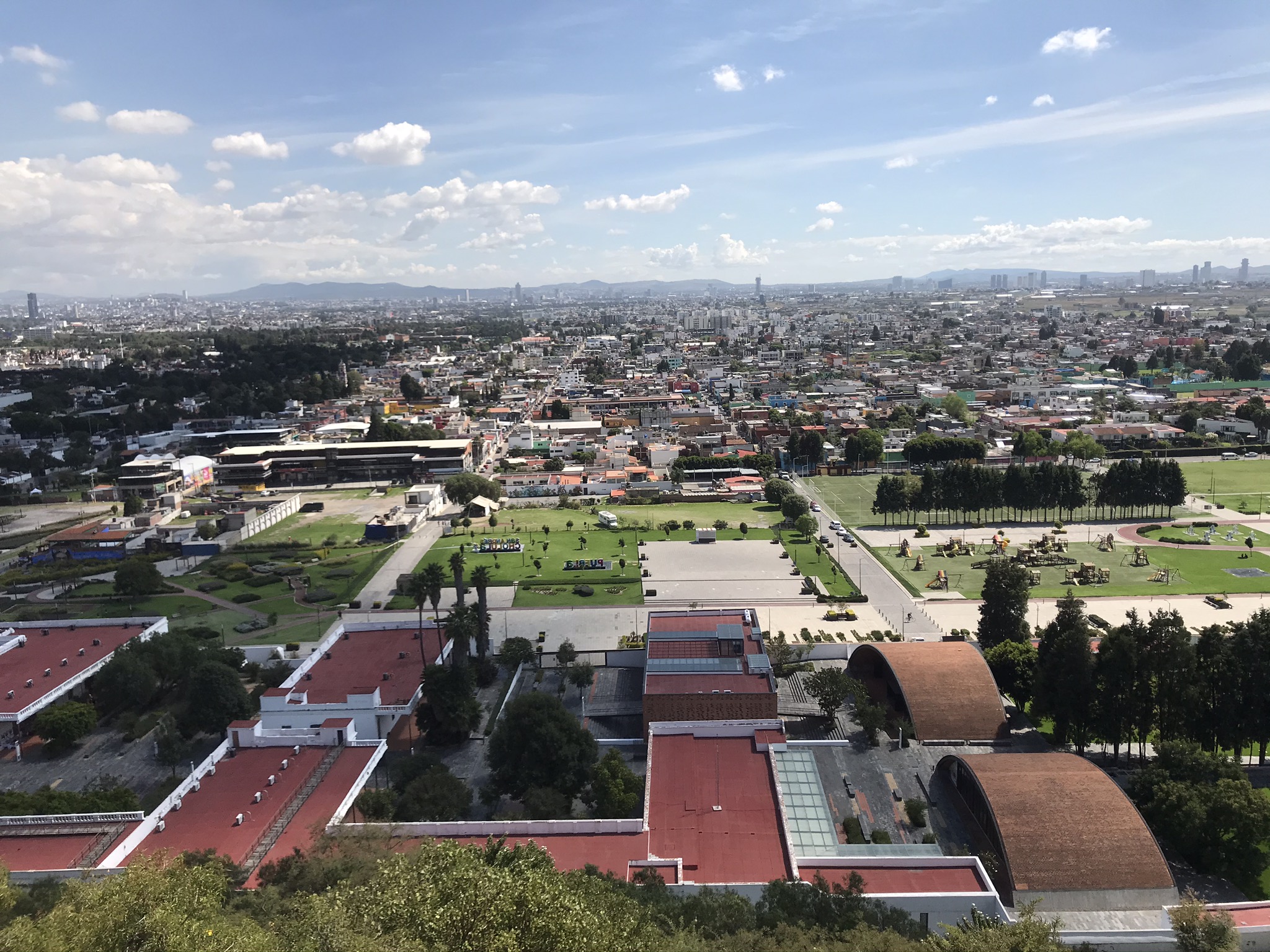
Cholula is maybe a 20 minute Uber from the historic center of Puebla, and yes, it has the very biggest pyramid on earth. It is also a lovely town easily navigated on foot, and we spent several hours in the archeological zone, as it is known, walking through the slightly scary tunnels, wandering the ruins that have been excavated, and then took a walk through the ‘downtown’ where we had a delicious lunch and a walk through an odd church right across from the zocalo. It made for a good day trip.

The pyramid was for centuries thought to be a big hill with a church on the top that was built in the 1600’s. A thing about Mexico—it is so much older than the US, with many buildings and churches still standing that were built in the 16th and 17th century. Bits and pieces were unearthed over the last 100 years or so, and now there is even a small museum (very small) that discusses the history of the area, once a marshy lake, and what they have been able to decode about the different groups which lived, died, and moved on over the centuries.