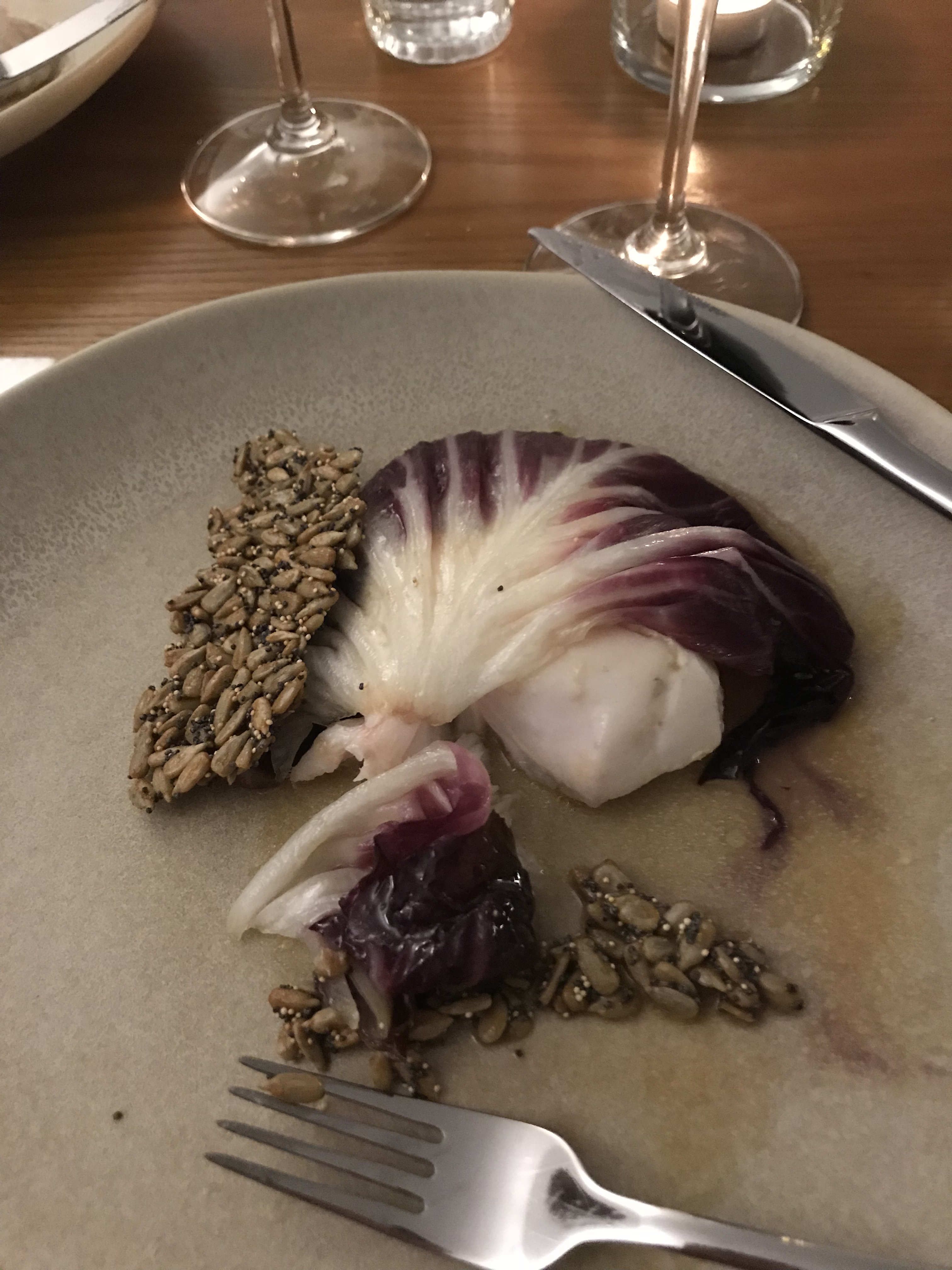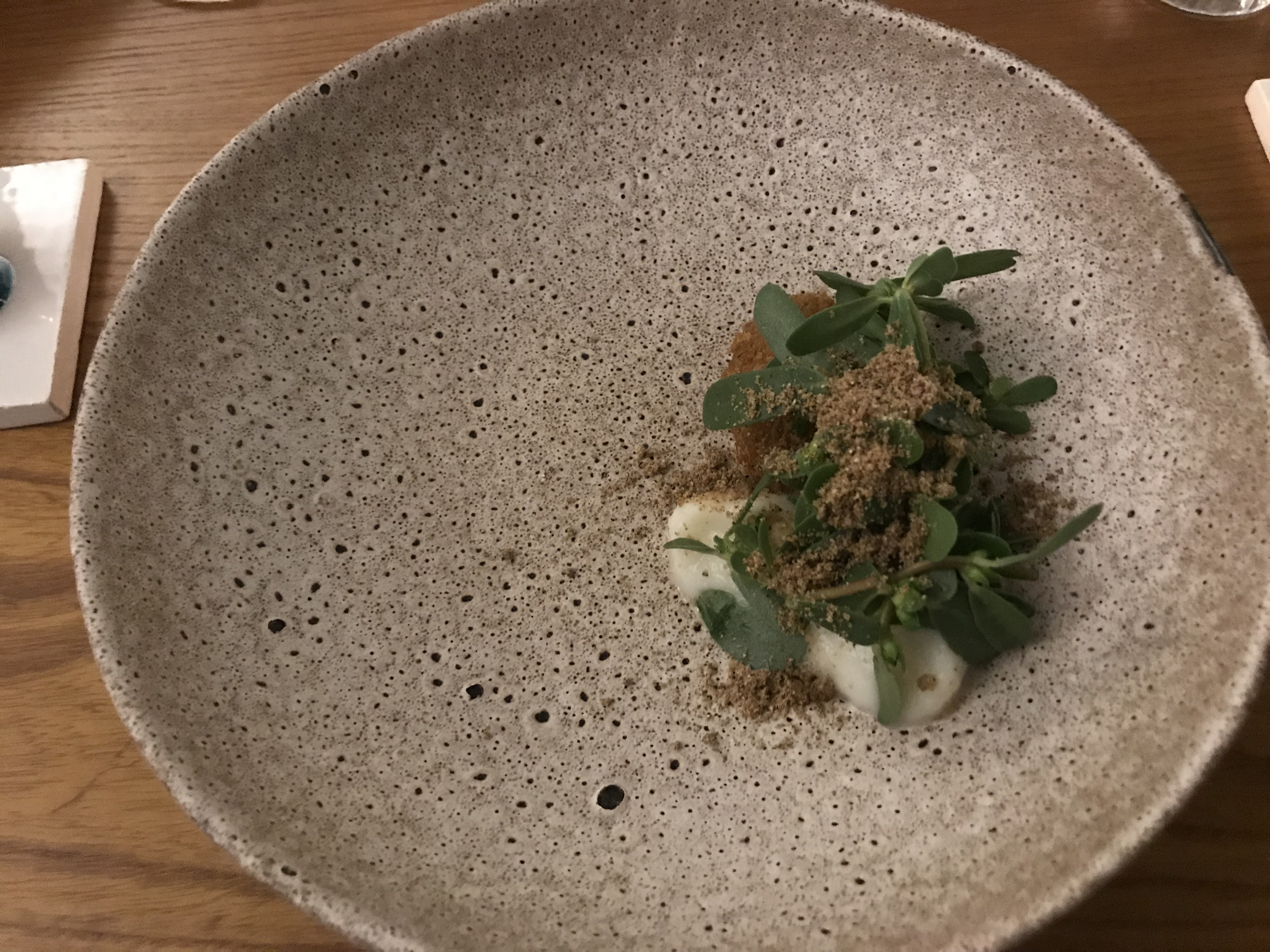
Porto Eats

All we can say is Spain had better be good, because eating in Portugal is a delight.  And further, we can say we sure are glad we are walkers…a lot of calories to use up!

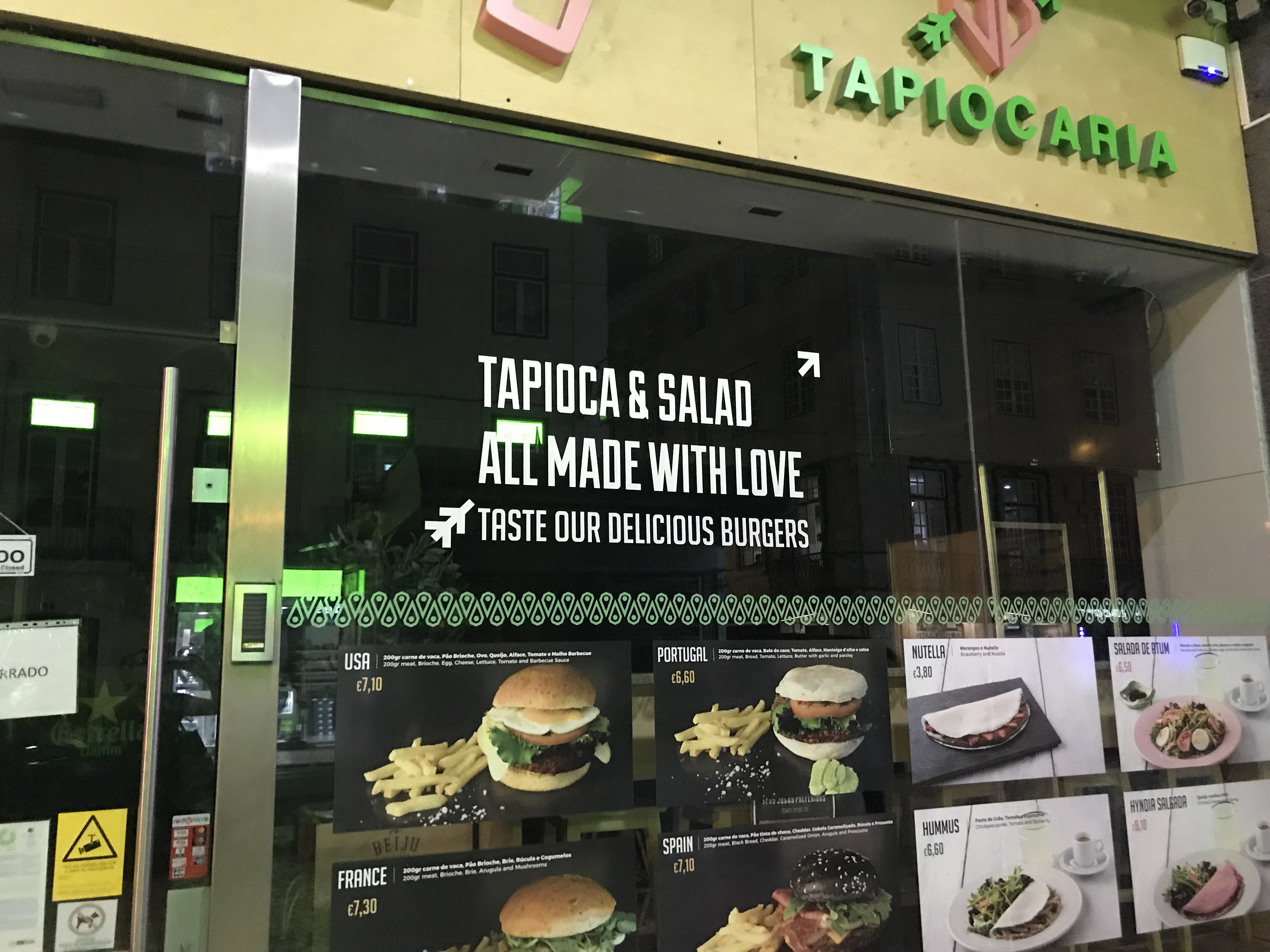
Our three and a half days in Porto were spent about 80% walking and 20% eating. The many, many restaurants are almost entirely Portuguese food, though we saw perhaps 2 Japanese and a few French.

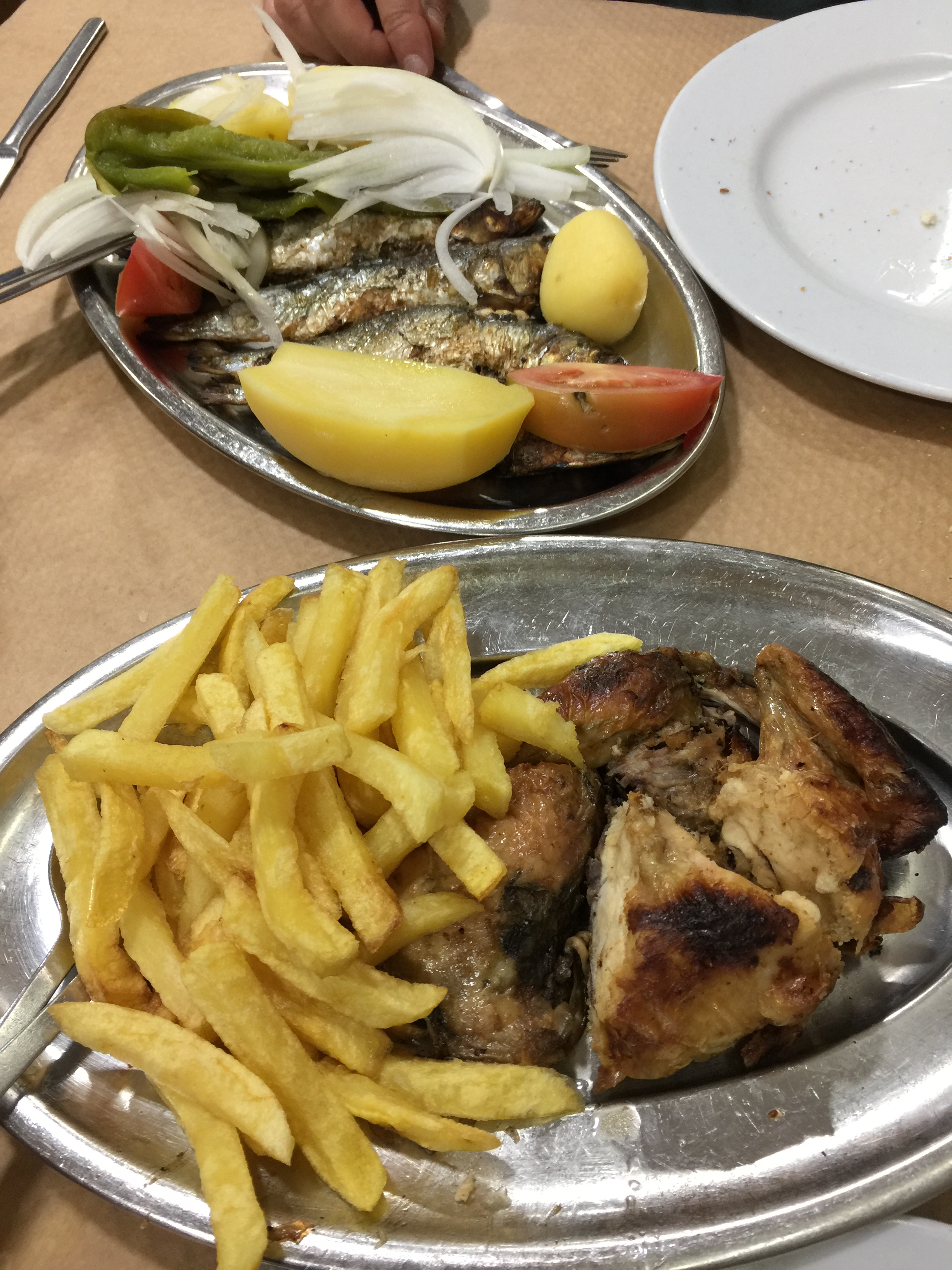
The food prices are so low that it was a bit confusing. For example, at Pedro Dos Frangos the menu had two prices for everything, one in a column marked “1” and the other marked “1/2”.  Our waiter almost frantically dissuaded us from ordering the serving for 1. He was entirely correct. David struggled, sure that a 1/2 serving of sardines was insufficient, but his order had four eight inch grilled sardines, plus vegetables. This followed a 5€ appetizer, a large dish of octopus salad (so tender!). My so-called half order of grilled chicken was a mountain of fries and I left a large piece of chicken unfinished. Similarly, I struggled with how much wine to order–again at the urging of the waiter I settled on the small pitcher (less than 2€) which was three full glasses and very good.

Walking home from our first dinner we saw a captivating window–a man scooping meat from a large kettle of thin, reddish sauce, stuffing it into a small roll, giving it a quick half dip in the sauce, and tossing it on a small plate. The restaurant, Conga, was our destination the next evening and again for our last day’s lunch. The sauce was very slightly spicy, the meat tender, the entire sandwich addictive. The bacalau fritters were a nice fried addition…ensuring the meal wasn’t unacceptably healthy.

Our first day’s lunch and last evening’s dinner were at Tripeira, just a block or so from our apartment and found on Yelp. I was eager to try the tripas Porto style, which is meltingly tender tripe with white beans and chorizo, garnished with shredded cold chicken breast. I know. Strange combo and delicious. Speaking of strange combos, David had to try the francesinha, a Porto specialty available in many restaurants including one or two that serve nothing else. A “sandwich” in that there are two slices of bread, but this is knife and fork food and almost evil in its components and great, if intense and a bit salty, taste. In between the bread is ham, pork, cheese, covered with a fried egg and a red sauce. I am anxious to ID the sauce ingredients, as it had a hint of the dried red chilies in enchilada sauce but that would be a surprising addition. The whole thing is hot, so the cheese is a melted stringy mess. We shared one the last day as no doubt this is available nowhere else in the world. Yum.
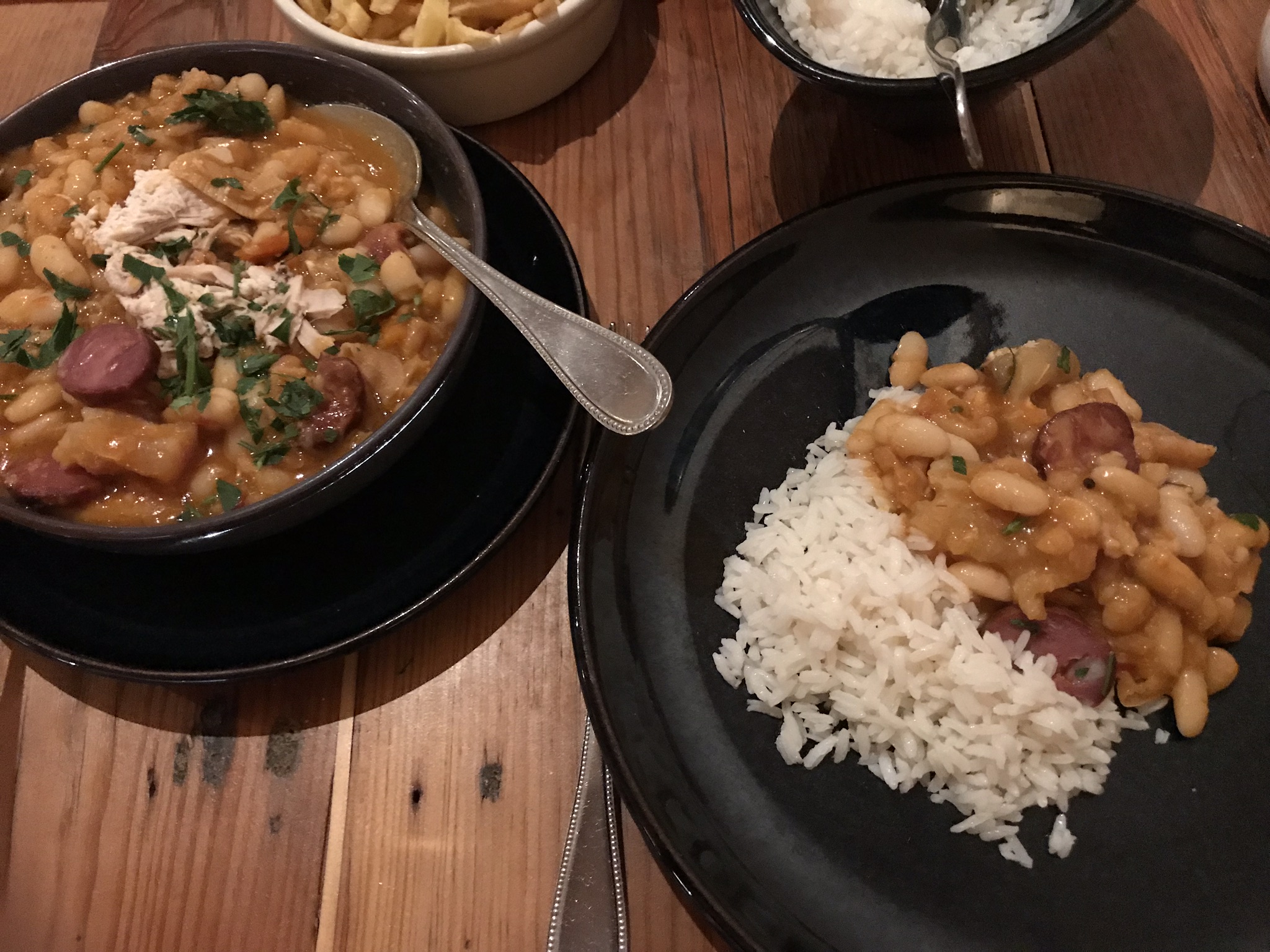
We decided to splurge a bit our final evening, returning to Tripeira. It is such a lovely restaurant and the service is attentive, friendly and welcoming. We had walked quite a bit that last day and were famished when we arrived so decided to get a bottle of vinho verde and an appetizer plate to share.

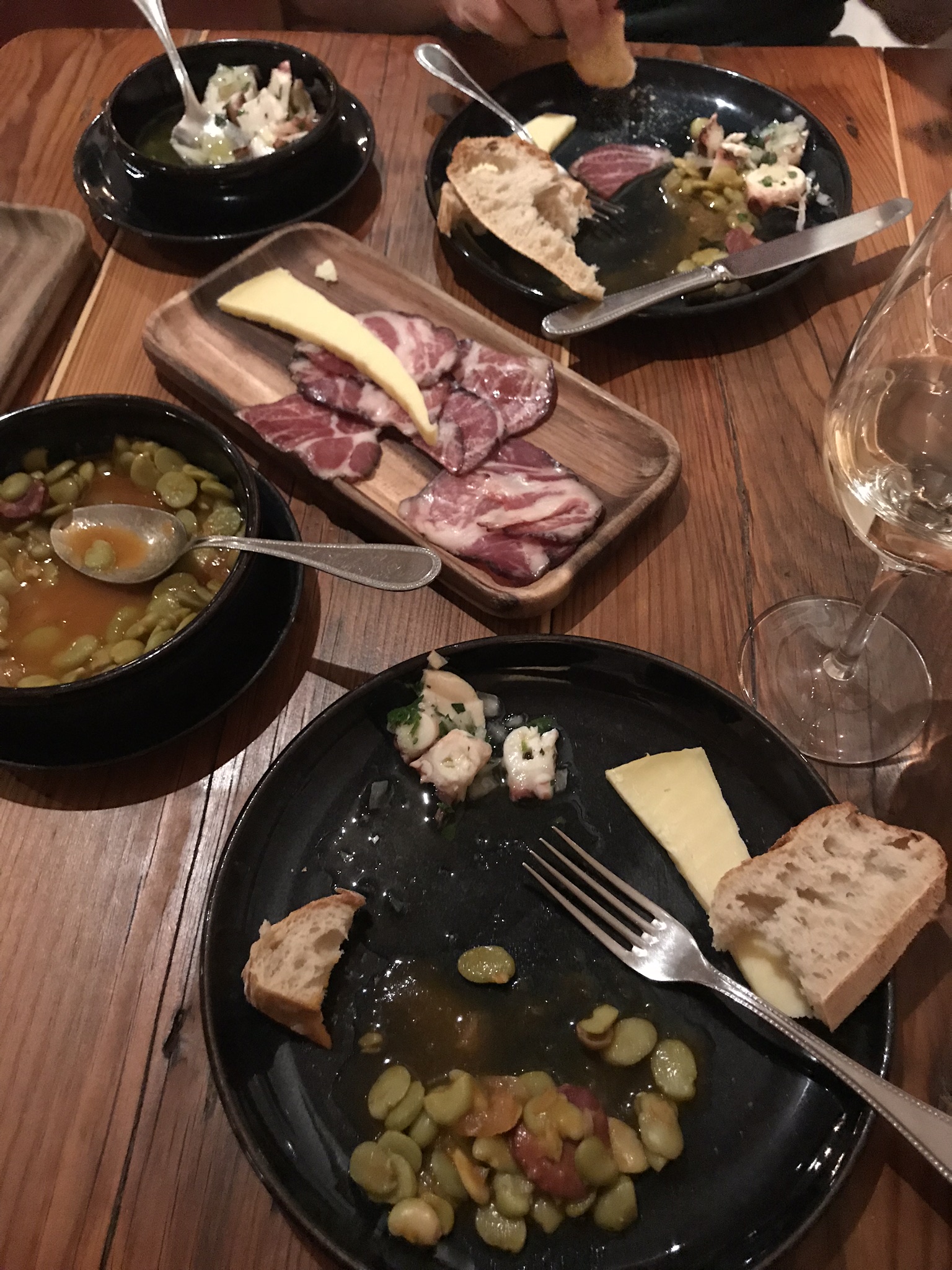
It was generous–and we ate everything. A platter of thin, fatty, intense sausage slices with Azores cheese, a dish of what the menu called stewed peas with chorizo and was the tenderest fava beans I have ever had, and octopus salad. Again, the octopus was beyond tender in a vinagrette with diced celery and sweet diced onion. Thank goodness we had bread to soak up the fava bean liquid and the vinagrette. As a main course David had the tuna, in smallish pieces and cooked rare, perhaps the best I have tasted (we traded bites), and I had the sea bass, which was two thin filets, potatoes, and a bed of roasted vegetables. A fantastic final meal in beautiful Porto.

Pastries

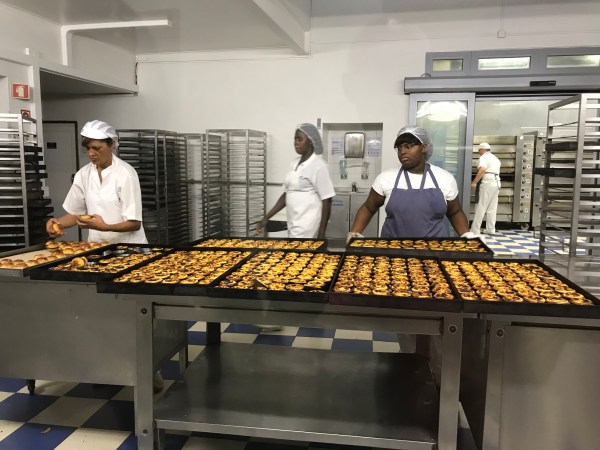
The variety and quantities are astounding. We ate our fill of pastels de nata, napoleons, croissants (which in Portugal are more like a sweet egg bread than a French style laminated pastry). Even with all our walking we could only fit in so much!

Conservas

Portugal, like Spain, treasures its canned fish products and the variety of types and brands is overwhelming. We walked by a few “petiscos” places, tiny snack restaurants, which had a menu of conservas offerings but we didn’t try any, wanting to save our appetites for meals. There are tourist-aimed specialty conservas stores, and delis with wine, port, cheese, and preserved meat as well as, typically, a wall of tins with the many brands and types of conservas.

B79538E5-1EC4-42FF-87AE-287E66F94928

We had stopped into one in our neighborhood the first day to ask a question…the man behind the counter spoke English and answered our question so cheerfully that our last day we returned to buy our souvenir conservas from him. He was so kind to pull down a variety for us, telling us what he especially liked, and we purchased 10 or so. Prices ranges from 2-5€. Now we are condemned to carry our little shopping bag of canned fish all over Spain, but I was fairly certain “latas” in Spain will be no higher quality and more pricey. We shall see…as I write this we are on the plane to Barcelona.
Porto—Let’s Start With The Architecture

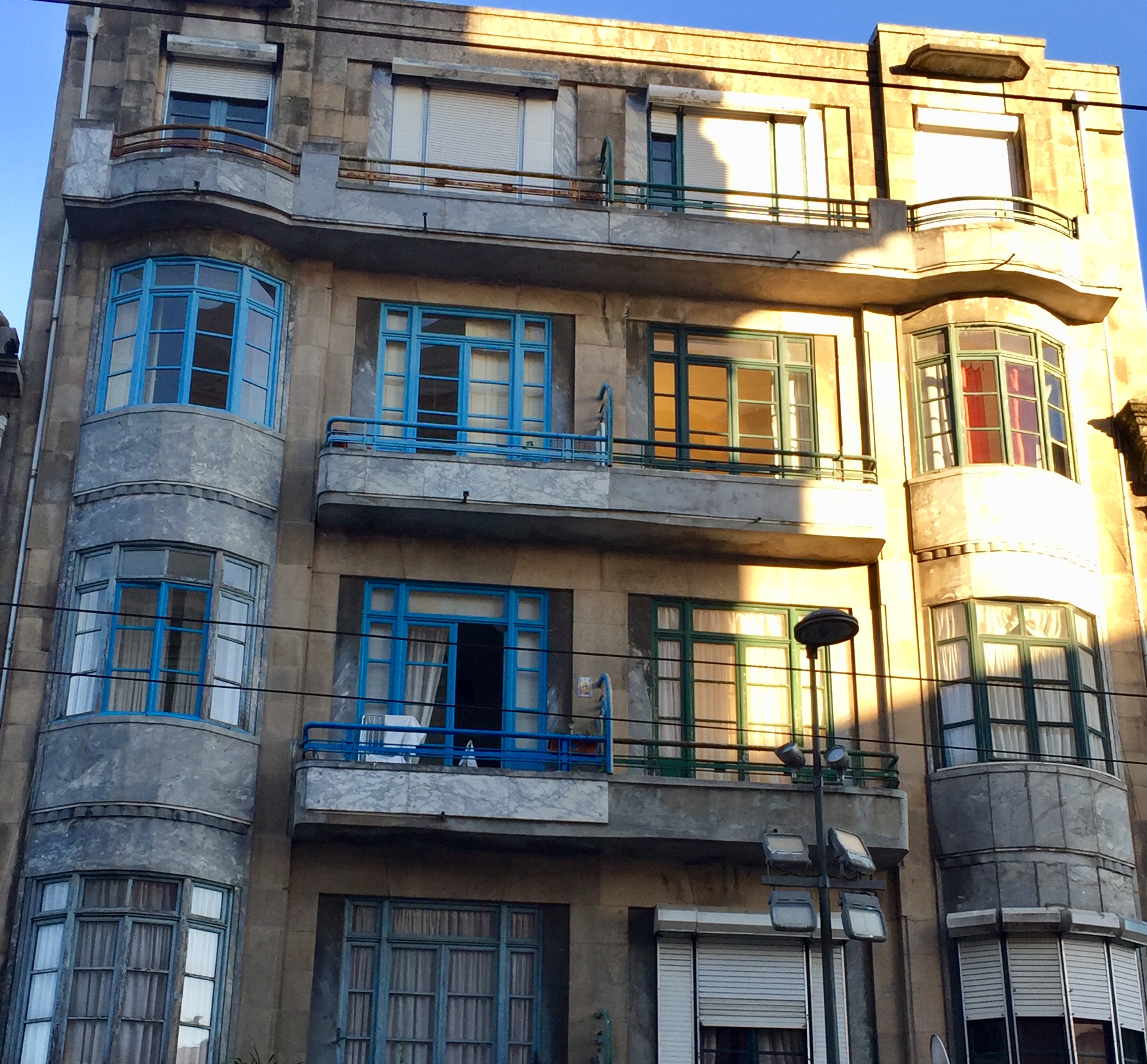
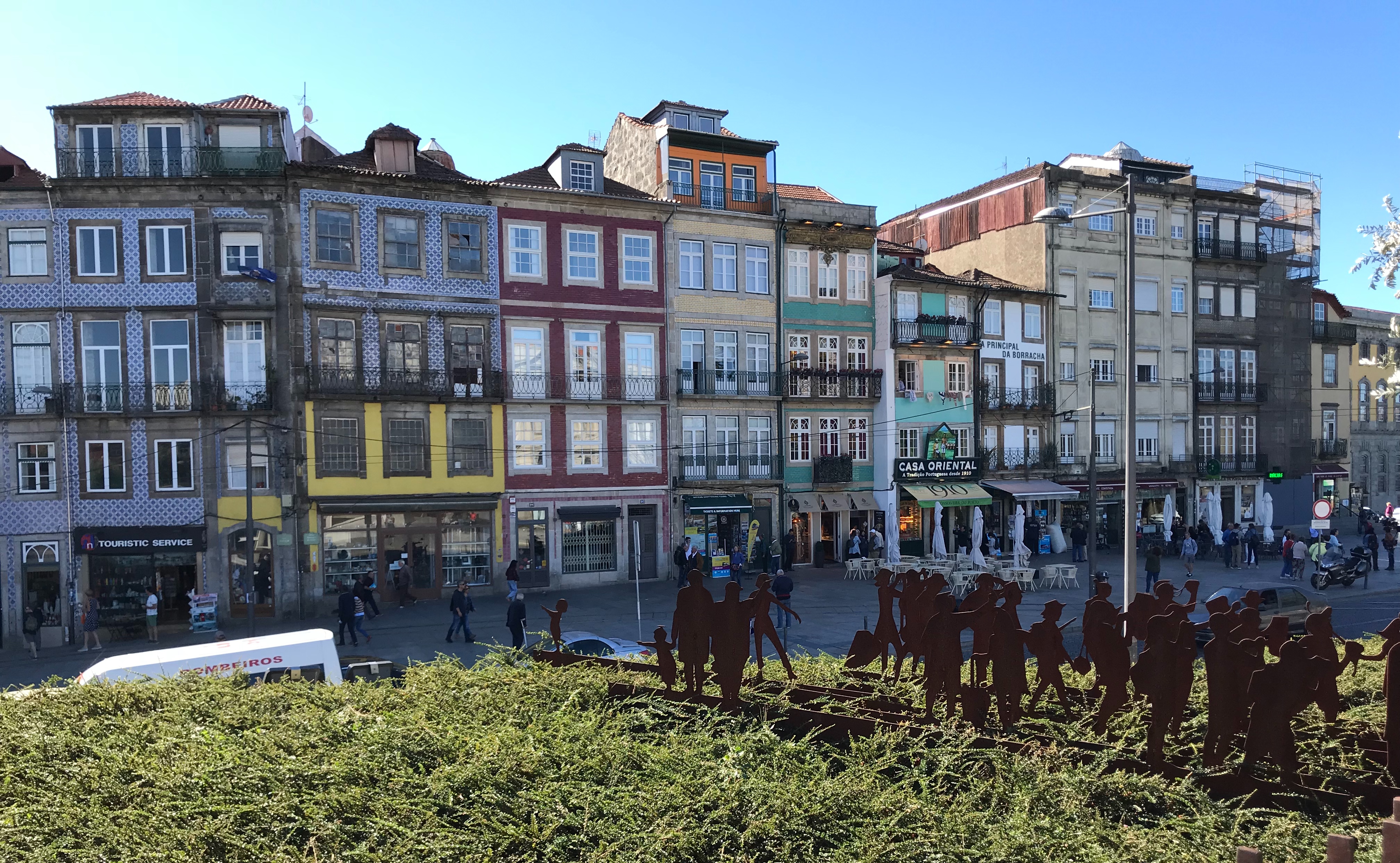
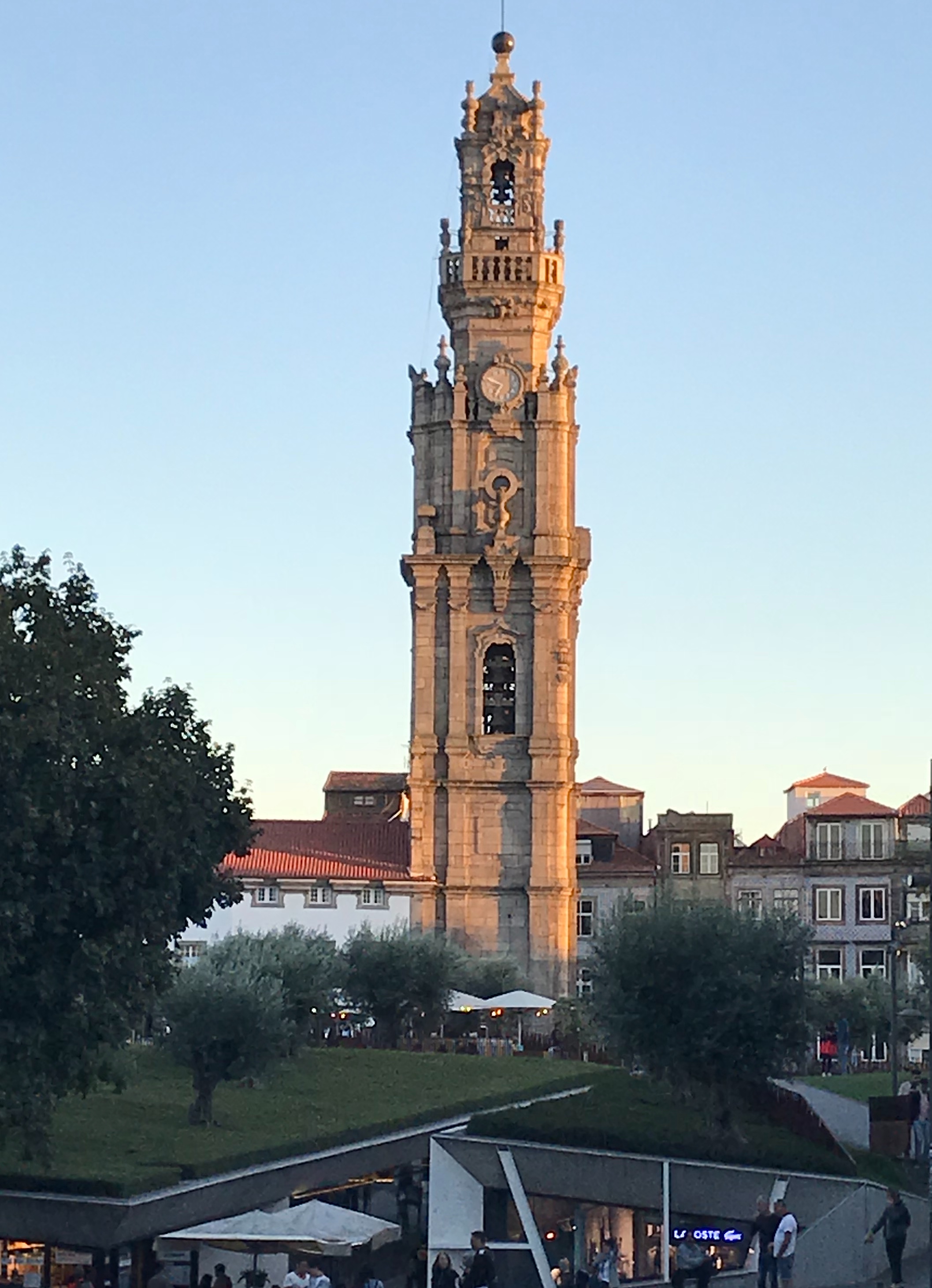
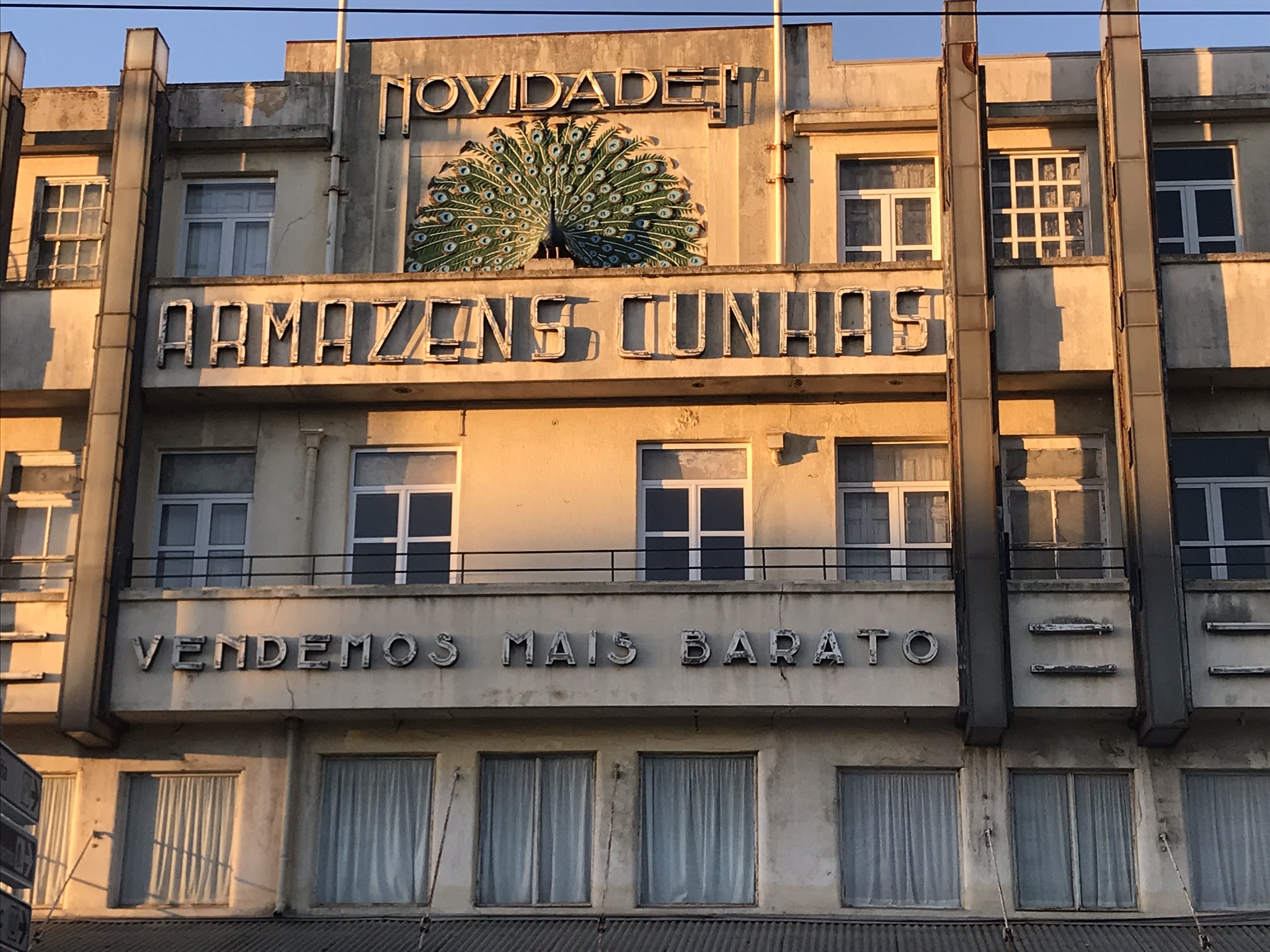
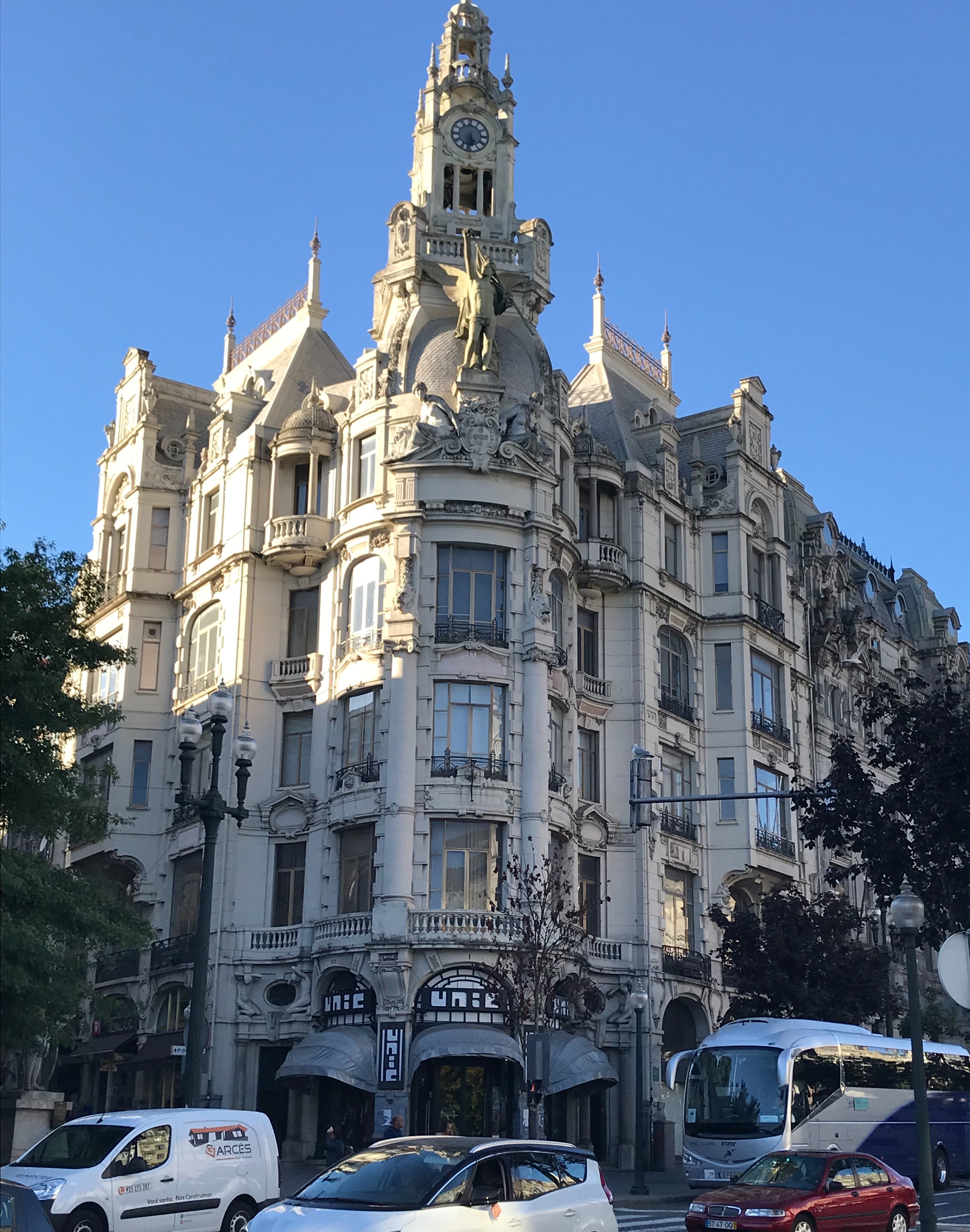
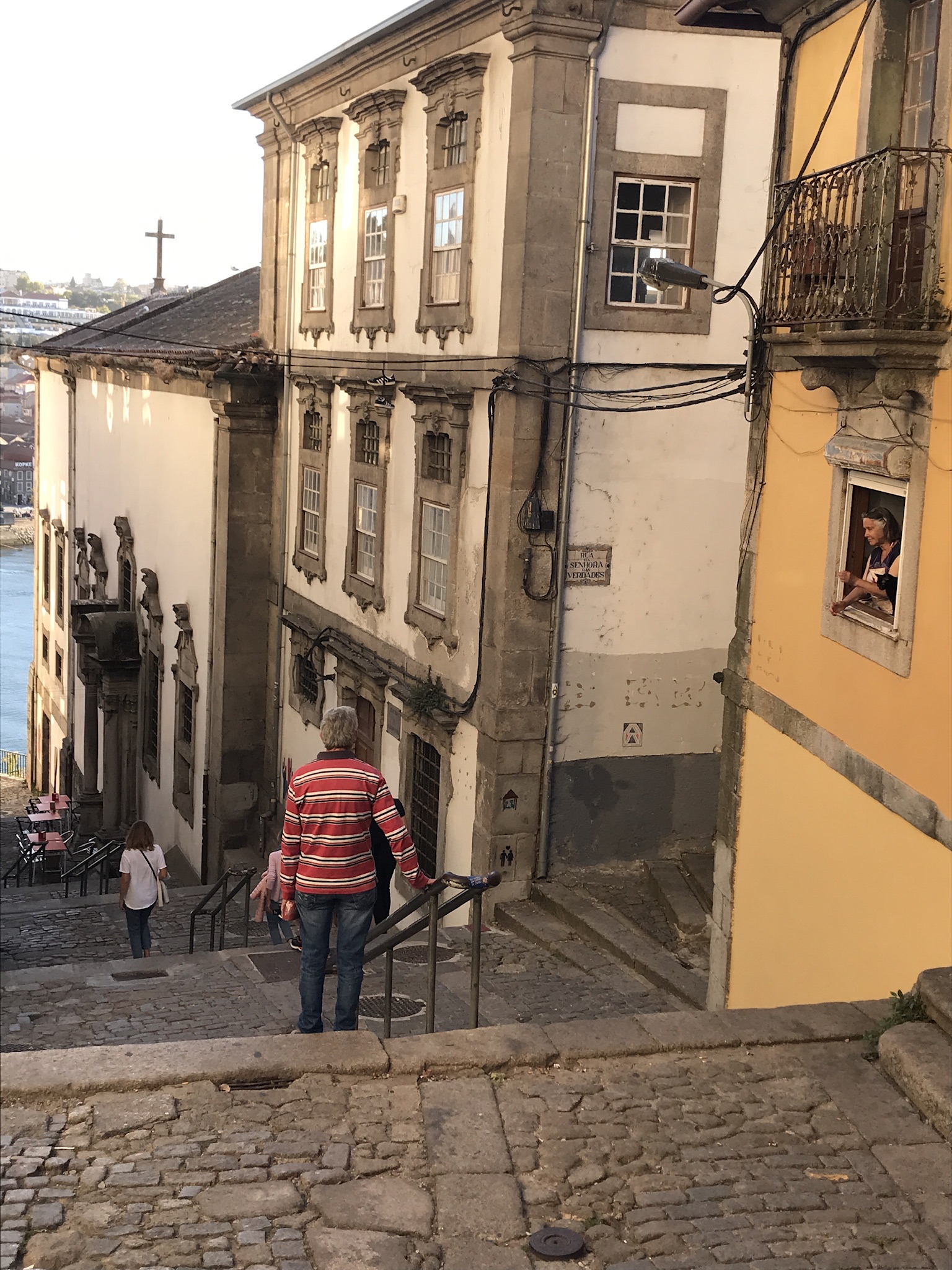
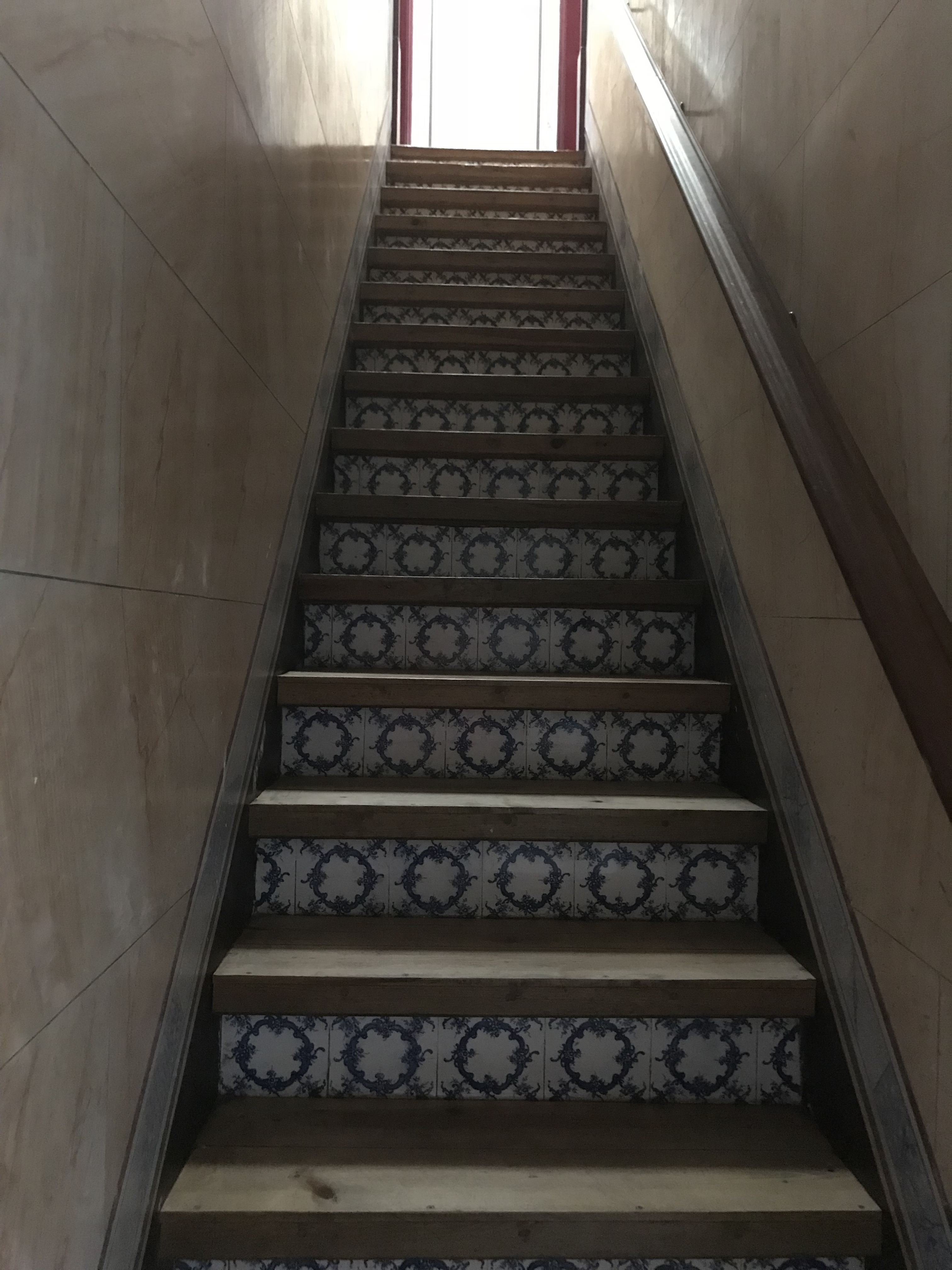
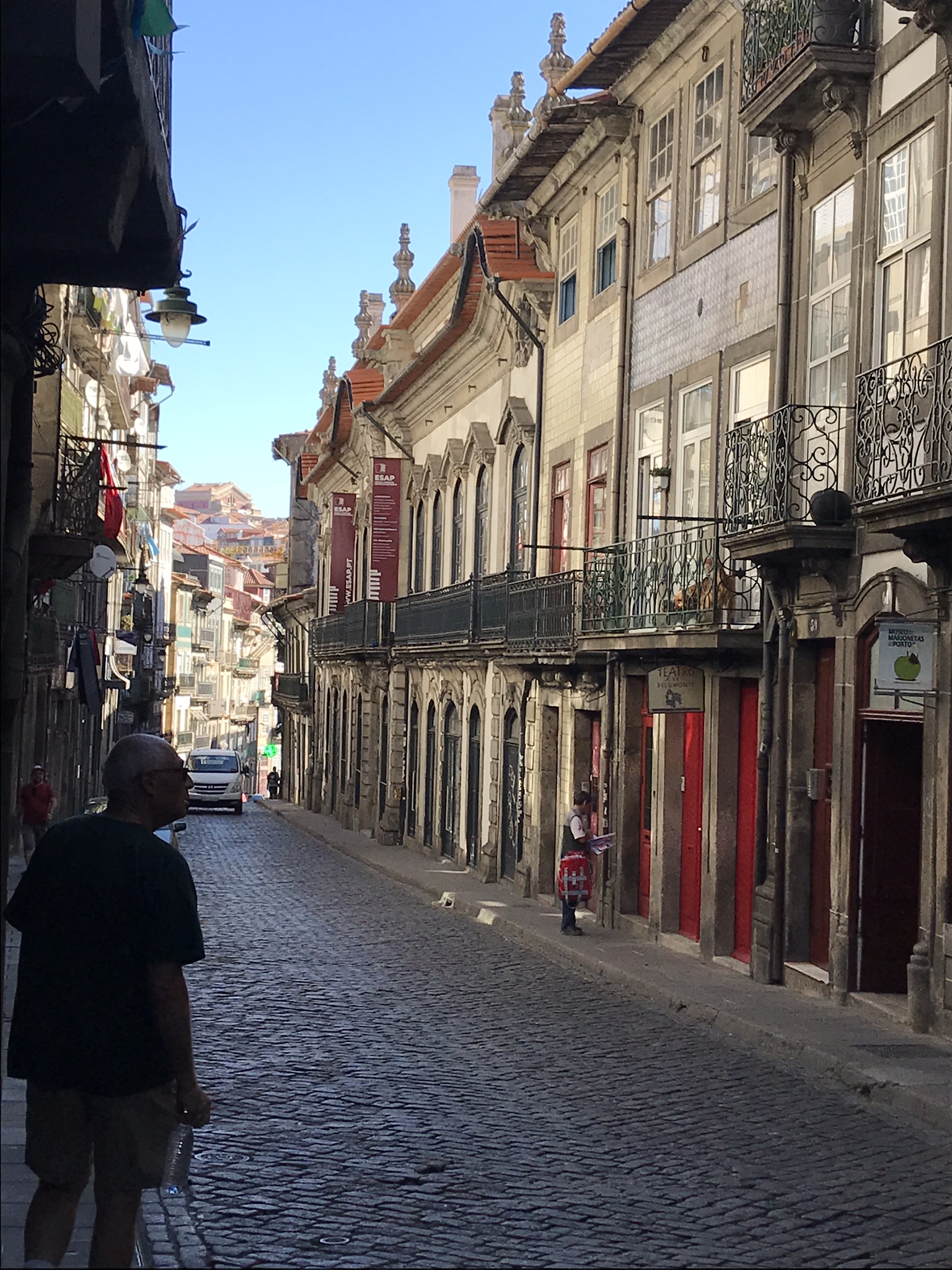
Walking through the city is visually entertaining…almost absurdly so.  The city’s building stock is a mix of the falling apart, the beautifully preserved, and obvious gentrification.  Our Airbnb apartment is sparkling new, formerly a printing business of some kind, reached by a broad refinished wood staircase and outfitted in Ikea or Ikea analog modern.  Directly across the narrow street is a renovation in progress—almost every block has such change underway.  Good time to be in the building trades!

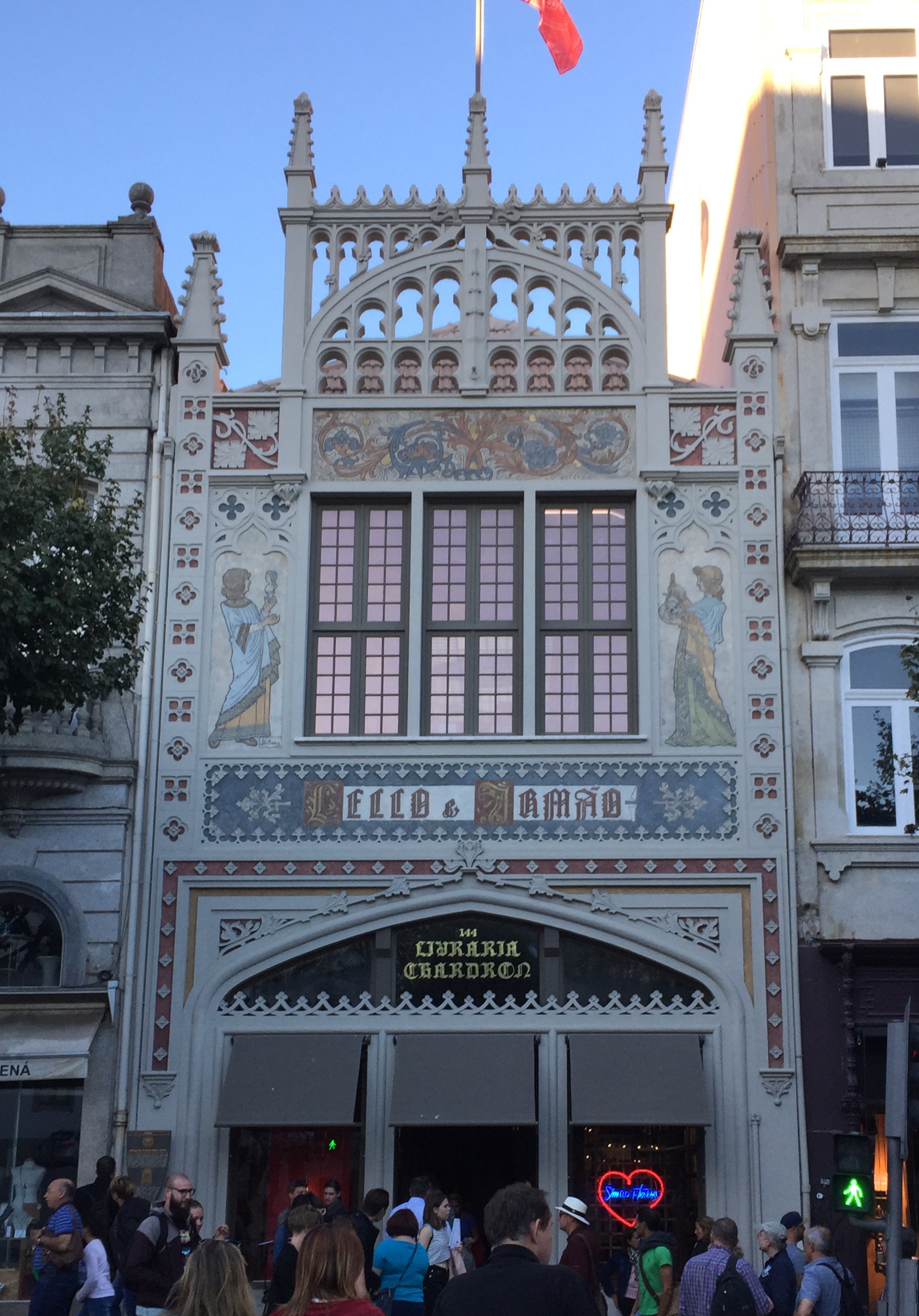
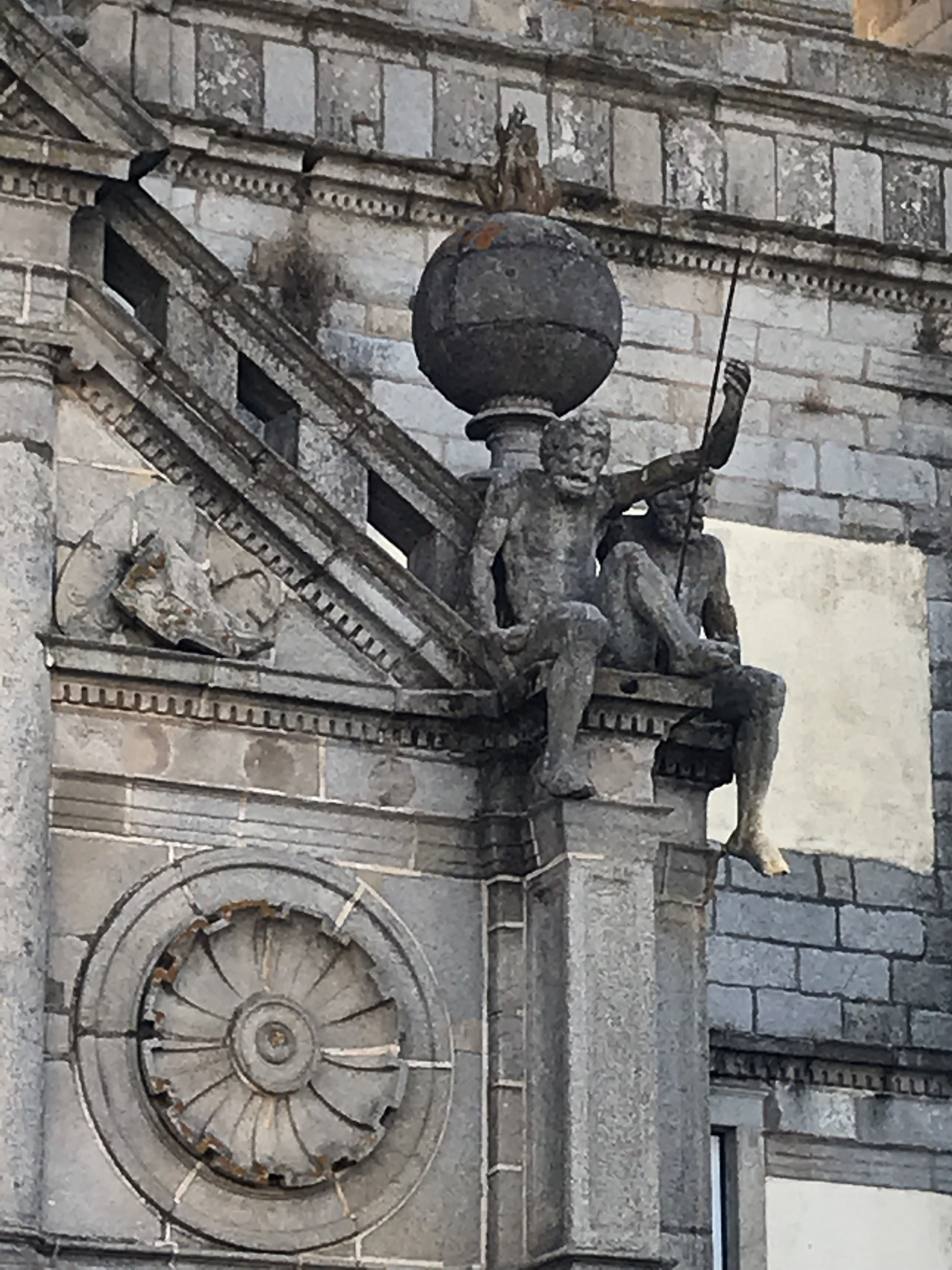
One feature of the older buildings is the gigantic-human-figure on a large number of public or quasi-public buildings.  It is a tiny bit creepy…they loom over the population, sometimes posed to be peering down, sometimes crowning the roof.  A few of many:

Along with the gorgeous buildings there is an array of street art.  I snapped just a few…but don’t you love that cat?

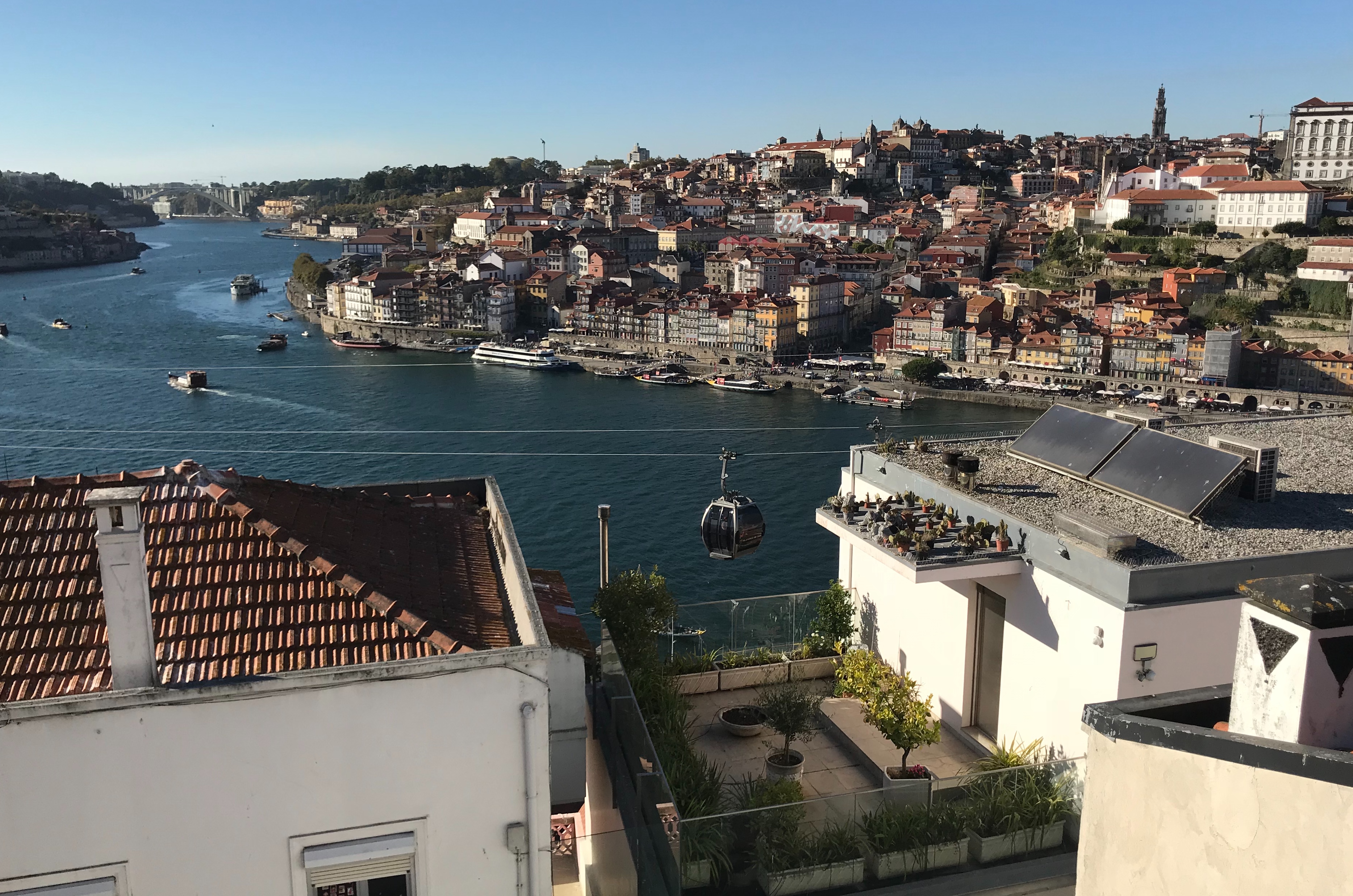
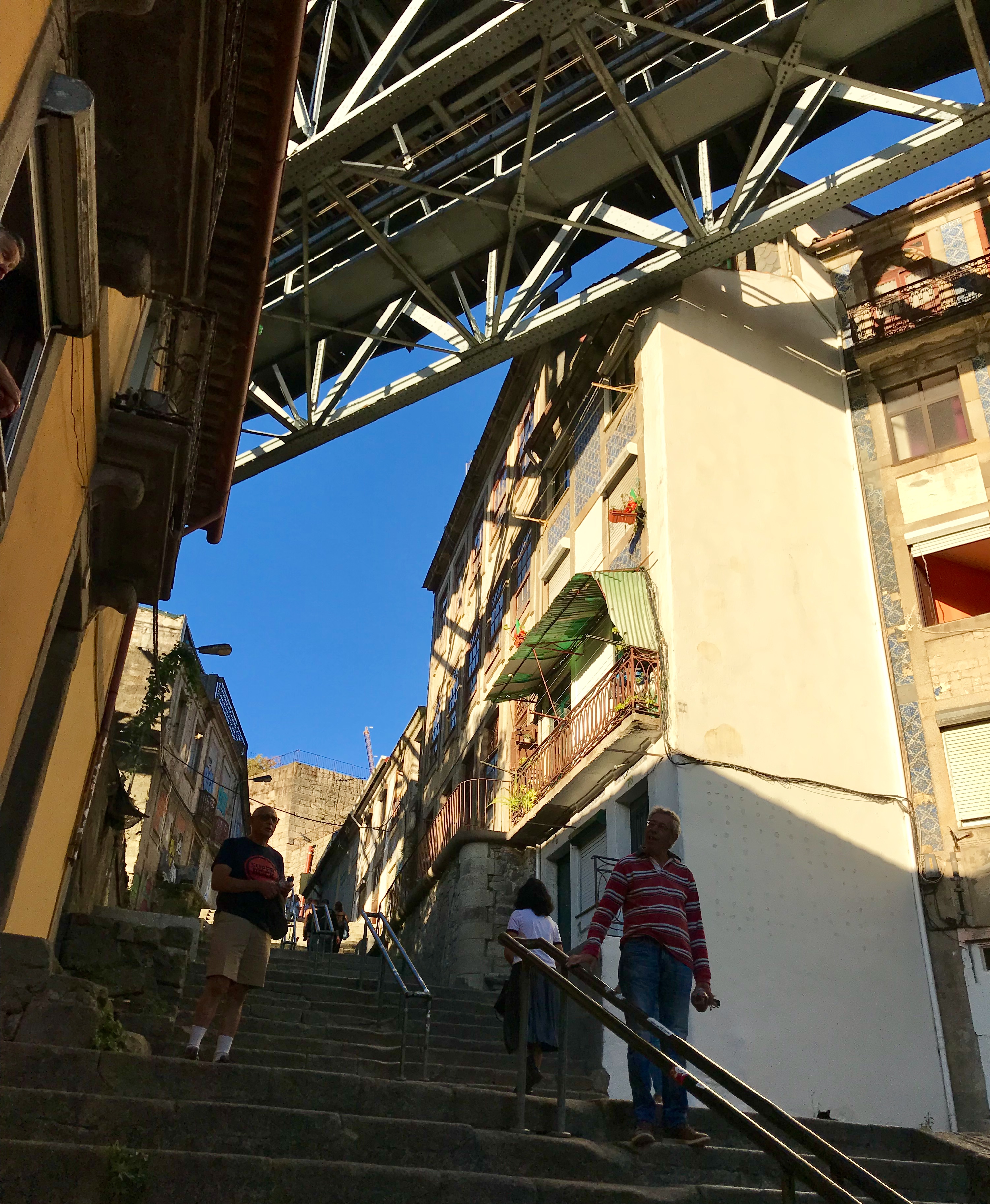
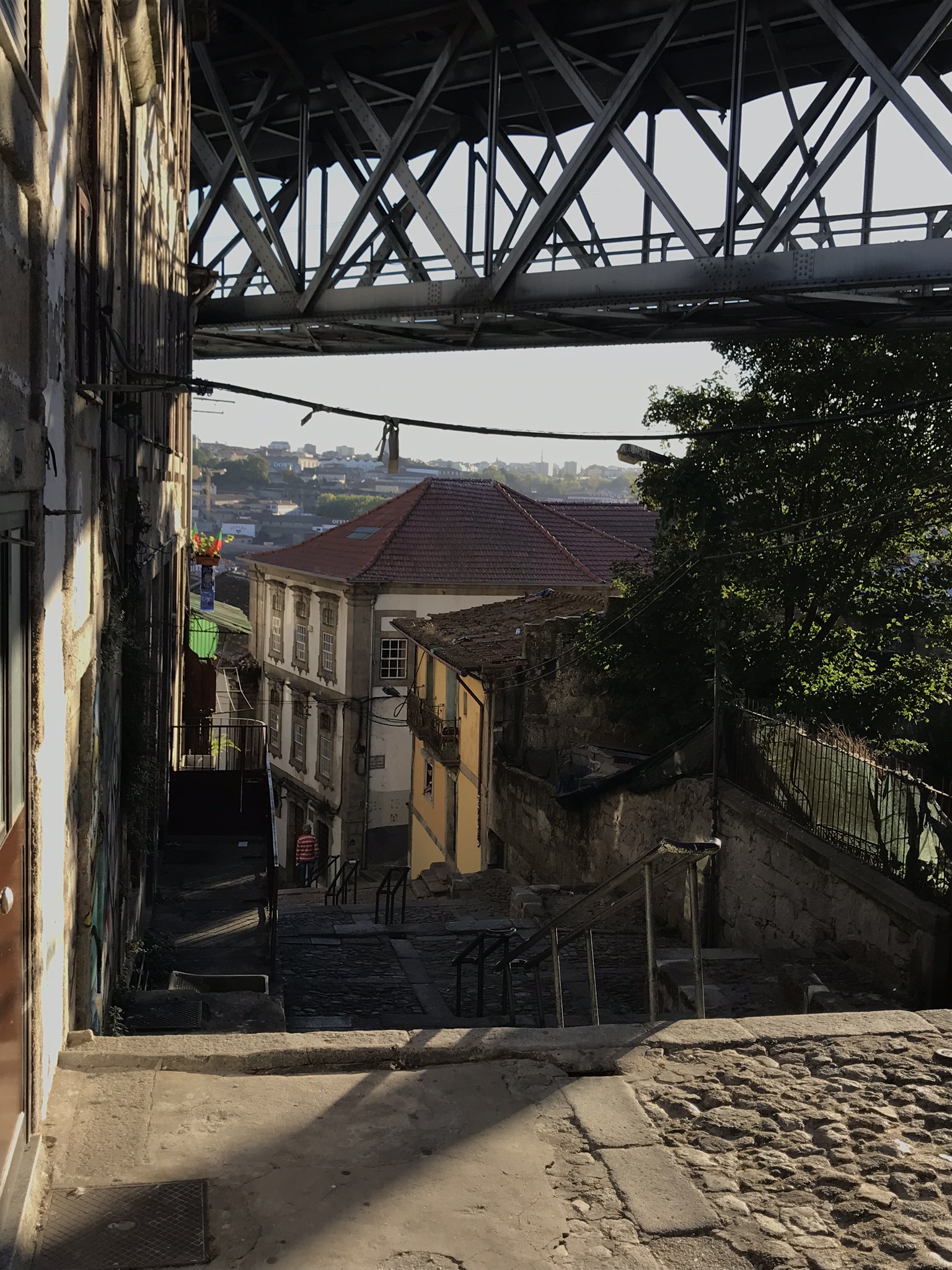
The river winds between Porto and Gaia, with the iron bridge that allows pedestrians on both levels, walkers sharing with cars on the lower and the metro on the upper.  We walked to Gaia on the upper level, then wandered our way down to river level and crossed on the lower level back to Porto, climbing the long stairway from sidewalk, past both abandoned and occupied buildings wedged along and under the bridge, finally coming out into the city proper.  So glad it wasn’t hot!

A7551B1F-D122-4706-8D75-16E67D19856A

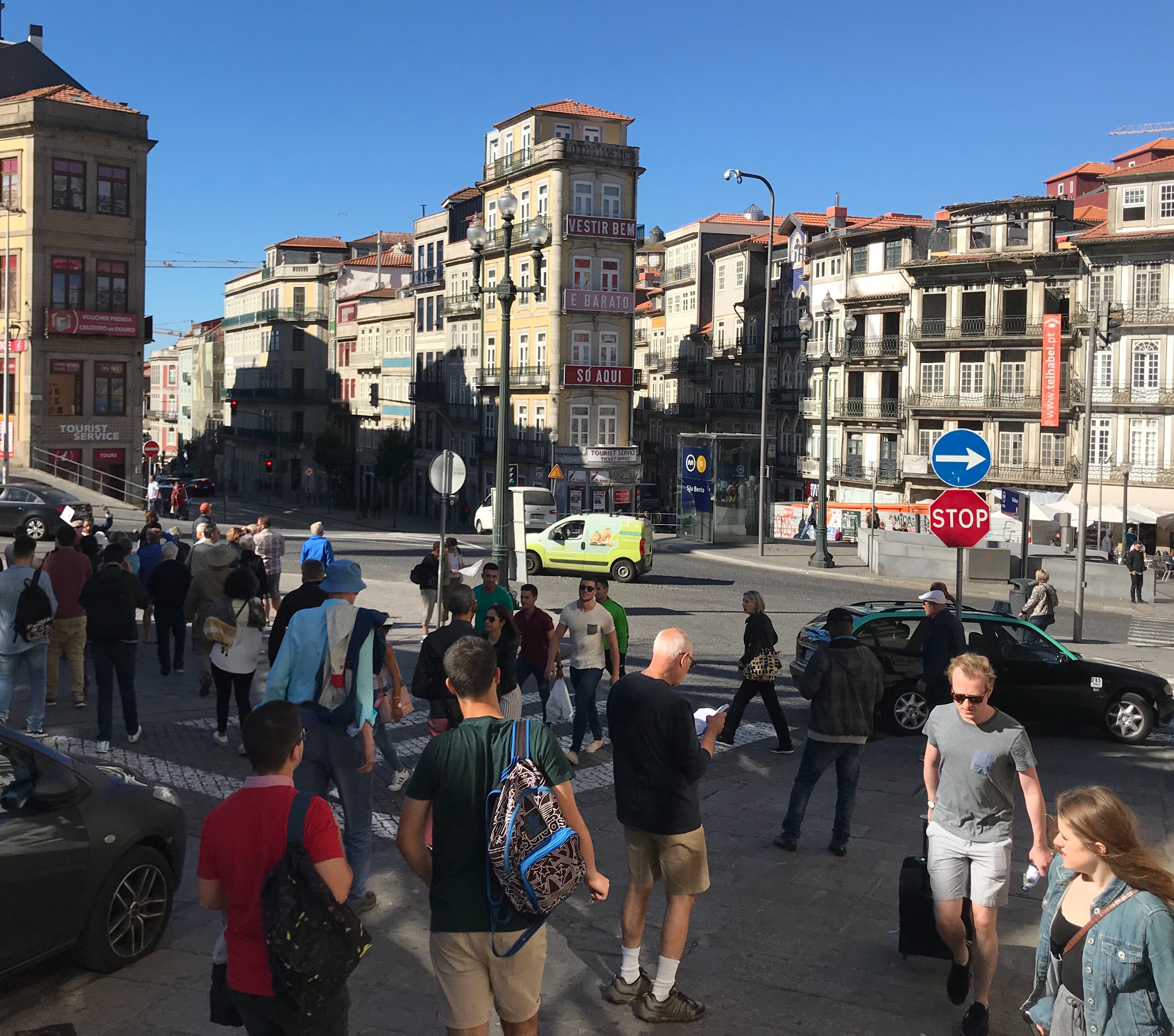
People and vehicles seem to mesh rather well…cars, buses, and trucks always pause for walkers as in Lisbon and Evora, with a fair bit of jaywalking well tolerated.  Many of the streets are so narrow, with extremely narrow sidewalks (one person with a shopping bag wide) that it really couldn’t work any other way.

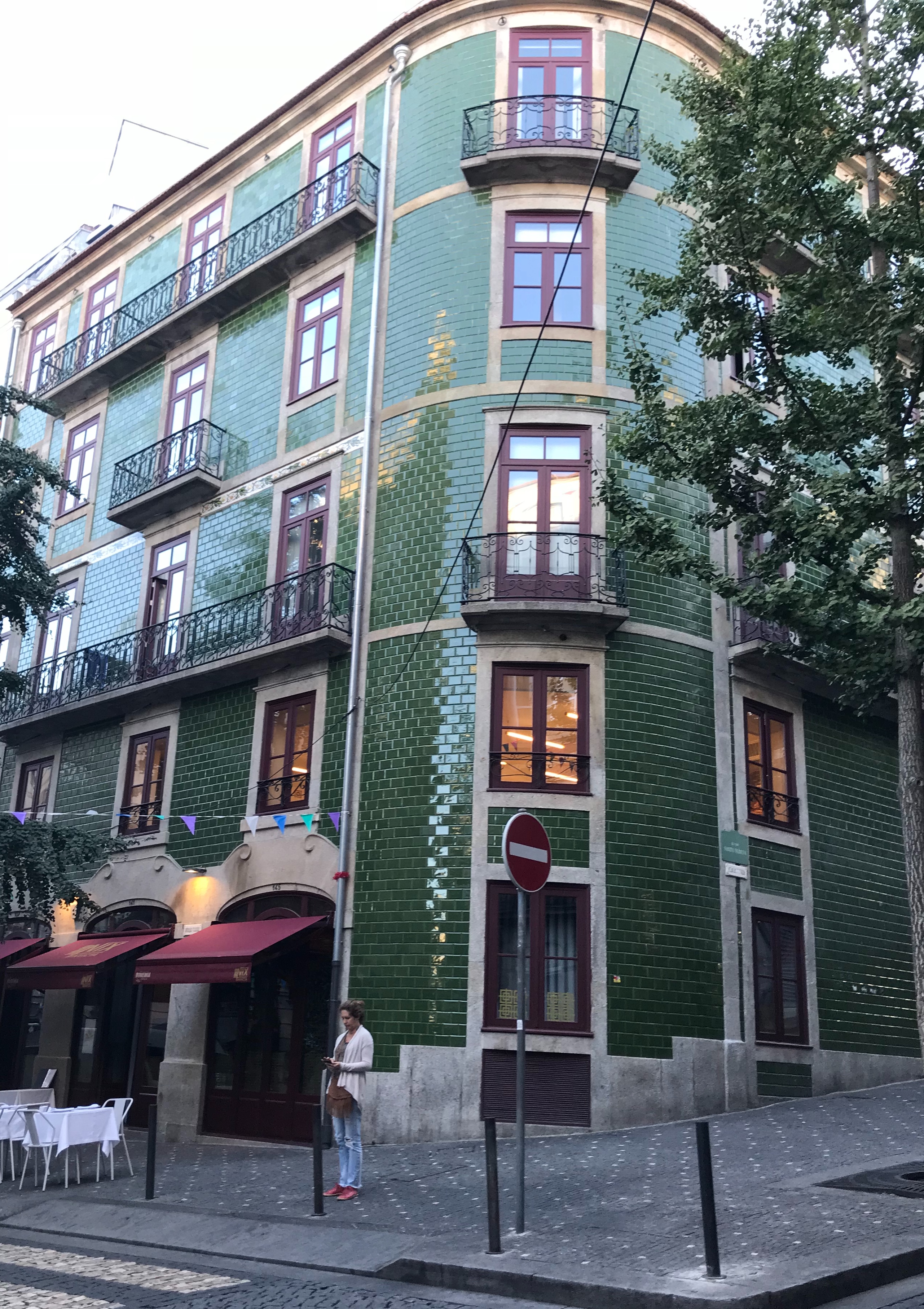
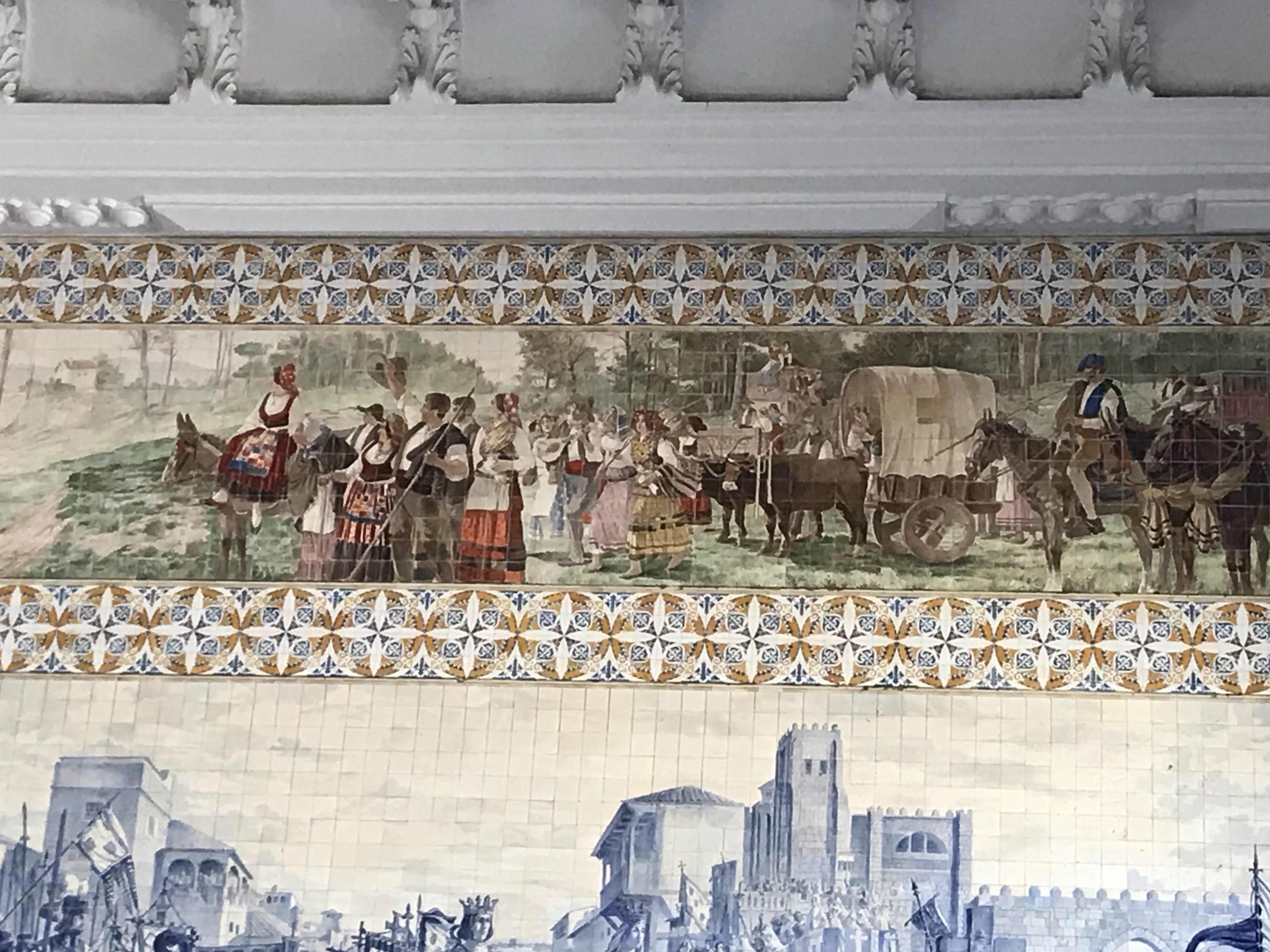
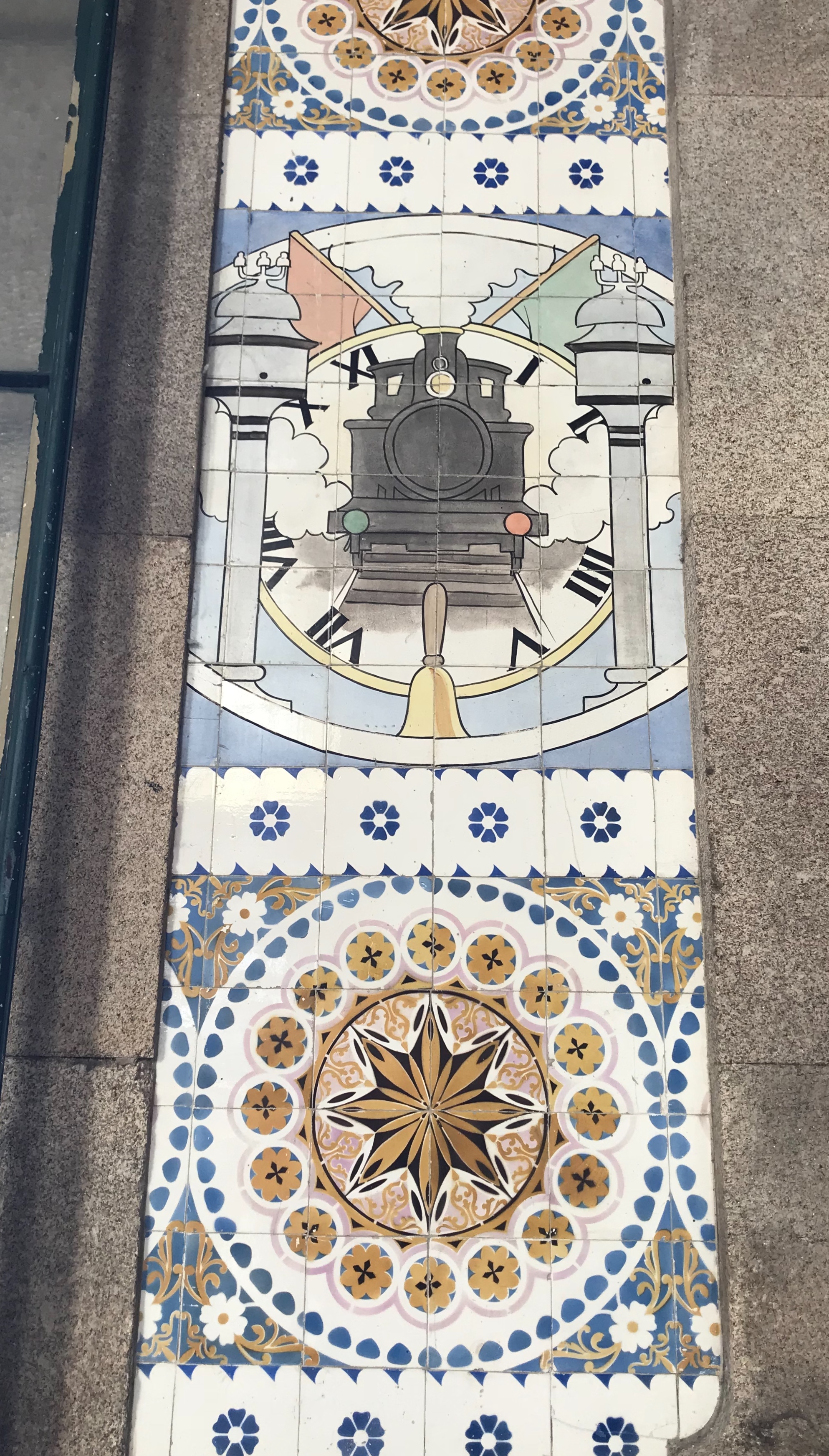
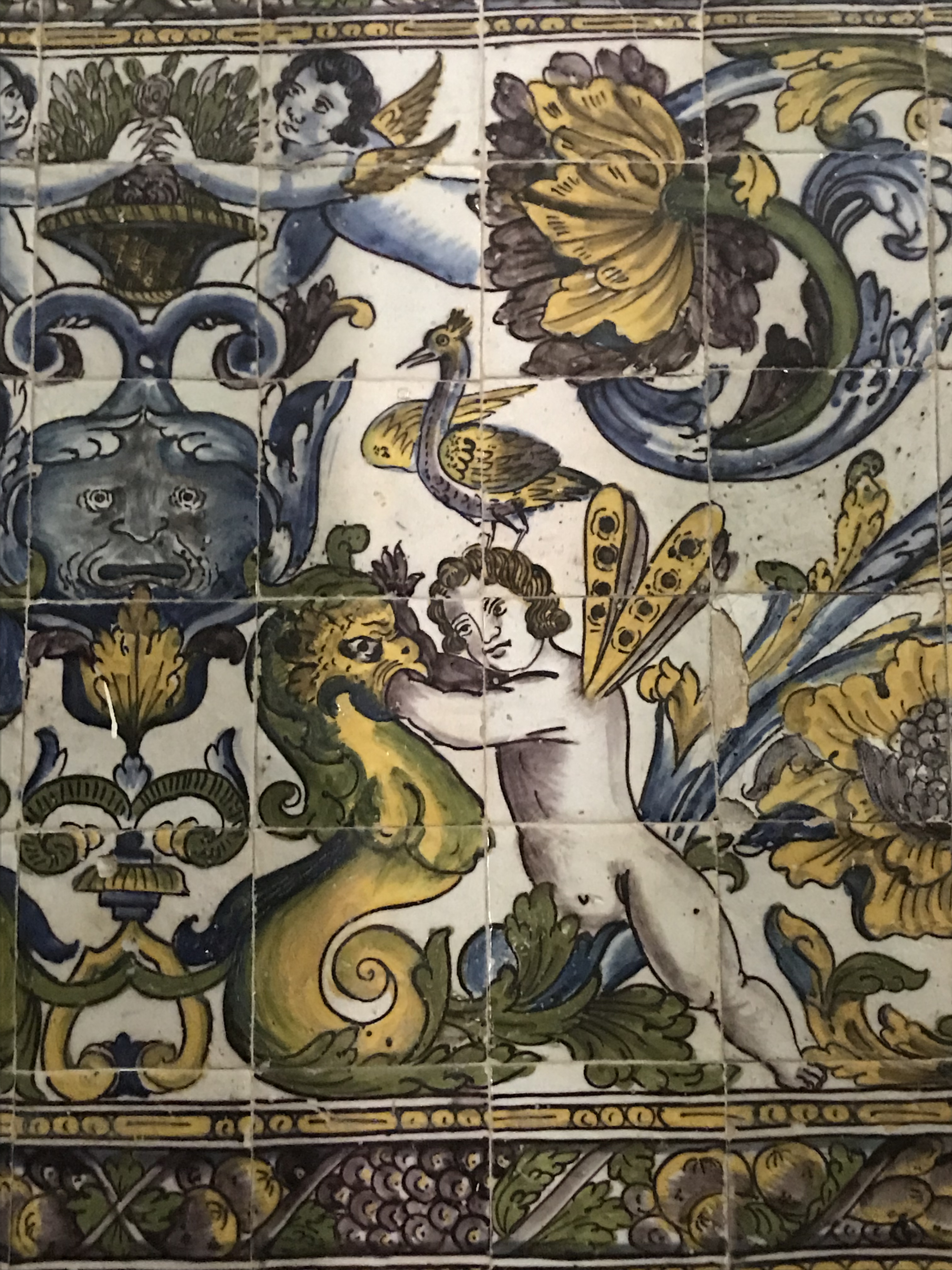
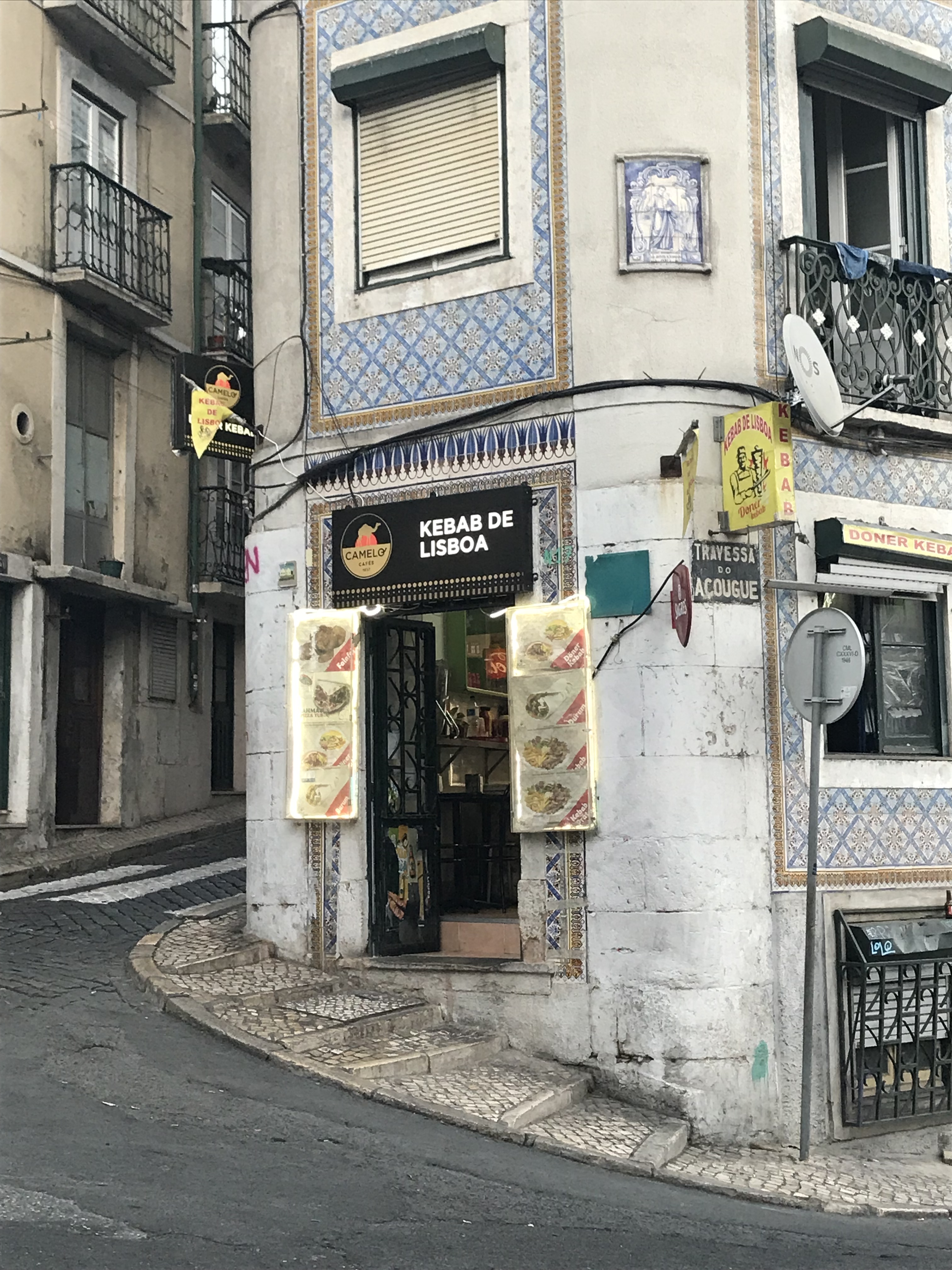
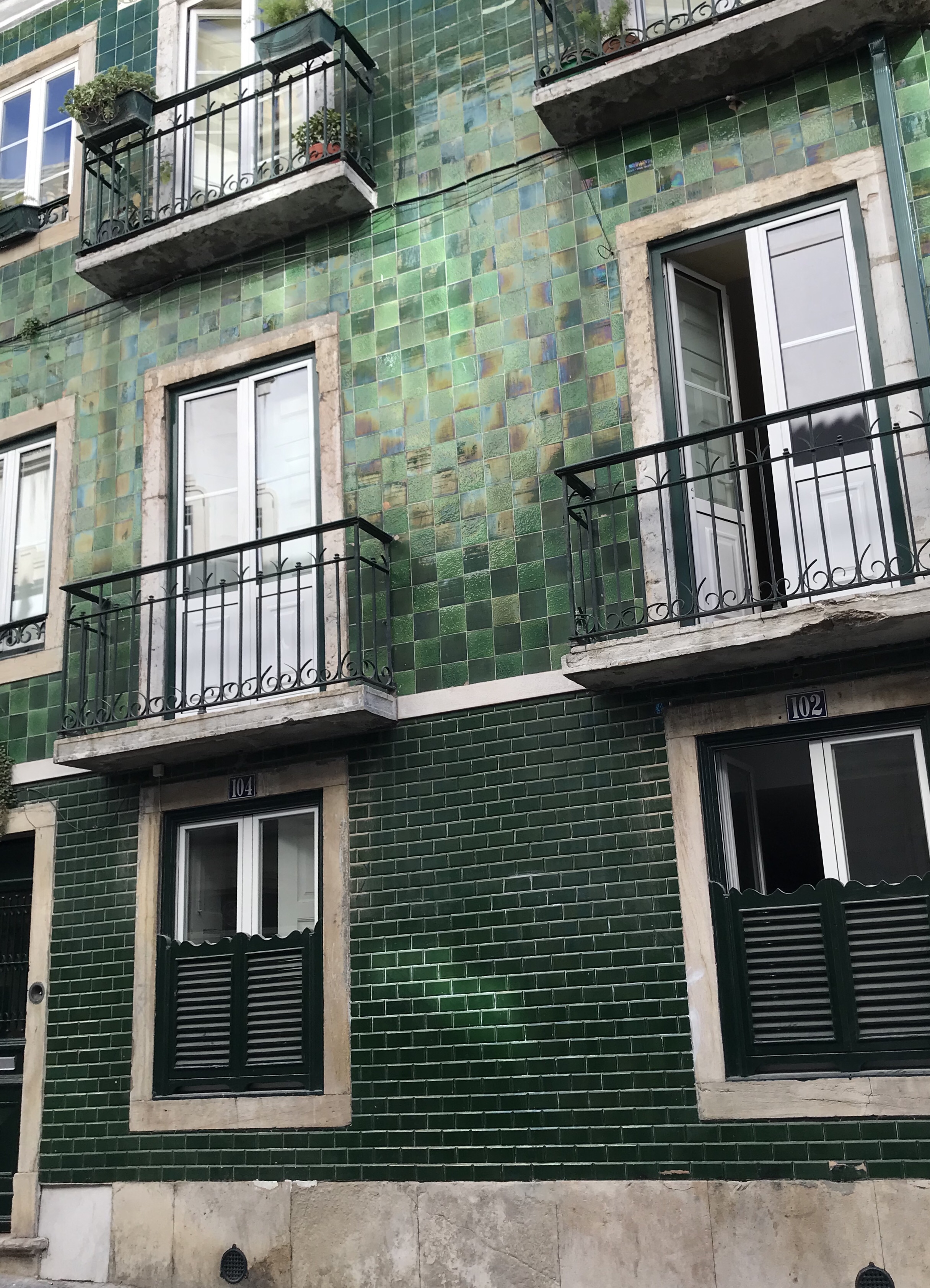
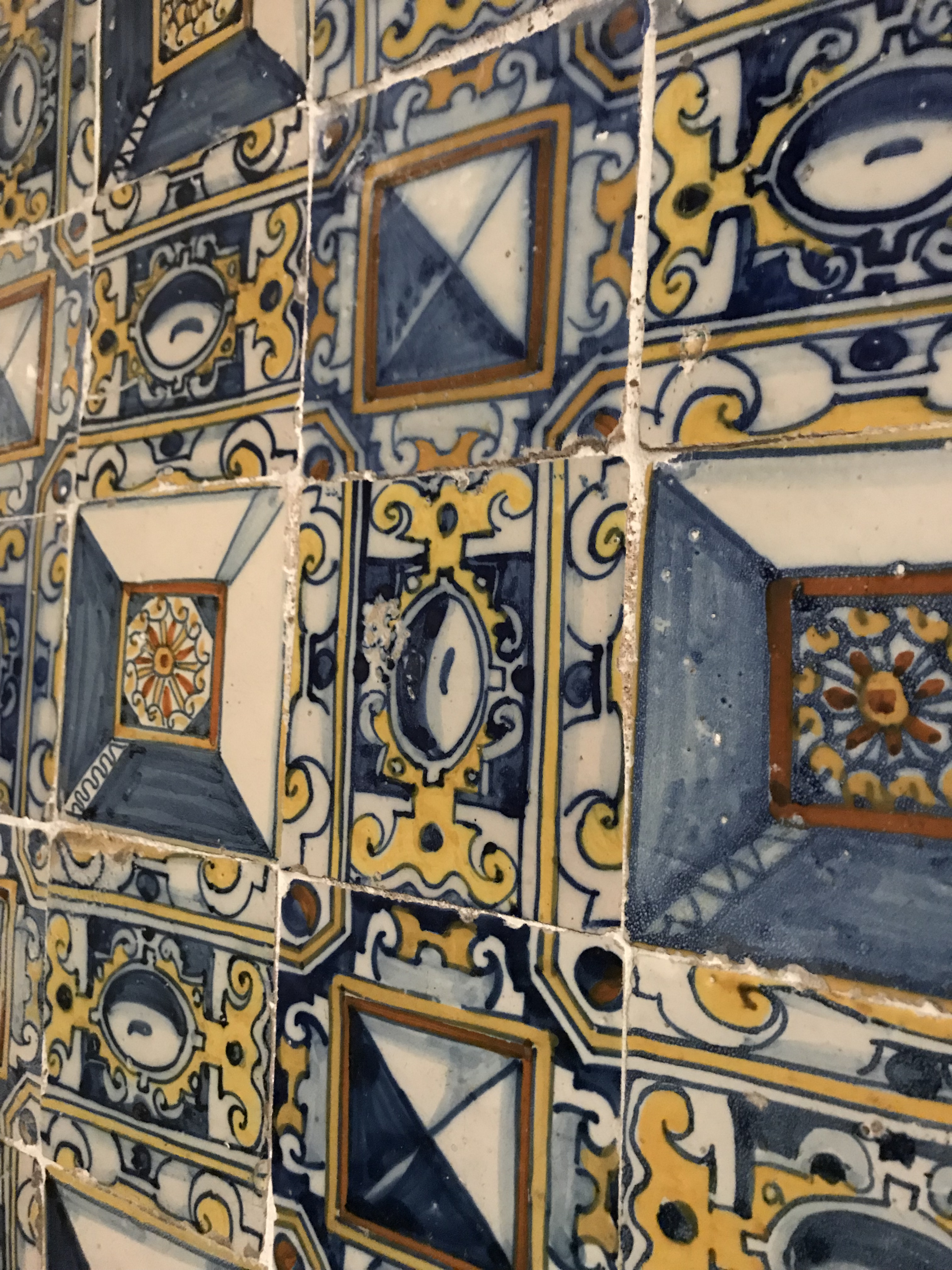
Of course Porto buildings often show off the gorgeousness tiles for which Portugal is famous, some of which are above.  When we arrived we scooted through the train station anxious to find our apartment, but returned to take it all in and snap a few pictures which do not do it justice.

I look forward to my next post…the food!  Have to go to dinner now.

Weekend Sojourn in Evora

The bad: it was in the high 80’s during the day.

The good: everything else.

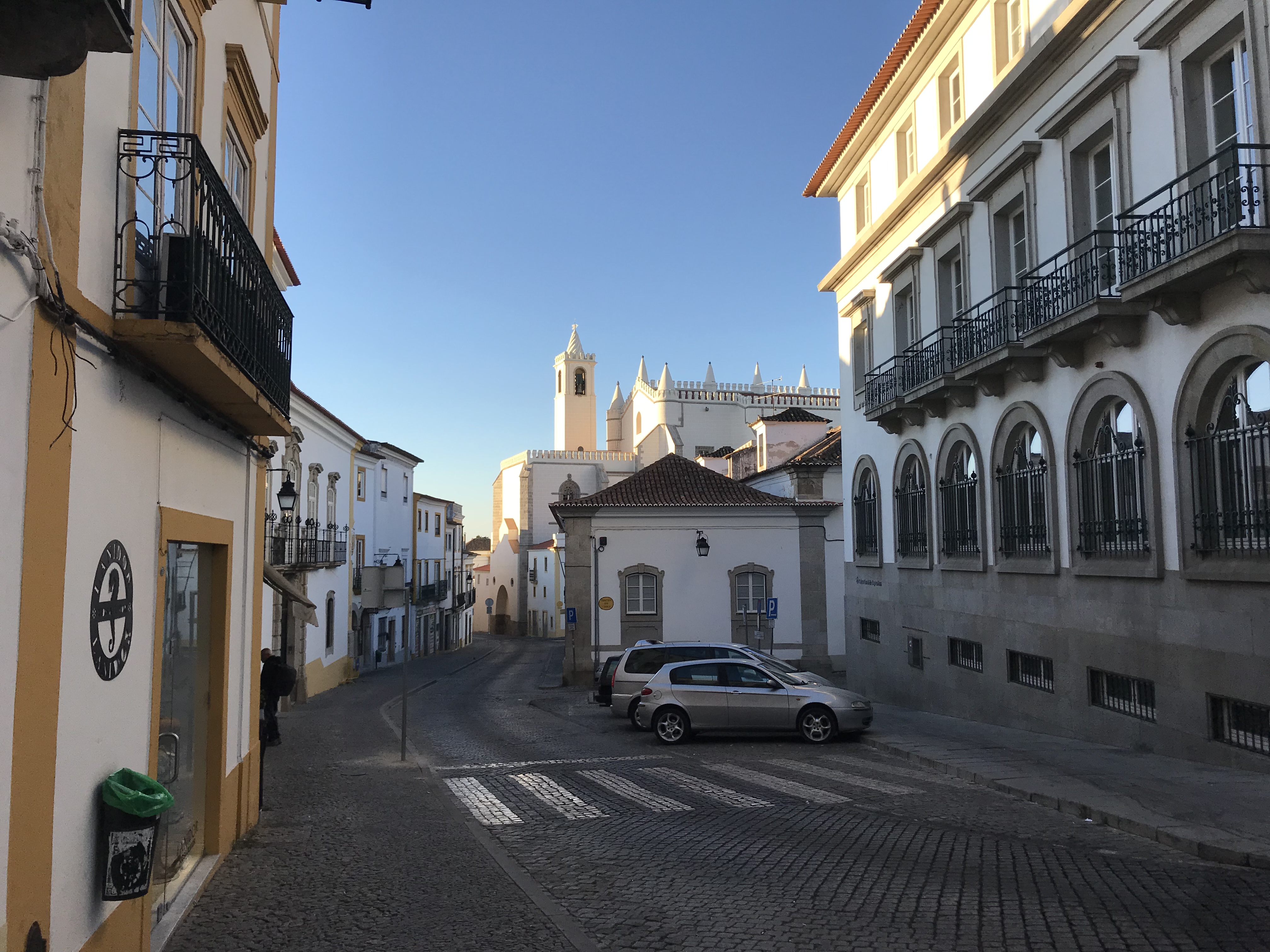
What a lovely, peaceful, history- and religious art-packed town, a perfect weekend between hopping Lisbon and as yet unknown Porto. We had chosen to come here hoping for a contrast with the two major cities and it met our needs fully.

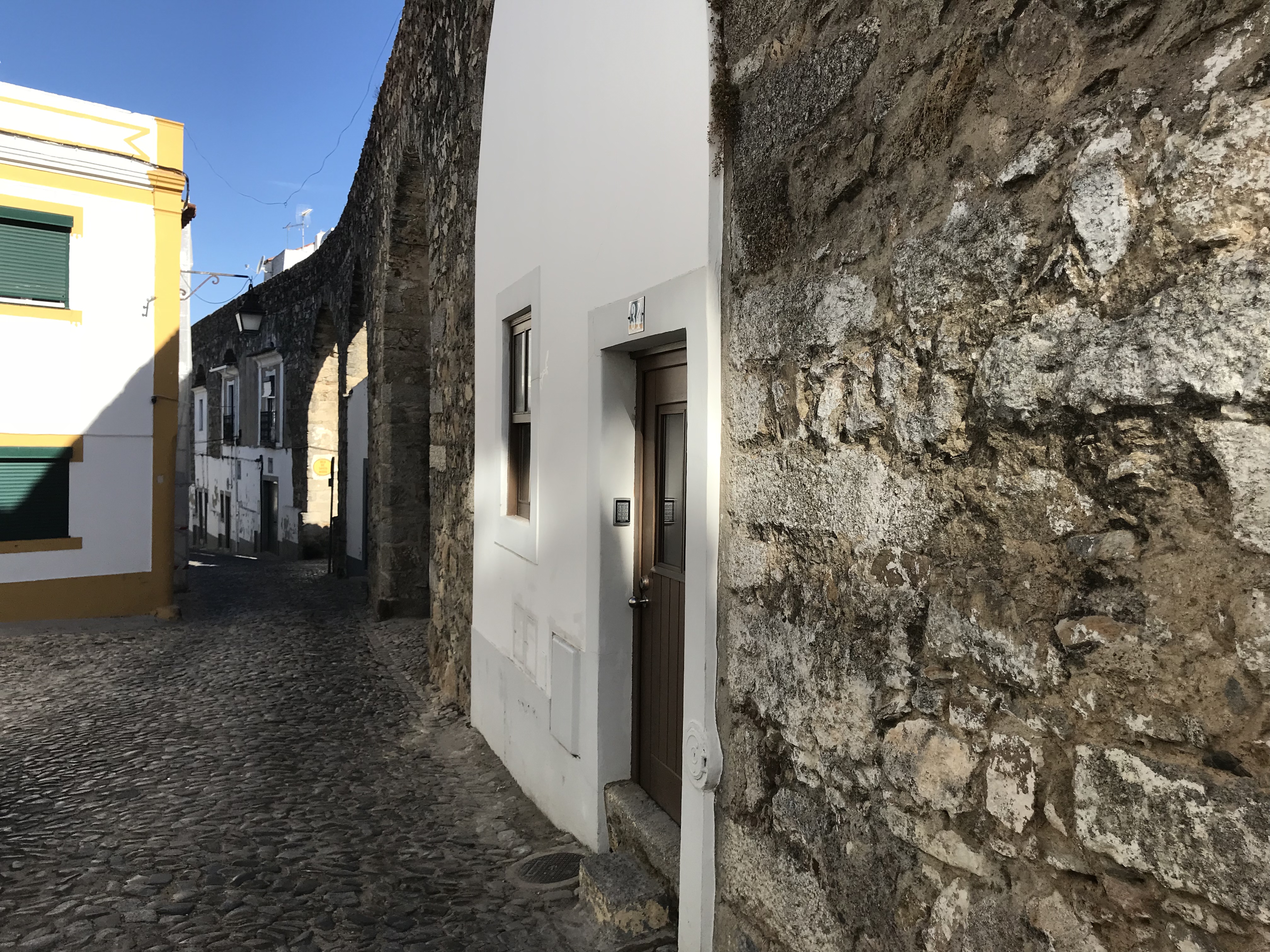
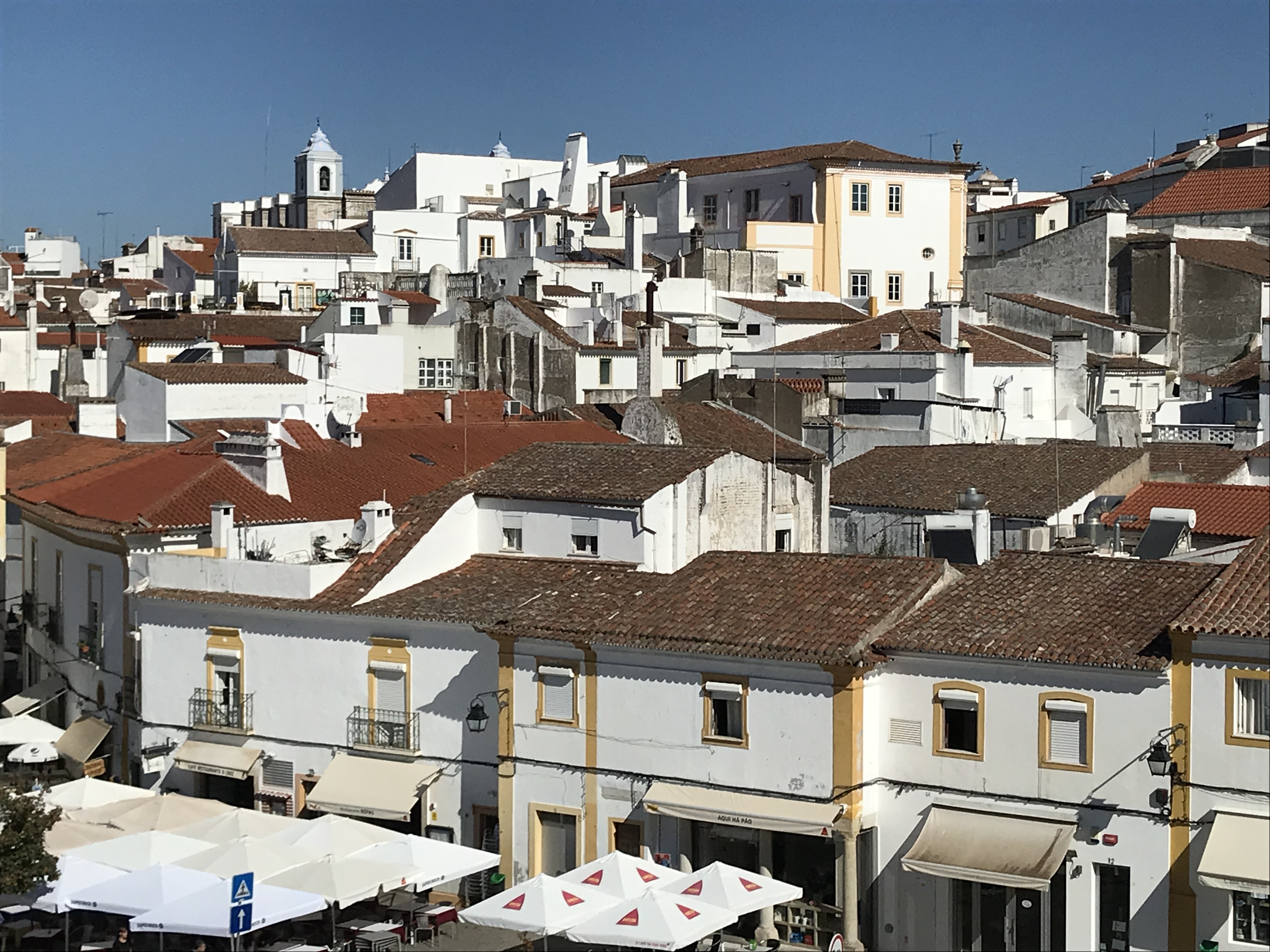
The historic center, a town within the town, is surrounded by a wall built in the 1400’s, though some is newer (1700’s?), and an aqueduct appears here and there, still functioning and in places the arches are filled in with houses. Every building is white, mostly with gold trim and dark green doors, but a few buildings are trimmed in grey…presenting a charmingly consistent look even in the commercial areas which have both cave-like mini mercados as well as modern stores and souvenir shops. Our weekend here turned out to be a holiday,  the long weekend celebrations  rather subdued, though Saturday morning on the main square were an exercise competition with perhaps twenty participants and a “motorway” around the central fountain on which little kids rode dune buggie bicycles to cheering grandparents.

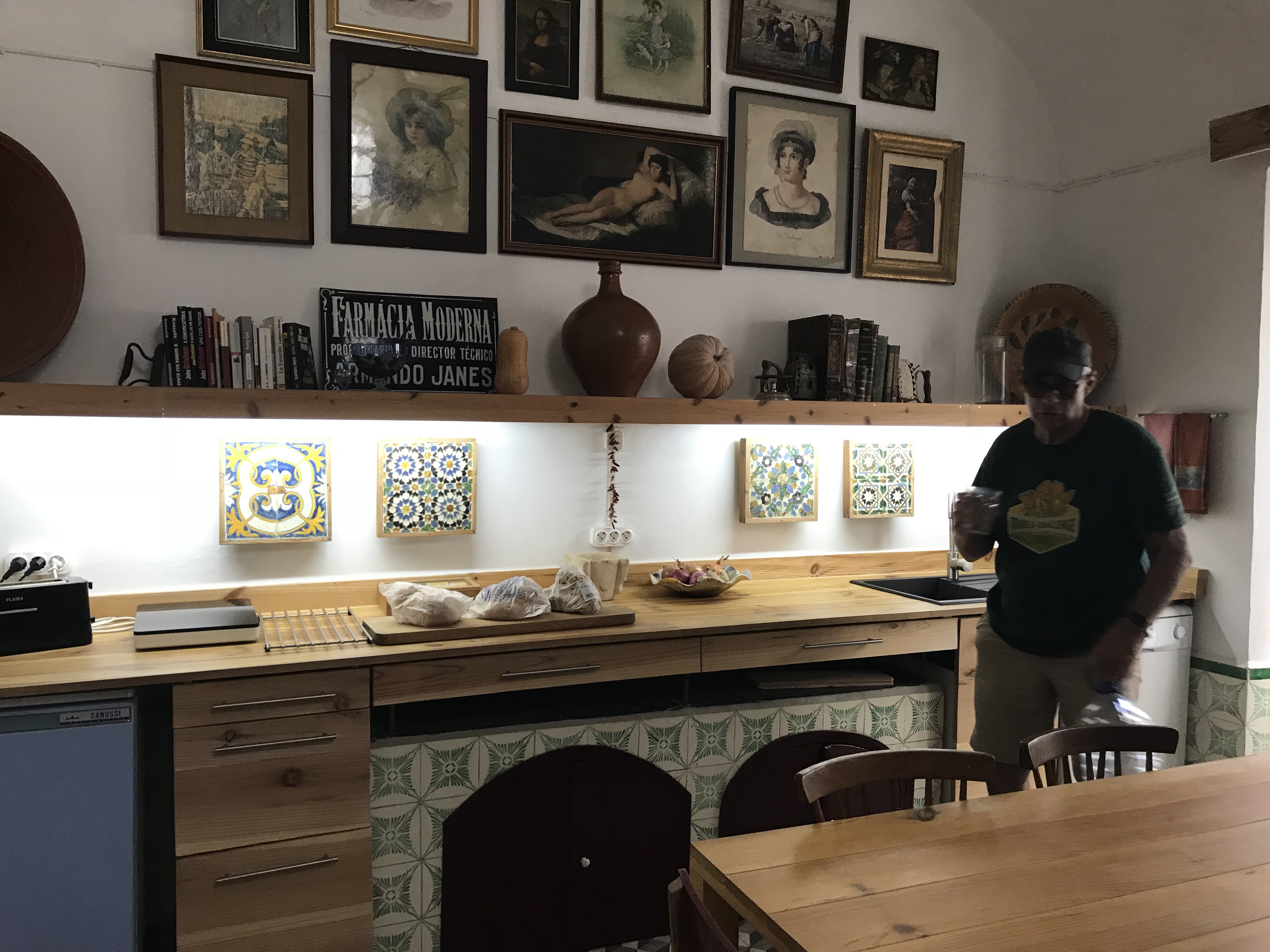
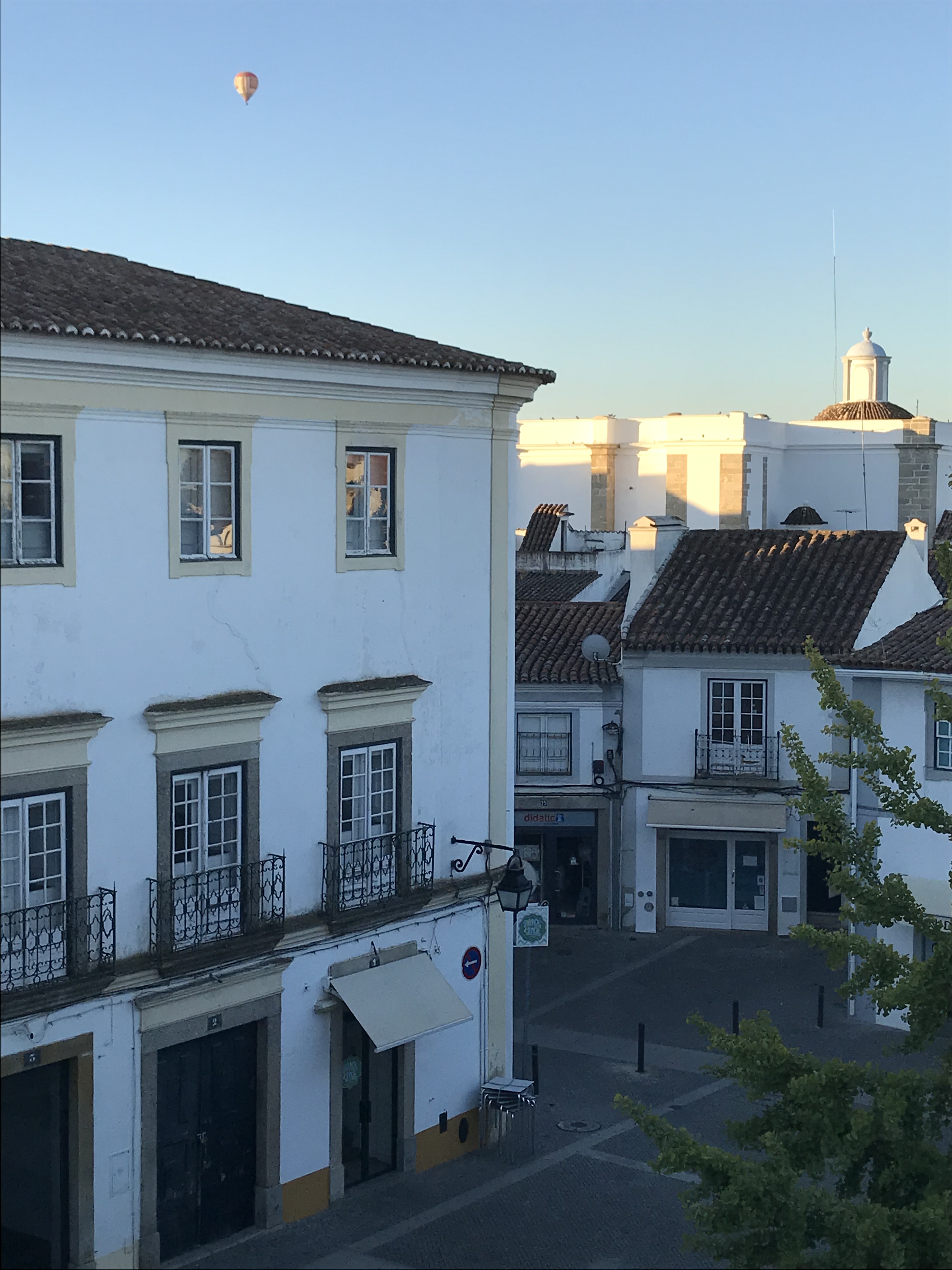
We stayed in an old-fashioned B&B, converted from a long held family home of 3 or 4 stories, with a very pretty and practical kitchen outfitted with coffee. (French press), loaves of the delicious local pao (bread) which I am certain was sourdough, made of the local wheat which is white but extremely flavorful and made fantastic toast, milk and fruit, and capacity to cook your own food if desired. A tiny patio that held a two person metal table and chairs was open to the sky…several stories up. Free WiFi, a generous bedroom, a shared (with one other room) bathroom bigger than our dining room…sitting on a small praca (square) next to city hall. The location was perfect, and from our room we looked down on the square and out to the surrounding countryside.

The Cathedral 

Evora has been a cultural center for 2,000 years and we were astounded at the church wealth evidenced by several convent museums. The cathedral, Se de Evora, boasts a relic of the cross, plus many saintly relics housed in tiny glass windows in the chests of the saints’ images. The cathedral was built in the late 12th century and it is marvelous. While we wandered the cloister we could hear liturgical choir music occasionally wafting from the cathedral, which we wrongly assumed was recorded to add to the atmosphere, and were surprised to find a choral group rehearsing. The music, even in the short bursts as the director gave feedback and the singers made notes, was stunning. How lucky we were to find there was a performance that evening by the group Contrapunctus, 12 singers who tour the world and are in residence at Oxford University. For 7€ we so enjoyed the concert, in the cathedral with mind-blowing acoustics and a wildly enthusiastic audience.

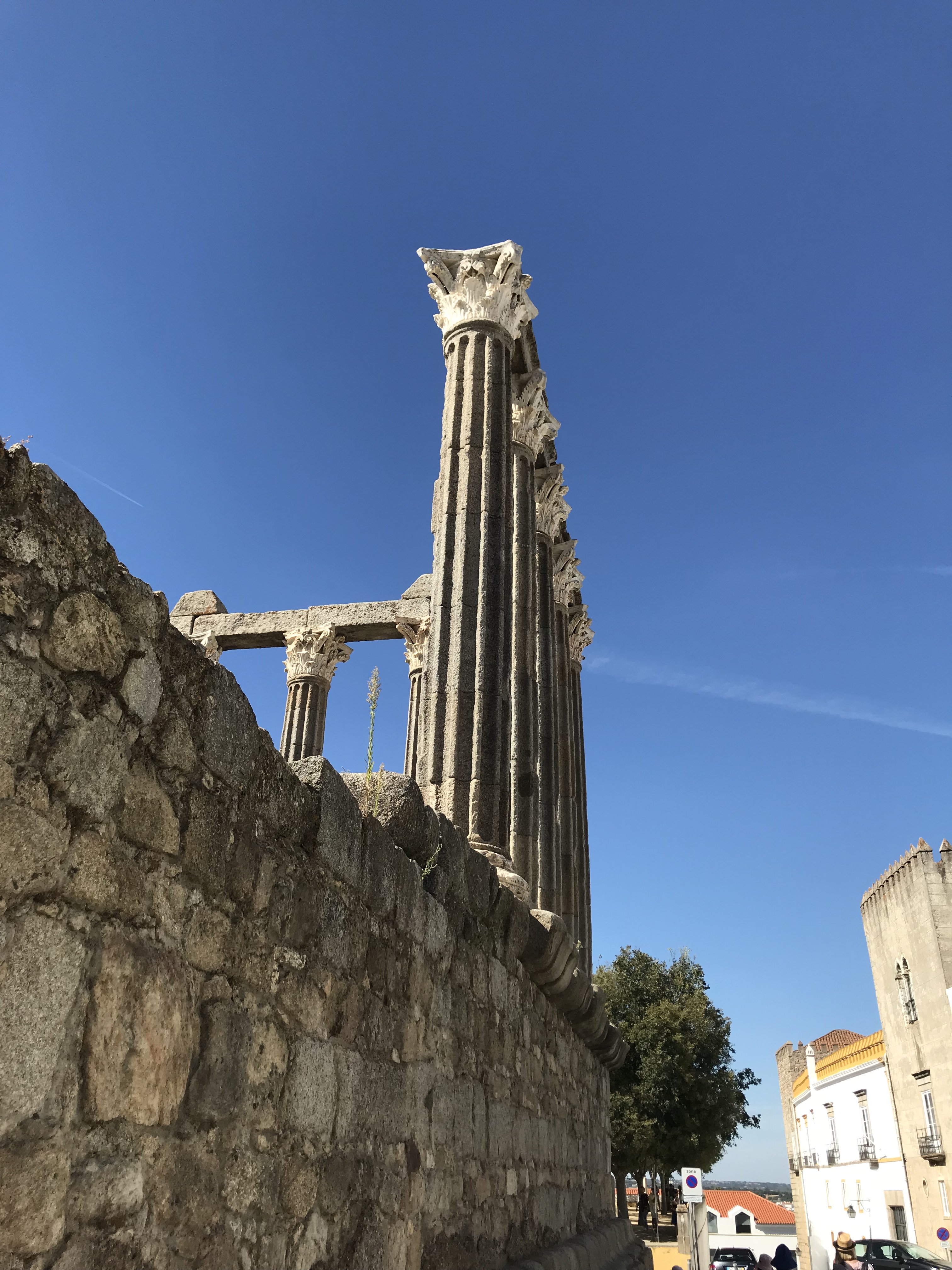
For our two days in Evora we wandered the city with stops to see the Chapel of Bones, built in the 1600’s by monks, of monks’ bones from the area, as a reminder to the wealthy and materialistic residents that life is fleeting, several other churches and church museums, parks, and the seriously quaint neighborhoods of impossibly narrow streets and impractical small doors. Honestly I do know how they can move furniture into them! As the town was settled in Roman times there are the remains of a temple, lovely, and where the Roman town center was is now a museum.

Imagine Studying Here

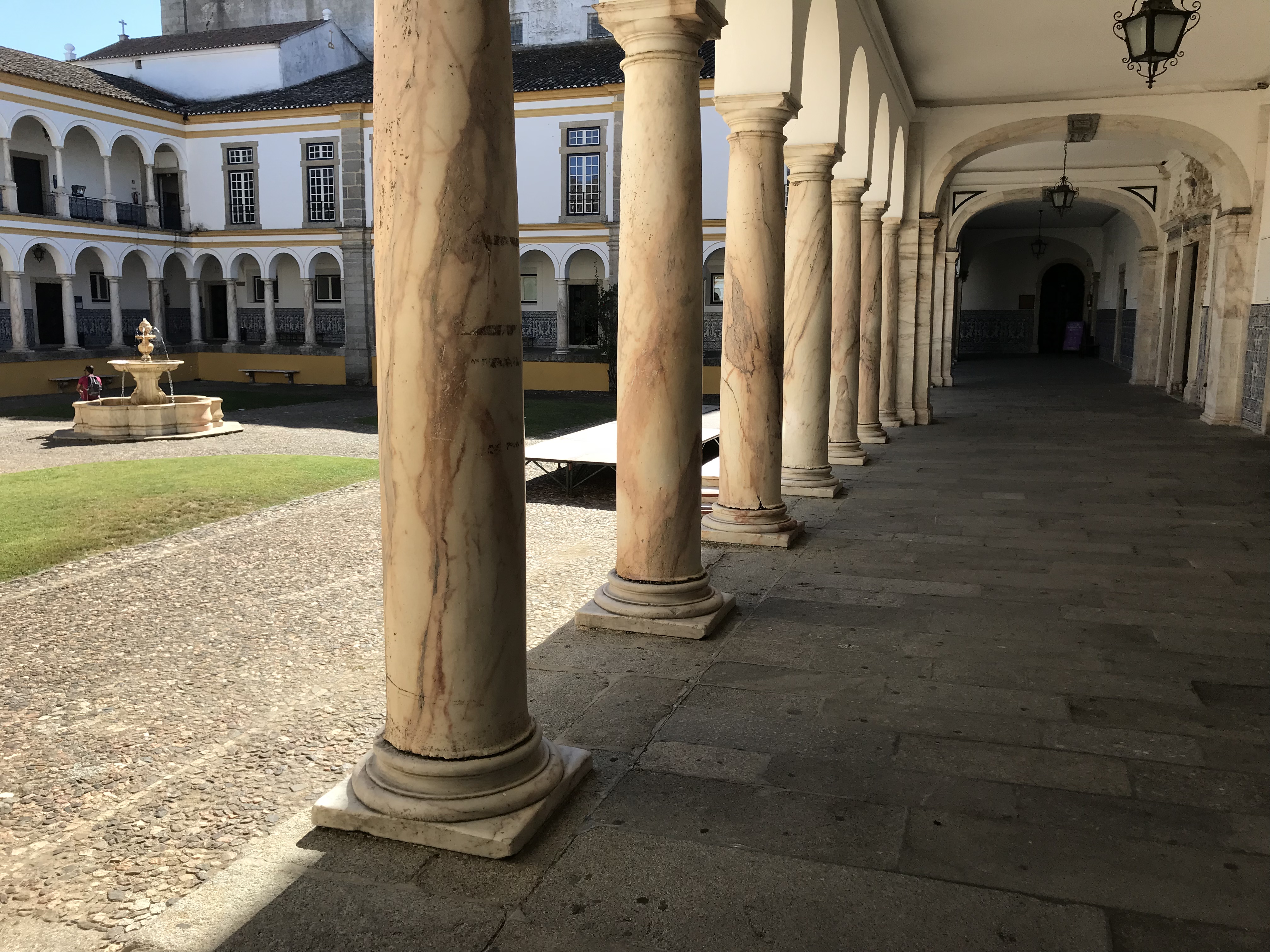
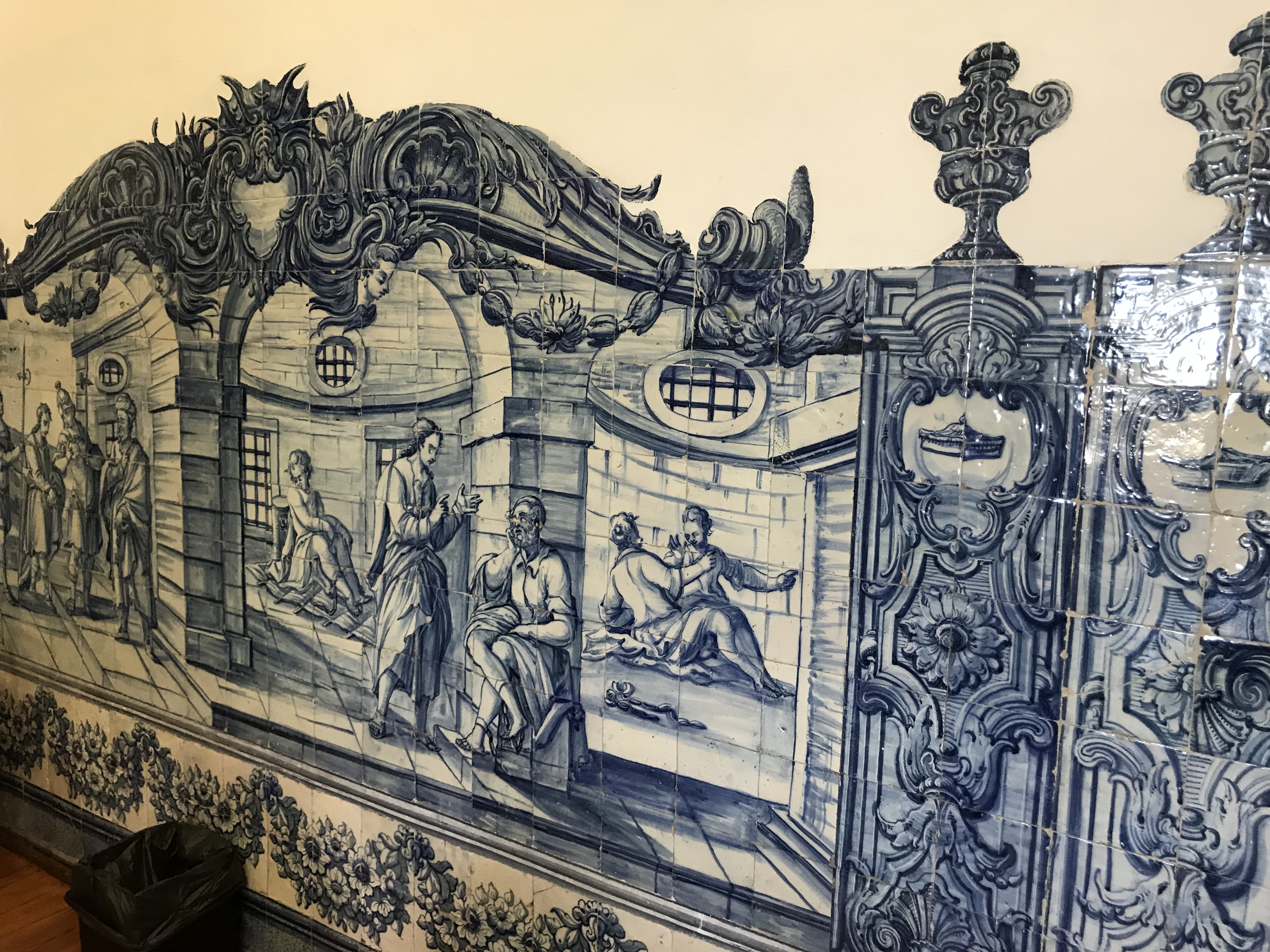
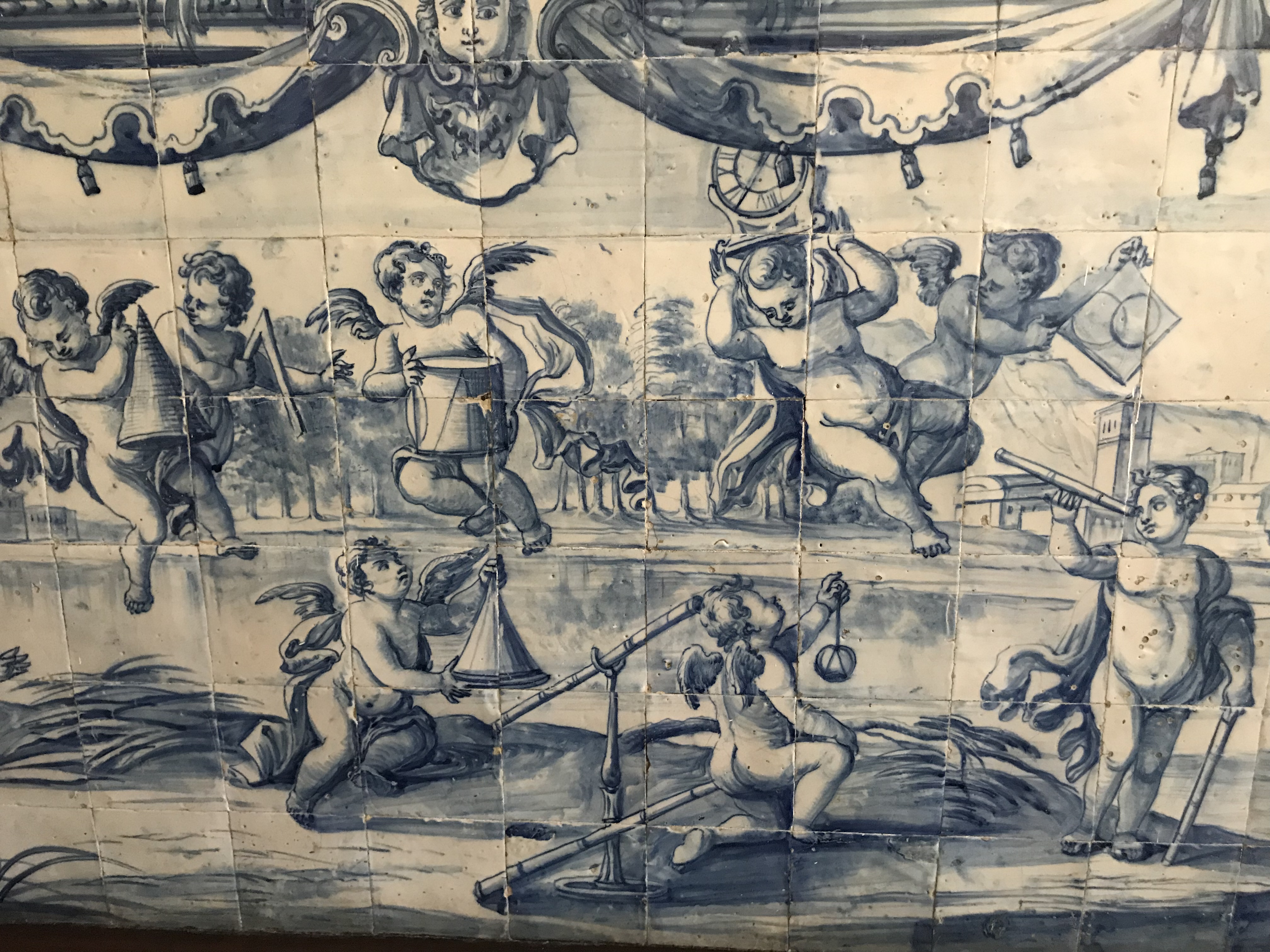
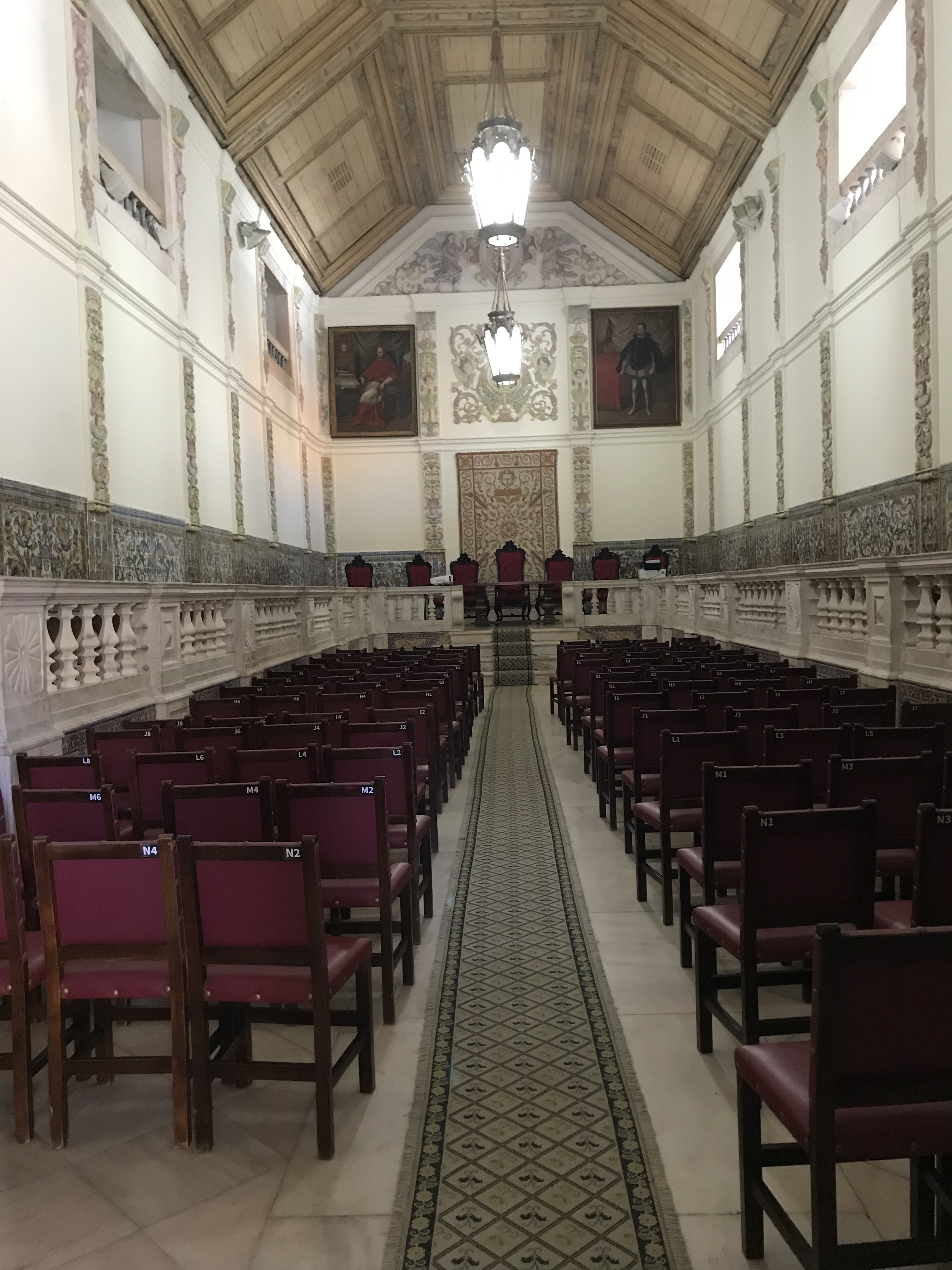
Our last stop was the university, initially built in the 1500’s and reopened forty or so years ago. For 3€ you can wander the original academic building, built around a quad with fountain. They have all the classrooms open for tourists, each room decorated with a blue tile mural depicting the subject originally taught there, as well as an ornate wooden pulpit reached by marble steps from which the Jesuit professors spoke…because words from a pulpit are not to be questioned. On the second floor is the small, ornamented biblioteca and the Azulejos do Centro do Mundo Octogono, a small tall room with tiled murals depicting air, water, earth, and fire. I bet you were unaware that the center of the world is in Evora.

Hey, What About The Real Food?

Our first evening we were so tired…and so hungry. We started out for a restaurant our host recommended but en route came upon Mercado da Baixa…as mentioned above. I said it was fun and good and I meant it! to illustrate:
Tuesday night we did make it to the host-recommended restaurant, Cerqueira. We were a bit early and the only customers: sitting at the next table was the owner’s young boy, mesmerized by the soccer game on the TV, cheering his team’s two goals. We had grilled fish, David the bacalhao, I the dourada. Oh, yum for 24€ with wine. Note I started to dig into my fish before remembering to take a photo.

img_2096
img_2101
img_2098

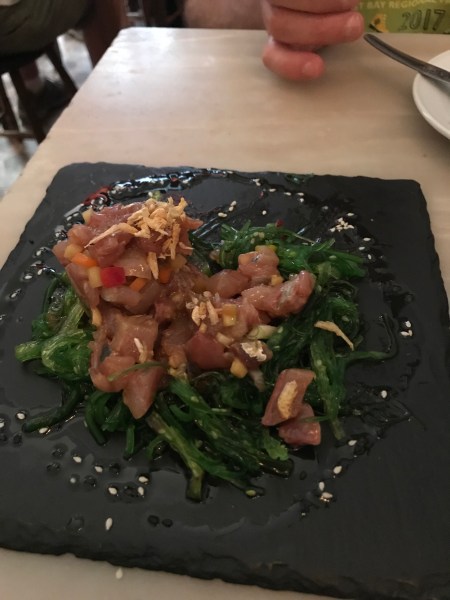
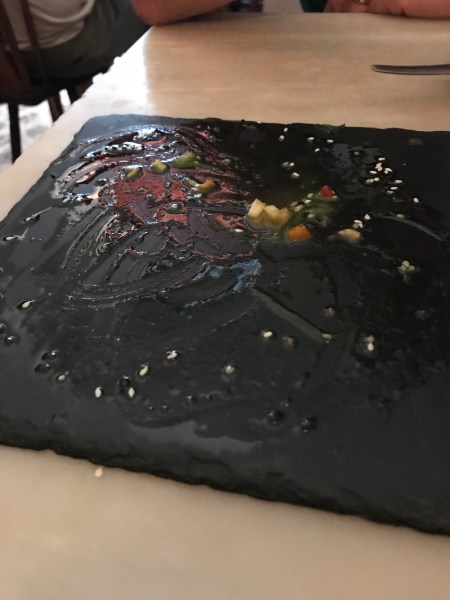
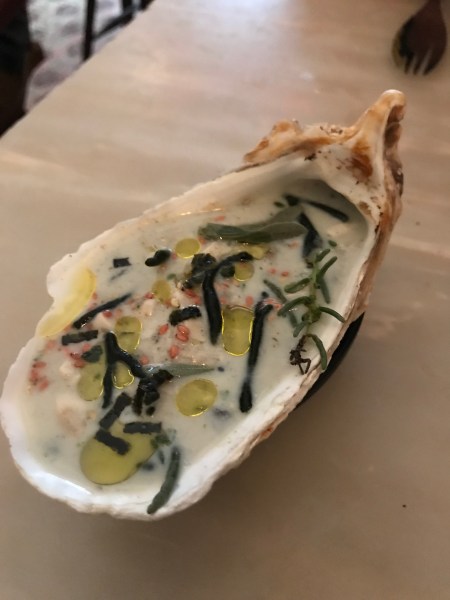
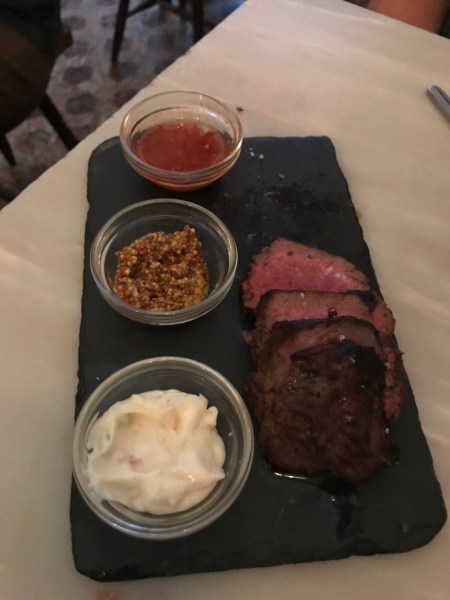
Wednesday we were at a loss. I looked at my “maybe try these?” restaurant notes and found one that was intriguing. A no reservation tiny place with small plates, which was a 15 or so minute walk from the apartment. We threw ourselves out the door, as it was almost 6 and after looking at Yelp (“I had to wait 2 hours for a table and am still giving it 5 stars…”) we didn’t think our chances were good. Got the last free table…and feasted. Honestly if we could have eaten another dish we would have, after the mackerel tartare, a spectacular raw chopped oyster thing in a mysterious broth, a mushroom thing, and cool slices of intensely beefy beef with 3 scrumptious sauces…and the lime mousse with white chocolate shards. (No picture of the mousse…we ate it so quickly!). With wine (they only serve Lisboa wine and locally supplied ingredients) the bill was 54€? Is that possible? Oh, yeah, and bread and olives to start (in Portugal these are never gratis.)

img_2125
img_2118
img_2119
img_2120
img_2121
img_2122
img_2123
img_2124
img_2139
img_2140
img_2141

Thursday, we went to the famous Belém home of the ubiquitous pastry pastel de nata, Casa Pasteis de Belem. While they are scrumptious everywhere, here you eat them still warm from the oven. Oh, my. David also had a chocolate eclair which he loved and asked me to learn how to make choux pastry.

To round out our Belém experience we shared an enormous hot dog from a stand on the water because we were fascinated with the combination a customer ordered–crispy potato sticks, then ketchup, hot dog, mayo, mustard, and more potato sticks. Quite satisfying, and we knew we had a treat waiting for dinner…

Our final dinner in Lisbon was our only reservation which David made online before we left the States. Friend Laura (thank you Hannah for having Laura in our lives–not only for travel advice!) suggested Leopold, a 20 seat gem run by a husband and wife team who offer a set course and one seating a night. An uphill walk from our apartment turned out to be especially fascinatingly diverse, charming, and artsy in turns. We missed our street but had given ourselves plenty of time to wander and it was a lucky miss because it took us to a hilltop view complete with a Mozambiquian band, outdoor bar, women in headscarves and hip folk with kids…we paused a bit and enjoyed the scene before we realized we were headed in the wrong direction.

A few pictures from our walk up:

We easily corrected our route (again, hurrah for Google offline maps) and arrived 30 minutes before our reservation. As we stood looking at Leopold wondering if we were even too early to enter a woman stepped out, said “Catherine?” In we went. Started at 7:45, left around 11. ”Twas a great meal and great wine. Toddled down the hill and fell into bed.

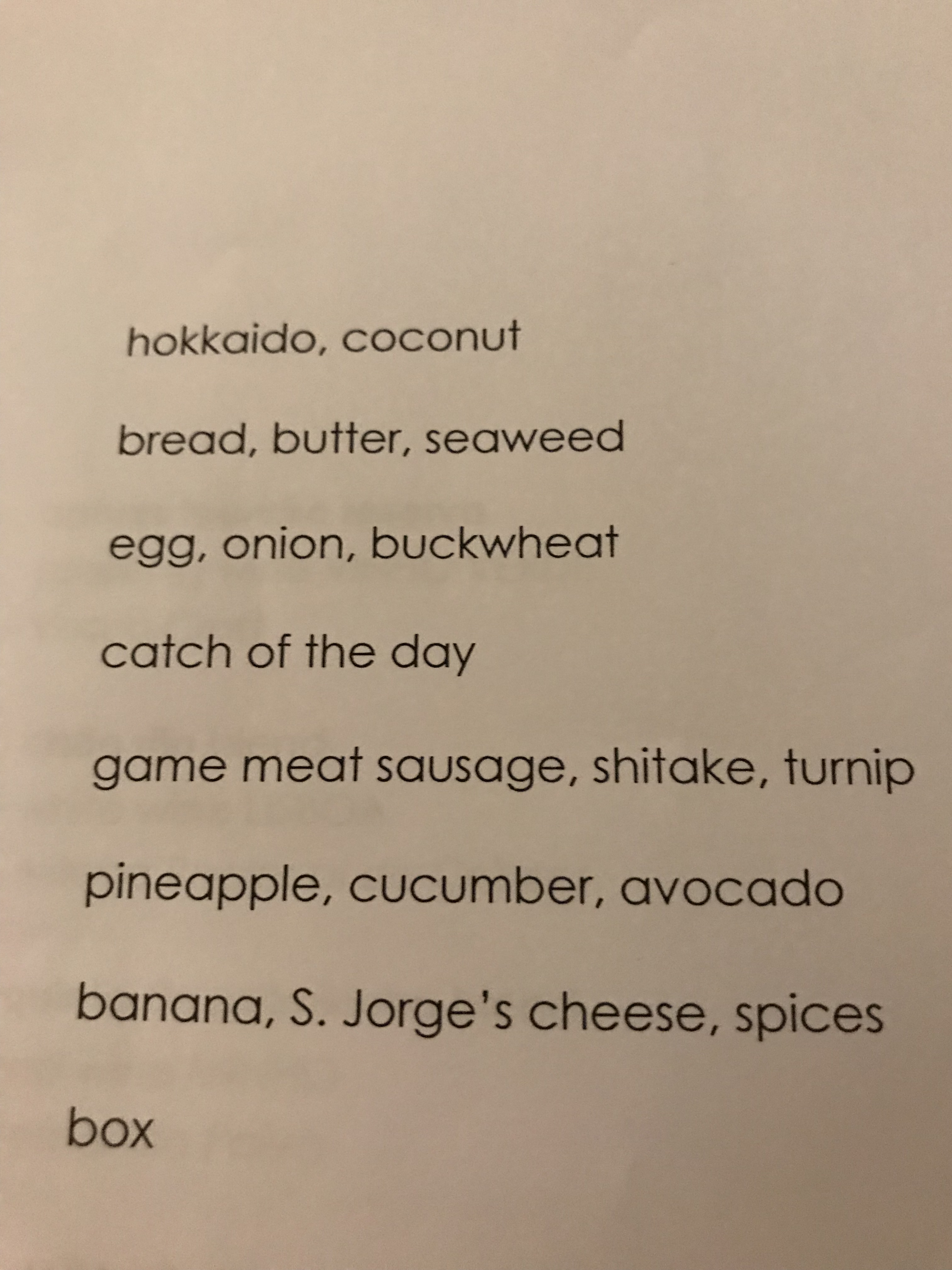
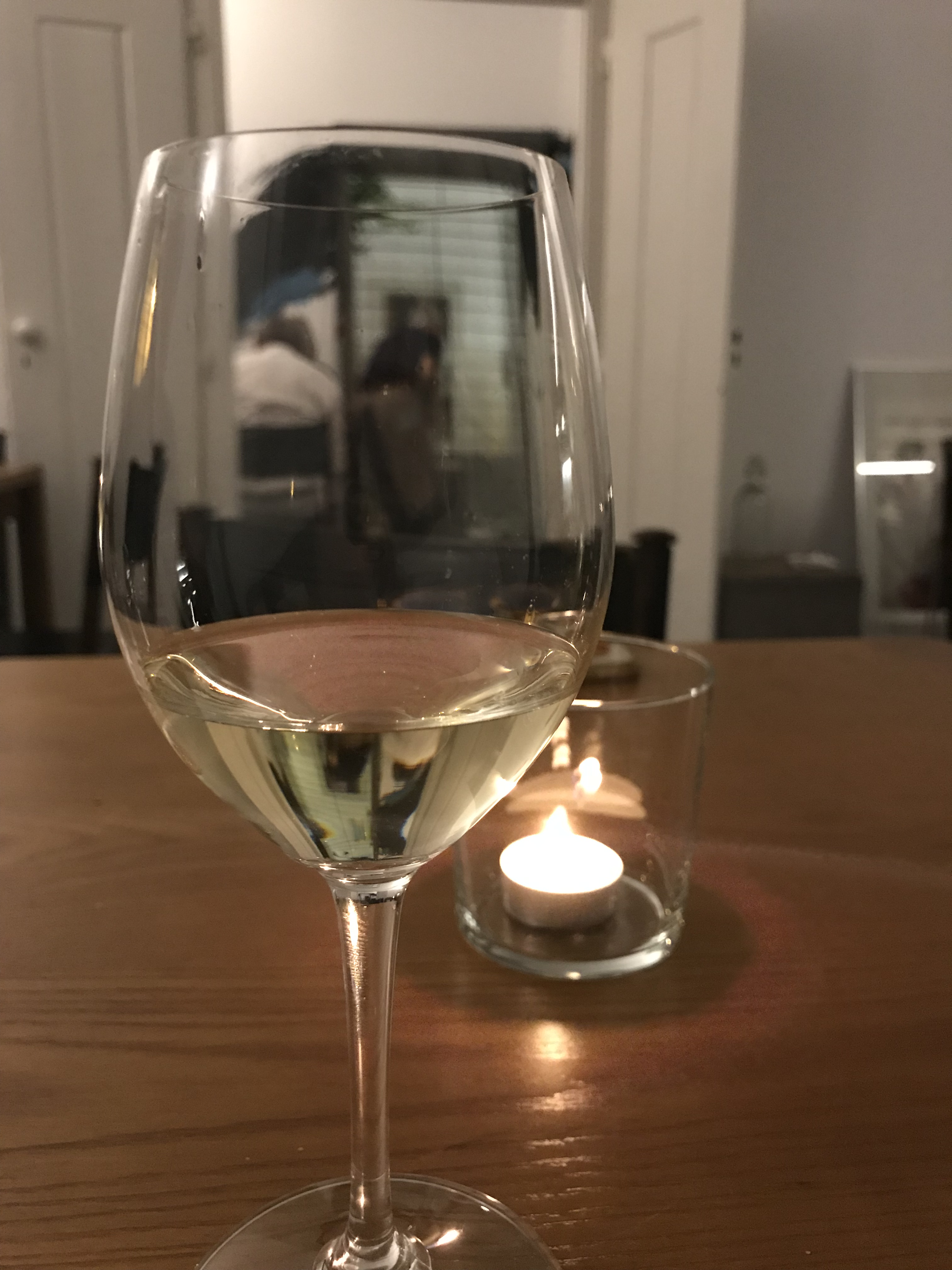
I include the menu because the food was not at all recognizable (a few photos below). Wine pairing was really fun. The first was a truly flavorful sparkling wine (all were Portuguese), the vinho verde marvelous, the first red blend we loved (second one less so) and the fortified wine very much like a Madeira. All were surprising and creative!

I did take a photo of the vinho verde because it was virtually colorless!

I repeatedly forgot to take photos, but here is what I did manage to capture. First, the place. Yeah, it filled up but we had it to ourselves for a little while.

Okay, I missed taking a picture of the first course…it was a slice of a small pumpkin, charred, with a blob of coconut something or other with toasted coconut on top, and you dipped or spooned the blob onto the pumpkin. It was delicious!

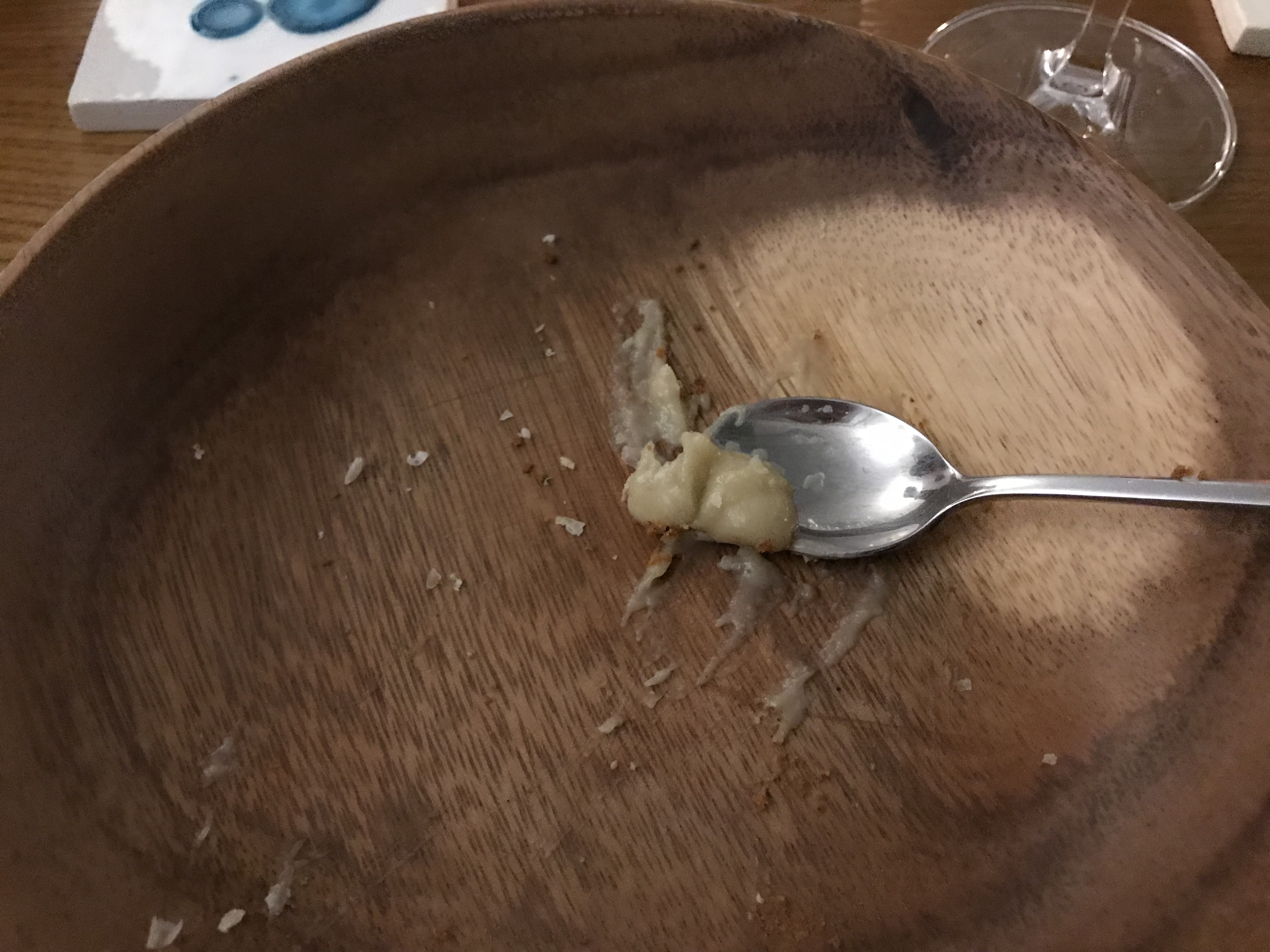
“Bread, butter, seaweed” turned out to be a small half loaf of sourdough bread made with dark beer (?), a butter so good it was how you think butter should always be…and we finished it plain when the bread was gone, and a chopped seaweed, capers, mustard combo to put on top. Yummy.

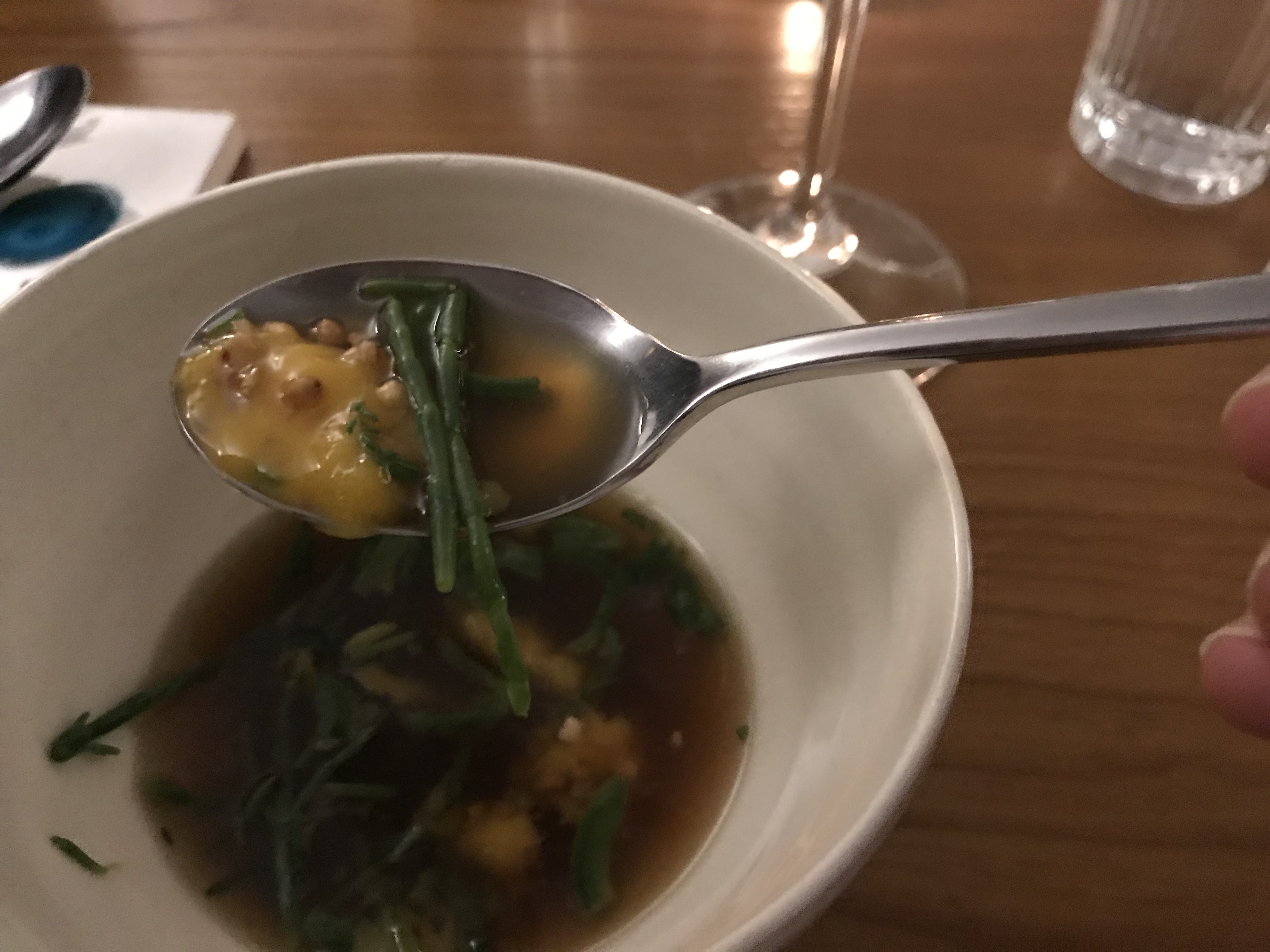
Egg, onion, and buckwheat was a soup with a slightly cooked egg yolk, crunchy toasted buckwheat seeds, and a clear broth sweet from carmelized onions. Doesn’t make for much of a picture but we ate every bit. Oh, the green things were crunchy and salty…reminded us of the sea grapes we had in a salad in Kyoto.

Catch of the day was grouper (local, natch) sooooo good and perfect with the red wine.

The meat course was a very soft sausage, intensely flavorful and topped with purslane and shiitake powder. Oh, and a turnip purée (the white stuff). We were getting full…

I forgot to take a picture of the banana, avocado, and something or other sweet…I blame the fortified wine. And “box” was an intensely sweet thing, the ingredients of which we cannot remember. Paid the bill of 170€. Floated down the hill. Went to bed.

Wandering Baixa and Bairro Alto

Oh what a good night’s sleep can do! We awoke ready for coffee, pastel de nata, the wondrous, and we now know irresistible, custard tart, and a walk through the city.

What we learned: Lisboa is accessible–smaller than we had expected. It is hilly–but hardly difficult for Bay Area folks. It is friendly–and so welcoming to even the most primitive Portuguese language attempts. And it is soaked in history, from Roman times to the fairly recent prosperity that emanated in part from its membership in the EU. (Hey, Britain? You sure you want to go down the Brexit path?)

The streets are typically old Europe, narrow, a bit treacherous from cobblestones which are in mediocre repair, and often solely or almost solely pedestrian. Though we had a few close calls no falls or twisted ankles yet–nor have we seen more than two or three women in heels. Honestly I don’t know how a woman could walk safely in other than flat soles. The tiled buildings are lovely and common, even newer construction, adding an exotic and often Moorish feel to the neighborhoods.

A highlight of our first ramble was Convento do Carmo whose roof and some walls were destroyed in the earthquake of 1755. The soaring Gothic arches remain, seeming to be a pan-holiness combining the arch construction technology of humans and a ceiling of the infinite sky. The small museum in the smaller apse at the rear contains many relics from the Bronze Age and a Roman times that have been excavated from the site.

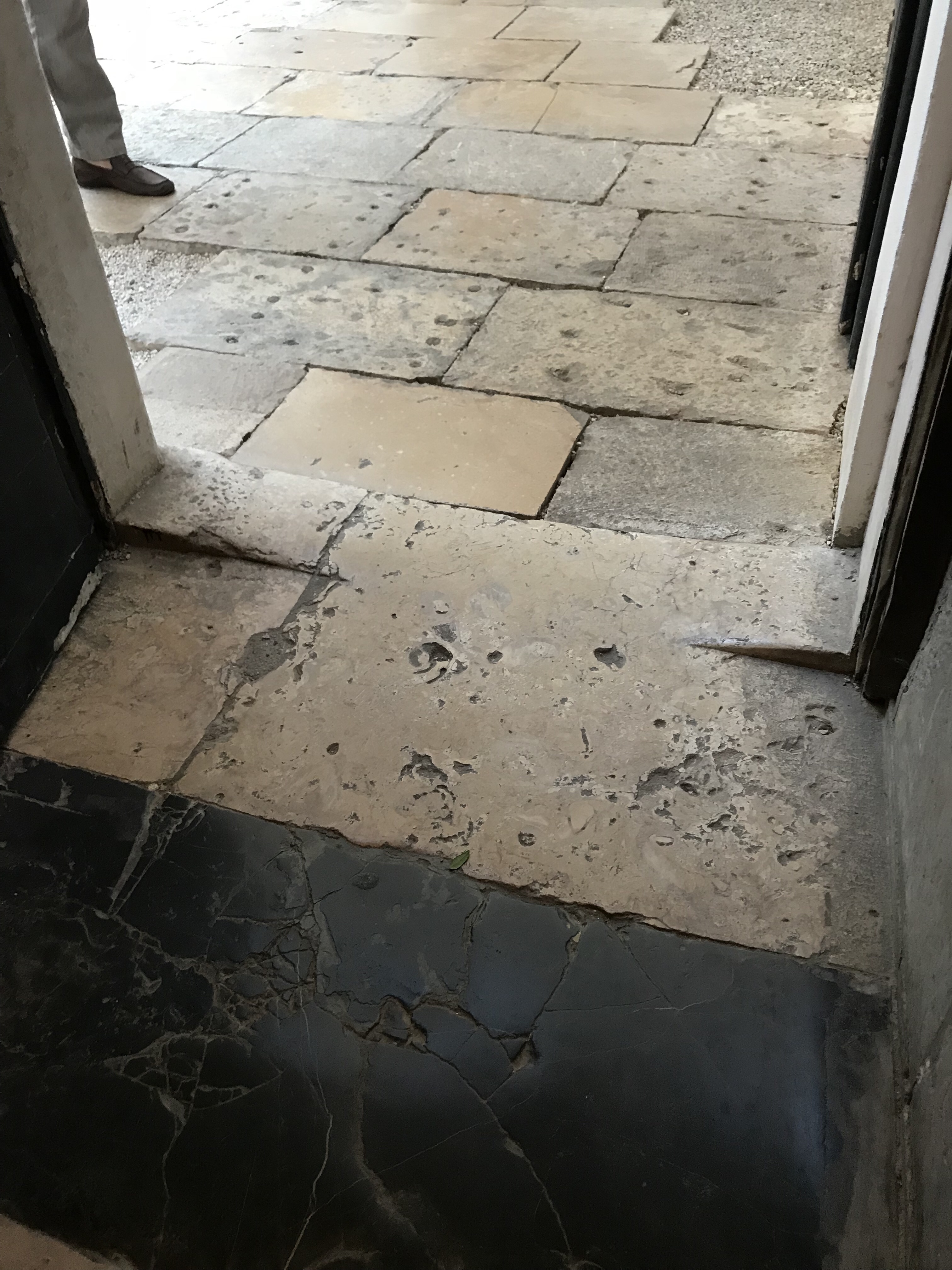
We also stopped in Sao Roque with “3-D” tiles on some of the walls, and doorways of stone worn down to a concave. A lovely church.

Lisbon Immersion

We arrived on a very hot day, exhausted and headache-y, staggered into the metro which of course goes directly from the airport (oh, USA, when oh when will you get with the transit program in every city?), and were quickly at our stop. Free WiFi on the train platform alerted us to connect and get our map up. We had 2 hours to kill before our airbnb was ready, and with our luggage we could just squeeze into the restaurant across the way…taking 2 of the 12 seats in this tiny neighborhood hole-in-the-wall. Three small tables and three seats at the counter, and a steady stream of regulars in and out.

We had been advised to rely on Google translate for menu help. You open the app, select “camera” and aim at the page for instant translation. Wow. A few glitches…the second carne (meat) item was translated as “cub scouts.” We went with the fish.

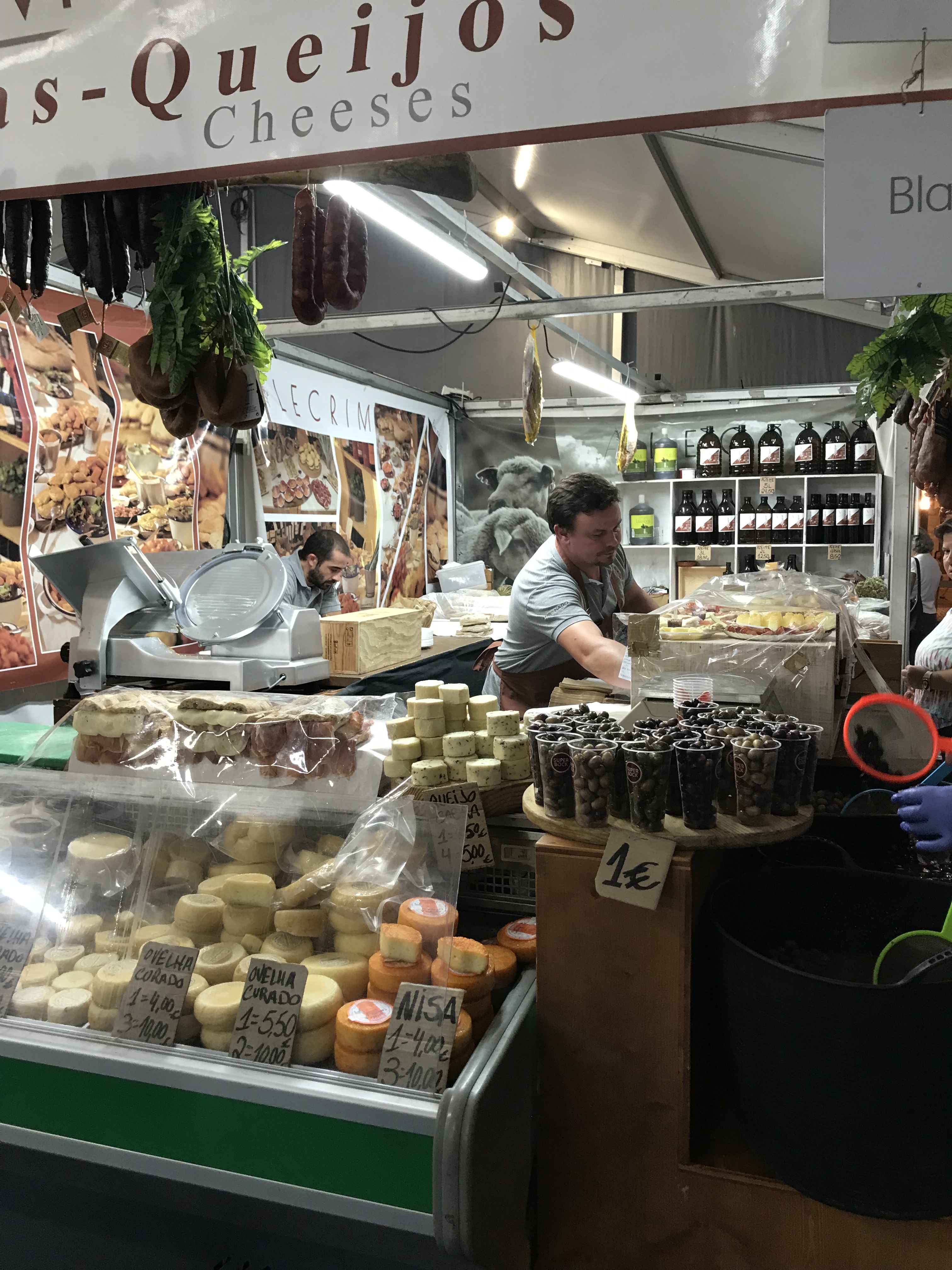
Our apartment is modern and sparkling clean…and after we met the host and she was finishing up cleaning (we came in as the previous guests were leaving) we fell onto the bed and were fast asleep in minutes–didn’t even hear her leave. Refreshed and ready to get our bearings we headed to a recommended restaurant but on the way encountered Mercado da Baixa, a cluster of vendors of food, wine, sangria, crafts, and jumping with locals and tourists. It looked like such fun and we were so hungry we dove in. Little plates of cheeses, meats, bread, some with tiny cups of fruit jam to spread on the cheese, sandwiches of ham and spread with strong white cheeses, cups of olives, all sorts of nuts and dried fruits, recorded fado serenading the noisy eaters, boys on skateboards, German tourists drinking teeny cups of orange liqueur chased with huge glasses of beer…on a still hot evening it was a welcoming and welcome party.

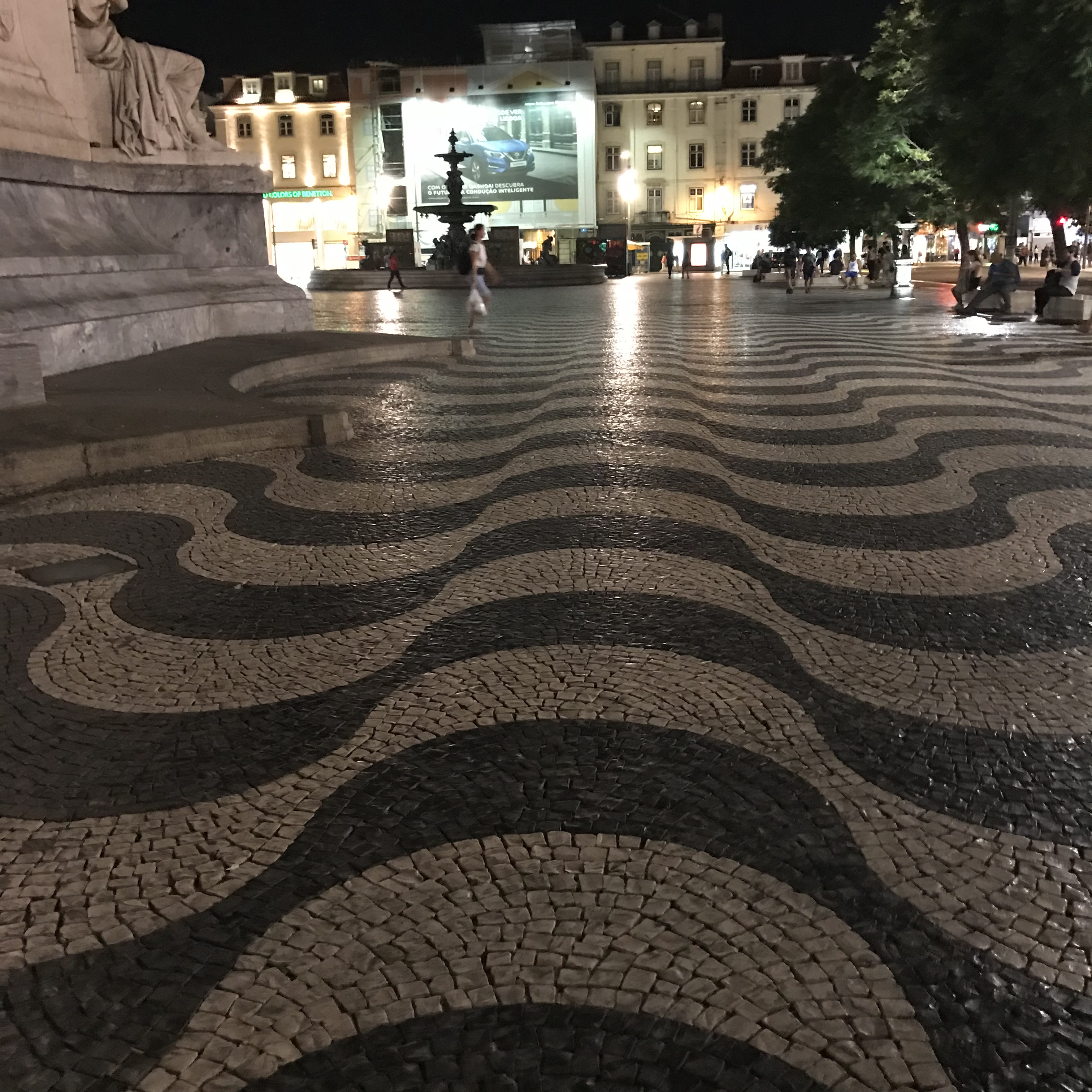
After food and alcohol we strolled a bit. Yup, the cobbled streets and mosaics are amazing to look at and a bit treacherous to walk on. The patterns change by streets, sometimes by the block, and they are in mixed repair and often rather slippery. Another reason to be glad we have backpacks and not roller bags…most older tourist couples struggle to maneuver and we do feel especially smart. Thanks to Hannah and Mark!

The beautiful Rossio train station. We will be back when we go to Sinatra.
After a bit of sangria these waves were disorienting!
The National Theater.
A typical street downtown.

We headed home and took a pedestrian walkway which looked perfect on the map but was a seemingly endless climb, finally depositing us on the street where the recommended restaurant was…it looked casual, friendly, and delicious so we will eat there our second night.

Welcome to Lisbon. Now, to fall into a long night’s sleep.

A Northern California Jaunt

We are fortunate to have a getaway in Siskiyou County, off the grid and remote, and just 20 minutes from a small town in Scott Valley.   We decided to head over to the coast for a visit to the redwoods and a stop in the beautiful town of Arcata…so packed for a few days, loaded the car with stuff and dogs, and drove north on Hwy 5.

As we climbed over the mountains into Oregon the snow started, and by the time we were at the summit we were bound on both sides by semi truck-trailers and the road was slushy and getting icy as the temperature dropped.  But by the time we were getting close to Ashland the snow had turned to a spitty kind of rain and though it was uncomfortably cold outside the roads were easy again and a coffee stop fueled us on to Grants Pass where our plan was to wander the town and then make our way down 199 to Crescent City.

Knowing nothing about the environs we went to Yelp which listed the Rogue River Visitor Center as a helpful stop so we drove back up along the river to get some advice about the route to Crescent City.

The Visitor Center is a small house with a small parking lot so in I went as David walked the dogs around.  An elderly woman came to the counter and I explained our plan and asked for ideas about places to stop, possibly places to stay, or any places of interest.

“Hmmm.”  She shrugged and told me to go back to Grants Pass and catch 199.  “Yes, we know the way.  Any ideas at all about what we might find along the road?”  “Hmmm.  I’m not really sure.”  A woman’s voice came from the back.  “Take 199!”  “Yes, got it.  Any suggestions about where to stay or what to see?”  Again from the back, “When you get to the fork, go right and drive up to Brookings.  It is the cutest town in the world!”  “In Oregon?”  “Yes. Take the right fork.  That’s what we do, and then we go to Crescent City for clam chowder.”  “Any suggestions along the way?”  “Take 199.”  Okay, got that loud and clear.  The first woman was fiddling with the brochures in the wooden rack at the door.  “Any of these I should take?”  “Hmmm.”  Woman from the back, “Do you want a cup of coffee?”  Not really…first woman shrugged again, then gestured to the guest book, pointing to the next available blank line.  I took the pen and added our names and place of origin.  “Anything else we should know?”  First woman, “Hmmm.”  Second woman, “Be sure and go right at the fork!”

So off we went.  Back to Grants Pass for a quite good burger at Jimmy’s, and then down 199, a lovely road through tiny towns including the gateway to the Oregon Caves, Cave Junction, Selma, Kerby…we had seen little reason to stop until we came upon a sign about 30 miles out of Grants Pass “Boardwalk Trail” and took a quick right.  A few miles in we came to a parking lot for the Boardwalk, but decided to explore the Jeffrey Pine Loop instead–a beautiful trail leading down into rather open forest with the Illinois River in view.  With all the rain the river was rushing madly and we were anxious to get to it but a bit slowed by the all the mud and rivulets–some more like cascades–crossing the trail every 15 yards or so.  The dogs needed encouragement to jump over, and once they were so daunted by the speed of the water they headed up the hill looking for a way around it–which didn’t exist.  Then it started to rain in earnest so we turned back to try and get down to the river from the other direction of the loop but no go–slippery and wetter.  By the time we returned to the car we were all drenched but invigorated!  When we got home I found information about the Boardwalk Trail and am sad we didn’t get to it–apparently it goes through a unique botanical area with California pitcher plants!  Darn it!  A worthy jaunt for the spring.

On we drove…back to California, where the road becomes Redwood Highway (just how many Redwood Highways are there?) and the trees are closer in and the forest thickens.  And then at last The Fork!  To the right, Oregon.  To the left, Crescent City.  Right we went into “the cutest town in the world” Brookings.  Well, it’s hardly the cutest town in the world, but it is nice enough and the gas is cheaper in Oregon so we filled up and then stopped at the beach for a quick run with the dogs.

Then back down the Crescent City for the night.  David pleaded with me to agree to Motel 6, which was fine because I knew we would be at a beautiful cabin for the next two nights…but warning, Motel 6 has remodeled with heated floors.  Heated floors = VERY HOT ROOM.  Like the person who commented on Yelp “Even though it was 30 degrees outside, we turned on the air conditioner” we turned on the air conditioner but got little relief, and opening the window exposed the dogs to strange outside sounds which require growling and barking to keep danger at bay.  David was apologetic but it could hardly be his fault.  So we had a hot night with little sleep, big deal.

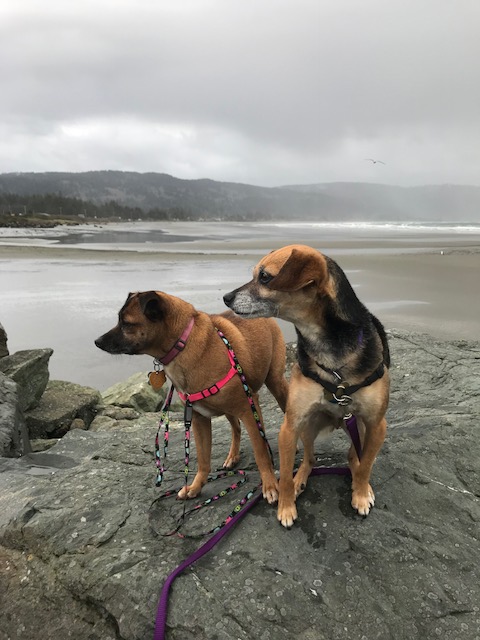
Before we dropped into bed we did have an old fashioned fish dinner at The Fisherman restaurant while the dogs slept in the car, preceded by another cold, rainy walk–Hops was shivering the entire time causing David great distress.  Both men survived–and we got a cute picture of the dogs to boot!

IMG_1516

The next morning was lovely–sun was out and all we needed was coffee and a quick stop  at the Redwood visitor center which is part of a big park service office just a block from the motel.   With excellent advice from the volunteer at the visitor center–to take 199 back through the park (which we had missed when we went “right at the fork”) to Walker Road, which is the only dogs-okay place to walk in the redwoods, we drove away from Crescent City to the Jedediah Smith Redwoods.  Walker Road didn’t sound so appealing, but with dogs not allowed on trails anywhere in the National Redwood parks we had no choice.

First, coffee.  I was driving as David was heads down in Yelp looking for a Dutch Brothers or other decent espresso place.  As typical, he was flustered about the directions and hollering out conflicting instructions as I drove up and down the main drag.  Turn here, no go straight, make a u-turn…so when I saw a little building on the left that said “drive through espresso” I turned in while he was still fiddling with his phone.  We went around back (the drive through said “closed”) and parked.  Oddly, on this side of the little building were signs in the window for “perms” and “cuts” and “walk-ins okay.”  Apparently the building, small as it was, had two separate businesses, a coffee place and a hairdressers.  Okay, no problem, and we opened the only door into a room perhaps 8’x10′.  Straight ahead was a very small Asian woman cutting an older man’s hair, sitting to the left were two younger white men, standing in front of us a very tall black man, and to the right a white woman also waiting, and behind her a lunch counter-type with a coffee menu but no people.  We stood there for a few seconds while every person in the room turned to look at us–it felt as if we were being evaluated for our hair dressing needs–and then I asked if they sold coffee.  Everyone looked at me completely blankly, including the Asian woman, who paused cutting hair so she could stare at us.  No one said a thing for maybe 10 seconds, and then the waiting woman turned around, looked at the counter, and said “It doesn’t look like anyone is here to make it.”  We went back to the car and started laughing.  That was one weird coffee place.

Last Day in Kyoto…A Walk in Arashiyama

The last time we were in Japan we ended a long hot day of a fantastic river trip in this little town which we saw a bit of and then hopped the train back to Kyoto. All we had seen that time was a pretty place of tourist shops—and we were quite tired!

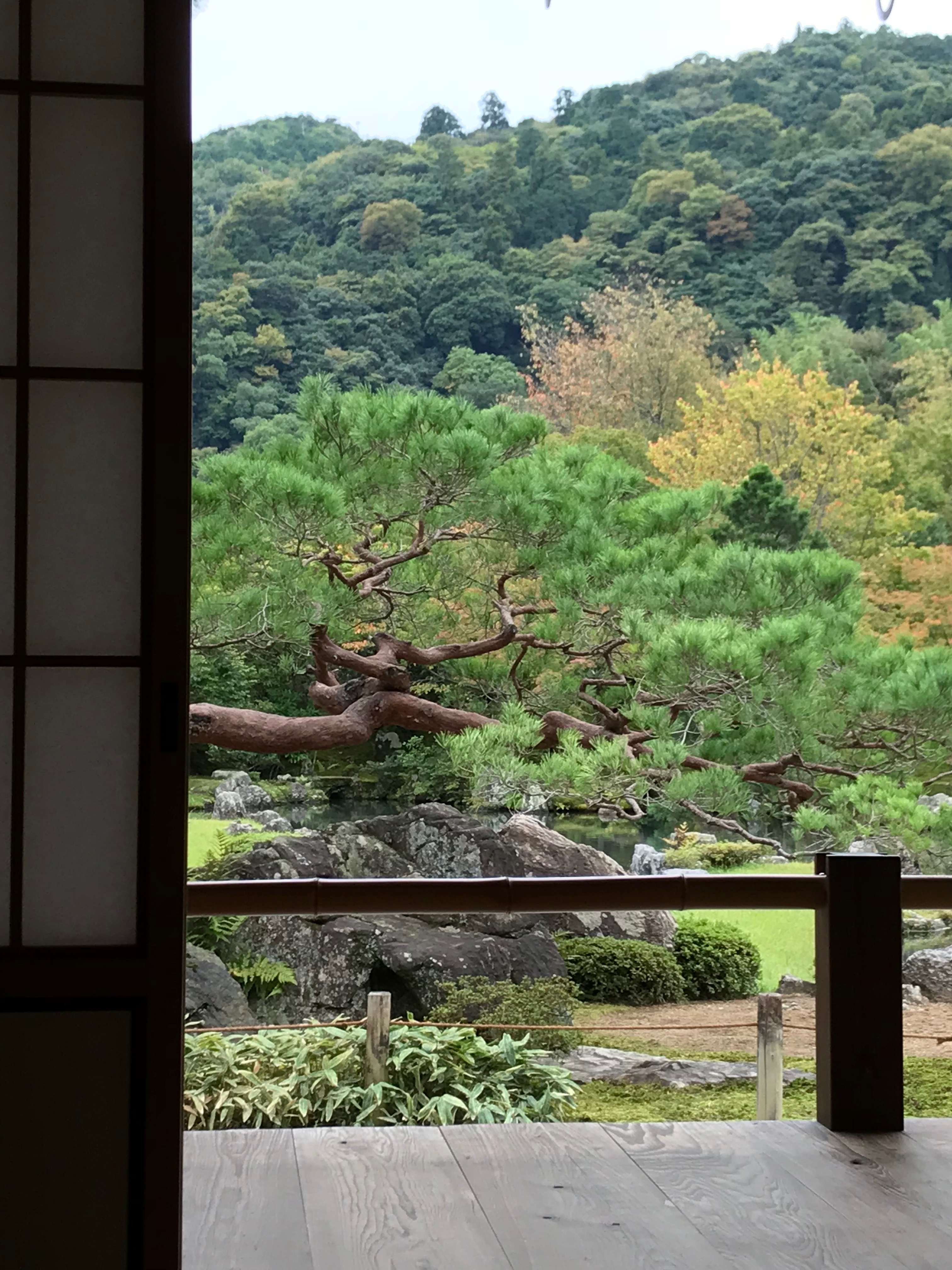
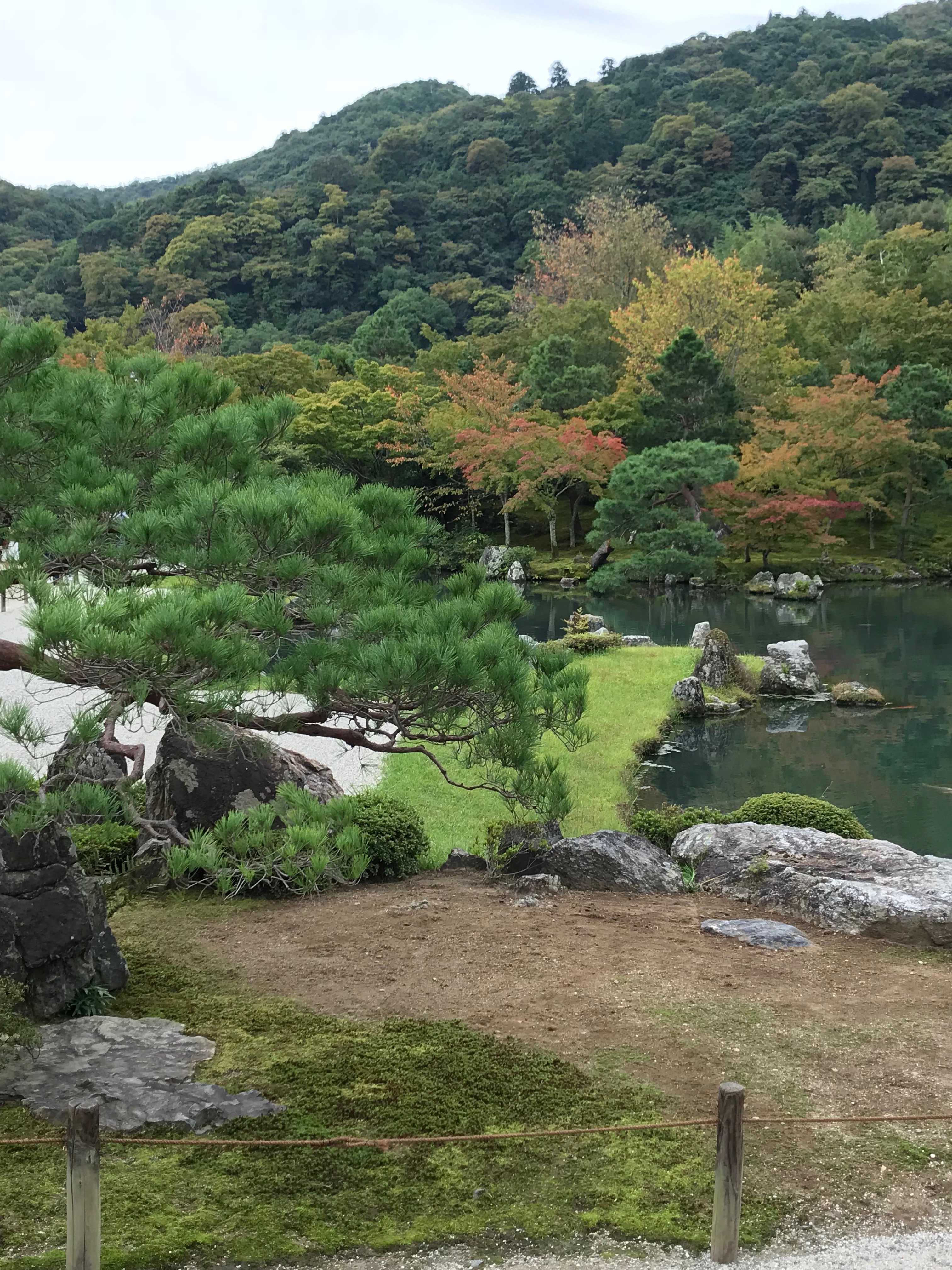
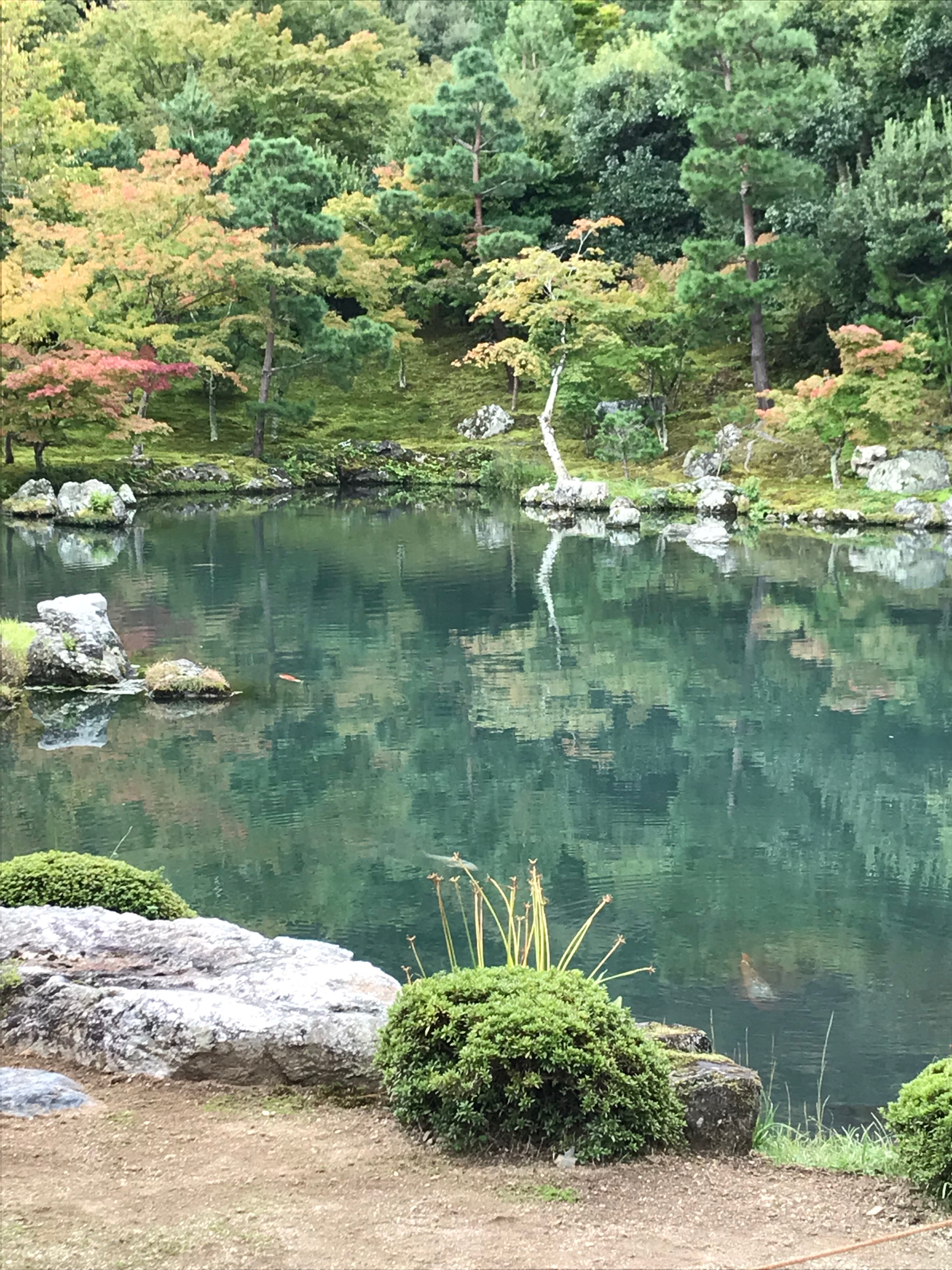
Searching for a final day’s excursion we decided to give Arashiyama another try. I swore I had seen enough temples for a lifetime, that they were all beginning to run together, but we didn’t have a better idea so hopped on the train and 15 minutes later were there. After reinterpreting the tourist map near the station, which of course had North pointing down, we started in on a recommended walking tour. The first stop was Tenryo-ji and paid the $8 to see both the temple and the garden, an extremely famous and popular spot that was, for an off season Saturday, full of tourists. Let’s see why it is so popular:

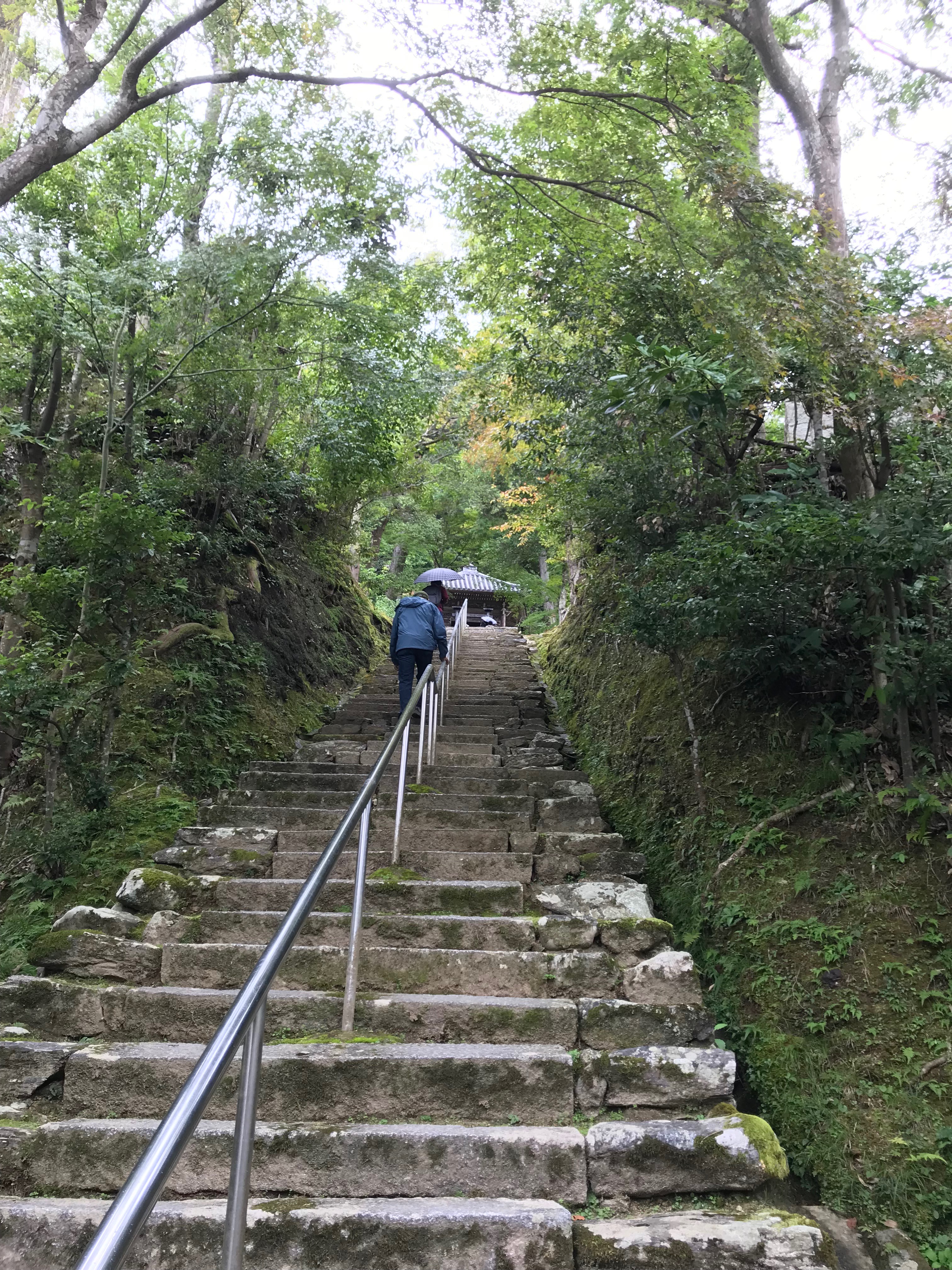
I could call this “suggested wallpaper/screen savers” and I suspect David and I will be rotating several of these for just that.  While we were there we saw gardeners working, sitting or kneeling pulling up the tiniest weeds and raking up, with mini-bamboo rakes, the smallest leaves.  Their care certainly shows.  The north exit of the temple takes you right into the famous Bamboo Grove, which is pretty cool but was also filled with visitors taking pictures.  We walked through but kept going, and as the route goes gently uphill, and the day was cool and a little drizzly, we were rewarded for our energy by ever dwindling fellow visitors.

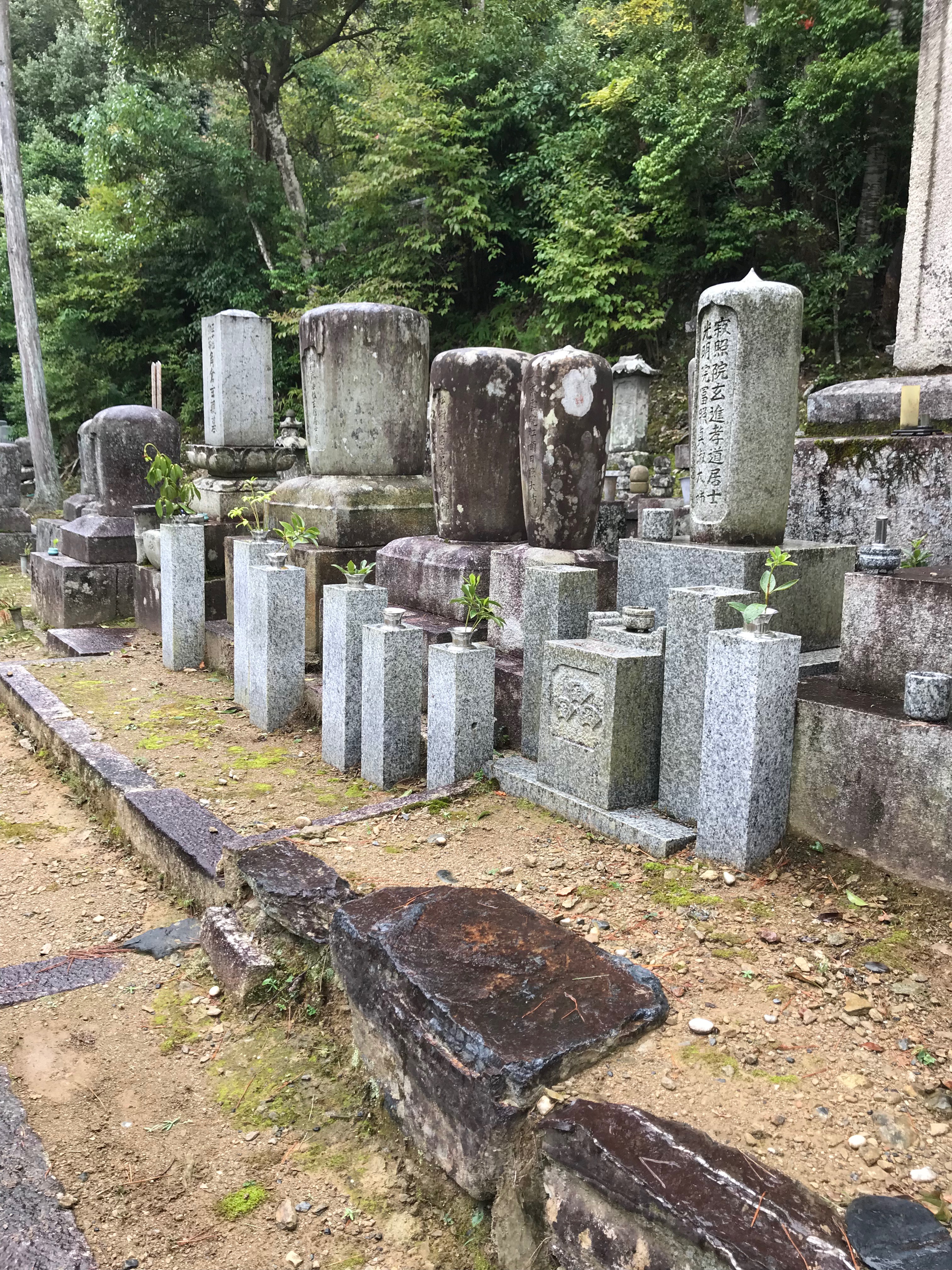
We walked slowly up and up, peering into a few temples but moving on until we arrived at Jojakko-ji.  This one made my top 5 or 6 of the trip.  So quiet, with beautiful views back toward the city of Kyoto, a truly gorgeous main temple with stunning gold Buddhas, a mysterious-feeling cemetery and a bonus as we left (see video below the photos).

In the long view picture above, Kyoto Tower (a block from our hotel) is peeking up, but the misty day makes it impossible to see here–it is in that loop of branches right in the middle of the photo.  I just loved this place–it was a little hard to leave and move on. 

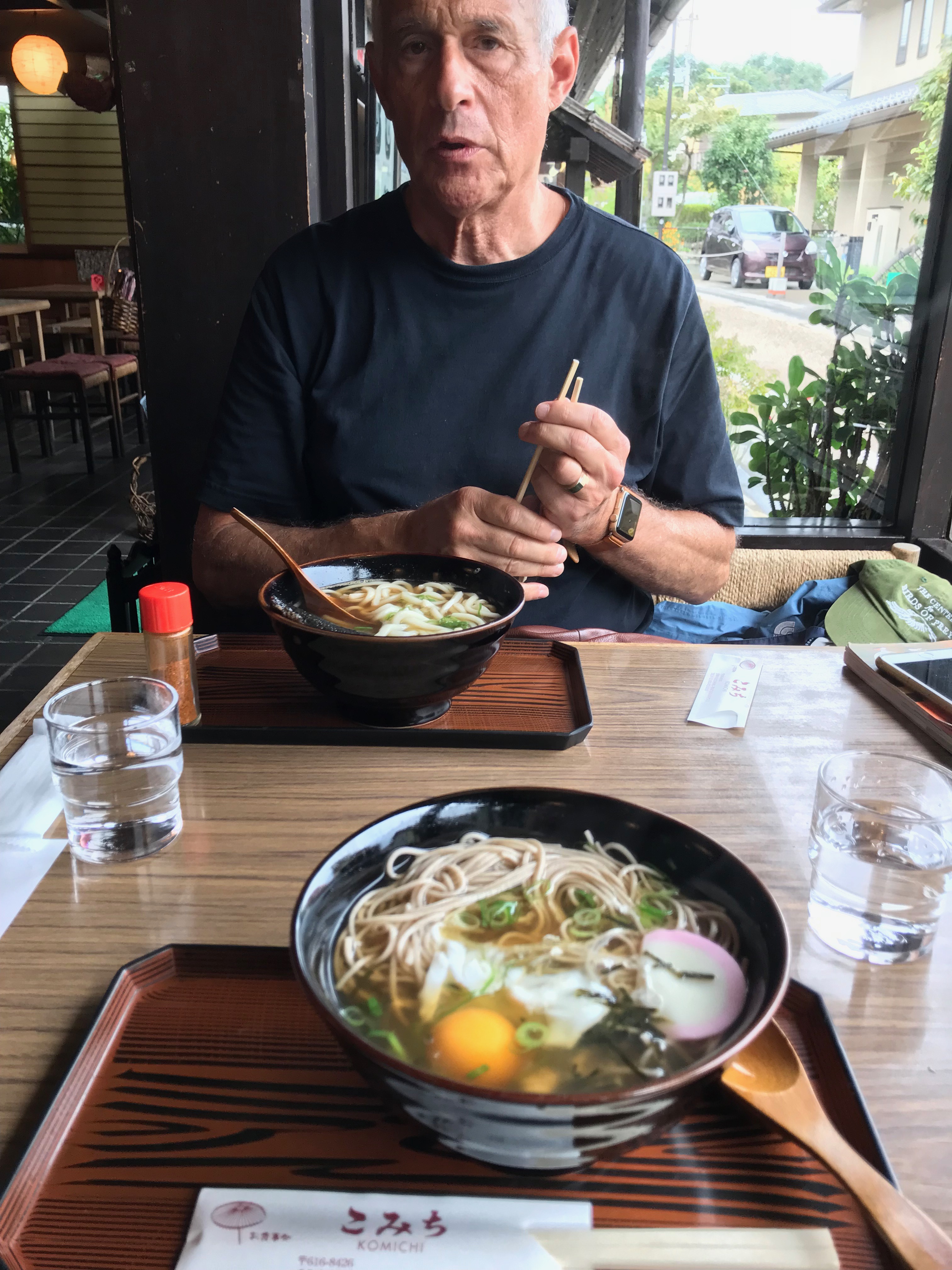
We were getting hungry and voila, an inexpensive noodle shop popped up a little way further up the hill and we ducked in for a bowl.  Yummy, quick, and we were off.

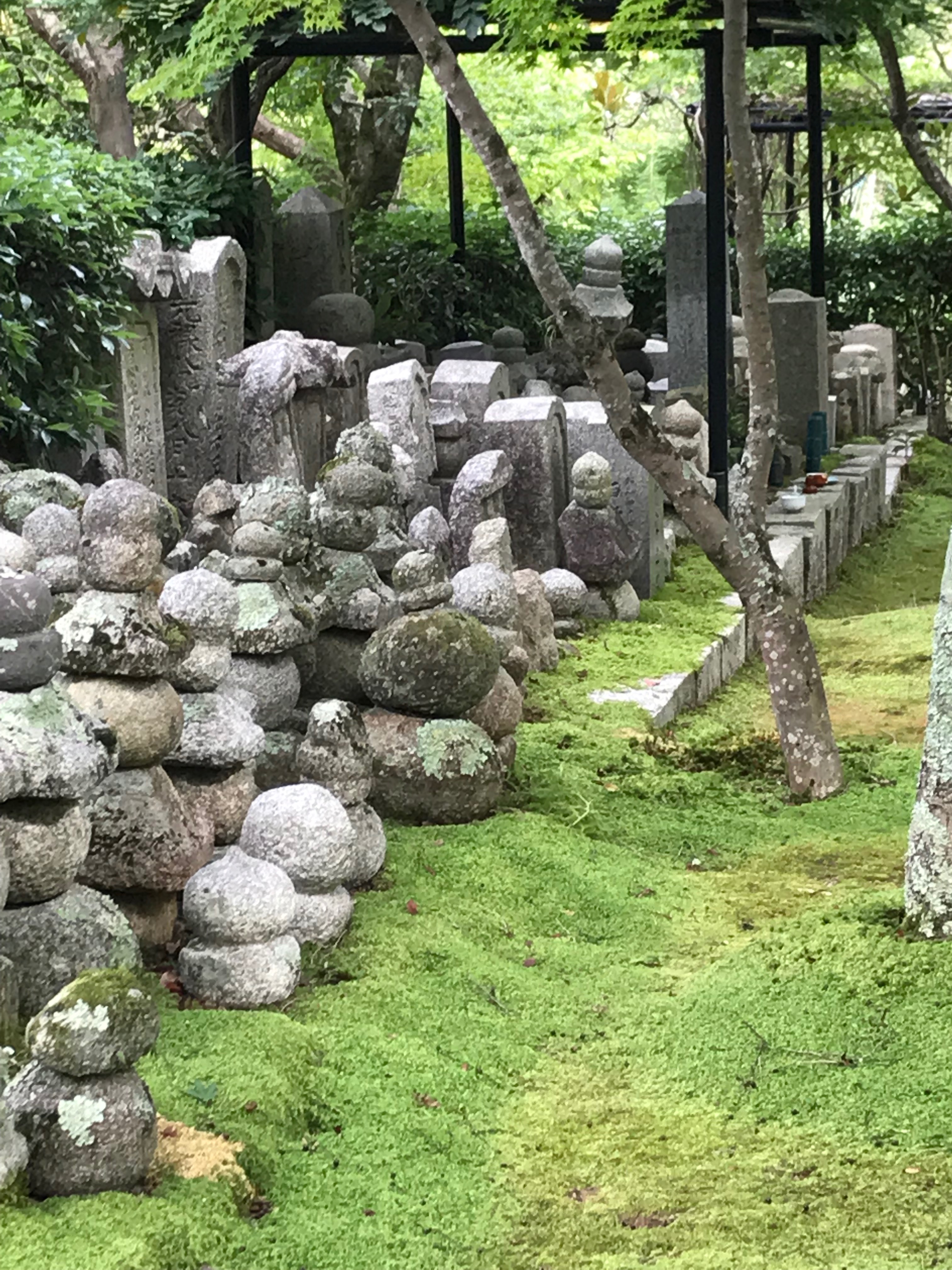
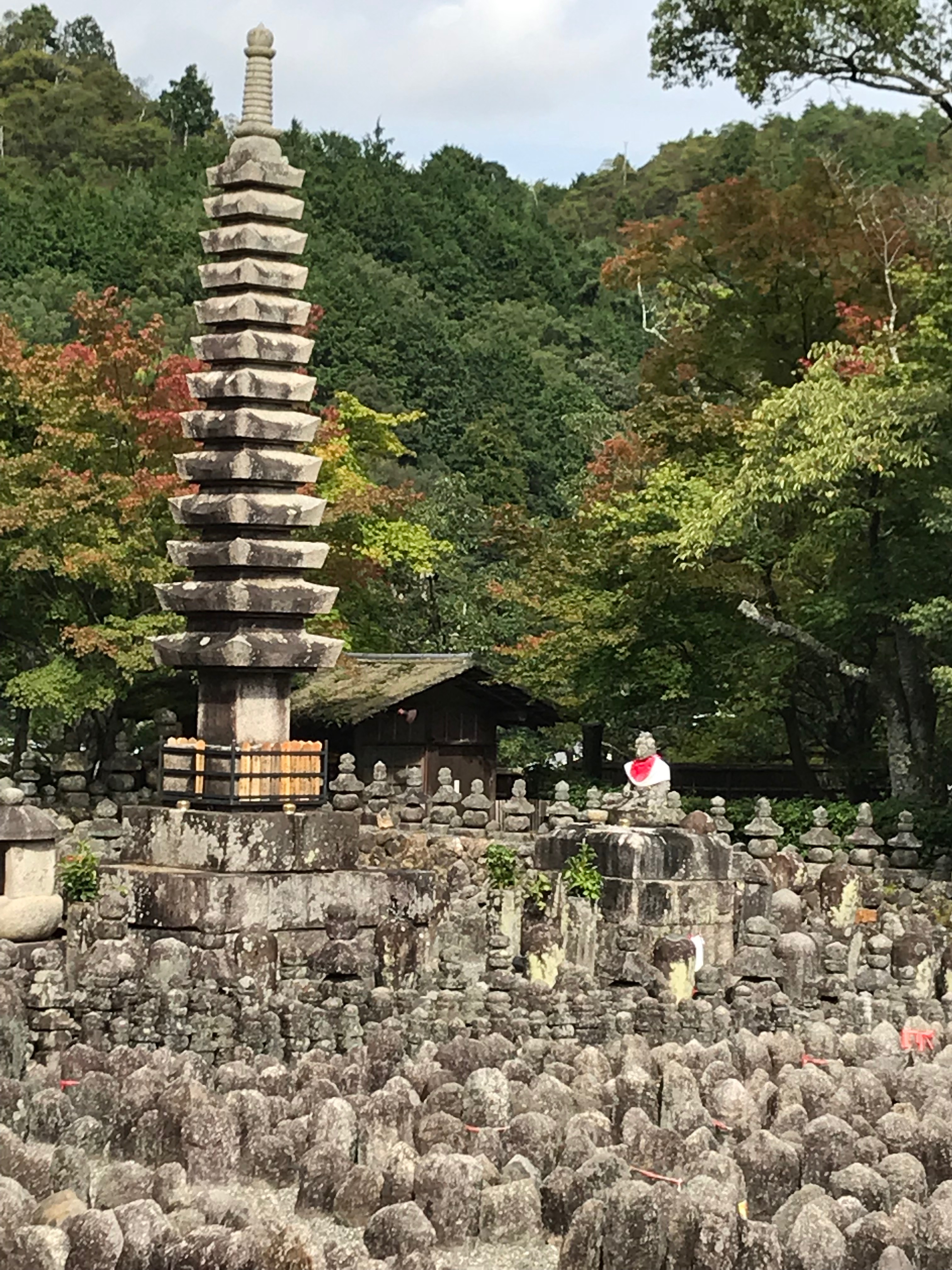
The weather slowly improved as we decided to trek on to Adashino Nenbutsu-ji, almost to the top of the hill.  The guidebook called this “rather unusual” and where the abandoned bones of paupers and 8000 stone images (which had been uncovered about 100 years ago, having been discarded or buried, unclear) were dedicated to their spirits.   Lonely Planet said “not a must see” but “interesting.”  We beg to differ on the category.  This was one of the most moving, beautiful, holy places we have visited anywhere, with powerful and intense spirits.

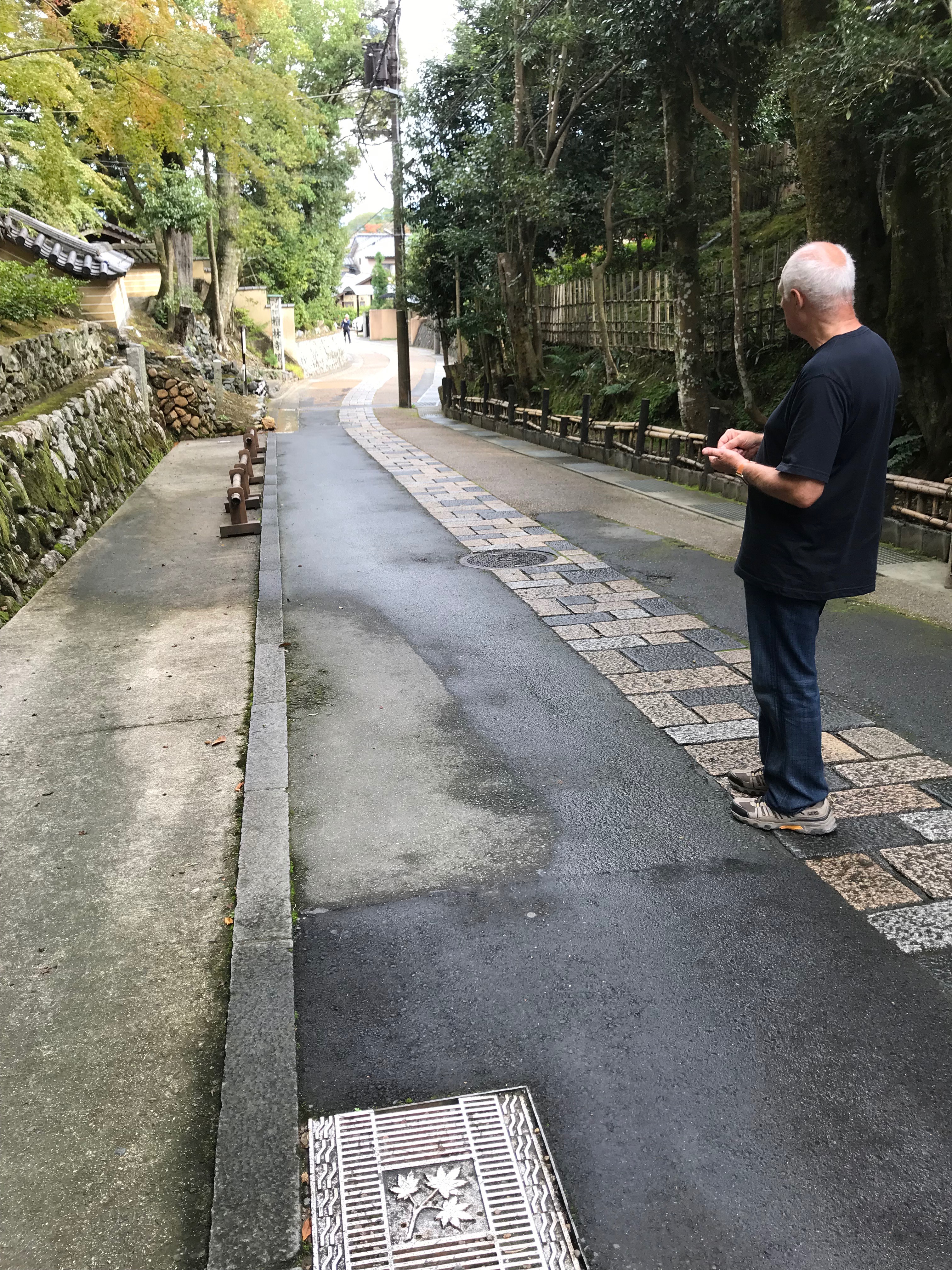
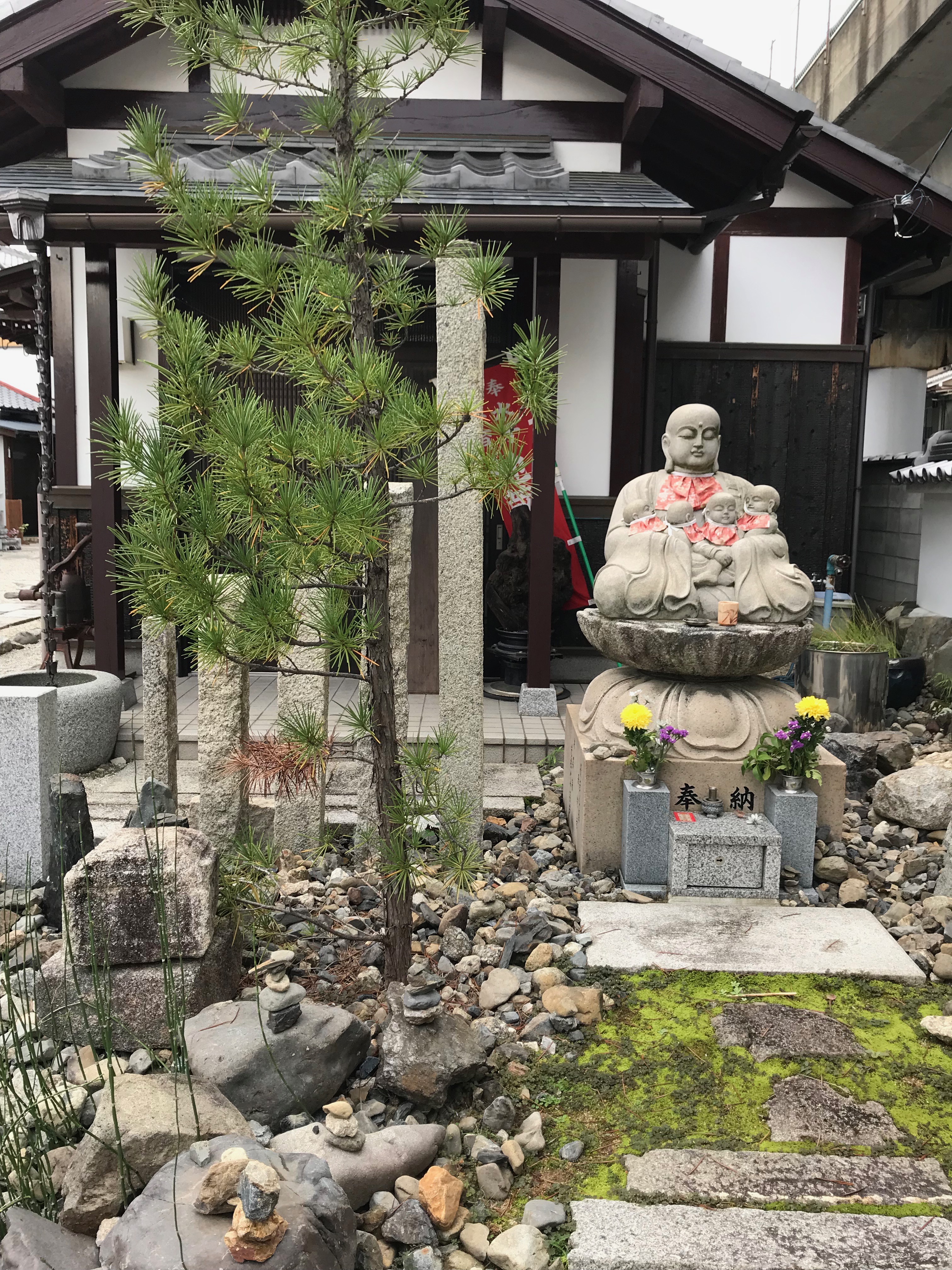
We stayed for a while, then wandered down to the train station where we passed the unnamed, unremarkable shrine in the photos below, about a block before we found the station entrance.

So, who had the fantastic idea of going to Arashiyama?  It was a magical, peaceful day and suitable end to our stay in Kyoto (end except for our third sushi engorgement…).

A Bizarre Store in Kyoto

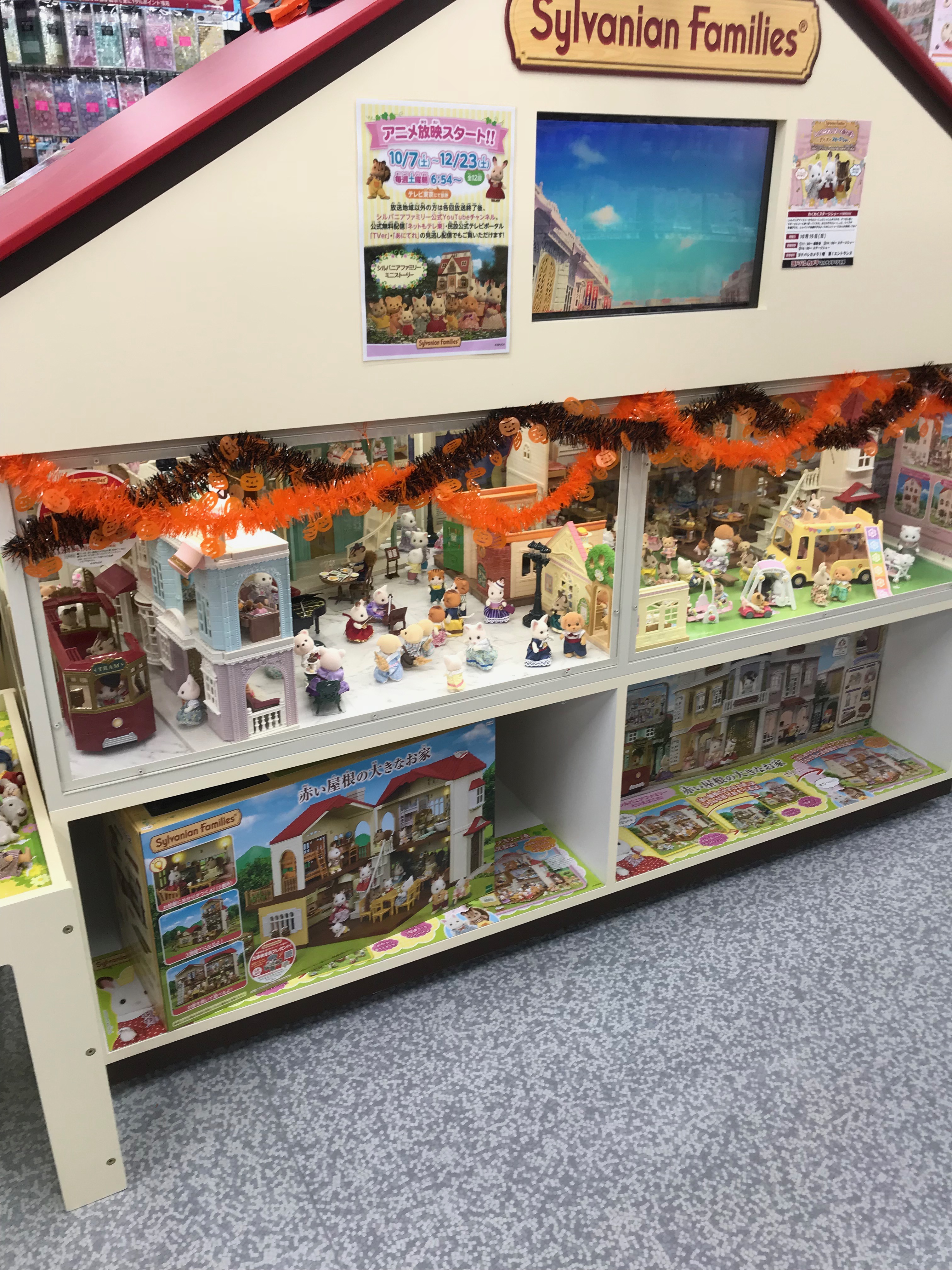
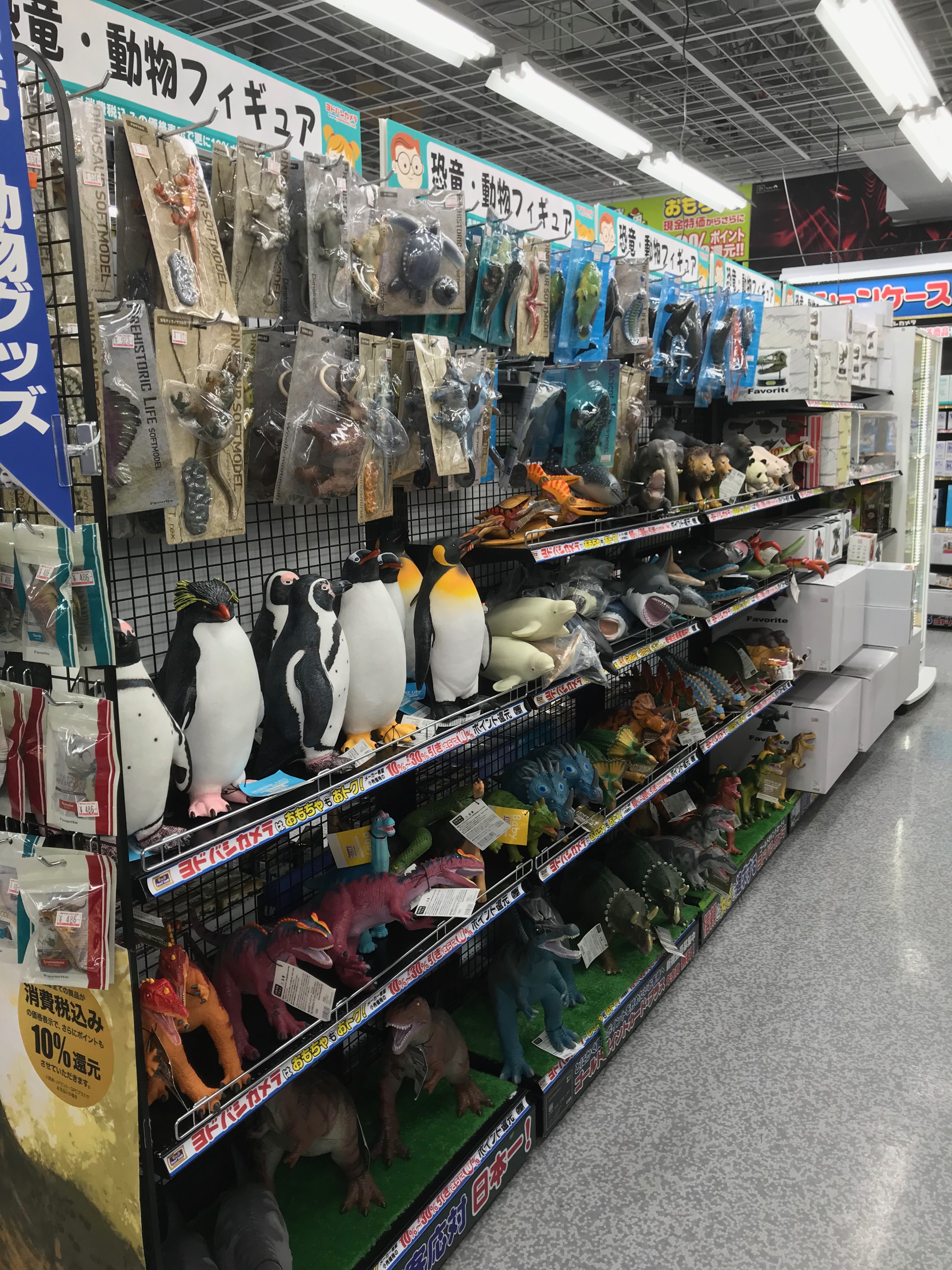
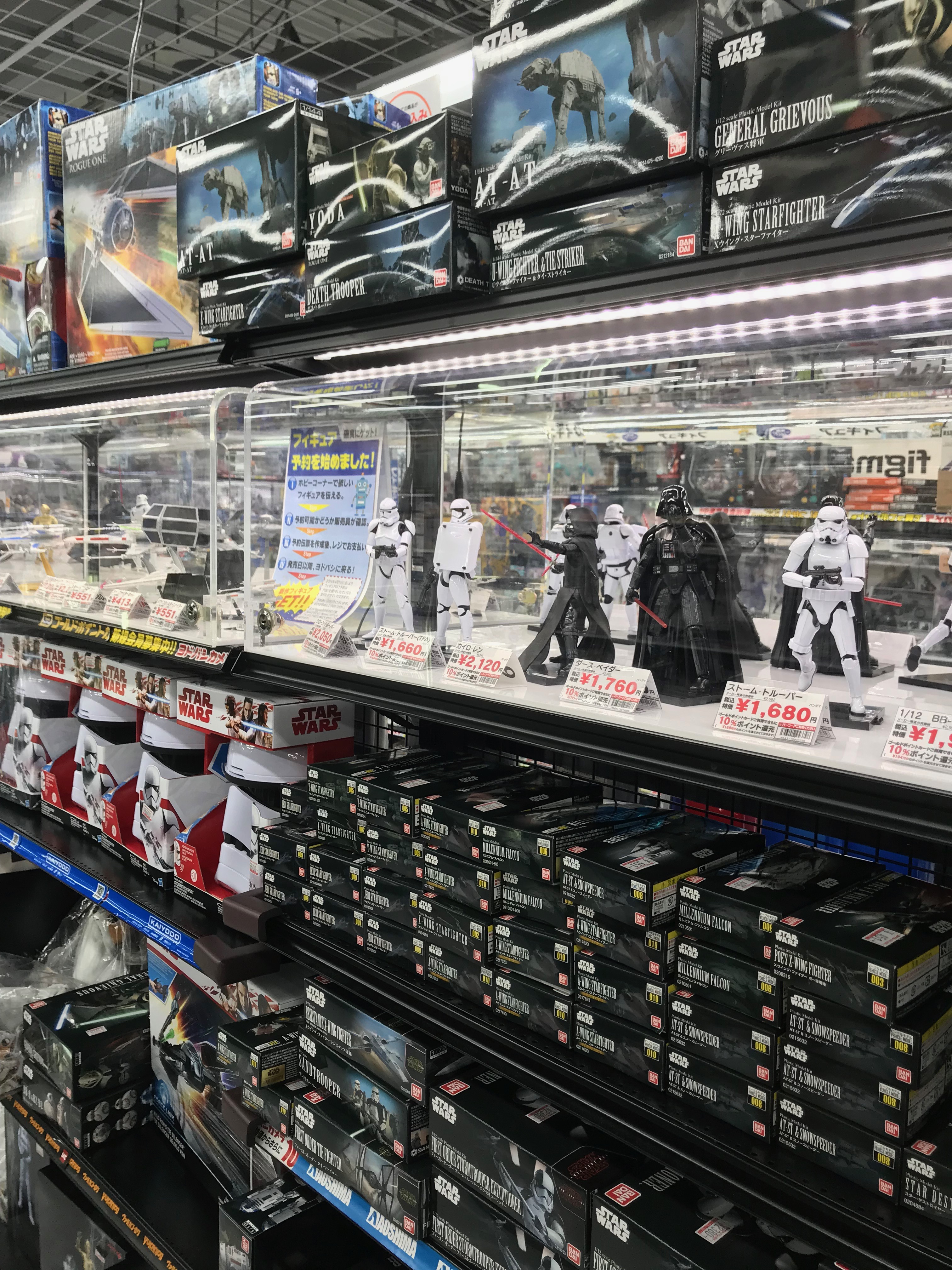
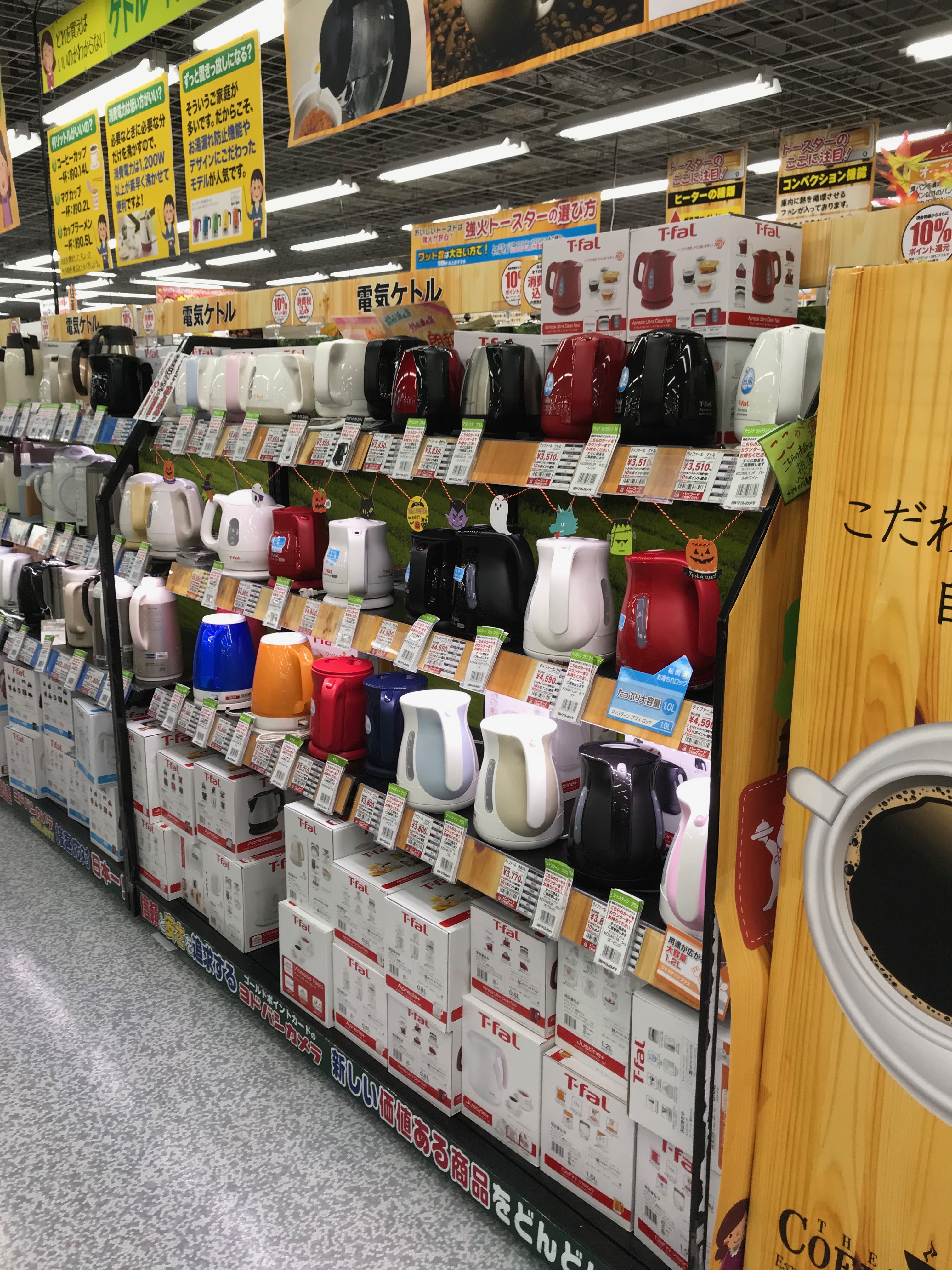
Quite near Kyoto Station, just a block past Kyoto Tower, is a conglomeration and/or department store which has the most amazing array of products we have ever seen anywhere, anytime.

It is almost impossible to describe, so here are some pictures grouped by product type.  We didn’t buy anything–even if we had wanted to, how does a simple American consumer make a choice?

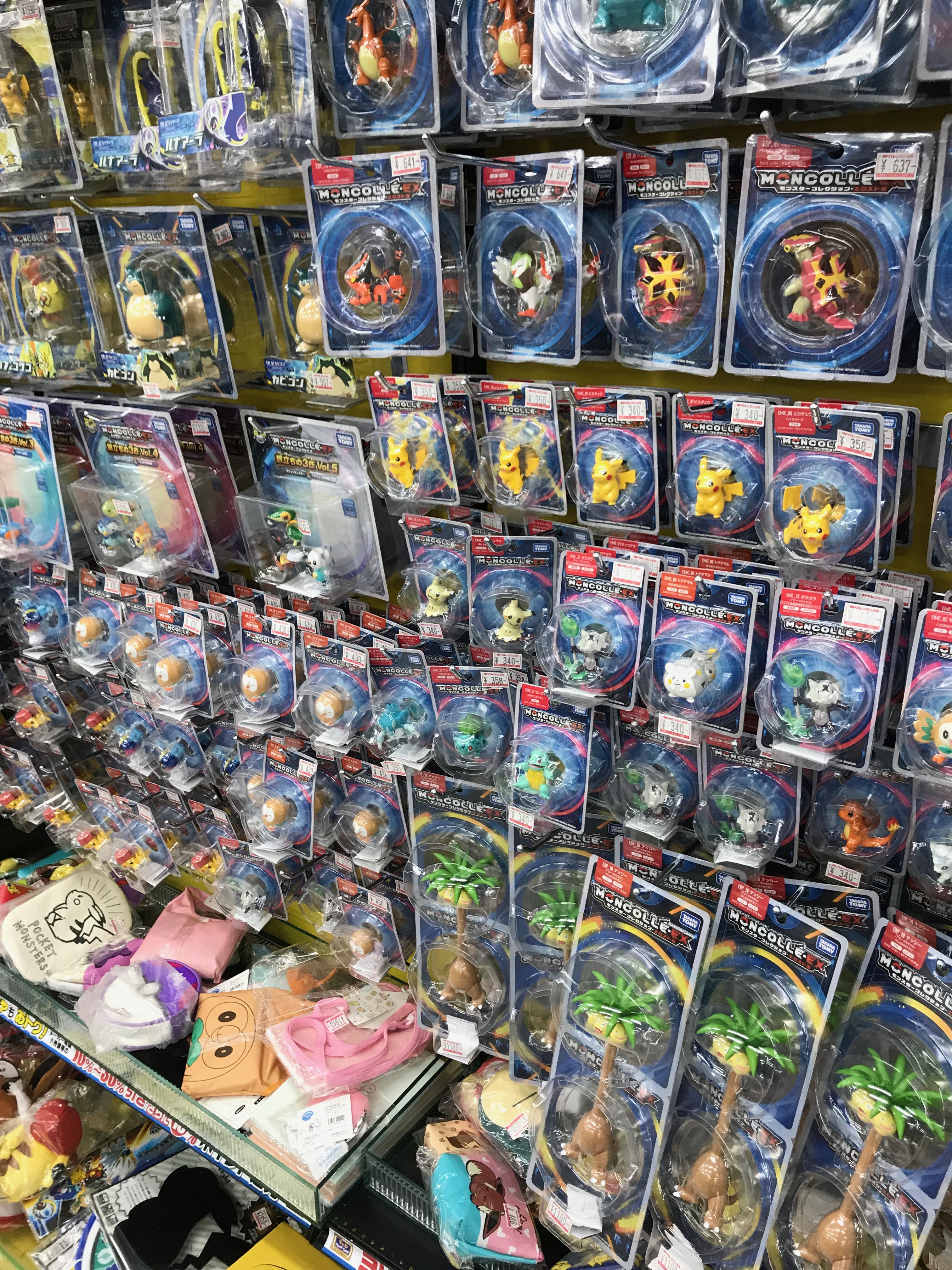
Action Figures??  Who Knew?

I promise you, this is a SAMPLE only.

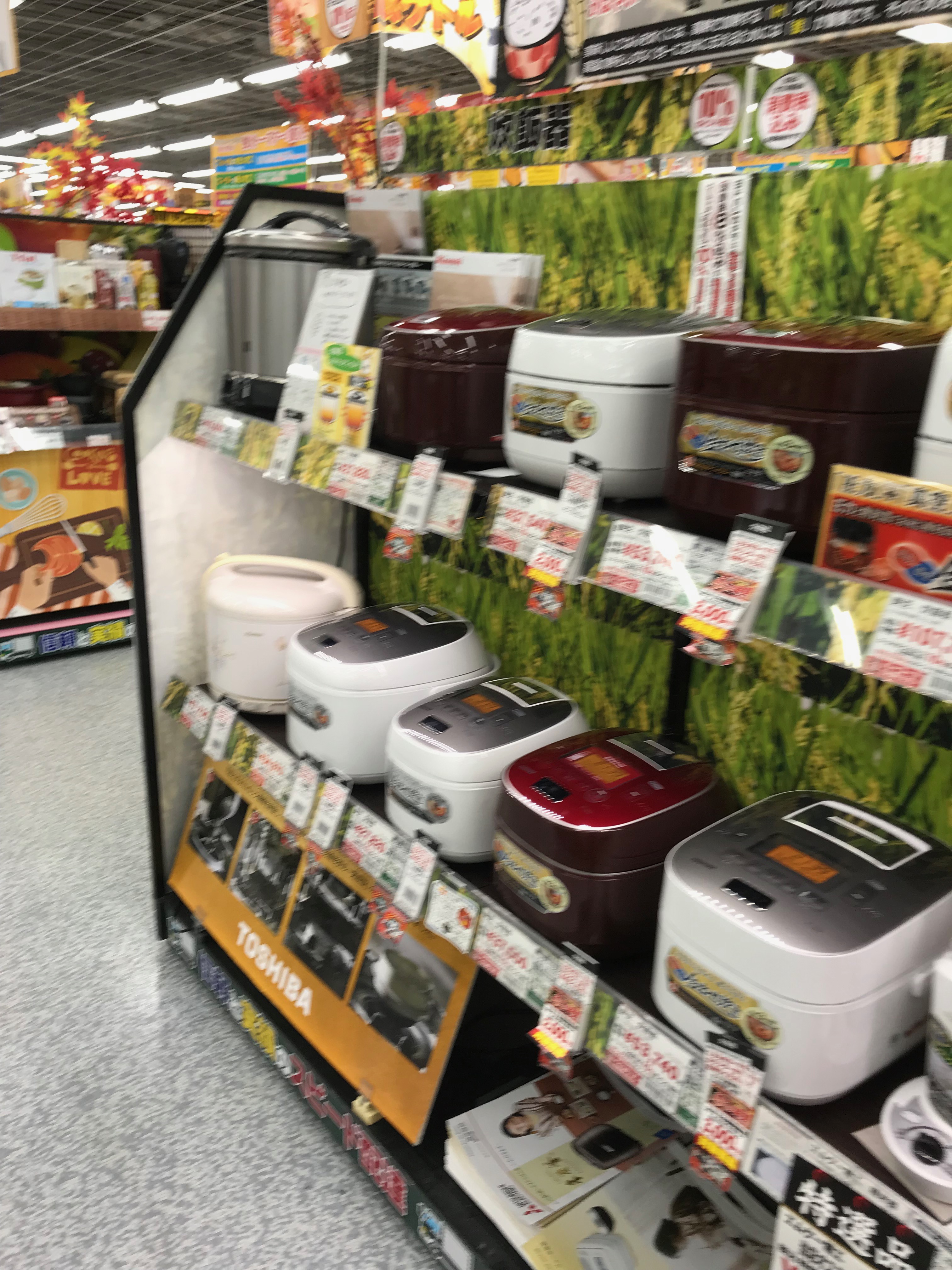
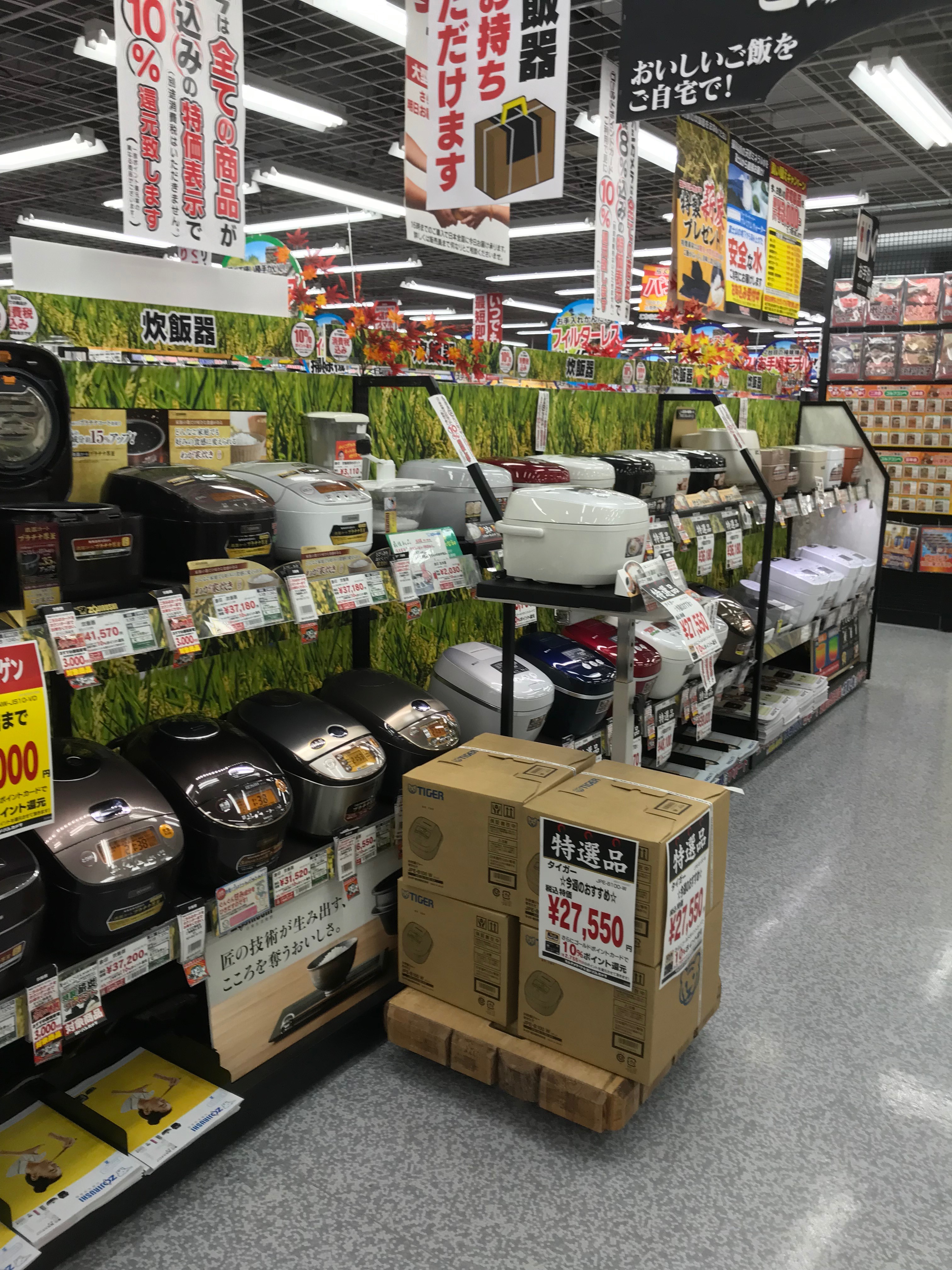
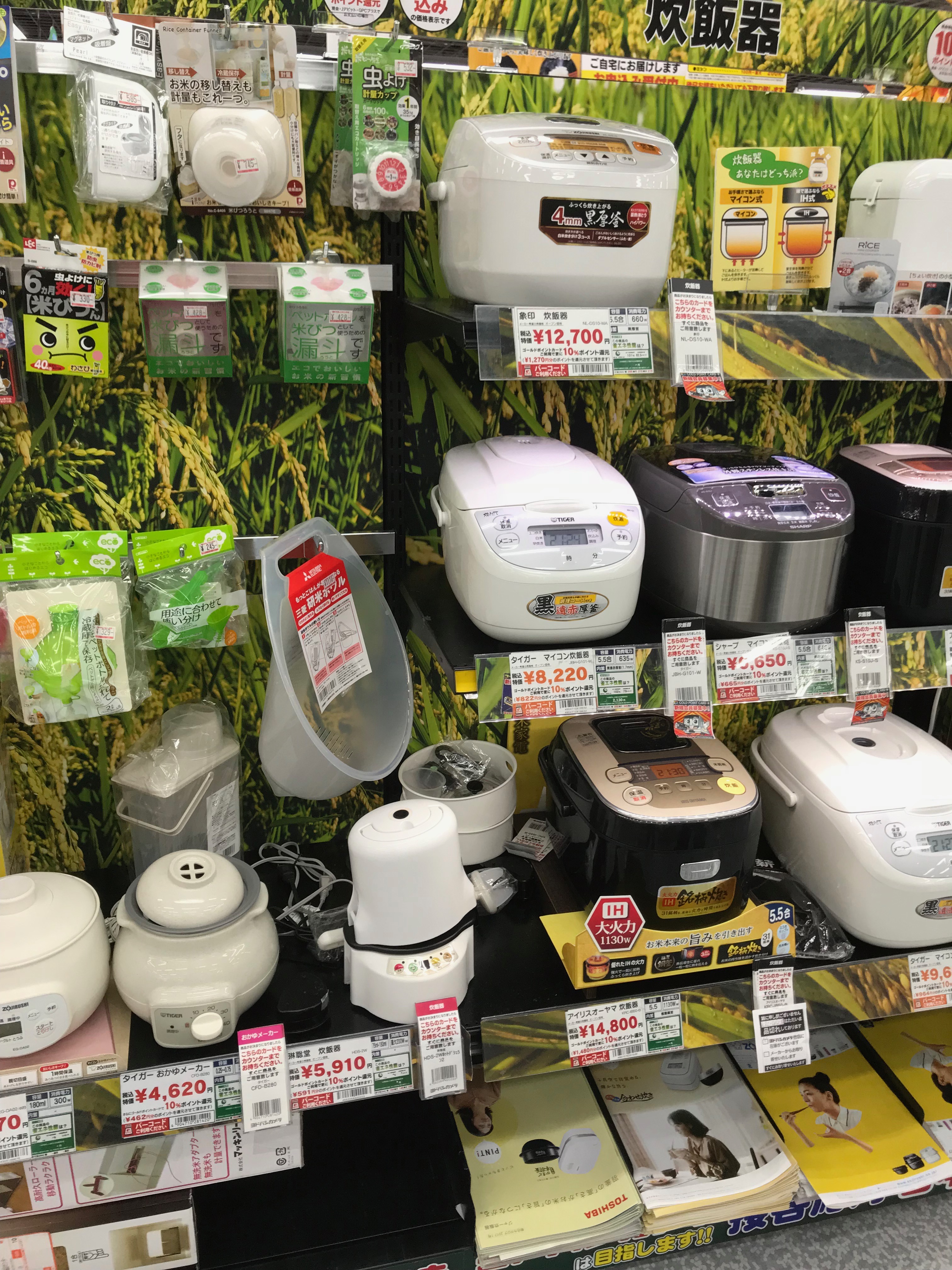
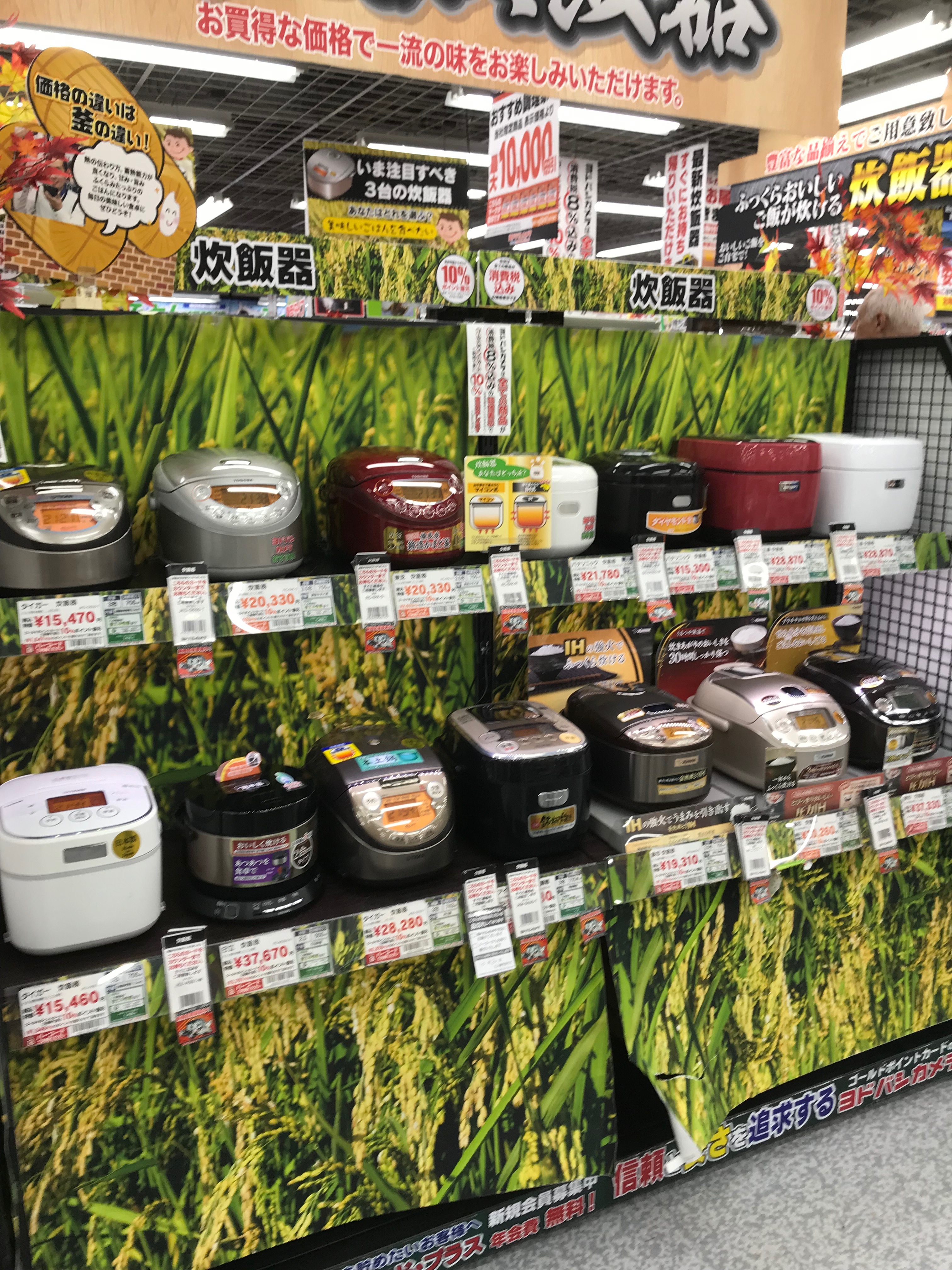
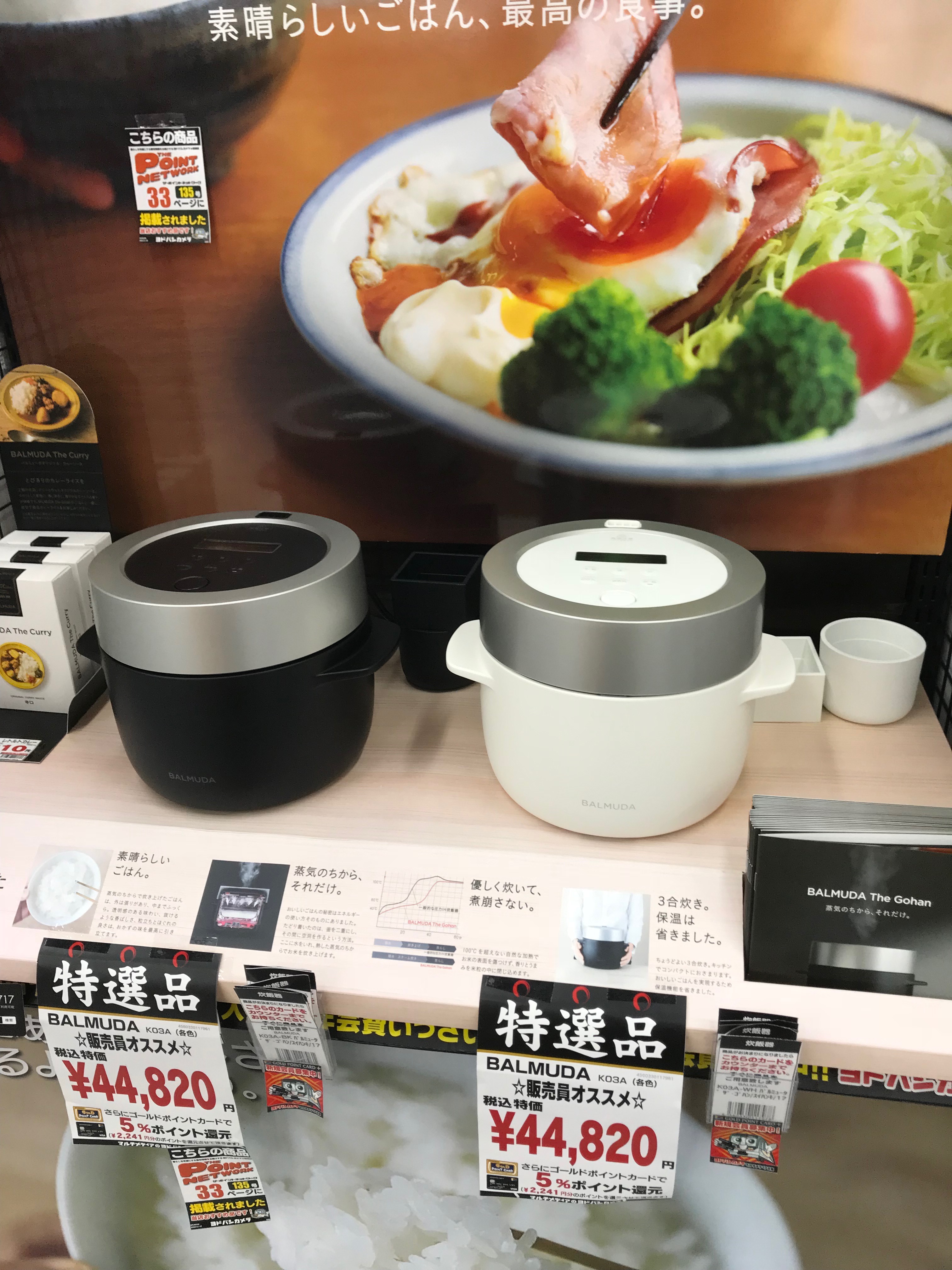
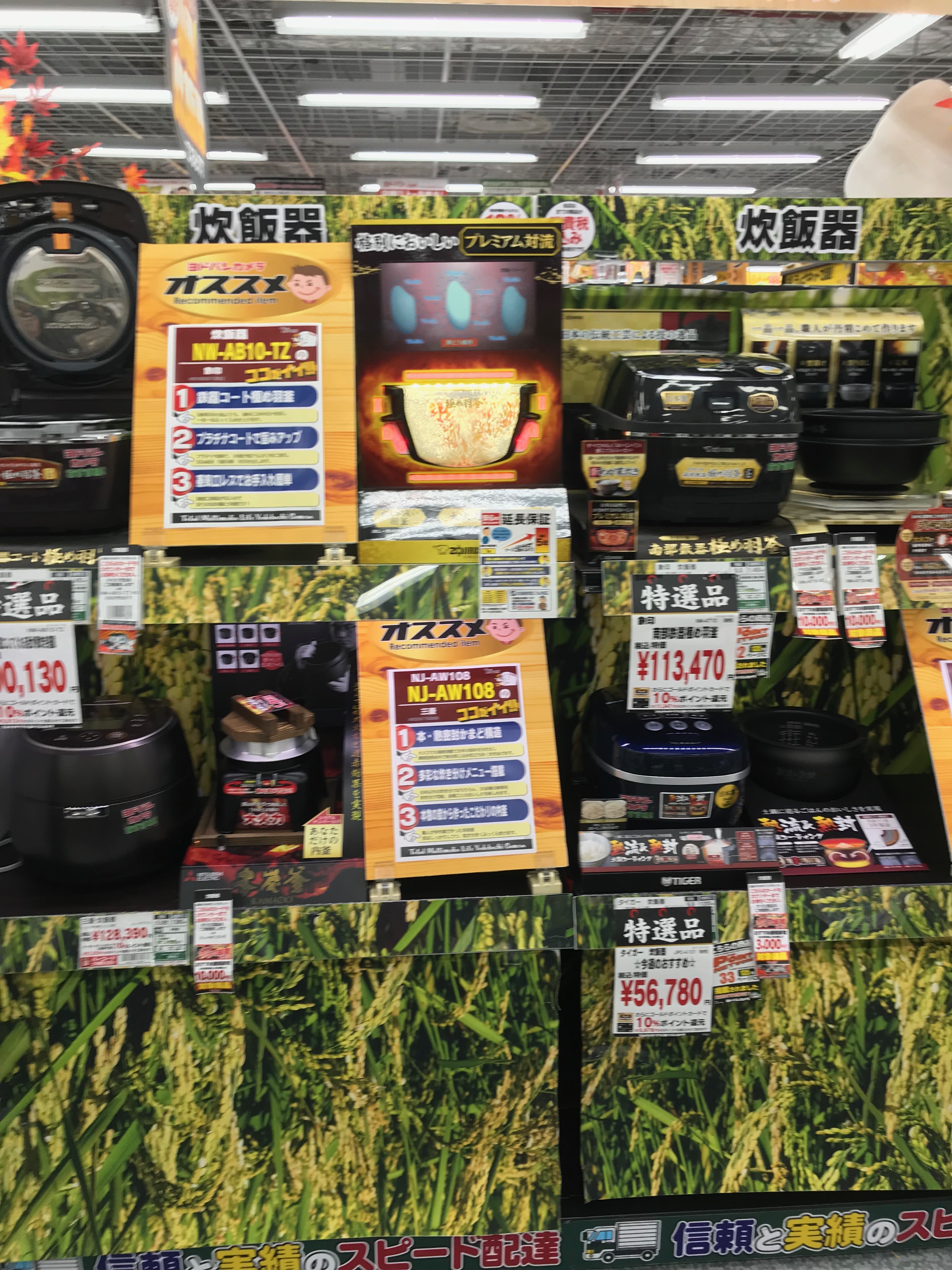
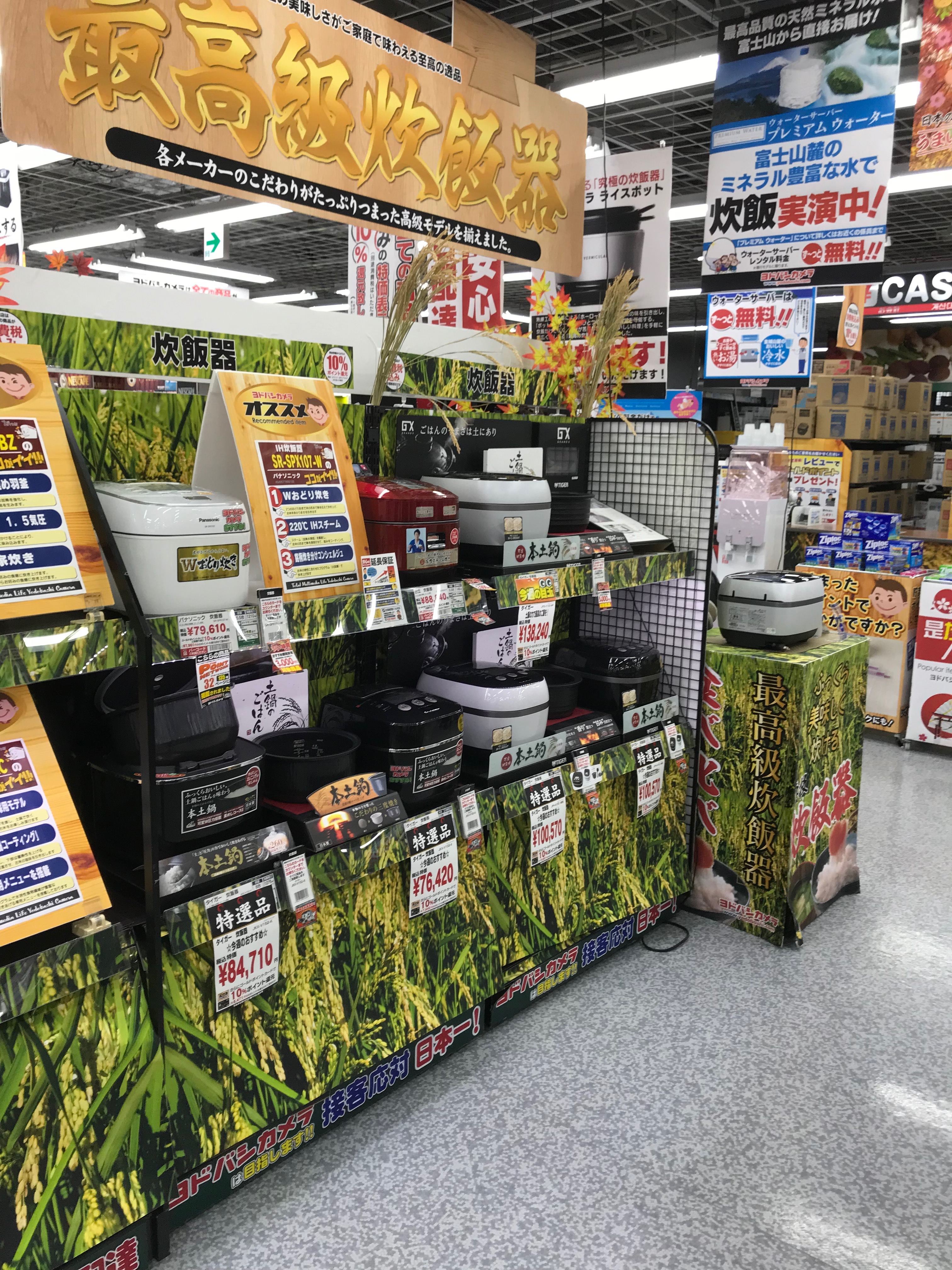
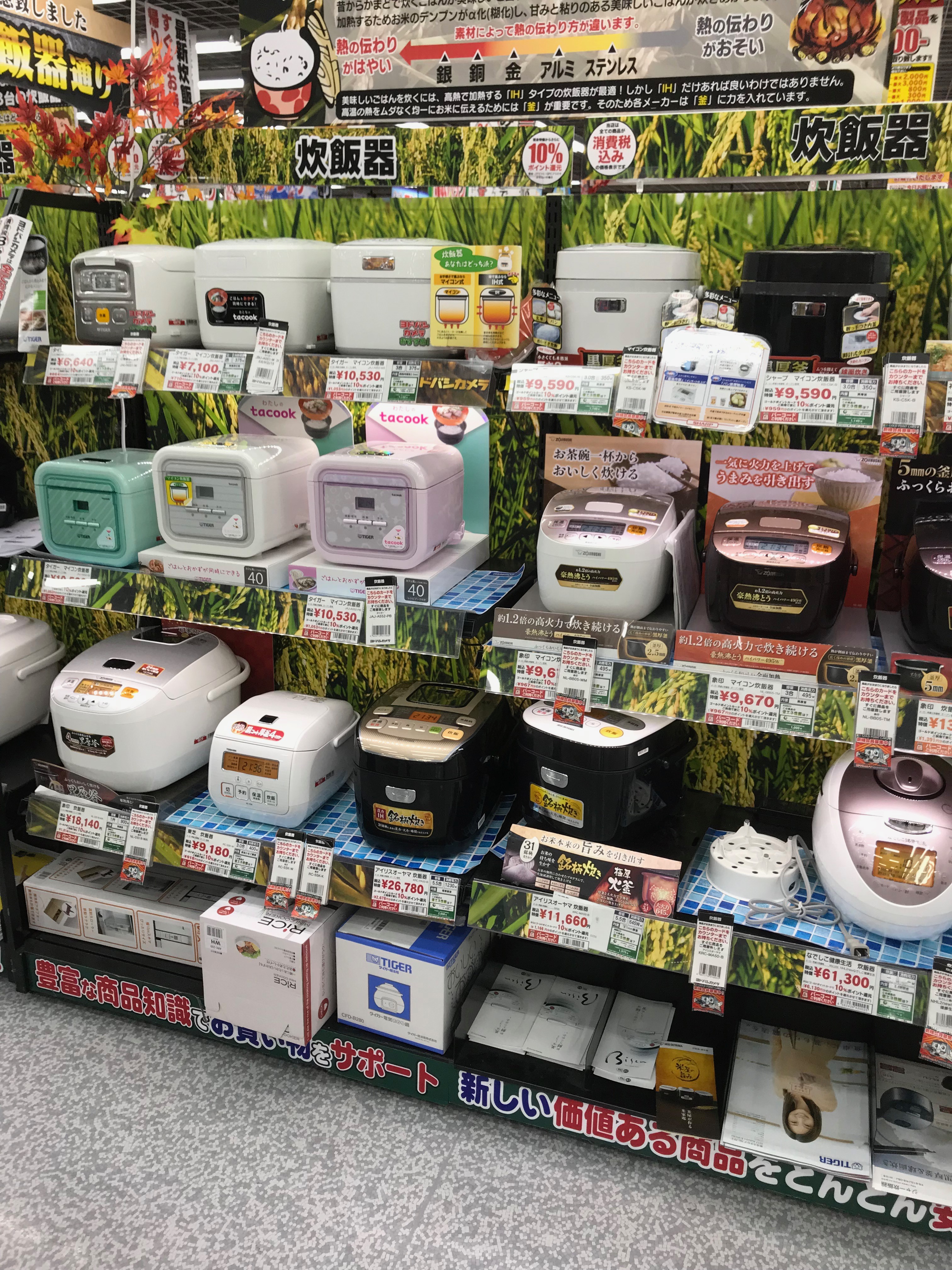
Need a rice cooker?

I swear to you, there are NO duplicates in these.

Carafe? Hot Water Dispenser?

At this point I just got tired of taking photos.