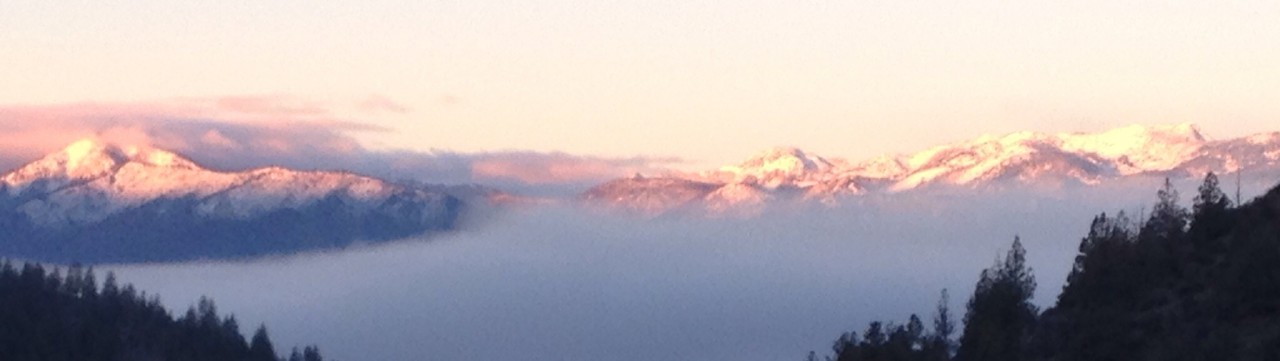
Everything as advertised

As we were leaving the National Museum of Anthropology I flashed on the Prado in Madrid. Like our experience there last year, this museum totally lived up to the hype and we had used every bit of energy to finish seeing everything in the one day we had dedicated.
This enormous architectural wonder is an epic history of the many peoples who comprise Mexico, starting from the latest understanding of where they came from (across the Bering Straight) and how the many cultures arose, migrated, combined, changed, and occupied the many distinct regions of this enormous country.
One thing has struck us over and over—how old and complex pre-Hispanic Mexican history is. These peoples built enormous cities (Teotichuacan had 75,000 people at its peak), conquered and reconquered each other, left millions of artifacts of artistic and historical value. Thank goodness they believed as the Egyptians did that when a person of note is buried, examples of the items that support daily life were buried with her. This custom has made recreating long extinguished cultures possible…and every year the archeologists uncover more.
The collection is organized historically in rooms 1-6, and then geographically—Oaxaca, Gulf Coast, Maya, West Mexico, and Northern Mexico. Some displays are intimate, some, such as the enormous room 6 dedicated to the Mexica people (formerly Aztec) where the famous stone “calendar” hangs in the center, are huge. This room also has a large diorama of a Mexica (pronounced me-zhi-ca) market—which looks very much like the markets in Mexico today. One of the more interesting items is a codex, unfolded from its accordion form, that details the migration of the Mexica over many years from place to place. A video explains each page and what the symbols and drawings mean.
The charming figures at the top of this post are from the preclassic era, 2500 BC to CE 100. A figure sits with a dog on her lap, giving a kiss. How lovely is that?
I did my best to control the impulse to photograph everything, so here are a few representative pictures which I hope convey something of the grandeur and beauty of this treasure.


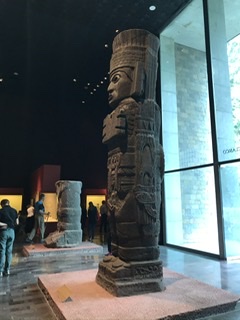

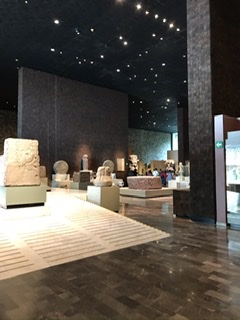
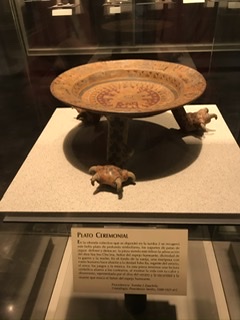

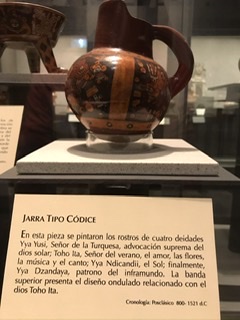

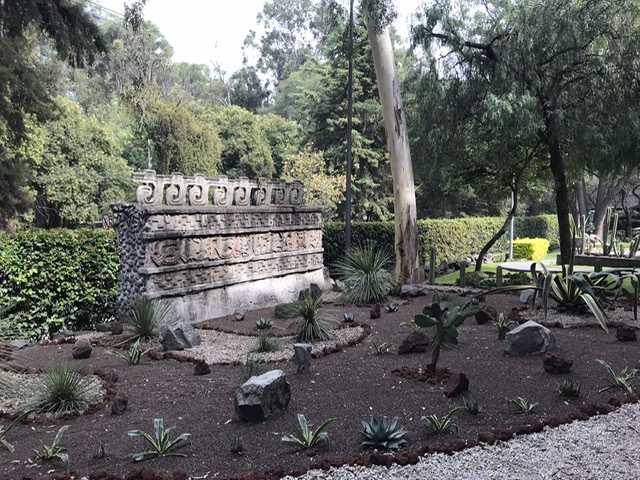
The last photo is one view of a series of gardens which line the outside of the historical wing—each further displaying items representative of the era, enabling you to walk outside from any gallery, very lovely and peaceful.
Midday we were suddenly hungry and found the cafe, a fixed price cafeteria with a variety of Mexican and Euro-American foods. As with most everything in this friendly country we had no opportunity to try and figure it out ourselves. We were immediately approached by a woman who explained the system, showed us to a table, took our drink orders and welcomed us to be comfortable. Refreshed, we headed to the last few rooms on the ground floor and then upstairs where the distinct cultures and regions of the country are shown as they live, work, make art, and worship today.
Una experiencia muy linda. Exhausted and happy, we called an Uber and returned to Roma Norte and our hotel to face our next big decision: Where to have dinner!




 Inescapably Rational