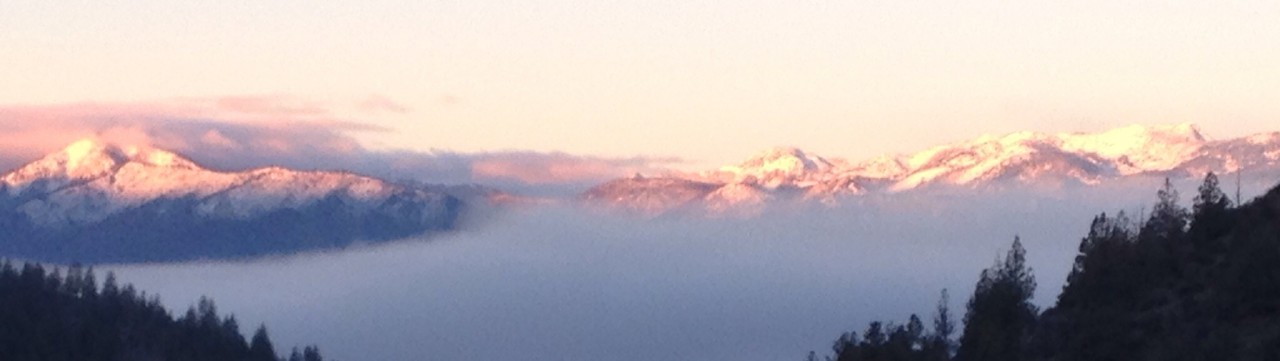
The train from Osaka station to Tamba took about an hour, a short ride to a different world. Harumi had booked a ryokan stay for us three and she chose well. Sasayama Kinmata is small, old, quiet, lovely. Unlike a typical hotel we had booked a room for three, which meant one large bedroom, with bath and sitting room, three comfy beds. Given our onsen experiences over the previous few days it didn’t feel the least bit awkward. And the beds…white fluffy comforters were like sleeping in marshmallow. In a good way.

These places are not cheap. You are paying for especially nice hot spring baths and the kaiseki experience for dinner and breakfast. As a guest you are in the hands of a chef and every course, every bite, celebrates the season and local foods. It is an experience. Some of the food was as exotic as Japanese dishes can be, mixing textures and flavors in ways David and I have never had before. Some is familiar—and of surprising quality. For example, the rice we had for breakfast came from the ryokan’s own fields, cooked to a translucent perfection. I mean, the rice here is pretty darned good everywhere but this was extraordinary.
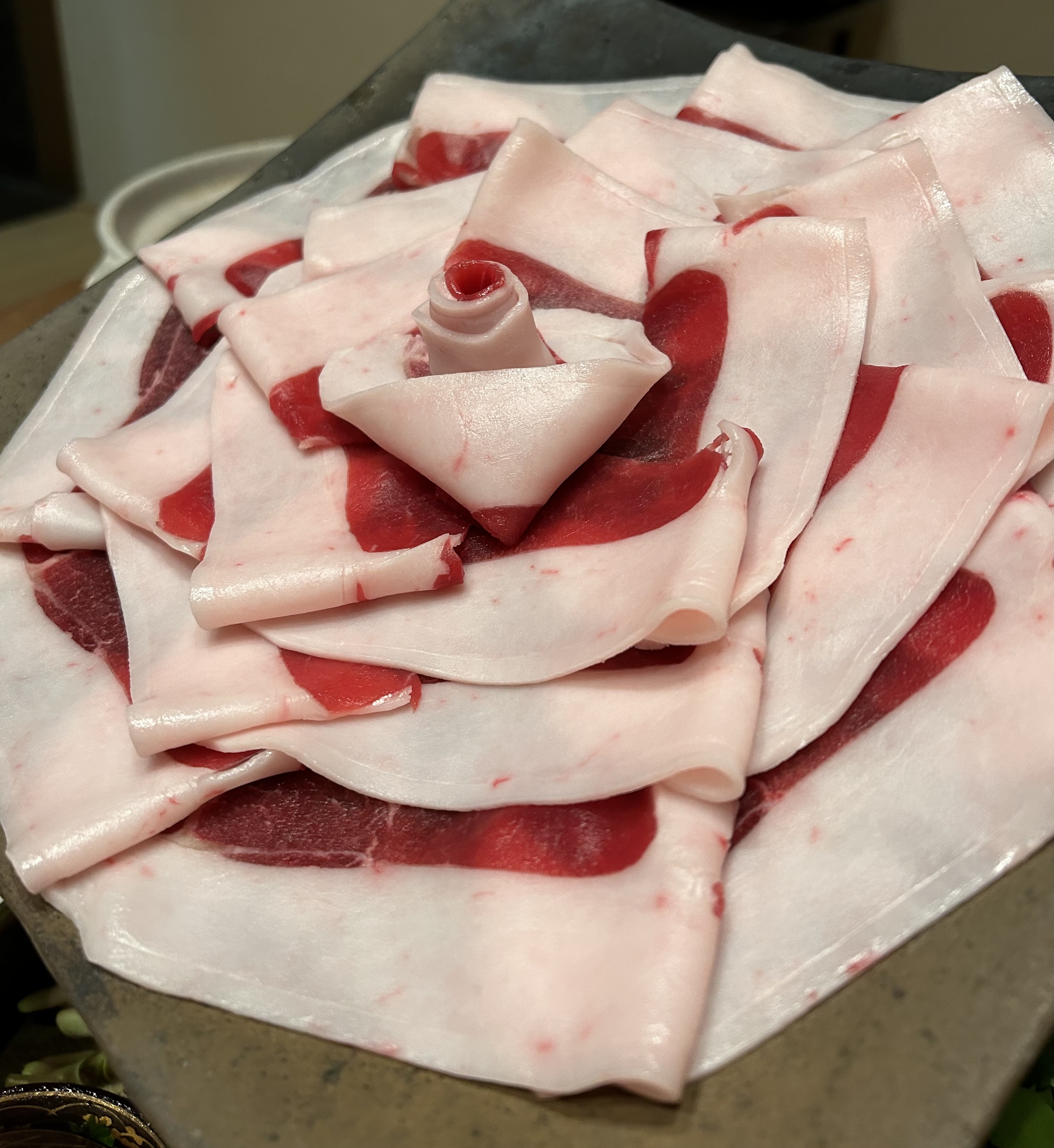
Tamba is known for its wild boar and it was the centerpiece of the meal in the final course, hotpot of spring greens—a type of celery leaves plus their slender roots, wild watercress, a kind of broccoli, bamboo shoots, even tiny sprigs of Szechuan peppercorn leaves. And a few others I don’t remember. The boar is traditionally sliced, the red meat and pink fat almost transparent and arranged in the shape of a peony on a large platter. While the amount of fat to meat was startling and a bit scary, as you eat a piece dipped out of the simmering water you cannot discern what is what. Not remotely greasy or fatty in feel or taste. Preceding the hotpot were tea smoked local trout, pressed salmon sushi, a spring roll with miso-citrus dipping sauce. And a dish i cannot remember except that the dollop of wasabi had just been grated.
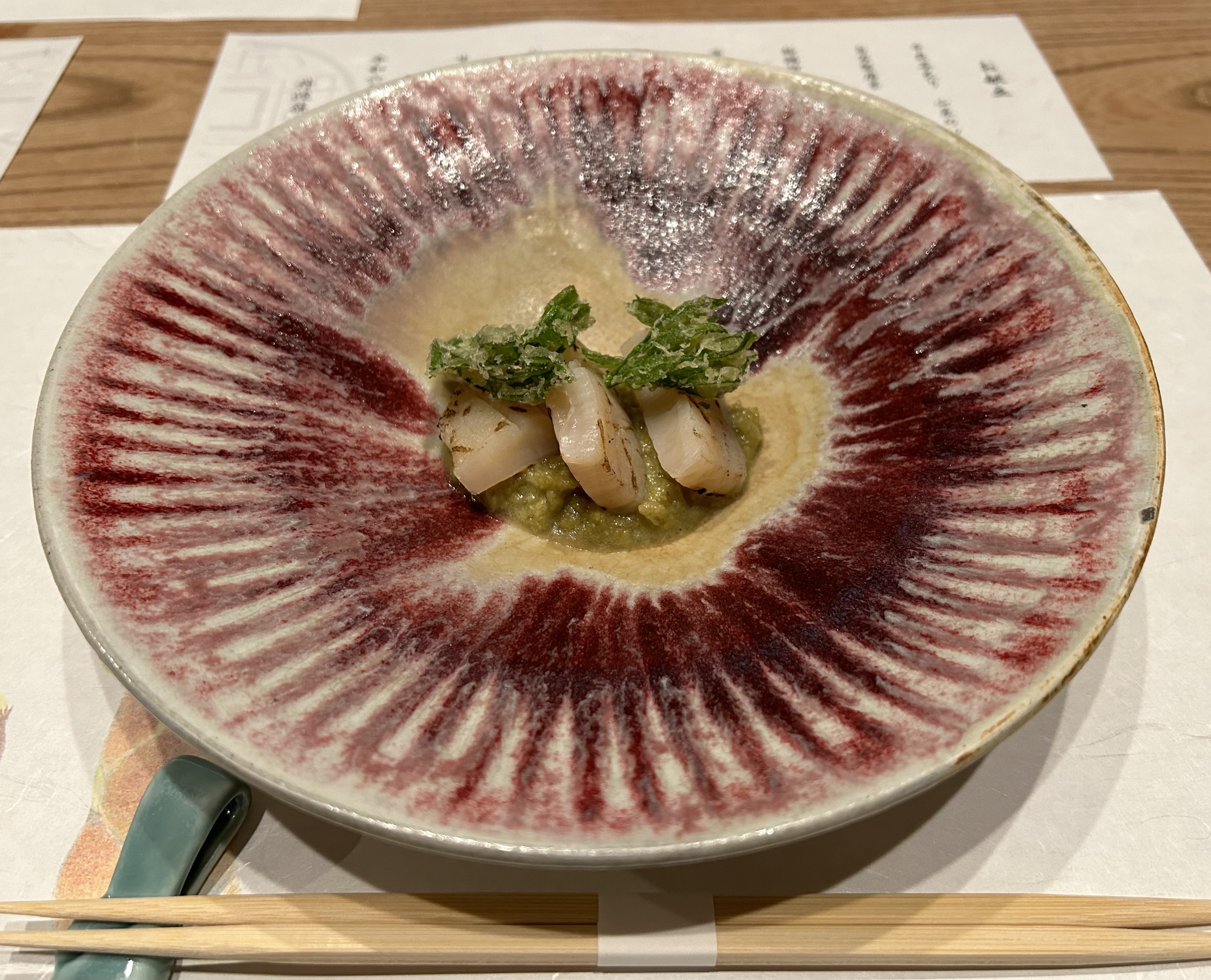


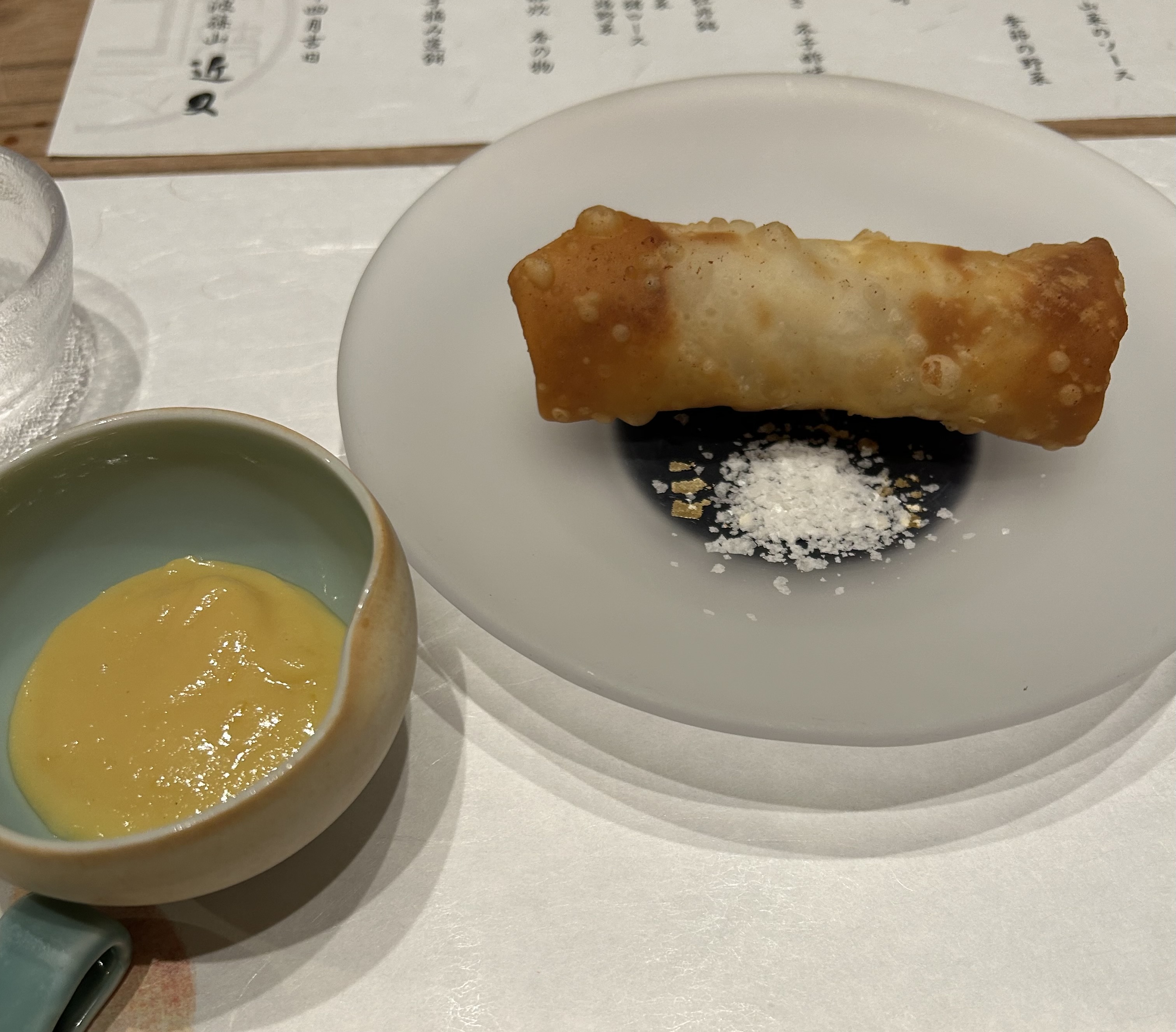


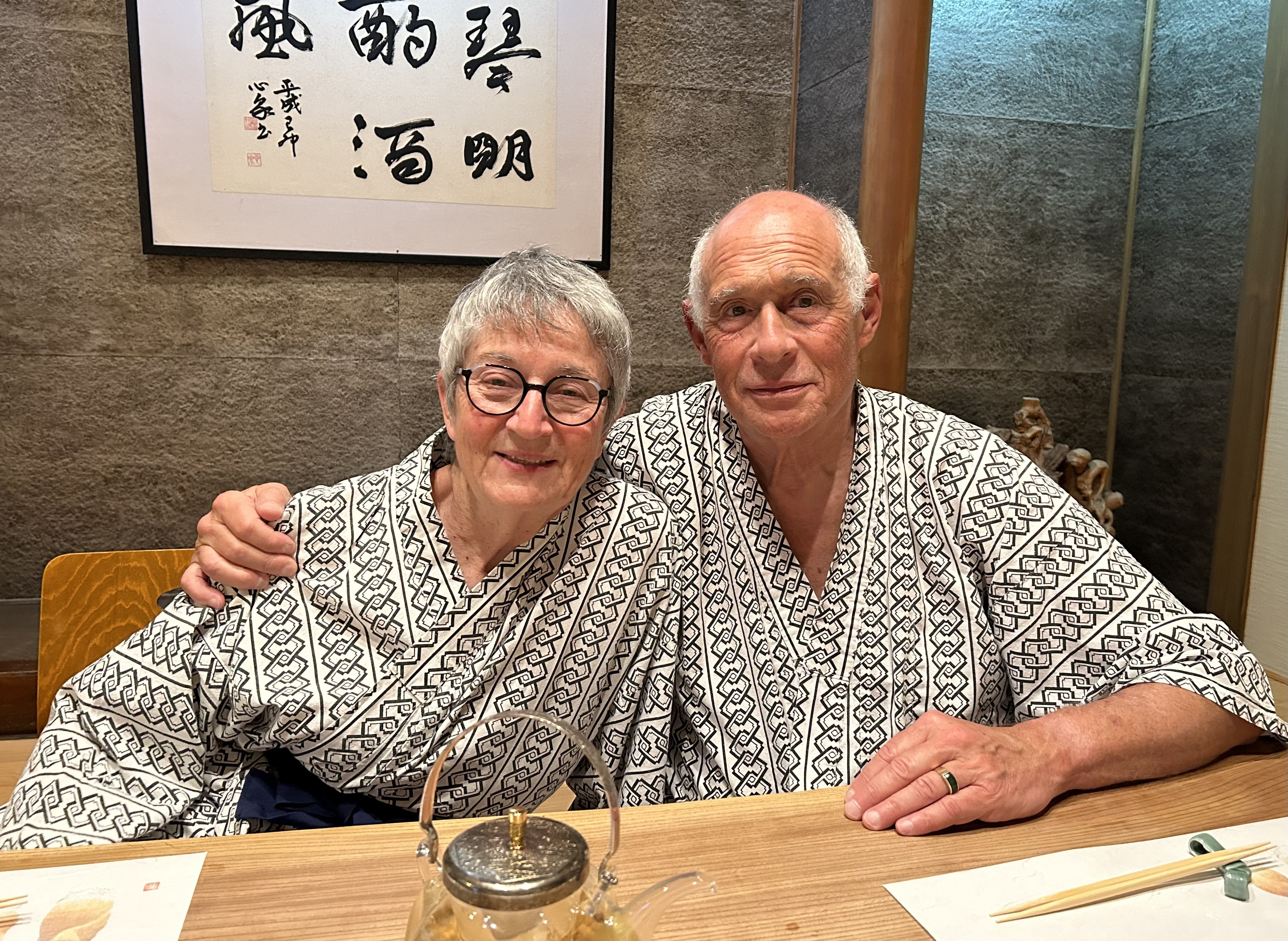
Dinner started at 6; we struggled to get up from the table at 8:30. The final dish, a dessert of the softest and freshest mochi, green and dusted with rice flour, was delivered to the room. Yes, we ate it with delight.
The next morning we woke up hungry, luckily, because another feast awaited. The aforementioned rice, tofu simmered with fresh spring vegetables with a delicious dipping sauce, warm rolled omelettes, pickles, miso soup, a salad of sweet onions, lettuce, a coddled egg, and miso dressing…and I am sure i am forgetting something. Oh, yes, smoked fish.
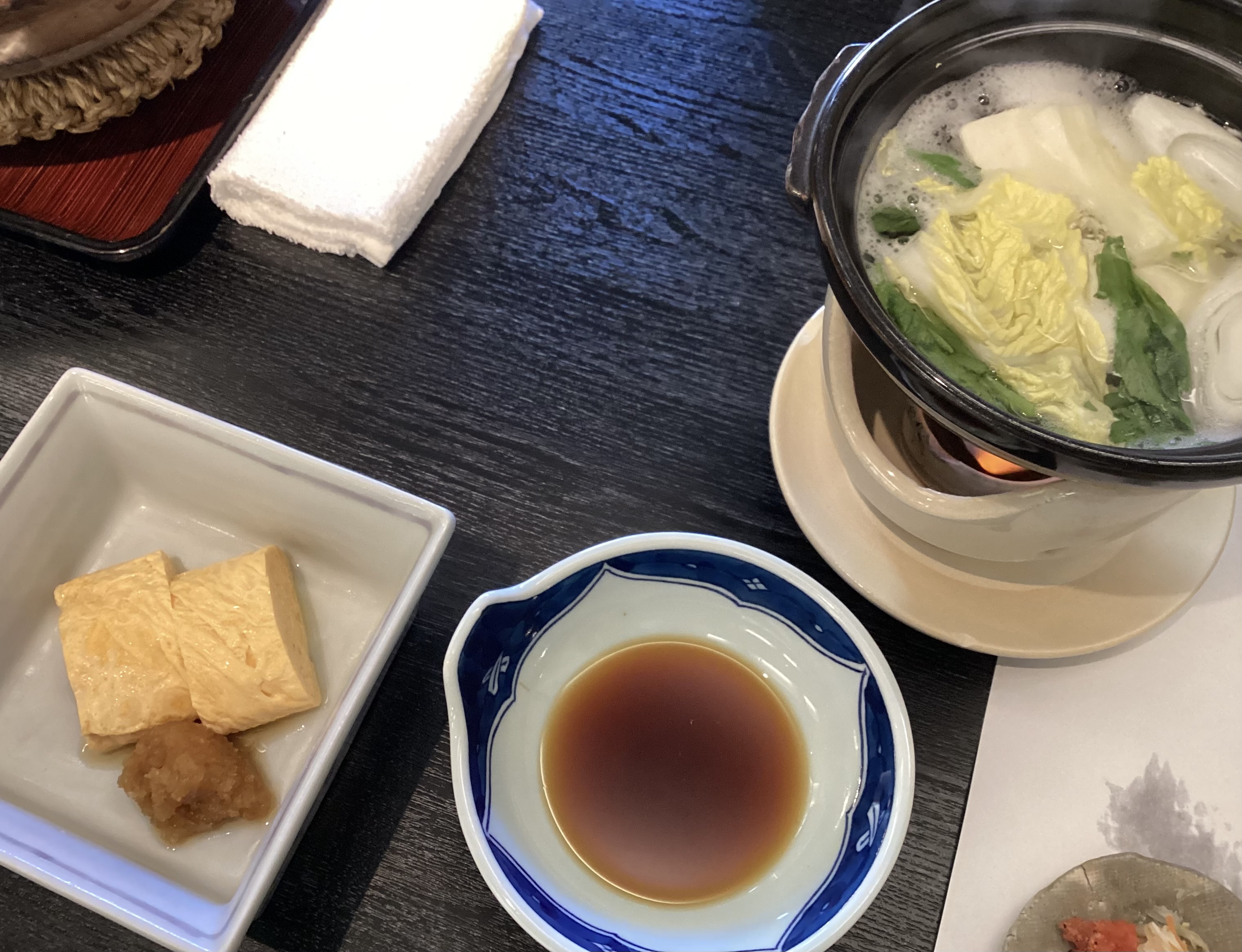
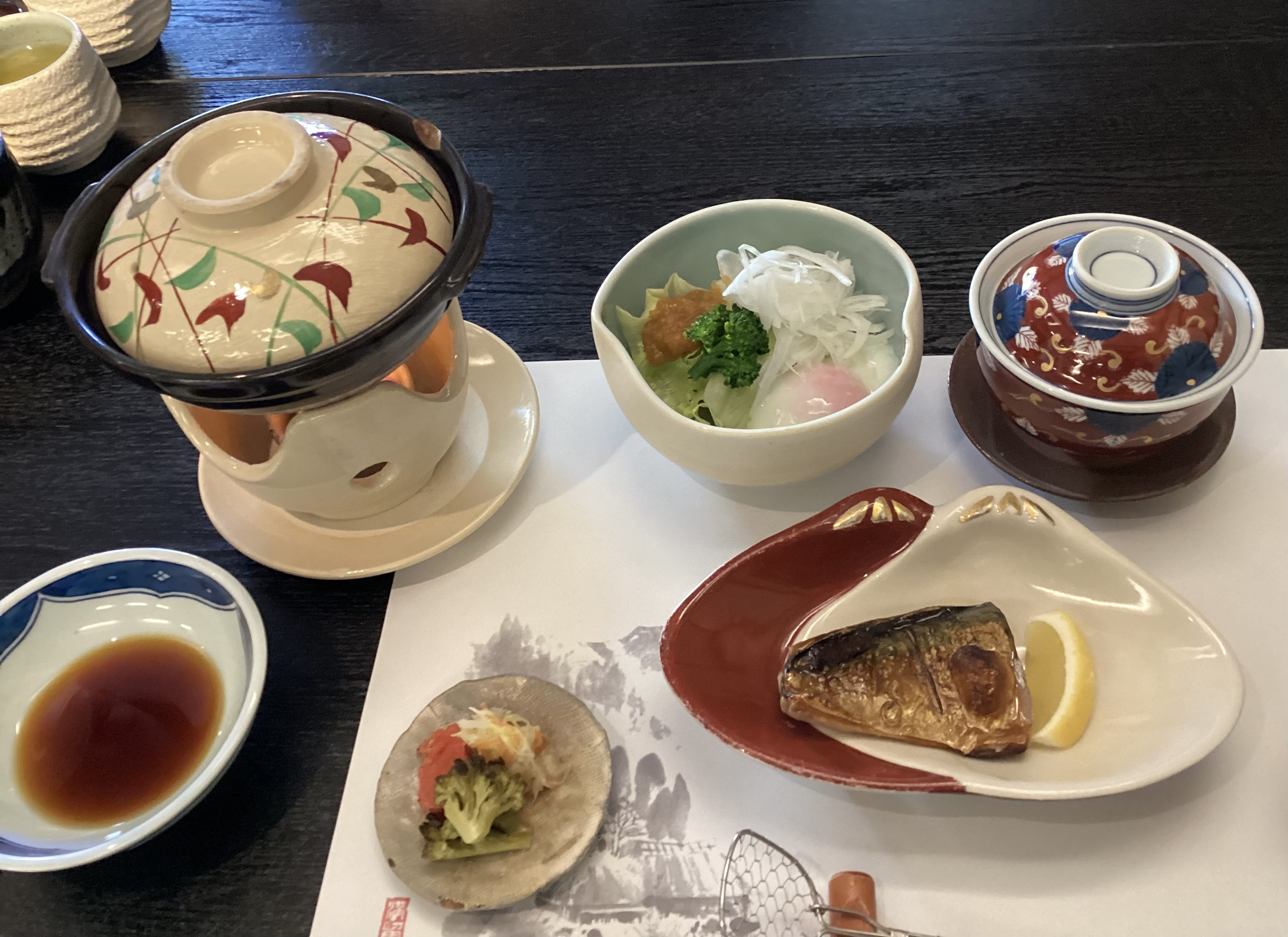

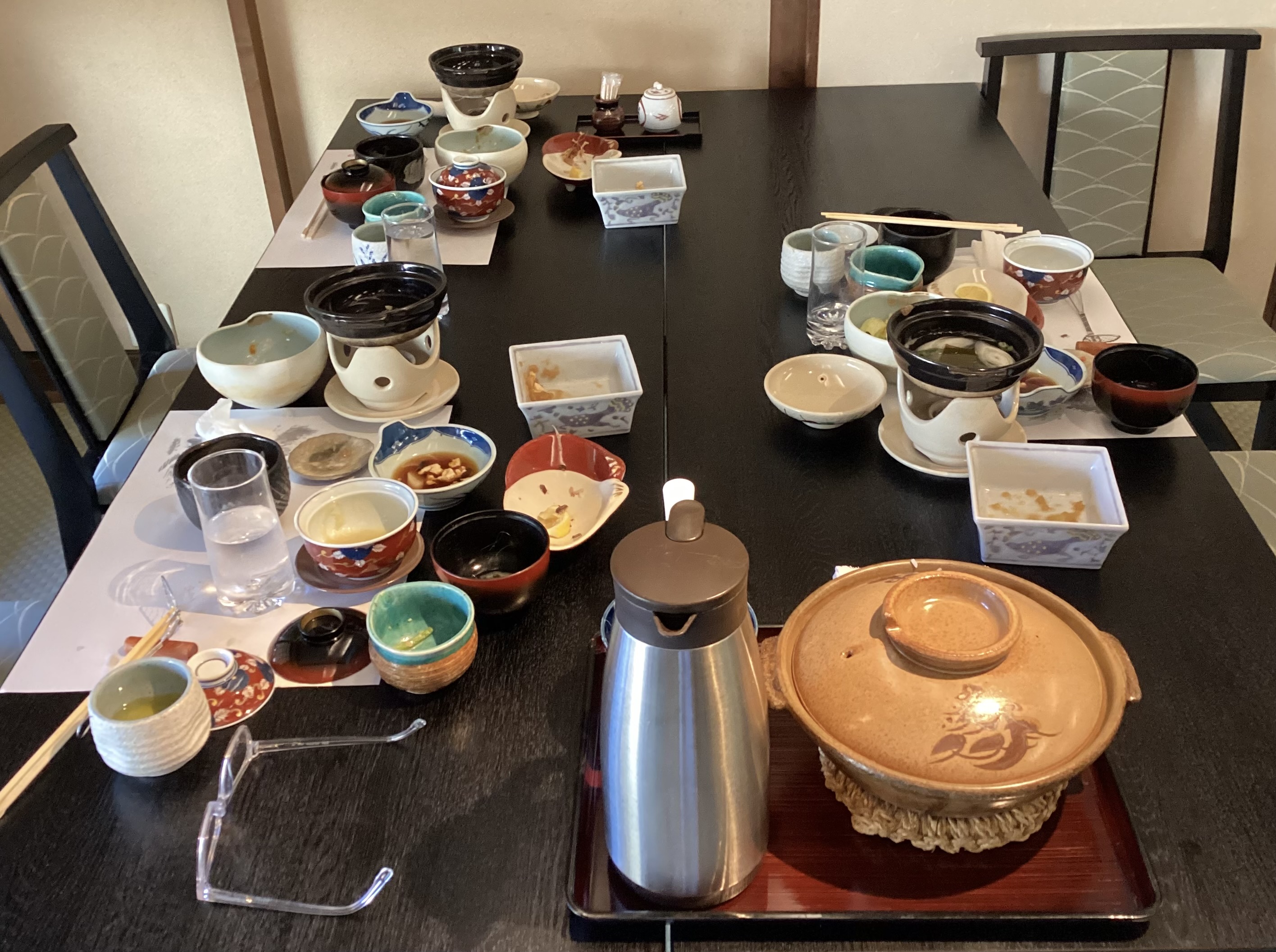
We packed, checked out, and went to explore the town and find some ceramics to buy. My biggest regret is we forgot to take pictures of the charming, friendly, overflowing ceramics store where we could have bought suitcases full.

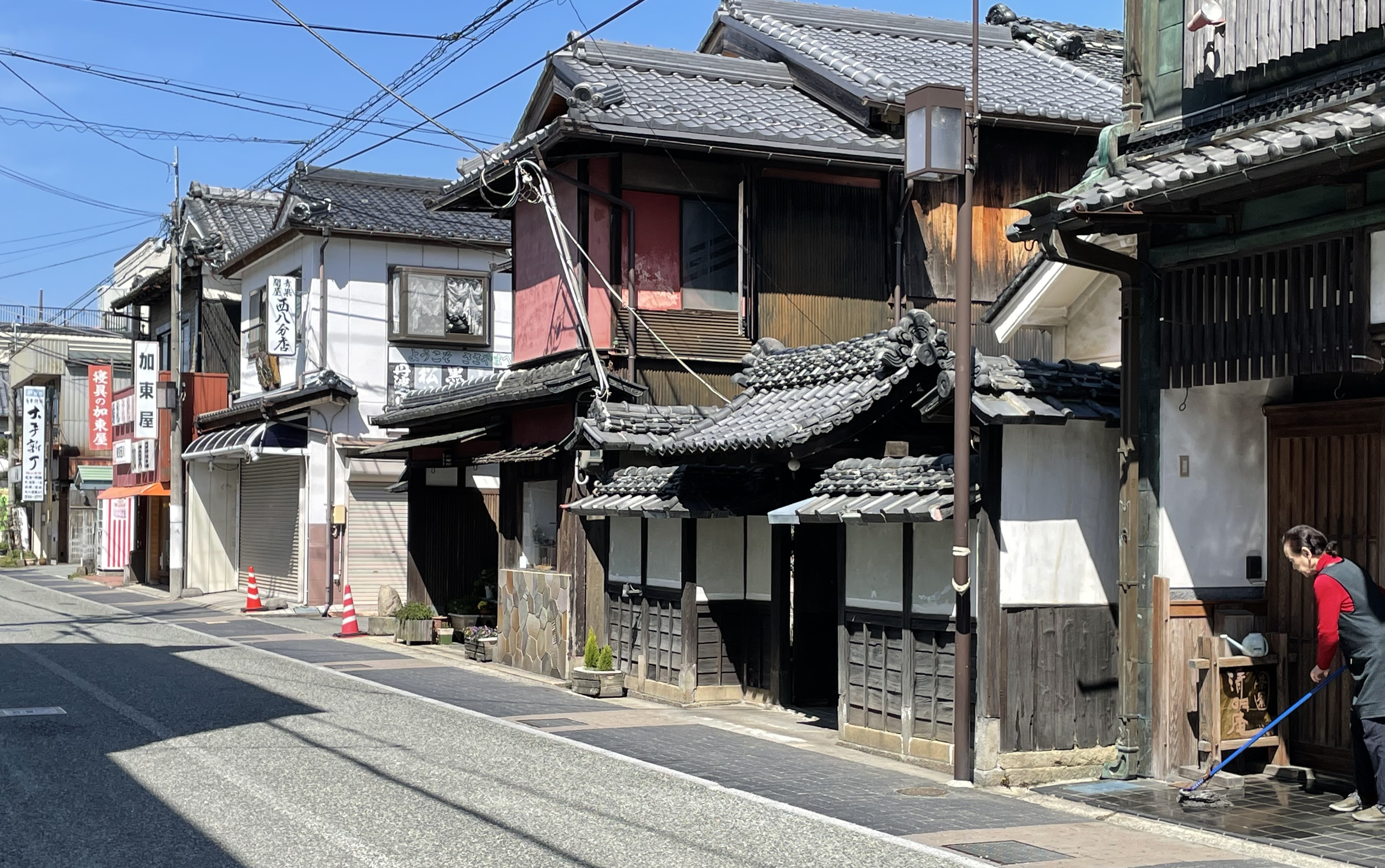
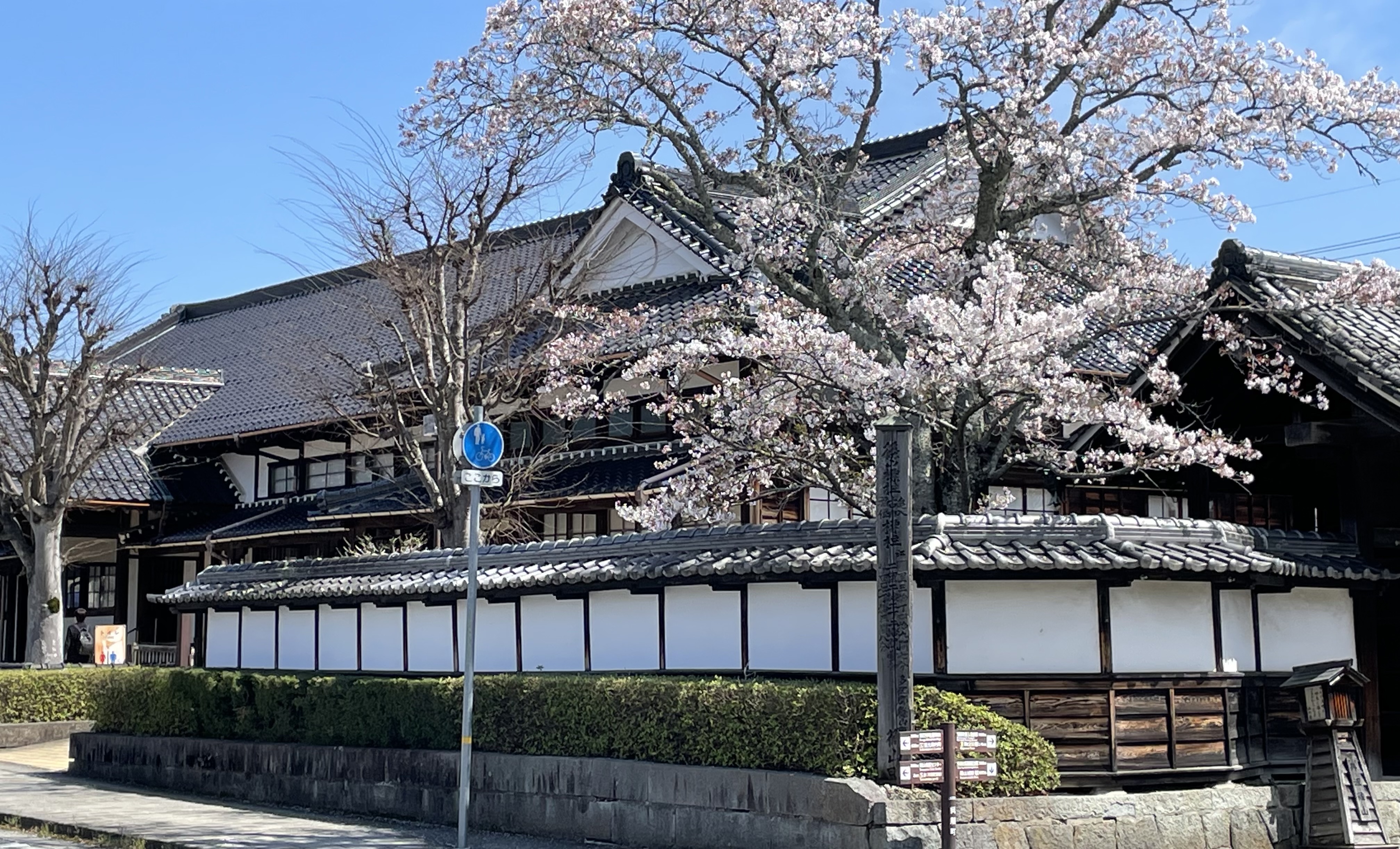
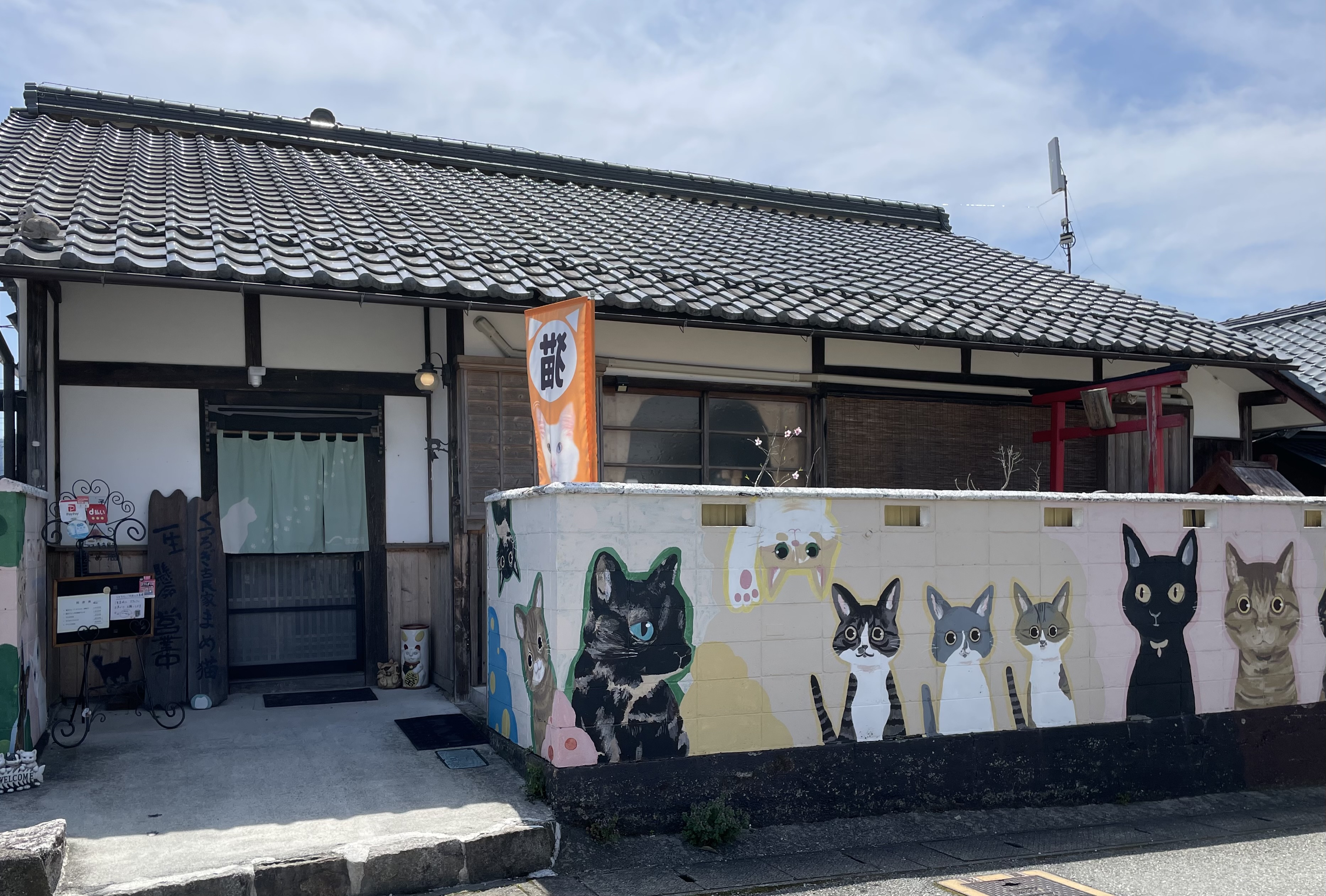
The train station is in the newer part of town, rather suburban looking. The traditional old sections, where the ryokan is located and where we wandered for a few hours, is from another time. There is a history and art museum in the old courthouse, tiny stores—the shiitake mushroom store, the cedar and incense store, sweet potato snack store, souvenir and soft serve store. Harumi bought black rice and their famous black beans. We toured the museum, walked past the moat that surrounds the castle ruins, cut through to cross the little river and wander past the mishmash of houses. Laughed at the giant wild boar head smashing out of a hotel outbuilding. Admired, again, the cherry blossoms still in full bloom.




Back on the train at 1:30, we parted ways with Harumi at Osaka Station and hopped the train for the 30 minute ride into Kyoto.
 Inescapably Rational