As you can see below, I gave up asking permission after a while, and just snapped from the back or surreptitiously. These photos are from Osaka and Kyoto. (We estimate 30% of Japanese are wearing masks, color coordinated of course.)




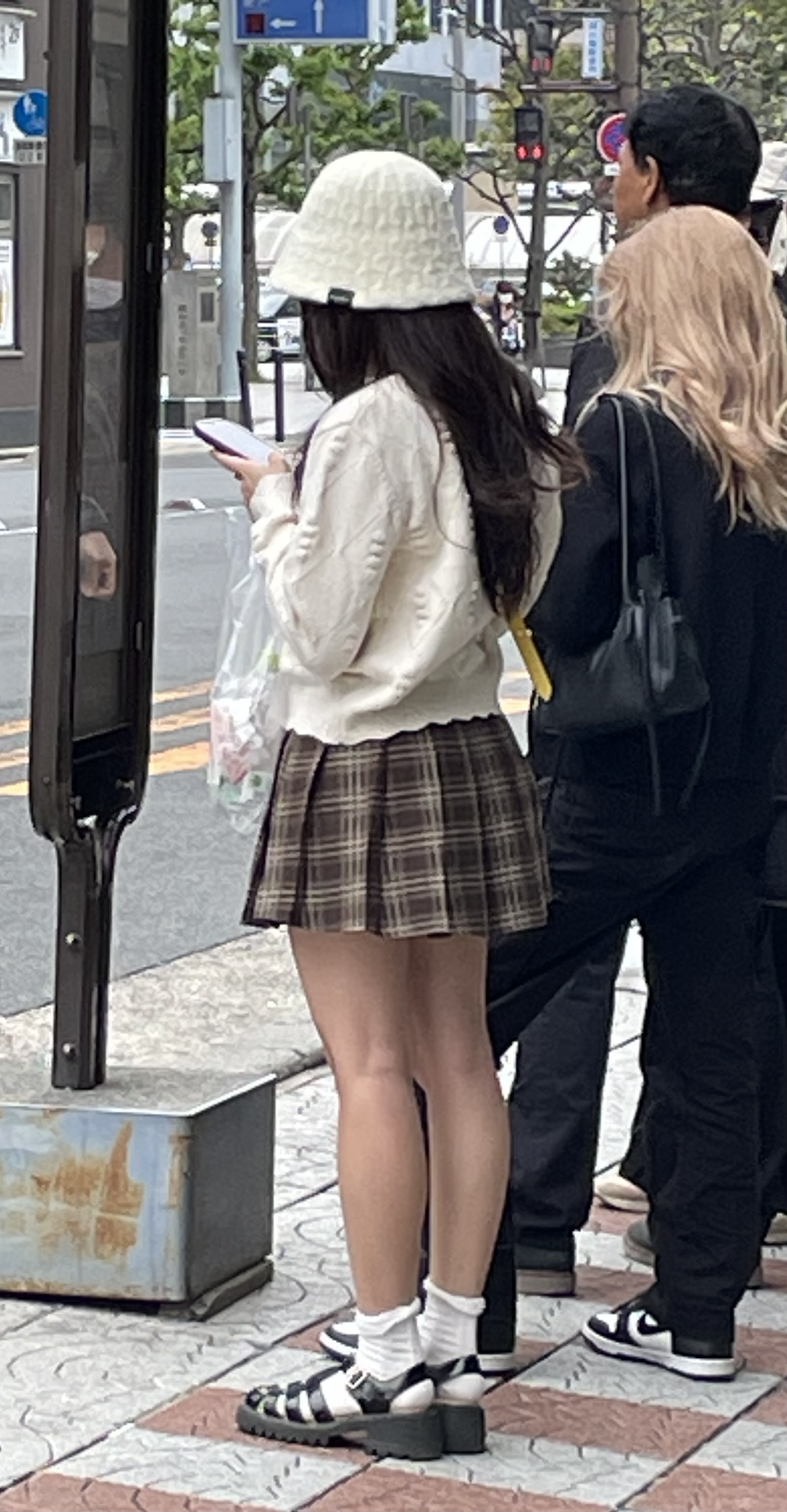
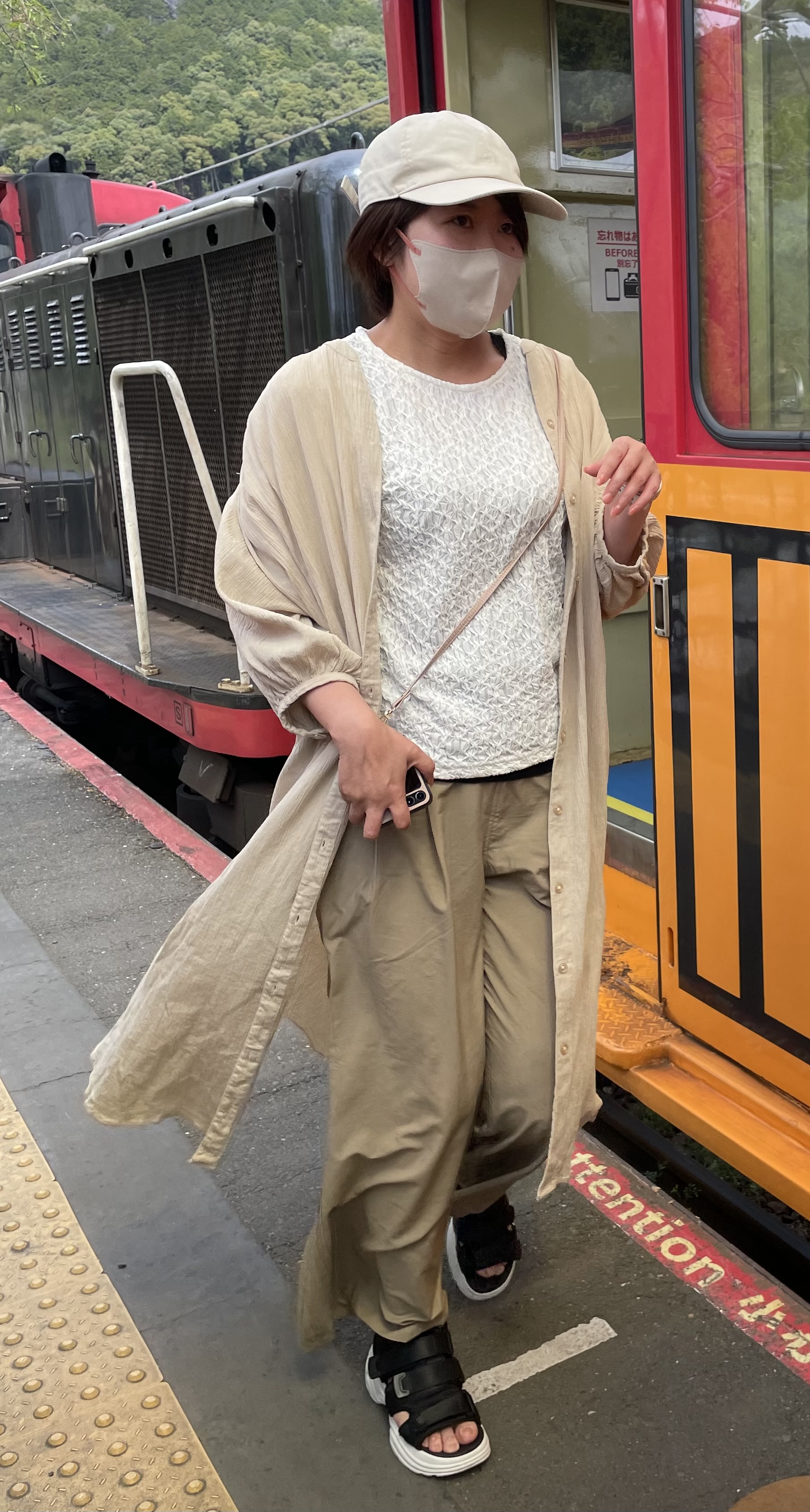


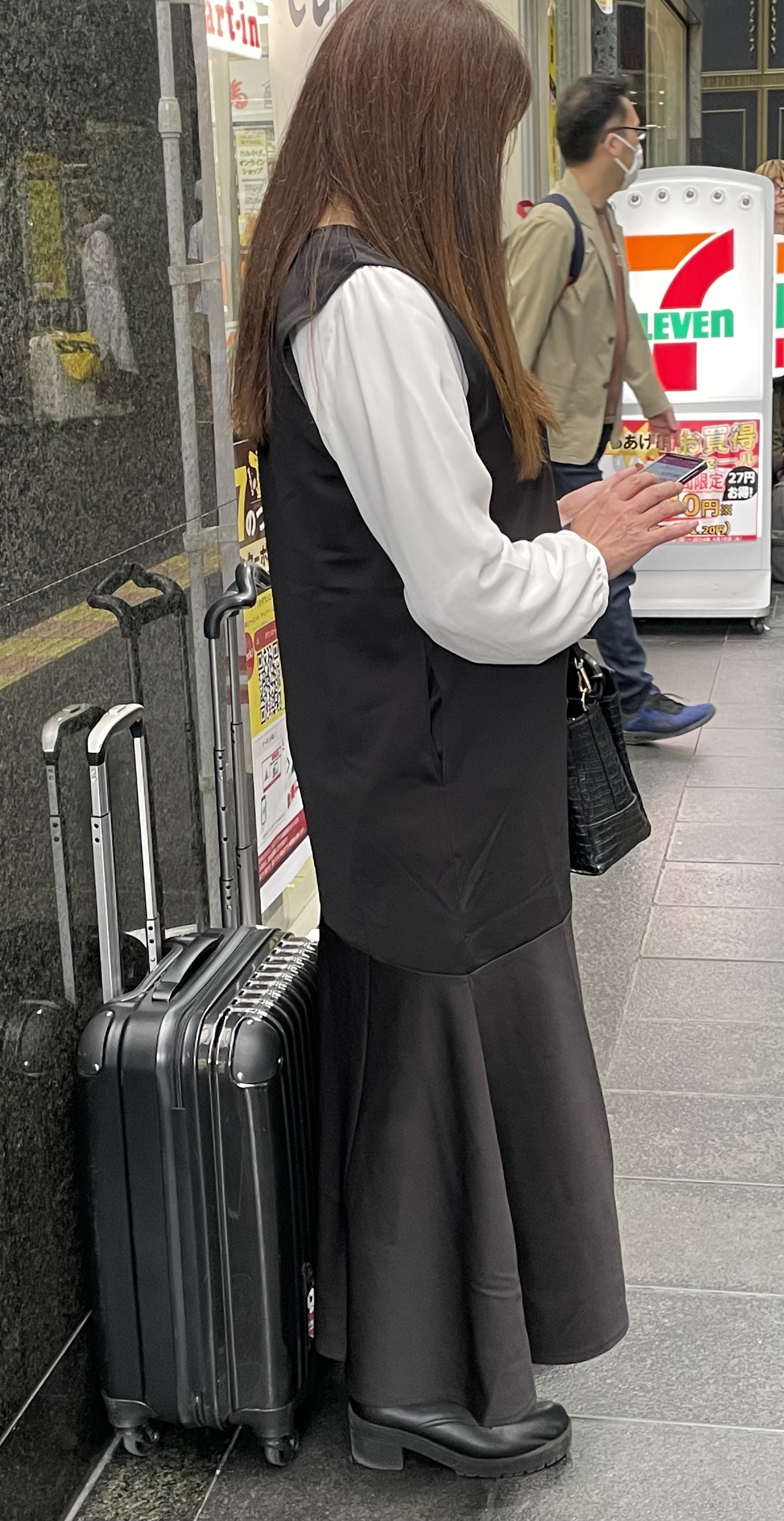

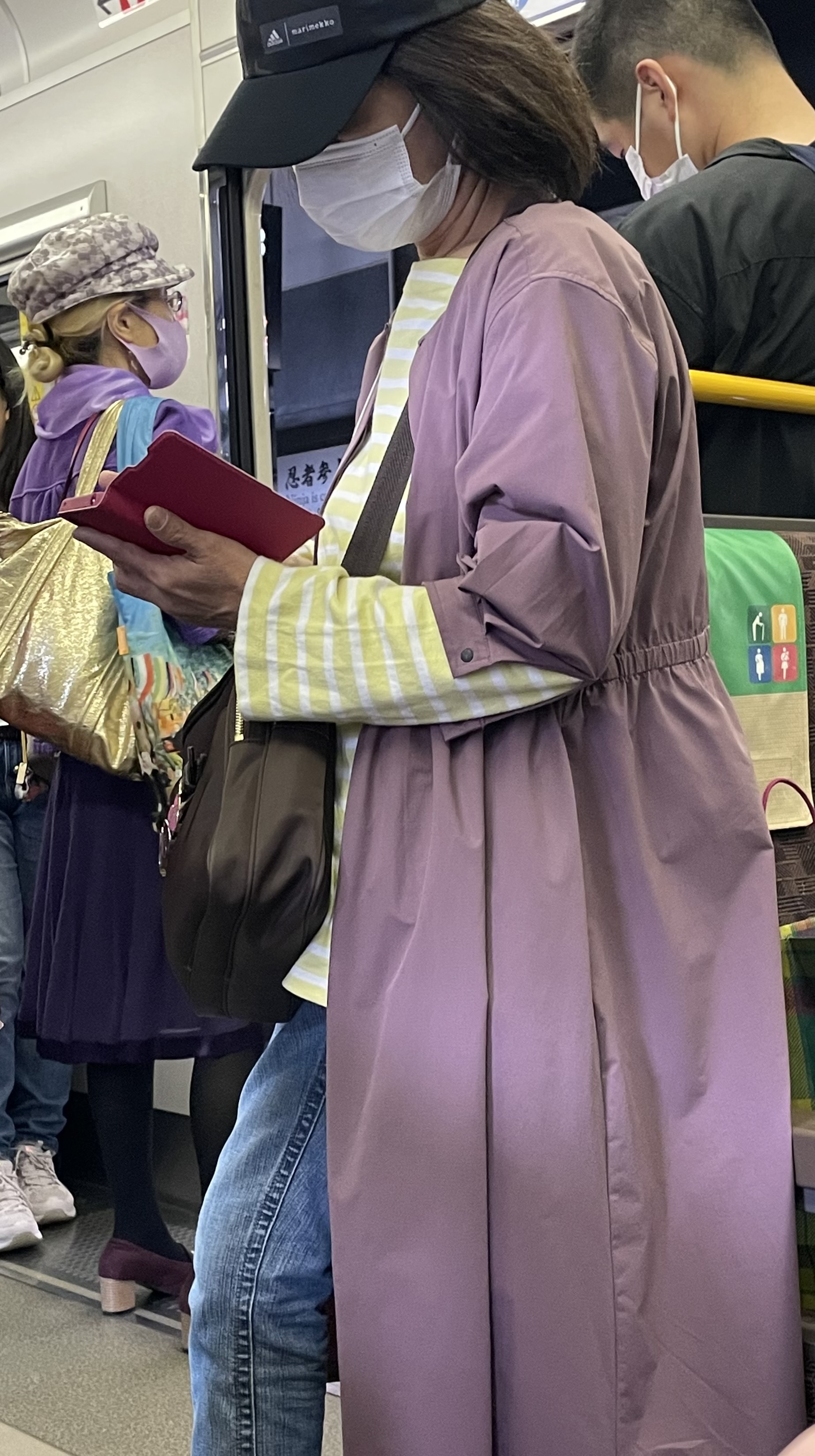


As you can see below, I gave up asking permission after a while, and just snapped from the back or surreptitiously. These photos are from Osaka and Kyoto. (We estimate 30% of Japanese are wearing masks, color coordinated of course.)
Osaka is known for kashikatsu, one of the many kinds of “food on a stick” in Japan, and our young cousin Maya was tasked by mom Harumi to find a place. Now, Maya is a student and gravitates toward bargains, while her mother was determined to find someplace really great, and Harumi was quick to veto the first suggestion where each skewer is about 100 yen—way too cheap!
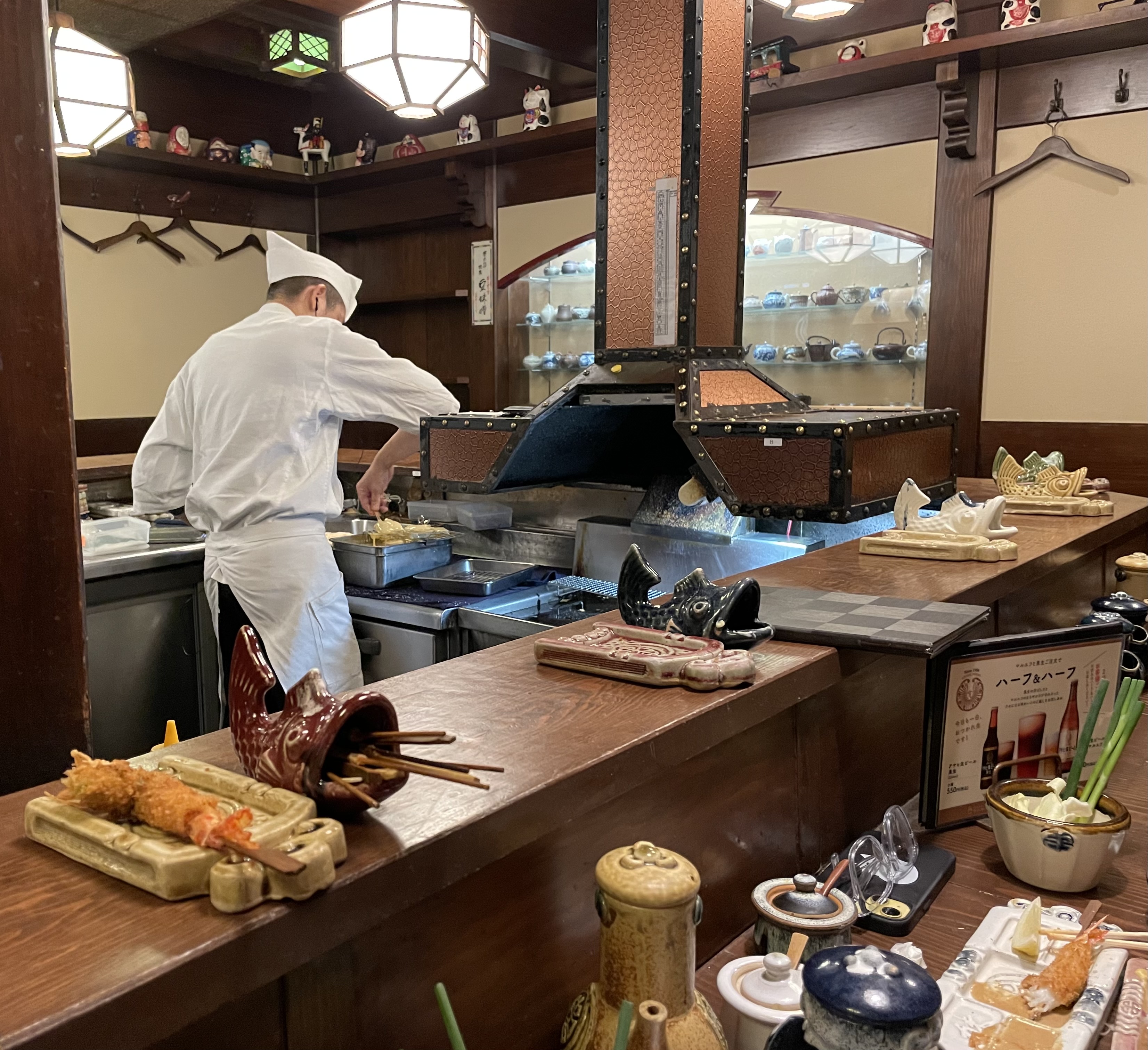
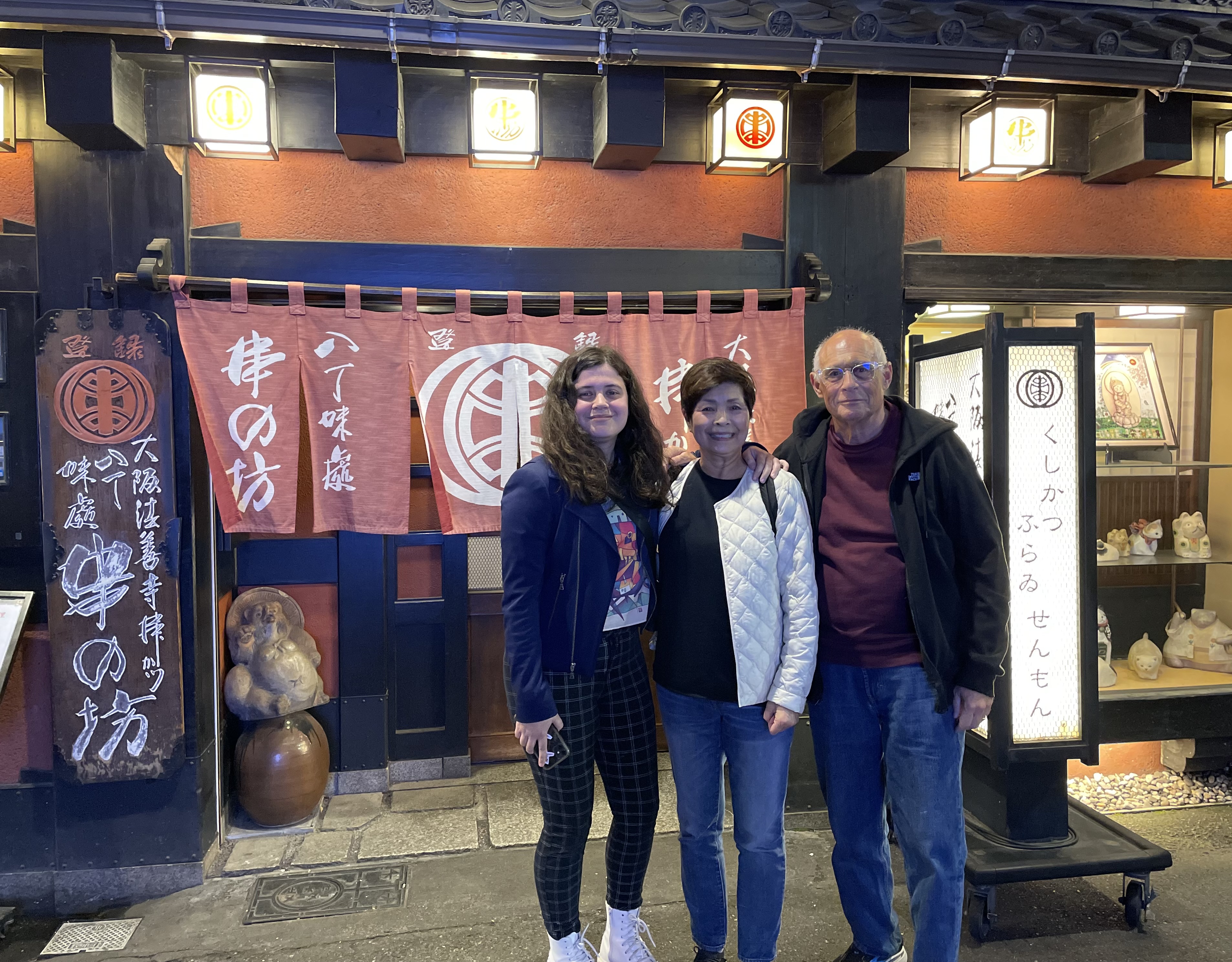
Maya did her mom proud by finding Kushinobo Osaka Hozenji 串の坊 大阪法善寺本店, a 15 minute walk from our hotel in Dotonbori but off the madhouse main street. Oh, what a find. The restaurant is clearly old and reminded me (really) of an old time German restaurant in Chicago or Milwaukee. Dark wood paneling, two rooms only in which all the counter seats surround the cooking space. We ordered the special omikase sets, which they were able to tailor to Maya’s pescatarian diet. The three of us, on the other hand, will eat just about anything put in front of us.
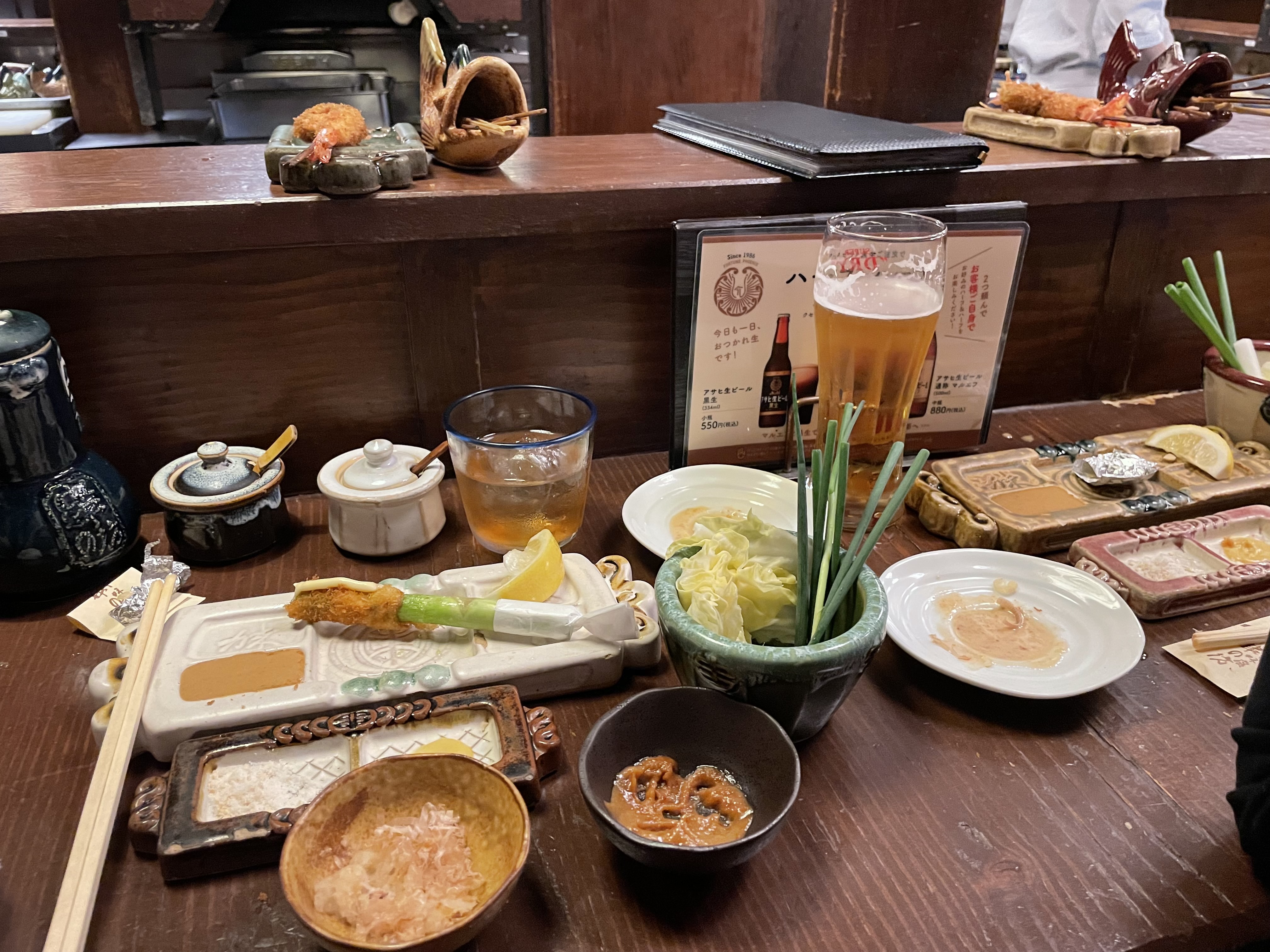
Each item is cooked to order, and watching the chef dip the item in batter, draining each on a heavy mesh screen, then each coated in bread crumbs, deep fried, and placed with care in front of you. A variety of sauces were available at each place setting, as well as salt and a wedge of lemon. You eat the item as it is served and put the empty wooden skewer in a ceramic fish. Most things look quite similar (except for items like asparagus, obviously recognizable) yet everything is distinct and distinctive.
Just as we were all agreeing that we had no more room, dessert appeared—a square of grapefruit jello. Light, tart, perfect.
Marvelous.


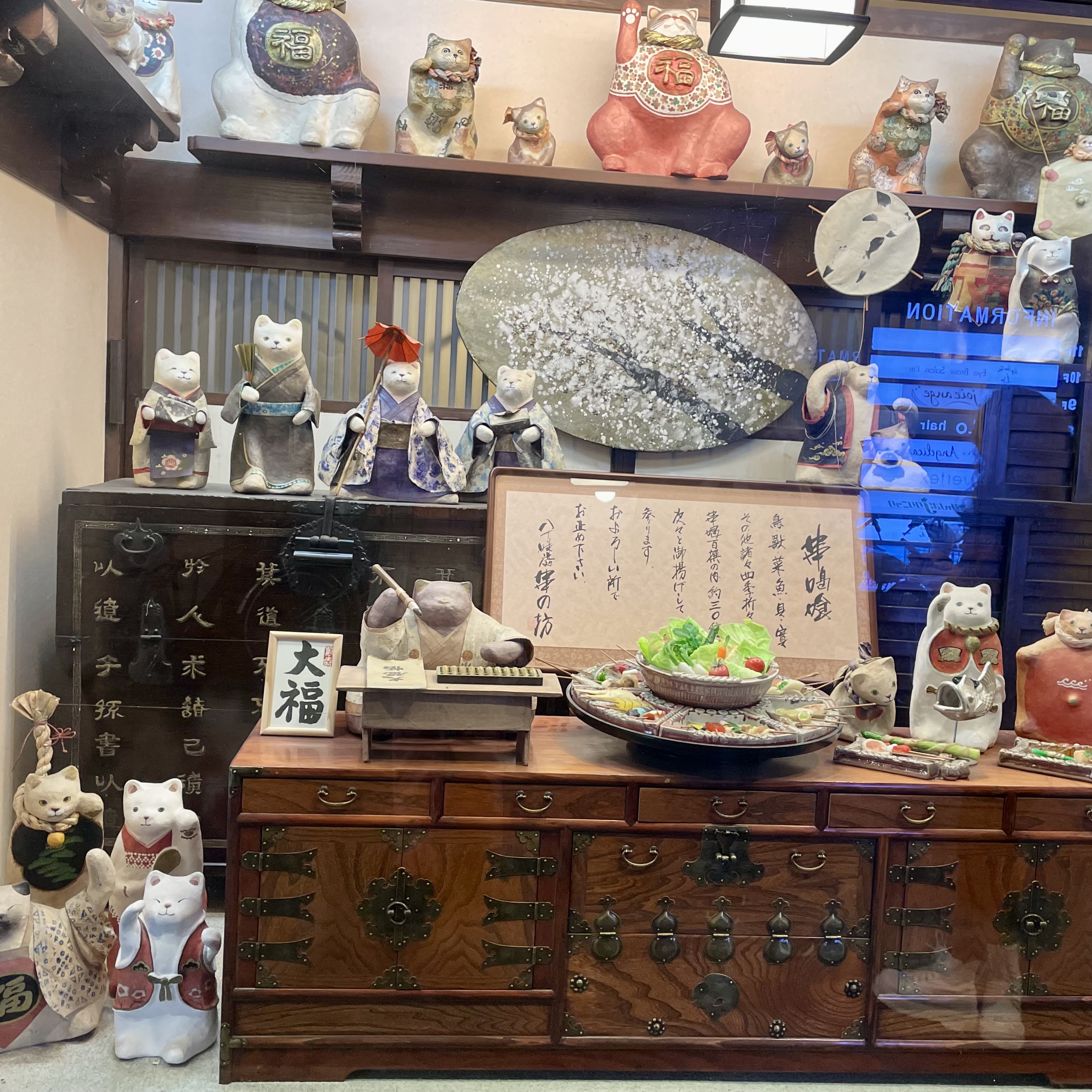
Fortunately we paused outside in time to notice the delightful window—not the typical plastic food but this:
With our cousin Harumi we had decided to take a day trip from Osaka to Himeji, primarily to see Himeji Castle. Renowned for being the most intact of the major castles in Japan, we chose it to represent our castle experience here…we learned years ago that visiting every castle we come upon gets boring. We pinned our castle hopes on Himeji.
A short train ride via Shinkansen from Shin-Osaka station, this beautiful, open, modern city, much smaller than Osaka, Kobe, etc., welcomes visitors with a spectacular view of the castle directly across, maybe 10 blocks away, from the station. It’s a wow moment, and also produces instant concern that it is awfully high and how in heaven’s name does one get up there?
We set off to find out, walking this wide, boulevard with perhaps the most beautiful manhole covers we had ever seen, bits of statuary, and inviting shops. As we approached the castle grounds there was a small set of permanent food stalls with covered picnic tables behind—especially convenient and friendly. We stopped to inspect one of the offerings and laughed that it was okonomiyaki on a stick! We continued on.
You enter the castle gate by crossing the moat on a lovely wooden bridge. Sakura—cherry blossoms—everywhere. I mean, everywhere. And they were in full bloom everywhere. We have been extraordinarily lucky to see this beauty. I hadn’t considered just what it means to be here in cherry blossom time. Well, it’s pretty great.
We wound our way up the castle grounds amidst the many tourists of all nationalities, lots of little kids running around, and enjoying the endless blue sky and vistas of mountains. Up and up we went, a slowly moving parade of visitors. A very Asian appearing young man struck up a conversation with us. He was from Texas, and traveling alone because his buddy bailed on him for some girl. After a considerable climb we entered the castle building proper and we all laughed to read the sign—we had made it to the castle basement! A few more rooms and we were in a staging area with a guide repeating “please remove your shoes on the brown mats” and we did as we were told. Plastic bags—recycled—were offered and everyone is now carrying an extra bag. We rejoined the parade in our socks (never travel in Japan without wearing clean socks), navigating slippery, centuries old wooden floors and stairways that were virtually ladders. Everyone follows the signs and barriers and slowly we all continue, up and up and up. It was, frankly, grueling, and also exciting and scary.
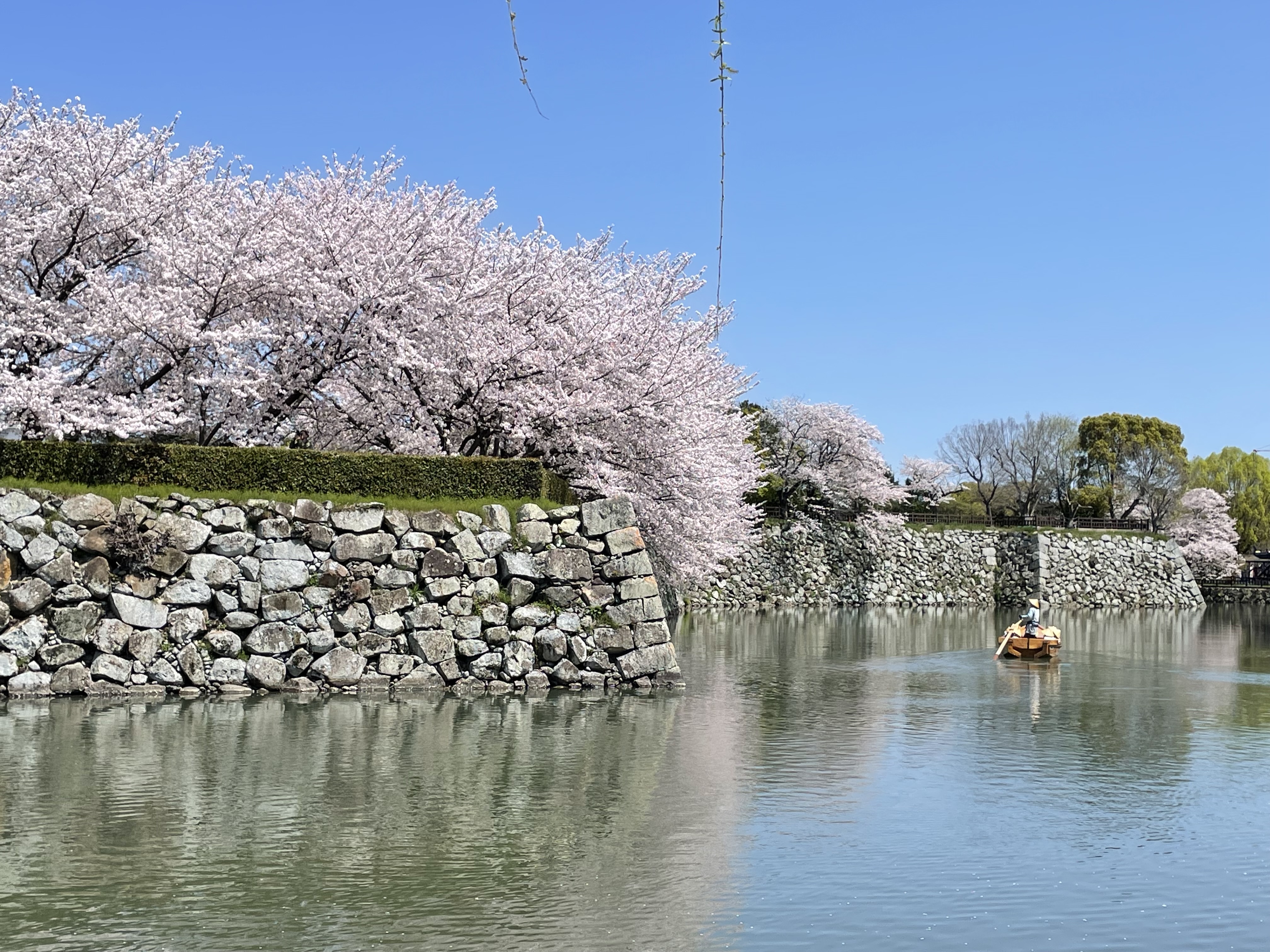
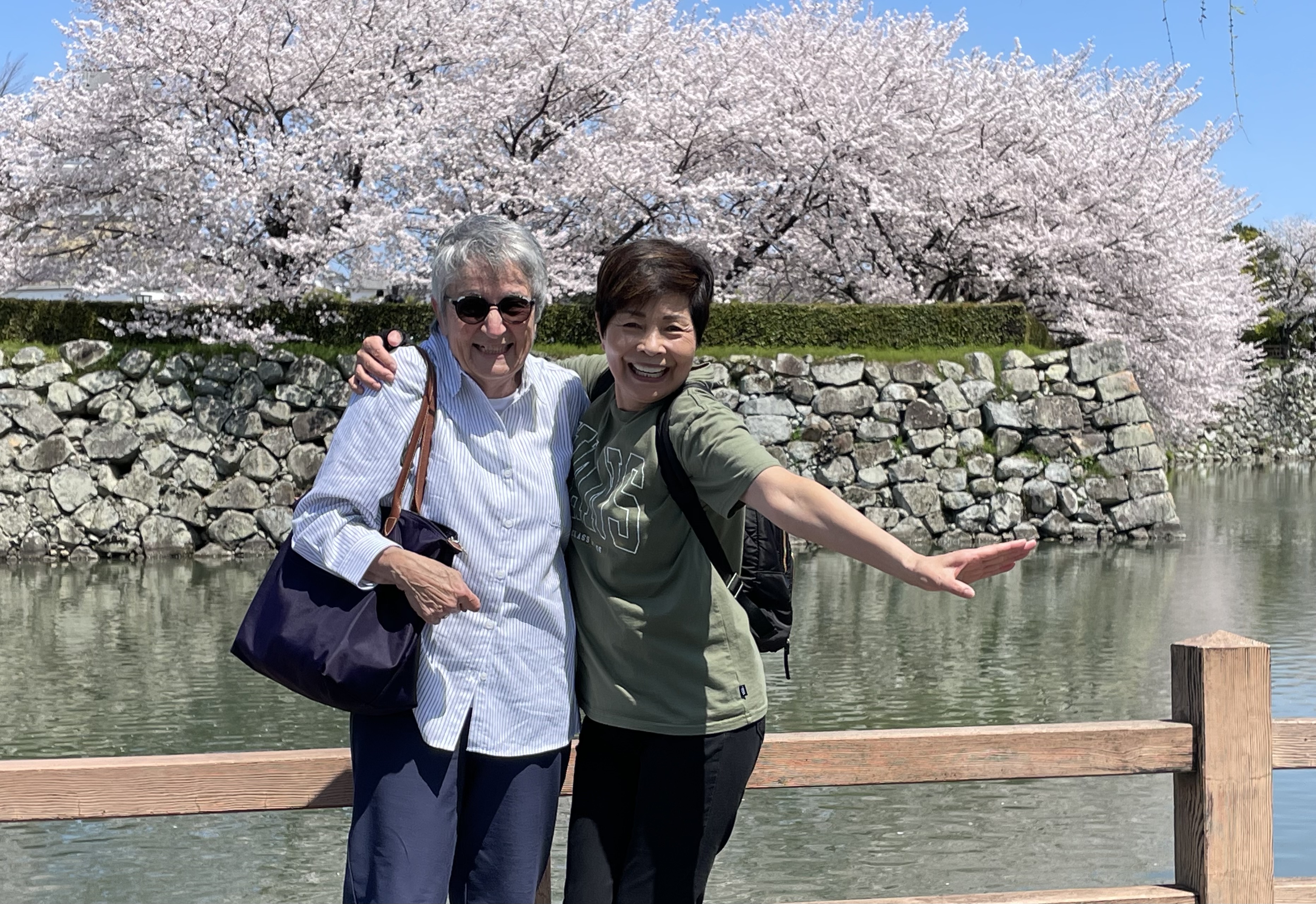


The trek tops out at the top—the sixth floor—where a small family shrine sits in the middle of the room. Many Japanese visitors, including Harumi, bowed, clapped, as is the custom of respect. Then we embarked on the descent, again, in SOCKS down, down those ladder-staircases. At least on the down direction they have put narrow treads so it wasn’t as treacherous as we had feared. Nonetheless it’s tricky because each step is so narrow one must turn sideways to fit one’s foot. I don’t think I have ever been so glad to get down from a climb. We continued on to the castle grounds, surrounded by sakura and filled, now it was midday, with kindergarten aged kids in their uniforms running around, families on blankets, older people (like us) sitting on rocks in the shade.


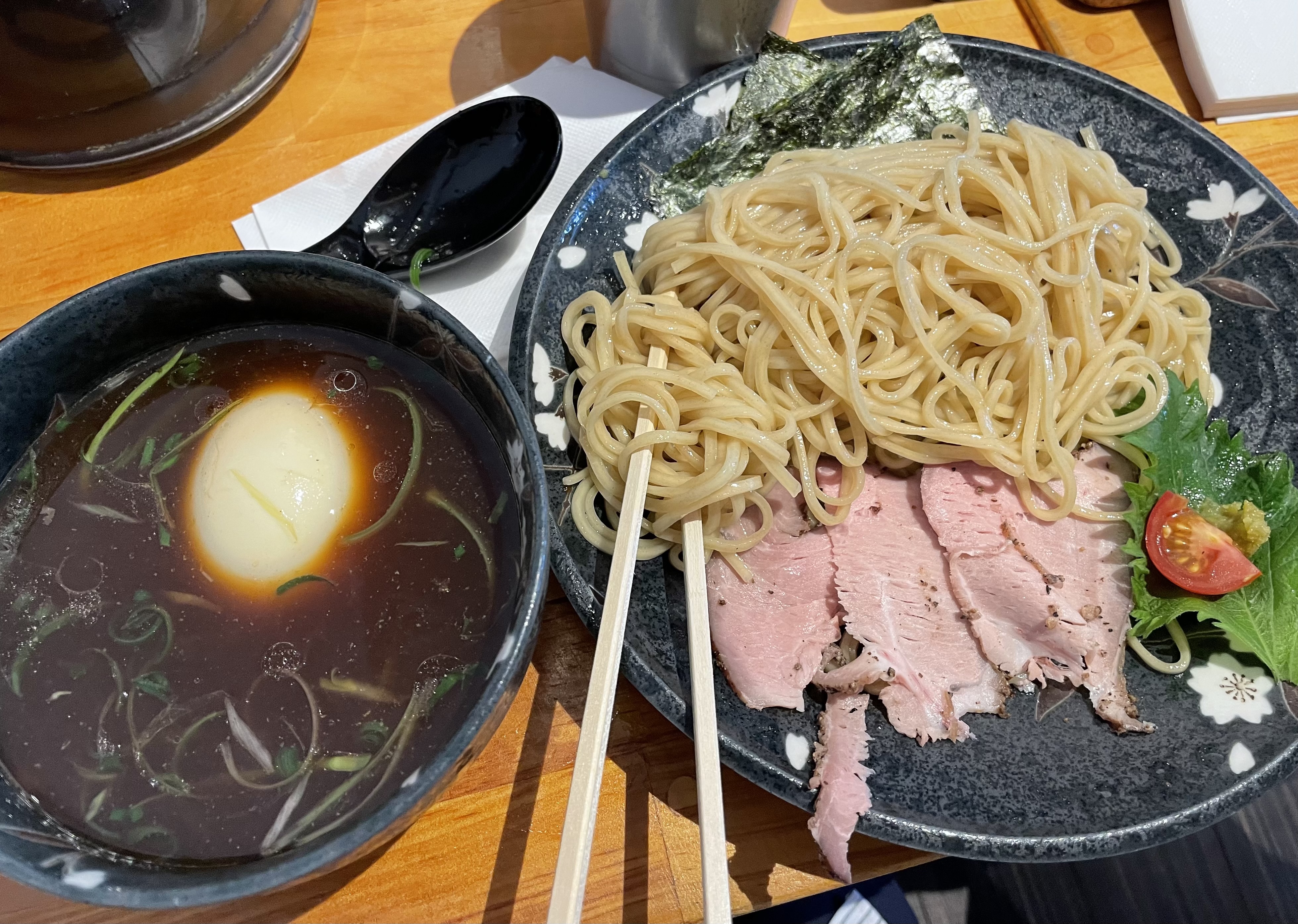
Lunch! We earned it. There was a lovely arcade street back toward the station (note: do NOT go into antique stores in Japan—everything is authentic, many very old bowls and cups come with the original wooden box…so tempting) and came to a noodle/ramen shop where a young woman stood beckoning us in. Harumi and David had soup ramen, I had the dipping ramen. Dipping broth was way too rich for soup but delish to drag the noodles through. Yum! It is refreshing to find hundreds, thousands of independent enterprises which in our experience are always good.
Satisfied, we decided to find out how to get to the gondola that would take us to a large forested area of shrines and halls. You can imagine how tired we were after the castle climb, and this sounded relatively easy. I mean, don’t gondolas take you to the tops of things?
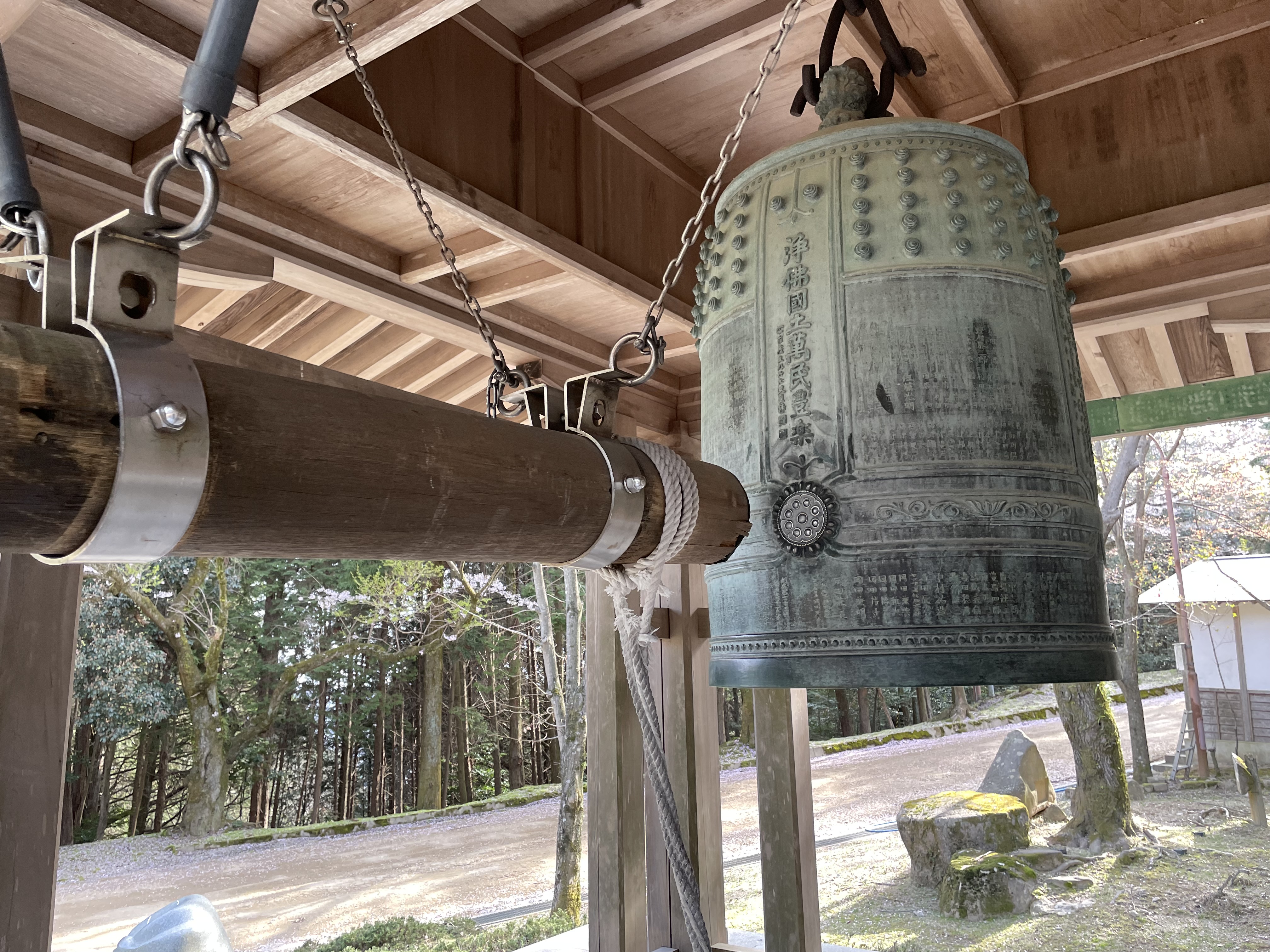
Not always. We had 2 1/2 hours before the last gondola down (tourist office lady: DO NOT MISS the last ropeway down) and from the map it looked very doable. 30 minute bus ride to the gondola/ropeway, 5 minutes up to the site, then a wander through the woods to as many shrines and halls as we could manage, back in plenty of time. Well, Shoshazan Engyoji is an enormous space, with many pathways and much of it a steep climb. When we got off the ropeway they asked “Bus?” Of course not! Off we set, naively, to climb, and climb, and climb…a path through the forest with Buddhist deities every 5-10 yards, wonderful and, as we got further away from our starting point a bit worrisome. Finally we realized we were never going to see everything, and found, luckily, a shortcut back to the ropeway. We headed back down at 5:30 a bit wiser. Wouldn’t have missed it, though.
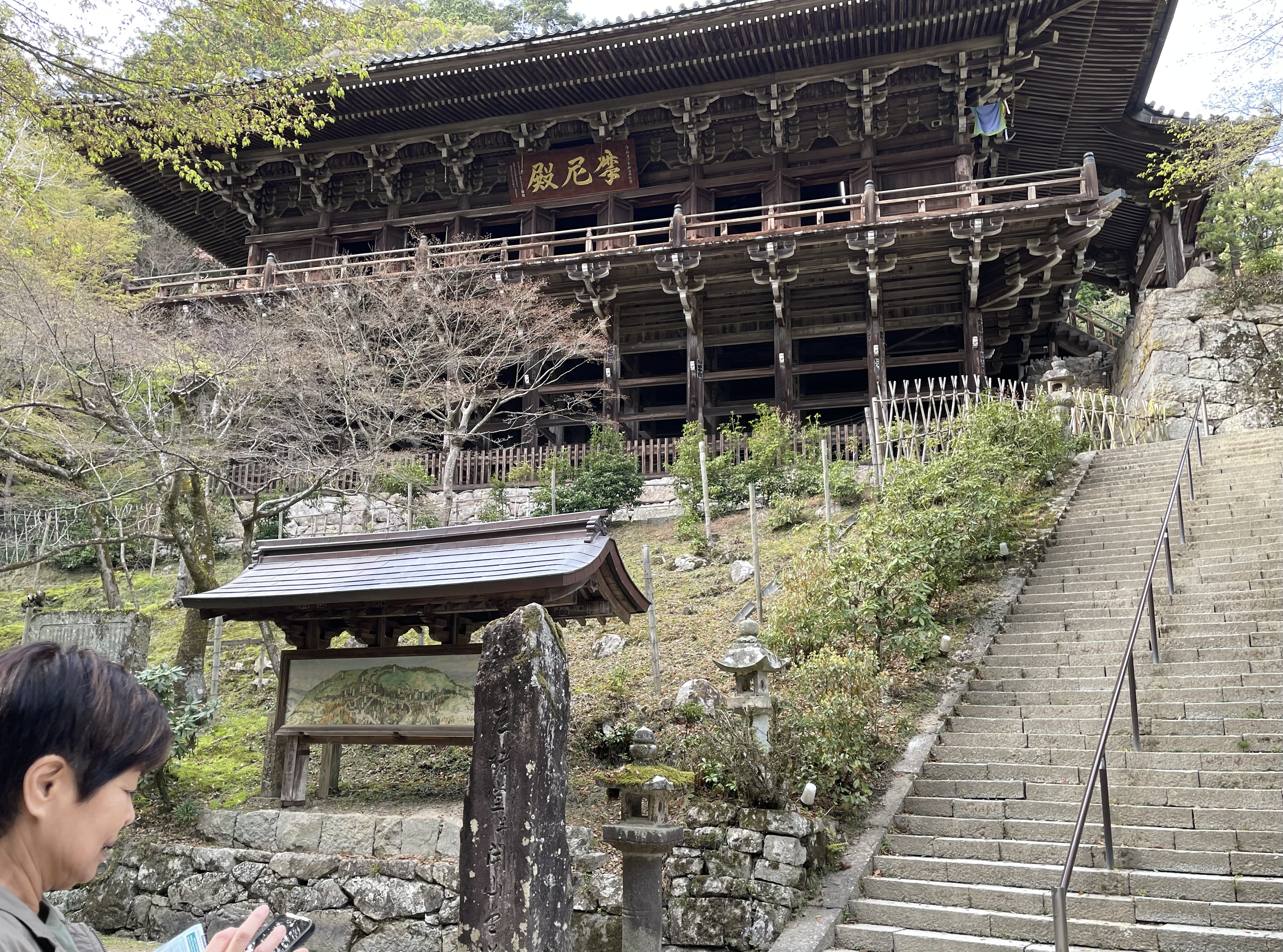


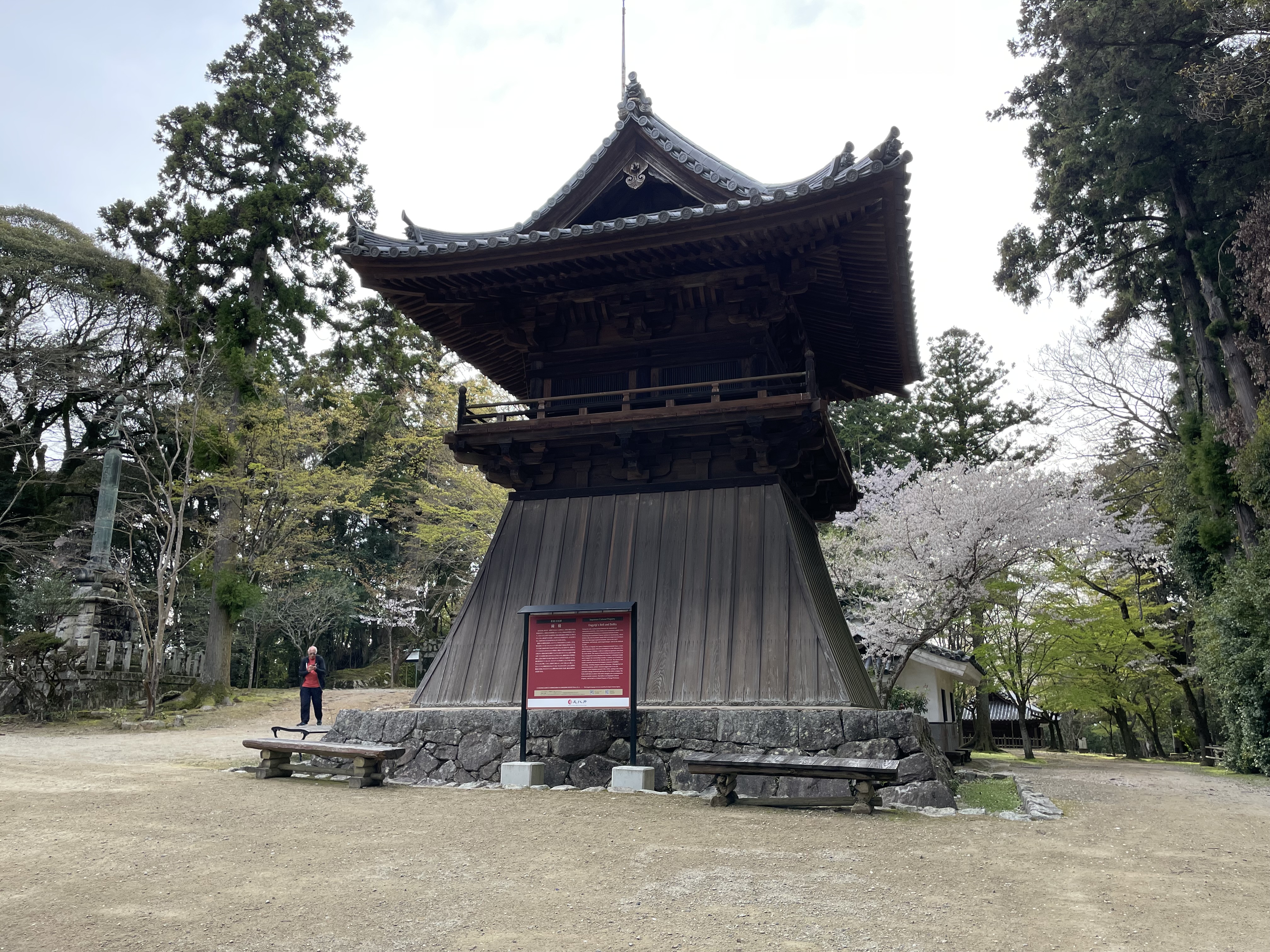
A quick train ride back to Osaka, aching and exhausted. After an adventure of several hours, repeatedly getting turned around (Google maps for walking in crowded, narrow streets are less than reliable) trying to find a particular restaurant, we landed in a crowded but of course quite good little place where we three raised the average age by several decades, ate, and wandered back to the hotel in a daze.
We love museums. So far we have been to three here in Osaka, one per day. This, combined with the sometimes interminable walking required to use the fantastic public transportation, is why no matter how much I eat, I lose a few pounds on a traveling vacation. And I do eat with abandon, believe me.
For more information on all of these see https://museums.ocm.osaka/museums-info/museums-info-en/


First full day we went to the Osaka Museum of Housing and Living. The intricate displays are models of life in the Edo period. One floor is life sized recreation of two streets in Osaka in the 1830s. You look down on the life sized streets from the floor above, then walk down and through it. Warm, helpful docents, authentic houses and shops. There is even a ‘kimono experience, where a kimono expert dresses you, both girls and women, with all the care and intricacy required. The many small scaled displays show Osaka life in the twentieth century. Bonus—adjacent to the building is an arcade shopping street where I satisfied my craving for cold soba and one big veggie tempura. David had a bowl of noodles and other things we couldn’t identify. As is most common here, it was a little narrow “joint” where every order is fresh. Then I bought a big baggy shirt to blend in a bit.

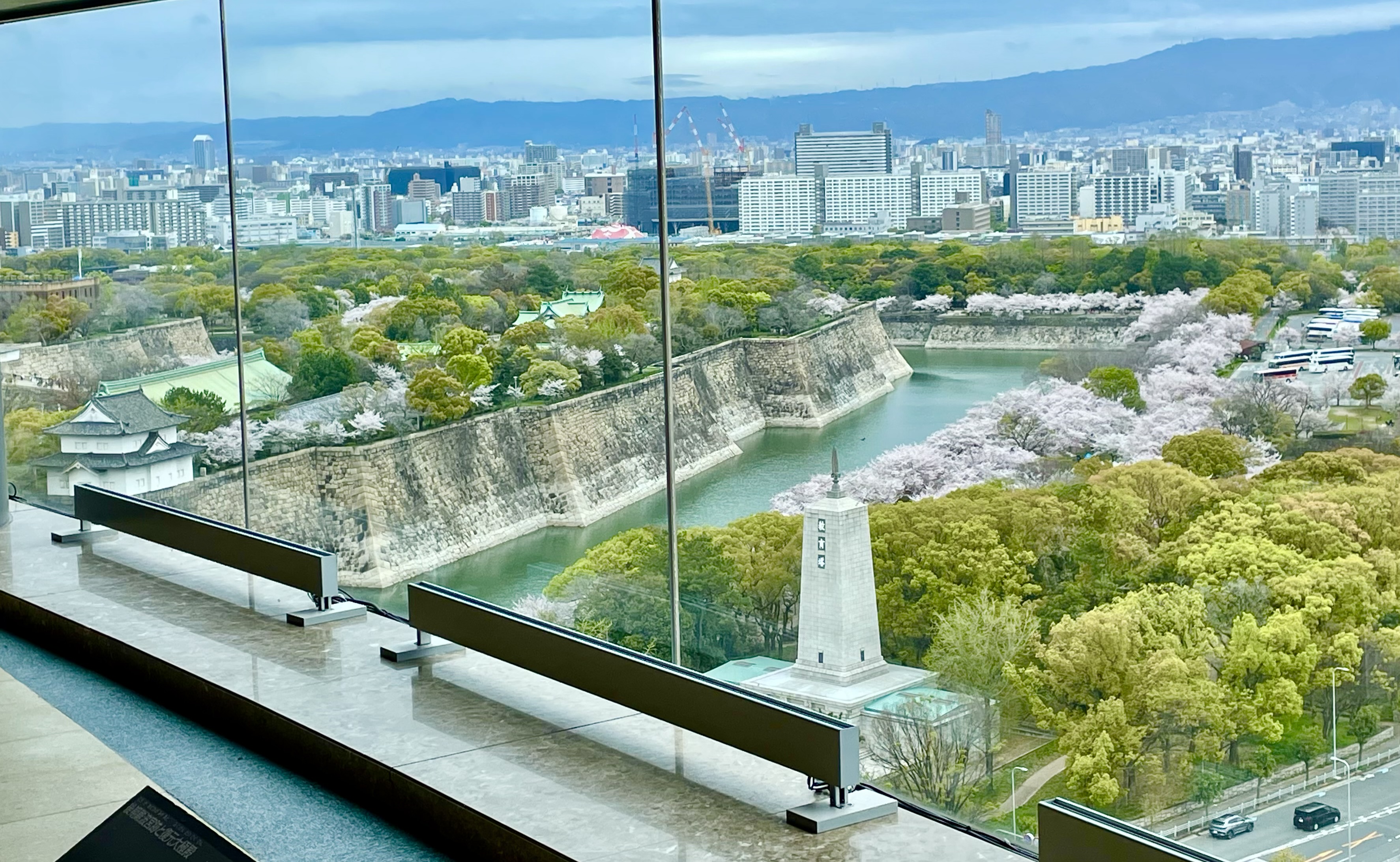



The next day it was the Osaka Museum of History. It takes you from the earliest settlements, and all about the archeological digs ongoing to plot where the first people lived, to modern times. Many exhibits are a mix of life sized displays you walk through and multimedia explanations. May I say thank goodness for google translate, which enabled us in every museum to translate the text explanations. Fun, overwhelming, jammed with information—and a bonus—the incredible views of Osaka Castle and surrounding grounds.
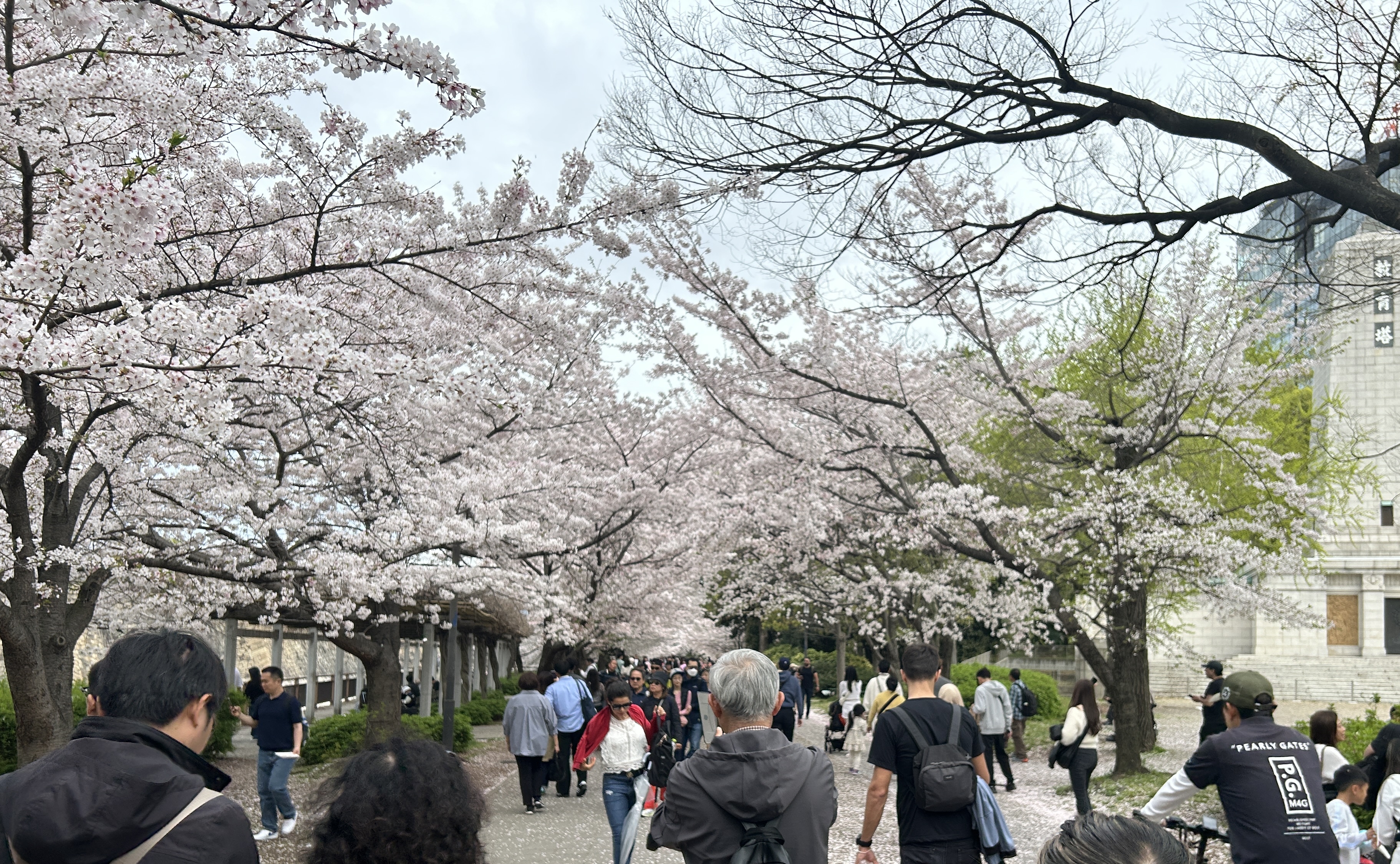
Having absorbed our fill of Osaka history we crossed the street to the castle grounds, where a small jammed Lawson’s satisfied our hunger. We made a picnic of our $6 investment and then wandered through bowers of cherry blossoms, petals blowing like a snow flurry. Wow.


Nakanoshima Museum of Art was a bit of a trek given our predictable issues with Google maps walking directions, but oh so worthwhile . They have no permanent collection—just special shows. We started with the Monet, an enormous retrospective showing how he evolved into painting series. It was stunning, as were the visitors. Lots and lots of hushed conversations about the paintings. It felt different, people more involved with the art than is common in the US.
Down a floor, short rest to get a bit of energy back, and we dove into the other exhibit, Fukuda Heihachiro: A Retrospective. Never heard of the guy. Walked in, and at the third painting i got that feeling, instantaneous love and emotional connection. It is a simple painting, Ducks by the Pond, painted in 1916. That feeling, like the first time I walked into the room of Matisse cutouts at the National Gallery. It is a rush of excitement, then a deep resonance in my chest like a gong. And I want to cry, and do for a few seconds. I couldn’t tear myself away. Walked on to see a huge painting on eight large screens…just sheep. No background , no setting, just intimacy with the animals. This amazing painter evolved and evolved, always paintings and sketches from nature. Later he moved toward abstraction as he distilled water rippling to dashes of blue, closeups of bamboo, a painting titled Rain that is roof tiles in a million shades of blue-grey.
Yeah, idiotic I know but I bought the exhibit catalog that we now have to schlep all over Japan. Photographing his works in the gallery was limited to maybe four, none of which excited me.
So we said goodby to this gorgeous museum with a wave to space cat.

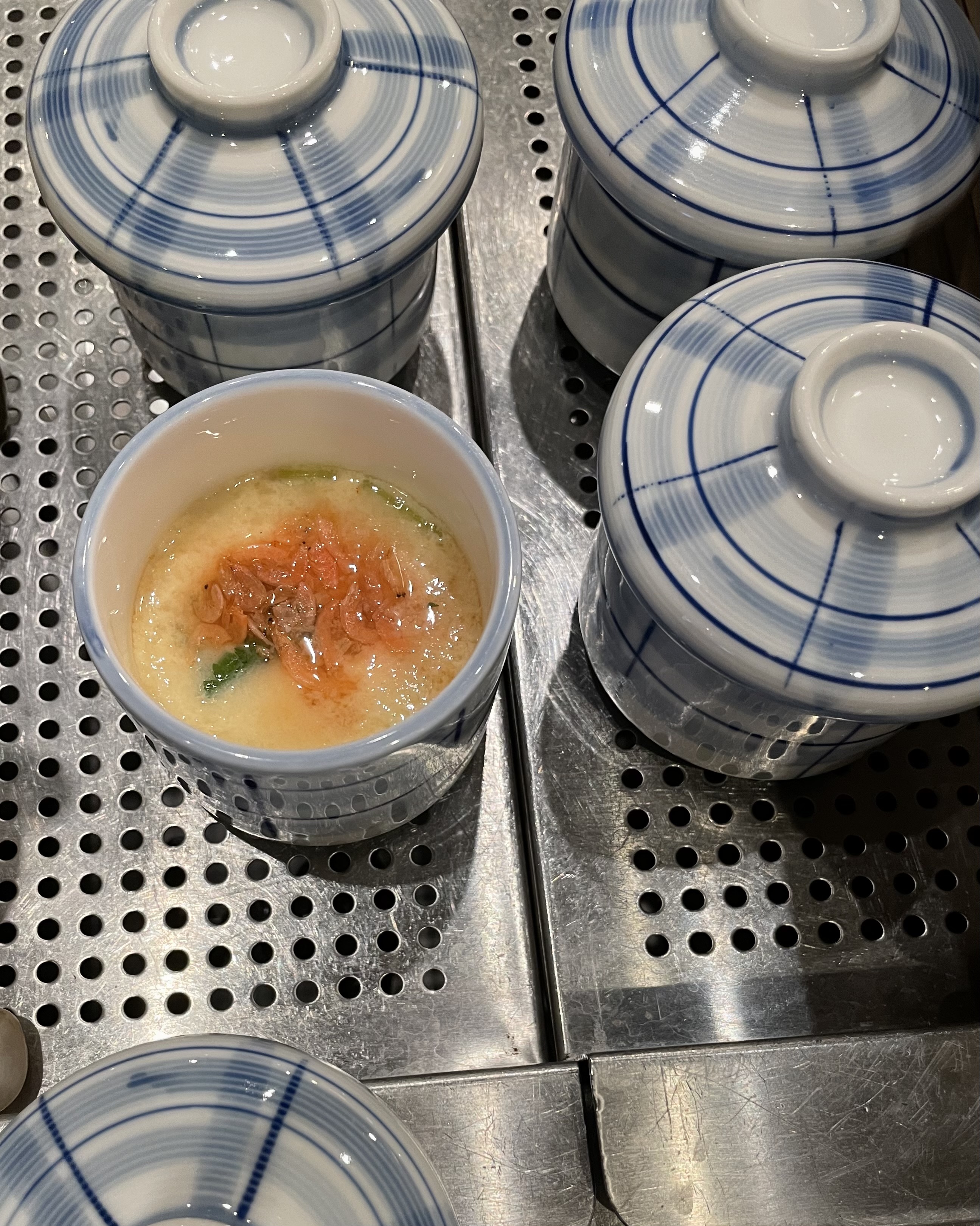
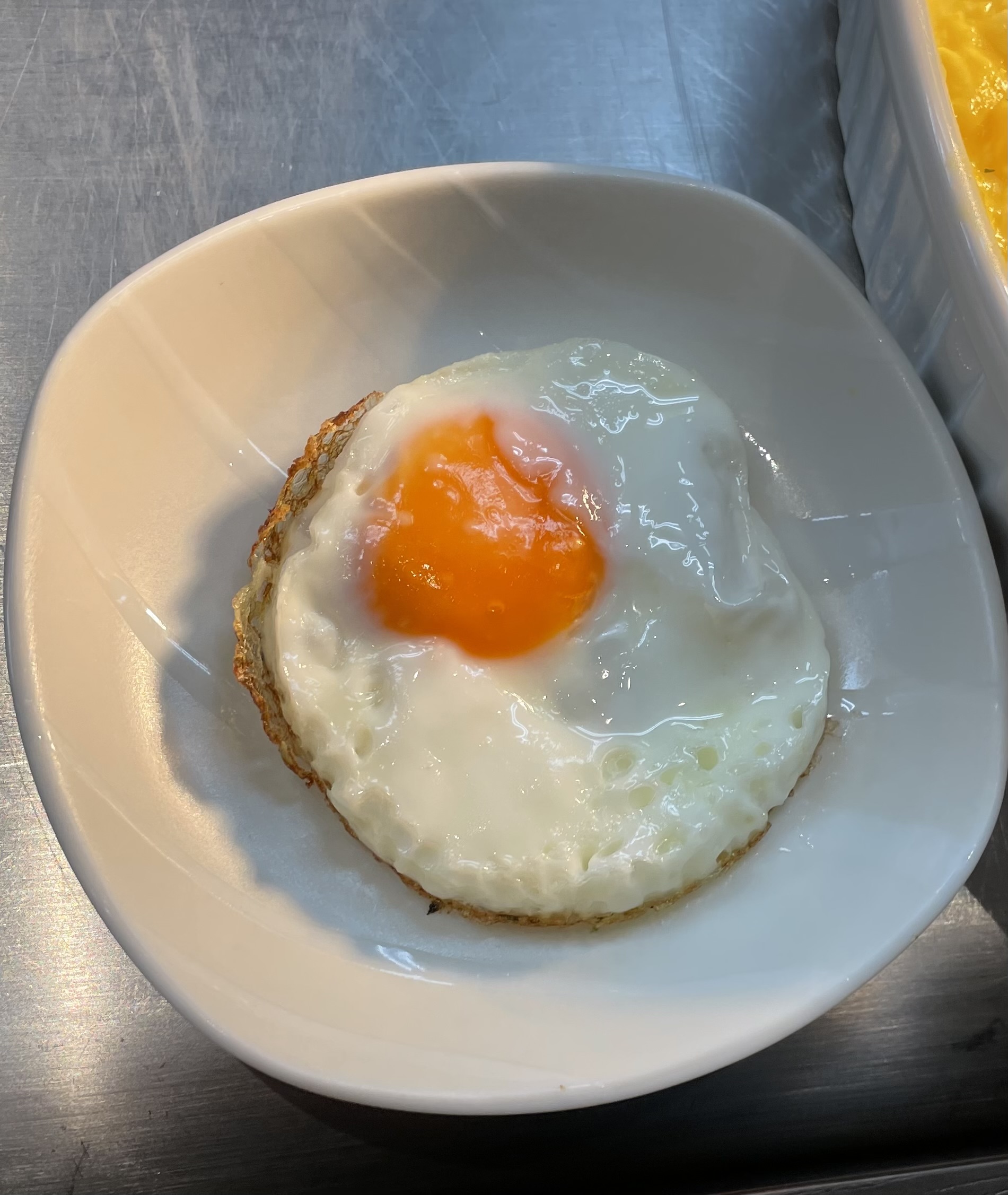
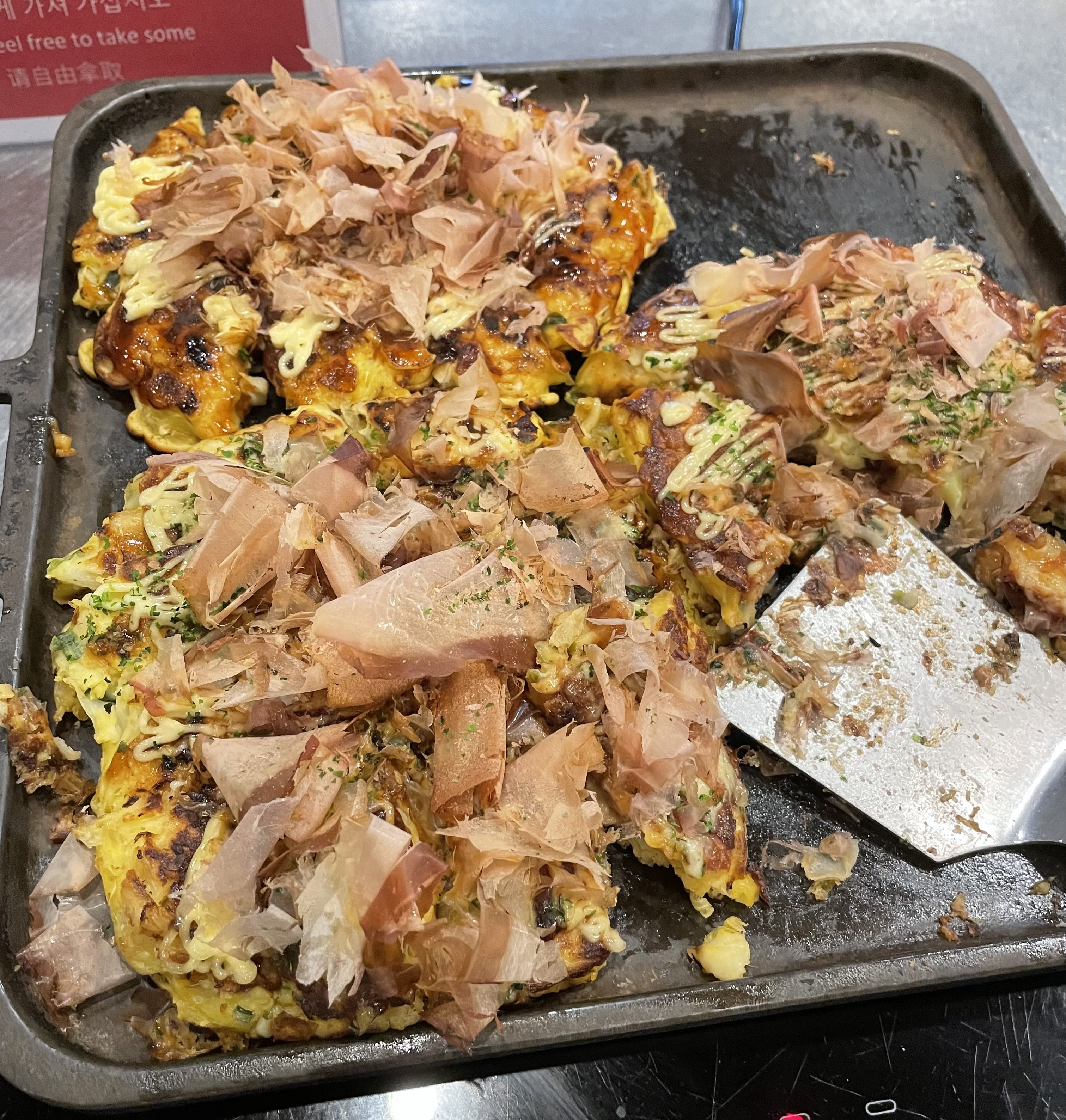
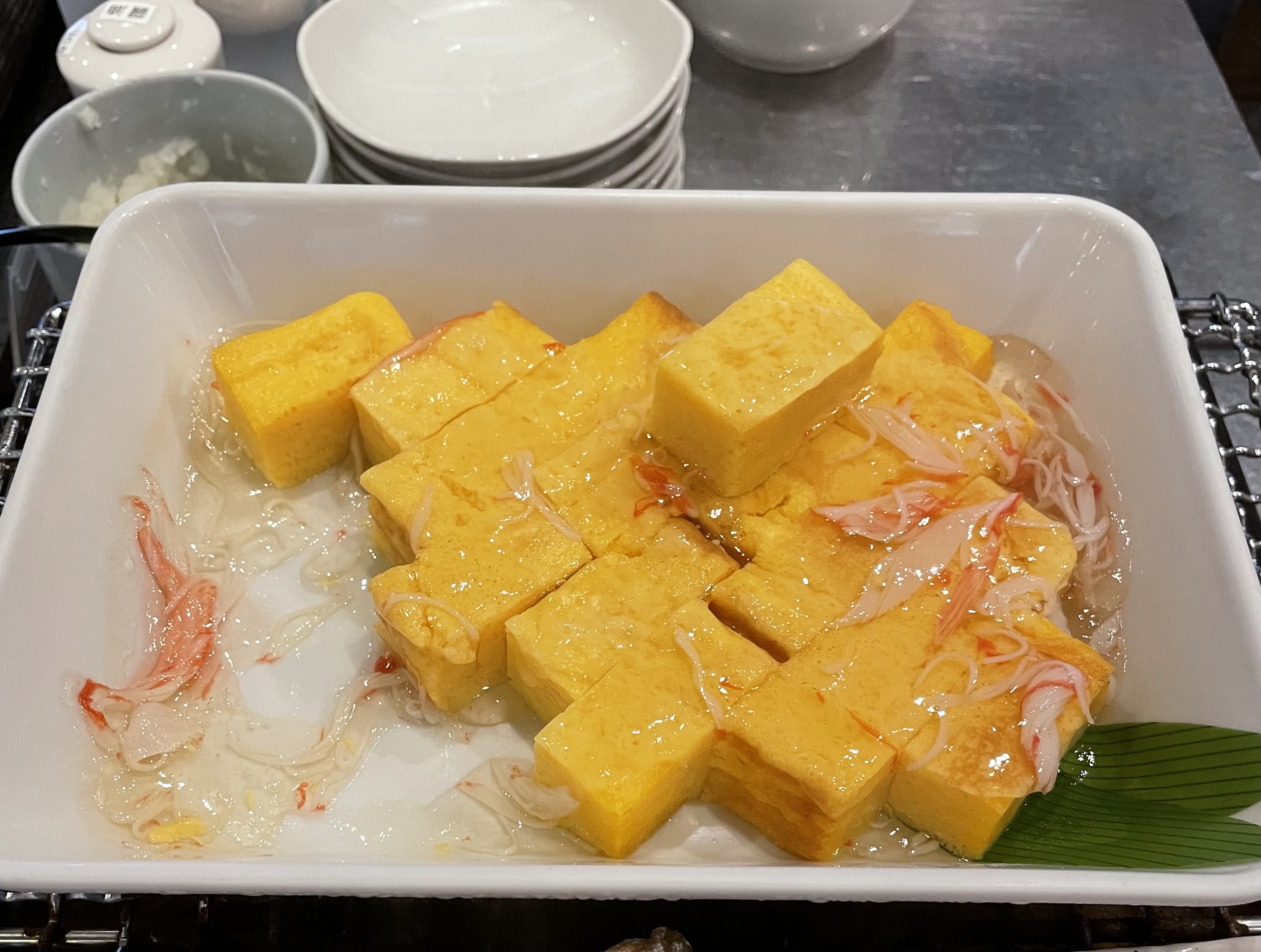
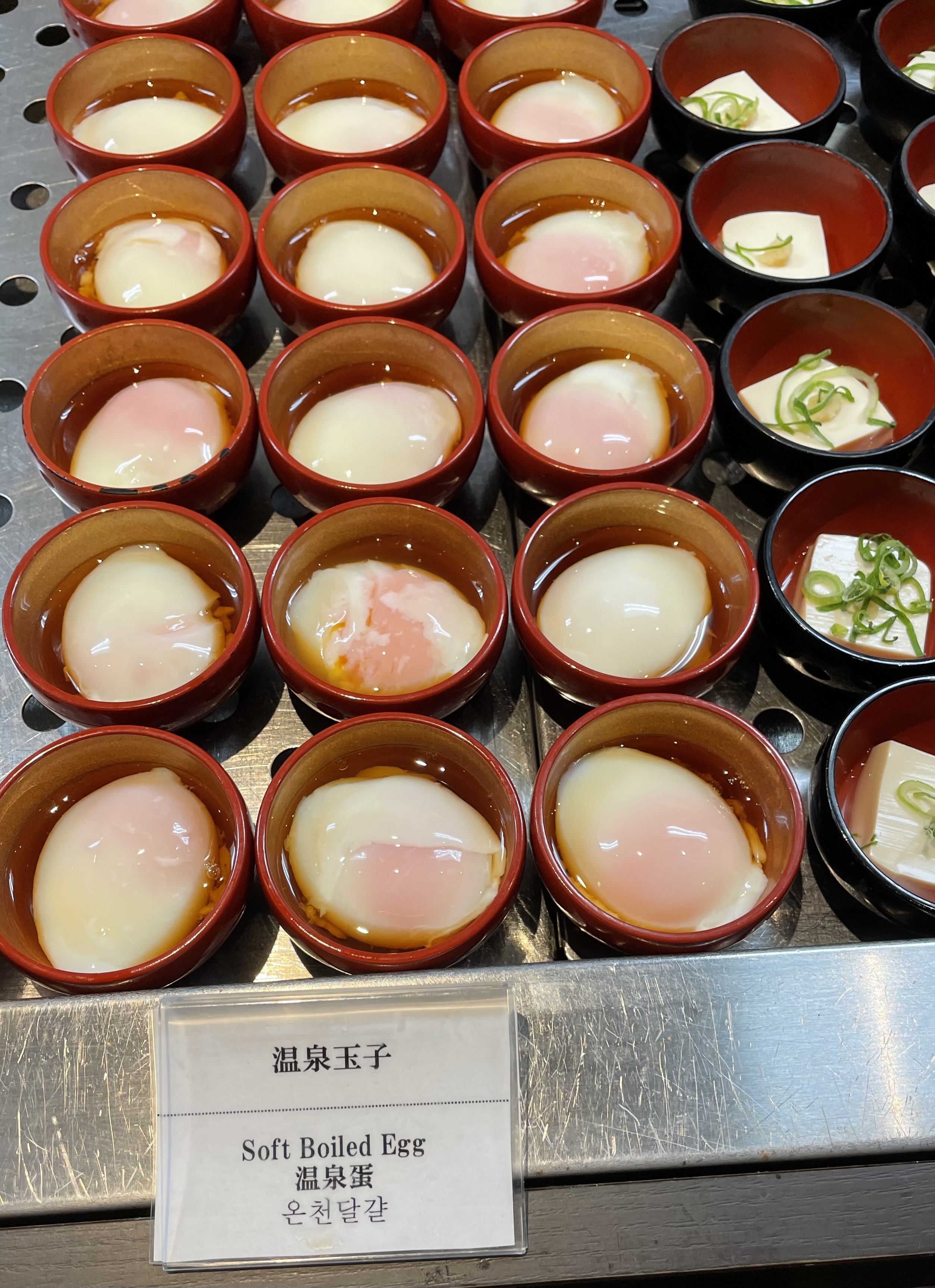
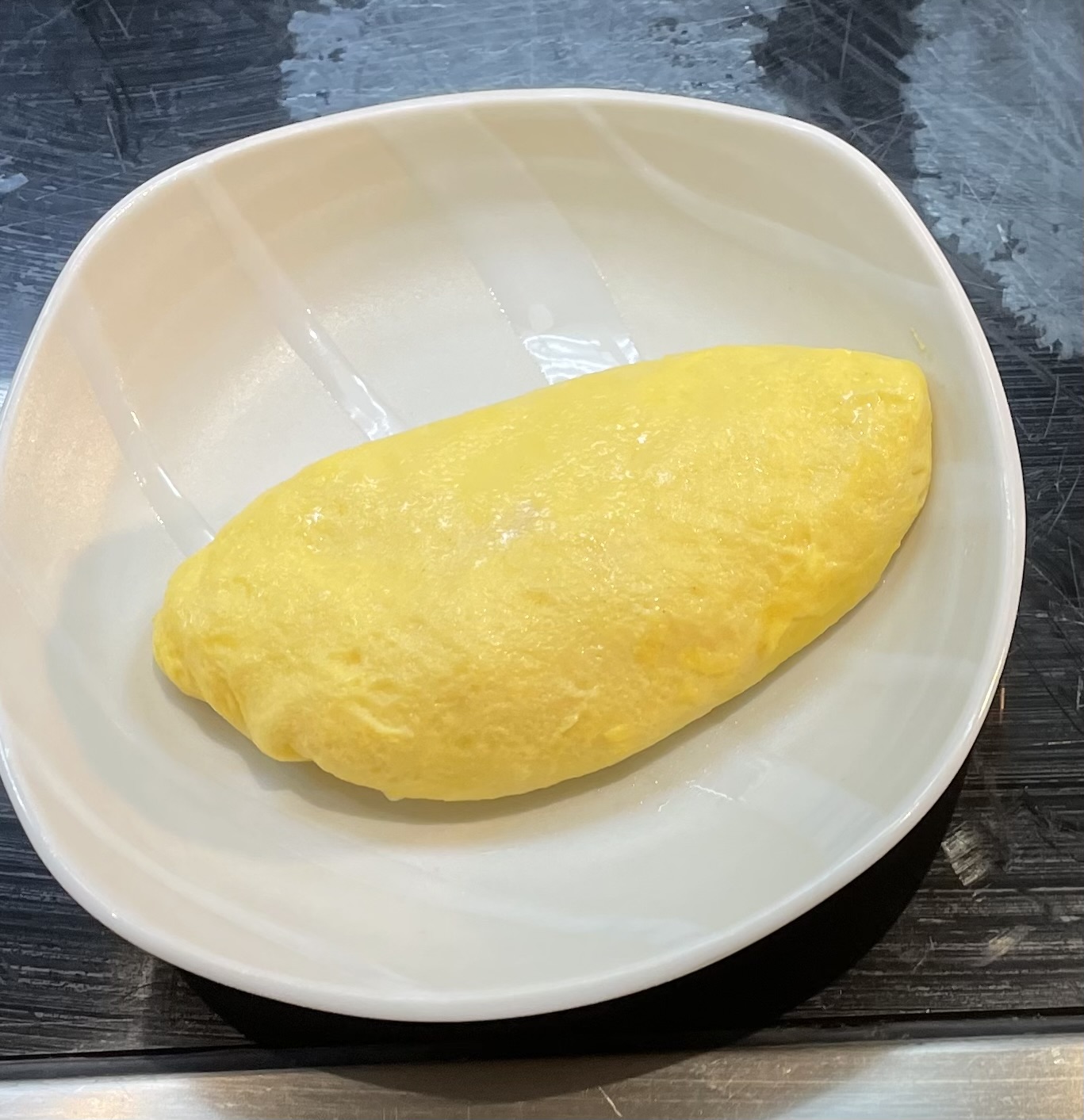
At our hotel in Osaka, the breakfast buffet includes, among the salads and stews and soups and rice, plain or vinegared, the raw tuna and salmon and roe…the fruit and yogurt and cheesecake, there are seven egg preparations. All tasty.

We arrived in Shin-Osaka train station after the whirlwind Shinkansen from Tokyo a bit tired but ready for a brand new city. The central train station is sparkling. We followed the many, many signs, which fortunately made it hard to go astray, because it is a trek to the subway line from the Shinkansen platform. We have since taken the city metro multiple times and it is without a doubt the most beautiful and cleanest subway we have ever been on, and we have been on a lot of subways. Every train spotless, but also every train painted differently. Comfy seats, natch.
Great people watching—the fashions sense of women, young and old, is lovely and varied. The rare young woman in jeans and a knit shirt (never have seen a plain old t-shirt on a female) is wearing beautifully cut wide leg pressed jeans and some adorable top, often cropped. The most common look, though, is layers and layers—net skirts over ankle length skirts over boots, long breezy shirts over other roomy shirts. Or mini skirts and boots. Or completely color coordinated layers of, say, a crop top and a sparkly long sweater and several long-strapped, hip-length purses. I guess they are purses. I have tried to take photos, either at a distance or by asking if it is okay. And I have been refused, with smiles, then giggles. I would happily stand for half an hour watching girls and young women go by, taking pictures. But of course that would be rude. There are also many coordinated couples, by color or style, sometimes in traditional dress, always gorgeous.
The places we have wandered give the impression of a very prosperous city. Our cousin Maya mentioned that the little kids are so well dressed, and yup. No jeans and grubby t-shirts. We watched some boys playing ball, about 7 or 8 years old, in three-quarter length cool pants, stylish knit shirts, good looking sneakers. They rough-housed like boys but it looked like a fashion spread in the cutest way.
I will try to put together a gallery of fashion. If I can get permissions!
 Inescapably Rational