Odds and Ends: Peaceful Temples, Bakeries, Philosophers Path, Bar Food, Handmade Paper

Mysterious Snack

What do you suppose this is, and why? A Twinkie with a banana inside? There were ads for them all over the train stations.

Horyu-ji

David found two temples, Horyu-ji near Nara and Kozan-ji in Kyoto, that were off the beaten path. I am so glad he did.

We had planned on visiting Nara, a city about an hour by train from Kyoto, though we had been there on our first trip when it was excruciatingly hot and humid. At the very least we wanted to find the okonomiyaki place for lunch, and perhaps visit a few sites we had missed on that hot day. First, though, David suggested we change trains in Nara and visit an enormous temple complex where the oldest wooden buildings in the world are located.

Here we had another of those strange Google map snafus. It told us to change to a different train line and go a few stops to this little town. Well, the walking directions to the other train station were ridiculously confusing and kept changing (the Google map starts spinning and rerouting you over and over until you have no idea where you are) so we stopped at the tourist information office across from the JR (primary) station…where the very nice woman explained that it made more sense to return to the JR station, get on another JR train and take it to the temple town. Fortunately for David’s mental health we were on a JR pass, so exiting and returning to the same station cost us nothing. And why Google suggested this strange transfer–and then refused to tell us how to do it–was a mystery.

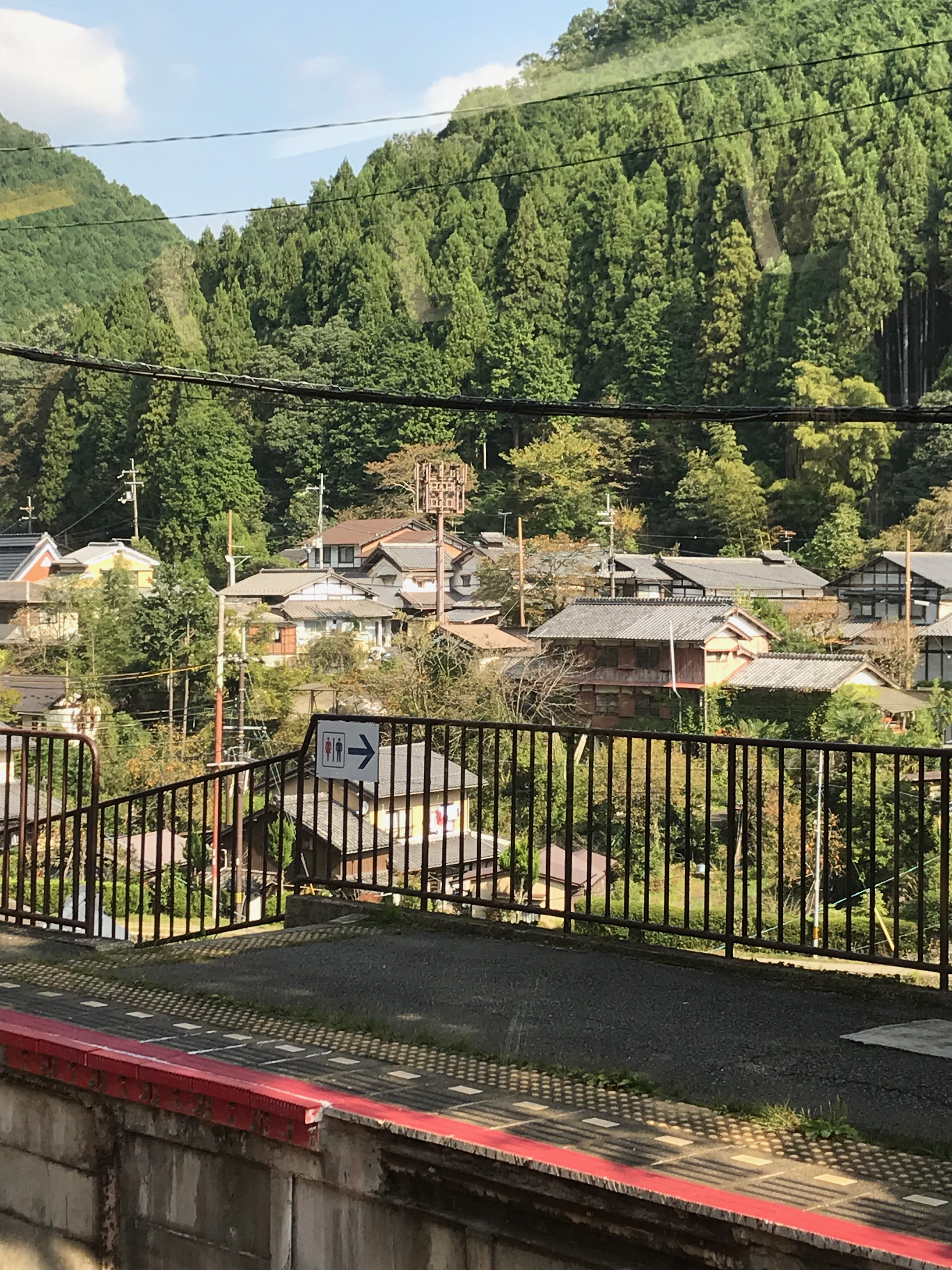
So we did as the nice woman suggested and in a few short stops were getting off the train and looking for the city bus stop. Which was, of course, right where it should be and a few minutes later we were walking up to the temple complex.
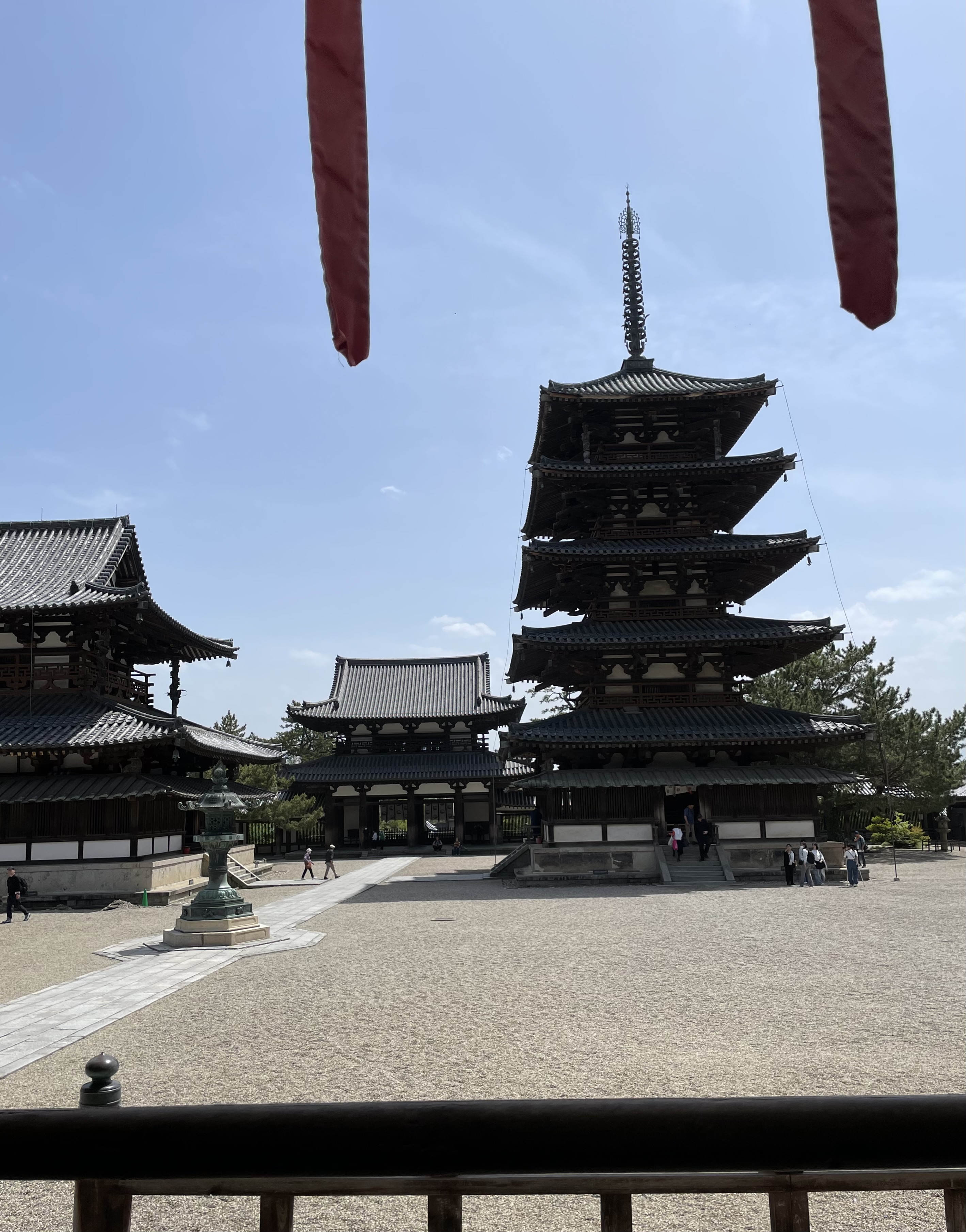
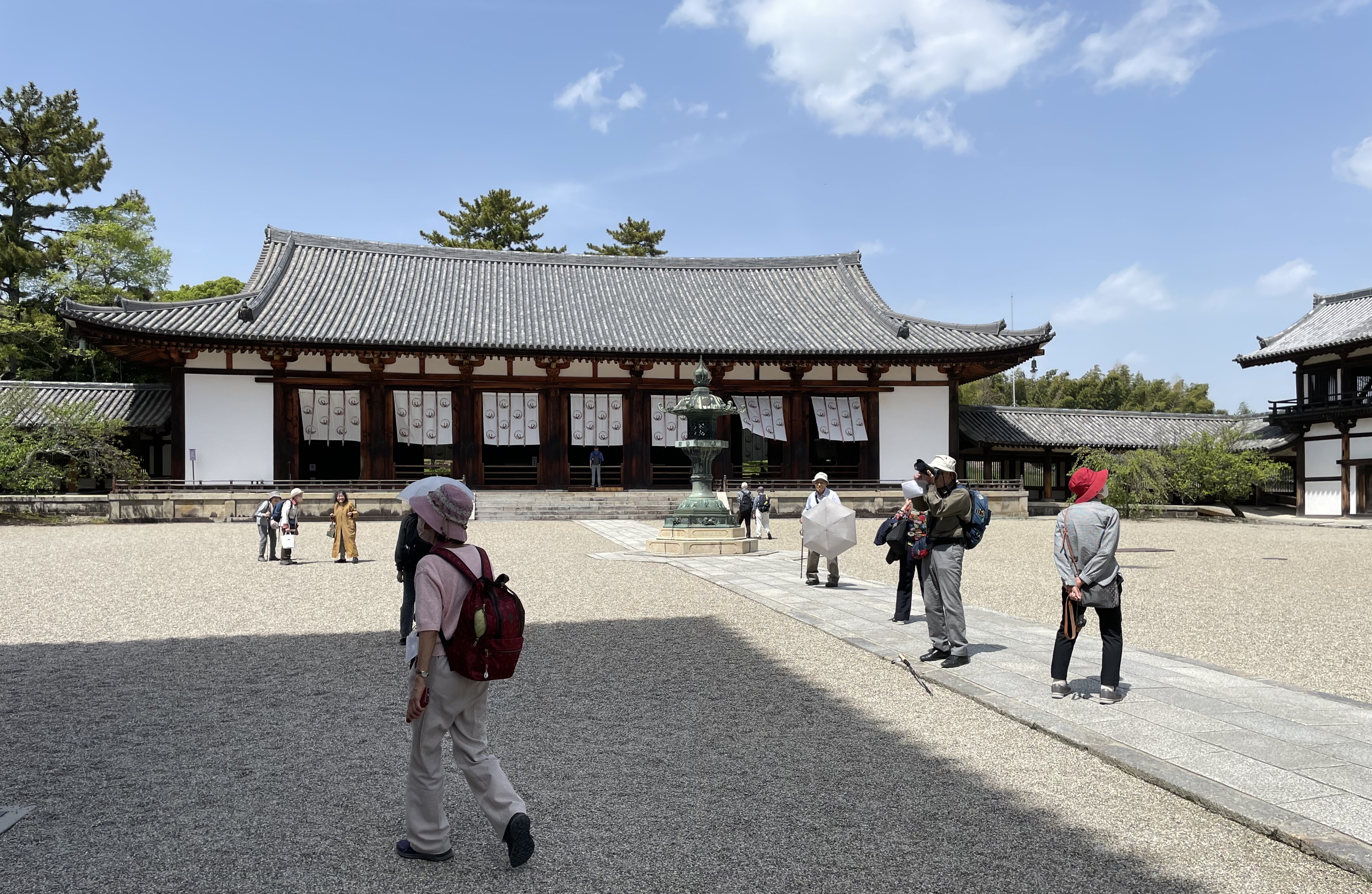
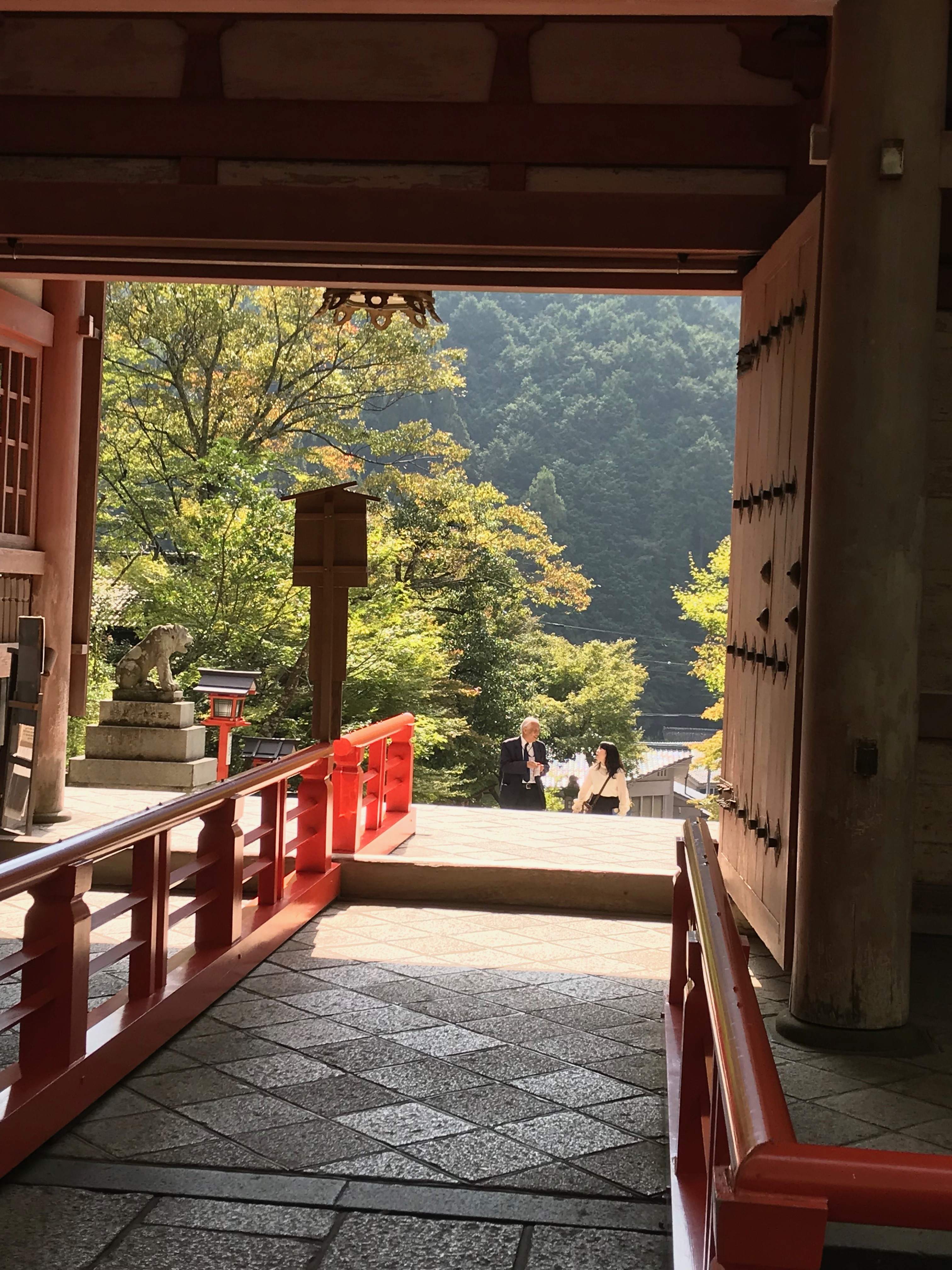
It was enormous. You buy a three-part ticket and as you move through the complex each ticket part is collected. Incredibly peaceful and seemed to go on forever, including a relatively new museum built by the government (of course–we couldn’t build such train stations and museums if we had a lifetime, alas) to house some extremely important, old, and rare statues and artworks. After several hours we returned to the bus stop, walking down a shady pedestrian boulevard, and were back in Nara in a flash. And tired out–ate our okonomiyaki (see post about noodles) and returned to Kyoto on the fast, clean, peaceful JR train.

Kozan-ji

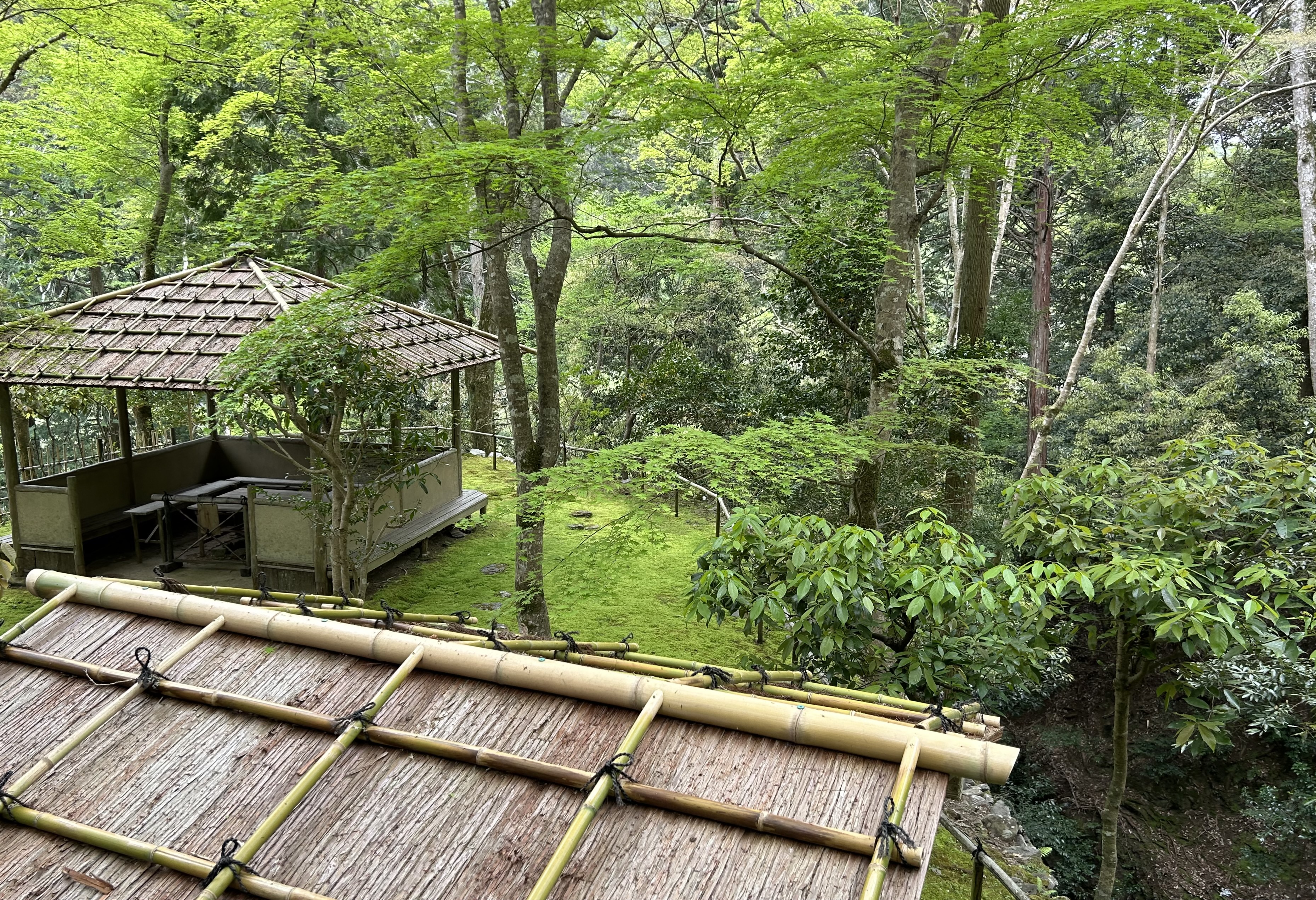
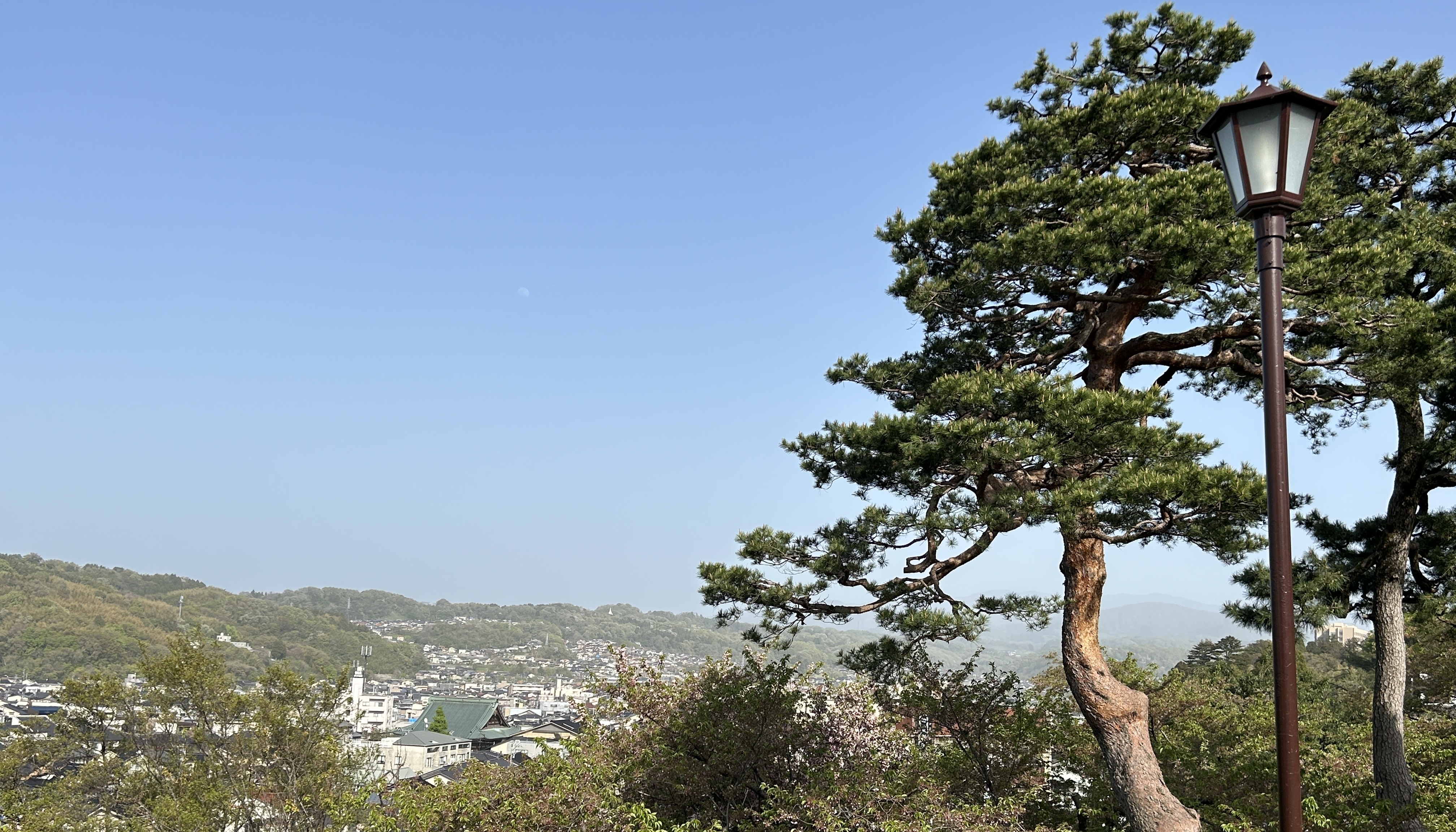
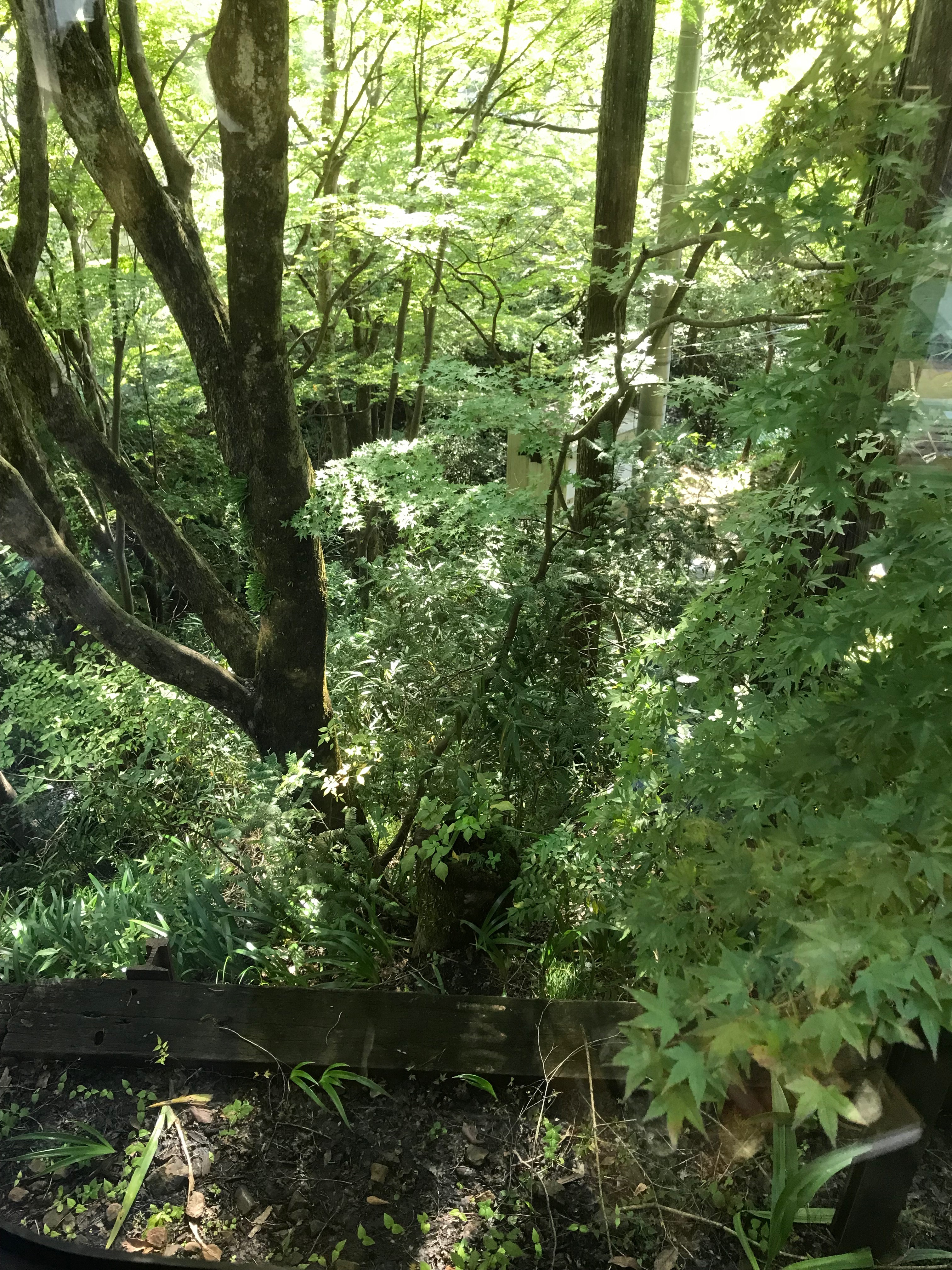
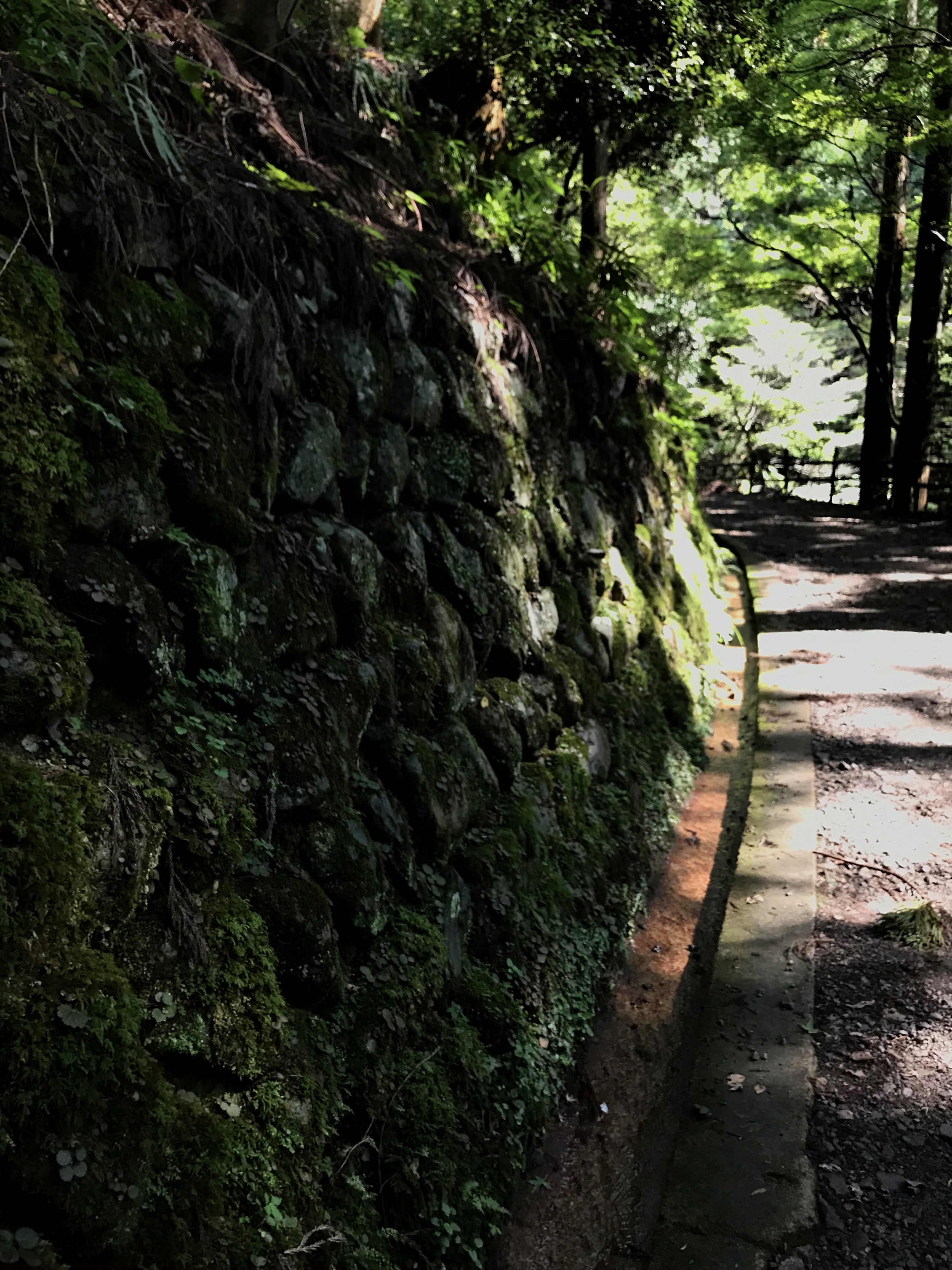
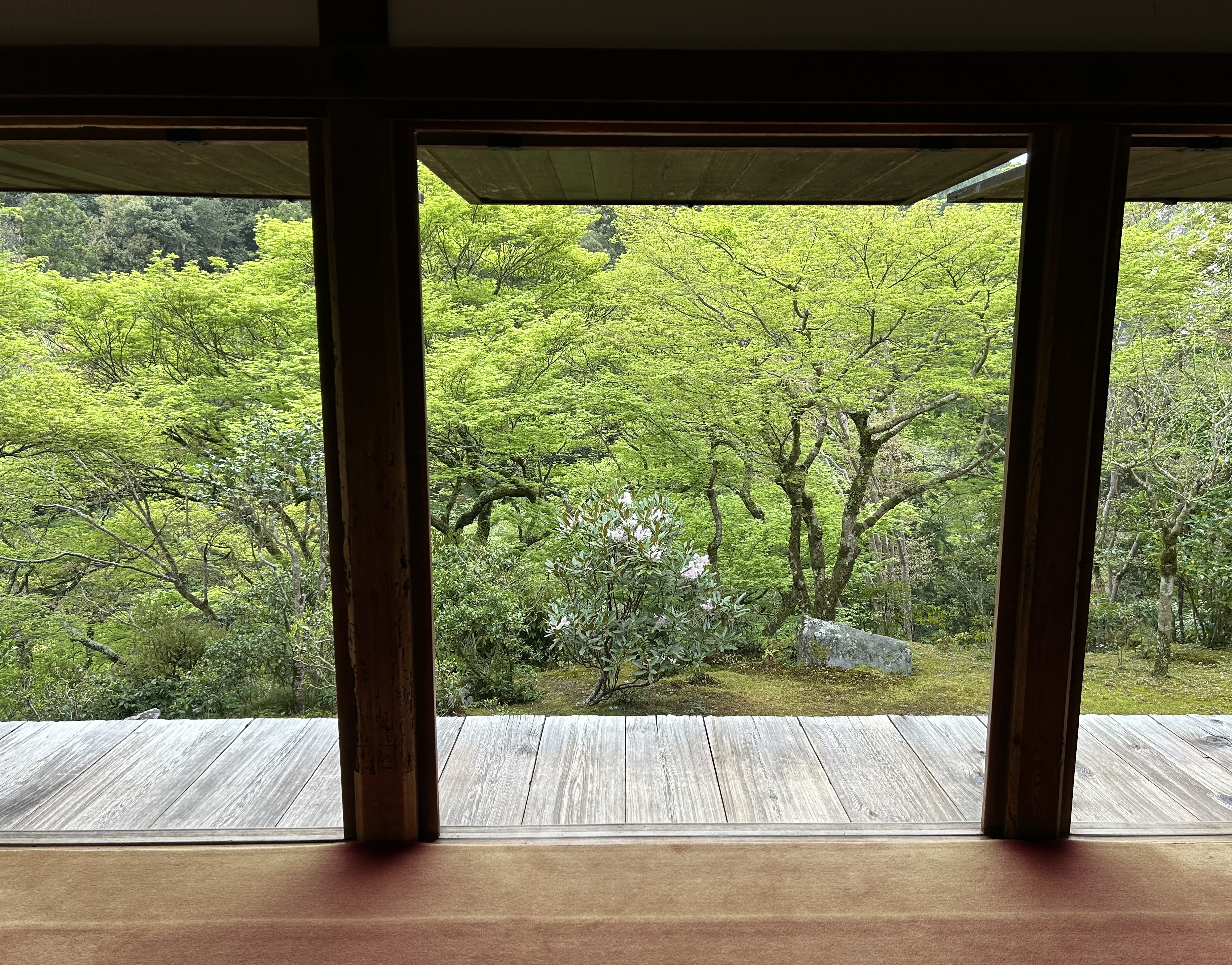
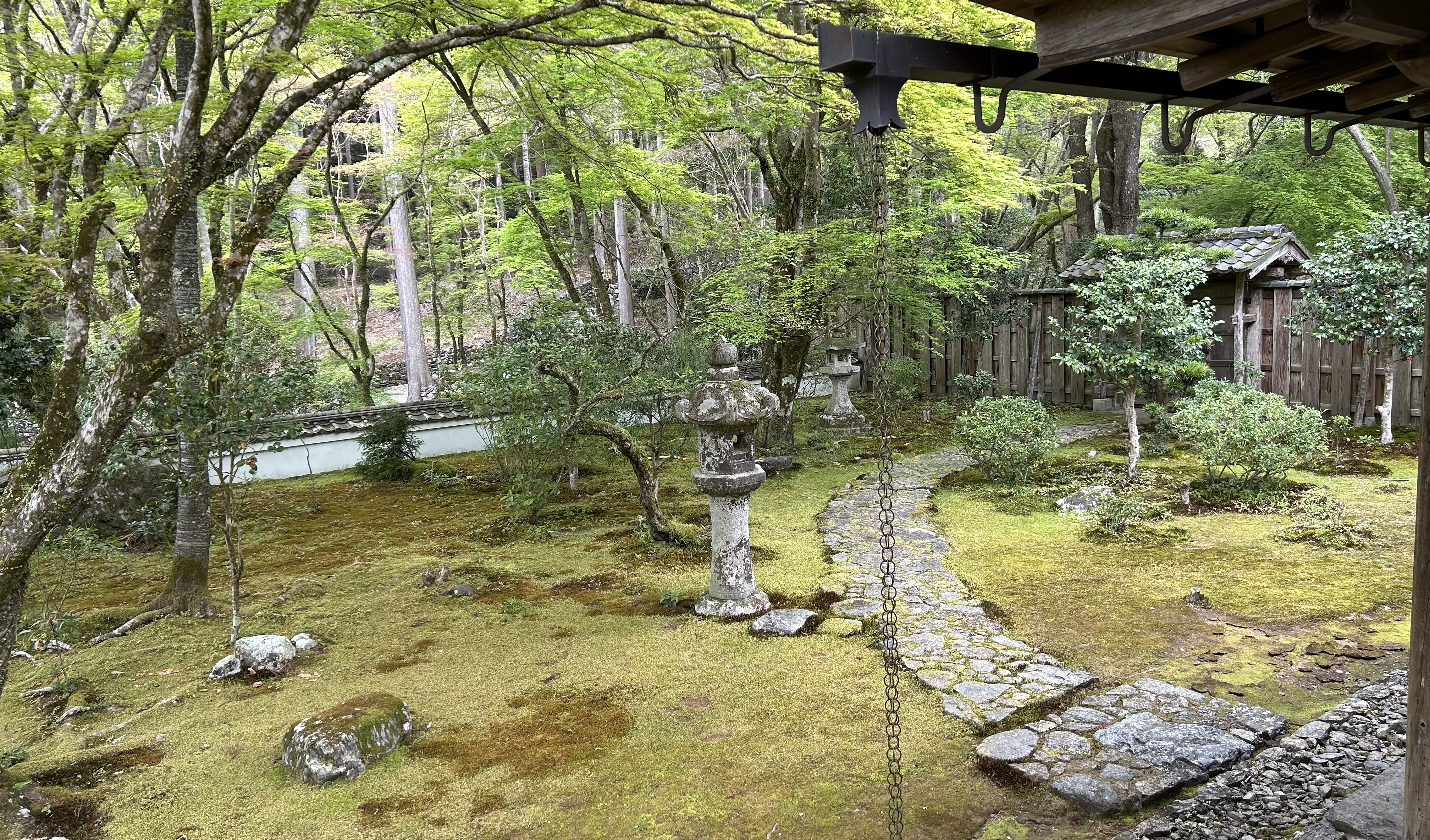
We had eaten in, shopped, wandered, and explored Kyoto for a week and were unsure how to spend our last day in the city before heading to Kanazawa. Kozan-ji temple was an hour on a city bus to the outskirts, it appeared, of the city. Now, taking an hour long bus ride sounds boring and maybe even miserable, but in Kyoto it was quite nice. Through the middle of the city, past downtown, climbing through green neighborhoods, and suddenly we were in mountains. We got off the bus and felt like we were back in California–big trees, a rushing river. A very short walk back a-ways and up a stone path took us into the Koran-ji temple grounds.

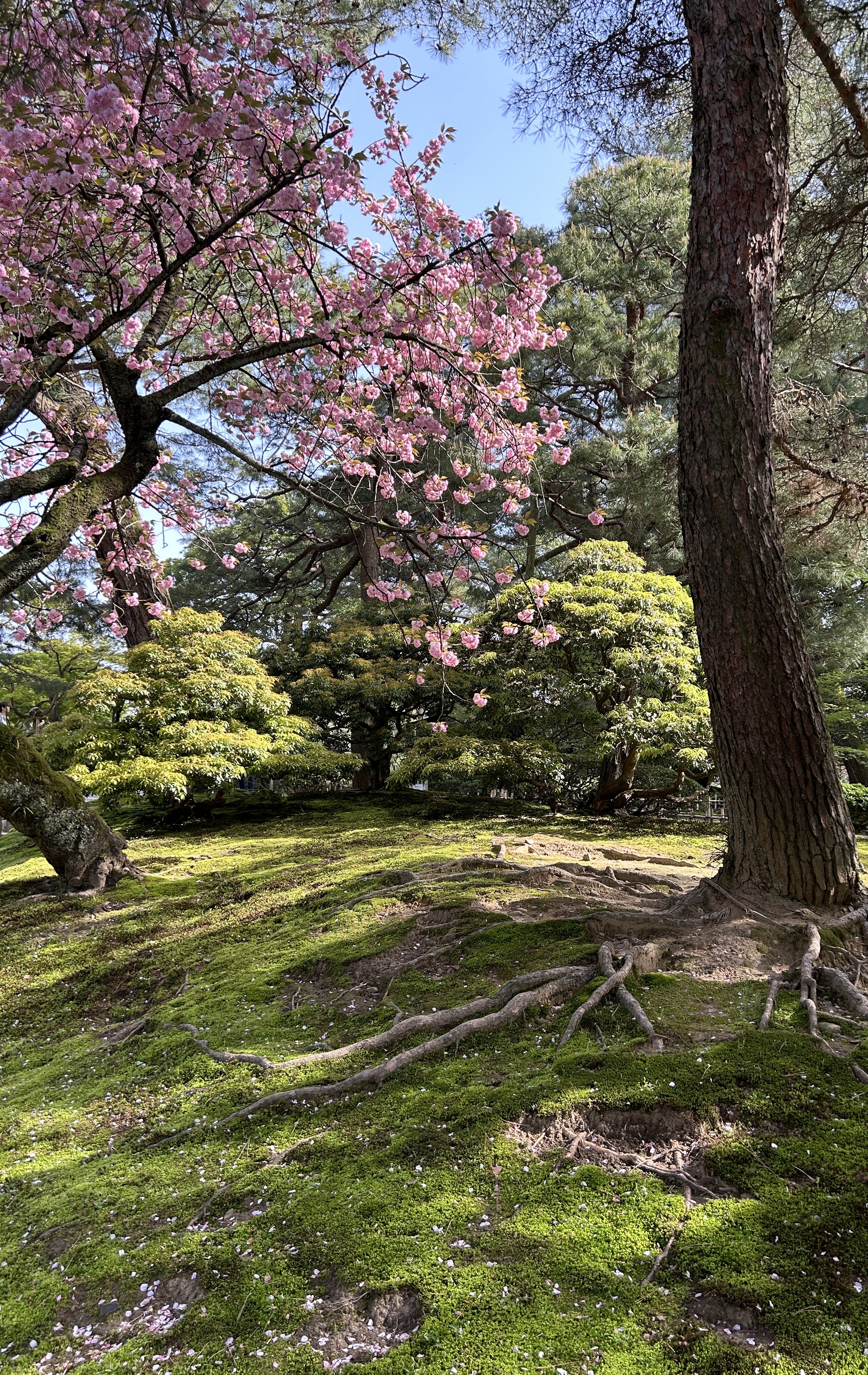
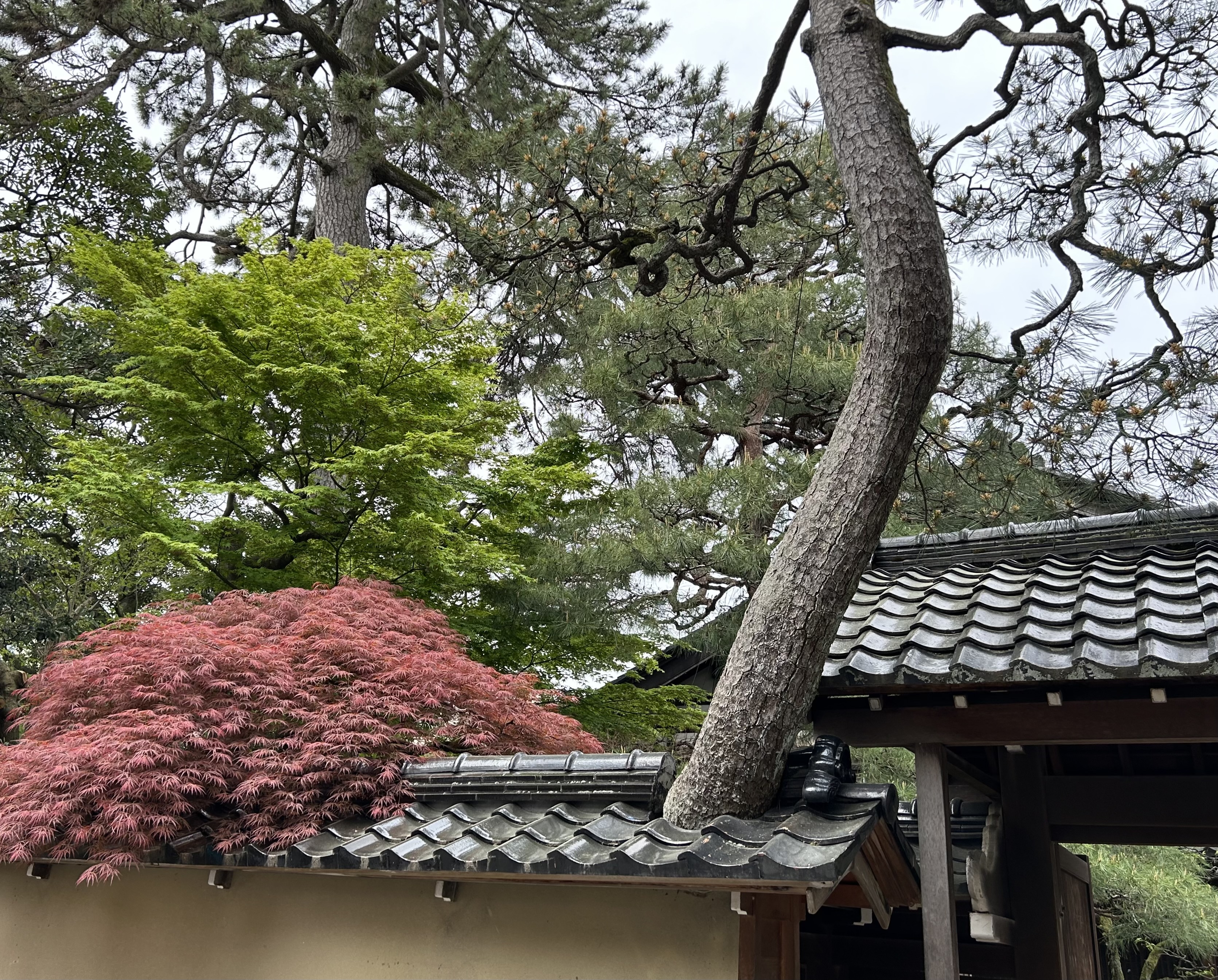
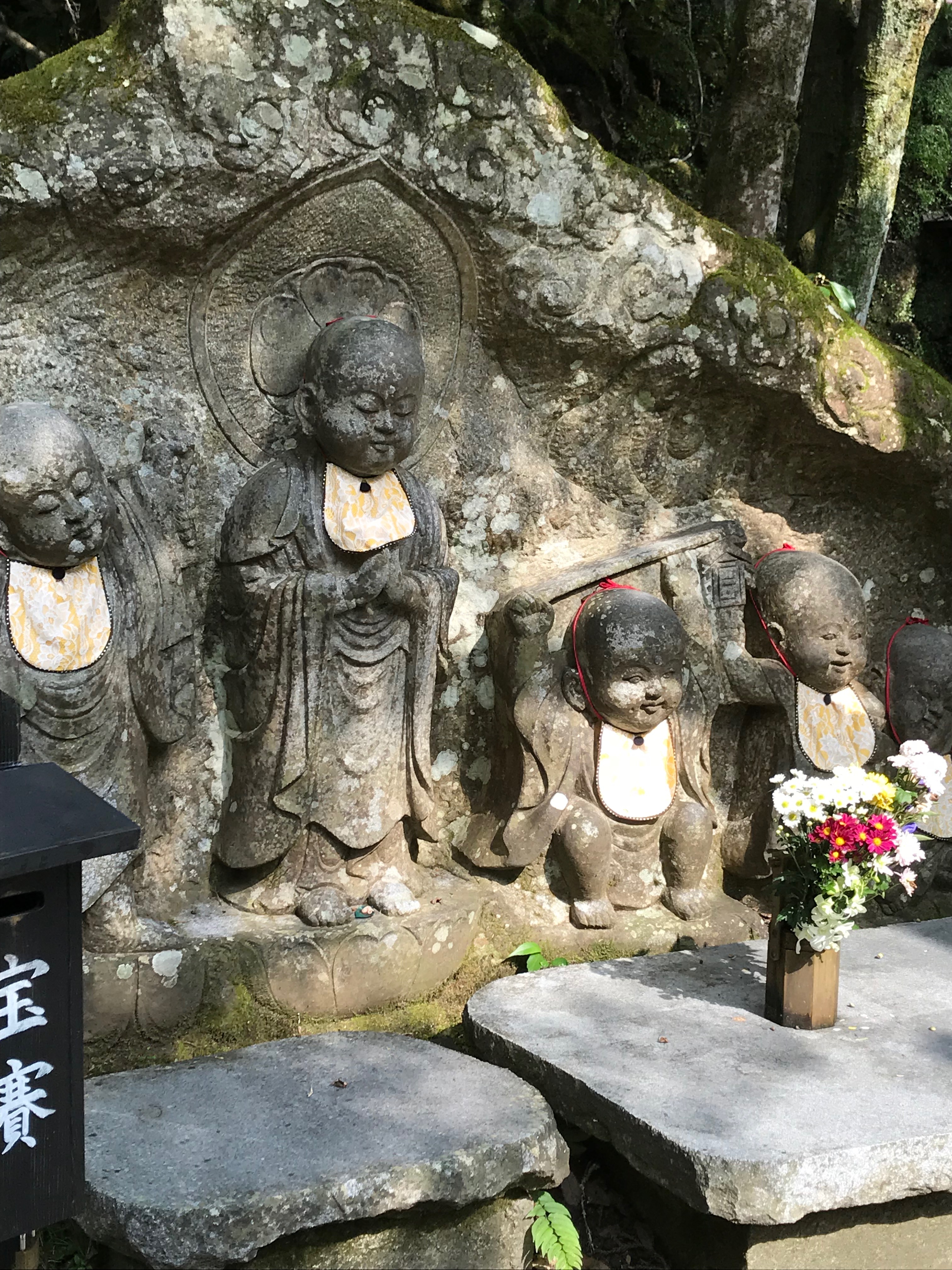
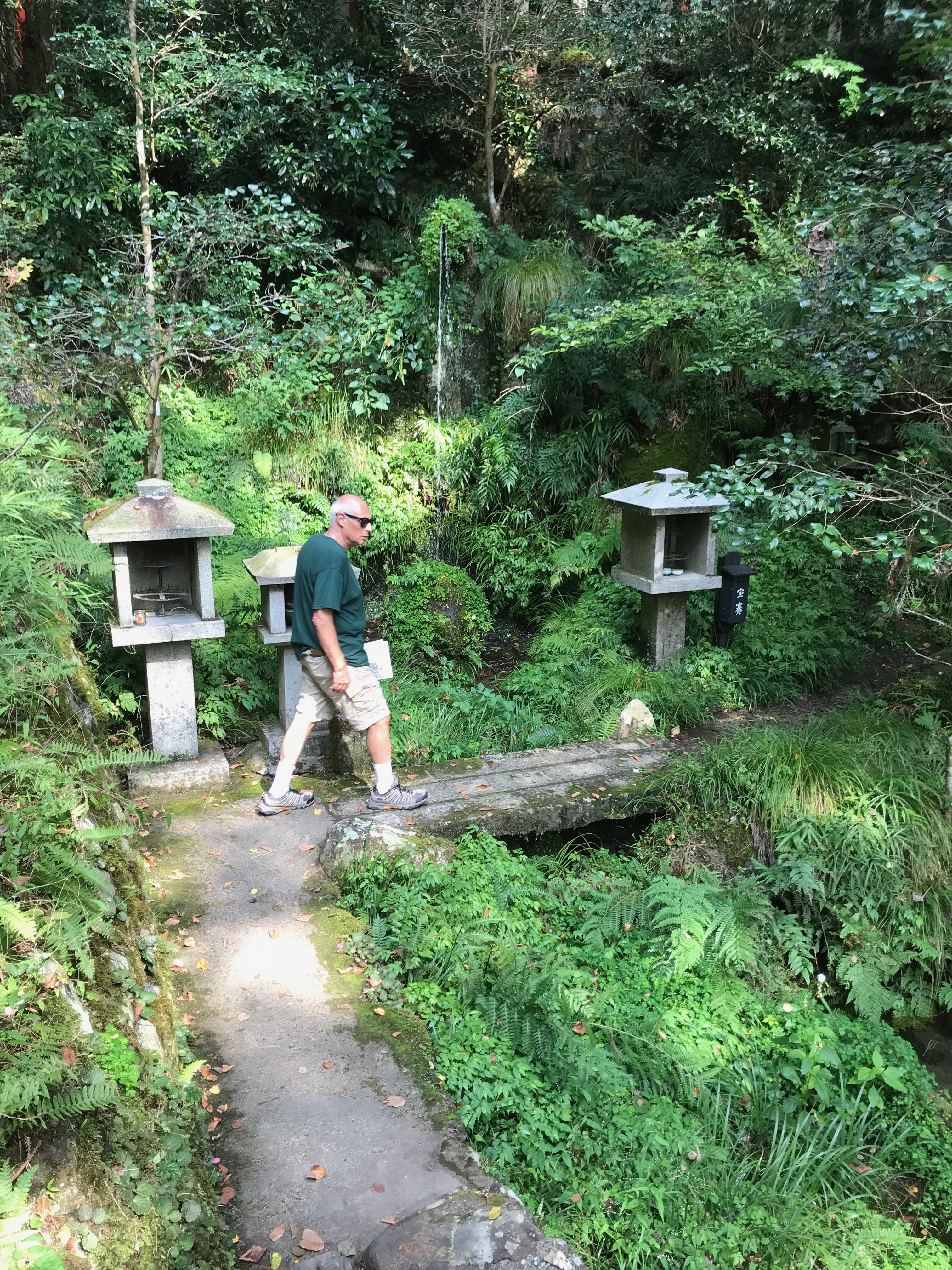
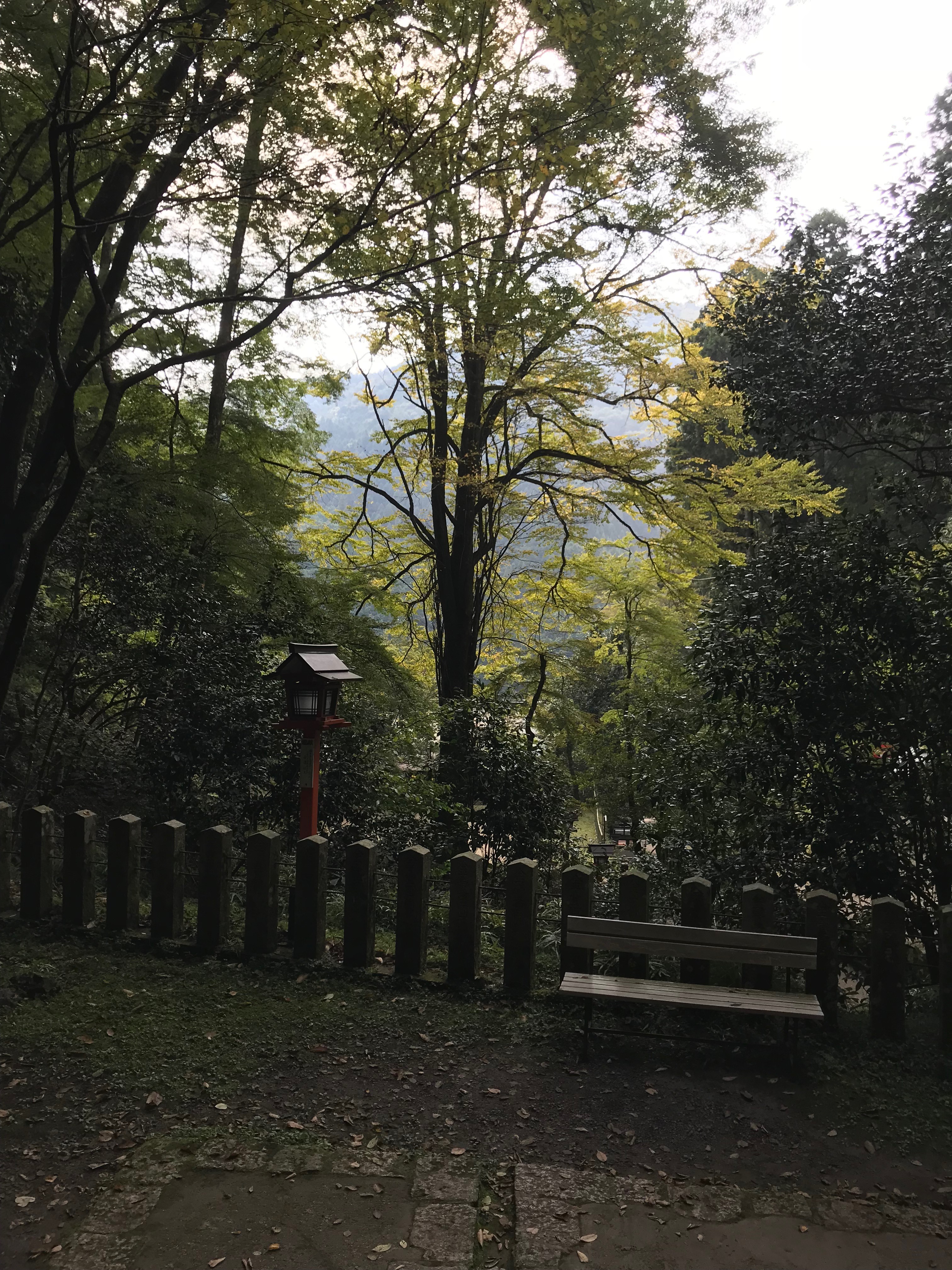
It’s difficult to describe how quiet and picturesque it is. A few lingering cherry blossoms added bits of white to the views. The stonework, dead quiet gardens, and very small temples were the opposite of Horyu-ji–no school groups, no massive buildings, no wide plazas. We spent an hour or so taking it all in, walked down the stone path and across the road, and within ten minutes were back on a bus to Kyoto proper.
Kyoto Bakeries

I love a great croissant, especially in Portugal. Or Kyoto. I love good, strong, fresh coffee. Together? The perfect vacation breakfast.

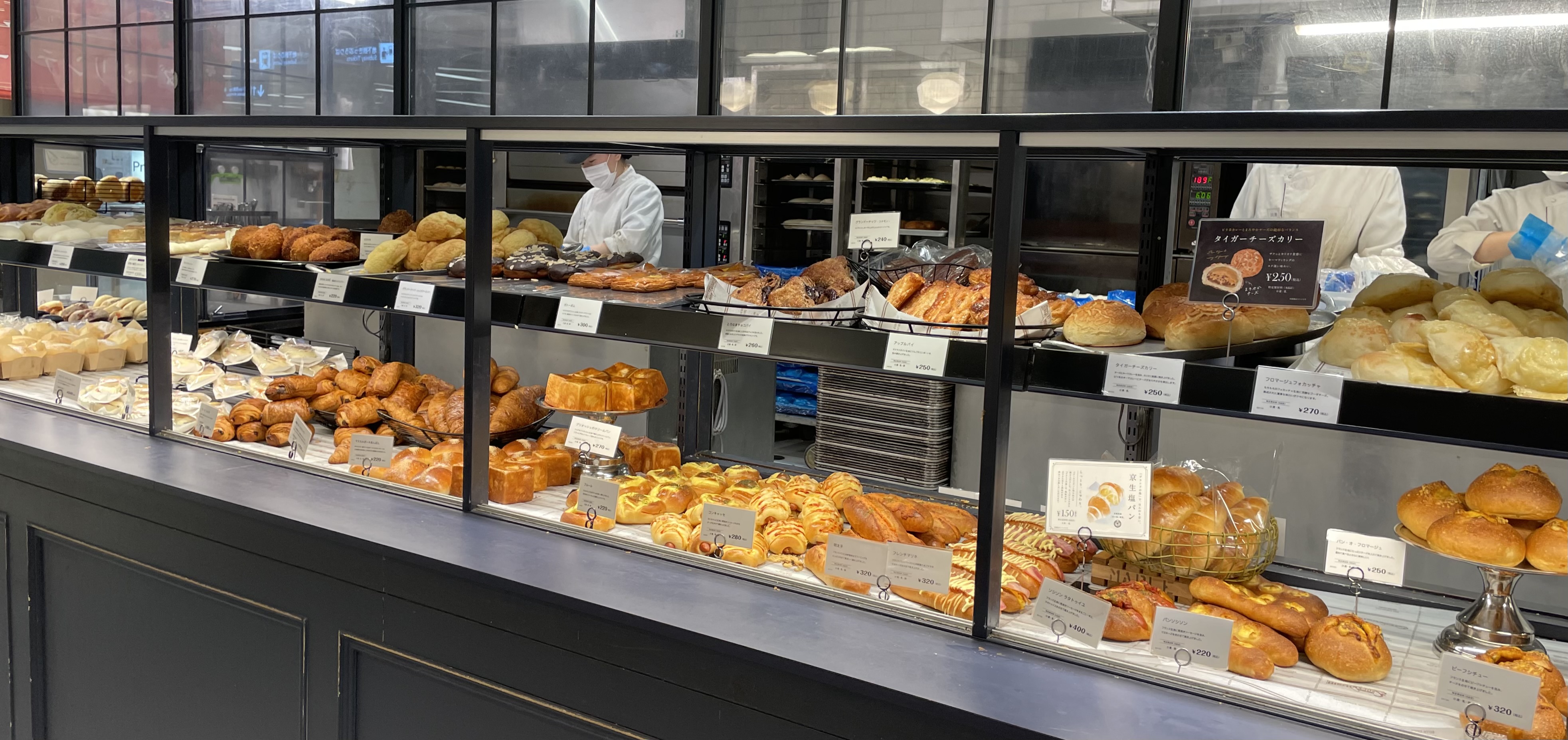
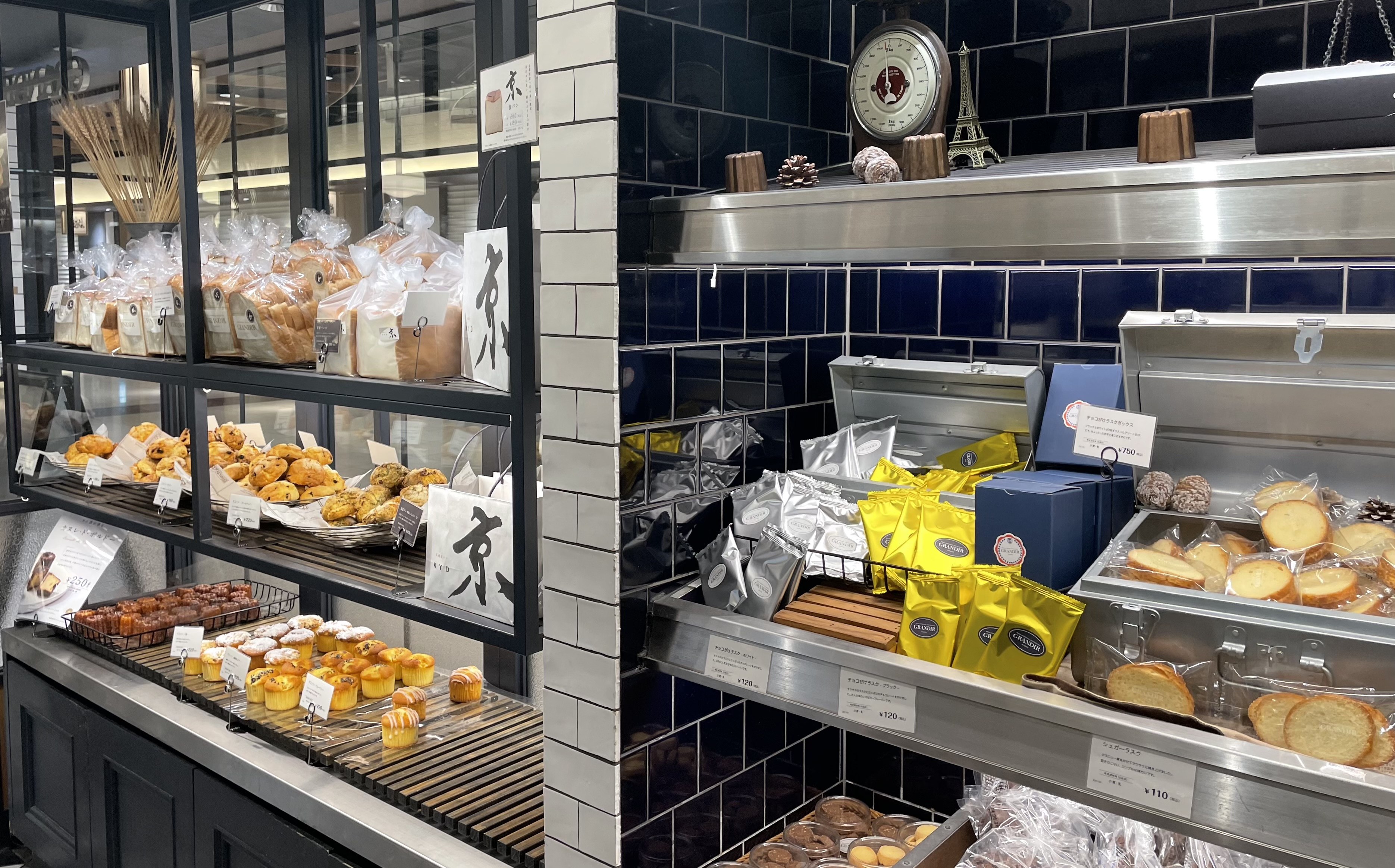
We had visited Ogawa Coffee, in the Kyoto Station underground, many times but when we went looking for it our first morning in town we couldn’t find it. Happily we did find an even better option and went every morning of the week we were in town–Grandir Kyoto Porta Store, marked with a big sign reading “Boulangerie Patisserie.” (A second option, which was en route to the Kyoto Handicraft Center, we also loved–Le Bac a Sable. Amazing cafe au lait and, again, French pastry to die for.)

Great things about Grandir: the cool cash collection system (drop coins onto a conveyer belt thingy and watch them sort and tally), the array of pastry options (thank you again Google translate for the ability to read what the more mysterious items were) and the delicious coffee (free refills) that you get from the machine next to the cashier. Beans are ground to order, coffee is among the best I’ve ever had, and the extremely rich cream…well, it’s all yummy. Take, you know, that one Porta (underground shops) staircase down, it’s right there. Free wifi, too.

Philosphers Path

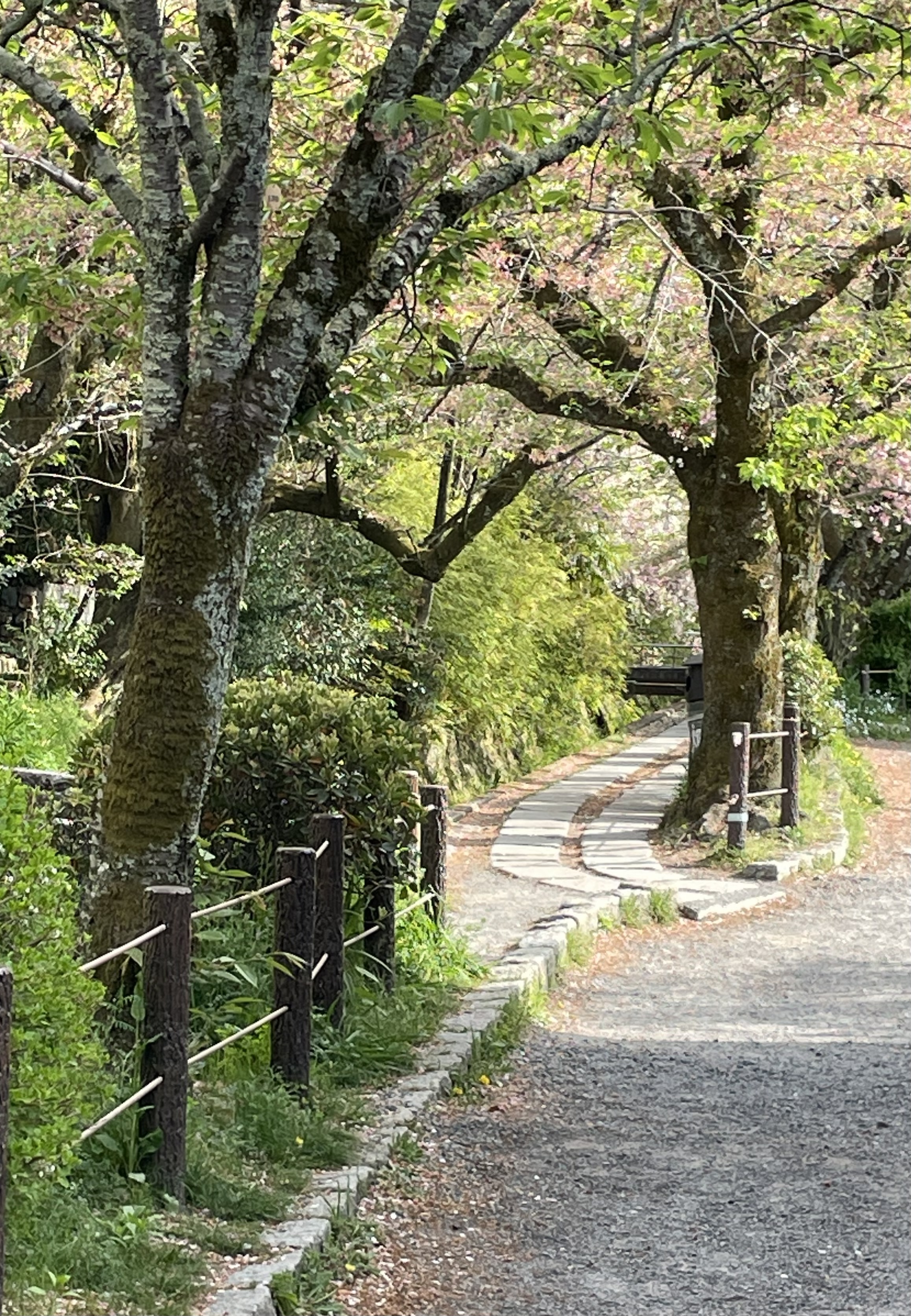
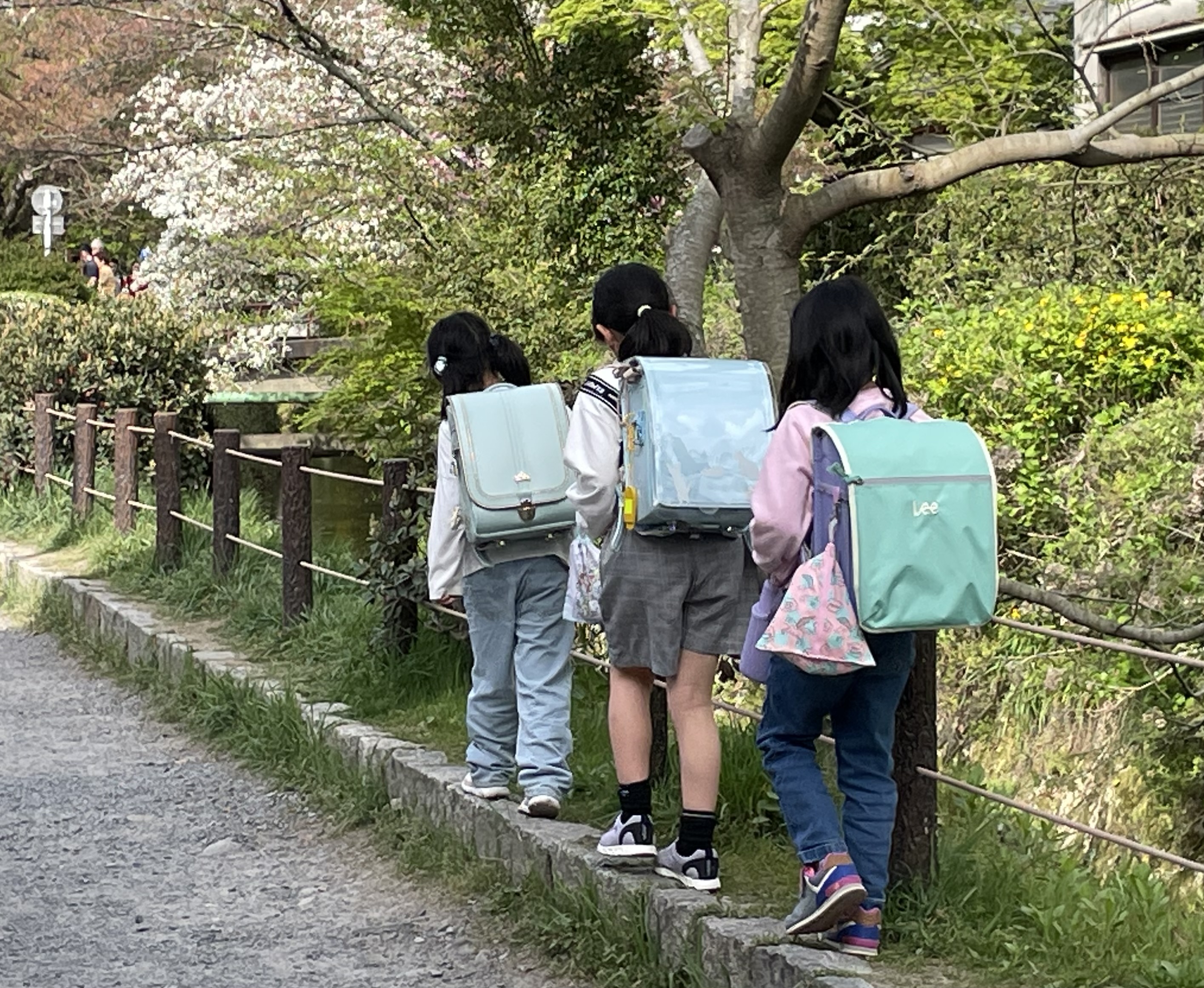
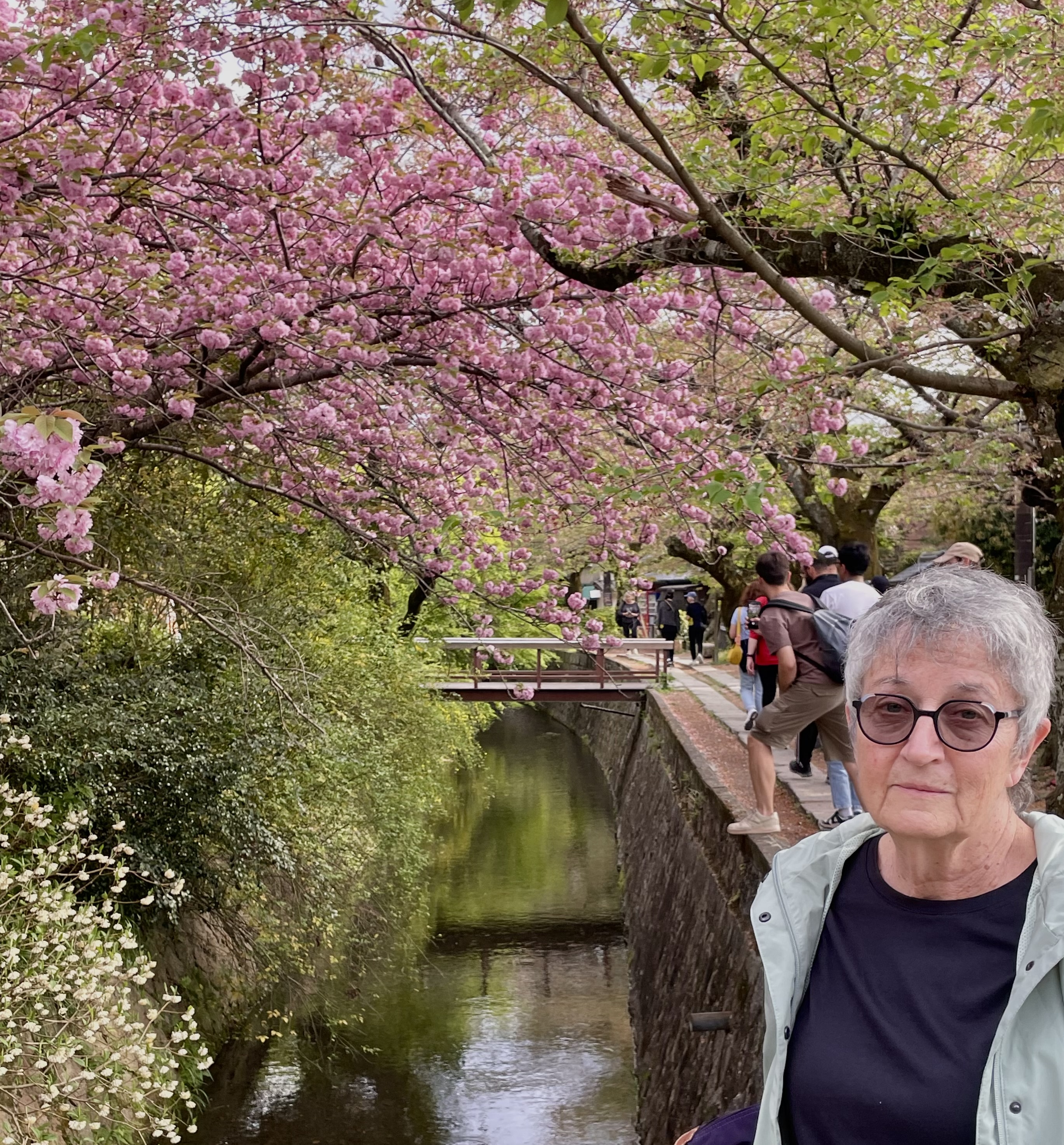
This well-known walk in Kyoto, even when lots of tourists are in the area, is well worth the short bus ride to its beginning. During cherry blossom/sakura season it’s so much more and even though we had walked it on a prior visit we had to return. There’s not much more to say. Don’t miss it if you are in town.
My Artist Sister’s Request

When asked what she wanted as a gift from Japan my ridiculously talented artist sister had one desire–handmade paper. Okay! I asked cousin Harumi for her recommendation Kyoto and she said she did have a favorite place but wasn’t able to find it on a previous visit. Google maps to the rescue–there it was, Kajimi Kakimoto, not a long walk from downtown.

I had no clue what I was looking for and had neglected to ask my sister what her intentions were for the paper. Fortunately the young man working there was so helpful; unfortunately the inventory is enormous. But after his guidance I was able to select several kinds, and two big colored sheets that had to go into a tube, and we left satisfied. That tube was a source of anxiety the rest of the trip because it was “too long” for carry-on and Zipair is extremely fussy about dimensions and weights of checked and carry-on luggage. Happily, when we checked in for our return, after several conferences and a second visit, by the young man at check in, to the place where travelers can measure bags, and a quick consultation with a supervisor, it was judged ‘okay.’

A fun discovery after our purchase was that according to the map even though we were quite a way north of the train station it was a straight shot down the same narrow street all the way to our hotel. As we got within a few blocks of the Dormy Inn David and I looked at each other. Wait a minute–isn’t that the Family Mart (konbini) we went to when we were looking for that terrific izakaya (bar with food) on our last visit? When we couldn’t find the bar anywhere and finally snuck down a dark hallway off a parking space, tentatively slid open the shoji screen, and discovered a hopping bar scene? Yes, it was! Yup, we had to go back!

Bar Food

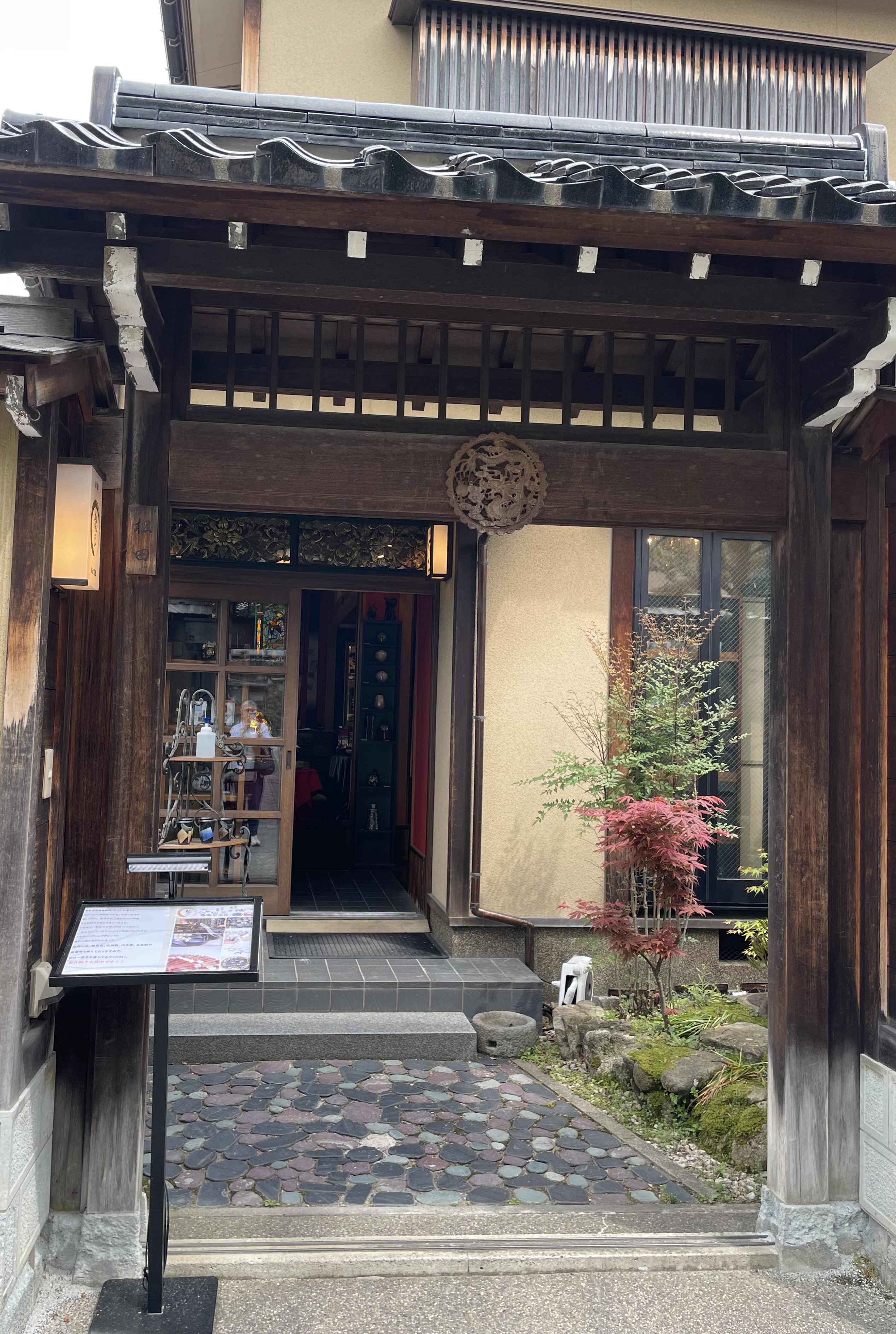
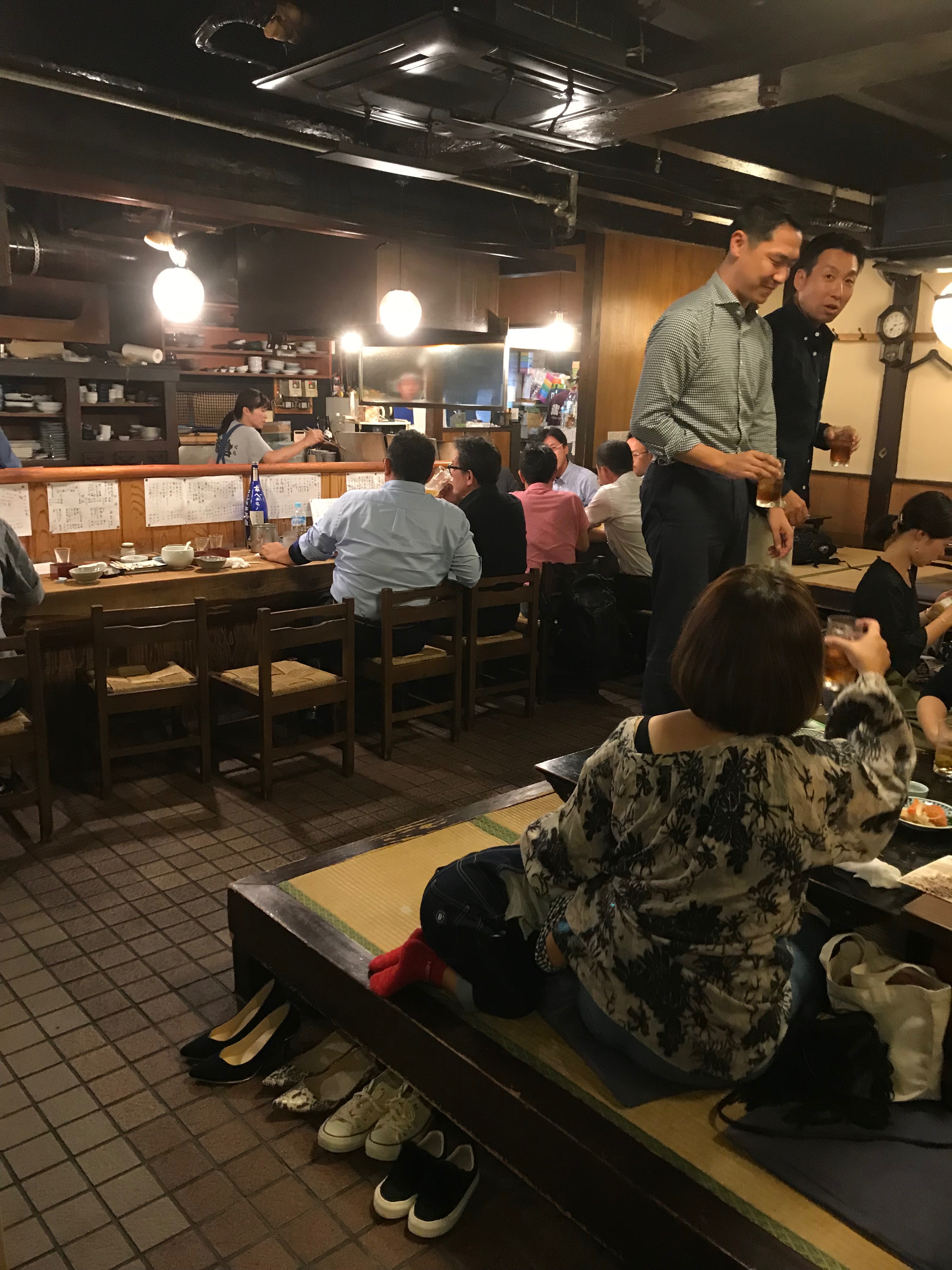
Kurakura, a place I had found randomly on Trip Advisor last time we were in Kyoto, was and is a fantastic izakaya a 5 minute walk from our hotel. We couldn’t have been happier we found it again–I had no record of the name and only a vague memory of how we found it.

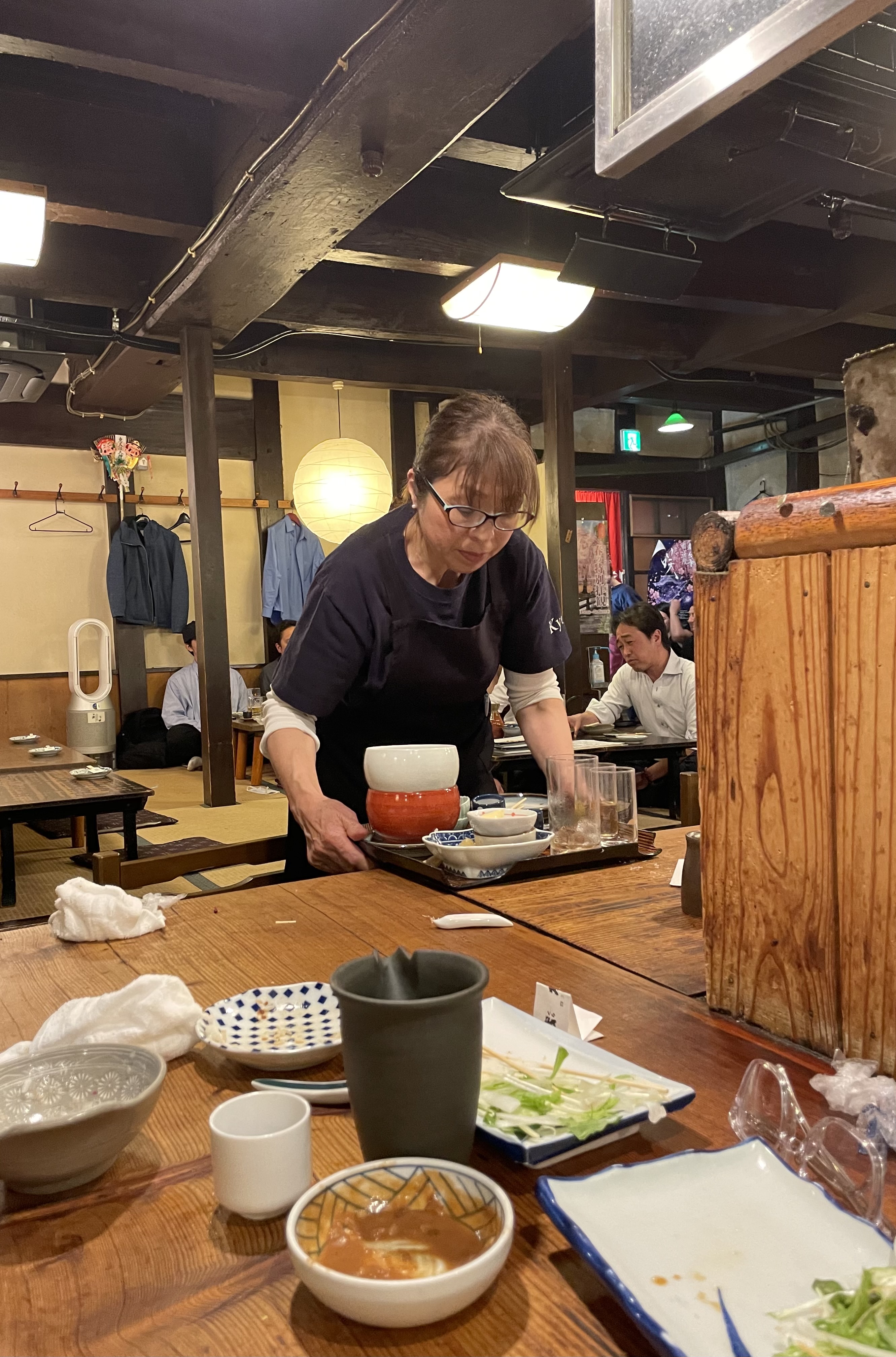
In we went, to be asked if we had a reservation. Reservation? Uh, no. Five minutes later we were seated at the bar–where we wanted to be. The place was hopping for a midweek night. We ordered a large sake and ran down the familiar menu and ordered five or six dishes. Sake was a local Kyoto brand, cold and dry. Food was mostly fried and delicious. We made short work of all of it and left happy and full.

36 Hours’ Worth of Kanazawa

A Less Than Encouraging Start

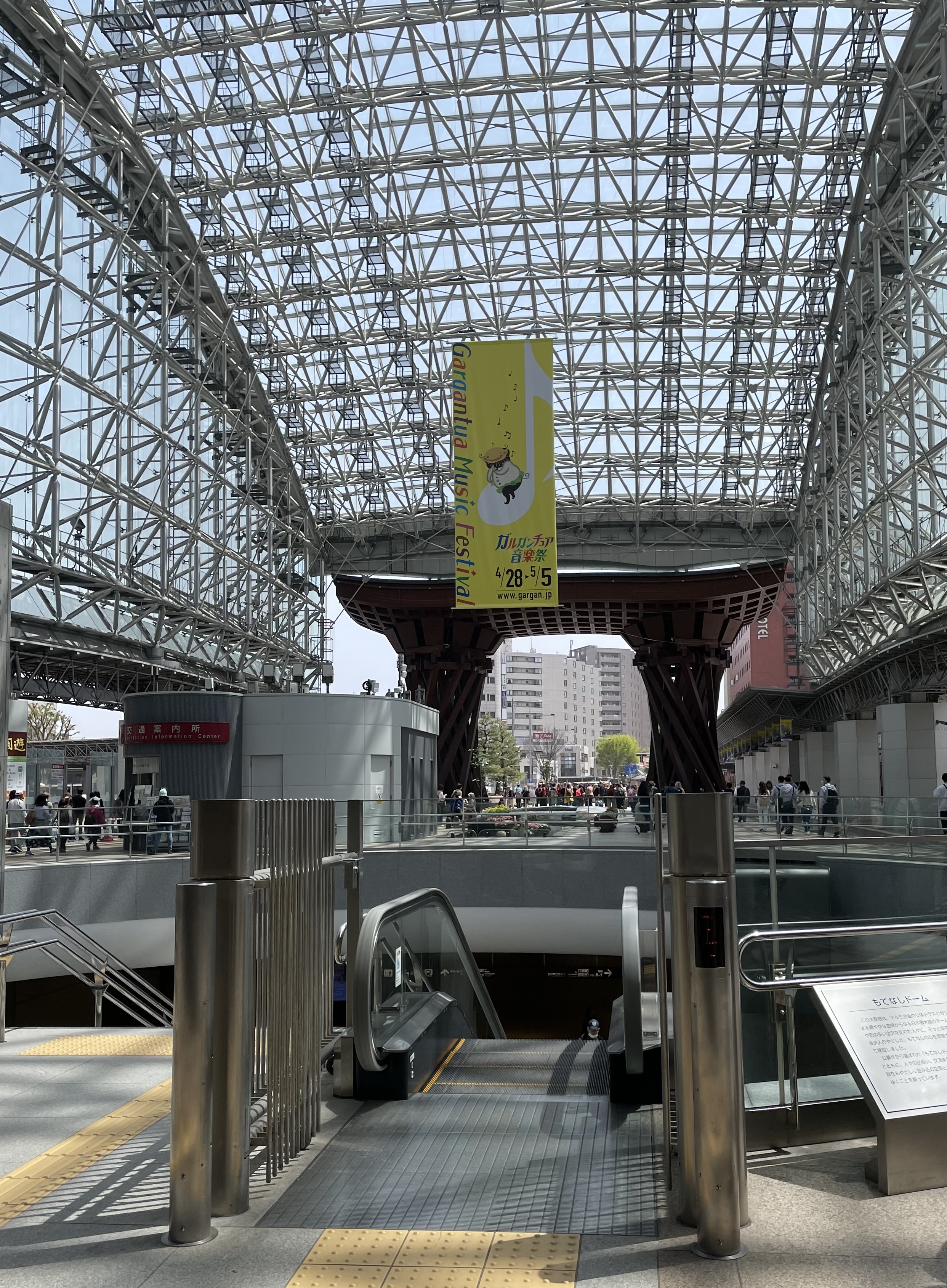
We checked into the Dormy Inn—our fourth—a short block from beautiful Kanazawa Station. The enormous entry, with huge sculptures representing traditional drums, is spectacular, the gardens and sitting areas peaceful. This Dormy Inn was probably the nicest with our larger room and an outdoor pool in the 14th floor onsen. Kanazawa, our last stop before returning to Tokyo, was a bit off the tourist track and we weren’t sure what we would do there. I did know if my ceramics shopping was still enticing me after Tamba and Kyoto i could finish it there, but had no clear plan where to go other than the two stores I had found weeks ago. I wanted to get one checked off and picked the one furthest out. We got on a bus after lunch (more about lunch later) using our mostly-accurate google maps app.

Oh, the buses of Kanazawa. As one helpful man told us, Kanazawa has only begun to attract tourists in the last few years, and the mishmash of streets combined with the most confusing bus system we have ever encountered made “hopping a bus” nothing like our week of tourist-friendly Kyoto. The signage on the stops is messy and seemingly contradictory (a loop bus that starts and ends at Kanazawa Station had, on one loop bus stop sign, a small notice in the middle of the text that “this bus does not go to Kanazawa Station”, just an example among many). Some blocks have, within 15 yards, two or three bus stops, each for a different set of buses. The buses have a lighted grid sign at the front next to the driver, each numbered block with a different price which we never did figure out. Unlike Kyoto, only the next upcoming stop is shown in English, forcing us to pay attention to each and every stop. And, the helpful man told us apologetically, “In the morning and evening the buses are reliable, but during the day…” He shrugged. Lastly, Google maps repeatedly lost us, or told us, when we were at a numbered stop, that we were not at that stop and had to walk 3 minutes to another street (helpful man said he had no idea but to stay put because if we caught that same numbered bus in a different spot it would not take us where we wanted to go.). It was frustrating and made us feel unwelcome. Oh and they do NOT accept Suica cards, the cards we have used in every city for transportation, konbinis, pretty much anything.

Bus footnote to the day—when returning to the hotel late in the afternoon we were delighted to see a JR bus coming. We have a JR Arch (a regional) pass, which we used our last days in Kyoto on several JR buses and of course was our method to get the Shinkansen to Kanazawa and back to Tokyo. Several times on that JR Kanazawa bus the PA announced if you had a JR pass to show it on exiting. So when we got to our stop we confidently walked up and flashed our pass. Gruff driver says “no good” no matter what we pointed to on the pass. “No, no,” he insists. We knew now we had to dig out cash, so I asked “How much?” The driver shoved my arm in disgust and waved us off the bus. Yeah, love the Kanazawa bus system.

We did find the outlying ceramics shop. It was in an old, semi-rundown neighborhood. About half the items in the very small showroom were out of stock so would have to be mailed at a future date and the prices were out of our range. We trudged to the stop/bus station where we found the helpful man, and after he and the agent had at least four conversations over the next twenty minutes about what we should do and how to get there, “there” being one of the largest and most revered tourist sites, suddenly a bus appeared and helpful man ran over to tell us “This one!” and we gratefully climbed aboard. Google maps on David’s phone told us to get off at one stop; on my phone it said a different stop. But it turned out fine, and we entered THE MOST BEAUTIFUL GARDEN in Japan.

Kenroku-en Garden

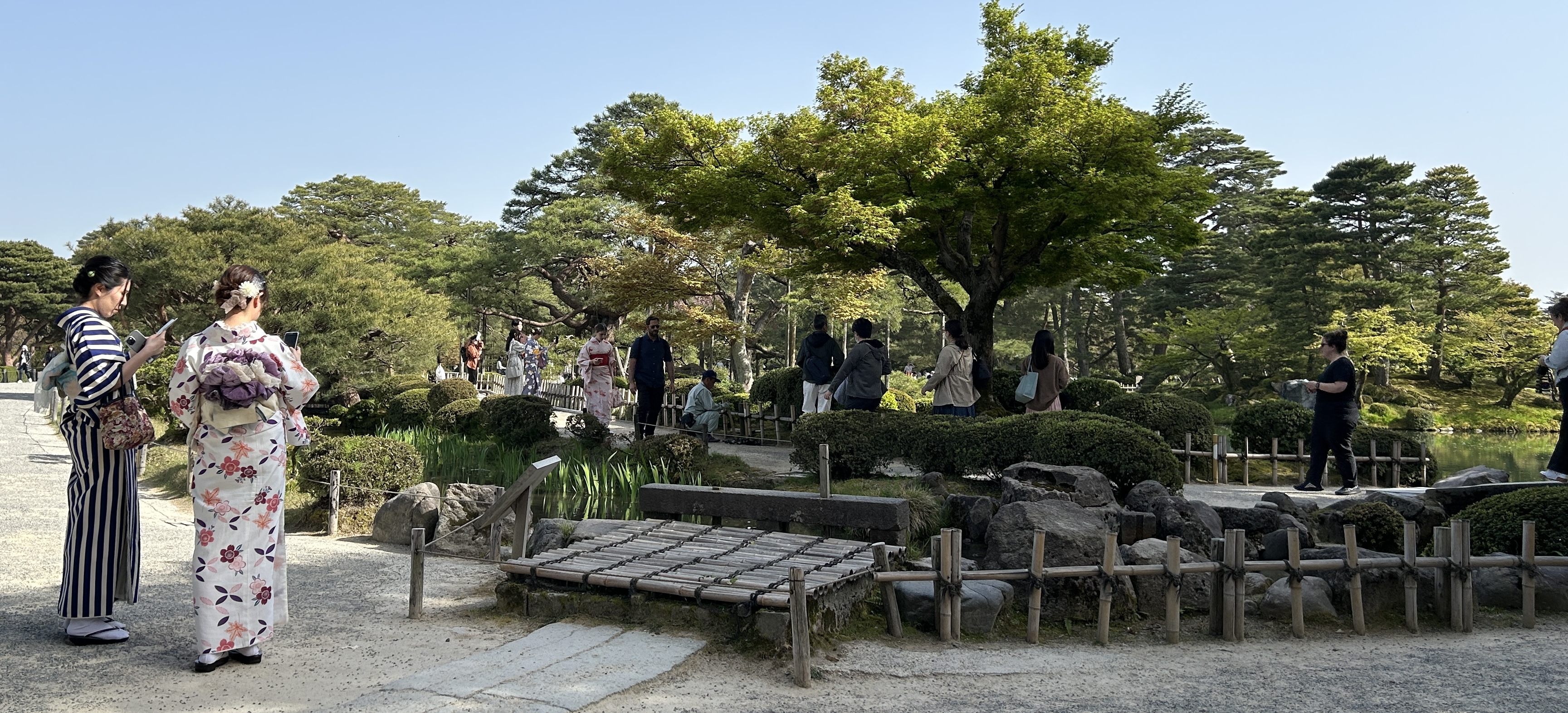
Wow. Wow. This garden was initially laid out in the 1620’s, but its current configuration was finished in 1822. It sits on a high point, almost a bluff, next to the castle ruins and it is spectacular. The sun was out, it was cool and a little breezy, and we began to like this city after all. We have been to many many gardens in many countries, and this wins hands down. While it has the feel of a typical small-scale Japanese garden, it is enormous, filled with enormous, meticulously pruned trees. Many are supported by one, ten, twenty crossed timbers, having been encouraged into bonsai-shapes of almost horizontal branches. We watched several gardeners removing, literally, needle by needle. We wandered and strolled, took pictures and enjoyed the other tourists, rested on benches, took a tour of a “villa” built in the 1800’s filled with cases of miniature household (a wealthy one) items that represented what a girl of the family would be bringing as a dowry. After a few hours we collapsed and after typical confusion about where the bus stop was we got on that ill-fated JR bus with the grumpy driver.
The Samurai House District

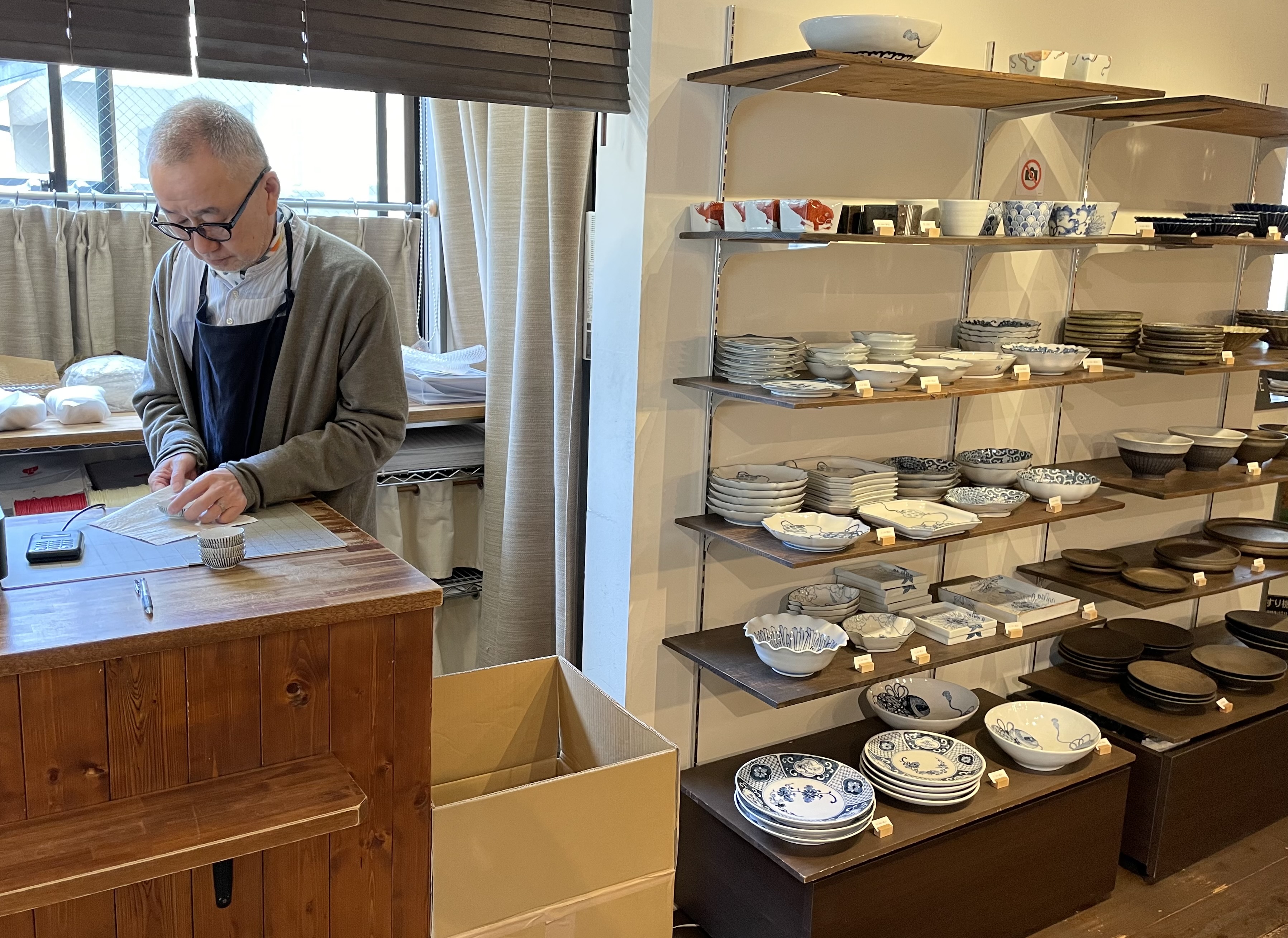
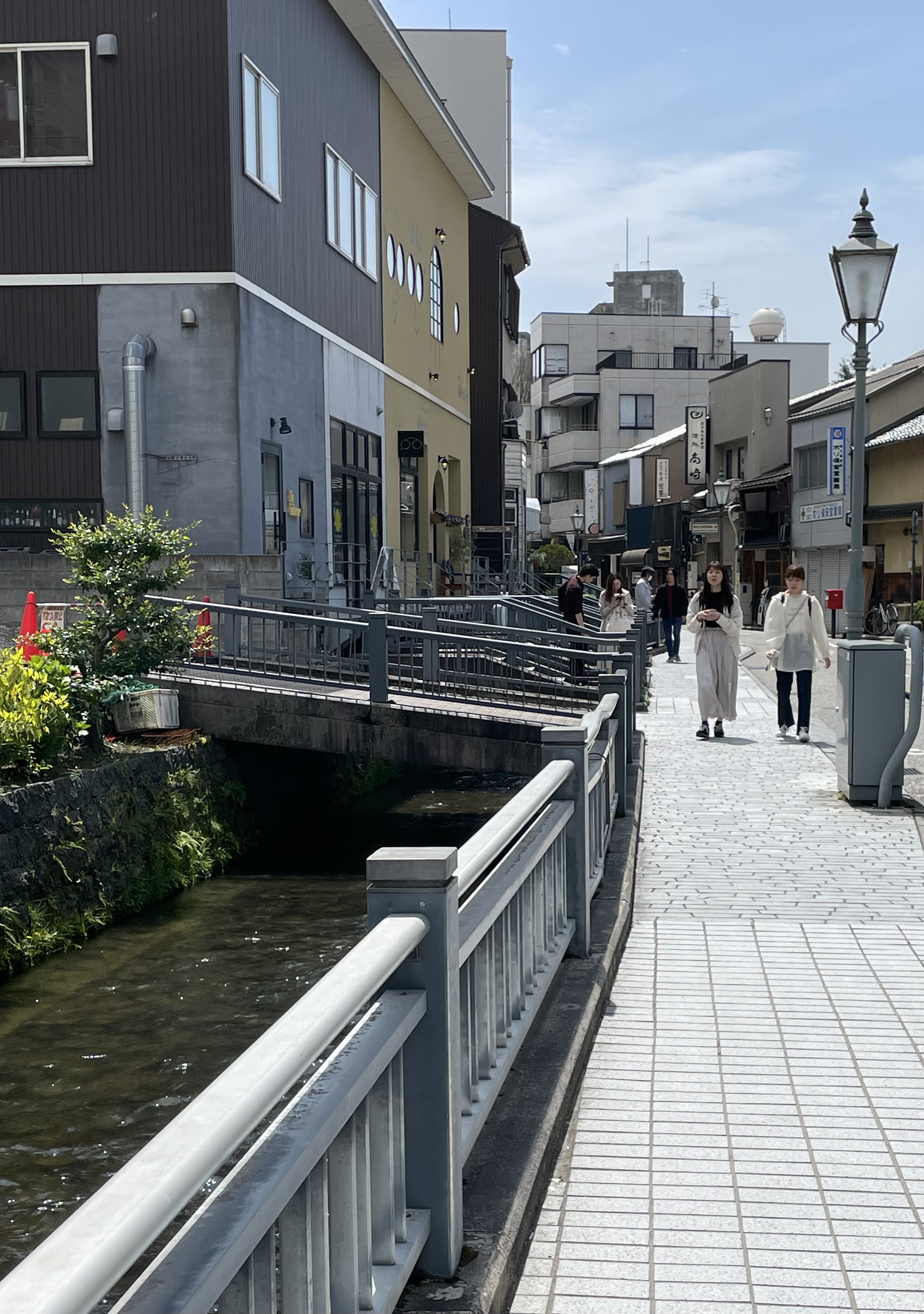
I stayed up late searching for ceramics stores and found four clustered in what is now known as the Samurai House District. After breakfast we took the bus down and started a-strolling. Peaceful, lovely, with historic houses, historic gardens, and amazing ceramics shopping. I thought I had been finished in Kyoto, but, alas, I needed one more fix and what a fantastic place to get it. After repeatedly vowing to buy only gifts, I caved at the last store and bought a few little things for myself. Everything is packed within an inch of its life, bubble wrap and boxes and paper and all. Thank goodness we pack light because Zipair is rigid about sizes and weights. I think we’ll be fine. I think.
Lunching at Ochimo Market Twice in Two Days

When we first arrived after a train ride of two hours we were hungry and Ochimo market was maybe a 20 minute walk up a main street. Kanazawa is known for seafood. Let’s go!

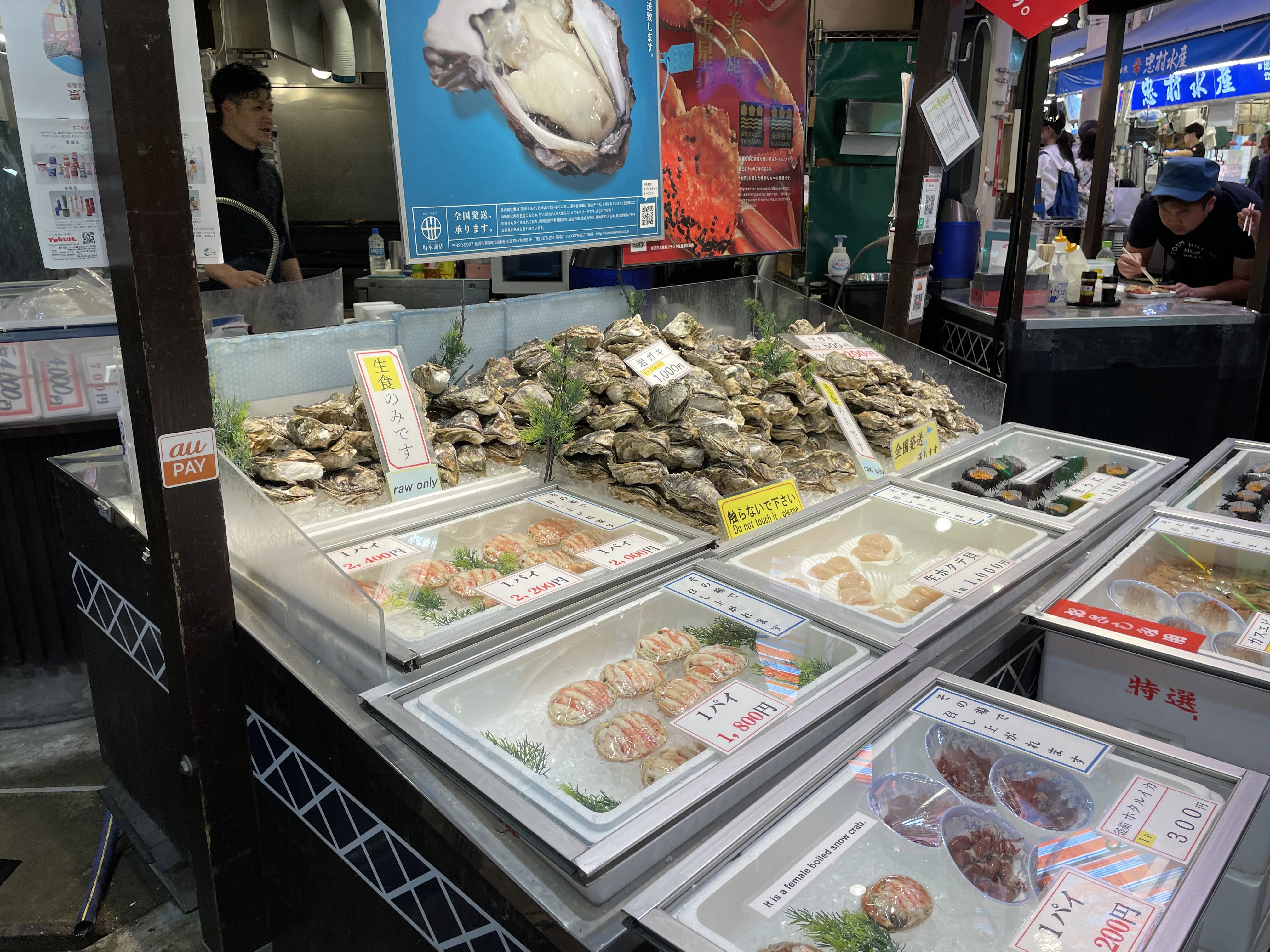
Unlike most similar markets, this one is designed for people to stand and eat at the fresh seafood stalls. Counters with condiments and small tables abound (no chairs). The seafood is peak fresh and delicious, the atmosphere happy and helpful. The first day we went into one of the myriad tiny sit down restaurants, all of which seem to serve the same things for the same prices. I had a mixed seafood over rice bowl, David had the minced tuna over rice bowl. David held his phone up to the specials blackboard and Google helpfully translated. Fried oysters? Yes please, oysters are a specialty of the city. Have I ever had better? Nope. I don’t believe it is possible for better to exist. Had fried oysters the second night at an izakaya around the corner from our hotel, and though a bit smaller they were just as good.

Of course we went back on Saturday. This time we wandered the stalls watching people eat. Raw Oysters. Raw fish. Sea urchin. After we ate our sushi and crab we stopped to watch a young couple from Australia eating wagyu beef cooked on a little ceramic stove on the counter in front of them. We asked how it worked, watching the preparation and thinking maybe we weren’t so full after all. You select a piece from the counter; they slice it, fire up your little burner, lay out the salt and garlic chips, and you eat. Yes, worth every penny and every melting bite eaten with flaky salt and garlic chips.

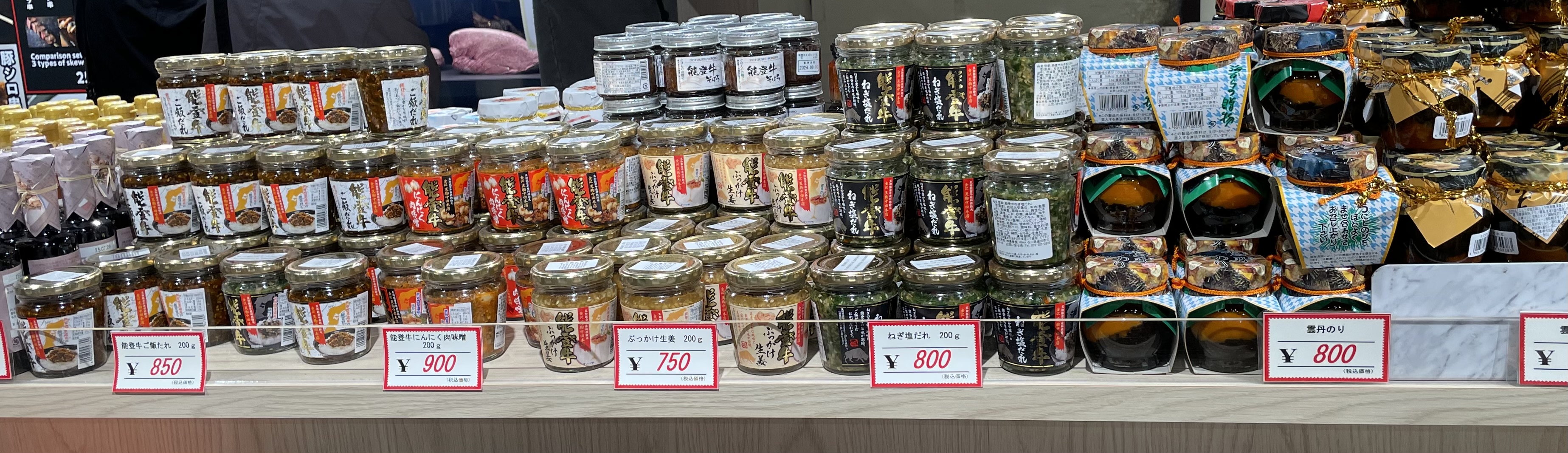
Every kind of jarred condiments…from a green onion sauce to some with uni (sea urchin), something I cannot imagine in a jar.

21st Century Museum of Art

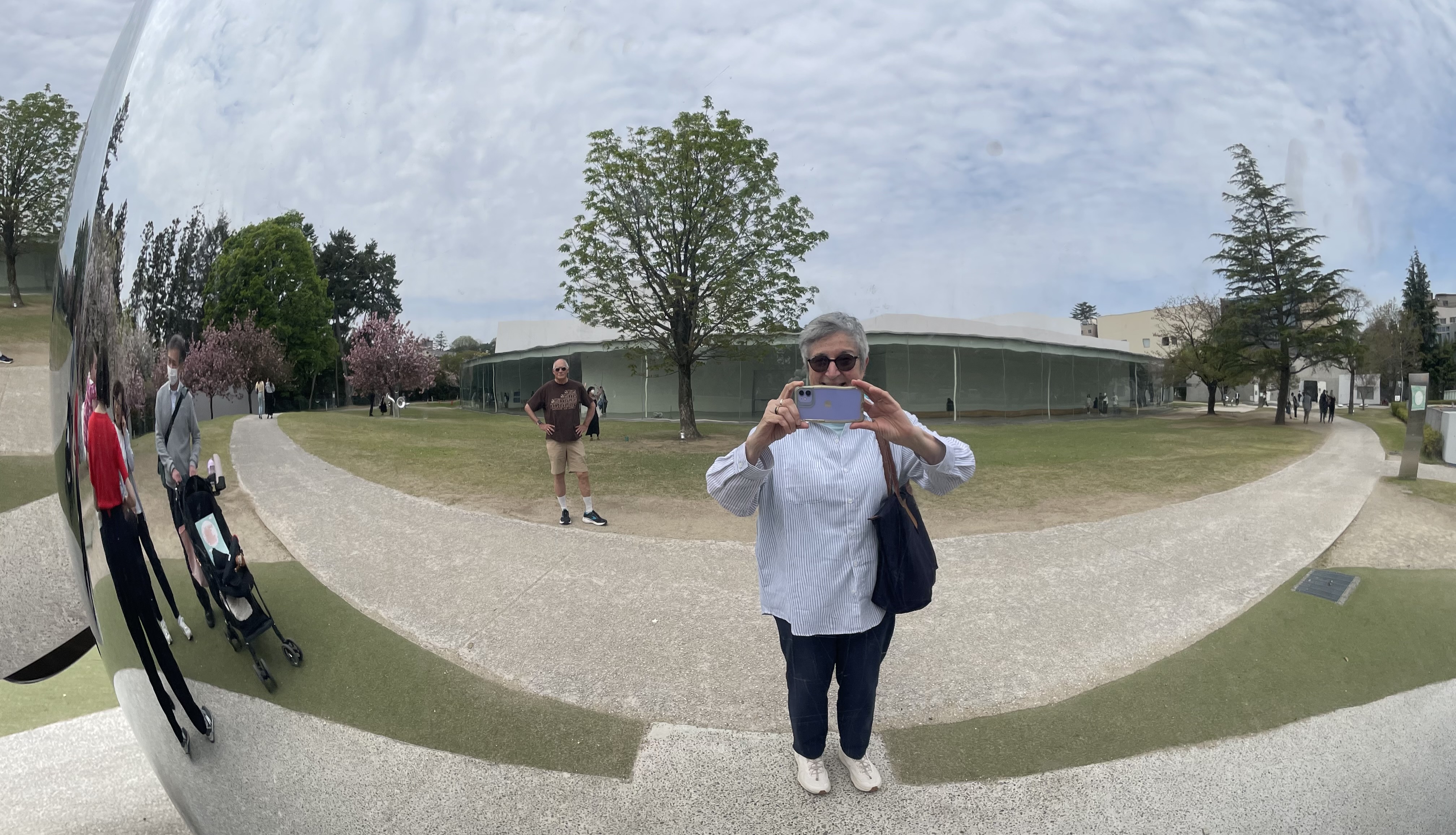
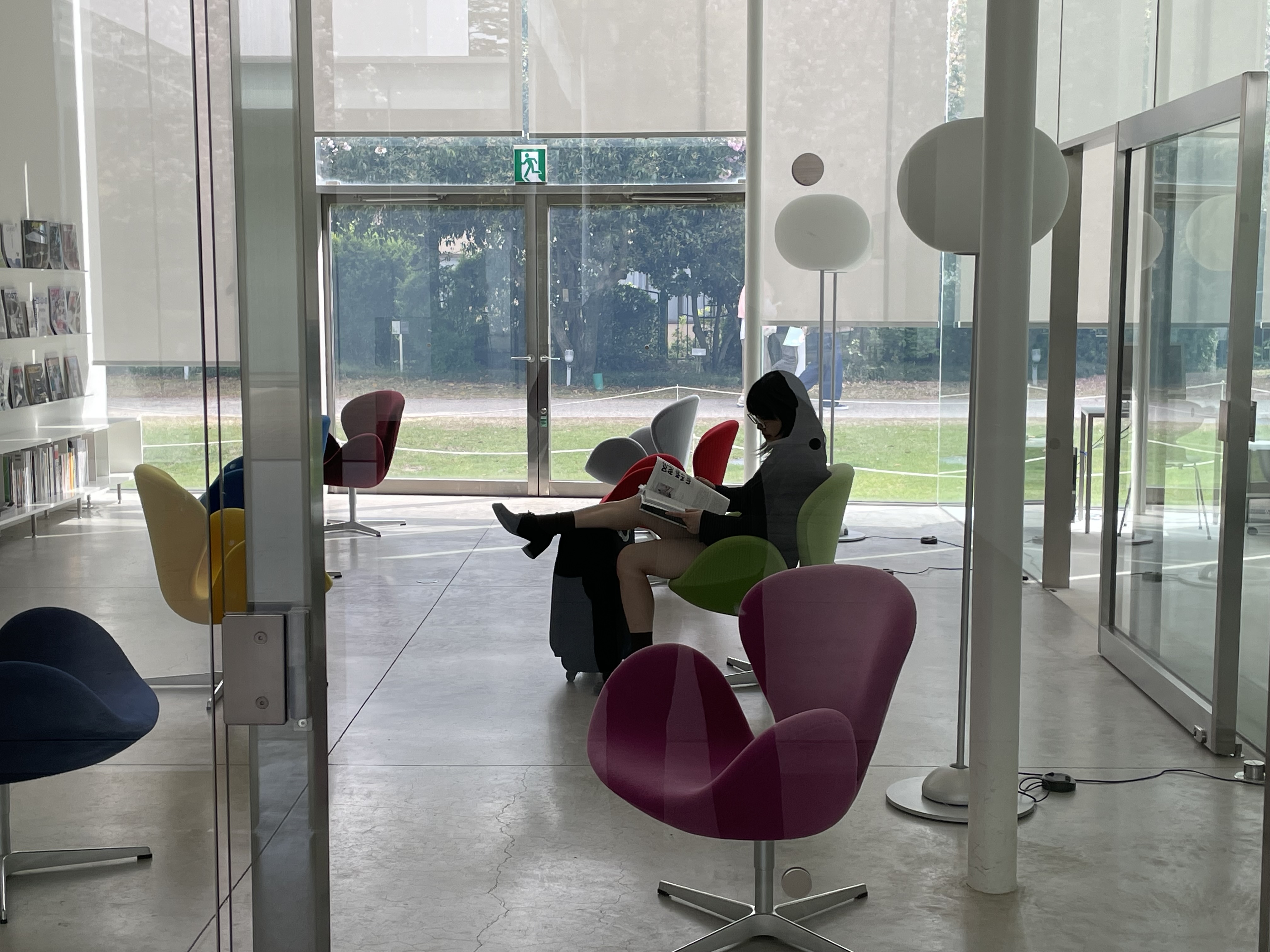
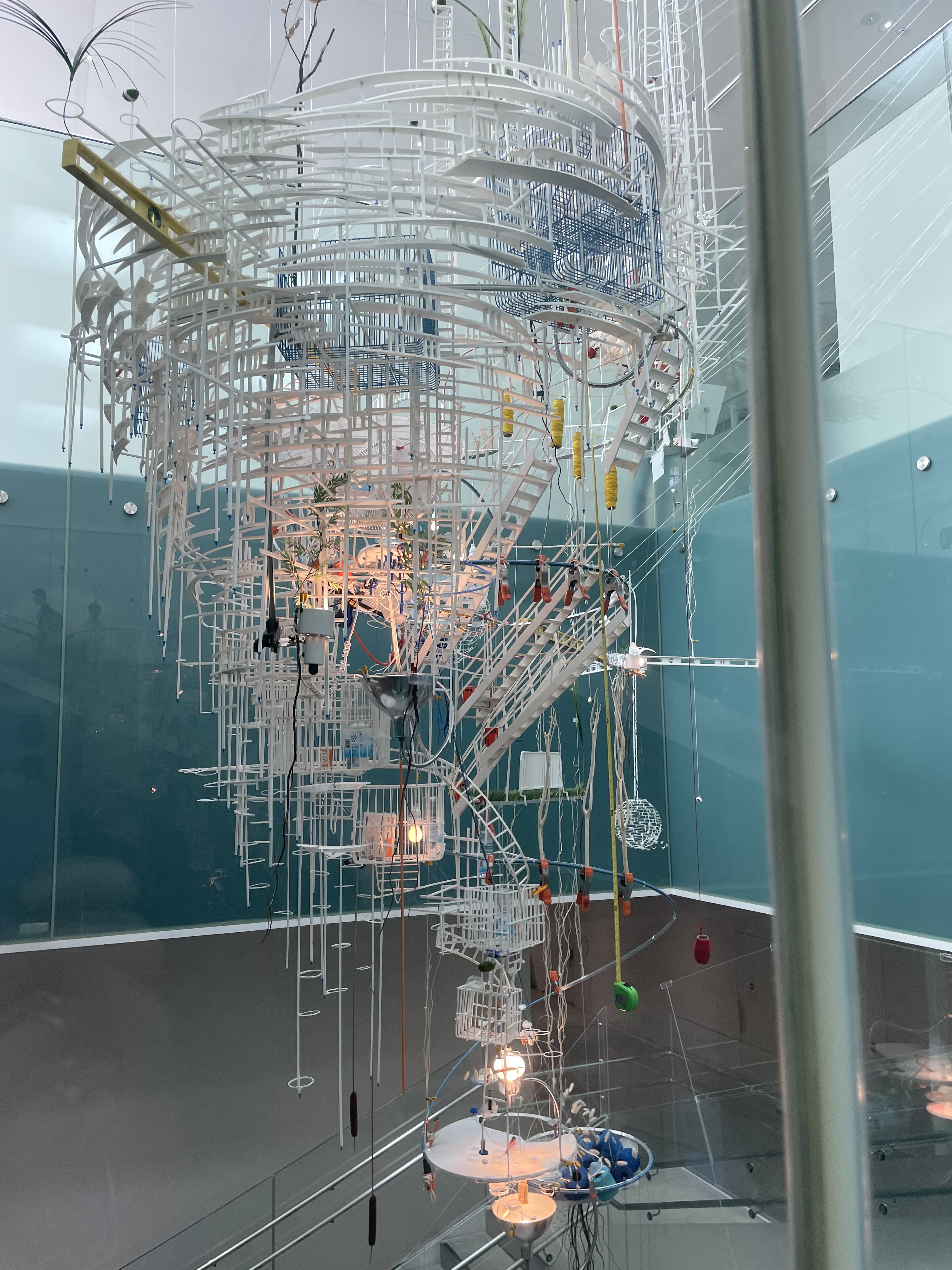
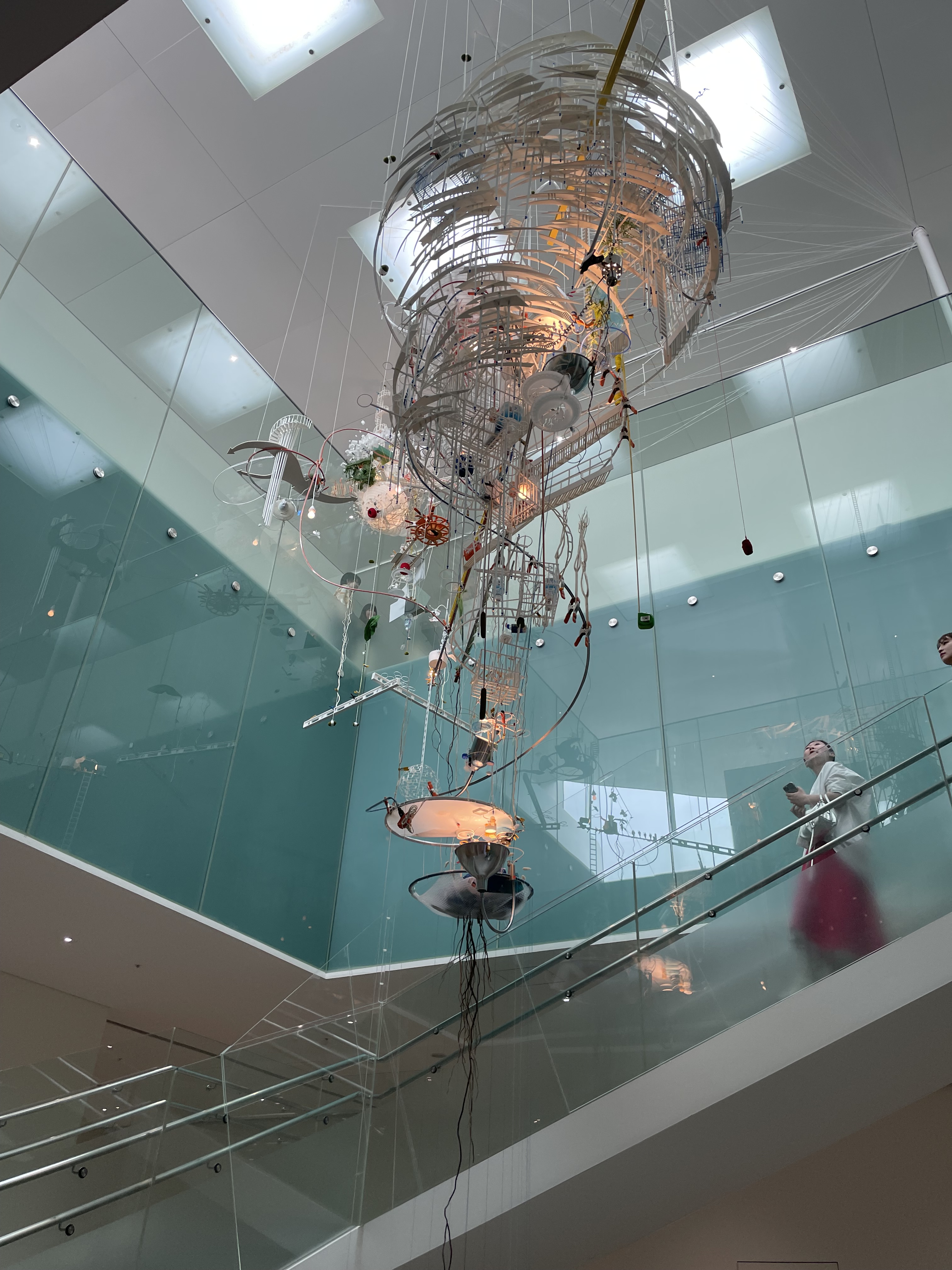
This amazing celebration of modern art was damaged in the December 2023 earthquake and the interior has yet to reopen fully. It sits in a large park filled with families on the Saturday we visited. Whispering tubes, climbing structures, cool-o places to sit, a large multi-colored glass box, reflective sculptures and wide lawns surround the circular glass building. Because only the exterior ring inside the building is open there is no admission fee—there is only one “gallery” with a single kinetic mobile is open. It was oddly entertaining—though all windows, the soundproofing is total and from the perimeter inside families carousing and couples strolling outside seemed like an immersive, silent movie.

There are plenty of museums around the park and castle ruins area, but we had neither time nor energy. We finished the day drinking and conversing and sharing pictures of our dogs via translation apps on our respective phones, with a young couple at the neighboring table in an izakaya around the corner from the hotel. They were from Tokyo and delighted we had been and were returning to their city. We returned to the Dormy Inn, had a last bath in the outside onsen where the moon shone and the wind blew, and fell into bed. On to Tokyo, last stop before home.

A Few Snaps of Breakfast at the Kanazawa Dormy

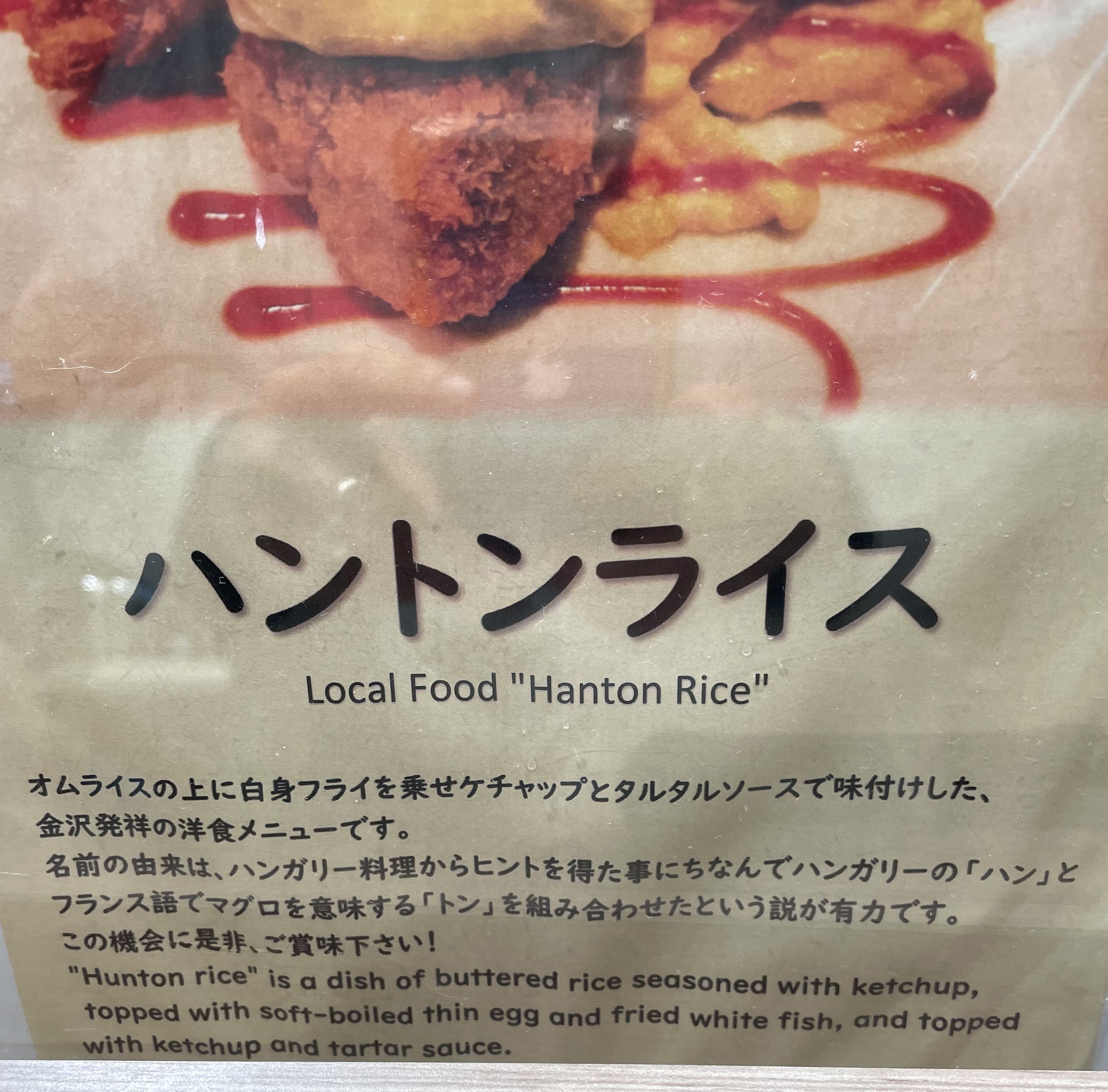
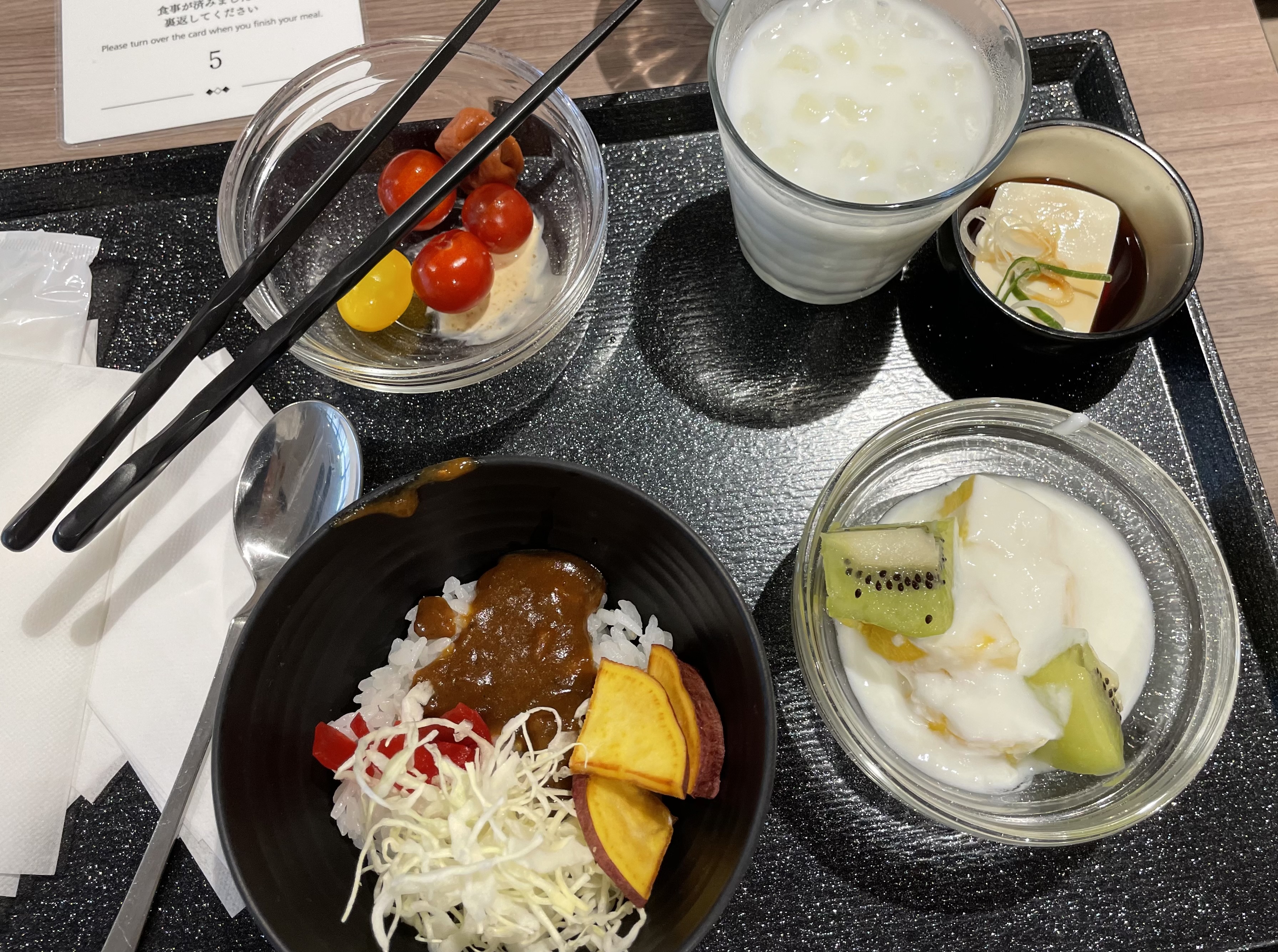
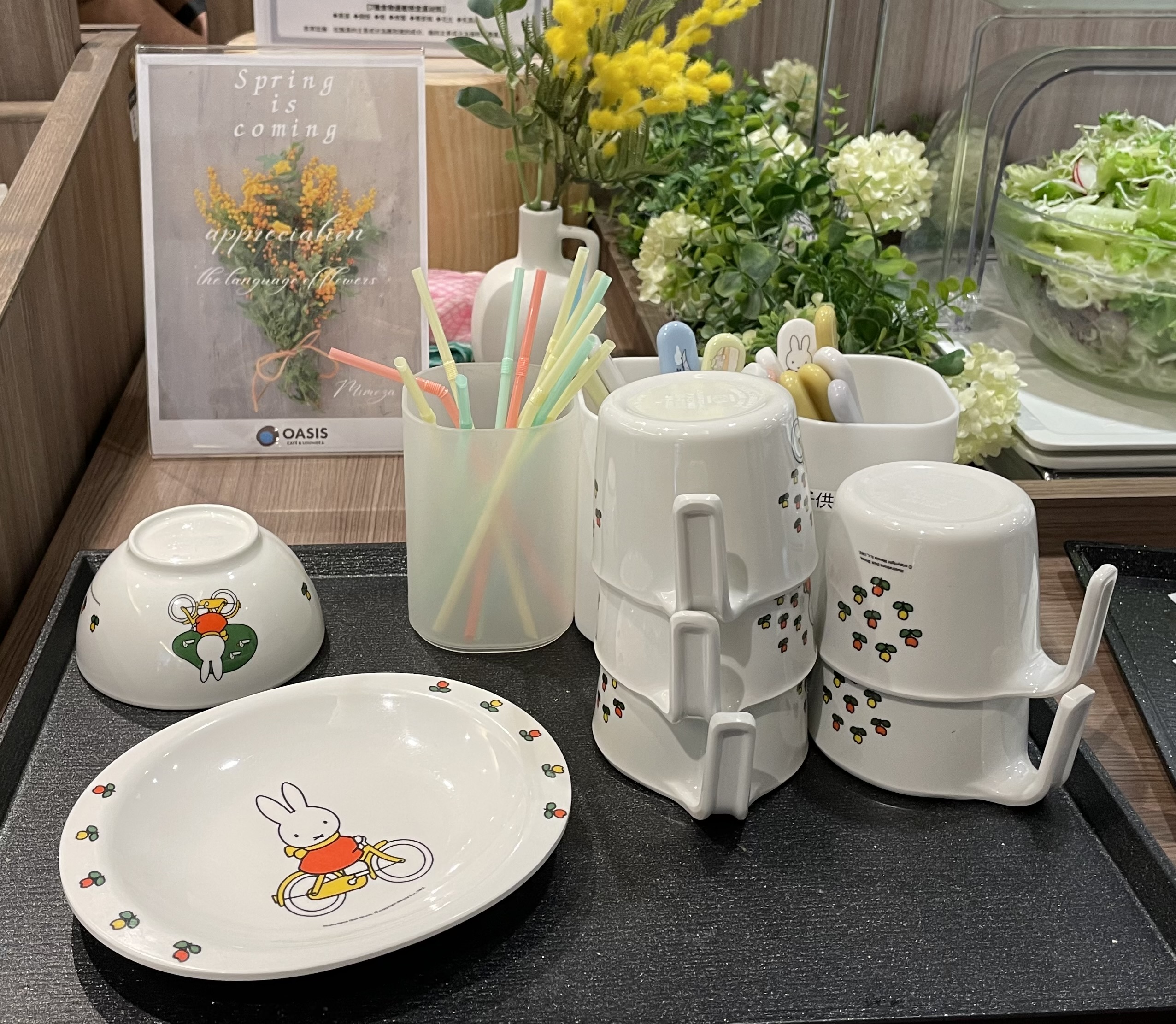
Kid friendly dishes, a strange local food combo, and my bowl of Kanazawa curry, appropriately garnished with pickles, roasted sweet potato, and shredded cabbage (surprisingly good).

Iconic Fushimi Inari-Taisha

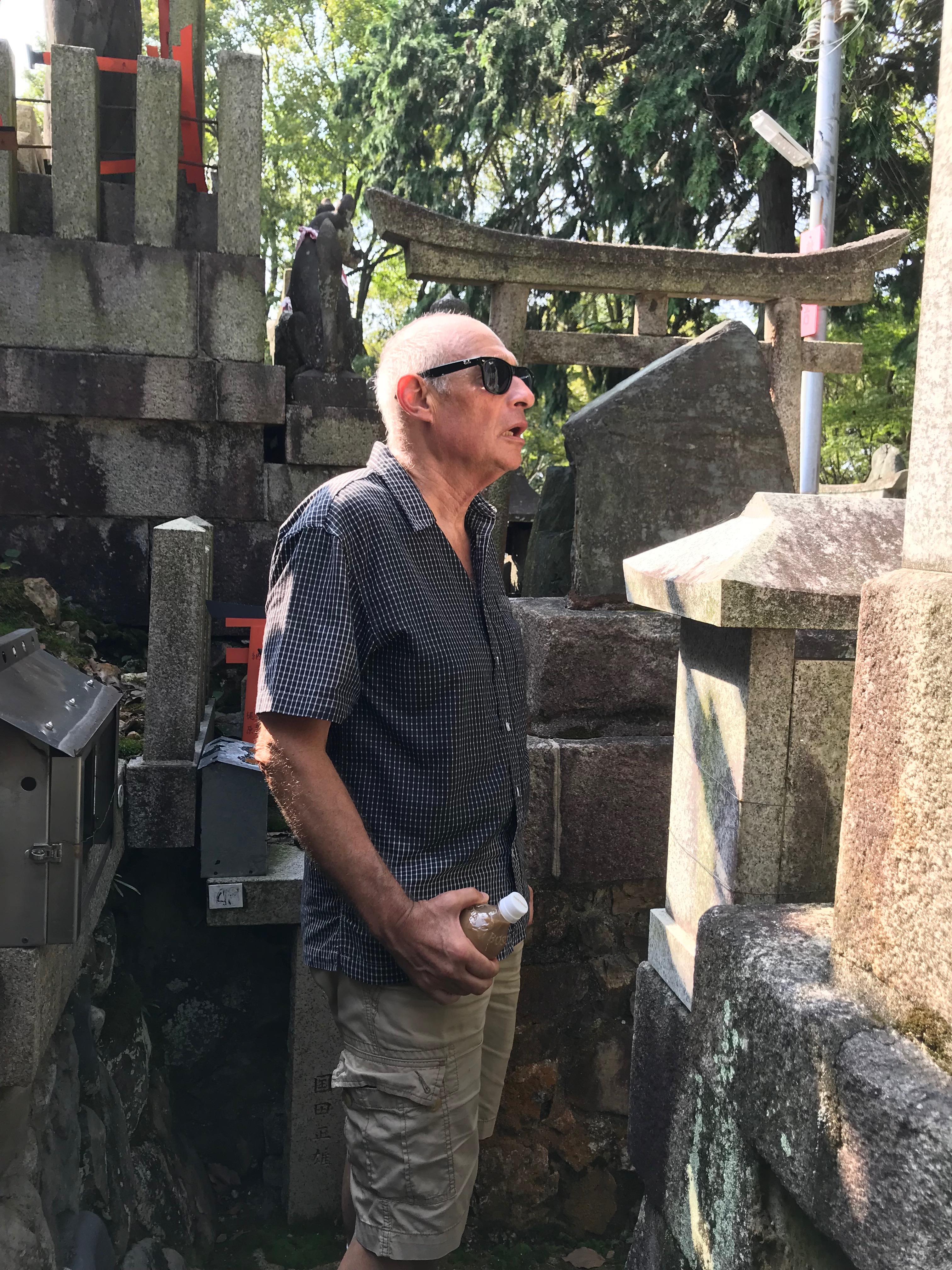
We had visited this most famous of Kyoto sites when last here, but it was so very hot and so very humid it was unimaginable going very far up into the shrine.  This time we were determined to make it to the summit, and we did it!

It was amusing that the city bus emptied out at the Inari stop, all but 4 of us Japanese tourists, and not a one of us knew which way to go to the shrine as the bus stop is on a busy street, rather nondescript.  One Japanese woman had her iPad out, map active, and she became our defacto leader as we all walked the 2 short blocks to where the line of stalls and stores leads to the main entrance.

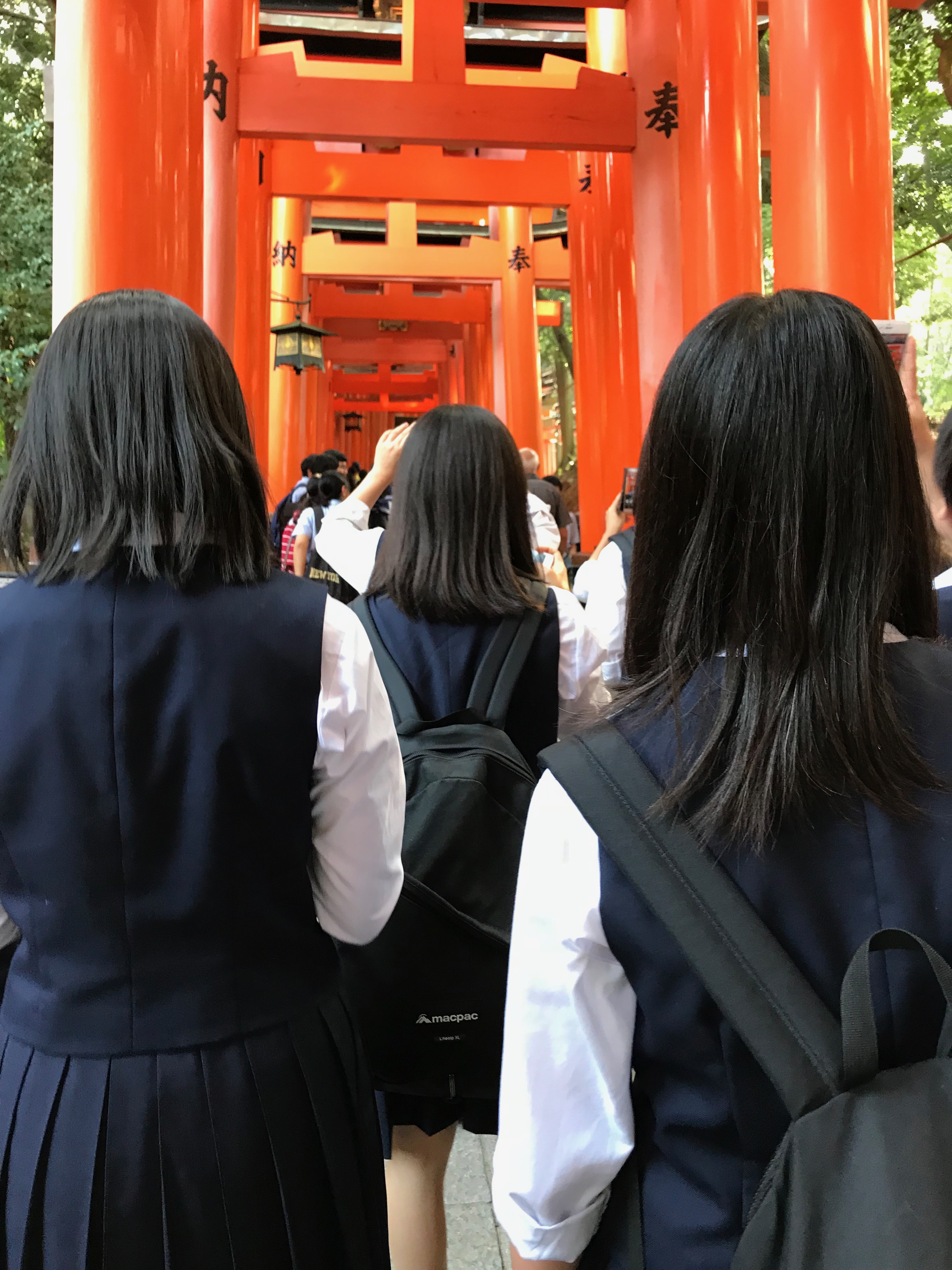
There are gazillions of pictures of this amazing place…but that didn’t stop us from taking a few of our own.  We were there early about 9:30 or so, and already there were lots of uniformed school kids and others entering the shrine.  In the first few segments of the path the crowds were thick and, being mostly adolescents, annoying as they sauntered, took pictures, and poked and teased each other (Field Trip!) and we had to squeeze past clump after clump so we could go at our own brisk pace.  At each main junction, where a map showed you where to go (it is quite a confusing warren of paths so signage is necessary) and snacks and prayer tokens in various forms were sold, the crowd thinned a bit more, and within half an hour or so it was pretty clear though never lonely.  It was fun to hear Americans every now and then turn a corner and OOOH at the views of the city and the winding paths of gates up and up.

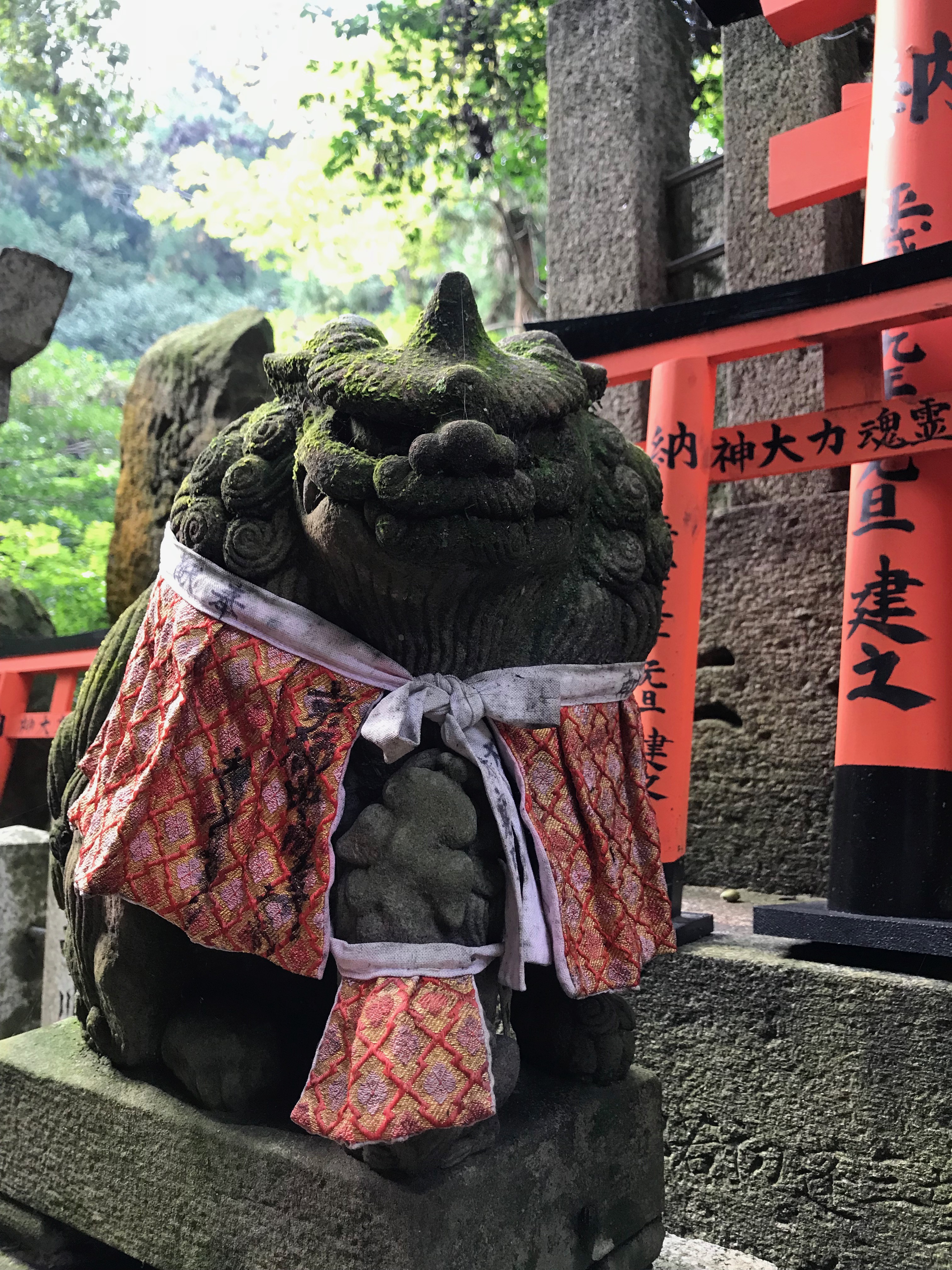
We were relieved and thrilled to get to the top, where there is a maze of shrines seemingly on top of each other, every one with the statues of the two foxes, a few demons, one or two dragons, but fox statues everywhere and of various ages and condition, some quite worn down, others sharp and a few with painted eyes.

At the top was the ubiquitous vending machine, where I had the Pocari Sweat.  It was cold, slightly sweet, and refreshing and felt like it didn’t even pass my stomach but went directly into my blood stream, I was so sweaty!

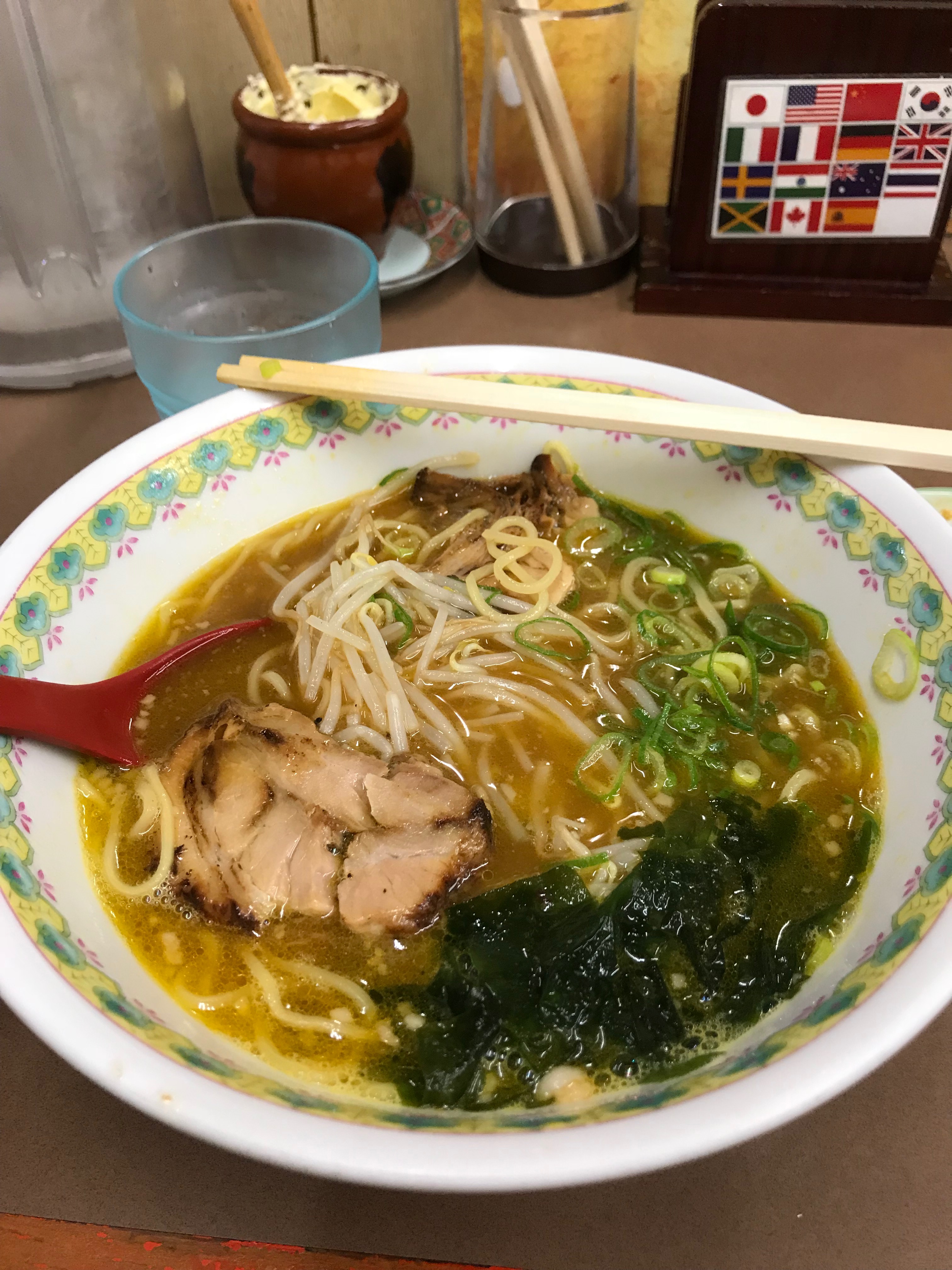
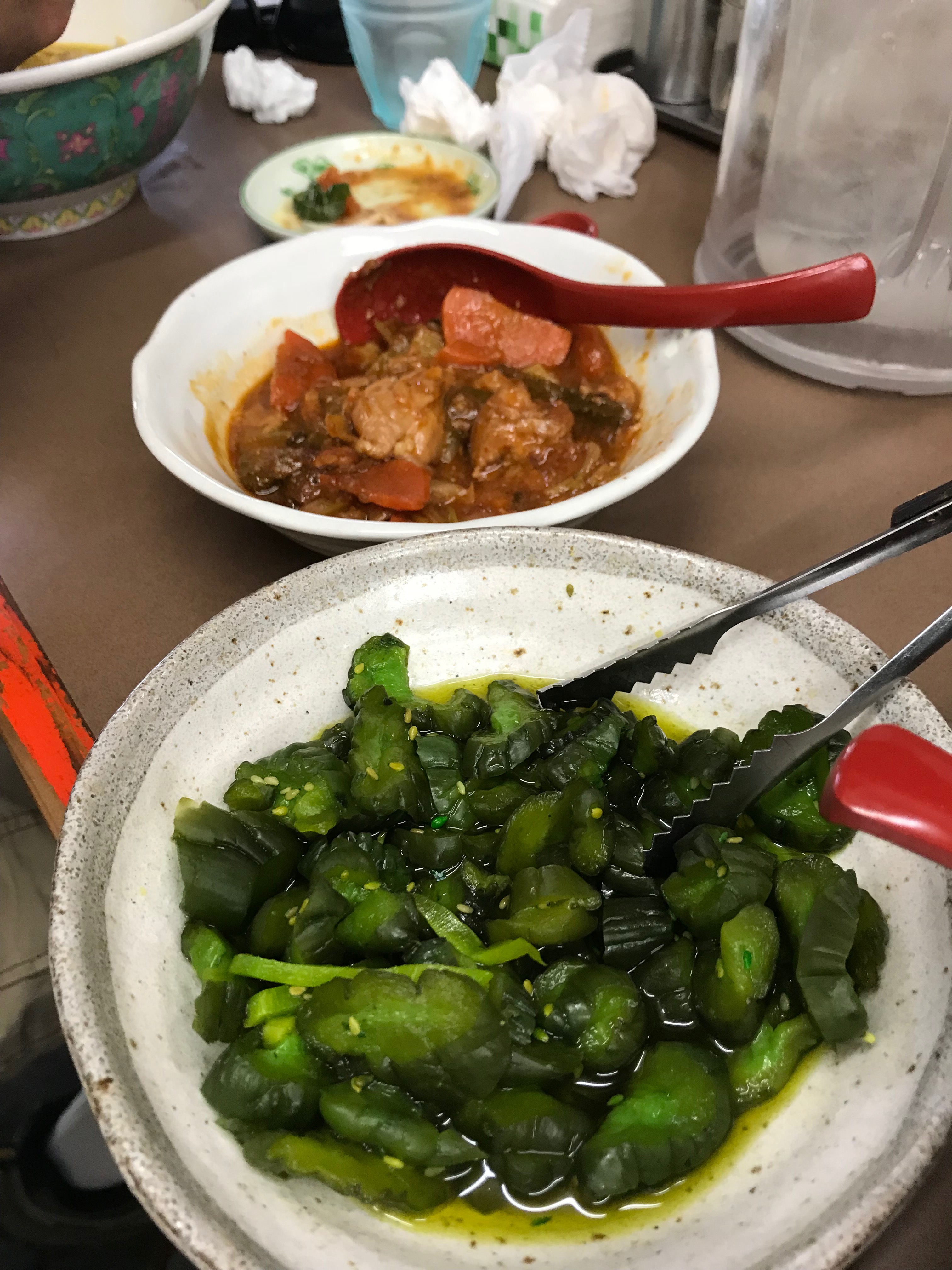
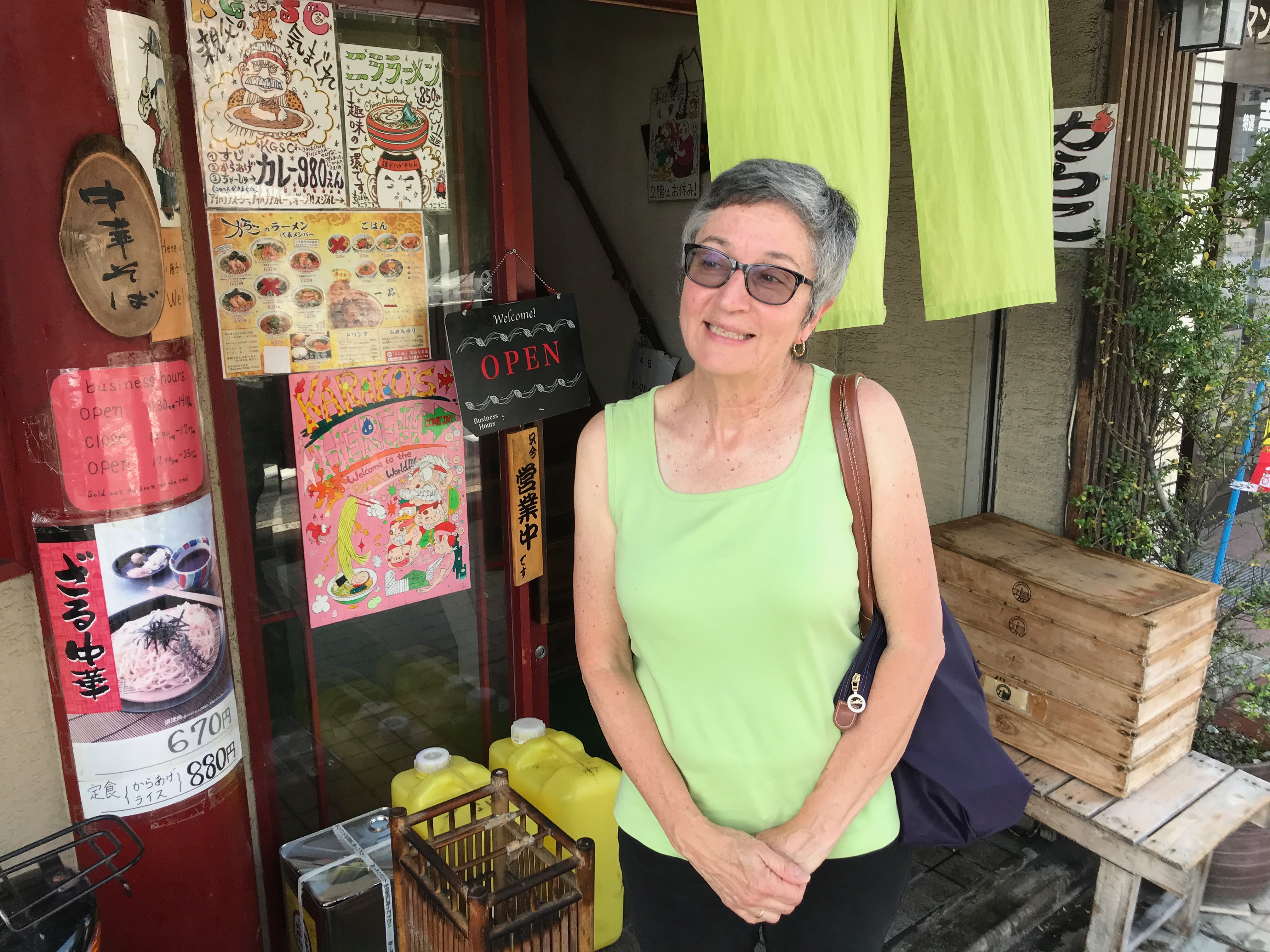
Down we came, wet and hungry.  I wanted to head to a ramen place that was in the Lonely Planet book, Karako, and though on the other side of town we hopped the train and were there in 20 minutes. After a walk of maybe 6 long blocks (hot!), and thank goodness for google maps when they work (quite unreliable in that sense) we came upon this tiny place with 11 counter seats and a few men silently eating ramen and karage (fried chicken).  Inside as soon as we sat at the counter the owner/cook welcomed us, pointed to the three dishes on the counter and said “Help yourself” while we looked at the menu.  We both ordered the recommended kotteri, with meltingly good meat and noodles in a slightly thick broth, and helped ourselves to the refreshing slaw, bright green cucumber pickles, and a kind of chicken and carrot stew (these are the side dishes set out on the counter).  It was delicious and fun!

After some temples, sub temples, mini-shrines in the hills along the east side of the city (with blessedly cool breezes), we hopped the train to return to our apartment for a rest and showers.

I had wanted to go to an isakaya while here, and the web suggested a place just a few blocks from our hotel–this location was fortunate because after all the sake we drank a longer journey home would have been tough.  This place would be impossible to find, being down a sort of alley/hallway, unmarked during the day (though a sign was lit when we staggered out), and we crept along wondering if we were in the right place.  The hall ended at a sliding door which we tentatively opened and there it was, a homey, funky, bar where we were greeted with smiles.  The older woman, probably the owner, spoke a little English and when we said we wanted sake she immediately came with two enormous bottles for us to taste.  We quickly selected the one we wanted and settled in for a few hours of drinking and bar food–though nothing like the US, as the menu was about 8 laminated pages of fried, lightly fried, salads, grilled, and a variety of sashimi.  We had fried chicken, potato croquettes, a sort of soup of fried smelt and fried eggplant in a savory broth, grilled peppers…in addition to the fried squid which appears as “appetizer” as soon as you start drinking.  We sat next to a fellow from Scotland, shared travel experiences, and drank a lot more sake (at least I did).  It was delightful.

Today we go downtown to Nishiki market and to search out, I hope, more ramen!

Kyoto, Just as Wonderful As Last Time!

We are so fortunate to have visited Kyoto a few years ago with our cousins, who know it well and with Harumi’s native Japanese navigation was a snap.  We just did whatever Harumi told us to do and didn’t have to think much about which bus, which train, which sight or store to enjoy.

This time we are on our own–so different and so much fun in a different way.  We flew into Kansei airport in Osaka, about an hour and fifteen minutes by express train to Kyoto station and by far the best option because it is direct (no changing trains) and quite comfortable.  First thing I noticed was the hyper-organization of the country contrasted with Korea.  Two uniformed men are on the train platform to make sure everyone is in the correct line–and they mean the exact correct line, with your suitcase “here!” and stand “here!” which was comforting.  No way to make a mistake!  But don’t stray out of the line–you will be quickly herded back into the queue.  In no time, it seemed, we were at the station and had to find the hotel.  It is just a block or so away but it was dark, we had a bunch of stuff with us, and we were a little daunted but there it was, and in the mailbox an envelope poked out that said David M Roth and inside was the key card and simple instructions (the office was closed) and all was well.  I will write about the hotel/apartment in another post but suffice to say it works beautifully, location is ideal, price is right, and like our airbnb in Seoul we have a bit of a kitchen and a washing machine!  Bed is luxurious.  Great place.

This post will cover just a few exceptional experiences of our first few days–Mt. Kurama, Fushimi-Inari shrine, and associated meals.

Best Day Trip Ever–Mt. Kurama

You hop on one of the subway lines and take it (north) to the end; go upstairs and get on the electric trolley/train (the line starts at that station) and off you go into the suburbs of Kyoto.  Very lovely, quiet, scenic, and within 15 minutes you are surrounded by trees brushing up against the windows on both sides and into the mountains.  You get off at the last stop and are in a tiny village–you and the other 8 or so passengers who are clearly there daytripping, walk up the hill and in a minute you are climbing into a temple, large for the scale of the town, and in front of you are steps and paths winding into the forest.

It was magical how quickly we were out of the city and into an entirely new place.  We had little idea how long, how high, how far we would be going.  We picked up a map that showed stairs and paths and switchbacks up up up and off we went.  It was about 9 in the morning or so, and while still hot and humid less so due to the forest and many streams winding down.  Though we were sticky and warm it was just cool enough we figured we’d make it.

The route is not only lovely as mountain forest, but every 10 minutes or so you come across another temple.  Some tiny, a few pretty big (big for the setting but not by Kyoto city standards).  We were not totally alone on the trail–this is a popular day trip–and 90% of the people we saw were Japanese.  It is not an easy climb in places–the stone steps as you get higher are obviously old and the dirt between them worn away–and in other places it’s similar to hiking in a northern California forest with slightly different trees.  After maybe two hours we reached the summit, hurrah, and started down on the other side where it was quite a bit steeper and more unrelenting a climb.

We were glad we started in Kurama and ended in Kibune.

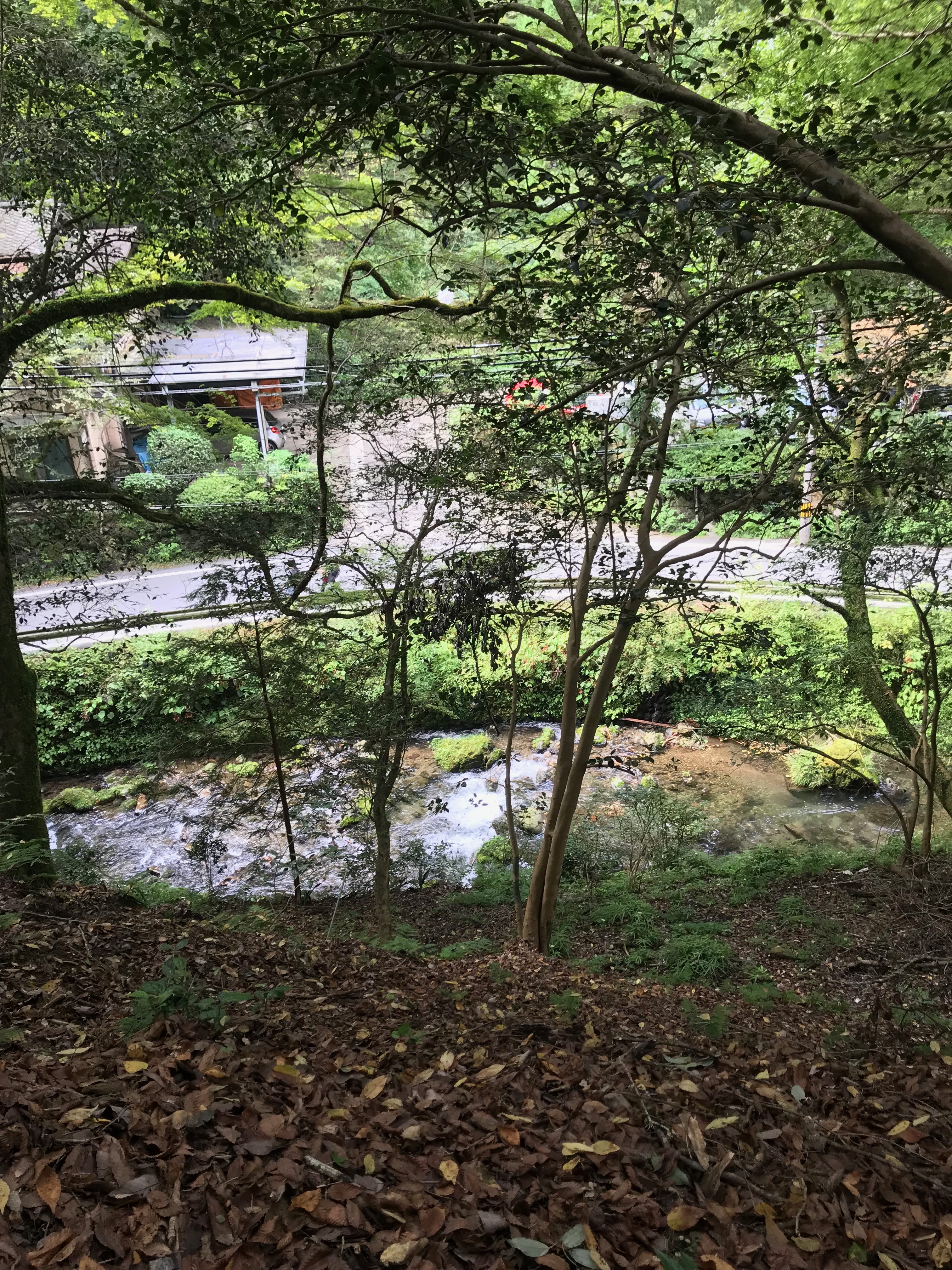
Kibune was described in the guidebook as almost impossibly quaint and yup, that is correct.  A rushing river (though small) winds down through the town, so the background sound is lovely, and the town itself is just a string of inns and a few restaurants along the single road.

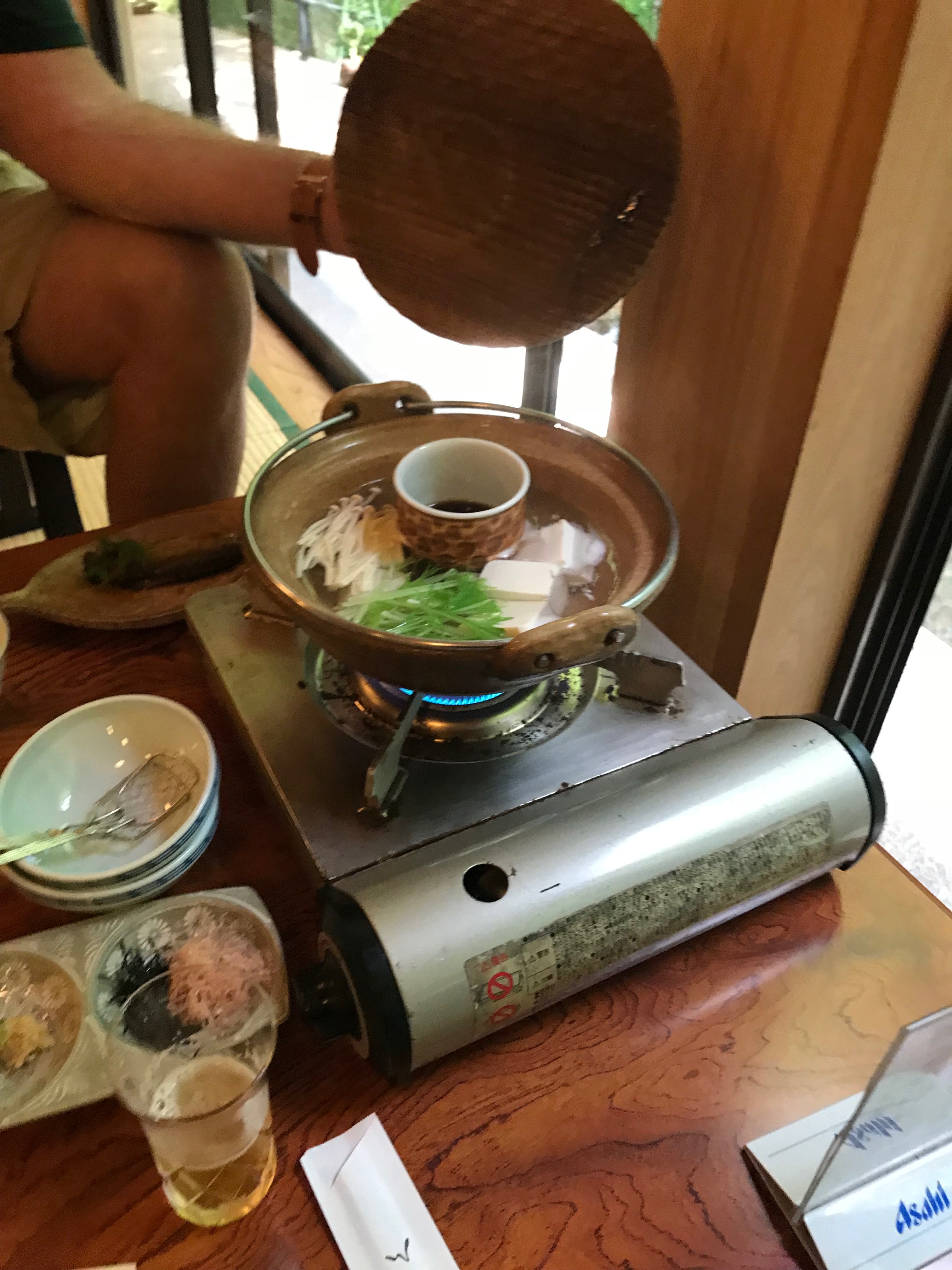
We were so hungry and thirsty so eating there was mandatory, and we decided we’d earned a fancy lunch so ate at Hirobun, an old style tatami-lined dining room with windows along the river.  They have 3 different fixed price meals (roughly $27 each)–I had the tofu meal and David the tempura, and we ate our fill and more.  This is a very welcoming place and the food was exceptional (including a whole fish each “cooked for 3 days, very tender” and they were–you eat the entire body, head and all and yum).  We staggered out and walked down the road looking for the train station when we  came upon a bus stop.  A small bus was just pulling in so we hurried onboard and were whisked down to the train in 3 minutes and we came back to Kyoto.  Peak experience, no question.

That night we decided it was time for yet another sushi orgy.  We had gone to Musashi, a conveyer belt sushi place in Kyoto Station, the night we arrived, and now two nights later we went again.  Suffice to say we ate more than enough, and with two beers the bill was a little under $44.

IMG_1084

Above, our plates as we reluctantly wound down the meal.