Odds and Ends: Peaceful Temples, Bakeries, Philosophers Path, Bar Food, Handmade Paper

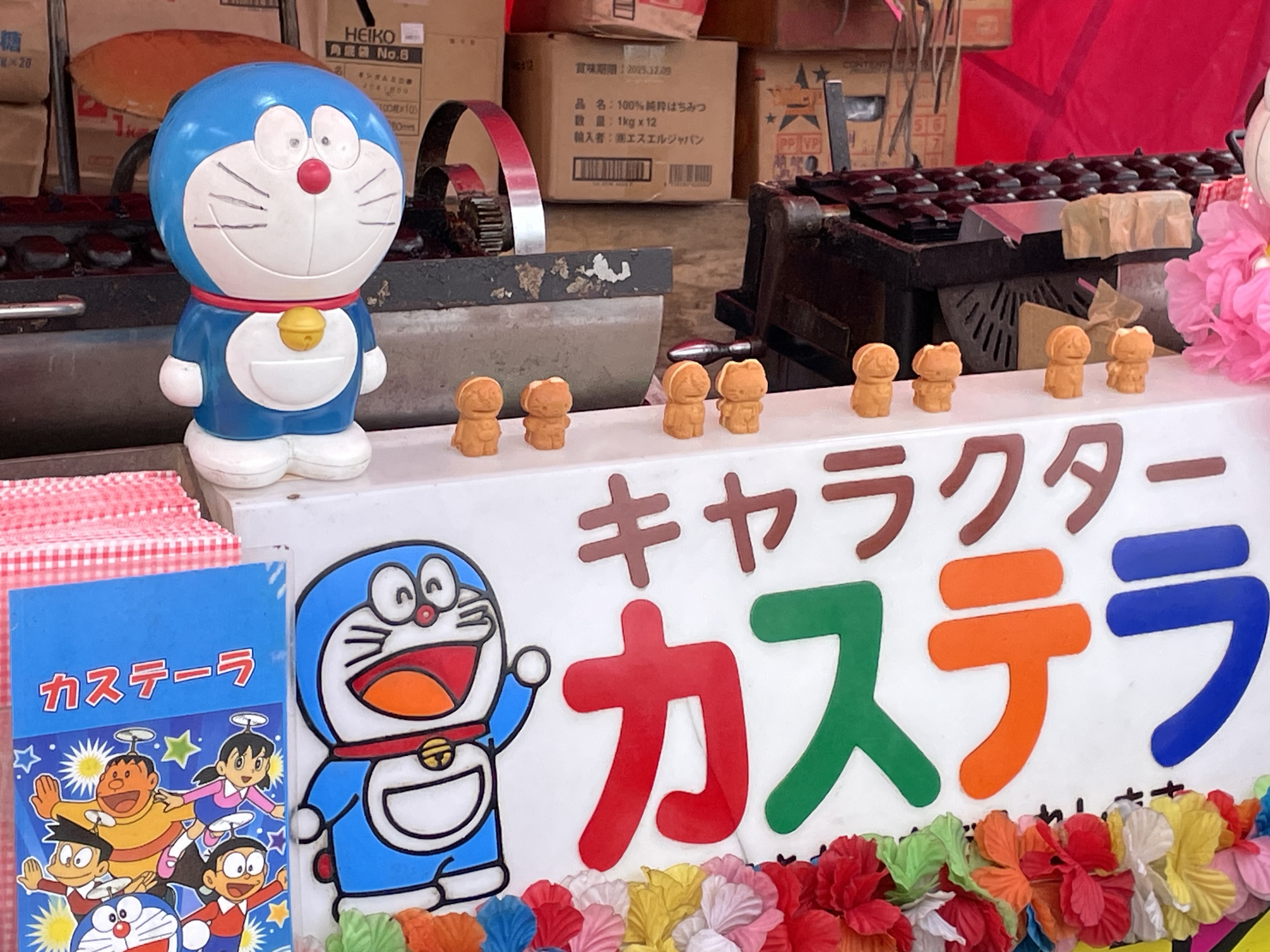
Mysterious Snack

What do you suppose this is, and why? A Twinkie with a banana inside? There were ads for them all over the train stations.

Horyu-ji

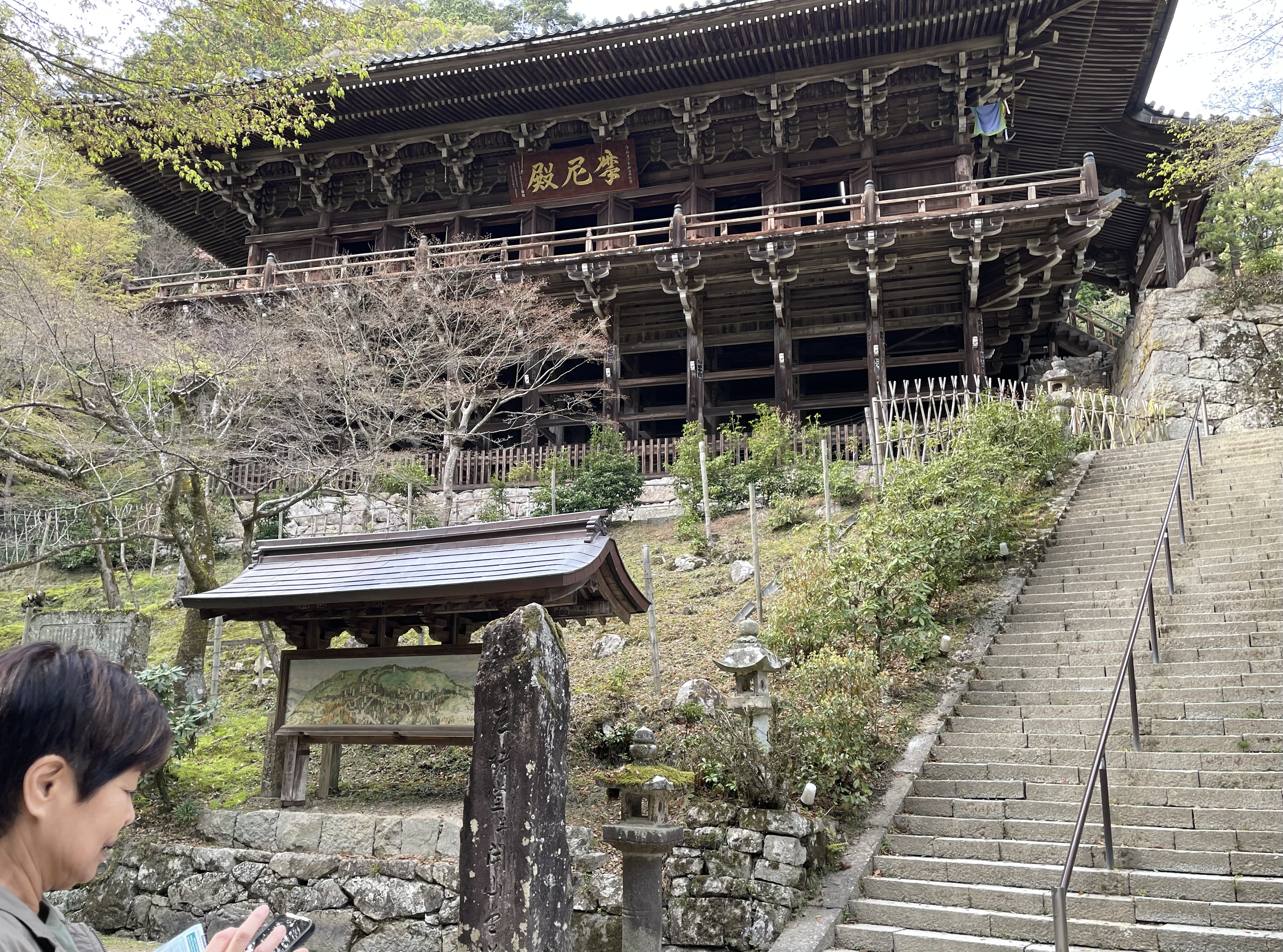
David found two temples, Horyu-ji near Nara and Kozan-ji in Kyoto, that were off the beaten path. I am so glad he did.

We had planned on visiting Nara, a city about an hour by train from Kyoto, though we had been there on our first trip when it was excruciatingly hot and humid. At the very least we wanted to find the okonomiyaki place for lunch, and perhaps visit a few sites we had missed on that hot day. First, though, David suggested we change trains in Nara and visit an enormous temple complex where the oldest wooden buildings in the world are located.

Here we had another of those strange Google map snafus. It told us to change to a different train line and go a few stops to this little town. Well, the walking directions to the other train station were ridiculously confusing and kept changing (the Google map starts spinning and rerouting you over and over until you have no idea where you are) so we stopped at the tourist information office across from the JR (primary) station…where the very nice woman explained that it made more sense to return to the JR station, get on another JR train and take it to the temple town. Fortunately for David’s mental health we were on a JR pass, so exiting and returning to the same station cost us nothing. And why Google suggested this strange transfer–and then refused to tell us how to do it–was a mystery.

So we did as the nice woman suggested and in a few short stops were getting off the train and looking for the city bus stop. Which was, of course, right where it should be and a few minutes later we were walking up to the temple complex.
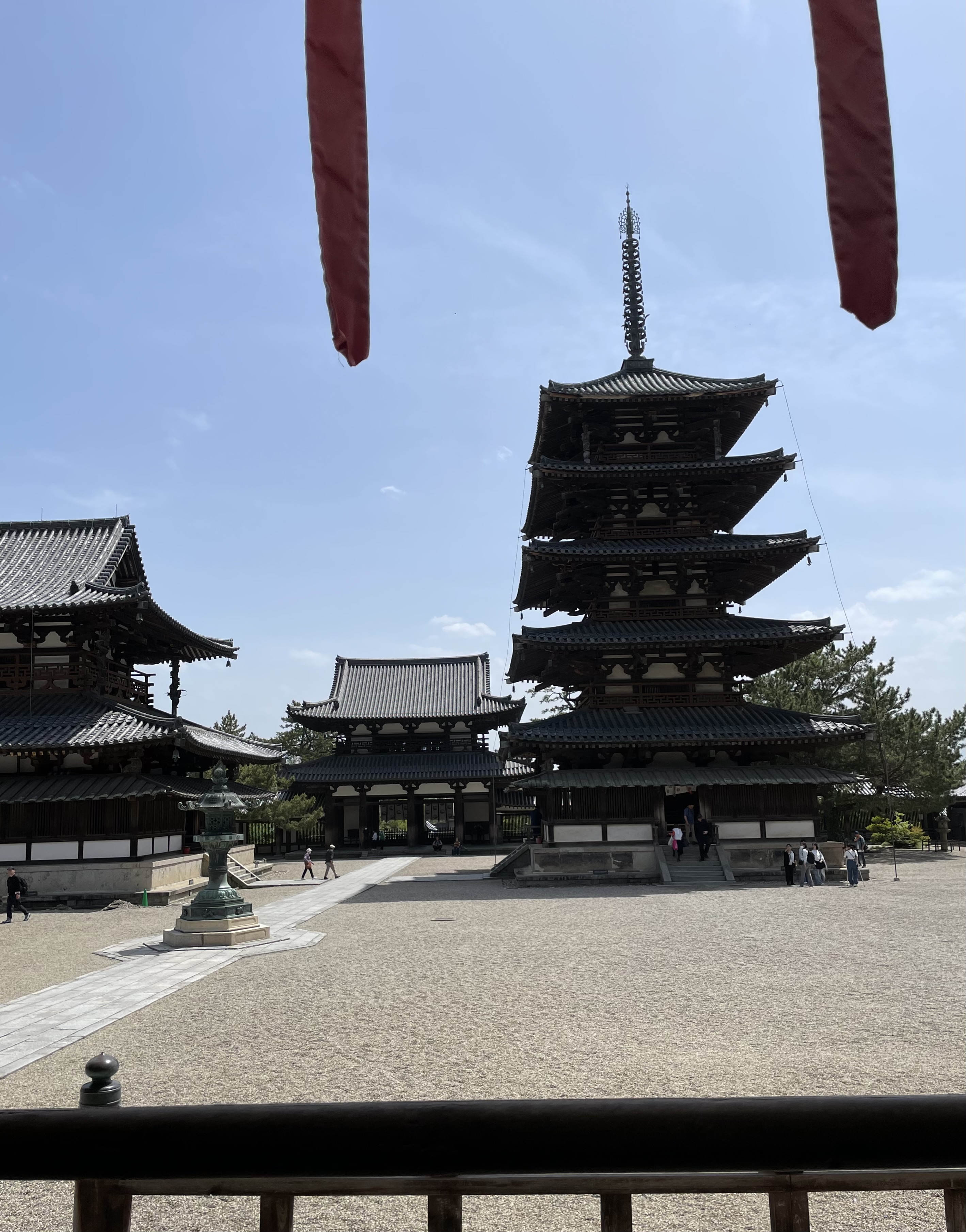
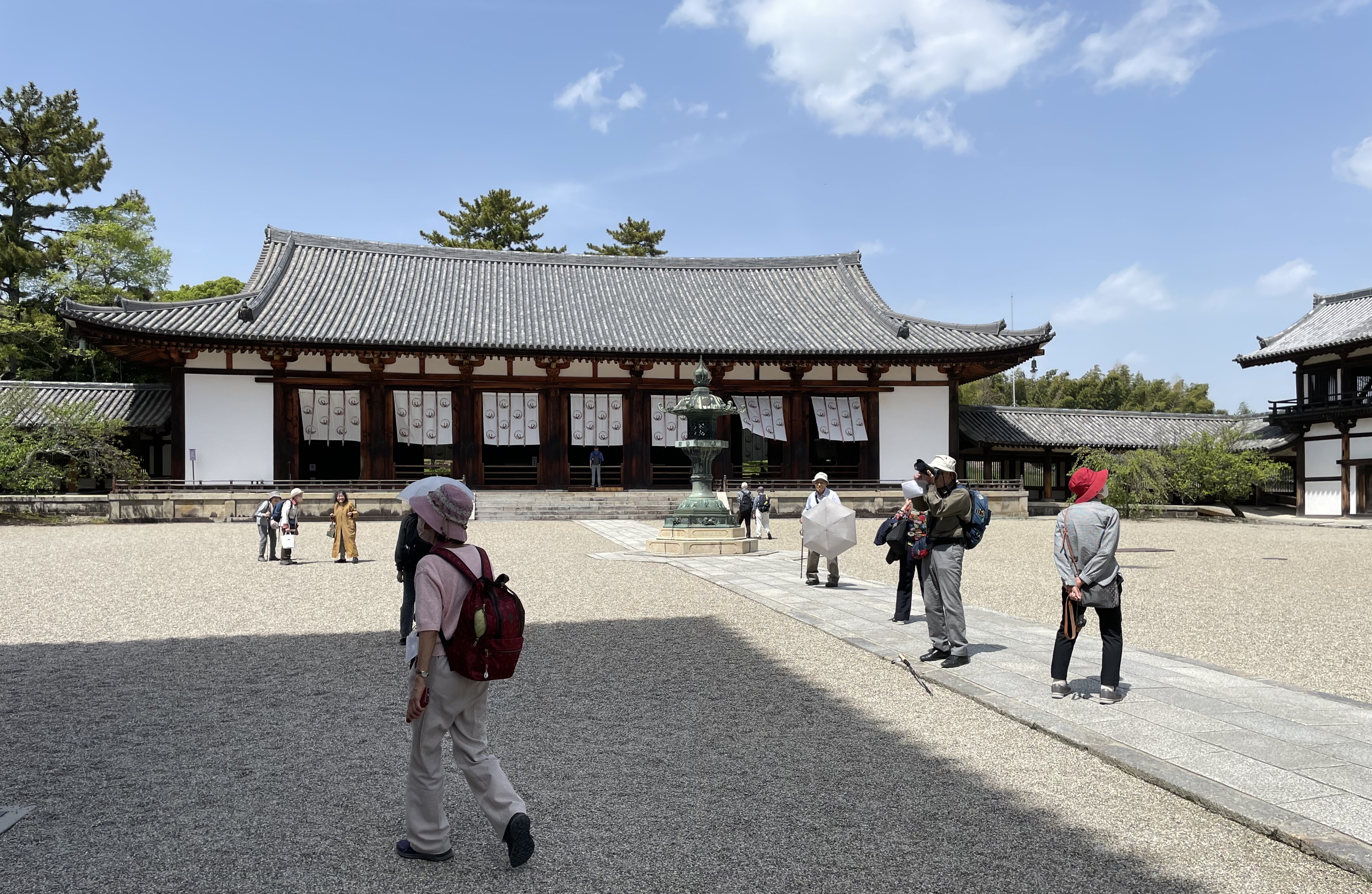
It was enormous. You buy a three-part ticket and as you move through the complex each ticket part is collected. Incredibly peaceful and seemed to go on forever, including a relatively new museum built by the government (of course–we couldn’t build such train stations and museums if we had a lifetime, alas) to house some extremely important, old, and rare statues and artworks. After several hours we returned to the bus stop, walking down a shady pedestrian boulevard, and were back in Nara in a flash. And tired out–ate our okonomiyaki (see post about noodles) and returned to Kyoto on the fast, clean, peaceful JR train.

Kozan-ji

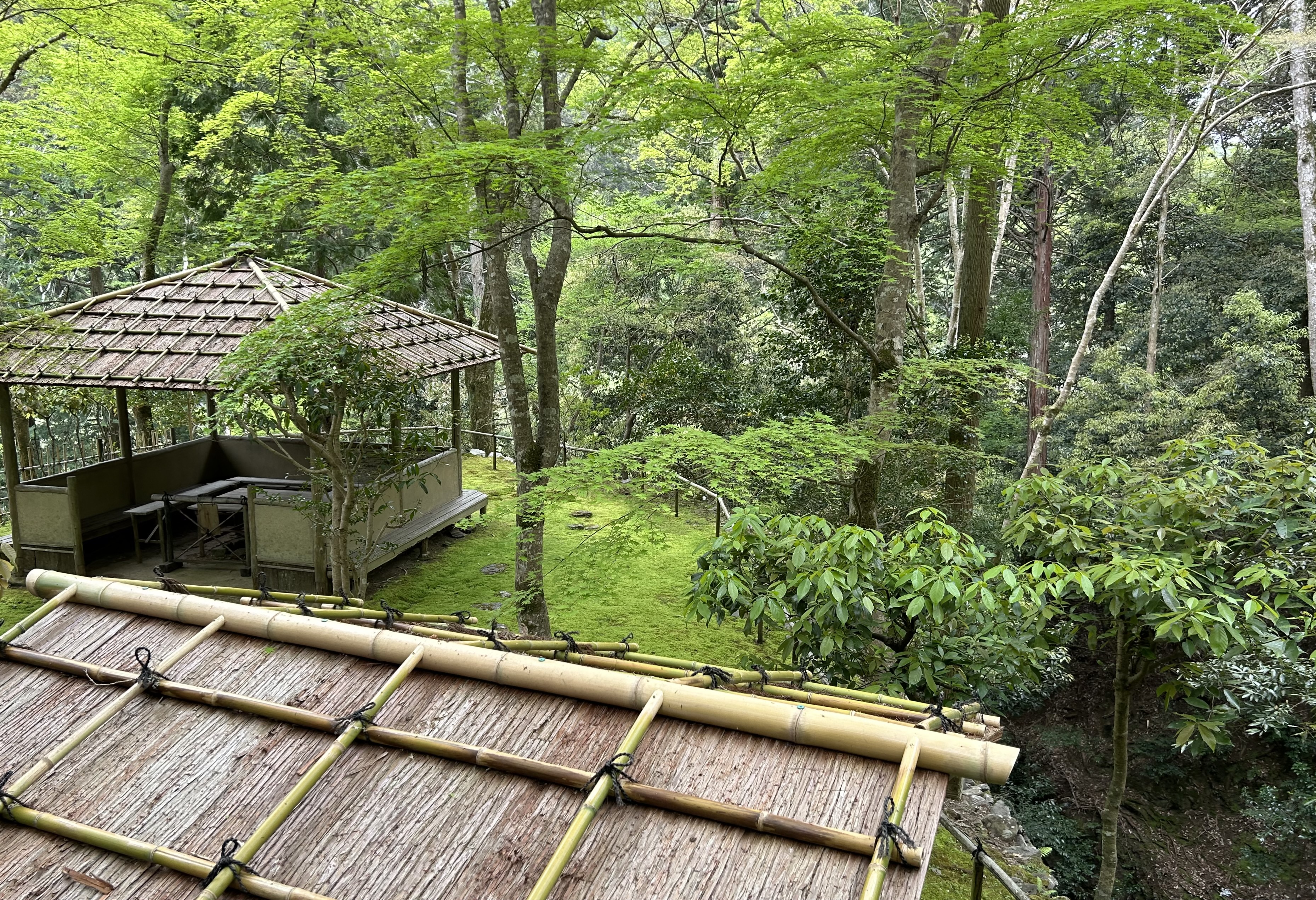
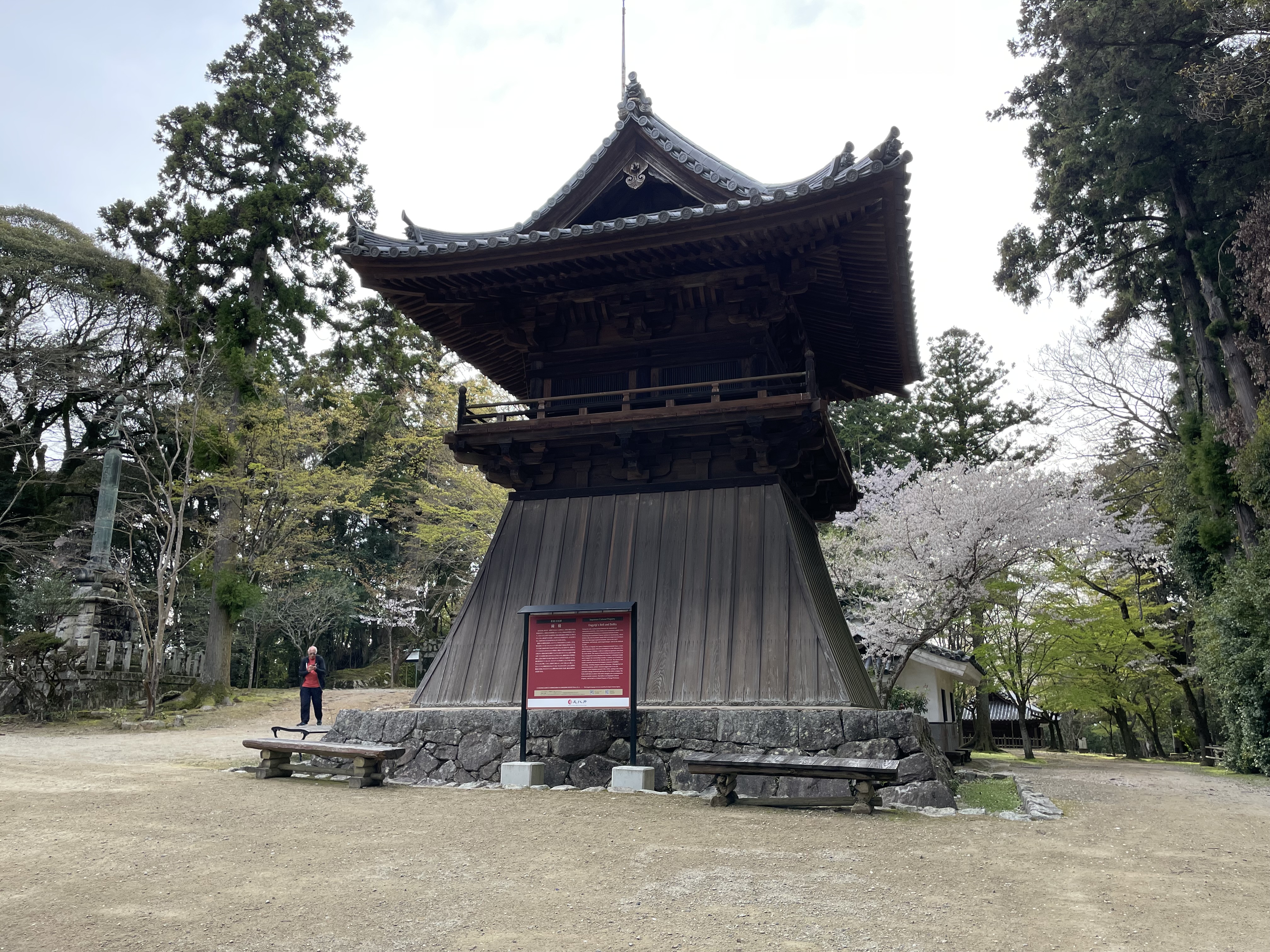
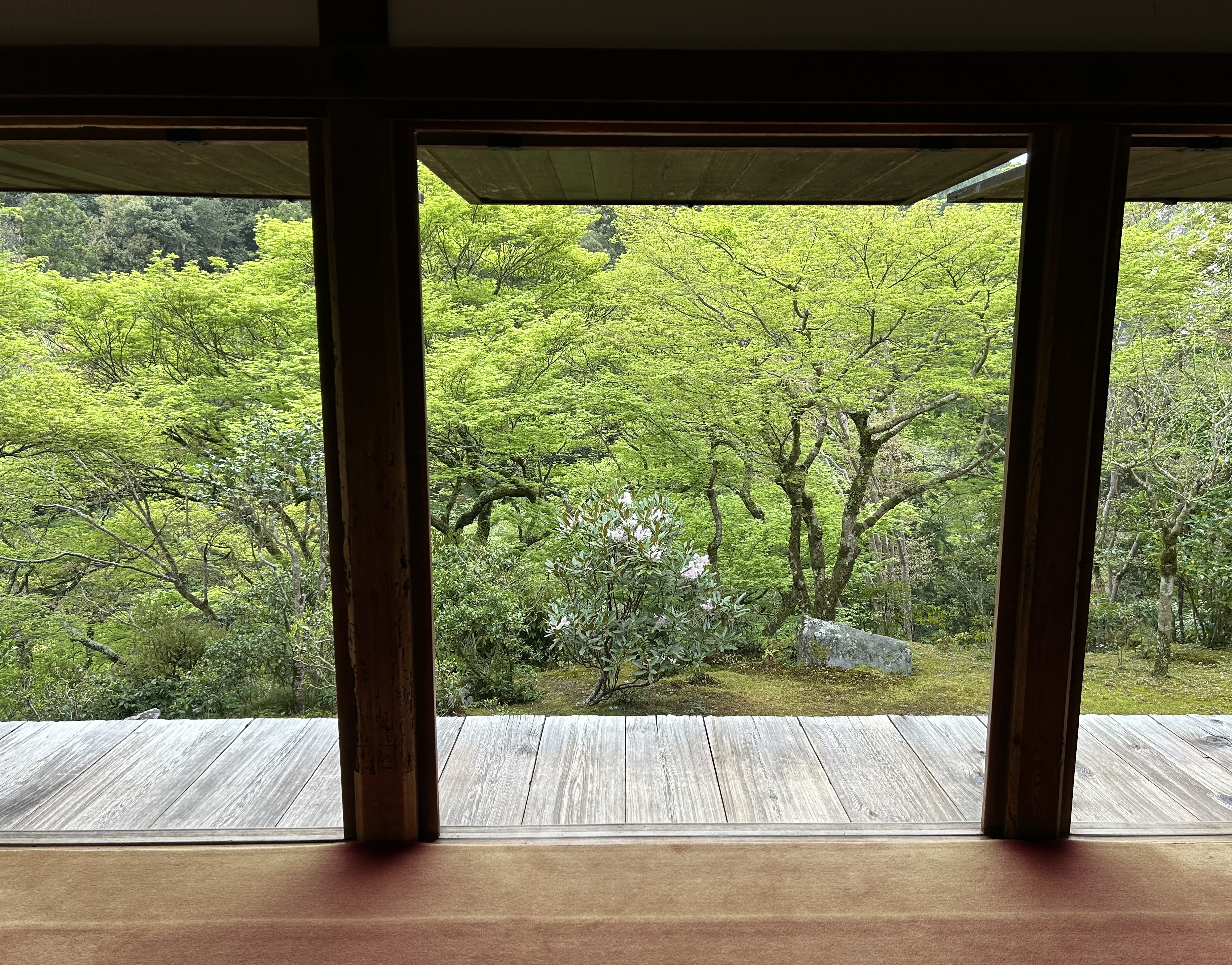
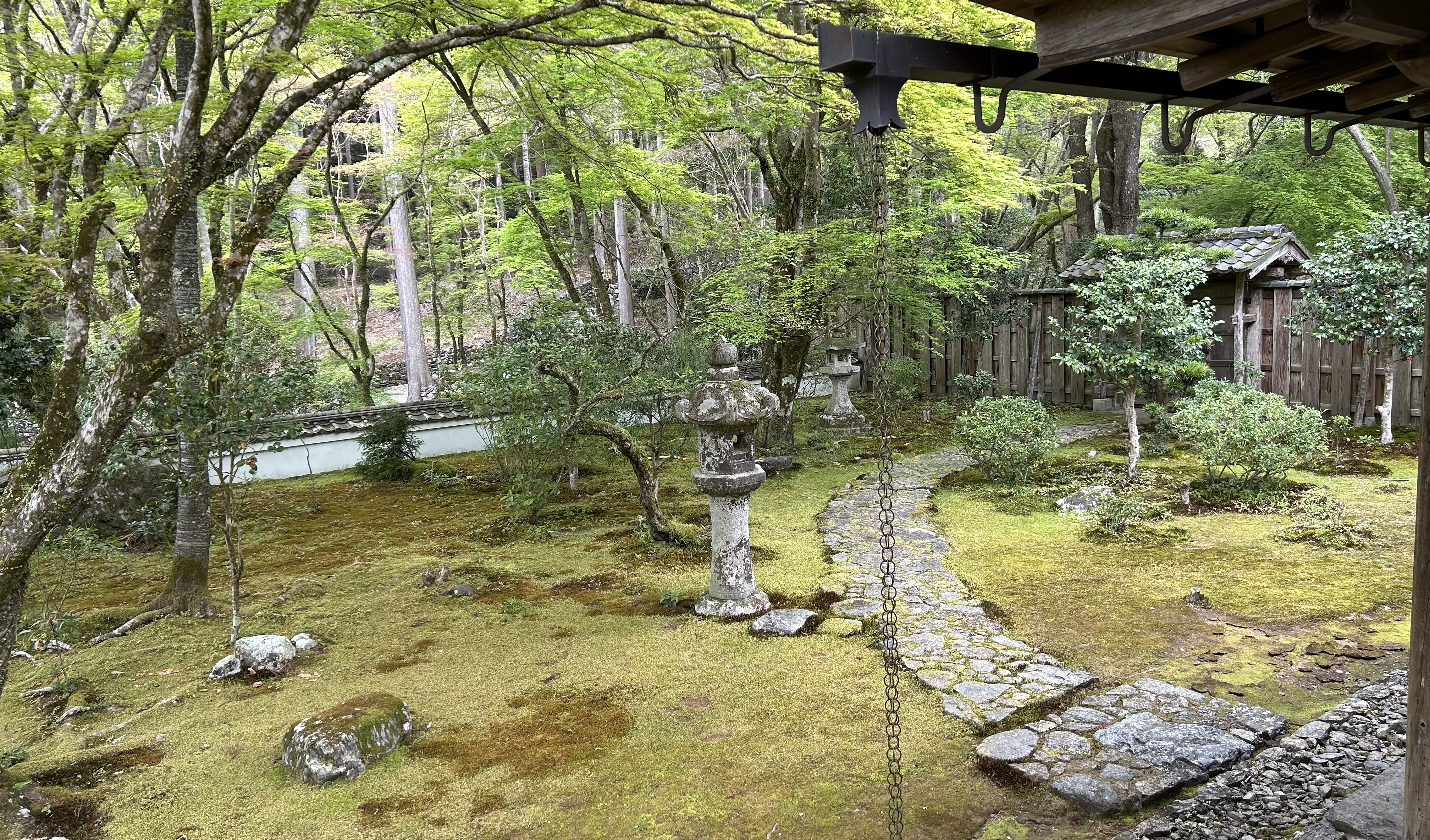
We had eaten in, shopped, wandered, and explored Kyoto for a week and were unsure how to spend our last day in the city before heading to Kanazawa. Kozan-ji temple was an hour on a city bus to the outskirts, it appeared, of the city. Now, taking an hour long bus ride sounds boring and maybe even miserable, but in Kyoto it was quite nice. Through the middle of the city, past downtown, climbing through green neighborhoods, and suddenly we were in mountains. We got off the bus and felt like we were back in California–big trees, a rushing river. A very short walk back a-ways and up a stone path took us into the Koran-ji temple grounds.

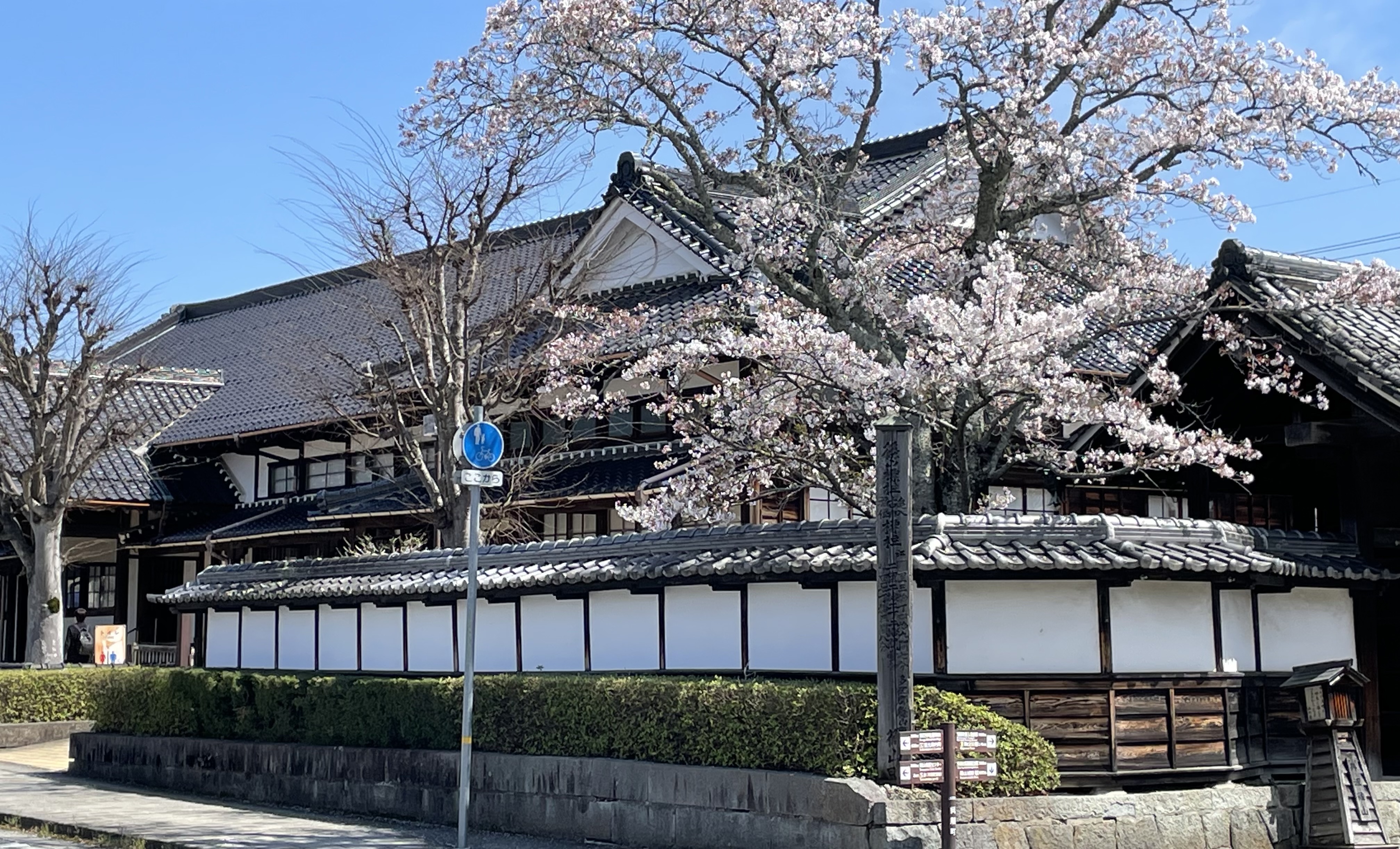
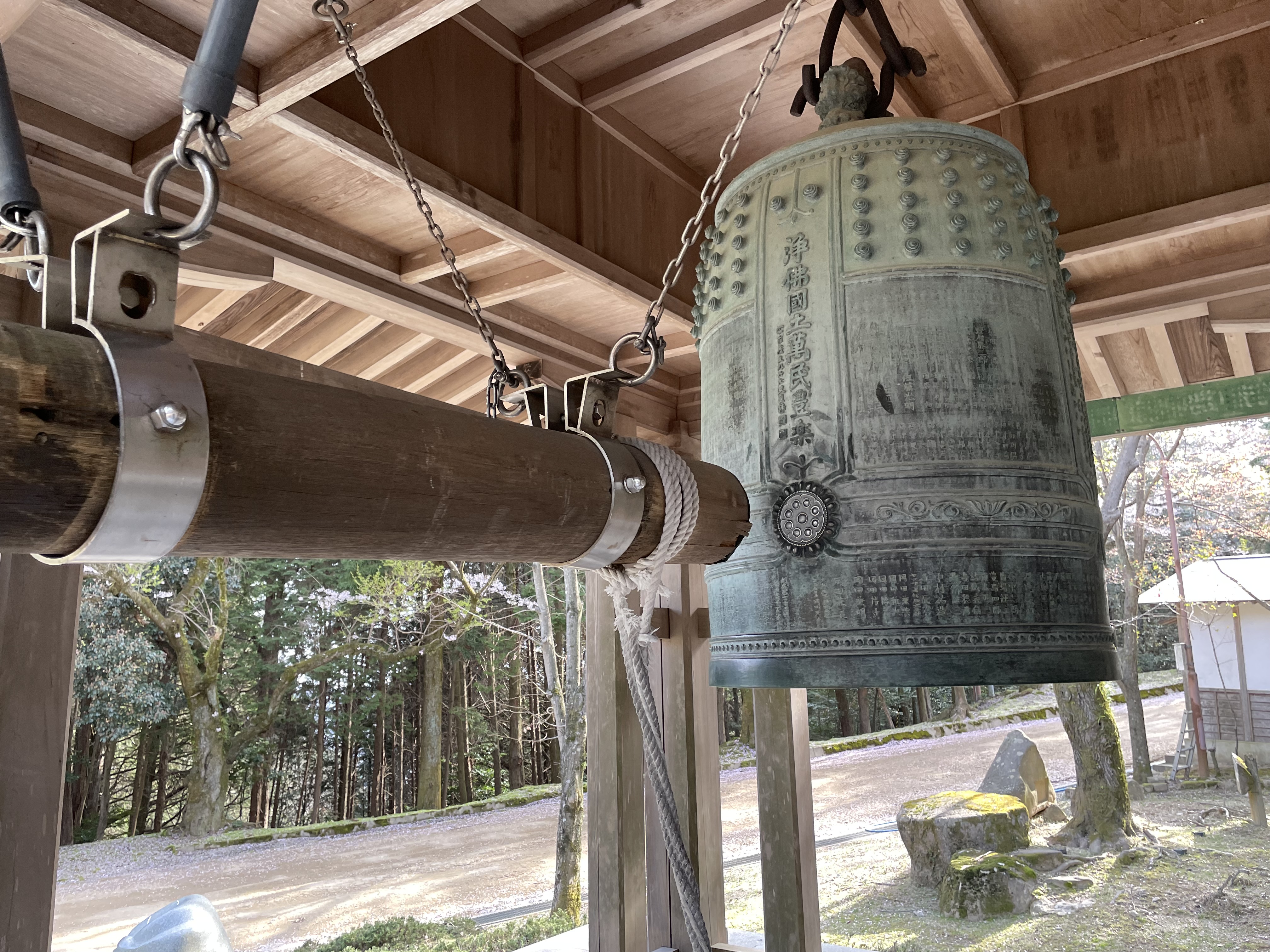
It’s difficult to describe how quiet and picturesque it is. A few lingering cherry blossoms added bits of white to the views. The stonework, dead quiet gardens, and very small temples were the opposite of Horyu-ji–no school groups, no massive buildings, no wide plazas. We spent an hour or so taking it all in, walked down the stone path and across the road, and within ten minutes were back on a bus to Kyoto proper.
Kyoto Bakeries

I love a great croissant, especially in Portugal. Or Kyoto. I love good, strong, fresh coffee. Together? The perfect vacation breakfast.

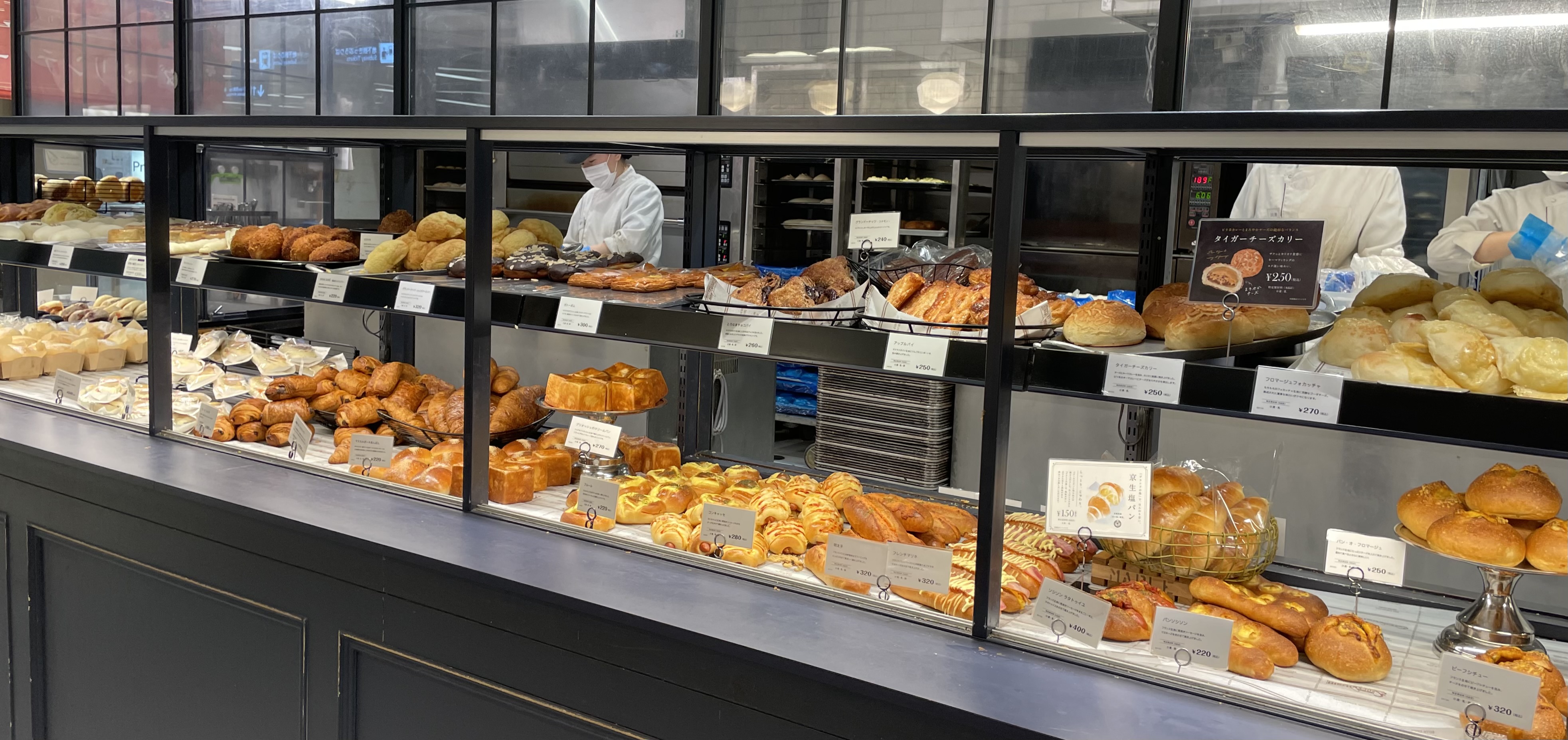
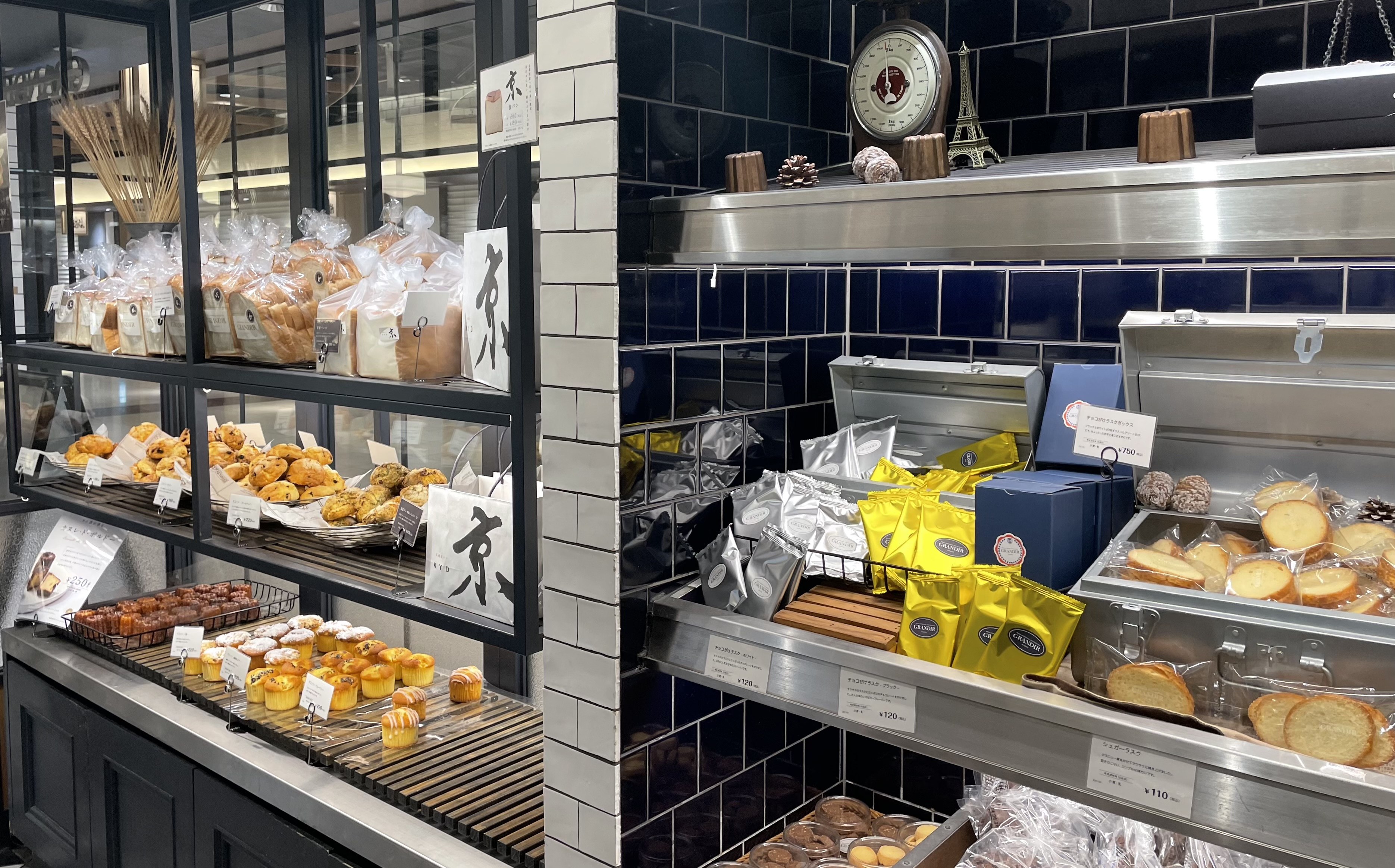
We had visited Ogawa Coffee, in the Kyoto Station underground, many times but when we went looking for it our first morning in town we couldn’t find it. Happily we did find an even better option and went every morning of the week we were in town–Grandir Kyoto Porta Store, marked with a big sign reading “Boulangerie Patisserie.” (A second option, which was en route to the Kyoto Handicraft Center, we also loved–Le Bac a Sable. Amazing cafe au lait and, again, French pastry to die for.)

Great things about Grandir: the cool cash collection system (drop coins onto a conveyer belt thingy and watch them sort and tally), the array of pastry options (thank you again Google translate for the ability to read what the more mysterious items were) and the delicious coffee (free refills) that you get from the machine next to the cashier. Beans are ground to order, coffee is among the best I’ve ever had, and the extremely rich cream…well, it’s all yummy. Take, you know, that one Porta (underground shops) staircase down, it’s right there. Free wifi, too.

Philosphers Path

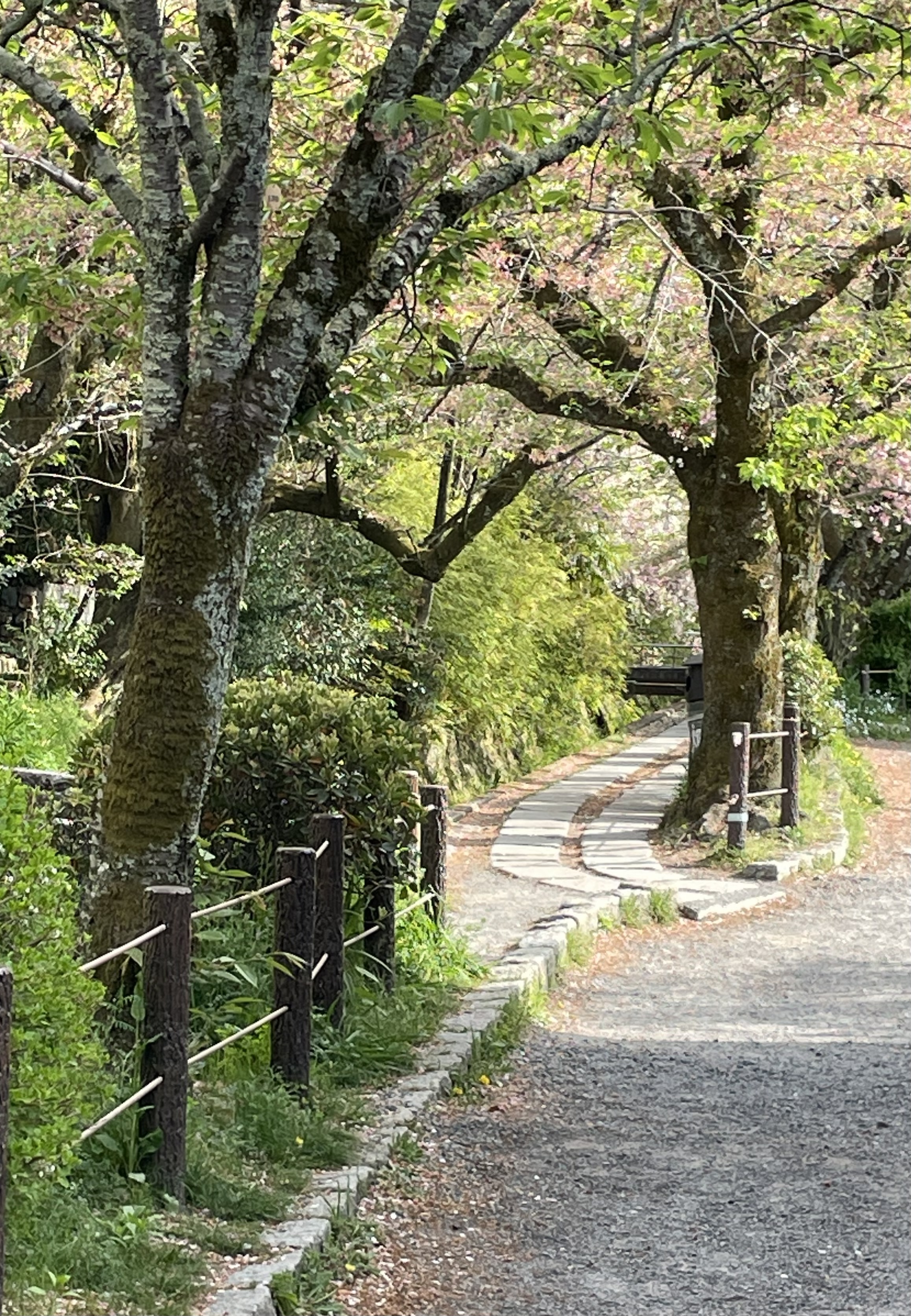
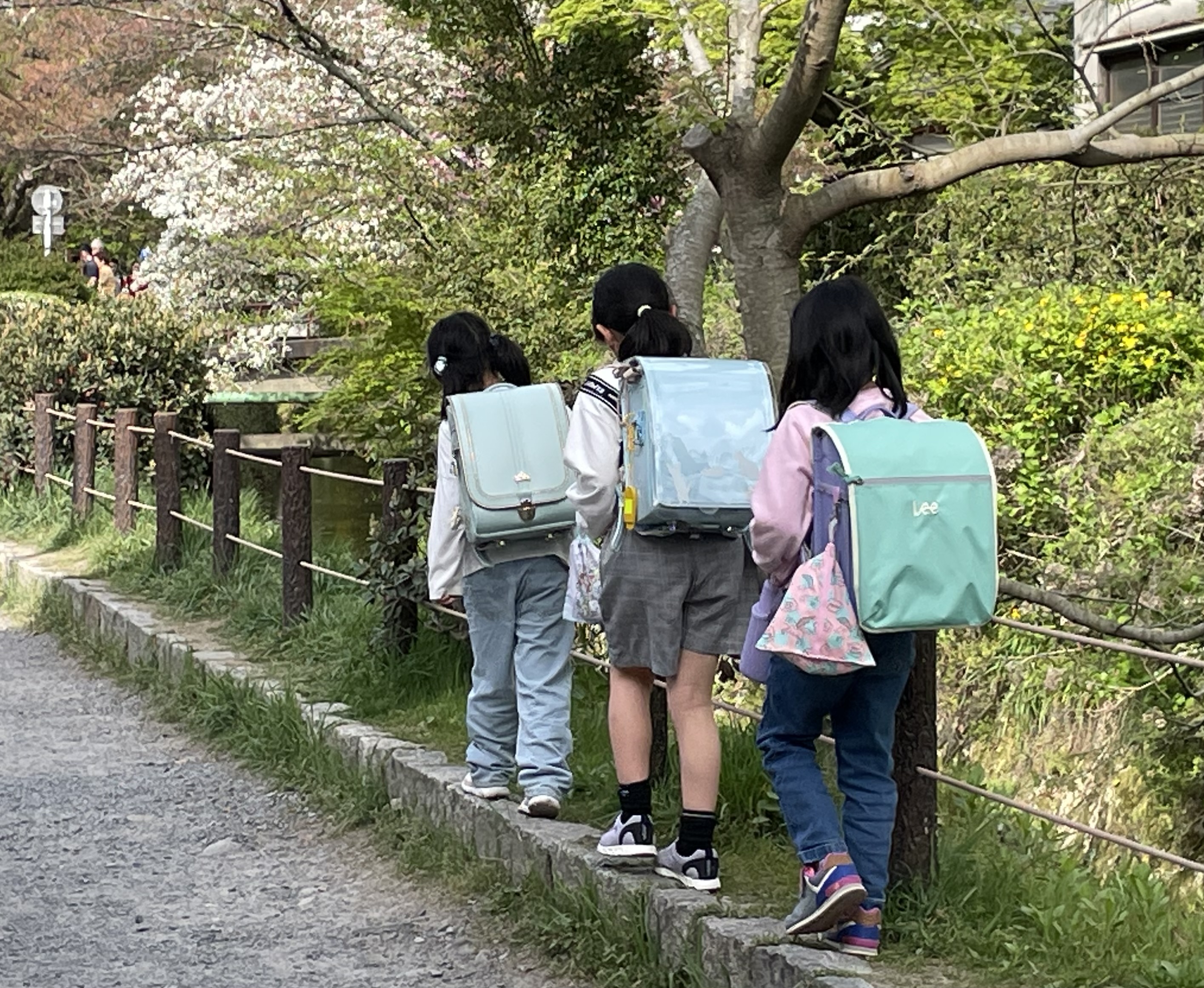
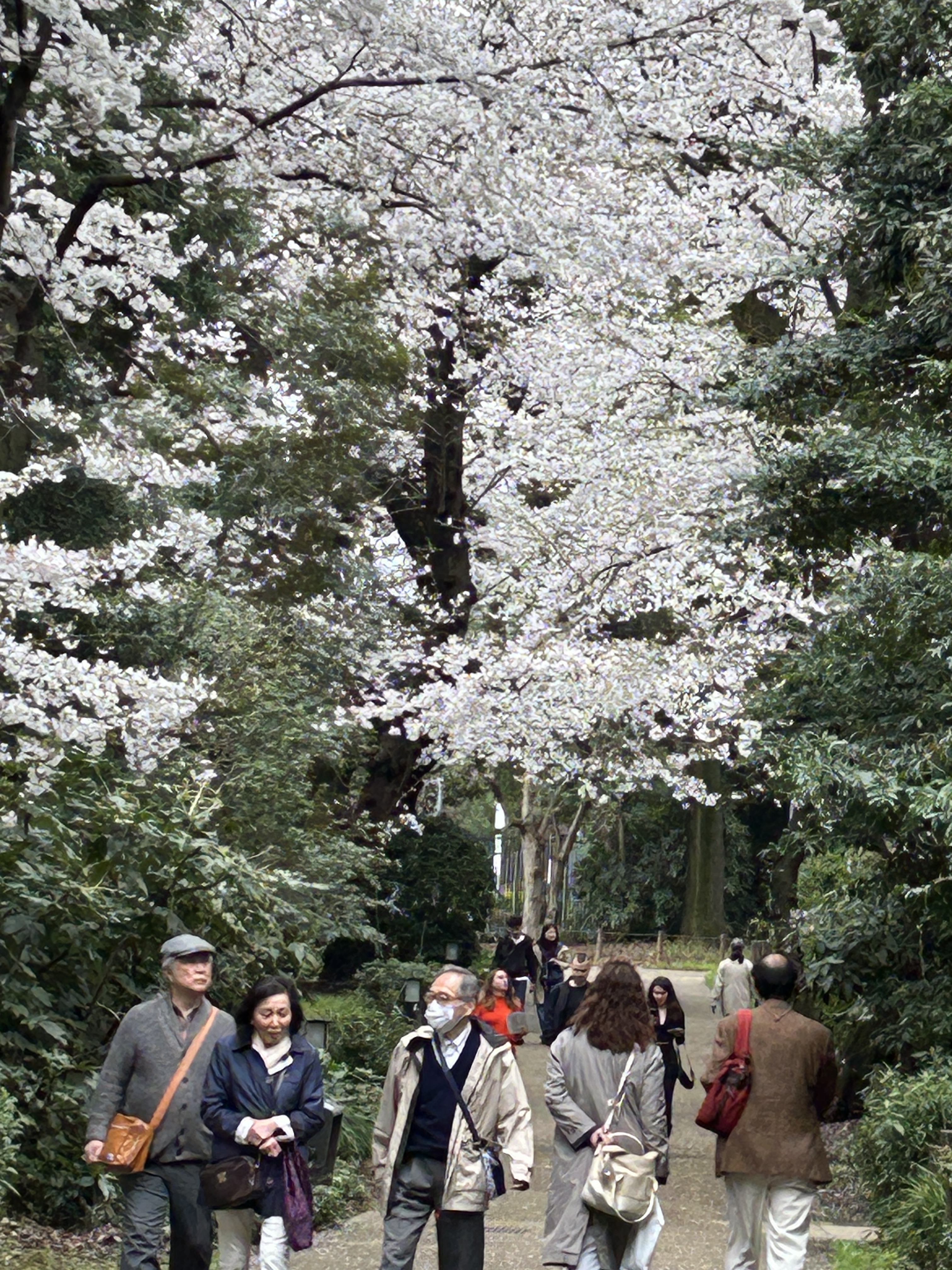
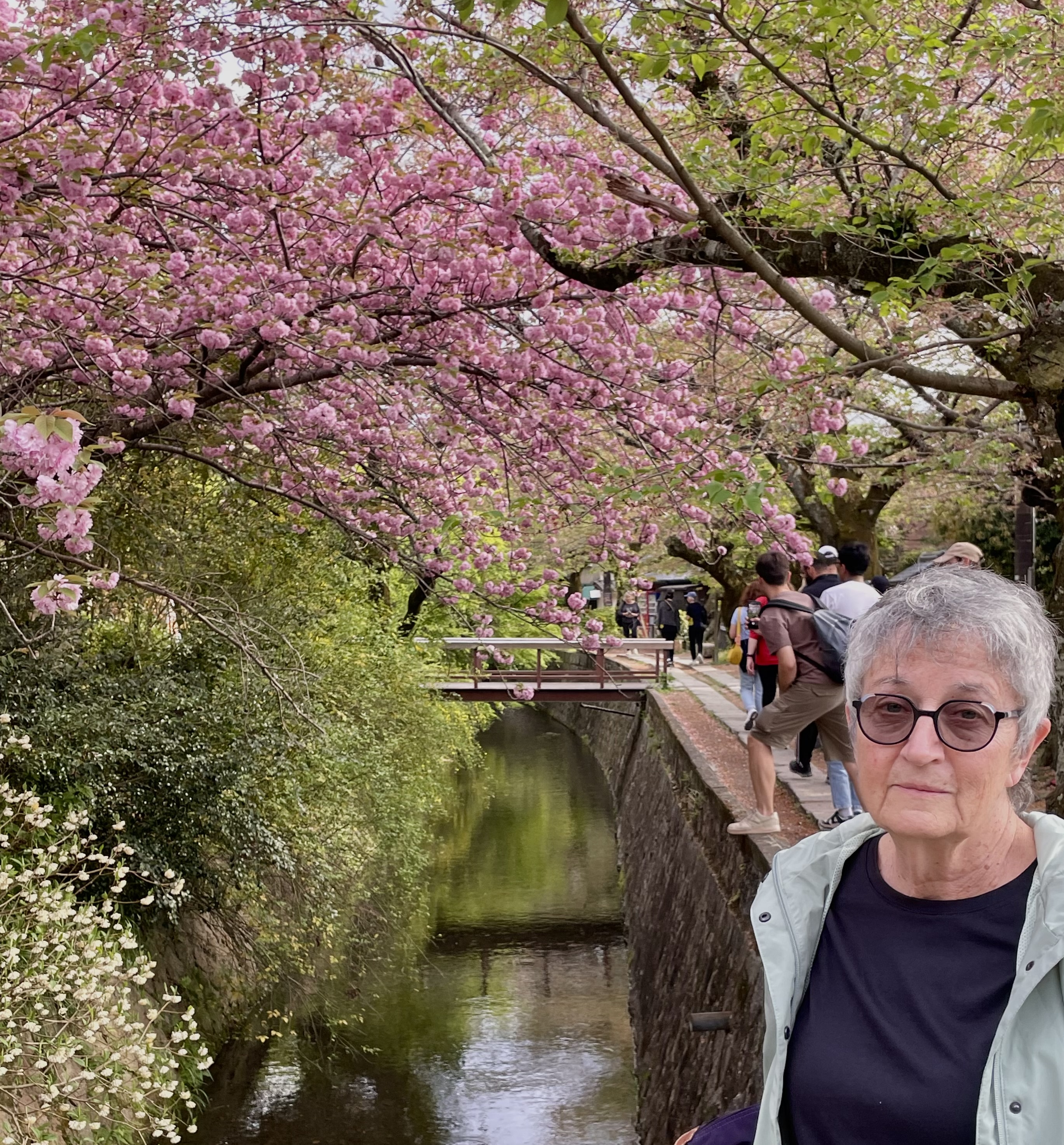
This well-known walk in Kyoto, even when lots of tourists are in the area, is well worth the short bus ride to its beginning. During cherry blossom/sakura season it’s so much more and even though we had walked it on a prior visit we had to return. There’s not much more to say. Don’t miss it if you are in town.
My Artist Sister’s Request

When asked what she wanted as a gift from Japan my ridiculously talented artist sister had one desire–handmade paper. Okay! I asked cousin Harumi for her recommendation Kyoto and she said she did have a favorite place but wasn’t able to find it on a previous visit. Google maps to the rescue–there it was, Kajimi Kakimoto, not a long walk from downtown.

I had no clue what I was looking for and had neglected to ask my sister what her intentions were for the paper. Fortunately the young man working there was so helpful; unfortunately the inventory is enormous. But after his guidance I was able to select several kinds, and two big colored sheets that had to go into a tube, and we left satisfied. That tube was a source of anxiety the rest of the trip because it was “too long” for carry-on and Zipair is extremely fussy about dimensions and weights of checked and carry-on luggage. Happily, when we checked in for our return, after several conferences and a second visit, by the young man at check in, to the place where travelers can measure bags, and a quick consultation with a supervisor, it was judged ‘okay.’

A fun discovery after our purchase was that according to the map even though we were quite a way north of the train station it was a straight shot down the same narrow street all the way to our hotel. As we got within a few blocks of the Dormy Inn David and I looked at each other. Wait a minute–isn’t that the Family Mart (konbini) we went to when we were looking for that terrific izakaya (bar with food) on our last visit? When we couldn’t find the bar anywhere and finally snuck down a dark hallway off a parking space, tentatively slid open the shoji screen, and discovered a hopping bar scene? Yes, it was! Yup, we had to go back!

Bar Food

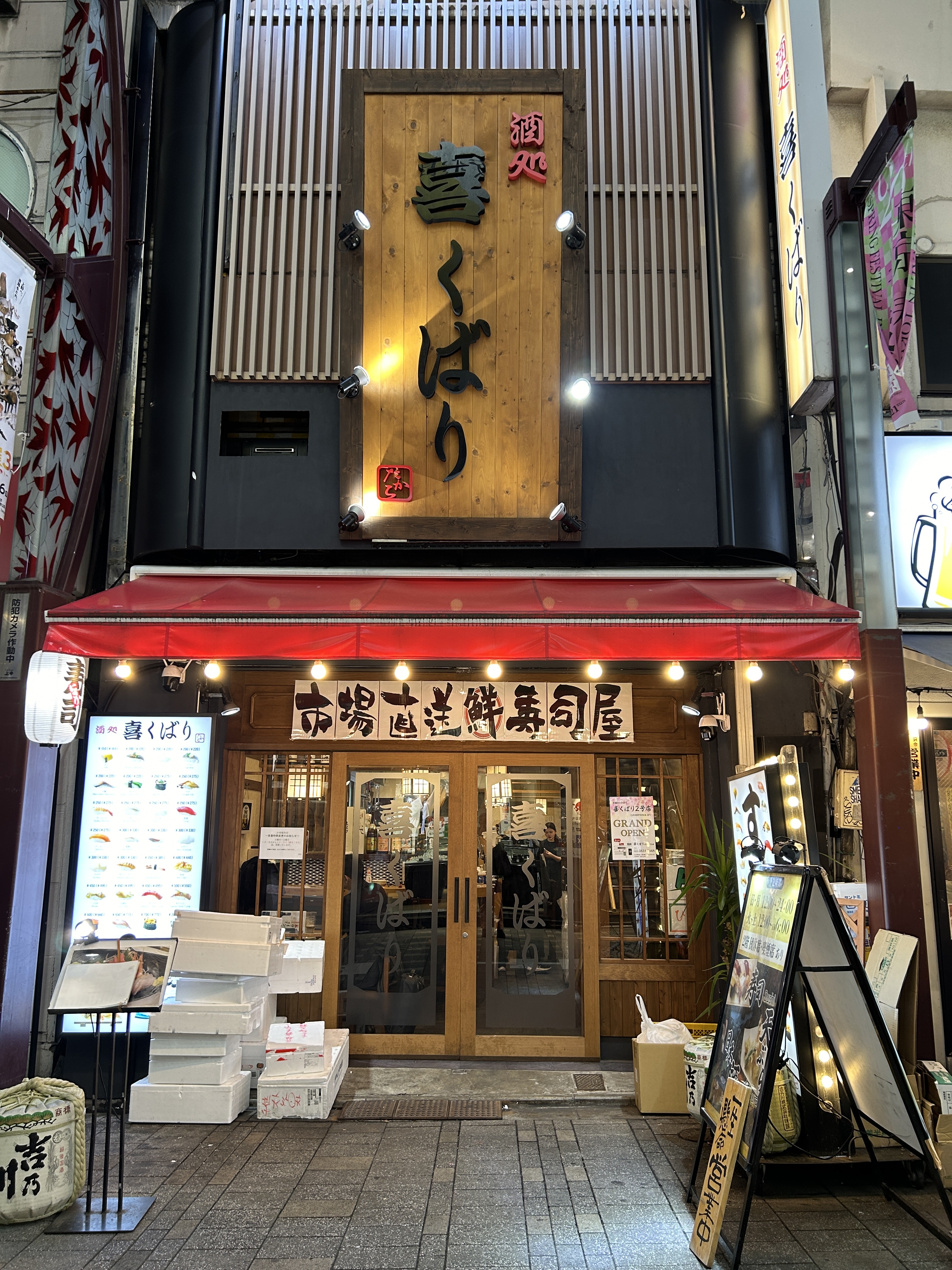
Kurakura, a place I had found randomly on Trip Advisor last time we were in Kyoto, was and is a fantastic izakaya a 5 minute walk from our hotel. We couldn’t have been happier we found it again–I had no record of the name and only a vague memory of how we found it.

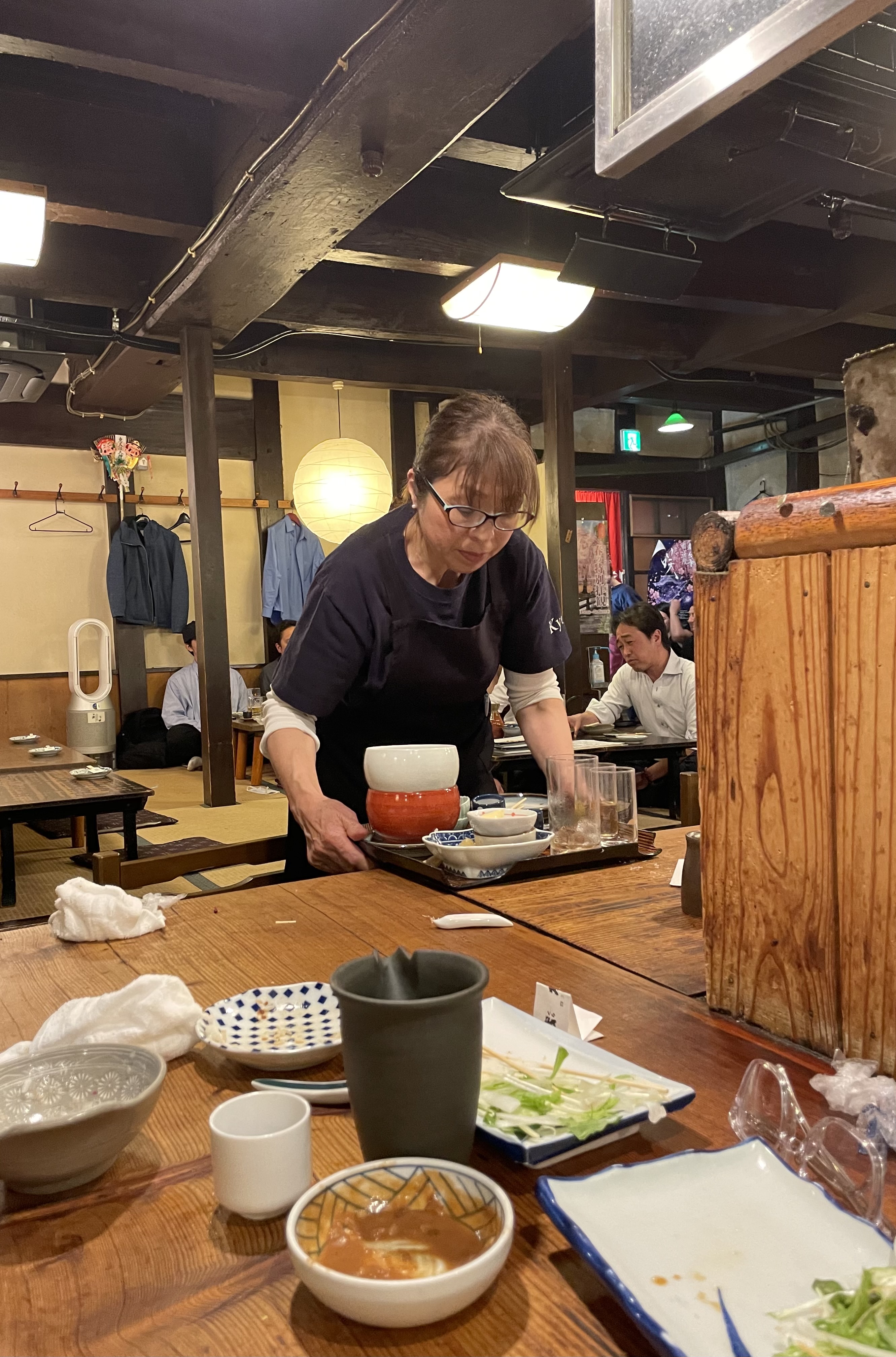
In we went, to be asked if we had a reservation. Reservation? Uh, no. Five minutes later we were seated at the bar–where we wanted to be. The place was hopping for a midweek night. We ordered a large sake and ran down the familiar menu and ordered five or six dishes. Sake was a local Kyoto brand, cold and dry. Food was mostly fried and delicious. We made short work of all of it and left happy and full.

Noodles

Soba, udon, ramen…yup, love them all and have had them all in Kyoto. The experiences were so different consider this post a compare and contrast.

Cold Somen on a Hot Day

One afternoon wandering from one tiny, wrong ceramics place to another we (I) misjudged the length of the final walk and also misjudged the weather. It was hot. Not hot hot hot, and not at all humid, but the final segment was along a busy street and when we finished not finding anything we wanted to buy I was hungry. I was craving cold somen and David agreed and quickly found a place within a few blocks.

It was Sunday, mid afternoon, but there was a queue. Fortunately we could sit on a bench inside and while it looked like quite a wait from the number of parties waiting, it was the end of the lunch rush and all of a sudden everyone was sent up the stairs where the majority of the tables were and we were seated.

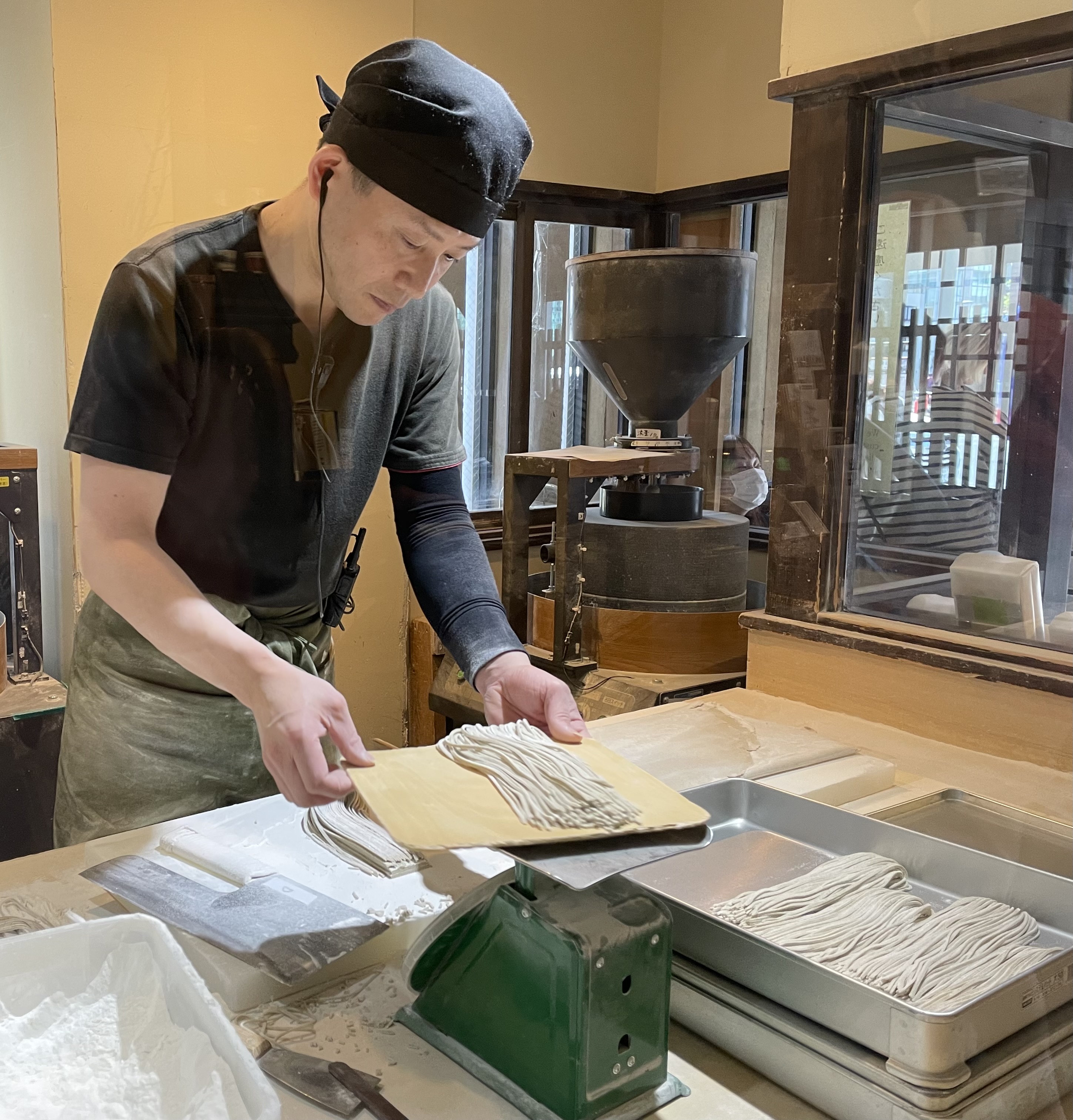
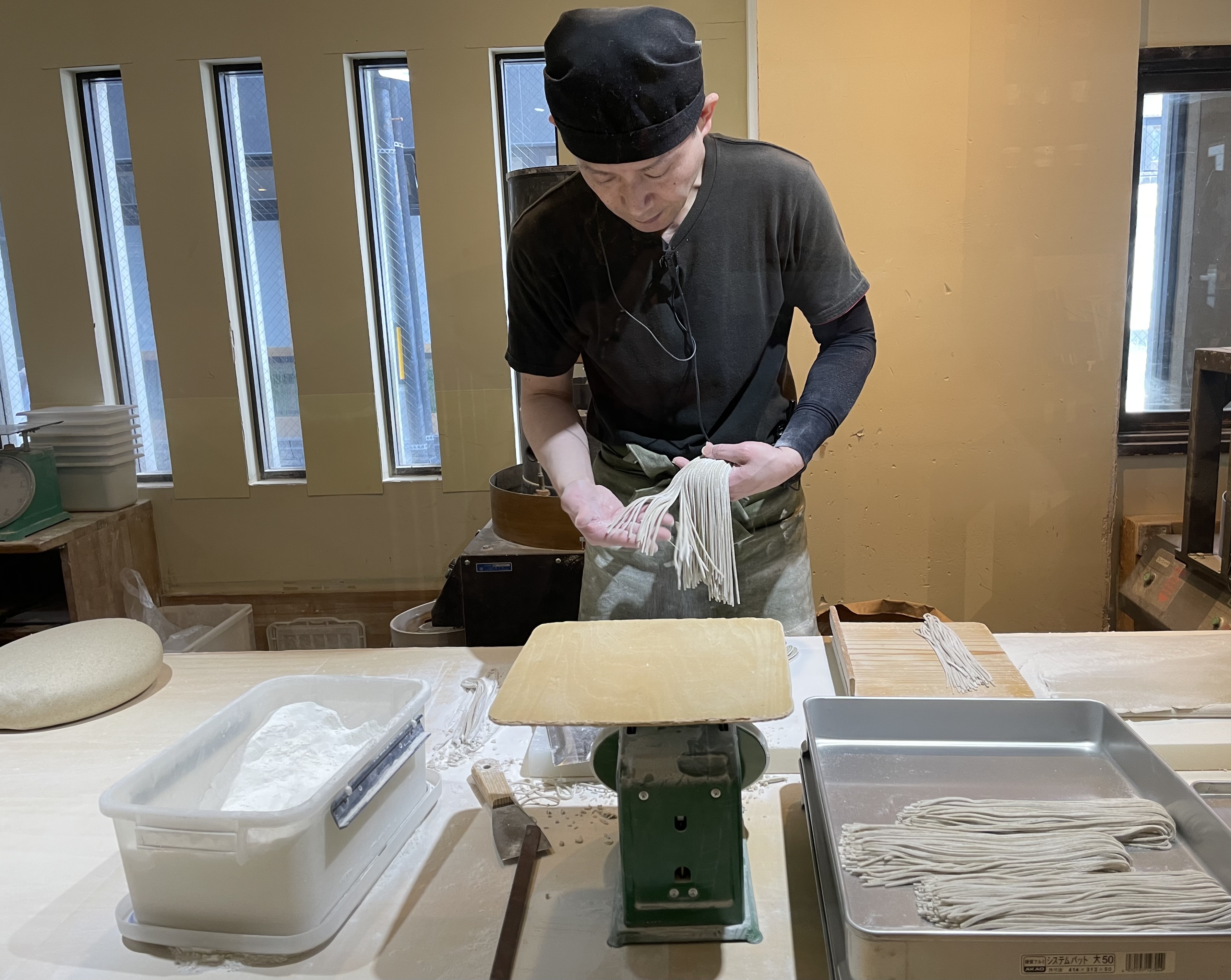
This nondescript-from-the-busy-street place made their own noodles (see pictures). David and I ordered different lunch sets and the food came within five minutes. Pickles, rice (mine with a few tempura and a drizzle of sauce underneath), noodles (my set had two kinds, one with grated daikon, one with just green onions and wasabi). A little pot with noodle dipping sauce. And near the end of the meal a large pot of noodle water appeared for us to add to any remaining sauce to make a finishing soup. Need I add it was delicious?

Arashiyama Udon

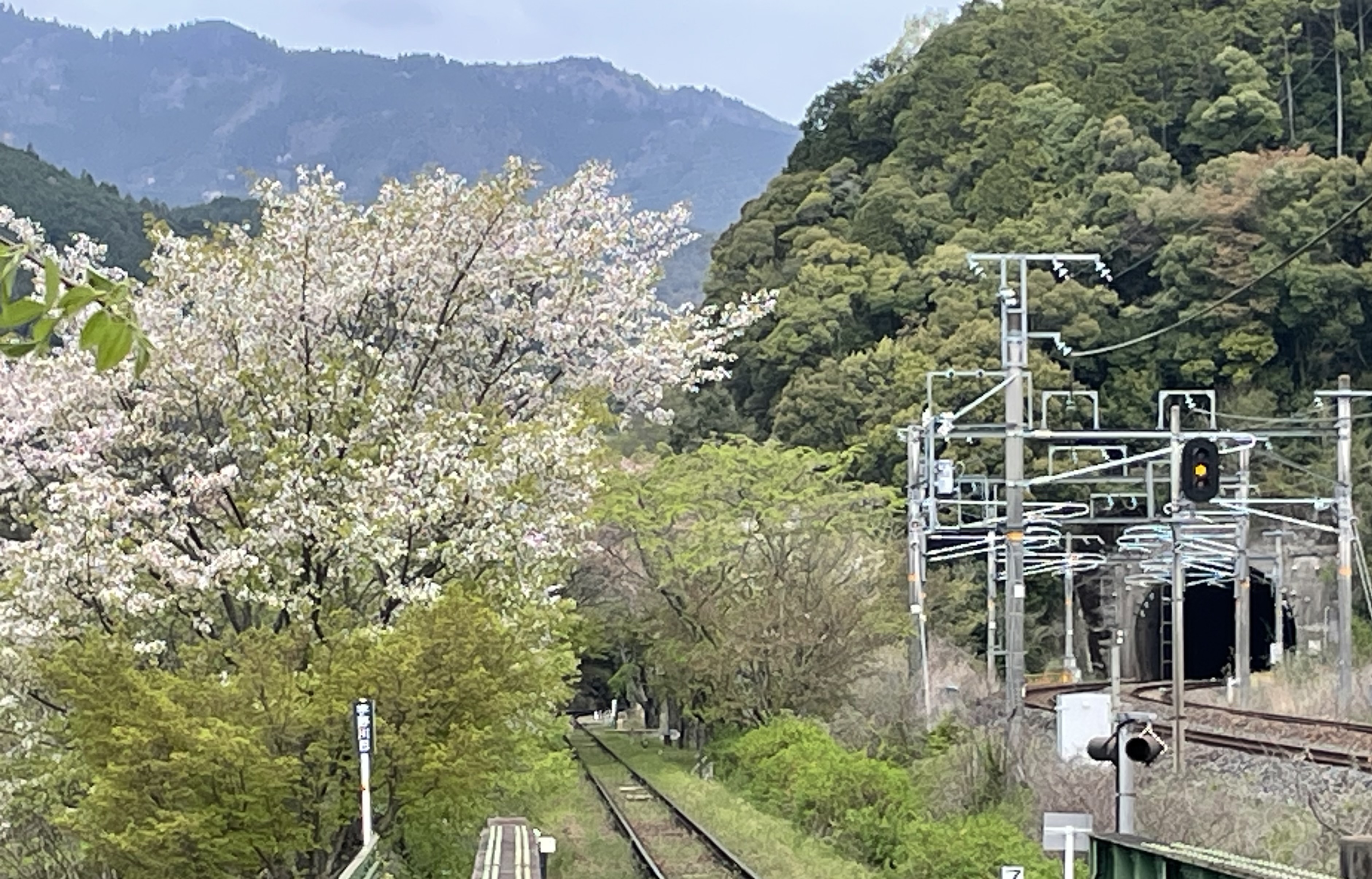
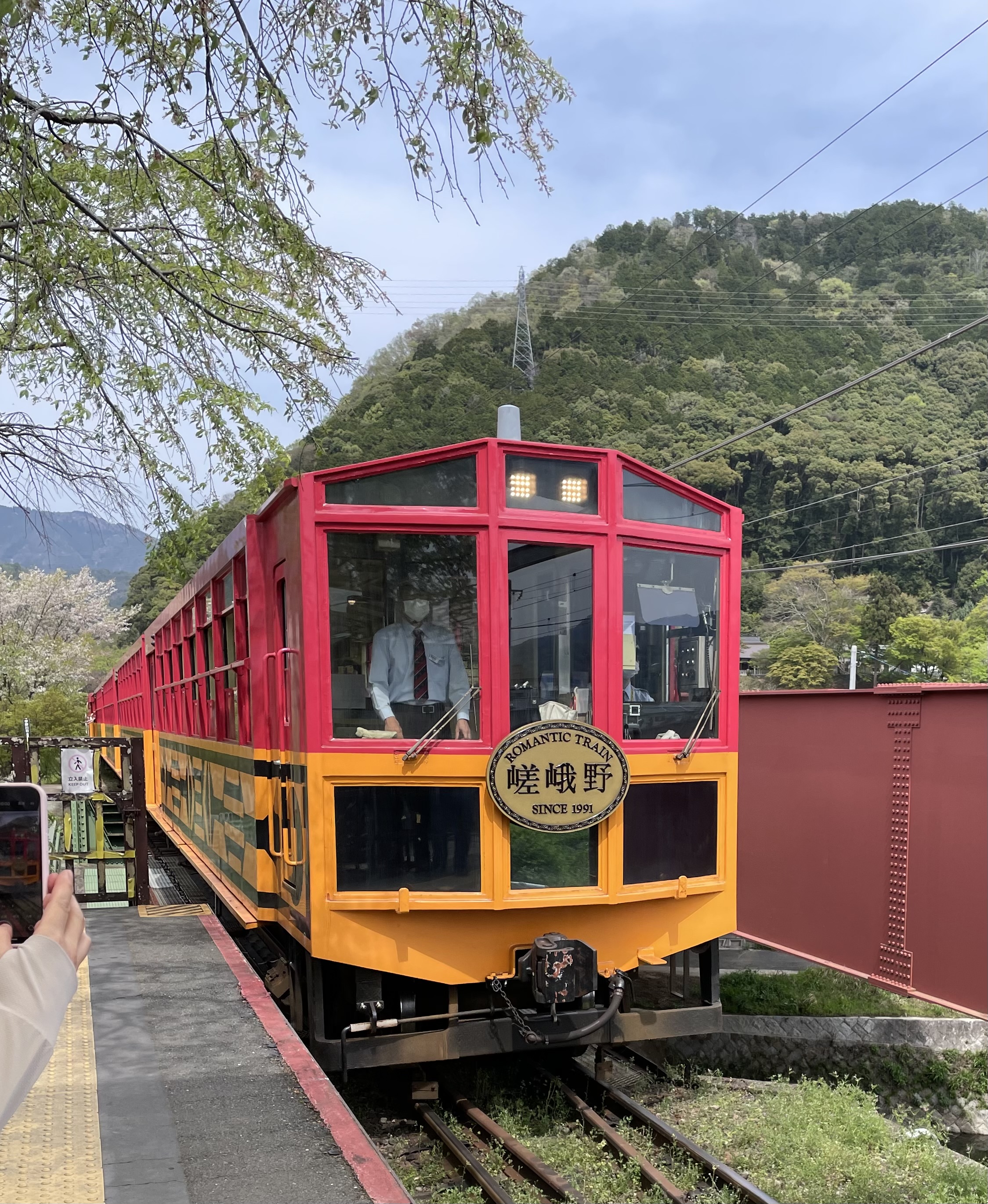
We had visited this lovely part of Kyoto twice in the past so this time we purchased tickets on the 7 km, 25 minute Romantic Train. You take a regular JR train past Arashiyama, walk 10 minutes through countryside from the JR station to the Romantic Train station, and board for the trip back into Arashiyama. The train trip was fun and funny. The conductor talked, solely in Japanese, the entire way, and a large percentage of riders had no idea what he was saying judging from the Chinese, German, English, etc. passengers. We all enjoyed it when he broke into a Don Ho song in a truly lovely voice. The trip itself followed the river unlike the JR train that sped along a much straighter path. We had chosen seats in the open car (no windows) so felt the 15 degree of so drop in temperature as we entered each of the many tunnels.

After such a grueling journey I was hungry again, so we walked through the bamboo forest and into the tourist area. We weren’t sure what to eat (decisions, decisions) but on google saw an udon place more or less directly in front of where we were standing with comments about the long lines. No line! Ten tables, pretty much all Japanese with a few entertaining families (we miss Poppy!) and excellent food.

Again, large lunch sets. I ordered the udon with duck. Both sets came with a scoop of tofu in a bit of dashi and grated ginger on top, enormous bowls of udon, a bowl of what seemed to be fried rice—it was rice mixed with enoki (?) mushrooms and other things. Yummy. We plowed through the servings and left more than satisfied.

Communal Ramen

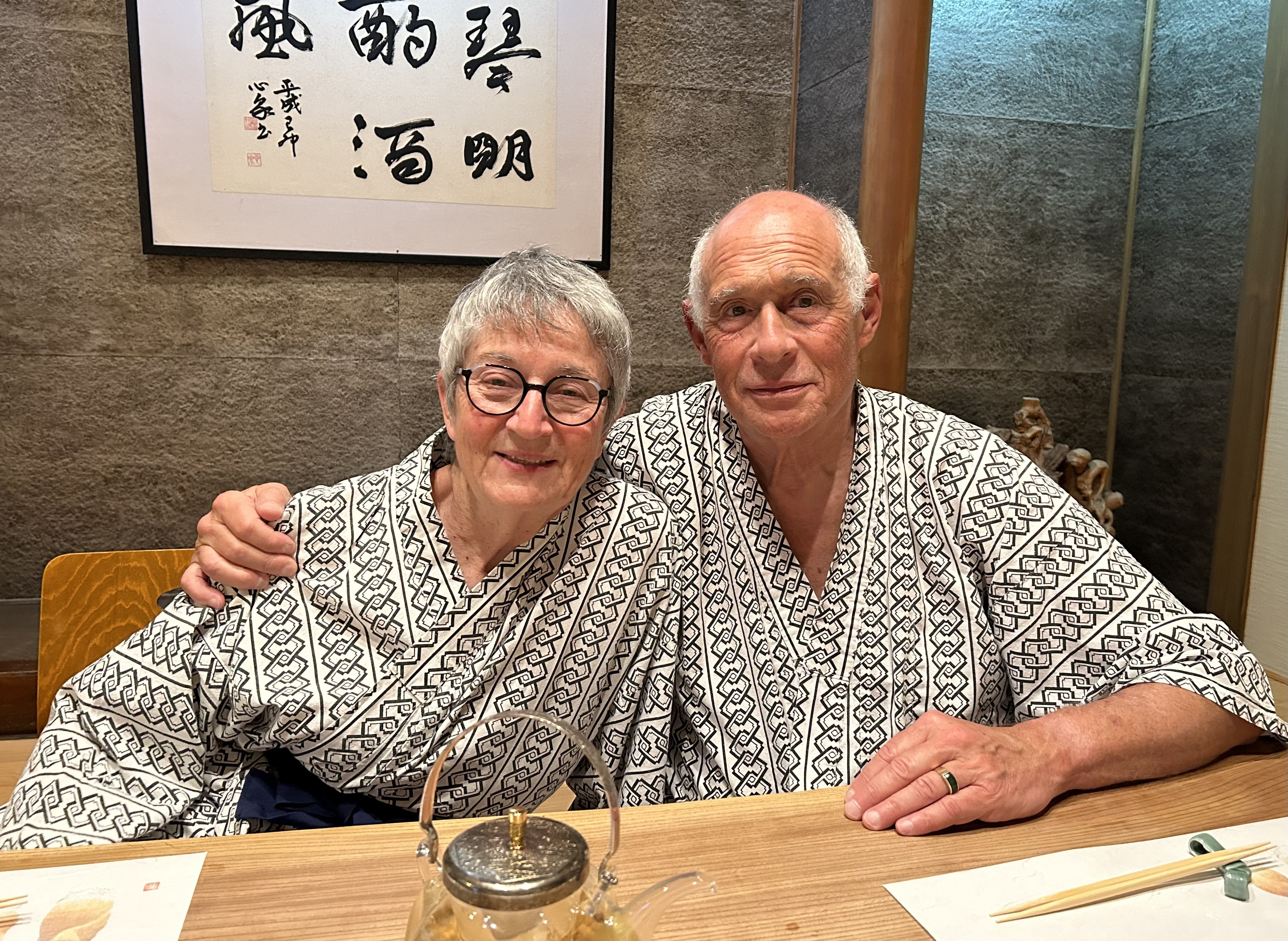
Except for our stay in the Tamba ryokan we have booked into Dormy Inns. They all have onsens, so lovely after a day of touring, huge buffet breakfasts (eggs seven ways!) and ramen from 9:30 to 11:00 each night. The ramen was a life saver the night we got to Tokyo, and last night after the late okonomyaki lunch in Nara it was all we needed for sustenance. The hotels supply top and pants sets to wear to the onsen, and, as posted, are appropriate to wear anywhere in the hotel. It is so casual and comfy to see many of us wearing the same beige PJs in the lobby, the breakfast room, the elevators, and for nighttime ramen. We loved it.

Not Noodles: Okonomiyaki Stop in Nara

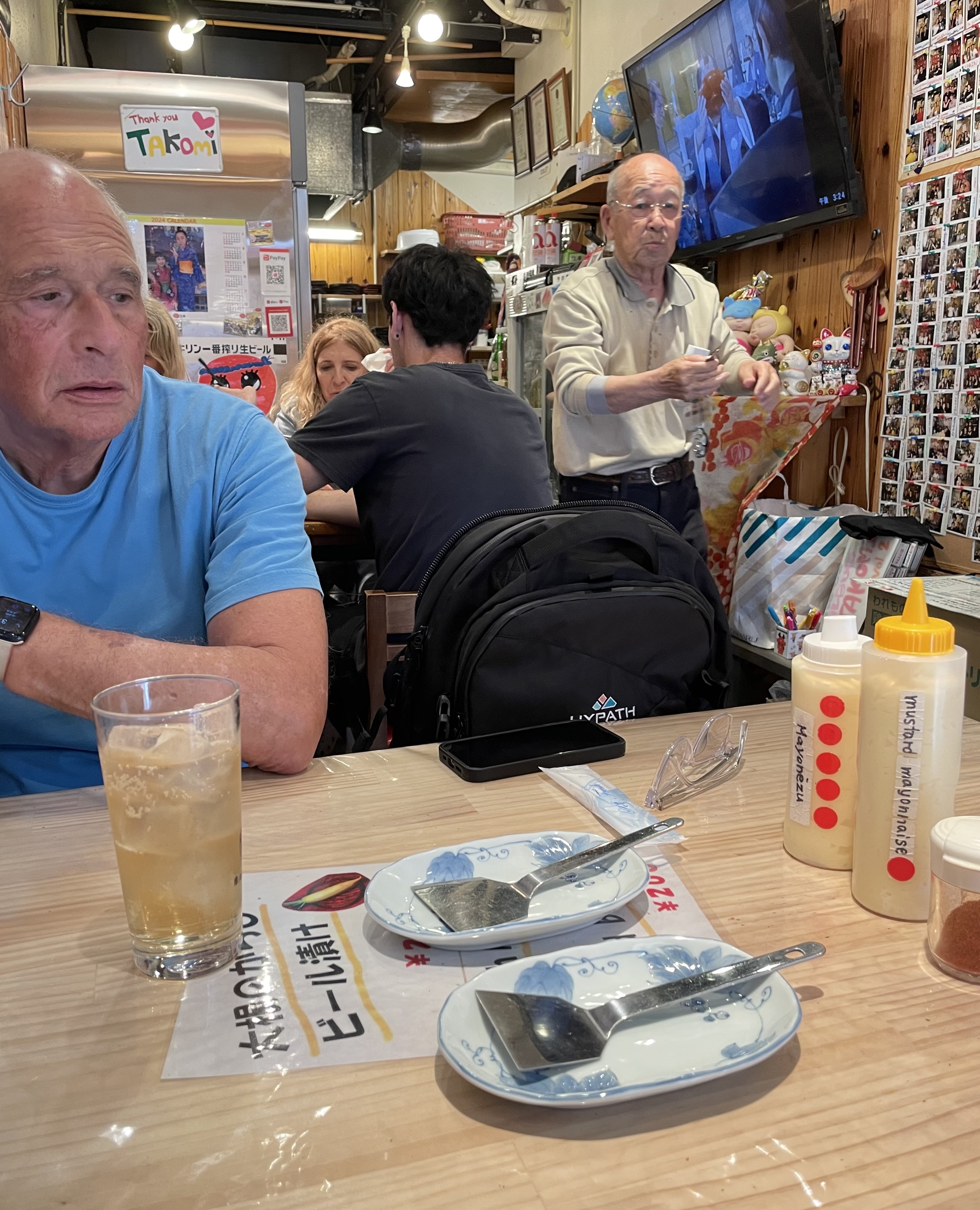
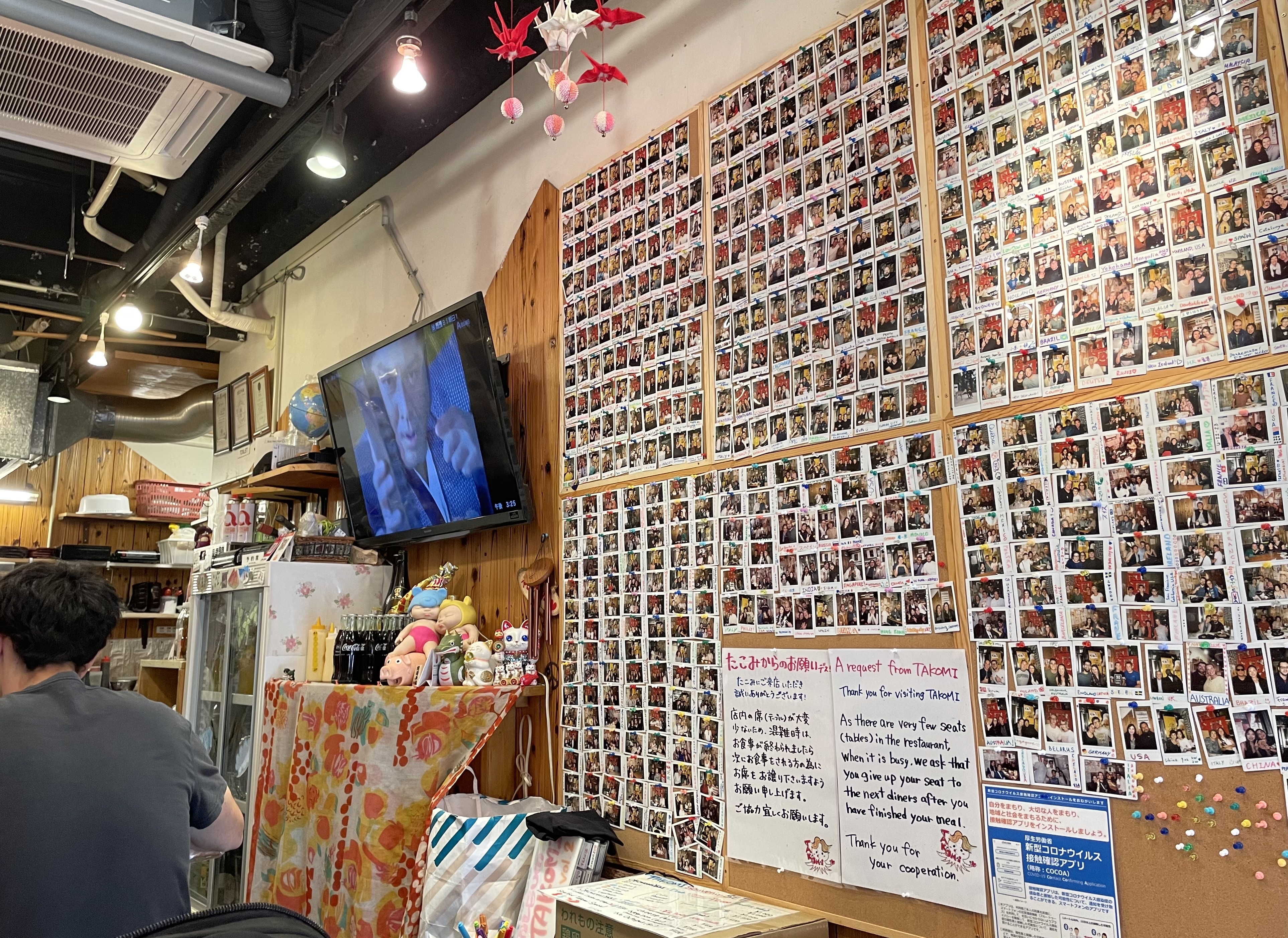
We were truly tired after a long trek around the Horyu-ji Temple complex—a quick train ride from Nara and where the world’s oldest wooden structure stands—and our plan had been to stop for okonomiyaki in Nara. We picked the one closest to the train station and found ourselves in this little gem named Takomi. Two tables inside and one on the sidewalk. We watched the server, all hustle and smiles, reshuffle patrons several times to make sure every seat was filled and no one was waiting. The food came literally sizzling on metal platters, so hot I had to move each bite to the side dish just to be able to eat it. Our table mates were a New Zealander guy and Thai gal, both now living in Thailand and having a
long weekend in Japan. I tried my best to finish my food and almost did.

Our delicious Dormy Inn ramen—no extra charge.

Escape to Tamba

The train from Osaka station to Tamba took about an hour, a short ride to a different world. Harumi had booked a ryokan stay for us three and she chose well. Sasayama Kinmata is small, old, quiet, lovely. Unlike a typical hotel we had booked a room for three, which meant one large bedroom, with bath and sitting room, three comfy beds. Given our onsen experiences over the previous few days it didn’t feel the least bit awkward. And the beds…white fluffy comforters were like sleeping in marshmallow. In a good way.

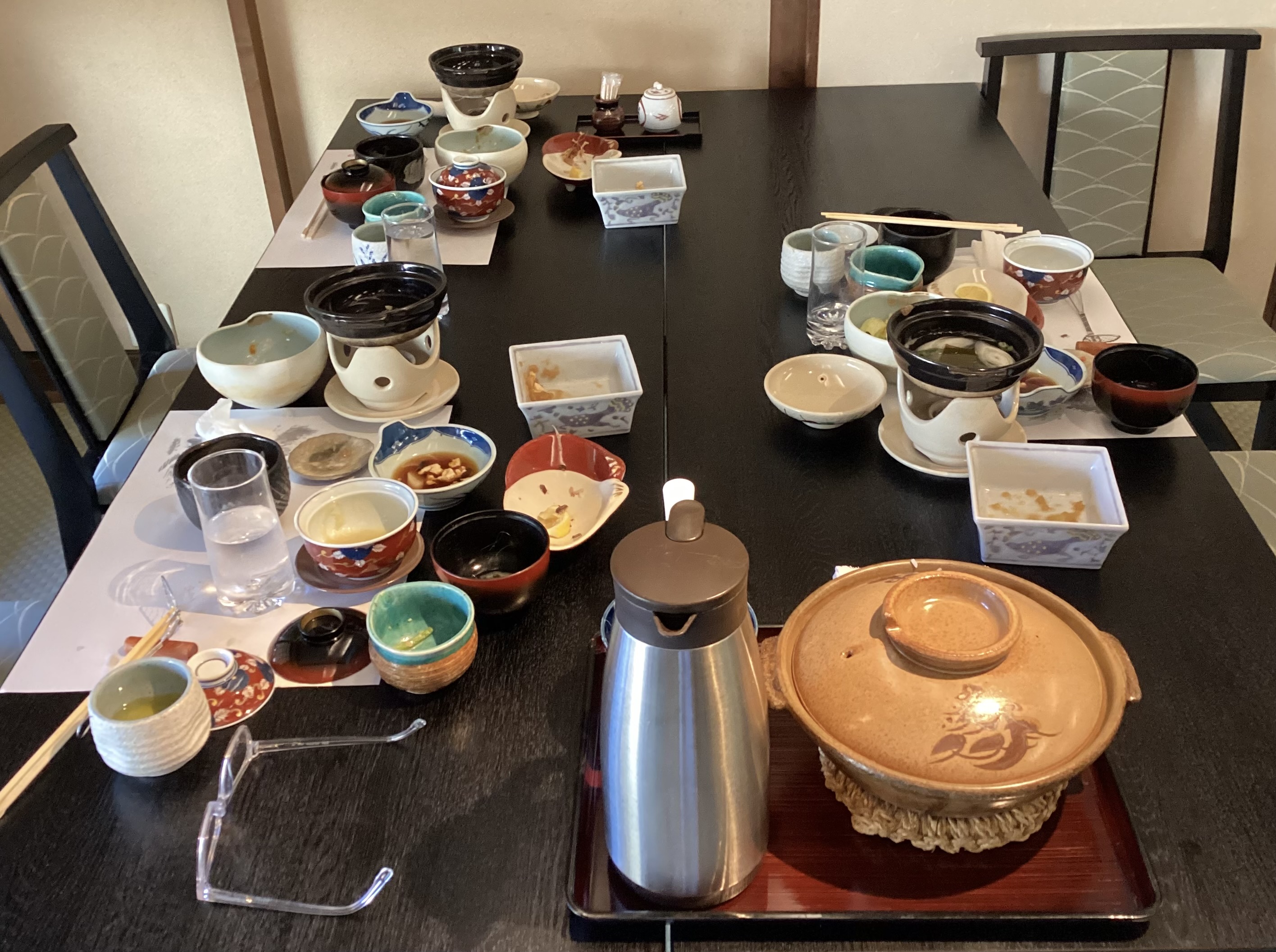
These places are not cheap. You are paying for especially nice hot spring baths and the kaiseki experience for dinner and breakfast. As a guest you are in the hands of a chef and every course, every bite, celebrates the season and local foods. It is an experience. Some of the food was as exotic as Japanese dishes can be, mixing textures and flavors in ways David and I have never had before. Some is familiar—and of surprising quality. For example, the rice we had for breakfast came from the ryokan’s own fields, cooked to a translucent perfection. I mean, the rice here is pretty darned good everywhere but this was extraordinary.

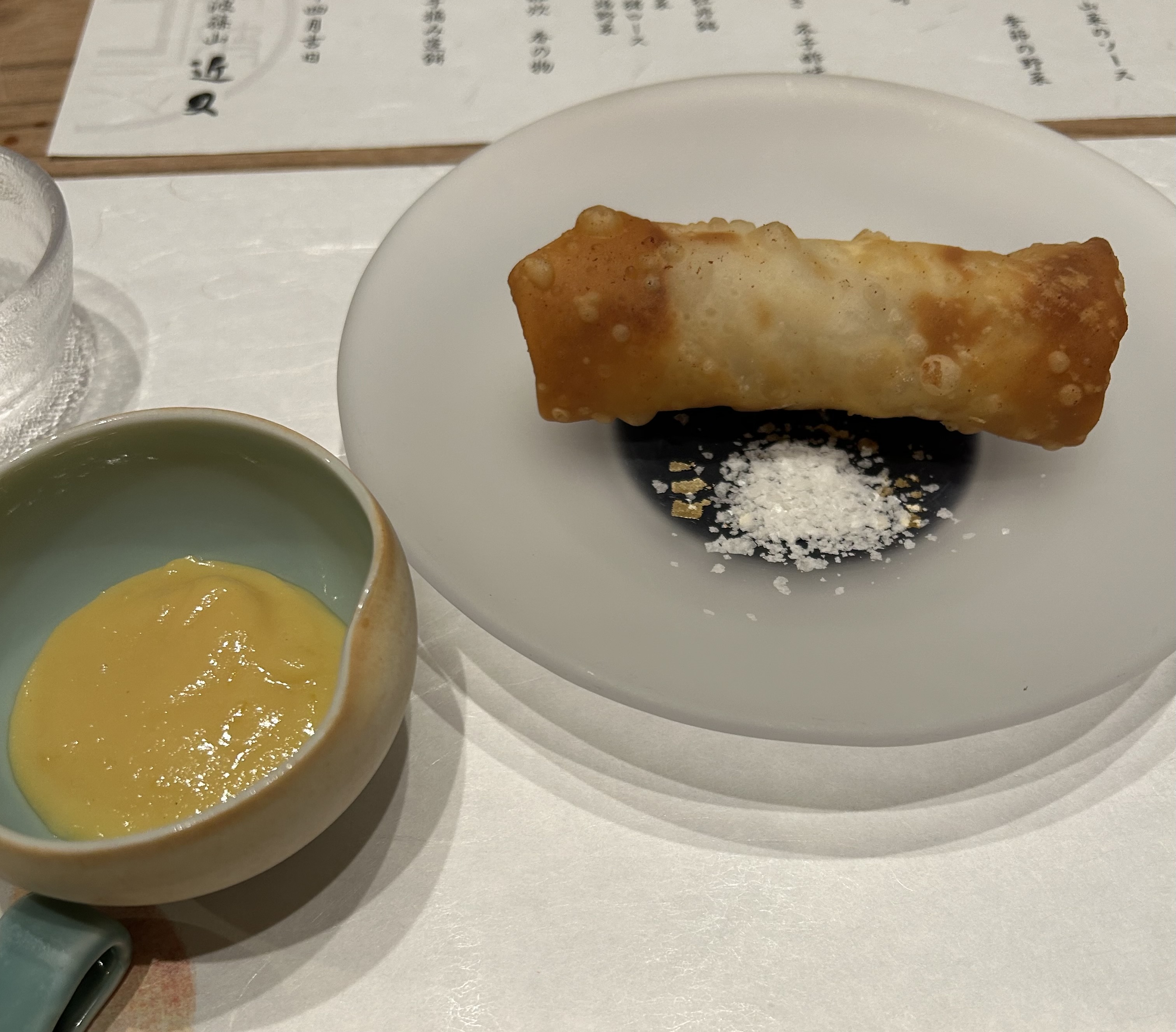
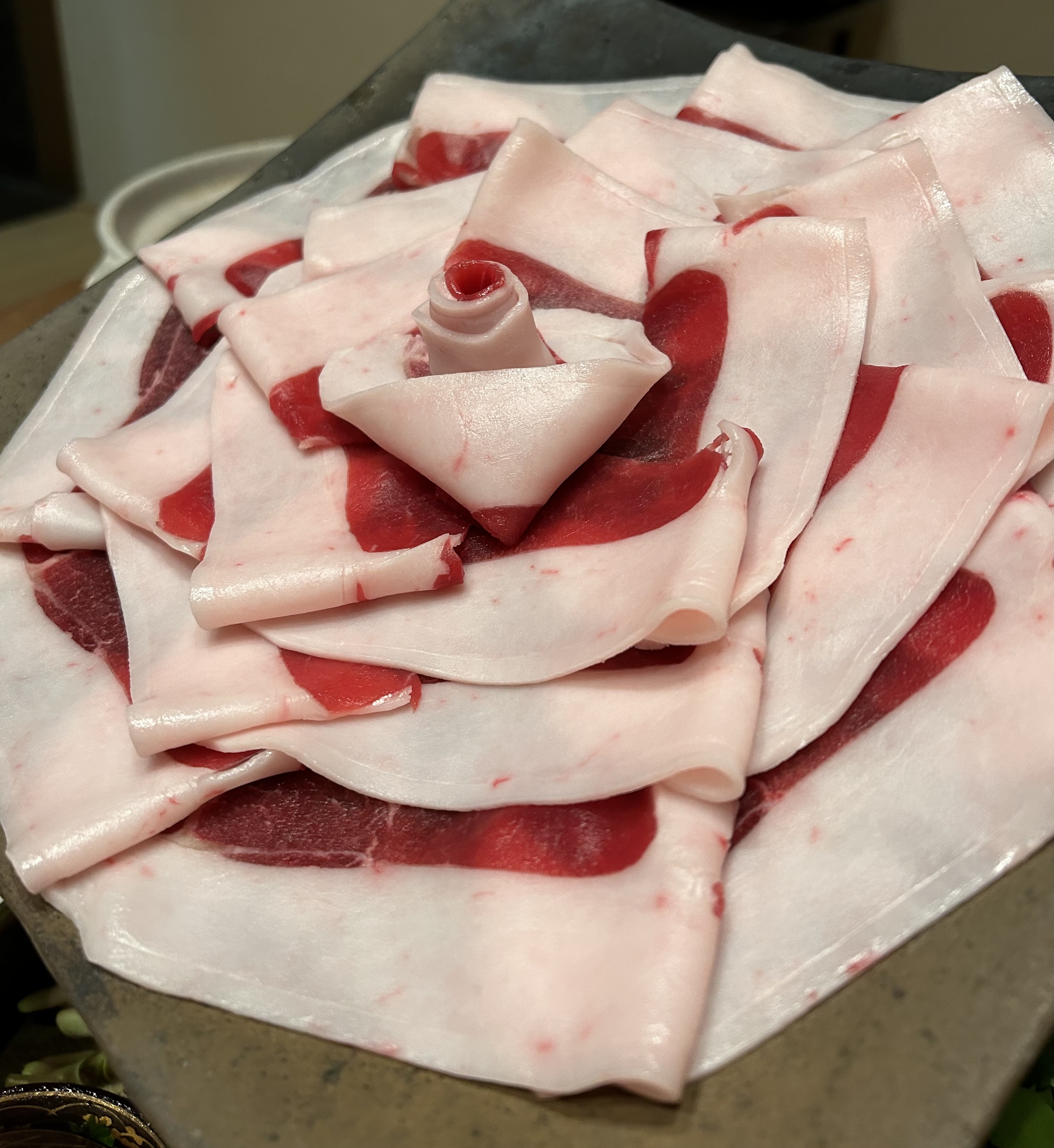
Tamba is known for its wild boar and it was the centerpiece of the meal in the final course, hotpot of spring greens—a type of celery leaves plus their slender roots, wild watercress, a kind of broccoli, bamboo shoots, even tiny sprigs of Szechuan peppercorn leaves. And a few others I don’t remember. The boar is traditionally sliced, the red meat and pink fat almost transparent and arranged in the shape of a peony on a large platter. While the amount of fat to meat was startling and a bit scary, as you eat a piece dipped out of the simmering water you cannot discern what is what. Not remotely greasy or fatty in feel or taste. Preceding the hotpot were tea smoked local trout, pressed salmon sushi, a spring roll with miso-citrus dipping sauce. And a dish i cannot remember except that the dollop of wasabi had just been grated.

Dinner started at 6; we struggled to get up from the table at 8:30. The final dish, a dessert of the softest and freshest mochi, green and dusted with rice flour, was delivered to the room. Yes, we ate it with delight.

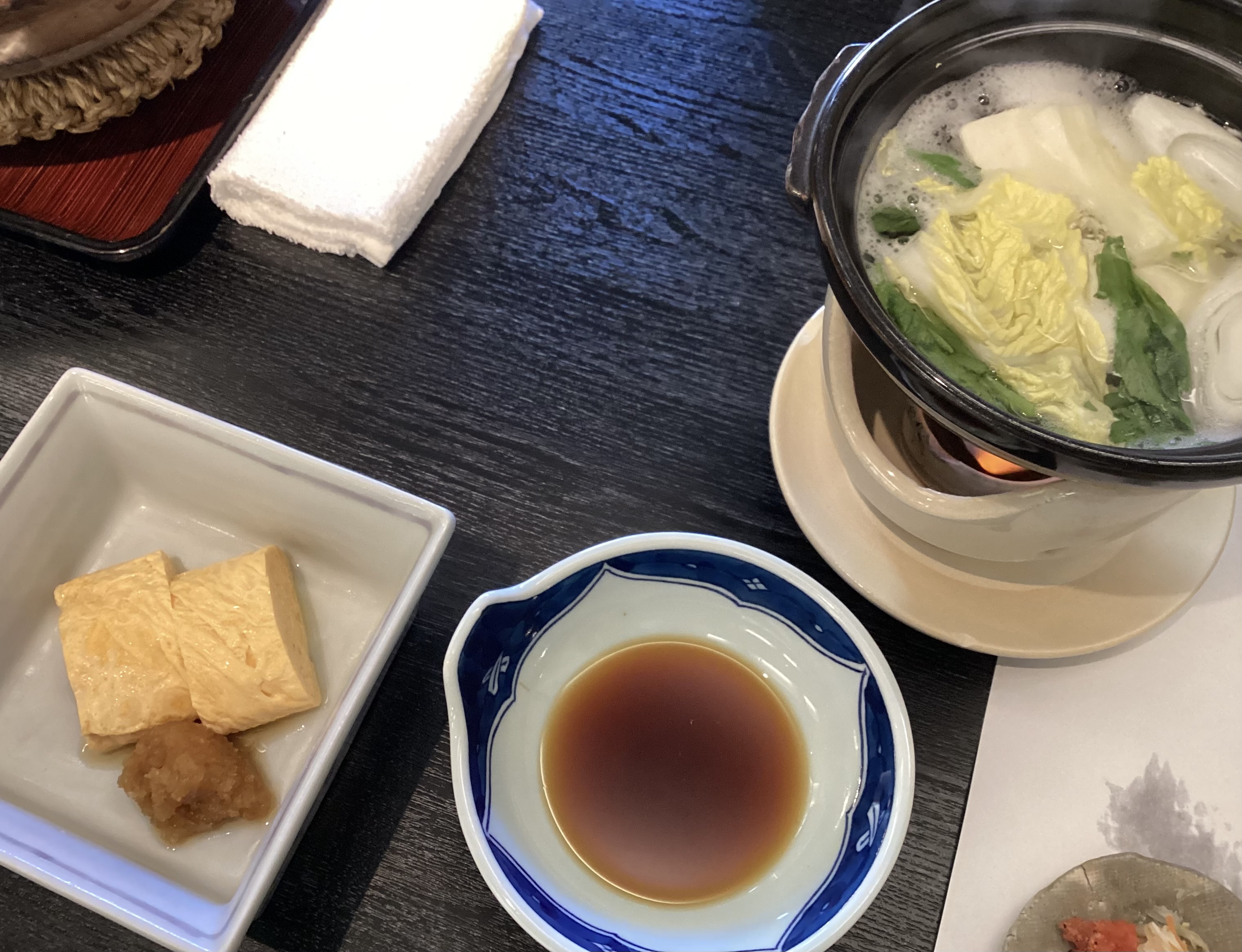
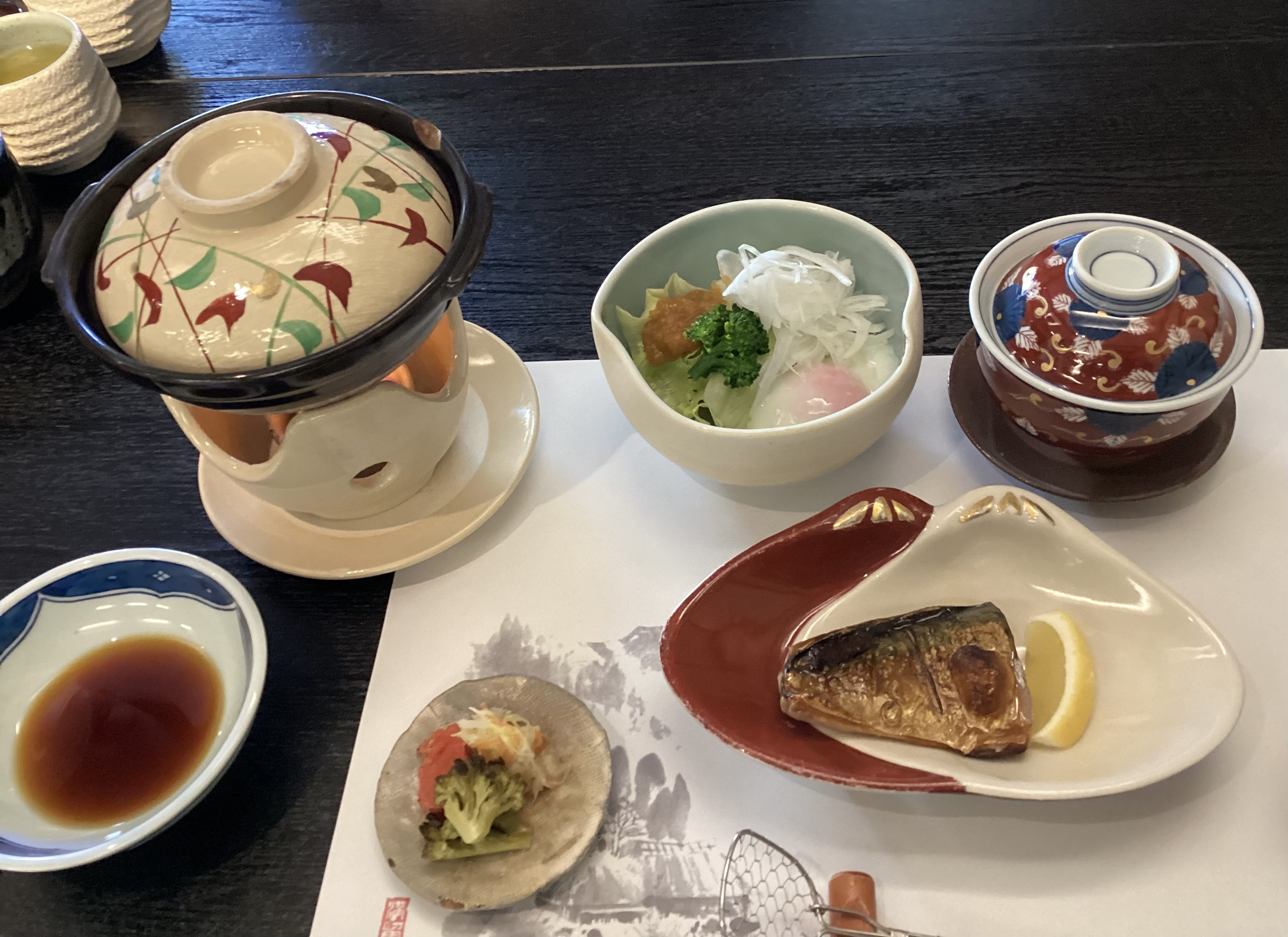
The next morning we woke up hungry, luckily, because another feast awaited. The aforementioned rice, tofu simmered with fresh spring vegetables with a delicious dipping sauce, warm rolled omelettes, pickles, miso soup, a salad of sweet onions, lettuce, a coddled egg, and miso dressing…and I am sure i am forgetting something. Oh, yes, smoked fish.

We packed, checked out, and went to explore the town and find some ceramics to buy. My biggest regret is we forgot to take pictures of the charming, friendly, overflowing ceramics store where we could have bought suitcases full.

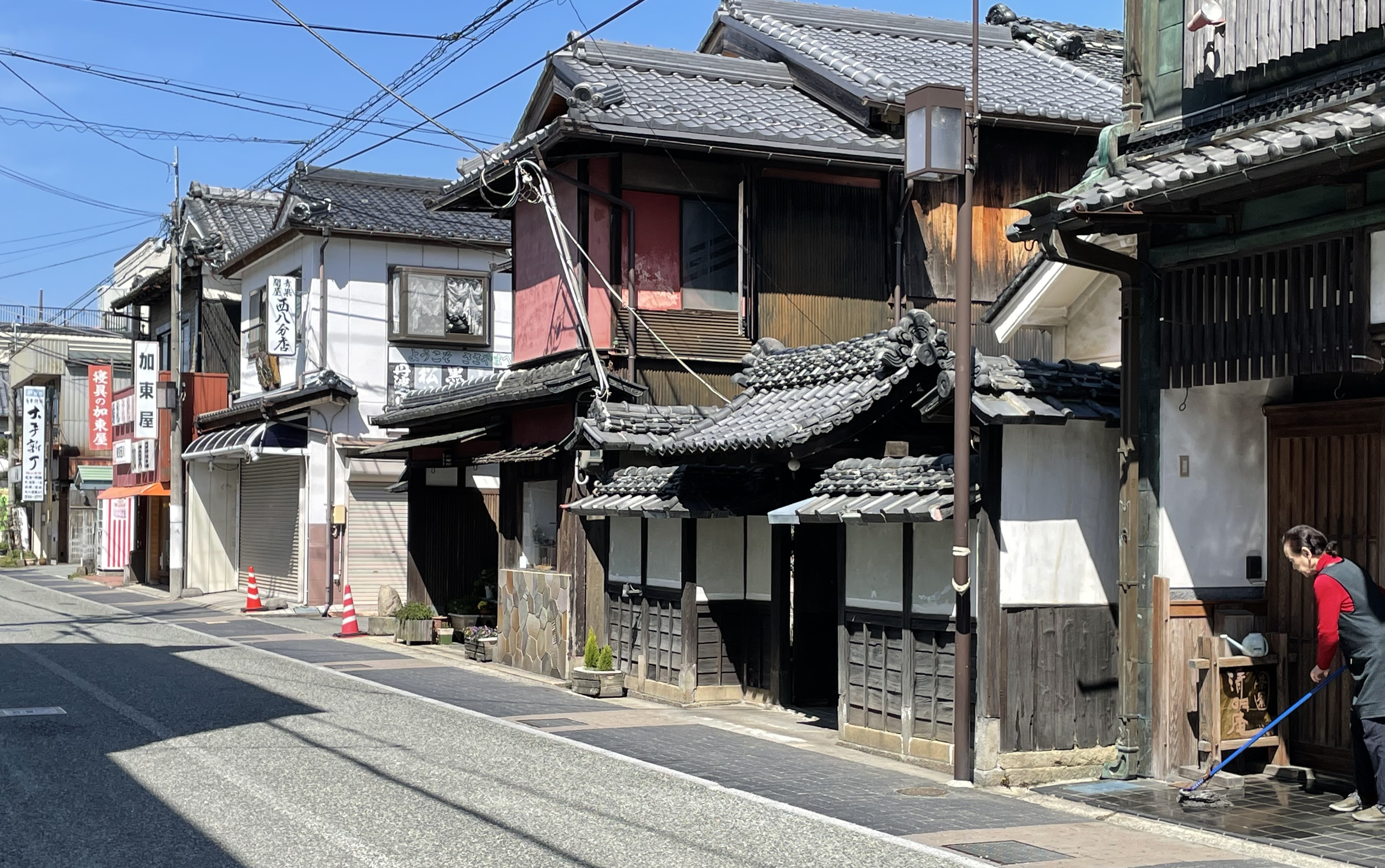
The train station is in the newer part of town, rather suburban looking. The traditional old sections, where the ryokan is located and where we wandered for a few hours, is from another time. There is a history and art museum in the old courthouse, tiny stores—the shiitake mushroom store, the cedar and incense store, sweet potato snack store, souvenir and soft serve store. Harumi bought black rice and their famous black beans. We toured the museum, walked past the moat that surrounds the castle ruins, cut through to cross the little river and wander past the mishmash of houses. Laughed at the giant wild boar head smashing out of a hotel outbuilding. Admired, again, the cherry blossoms still in full bloom.

Back on the train at 1:30, we parted ways with Harumi at Osaka Station and hopped the train for the 30 minute ride into Kyoto.

If “Things” Happen, Maybe We Move to Himeji

With our cousin Harumi we had decided to take a day trip from Osaka to Himeji, primarily to see Himeji Castle. Renowned for being the most intact of the major castles in Japan, we chose it to represent our castle experience here…we learned years ago that visiting every castle we come upon gets boring. We pinned our castle hopes on Himeji.

A short train ride via Shinkansen from Shin-Osaka station, this beautiful, open, modern city, much smaller than Osaka, Kobe, etc., welcomes visitors with a spectacular view of the castle directly across, maybe 10 blocks away, from the station. It’s a wow moment, and also produces instant concern that it is awfully high and how in heaven’s name does one get up there?

We set off to find out, walking this wide, boulevard with perhaps the most beautiful manhole covers we had ever seen, bits of statuary, and inviting shops. As we approached the castle grounds there was a small set of permanent food stalls with covered picnic tables behind—especially convenient and friendly. We stopped to inspect one of the offerings and laughed that it was okonomiyaki on a stick! We continued on.

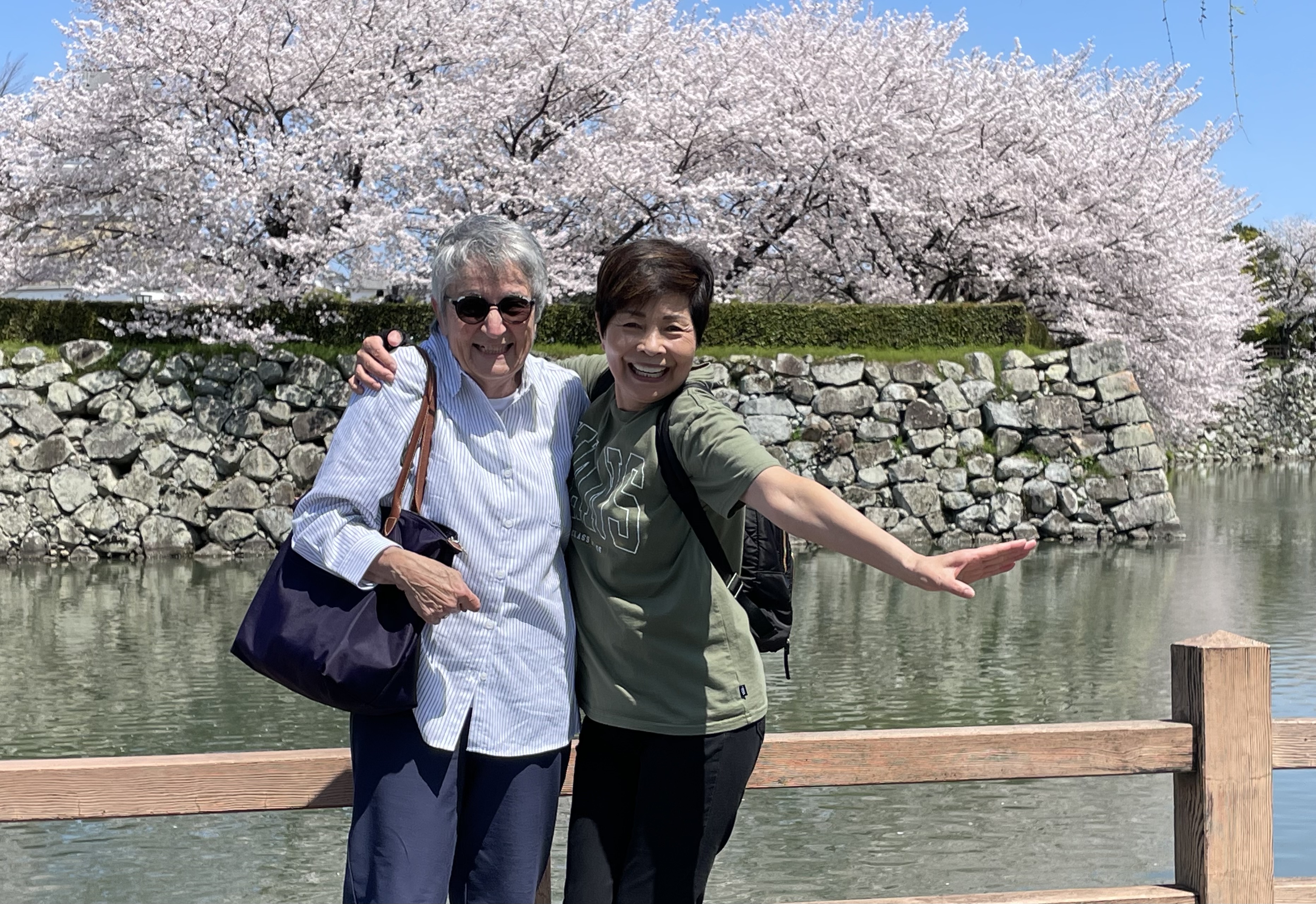
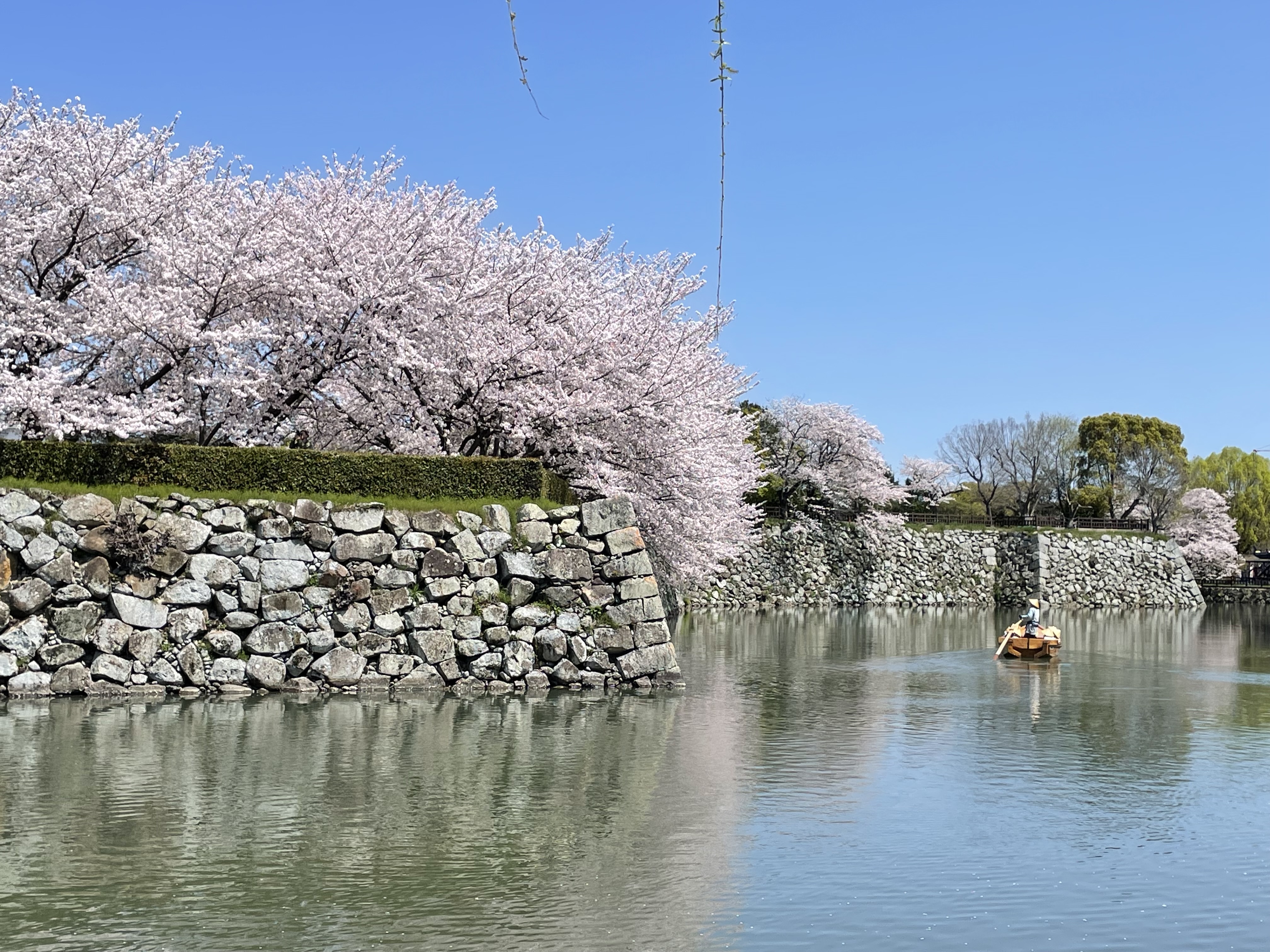
You enter the castle gate by crossing the moat on a lovely wooden bridge. Sakura—cherry blossoms—everywhere. I mean, everywhere. And they were in full bloom everywhere. We have been extraordinarily lucky to see this beauty. I hadn’t considered just what it means to be here in cherry blossom time. Well, it’s pretty great.

We wound our way up the castle grounds amidst the many tourists of all nationalities, lots of little kids running around, and enjoying the endless blue sky and vistas of mountains. Up and up we went, a slowly moving parade of visitors. A very Asian appearing young man struck up a conversation with us. He was from Texas, and traveling alone because his buddy bailed on him for some girl. After a considerable climb we entered the castle building proper and we all laughed to read the sign—we had made it to the castle basement! A few more rooms and we were in a staging area with a guide repeating “please remove your shoes on the brown mats” and we did as we were told. Plastic bags—recycled—were offered and everyone is now carrying an extra bag. We rejoined the parade in our socks (never travel in Japan without wearing clean socks), navigating slippery, centuries old wooden floors and stairways that were virtually ladders. Everyone follows the signs and barriers and slowly we all continue, up and up and up. It was, frankly, grueling, and also exciting and scary.
The trek tops out at the top—the sixth floor—where a small family shrine sits in the middle of the room. Many Japanese visitors, including Harumi, bowed, clapped, as is the custom of respect. Then we embarked on the descent, again, in SOCKS down, down those ladder-staircases. At least on the down direction they have put narrow treads so it wasn’t as treacherous as we had feared. Nonetheless it’s tricky because each step is so narrow one must turn sideways to fit one’s foot. I don’t think I have ever been so glad to get down from a climb. We continued on to the castle grounds, surrounded by sakura and filled, now it was midday, with kindergarten aged kids in their uniforms running around, families on blankets, older people (like us) sitting on rocks in the shade.

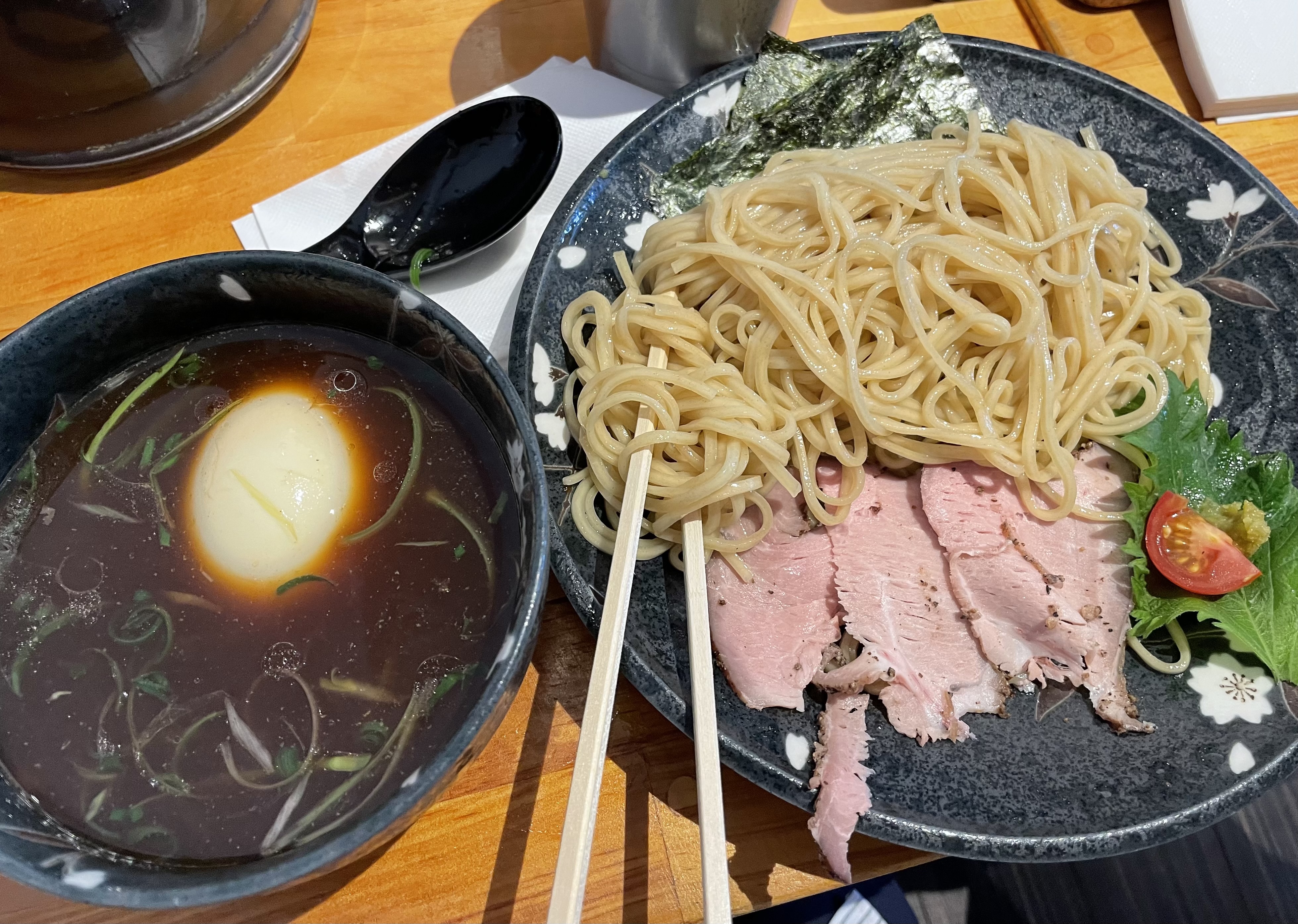
Lunch! We earned it. There was a lovely arcade street back toward the station (note: do NOT go into antique stores in Japan—everything is authentic, many very old bowls and cups come with the original wooden box…so tempting) and came to a noodle/ramen shop where a young woman stood beckoning us in. Harumi and David had soup ramen, I had the dipping ramen. Dipping broth was way too rich for soup but delish to drag the noodles through. Yum! It is refreshing to find hundreds, thousands of independent enterprises which in our experience are always good.

Satisfied, we decided to find out how to get to the gondola that would take us to a large forested area of shrines and halls. You can imagine how tired we were after the castle climb, and this sounded relatively easy. I mean, don’t gondolas take you to the tops of things?

Not always. We had 2 1/2 hours before the last gondola down (tourist office lady: DO NOT MISS the last ropeway down) and from the map it looked very doable. 30 minute bus ride to the gondola/ropeway, 5 minutes up to the site, then a wander through the woods to as many shrines and halls as we could manage, back in plenty of time. Well, Shoshazan Engyoji is an enormous space, with many pathways and much of it a steep climb. When we got off the ropeway they asked “Bus?” Of course not! Off we set, naively, to climb, and climb, and climb…a path through the forest with Buddhist deities every 5-10 yards, wonderful and, as we got further away from our starting point a bit worrisome. Finally we realized we were never going to see everything, and found, luckily, a shortcut back to the ropeway. We headed back down at 5:30 a bit wiser. Wouldn’t have missed it, though.

A quick train ride back to Osaka, aching and exhausted. After an adventure of several hours, repeatedly getting turned around (Google maps for walking in crowded, narrow streets are less than reliable) trying to find a particular restaurant, we landed in a crowded but of course quite good little place where we three raised the average age by several decades, ate, and wandered back to the hotel in a daze.

Tokyo — a surprising day in Ueno Park

We had read somewhere that the cherry blossom season was early this year, so we were prepared to miss them. Turns out in Tokyo (and later in Osaka) it was peak bloom and what a show. Happily our plan to spend our first, hardest, most jet-lagged day wandering museums in Ueno Park, a short walk from our hotel the Dormy Inn Uneno, sent us wandering through gardens and tourists taking hundreds of photos of the gorgeous cherry blossoms. It was beautiful.

We wandered the park people watching, bird watching, and marveling we were smack in the middle of Tokyo. We couldn’t have asked for a more gentle and peaceful day to recover from the long flight.

There were many, many Japanese families, seeming a holiday atmosphere, with food stands lining several of the walkways. Pizza. Kebabs. Karaage (fried chicken). French fries in varies forms…we finally settled on sharing a skewer of grilled beef tongue (delicious) and a potato and meat croquette. It was enough to sustain us and given our jet lag our bodies had no idea what time it was or what it wanted as sustenance.

Freshly made Hello Kitty cookies, anyone?

We knew a no-stress way to spend our first day included a museum or two and Ueno Park has many, from the zoological gardens to the Museum of Western Art. We headed there. It was fantastic.

We finished with the National Museum, overwhelming with the crafts and history of Japan, even including a large archeological building that we were too tired to appreciate. Of the three large buildings around a huge plaza we chose the Japan building.  I had flashbacks of the Victoria and Albert Museum in London.  SO MUCH STUFF.  We wandered and tried to take in the kimonos, the laquerware, the ceramics, a video showing Kabuki and Noh, an entire separate building of archeological displays.  Phew.  At last we wandered out to the lovely gardens behind the main buildings and enjoyed more cherry blossoms.

No idea the name, but I hope we can go back when we return to Tokyo our last few days in Japan

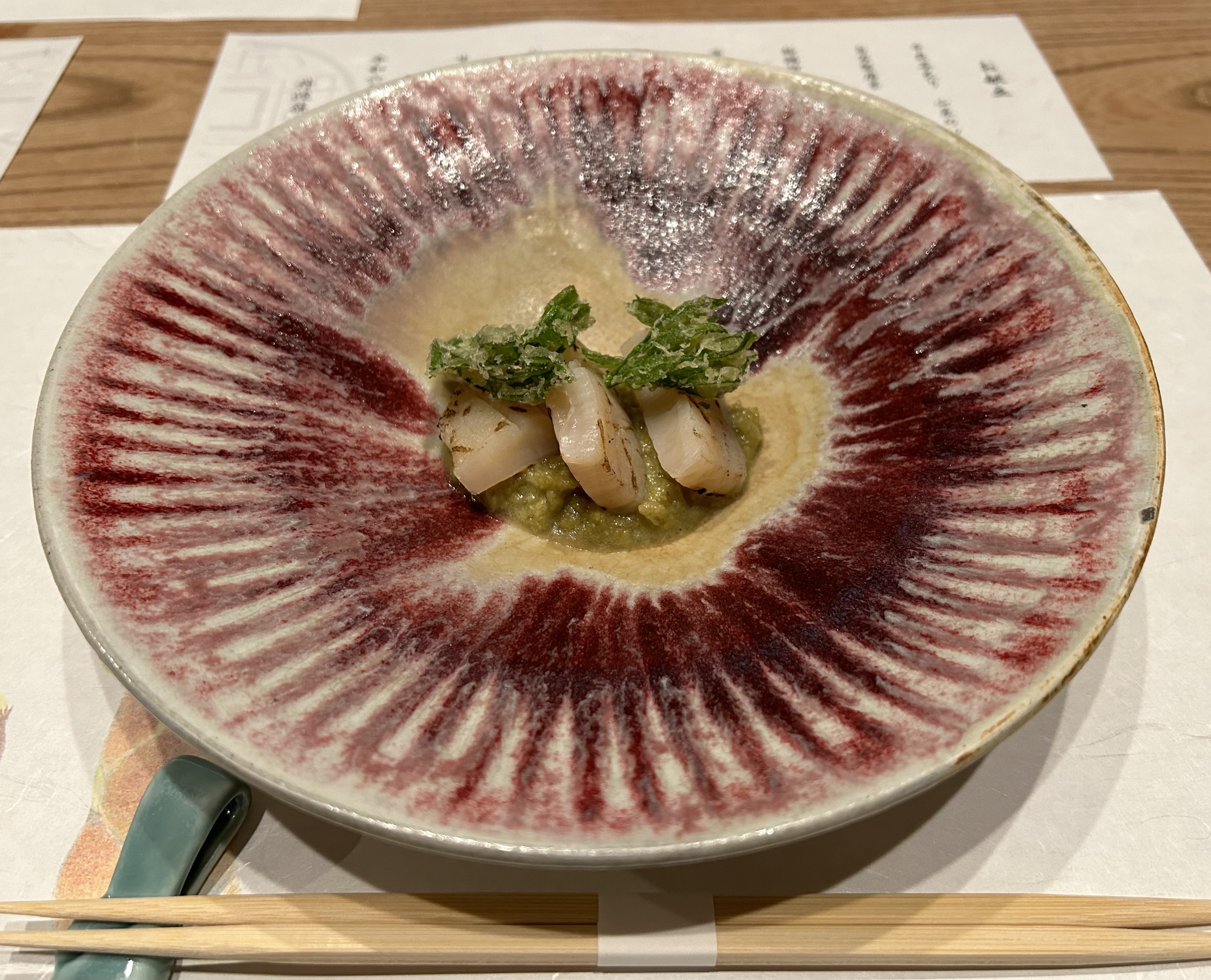
David found a little sushi place a few blocks from the hotel.  Narrow, maybe 18 seats all told, with good natured hustle between the waitress, two older sushi chefs and a young cook/helper.  Sushi was scrumptious, we finished the meal with a round of vegetable tempura (you order by the veg—we had shiso, eggplant and sweet potato).  We walked back happy.  A perfect day for the beginning of our three weeks.

Tokyo via Zipair

We took Zipair from San Francisco and frankly for the price it was fine.  When you pay full business class fare you tend to want to take advantage of all fuss and food and service that`s part of the deal.  And traveling this far (11 hours) and with the time dislocation (leave SF around 5pm, arrive Tokyo around 8pm the next day) the best way to accommodate your body and mind is to sleep a few hours as soon as you take off, then try to stay awake and alert for the remainder in hopes you will be able to sleep when you get to the hotel.  Because the food and drink service in real business class starts early in the flight, I find I stay awake too long and arrive feeling yuck.  With Zipair you bring your own food, bring your own sleeping accoutrements, and bring your own schedule.  The reclining seat is the same as other airlines…so all in all highly recommended.  You pay for the bed and, frankly for being left alone.