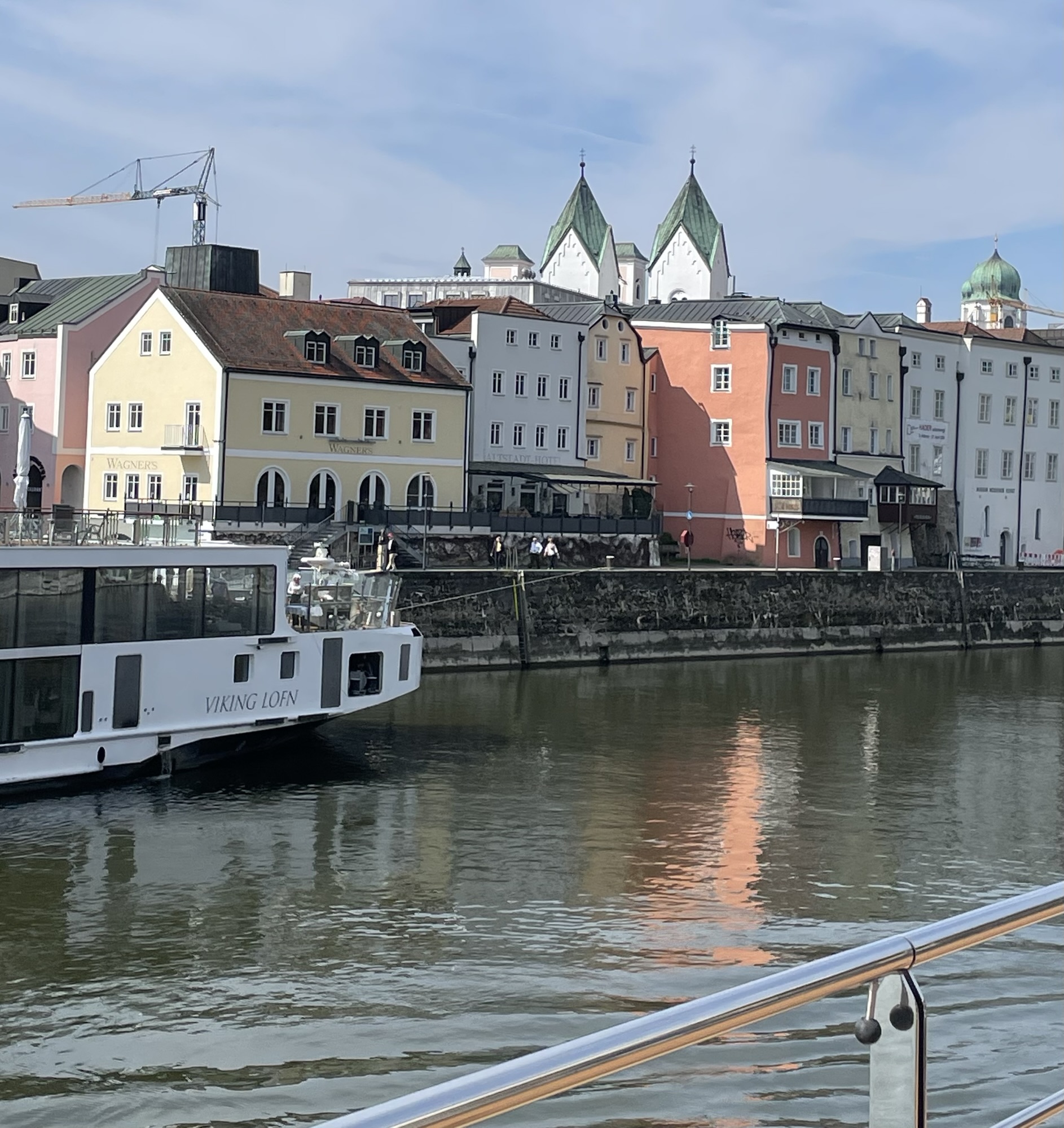
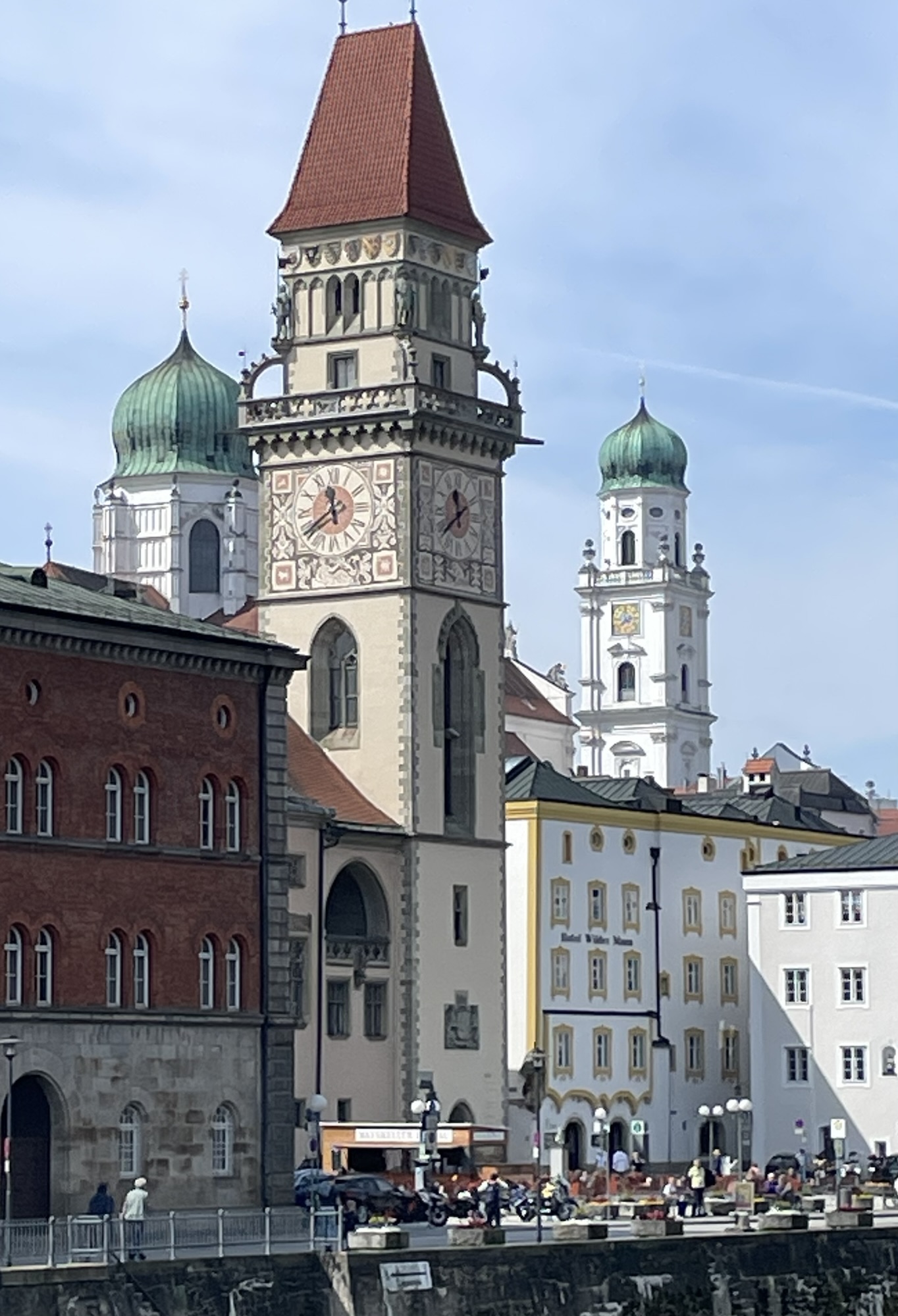
Our time on the boat was suddenly winding down and we were looking forward to being on our own again. This last stop in Passau was just half a day, and given the size of the old town along the river that seemed enough.
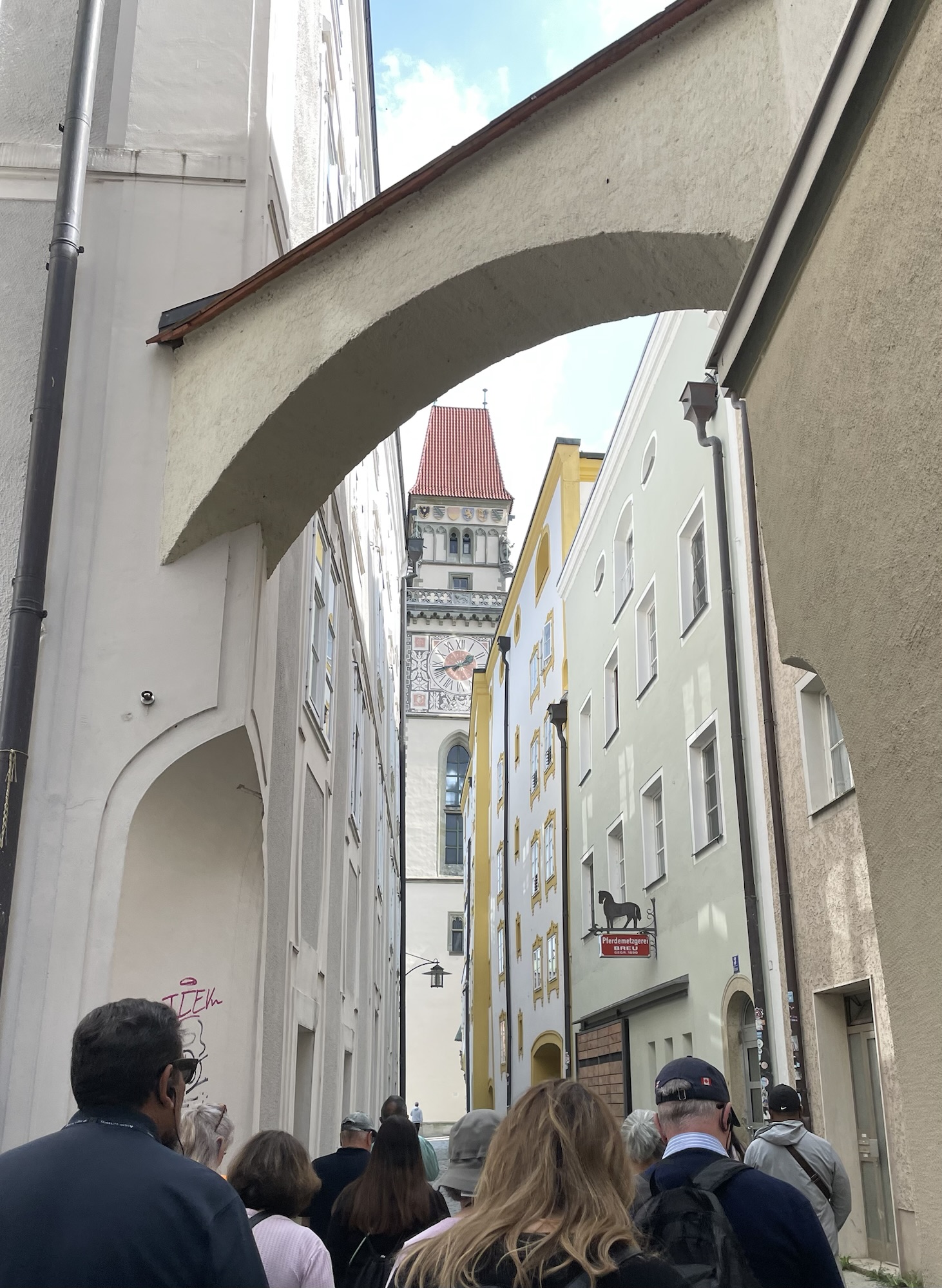
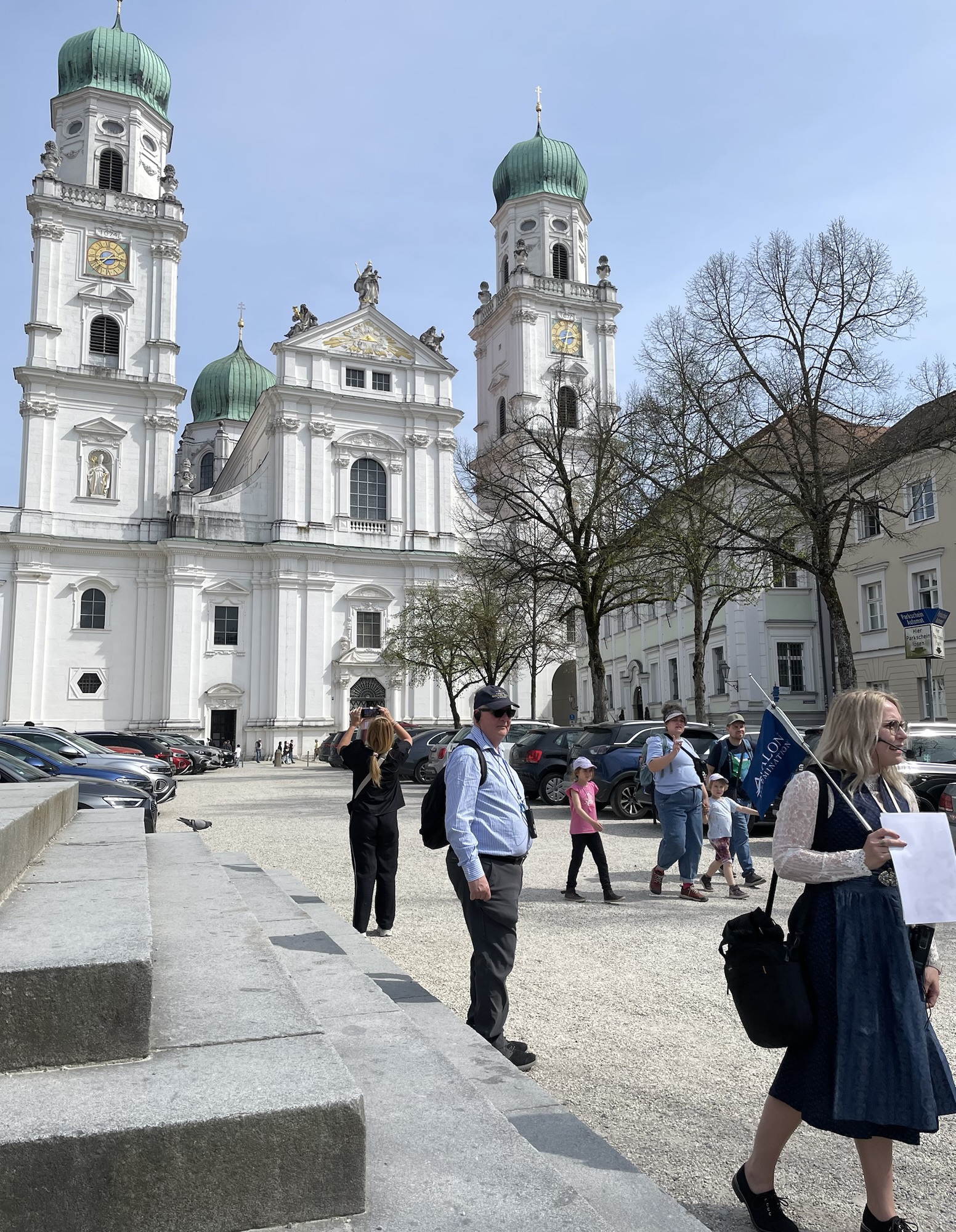
We had an hour and a half, maybe, of a delightful tour. I am struck by how very local our guides have been…I grew up here, went to university here, now have a job where I talk about a place I know so well and love. Our guide, a young woman dressed in dirndl (and sneakers), explained the meaning of the placement of the bow on the overskirt. Married (or unavailable), widowed (or a waitress!), open to a relationship, and one other I cannot recall. Handy, I suppose.
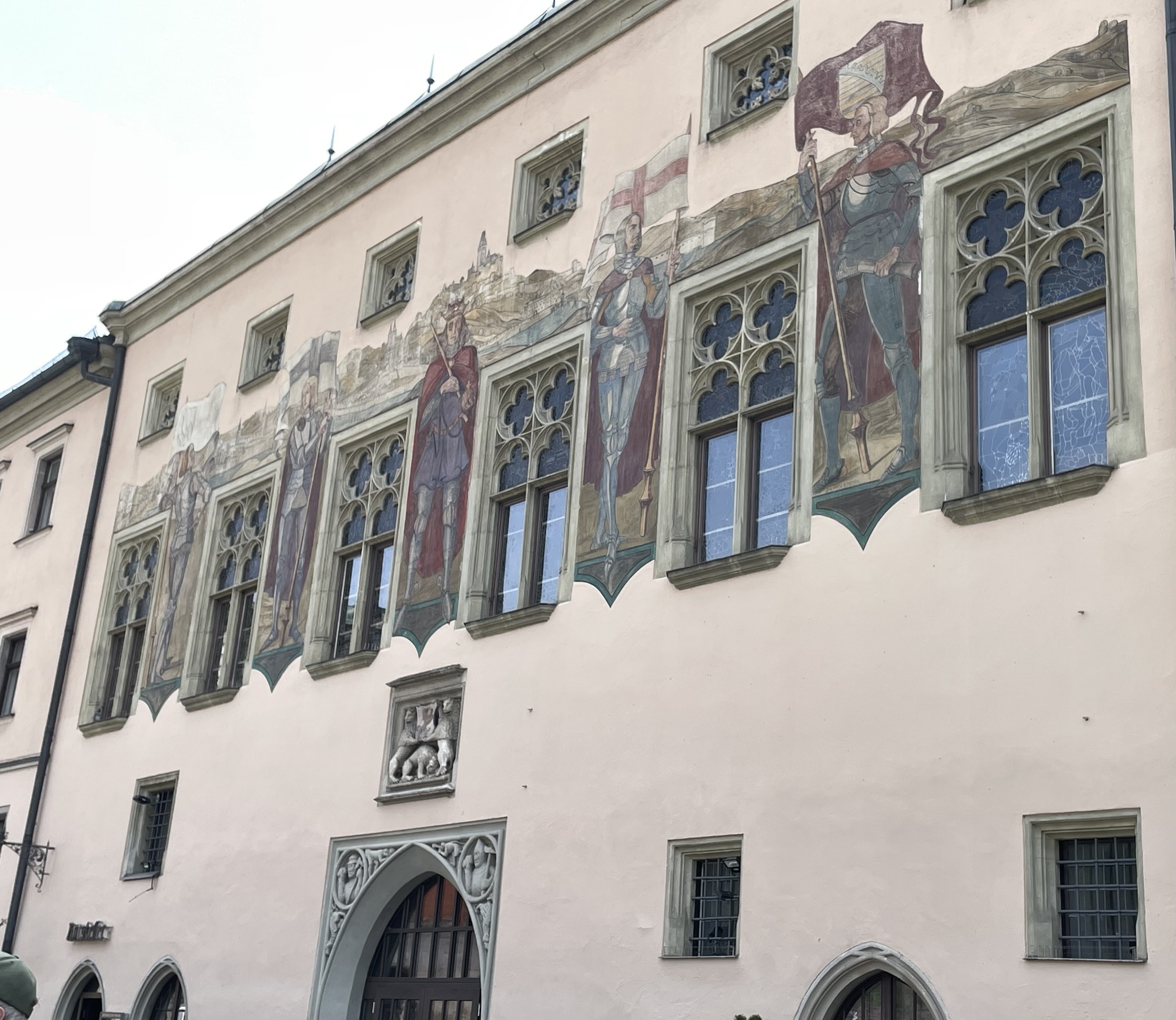
The tiny peninsula of the old town is as picturesque as most every other small town we have visited. Because of the surrounding three rivers, though, serious floods have been a problem for centuries. Currently the part of the city that is especially vulnerable is where artists and other artistic folks live, and of course they are loathe to move. As in Cesky Krumlov the high water marks are unimaginable. In 2013 the water rose 42 feet.
After our tour David wanted to walk down to the tip of the peninsula while I hung out on the boat. It was getting hot. Several hours later the boat moved on to Vilshofen where we disembarked the next morning and hopped on the train to Munich.
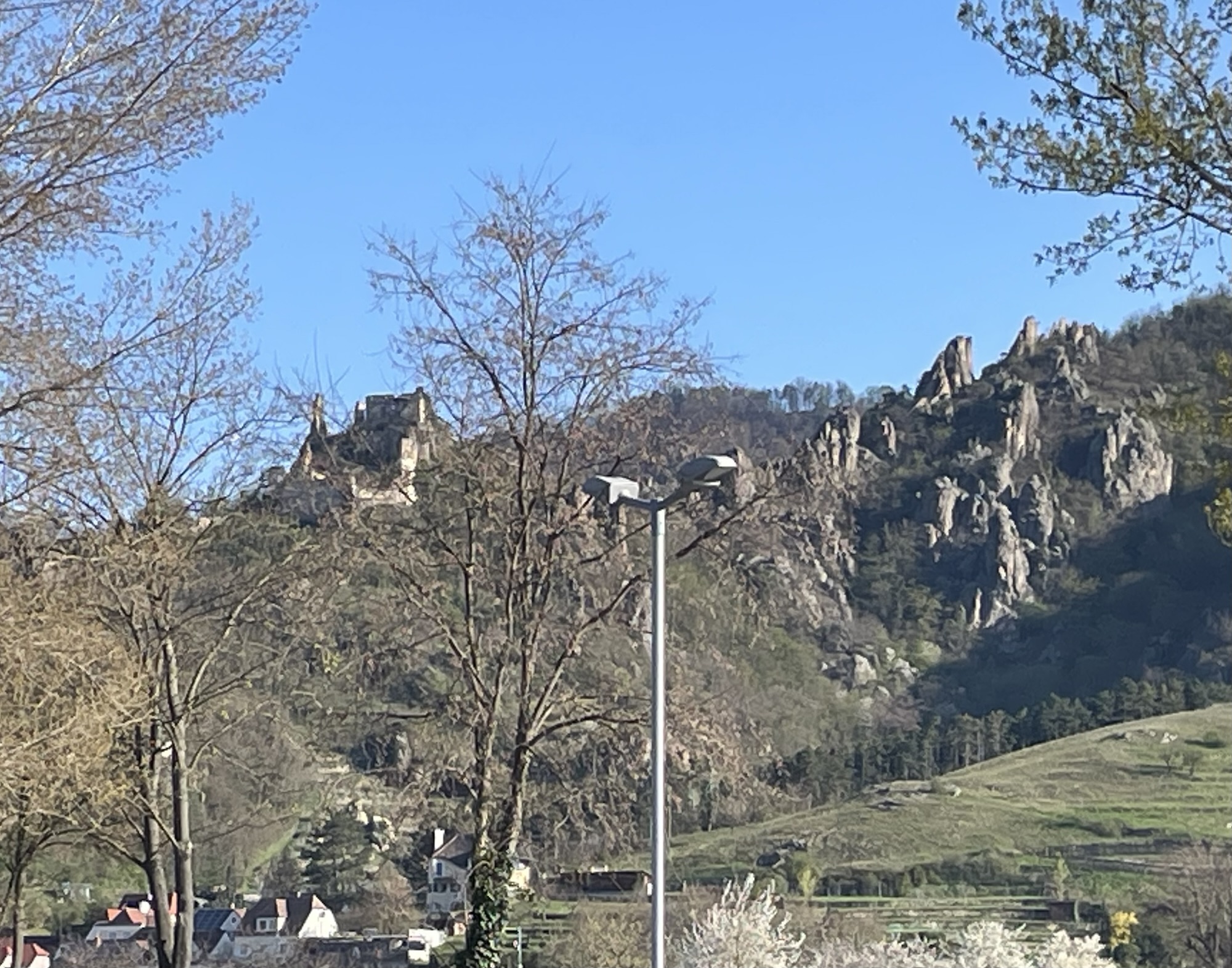
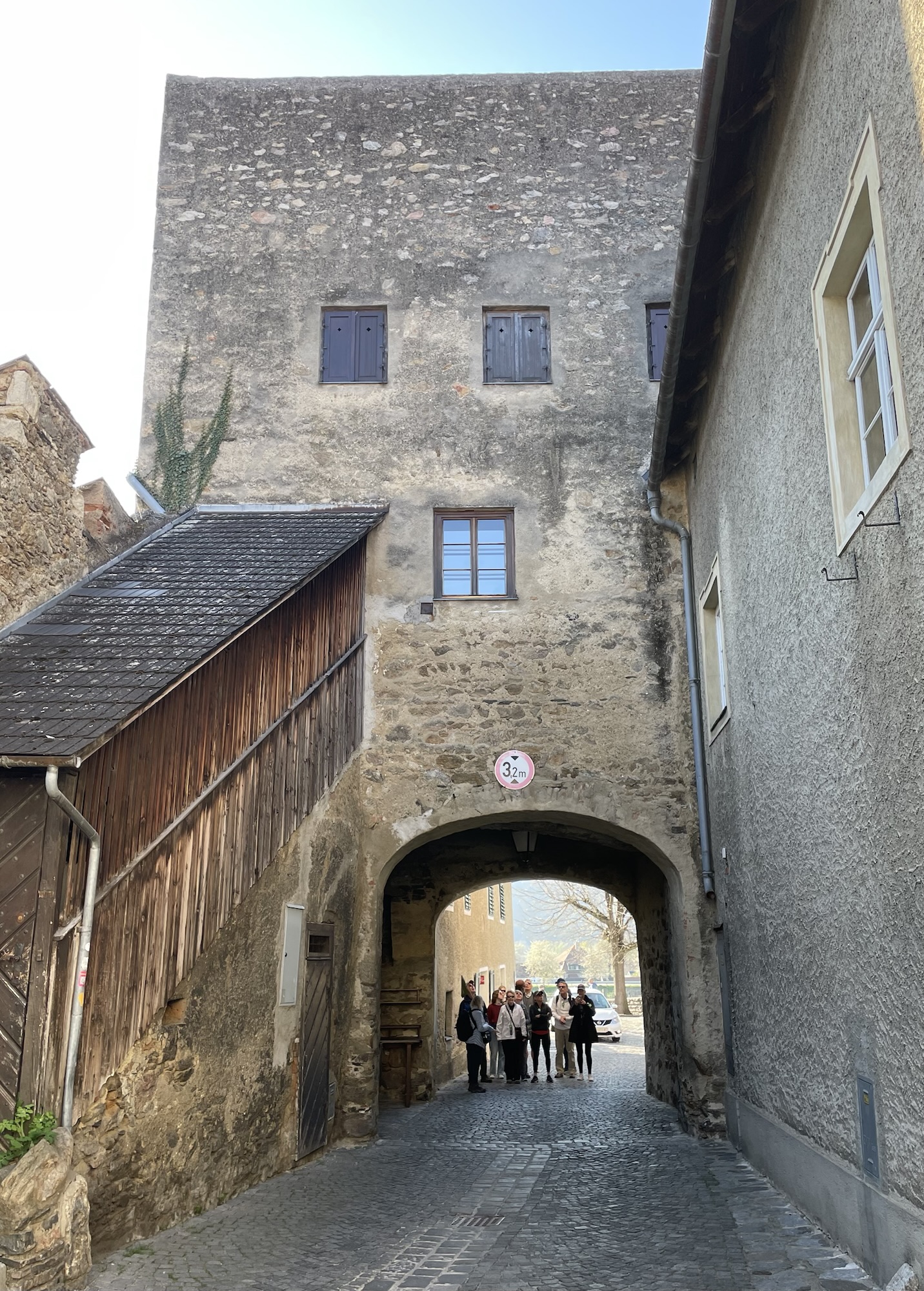
Our destination in the upper leftThrough the townThe town gate
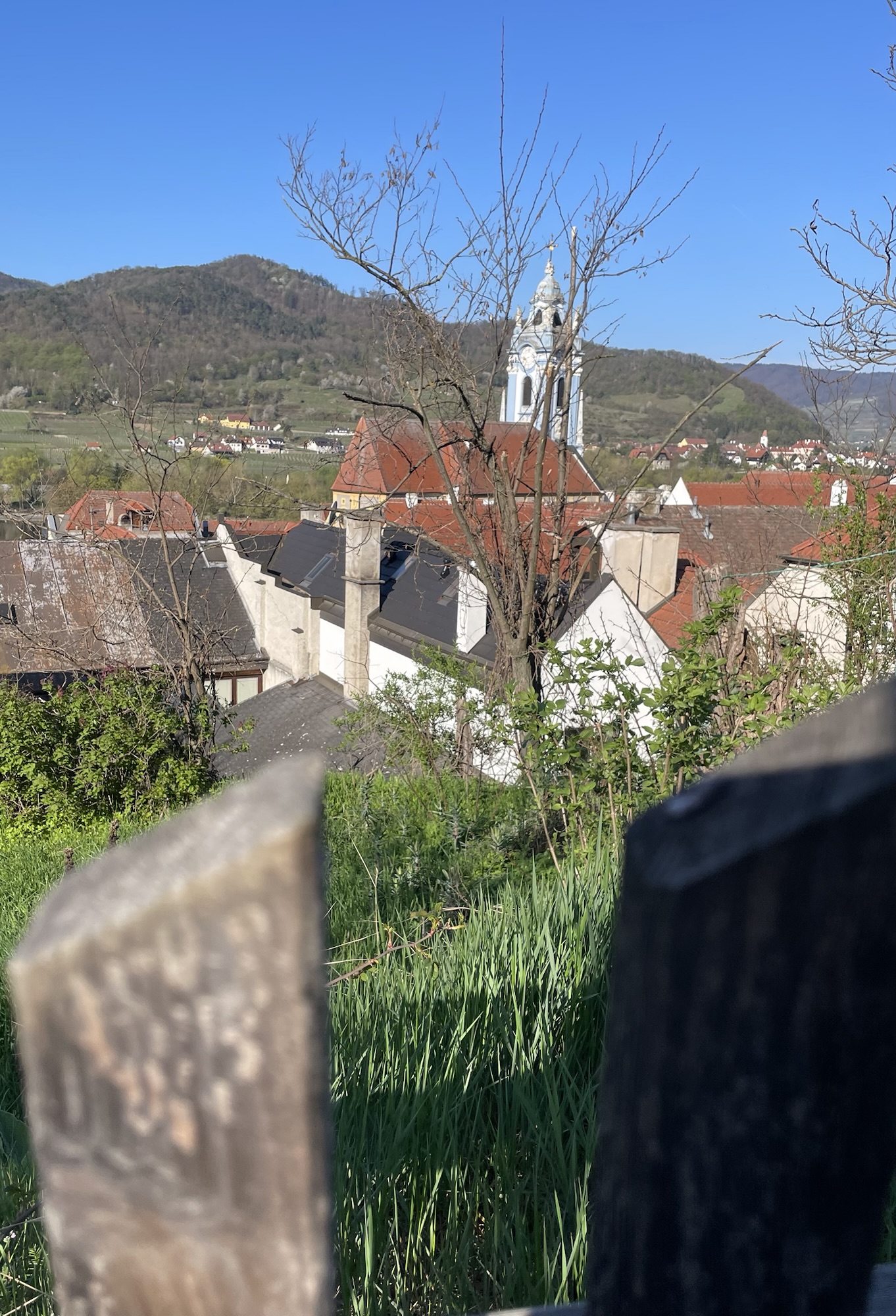
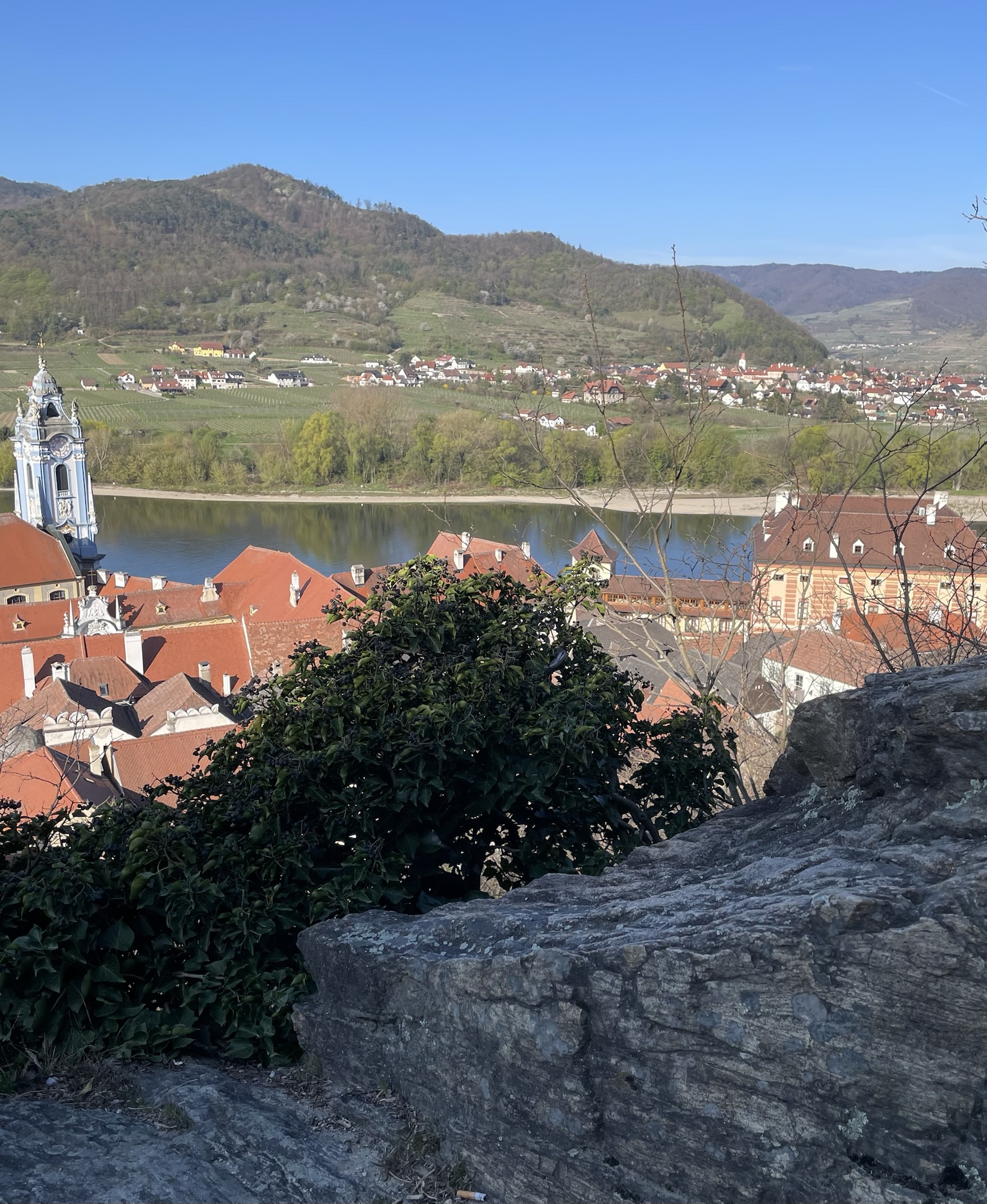
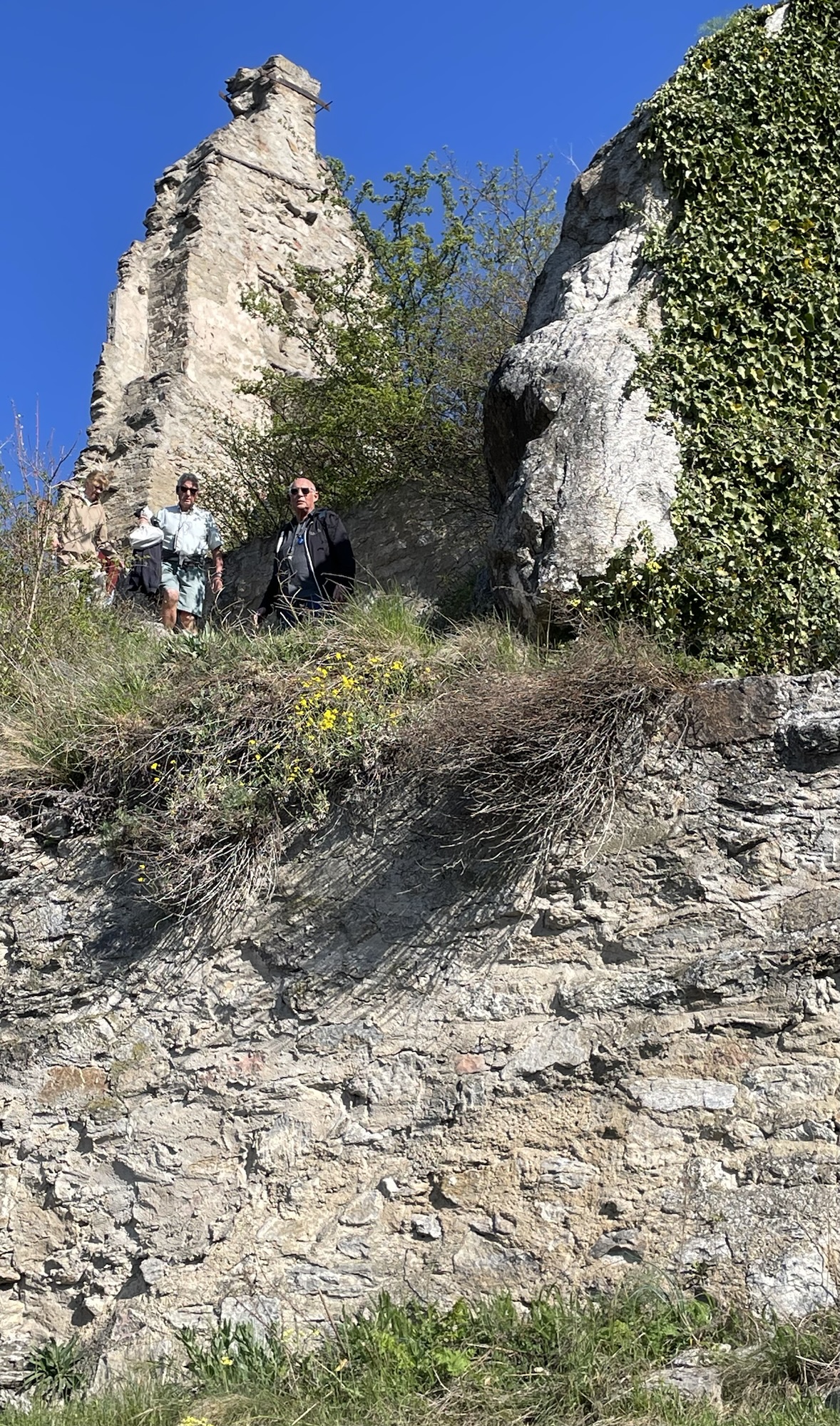
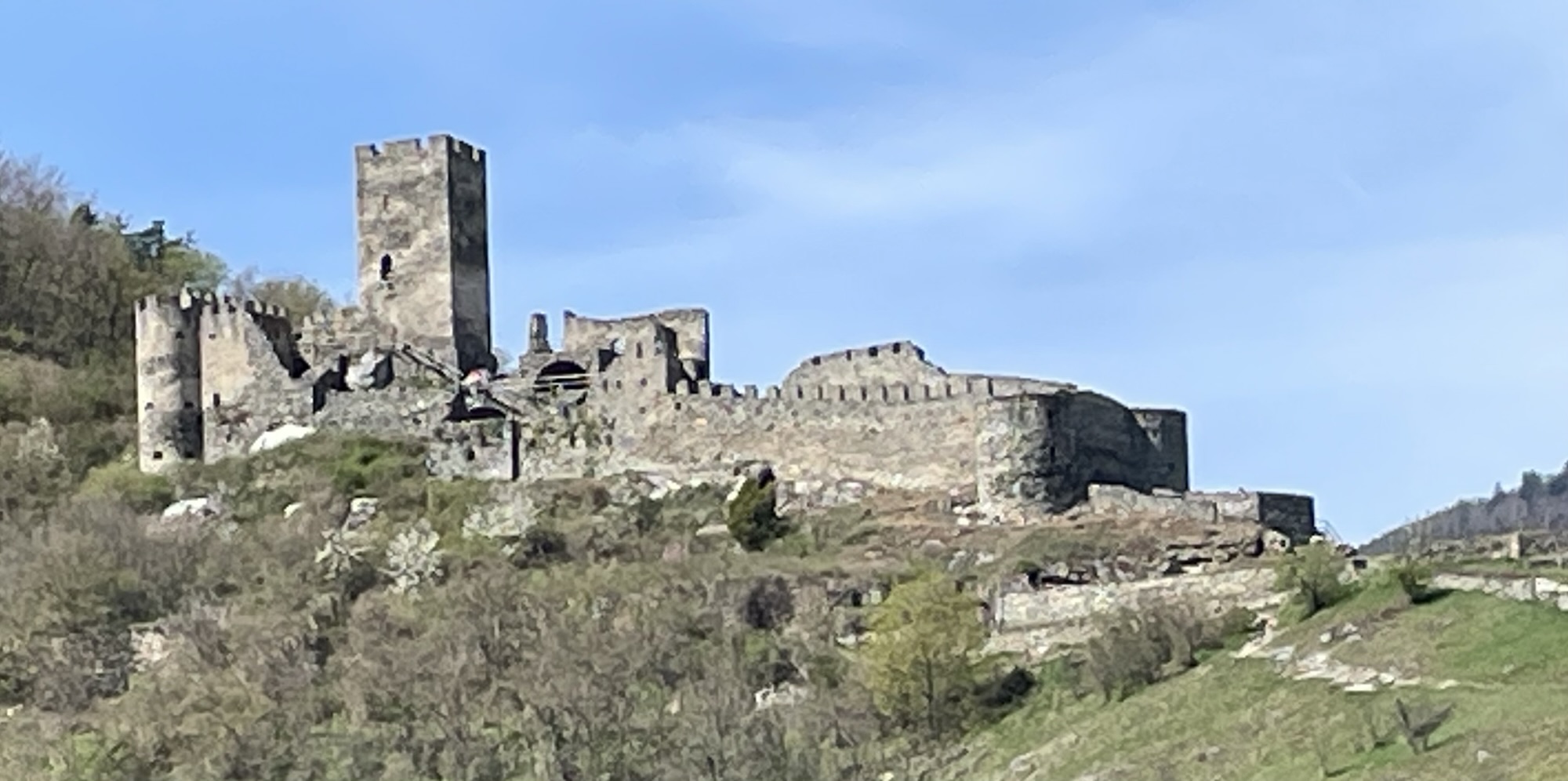
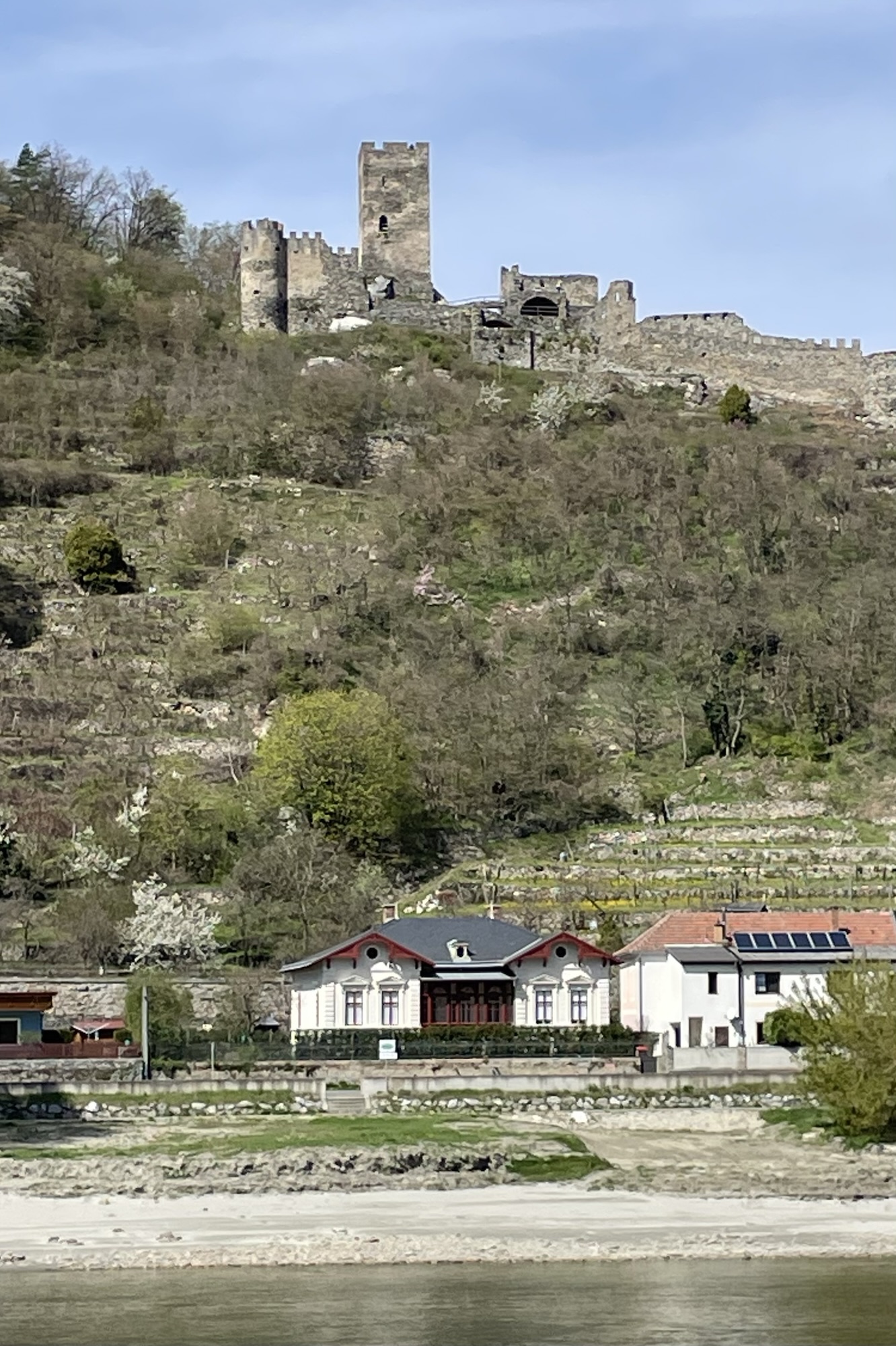
We woke up Saturday, April 12, in Durnstein, a ridiculously picturesque Austrian town. We had signed up for the hike to the castle ruins, which seemed, when we chose it months ago, so doable. That was before we entered the lazy period that started when we got on this boat. As we looked up at the destination we gulped, but, committed, we laced up our shoes and joined our little group.
It was 8:30. The guide promised we would be back in an hour and a half and off she went, the group hurrying to catch up. It was a cool, sunny morning and the weather inspired us all as we walked up a steep cobblestone street the width of a small alley, crossed the main street (wide enough for a car, cobblestone of course) and up and up we went.
This town has 150 permanent residents and only they are allowed to drive into the old part of town. The new town is maybe .2 of a mile to the right. I hope I got those facts right.
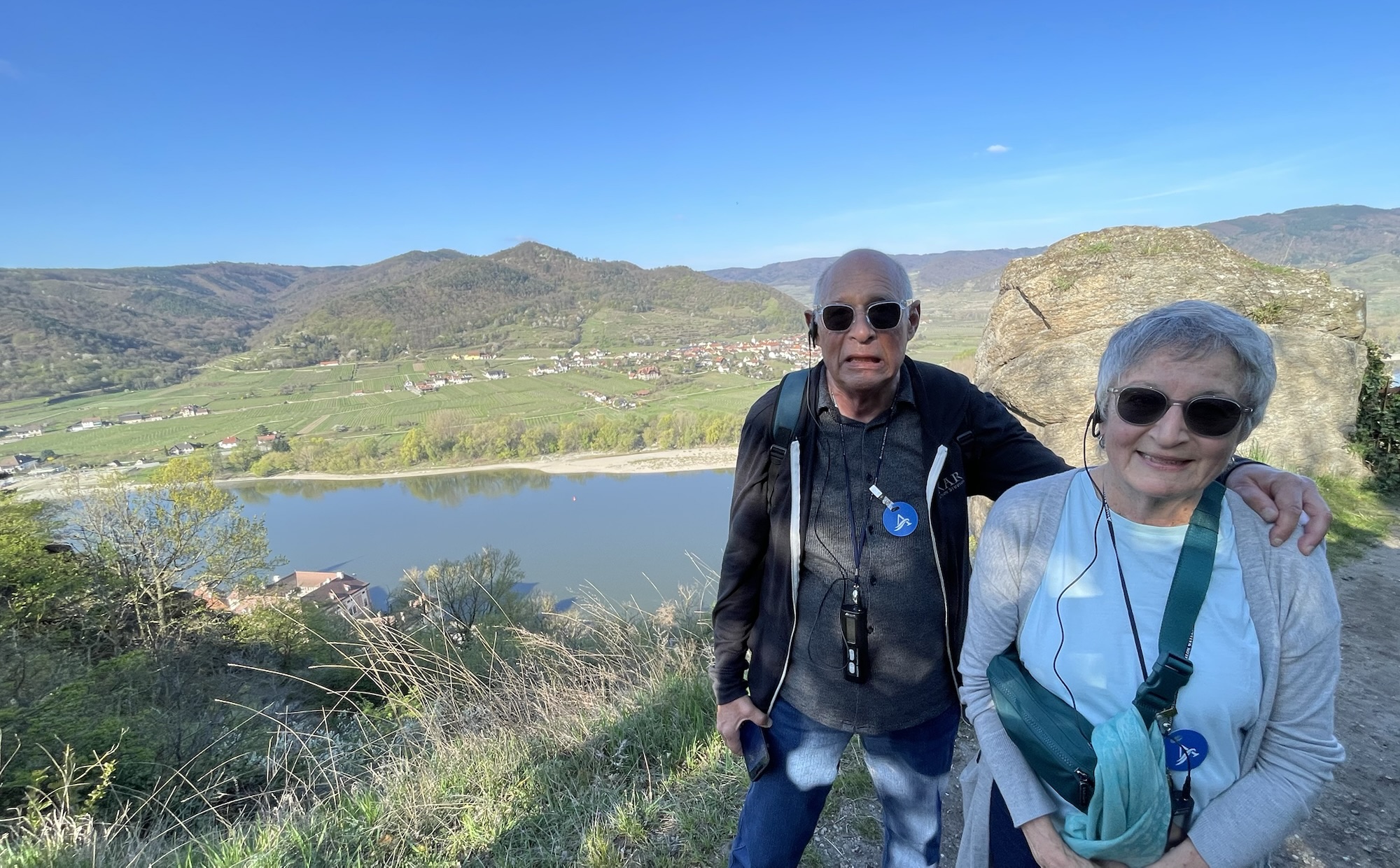
Anyway, soon the hike got serious with steep stone steps that required close attention. The guide promised 3 stops to take photos and it was some work to catch up in time to rest a bit before we were off again. It was hard work. But the cool air, the many many wild flowers, the views, and our common determination to get to the top propelled us all.
It was worth every huff and every puff.
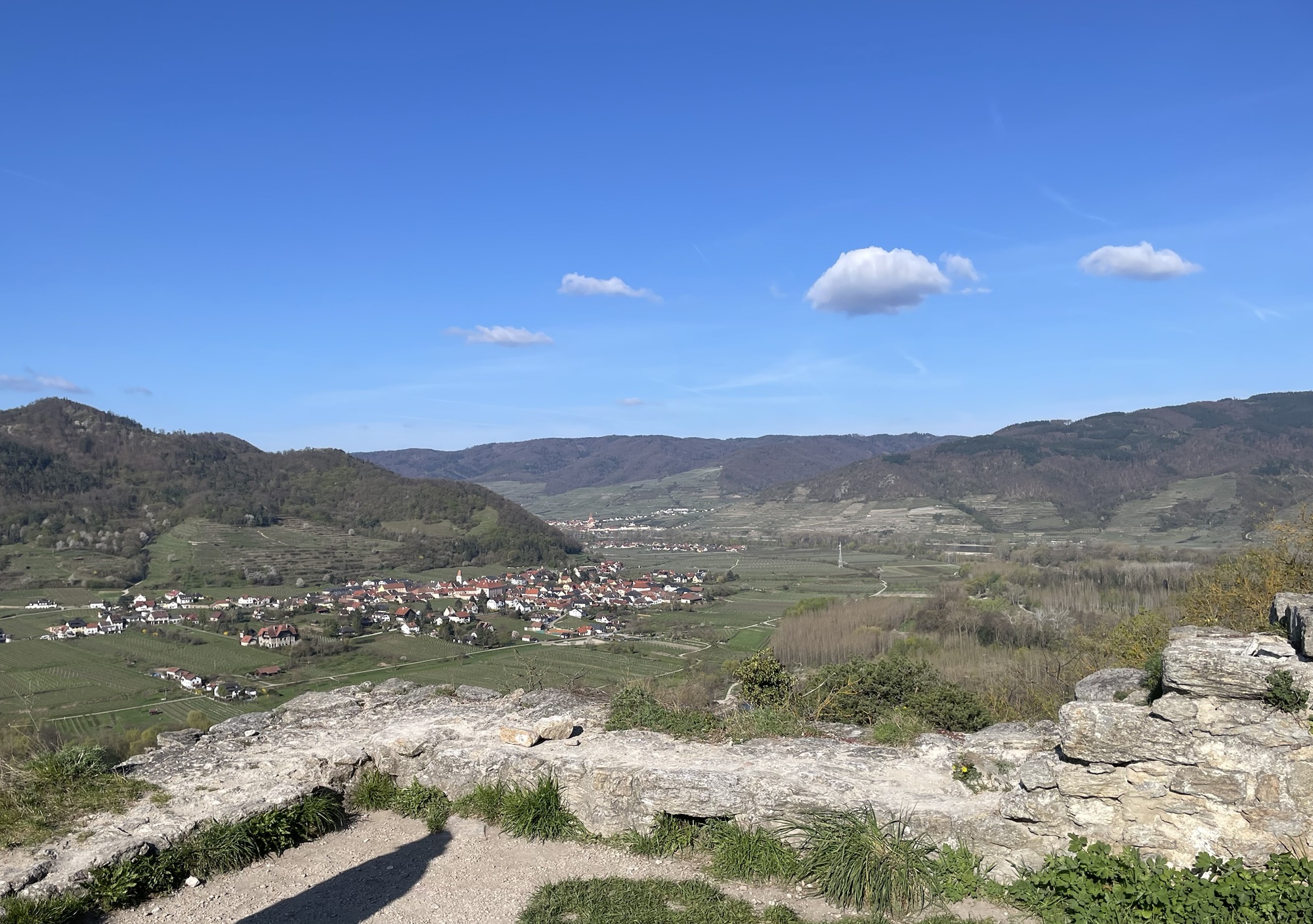
UpAnd upFlowers everywhereAnd up…the Danube waaay down thereJust below the ruins
At the top we learned that Richard the Lionhearted had been kept prisoner there, waiting for a ransom to be paid. He wa alowed to hint, go into the town, and live a nice enough life as one could when one is not allowed to leave and return home. Having seen this place I now want to learn more about the details of this fellow’s life.
David coming down from the tippy topHad to get a few more flowers inWhen we came down it was hard to believe we had climbed up!
Because we all wanted at least a half hour to see the town itself we hurried down a different route that was fairly steep but without steps. Thank goodness. Suddenly the guide stopped, excitedly pointing to the side of the trail. It was an emerald lizard, a good luck symbol. The lizard rather deliberately walked away into the vegetation. She was indeed bright green. Neat!
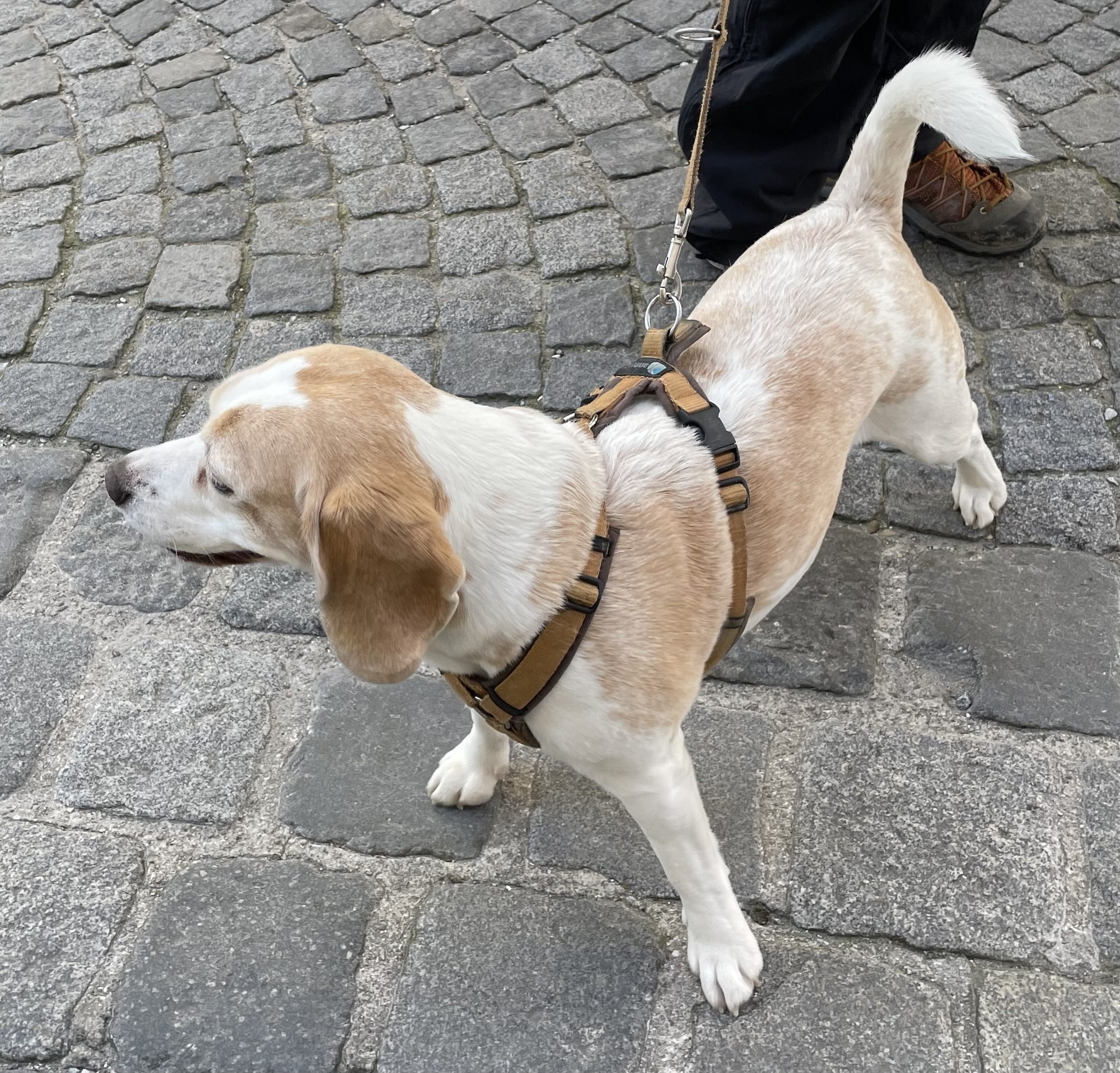
The nicest chocolate maker. She was from Ukraine, talked a mile a minute in German saying her German was poor. We switched to French. Adorable doggieJust a gate and flowersWe got back in time!
In the town I rushed to get to the chocolatier’s store, only because I had a tradition to keep, buying chocolate in as many places as I could—only chocolate made locally. I had a great time tasting and choosing a poppyseed chocolate and another with apricots and almonds. This area grows apricots that are prized throughout the region…you cannot buy them in supermarkets and they are controlled by the government the way champagne is by France. So of course I also bought a very small jar of preserves. One must support the local economy.
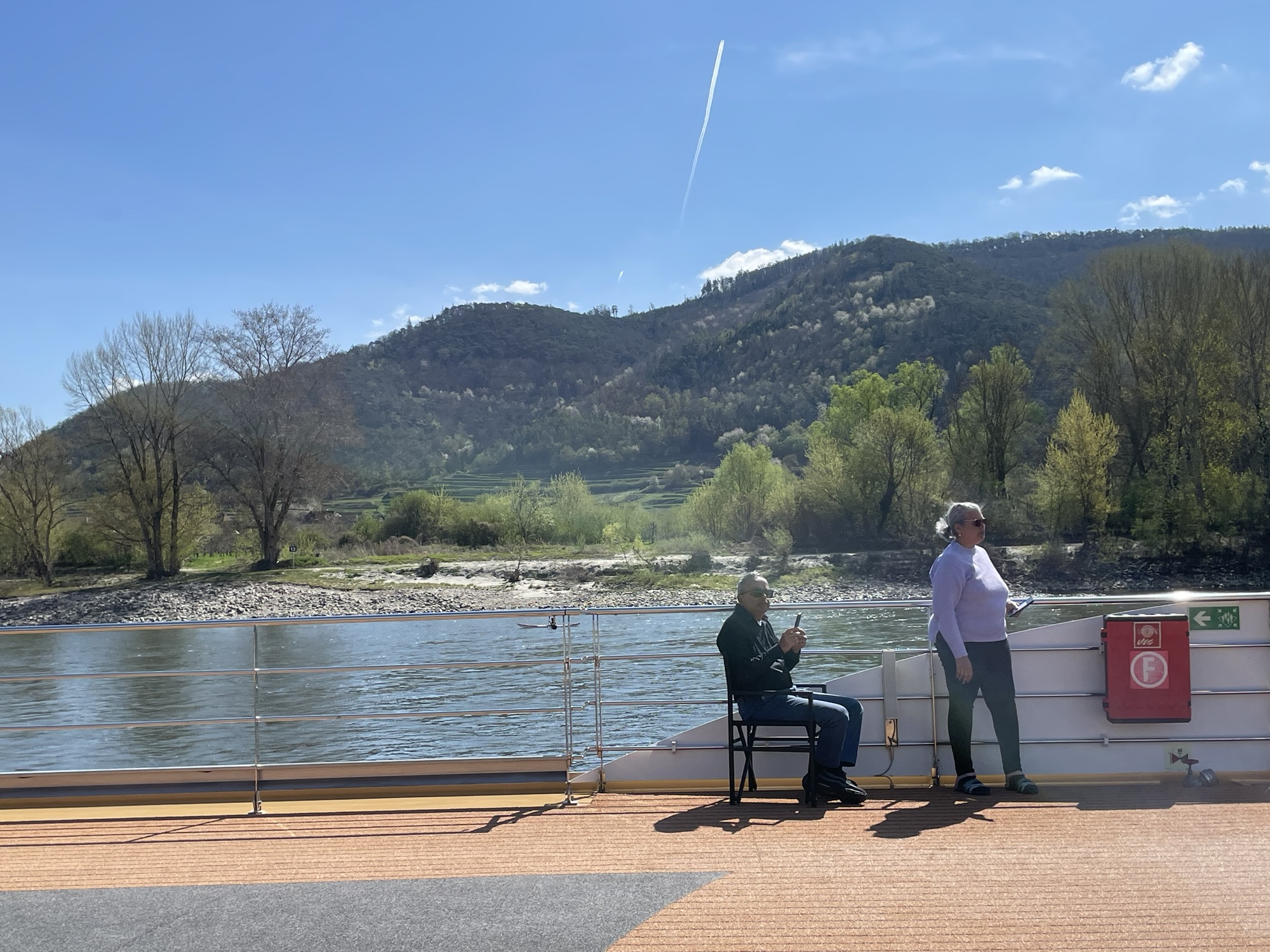
Many of us went up top to watch the valley glide by.
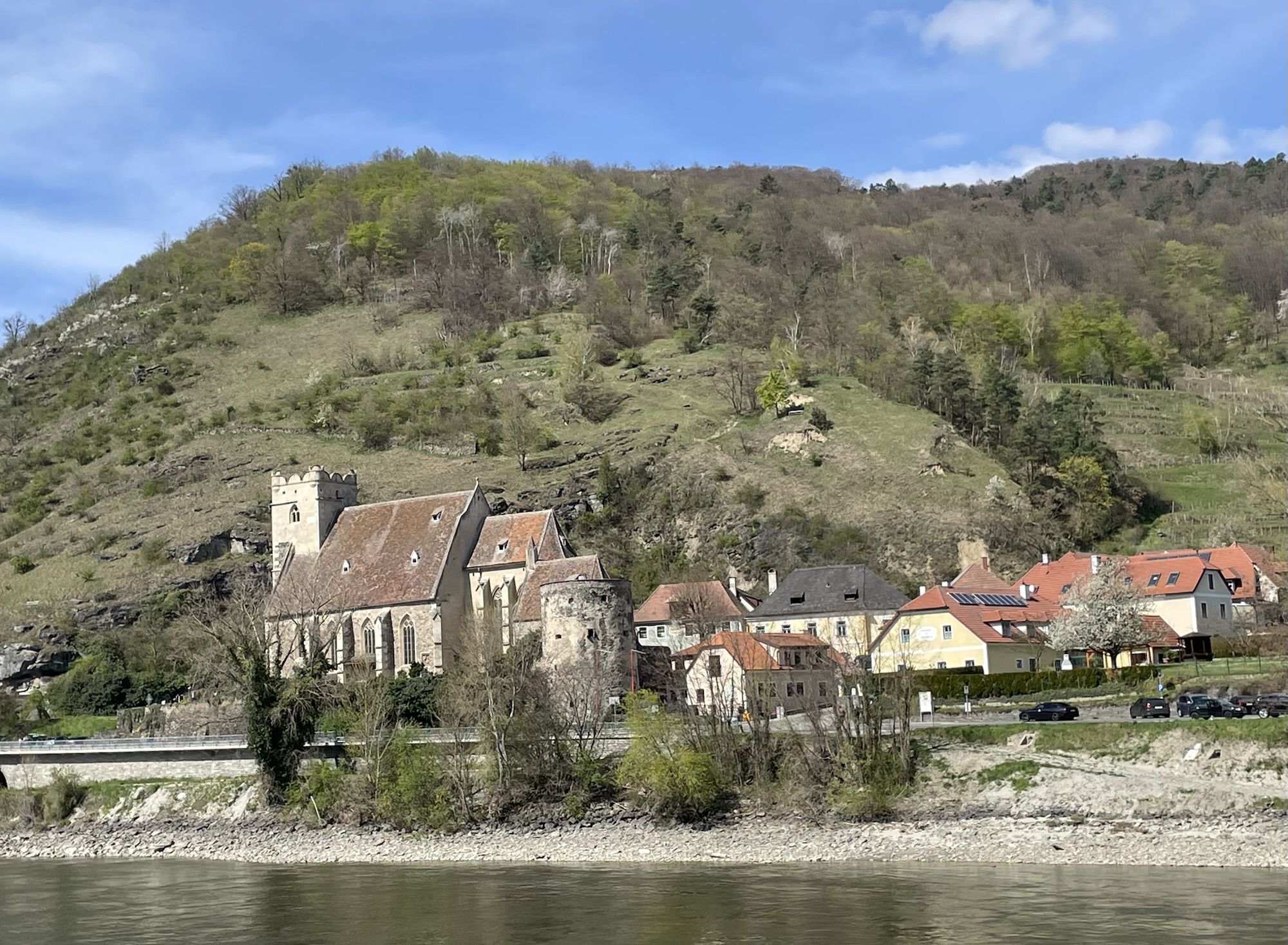
The boat left at 10:45 and many of us went up top to see the Wachau Valley. The Danube runs between steep hills, almost mountains, gorgeous and peaceful.
After lunch we left for a boring, too long tour of the Melk Abbey. No indoor photos are allowed as there are still 21 monks living there. The guide was wonderful but we had to stay an additional hour with little to do while the boat moved on to Ybbs where we were driven to meet it by the tour bus. Not our favorite afternoon…but the morning was amazing.
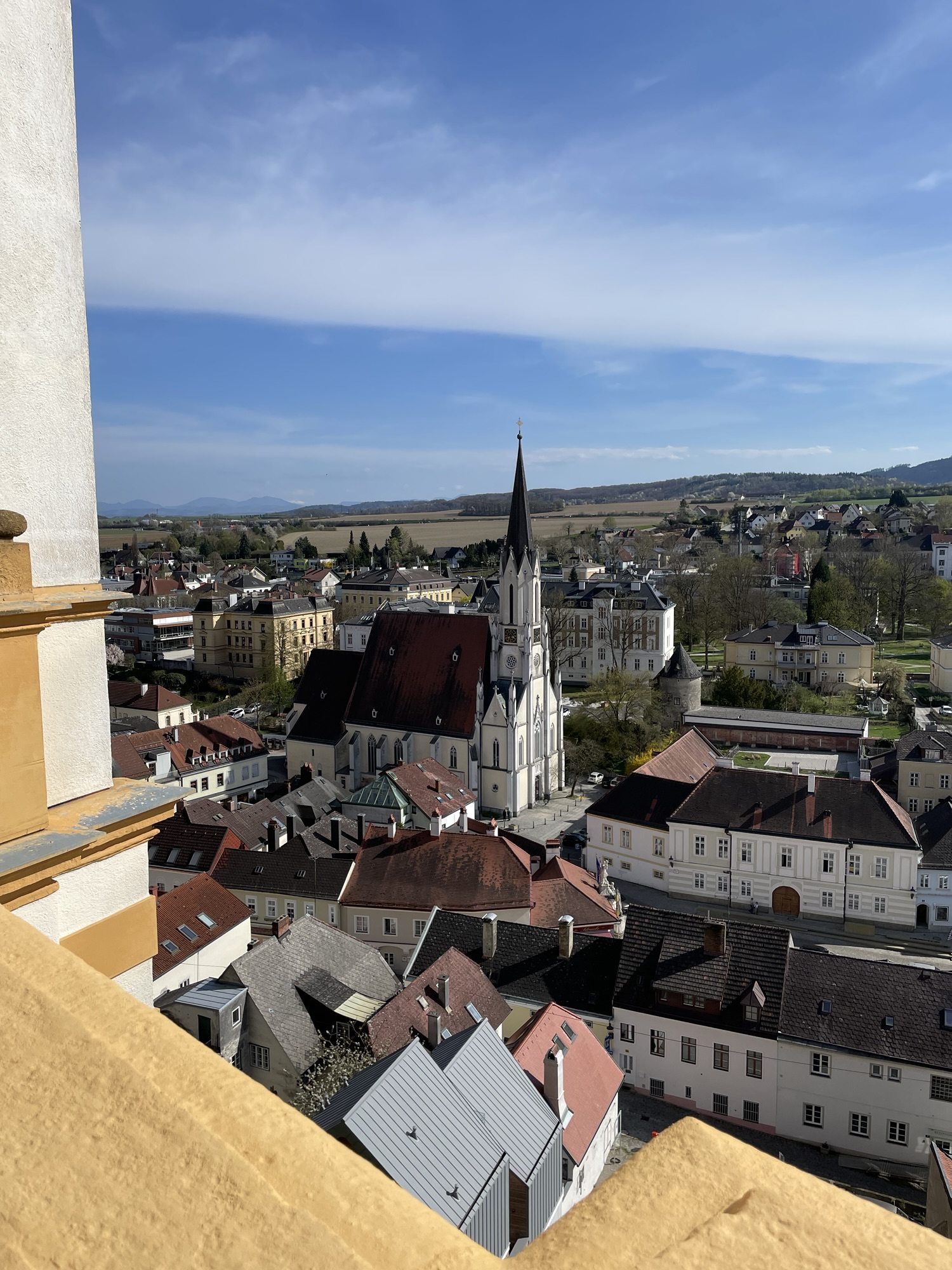
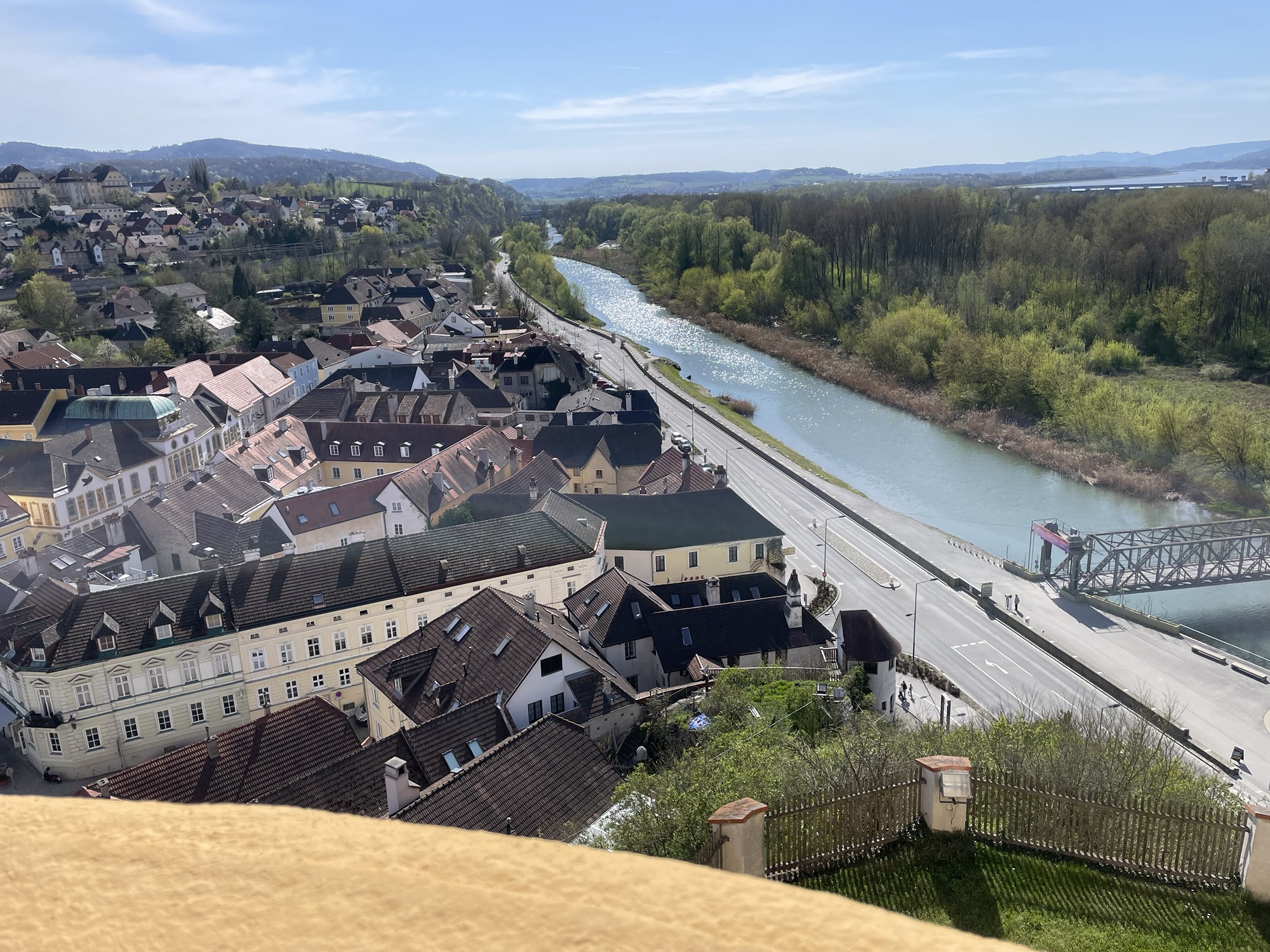
Melk Abbey courtyardMelk AbbeyView of the town of Melk Not the Danube
I read later that the restoration of the Abbey, completed in 1996, was financed largely by the sale of the Abbey’s Gutenberg bible to Harvard. Seems interesting enough to have been mentioned on the tour. Oh, well.
We arrived in this small (450,000) capital city on a cloudy morning with the same considerable windchill which ebbed and flowed throughout the day.
The walking tour was one of the best ever because our guide had all the requisite traits: she knew the city and its history, she was by turns serious and respectful and funny, and she gave me a recommendation for a restaurant that served a superb version of a Slovakian specialty, halusky. More on that later.
Because our guide, Jana, had lived half her life under Soviet rule she could share many insights and family stories about those dark times and about how life had changed since the velvet revolution. Jana plus the exceedingly picturesque old city (barely a city!) made for a great morning.
Jana introduced us to Bratislava by stating the two unequivocal advantages to living in her town. One, no traffic. It was rush hour and we were at a major intersection with barely a lane full of cars. Two, it is located at the intersection of three countries—Hungary, Austria, and Slovakia.
Soviet times
Standing just a few yards from the boat Jana pointed across the Danube at a woods with a large hill behind on which we could see a transmitter tower. The tower was in Austria, and the woods at the edge of the river were not at all dense. Jana explained that the soviet government had mowed down the trees and shrubbery and placed several rows of barbed wire and high voltage lines to prevent escapes. (According to wikipedia 400 Bratislavan citizens were killed trying to escape during the years Soviet Russia ruled Slovakia.). But the Austrian tower transmitted television, though often jammed, and Jana asked us what we thought her grandmother’s favorite tv series was. Dallas! Her grandmother was really pissed when jamming made her miss an episode.
Upper left, the Neolog memorial; lower right, the drop of blood in that little hole in the gold decoration
The Neolog Synagogue that survived both world wars was torn down by the Soviets in 1969 to make way for a road, which now runs so close to the beautiful St. Martin’s Cathedral that it is now suffering damage from traffic vibration. There are reminders of the lost synagogue around the central historic district including a memorial on the site and information placards posted nearby.
St. Martin’s Cathedral alongside the Neolog Synagogue before the Soviets destroyed the synagogue.
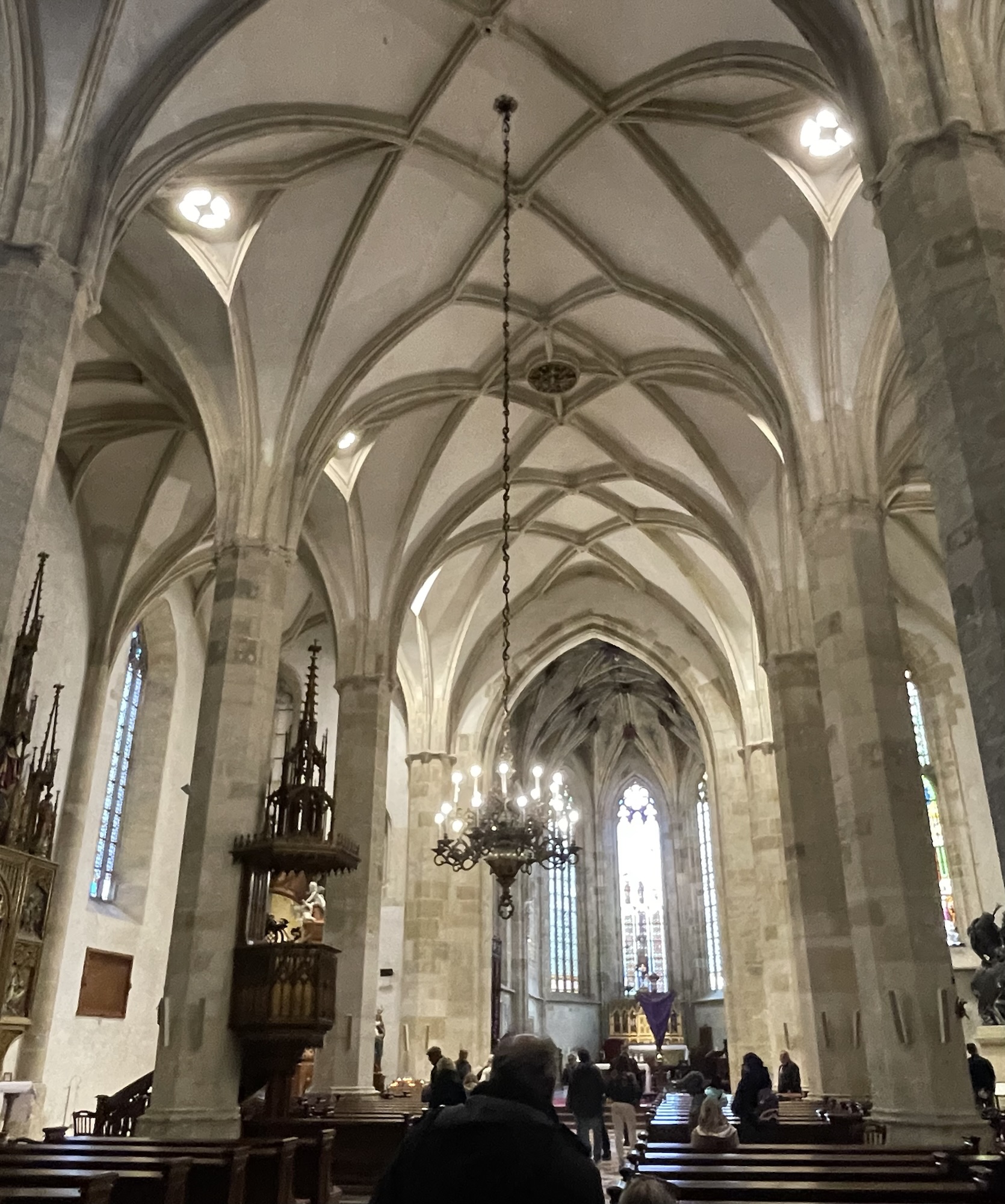
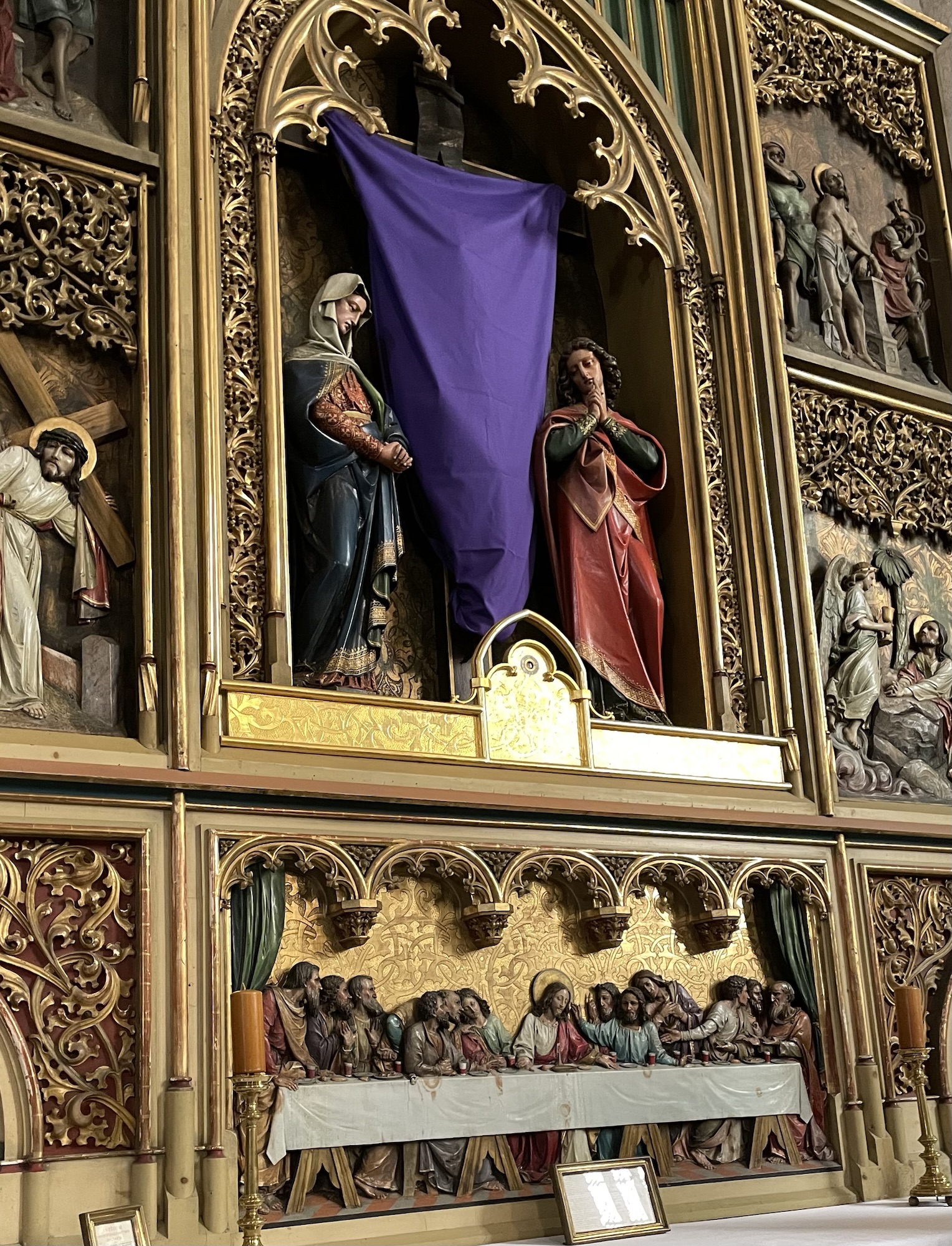
St. Martin’s Cathedral has a soaring interior with very little interior decoration where frescoes were destroyed in the several fires that were started by lightening strikes. These interior fires started at the back of the sanctuary and were extinguished before reaching the altar, which remains filled with frescoes and elaborate carved seats, each with a symbolic animal (creature?) representing a sin or virtue.
On one side wall there’s a curious Habsburg relic, a recent gift of descendants of the Habsburg emperor who abdicated in 1918. The gift is gold, like a decorative frieze, and sits inside a large, carved wooden something-or-other. The curious part is in the center, a small round hole that holds a drop of the last emperor’s blood.
Walking through the renaissance
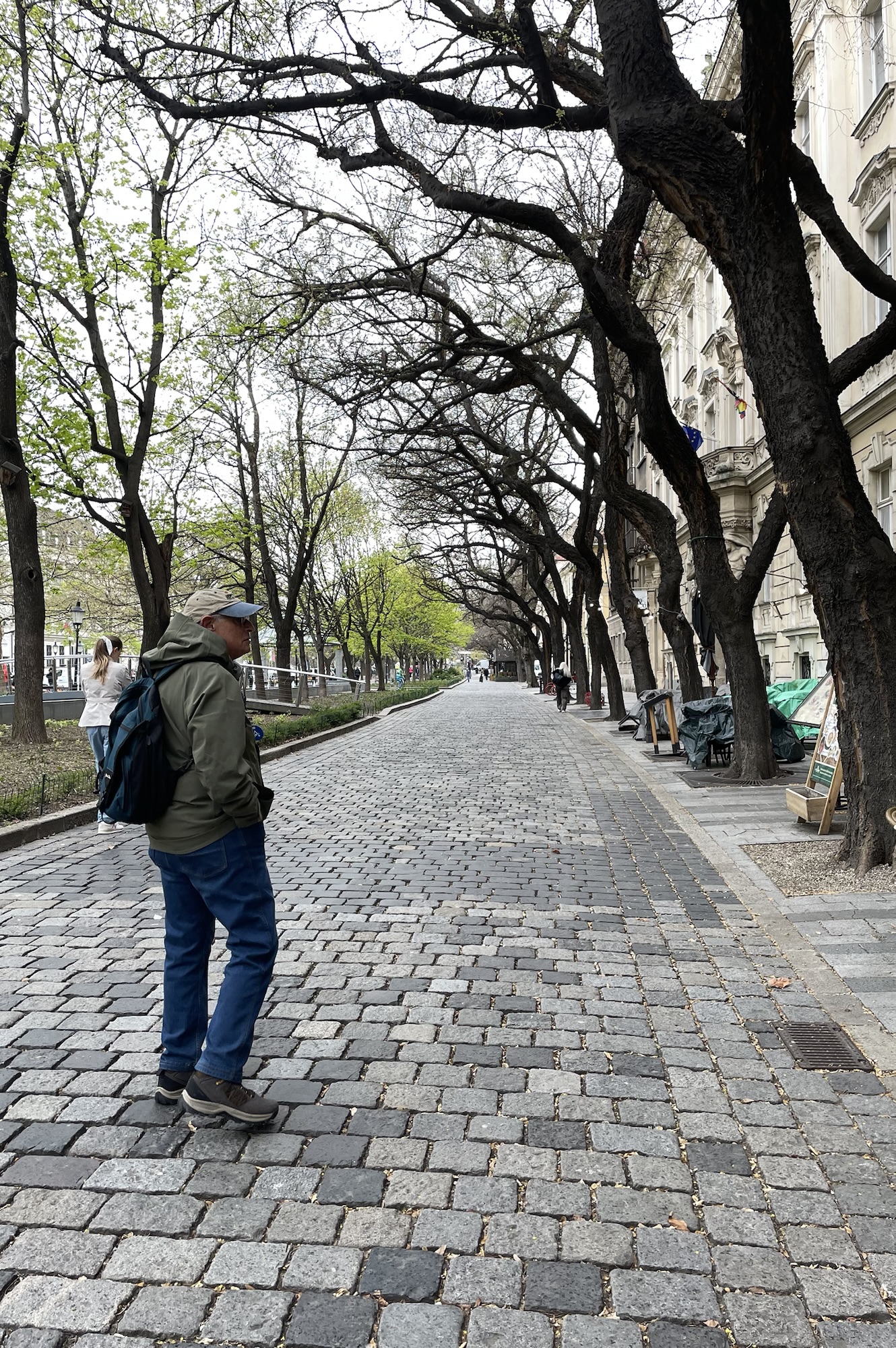
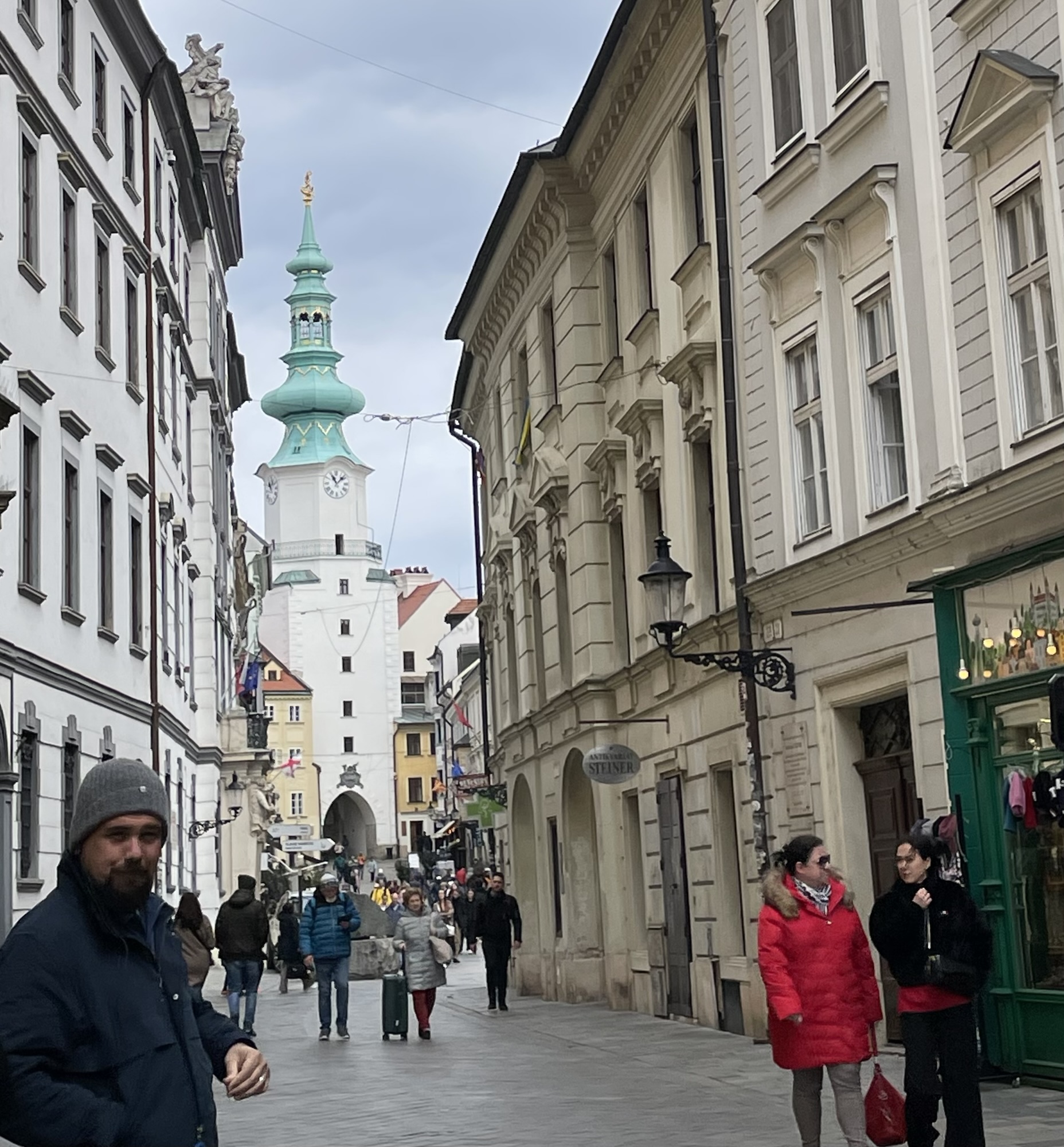
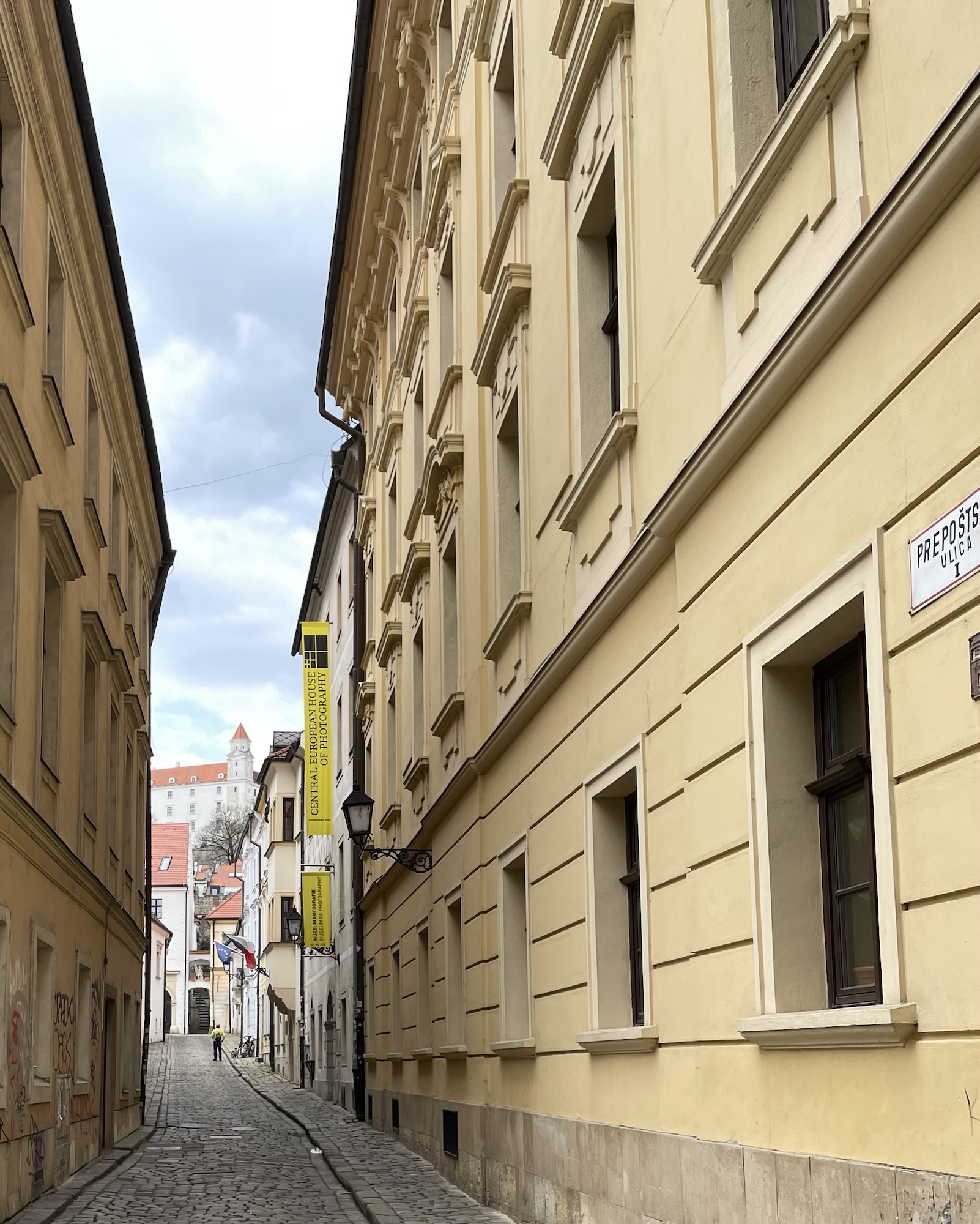
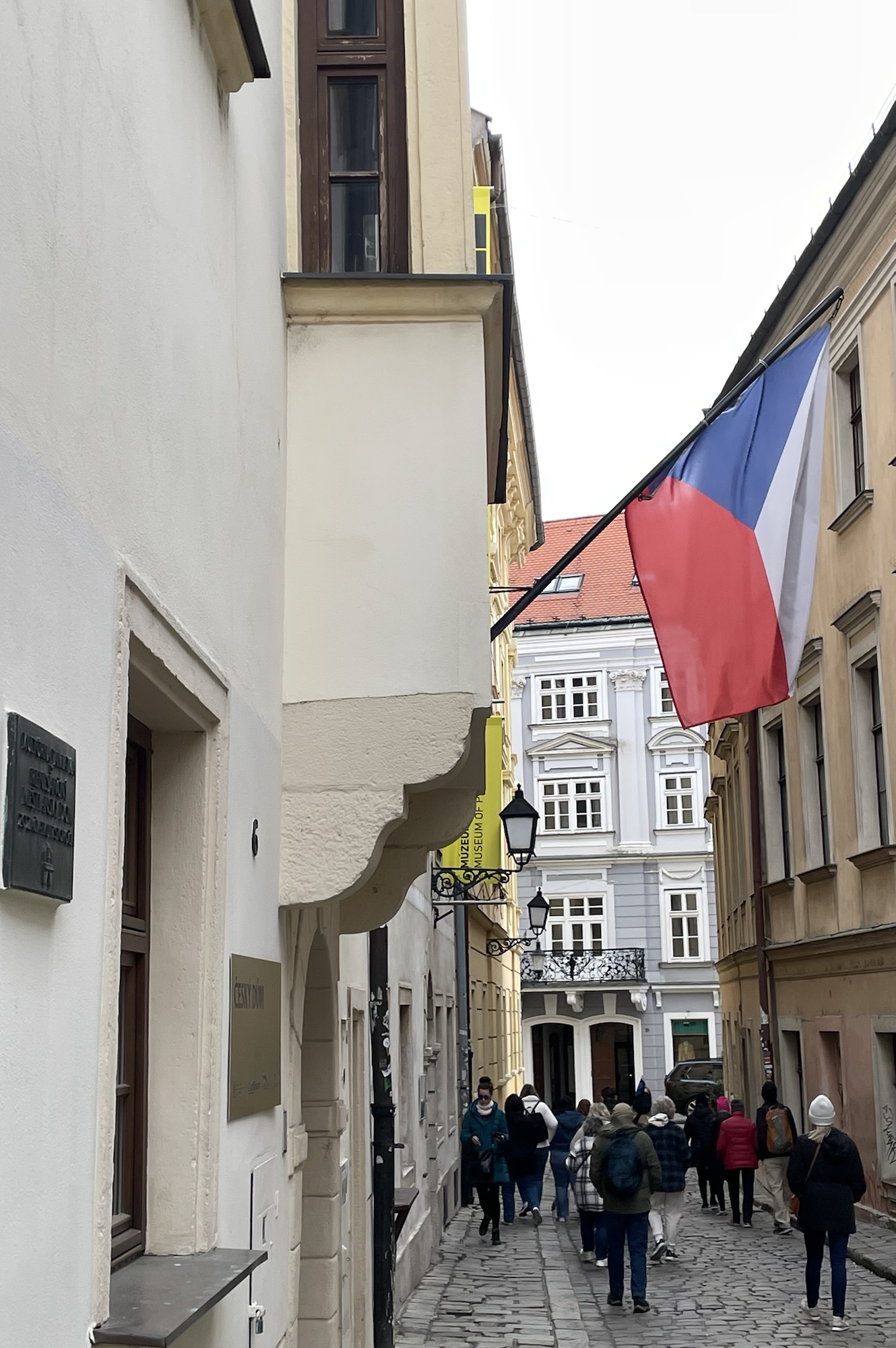
The streets of old Bratislava are narrow and treacherous with cobblestones that are themselves awfully uneven. The old town is so small you are through it in minutes. Our guide explained one street has been used over and over as a movie set because all of the buildings are owned by the Catholic church and hence there are no commercial signs. She told us a funny story. She was leading a tour and as they came around the corner onto this particular street a gate opened and out walked two tall men in full Nazi uniforms. Jana and her group stopped and gaped. “It was surreal,” Jana said. I’ll bet!
Many buildings date from renaissance and guide pointed out the distinguishing feature: enclosed balconies facing the street with windows on front and the very narrow sides. The side windows were a security feature…one could see from inside if a bad guy was sneaking along the wall toward the door. Only bad guys would approach by scooting along the wall instead of approaching directly from the front.
On the left, a renaissance building with side windows in covered balcony
Live and learn.
Bratislavan treat
Our wonderful guide Jana had stopped outside a restaurant that had photos of their traditional dishes to point out that we shouldn’t leave without eating the most delicious of local foods, halusky. Dumplings (along the lines of spaetzel) in sheep’s cheese with bacon on top. At the end of the tour I asked her to recommend a restaurant where we could find a good version and she have us a name and pointed it out.
One of my problems on the cruise is lunch is at 12:00 and dinner not until 7:00. Consequently I am hungry in the afternoon and the snacks on board are cookies, fruit, one day donuts…all sweet. So this day i counted on walking back into town to try halusky. We braved the windy cold and spatter of rain. Wow. So delicious. We also ordered potato pancakes which were unlike anything I have eaten. Thin like crepes, buttery, with a very faint sweetness. It looked like a lot of food but we ate every last bit.
Halusky and potato pancakes, and the view from inside the restaurant.
We left this beautiful peaceful town thinking it would indeed be a nice place to live!






















 Inescapably Rational