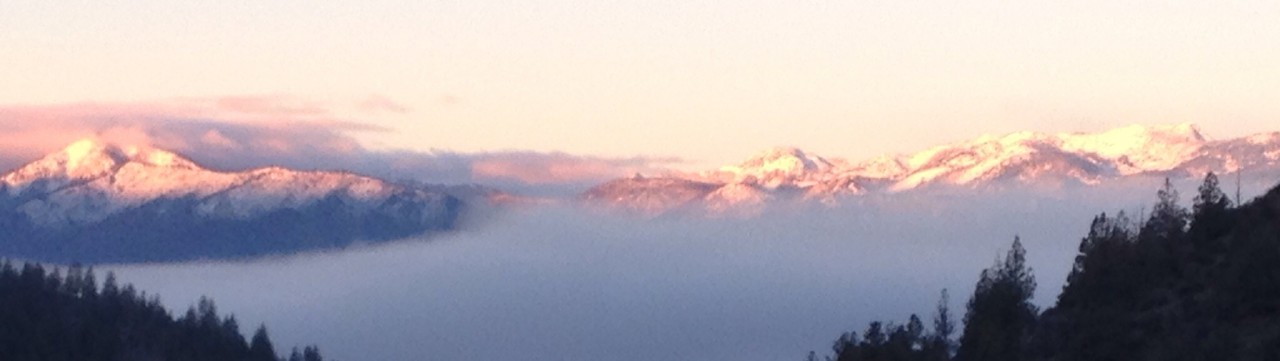
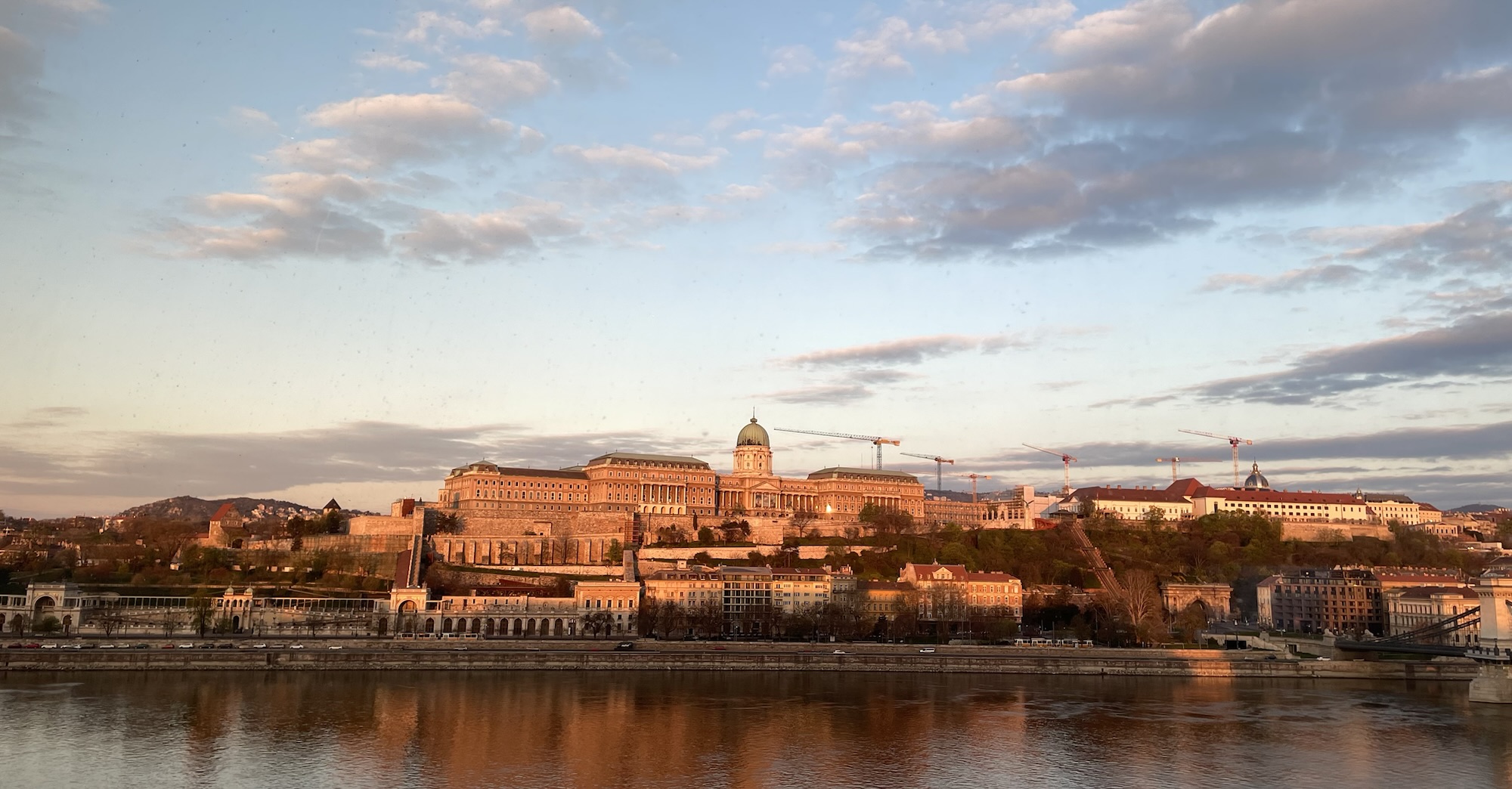
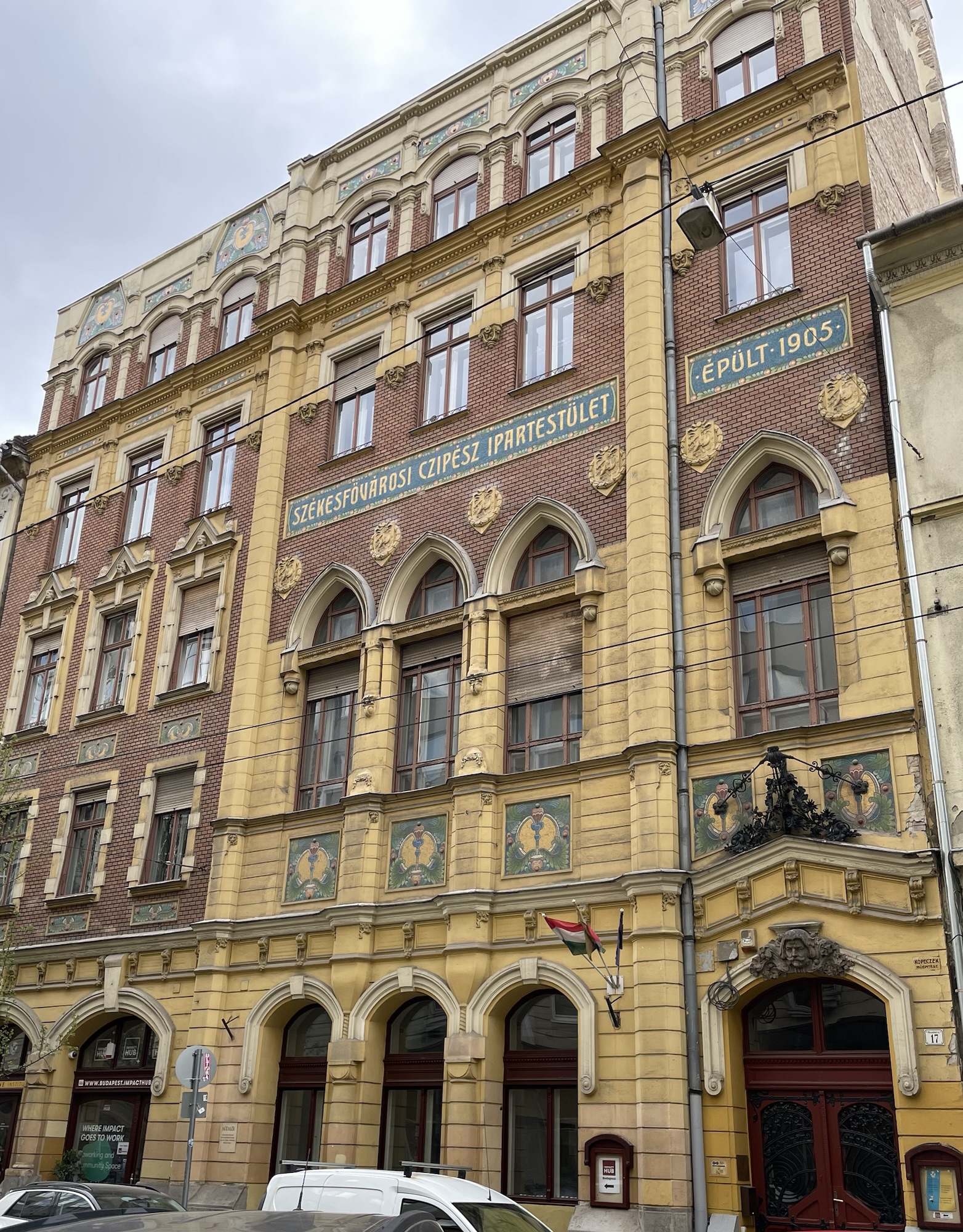
Budapest is a beautiful city. Like Prague, around virtually every corner is another deco or nouveau building, a small green park, or a monument with an unrecognizable, to Americans, statue on top.

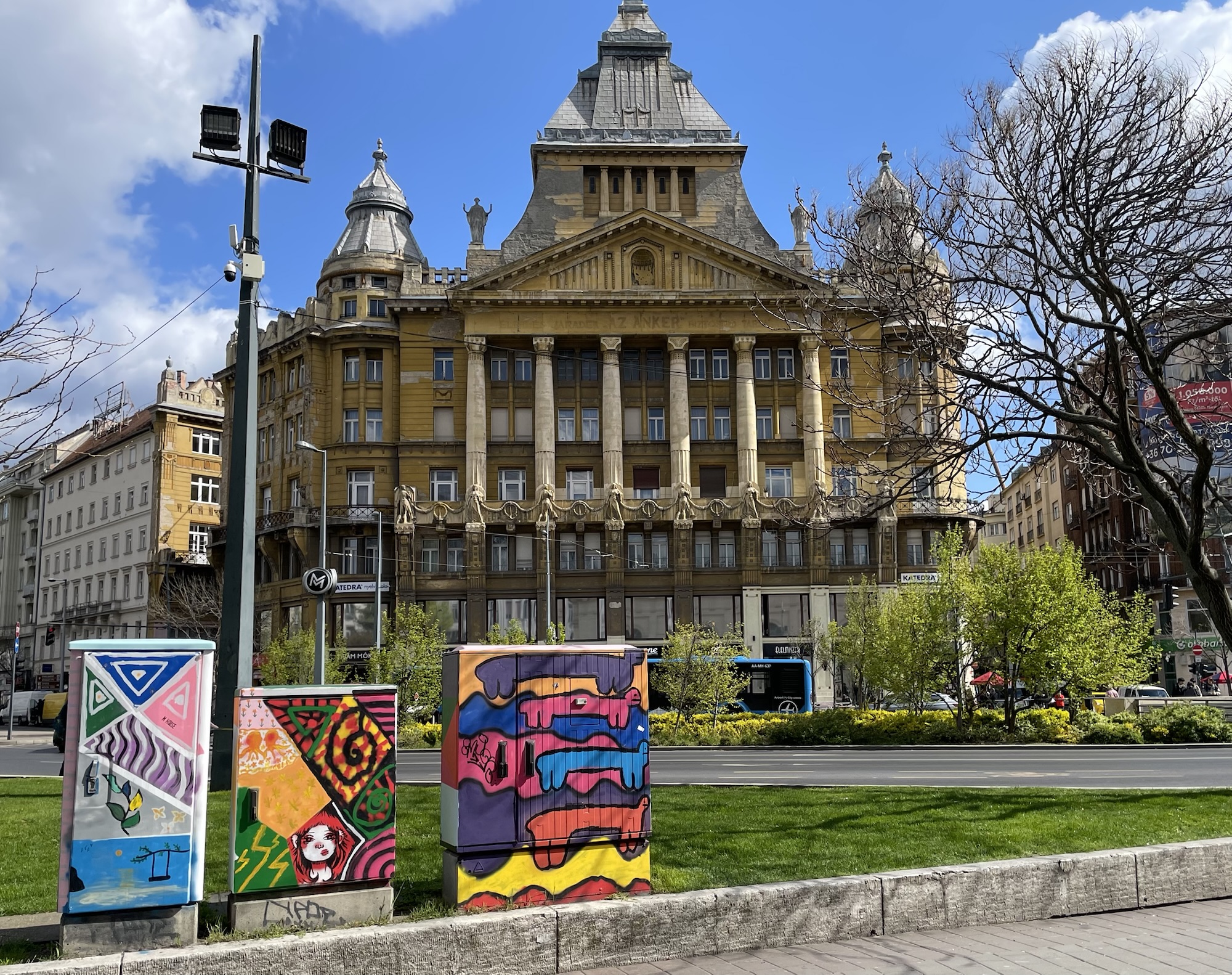


It is also infected with plenty of American shops, pizza restaurants, kebab shops. I suppose we should no longer be bummed by Starbucks and McDonalds and Burger King, right? And yet…

We arrived several days before our Danube cruise started, fresh out of France and perhaps a bit hard to please on the food front as a result. Our visit was also handicapped by incredibly cold and windy weather that arrived our first morning. Nonetheless we layered up and headed out and about.
Public transportation

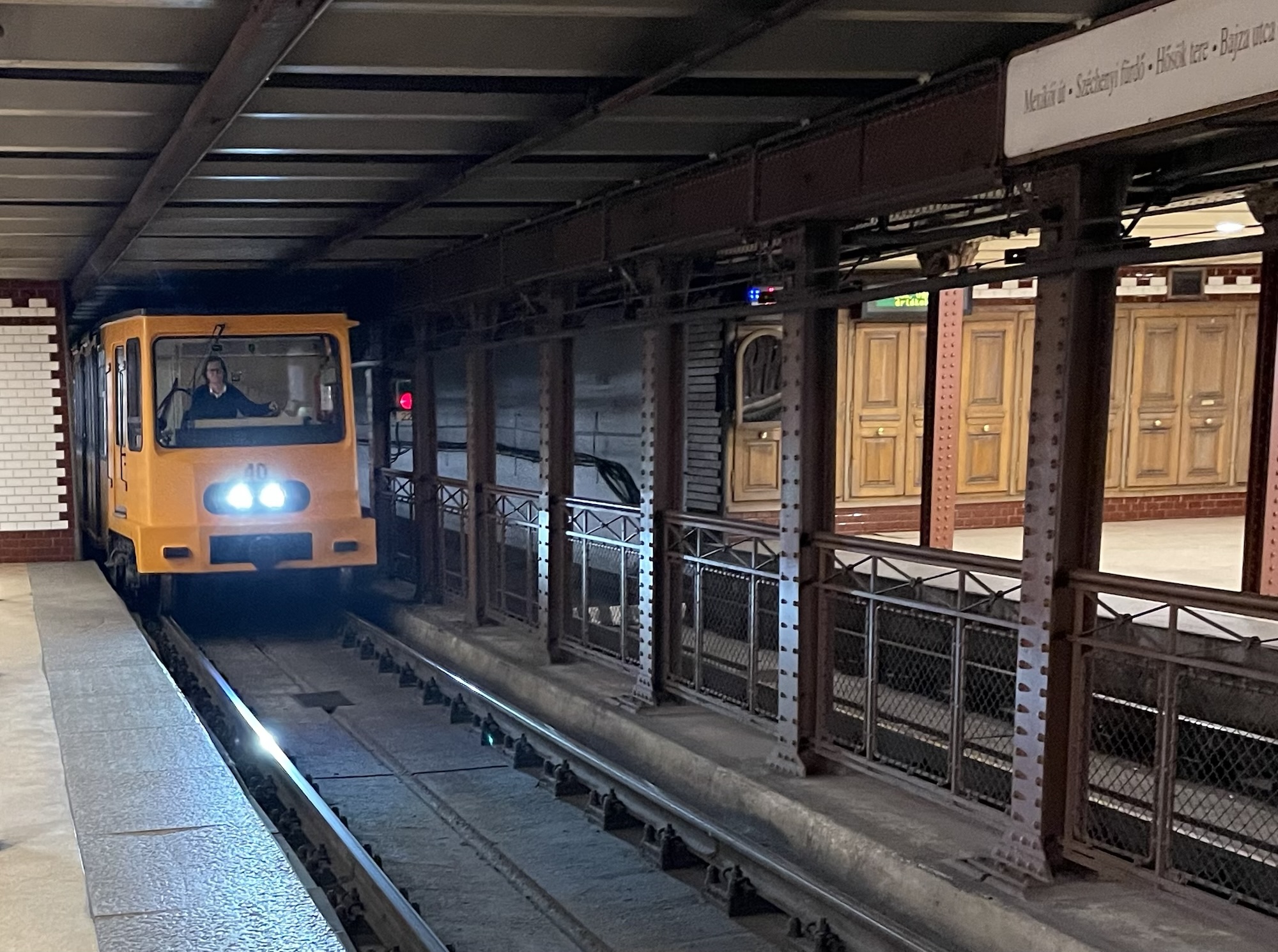
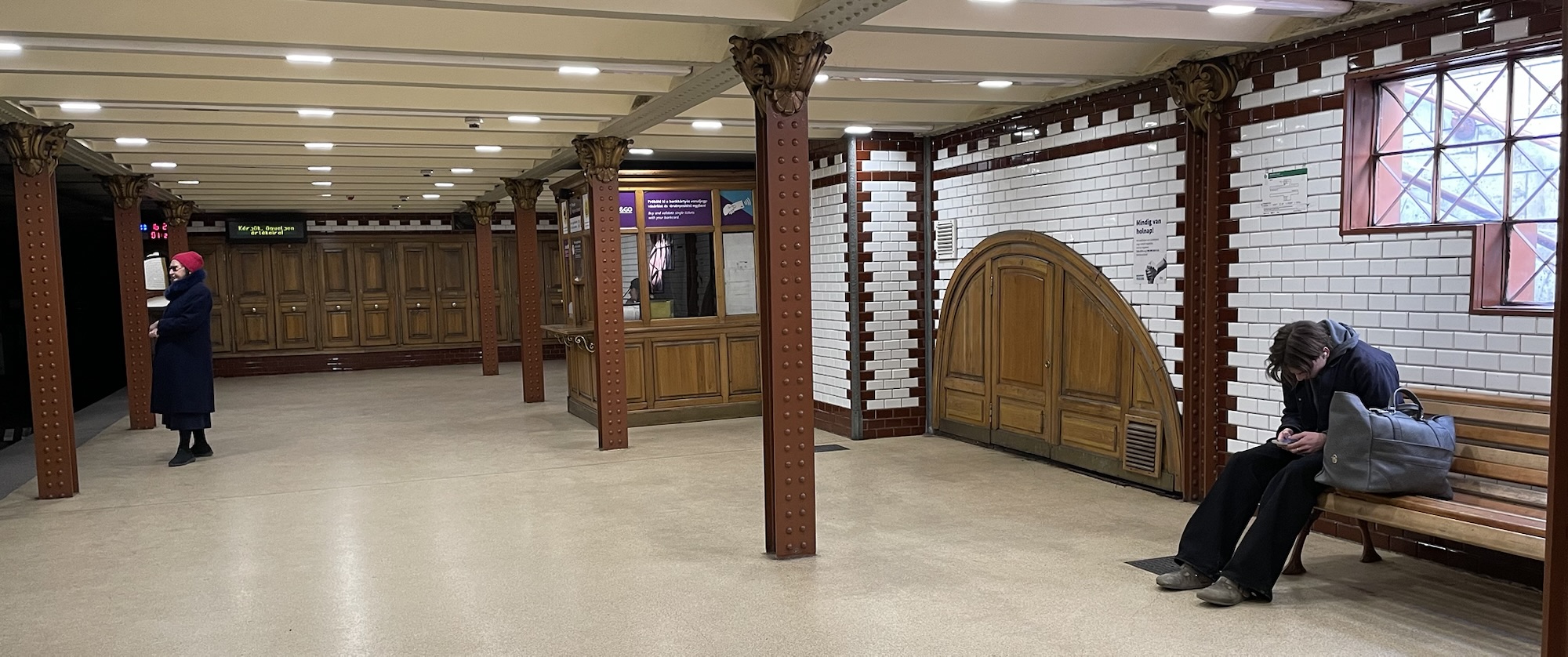
The metro is great, with the added attraction of the oldest line (yellow) with white and brown original tiled stations, quite small, and low ceilings. According to our guide it was the 3rd major underground system in the world after London and Istanbul. It is not many steps below ground and supposedly because it is not in a tunnel it is technically not a subway. The cars have leather straps (!), low ceilings, and the most terrifying door closings I have experienced. I tried to capture them on video but it does not do them justice. Ding, ding, ding and the doors close, slamming violently the last few inches. I bet they would take a limb off, easy.
Between the metro, the bus system, and electric streetcars you can get anywhere and quickly.
Advice: From the airport skip the cab line and head right for the express bus 100E, which barrels into Pest and drops you right in the center.
As we lined up for that bus, pretty tired from walking at least ten miles across the Munich airport (very slight exaggeration), we were taken aback by a twenty-something man who was almost aggressively asking us a question in incomprehensible English, over and over. We stepped back, alarmed, as another young man at the door to the bus asked if we were over 65. Uh, yes? No charge for public transportation! The insistent young man who had been pressing us a moment before looked down, saw he didn’t have his ID badge around his neck and immediately fumbled to get it out of his jacket pocket. He had been asking us “How old are you?” Poor guy.
Google maps were reliable for walking and taking public transportation, with few of the dead spots in many other old cities. So in spite of the windy cold we got around easily.
Disappointing
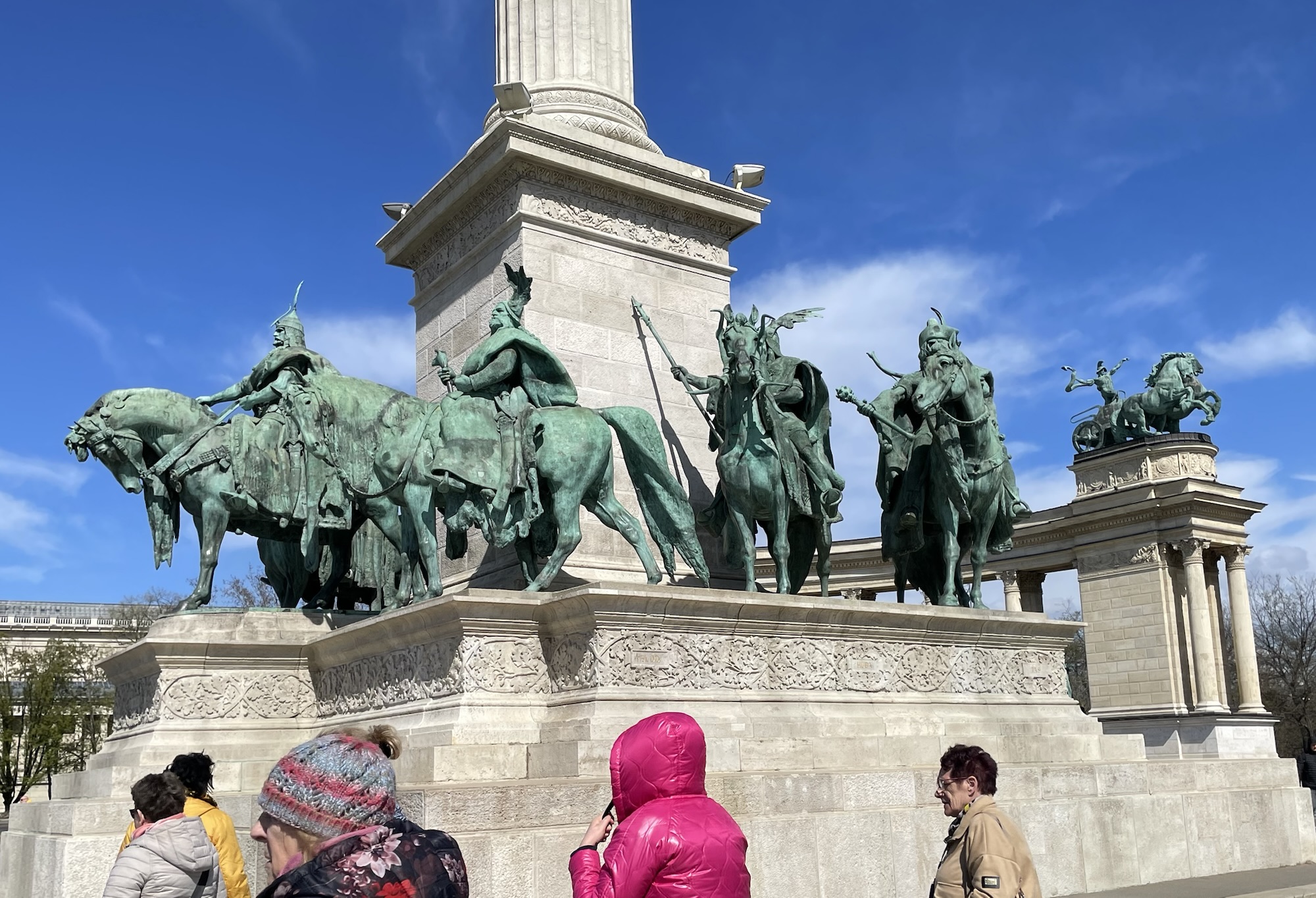
We love museums, primarily art and history. We found Budapest museums underwhelming. The fine arts museum, which is on Heroes Square (which is magnificent) is only mediocre and the building itself terribly confusing. It seemed in each era the examples on display were not the most impressive. Admittedly we have been to a lot of art museums but I do not think we’re jaded, we just had no wow moments, no revelations. But it is very well regarded and maybe we weren’t in the mood.

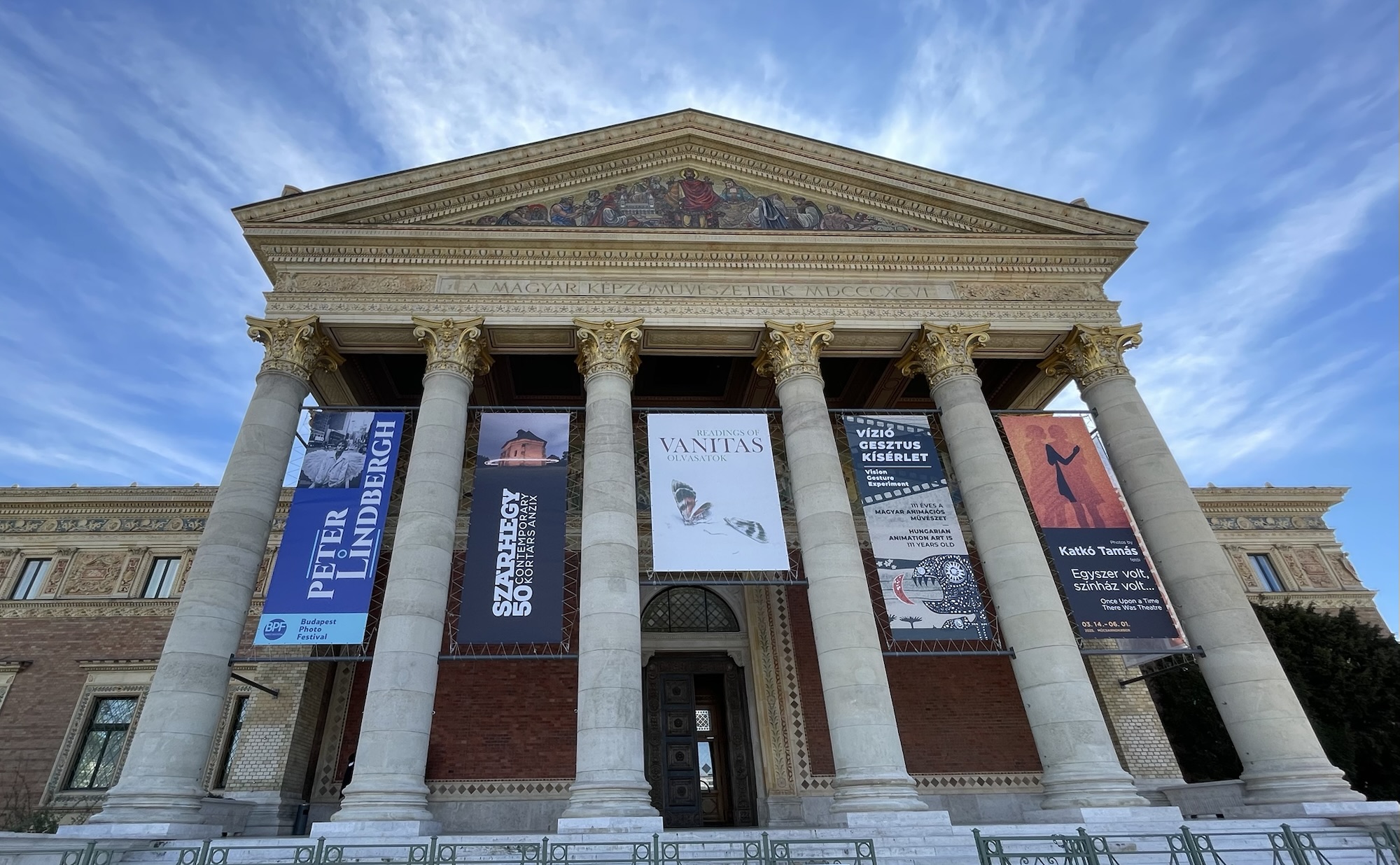
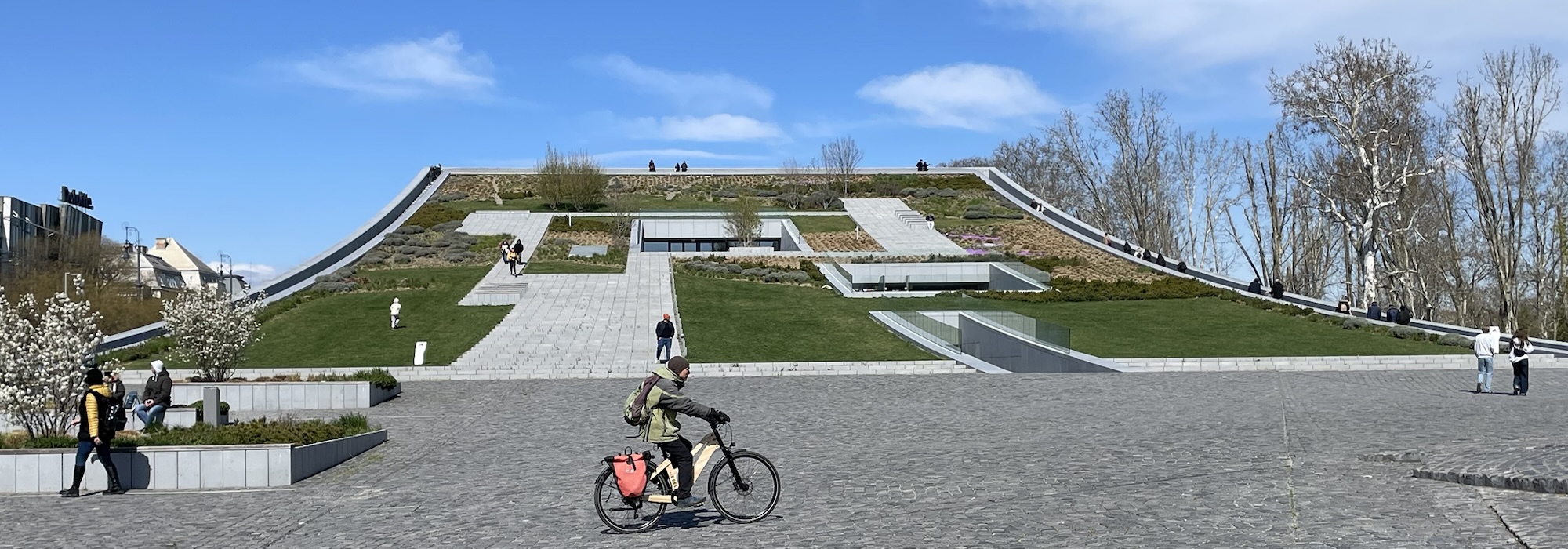
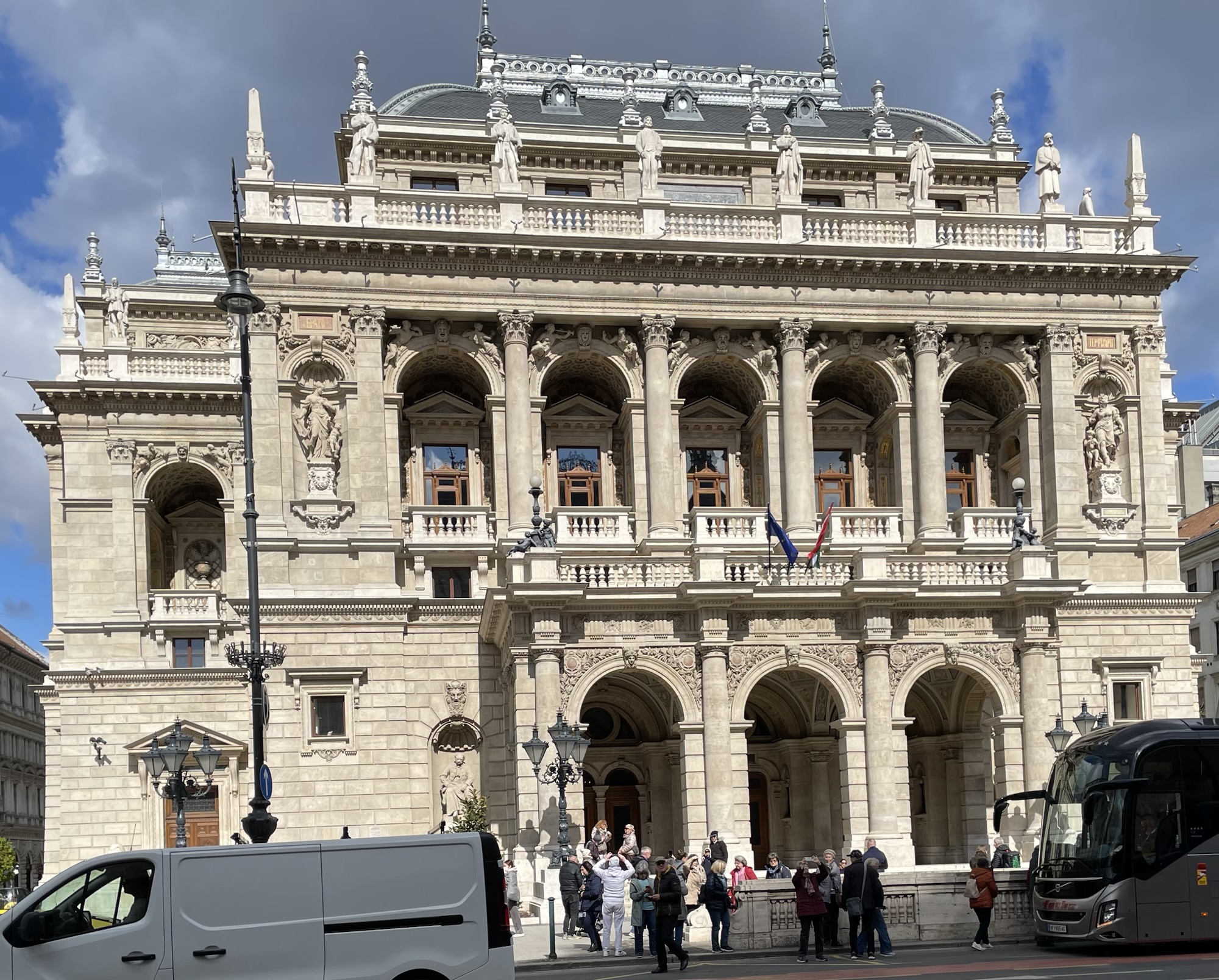
In retrospect we wish we had gone to the ethnography museum instead. First of all the building is amazing from the outside (see photos below) and lots of people were walking up to the top. For us it was way too cold and windy to try. A missed opportunity. And second, given the bits of Hungarian history we picked up a few days later at the national museum, an ethnographic history would have been fascinating. Quick, which language is Hungarian most closely related to? Yup, both the Finns and the Magyars came out of Siberia.
Our last museum experience worth mentioning was the National Museum, all about Hungarian history. Best part by far is on the second floor, 1703-1990. Lizt’s piano, which had been Beethoven’s! And the fascinating era from World War I through the velvet revolution. Well laid out, sufficient English signage, moving and just interesting.

When we got there, tired as all get out, we decided to take the elevator up and walk down. We asked where it was at the entrance and were told to see a particular woman who motioned for us to sit down. We did. After perhaps ten minutes we didn’t begrudge given how tired we were, she motioned for us to follow as she led us through locked doors, a warren of hallways, finally getting into a freight elevator to the third floor where we were escorted back out to a public area. We said thank you and went on our way.
Our Hotel
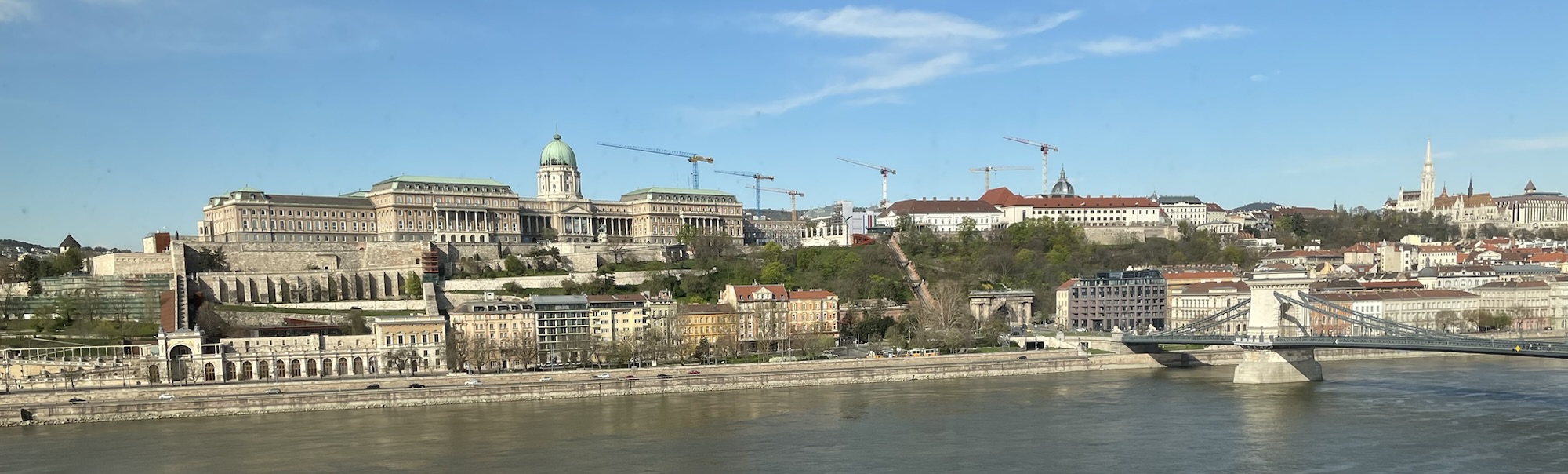


We stayed at the Intercontinental Hotel, right on the river, and we thrilled to the view both day and night. Our room was big and dead quiet, bed comfy, and we almost caught up on our sleep.
Food

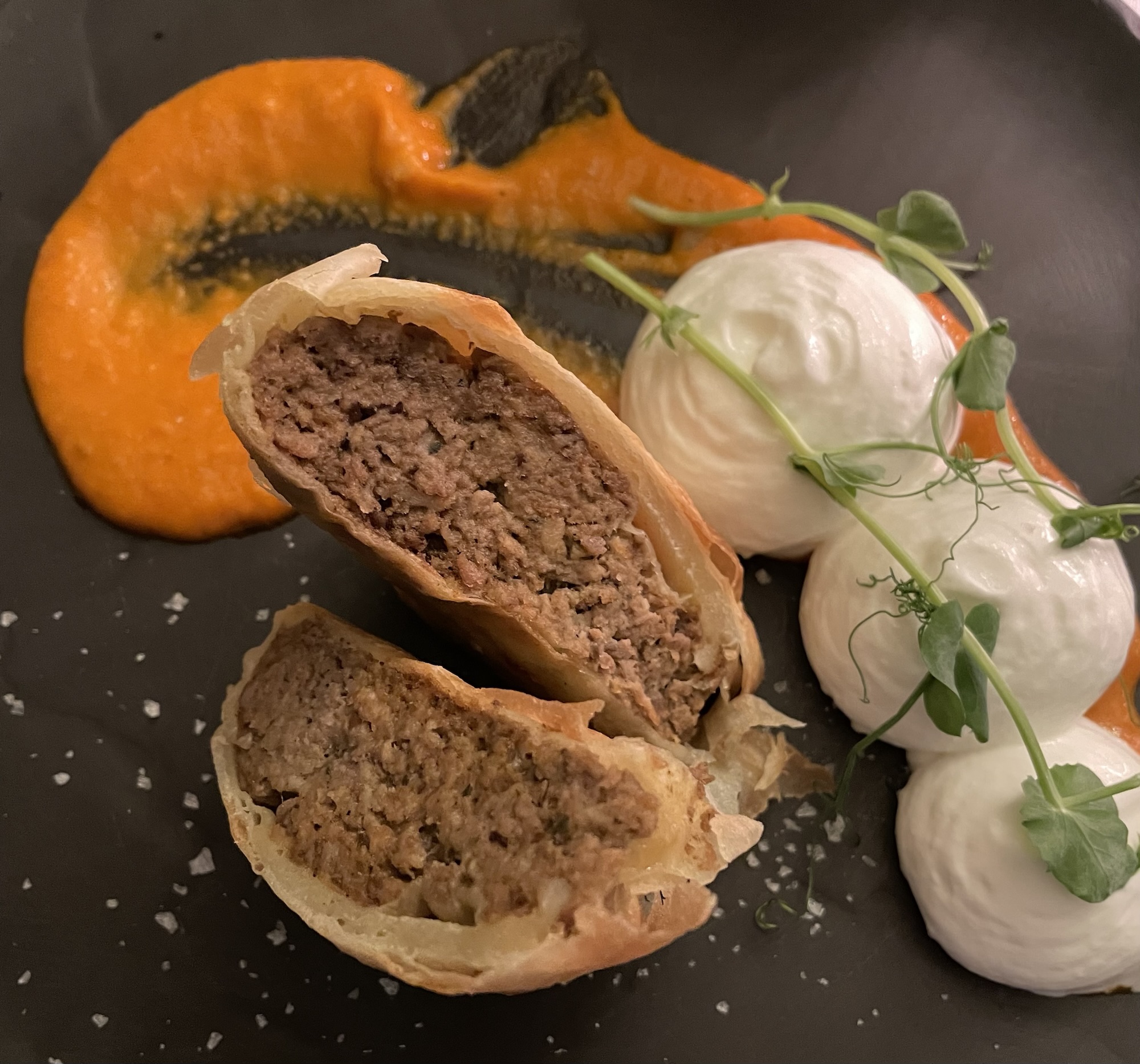

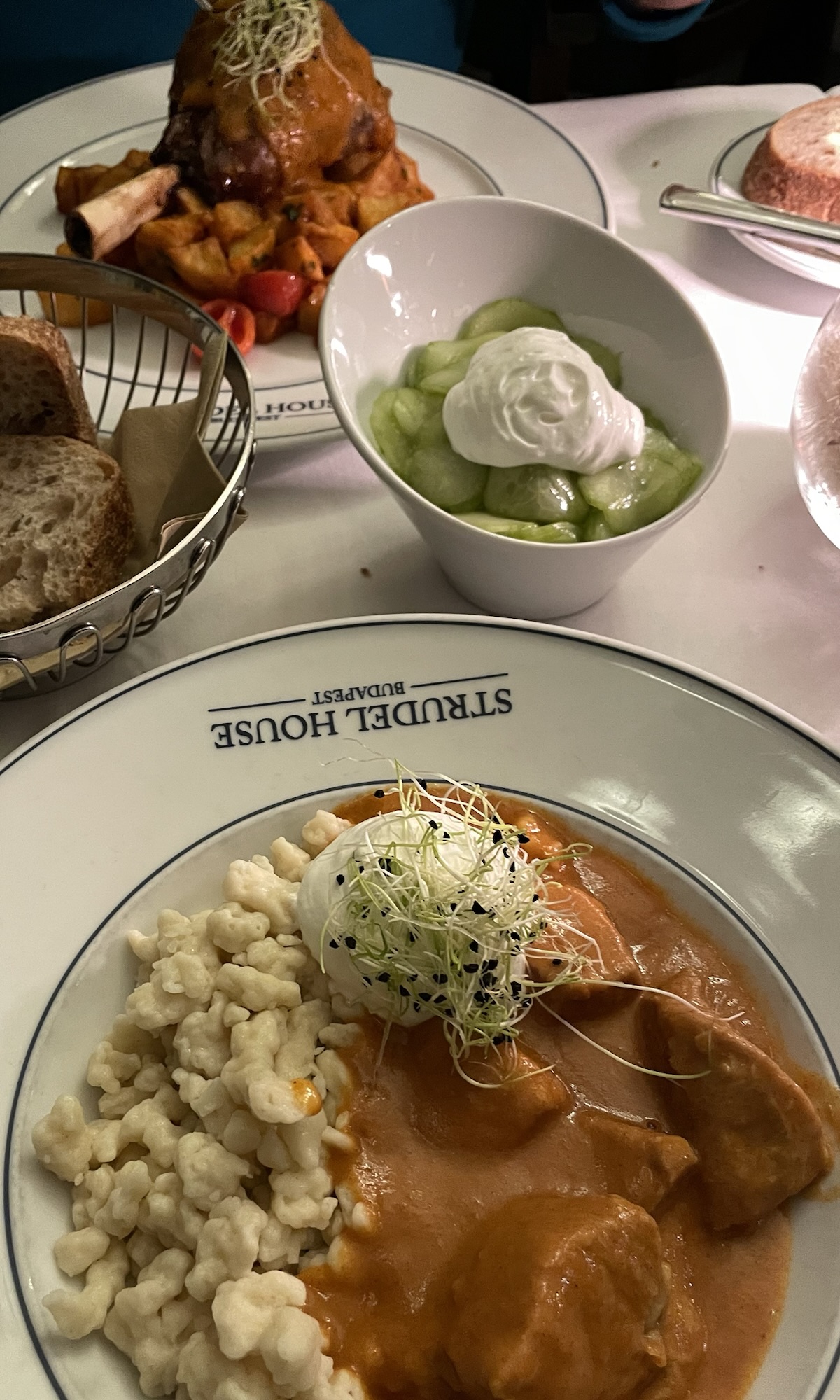

We had paprikash and goulash several times. Delicious. I think perhaps the cucumber salad that came with veal paprikash our last night was a highlight, as was the “onion” soup David ordered. It was the bright dark green of very fresh spinach, maybe, thinner textured than a cream soup, and wow what a flavor. The English translation in the menu was “Ramson’s onion soup.” Oh! Ramps, a beloved spring wild onion found in eastern US. it was a revelatory dish. This great meal was at Elso Pesti Reteshaz, also known as Strudel House. And yes, great strudel both savory and sweet.
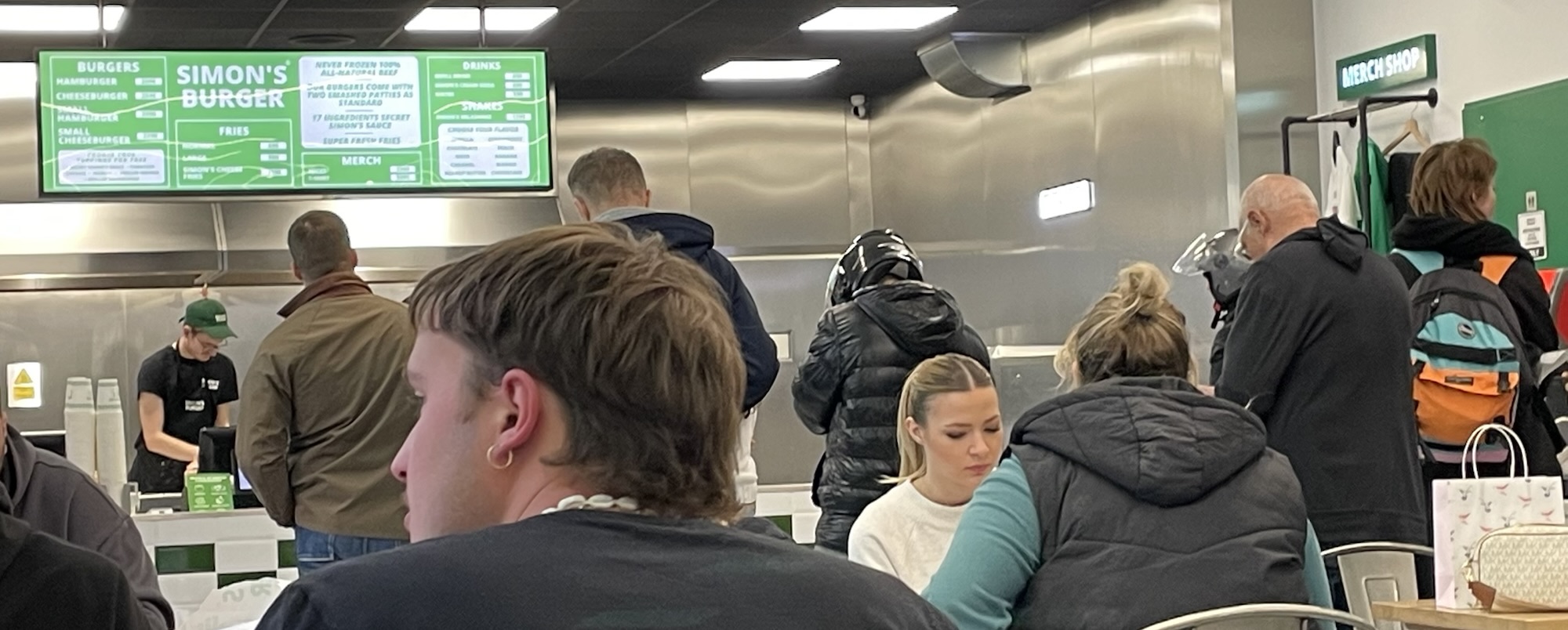
A funny and yummy meal experience at the other end of the spectrum is Simon’s Burger. It is a love letter to American smash burgers and that cuts both ways, right? But we were tired of finding places to eat, we were hungry, and it was close by. Everything is in English, though the clientele is young and Hungarian. We raised the average age by a decade and the place was packed. We had medium hopes that were way too low. The burgers and fries were terrific, perfectly cooked and hot, and the ambiance so entertaining, we were very happy we went.
The concierge sent us to A La Maison, a ten minute walk, for breakfast because it was open at 8 unlike many of the coffee houses. Huge menu, delicious variations of eggs benedict, a few oddities to Americans like Hungarian French toast (savory, served with grated cheese on the side), pretty darned good coffee and fresh orange juice. Heaven for me.
Jewery
The Jewish quarter is known as the party district due to lots of “ruin bars” and a funky feel. It also has a lot of Jews and several large synagogues. One of these also has the Jewish Heritage Museum (somewhat boring) and a devastating photo exhibit about the demise of Budapests’s formerly large Jewish population at the very end of 1944, and the cemetery of mostly unidentified victims buried in perhaps a dozen mass graves ringed with the gravestones of the small number who were identified. Also a courtyard dedicated to Raoul Wallenberg and other gentile heroes who saved Jews from the Nazis. Worth seeing and facing but personally I couldn’t manage all of it and ended up leaving to cry in the synagogue.
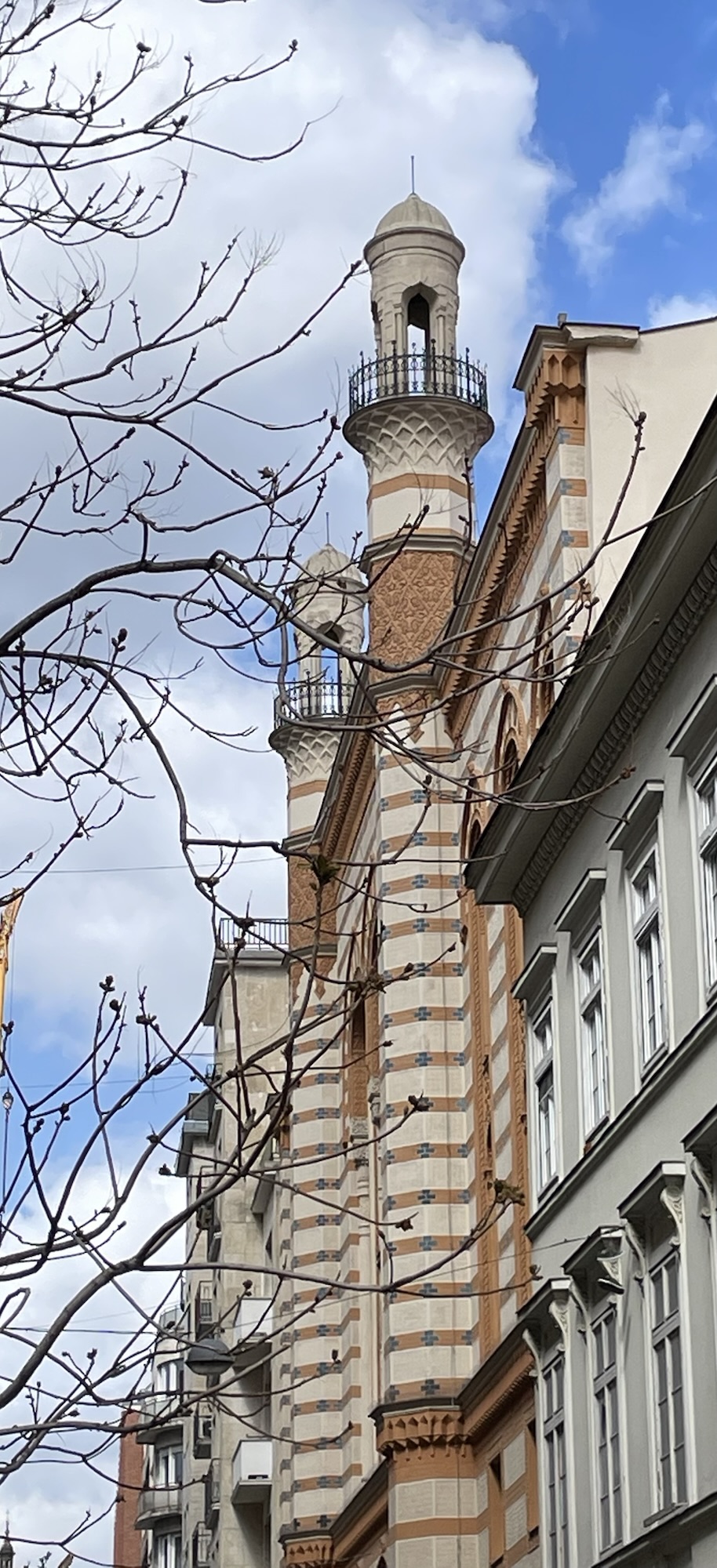


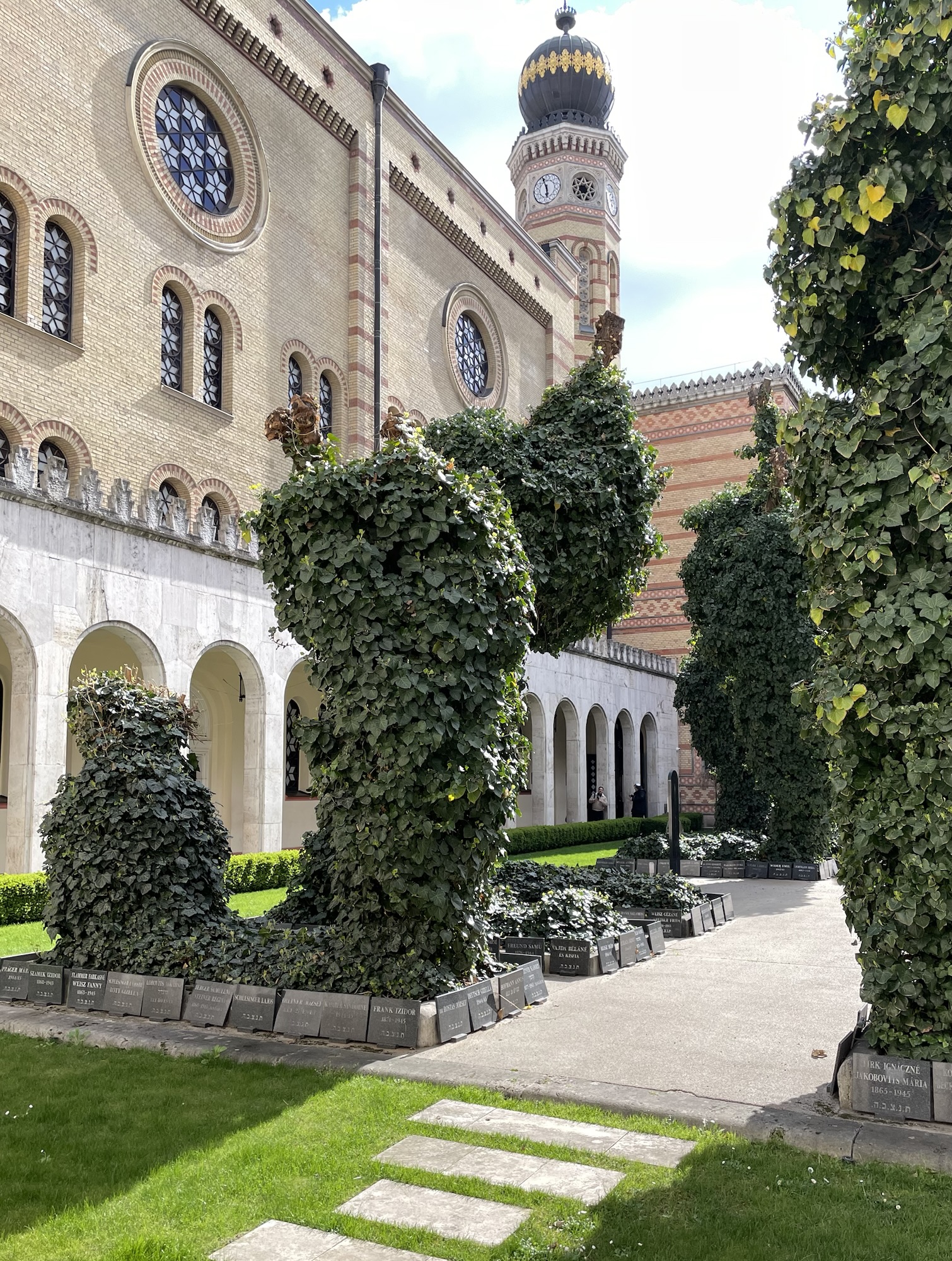
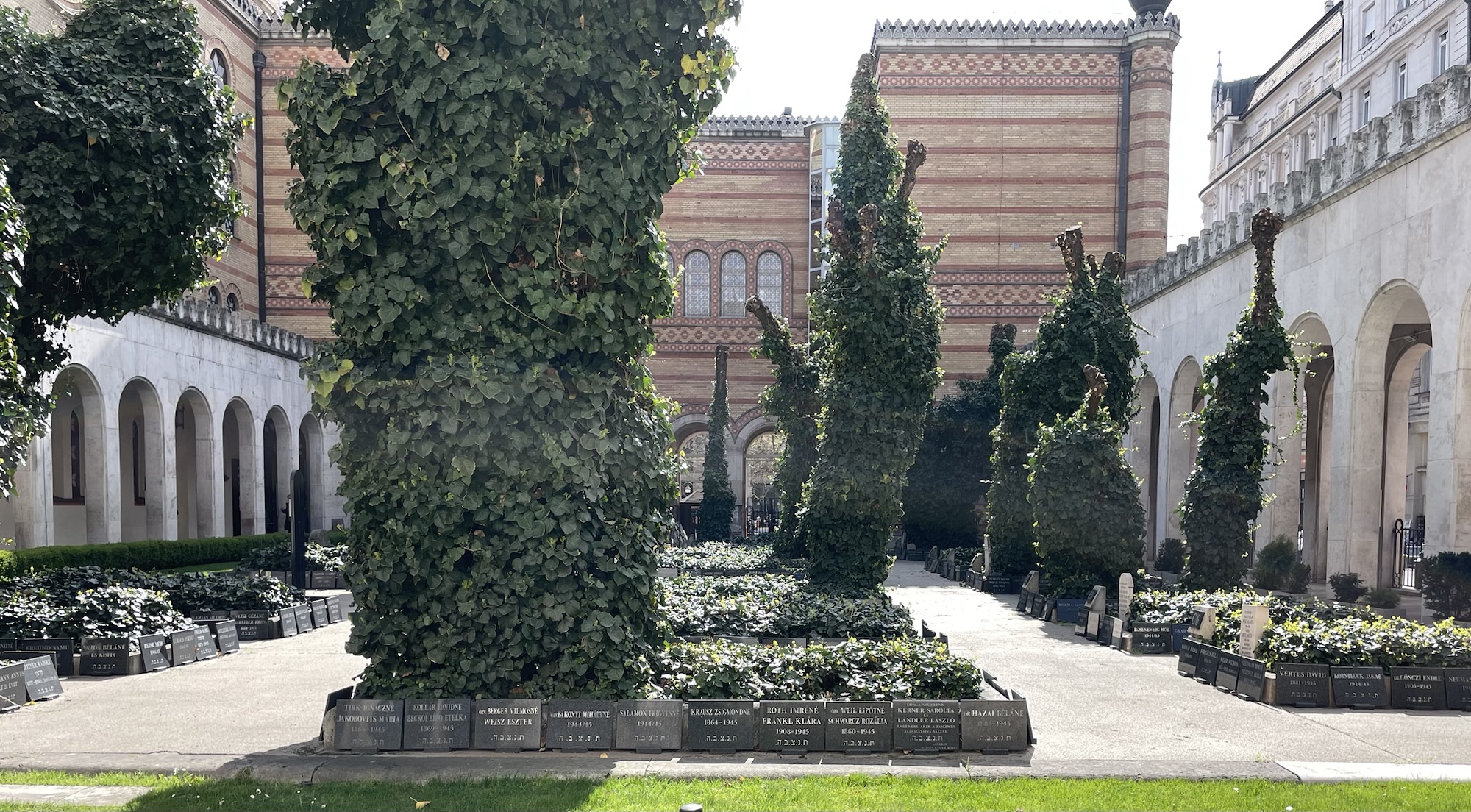
Surprisingly interesting for me is the Robert Capa museum of his photography and his life. What a life. He was a very famous war photographer starting in the Spanish civil war through both world wars. He took a break of a few years, managing to squeeze in an affair with Ingmar Bergman and friendships with Steinbeck and other men of letters, then returned to the French Indochina war where he died in 1954 when he stepped on a land mine. It’s a grueling experience to see his work and read about his life and worth every minute. The Capa museum is on the edge of the Jewish Quarter, so if you are visiting I advise you to pace yourself.
Miscellany
The enormous, somewhat touristy Central Market is worth a trip if only to buy eleventy-seven kinds of paprika. I also discovered the butchers are happy to sell you 4 little slices of salami to scarf down on the spot.
Hungarian specialty chocolatiers are amazing!
As you bus from center city outward the beautiful buildings gradually step down from maybe 7 stories to 5 to 4 to 2. All of the nouveau/deco eras, all gorgeous.
If you manage to learn even 3 words of Hungarian, especially thank you, you will always get a smile.
Most people who mention the government are scornful of Orban and sadly baffled by you-know-who. Oddly coincidental Netanyahu was landing for a visit as we landed Saturday.
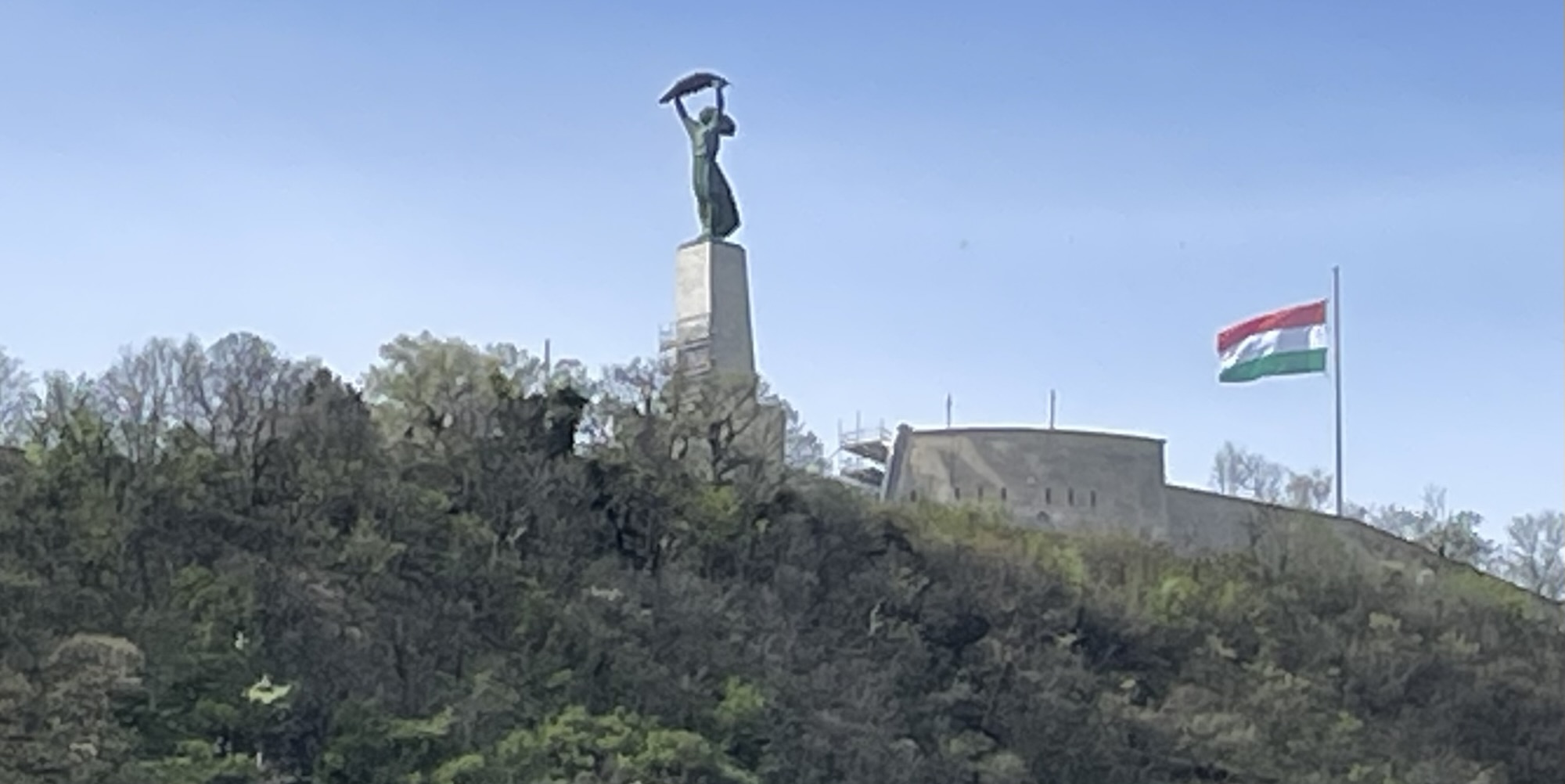
The photo below is a soviet era statue, very very large on the hill in Buda. After the velvet revolution it was draped in a white sheet for three days…our guide said it looked ghostly. Then the sheet was removed and it was renamed Lady of Liberty. Cool, huh?
 Inescapably Rational