Maya Finds The Perfect Kashikatsu

Osaka is known for kashikatsu, one of the many kinds of “food on a stick” in Japan, and our young cousin Maya was tasked by mom Harumi to find a place. Now, Maya is a student and gravitates toward bargains, while her mother was determined to find someplace really great, and Harumi was quick to veto the first suggestion where each skewer is about 100 yen—way too cheap!


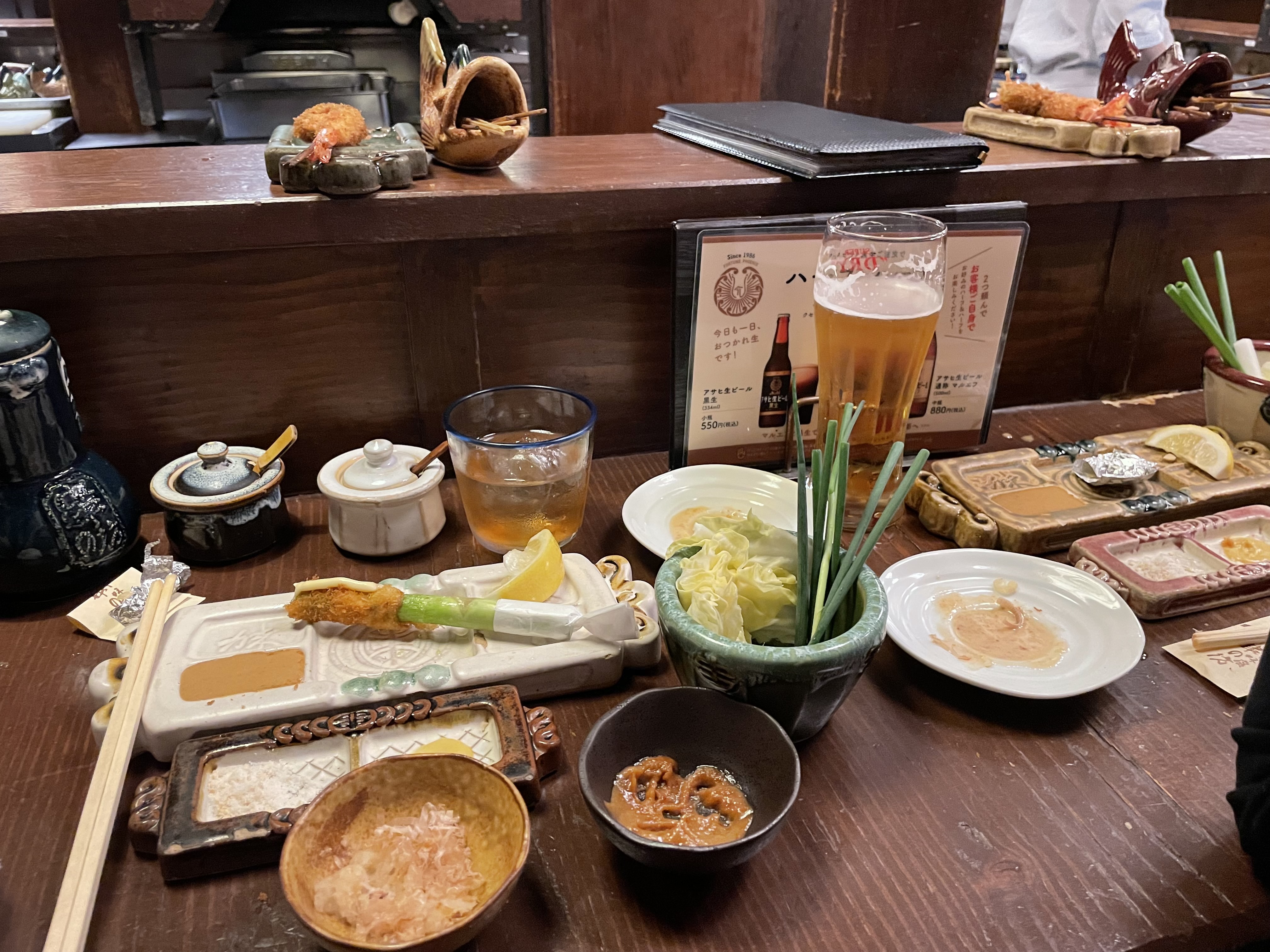
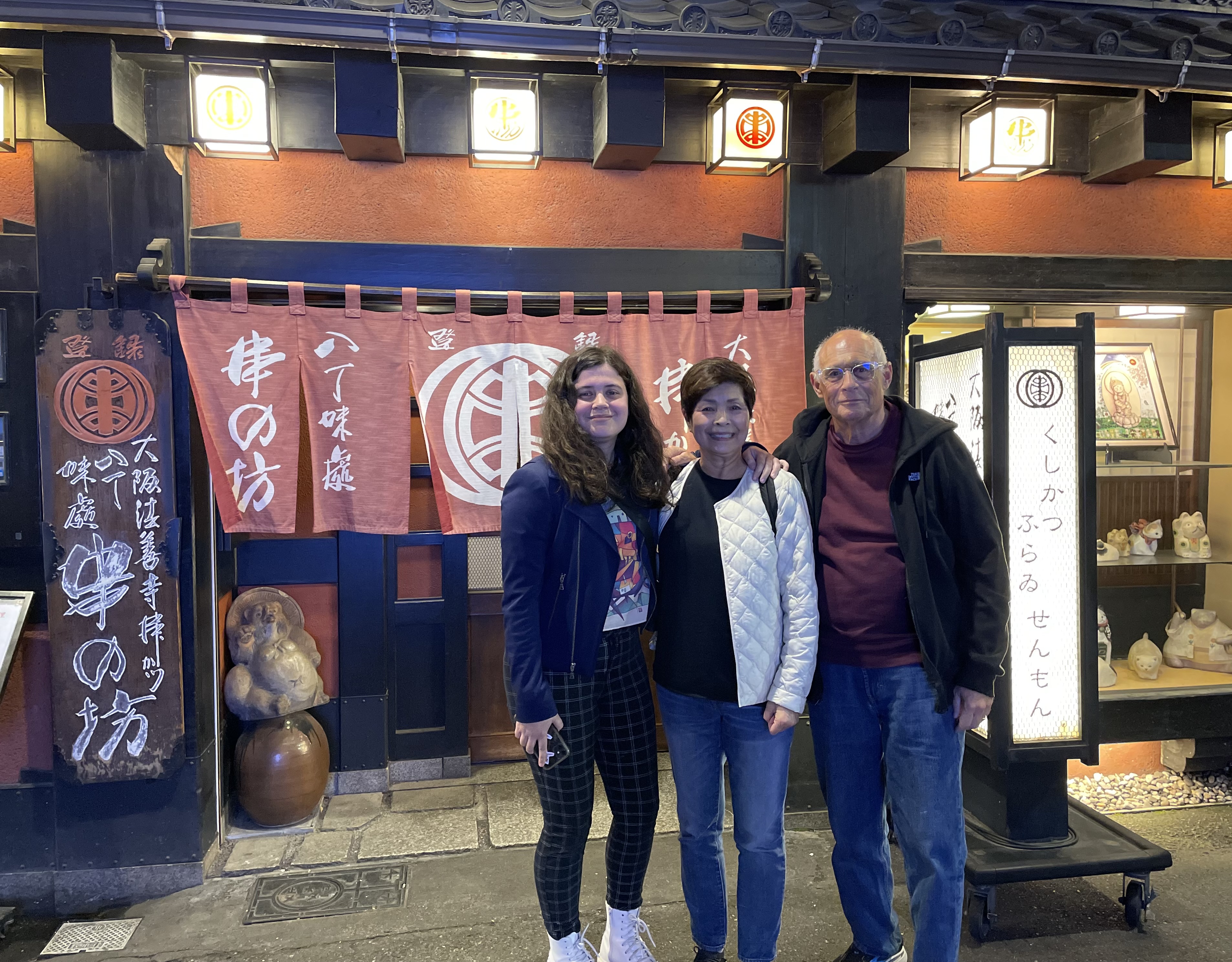
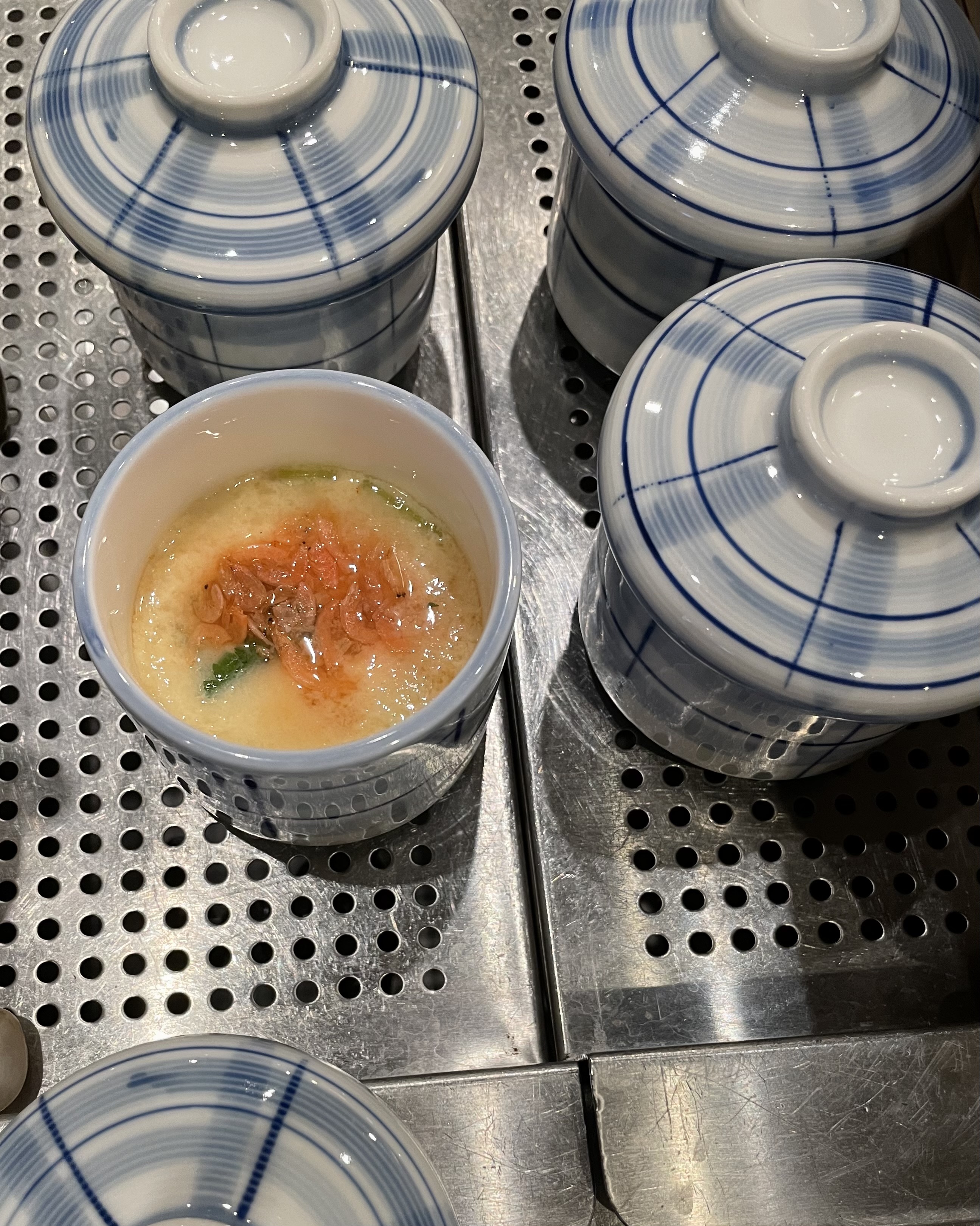
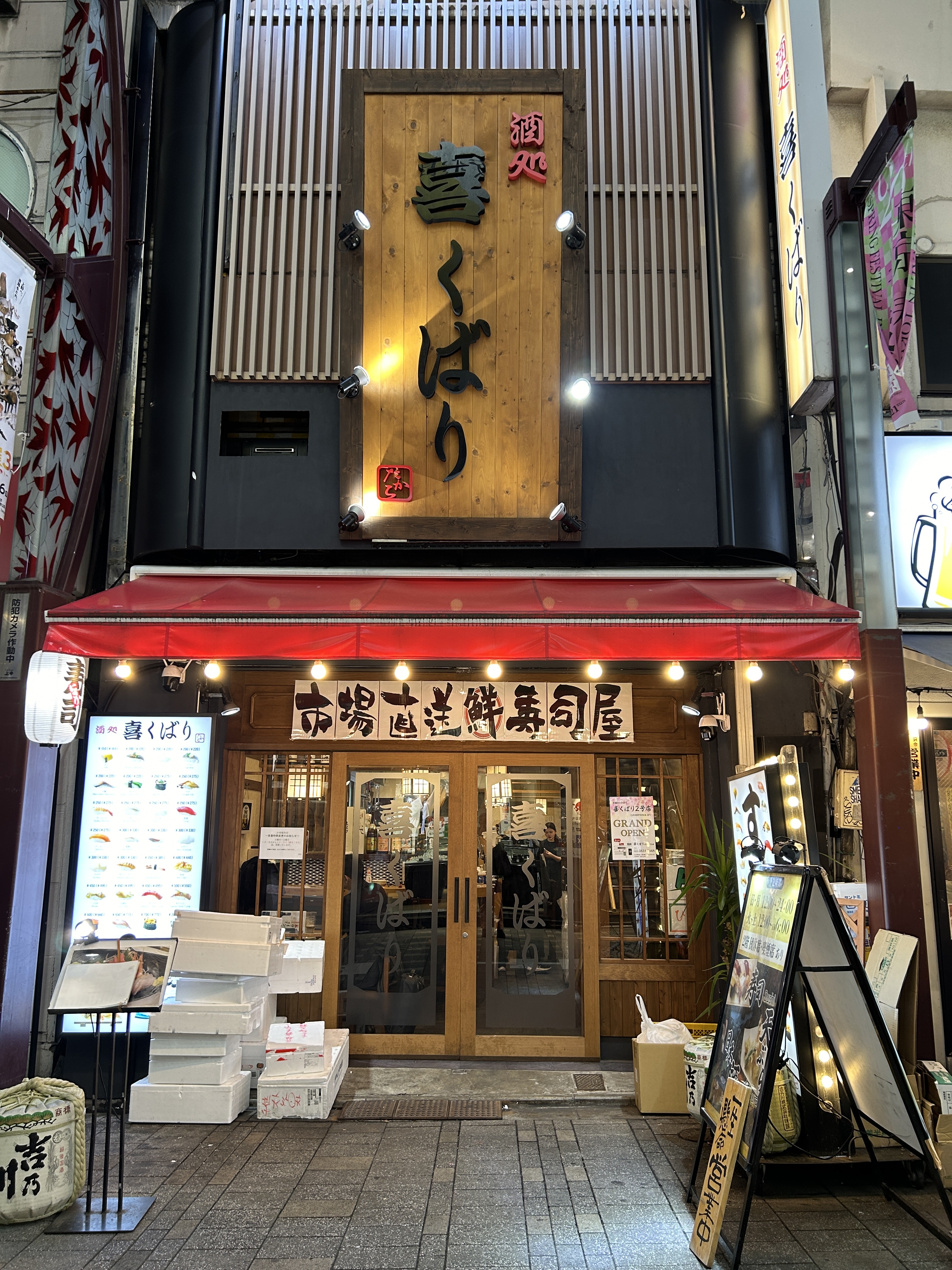
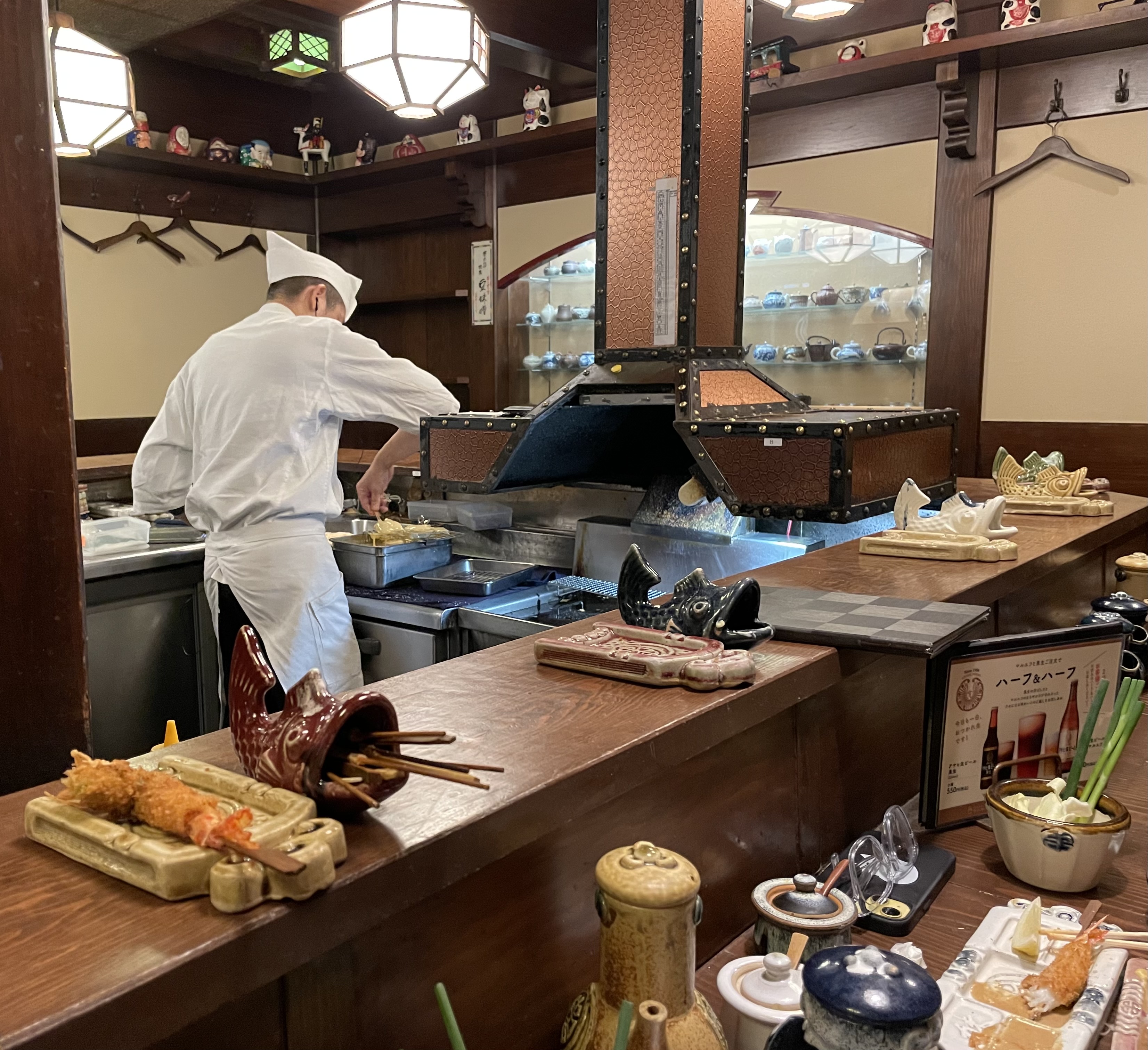
Maya did her mom proud by finding Kushinobo Osaka Hozenji 串の坊 大阪法善寺本店, a 15 minute walk from our hotel in Dotonbori but off the madhouse main street. Oh, what a find. The restaurant is clearly old and reminded me (really) of an old time German restaurant in Chicago or Milwaukee. Dark wood paneling, two rooms only in which all the counter seats surround the cooking space. We ordered the special omikase sets, which they were able to tailor to Maya’s pescatarian diet. The three of us, on the other hand, will eat just about anything put in front of us.


Each item is cooked to order, and watching the chef dip the item in batter, draining each on a heavy mesh screen, then each coated in bread crumbs, deep fried, and placed with care in front of you. A variety of sauces were available at each place setting, as well as salt and a wedge of lemon. You eat the item as it is served and put the empty wooden skewer in a ceramic fish. Most things look quite similar (except for items like asparagus, obviously recognizable) yet everything is distinct and distinctive.

Just as we were all agreeing that we had no more room, dessert appeared—a square of grapefruit jello. Light, tart, perfect.

Marvelous.

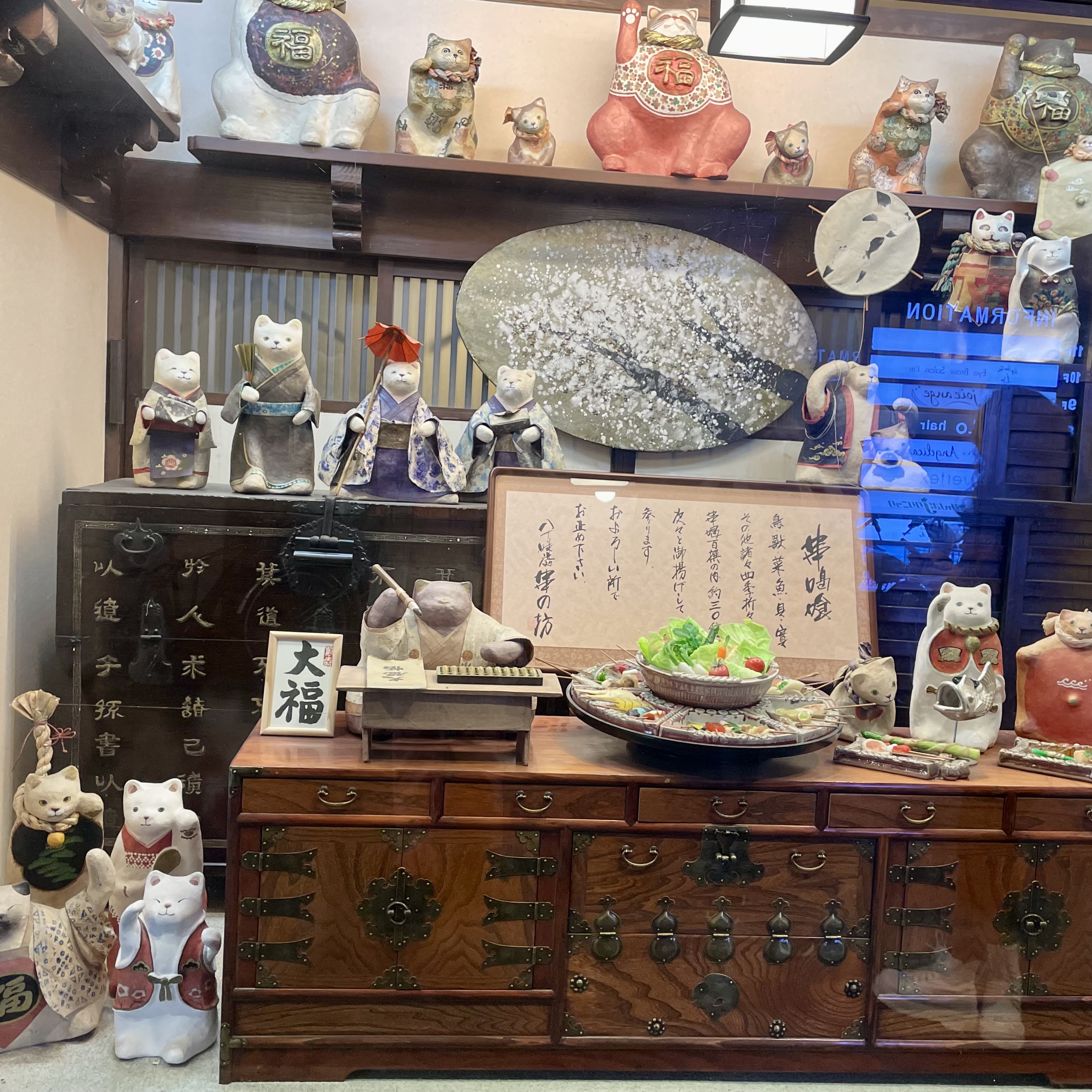
Fortunately we paused outside in time to notice the delightful window—not the typical plastic food but this:

If “Things” Happen, Maybe We Move to Himeji

With our cousin Harumi we had decided to take a day trip from Osaka to Himeji, primarily to see Himeji Castle. Renowned for being the most intact of the major castles in Japan, we chose it to represent our castle experience here…we learned years ago that visiting every castle we come upon gets boring. We pinned our castle hopes on Himeji.

A short train ride via Shinkansen from Shin-Osaka station, this beautiful, open, modern city, much smaller than Osaka, Kobe, etc., welcomes visitors with a spectacular view of the castle directly across, maybe 10 blocks away, from the station. It’s a wow moment, and also produces instant concern that it is awfully high and how in heaven’s name does one get up there?

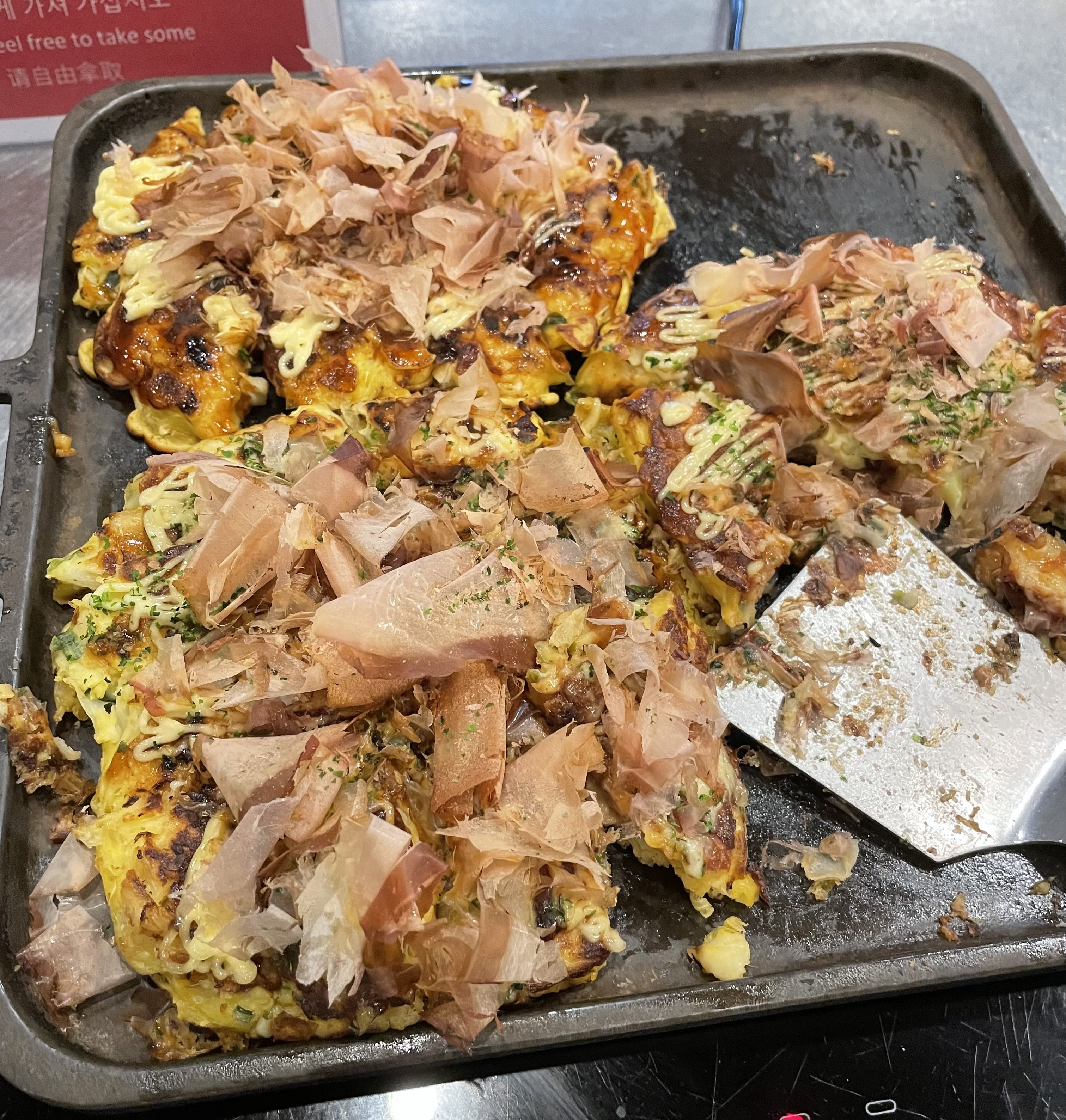
We set off to find out, walking this wide, boulevard with perhaps the most beautiful manhole covers we had ever seen, bits of statuary, and inviting shops. As we approached the castle grounds there was a small set of permanent food stalls with covered picnic tables behind—especially convenient and friendly. We stopped to inspect one of the offerings and laughed that it was okonomiyaki on a stick! We continued on.

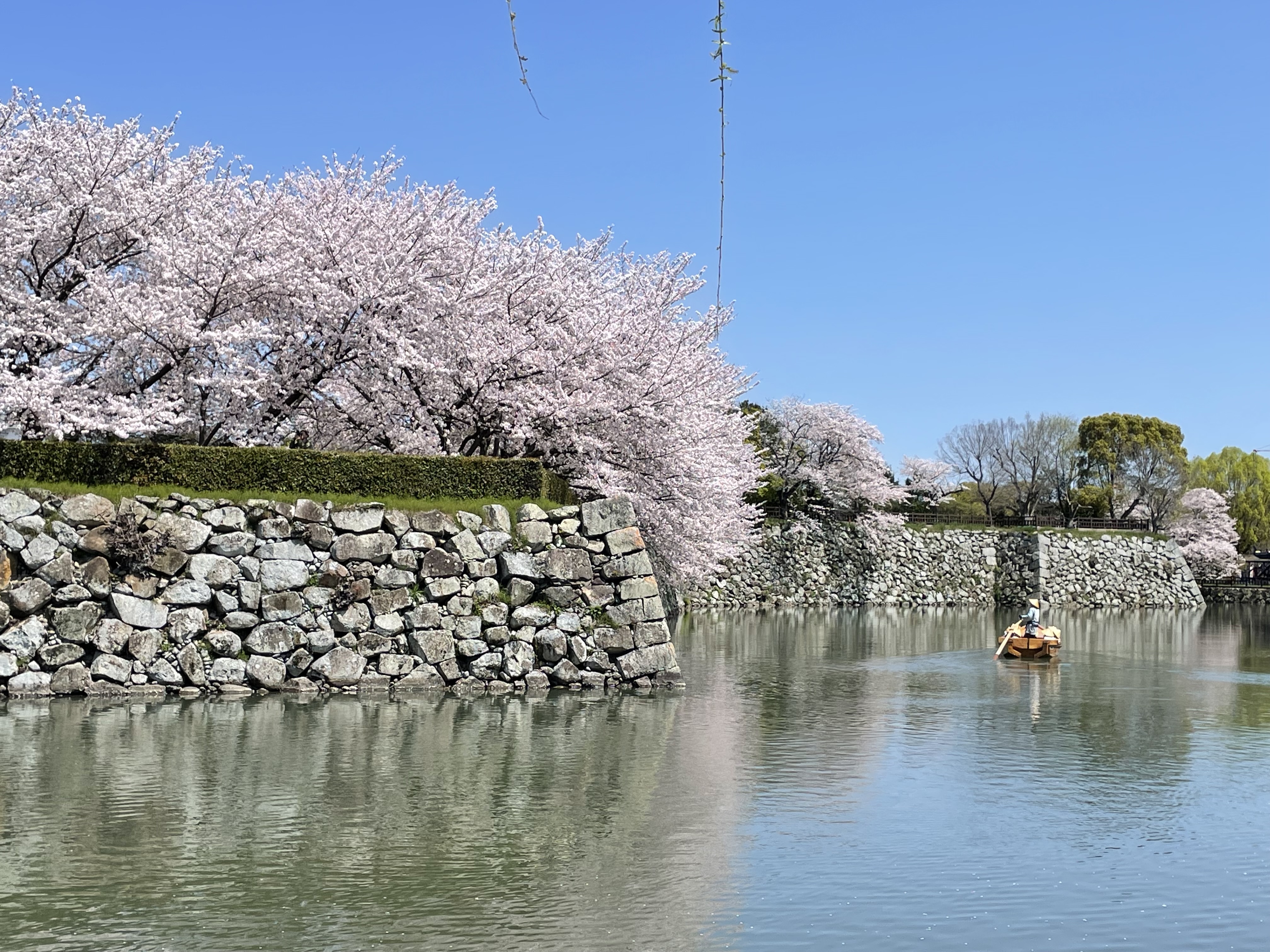
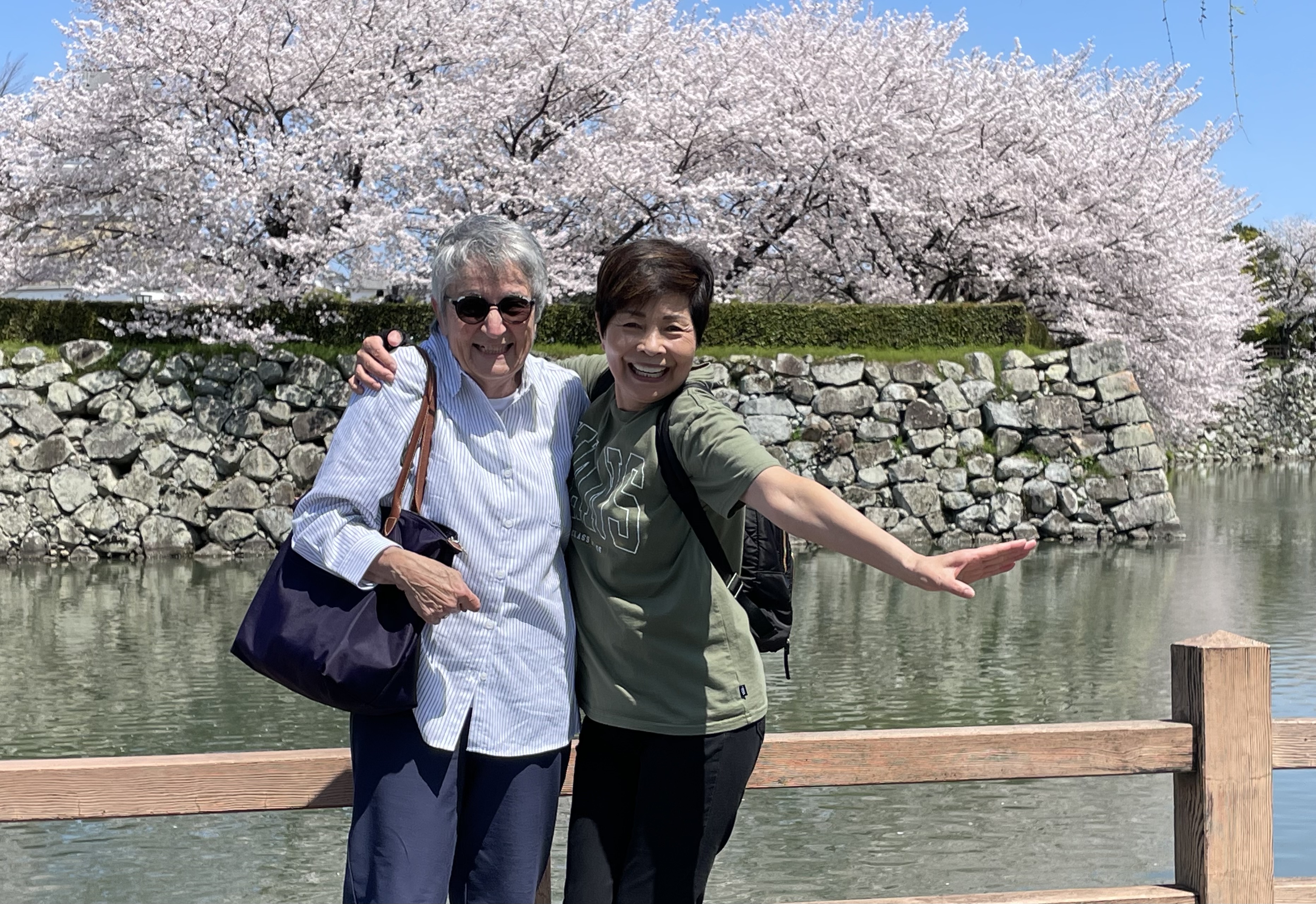
You enter the castle gate by crossing the moat on a lovely wooden bridge. Sakura—cherry blossoms—everywhere. I mean, everywhere. And they were in full bloom everywhere. We have been extraordinarily lucky to see this beauty. I hadn’t considered just what it means to be here in cherry blossom time. Well, it’s pretty great.

We wound our way up the castle grounds amidst the many tourists of all nationalities, lots of little kids running around, and enjoying the endless blue sky and vistas of mountains. Up and up we went, a slowly moving parade of visitors. A very Asian appearing young man struck up a conversation with us. He was from Texas, and traveling alone because his buddy bailed on him for some girl. After a considerable climb we entered the castle building proper and we all laughed to read the sign—we had made it to the castle basement! A few more rooms and we were in a staging area with a guide repeating “please remove your shoes on the brown mats” and we did as we were told. Plastic bags—recycled—were offered and everyone is now carrying an extra bag. We rejoined the parade in our socks (never travel in Japan without wearing clean socks), navigating slippery, centuries old wooden floors and stairways that were virtually ladders. Everyone follows the signs and barriers and slowly we all continue, up and up and up. It was, frankly, grueling, and also exciting and scary.

The trek tops out at the top—the sixth floor—where a small family shrine sits in the middle of the room. Many Japanese visitors, including Harumi, bowed, clapped, as is the custom of respect. Then we embarked on the descent, again, in SOCKS down, down those ladder-staircases. At least on the down direction they have put narrow treads so it wasn’t as treacherous as we had feared. Nonetheless it’s tricky because each step is so narrow one must turn sideways to fit one’s foot. I don’t think I have ever been so glad to get down from a climb. We continued on to the castle grounds, surrounded by sakura and filled, now it was midday, with kindergarten aged kids in their uniforms running around, families on blankets, older people (like us) sitting on rocks in the shade.

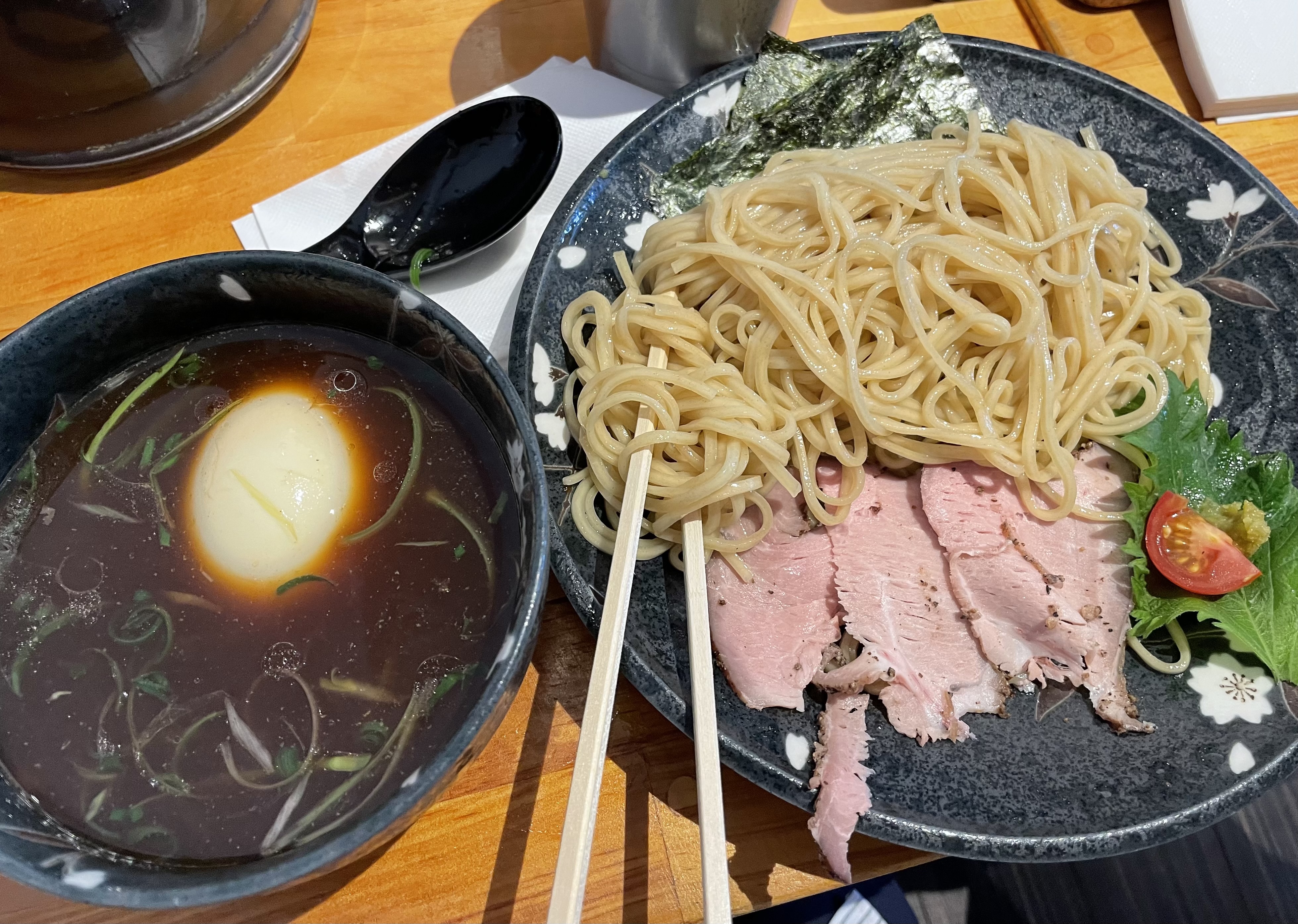
Lunch! We earned it. There was a lovely arcade street back toward the station (note: do NOT go into antique stores in Japan—everything is authentic, many very old bowls and cups come with the original wooden box…so tempting) and came to a noodle/ramen shop where a young woman stood beckoning us in. Harumi and David had soup ramen, I had the dipping ramen. Dipping broth was way too rich for soup but delish to drag the noodles through. Yum! It is refreshing to find hundreds, thousands of independent enterprises which in our experience are always good.

Satisfied, we decided to find out how to get to the gondola that would take us to a large forested area of shrines and halls. You can imagine how tired we were after the castle climb, and this sounded relatively easy. I mean, don’t gondolas take you to the tops of things?

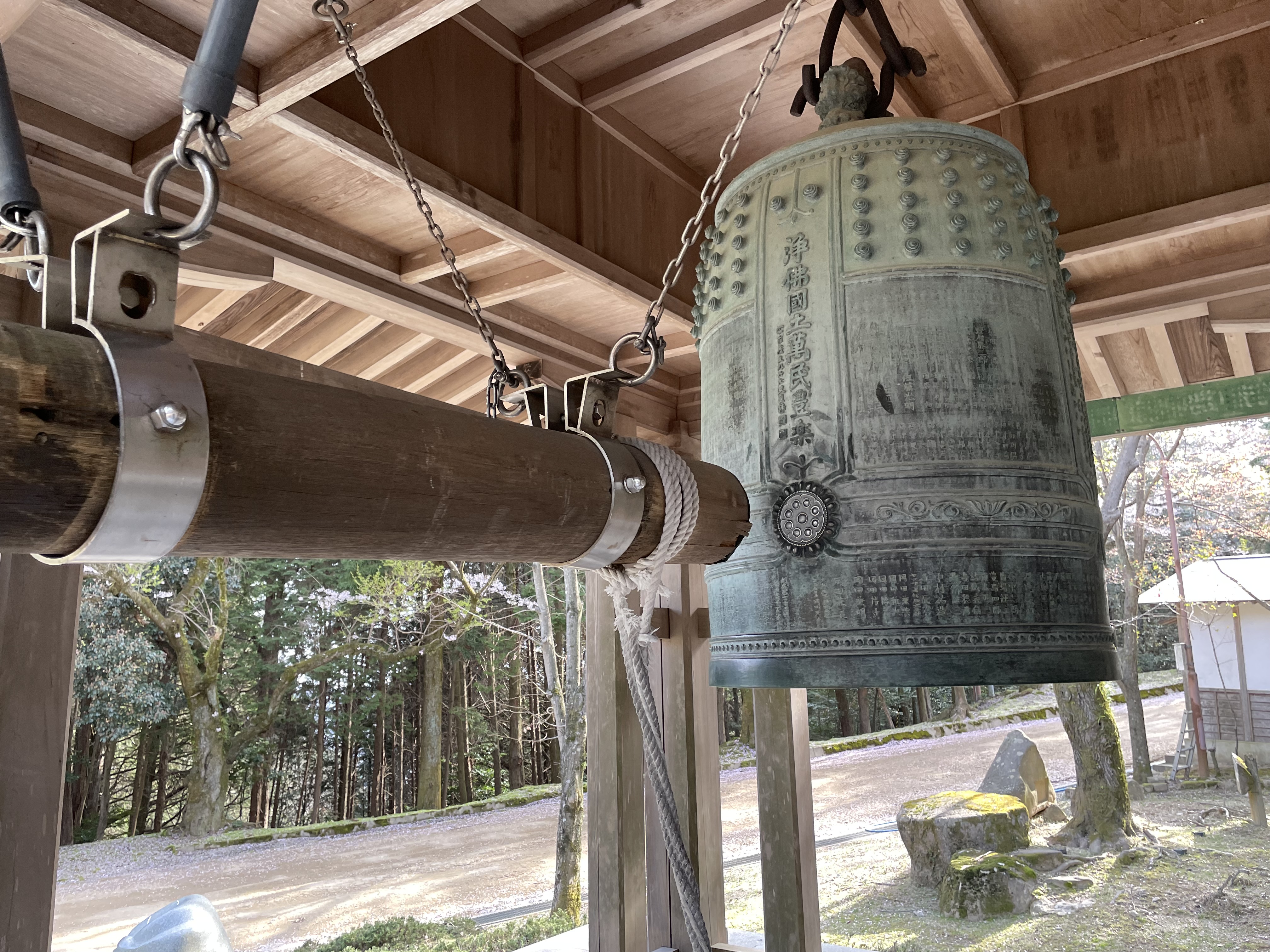
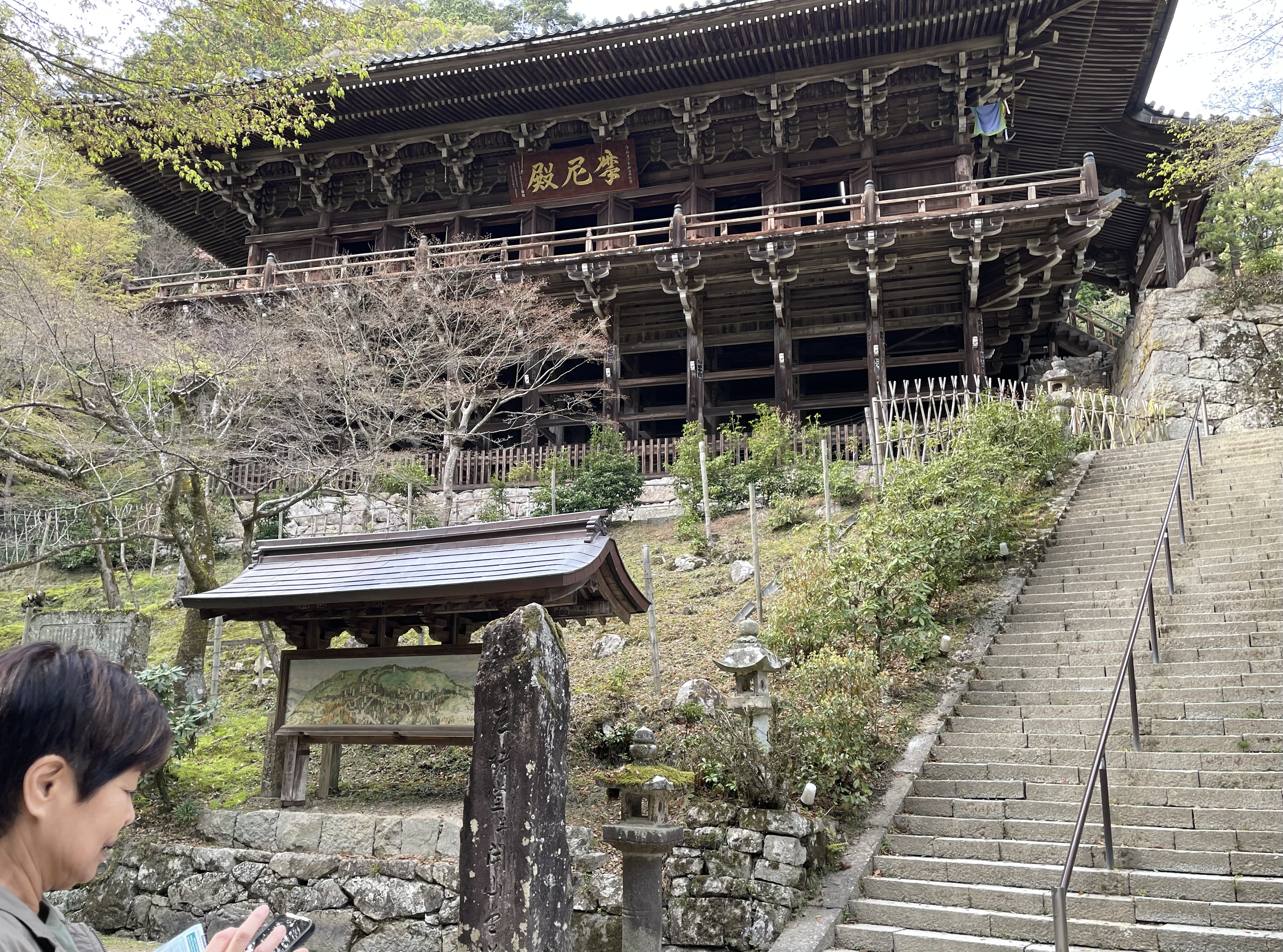
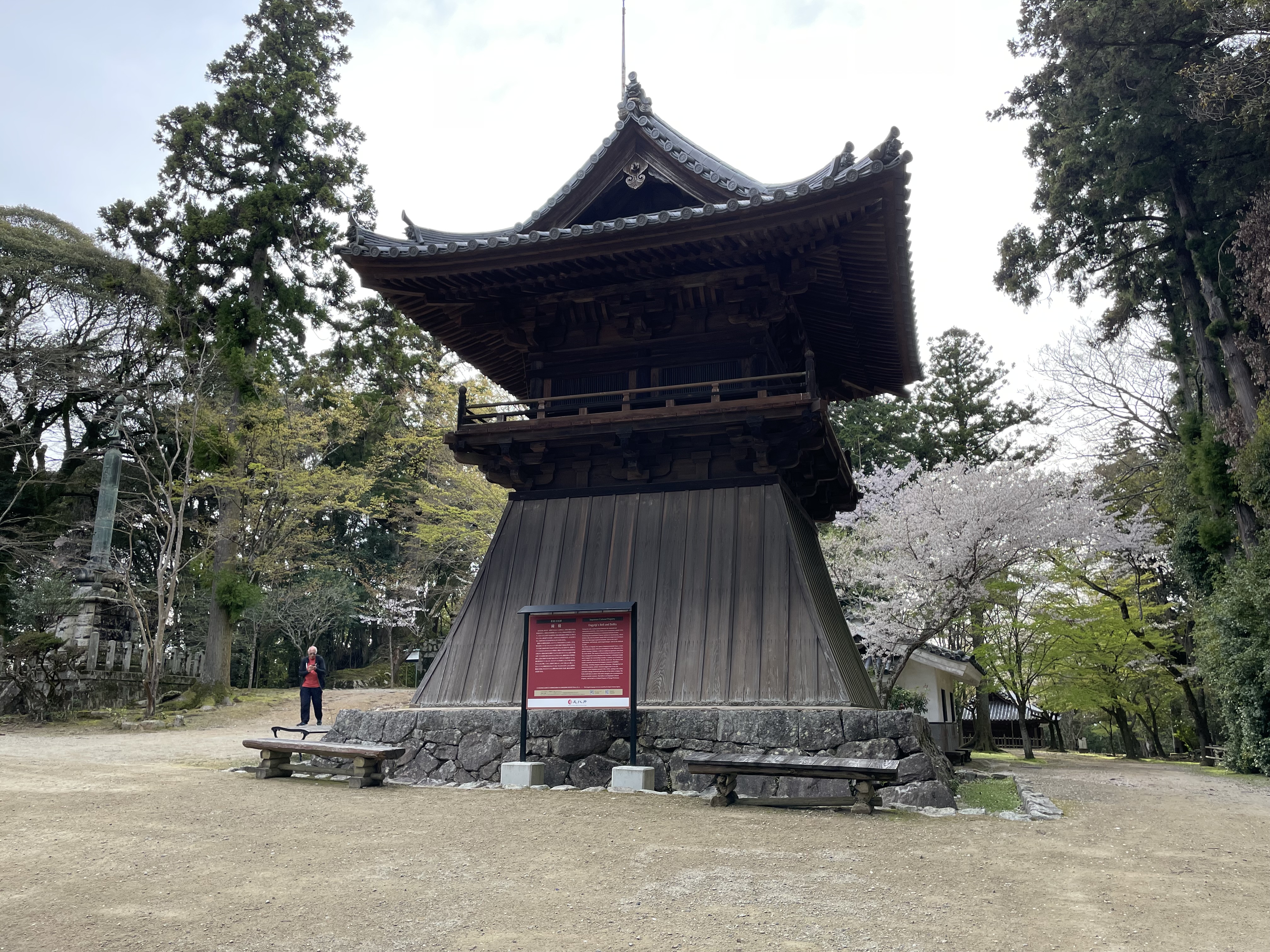
Not always. We had 2 1/2 hours before the last gondola down (tourist office lady: DO NOT MISS the last ropeway down) and from the map it looked very doable. 30 minute bus ride to the gondola/ropeway, 5 minutes up to the site, then a wander through the woods to as many shrines and halls as we could manage, back in plenty of time. Well, Shoshazan Engyoji is an enormous space, with many pathways and much of it a steep climb. When we got off the ropeway they asked “Bus?” Of course not! Off we set, naively, to climb, and climb, and climb…a path through the forest with Buddhist deities every 5-10 yards, wonderful and, as we got further away from our starting point a bit worrisome. Finally we realized we were never going to see everything, and found, luckily, a shortcut back to the ropeway. We headed back down at 5:30 a bit wiser. Wouldn’t have missed it, though.

A quick train ride back to Osaka, aching and exhausted. After an adventure of several hours, repeatedly getting turned around (Google maps for walking in crowded, narrow streets are less than reliable) trying to find a particular restaurant, we landed in a crowded but of course quite good little place where we three raised the average age by several decades, ate, and wandered back to the hotel in a daze.

That indescribable feeling

We love museums. So far we have been to three here in Osaka, one per day. This, combined with the sometimes interminable walking required to use the fantastic public transportation, is why no matter how much I eat, I lose a few pounds on a traveling vacation. And I do eat with abandon, believe me.

For more information on all of these see https://museums.ocm.osaka/museums-info/museums-info-en/

Day One, we wander the Edo period, and eat

First full day we went to the Osaka Museum of Housing and Living. The intricate displays are models of life in the Edo period. One floor is life sized recreation of two streets in Osaka in the 1830s. You look down on the life sized streets from the floor above, then walk down and through it. Warm, helpful docents, authentic houses and shops. There is even a ‘kimono experience, where a kimono expert dresses you, both girls and women, with all the care and intricacy required. The many small scaled displays show Osaka life in the twentieth century. Bonus—adjacent to the building is an arcade shopping street where I satisfied my craving for cold soba and one big veggie tempura. David had a bowl of noodles and other things we couldn’t identify. As is most common here, it was a little narrow “joint” where every order is fresh. Then I bought a big baggy shirt to blend in a bit.

Day Two, we go back to the beginning and through a flurry

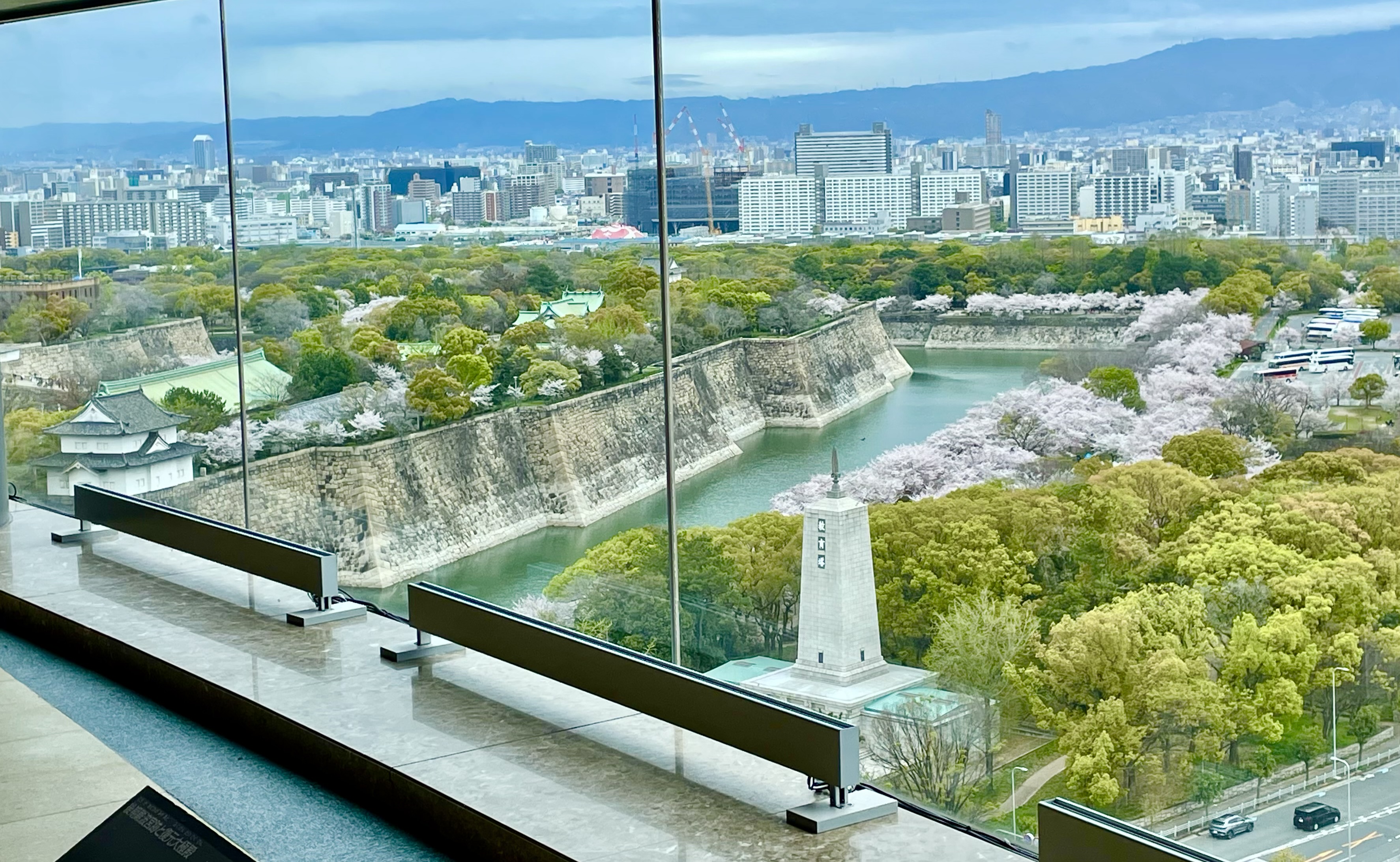
The next day it was the Osaka Museum of History. It takes you from the earliest settlements, and all about the archeological digs ongoing to plot where the first people lived, to modern times. Many exhibits are a mix of life sized displays you walk through and multimedia explanations. May I say thank goodness for google translate, which enabled us in every museum to translate the text explanations. Fun, overwhelming, jammed with information—and a bonus—the incredible views of Osaka Castle and surrounding grounds.

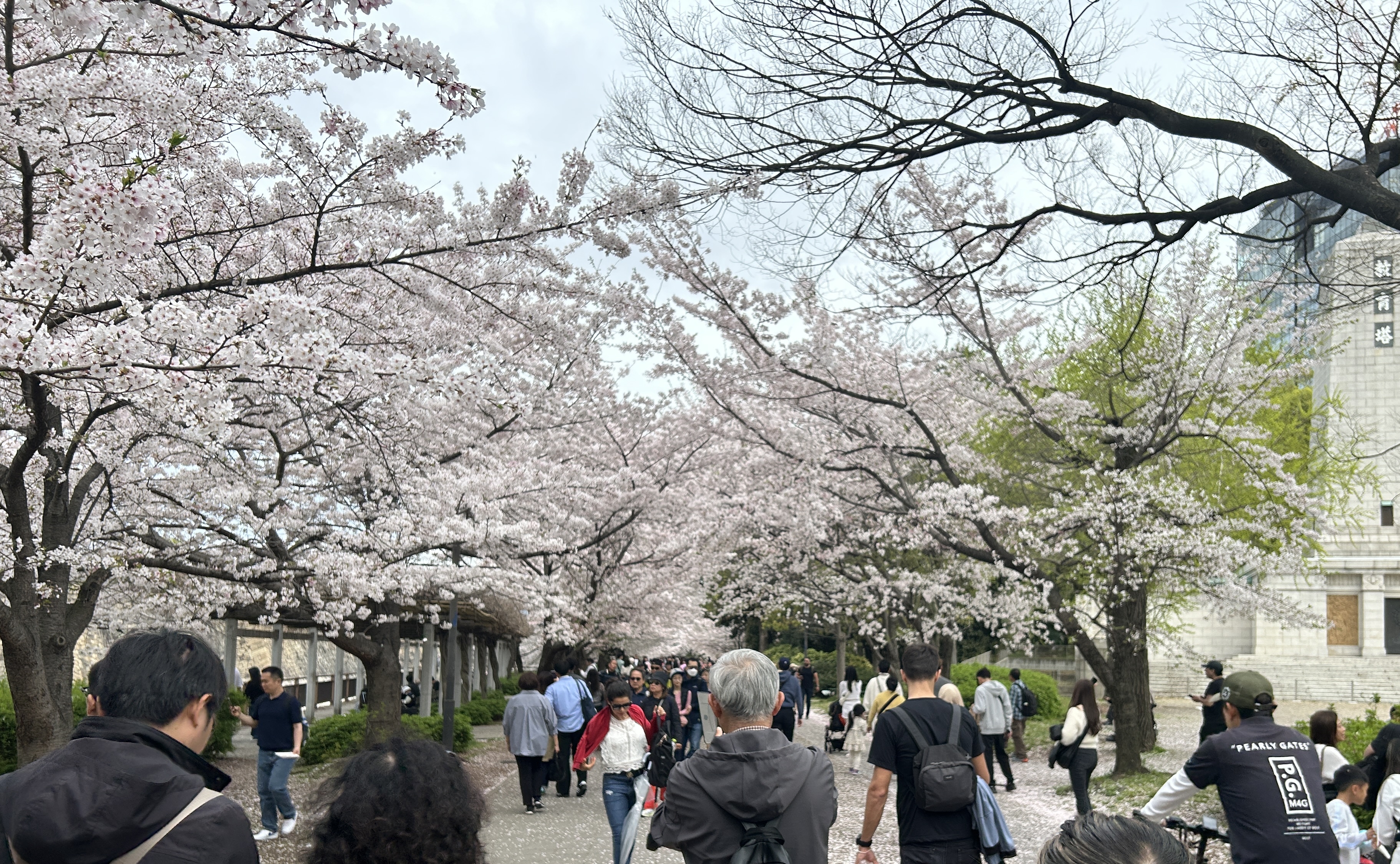
Having absorbed our fill of Osaka history we crossed the street to the castle grounds, where a small jammed Lawson’s satisfied our hunger. We made a picnic of our $6 investment and then wandered through bowers of cherry blossoms, petals blowing like a snow flurry. Wow.

Day Three, that feeling

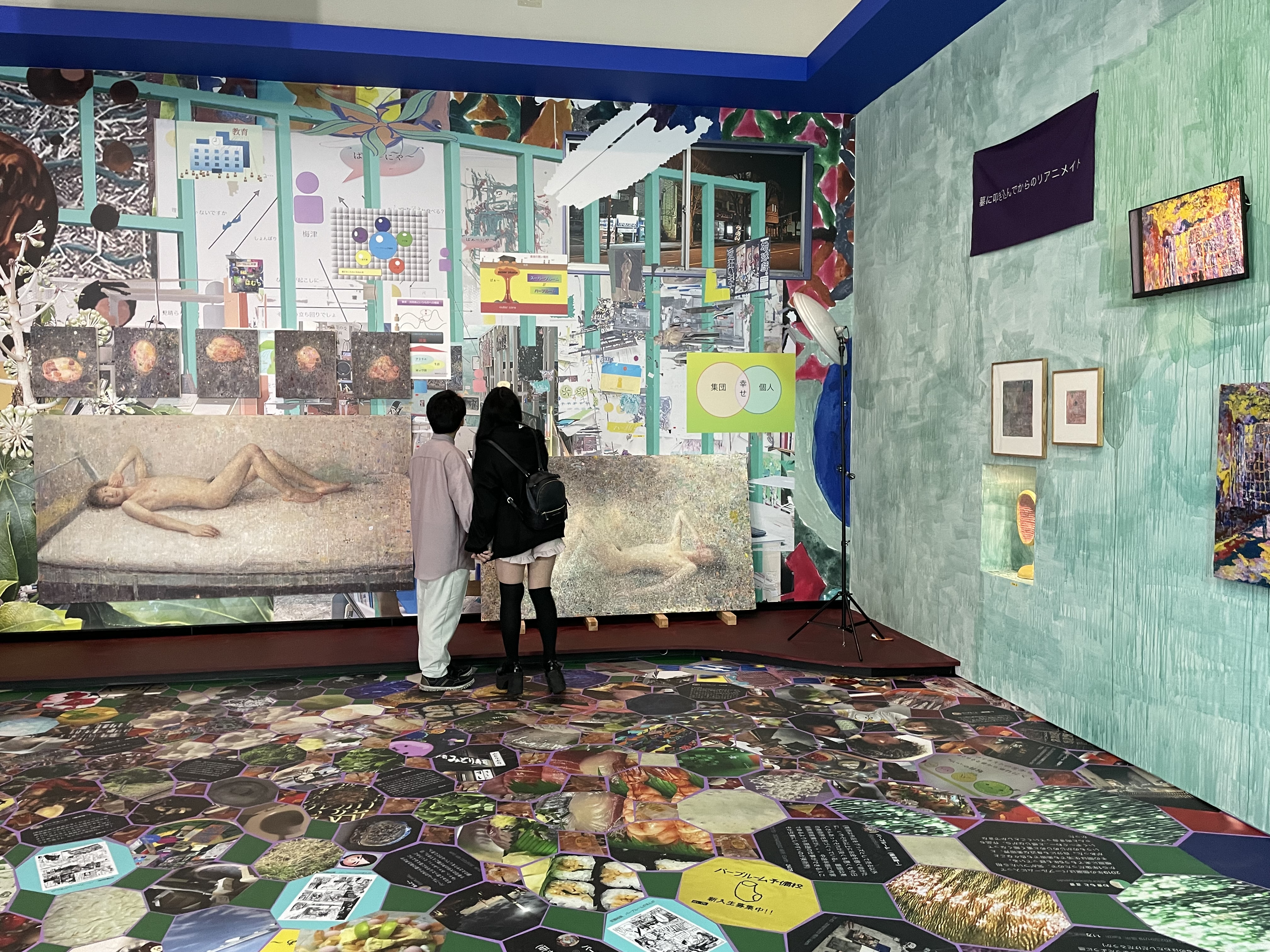
Nakanoshima Museum of Art was a bit of a trek given our predictable issues with Google maps walking directions, but oh so worthwhile . They have no permanent collection—just special shows. We started with the Monet, an enormous retrospective showing how he evolved into painting series. It was stunning, as were the visitors. Lots and lots of hushed conversations about the paintings. It felt different, people more involved with the art than is common in the US.

Down a floor, short rest to get a bit of energy back, and we dove into the other exhibit, Fukuda Heihachiro: A Retrospective. Never heard of the guy. Walked in, and at the third painting i got that feeling, instantaneous love and emotional connection. It is a simple painting, Ducks by the Pond, painted in 1916. That feeling, like the first time I walked into the room of Matisse cutouts at the National Gallery. It is a rush of excitement, then a deep resonance in my chest like a gong. And I want to cry, and do for a few seconds. I couldn’t tear myself away. Walked on to see a huge painting on eight large screens…just sheep. No background , no setting, just intimacy with the animals. This amazing painter evolved and evolved, always paintings and sketches from nature. Later he moved toward abstraction as he distilled water rippling to dashes of blue, closeups of bamboo, a painting titled Rain that is roof tiles in a million shades of blue-grey.

Yeah, idiotic I know but I bought the exhibit catalog that we now have to schlep all over Japan. Photographing his works in the gallery was limited to maybe four, none of which excited me.

So we said goodby to this gorgeous museum with a wave to space cat.

Impressions of Osaka

We arrived in Shin-Osaka train station after the whirlwind Shinkansen from Tokyo a bit tired but ready for a brand new city. The central train station is sparkling. We followed the many, many signs, which fortunately made it hard to go astray, because it is a trek to the subway line from the Shinkansen platform. We have since taken the city metro multiple times and it is without a doubt the most beautiful and cleanest subway we have ever been on, and we have been on a lot of subways. Every train spotless, but also every train painted differently. Comfy seats, natch.

Great people watching—the fashions sense of women, young and old, is lovely and varied. The rare young woman in jeans and a knit shirt (never have seen a plain old t-shirt on a female) is wearing beautifully cut wide leg pressed jeans and some adorable top, often cropped. The most common look, though, is layers and layers—net skirts over ankle length skirts over boots, long breezy shirts over other roomy shirts. Or mini skirts and boots. Or completely color coordinated layers of, say, a crop top and a sparkly long sweater and several long-strapped, hip-length purses. I guess they are purses. I have tried to take photos, either at a distance or by asking if it is okay. And I have been refused, with smiles, then giggles. I would happily stand for half an hour watching girls and young women go by, taking pictures. But of course that would be rude. There are also many coordinated couples, by color or style, sometimes in traditional dress, always gorgeous.

The places we have wandered give the impression of a very prosperous city. Our cousin Maya mentioned that the little kids are so well dressed, and yup. No jeans and grubby t-shirts. We watched some boys playing ball, about 7 or 8 years old, in three-quarter length cool pants, stylish knit shirts, good looking sneakers. They rough-housed like boys but it looked like a fashion spread in the cutest way.

I will try to put together a gallery of fashion. If I can get permissions!

Tokyo — a surprising day in Ueno Park

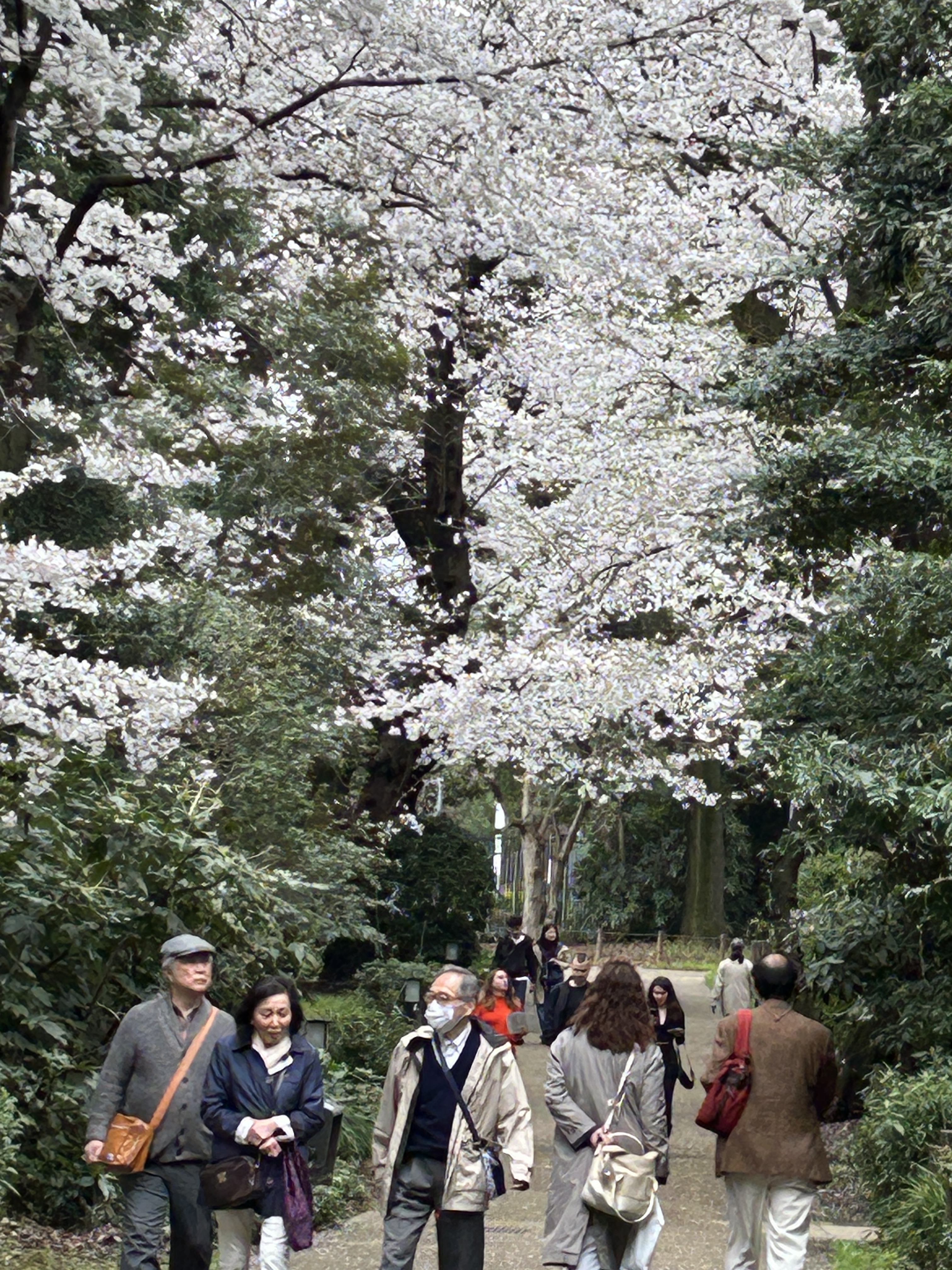
We had read somewhere that the cherry blossom season was early this year, so we were prepared to miss them. Turns out in Tokyo (and later in Osaka) it was peak bloom and what a show. Happily our plan to spend our first, hardest, most jet-lagged day wandering museums in Ueno Park, a short walk from our hotel the Dormy Inn Uneno, sent us wandering through gardens and tourists taking hundreds of photos of the gorgeous cherry blossoms. It was beautiful.

We wandered the park people watching, bird watching, and marveling we were smack in the middle of Tokyo. We couldn’t have asked for a more gentle and peaceful day to recover from the long flight.

There were many, many Japanese families, seeming a holiday atmosphere, with food stands lining several of the walkways. Pizza. Kebabs. Karaage (fried chicken). French fries in varies forms…we finally settled on sharing a skewer of grilled beef tongue (delicious) and a potato and meat croquette. It was enough to sustain us and given our jet lag our bodies had no idea what time it was or what it wanted as sustenance.

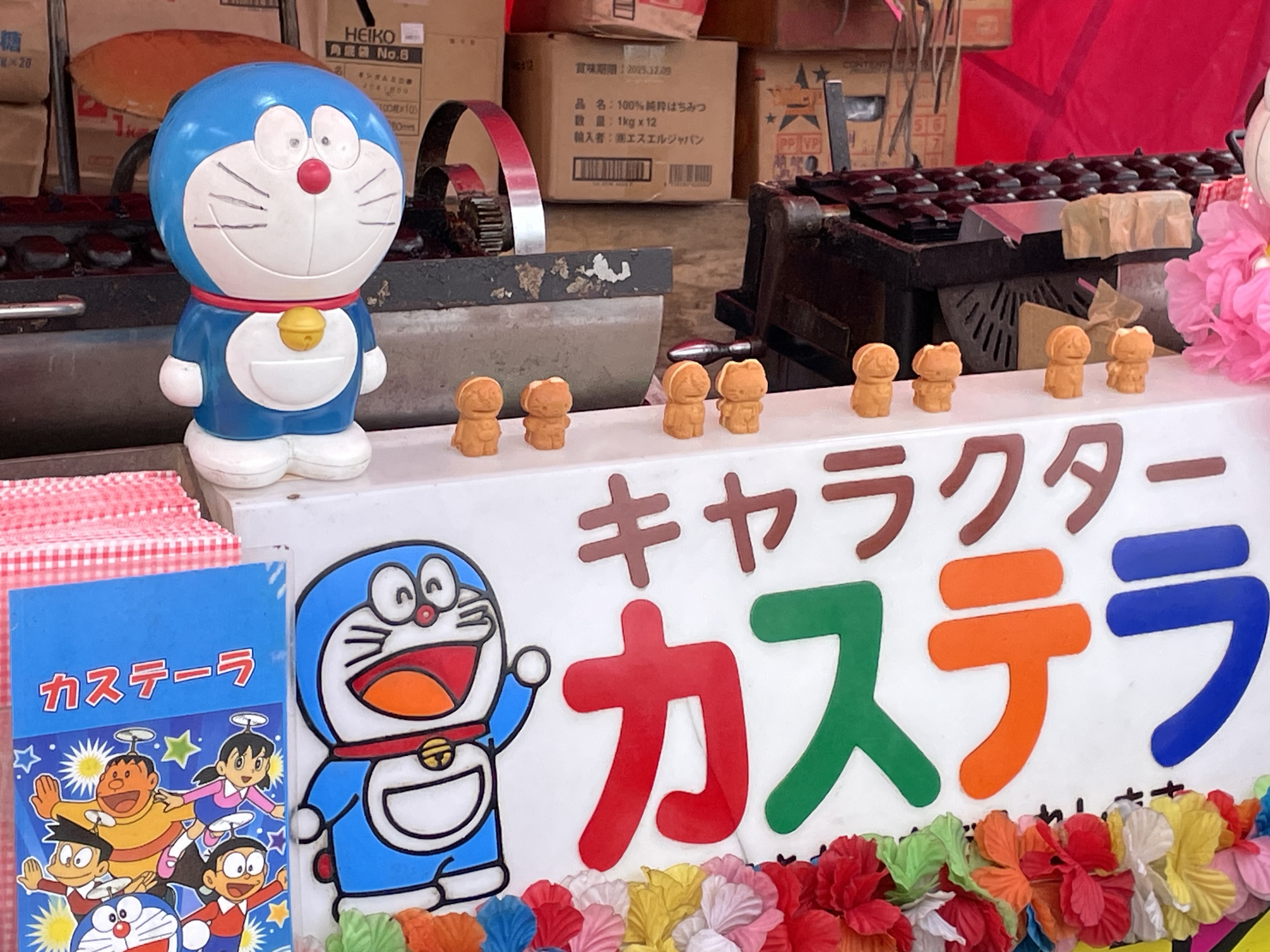
Freshly made Hello Kitty cookies, anyone?

We knew a no-stress way to spend our first day included a museum or two and Ueno Park has many, from the zoological gardens to the Museum of Western Art. We headed there. It was fantastic.

We finished with the National Museum, overwhelming with the crafts and history of Japan, even including a large archeological building that we were too tired to appreciate. Of the three large buildings around a huge plaza we chose the Japan building.  I had flashbacks of the Victoria and Albert Museum in London.  SO MUCH STUFF.  We wandered and tried to take in the kimonos, the laquerware, the ceramics, a video showing Kabuki and Noh, an entire separate building of archeological displays.  Phew.  At last we wandered out to the lovely gardens behind the main buildings and enjoyed more cherry blossoms.

No idea the name, but I hope we can go back when we return to Tokyo our last few days in Japan

David found a little sushi place a few blocks from the hotel.  Narrow, maybe 18 seats all told, with good natured hustle between the waitress, two older sushi chefs and a young cook/helper.  Sushi was scrumptious, we finished the meal with a round of vegetable tempura (you order by the veg—we had shiso, eggplant and sweet potato).  We walked back happy.  A perfect day for the beginning of our three weeks.

Tokyo via Zipair

We took Zipair from San Francisco and frankly for the price it was fine.  When you pay full business class fare you tend to want to take advantage of all fuss and food and service that`s part of the deal.  And traveling this far (11 hours) and with the time dislocation (leave SF around 5pm, arrive Tokyo around 8pm the next day) the best way to accommodate your body and mind is to sleep a few hours as soon as you take off, then try to stay awake and alert for the remainder in hopes you will be able to sleep when you get to the hotel.  Because the food and drink service in real business class starts early in the flight, I find I stay awake too long and arrive feeling yuck.  With Zipair you bring your own food, bring your own sleeping accoutrements, and bring your own schedule.  The reclining seat is the same as other airlines…so all in all highly recommended.  You pay for the bed and, frankly for being left alone.

Back to Japan

David and I are heading back to our favorite place, Japan. Three weeks of fun and food!

We will start in Tokyo, move on to Osaka, a quick overnight ryokan stay in Tamba, spend a few days in Kyoto, and after a two days in Kanazawa will be back in Tokyo for a few days before we return to San Francisco.

This will be our maiden voyage on Zipair, a discount airline of JAL which has low-service-but-reclining-seats business class at a bargain price.

I may be posting less frequently than in the past…will have to see how energetic I am!

Korea is easier with a few tips

In general, Korea is an extremely easy country to navigate, but there were a few times when we were awfully lucky to have kids living there to help.  In particular, when you are using airbnb there is no concierge or English-adept staff to clarify those details which can make life miserable when you are not in the know.

Getting in and out of your apartment

We had paid for 2 weeks of an efficiency apartment, meaning we were completely on our own.  In advance, the host was to send us the lock code which theoretically is all one needs to enter.  Ha.  We would have been stranded because the system of house locks is completely different from the US but consistent everywhere we went in the country.

Getting into your apartment:  A small box about the size of a cigarette pack is mounted on the door.  To use your key code first slide up the cover, enter the code on the numeric pad, slide the cover down, wait for the musical tone, and then open the door.

Getting out of your apartment:  In order to leave your apartment, which will lock automatically again when the door is closed, you push the button on the inside of the lock mechanism, watch the little dial turn, and then the door can be opened.  If for some reason the dial doesn’t turn you can turn it manually.  But for both ingress and egress, take your time and wait for the lock to do its thing.  Trying to open the door from the inside before it’s ready screws things up and you must take a breath, wait for tones and automatic things to happen, and start over if necessary.  DO NOT PANIC!

Without our kids showing us, we would have been locked out, and then locked in!  It’s a great system once you know how it works and though there are different versions in different apartments (and the exterior door of our guest house in Jeonju worked the same way) they all look and work the same.

Communicating With Your Airbnb Host 

I had booked our Seoul apartment on my desktop.  Emailing back and forth via the host’s airbnb address worked great in the US.  In Korea, when I tried to email from my phone airbnb responded that I had to authenticate myself via the airbnb app because I was using an unknown device.  I downloaded the app, entered all the info, but it never linked up to my original account.  USE THE APP while in the US.  Our kids came to our rescue, as they had gotten his phone number when I sent them the airbnb booking, but I was never able to get in touch with him on my own.  It didn’t occur to me that the way I had communicated from the US would not work when all I had was a smartphone in Korea.

Use the “Egg” 

Wifi is all over the place in Korea, and with few exceptions we were able to use various free services all over the city.  Sometimes when it appeared no service was on where we happened to be, walking a half block usually revealed another we could use.  However, most Koreans carry an “egg” which is the small personal hotspot and super handy.  While the egg does lose connection depending on where you are, it almost always comes back.  However, our phones always appeared from the wifi icons to be connected even when they were not, so you might not realize you aren’t connected until you try and do something other than GPS.

Many of the accommodations I looked at said “free egg” but ours didn’t so I didn’t know there was such a thing pretty much universally. Hence I hadn’t gotten the password, but again kids came to the rescue, called the host and got the “egg” password.

GPS-enabled Maps Are a LifeSaver

I am a fan of Maplets, even more so now.  This little app downloads digitized maps (tourist maps, subway maps, trail maps, etc.) worldwide and more and more of them are GPS enabled.  When no wifi was available we were able to figure out where we were by using these–and they worked even when Google and Apple maps seemed baffled (e.g., the blue spot would appear, but no map behind it).   Get Maplets and download subway and other maps (you can search by location)–they are also great because you can zoom in to details.

In general, Apple and Google maps were useless for routes and distances.  We could never get a walking route, for example, even when the map seemed accurate and visible.

Electronic Kiosks at Restaurants

If you walk up to a restaurant and see an iPad-sized thing mounted in front, this is how you register that you’re there and want a table.  While you won’t have a Korean phone number, you can enter your name, in which case do find a human and tell them what you have done.  Otherwise you will never get a table.

Spoken English is Rare

It seems strange that with every street sign, subway stop and most informational signs having an English translation so few Koreans speak English.  They are extremely friendly, will try to help, and of course as in many countries people will strike a conversation when they hear you talking and they want to practice English.  Hand gestures, pointing, and all the other things one does in a foreign country work just fine–but do not assume because the menu is translated that anyone in the place can read or explain it.

Use a Native or Foreign-Enabled Texting and Calling App

We use KakaoTalk to communicate with our kids living in Korea.  It is highly functional–probably similar to WhatsApp which we also use.  These work with wifi and enable crystal clear phone calls as well as texting.  While they only work with other people who have the same app, we had told friends and family to download and use KakaoTalk and that was our primary communication mode.

We did not get a SIM card, and we turned off data services for our phones (which seems to annoy Verizon no end as we were bombarded with offers and warnings when we sent data via KakaoTalk or WhatsApp) by making sure airplane mode was always on.  We used texting and KakaoTalk phone calls on wifi and it was entirely free.

If in Seoul and Hungry for Home Food, Head to Itaewon

Itaewon is for foreigners, and so there is a wonderfully mixed population and an incredible array of restaurants.  American style food, halal restaurants, Mexican restaurants (a current fad so it might be something different in a few years) abound, mixed with every kind of Korean food you can imagine.  There is also a reasonable choice of American food in the grocery stores–we bought a box of cornflakes so we could eat breakfast before setting out, both to save money and to have something familiar.  Itaewon also has several of the best bakeries I’ve been to anywhere.

However, with a few exceptions the coffee places open later in the morning than we would have liked–we finally found one that opened at 8am (Bread Show–excellent!) but many do not open until 10.  If you must have a caffeine fix before heading out there is ample instant (comes in little paper tubes that have both sugar and creamer, ugh) and the convenience stores (7-11, CU, etc.) all sell about 20 kinds of cold canned and cartoned coffee.
A few tips for traveling in 2019 Mexico

Nothing earthshaking but maybe one or two will be helpful

We spent just two weeks in three very different cities–Puebla, Taxco, and Mexico City, but picked up a few ideas about what to do/look out for that might help you on your next Mexican journey.

  • Do not fear the buses–once you are on, they are really superior modes of travel. No chickens in the aisle or scary driving, really! However, get some help if you can from your host or hotel in understanding how to reserve and purchase seats. See the earlier post on bus travel for some examples.
  • Street food is great. We ate everything that looked good and had nary a stomach upset. We found no reason for any continued concerns about lettuce or ice cubes.
  • The fruit/juice stands are a bargain and the juice could not be fresher. They seem to open at 8am Monday-Saturday, and in Mexico City they are in steel booths, permanently installed on sidewalks so they are reliable when you need something to drink. An enormous (styrofoam) cup is around 38 pesos. We would buy one on the way back to the hotel from coffee/breakfast, mix it with bottled water, and we carried these with us all day. More nutritious and renewing than plain water and delicious. We were there in the mandarin orange season so could get orange (jugo naranja) or mandarin (jugo mandarino). These stands also sell various kinds of fruit and fruit salads. Ask.
  • We also recommend the agua frescas that are sold in stands all over the place. You may see up to 10 big glass jars of different colors lined up on the counter–do not be shy about asking what they are. We always asked, but so did everyone else, natives and tourists alike. When you see agua fresca on a menu, just ask which kinds. Typical in restaurants, like here, are horchata, tamarindo, and jamaica (ha-my-ee-ka), but they often have others. Because the flavors change often everyone asks, not just dumb tourists.
  • It is tricky at times getting change for large bills, large being anything from 100 pesos and up. While everyone is very gracious about getting you change, it can be a hassle for them so try to plan ahead. Our hotel had change once of the four or five times we asked, so it wasn’t easy but we tried.
  • Uber is safe, reliable and very inexpensive–quite a bit less than taxis. Because of the potential change issue we were wary of taxis (and having to understand the amount quoted and figuring out a tip–though tips are not common in taxis unless there’s a lot of luggage wrangling involved). Uber drivers were unfailingly polite and some were positively delightful, offering ideas for what to see, interested in our reactions to Mexico. None but one spoke any English, so sitting quietly was just fine. We used Uber about 20 times in two weeks including many that were 30+ minutes, and the total we spent, with tips, in Mexico was less than we paid a Lyft driver to take us home from the Oakland airport, a 20 minute ride.
  • Silver jewelry shopping in Taxco is highly recommended. Prices are good but the selection is infinite. If this is a high priority for you, do visit on a Saturday when the weekly market is a riot of vendors, including many buying in bulk to sell elsewhere.
  • Museum gift shops do tend to carry high quality examples of artisan items and at good prices. They seem to curate their inventory pretty carefully, and you often see items that are elsewhere but a step up in quality. They are also well equipped to wrap breakables–street vendors and small shops, such as in La Ciudadela in Mexico City, do not have bubble wrap.
  • YouTube travel and foodie videos are worth the time before you go. We found several places that had been recommended and were very glad we did (e.g., Tia Calla in Taxco). We also stumbled on a very short video explaining how to find the bus ticket counters at the airport (see below) which, being our first day in Mexico was very comforting.
  • If you are flying to Mexico City and going on from there by ground, do not worry about bus connections. The Mexico City Airport has bus ticket counters and very frequent buses to many cities and you can count on walking right up and getting on a bus within the hour, often much less. While there are discounts for old people (65+) and children, they are limited in there are only a certain number available per bus. So you may qualify but they are simply sold out. Bus tickets are so cheap this shouldn’t concern you, but don’t think you’re being scammed if they say there are no child fares or if the ticket seller says she has to check to see if there are any available. The only time we felt something strange was going on was when, two times, our bus was stopped and boarded by officials asking about “discuentas.” They were checking ID to make sure the discounted tickets had been sold appropriately.
  • Random help from strangers was common and we were never steered wrong. If you look confused it’s common someone will come up and try to help. It was always sincere and a few times it made quite a difference. For example, when we walked out of Teotihuacan and were standing at the road looking around for the stop for the bus back to Mexico City, a young guy who was selling something (hats? tour guides?) came over to us and asked if we were looking for the bus back to “Mexico” as they call Mexico City. When I said yes he quickly pointed across the intersection and said (in Spanish) “That’s your bus–hurry!” Don’t be overly suspicious is the tip here.
  • Beggars were somewhat common, always women, older indigenes women or young women with babies. Just say no if so inclined. They can be persistent but never obnoxious. We saw more local people giving money than obvious tourists.
  • This is a very personal piece of advice. I never bargain with street vendors and suggest you do the same. There’s nothing wrong with paying the stated price. You’re not getting taken advantage of. You are not being scammed because you look like a gringo. Get into your head a quick translation of pesos to dollars so you can remember that everything is extremely inexpensive (because they use $ for pesos it takes a day or so). As a visitor with the money to buy a plane ticket and eat in nice restaurants and even hire private tour guides, you can easily afford to pay the price without haggling.
  • A second piece of advice–don’t take photos of people (or of their dogs) without asking. If it is a vendor I ask only after purchasing something–anything. The local people are not there to look picturesque for you, they are trying to make a living. Be respectful, in other words. I was never refused, and just asking makes all the difference. Memorize the sentence “may I take a photo please?” in Spanish and use it.
  • Have fun in Mexico!