Last day—and hotel transfer day as we had an early morning flight back to SFO from Charles deGaulle airport. We knew trying to get there on time would be stressful day of, so David had booked a night at the Hilton Express. What a lovely hotel! There is a kind of courtyard area between all the onsite hotels with a teeny green park and very respectable playground which I imagine could be a life saver for families traveling with smaller kids.
Our plan worked just fine. We took an Uber to the hotel right after breakfast, observed rush hour would have been impossible if we weren’t a day early, checked in—our room was ready—and then took the B train back into Paris which dropped us a block away from our last museum, the Musee de Liberation of Paris. Fascinating and sad—this was not the end of the war and the destruction and sheer horror of being occupied by a fascist army was difficult to absorb. Highly recommended if you are able to manage it emotionally.
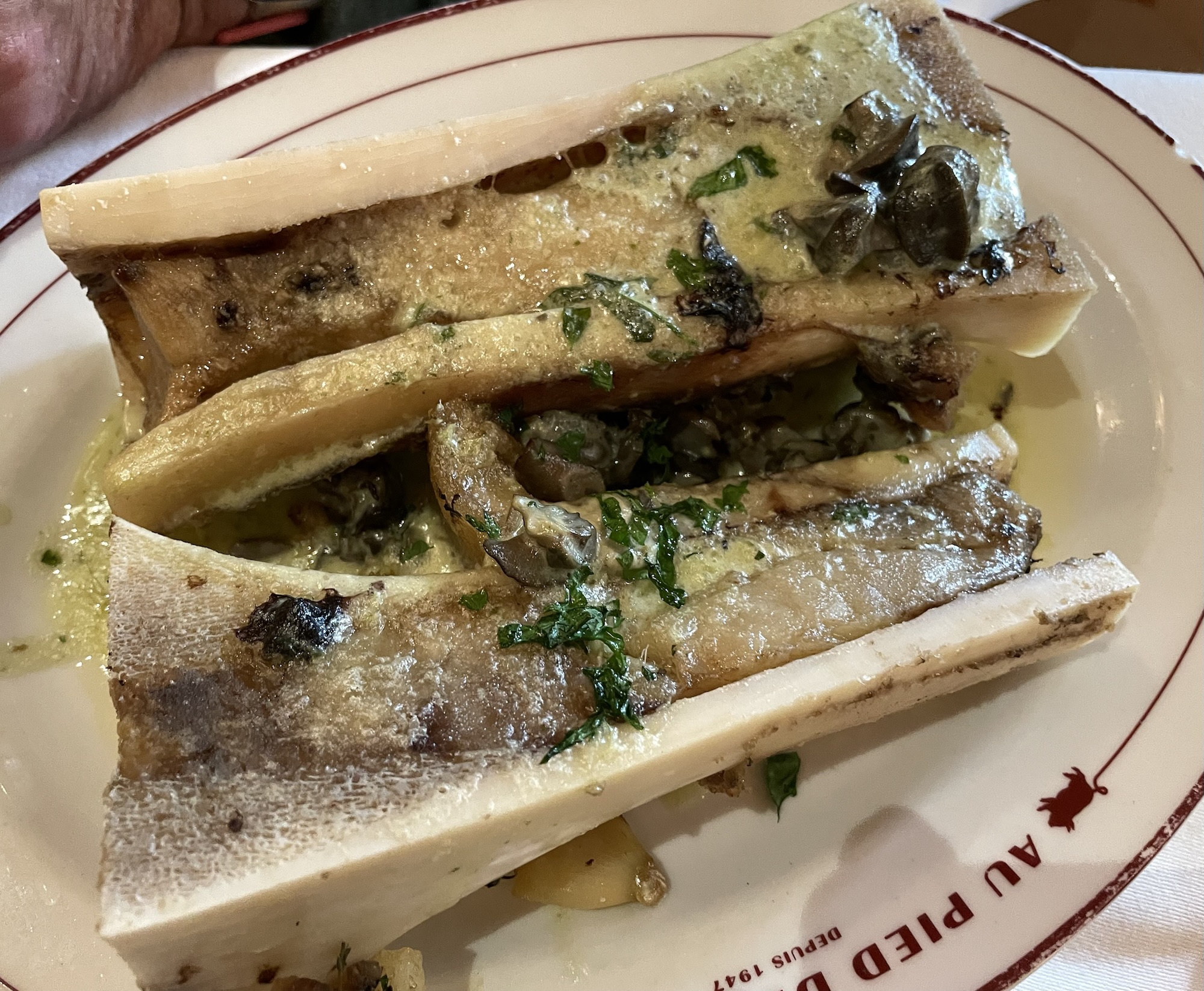
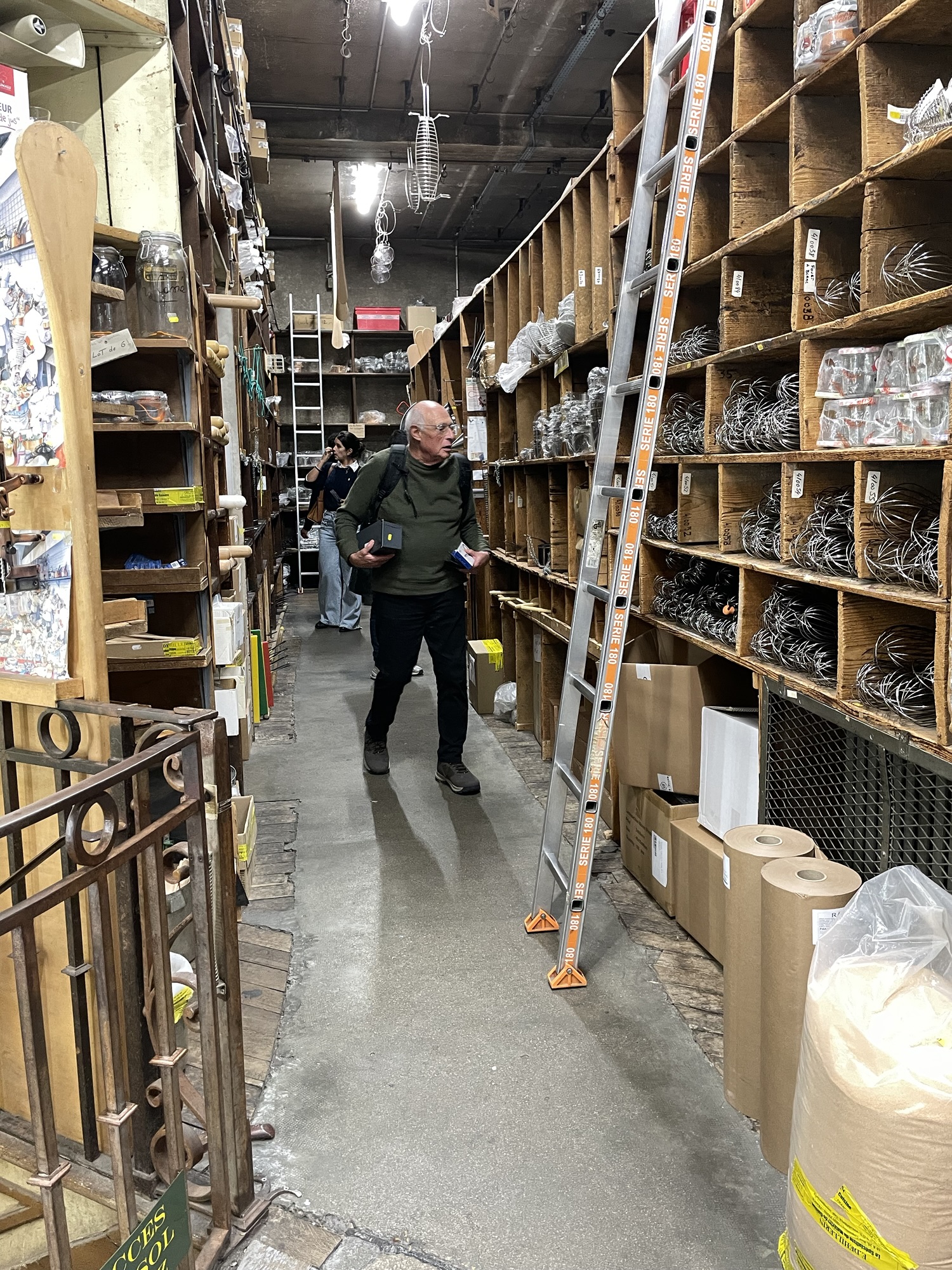
We got on the Metro and headed to Au Pied Du Cochon for our last big meal in France. It was a fitting end…and my bonus was we were a few doors down from the enormous kitchenware store E. Dehillerin and I actually had a few things I needed. Plus one impulse item, the square bread pan with the slide on lid for making certain breads and other fun foods. We got back on the B train in the midst of rush hour and some train system problems, but after three trains one arrived with “room” and we squeezed in…back to CDG and our last night in the Holiday Inn Express.
Interior of Au Pied de CochonRazor clams entreeMarrow entreeBoeuf fondant–didn’t know what fondant was but probably the best beef stew ever.Profiteroles for dessertYeah, profiteroles were good.A little meringue for a last biteInterior of E.Dehillerin is somewhat intimidating
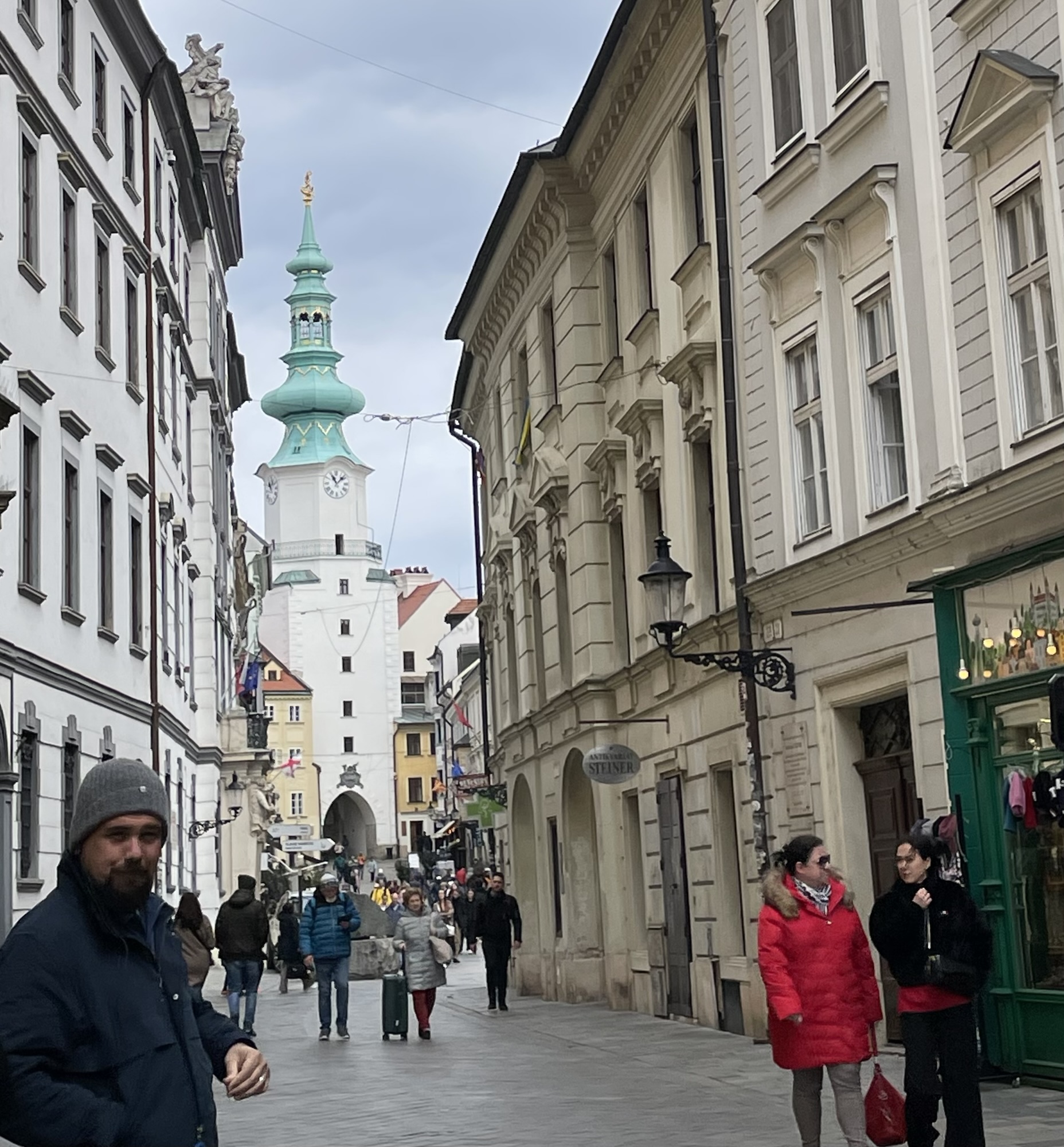
We arrived in this small (450,000) capital city on a cloudy morning with the same considerable windchill which ebbed and flowed throughout the day.
The walking tour was one of the best ever because our guide had all the requisite traits: she knew the city and its history, she was by turns serious and respectful and funny, and she gave me a recommendation for a restaurant that served a superb version of a Slovakian specialty, halusky. More on that later.
Because our guide, Jana, had lived half her life under Soviet rule she could share many insights and family stories about those dark times and about how life had changed since the velvet revolution. Jana plus the exceedingly picturesque old city (barely a city!) made for a great morning.
Jana introduced us to Bratislava by stating the two unequivocal advantages to living in her town. One, no traffic. It was rush hour and we were at a major intersection with barely a lane full of cars. Two, it is located at the intersection of three countries—Hungary, Austria, and Slovakia.
Soviet times
Standing just a few yards from the boat Jana pointed across the Danube at a woods with a large hill behind on which we could see a transmitter tower. The tower was in Austria, and the woods at the edge of the river were not at all dense. Jana explained that the soviet government had mowed down the trees and shrubbery and placed several rows of barbed wire and high voltage lines to prevent escapes. (According to wikipedia 400 Bratislavan citizens were killed trying to escape during the years Soviet Russia ruled Slovakia.). But the Austrian tower transmitted television, though often jammed, and Jana asked us what we thought her grandmother’s favorite tv series was. Dallas! Her grandmother was really pissed when jamming made her miss an episode.
Upper left, the Neolog memorial; lower right, the drop of blood in that little hole in the gold decoration
The Neolog Synagogue that survived both world wars was torn down by the Soviets in 1969 to make way for a road, which now runs so close to the beautiful St. Martin’s Cathedral that it is now suffering damage from traffic vibration. There are reminders of the lost synagogue around the central historic district including a memorial on the site and information placards posted nearby.
St. Martin’s Cathedral alongside the Neolog Synagogue before the Soviets destroyed the synagogue.
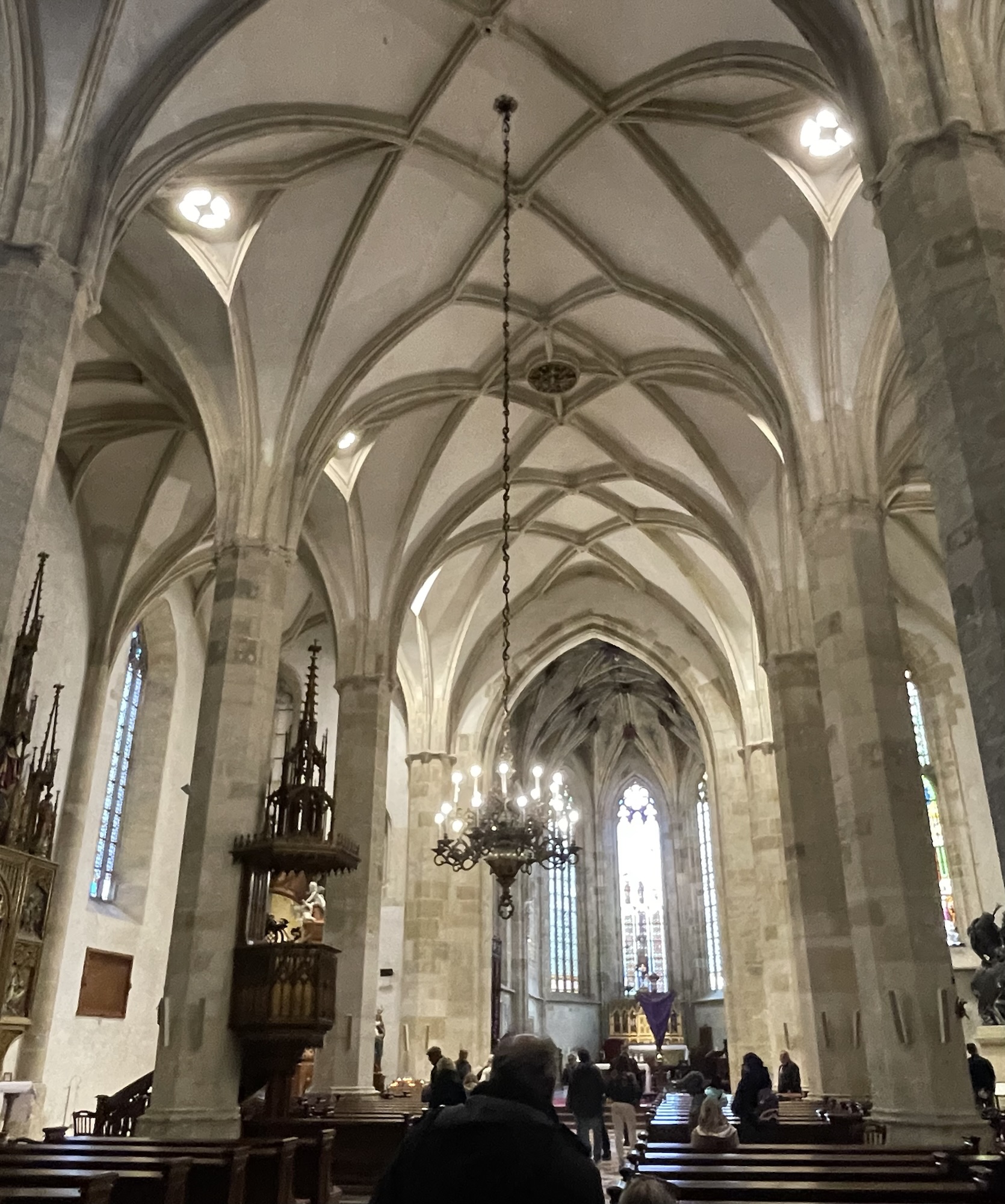
St. Martin’s Cathedral has a soaring interior with very little interior decoration where frescoes were destroyed in the several fires that were started by lightening strikes. These interior fires started at the back of the sanctuary and were extinguished before reaching the altar, which remains filled with frescoes and elaborate carved seats, each with a symbolic animal (creature?) representing a sin or virtue.
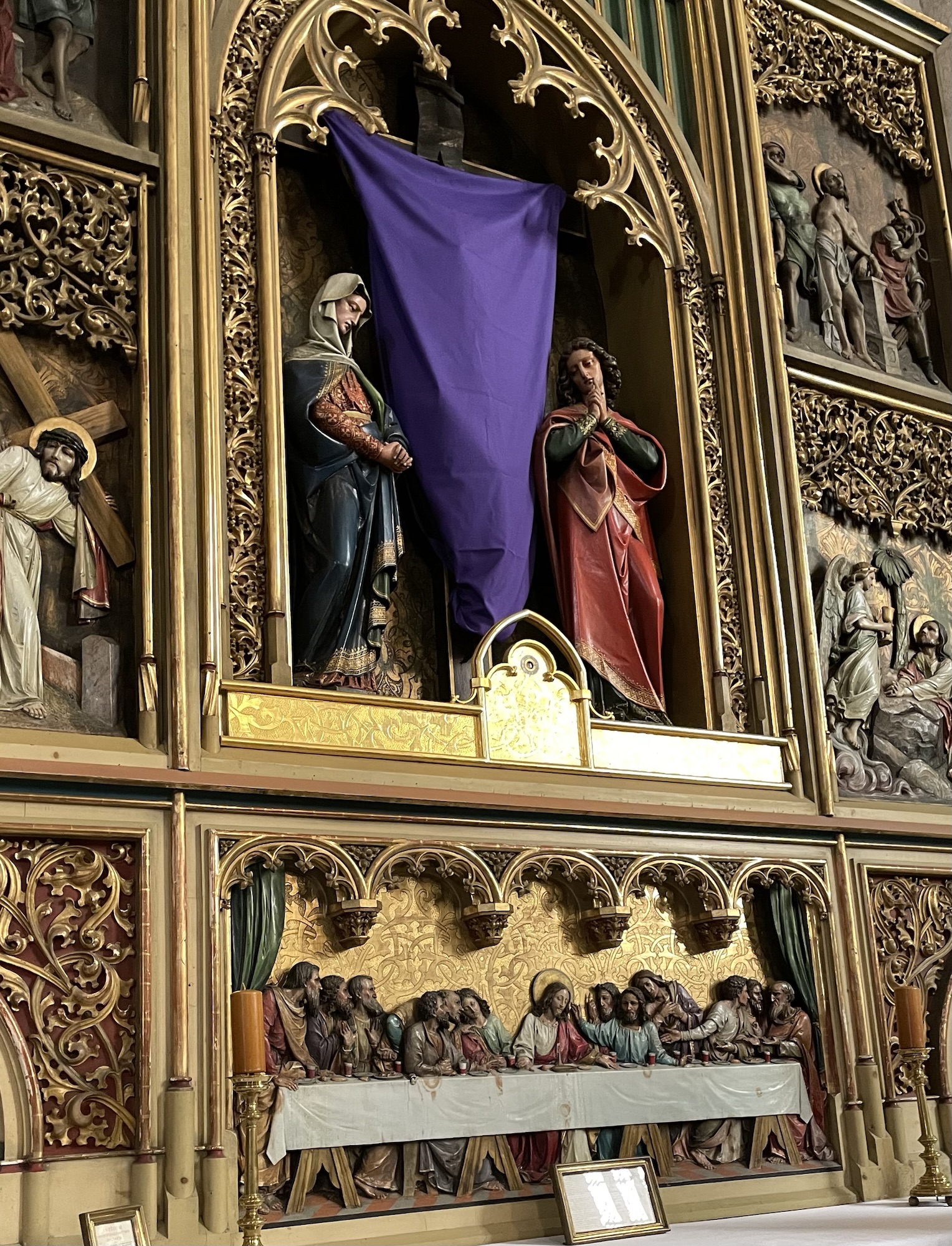
On one side wall there’s a curious Habsburg relic, a recent gift of descendants of the Habsburg emperor who abdicated in 1918. The gift is gold, like a decorative frieze, and sits inside a large, carved wooden something-or-other. The curious part is in the center, a small round hole that holds a drop of the last emperor’s blood.
Walking through the renaissance
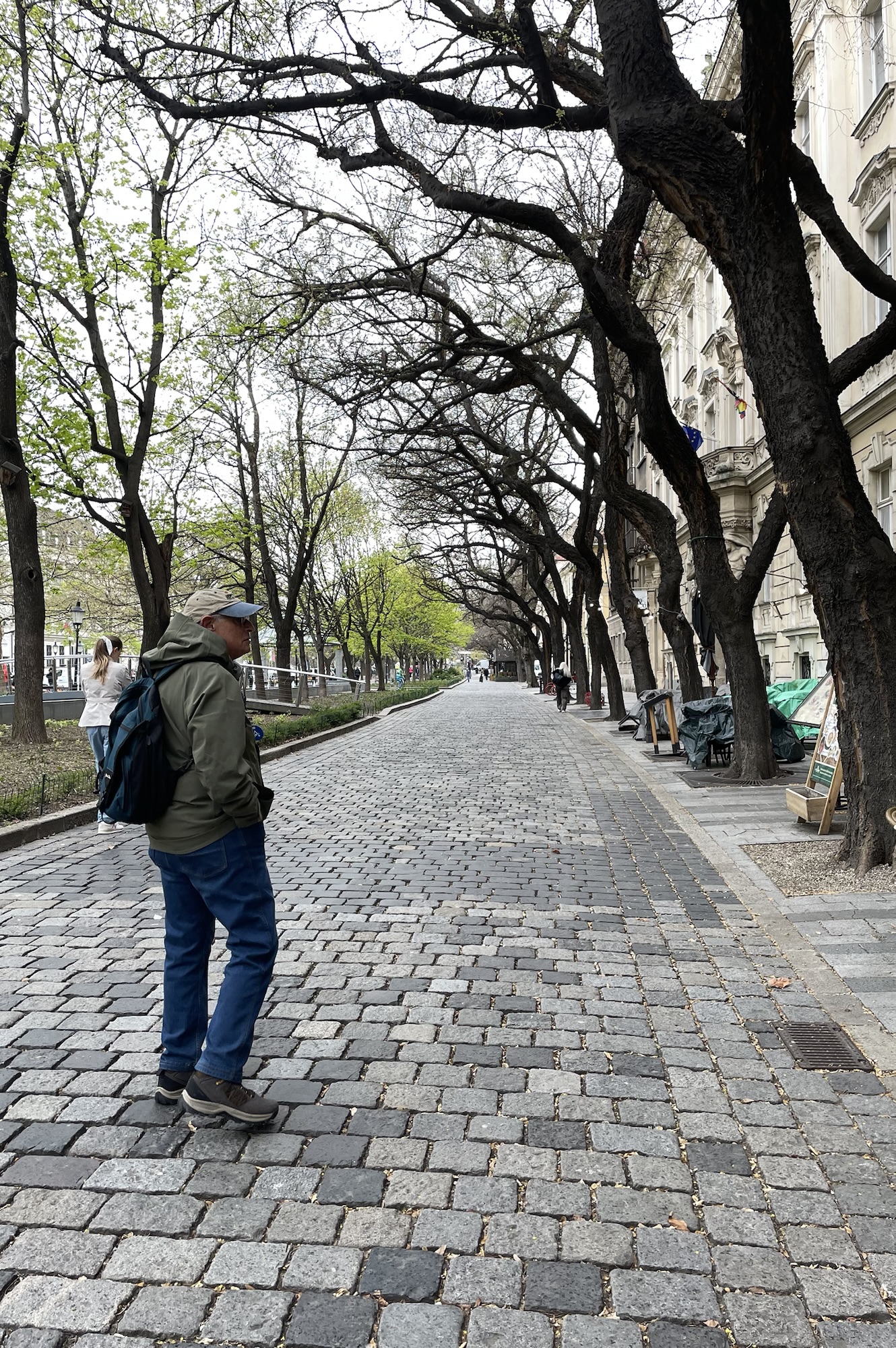
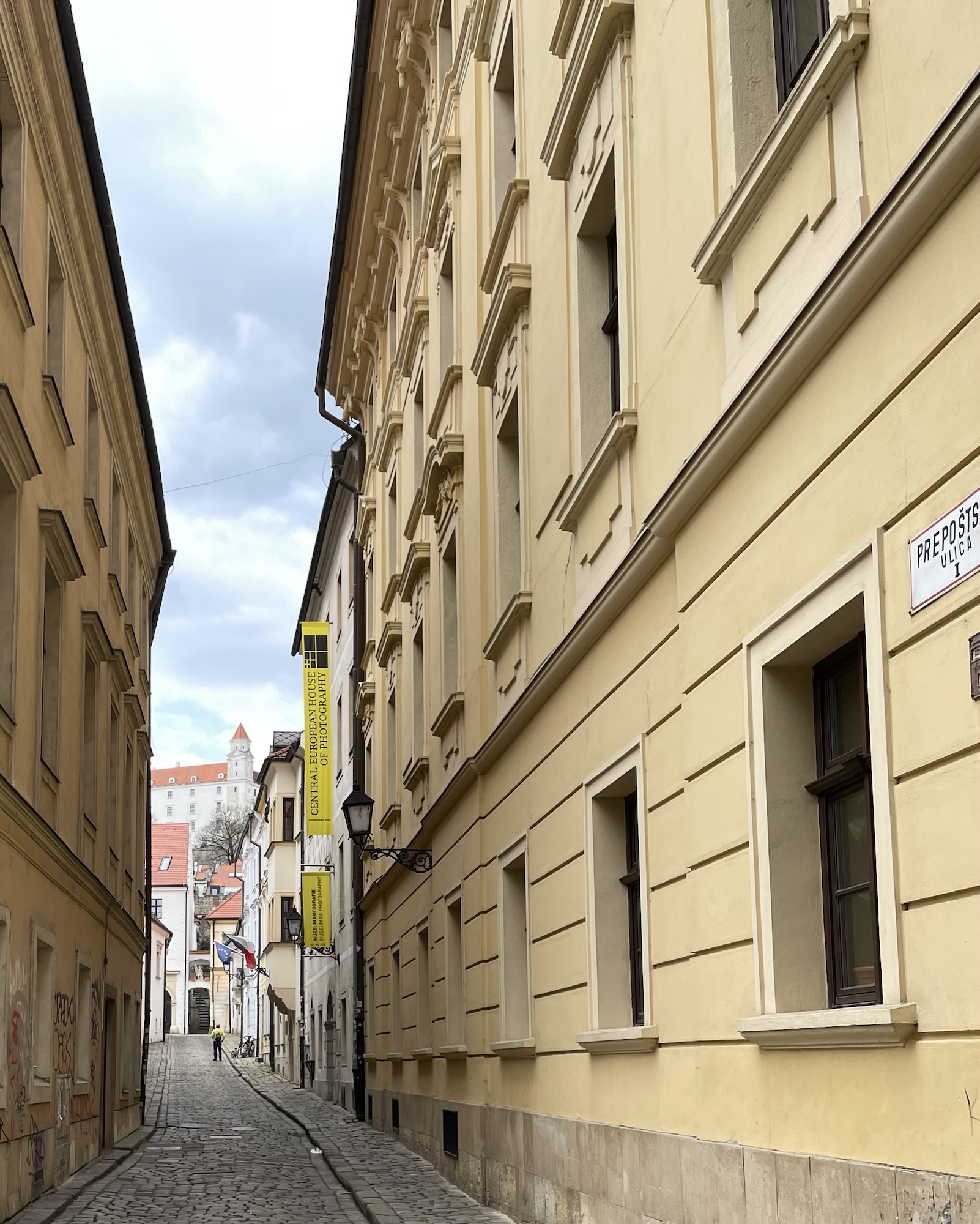
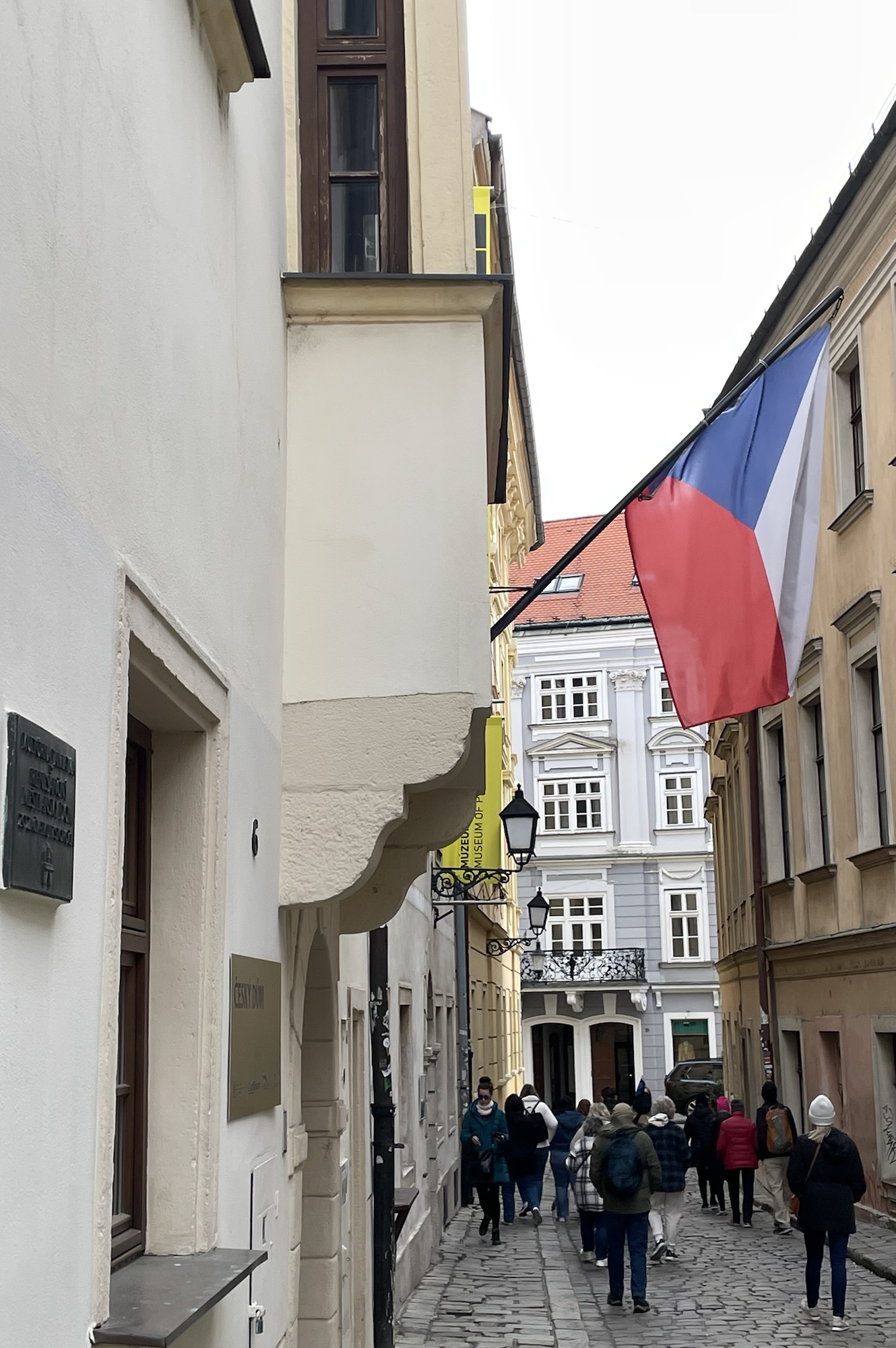
The streets of old Bratislava are narrow and treacherous with cobblestones that are themselves awfully uneven. The old town is so small you are through it in minutes. Our guide explained one street has been used over and over as a movie set because all of the buildings are owned by the Catholic church and hence there are no commercial signs. She told us a funny story. She was leading a tour and as they came around the corner onto this particular street a gate opened and out walked two tall men in full Nazi uniforms. Jana and her group stopped and gaped. “It was surreal,” Jana said. I’ll bet!
Many buildings date from renaissance and guide pointed out the distinguishing feature: enclosed balconies facing the street with windows on front and the very narrow sides. The side windows were a security feature…one could see from inside if a bad guy was sneaking along the wall toward the door. Only bad guys would approach by scooting along the wall instead of approaching directly from the front.
On the left, a renaissance building with side windows in covered balcony
Live and learn.
Bratislavan treat
Our wonderful guide Jana had stopped outside a restaurant that had photos of their traditional dishes to point out that we shouldn’t leave without eating the most delicious of local foods, halusky. Dumplings (along the lines of spaetzel) in sheep’s cheese with bacon on top. At the end of the tour I asked her to recommend a restaurant where we could find a good version and she have us a name and pointed it out.
One of my problems on the cruise is lunch is at 12:00 and dinner not until 7:00. Consequently I am hungry in the afternoon and the snacks on board are cookies, fruit, one day donuts…all sweet. So this day i counted on walking back into town to try halusky. We braved the windy cold and spatter of rain. Wow. So delicious. We also ordered potato pancakes which were unlike anything I have eaten. Thin like crepes, buttery, with a very faint sweetness. It looked like a lot of food but we ate every last bit.
Halusky and potato pancakes, and the view from inside the restaurant.
We left this beautiful peaceful town thinking it would indeed be a nice place to live!
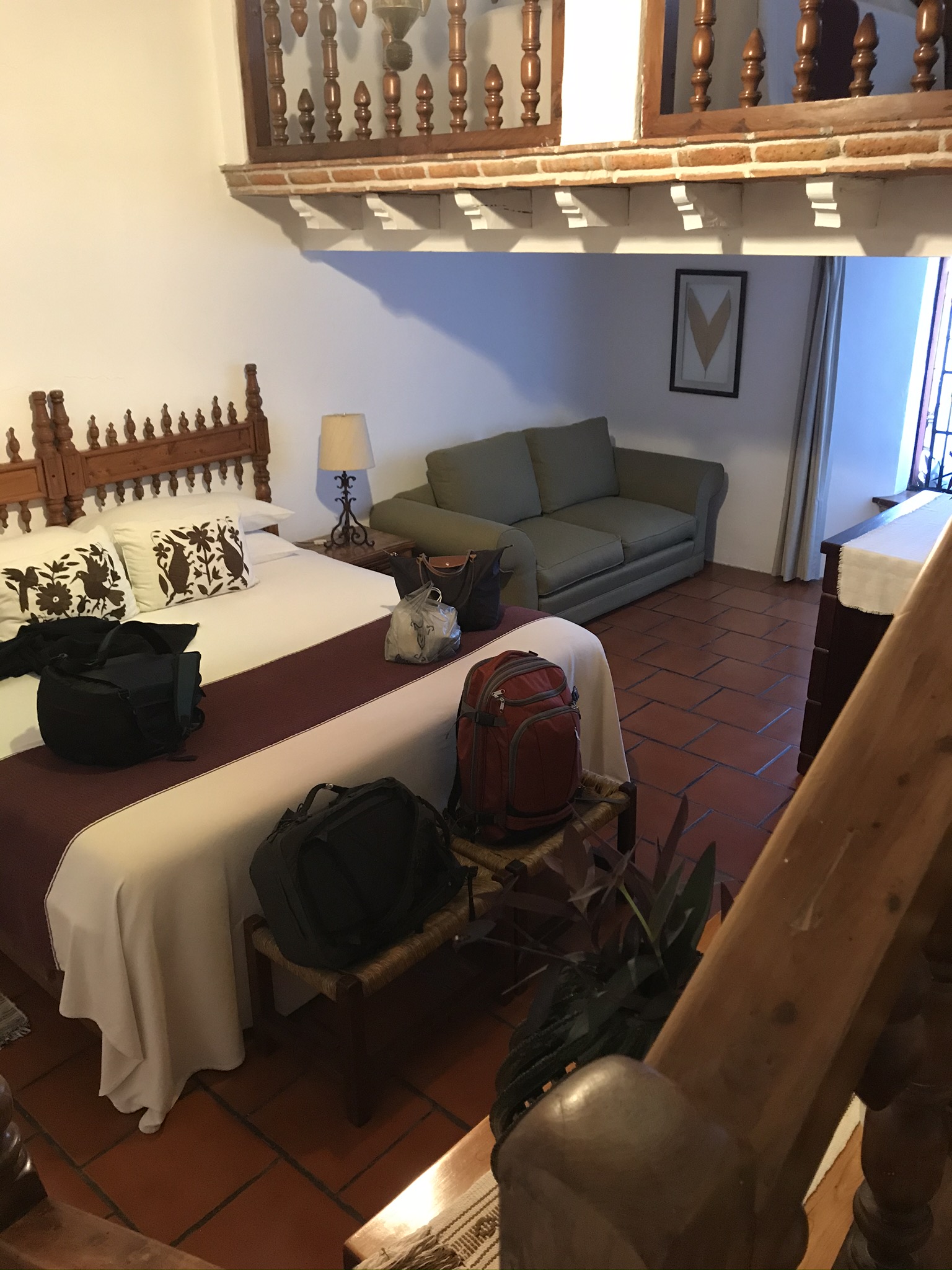
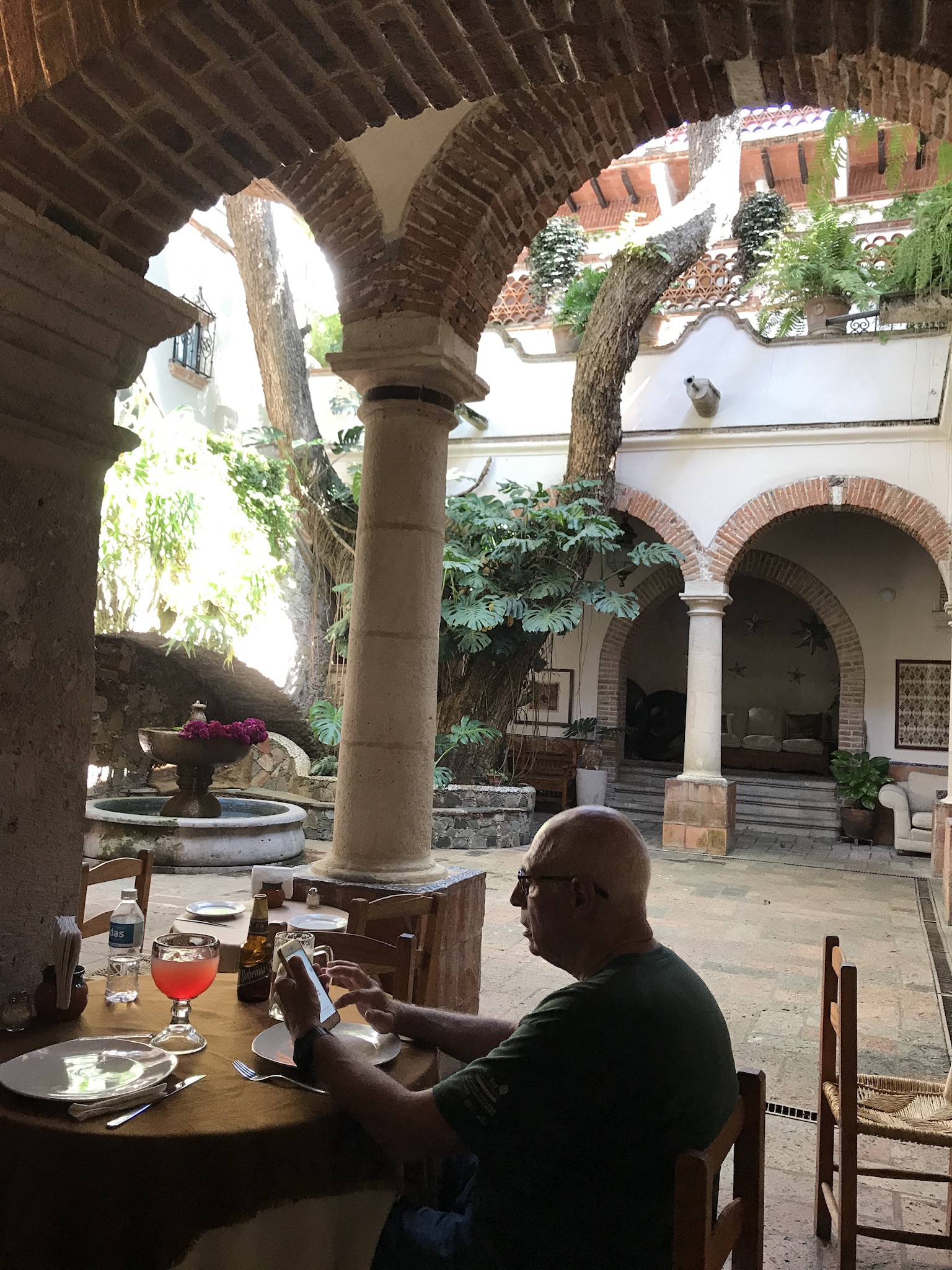
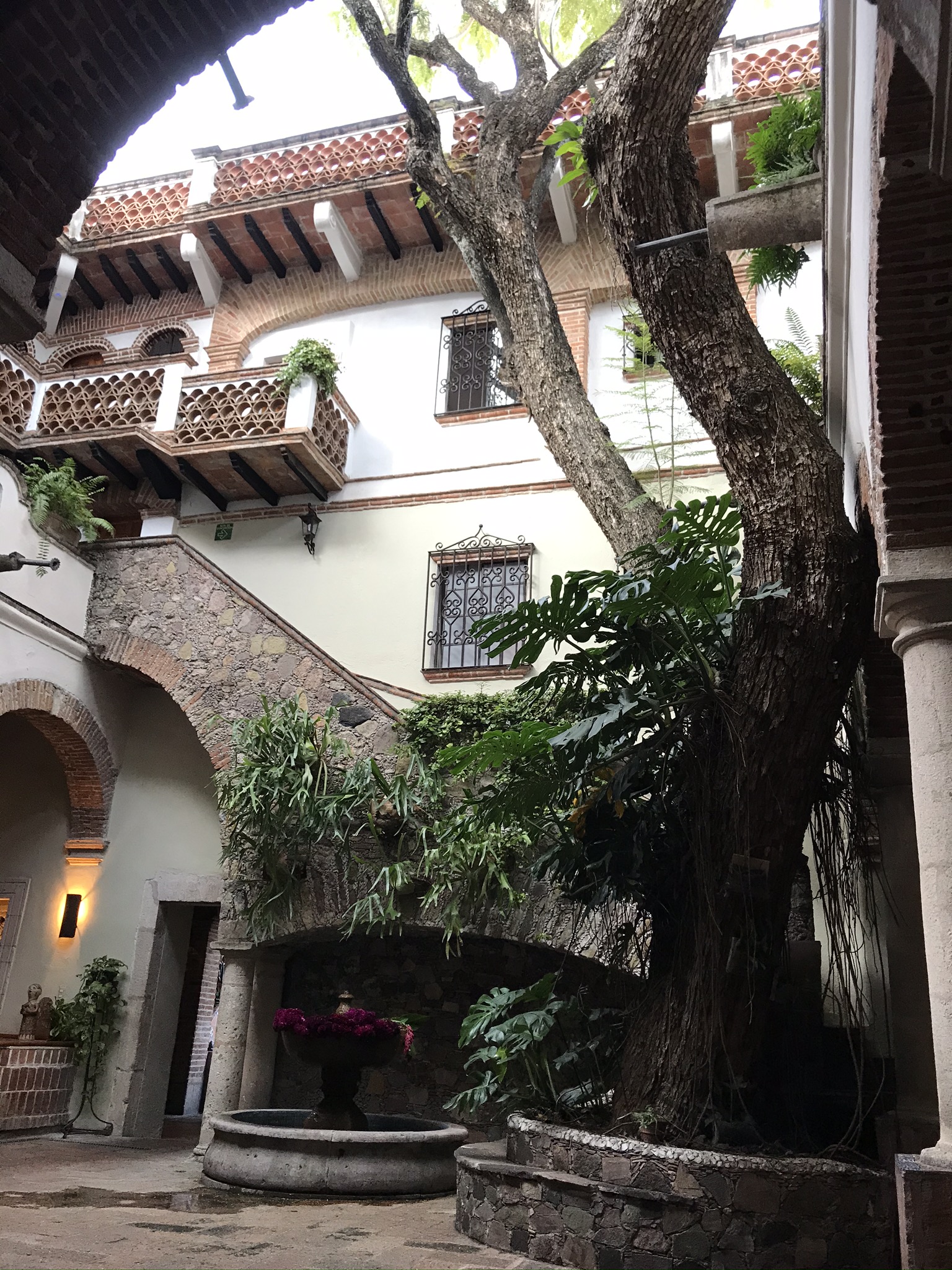
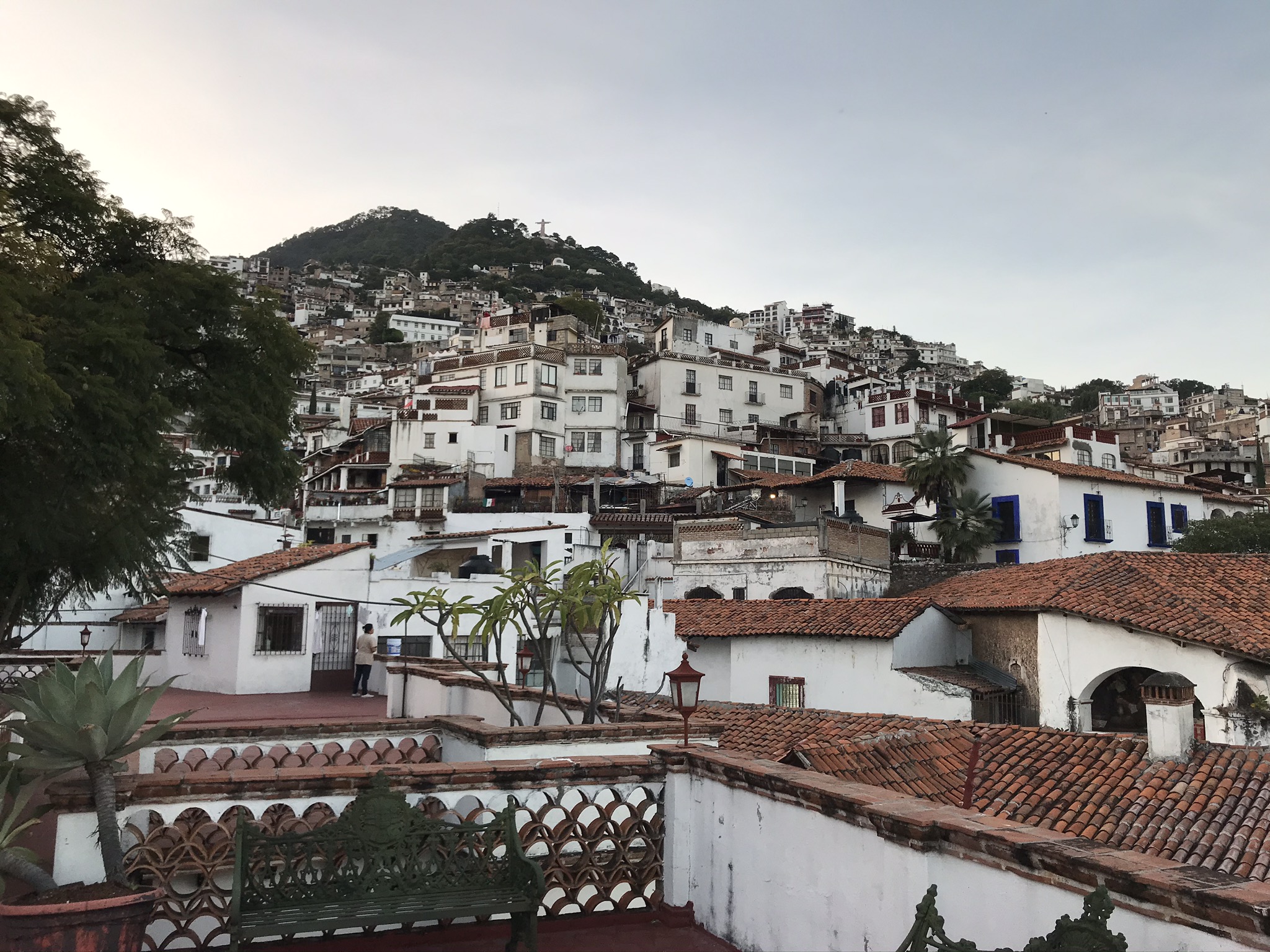
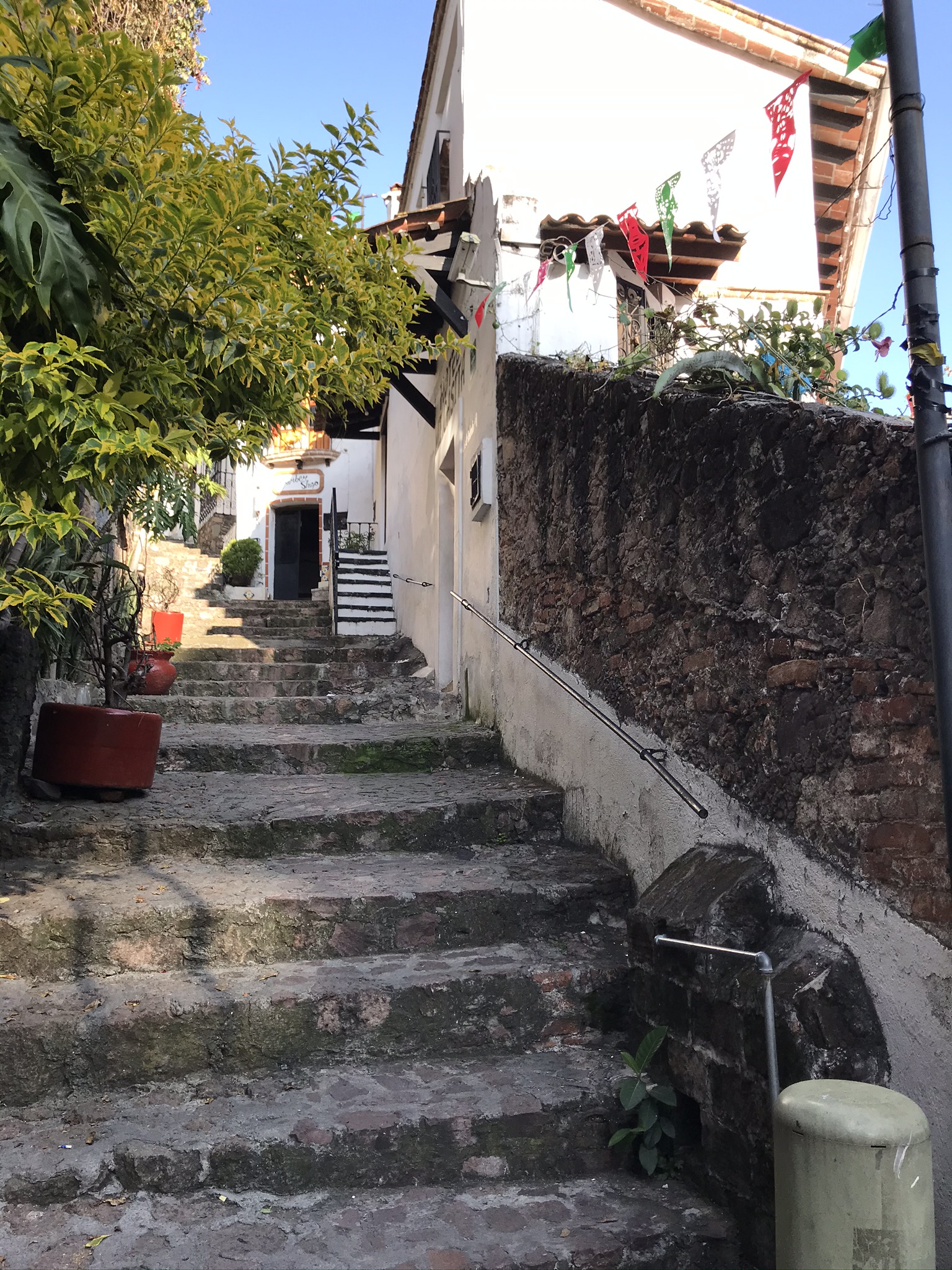
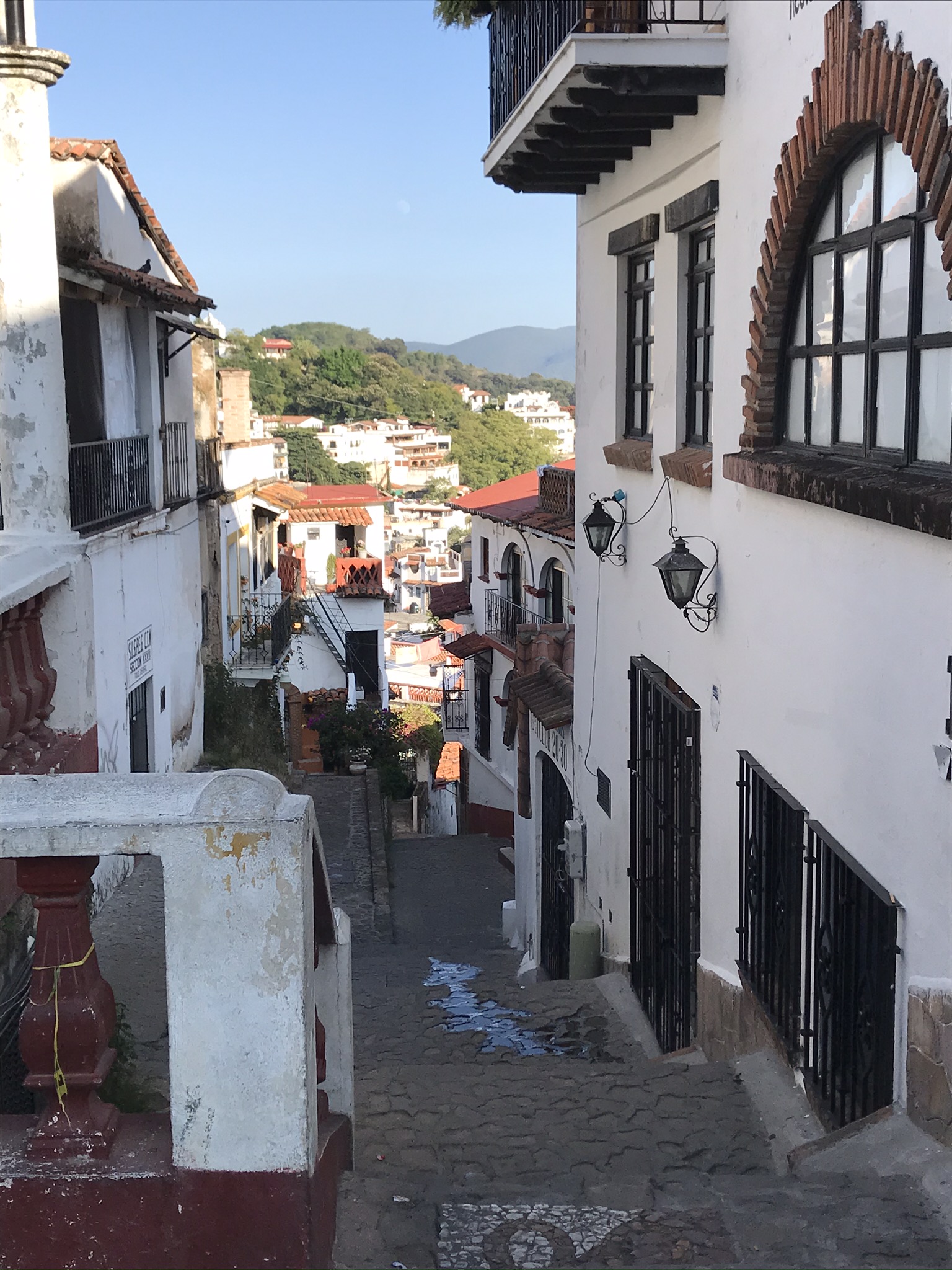
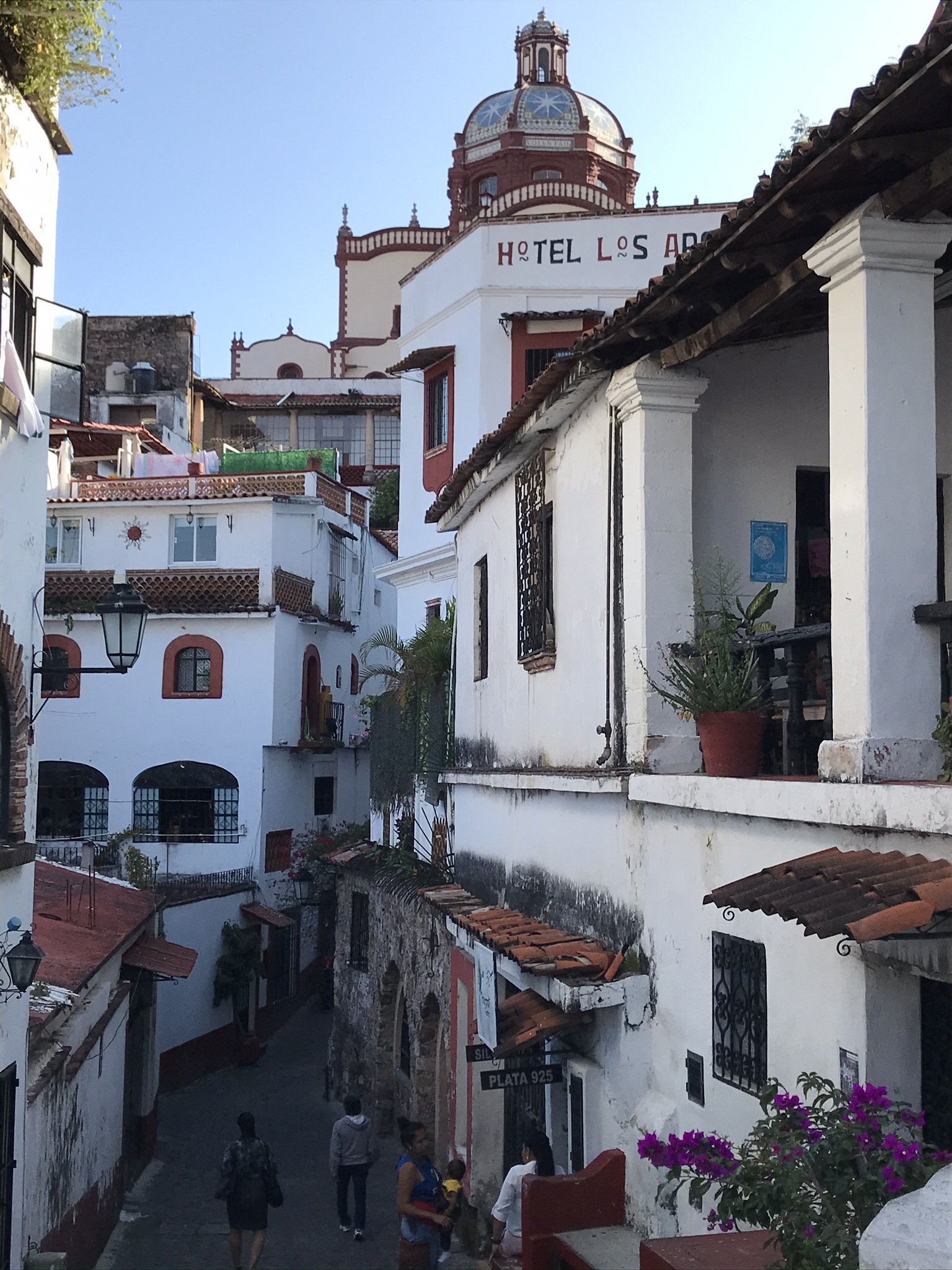
I’m not sure how I selected this place but it turned out to be perfect. While there is no quiet spot in Taxco on a weekend, the location, just around the corner and down the hill a bit from the zocalo, was ideal. The room was large and comfortable and the central patio peaceful and picturesque. On the roof is a large terrace with gorgeous views of the town, which stretches way up the mountain and down into a valley. Walking this town requires stamina (it’s at around 6,000’), good shoes, and strong thighs and knees. We loved it.
Bufy (pronounced boo-fee) is a former street dog who is now under the protection of the hotel. Dogs are allowed everywhere; this hotel, which seems to be operated by a group of women as we never saw a man working there, has a sign at the front desk listing restaurants which are dog friendly. We saw a fair number of street dogs, maybe 5-10 all told, which were calm and well treated. In fact we saw Bufy around the zocalo and out and about, often on his own but sometimes with someone from the hotel on an errand. Dog food and water bowls are all over the place.
Food highlights
Well, the food in general in Taxco is as delicious and inexpensive as elsewhere in Mexico but a few meals and restaurants stand out.
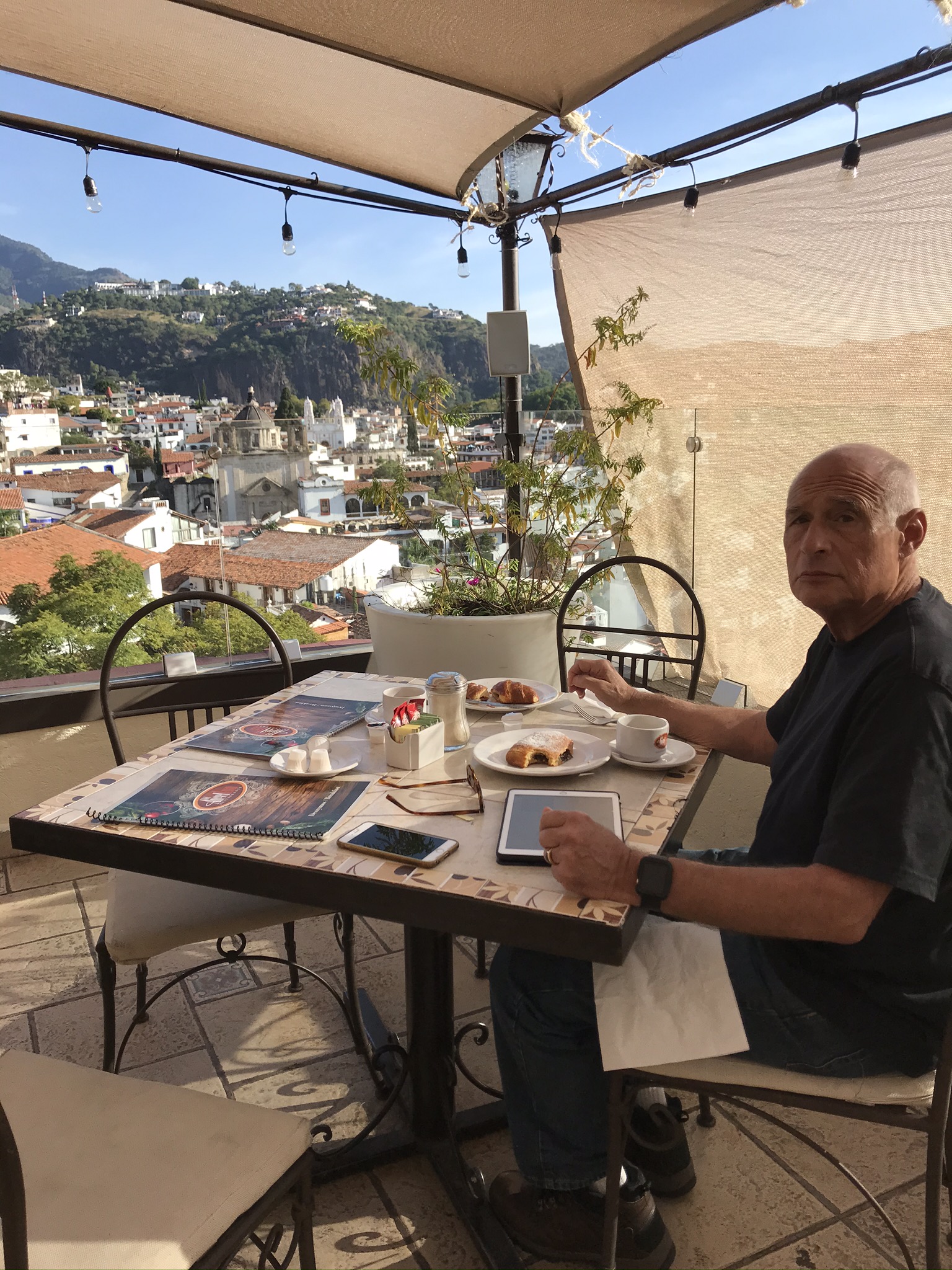
We had two fantastic, and typically enormous, breakfasts of chilequiles with eggs. The restaurant that serves in the hotel patio is terrific and highly recommended for convenience, service, delicious food. One of the “jams” they serve is a sweet chipotle that was memorable…not spicy, just a smoky, just sweet enough condiment. For the view—though the servings were overwhelmingly large so eating was almost discouraging, we went to Del Angel, a hotel behind Templo de Santa Prisca, the huge central church on the zocalo. The restaurant has several outdoor terraces, all with sweeping vistas of the town. Don’t get me wrong, the food was great—but entirely too much for a normal human being to consume in the morning.
Seriously, after fresh juice and pastries, all part of the shockingly inexpensive paquete (like the Japanese breakfast sets), could you eat that entire serving of chilequiles?
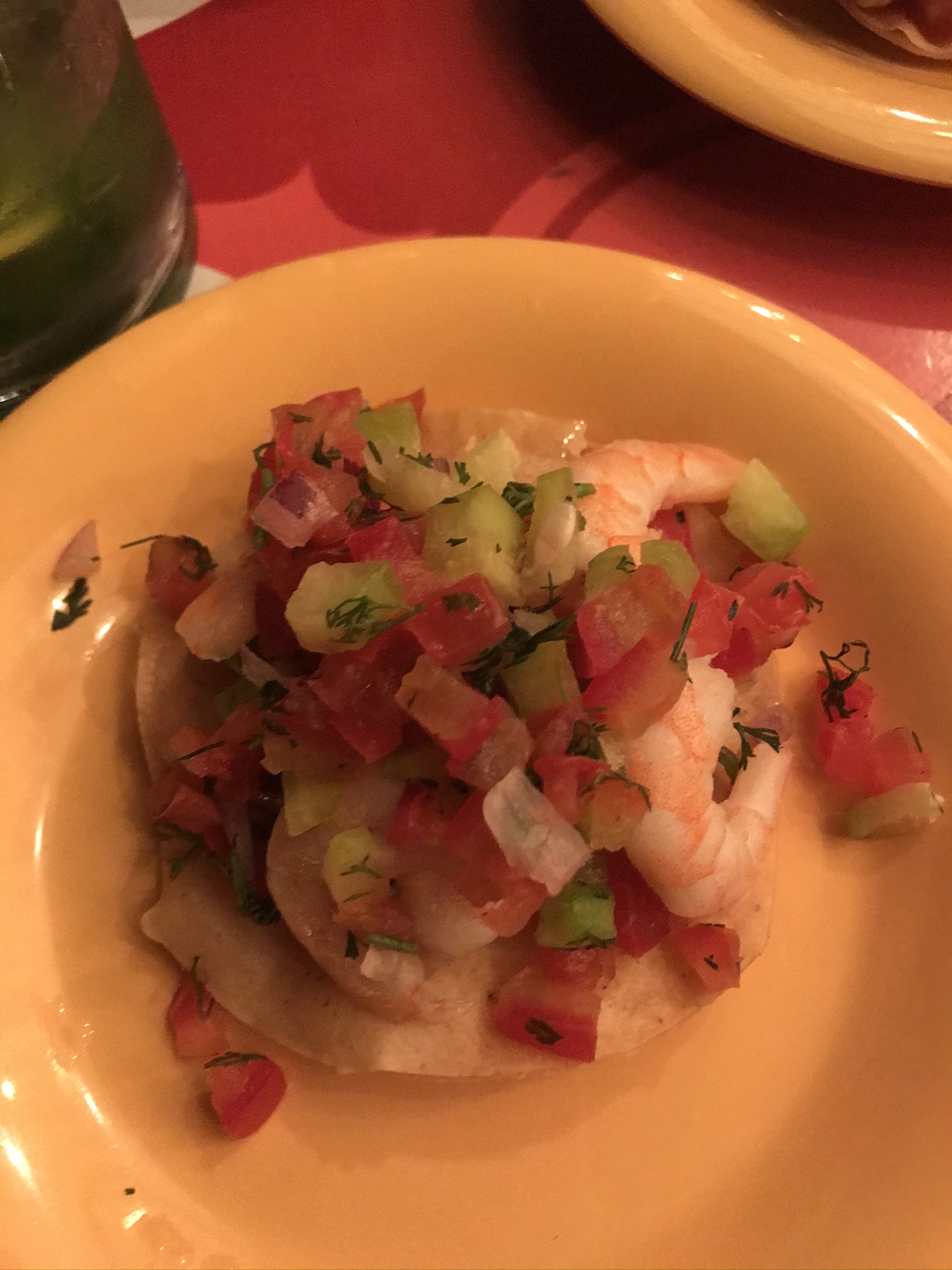
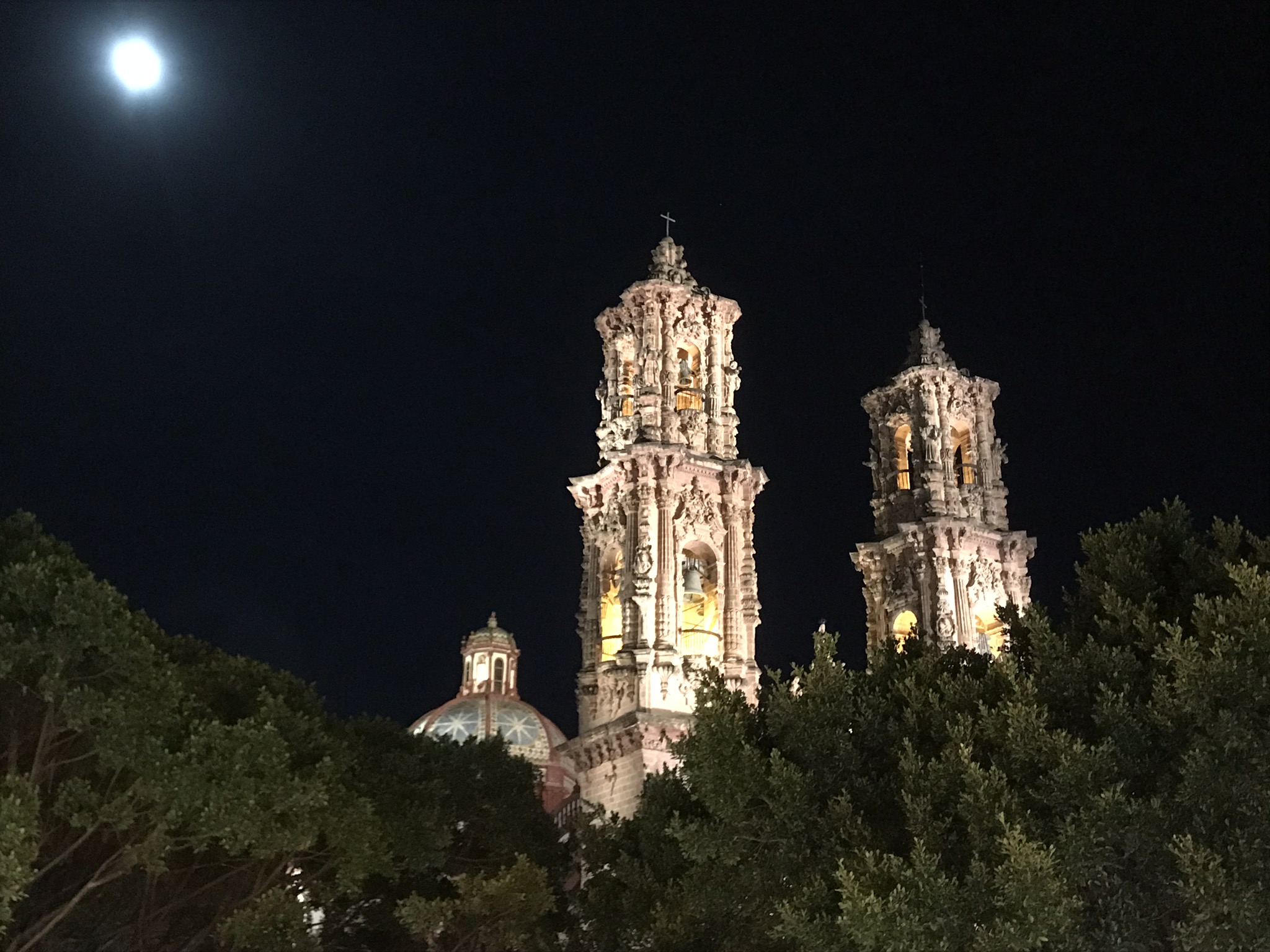
Two of our three nights in town we went to La Bendita, a small cantina-like place for drinks and small plates such as tacos, tostadas, quesadillas. The ceviche tostadas were what called us back for a second time, and I highly recommend the chicharron pescado (fried fish) tacos as well. My mojito(s) were delicious, and both nights David had the liter of beer. Sitting at a tiny table on a tiny balcony overlooking the zocalo madness was entertaining. The second evening the moon rose over the bell towers to give us a magical picture.
Finally, on the Taxco food front, we went to the famous Tia Calla, a basement level pozoleria. David isn’t a big fan of pozole but I am—and he had the chalupas, four little tortillas with chicken and chipotle. By the end of his snack he said his mouth was tingling but they were not the killer heat we know from chipotles in the US. The pozole was the best I’ve had.
The pozole had a half an avocado in it!
Plata
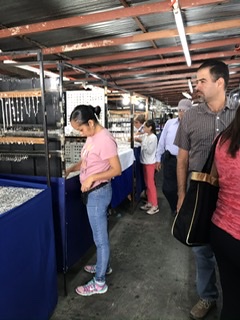
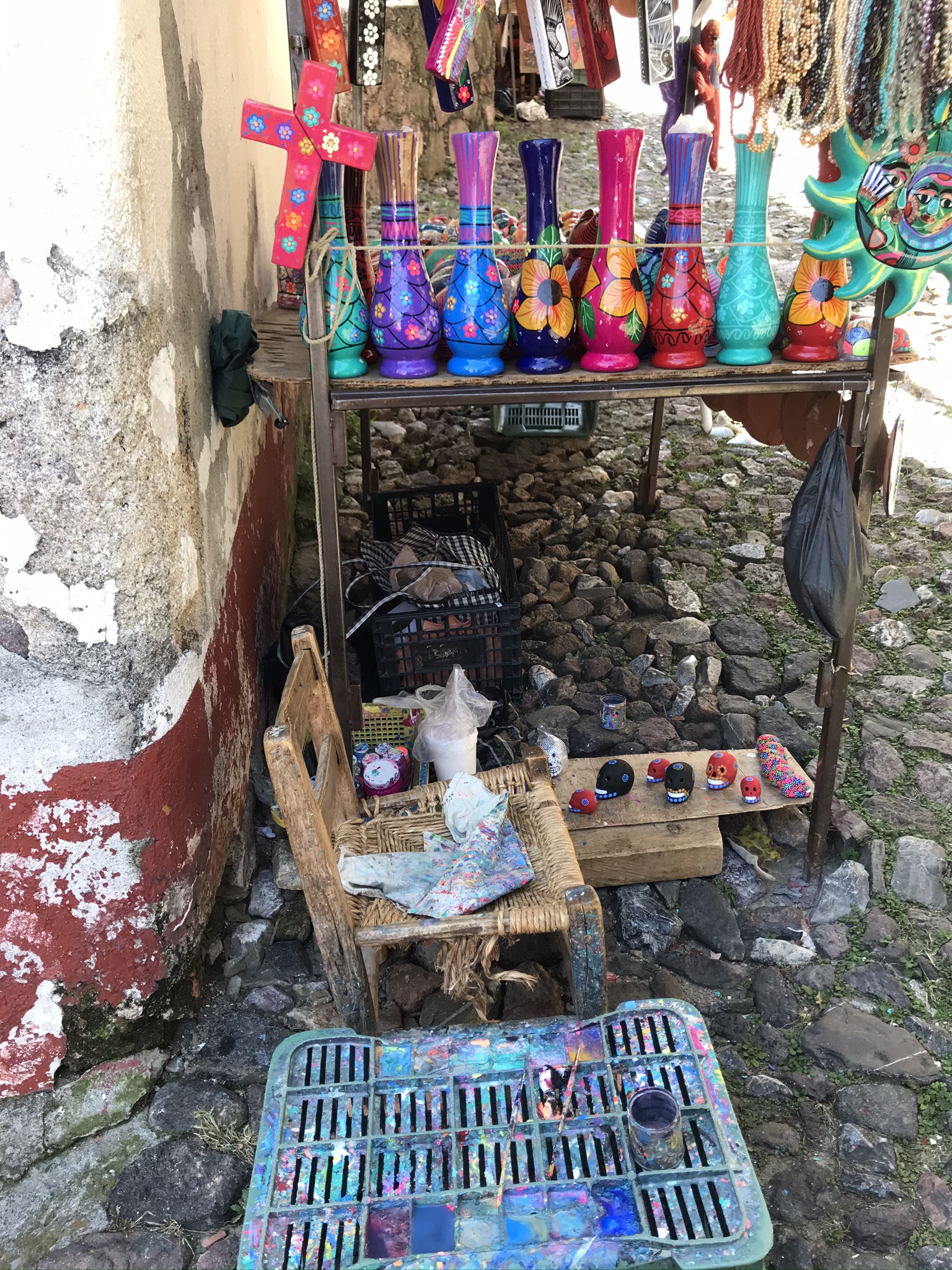
I really wanted to be in town for the Saturday market, a truly insane explosion of silver puestos (little stands) that seemingly filled every bit of space in the town—buildings that were closed on Friday opened to be consumed by hundreds of vendors each with approximately a card table’s worth of display. While many vendors sell the same things, as you walk each aisle you see that from one to the next they have a particular type of jewelry or a distinct style. My plan was to leave with enough pairs of earrings to last me for years, and I did. We also bought a few little gifts which will not be shown here as we want to surprise the recipients. The prices are absurdly low and the experience always “muy linda.” I had tried to describe Saturdays to David—there are always hundreds of vendors in stores and on the streets in Taxco—but he was shocked at the sheer level of commercial enterprise.
The picture on the left does not do justice—this is one of maybe thirty spaces that are filled with vendors on Saturday. I bought several pair of earrings from this most friendly woman at this puesto, which was down a series of stairways winding around impossibly complicated aisles lined with taco stands, jewelry vendors…just a mass of activity.
Simply too picturesque
We wandered the town every day, and at every turn enjoyed the beauty of this amazing town, one of Mexico’s Pueblos Magicos.
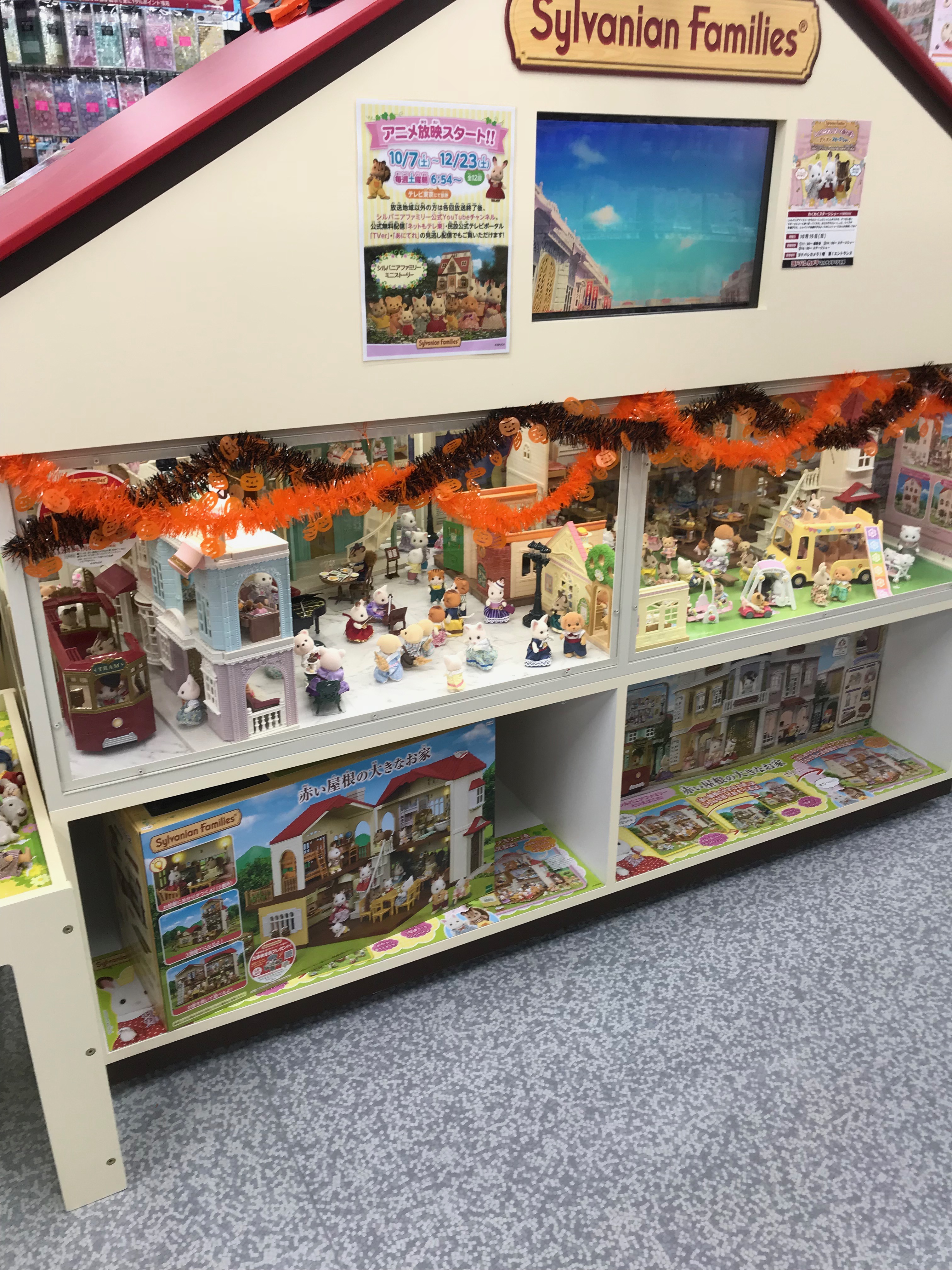
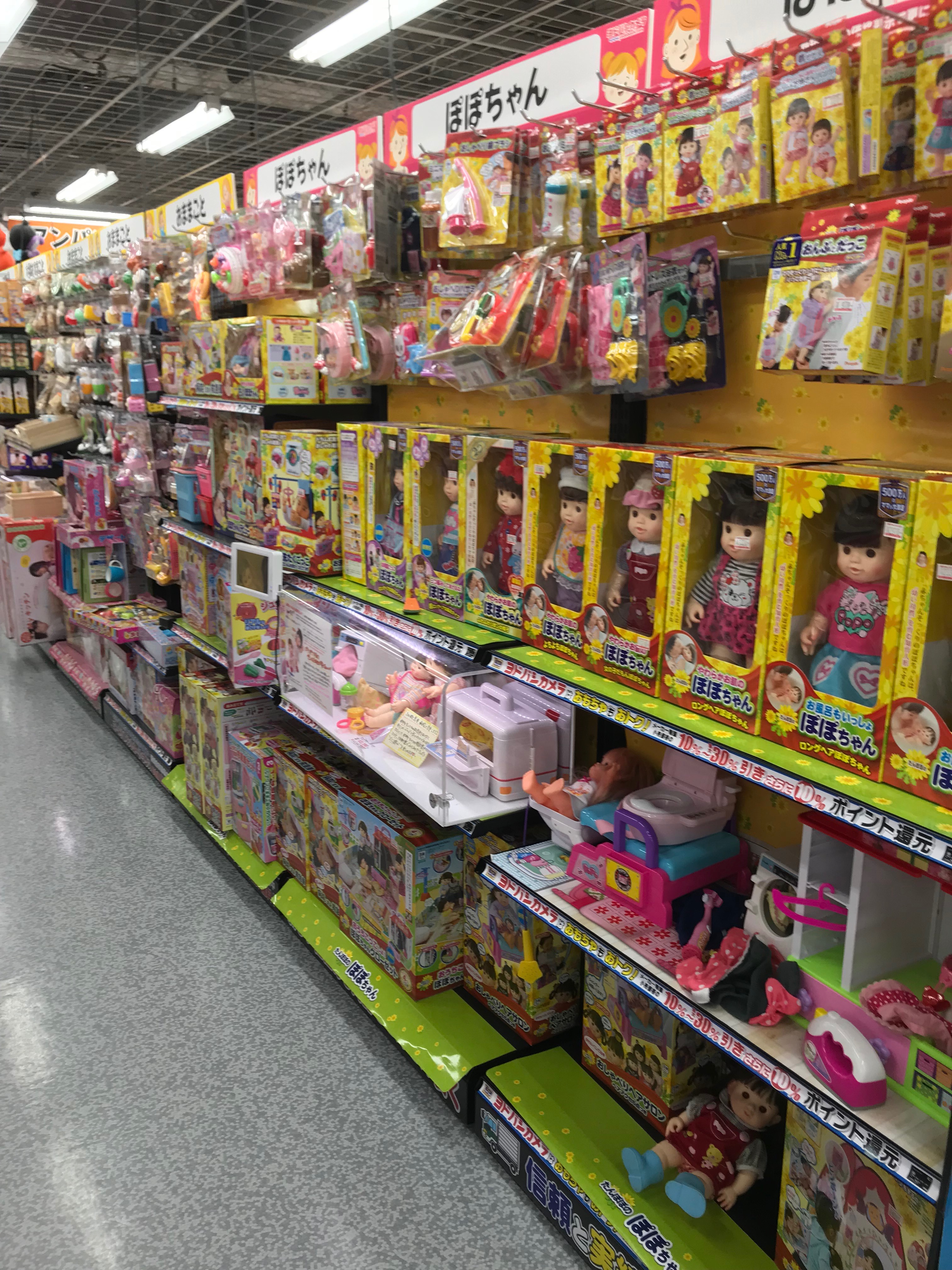
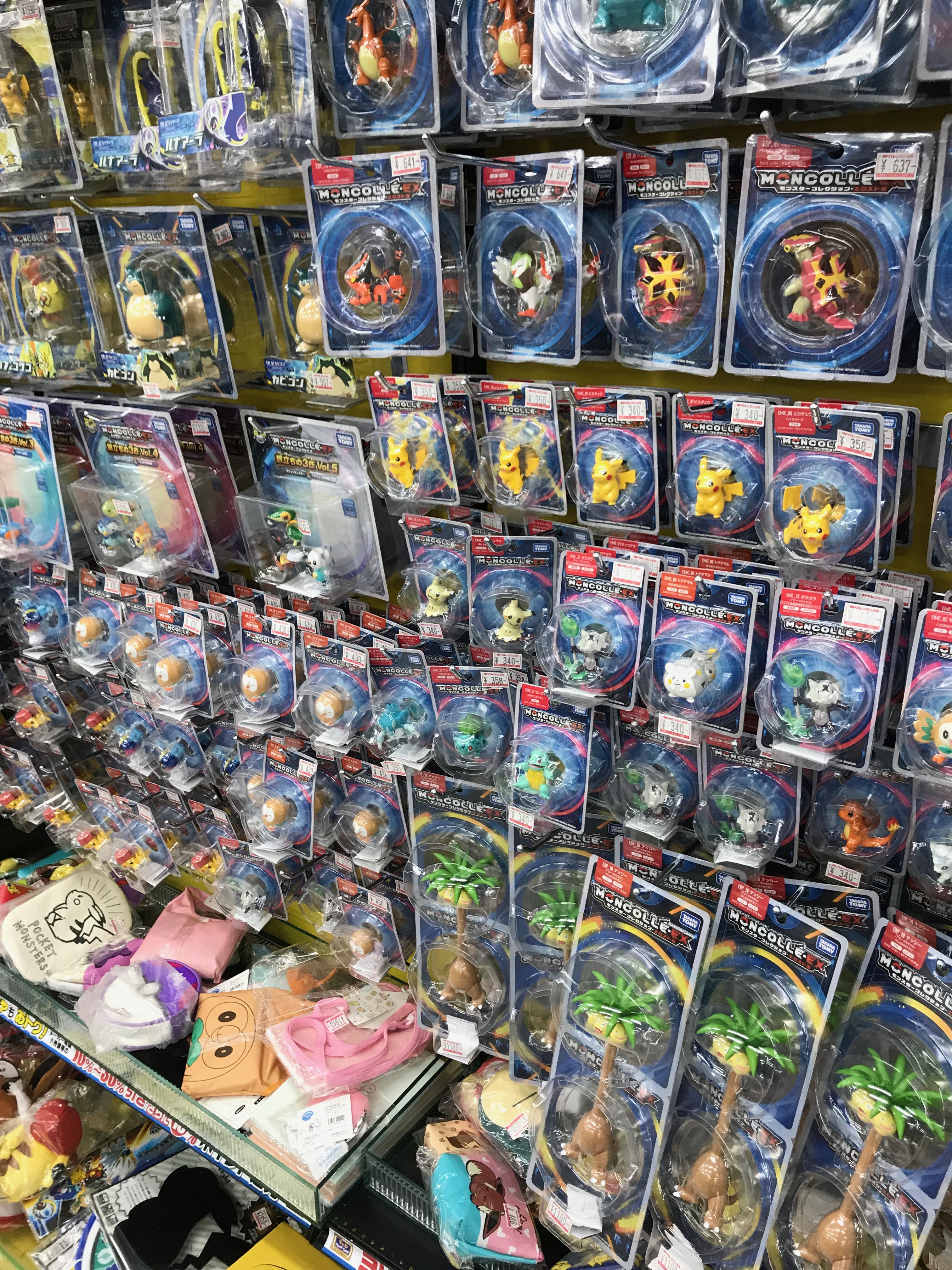
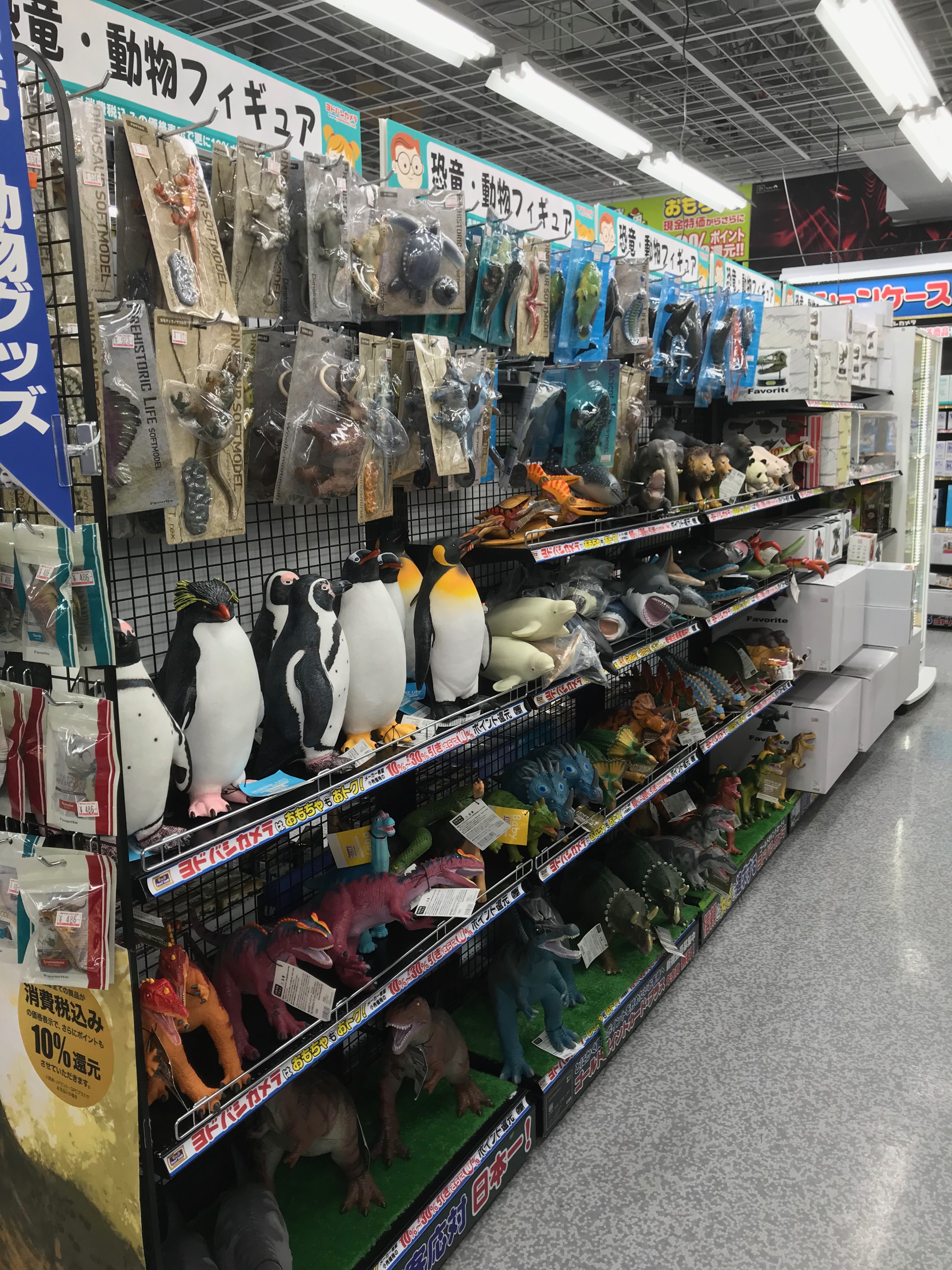
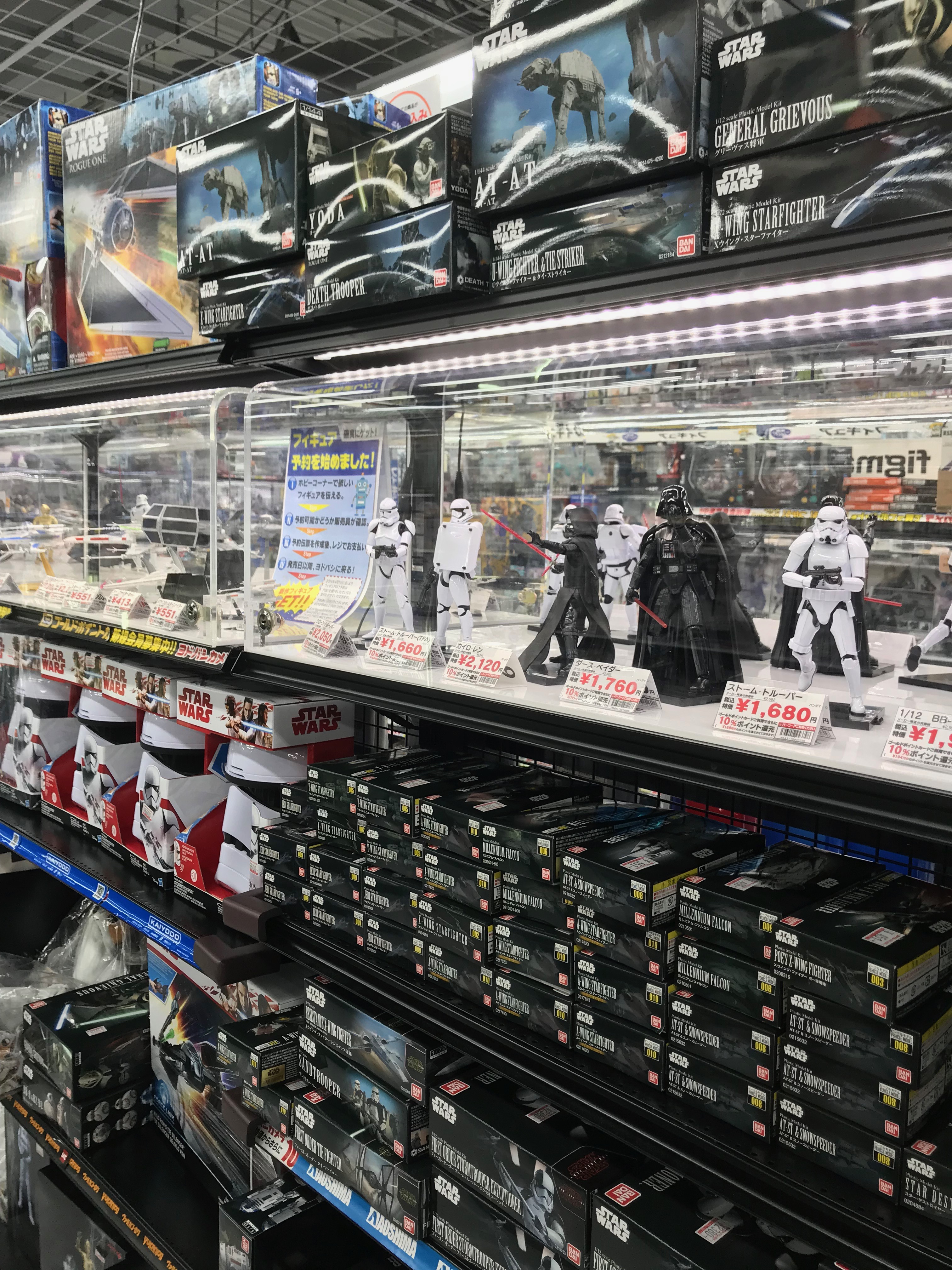
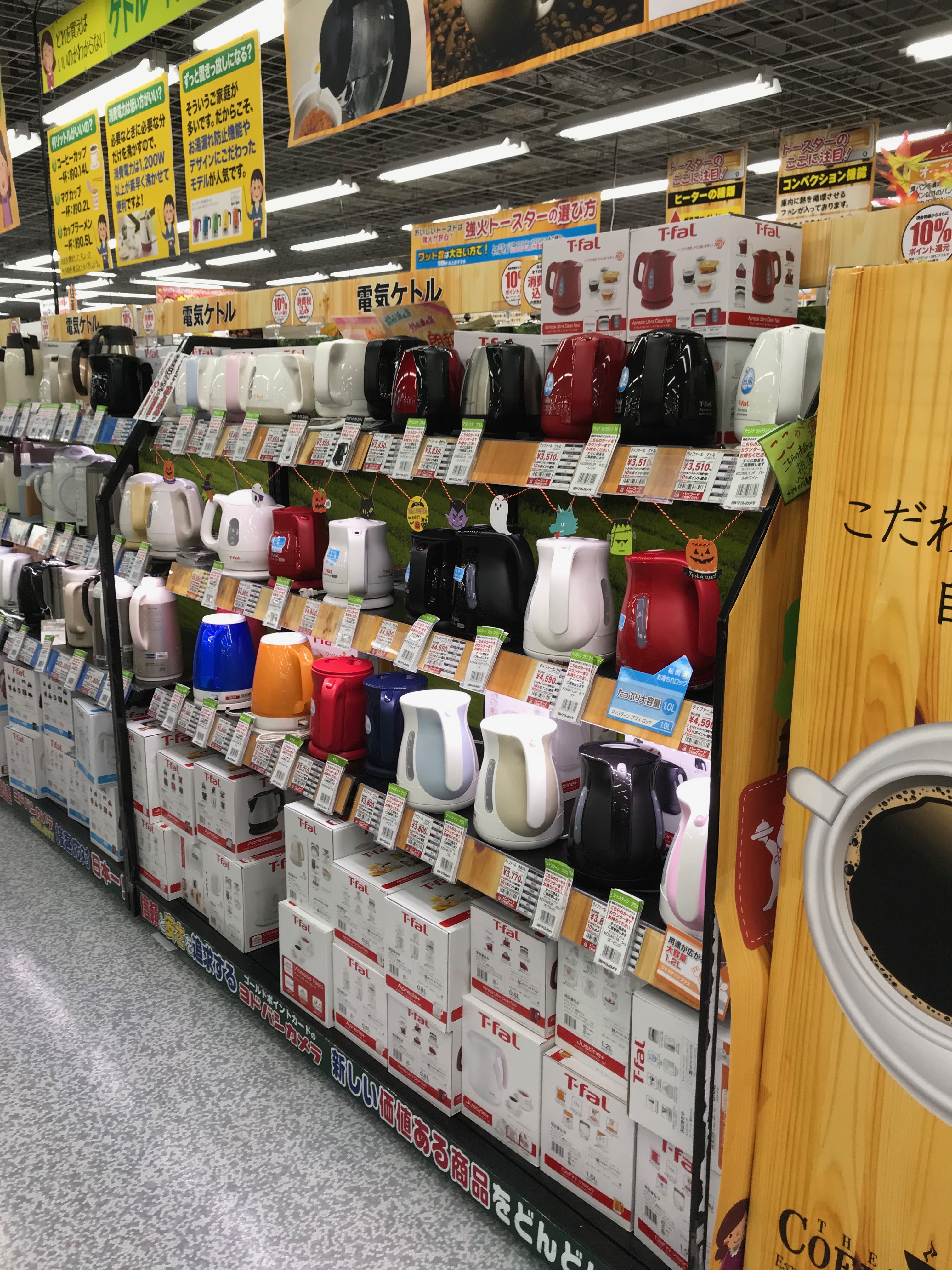
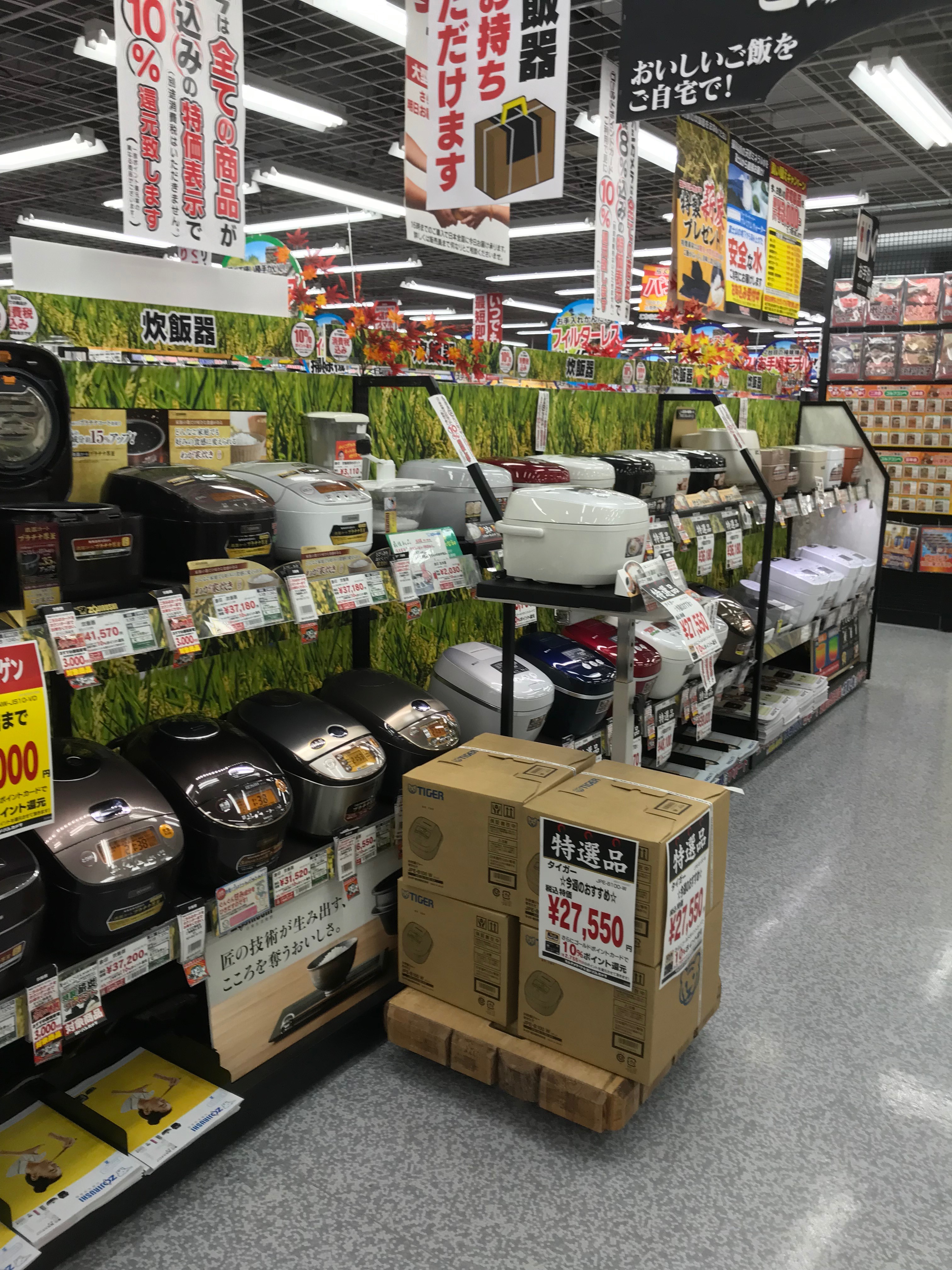
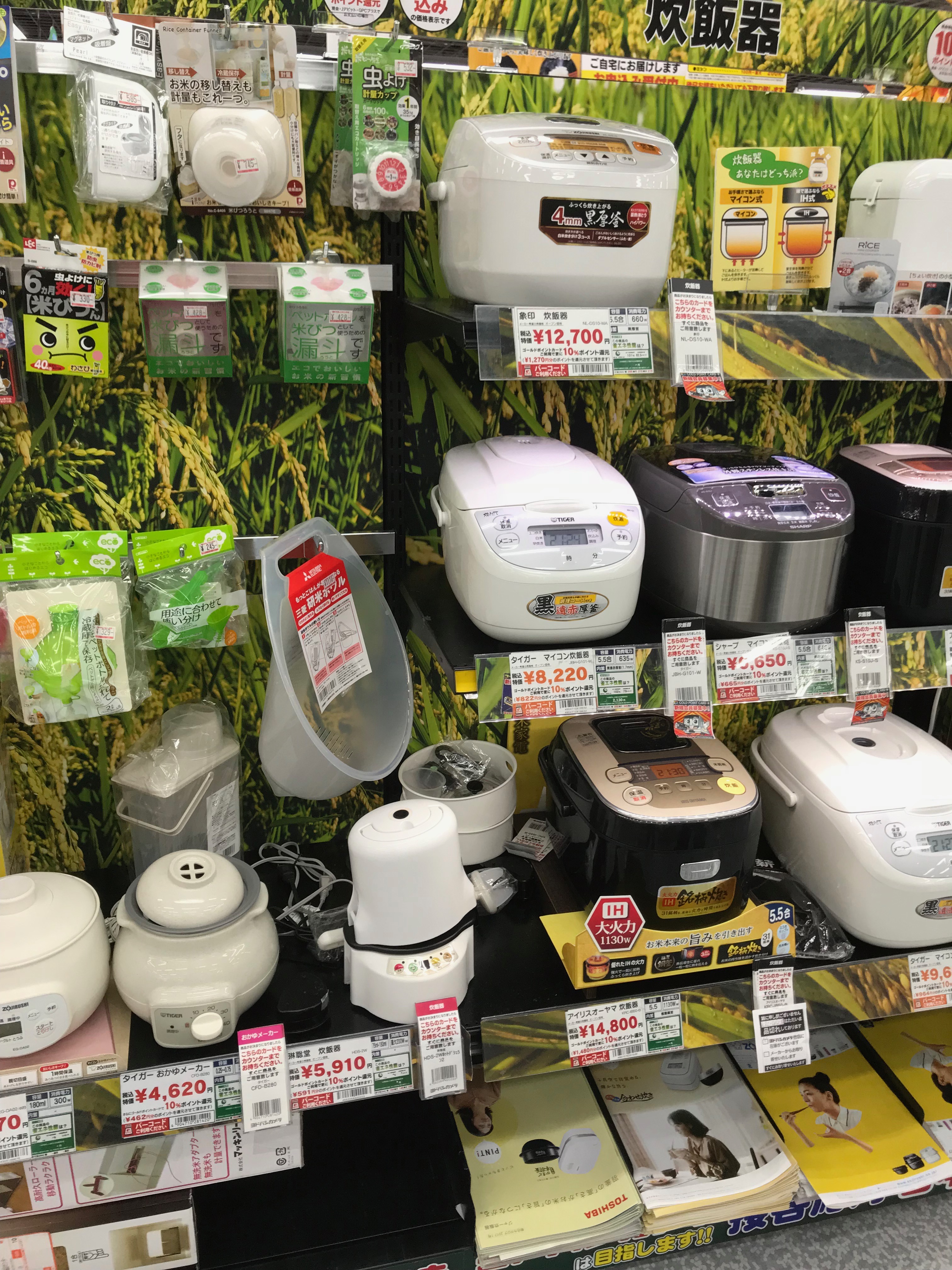
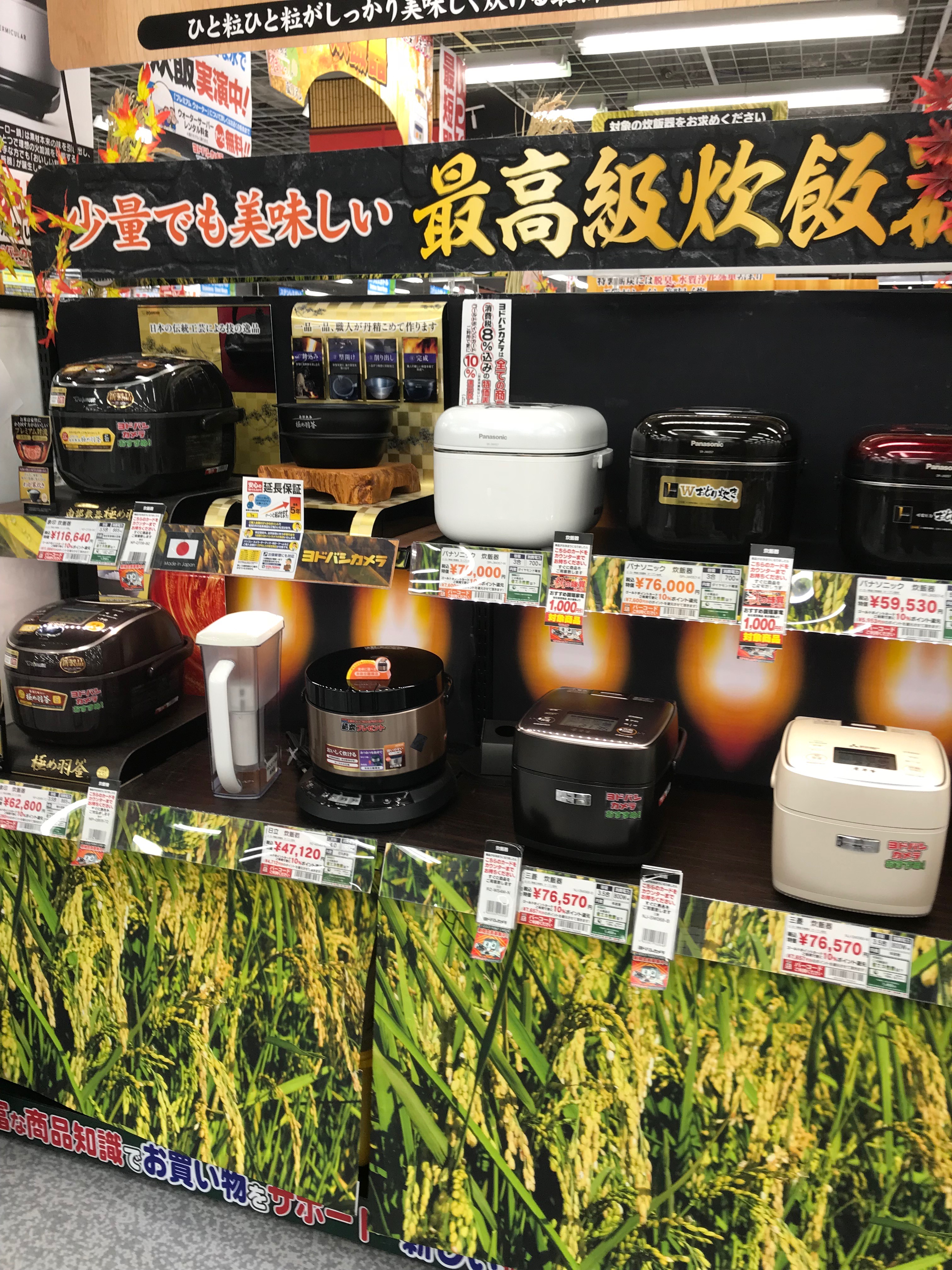
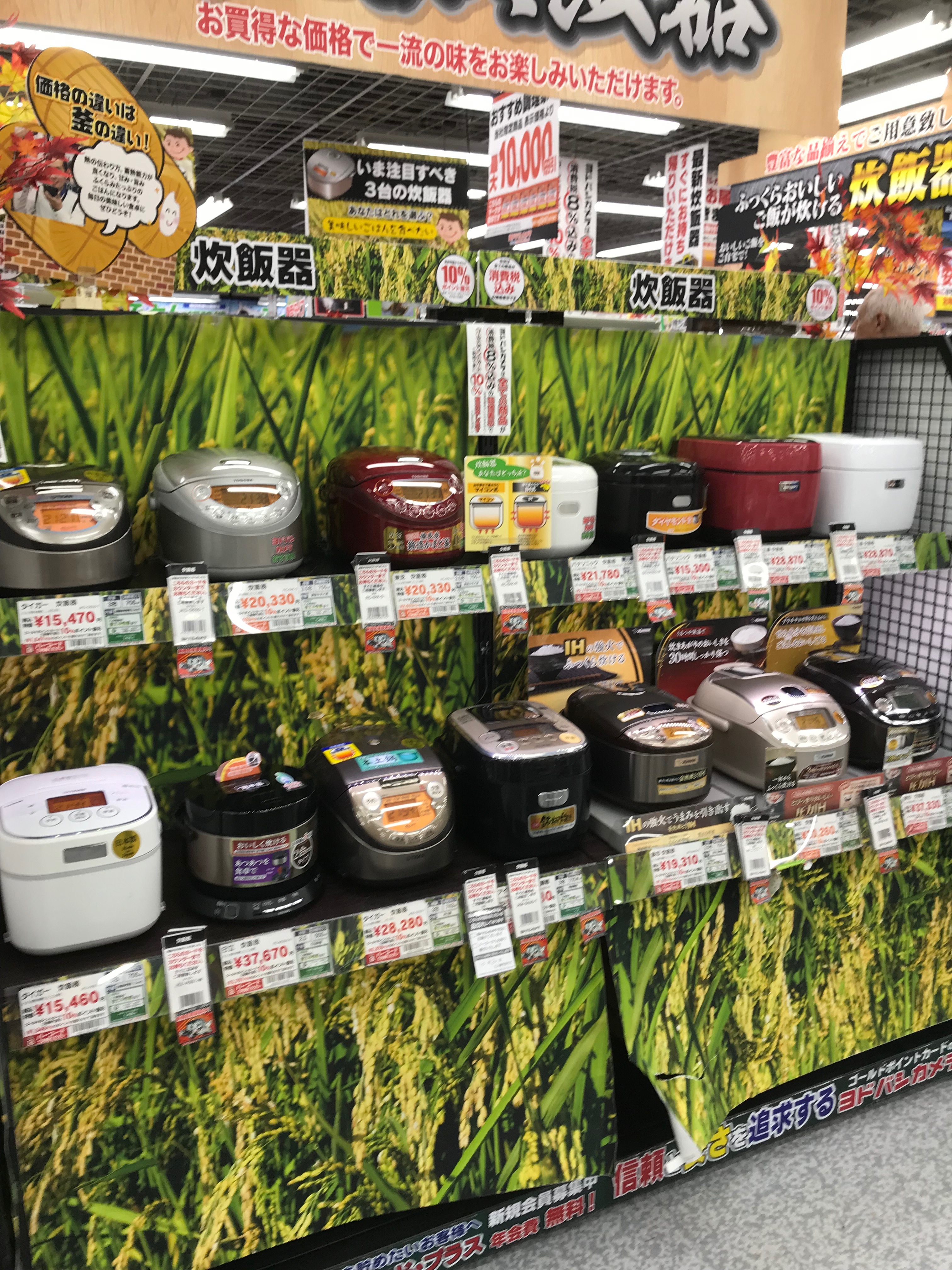
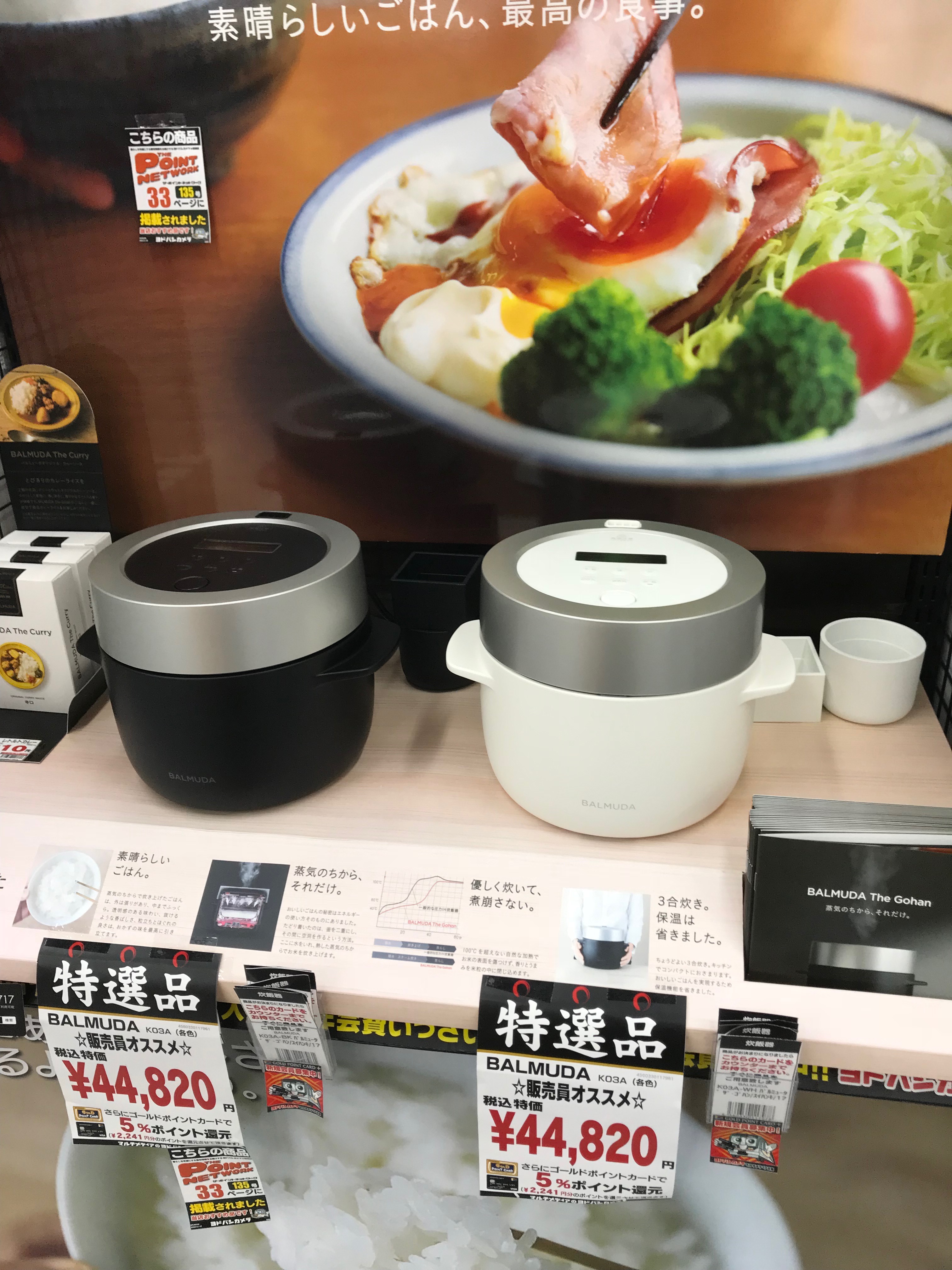
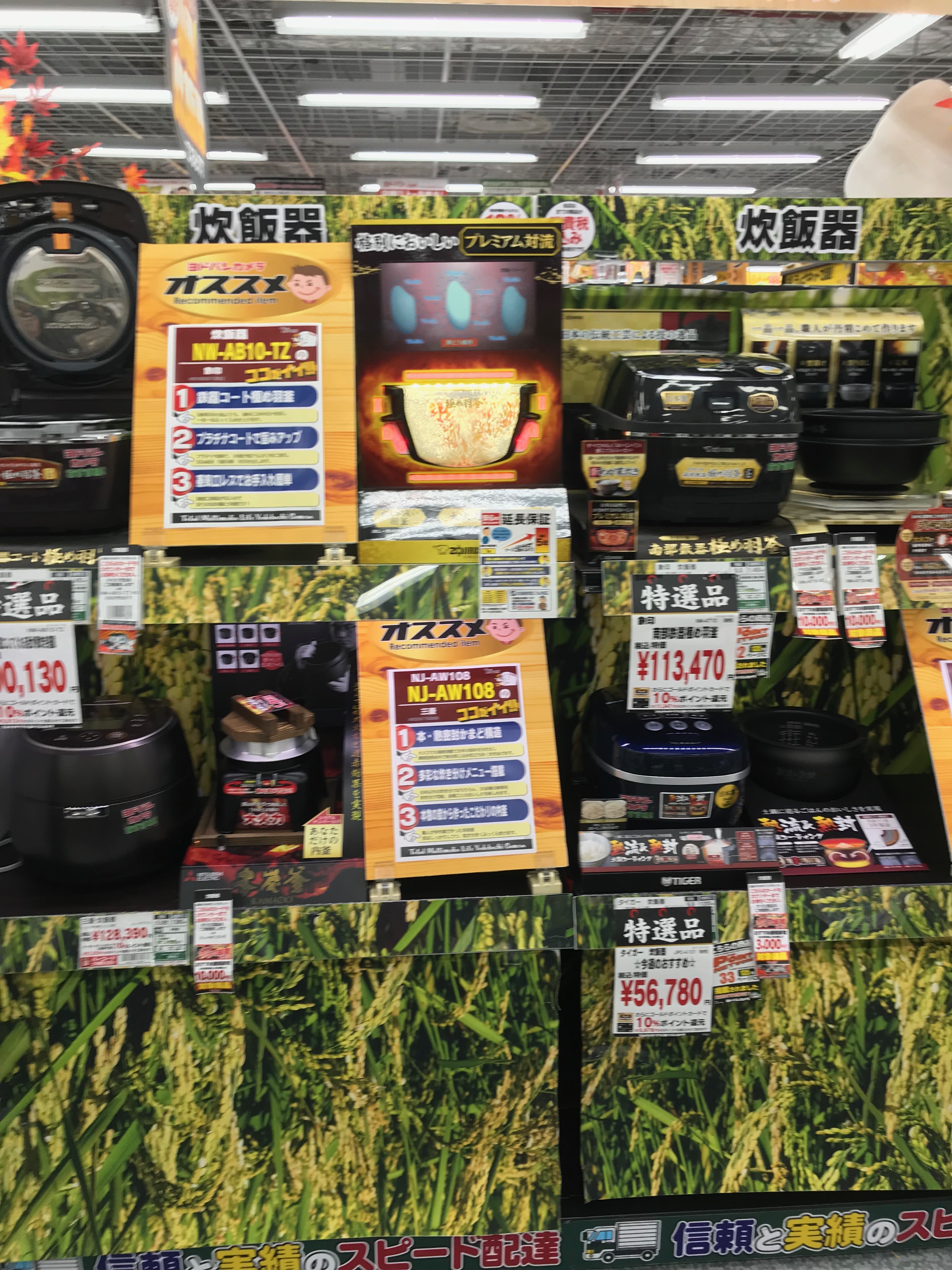
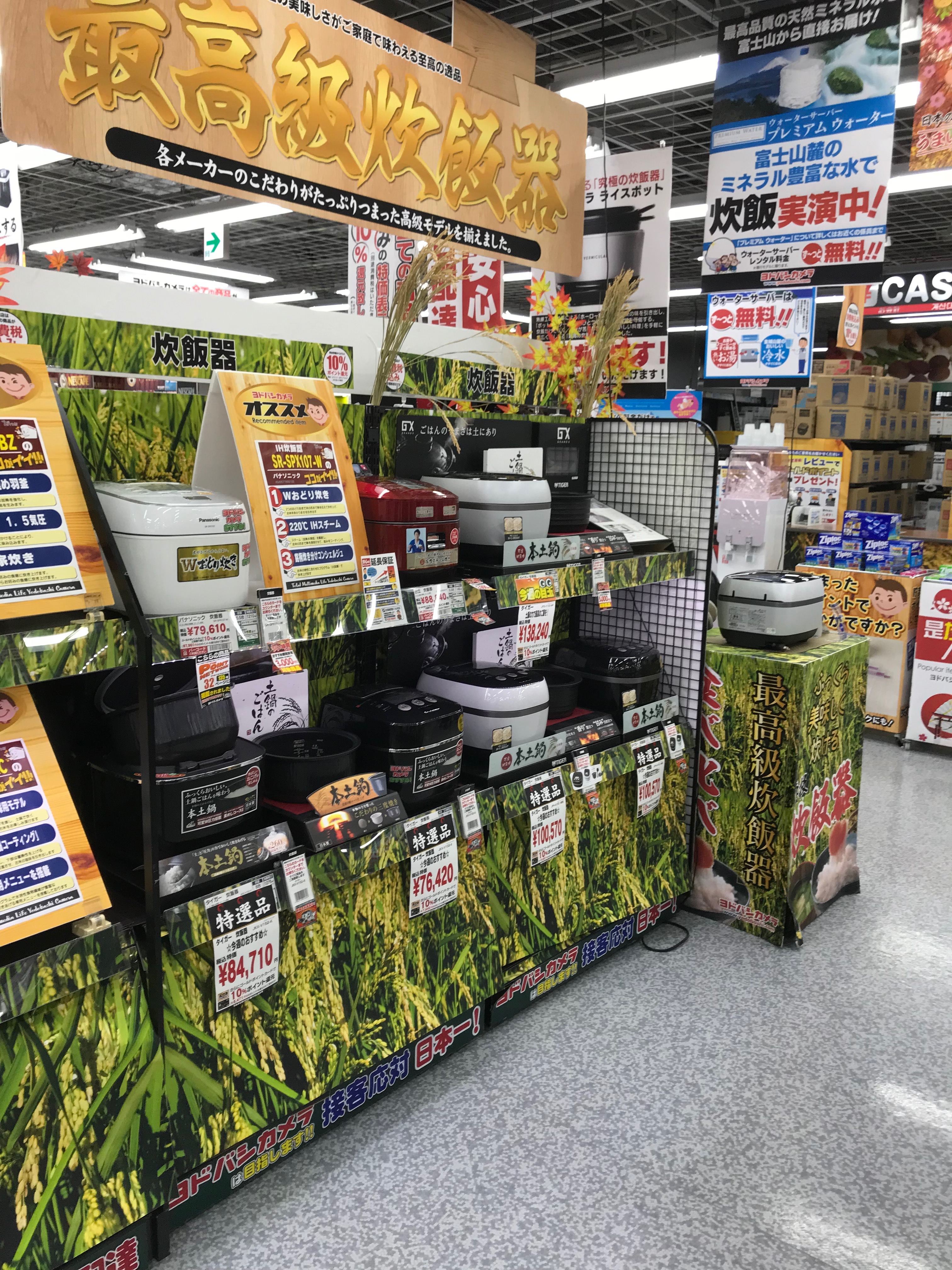
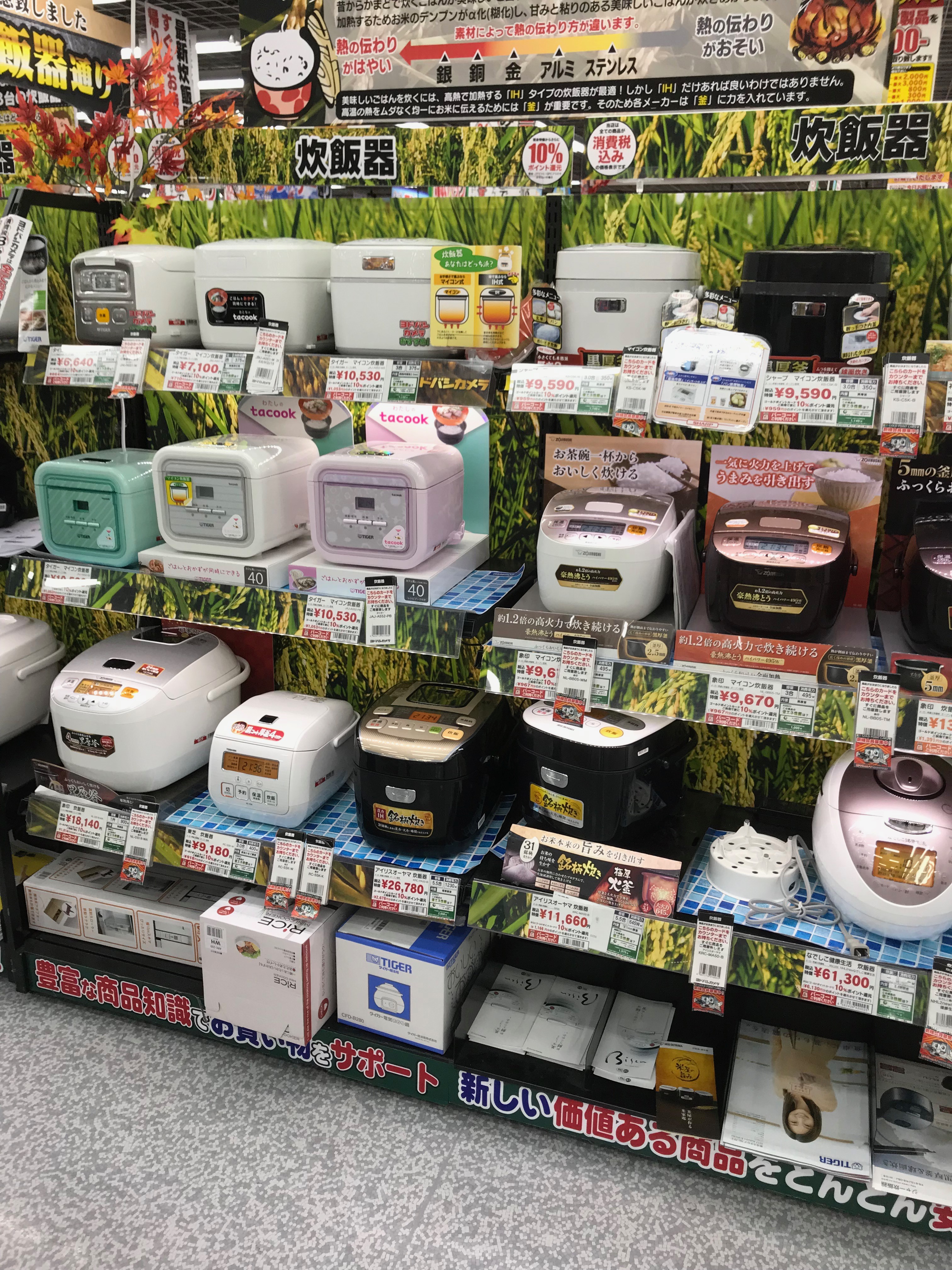
Quite near Kyoto Station, just a block past Kyoto Tower, is a conglomeration and/or department store which has the most amazing array of products we have ever seen anywhere, anytime.
It is almost impossible to describe, so here are some pictures grouped by product type. We didn’t buy anything–even if we had wanted to, how does a simple American consumer make a choice?
We woke this morning, our fourth in Seoul, to cool temperatures and marveled at the happy change in the weather that had started the day before. When we arrived and for the first few days the city was humid and hot, but yesterday steady breezes blew away the humidity and while it was warm it was much more comfortable and there was a tiny hint of fall as leaves fluttered around. Seoul, this side of the river at least, is quite green, and many of the shopping streets are tree lined. As well, there are public spaces with flower gardens and occasionally even narrow older streets, mostly pedestrian (where cars are allowed but there aren’t many and they drive slowly—ah, I remember the opposite in India), have a slight arboreal feel.
Our first evening here was exciting as it always is when you are in a new place, but the heat was heavy and I was sorry I was wearing jeans which quickly became sticky. The airport was enormous and modern (not nearly like Dubai, rather similar to SFO) and after a 12 hour flight we sort of staggered around to find the ATM (third floor) and then the airport bus desk (first floor) and out into the bus queue where we had a lovely chat with an American from Brooklyn who is an analyst in the natural gas industry on her way to a conference in middle-of-nowhere (to us) eastern Russia. We waited maybe 45 minutes for the airport bus and the ride into Seoul was interesting/weird. The bus is the touring kind, and like the long distance buses in Mexico came with TV, with both Chinese and Korean subtitles. First program, a restaurant show, patrons with various animated reactions to the food, with either cartoon steam coming out of their ears (too spicy!) or little stars of happiness bursting around their heads. One of the specialty dishes highlighted was a kabocha squash, steamed in the microwave, hollowed out, filled with apparently a VERY spicy seafood stew, covered with cheese, back into the microwave until the cheese is molten, then the squash cut as a pie so each slice falls away, covered with stew and cheese. Sorry, that looks awful! Next program was a travelogue, with each segment replayed several times in slow-mo, with animated additions (question marks, etc.). Then a soap opera. Yes, the bus trip was long, and when we were the only passengers remaining the driver pulled over, told us “TEN MINUTES BATHROOM” and we sat in the empty bus seething. We were so tired and only one stop away from Itaewon! Not fair. Gideon explained when we arrived that this was common and inexplicable in his various bus travels around the city.
We finally arrived at our stop, having texted steadily to no avail to Gideon and Yoojin, who were to meet us and walk us to our apartment (airbnb). The street was bustling, we were hot and tired, and no Gideon and no wifi connection. ACK! We realized we were totally dependent on their help. We walked a little way (like, two storefronts), got a signal, called Gideon on Kakaotalk, and turns out they were only a few blocks away where they had thought the bus would stop. They appeared in a few minutes, all smiles and hugs. Saved! We trudged, hungry and hot and tired, to our apartment, which turned out to be on a sketchy looking (more so when we saw it in the daylight) street one level up from the main Itaewon drag.
Gideon had our key code, had connected with the landlord, and in we went. The apartment is great—perfect. Just big enough (an efficiency with a roomy bathroom) and so close to the action yet dead quiet inside. Hurrah. We are very happy with the accommodation ($53/night) and super glad we booked it for the two full weeks we’re here. It is 100% Ikea, so even the bed and furniture are familiar. It’s ideal and only two blocks from the metro, but honestly given the scope and reach of the metro I don’t know what odd corner of the city wouldn’t be.
walking to Leeum
entrance to Leeum
Tuesday Gideon and Yoojin were working so we headed out to Leeum, the ultra beautiful art museum (Samsung, of course). The 20 minute walk was through an increasingly upscale and modern neighborhood, then up a short hill through lovely and varied modern architecture to the museum. We wanted to learn a little about traditional pottery and Leeum has two wings, one with a highly specifically curated collection of historically important pottery and paintings, the other much smaller and which, sadly for us, did not concentrate on Korean artists but was like a mini MOMA (though I was delighted to see a Conrad Richter I didn’t know, as well as an artist new to me, Wesselman, whose single example of “steel painting” they had was thrilling).
The historical pottery was primarily celadon, and wow. We learned a ton, and the audio tour, which was high tech so as you approached a piece the description launched, with additional detail on the (Samsung, natch) device screen. So you can learn as much or as little as you choose. They have also placed modern Korean pieces here and there which are related to the traditional work. One memorable piece is a very large (6’ across) sphere made of broken black glaze pots, seamed with gold so the entire globe was confusing at first artistically, but as you looked closely and read the intention of the artist to celebrate a type of glaze no longer “desireable” it was compelling. On another floor the modern piece among the old paintings was a huge map of Korea, made entirely of tiny (1 ½”?) metal figures packed together, to represent the entirety and individuality of the population that comprise the country. Cool and beautiful.
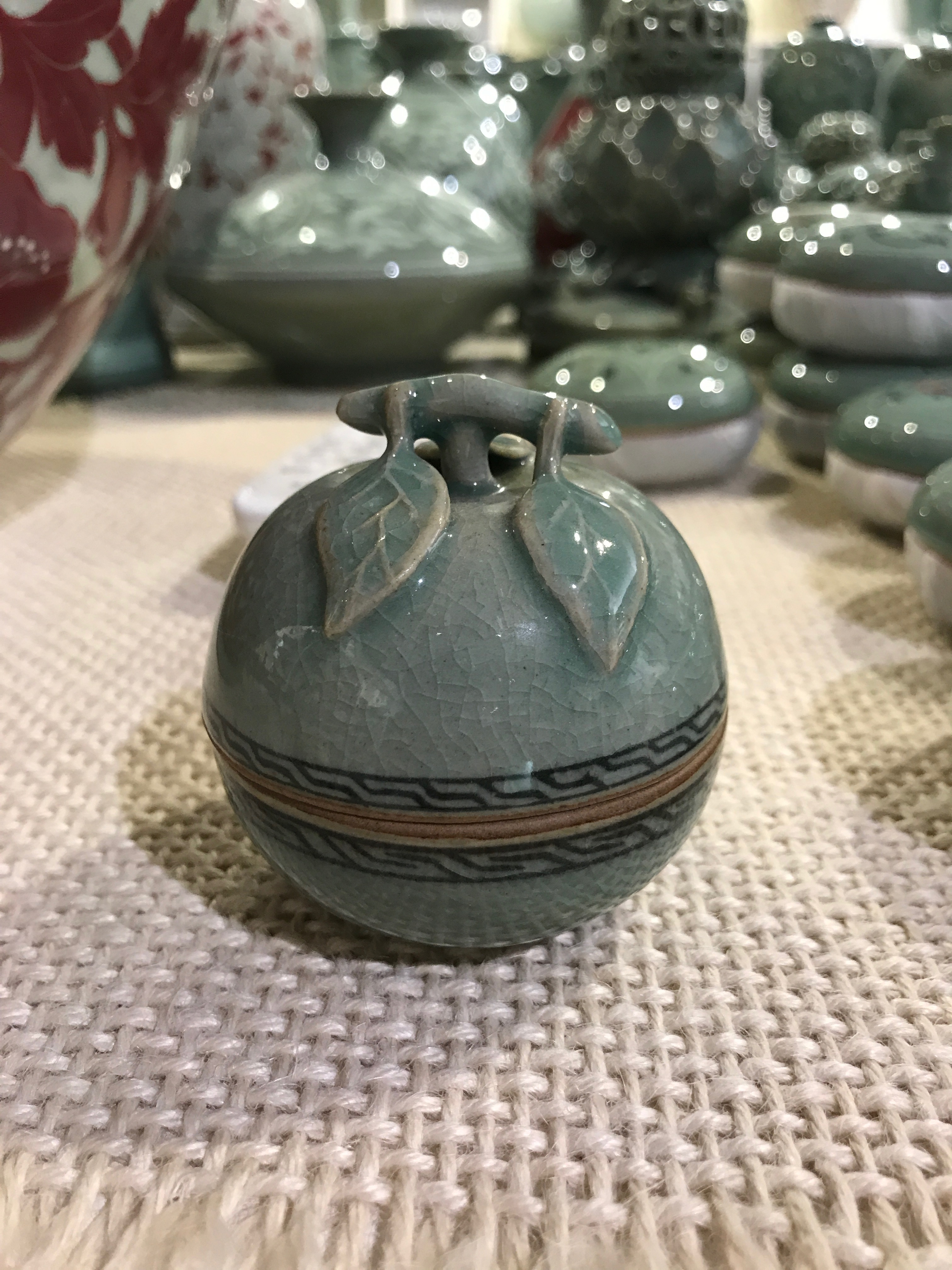
Our neighborhood having a concentration of Muslims, there was a Halal Guys (NYC!!) where we had falafel sandwiches. Yum. Inspired by the Leeum collection I wanted to test the pottery market options, and found one single mention on the web of a store Eden Pottery with a notation “my favorite place to shop for ceramics in the world” and it is just a few blocks from our apartment. No web site, no information whatsoever on the web, so we headed over to get educated and see if it would be a good place to look for tea bowls and other items. One of my missions on this trip is to find high end (i.e., out of my personal price range) tea bowls for Cousin Harumi—she had shown me the few pieces she already had and explained how Japanese revere Korean pottery. With this meager knowledge I entered Eden, and what a happy choice. Mison Kim, the proprietor, speaks English and represents four important potters, well known here, as well as carrying more commonly available pieces. I showed her my photos from Harumi, and we pulled several wood fired (more valuable than gas fired) bowls which might suit and I sent photos to Harumi for her thoughts, as well as a tea box shaped like a persimmon, celadon glaze, and a few other random items. I had high confidence in Ms Kim, but afterward we headed to the recommended Arts shopping area, Insadong (20 minutes by metro) to see what else we might find. Turned off by the propensity for Insadong shopkeepers to start lowering prices when I showed interest in something, we decided to wait and return to Eden.
Celadon tea box in shape of persimmon
We did in fact return Thursday, and as it was morning here/evening in Oakland Harumi and Mison and I were able to connect by KakaoTalk with video, so I could pull and show things to her for her to choose from. What fun! Harumi selected 3 tea bowls, all by well known potters, and a tea box in apple shape (celadon). So we had a fantastic time—but as we left David reminded me that we have to take all these to Japan, back and forth to airports here and there, and due to their value each bowl is packed in its own wooden box. Ah, well, what is international travel for anyway? It will all work out.
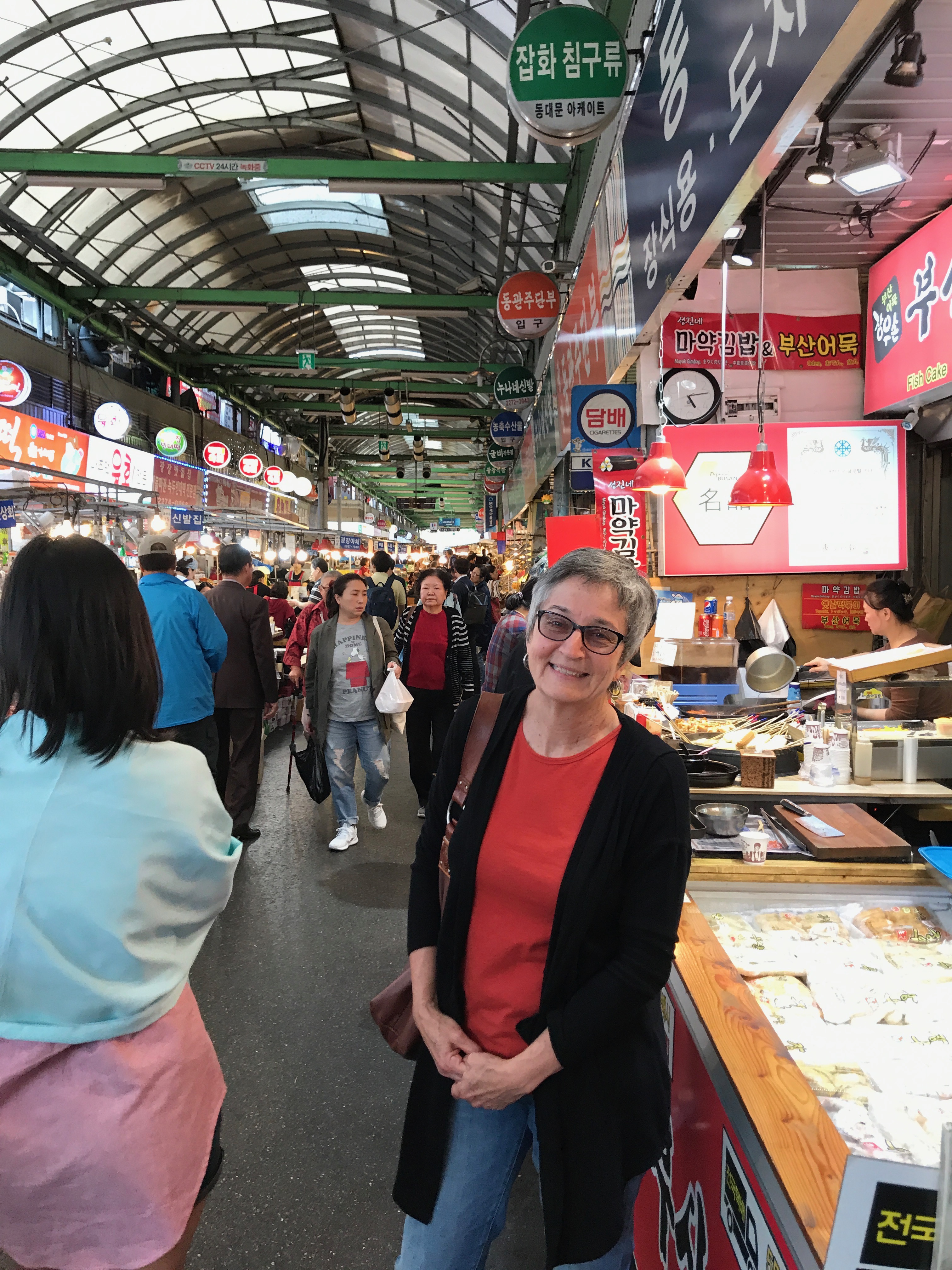
Wednesday, after a lovely breakfast with Gideon and “tour” of his gym, we headed to Namdaemun Market. This is the Seoul version of every crazy, jammed market from Mexico to India. A mix of stores and stalls, we were instantly lost and stopped at an information booth where we were given a map that showed the ‘zones’ such as the Chopped Noodle Street, the Food Materials Street, where to buy socks or candy or housewares, the Fish and Stew Street, the sock area, housewares, candy, Camera Street, Stationery and Toy Street, on and on. Plus underground shops with opticians (a huge business here), underwear, vitamins, other clothing, you name it. I volunteered to be a rice pounder for the crowd, getting an “OOH” when I managed to slug the glutinous mass with some force.
We shared an enormous fried kimchi-filled fritter and ate kimchi-filled dumplings, so delicate and flavorful I will eschew the frozen version we can get at Koreana Plaza in Oakland forever.
We were hot and sticky and tired, but headed 5 long blocks or so to one of the palaces which sits right in the center of downtown, a shady complex of pavilions and other royal buildings, all painted in vivid designs along the rafters, and inside several were contemporary art installations that represented the mix of past and present day Korea. One was an entire wall showing overlays of a multi-story pagoda and modern office buildings, with the ghost of a train moving across the bottom. Stunning and evocative.
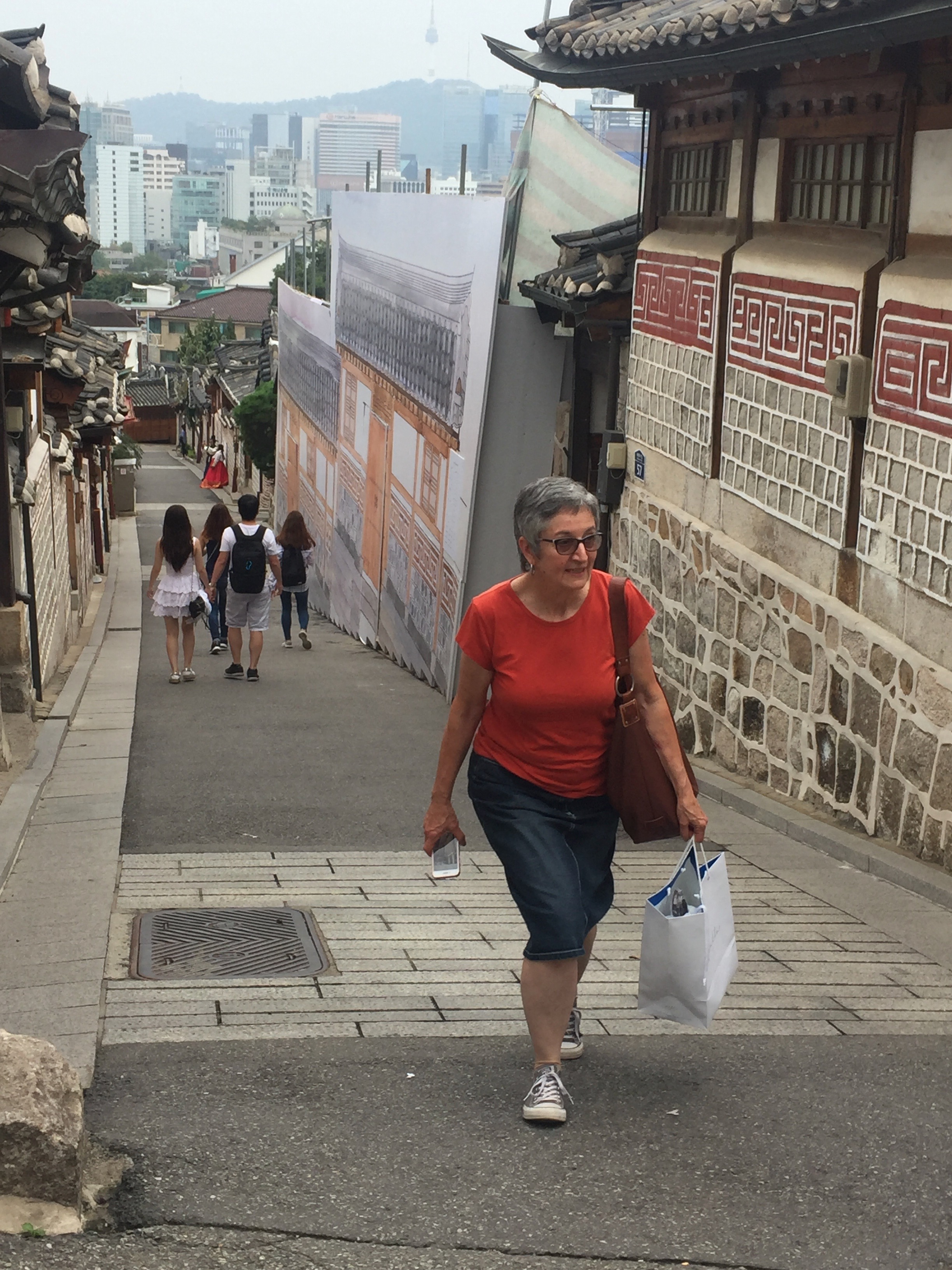
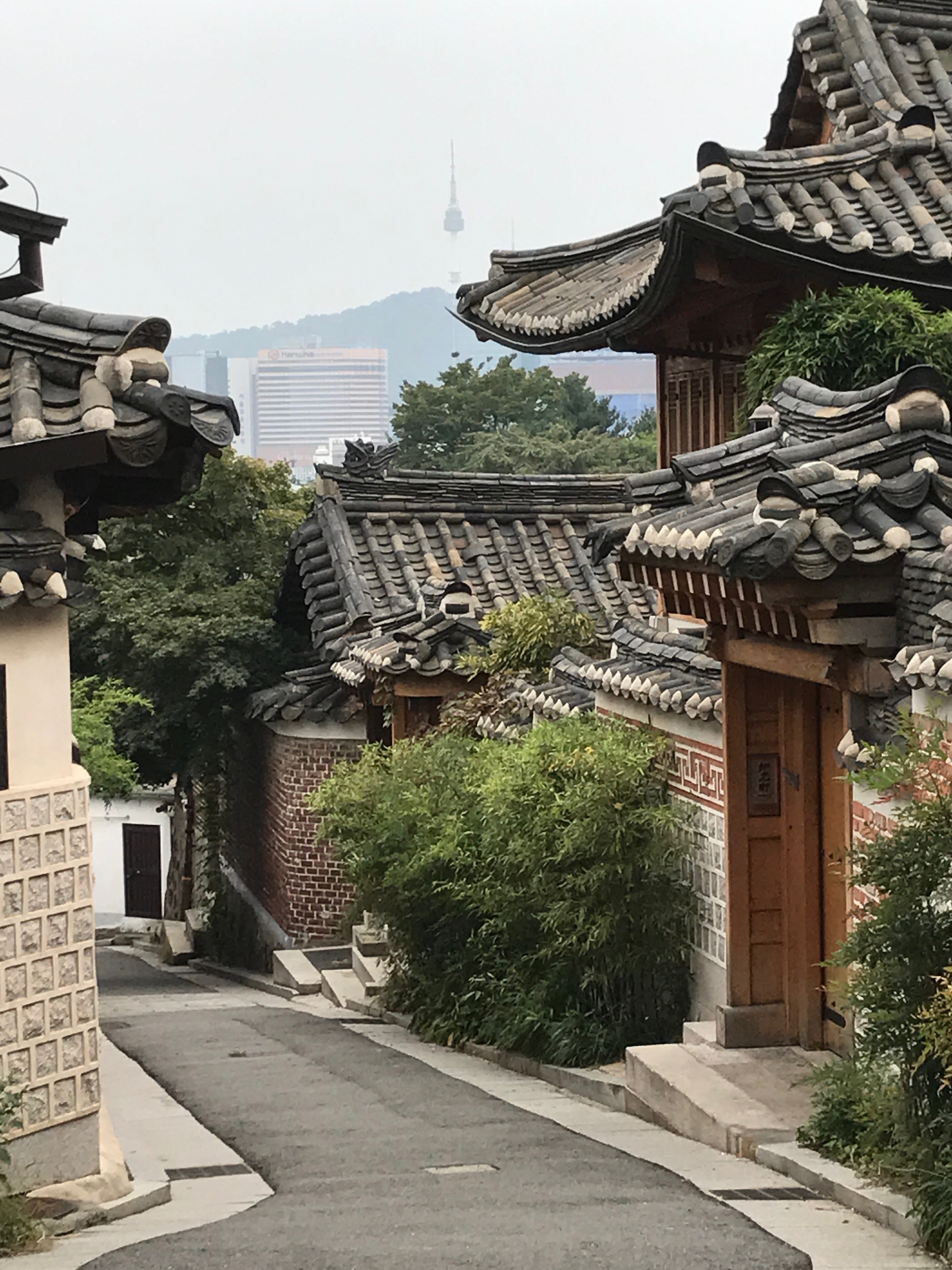
We thought we were so exhausted and over full of sights and sounds of Seoul, but David was determined that we trudge on and thank goodness, for we headed to Bukchon Hanok Village, a living neighborhood of traditional homes, some of which were moved there for preservation, which sits along a steep hillside with winding narrow stone streets and many signs warning tourists (mostly Korean but some foreigners) to be silent because people live there.
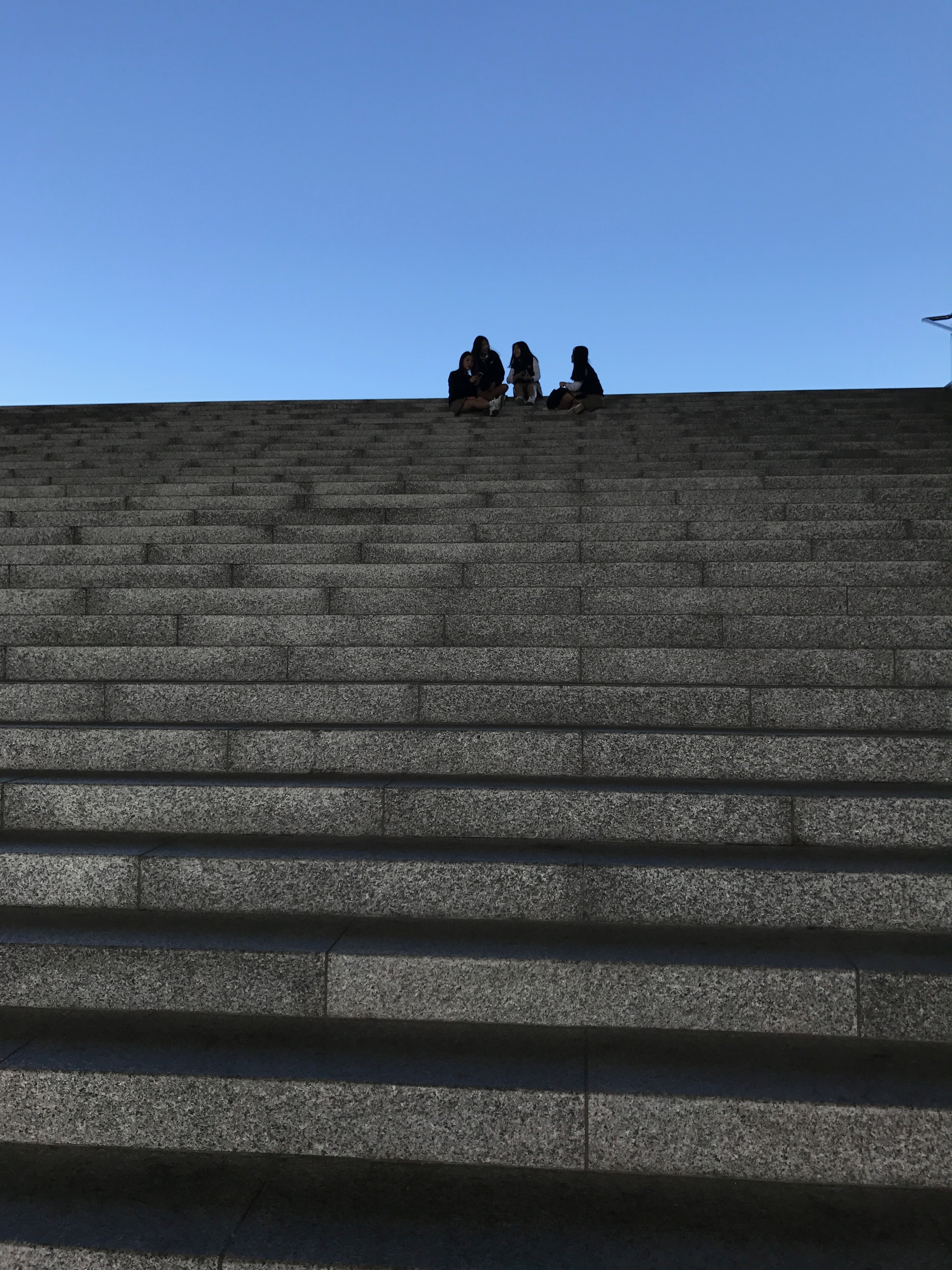
Every now and then we came across a charming little store, and as we came out of the neighborhood we saw were in a delightfully artsy commercial area with beautiful boutique clothing, other crafts, contemporary murals, and suddenly we were surrounded by a true gaggle of school girls, all in uniforms and heading down the hill. The streets are tree lined, and the traffic very light.
Again, cars seem to be allowed everywhere but they are blessedly quite and move slowly, as pedestrians wander in the roadway where sidewalks are marked but not raised. We wandered too, soooo tired and hot but soooo happy at what we had seen. When we got home David checked his phone and we had walked 9 miles.
Thursday after our Eden Pottery purchases we went back to Insadong for more souvenir and present shopping, and finally ventured into a Korean restaurant for lunch. What a bargain—we ate 5 huge mandu (meat and vegetable filled dumplings) and shared a bowl of savory beef soup, with rice and kimchi on the side. Fifteen bucks and we were completely satisfied.
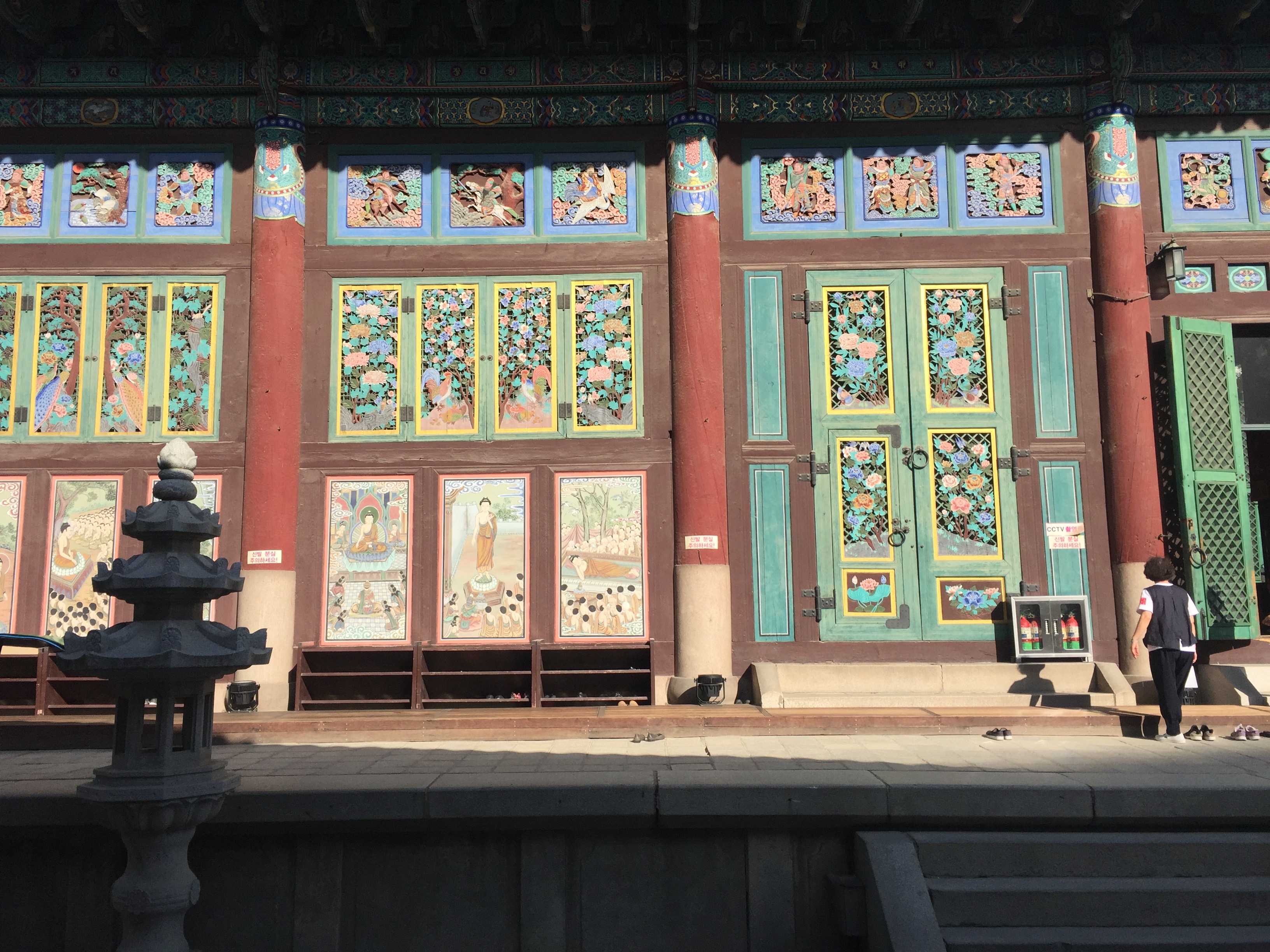
Shopped out, we walked along side streets looking for a particular Buddhist shrine, which we found and managed to join the congregation for the end of an afternoon service (99% women, who were clearly enjoying themselves, much laughter at what the monk was saying), and at last returned home exhausted and hungry. Familiar food sounded good when I found a listing for Burger Itaewon about 5 blocks’ walk from our apartment. We had medium high hopes—but wow. Five minutes after ordering we had hot, crisp French fries and honestly delicious hamburgers that were also piping hot. What a find. We staggered up the hill to our apartment and collapsed into bed, so happy with our day (walked “only” 6 miles).
Middle of the night David’s phone rings—we startle awake, confused and groggy, and David literally rolled off the bed trying to answer his phone (the bed is low, thank goodness). Wrong number from Berkeley. Last time we will leave a phone on overnight!
Today we made the most of the cool and breezy and clear weather, hopping on the metro for a morning at the National (Samsung) Museum, a massive building with incredible views of the city, which sits in a huge landscaped park adjacent to the US military base. A gorgeous, spacious museum of which we managed to cover about 60% before we looked at each other and said “ENOUGH!”
Headed home, grabbed Turkish kebab sandwiches and drinks from the grocery, staggered once again up the hill and after inhaling our lunch took a nap. An hour later we were back on the metro to head downtown to the Sejong Art Musem, downtown, to see an Escher exhibit which had over 100 drawings and lithographs and several videos (I have to find “Inspiration Animation Edit 4” somewhere) and a movie narrated by his son, now an older gentleman, who noted his father’s work ethic (“we were not allowed to even walk by a window when he was working on something new so he would not be disturbed or distracted”).
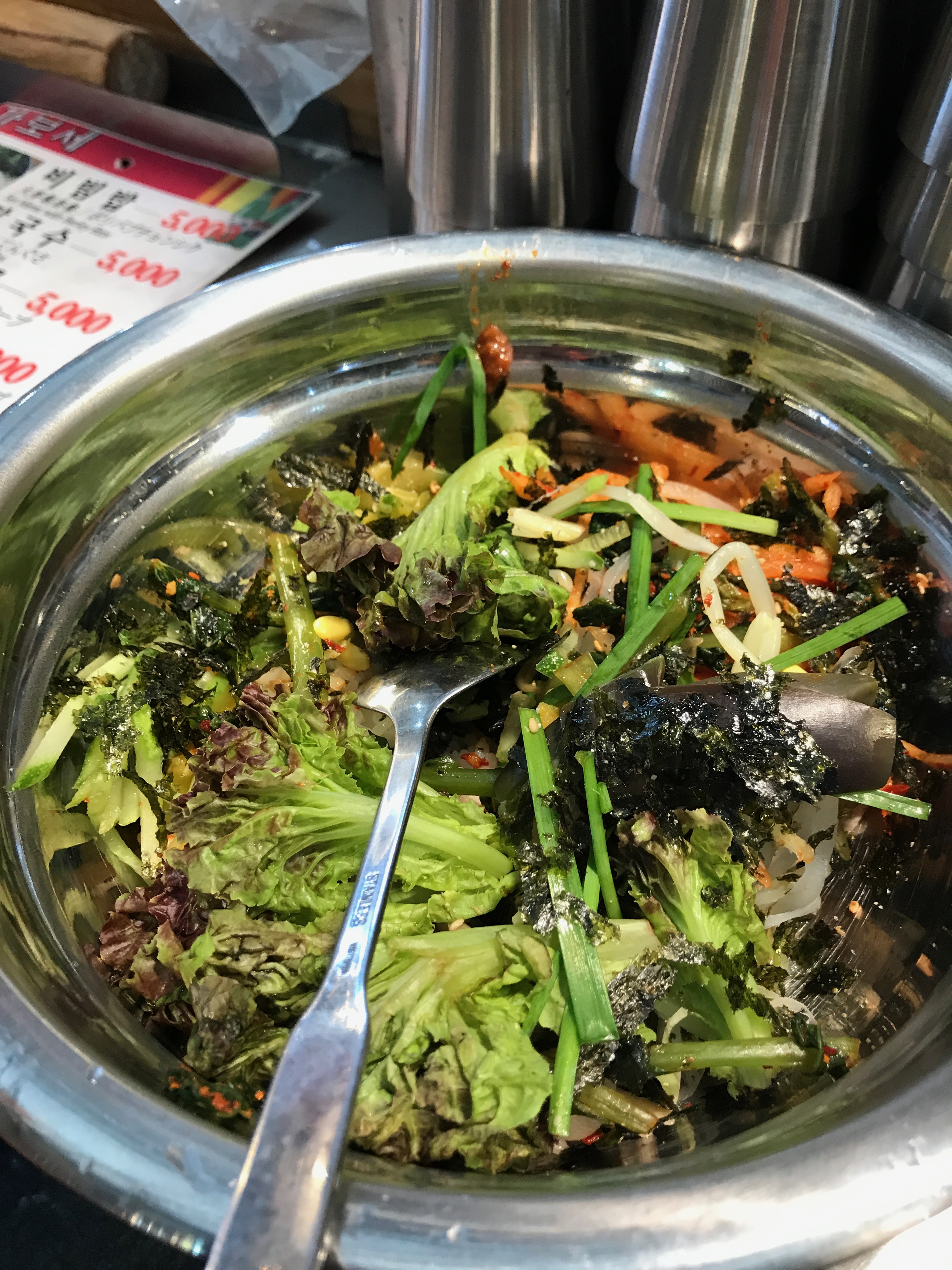
Emerging hungry and ready for an adventure we hopped on the metro to the Gwangjang market, where there are something like 120 food stalls, specializing in savory pancakes according to the guidebook but in fact with not only pancakes but all kinds of scary looking seafood, noodles, pancakes (including whole fried flounders, sand dabs, sea squirts, as well as vegetable versions). We were completely intimidated initially, so David went looking for a new neck pillow as there were also long “alleys” of bedding stores, fabric stores, clothing, etc. He found just what he was looking for! Triumphantly and full of confidence we went back on a food quest and finally settled on a bibimbop stand. Delicious! A huge metal bowl heaped with vegetables, rice, chili sauce, sesame oil—we shared it and a small bowl of hot, delicious vegetable soup with greens that I cannot identify. So good. Several western young women came up and were greeted by the cooks (all women) with lots of laughing and smiles. Turns out they are from Poland, and two of them have been to Korea many times and were remembered. We talked with them—commiserated about our respective political leadership, laughed about how we were all warned not to come to Korea due to tensions with the north and how our native contacts all told us to come, it wasn’t anything new.
We had a jolly time eating and laughing, and then David and I headed off to find pancakes because they smelled SO good. We sat at one of the less intimidating stalls and ordered “assorted savory pancakes” and a bottle of soju. Directly in front of us was the griddle on which more and more and more pancakes of various types were piled on by the warm, smiling cook, and when we started on the soju she immediately gave us pieces of pancake to go with it while the rest finished crisping up. We ate a heap of cut up pancakes, served with a side dish of marinated, raw onion and very hot peppers which she warned us off of. We drank the bottle, ate the pancakes, and waved to our Polish friends as then walked by, a little stunned we were eating again. Ha. Do not underestimate Americans!
Tomorrow we head to Busan with Gideon, Yoojin, and their whippet Birdie. More Korea!














































 Inescapably Rational