
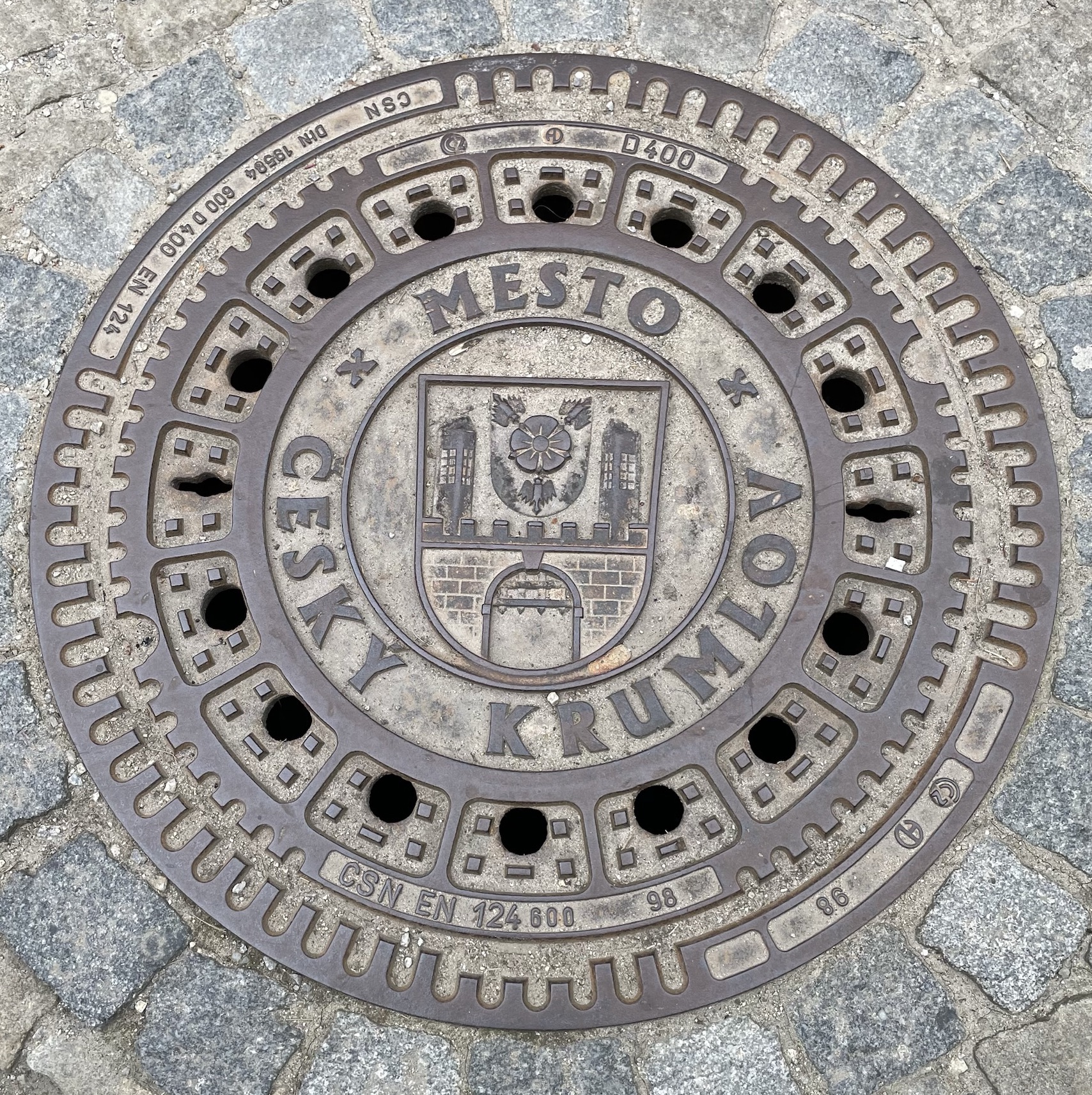
When the boat arrived in Linz we saw nothing of the town as we were hustled aboard comfy touring buses. One group headed to Salzburg, Austria while we were off to Cesky Krumlov, a medieval town across the border in the Czech Republic. We had little memory of how we had made the decision and even less about our destination. It turned out just fine due to excellent guides (one on the bus, one in the town), a yummy lunch, and a pleasant afternoon walking around a very small old town.
The drive through Austrian farmland…rolling green hills, immaculate farms and small villages…took two hours that seemed much shorter. Our guide was a great storyteller and taught us a lot about the days of soviets right across the border and the evolving relationship between Austria and the Czech Republic.
About 45 minutes into the drive we passed Hallstatt, a tiny farming village, very pretty. We were through it in a blink. Our guide explained that a Chinese official, some years ago, had been touring the area and fell in love with the town. He returned to China and oversaw the building of a replica village that, unlike other European town replicas in China which are basically housing developments, is more or less a museum (and apparently a wedding destination). Well, it has generated a steady stream of Chinese tourists who come to see the real thing. Unfortunately like idiotic tourists everywhere they fail to distinguish between a real live place with real live people living real lives, and a museum. There are many tales of Chinese walking into houses assuming they are museums as in the Chinese replica. She told a personal version—a friend of hers whose husband was startled in the bathroom—and the bus driver who lives in Hallstatt was nodding along. It seemed far fetched, right? And yet we saw tens of Chinese tourists in nearby Cesky Krumlov, so it was believable.
Our guide also explained why there were so many Vietnamese restaurants across the border. During the Viet Nam war when North Viet Nam was a more rigid communist country it was much easier for North Vietnamese citizens to travel abroad to other communist countries and places like communist Czechoslovakia welcomed the tourists…and many stayed.
A happy result of the Austrian-Soviet Czech border is the wildlife-rich two kilometer wide swath that the soviets had enforced to keep people from crossing over to Austria. It is now a protected green belt.
We had been instructed multiple times that we must have our passports for this particular outing, and we did of course, but at no time were they of any use. I guess it´s a just-in-case deal but we were a bit disappointed that we crossed the border and back with nary a border guard interaction.
It is truly lovely country. Our guide pointed out the tiny “dachas” that had been built in soviet times and were used for free by Czech citizens. Now they have been built out, added onto, and are year round homes for the most part. They are cute and Russian-looking.

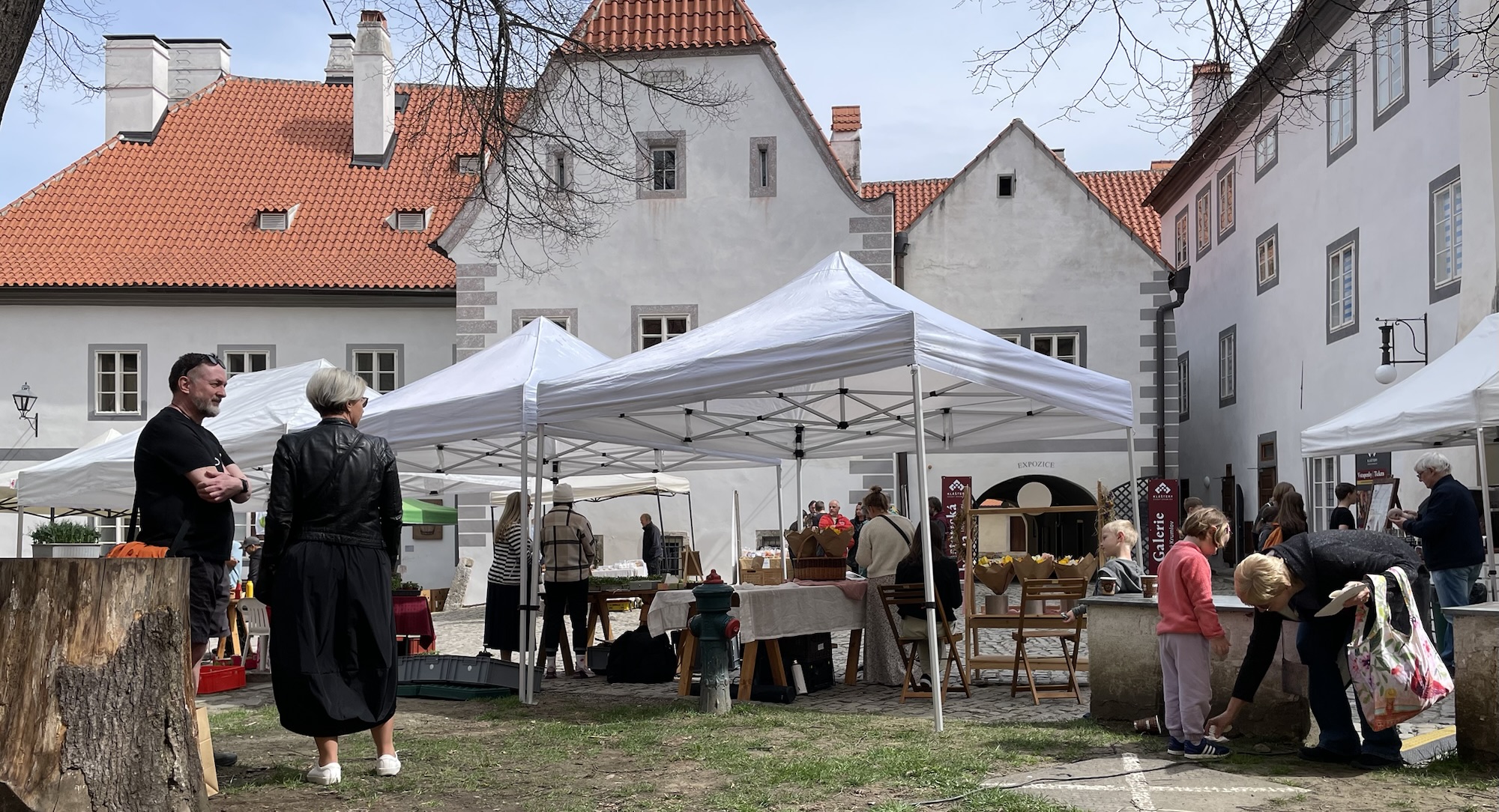
Suddenly we arrived and we were out of the bus walking into the town. It is fairy-tale like, with twisty streets, unbelievably uneven cobblestones, a small river running through, and a bit of an artsy feeling.


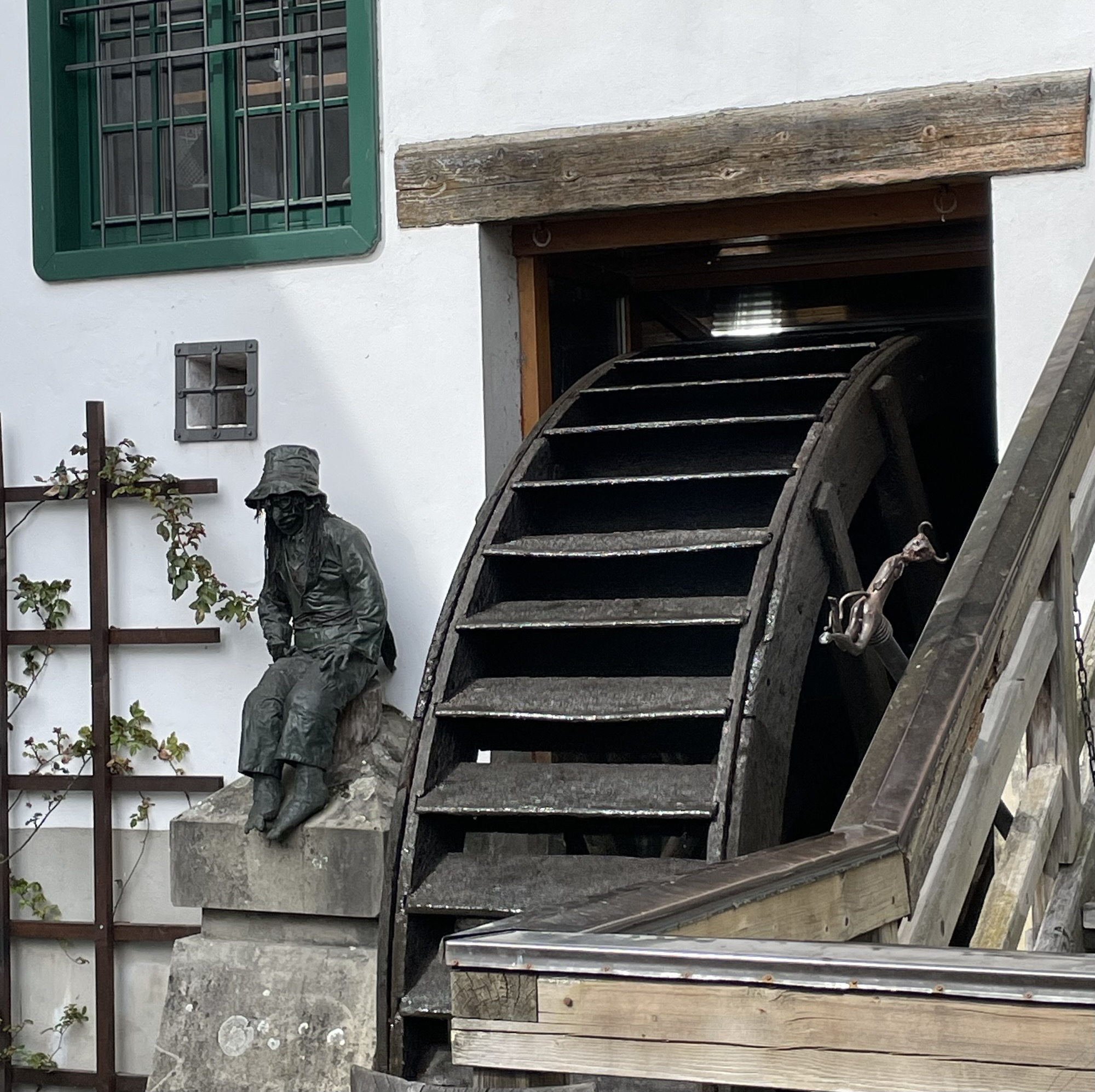

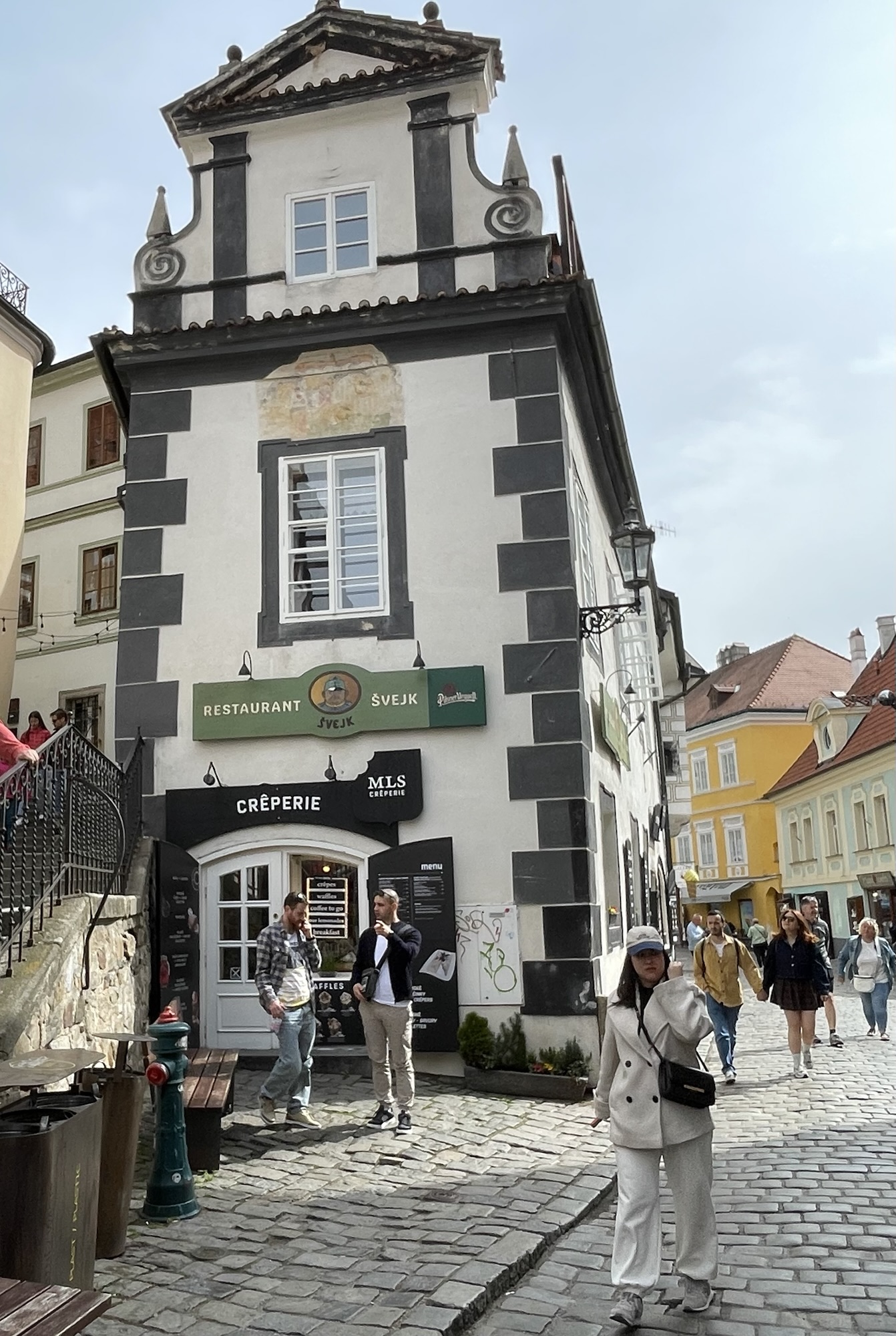
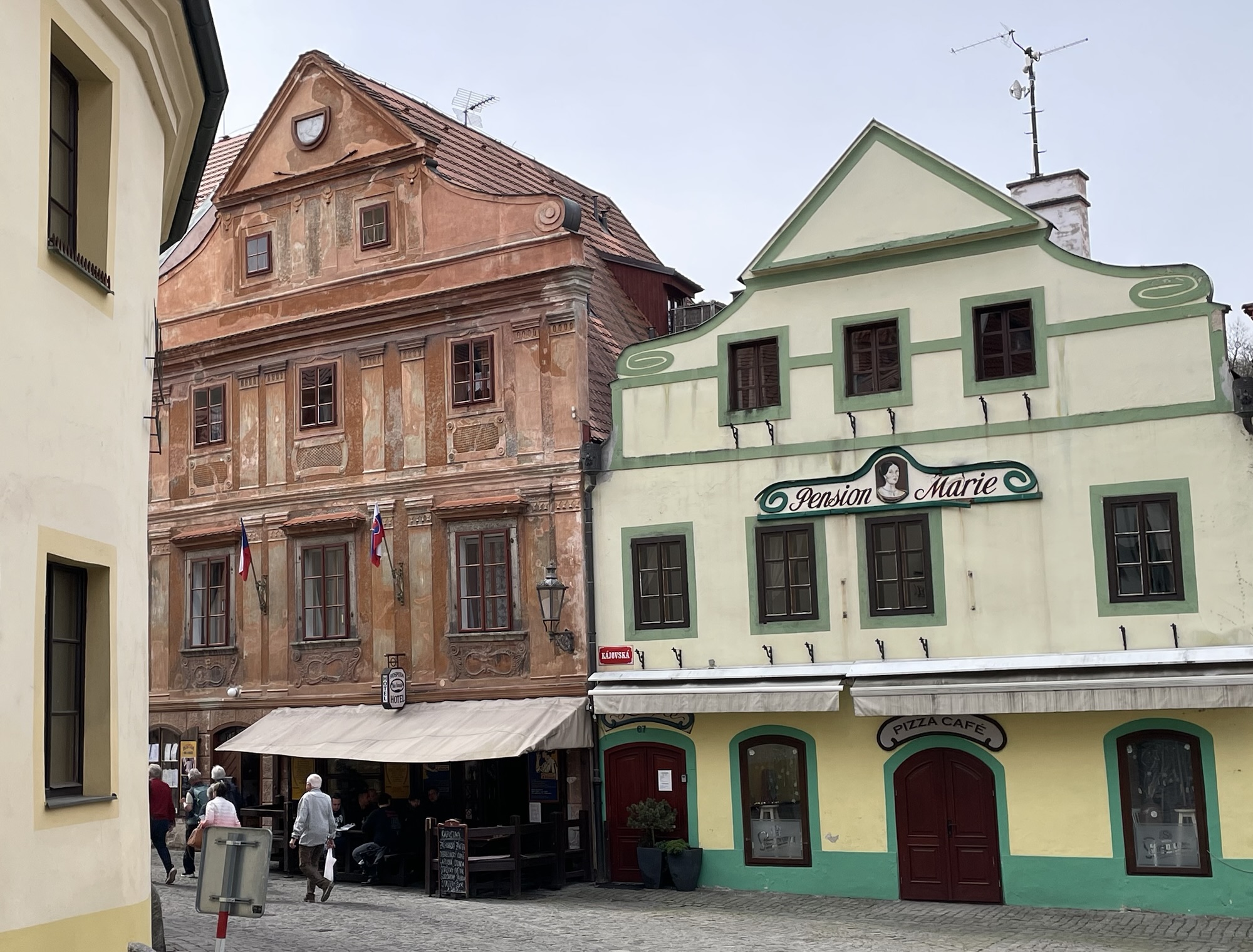
Our town guide was an extremely droll man who made the driest jokes among a densely informative spiel. It was a lot of fun. He also told us where to eat, where to walk…and we had several hours to explore. One of their local products is pencils of all things, because of nearby graphite mines. Makes sense. After the tour and a delicious lunch David and I walked literally the entire town. Then back on the bus for a gorgeous drive into Linz and our comfortable boat.


One of the unique architectural features on many buildings is a 3-D effect of the stucco (?) by scratching the surface to make it seem faceted. Hard to explain! Here is an example.

A now deceased sculpter left his mark all over the town. He made a lot of things that look like over sized fat fingers and hands.


It is a fun, funny, friendly and pretty little town. Glad we went!




 Inescapably Rational